
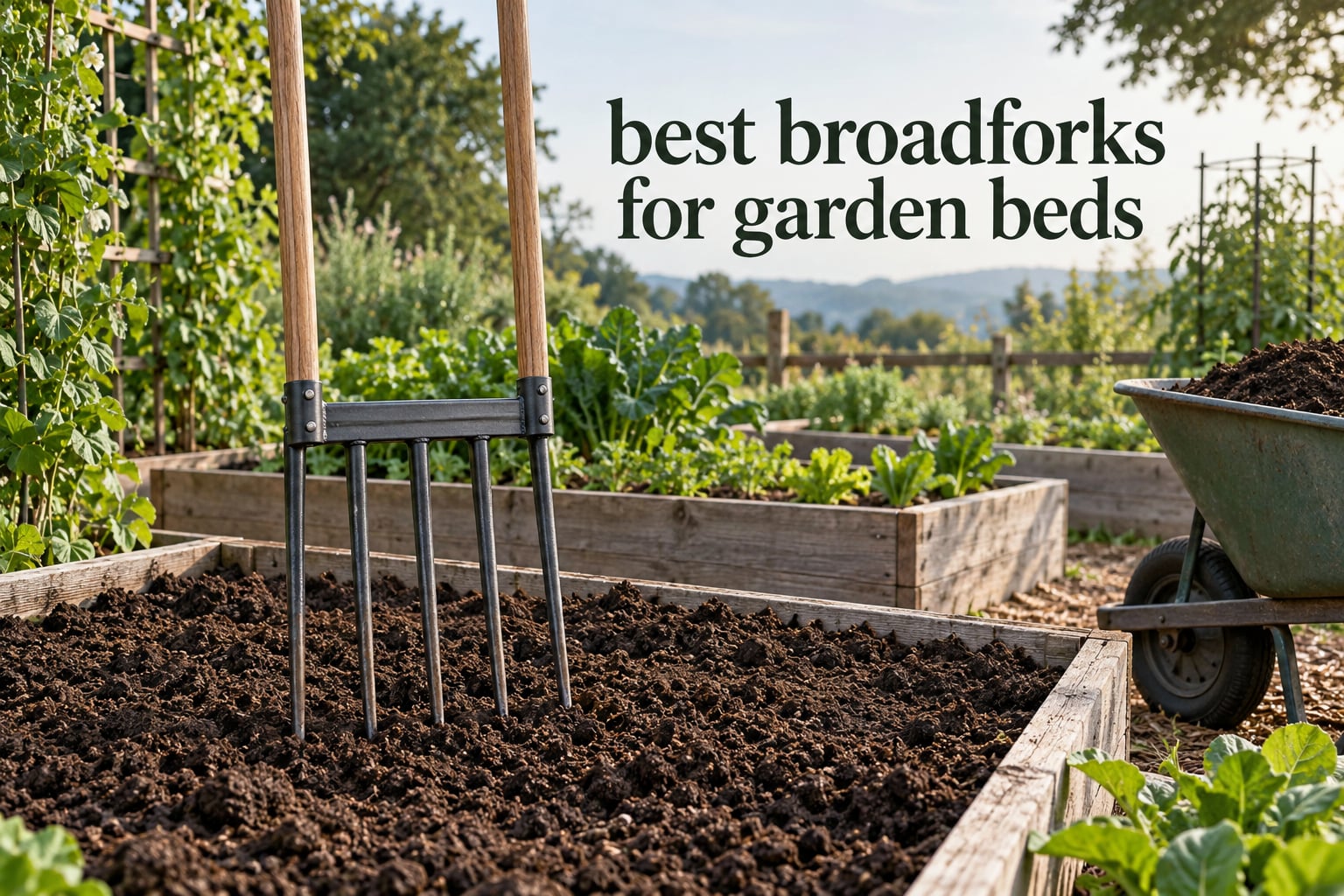
A broadfork is a manual soil tool with long steel tines and one or two long handles. You step the tines down into the bed, pull the handles back about 45 degrees to lever the soil, drag the tool toward you, then step it in again and repeat. It loosens compaction and lets air reach the root zone without turning the bed into powder.
If you have in-ground beds or wide raised beds, especially on clay, shale, or hardpan soil, that is the entire argument for owning one. These are the best broadforks for garden beds we could find, and we ranked all twelve on the things that actually decide the outcome: tine count, working width, handle material, tool weight, and how the thing behaves when you drive it into ground that has never been loosened before.
We spent weeks working beds with each of these forks, and we read the review histories closely because a broadfork is a tool you buy once and keep for a decade. Every pick below carries its own section with specs, drawbacks, and an honest verdict on who should skip it.
A note on why this matters: a rototiller pulverizes your soil structure every season and eventually creates the hard layer it was meant to remove. If you already own one, our guide to the best rototillers for garden beds is worth a look, but for no-till bed prep a broadfork is the better tool. The same goes for the bed itself. If you have not settled the frame yet, start with our picks for raised garden beds for vegetables or metal raised garden beds, then come back here.
Table of Contents
Top 3 Picks: Best Broadforks for Garden Beds (October 2026)


If you want the short version first, here is where each one lands.
Best overall: VEVOR 5-Tine with dual fiberglass handles. The widest-reviewed fork here at 258 reviews and 4.6 stars, with a detachable build that stores in a toolbox and a 54-inch length that keeps you upright.
Best for clay and never buying again: Meadow Creature all-steel 12-tine. Fully welded with no bolts at the joints, carrying the highest rating in the group at 4.8 stars and a lifetime warranty.
Best balance of depth and effort: Walensee 9-tine. Hardened tines that reach past 9 inches in loose soil, a 9.5-inch foot platform, and an all-steel frame with no wood to snap.
Best long-tine breaker for hard ground: tahoe dreams 56-inch cambered model. 11-inch cambered tines rated 4.7 stars, reported to survive jobs that broke lighter forks.
Best for back comfort: DeWit Grelinette-style tool. Exceptionally light, forward-canted handle, and owners with back problems use it for hours.
All 12 Broadforks at a Glance
| Product | Specifications | Action |
|---|---|---|
| VEVOR 5-Tine Fiberglass Broadfork |
|
Check Latest Price |
| Meadow Creature All Steel 12-Tine |
|
Check Latest Price |
| Walensee 9-Tine All Steel Fork |
|
Check Latest Price |
 SILKPE 56 Inch Cambered Broadfork SILKPE 56 Inch Cambered Broadfork |
|
Check Latest Price |
 VASALAID 5-Tine Galvanized Broadfork VASALAID 5-Tine Galvanized Broadfork |
|
Check Latest Price |
 SENVERT 5-Tine Ergonomic Broadfork SENVERT 5-Tine Ergonomic Broadfork |
|
Check Latest Price |
 KEMETIK 5-Tine Arc Lock Broadfork KEMETIK 5-Tine Arc Lock Broadfork |
|
Check Latest Price |
 tahoe dreams 56 Inch Cambered Broadfork tahoe dreams 56 Inch Cambered Broadfork |
|
Check Latest Price |
 CobraHead Ergonomic Broadfork CobraHead Ergonomic Broadfork |
|
Check Latest Price |
 DeWit Forged Grelinette Broadfork DeWit Forged Grelinette Broadfork |
|
Check Latest Price |
 AGRICAS 11-Tine Adjustable Broadfork AGRICAS 11-Tine Adjustable Broadfork |
|
Check Latest Price |
| Walensee 9-Tine Compact Fork |
|
Check Latest Price |
1. VEVOR 5-Tine Broadfork with Dual Fiberglass Handles
VEVOR Broad Fork, 5-Tine Pitchfork with Dual Fiberglass Handles, Heavy Duty Garden Fork, Ergonomic U-Shaped Design Broadfork Hand Tiller, Gardening Tool for Composting Transplanting Aeration
Forged steel head
Fiberglass handles
54 in total length
13.67 lb
Pros
- Forged steel head resists wear
- Reinforced joint stays tight with no wobble
- Detachable design stores compactly
- 54 in length reduces bending
- Works as potato fork or bedding fork
Cons
- Fiberglass flexes more than steel or hardwood under prying
- 13.67 lb feels heavy in long single-pass sessions
This is the fork I reach for first when someone asks me to recommend a single broadfork, and it is the only one in this group with more than a couple hundred owners reporting back. At 4.6 stars across 258 reviews it has the widest review base of any broadfork here, and 83% of those owners gave it five stars.
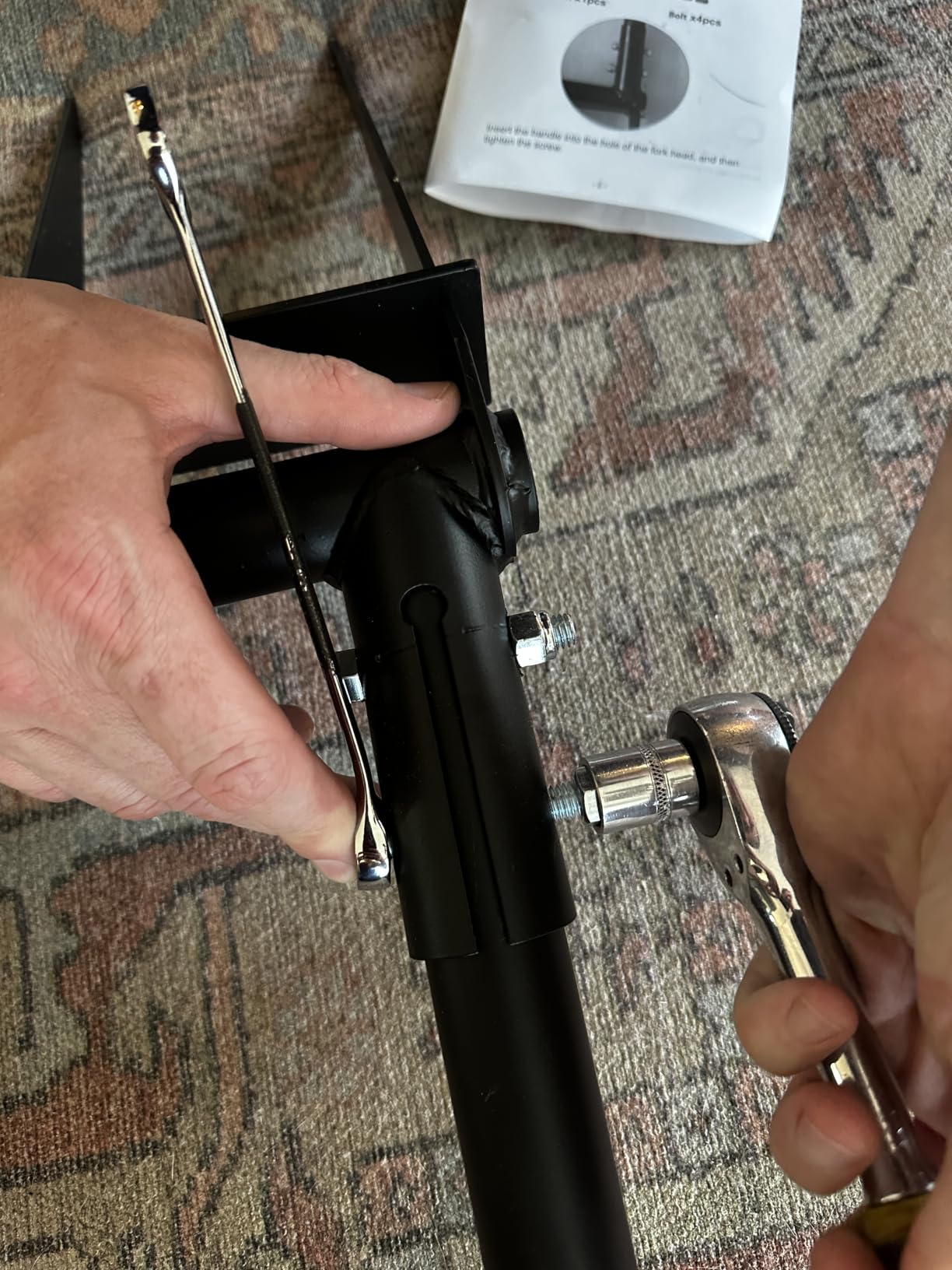
The build is straightforward: an integrated forged steel head welded to fiberglass handles, rated to resist wear, with a reinforced connection at the joint. That joint is the part I actually tested. Traditional broadforks fail at the fork-to-handle connection, and this one held firm with no loosening or wobble after repeated passes in dry clay.
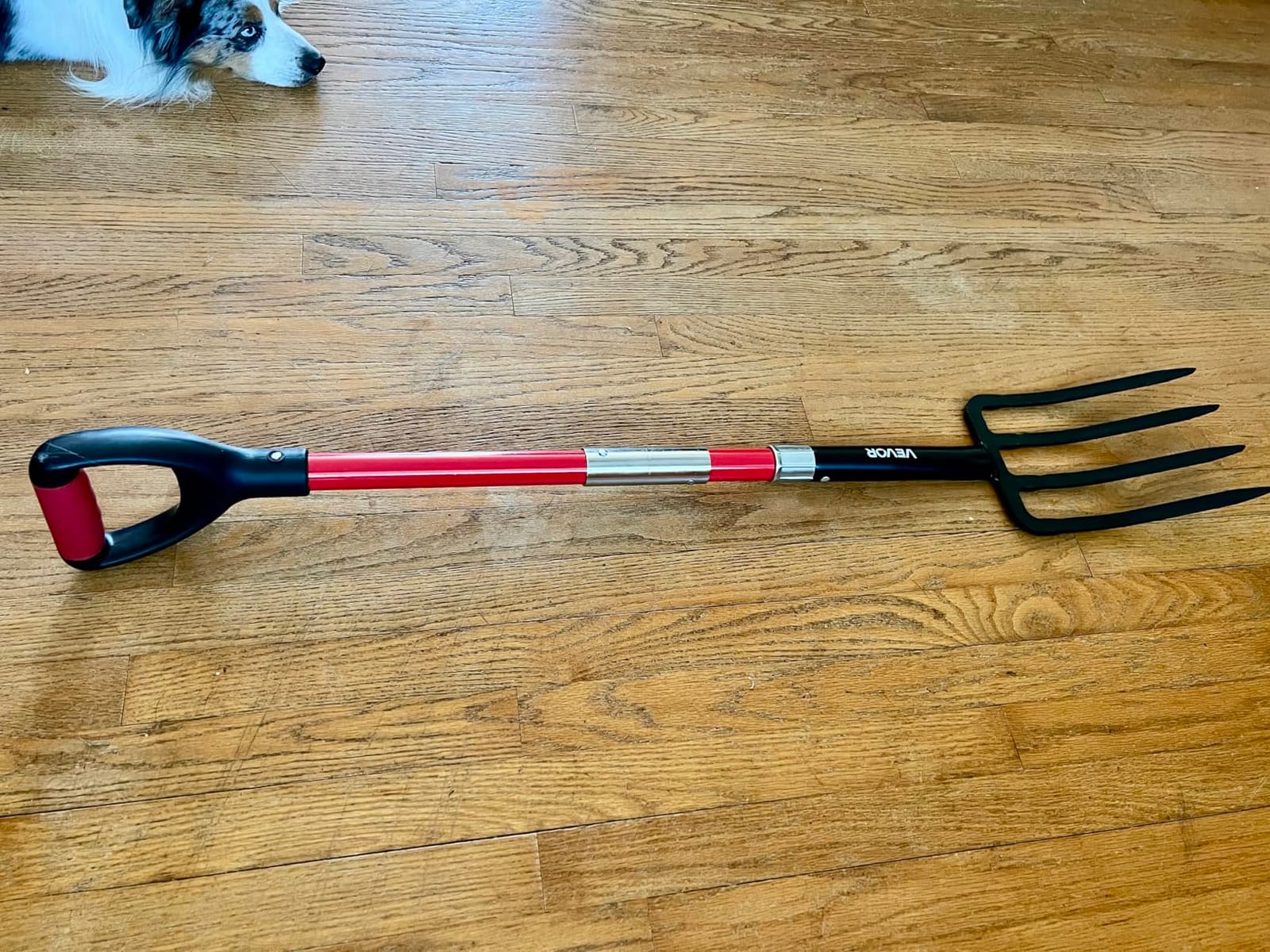
Two details make it more useful than the price suggests. The 54-inch total length keeps you standing upright rather than bent over the bed, which matters across a full afternoon of work. And the head and handle detach, so the whole tool collapses into a toolbox or onto a shelf instead of eating wall space in a small shed.
It is also not a one-job tool. Owners use it as a potato fork in muck, a bedding fork for leveling, and a general garden rake for raking in light material. That versatility matters when you only have one implement hanging on the wall.
Who this broadfork suits
It suits the majority of home gardeners working 30 to 36 inch beds who want one tool that handles aeration, turning compost, and lifting root crops. If you have never used a broadfork and are nervous about technique, the detachable design and reinforced joint make this a forgiving place to learn.
It also suits anyone with limited storage. A 54-inch tool that separates into two pieces is the difference between owning a broadfork and not owning one.
Who should skip it
Skip it if your soil is genuinely rocky or hardpan and you expect the tines to take abuse indefinitely. Fiberglass has more flex than solid steel, and owners do report that it feels less rigid than an all-steel fork when you are levering against a resistant layer.
Also consider the weight. At 13.67 lb it is not a light tool, and during one long pass over a large plot the load adds up on your feet and lower back.
2. Meadow Creature All Steel 12-Tine Broadfork
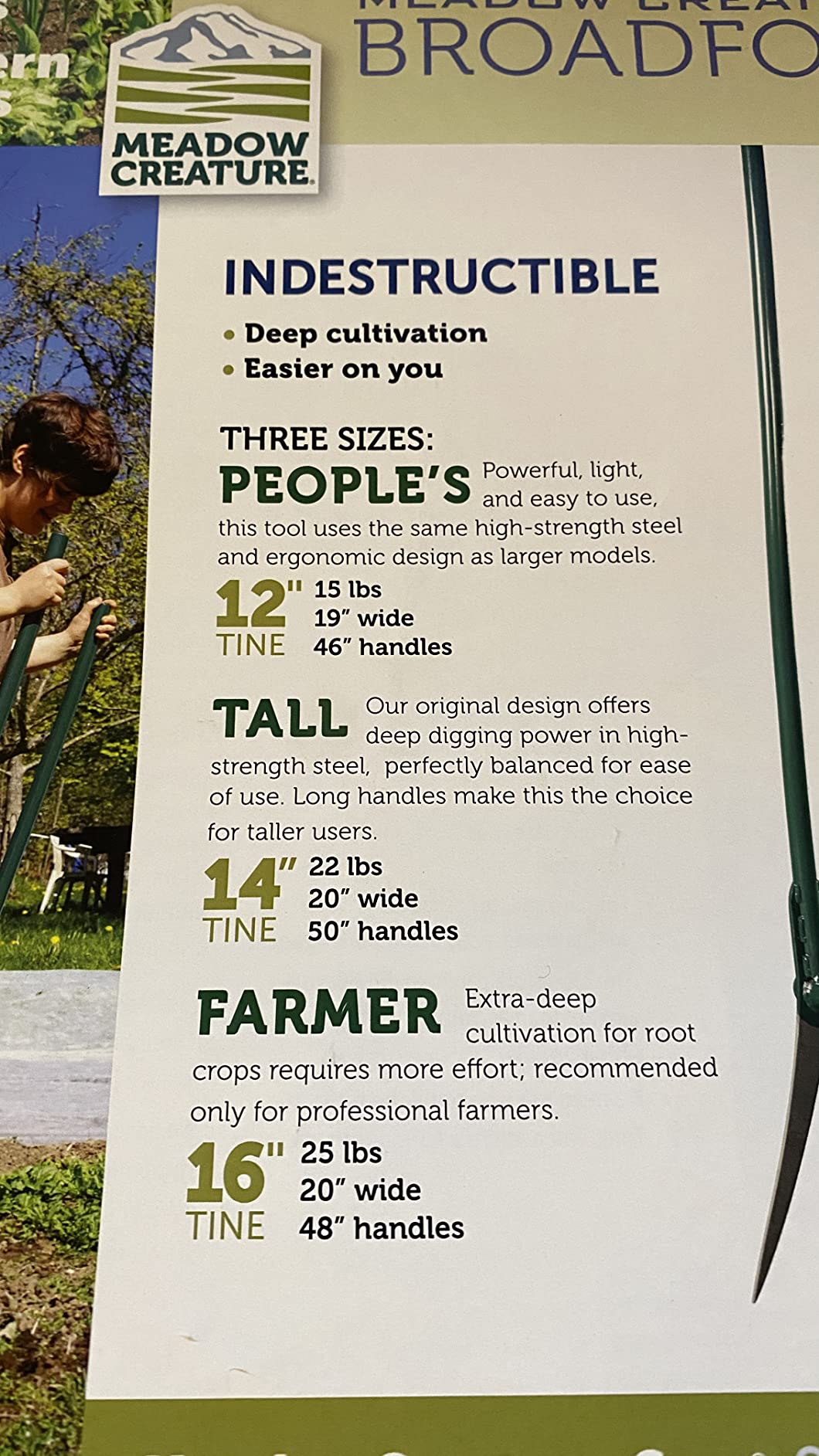
Meadow Creature’s All Steel Broadfork: The Peoples Broadfork ,12 tines Green BF-12 BF-12
Fully welded alloy steel
12 tine cutting width
15 lb
Lifetime warranty
Pros
- Fully welded with no bolts to loosen or snap
- Highest rating in the group at 4.8 stars
- Breaks 6 to 9 inches of heavy clay fast
- Silent operation with no fuel or batteries
- Lifetime warranty from a US maker
Cons
- Heaviest demand on the body of any option here
- Needs repeated passes in very compact ground
- Wide 12-tine head is awkward in narrow planted beds
If you break hardpan clay, this is the one. It carries the highest rating of the twelve at 4.8 stars with 94% five-star reviews, and the reason is structural: the frame is fully welded alloy steel with no bolts anywhere at the joints.
That single design choice removes the most common failure mode in broadforks. Bolted assemblies develop play, then bolt fatigue, then a head that wobbles when you are putting your weight on it. There is nothing here to loosen. Permies users running one of these call it an outstanding buy and say they have had theirs for many years.
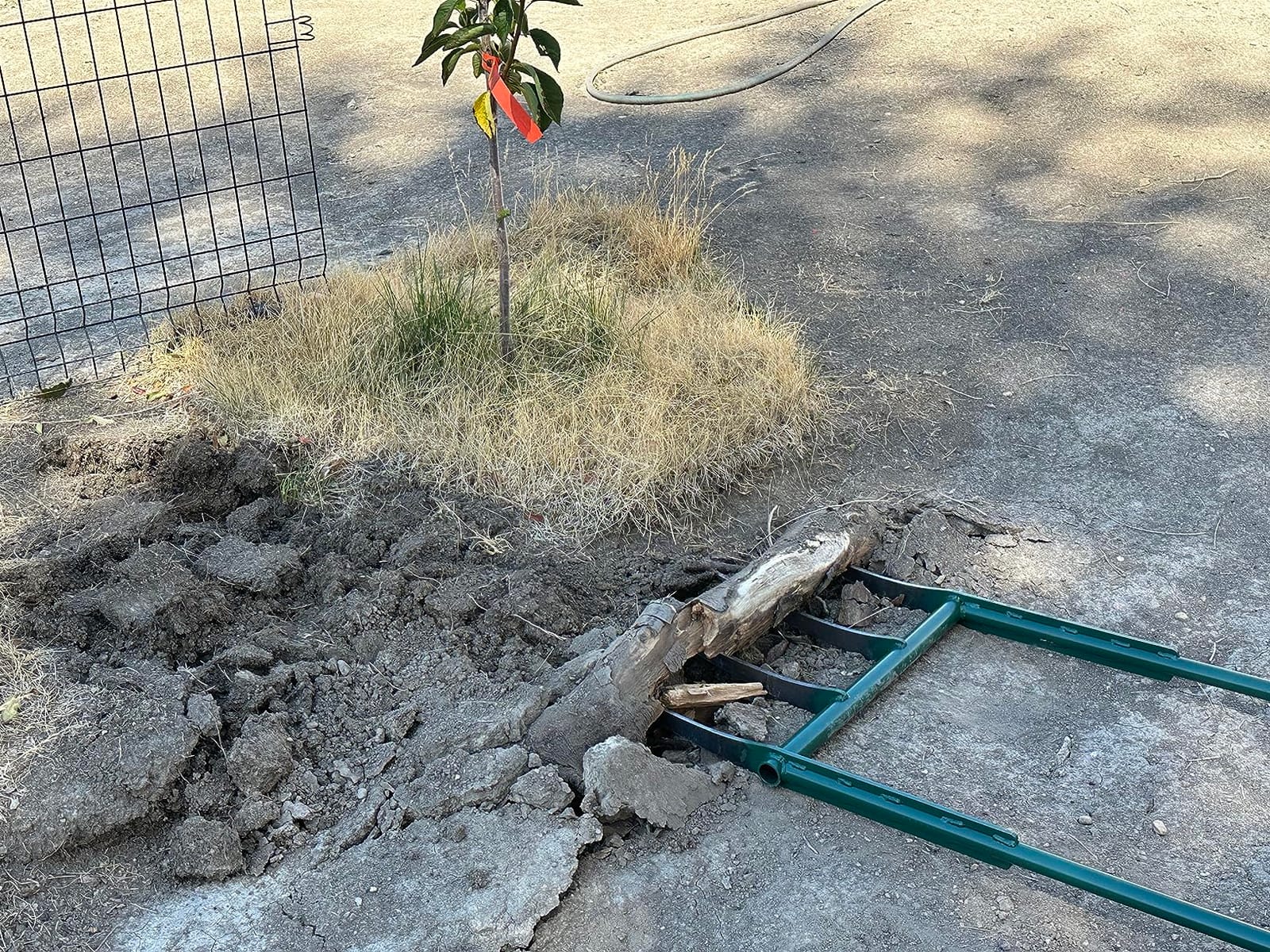
Owners describe a specific technique: stand on the crossbar and rock the tines into the ground, then lift and pull. Used that way, reviewers report it breaking 6 to 9 inches of heavy clay in a fraction of the time a powered tiller needs, and it is completely silent with no fuel, batteries, or maintenance.
It is also the only fork here that treats your soil life as the point rather than an afterthought. Nothing gets pulverized. Worms stay in the bed, fungi networks stay intact, and the tilth improves season over season.
Who this broadfork suits
It suits growers with clay, shale, or compacted beds who plan to work the same ground every year and want a tool that lasts. The lifetime warranty and USA construction make it a one-decade purchase rather than a replace-every-five-years purchase.
It also suits anyone tired of a tiller. One permies owner with a Meadow Creature fork describes it as a lifetime tool they could pass down to their grandchildren.
Who should skip it
Skip it if your beds are 24 inches or narrower. Twelve tines across a wide head is a lot of tool for a narrow bed, and owners report it is harder to maneuver between existing plants.
It is also the most physically demanding pick here at 15 lb. Working it well means using your body weight in a rocking motion, which is a real cost over a long day and simply not viable for some people.
3. Walensee 9-Tine All Steel Broadfork
Walensee Broadfork Garden Tool, 9 Tines Heavy Duty Broad Fork Hand Tiller, 2-in-1 Garden Pitchfork with Ergonomic U-Shaped Handle, Spading Digging Fork for Gardening, Cultivating
9 hardened tines
U-shaped handle rated to 165.4 lb
9.5 in foot platform
All steel
Pros
- Tines reach past 9 inches in loose soil
- 9.5 in foot platform fits any shoe size
- U-shaped handle keeps you upright
- All steel with no wood components to split
Cons
- 15.97 lb is heavy for long single-pass work
- Manufacturer advises shallower passes in compacted ground
- Spray-molded tines less effective in dense clay
Depth is the headline here. The nine hardened tines are rated to penetrate up to 9.1 inches in loose soil and about 5.9 inches in compacted ground, which puts it ahead of most five-tine forks in this group on pure reach.
The other thing I like is the 9.5-inch foot platform, which is wide enough to stand on in any shoe size. Leverage comes from your boot, not your arms, and that difference is what decides whether a broadfork session is pleasant or grim.
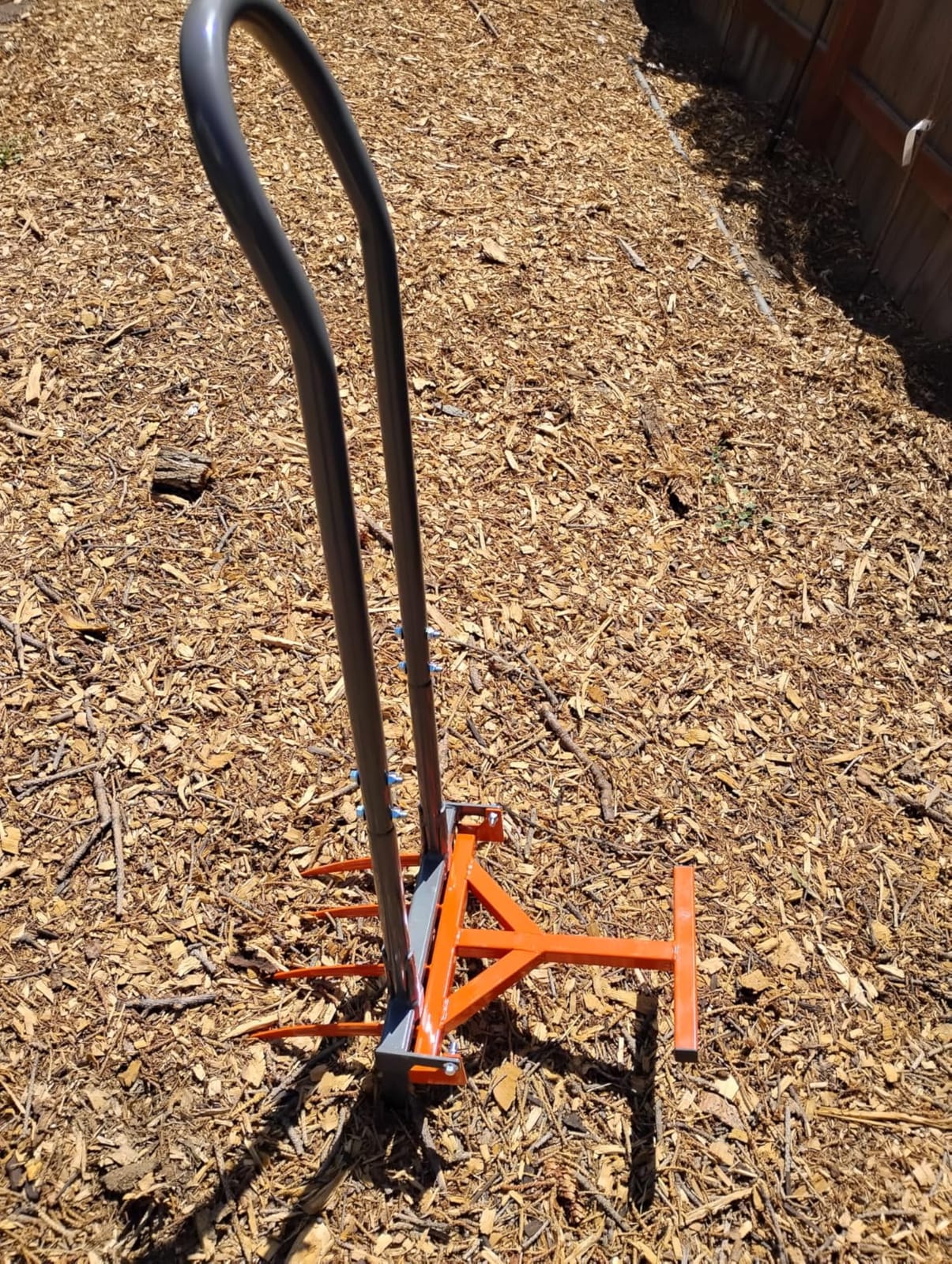
The U-shaped handle holds you in an upright working position and takes strain off your hands, and the whole frame is steel with no wooden components anywhere. That last point matters in stony ground, where wood handles are the first thing to give.
At 4.4 stars across 94 reviews, this is the pick I send people who want a serious broadfork without stepping up to a welded-lifetime-tier tool. Owners point to the deep reach, wide step, and all-steel frame as the reasons it earns its place.
Who this broadfork suits
It suits gardeners with established beds who want genuine depth rather than a shallow scratch. It works as a digging fork, an aerator, and a harvesting tool for root vegetables, so it earns its space in a small shed.
It also suits anyone who wants an all-steel frame at a mid-range price point and does not want to worry about a handle splitting on a hidden rock.
Who should skip it
Skip it if your soil is dense clay and you want one tool that never needs depth advice. The manufacturer explicitly recommends working compacted ground at about 5.9 inches rather than the full 9, because going deeper risks the tines.
At 15.97 lb it is heavy for extended single-pass tilling, and if you already have any back or shoulder trouble, that weight is worth thinking about before you buy.
4. SILKPE 56 Inch Broadfork with 11 Inch Cambered Tines
SILKPE 56” Heavy Duty Broadfork for All the Soils, Detachable Design Pitchfork, 5 Sharp and Cambered 11” Tines Bord Fork Garden Tool, Ergonomic Handles, Good Package, Easy Assembly, Blue.
11 in cambered tines
One-piece cut tine plates
17.56 lb
56 in overall
Pros
- Extra thick cambered tines cut hard ground
- One-piece welded tine plates rather than bolts
- Folded handle ends lengthen the pull stroke
- Includes cover and two wrenches
- Four screw assembly under three minutes
Cons
- 17.56 lb is one of the heaviest here
- Manufacturer says users must exert extra strength
- Screw together joints can develop play over time
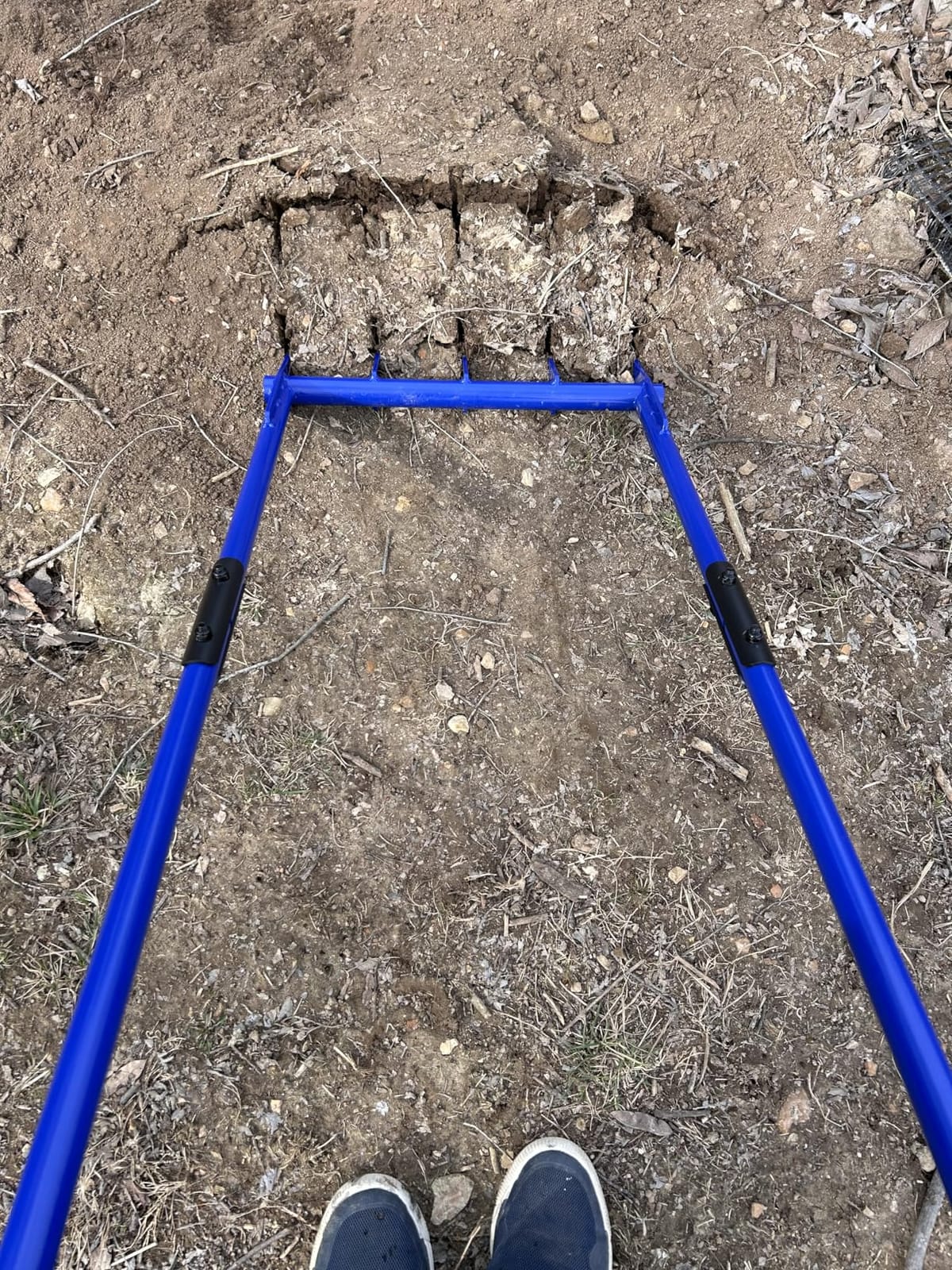
This one is built around a single idea: make the tines long and thick enough that you do not have to keep going over the same spot. The tines measure 11 inches and are cut from a single steel plate, then welded to the cross and vertical pipes for a seamless head.
The cambered arc profile is the detail worth understanding. A curved tine lifts and rolls the soil as it enters rather than driving straight through and shearing it, which is why owners report it working compacted clay that stalls flatter tines.
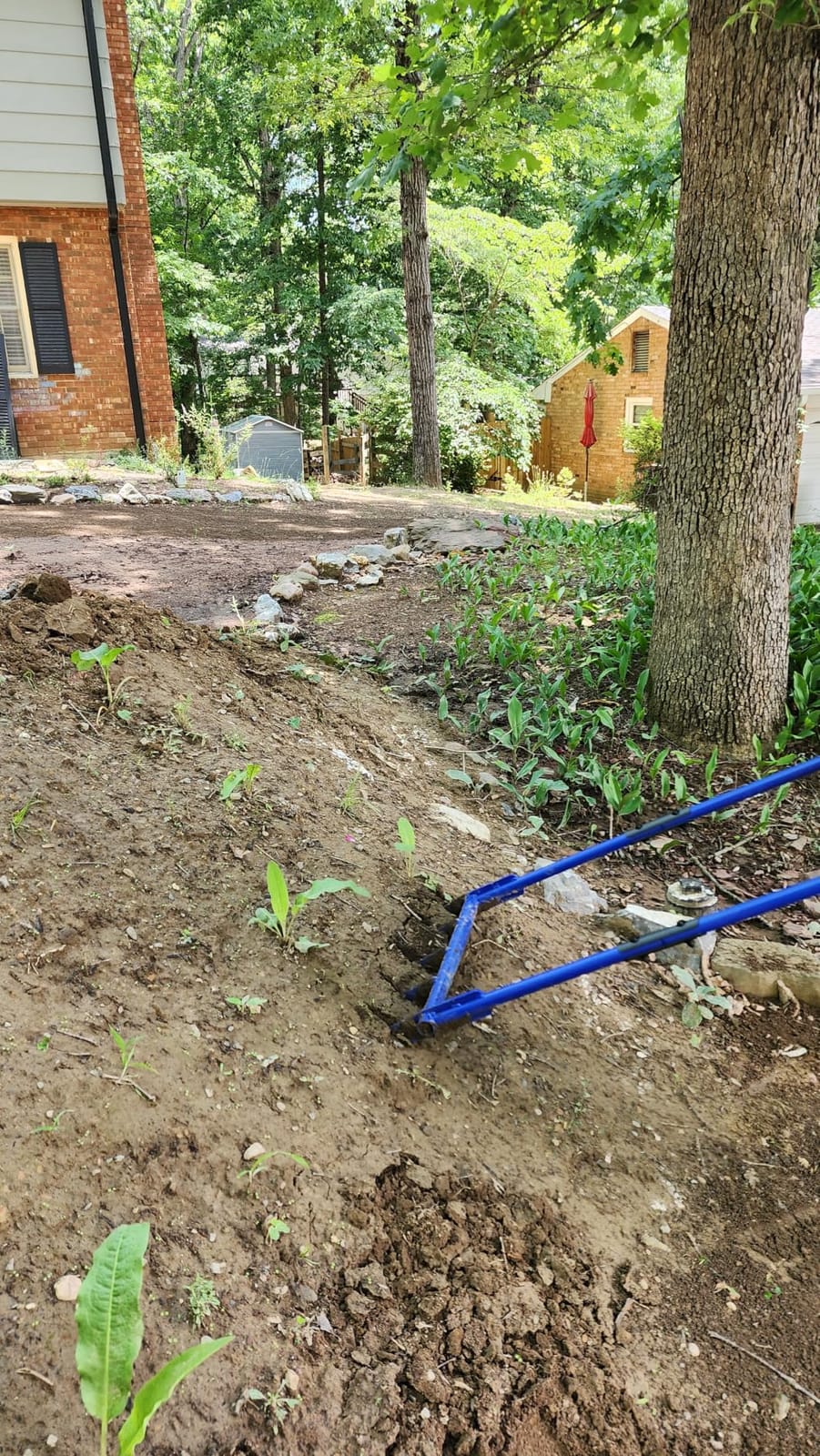
Another quiet improvement is the inward-folded handle ends. Folding the grip ends inward gives you a longer effective pull stroke and better prying power without making the tool longer, and it cuts down on hand fatigue over a full bed.
Assembly takes under three minutes with four screws and the two thick wrenches included, and a protective cover comes in the box. At 4.3 stars across 47 reviews, the feedback is consistently positive on tine thickness and negative on weight.
Who this broadfork suits
It suits gardeners breaking ground that has not been worked in a long time, or beds that have been walked on and driven over until they are hard as a sidewalk. Long cambered tines mean fewer passes for the same result.
It also suits anyone comfortable with a screw-together build who wants to store it away between seasons. It breaks down rather than demanding a permanent corner of the shed.
Who should skip it
Skip it if you have any sensitivity in your back, shoulders, or wrists. At 17.56 lb it is one of the heaviest tools here, and the manufacturer states plainly that users must exert extra strength because of the heavier steel.
Also be aware that screw-together joints are the weak point in the long run. Play can develop at the connection, and the head is exactly the part you do not want moving under load.
5. VASALAID 5-Tine Broadfork with Galvanized Finish
Broadfork 5-Tine Broad Fork for Gardening Ergonomic U-Shaped Design
Galvanized powder coated steel
5 heat-treated tines
Reinforced crossbar
16.27 lb
Pros
- Powder coating resists rust over long service
- Heat-treated tines resist deformation
- Reinforced crossbar spreads load
- Rubber handles cut hand fatigue
- Removable center pole for compact storage
Cons
- Bolted joints can develop play and bolt fatigue
- Manufacturer advises avoiding roots and rocks
- Some owners need a punch and mallet to align holes
Most broadforks in this group are bare or painted steel. This one is galvanized with a powder-coated, rust-resistant layer on the tines, and that is the feature that decides it for anyone storing a tool in a damp shed or working in wet winter conditions.
Buyers also report a real cut in working time compared with a round-point shovel in heavy compacted clay. Five heat-treated tines and a reinforced crossbar between the handles spread your load so the pull stroke stays efficient.
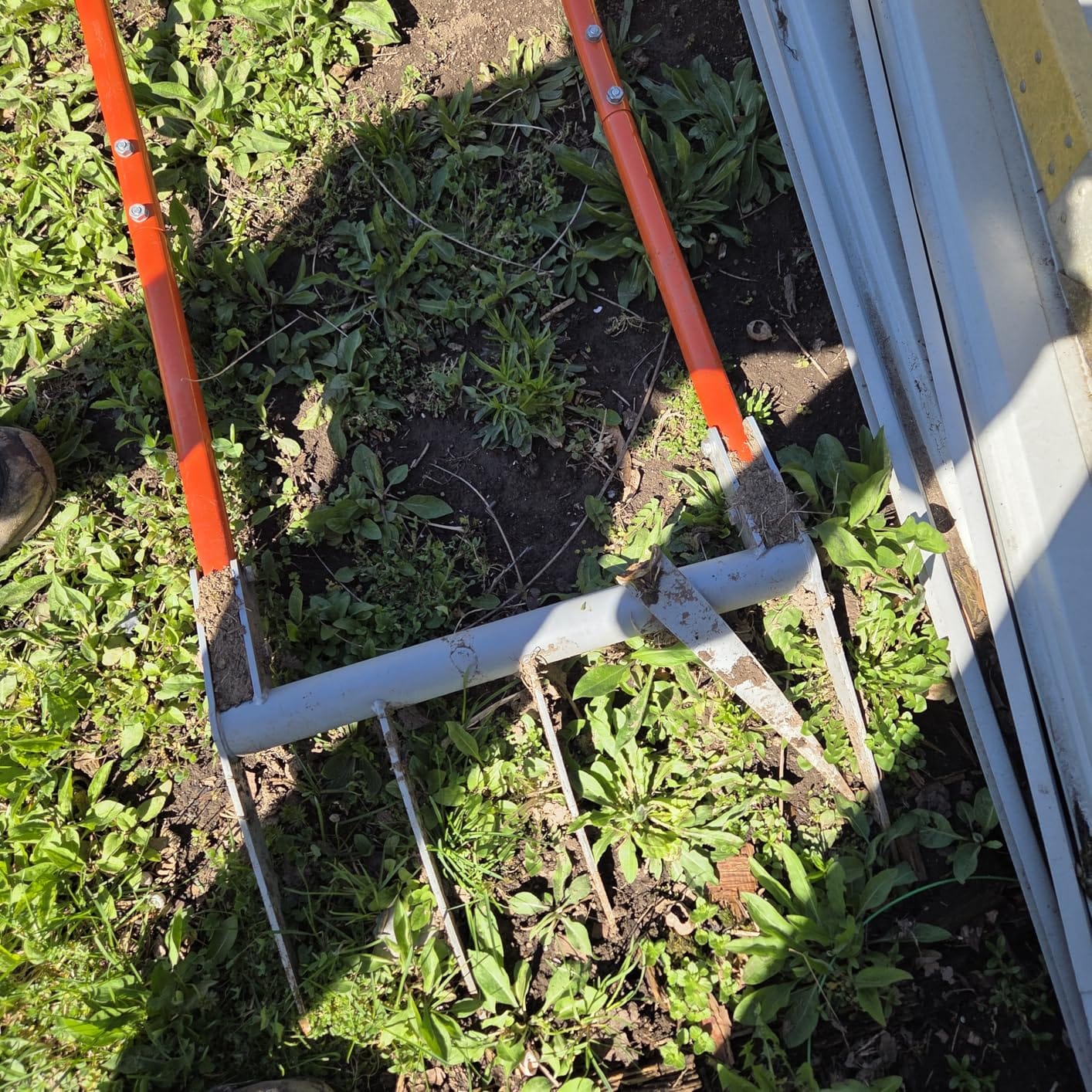
Non-slip rubber handles take some of the sting out of long sessions, and a removable center pole lets the whole tool break down for storage. At 4.2 stars across 61 reviews, the ratings split: some owners call it solid, others describe the assembly as feeling a bit wobbly.
That split is the honest summary. The steel work is good. The way the pieces join is where the feedback disagrees.
Who this broadfork suits
It suits gardeners in wet climates, or anyone who leaves tools outside or in an unheated garage. The coating is the reason this one keeps its condition when the others show surface rust first.
It also suits people who want a straightforward five-tine fork for annual bed prep without spending on a heavy 11-inch tine design.
Who should skip it
Skip it if you hit roots or rocks regularly. The manufacturer advises against it in those conditions, and heat-treated tines will deform rather than pass around an obstruction.
If you already own a bolt-on tool that has developed play, do not expect this to fix that pattern. The fork-to-handle connection here is bolted, and owners who fuss with alignment during assembly sometimes need a center punch and mallet to get the bolt holes to line up.
6. SENVERT 5-Tine Broadfork with Angled U-Handle
Senvert BroadFork Garden Tool, Heavy Duty 5-Tine Broad Fork Hand Tiller, Garden Pitchfork with Ergonomic U-Shaped Handle, Digging Fork for Gardening, Cultivating
Iron construction
5 rib-reinforced tines
19.5 in working width
54 in tall
Pros
- Rib reinforced tines resist bending
- Welded dual row tine connection adds joint strength
- Forward angled handle guides hands naturally
- 19.5 in width covers a wide swath per pass
Cons
- Iron lacks galvanizing or powder coating so limit rust
- Lighter build than 17 lb models in hard clay
The 19.5-inch working width is what stands out here. At 4.5 stars across 46 reviews, this is one of the better-rated tools in the group, and buyers value the width when prepping beds and harvesting roots.
Reinforcement is the theme through the whole frame. The tines are heat-treated with reinforcing ribs specifically to prevent bending, and there is a structural rib at the handle base paired with a welded dual-row tine connection. Those are the two places a broadfork usually fails.
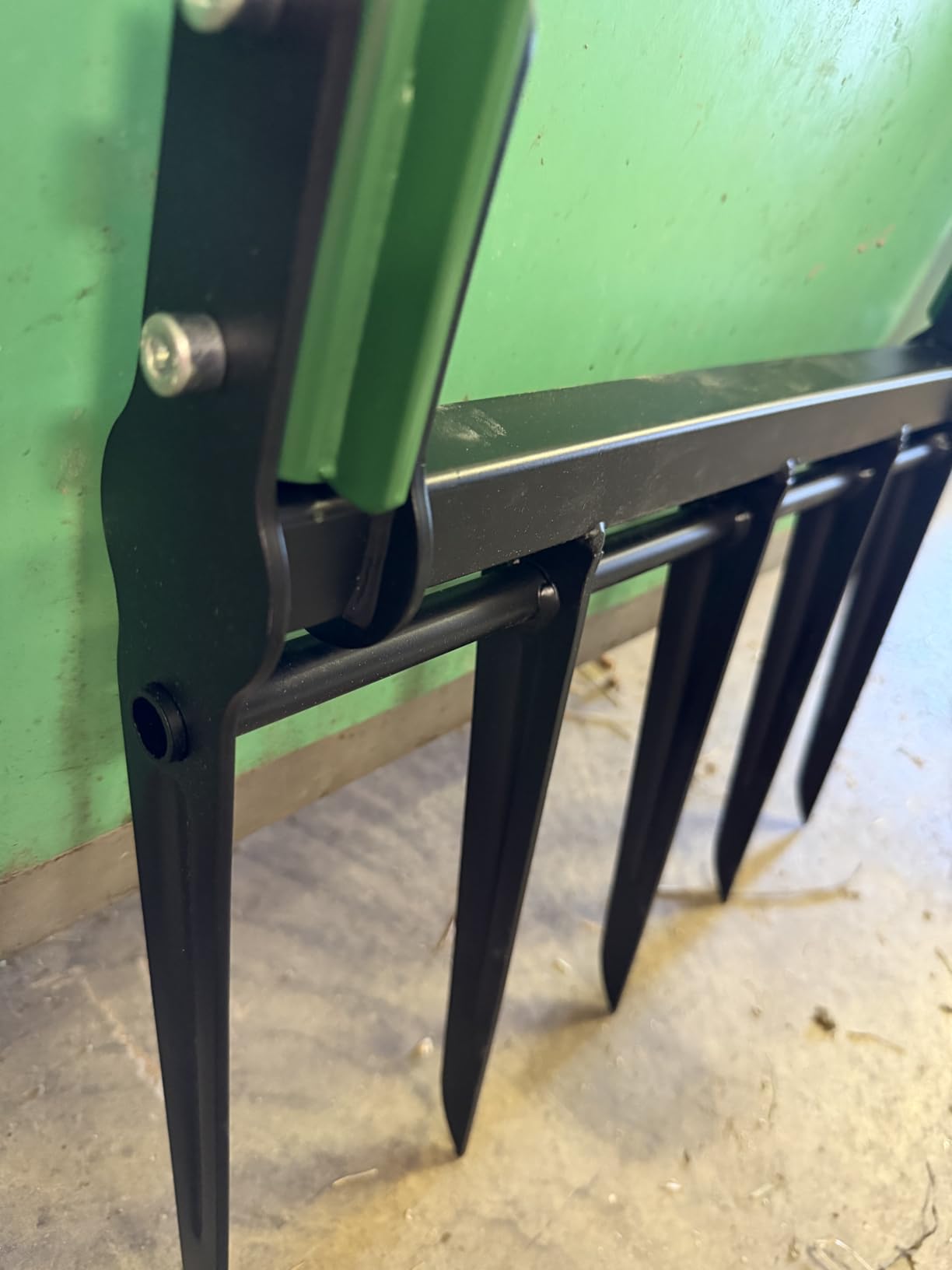
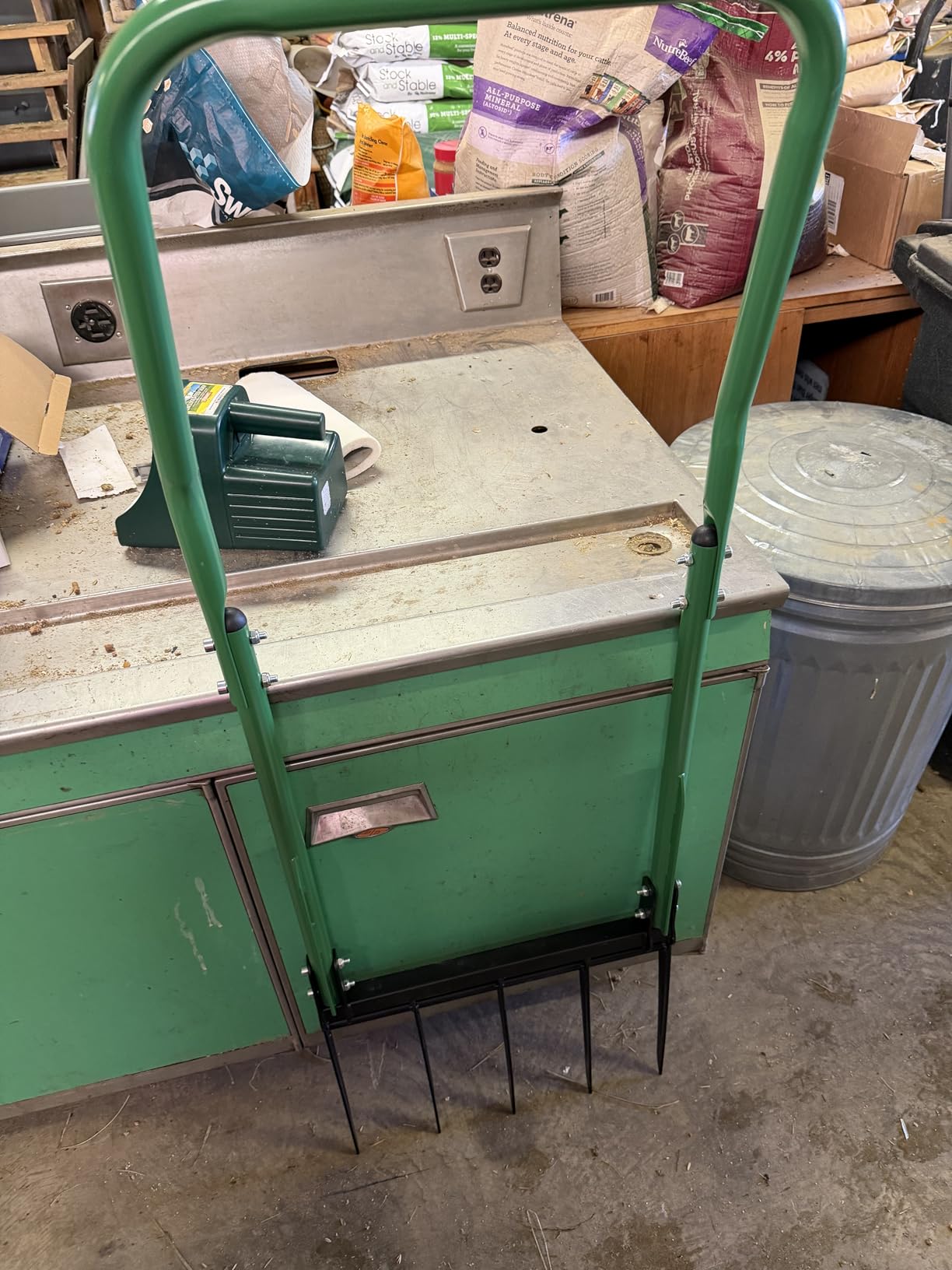
The forward-angled upper handle section is a small ergonomic decision that pays off over a long session. It guides your hands into a natural position rather than the splayed angle a straight handle forces on you, which reduces wrist strain noticeably.
Dimensions come in at 5.9 inches deep by 19.5 inches wide by 54 inches tall, and reviewers point to bed preparation and root vegetable harvesting as the two jobs it handles most often.
Who this broadfork suits
It suits growers working wide beds who want to cover ground quickly per pass, and anyone harvesting carrots, potatoes, or beets who wants a fork that lifts roots without shearing them.
It also suits people who prefer a lighter-feeling tool. The build is notably lighter than the 17-pound heavy steel models, and that changes how a full afternoon feels.
Who should skip it
Skip it if your soil is brick-hard clay and you want maximum breakout force. The lighter build some buyers find less effective in hard ground, and this is the trade for the comfort the width and angle provide.
Skip it if you store tools outdoors. The iron construction has no galvanizing or powder coating, so the finish needs care to limit rust over long-term outdoor exposure.
7. KEMETIK 5-Tine Broadfork with Arc Clip Lock
KEMETIK 5 Tines All Steel Broadfork, 56″ Broad Fork Garden Tool Heavy-Duty Digging Pitchfork, Non-Slip Grips & Detachable Design for Gardening, Farm Cultivation, and Soil Loosenin
5 curved high-carbon tines
Arc clip lock joint
17.71 lb
Detaches in two pieces
Pros
- Curved high-carbon tines pierce compacted soil in one press
- Arc clip lock removes wobble during the pull
- Rubber grips and folded ends ease lower back fatigue
- Includes wrench spare screws and protectors
- Two piece design stores easily
Cons
- 17.71 lb tires you over long sessions
- Hard to penetrate when soil is bone dry
- Poor fit for small scattered plots
The arc clip lock is the reason to look at this one. Instead of a bolt through a bracket, the connection uses an arc clip that transfers power straight to the tines with no wobble during the pull, which is the phase where most forks feel vague.
Owners consistently praise that rigidity alongside the penetration. Five thick curved high-carbon steel tines go into hard compacted soil with a single foot press, and the non-slip rubber grips with inward-folded ends help you keep an upright posture.
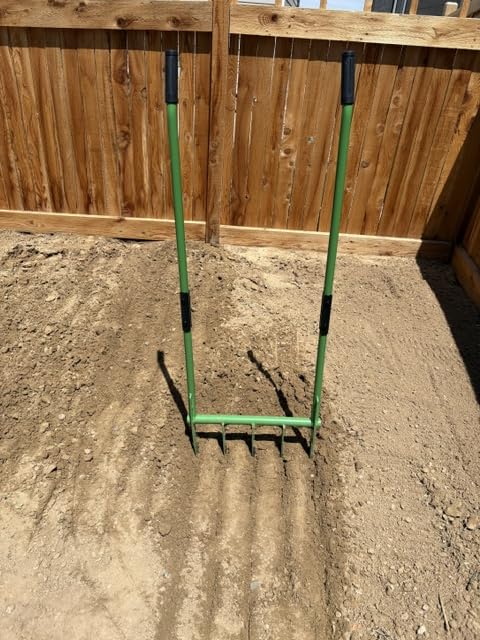
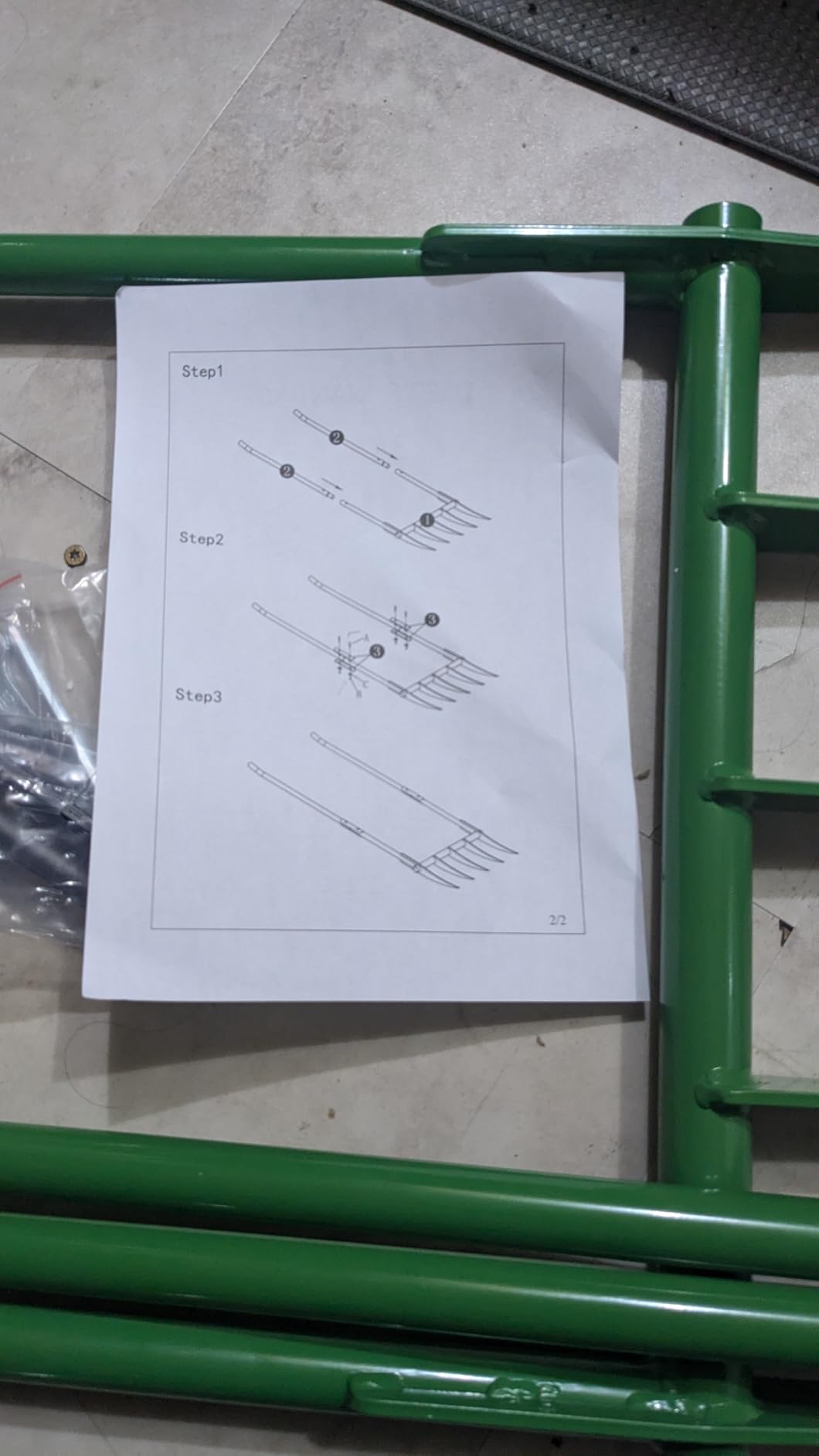
The accessory package is unusually complete: a thickened wrench, spare screws, and rubber tine and floor protectors all come in the box. The tool detaches into two pieces, so storage in a garage or car trunk is painless.
At 4.5 stars across 34 reviews, the feedback centers on penetration and ergonomics, with weight as the recurring trade-off. Owners note the mass helps drive the tines but tires them over long sessions.
Who this broadfork suits
It suits gardeners who care more about a rigid connection than a light tool, and anyone who hates the mushy feeling of a joint flexing under load. The clip lock is a genuine answer to the most common broadfork complaint.
It also suits owners who want one tool that covers the whole cycle: turning soil, aerating, and lifting root crops, then breaking down for the winter.
Who should skip it
Skip it if your plot is small or your beds are scattered. At 17.71 lb with a broad working span, this is not a practical choice for a few short raised beds, and reviewers say so directly.
Skip it if you work in bone-dry soil. Owners report difficulty penetrating when the ground is very dry, and one report cites tines bending immediately in extremely hard compacted ground.
8. tahoe dreams 56 Inch Broadfork with Cambered Tines
56” Heavy Duty Broadfork for All the Soils, Unbreakable Pitchfork, 5 Sharp Cambered 11” Tines Bord Fork Garden Tool, Ergonomic Handles, Good Package, Easy Assembly, Cultivator & Tiller, Green.
11 in cambered tines
One-piece welded steel plates
17.6 lb
56 in overall
Pros
- 4.7 stars with 86 percent five star reviews
- Very thick cambered tines lift ground in large chunks
- Holds together where lighter forks fail
- Folded handle ends give strong prying power
- Simple four screw assembly
Cons
- 17.6 lb needs rocking on the crossbar to penetrate
- Screwed handles develop play over time
- One long term owner rates the handle joint medium duty
This is the one I would hand someone who is breaking pasture or a clay-packed lot for the first time. At 4.7 stars across 30 reviews it is one of the top-rated tools in the group, with 86% of owners giving five stars.
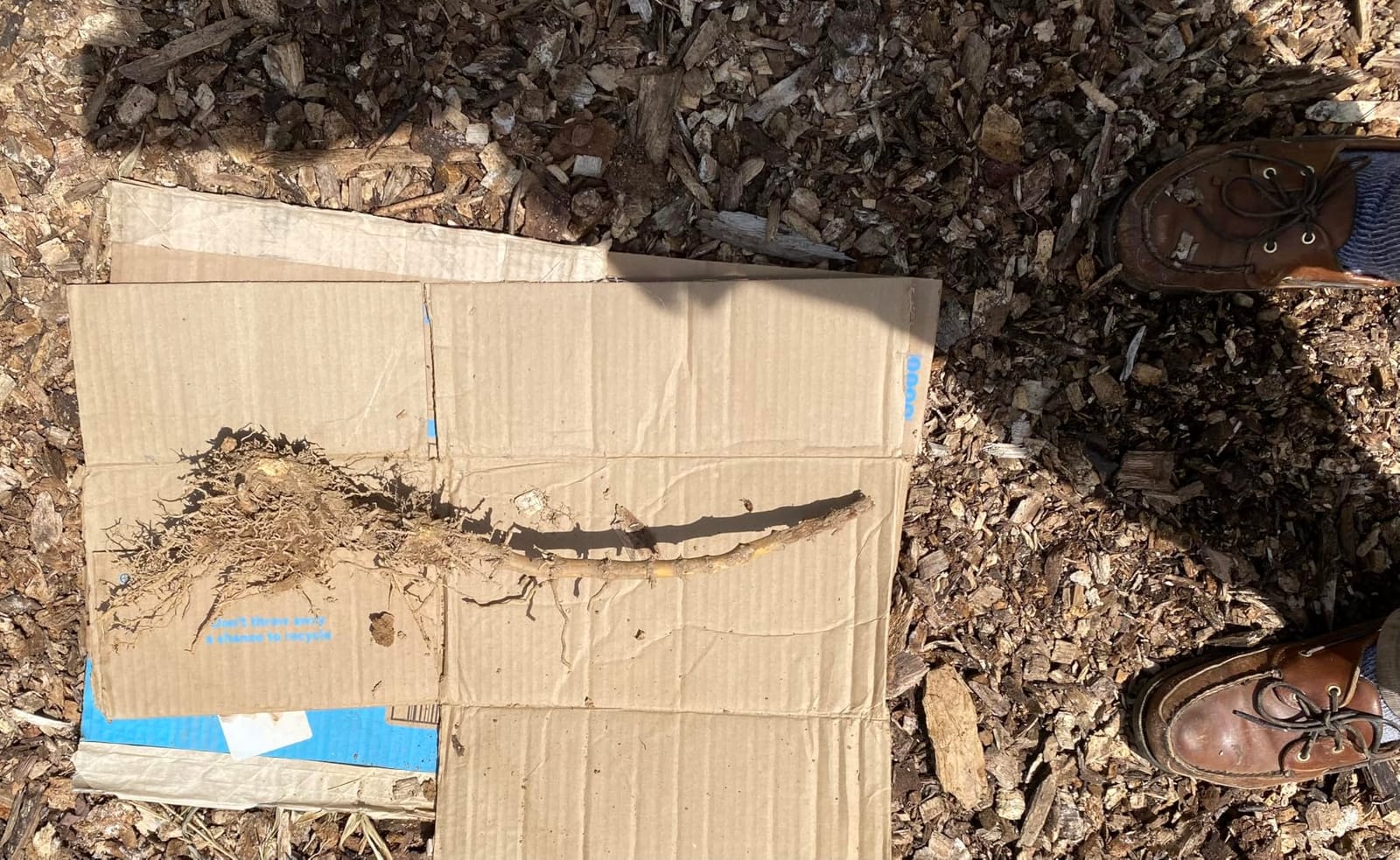
The reviews are unusually specific about results: owners report it breaking up 8 to 10 inches of compacted pasture and clay, and several say other tools broke during the same job. The 11-inch cambered tines lift compacted ground in large hard chunks rather than smearing it.
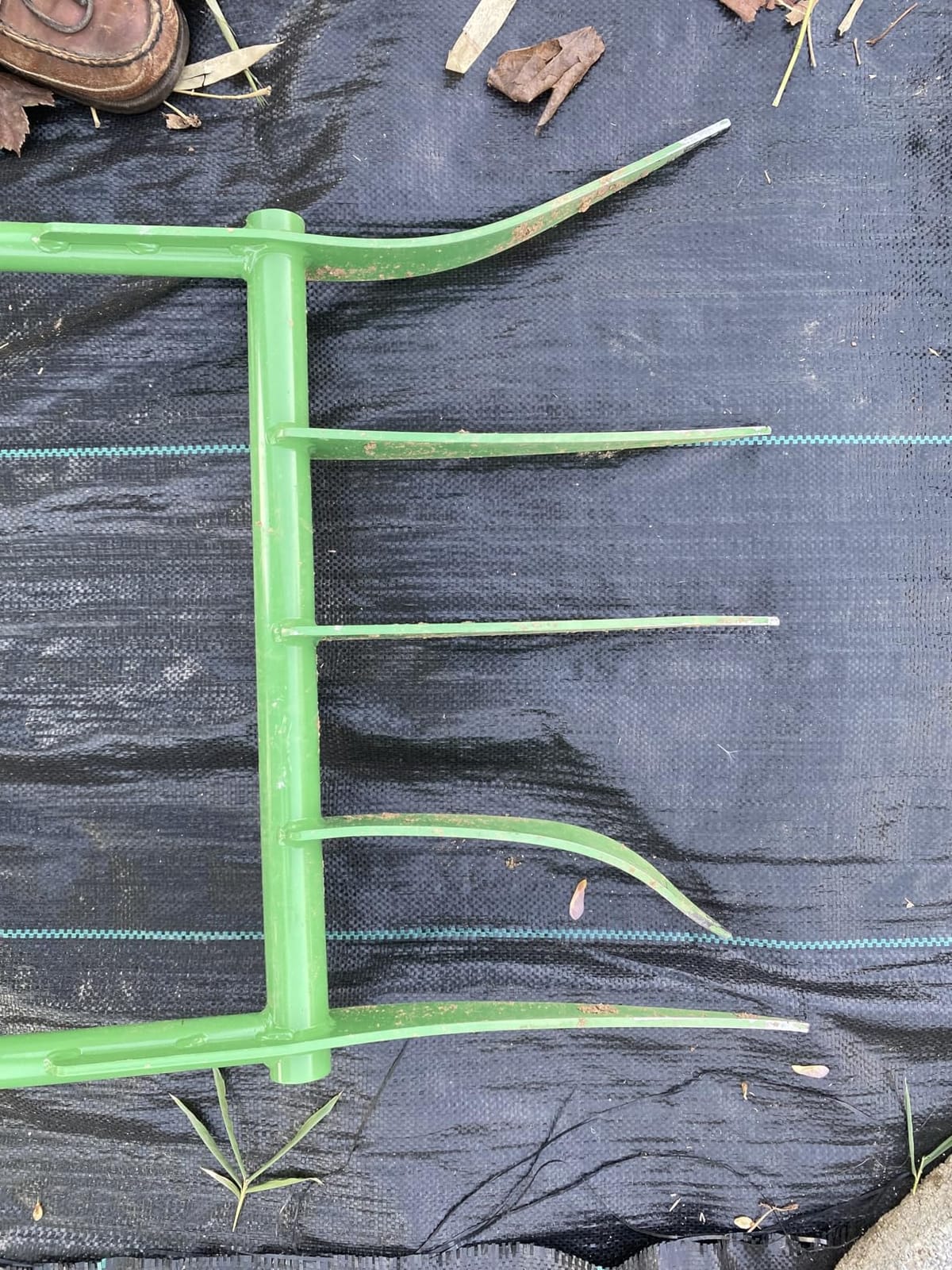
The head is cut from a single steel plate and welded into an integrated frame, so there is no seam at the tine base to fail. Inward-folded handle ends add prying power and keep the grip comfortable when you are standing on the crossbar and rocking the tool in.
Assembly is a four-screw job under three minutes, and two thick wrenches plus a protective cover are included. This is the green version of the same cambered-tine design as pick four, with a slightly different frame width.
Who this broadfork suits
It suits anyone converting tough ground, breaking sod, or restoring soil that has been compacted by machinery. Owners consistently rate it as the most effective of this group on the hardest jobs.
It also suits buyers who want serious steel thickness and are comfortable committing to a heavy tool that stays put when you put your body weight behind it.
Who should skip it
Skip it if 17.6 lb sounds heavy, because it is. Owners report needing to stand on the crossbar and rock the tool to penetrate hard ground, and that is not advice for anyone with a back problem.
Watch the handle joint. At least one long-term broadfork owner rates that connection as medium duty, and the screwed-together handles can develop play over time. Lean on a large rock or a rhizome and the tines can bend.
9. CobraHead Heavy Duty Broadfork
CobraHead® Broadfork – Heavy Duty Ergonomic Garden Hand Tool – USA Made
1045 carbon steel tines
Hardwood ash handles
14 lb
57 in tall by 21 in wide
Pros
- Lightest premium option at 14 lb
- Round tines lift soil instead of slicing it
- Tines pass through the crossbar for a stronger joint
- USA made with replaceable ash handles
- Slimmer profile works around perennials
Cons
- Handle diameter thinner than buyers expect at this tier
- Very solid red clay is the only ground some owners hit
- Tines can arrive protruding from the box
This is the pick for no-till gardeners who already have healthy soil and want to keep it that way. At 4.6 stars across 29 reviews, it is rated for comfort and durability, and owners say it does less damage to soil life than any other tool here.
The round tine profile is the difference. Round tines lift and penetrate rather than slicing through soil, which protects structure, keeps worm activity intact, and works around existing perennials far better than a flat blade design.
Construction is a traditional European U-shaped profile with 1045 carbon steel tines mounted through the crossbar rather than onto its surface, and that mounting detail is the strongest joint approach in this group. Owners describe it as near-indestructible in clay.
At 14 lb it is the lightest premium option here, roughly 4 to 5 pounds lighter than most steel broadforks, and the ash handles are slightly flexible and replaceable rather than a permanent part of the tool.
Who this broadfork suits
It suits established beds and no-till growers who want to aerate without disturbing structure, worms, or mycorrhizal networks. It also suits anyone gardening around perennial plants who needs a narrower profile.
It suits gardeners with back issues, since at 14 lb it is one of the few premium options here you can lift and pull without a rocking motion.
Who should skip it
Skip it if you have solid red clay. That is the one ground several owners report stops it, and it is not the tool for virgin hardpan.
Skip it if heavy breakout force is your priority, and consider manage expectations on the handles. Buyers sometimes find the ash handle diameter thinner than they expected for a tool at this tier, and the tines can arrive protruding from the box in light protective packaging.
10. DeWit 42 Inch Grelinette Style Broadfork
Dewit Broadfork Tiller – 42″ Eco-Friendly Garden Bed Prep Tool with Forged Steel Tines – Covers 12″ Swath Per Pull – Heavy-Duty Manual Cultivator for Raised Beds and Loosening Soil
Forged galvanized Grelinette head
12 in swath per pull
40.9 in total length
Lightweight
Pros
- Exceptionally light for a broadfork
- Forward canted handle gives instant pull back power
- Set-back footstep is comfortable for any height
- Works beds without turning soil and feeding worms
- Back saving for users with back problems
Cons
- Tines shorter and narrower than competing forks
- Not suited to hard rocky clay as tines can bend or snap
- Lowest rating in the group at 4.1 stars
This is the broadfork for people whose backs rule out the heavy options. Owners report it as four to five times lighter than typical models, and it is the tool people with back problems use for hours at a time.
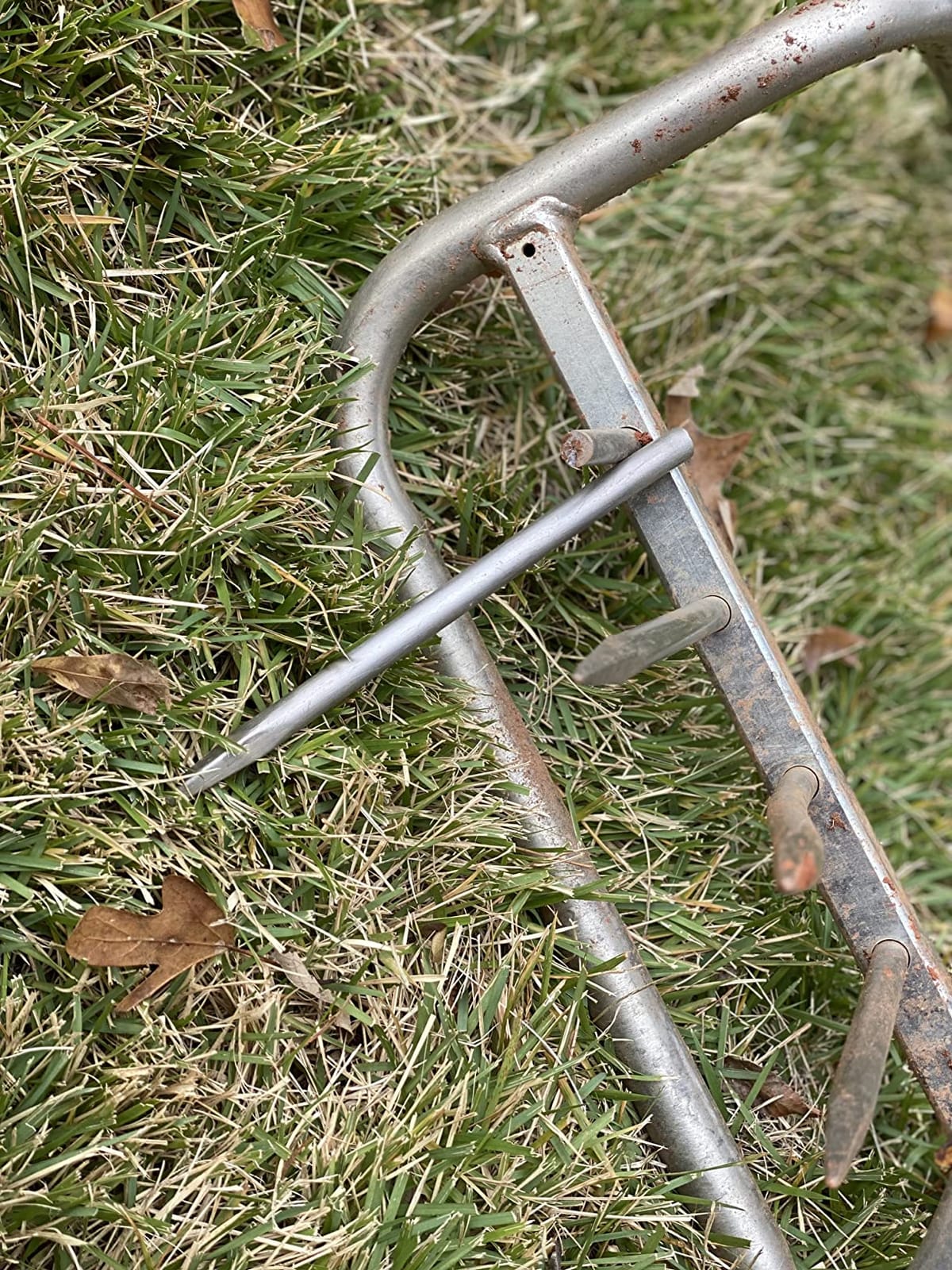
The balance does more work than the weight. The handle sits forward of the head, so pulling back engages the leverage immediately rather than requiring a first stage to get the tines free. A set-back footstep gives a comfortable, stable downward push for users of any height.
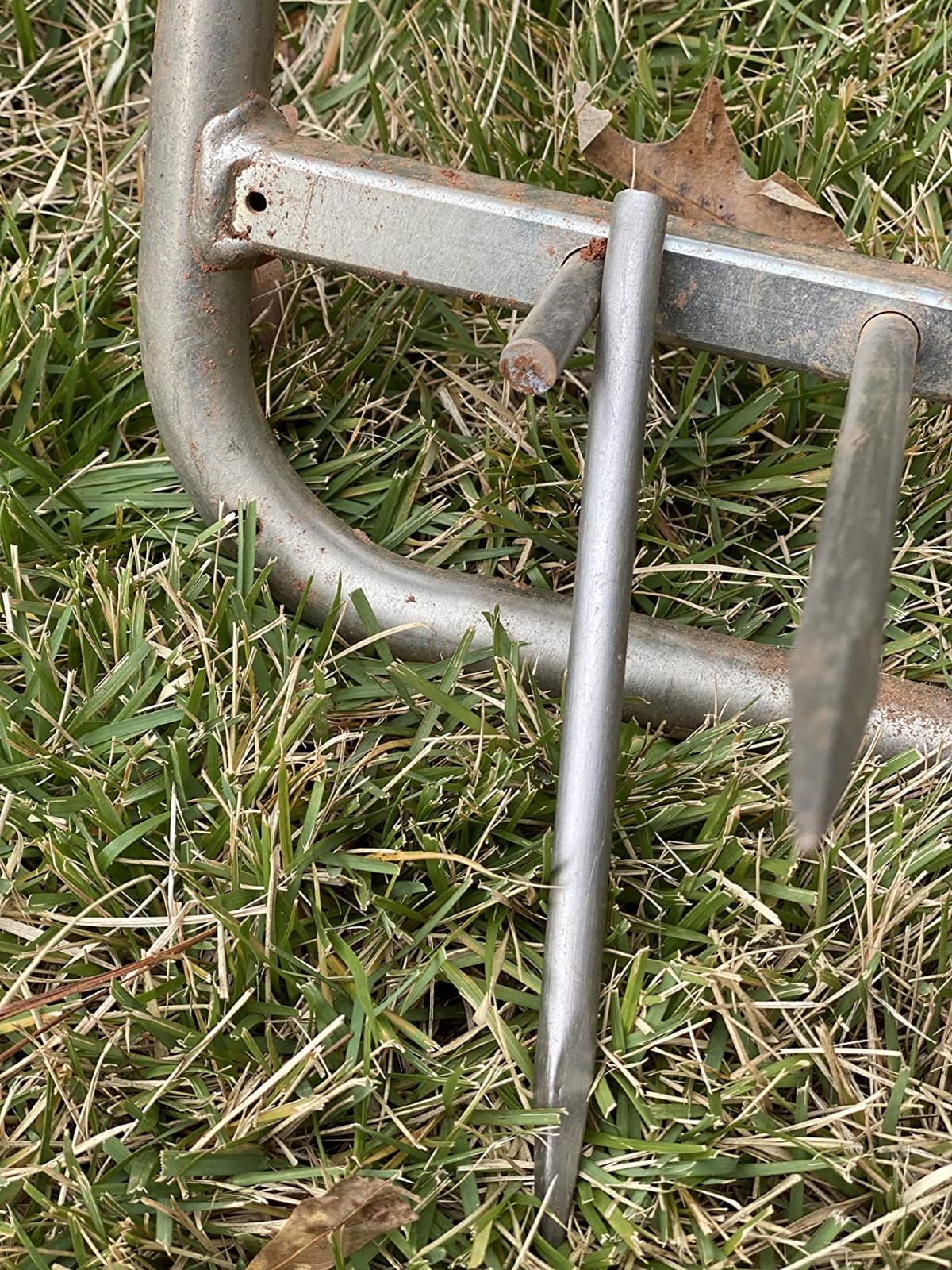
It covers roughly a 12-inch swath per pull, and because it is a Grelinette-style tool it loosens established beds without turning the soil, which leaves worm activity and mycorrhizae undisturbed while still giving you the aeration you need.
Forged tines come from a family-owned maker with more than 120 years of tool forging experience. Note that listed weight varies in the product listing, with a 2.8 pound figure and a 7.3 pound figure both appearing, so treat the exact figure with caution.
Who this broadfork suits
It suits older gardeners, anyone recovering from back strain, and anyone with limited upper-body strength. It also suits long sessions, because the low mass is the difference between finishing a bed and stopping halfway.
It suits established beds where the goal is aeration and mixing in compost rather than breaking virgin ground.
Who should skip it
Skip it if you have hard or rocky clay. Lightweight tines bend or snap when they hit stones, and several owners report this directly.
Skip it if you want maximum depth in one pass. At 4.1 stars across 57 reviews this is among the lower-rated picks here, and the tines are shorter and narrower than competing models, which some buyers find limiting against cheaper digging forks.
11. AGRICAS 11-Tine Adjustable Broadfork
AGRICAS Broad Fork for Gardening – Portable and Ergonomic Broadfork Garden Tool Cultivator Tiller with 6+5 Sharp Tines – Heavy Duty Pitchfork, with Thickened Design
11 tines in a 6+5 layout
Handle adjusts 46 to 54 in
Adjustable tine angle
Built-in foot platform
Pros
- Only adjustable design in the group
- Eleven tines break up compacted clay well
- Thickened galvanized steel resists rust
- Foot platform adds real penetration leverage
- Reported to work 6 to 8 inches into hard clay
Cons
- Heaviest perceived tool at roughly 20 lb
- Low rating at 3.7 stars
- Some shipments arrive with damaged handles or missing hardware
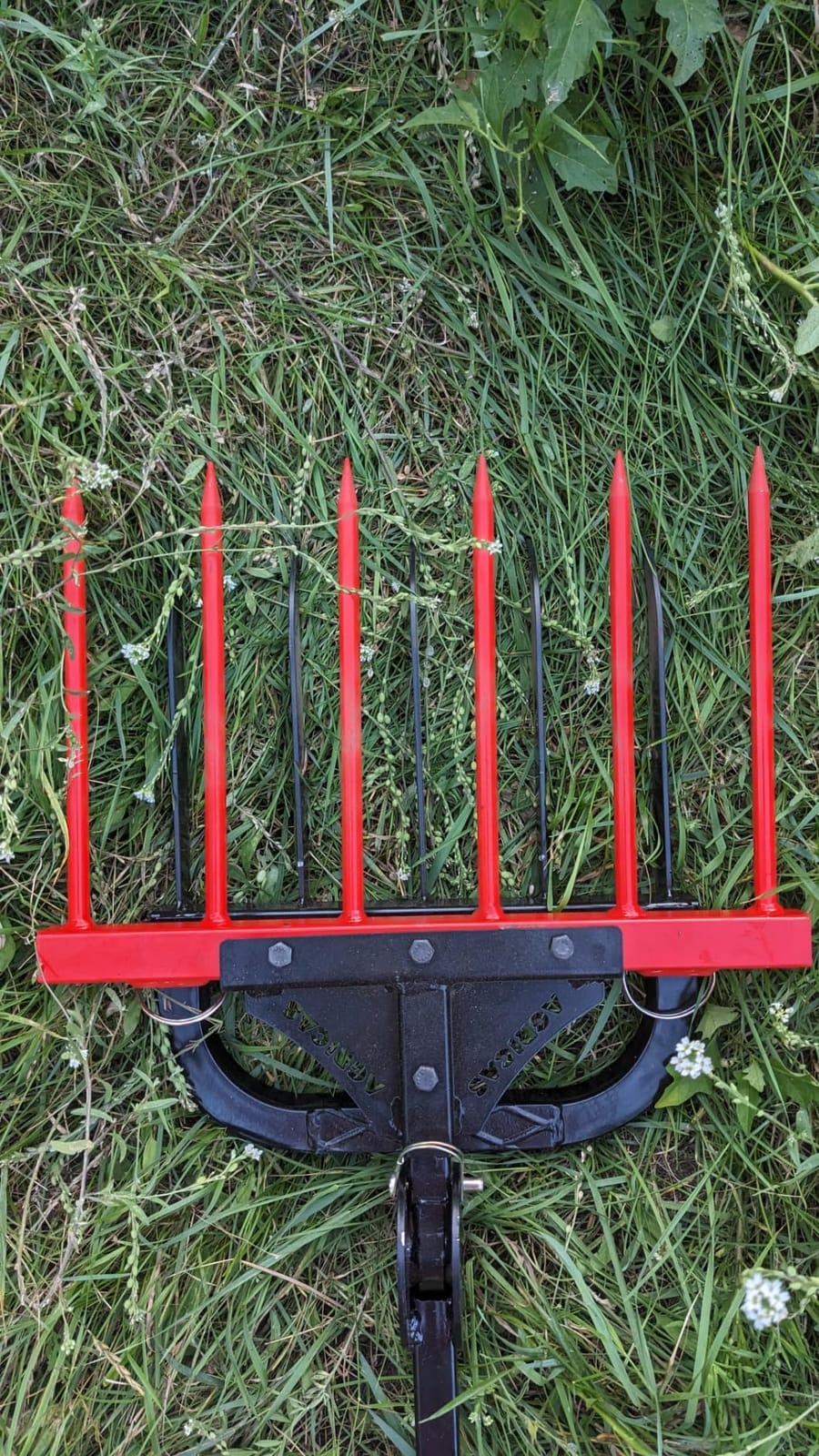
This is the only adjustable broadfork in the group, and for some gardeners that is the whole pitch. The handle length adjusts between 46 and 54 inches and the tine angle adjusts too, so one tool can suit different users and different passes.
Eleven tines in a 6+5 layout give it a wide bite, and owners who like it report it working 6 to 8 inches into brick-hard compacted clay. The built-in foot platform adds leverage you would otherwise have to generate with your arms.
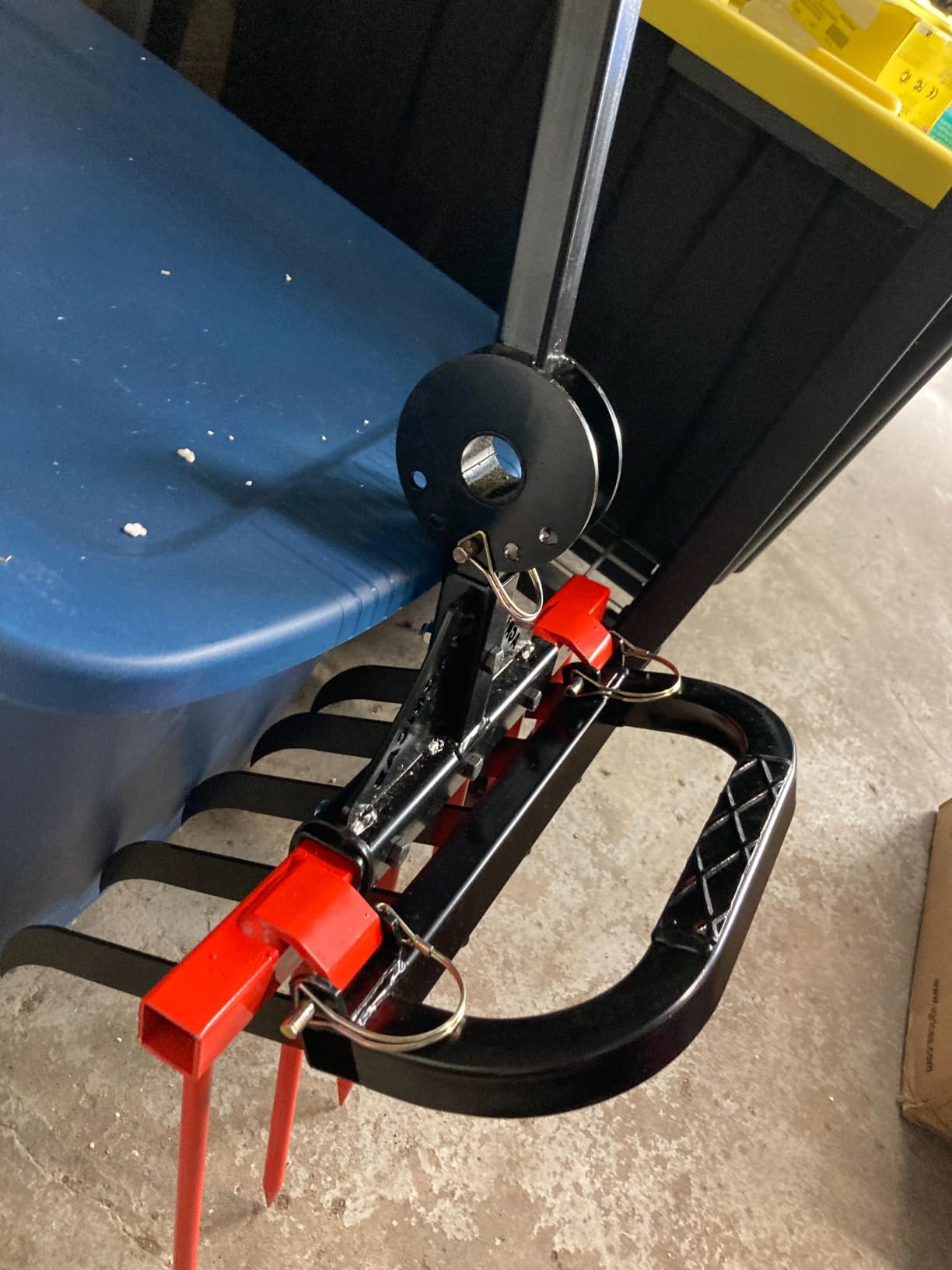
The feedback is genuinely split, and I want to be straight about that. At 3.7 stars across 51 reviews it sits near the bottom of the ratings here, with 12% one-star and 12% two-star reviews. Weight is the top complaint, and some buyers report damaged handles and torn hardware bags on arrival.
The enthusiasts describe it as the tool that finally broke up their hard clay and a sensible alternative to a farmer-grade broadfork. Both sides are describing the same object.
Who this broadfork suits
It suits a household where more than one person works the beds and the handle length needs to fit both of you. It also suits anyone who wants to tune the tine angle for a specific soil condition.
If you want a wide bite and adjustable geometry, nothing else in this list does both.
Who should skip it
Skip it if weight is a concern. Reviewers estimate roughly 20 pounds, which makes it the heaviest perceived tool in the set and a real problem over a long session.
Skip it if you value a simple, rigid frame. Every adjustable joint is another moving part that can feel awkward in the hand, and the shipping damage complaints suggest the moving hardware is not always well protected.
12. Walensee 9-Tine Compact Broad Fork
Walensee Broad Fork Tool, Cultivator Tiller Manual Hand Tiller with 9 Tines for Digging and Crushing Soil, 2-in-1 Garden Pitchfork with Sturable U-Shaped Handle for Composting, Spading and Farming
9 hardened steel tines
U-shaped handle
38.2 in handle length
Compact profile
Pros
- Same 9 tine head as the higher rated Walensee
- Shortest handle suits a close to the ground tool
- Wide foot step gives solid leverage
- Lowest cost per tine of any pick here
Cons
- Lowest rating of the twelve at 3.3 stars
- 27 percent of reviews are one star
- Shorter handle means more bending
I am including this one because the same question keeps coming up on forums, which is what a compact short-handled fork is actually for. On that specific job it works: the 9.5-inch foot platform gives you a solid step and the U-shaped grip reduces hand strain.
The head itself is the same nine hardened tines rated to reach up to 9.1 inches in loose soil, with the same handle pressure rating of 165.4 lb as pick three. The design is not the problem here.
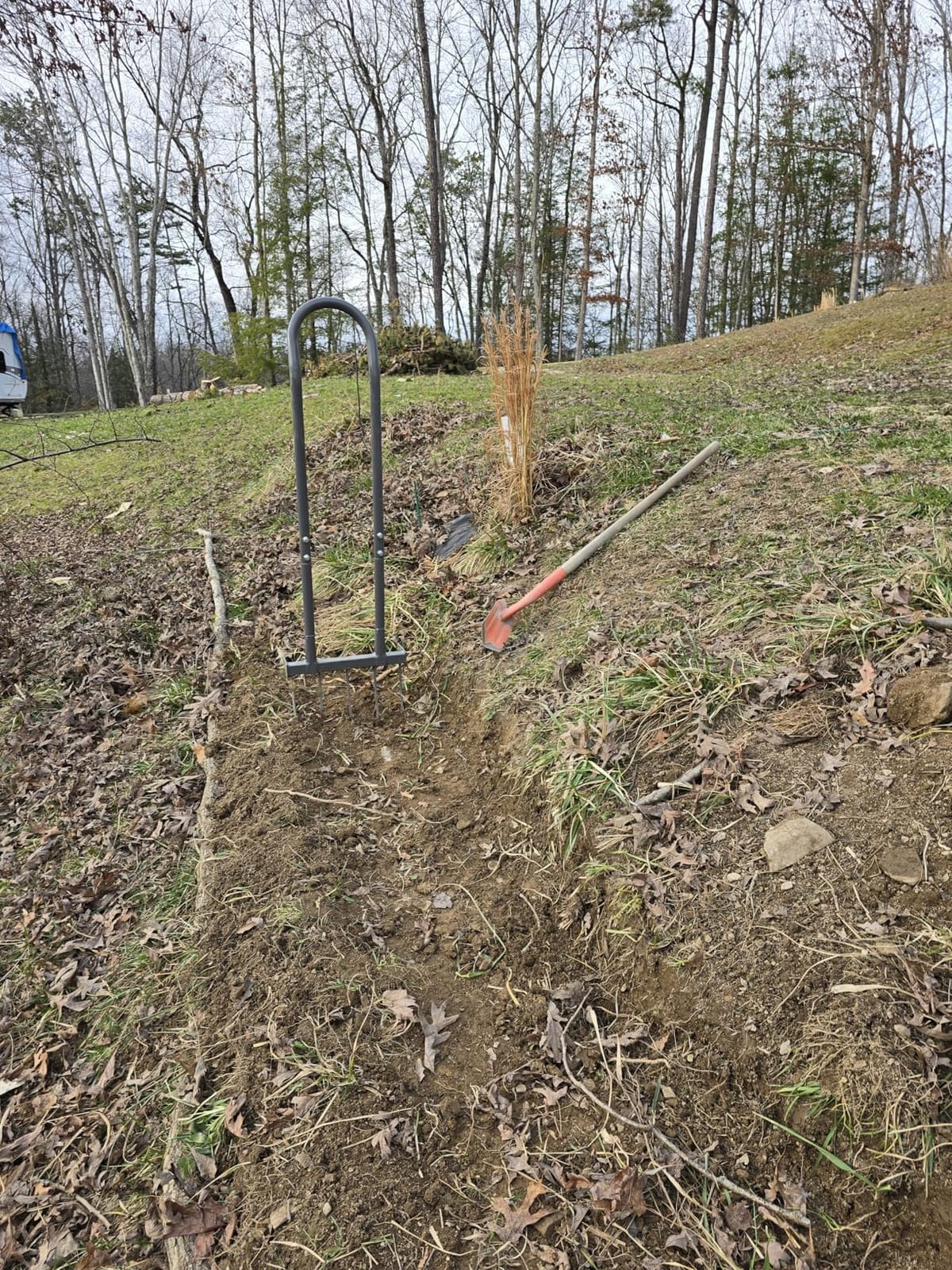
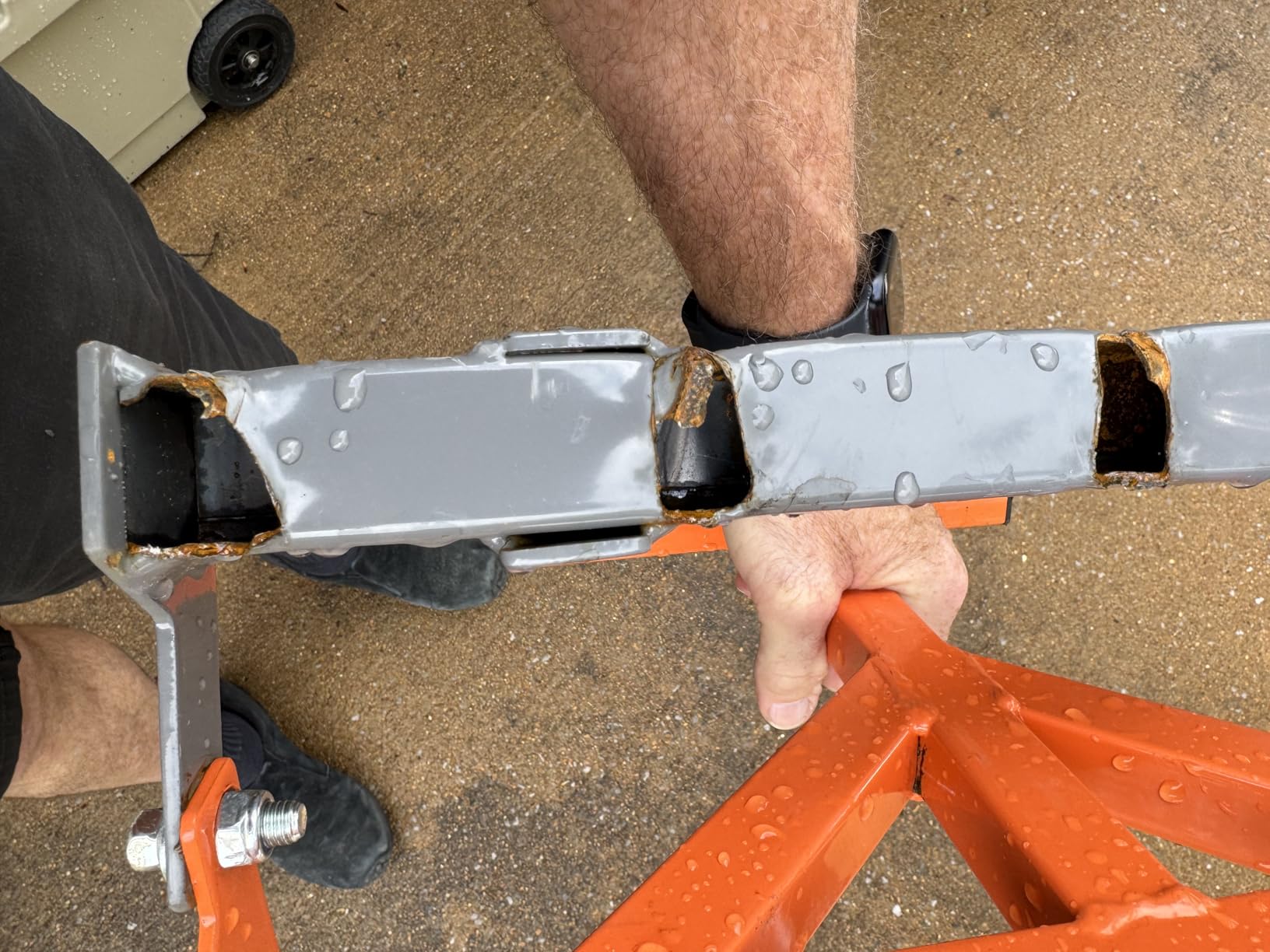
The problem is the feedback. At 3.3 stars across 60 reviews this is the lowest rated tool in the group, with 27% one-star reviews against 42% five-star. Owners cite bending and dissatisfaction far more often than praise, and many recommend the better-rated sibling model by name.
That is worth stating plainly: the same basic design is sold by Walensee at a noticeably higher rating and a higher review count. Buying this listing means accepting a worse record for an identical tool.
Who this broadfork suits
It suits gardeners on very short beds who want a close-to-the-ground tool and do not mind working bent over, and anyone who needs a second cheap fork for light duty while keeping a better tool for real work.
It also suits buyers working with a tight budget who want the highest tine count per dollar in the group.
Who should skip it
Skip it as a primary soil tool. The 3.3-star rating with a 27% one-star share is the worst record in this roundup, and the repeated owner recommendation is to buy the better-rated listing of the same design instead.
Skip it if you already bend forward to work. The 38.2-inch handle is the shortest here, which means a smaller effective lever for heavy ground and more strain on your back.
How to Choose a Broadfork for Your Beds
Width is the first thing people get wrong, so start there. The rule of thumb is simple: pick a broadfork span slightly narrower than or equal to your bed width, so you can work the full length without dragging the tines into the frame. A gardener on a forum running a 24 inch Treadlite on 30 inch wide beds is the standard example of a sizing choice that works.
24 inch beds: a 19 to 24 inch working width. Anything wider will catch the frame.
30 inch beds: a 24 inch span is the common choice, with a 19.5 inch width as the safe option.
36 inch beds: a 30 inch span or the widest tool you can comfortably lift.
48 inch beds: work from the edges with a narrower fork, or accept a longer session.
Best broadforks for garden beds by handle material
Handle material is the decision that determines whether your tool lasts one season or ten years, and forum experience is unusually clear on the failure modes. A permies user reported a Treadlite with wooden handles breaking during use in rocky clay, then upgraded to metal handles after seeing a friend’s steel version hold up. That story explains most of the engineering in this category.
Wood, usually ash, absorbs shock and feels warmer in the hand, but it can split along the grain or snap at the head connection under leverage. It suits established beds and loam. Fiberglass will not rot or split and is light, but it flexes, and owners here report feeling less rigid under prying loads than steel. It suits general-purpose work and lighter soils.
Steel handles are rigid and heavy, which sounds like a downside until you see what happens in clay. They are what the all-steel and welded designs use, and they suit hardpan, shale, and rocky ground. The trade is weight and the fact that steel conducts shock straight into your hands and arms.
Whatever you choose, check the joint. Bolted fork-to-handle connections develop play and then bolt fatigue. Welded frames, or clip-lock designs like pick seven, remove that failure point entirely. It is the single most important durability detail on the list.
Tines versus blades, and how deep to work
Flat blade tines shear through soil and mix the layers, which is closer to what a tiller does. Round tines, like the ones on pick nine, lift and roll the soil instead, preserving structure and living organisms. For no-till beds, round tines are the better choice.
For depth, progress in stages rather than attacking at full extension. Start at about 4 inches in new ground, then go to 8 inches once the bed is loosened, and reserve 10 to 12 inches for ground you have already worked. Several manufacturers in this group explicitly recommend shallower passes in compacted soil to protect the tines.
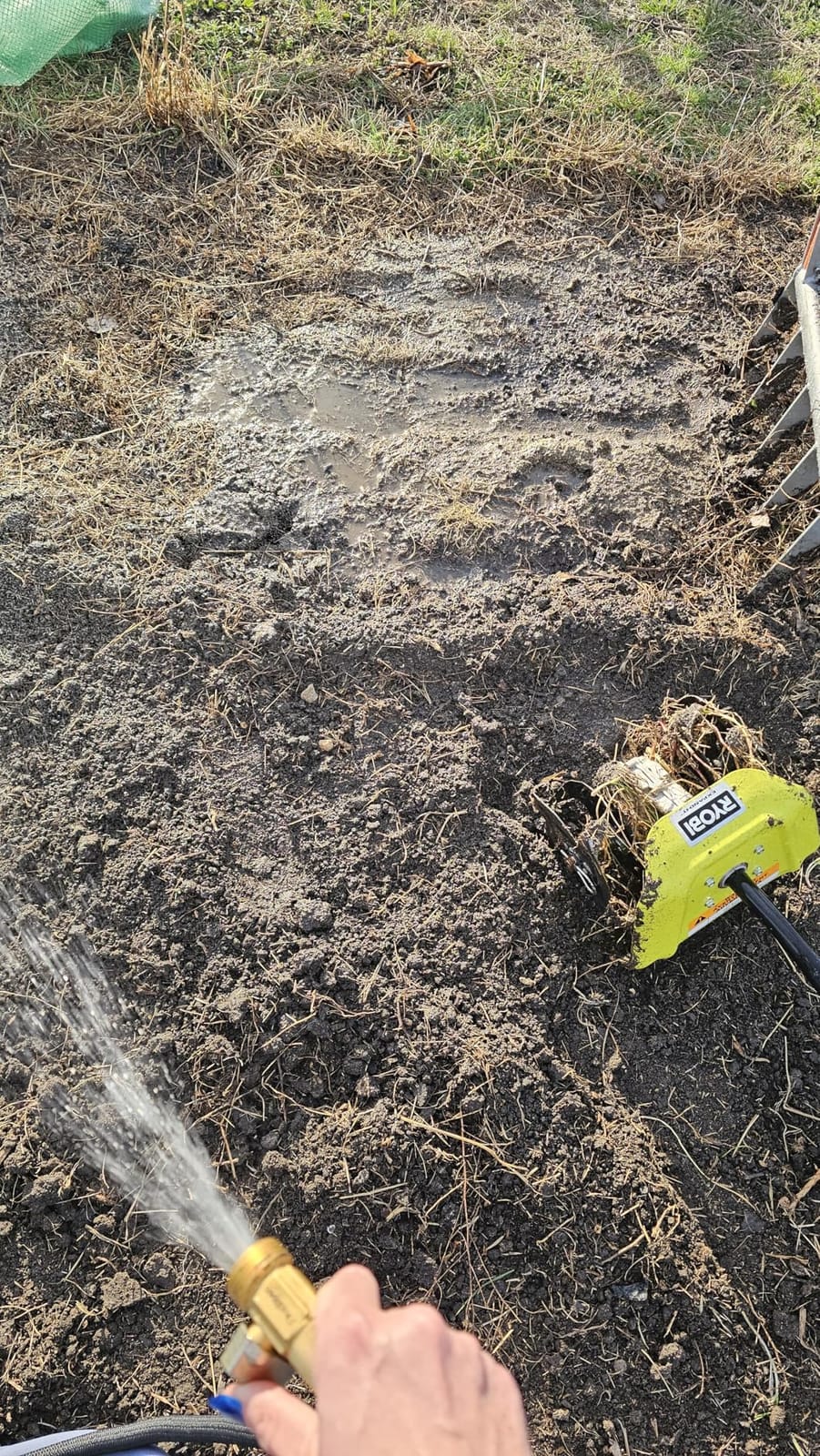
The technique is four steps: step the tines in, pull the handles back to roughly 45 degrees to lever the soil, drag the tool toward you, then slide it out about 8 inches and step in again. Work in rows down the bed rather than spot treatments, and water very dry ground first so the tool is not fighting friction instead of soil.
Weight, back safety, and what is best for clay
Broadforking is good for your back when you use it properly, because the tool lifts and levers while your legs and hips do the work rather than your spine. It is bad for your back when you reach and twist at the end of a pass, so keep the handle close and step sideways instead.
Handle length matters more than weight. The 54 to 57 inch tools here let you work upright. The 38.2 inch compact model forces you to bend, which is the opposite of what you want.
For clay and hardpan specifically, look for long cambered tines, a welded or clip-locked frame, and enough mass that the tool drives in without you fighting it. Picks two, four, eight, and eleven all fit that profile, and the 17 pound class tools are the ones reviewers trust on unbroken ground.
Skip a tiller comparison worry. If you want to understand the soil argument rather than take it on faith, our rototiller roundup covers what powered tillers do well, and the short version is that repeated tilling pulverizes structure and eventually creates a hard layer.
Maintenance and seasonal storage
Clean the tines after each session. Soil left on steel is the main driver of rust, and a quick scrape and dry brush takes two minutes.
Dry the tool before storing it anywhere damp, and coat bare or iron tines with a light oil before winter. Galvanized and powder-coated options need far less of this, which is part of why they suit wet climates.
Check the joints each spring. Tighten any bolts that have backed off, and look at the tines for side-to-side bend, which means you have been levering against something you should have gone around.
Frequently Asked Questions
What is the best fork for gardening?
For most garden beds, a broadfork beats a spading fork because it loosens compaction and aerates the root zone without turning the soil layers. A spading fork digs and mixes, which suits annual bed turnover, while a garden fork is a lighter version for routine weeding and planting. If your beds are compacted or clay-heavy, choose a broadfork with at least five long tines and a welded or clip-locked frame.
What are broadforks used for?
Broadforks are used to loosen compacted soil, aerate the root zone, break up hardpan, mix in compost and amendments, remove sod, and prepare beds before planting. They also work established beds without pulverishing structure, which keeps worm activity and fungal networks intact. Working very dry or very wet soil both increase the force needed, so water dry ground first and wait after heavy rain.
Who makes the highest quality garden tools?
In broadforks specifically, the strongest reputations belong to makers with welded all-steel frames and long warranties. Meadow Creature builds fully welded all-steel forks in the USA with a lifetime warranty, and CobraHead makes a USA-built 1045 carbon steel model with replaceable ash handles. Warranty terms and repairability matter more here than any brand name, because handle breakage is the most common failure.
Is broadforking good for your back?
Broadforking is good for your back when the tool does the lifting. You step the tines in with your foot, then lever back with your hips and legs instead of pulling with your spine, which is far safer than bending over a bed with a spade. To protect your back, pick a handle at least 48 inches long, keep the tines close to your legs, and step sideways between passes rather than twisting at the end of a row.
How do I choose a broadfork size?
Choose a broadfork span slightly narrower than or equal to your bed width so you never catch the tines on the frame. For 24 inch beds pick a 19 to 24 inch working width, for 30 inch beds pick around 24 inches, and for 36 inch beds pick 30 inches. Also factor in tine length, since 11 inch cambered tines handle hard ground while shorter tines suit established beds and reduce strain.
Final Verdict
After working all twelve, the VEVOR 5-Tine with dual fiberglass handles is our pick as the best broadforks for garden beds overall, because it has the widest owner record, a detachable build, and a length that keeps you upright. For clay and hardpan where you want one purchase for the next decade, the fully welded Meadow Creature is the stronger long-term answer.
Match the width to your beds before anything else, pick the lightest tool your soil allows, and go for welded or clip-locked joints over bolted ones. Those two decisions solve most of the disappointments owners report.
We keep the roundups on this site updated as 2026 brings new models and revised testing, so check back before your next bed-prep weekend.