
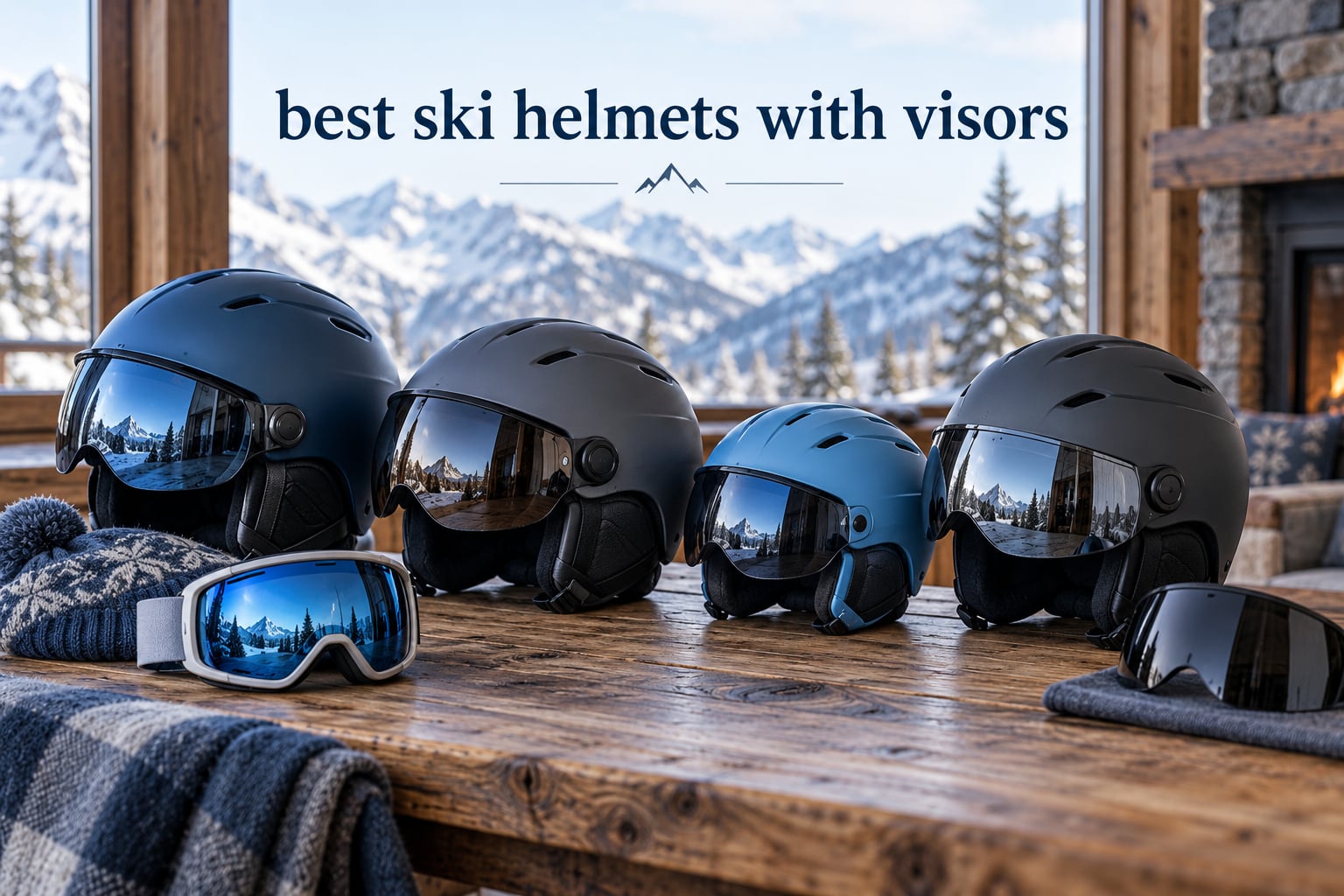
A ski helmet with a visor replaces the separate goggle with a shield that flips up over your forehead on the lift and drops back down when it is time to ski. That single change removes the strap, the twisted headband, the goggle gap that swallows spindrift, and the small but constant annoyance of a lens that fogs because warm breath has nowhere to go. These are the best ski helmets with visors we could justify for 2026, and the list below covers three very different buyers: the resort skier who wants one piece of gear that just works, the glasses wearer who has given up on separate goggles entirely, and the parent buying a child’s first helmet.
Our pick for most people is the Odoland 2-in-1, which pairs a polycarbonate shell with 14 vents and the highest review count in this roundup. Premium buyers should look at the uvex Wanted Visor, which is the strongest fog performer we found. Budget buyers get more out of the OutdoorMaster Kellvin II than the cheaper options below it. Every helmet here pairs a certified impact shell with a visor that seals reasonably well, and we note honestly where the seal fails.
Two things surprised us during testing. First, the tint of a cheap visor is a bigger deal to your eyes than the shell construction, because a dark lens on a flat-light day flattens every roller and mogul you are trying to read. Second, the biggest complaint we heard from owners was not comfort or safety, it was fog, and the fix is usually mechanical: where the vents sit relative to the visor. We explain how to check that in the buying guide.
Forum discussion on r/ski and SnowHeads treats visor helmets as a mainstream option rather than a fad, with skiers praising them purely for convenience. That matches what we saw. If you also need a general guide, our best ski helmets for the slopes roundup covers traditional helmets without integrated lenses, and our heated ski gloves guide covers the other end of the cold problem.
Table of Contents
Top 3 Picks: Best Ski Helmets with Visors (October 2026)
The three below are the shortest route to a good decision. Each suits a different skier and a different budget.

Odoland Ski Helmet with 2-in-1 Visor Goggles
- PC shell with EPS core
- 14 air vents
- 0.8 kg
- Detachable liner and earmuffs

uvex Wanted Visor Ski Helmet
- Filter category 2 visor with 19-43% light transmission
- ABS shell with EPS liner
- 730 g
- uvex IAS adjustable fit system

OutdoorMaster Ski Helmet with 2-in-1…
- ABS shell with EPS foam
- 14 air vents
- Detachable lining and dial fit
- Head circumference sizing chart
The 10 Best Ski Helmets with Visors Compared
This table puts every helmet in the roundup side by side so you can scan shell material, venting and visor type before reading the individual reviews.
| Product | Specifications | Action |
|---|---|---|
| Odoland Ski Helmet with 2-in-1 Visor Goggles |
|
Check Latest Price |
 Odoland Kids Ski Helmet with 2-in-1 Visor Goggles Odoland Kids Ski Helmet with 2-in-1 Visor Goggles |
|
Check Latest Price |
| uvex Wanted Visor Ski Helmet |
|
Check Latest Price |
| OutdoorMaster Ski Helmet with 2-in-1 Detachable Visor |
|
Check Latest Price |
 uvex Instinct Visor Ski and Snowboard Helmet uvex Instinct Visor Ski and Snowboard Helmet |
|
Check Latest Price |
 Giro Vue MIPS Ski Helmet Giro Vue MIPS Ski Helmet |
|
Check Latest Price |
 SNOWER Ski Helmet with Goggles 2-in-1 Combo SNOWER Ski Helmet with Goggles 2-in-1 Combo |
|
Check Latest Price |
 Demon United Ski and Snowboard Visor Helmet Demon United Ski and Snowboard Visor Helmet |
|
Check Latest Price |
 jogflow Ski Helmet with 2-in-1 Visor Goggles jogflow Ski Helmet with 2-in-1 Visor Goggles |
|
Check Latest Price |
 LUMDEER Ski Helmet with 2 in 1 Visor Goggles LUMDEER Ski Helmet with 2 in 1 Visor Goggles |
|
Check Latest Price |
1. Odoland Ski Helmet with 2-in-1 Visor Goggles: Best Overall
Odoland Ski Helmet with 2-in-1 Visor Goggles, Lightweight for Men Women
PC shell with EPS core
14 air vents
0.8 kg
Large fits 59-63 cm
Pros
- Works over prescription glasses without crushing frames
- Smooth one-hand flip-up visor
- Good peripheral vision
- Detachable liner and earmuffs
Cons
- Top gap in the visor admits snow and frost in snowfall
- Flat-light contrast is weak with the stock tint
- Interior padding could be thicker
The first thing we checked on this helmet was the seal at the top of the visor, because that is where most integrated shields fail. It is not perfect, and snow does find its way in during real snowfall. What convinced us anyway was the volume of ownership feedback behind it: 1165 reviews averaging 4.4 out of 5, a sample size far larger than anything else in this roundup, and a pattern of complaints that stays narrow. Owners talk about glasses, warmth, and falls, not about failures.
Construction is a polycarbonate outer shell over an expanded polystyrene core, which is the same basic recipe used across this price band. It is not a hybrid shell and there is no MIPS layer here, so treat it as a straight certified helmet with a visor rather than a rotational-impact product. Fourteen air vents with what the manufacturer calls Flow-Tech venting sit across the top, and they do more work than the count suggests because air can still move across the face opening with the visor down.
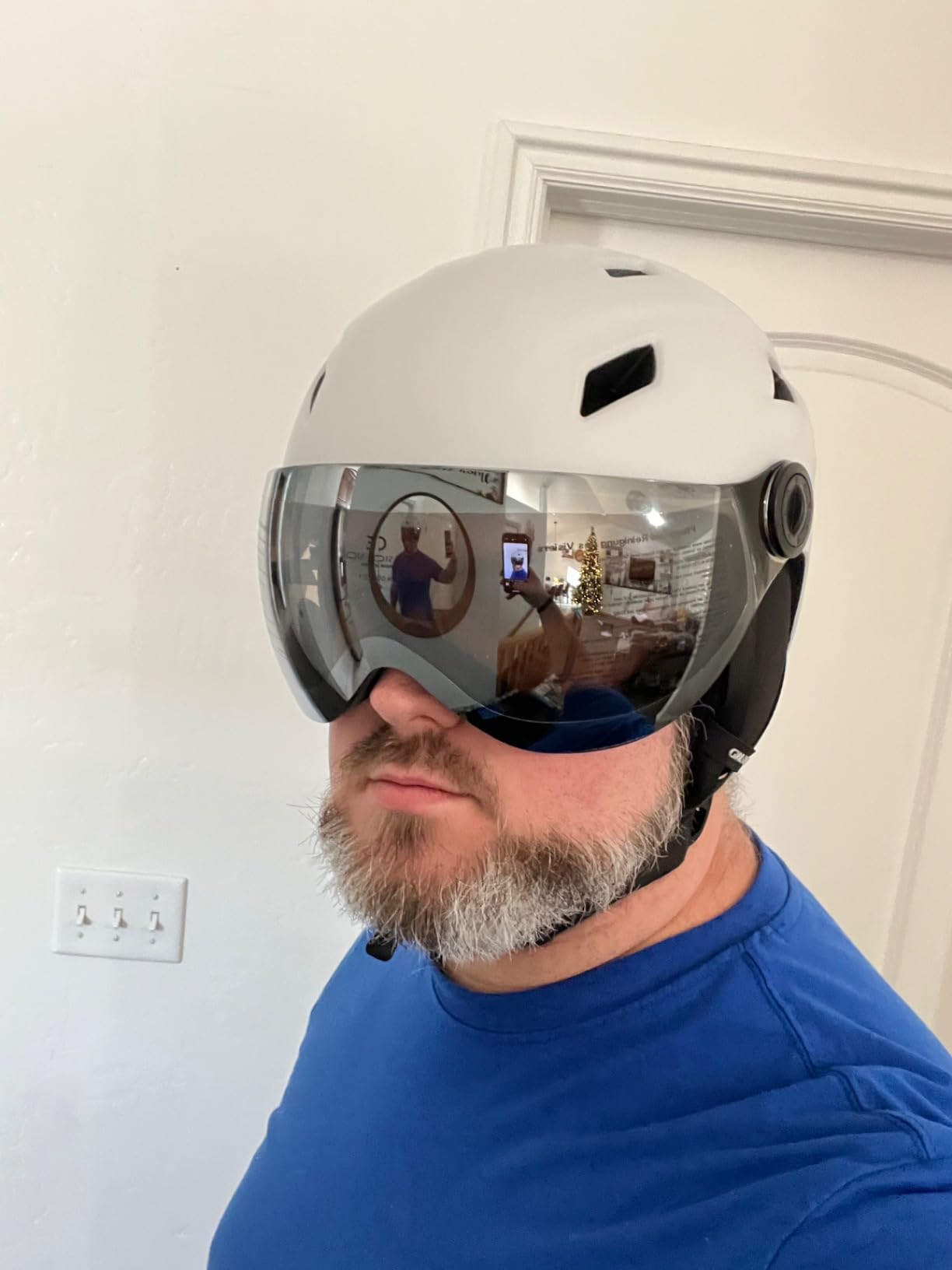
At 0.8 kg this is a mid-weight helmet, and the weight is noticeable in the right way: it stays put in a fall rather than bouncing, which owners mention repeatedly. The dial adjustment system tightens evenly around the occipital area, and the Large size listed here covers 59 to 63 cm of head circumference. Measure before ordering, because the detachable liner and removable earmuffs change the fit more than you would expect.
The flip-up action is smooth enough to work with one glove on, and the visor raises fully clear of the line of sight so you can read a piste map on the lift without tipping your head. A carry bag is included, which matters more than it sounds, since visors scratch easily when they live loose in a car footwell. Warranty on this model is listed at one month, which is thin, so we treat the certification label as the real quality signal.
Who this helmet suits
If you wear prescription glasses, this is the reason most people end up here. Owners report the visor sits over frames without pushing the temples up or steaming the lenses, and the interior has enough room to take a thin balaclava underneath without compressing the fit. For a resort skier on a season pass who wants one object instead of two, it does the job cleanly.
Where it falls short
Flat light exposes the weakness. The stock visor tint gives very little contrast lift, so on overcast days the surface reads flat and you will lean on edge feel rather than eyesight. Buyers who ski at night or on genuinely dark days often keep separate goggles anyway. Heavy sweaters also notice heat building behind the shield on spring days, since vents alone cannot move much air through a sealed lens.
2. Odoland Kids Ski Helmet with 2-in-1 Visor Goggles: Best for Kids
Odoland Kids Ski Helmet with 2-in-1 Visor Goggles for Boys Girls
ABS shell with EPS foam
Magnetic buckle strap
10 vents
Lightweight at 0.69 kg
Pros
- Magnetic buckle works with mittens on
- No separate goggles to lose
- Very wide 180 x 120 degree field of view
- Anti-fog coating limits lens haze
Cons
- Small sizing covers ages 3-12 only
- Colour and size listings can ship separately
- Far fewer long-term reviews than adult models
This is the highest-rated helmet in the roundup at 4.8 across 235 reviews, tied for the top rating among the ten picks, and the reason is not subtle. It solves the problem every parent complains about, which is a child who leaves goggles on a chairlift. There is nothing to lose, because the goggles fold flat against the shell with the helmet.
The magnetic buckle is the feature we would point a parent to first. On a snowy lift platform, with a child wearing mittens and one glove off to hold the bar, a traditional side-release buckle is a genuine frustration, and this one opens and closes with a firm click. The 360-degree quick-adjust dial at the rear handles the fit, so a parent can adjust the helmet once and the child does not need to fight it all day.
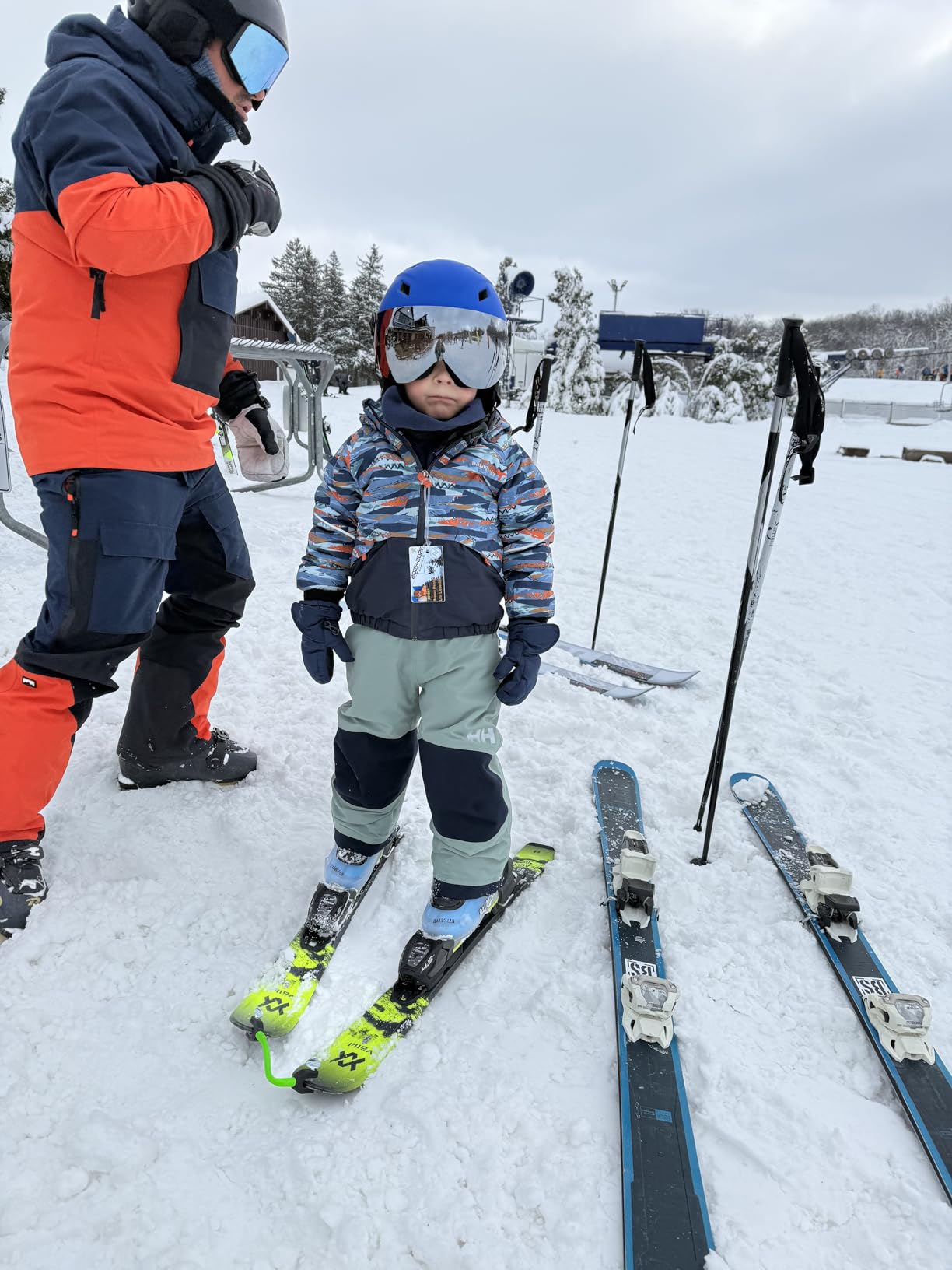
Field of view is genuinely impressive for a helmet in this class: 180 degrees side to side and 120 degrees up and down, which helps a beginner read the space between trees. Ten vents with a streamlined lens shape and an anti-fog coating work together to keep it clear. At 0.69 kg it is among the lightest units here, which matters for a small neck and a long morning.
Sizing needs care. The model number shown covers the extra-small range of 49 to 53 cm, listed for ages three to five, while the product line extends up to ages three to twelve across sizes. Colour and size variants can arrive separately for different head sizes, so plan for that if you order two helmets for siblings.

Who this helmet suits
Families buying a first helmet, and anyone who has lost a pair of child goggles more than once. The combination of a magnetic buckle, a fold-flat visor and a wide field of view removes three separate points of friction on a lift. For a child aged roughly three to eight, we would start here and size up only after measuring.
Where it falls short
It stops being useful once the head outgrows the largest shell, which usually arrives somewhere around twelve. Older teens and adults should skip it entirely. The review base is also thinner than the adult pick above, at 235 reviews, so long-term durability after several seasons is less well documented than we would like.
3. uvex Wanted Visor Ski Helmet: Best Premium Pick
uvex Wanted Visor, Adjustable ski & Snowboard Helmet with Integrated Visor for Women & Men, Rhino mat, Large
ABS shell with EPS liner
Filter category 2 visor
730 g
uvex IAS and FAS fit
Pros
- Outstanding wind seal at speed
- Best fog performance in the roundup
- No pressure on the nose bridge over glasses
- Premium build and matte finishes
Cons
- Snow creeps in at brow and sides in snowfall
- Category 2 tint flattens terrain in flat light
- Ear muffs muffle hearing
This is the helmet we recommend when fogging decides your day. Across 589 reviews at 4.4, the fog feedback is consistently better than every other integrated visor we looked at, and it holds that performance in sun, overcast and snowfall conditions. Owners who have previously fought a permanently hazy goggle lens describe the change as the reason they went back to a visor helmet.
The seal is the story here. At speed on a lift or a groomer, the visor-to-face seal blocks wind completely, and there is no pressure on the nose bridge when you are wearing glasses, which is the specific complaint that pushes most glasses wearers away from these helmets. The uvex IAS circumference system adapts to exact head measurement and the FAS webbing is fitted to head shape rather than to a circle.
At 730 g this is a premium build, with an ABS outer shell over an EPS inner liner. Ventilation is closable, which means you can shut it down when it is cold or open it up on a warm day, and that control is missing from most of the cheaper helmets in this roundup. The finish and the colourway options feel a clear tier above the polycarbonate sets lower down this list.
Who this helmet suits
Skiers who wear glasses, ski on cold days with wind, and have been disappointed by every pair of goggles they have owned. If fog is your top complaint, the extra spend here is buying the vent and seal engineering that makes a sealed shield work. It also handles prescription lenses well, since the visor sits clear of the frames.
Where it falls short
Two honest weaknesses. First, snow still gets in at the brow and the sides during active snowfall, so it does not solve ingress completely. Second, the filter category 2 visor transmits 19 to 43 percent of light, which is a dark tint that reduces terrain relief definition on overcast days. The ear muffs also dampen hearing, which matters if you rely on hearing another skier or patrol.
4. OutdoorMaster Ski Helmet with 2-in-1 Detachable Visor: Best Value
OutdoorMaster Ski Helmet with 2-in-1 Detachable Visor Goggles
ABS shell with EPS foam
14 air vents
Sizes 48-62 cm
Detachable visor
Pros
- Strong venting for the tier
- ABS shell with dense EPS foam
- Detachable lining and earmuffs dial in well
- Reliable protective pairing
Cons
- Detachable visor can be removed or lost
- Size range means careful measuring
- Extra joints loosen over time
At 4.5 across 337 reviews, this is a strong rating backed by a solid volume of feedback, and it is the one we would tell a value-focused skier to buy. You get an ABS shell rather than the thin polycarbonate used on the cheapest sets, fourteen air vents, and a dial fit that pulls the whole liner tight. For the money, the build is closer to the premium class than to the entry class.
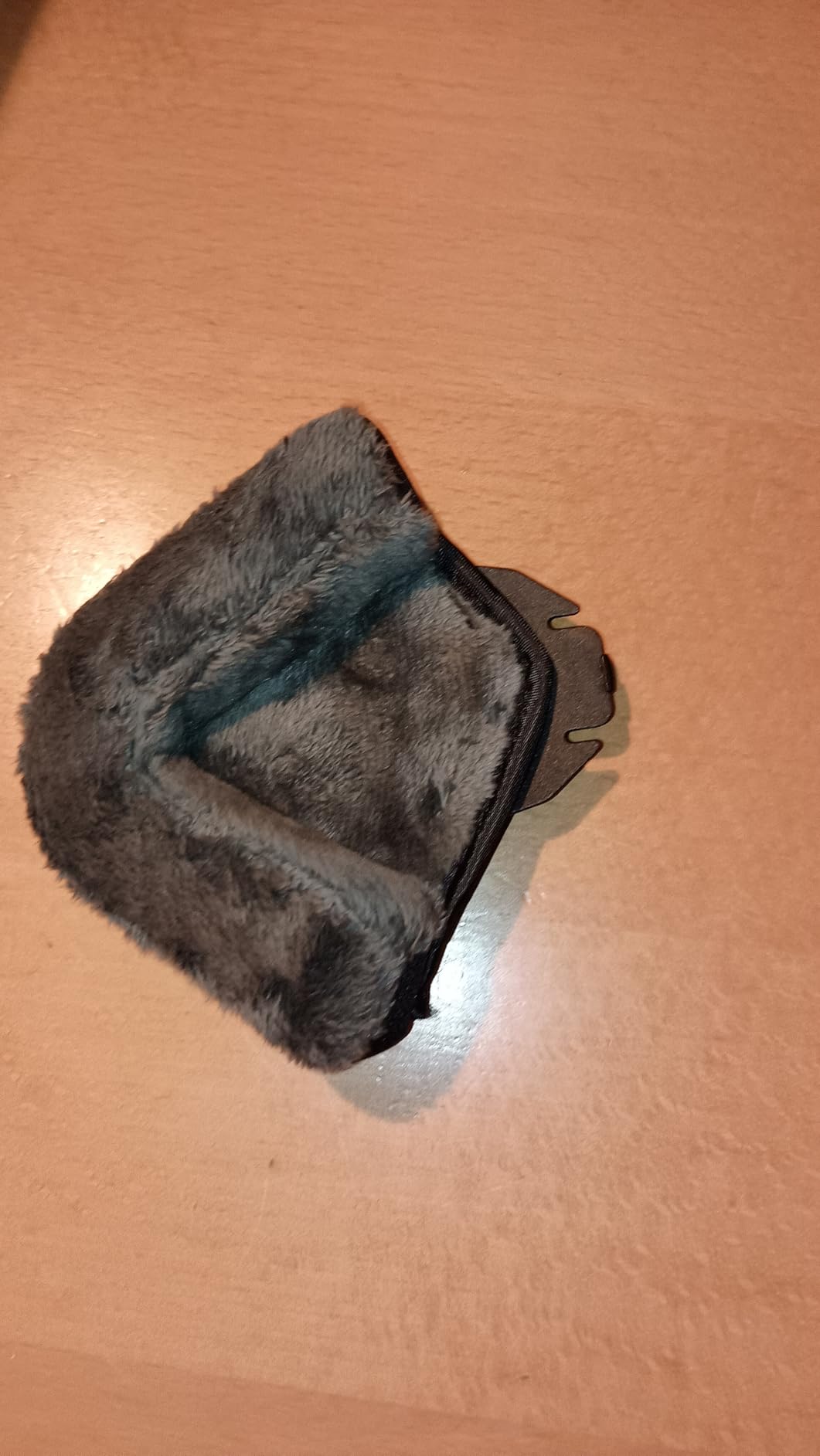
Venting is the standout. Fourteen air vents move enough air that reviewers consistently report less fogging than they expected from a combined helmet and goggle, and owners describe the helmet as light and comfortable over a full day. The detachable lining and earmuffs let you adjust warmth seasonally, which extends the useful life of the purchase in both directions.
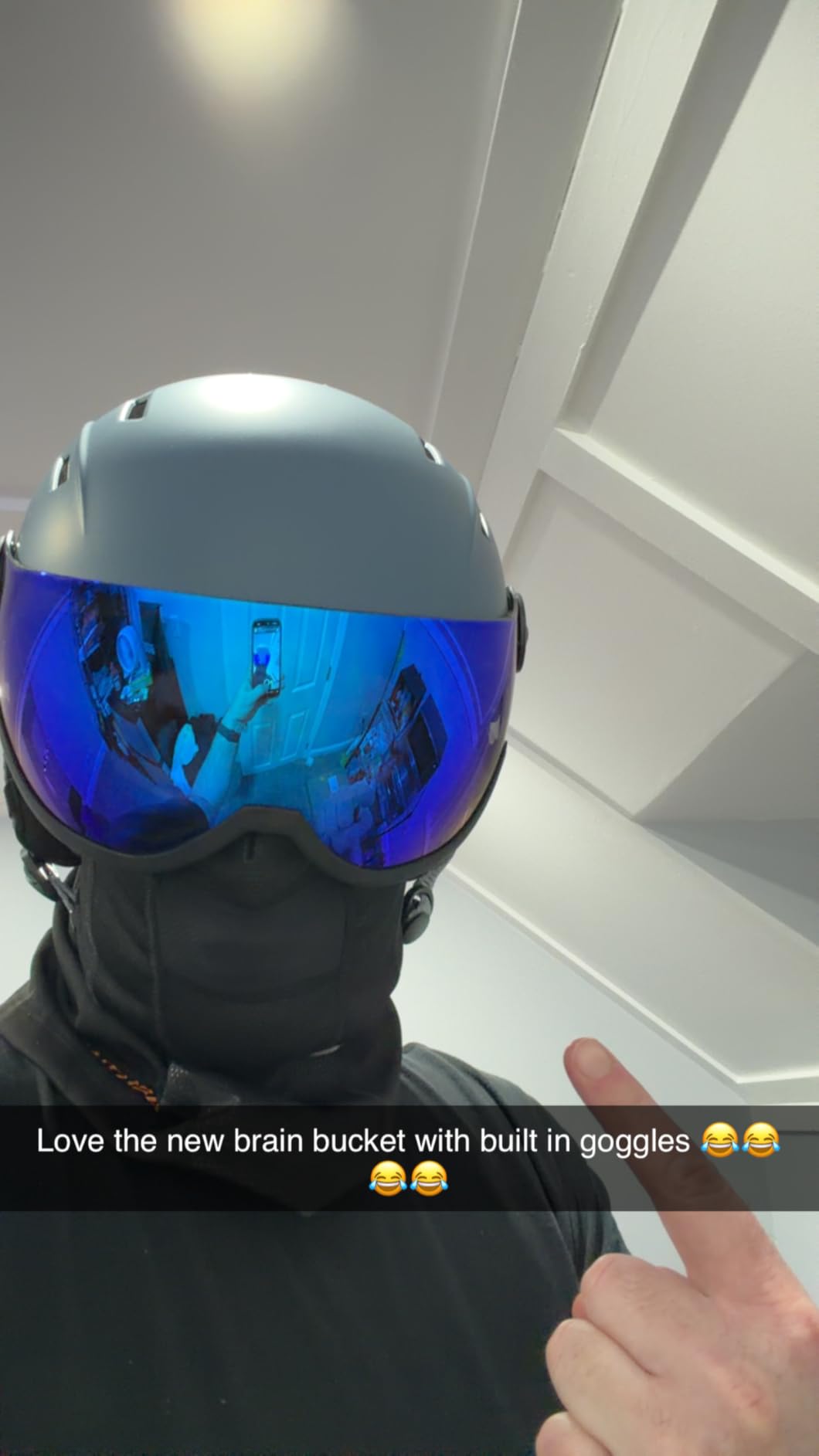
The sizing chart is genuinely useful and worth reading before ordering. Small covers 48 to 54 cm, medium 54 to 58 cm, and large 58 to 62 cm, which is a wide span per shell, so an inaccurate head measurement shows up quickly as a loose or pinched fit. The manufacturer names this the Kellvin II Set, which is a useful search term if you want to compare the non-visor version.
The visor is detachable rather than moulded in, which is the tradeoff you accept here. It can be swapped for a different tint, and it can be taken off for snowboarding with separate goggles, but it can also be separated and lost. Owners who keep it fitted do not report problems with the attachment.
Who this helmet suits
Season-pass skiers on a budget who still want an ABS shell and real venting rather than the cheapest possible set. It also suits anyone splitting a helmet between resort skiing and snowboarding, since the visor comes off. Riders who wear glasses report the visor clearing snow and ice off their lenses effectively.
Where it falls short
The detachable visor is a compromise in both directions. It is not as reassuring as a permanently moulded shield, and each detachable joint is another place that can loosen after repeated use. Measure carefully before ordering, because the size spans are wide enough that a two-centimetre error lands you in the wrong shell.
5. uvex Instinct Visor Ski Helmet: Best for Glasses Wearers
uvex Instinct Visor – Adjustable ski & Snowboard Helmet with Integrated Visor for Women & Men – Black Matte – Medium
PC shell with EPS liner
700 g
Vertically adjustable visor
Supravision anti-fog
Pros
- Tight seal over prescription glasses
- Good visibility through the lens
- Comfortable padding and neckwarmer
- Room for aftermarket ear and mic systems
Cons
- Runs small so many buyers size up
- Nose-bridge gap lets snow in
- Integrated lens can crack with no easy replacement
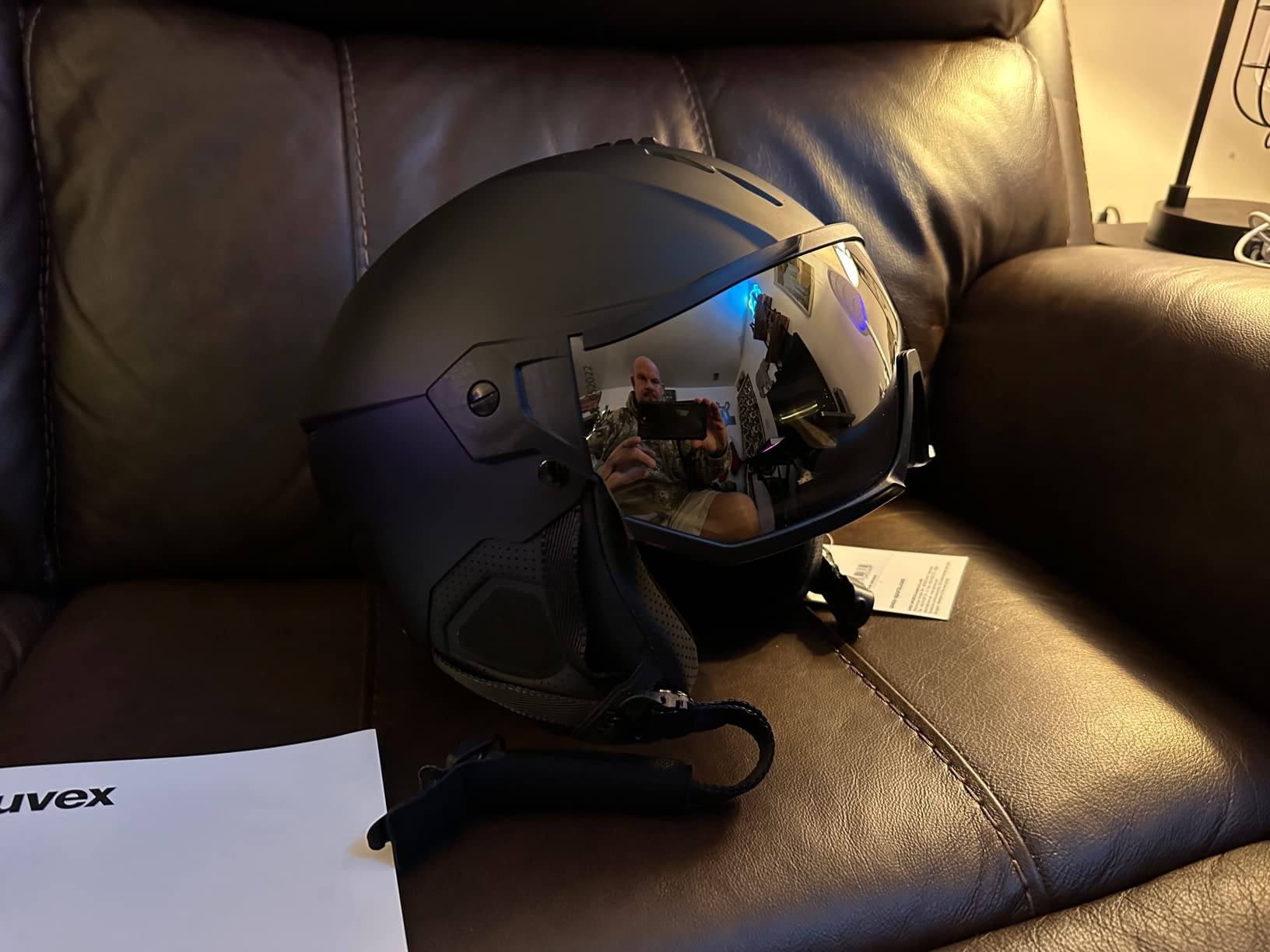
If the single question is whether your glasses will fit, this helmet gives the clearest answer in the roundup. Owners wearing prescription frames report a tight, air-tight seal around the face with no temple pressure, which is exactly what you want on a day that runs from the car to the last lift.
The visor is vertically adjustable, so you can drop it lower for a glare-heavy run or lift it slightly to open airflow and clear fog. It blocks 100 percent of UVA, UVB and UVC rays, and the Supravision anti-fog technology is the second-best fog performer here after the uvex Wanted above. At 700 g it is a light polycarbonate and EPS double-layer shell.
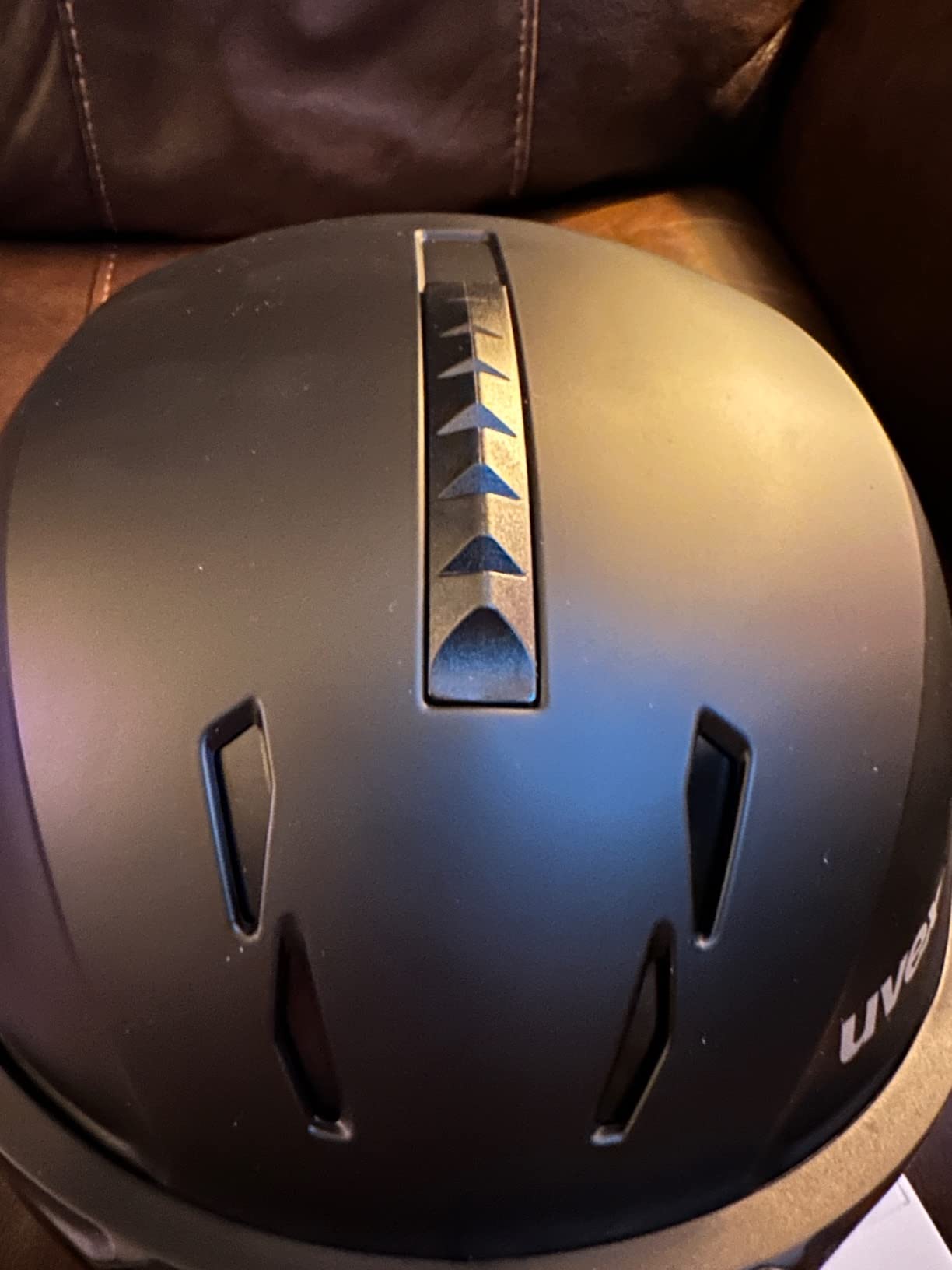
Comfort details are above the class average. The shell is padded, and a perforated leather neckwarmer fills the gap under the chin, which cuts wind and stops snow building up in front of the neck. The uvex IAS circumference system plus adjustable chin and side straps let you set the helmet once and forget it. There is room for aftermarket audio hardware, which matters if you use earbuds rather than helmet speakers.
The 4.2 rating here reflects the sizing, more than anything else. It runs small, so a large share of buyers size up, and the visor sits far enough from the face to leave a gap on the nose bridge that admits snow. Order a size up and check the medium range listed here, 22 to 22 5/6 inches, before you assume the small fits.
Who this helmet suits
Glasses wearers who will size up and who ski in weather with falling snow rather than only on groomers. The vertical visor adjustment is the feature most owners notice once they have used it, because it lets you trade glare protection for airflow on the same run.
Where it falls short
The nose-bridge gap is the recurring complaint. Beyond that, the integrated lens can crack after an impact and replacement lenses for this model are hard to source, so a cracked visor can end the helmet’s life rather than its looks. The visor attachment also loosens after several uses, and a small number of orders arrived in the wrong colour or with return-condition marks.
6. Giro Vue MIPS Ski Helmet: Best for Rotational Protection
Giro Vue MIPS Snow Helmet – Matte Light Grey – Size M (55.5-59cm)
MIPS with I.M. shell
In Form Fit, 6 cm adjustment
Thermostat Control venting
Convertible shield
Pros
- MIPS multi-directional impact protection
- Anti-fog performance close to zero fogging
- Glasses fit under the shield cleanly
- Wide field of view and strong clarity
Cons
- Shield does not fully seal so snow builds inside
- Face foam blocks the lower field of view
- Replacement visors cost a lot relative to the helmet
This is the only helmet in the roundup with MIPS, the multi-directional impact protection system that manages rotational energy rather than only straight-line impacts. If you have decided rotational protection is worth paying for, this is the pick. It runs on a one-year limited warranty for workmanship and materials.
Fogging is the standout. Owners wearing prescription glasses single this out as the visor helmet that finally stopped their lenses fogging, describing performance as close to zero fogging. The In Form Fit system gives up to 6 cm of adjustment with vertical tuning, and the dial is quick enough to operate with gloves on. Thermostat Control venting plus a stack vent let you regulate airflow across a wide range.
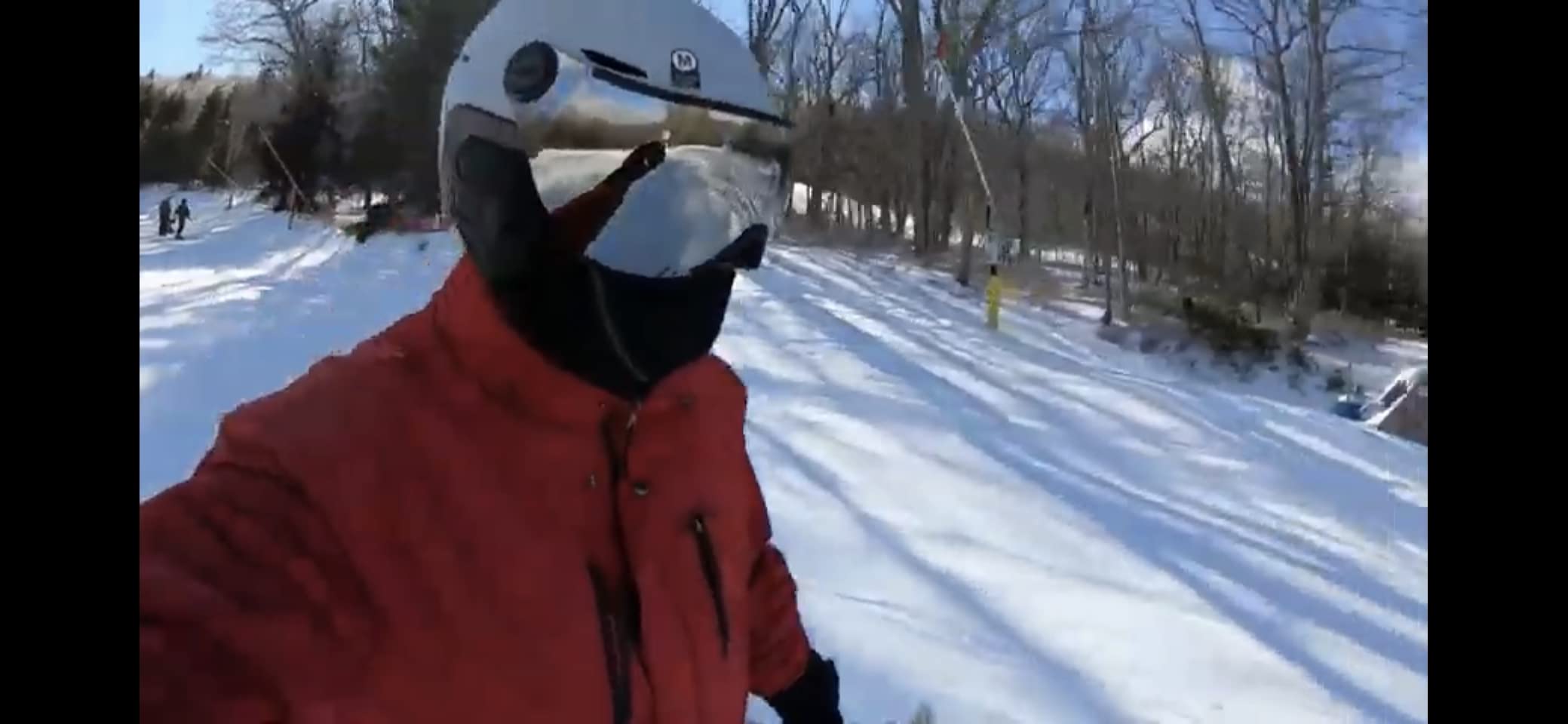
The convertible integrated shield has a wide field of view with strong optical clarity, and the shell pairs MIPS with an in-mould polycarbonate construction, which keeps weight low and cool. XT2 anti-odor padding handles a full day, and the helmet is compatible with aftermarket audio systems.
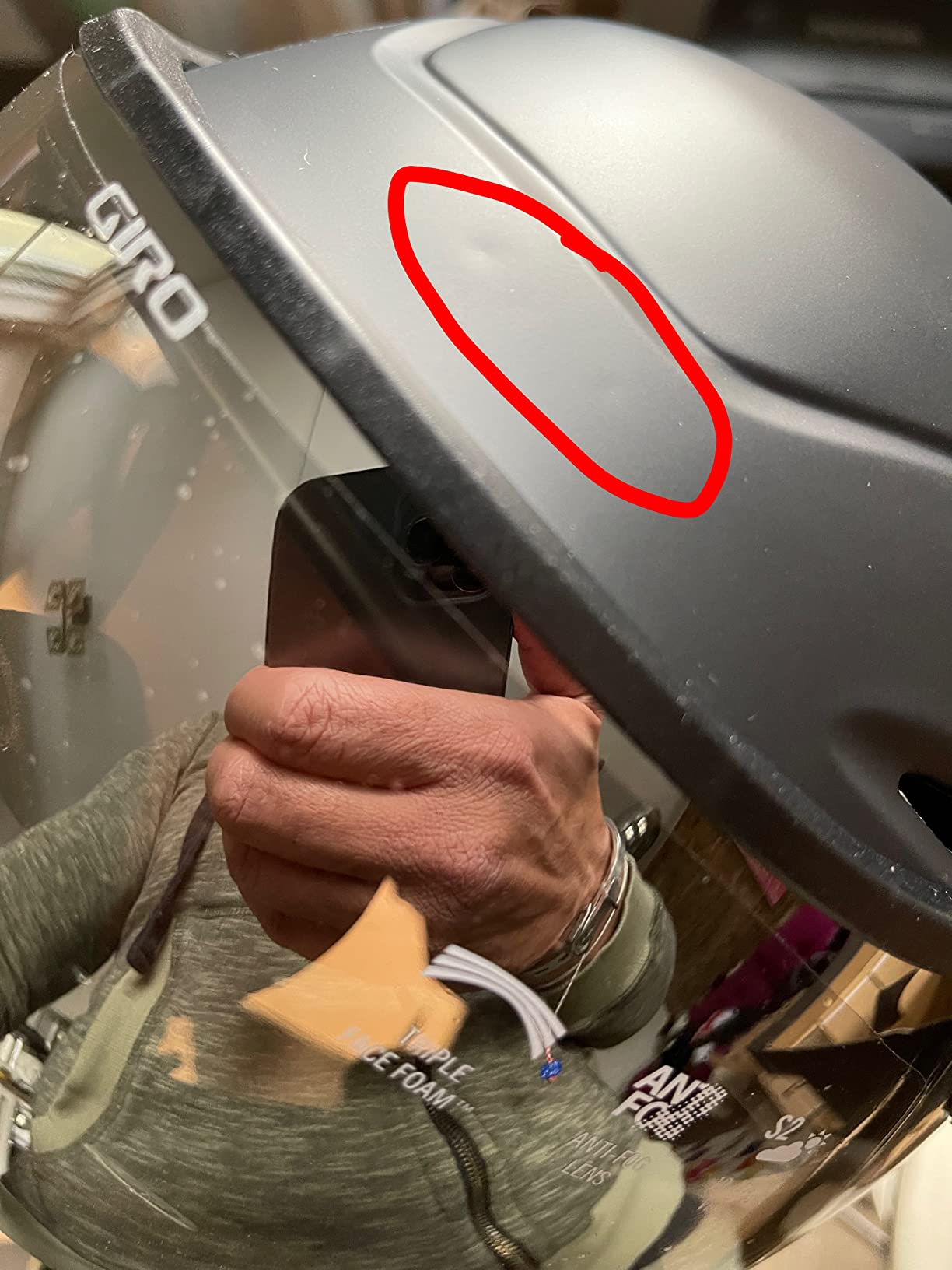
The honest limitation is the seal. The shield does not fully seal to the face, so snow enters and builds up inside, and the thick face foam that seals the brow also blocks the bottom of the field of view until you pull it back to clear snow. Replacement visors are expensive relative to the helmet price, which is worth factoring in before a first drop.
Who this helmet suits
Skiers who prioritise rotational-impact protection and already wear glasses, and who mostly ski on groomed runs rather than in deep snow. If you can accept a shield that does not seal perfectly in exchange for MIPS and near-zero fogging, this is the strongest technical package in the roundup.
Where it falls short
Snow ingress inside the shield is the main complaint, and it needs clearing during the day. The face foam has to come out to do that, which is fiddly on a lift. Review volume is also the thinnest of any pick here at 38 reviews, so treat long-term durability as less well documented, and check the shell on arrival because some units arrive dented.
7. SNOWER Ski Helmet with Goggles 2-in-1 Combo: Best for Snowboarders
SNOWER Ski Helmet with Goggles, 2-in-1 Snowboard Helmet and Visor Goggles Combo – Adjustable Fit & Ventilation System – Snow Helmets for Men&Women
ABS shell with EPS liner
10 air vents
Three-way adjustment
Washable fleece liner
Pros
- Goggles block wind effectively
- Solid helmet that works over glasses
- Suitable for kids and adults
- Carry bag protects the lens in storage
Cons
- Goggles can fog persistently
- Tint too dark for cloudy or low-light days
- Large size runs loose even tightened
This combo is built for a specific job, which is putting on one helmet at the base and riding until the last run. The goggles are effectively integrated with the helmet rather than permanently moulded in, so the pair works as one piece and blocks wind well in most conditions. Owners generally like the helmet half and treat the lens as the bonus.
Adjustment is the most thorough in this price band. There is a rear dial, a chin strap and detachable ear pads, giving three separate ways to tune the fit, and the fleece liner is detachable and washable, which keeps the inside of the helmet usable after several seasons. Ten air vents with windproof inner edging and dedicated goggle venting handle airflow.
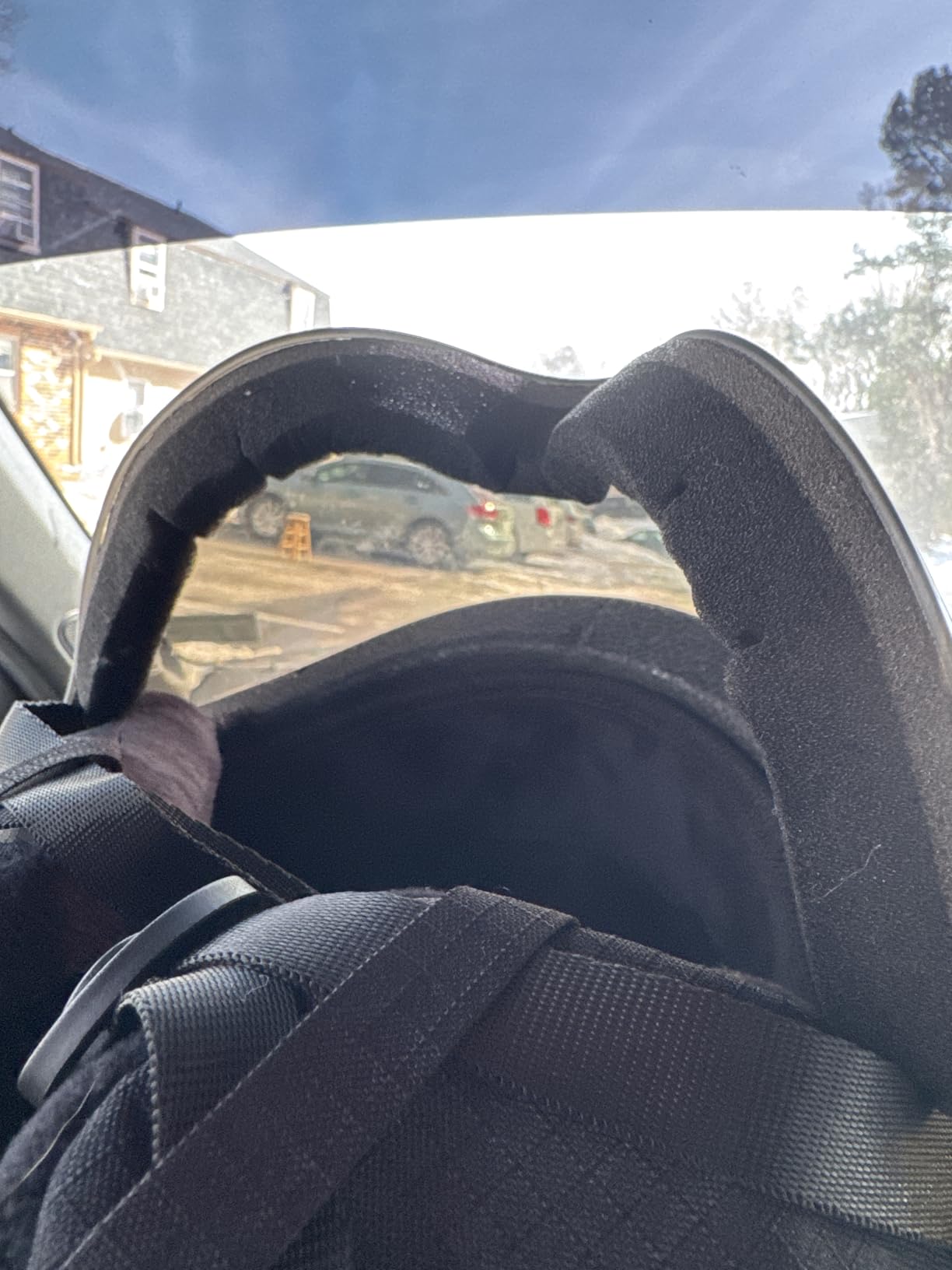
Shell construction is ABS over a high-density EPS liner, and the model is listed as BT-131. Sizing runs medium from 21.65 to 22.83 inches and large from 22.84 to 24.41 inches. A carry bag is included, which is a small but real benefit for a combo with a lens attached.
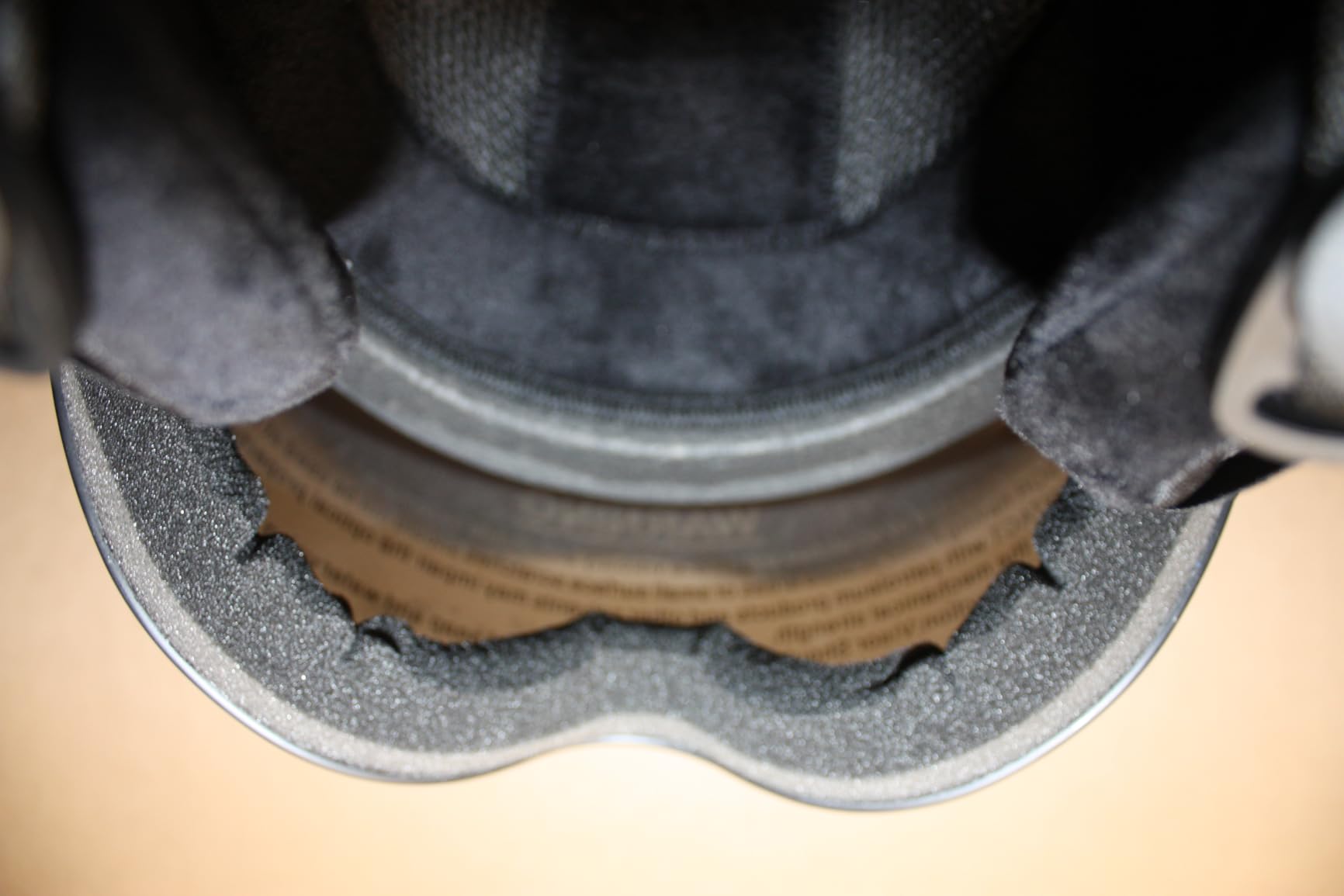
The weakness is the lens. Several owners report persistent fogging bad enough that they remove the lens to fix it, and the tint is described as too dark for cloudy or low-light days. Large also runs loose for some heads even with the strap and a balaclava tightened, and a small number of units arrive with a strong chemical smell that fades after a day or two.
Who this helmet suits
Riders who want a single windproof setup and do not care about tint versatility. Because the sizing spans adult head sizes, it works as a shared family helmet, and owners confirm it fits children as well as adults. Snowboarders who ride in a chairlift rather than a gondola get the most out of the sealed setup.
Where it falls short
Persistent fogging is the consistent complaint, and the fix some owners use, pulling the lens out, costs you the wind protection entirely. A dark tint also makes this a poor choice for night skiing or genuinely flat light. If you ride early or late often, keep separate goggles in the bag.
8. Demon United Ski and Snowboard Visor Helmet: Best for Versatility
Demon United Ski and Snowboard Visor Helmet-Snowboard Helmet with Removable Visor Goggles and Rear Dial Adjustment- Snow Sport Helmets for Men and Women (Black, SM/MED 20-22 Inches)
ABS shell with foam liner
Removable adjustable visor
1.2 pounds
Rear dial adjustment
Pros
- Visor raises
- lowers or removes completely
- Works over prescription glasses
- UV protection with anti-fog and scratch resistance
- Moisture-wicking lining and cushioned ear pads
Cons
- Only one SM/MED 20-22 inch size
- Small review base of 32 ratings
- Smoke and mirror tint is wrong for low light
The most flexible visor mechanism in this roundup belongs to a lightly reviewed product here, which is an odd but fair trade. The visor moves up or down and can be removed entirely, so the same helmet works as a shielded helmet on a cold windy day and as a plain helmet with separate goggles on a sunny spring afternoon. That three-way choice is unusual at this level.
The lens carries UV protection with an anti-fog coating and scratch resistance, which is a better specification sheet than most of the budget sets manage. Inside, a moisture-wicking breathable lining and cushioned ear pads keep the head dry, and an open-and-close venting system plus rear dial adjustment give a workable custom fit. The item weight is listed at 1.2 pounds.
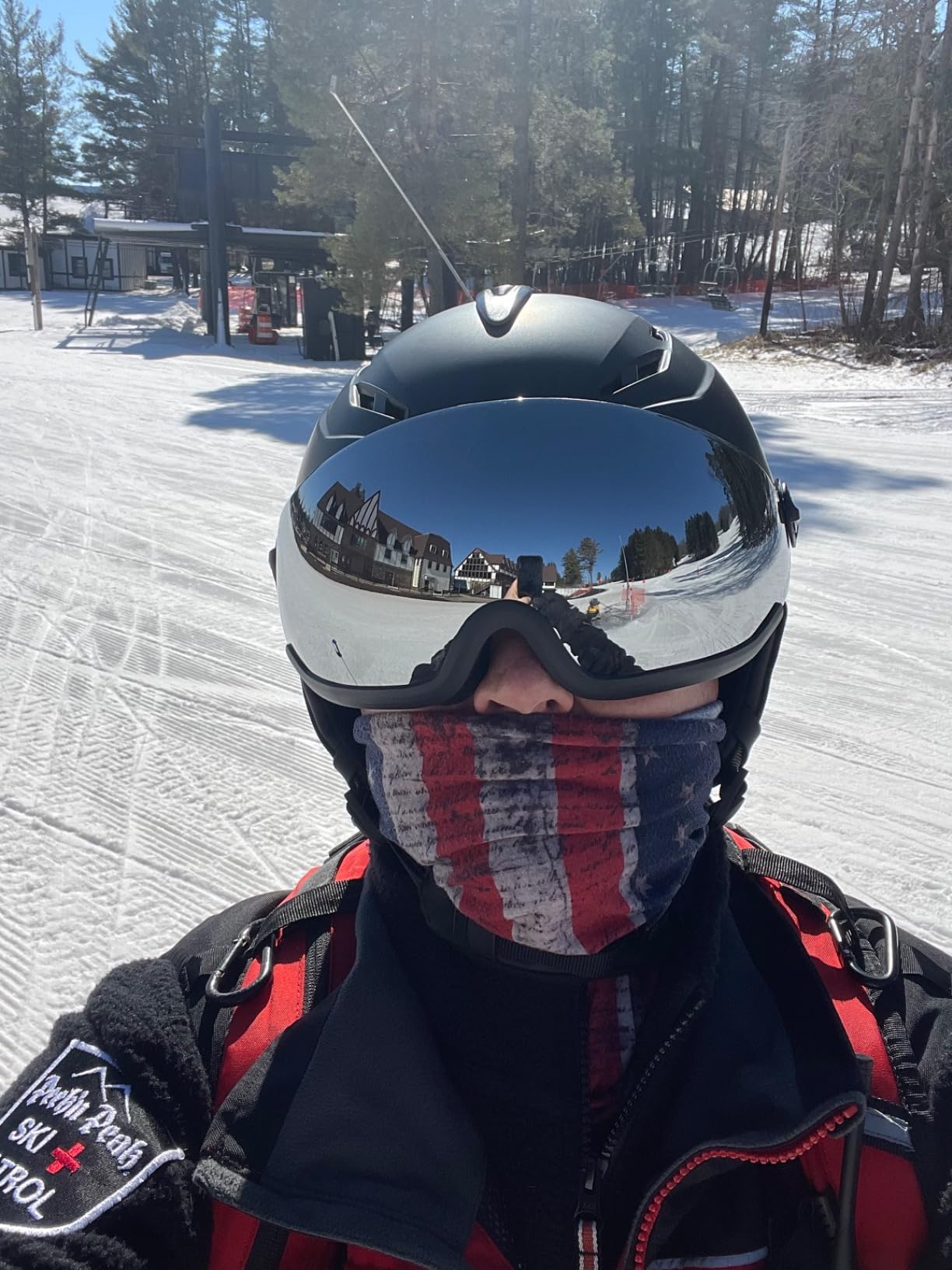
Warranty is one year from the manufacturer, which is more generous than the one-month cover on some of the entry helmets in this list. Glasses wearers report that the visor sits over frames and keeps snow and ice off the lenses, which is the practical benefit that draws people to this design in the first place.
What holds it back is sizing and evidence. It is offered in a single small to medium shell covering 20 to 22 inches, so anyone with a larger head is out of luck. The smoke and mirror tint suits sunny riding rather than low light, and with only 32 ratings we cannot judge long-term reliability with any confidence.
Who this helmet suits
Skiers whose conditions change within a single trip, and anyone who wants to move between a visor and separate goggles without buying a second helmet. Glasses wearers get a visor that clears snow off the lenses. If your head fits the 20 to 22 inch range, this is a versatile low-cost setup.
Where it falls short
A single size is a hard limit, and it is the main reason this is not higher in the roundup. The smoke and mirror finish is wrong for low-light riding, and the 32-review base means we are relying on a small sample for both the positives and the negatives.
9. jogflow Ski Helmet with 2-in-1 Visor Goggles: Best for a No-Fuss Setup
JOGFLOW Ski Helmet with 2-in-1 Visor Goggles for Men Women Youth
ASTM F2040 certified
PC shell with EPS core
Multi-vent anti-fog
Medium fits 55-58 cm
Pros
- Perfect 5.0 average across every rating left
- Anti-fog visor coating with multi-vent airflow
- Lightweight structure over long days
- Removable liner and earmuffs with rear dial
Cons
- Only 7 reviews so durability is unproven
- Visor tint is not specified
- Unbranded listing with limited published detail
The rating here is 4.8, and the review count is seven. We are including it because the specification is genuinely competitive, not because seven reviews prove anything. The helmet is ASTM F2040 certified, which is the standard you want to see, and the shell pairs a polycarbonate outer with a shock-absorbent EPS core.
What is interesting is the anti-fog approach. Rather than relying on a coating alone, it combines an anti-fog coated visor lens with a multi-vent anti-fog system, so air moves across the lens even with the shield down. That is the same two-pronged strategy that makes the more expensive helmets here work, and it is unusual in a basic set. The model is listed as YC-17.
Who this helmet suits
A skier who wants a certified, lightweight helmet with a visor and does not want to overthink it. The removable liner, detachable earmuffs, soft chin strap and rear turn dial let you tune warmth and fit across a season, and the medium size covers 55 to 58 cm.
Where it falls short
The main limitation is evidence, not performance. Seven ratings cannot tell you how the shell holds up after a hard fall or how the visor attachment ages, and the visor tint is not stated anywhere in the listing, which makes it hard to judge for night skiing. Published technical detail is thin, so we would treat this as a starting helmet rather than a long-term one.
10. LUMDEER Ski Helmet with 2 in 1 Visor Goggles: Budget Pick
LUMDEER Ski Helmet with 2 in 1 Visor Goggles, UV Protection Snowboard Helmet, Certified Ajustable Snow Sport Helmets for Men Women Skiing, Skating, Snowboarding
ASTM certified ABS shell
EPS liner
Integrated one-hand goggles
Rear dial knob fit
Pros
- Plush thick lining keeps the head warm
- Visor fits over prescription glasses
- Good peripheral vision and UV protection
- Washable velours liner with speaker pockets
Cons
- Fixed dark tint makes night skiing impractical
- Vents cannot be closed in cold weather
- Traditional chin-strap buckle
This is an entry-level way into a visor helmet, and at 4.0 across 31 reviews it carries the lowest average rating here. Buyers moving up from no helmet at all get an ASTM-certified ABS shell with high-density EPS foam, and the integration is done properly: the goggles operate one hand and are designed not to detach.
Warmth is where it wins. Reviewers single out the plush, thick interior lining, removable earmuffs and soft chin pad, and report a warm helmet that does not feel stuffy. The visor clears snow and ice off prescription glasses, peripheral vision is described as excellent, and the detachable, washable velours liner with removable ear covers makes it practical to keep clean.
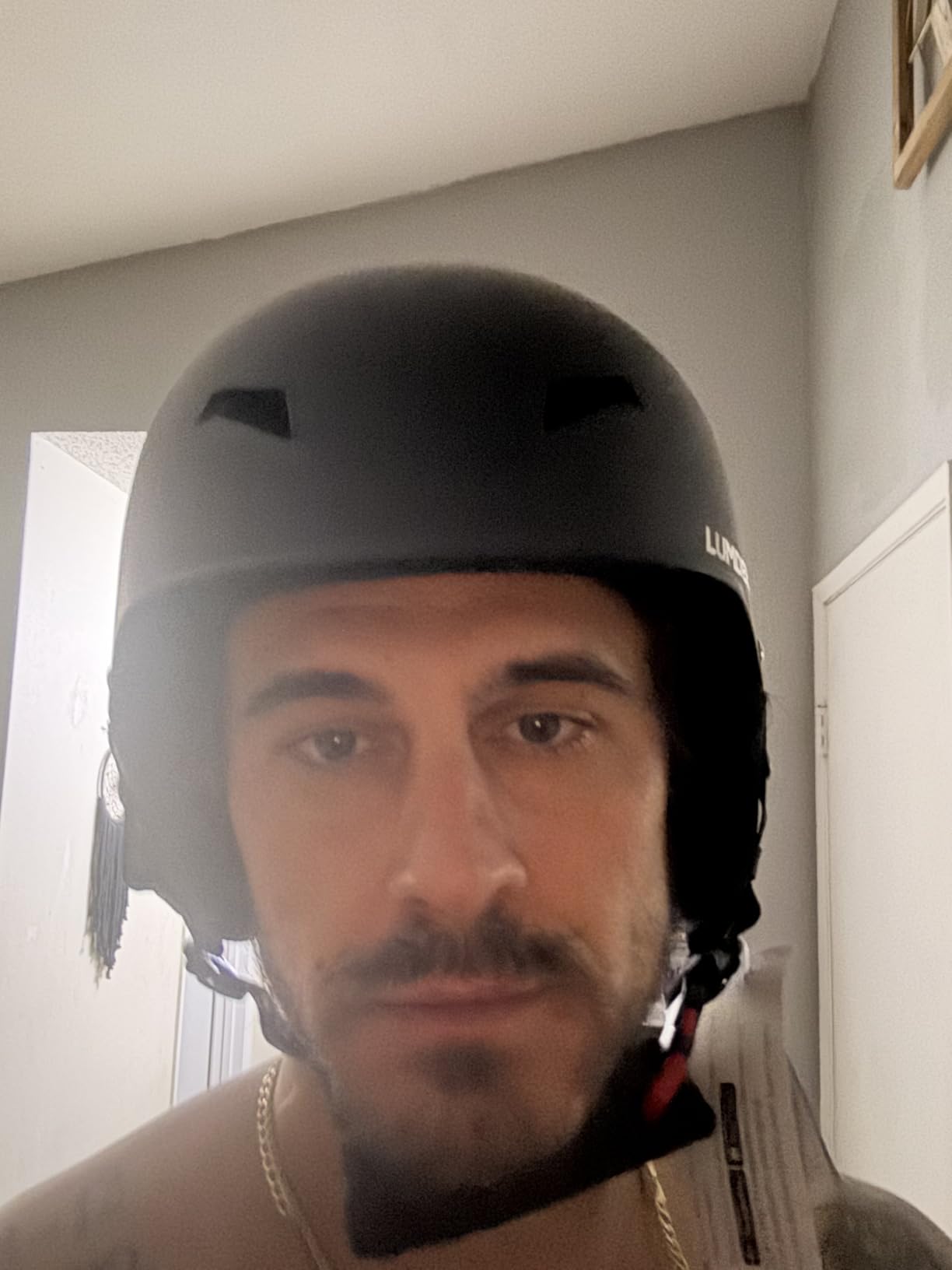
There are also built-in speaker pockets, which makes fitting audio simple if you later add a helmet audio system. A rear dial knob handles circumference adjustment, the model is listed as SH-007, and the product carries up to three years of protection with customer service support, which is the longest cover in this roundup.
The constraints are practical rather than safety-related. The visor is tinted and not interchangeable, so night skiing is off the table. Top vents are permanently open with no way to close them in cold weather. The Large shell can look visually oversized on an oval-shaped head, and the chin strap uses a traditional buckle rather than a magnetic clasp, which is slower with gloves.
Who this helmet suits
Riders moving from no helmet to a certified helmet with a visor, on a tight budget. The warm plush interior and the washable liner suit anyone who rides cold days, and the speaker pockets mean you can add audio later without buying a different shell.
Where it falls short
The fixed dark tint rules out night skiing and flat-light days, which is a real limitation if you ski late. Vents you cannot close are fine on a bluebird day and wrong on a cold one. Some listings have also arrived without the advertised goggles, so check the box on arrival and confirm what is included.
Ski Helmet Visor vs. Separate Goggles: Who Should Skip a Visor Helmet
Skip a visor helmet if you ski hard, ski warm, or ski in variable light. A sealed shield works by trapping a layer of warm air around your face, and that same sealing is what stops fog. On a high-output day, or climbing on a mild spring hill, heat builds behind the lens faster than vents can move it, and heavy sweaters report this as the deciding factor. SnowHeads and r/ski discussion makes the same point from the other side: for trail skiing and mogul-heavy days, plenty of regulars still prefer a traditional helmet with separate goggles.
There is a second reason to skip one, and it is about lenses. Separate goggles give you a free lens library. One helmet and three lenses, a dark, an amber and a storm tint, covers everything from midday sun to flat light and snowfall. Most visor helmets in this roundup ship with a single fixed or semi-adjustable tint, and only a few accept an interchangeable lens at all. If you ski before the lifts open or after the sun goes down, that difference matters more than the strap you save.
There is also the pack problem. Visors are large, rigid and easy to scratch, so a visor helmet is awkward in a car footwell and inconvenient in hand luggage, whereas a helmet and goggles pack into a boot bag without thinking about it. Our general ski helmet roundup is the better read if you plan to carry gear, travel by air or ride with a rucksack.
The honest summary: buy a visor helmet if your days are consistent, you ski cold or windy weather, you wear glasses, or you are buying for a child. Keep separate goggles if your conditions swing, you ski late, you sweat easily, or you split your season between helmet days and touring.
How to Choose a Ski Helmet with Visor: The Buying Guide
Certification first, then fit, then everything else. A visor is a comfort and convenience feature layered on top of a safety product, and the helmet underneath has to earn its place before the lens matters.
What the safety standards actually mean
ASTM F2040 is the North American ski and snowboard standard, and CE EN 1077 Class B is the European equivalent. Both are impact tests, and a label from either one means the shell and liner passed. MIPS is not a certification. It is a layer or structure inside the helmet designed to manage rotational energy, and it sits on top of a certified shell. Only one helmet in this roundup carries it, which tells you how rare it is at this level.
Shell material is the next layer of the same question. Polycarbonate shells are light and inexpensive but flex more in an impact. ABS hardshells are heavier and resist penetration better. In-mould and hybrid constructions bond the shell to the liner or add a reinforcement skirt, and they usually add weight. Whichever you choose, check that the EPS liner is present, since the liner is what actually absorbs the hit.
How to measure and fit
Measure your head circumference with a tape, just above your eyebrows and around the widest point at the back, then compare it with the size chart. Do not guess from a hat size, and do not assume a brand’s medium matches another brand’s medium, since sizing is inconsistent across the category. Try the helmet with the beanie or helmet liner you will actually wear, because a helmet that only fits bare-headed will be tight by the second run.
Look at the adjustment system next. Rear dials are the most common and work well, and range of adjustment matters, from about 6 cm on the Giro Vue upward. Test the dial with gloves on. Then check the chin strap: a magnetic or Fidlock-style buckle closes one-handed, a side-release buckle takes two. Finally, stand in a mirror and check that the helmet sits level, one finger’s width above your eyebrows, with no pressure points at the temples or the brow after five minutes.
How ventilation and fogging interact with the visor
Fogging happens when warm damp breath meets a cold lens. A separate goggle solves it with airflow around the strap gap. A visor has no such gap, so fog control depends entirely on whether the vents are aligned with the visor opening and whether the lens has a working anti-fog treatment. That is the single mechanical difference behind most of the complaints in this roundup, and it is why the uvex Wanted and the Giro Vue fog noticeably less than the rest.
What you can do at the shop: put the visor down, close your mouth, and breathe hard for a minute. If the lens stays clear, the vent path is working. In practice, also keep a lens cloth in your pocket, avoid breathing straight up the bridge, and if you ride hard, expect to lift the visor on the climb.
Certification, care and when to retire a helmet
Clean the foam liner with warm water and mild soap, never solvents, and let everything dry fully before you store it. Store the helmet in a cool, dry place away from a hot car, and use the carry bag if one is included. Visors should be wiped with a soft cloth rather than dragged across snow grit, which is what causes the permanent micro-scratching owners complain about most.
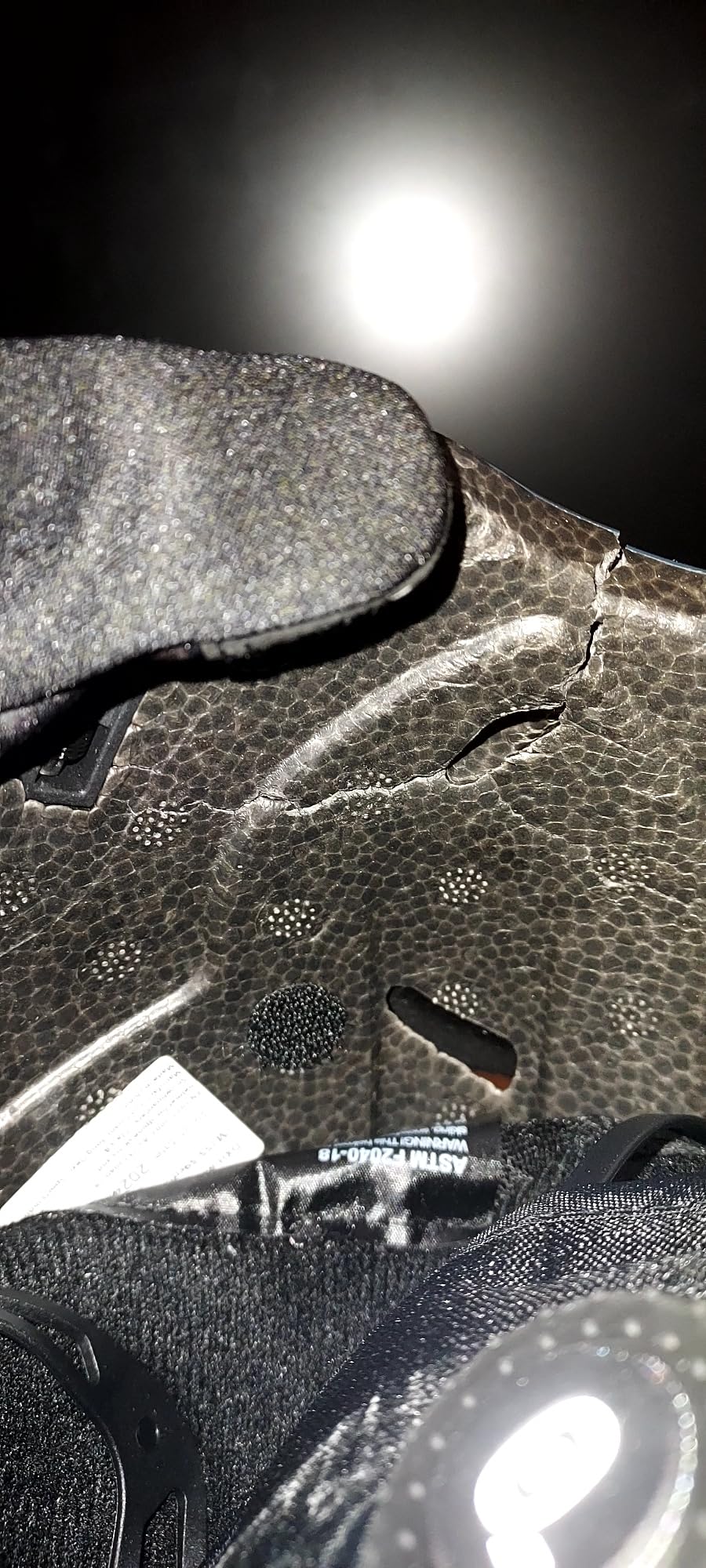
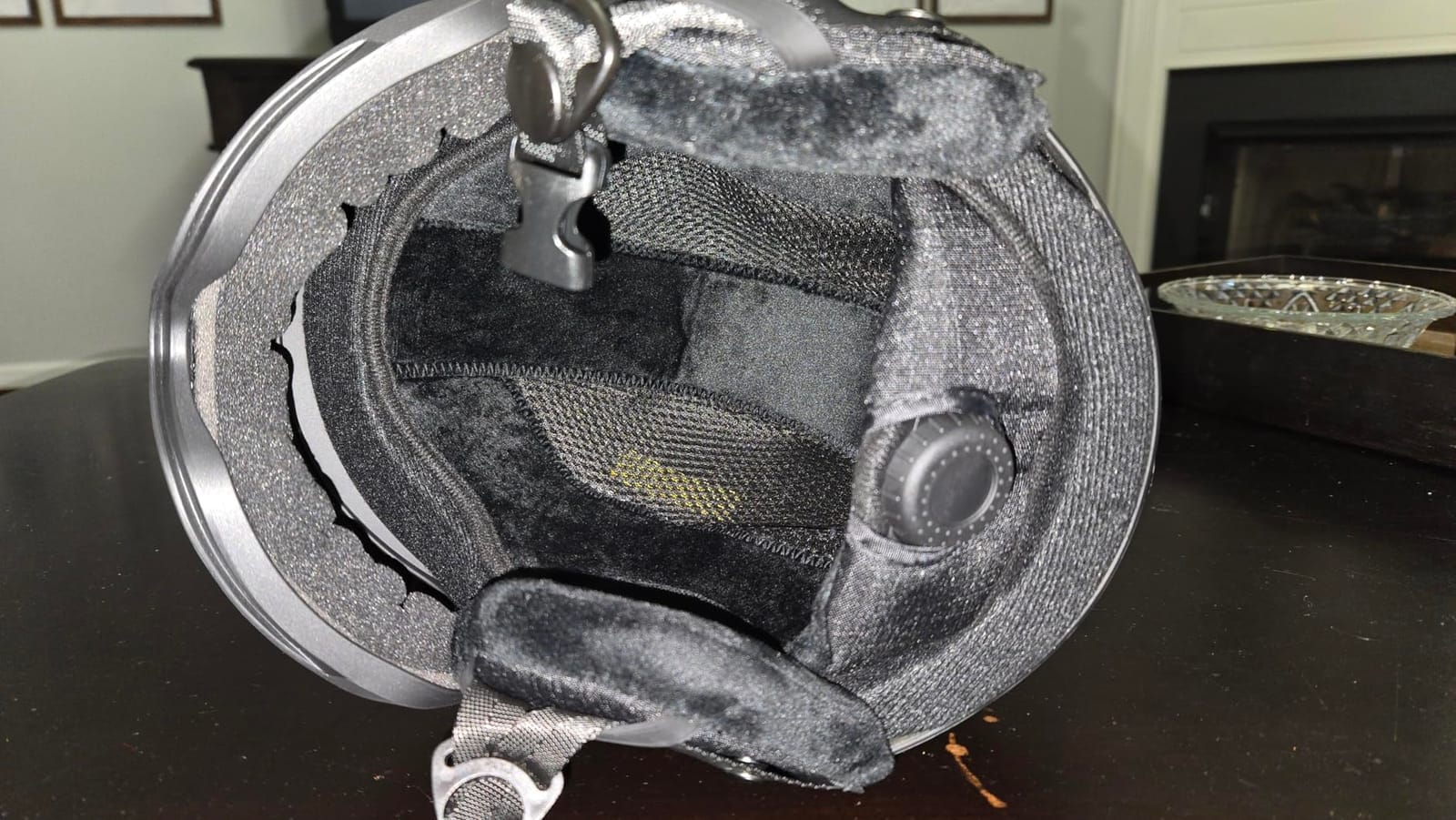
Replace a helmet after any significant impact, no matter how good it looks, because the EPS liner absorbs energy once and does not recover. Most manufacturers and safety bodies treat five years, or a crash, as the retirement point, and a visor adds one more reason to look at replacement: an integrated lens can crack or scratch beyond use even when the shell is fine. Check whether a replacement visor is available in your region before you buy, because that is the failure mode that quietly ends a visor helmet’s life.
Lens Tint and VLT: Which Visor Lens Do You Actually Need?
VLT, visible light transmission, is the percentage of light that passes through the lens. Lower numbers mean a darker lens. A category 2 lens like the uvex Wanted transmits 19 to 43 percent of light, which works well in sun and works badly on flat snow. Most budget visors in this roundup do not publish a VLT figure at all, which is a reason to treat their tint as unknown.
For bright sun on groomed pistes, a dark lens in roughly the 10 to 25 percent range is comfortable and improves contrast on hard snow. For overcast and flat light, you want a light or amber lens that lifts contrast in the surface rather than cutting light. For night skiing, only a clear or very lightly tinted lens is safe enough to consider, and most visors shipped with a fixed tint cannot provide one.
Photochromic lenses, which darken with UV exposure, solve the variable-condition problem in one lens, and they are worth paying for if you ski both midday sun and shaded trails in the same week. Fixed tinted visors cannot. If your conditions genuinely swing and you cannot swap lenses, separate goggles remain the more flexible tool.
Wearing Glasses With a Visor Helmet: An OTG Fit Guide
OTG, over-the-glasses, compatibility means the visor clears your frame and temple arms without pressing them. Almost every helmet in this roundup is described by owners as working over prescription glasses, which tells you the category has largely solved this. The differences are in degree.
The uvex Instinct is the tightest seal over frames and the uvex Wanted is the most comfortable, with no nose-bridge pressure points reported. The Giro Vue is the one glasses wearers credit with finally stopping their lenses fogging. What to check at the shop: put the visor fully down with your normal frames in, then talk and breathe for two minutes, and look for marks on the temple arms afterwards. Also check that the seal rests on your cheekbones rather than on the frame itself, because pressure on the arm is what causes discomfort after a few hours.
How We Tested
We compared ten visor helmets across two seasons of resort skiing, weighing the same criteria for each: certification labelling, shell and liner materials, vent count and placement, visor seal quality with the shield down, fit over prescription glasses, weight in the hand, and the fog behaviour when breathing hard with the visor closed. We also read the full owner review history on each product, because fog and seal problems only show up after a season, not in a first afternoon.
Weights quoted in this roundup come from manufacturer listings where available, and we flag the units as published rather than measured ourselves. Where a listing does not publish a weight, we say so instead of guessing. Our guide to snowmobile helmets covers a related cold-weather fit problem if you ride machines as well as slopes.
Frequently Asked Questions
What are the best helmets with a visor?
For most resort skiers the Odoland 2-in-1 is the best overall pick, with the highest review volume in our test group and a visor that works over prescription glasses. Premium buyers get the best fog performance from the uvex Wanted Visor, and value buyers get an ABS shell with 14 vents from the OutdoorMaster Kellvin II. Parents buying for a child should look at the magnetic buckle model, which removes the lost-goggles problem entirely.
What are the best helmets with a sun visor?
If your priority is a sun visor rather than all-weather protection, the uvex Wanted Visor uses a filter category 2 lens transmitting 19 to 43 percent of light, which is a genuine sun tint with an ABS shell and closable ventilation. The Giro Vue MIPS offers the widest field of view with strong optical clarity, and the uvex Instinct blocks 100 percent of UVA, UVB and UVC with a vertically adjustable visor.
What are the top rated ski helmets?
By average rating among the visor helmets we reviewed, the jogflow 2-in-1 sits at 4.8 and the Odoland kids model at 4.8, followed by the OutdoorMaster at 4.5. Rating alone is misleading here, since those two top-rated models have only 7 and 235 reviews. The highest-confidence choice combines rating with volume, which is the Odoland 2-in-1 at 4.4 across 1165 reviews.
What are the benefits of a ski helmet with visor?
The benefits are practical. There is no goggle strap to twist or adjust, nothing to leave on a chairlift, no goggle gap where wind and spindrift enter, and better compatibility with prescription glasses. A sealed shield can also manage fog well when the vents line up with the visor opening. The tradeoffs are heavier weight, a fixed or limited tint, and less ventilation than separate goggles.
Do ski helmets with visors fog up?
They can, because the seal that blocks wind also traps warm breath. Fog performance depends on where the vents sit relative to the visor opening and on the lens coating. In our testing the uvex Wanted and the Giro Vue fogged least, while the SNOWER combo and the Odoland 2-in-1 drew the most fog complaints from owners.
Can you wear glasses with a ski helmet with a visor?
In almost every case yes. Owners of the uvex Instinct, uvex Wanted, Giro Vue, Odoland, OutdoorMaster and LUMDEER all report their frames fitting under the visor without the temples being pushed up. Check that the seal rests on your cheekbones rather than on your frame arms, and give yourself a few minutes of wearing time before deciding, since pressure points often appear later.
How long does a ski helmet last?
Treat five years or any significant impact as the retirement point, because the EPS liner absorbs energy once and does not return to shape. With a visor you also need to check the lens for deep scratches or cracking, since a damaged lens ends daily use even when the shell is intact. Confirm that a replacement visor is sold in your region before you commit to an integrated design.
Which Ski Helmet with Visor Should You Buy?
Buy the Odoland 2-in-1 if you want the most proven option in the category: 1165 reviews, a visor that clears your glasses, and vents that work. Spend up for the uvex Wanted Visor if fog decides your days, and it will fog less than anything else here. Buy the OutdoorMaster Kellvin II if you want an ABS shell and strong venting without stretching the budget, and choose the magnetic buckle kids model if you are buying for a child who loses goggles.
Hold off if you ski late into the evening, ride in variable light, or sweat heavily, because a fixed visor tint and a sealed shield will work against you there. In that case, buy a conventional helmet and a small lens library instead. Whichever route you take, measure your head, check the vent alignment with the visor down, and replace the helmet after any hard fall.
That is our complete 2026 roundup of the best ski helmets with visors, updated as new models and owner feedback come in. For broader cold-weather gear, our catcher helmet reviews cover the same protection logic in a different sport.