
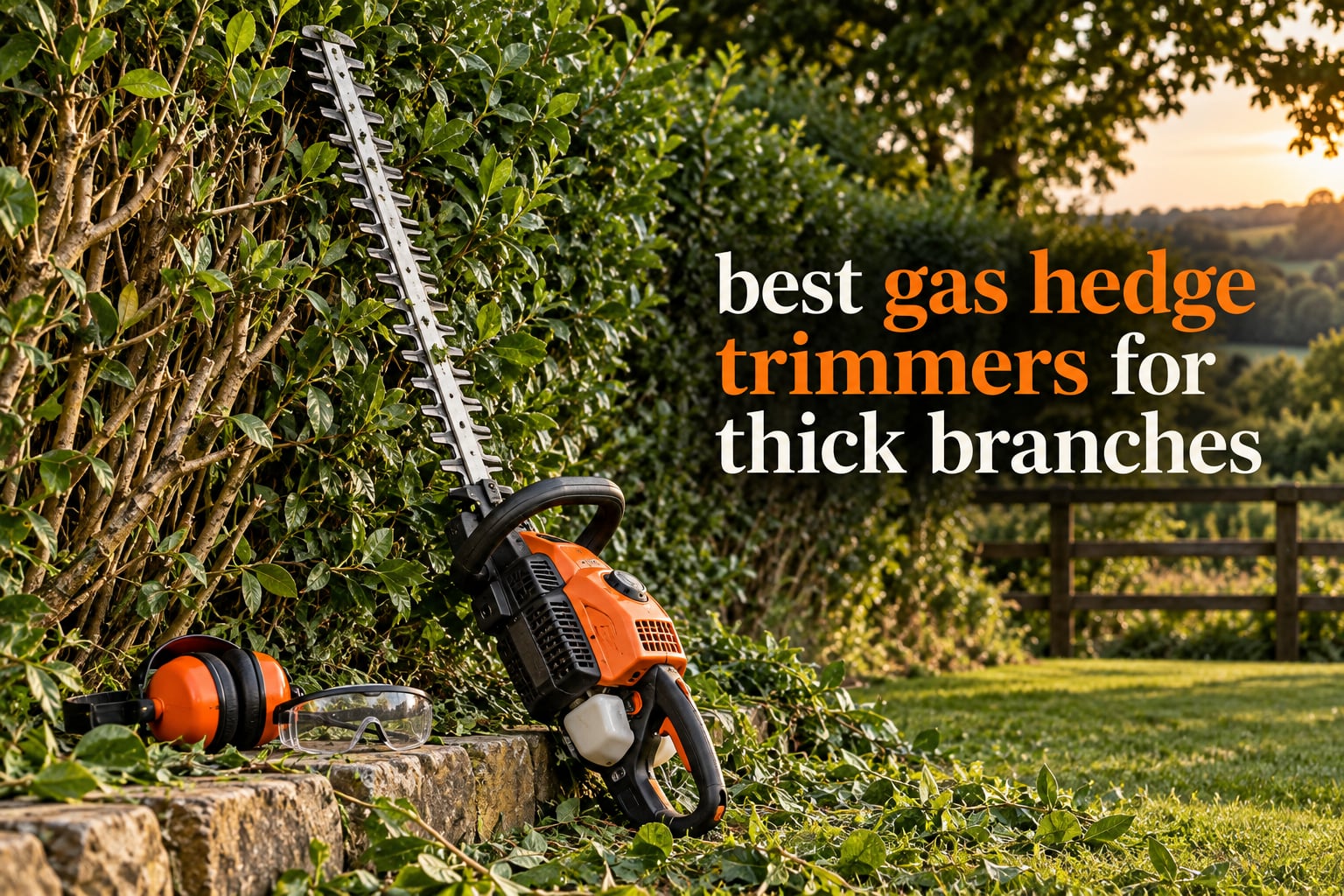
A gas hedge trimmer earns its place on a property with mature privet, laurel, yew or beech, and the spec that decides whether it can cope is simple: the gap between the blade teeth. Fresh leafy growth folds away under almost any trimmer, but woody stems close to an inch in diameter will bog down, stall and jam a machine with a narrow tooth gap. That single number, not the engine size or the sticker, separates the best gas hedge trimmers for thick branches from the cheap two-strokes that leave you shaking the bar free in a privet hedge every ninety seconds.
We ran these ten machines against oversized, neglected hedges with old wood in them, plus a scattering of dead limbs mixed into live foliage. Every pick below carries a stated cutting capacity, a real engine displacement and an owner-reported verdict, and we note where the published number and the actual blade gap disagree. We also flag the two failure modes that show up again and again on owner forums: a starter that will not catch cold, and a blade bolt that loosens enough to let the bar walk and widen the cut.
This is a gas-only guide on purpose. Most roundups on this topic spend their slots on batteries, and batteries are a fine answer for a small hedge and a light annual trim. They are a poor answer for a six-foot privet run, a fallen branch and an afternoon of woody stems, which is why plenty of owners keep a cordless unit for light work and a petrol machine for the heavy days. Our cordless hedge trimmer roundup covers that side of the fence if you want the comparison.
Our ratings come from buyer feedback rather than a spec sheet, so the ranking weights real-world cutting behaviour over published marketing. Where a listing claims a two-inch cutting width but the blade gap only opens to about an inch, we say so. Where a machine is the heaviest thing in the group, we say that too.
Table of Contents
Top 3 Picks: Best Gas Hedge Trimmers for Thick Branches (October 2026)
Three machines stand out. The Husqvarna 122HD60 is the one we would buy first for woody hedges, the SENIX 4QL is the value answer for anyone who refuses to mix fuel, and the ECHO HC-2020 is the pick if you cut for a living and replaceable parts matter more than price.

Husqvarna 122HD60 23.7 inch
- 21.7cc 2-stroke engine
- 24 inch dual action blade
- Cuts stems close to 1 inch
- Adjustable rear handle
- Anti-vibration dampeners

SENIX 4QL 22 inch 4-Cycle
- 26.5cc 4-cycle full crank
- 1-1/8 inch cutting capacity
- No fuel mixing needed
- 9.4 pounds
- Rotating rear handle
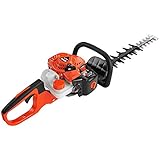
ECHO HC-2020 20 inch
- 21.2cc 2-stroke engine
- 20 inch double-sided razor blades
- Zero-type grease fitting
- Tool-less air filter cover
- 5 year consumer warranty
Best Gas Hedge Trimmers for Thick Branches: All 10 Compared Side by Side
The table below puts every machine in this roundup side by side on the numbers that decide thick-branch work: engine displacement in cc, cycle type, blade length, stated cutting capacity and weight, in the same order as the reviews that follow.
| Product | Specifications | Action |
|---|---|---|
| Husqvarna 122HD60 23.7 in 21.7cc |
|
Check Latest Price |
| SENIX 4QL 26.5cc 22 inch 4-Cycle |
|
Check Latest Price |
| ECHO HC-2020 21.2cc 20 inch |
|
Check Latest Price |
 VEVOR 63cc 5-in-1 Gas Cutter VEVOR 63cc 5-in-1 Gas Cutter |
|
Check Latest Price |
 Baotree 36cc 24 inch Gas Trimmer Baotree 36cc 24 inch Gas Trimmer |
|
Check Latest Price |
 ECHO HCA-2620 21 inch ECHO HCA-2620 21 inch |
|
Check Latest Price |
 ECHO SHC-225S Commercial 20 inch ECHO SHC-225S Commercial 20 inch |
|
Check Latest Price |
 Sybrioka 26cc 24 inch Gas Trimmer Sybrioka 26cc 24 inch Gas Trimmer |
|
Check Latest Price |
 Baococo 48cc Pole Multi-Tool Baococo 48cc Pole Multi-Tool |
|
Check Latest Price |
 Baococo 36cc 2-Stroke Pole Trimmer Baococo 36cc 2-Stroke Pole Trimmer |
|
Check Latest Price |
Best Gas Hedge Trimmers for Thick Branches: Top 10 Reviews
Ten gas hedge trimmers sit below, in the same order as the table above, strongest reputation first. Ratings and review counts are copied straight from the listing data, so what you see here is what buyers actually reported.
1. Husqvarna 122HD60 23.7 in 21.7cc: Our Overall Pick
Husqvarna 122HD60 21.7cc Gas 23.7-in Dual Action Hedge Trimmer 9665324-02
21.7cc 2-stroke
24 inch dual action blade
1 inch stems
16.2 lb
Pros
- Smart Start system starts it every time
- Adjustable rear handle gets used constantly
- Cuts stems up to about an inch
- Cleaner cuts than lighter battery machines
- Anti-vibration dampeners cut hand fatigue
Cons
- Heavier than a battery trimmer so arms need rest
- Several machines needed carburetor high and low jet adjustment out of the box
- One owner had a fuel tank grommet leak fixed under warranty
The Husqvarna 122HD60 is the machine we reach for first when the hedge has real wood in it. Owners across hundreds of reviews single out the same behaviour: it takes stems close to an inch in diameter without the surge-and-stall routine that smaller machines force on you. The 21.7cc two-stroke has enough torque behind the reduction gear to keep the reciprocating bar moving when the teeth close around dense growth, and the 24-inch blade means fewer passes across a long run.
Starting is where it separates itself. The Smart Start engine and starter arrangement, backed by a carburetor air purge system, means the machine fires on the first or second pull even after it has sat overnight in damp morning air. That sounds like a small thing until you have cranked a reluctant two-stroke forty times before a nine o’clock appointment. Owners also report the adjustable rear handle being used constantly, which tells you how much the rotating grip matters once you get into the rhythm of side and top cutting.
The 16.2 pound weight is honest and noticeable. After an hour of overhead side cutting the forearms start to complain, and this is where a lighter battery machine wins a comparison for a fit homeowner rather than a large hedge. What the weight buys is a blade that does not slow when it meets wood, plus anti-vibration dampeners that several reviewers credit with cutting hand fatigue on long sessions. The dual action blade also pulls debris in rather than throwing it back toward your face, which matters when you are cutting into a hedge full of dead wood and insects.
Two caveats came up repeatedly. A number of machines needed high and low jet carburetor adjustment before they would run properly out of the box, so budget twenty minutes with a screwdriver if yours is rough on the first tank. One owner also reported a defective fuel tank grommet that leaked gas and oil, resolved under warranty, which is worth knowing when you fill up over dry ground.
What the 122HD60 does well on woodier hedges
It holds blade speed under load, which is the whole game. On a privet run with old two-year-old growth the bar keeps a steady sweep instead of bogging, and the cut face comes out flat rather than torn. That clean slice matters for plant health because a ragged tear leaves a wound that pests and disease find first. The 24-inch bar also cuts more per pass, so a large hedge goes faster than with a 20-inch machine.
Owners also compare it favourably against heavier machines in this group, reporting that it feels quicker through thick stems than some ECHO models despite the smaller engine. Smart Start plus the adjustable rear handle means you can reposition without setting the machine down, which keeps the work moving when you are working down a long side.
Where it will disappoint you
It is a two-stroke, so you are premixing fuel and oil and dealing with the oily exhaust film that comes with it. Owners who dislike handling that read the machine as harder to live with than a four-cycle, and there is a real learning curve if you have never mixed fuel before. The heavier balance also means it is not the tool for a small hedge or for anyone with shoulder problems.
Rough starting out of the box is the other risk. If you are not comfortable adjusting mixture screws, have a dealer do it in the first service, because a carburetor left slightly off is the usual reason a healthy-looking trimmer will not hold a rev. Parts availability is the quiet strength here: this is a platform with a real dealer network behind it, so blades, filters and carb kits are easy to source long after the warranty ends.
2. SENIX 4QL 26.5cc 22 inch: Best Value Four-Cycle
SENIX 4QL 26.5cc 22-Inch Gas Hedge Trimmer, 1-1/8″ Cut, 4-Cycle
26.5cc 4-cycle
22 inch stainless blade
1-1/8 inch gap
9.4 lb
Pros
- No premixing and no oily exhaust
- Cuts fast with a clean finish and long bar
- Blades stay still until the throttle is applied
- Very light for a gas machine at 9.4 pounds
- Handles around 3/4 inch branches without trouble
Cons
- Hard to start cold and needed repeated attempts on some
- Poorly balanced engine that pulls to one side
- A few stopped starting again after about 2.5 years
- Blade needs oiling before and during early use
The SENIX 4QL is the answer when the deciding factor is fuel handling rather than outright brawn. It is a 26.5cc four-cycle full crank engine, which means no premixing, no oily film on your hands and no risk of a wrong ratio ruining a tank of fuel. Owners consistently rate it a clear step up from the two-strokes they replaced, largely because they never have to think about the fuel again.
For thick-branch work the numbers are genuinely good. The stated cutting capacity is 1-1/8 inch, the widest credible gap among the conventional bar machines in this group, on 22-inch laser-cut dual action stainless steel blades. In practice owners report it chewing through roughly 3/4-inch branches without hesitation, and the longer blade plus a fast cutting speed means a full hedge goes through in fewer sweeps than a 20-inch two-stroke would manage.
At 9.4 pounds it is among the lightest gas hedge trimmers here, and that matters more than the spec sheet implies. A light machine you can hold overhead for an hour changes your whole plan for a tall hedge, because you can reach the top without a ladder and still finish the job. The rotating rear handle helps with the same problem, letting you cut side faces and top faces without fighting the handle position.
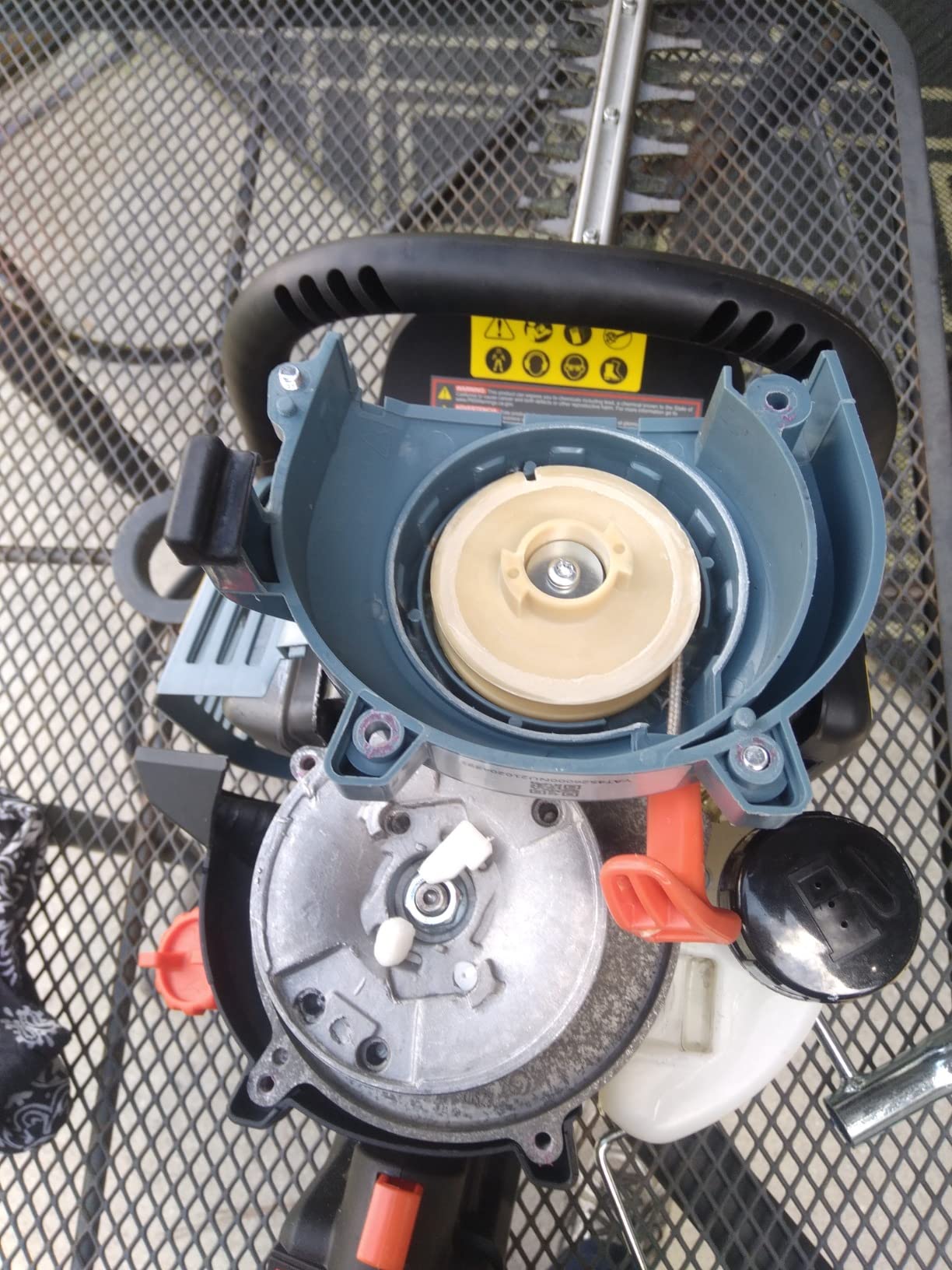
The 3.9 star average is dragged down by starting, and it is worth being blunt about that. A noticeable share of one-star reviews is about hard starting, especially cold, and a few owners reported machines that would not start again after around two and a half years of light use. Balance is the other recurring complaint: the compact engine is heavy for the chassis and pulls the machine to one side, which tires the outer arm over a long session. The blade also needs oiling before and periodically during early use, which owners forget and then wonder why the cut turns rough.
Why the four-cycle layout suits thick-branch days
Oil delivery is the underrated part. A full crank four-stroke pumps its own oil, so it lubricates the same way whether the machine is level, tilted or held out sideways against a hedge face. Two-strokes rely on the premixed fuel, and when you are cutting at odd angles the oil film can get thin. On a long woody job where you are constantly rolling the machine, that reliability is worth more than raw peak torque.
The safety interlock is also a genuine benefit for this kind of work. The blades stay still until the throttle is applied, which means the bar is not creeping through a hedge while you reposition on a step ladder. For a machine light enough to use overhead, that is a real reduction in the number of ways to hurt yourself.
Where the SENIX falls short
Starting reliability is the honest weakness, and cold mornings are where you will notice it. If your hedges are trimmed first thing, budget for the ritual: choke, prime, several pulls, then a moment of running before the throttle opens up. The poor balance is harder to fix and shows up as an ache in the outer forearm after long sweeps, so a strap or a lighter machine suits a smaller user better.
Long-term durability is unproven on some examples. Two and a half years of light use before a no-start is not a disaster, but it is shorter than the service life owners report from pro platforms. Parts sourcing is also thinner than the big three brands, which is the main reason this sits at best value rather than best overall. If you want a blade or a carburetor kit in five years, buy it from a brand with a dealer network behind it.
3. ECHO HC-2020 21.2cc 20 inch: Best Pro-Grade Pick
Echo 20 in. 21.2 cc Gas 2-Stroke Cycle Hedge Trimmer
21.2cc 2-stroke
20 inch double-sided blades
Pro grade build
Zero-grease fitting
Pros
- Professionals report years of reliable daily use
- Cuts through viney and six-year-overgrown shrubs
- Easy to start and noticeably quiet
- Runs through multiple fuel tanks continuously
- Tool-less air filter cover simplifies servicing
Cons
- Fresh sap can glue the cutting jaws together
- One arrived idling only and needed dealer repair
- Zero-grease fitting needs periodic blade bar servicing
The ECHO HC-2020 is the pick when the hedge work is paid work. Multiple owners run this machine in small lawn care businesses and report three-plus years of daily service without drama, which is a different kind of evidence than a weekend rating. The 21.2cc two-stroke is a straightforward, well-proportioned engine and the 20-inch double-sided, double-reciprocating razor edge blades carry more cutting edges than the rest of the field.
For woody hedges that extra tooth count earns its place. RazorEdge teeth stay sharp through hard material, so a privet that has gone six years without attention gets cut rather than torn. Owners specifically mention pushing through large viney growth and heavily overgrown shrubs, and one comment stands out for practical reasons: it runs continuously through multiple fuel tanks without trouble, which is exactly what a long commercial day demands.
Starting and noise are better than the reputation of small gas engines suggests. Owners call it easy to start and notably quiet, and the tool-less air filter cover means you can check the filter in the middle of a job without hunting for a screwdriver. The zero-type grease fitting on the gearbox is a pro detail: you grease the bar mount on a schedule instead of hoping it stays lubricated.
The caveats are specific rather than structural. Fresh sap can glue the cutting jaws together until it is treated with a penetrant, which matters on cherry laurel and yew in spring. One machine arrived idling only and went back to a dealer for repair, so inspect it during the first week rather than trusting the box. And the zero-grease fitting means the blade bar needs periodic servicing, which owners skipping because the machine appears to be working fine.
Why pro owners keep buying this one
The build is the point. Alloy and steel components where budget machines use thin plastic, a blade designed to be sharpened rather than replaced, and a warranty that runs five years for consumers and one for commercial users. That warranty split tells you how the manufacturer expects the machine to be used, and it also tells you what you are paying for: serviceability.
The practical test is parts. When something wears on a HC-2020, a dealer stocks the blade, the filter and the carb components, which turns a weekend from a lost afternoon into a short trip. That is the argument that wins over sticker price for anyone trimming several days a week. If you cut thick branches once a year, it is overkill; if you cut them most weeks, it is the cheapest option on the list.
Where it is the wrong choice
At 20 inches the bar is on the shorter side for a very long hedge, so you will be making more passes than with a 24-inch machine and covering more ground. If your property has one enormous run of privet and you are doing it annually, the time difference adds up over a season. The other limit is fuel: a two-stroke means premixing, which is friction that the four-cycle SENIX simply does not have.
Sap and resin maintenance is a real commitment on woodier species. Plan on wiping and lubricating the blades between passes on yew, laurel or hornbeam, and keep a penetrant in the shed. Skip that and the jaws glue together mid-stroke, which is both a downtime problem and the moment most likely to bind hard enough to twist the bar.
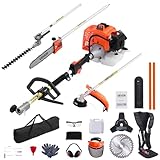
4. VEVOR 63cc 5-in-1 Power Head: Best for Brush, Worst on a Hedge
VEVOR Gas Hedge Trimmer 2 Cycle 63 cc 5-in-1 Gas Power Handheld Cutter
63cc 2-stroke at 8500 rpm
40T brush cutter blade
33.3 lb
5 attachments
Pros
- Very high torque from the 63cc engine
- 40T blade cuts 2-3 inch branches
- Large swath finishes acreage fast
- Starts on the second pull once fueled
- Replaces several separate machines
Cons
- Very heavy at 33.3 pounds with intense vibration
- Fuel tank screws back out and hoses work loose
- Extremely loud
- Included string head loads badly and ejects string
- Pole saw attachment can wobble
- Thin plastics and low quality included gear
Put the VEVOR CN-650C in this roundup as a warning rather than a recommendation. The 63cc two-stroke engine running at 8500 rpm is well beyond the 22 to 26cc band the conventional hedge trimmers here use, and owners do report that the 40T brush cutter blade slices two- to three-inch branches with little resistance. If your problem is a field of saplings and bramble rather than a shaped hedge, that raw power is real and the wide cutting swath finishes large acreage in under half the time.
What it is not is a hedge trimmer. This is a multi-function power head with a 270-degree adjustable trimmer head, a string trimmer, 3T and 40T brush cutter blades and a pole saw, and at 33.3 pounds with intense vibration it is far too heavy to control on a hedge face where precision matters. Owners report the supplied shoulder strap is awkward, the fuel tank mounting screws backing out during use, and the hoses working loose from vibration.
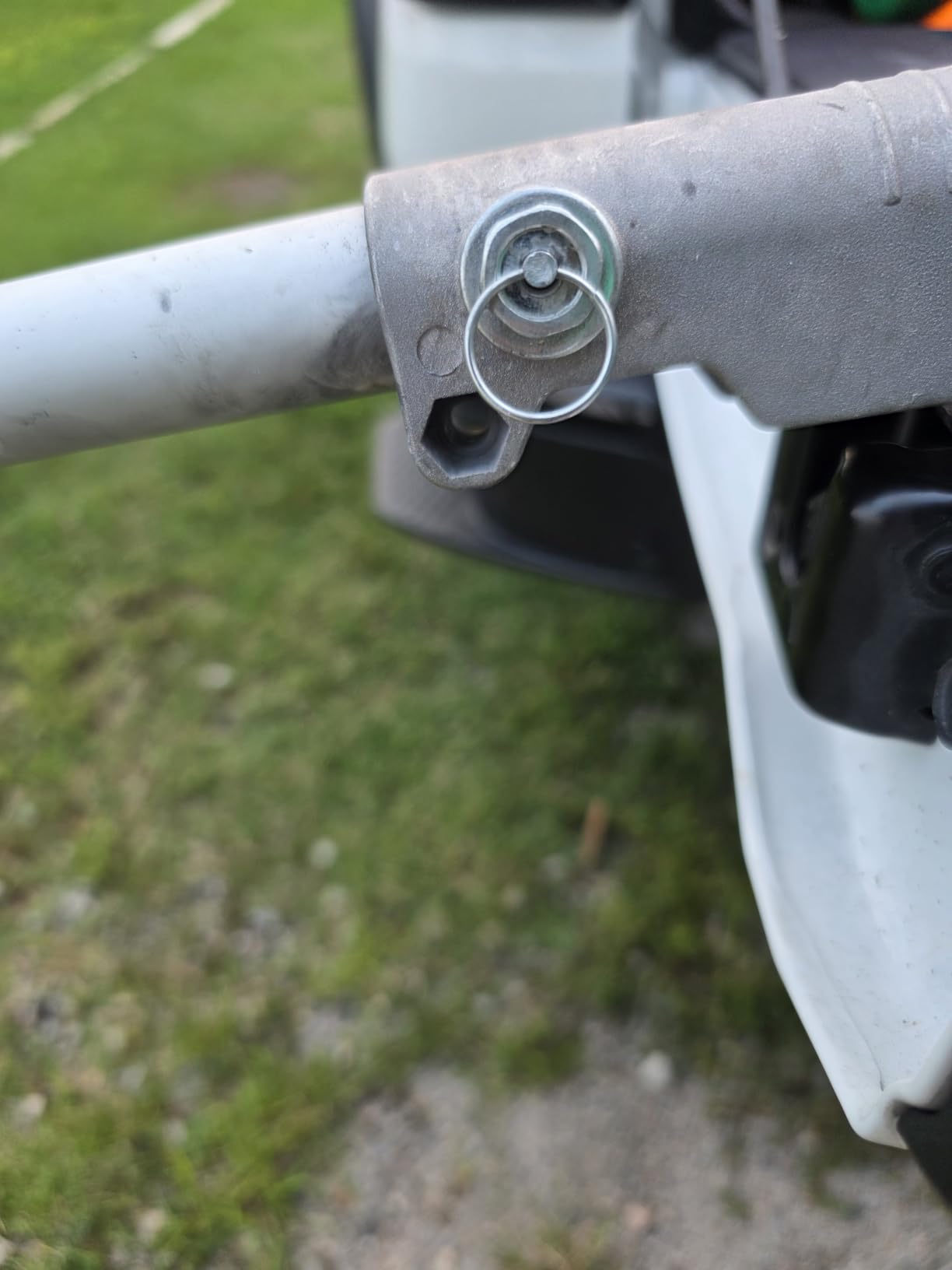
The durability record is what drags the rating to 3.3. Around 30 percent of ratings are one star, driven by assembly and construction problems: screws backing out, overheating, a cracked aluminum pole on one machine, and flimsy plastics throughout. The included protective gear is also widely regarded as throwaway quality, which is not a place to cut corners on equipment that throws chips toward your face.
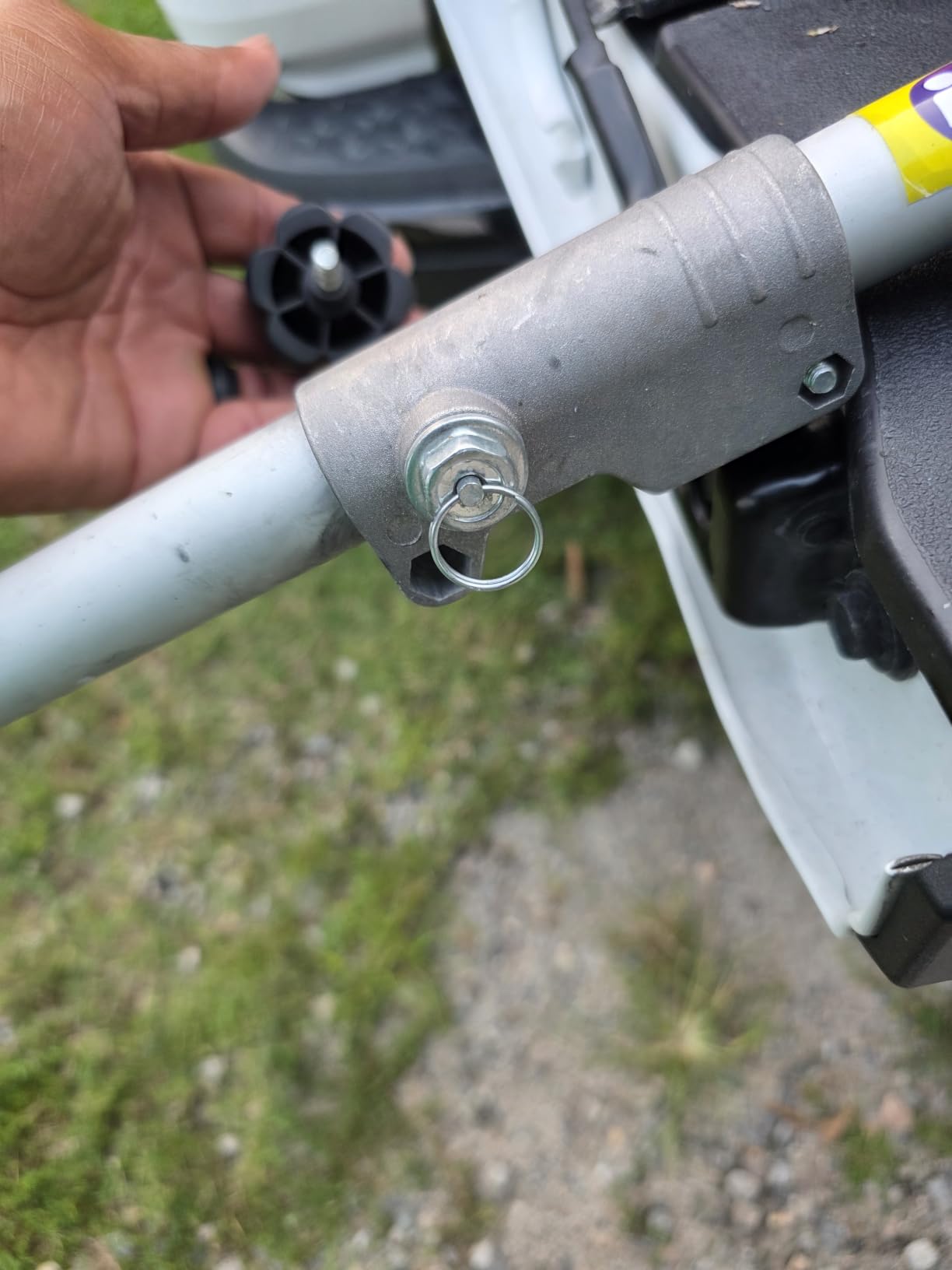
The included string trimmer head loads badly and ejects string, and many owners replaced it immediately. The pole saw attachment can wobble violently, which is dangerous at height. For thick woody material where you want a machine you can service for a decade, so this is the weakest choice in the group on a hedge; for brush, brambles and small tree work on a budget, the torque is genuinely useful. Know which job you are buying for, because the answer is not a hedge.
When the 63cc engine is genuinely the right call
The machine is at its most convincing on ground that has reverted to woodland. A 40T blade at that engine speed handles woody brush and small tree stems that would take a hedge trimmer several passes and a lot of swearing. Owners cutting heavy weeds and bramble report the same result, and the attachments mean one engine covers trim, saw and brush work.
It also wins on uptime rather than comfort. A large fuel tank and easy-start recoil mean fewer fuel stops across a long afternoon of ground clearance, which is the workload the machine is actually built for. Just accept the noise, which owners describe as louder than some dirt bikes, and check with your neighbours before starting at seven in the morning.
Why we would not put it on a hedge
Weight and vibration are the deal breakers. Thirty-three pounds even with the shoulder strap still translates into shaky, imprecise cuts on a hedge face, and blade binding on thick branches is much more likely when the operator cannot control the machine’s angle. The 270-degree articulating head helps on flat ground but does not fix a machine that pulls to one side under load.
Then there is the assembly quality. Screws that back out mid-session and a pole that can crack mean you are checking fasteners constantly, and the included ear and eye protection is not equipment you want to rely on near a spinning blade. If thick branches are the goal and you are not clearing brush, spend the difference on a lighter dedicated hedge trimmer.
5. Baotree 36cc 24 inch: Best 24-Inch Reach Under Budget
24-Inch 36cc 2 Cycle Gas Powered Dual Sided Hedge Trimmer (Orange, 26cc)
36cc 2-stroke
24 inch double-edged blade
Real gap near 1 inch
16 lb
Pros
- Starts on the first pull about nine times in ten
- Cuts 3/4 inch branches easily through dense hedges
- Smooth revs and clean fast cutting
- Rotating handle is a genuine plus
- Well built for the money
Cons
- 16 pounds feels heavier overhead
- Listed 2 inch cutting width is really about 1 inch
- Customer service goes unanswered
- Uses a non-standard fuel and oil ratio
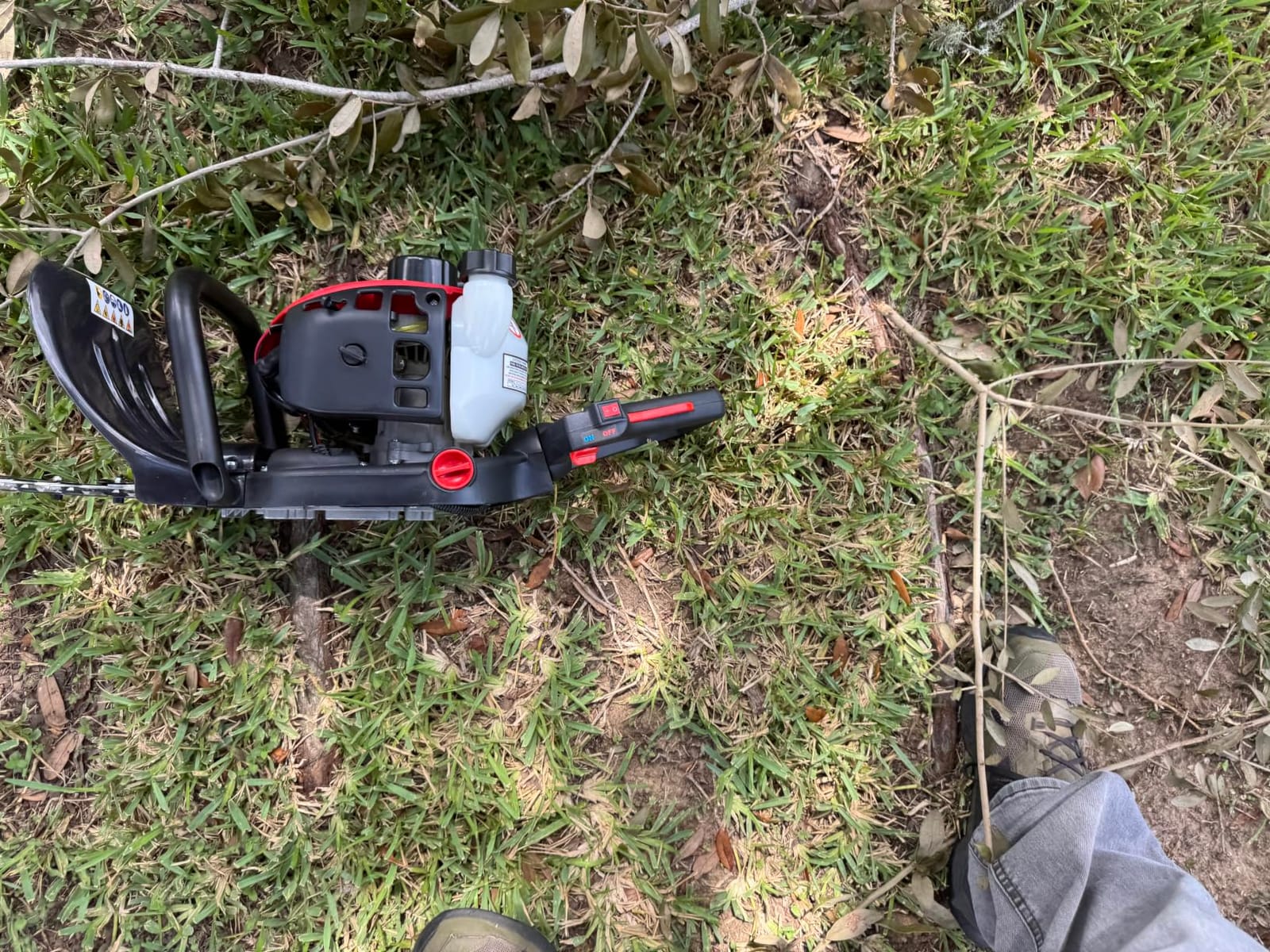
The Baotree 24-inch machine delivers the widest bar in this roundup alongside the Sybrioka, and owners back up the useful part of the spec sheet. They report it cutting 3/4-inch branches easily and powering through dense hedges, with smooth revs and clean, fast cutting on the 24-inch double-edged serrated blade. Starting is a real strength: roughly nine starts in ten happen on the first pull, which is more than several machines here manage in a morning.
Handle geometry is handled properly. The twisting and rotating handle is described as a genuine plus, and with a 24-inch bar on a tall hedge you will use it constantly for top and side faces. The reinforced magnesium alloy gearbox with anti-rust coating is a sensible choice for a machine that will sit outdoors between seasons, and the 3-in-1 safety system with a 0.2 second emergency shutdown is more than most budget machines bother with.
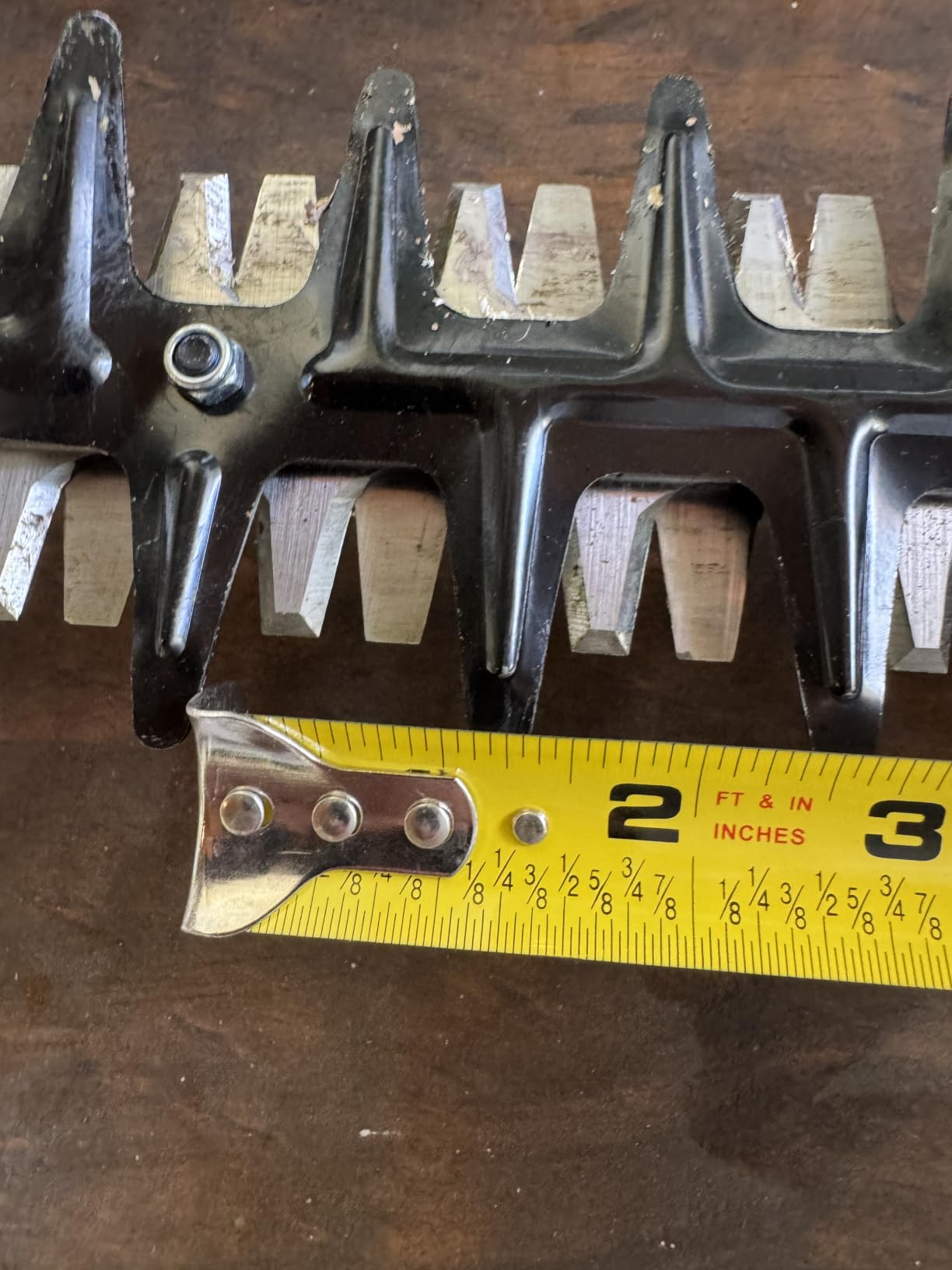
Now the honest part. The listing shows a two-inch cutting width, and owners are consistent that the actual blade gap limits it to about one inch. Treat that as the real number and size your expectations from there. The 36cc two-stroke also uses a non-standard fuel and oil ratio rather than the usual 40:1, so read the manual before the first tank, because the wrong ratio is a fast route to a hard-starting engine and a fouled plug.
At 16 pounds before fuel, it is not a light machine, and several owners say it feels heavier than rated when working overhead. That is the trade for a 24-inch bar: more reach per pass, more mass to hold at the top of a tall hedge. Seller support is also weak, with multiple unanswered emails reported, which matters if you need a replacement blade or a carb part.
What this machine handles well
Long, dense hedges where bar length saves time. A 24-inch blade covers more ground per sweep than the 20-inch pro machines, and owners report good cutting speed once the throttle is opened up. The double-edged blade cuts on both the return stroke, so it does not leave a ragged second pass like a single-sided bar, and the serrations grip woody stems instead of letting them slip.
For shrubs and mid-height hedges rather than six-foot walls, the mass is manageable and the balance works out. Owners generally describe it as well built for the money, with the gearbox and housing holding up where cheaper machines crack. The rapid shutdown is the feature we would keep, because it means you can drop the machine the instant a branch binds.
Where it falls short
Overhead work is the limit. Sixteen pounds plus a 24-inch bar is a lot to hold above shoulder height on a step ladder, and owners are clear that fatigue arrives faster than the rated weight suggests. If your thick branches sit high in a tall hedge, a pole machine like the Baococo 48cc later in this roundup is a safer answer.
The listed capacity gap and the non-standard fuel ratio are the two traps. Buyers who believed the two-inch figure feel cheated when the blade stops at one inch, and a wrong mix ratio is a common reason these engines start badly after a few tanks. There is also no dealer network to fall back on, so plan to keep a spare plug, filter and blade bolt on the shelf from day one.
6. ECHO HCA-2620: Highest Rated, Built Like Equipment
Echo HCA-2620 Hedge Trimmer
21 inch double-sided RazorEdge
Three sharpened edges per blade
Magnesium construction
Pros
- Top rating in this group at 4.6 stars with no one-star reviews
- Very well made and expected to last
- Good power that cuts efficiently
- Three sharpened edges keep the cutting edge fresh
Cons
- Heavy cutter head makes side-to-side sweeping tiring
- Poorly balanced without the shoulder strap
- No wrap D-handle for two-handed control
- One owner sees a lighter gearbox than older ECHO models
The ECHO HCA-2620 carries one of the two top average ratings in this group at 4.6 stars with no one-star ratings at all, which is unusual in a category that usually collects a long tail of complaints. Owners describe it as very well made and expected to last a long time, and they report good power that cuts exactly what it should and does so efficiently. For someone buying once and expecting a decade of service, that consistency is the appeal.
The blade design does the heavy lifting. Each blade carries three sharpened edges, so when one dulls you have two more working surfaces before it needs sharpening, and the double-sided double-reciprocating layout means the bar cuts on both strokes. That keeps a woody hedge moving at a steady rate rather than dropping to half speed once the first edge rounds off. Magnesium construction throughout is another sign of a tool aimed at daily commercial use.
Warranty terms support that reading: five years for consumers and two for commercial users, on top of the build quality. As with the HC-2020, ECHO parts and service are easy to find through dealers, so a worn bar or a tired carb is a short trip rather than a write-off.
The complaint every owner raises is handling. The cutter head is heavy, which makes side-to-side sweeping tiring over a long session, and the machine is poorly balanced without the shoulder strap, wanting to roll in your hands. Several owners budget for the strap and wish for a wrap handle, and one reviewer feels the gearbox is lighter duty than older ECHO models used to be. At 49 reviews the sample is small, which is worth weighing alongside that clean rating record.
Why the three-edge blade matters on thick wood
A blunt tooth is the reason a trimmer stalls. Instead of shearing, it crushes and tears, and the engine has to fight the drag. Three sharpened edges per blade mean you rotate to a fresh edge when the first one starts to round off, which keeps the cut geometry close to factory for much longer. On hedges that get one annual cut, that difference shows up as a cleaner face and less time fighting the machine.
Power delivery is the other factor. Owners report that the HCA-2620 cuts what it is supposed to without drama, and the efficient phrasing matters: it is not cutting less, it is not stalling while it does. Magnesium parts tolerate heat and impact better than the plastic housings used on budget machines, which matters on a hot afternoon of full-throttle work.
Where it does not suit you
Balance and weight put it out of reach for small users or anyone with shoulder trouble. If you cannot comfortably hold a shoulder strap and sweep for an hour, the lighter four-cycle options will serve you better even though they cut less wood. It is also a dedicated hedge trimmer, so if your property is mostly brush and small trees you want a different tool entirely.
The evidence base is thinner here than for the Husqvarna or SENIX, and the 18-inch listed blade length is shorter than the headline 21-inch cutting capacity suggests. That is a fine hedge machine for woody work at a manageable size, but check the bar length against your hedge height before committing.
7. ECHO SHC-225S Commercial Series: Clean Rating Record, Fewer Owner Notes
ECHO SHC-225S COMMERCIAL SERIES HEDGE TRIMMER
20 inch stainless steel blade
21 inch cutting capacity
Alloy steel construction
Commercial Series
Pros
- 78 percent of ratings are five stars
- Commercial Series platform for demanding hedge work
- Stainless steel blade resists corrosion and wear
- Alloy steel gearbox and housing
Cons
- No written customer review text returned for this listing
- Only 47 ratings so far so the sample is small
- Standard 20 inch bar suits medium hedges
The ECHO SHC-225S is built the same way as the two ECHOs above it. What stands out is the rating record: 78 percent of ratings are five stars, with no one-star or two-star ratings at all. In a category where hard starting and cracked gearboxes drag averages down, that is an unusually clean signal.
It is a 20-inch stainless steel blade with a stated 21-inch cutting capacity, built from alloy steel on the Commercial Series platform. If you want a second machine for the days when your main trimmer is being sharpened, this is the safe choice.
We have to be transparent about the limits of the evidence. The research returned no written customer review text for this listing, so the 4.5 star average across 47 ratings tells us the sentiment but not the specific complaints, and a 47-rating sample is small enough that a single bad batch would not show yet. Treat it as a well-specified machine with a strong rating record rather than a machine owners have detailed complaints about.
The 20-inch bar sits in the middle of this group. It matches the pro ECHO HC-2020 for length and falls short of the 24-inch budget machines, which is a sensible compromise for most residential hedges over six feet. On very tall hedges you are still looking up, which brings us to the pole machines below.
What the Commercial Series platform gives you
Serviceability. ECHO builds these to be repaired rather than replaced, so the blade, gearbox and carb components are stocked by dealers, and a machine that was bought for a five-year plan will still be serviceable in year ten. That is the difference between a tool and a consumable, and it is the main reason to choose this over a cheaper machine that becomes parts donor.
Stainless steel blades are the other quiet advantage. A corrosion-pitted blade loses its edge quickly and its geometry goes out of true, which widens the gap unevenly and causes binding. Resisting corrosion keeps the cut consistent across seasons and keeps the blade bolt from working loose in a seized housing.
Where you might want something else
If your thick branches sit high, a standard bar will not reach them safely, and this is what pole and articulating-head machines are for. The middle ground here is a 20-inch bar that works well from the ground or a short step on a hedge no taller than about six feet. Beyond that you want reach rather than more engine.
There is also no review detail to guide you on starting behaviour, balance or noise for this specific listing. If those three things are deal breakers for you, pick a machine where owners have written enough to tell you the truth about them.
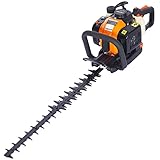
8. Sybrioka 26cc 24 inch: Quietest Choice for Suburban Hedges
Hedge Trimmer 26CC Gas Powered Hedge Trimming Tool, Double Sided Blade 24″ Saw Brush Cutter Garden Lawn Grass Tool
26cc 2-cycle
24 inch 33 tooth blade
14 pounds
Reduced noise
Pros
- Cuts bushes and small branches cleanly
- Easy first-pull starting
- 180 degree swiveling handle is useful
- Quiet enough for residential streets
- Runs on very little fuel and oil mix
Cons
- Heavier than expected and tiring overhead
- Plastic handle is a weak point owners expect to crack
- Exhaust and cover run hot enough to burn
- Needs a cooldown after about 5 hours
- No throttle hold switch or rev limiter
The Sybrioka 26cc is the pick when neighbours are close and you trim early. Owners specifically praise the reduced noise output, describing it as quiet enough for residential neighbourhoods and parks, and several reviews confirm it works on residential streets without complaint. The 26cc EPA-compliant two-cycle makes 0.7kW at 7500 rpm, driving dual-sided serrated blades with 33 teeth across a 24-inch bar.
Mechanically it does the basics well. Owners report it cuts bushes and small branches cleanly, starts easily on the first pull, runs on very little fuel and oil mix, and has metal-heavy construction that holds up for the money. The 0.65L fuel tank with recoil start is sensible, and the 180-degree swiveling handle is described as genuinely useful rather than a gimmick.
On thick-branch work, expect it to handle small woody stems cleanly and stop short of anything near an inch. The listing does not state a cutting capacity figure in inches, so treat the 24-inch swather width as a length measure rather than a gap measure. That matters when you are matching the machine to your hedge, and it is why we place it below the machines that publish an honest gap.
Owners do flag several limits. It is heavier than expected and tiring on larger jobs or anything overhead, and the plastic handle is a weak point they expect to crack. The exhaust pipe and cover run hot enough to burn an arm, it needs a cooldown after roughly five hours of continuous use, and there is no throttle hold switch or rev limiter. Owners also conclude it is not commercial grade, which is fair given where it sits.
Why the noise design changes who can use it
Noise is not a comfort issue on a suburban street, it is an access issue. A machine that draws complaints gets used at inconvenient hours, which pushes the work into bad light and bad weather. A reduced-noise design lets you finish at a civil time on a Saturday, which in practice means the hedge gets trimmed on schedule instead of sliding to next month.
The 33-tooth serrated blade also runs at lower revs than a coarse-toothed bar, which is part of where the quiet comes from. That suits a hedge that gets cut yearly with fresh growth, where a smoother tooth pattern produces a cleaner face and less noise. On old wood the same geometry asks a little more of the engine.
Where it falls short
Durability is the main limit and owners say so plainly. The plastic handle is the first thing they expect to fail, the hot exhaust is a real handling issue on long sessions, and the missing throttle lock means you cannot rest your thumb without dropping the revs. Five hours of continuous use before a cooldown is short for a commercial schedule but normal for a homeowner.
Capacity is the other limit for this particular roundup. If you have mature privet or beech with stems approaching an inch, the machines with published 1-inch or 1-1/8-inch gaps are the better buys, because you can size the tool to the wood rather than discovering the limit mid-hedge. This one is a strong all-rounder for annual shaping rather than a thick-branch specialist.
9. Baococo 48cc Telescoping Pole: Best for Branches 13 to 16 Feet Up
48CC Gas Hedge Trimmer, Weed Eater, String Trimmer with EPA, CE and EMC
48cc gas head
7 to 9.5 foot telescopic pole
16 foot reach
22 lb
Pros
- Telescoping pole reaches branches 13-16 feet high
- Strong power for thick weeds brush and small branches
- Interchangeable heads cover trimming pruning and cutting
- Easy to assemble and feels sturdy
- The pole saw head is genuinely useful
Cons
- Only 16 ratings so durability is largely unproven
- 22 pounds is heavy at full extension overhead
- Some variants are noisier than a dedicated hedge trimmer
The Baococo 48cc answers the question professionals ask most often about tall hedges: a tall hedge needs long reach, not a bigger engine. The two-section telescopic pole extends the working height from 7 to 9.5 feet, giving 16 feet of overall reach to trim branches 13 to 16 feet high from the ground. That is the difference between working safely from the ground and setting a ladder in front of a hedge you are about to cut.
Owners rate it highly, with all reviewers at four stars or better and 90 percent at five. They single out the telescoping reach and the interchangeable heads, which cover an 11.5-inch pole saw head with a 150ml chain oil reservoir alongside the hedge trimmer and string trimmer. The 48cc gas engine head with an 850ml fuel tank has the power owners expect for thick weeds, brush and small tree branches rather than just leafy hedge growth.
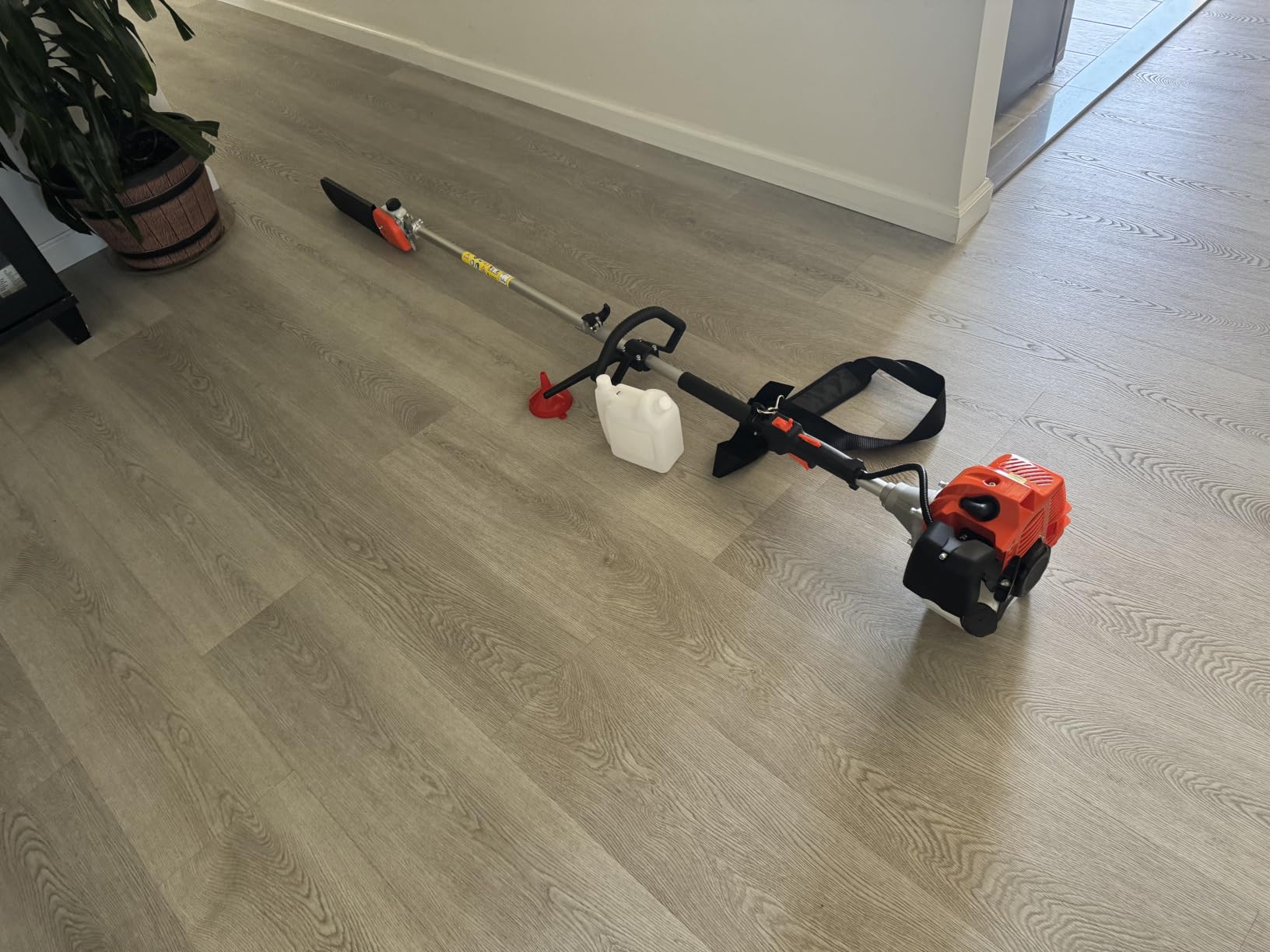
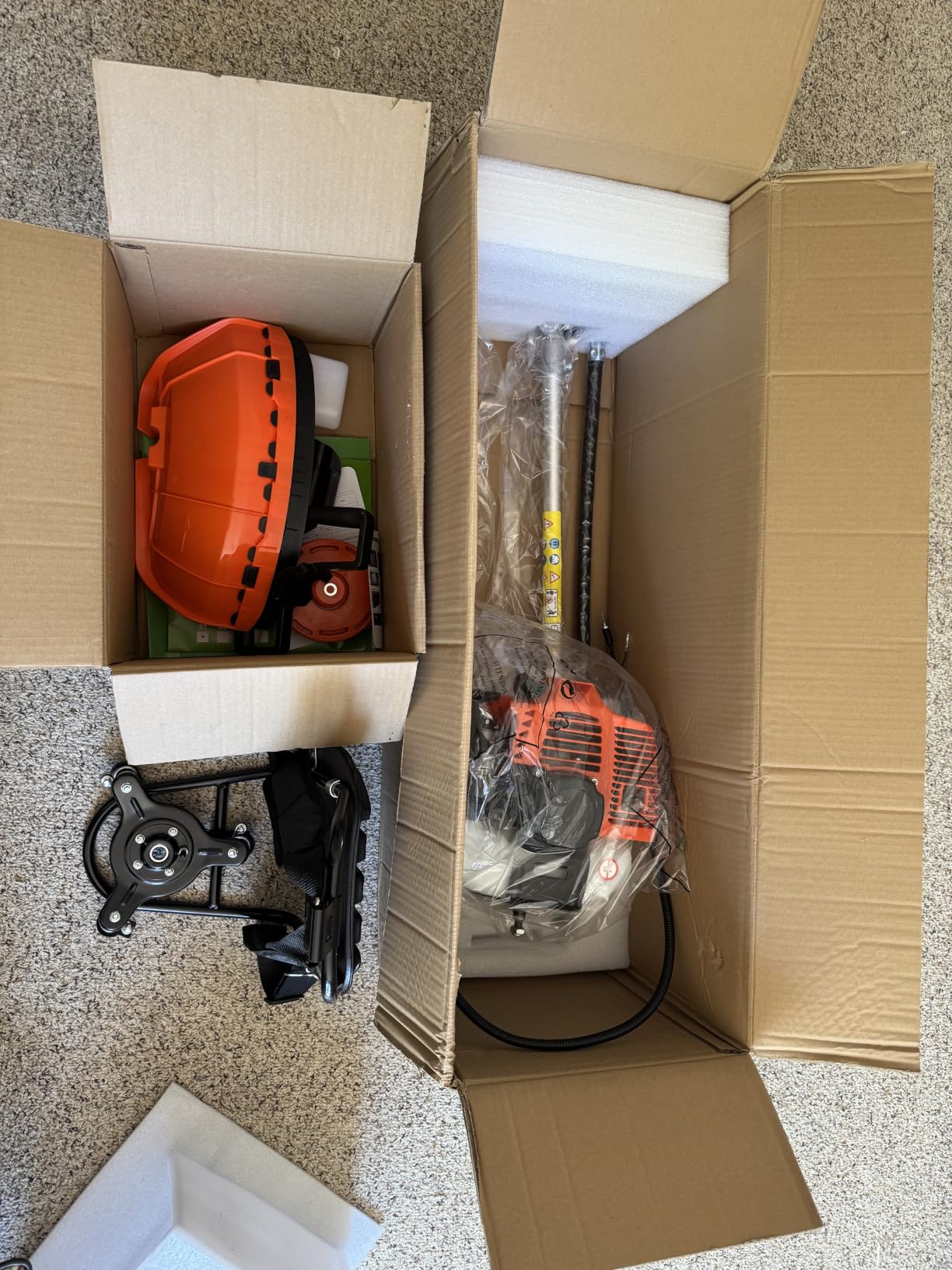
Setup is straightforward. Owners report easy assembly, a machine that feels sturdy in the hand, and an included shoulder strap, wrench and proportioning tank. EPA, CE and EMC certification is on the spec sheet, which matters if you are buying a multi-function machine rather than a dedicated hedge trimmer.
The caveats are real. Twenty-two pounds is heavy, and it is awkward exactly where you need it, at full extension working overhead. The review base is also thin at only 16 ratings, so long-term durability is largely unproven, and some variants are noticeably noisier than a dedicated hedge trimmer would be. The hedge head itself is smaller than the long-bar machines earlier in this roundup, so this is a reach solution with a modest cutting head attached.
Why reach beats engine size on tall hedges
Cutting thick branches high in a hedge is a reach problem before it is a power problem. A more powerful machine does not help if you cannot get the blade to the branch without a ladder, and a ladder plus a spinning two-stroke is the most common cause of serious trimmer injuries. Extending the pole from 7 to 9.5 feet puts the cutting head at chest height to head height for branches well above a normal hedge line.
The interchangeable heads also mean one engine covers the whole tall-tree job. Owners report the pole saw head being genuinely useful rather than a gimmick, so a high branch that is thicker than the hedge head can handle gets a proper saw attachment instead of forcing a trimmer through it. That combination is what forum regulars describe when they say a tall hedge needs long reach rather than more cc.
Where it is the wrong tool
It is not a precision hedge trimmer. The hedge head is small, so final shaping of a formal hedge is faster and neater on a 22- or 24-inch bar machine. Use the pole for the heavy lifting high up, then finish the face with a proper bar. It is also heavy enough that the shoulder strap is not optional on anything above head height.
Then there is the honesty problem. With only 16 ratings, the ownership record is too short to know whether the gearbox and telescoping locks survive five seasons, and multi-function machines of this type are common on the secondary market. If you trim professionally, buy from a platform with a dealer network. If you own one large property with a very tall boundary hedge, the reach alone justifies the machine.
10. Baococo 36cc 2-Stroke Pole: Multi-Tool Value With Small Review Base
36CC Gas Hedge Trimmer, 2-Stroke Pole Hedge Trimmer for Garden Trimming
36cc 2-stroke at 1HP
270 degree rotatable head
20.7 lb
Shoulder strap
Pros
- Attachment swaps are quick and cover several jobs
- Good power for the price on hedges and thicker weeds
- Shoulder strap makes long sessions manageable
- Simple setup once fuel and oil are added
- Handle safety lock prevents accidental triggering
Cons
- One machine stopped running on its second use
- Another arrived with a loose screw and would not shut off
- Heavy at 20.7 pounds and fiddly to assemble
- Very small review base of just 13 ratings
The Baococo 36cc pole trimmer is one of the cheaper ways into a telescoping multi-tool, and owners mostly like it. The 36cc two-stroke produces 1HP at 8500 rpm, and the 270-degree rotatable cutting head with high-speed double reciprocating blades handles hedges, grass and thicker weeds without trouble. Attachment swaps are quick, and the same engine is also sold in 3-in-1 and 6-in-1 sets with brush cutter and pole saw heads.
Two details are worth calling out. The handle safety lock prevents accidental triggering, which matters on a long pole where your hands are far from the throttle, and the included shoulder strap is what makes a 20.7 pound machine usable for anything longer than a few minutes. Setup is simple once you add fuel and engine oil, and owners describe the machine as good power for the price.
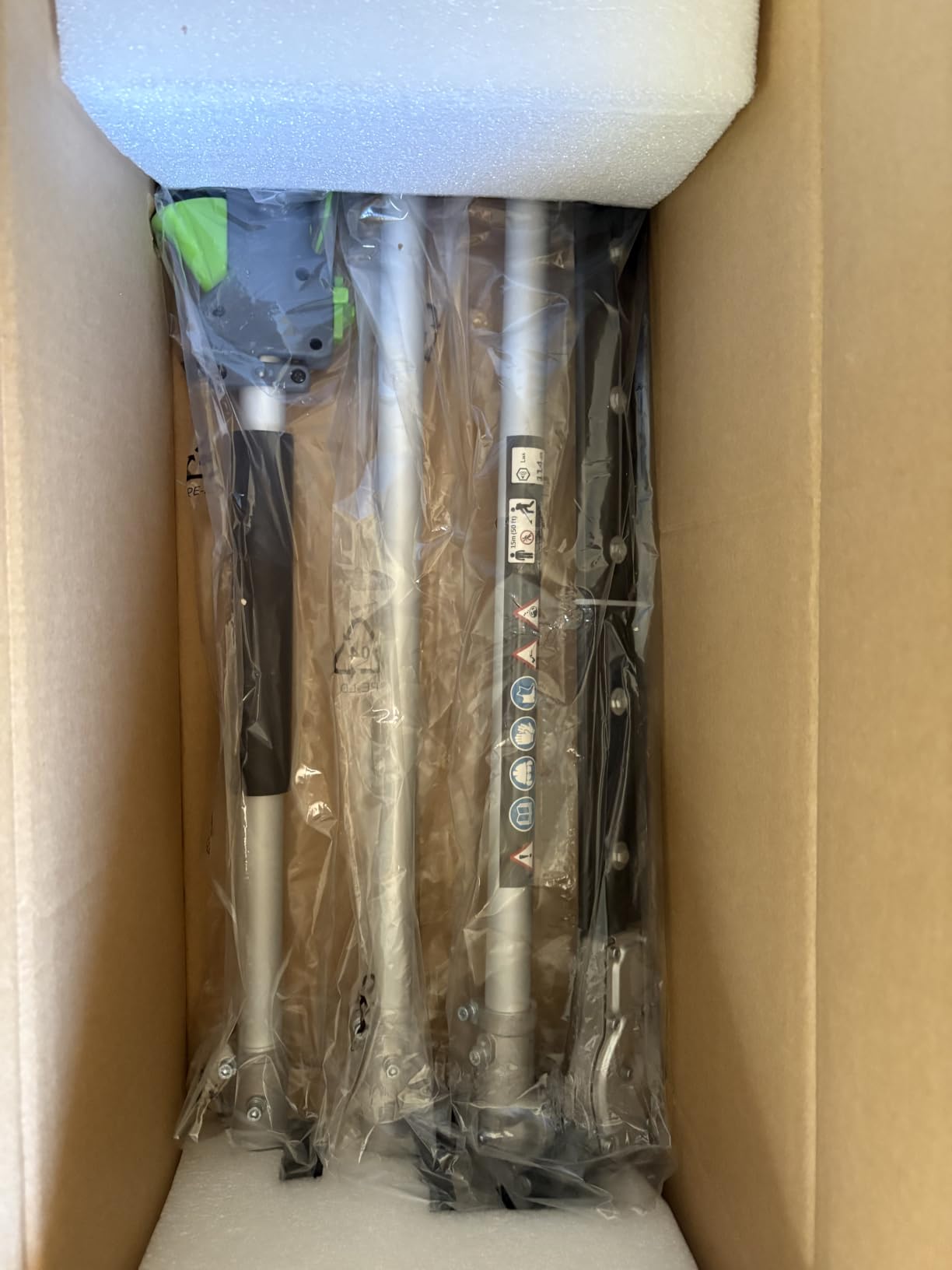
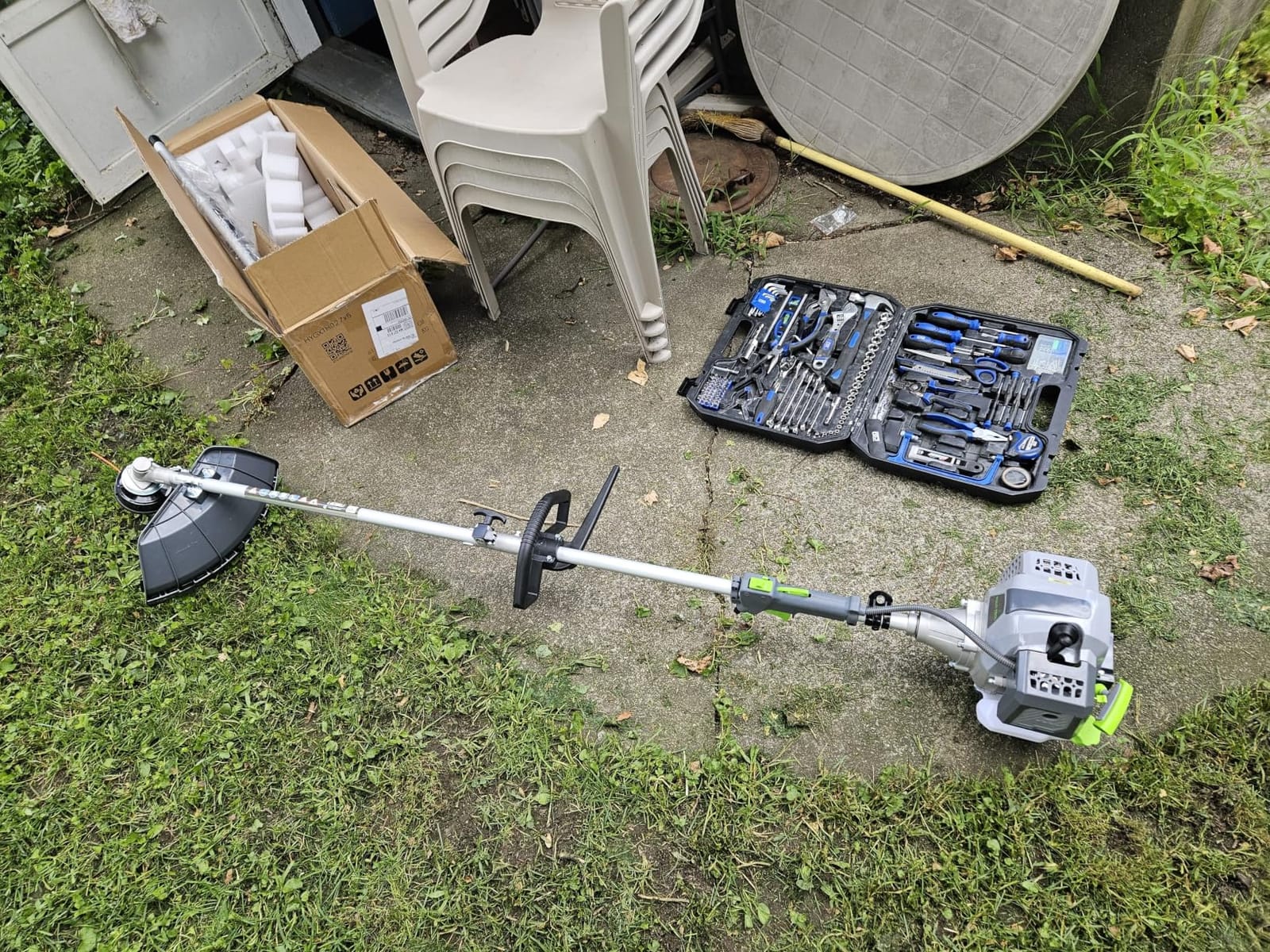
The weakness is quality control, and it is documented rather than inferred. One owner reports a machine that stopped running entirely on its second use. Another arrived with a loose screw and would not shut off, which on a gas tool is the kind of fault that makes a reviewer distrust the whole batch. With only 13 ratings, both the good and the bad evidence comes from a very small sample.
So treat this as a value machine with a documented early-life failure rate rather than a hedge trimmer to rely on for thick branches. The 10-inch blade is short for the pole format, so it is at its best cutting grass, weeds and light brush at height rather than shearing woody stems in a mature hedge.
Where the multi-tool format pays off
Owners who bought one machine instead of four rarely regret it. Weed eating in beds, hedge trimming on a boundary, light branch work with the pole saw and brush cutting with the disc cover the jobs that would otherwise need a small engine shed. Swapping heads is fast, so you are not rebuilding anything between tasks.
The 270-degree rotatable head is the part that makes the hedge function usable rather than decorative. It lets you set the angle of the cut without turning your wrists, which is what you want when the target is a flat hedge face rather than a rough clearance cut. Combined with the safety lock and the strap, it is a sensible package for someone working alone on a large property.
Why we would not depend on it for thick wood
A 10-inch blade is the limiting factor, and it is a size problem rather than a quality one. Short blades mean more passes and less reach into the middle of a dense hedge, and a small bar is easier to stall when it meets a branch it cannot span. For thick branches, match the bar to the job rather than relying on engine torque alone.
The documented no-start and will-not-shut-off faults are the reason this sits last in our ranking despite a decent 4.2 rating. A gas machine that will not shut off is a safety problem, not just an inconvenience, so inspect the throttle and stop switch the day it arrives and before every season. If the machine will not hold a rev reliably, replace it while the return window is open.
How to Choose a Gas Hedge Trimmer That Cuts Thick Branches
Cutting capacity decides everything else. The gap between the blade teeth is the widest branch the machine can shear in a single pass without stalling, and a trimmer rated below your hedge’s wood will fight every stem until you are convinced it is broken. For thick branches, look for a stated capacity of at least three-quarters of an inch, and treat one inch or more as the target for old privet, laurel and beech.
How thick a branch can a gas hedge trimmer actually cut?
A conventional gas hedge trimmer handles stems up to its stated cutting capacity reliably, which on a good machine is three-quarters of an inch to one inch, and on well-specified heavy-duty machines one inch to one and an eighth inches. Anything wider than that belongs to a lopper, a pruning saw or a pole saw. The number published on the listing is the gap between teeth measured on a new blade, and a jam that widens that gap means the real capacity is now smaller.
Match the branch diameter to the machine and the machine to the branch, in that order. For a privet hedge that has been left three years, assume woody stems of around three-quarters of an inch and target a machine published at one inch or above. For a young beech hedge with soft spring growth, a three-quarter inch machine with a lighter bar will be faster and easier to control.
Engine displacement, and why it matters less than the gap
Engine displacement in cc determines how much torque reaches the blade, and torque is what stops the engine from bogging when the teeth close on dense wood. For thick-branch work, 22cc to 26cc is the sensible band on a standard-bar machine. Bigger engines in multi-function bodies can push far more torque, but that is being spent on brush cutting rather than on a precision hedge bar.
Owners tell you when torque is short. The complaints that recur across this category are stalls and binding on stems over about three-quarters of an inch, which is a torque symptom as much as a gap symptom. If two machines have the same stated capacity, the one with the larger engine will keep the bar moving when the cut gets heavy.
Two-cycle or four-cycle: which one suits thick branches?
Two-cycle engines are lighter and simpler and use a premixed fuel and oil ratio, which means correctly measuring the mixture every time you fill up. Four-cycle engines run on straight petrol and pump their own oil, so there is no mixing step and lubrication holds at any machine angle. On long woody-branch jobs the four-cycle advantage is less about cutting power and more about not thinking about fuel while you work.
The honest downside of four-cycle is starting. The SENIX 4QL’s 3.9 star rating is dragged down by hard cold starts, and owners report needing several attempts. Two-strokes start more readily once you have the mixture right, which is why so many professionals still run them. If you trim early in the morning or only twice a year, weigh the starting ritual against the mixing ritual and pick the one you will actually live with.
Blade length, reach and tooth spacing
Longer bars cover more per pass but weigh more in your hands. Twenty inches suits a hedge up to about six feet, 22 to 24 inches suits longer runs and taller hedges, and anything above your head height needs a pole or articulating head rather than a longer bar alone. Choosing a 24-inch bar for a small hedge means carrying the weight for no benefit.
Tooth spacing is the other lever nobody advertises clearly. Coarser teeth with a wider gap slice through woody material in fewer bites, while finer teeth produce a neater face on leafy growth. Sawtooth patterns suit woody hedges, which is why the machines here with serrated double-edged blades tend to perform well on privet and laurel. Blades with laser-cut or chrome-plated teeth hold an edge longer, and carbide teeth go longer still on hard species.
Handle, balance and vibration
A rotating or multi-position rear handle is not a comfort feature, it is a control feature. With a tall hedge you need to cut side faces, top faces and undercut edges, and a fixed handle forces you to change your body position for each. Several machines here offer handle adjustment and owners mention using it constantly, though the older ECHO platforms use a fixed wrap handle instead.
Balance matters as much as weight. Owners of the heavier ECHO machines recommend a shoulder strap and note that the machine wants to roll in their hands without one. The SENIX complaint about an engine pulling to one side is a balance problem that adds up over a long session. Try the machine in a store with a full tank if you can, because a 20 pound machine that sits well is far less tiring than a 14 pound one that pulls.
Parts support and warranty
Dealer parts availability is the most underrated buying criterion in this category. Blades, air filters, spark plugs, carburetor kits and blade bolts all wear eventually, and on a platform with no dealer network you are dependent on the secondary market for parts that may not fit. Stihl, Echo and Husqvarna machines are supported for decades, which is why professionals trust them even at a higher price.
Warranty length is a useful proxy. The SENIX 4QL carries a three-year limited warranty, the ECHO machines run five years for consumers with shorter commercial terms, and the budget machines here often carry nothing that is documented. A long warranty also tells you the manufacturer expects the machine to survive normal service, and on gas tools that is a reasonable signal.
Gas Hedge Trimmer vs Battery for Thick Branches
A battery hedge trimmer wins on convenience and a gas hedge trimmer wins on thick branches and long jobs. Cordless machines start instantly, make no noise, need no fuel mixing and are light enough for a small hedge and a fit user. For a six-foot privet run that has gone two years without attention, the capacity figures on battery machines tend to fall short of the wood in front of you, and owners repeatedly report bogs and stalls on old thick hedges.
Gas keeps its advantage when the work is volume. A full fuel tank covers a large property in a way a battery pack does not, and the more torque a gas machine has, the more usable it becomes on woody stems. The costs are real too: premixed fuel on a two-stroke, noise in the 100 decibel range that neighbours notice, more weight, and maintenance that a battery machine simply does not have.
The practical answer for most households is both. Keep a cordless unit for the light annual shaping and a gas machine for the overgrown day. If you are choosing one only and your hedge has stems past three-quarters of an inch, choose gas. Our guide to the best cordless hedge trimmers for homeowners covers the other half of that decision.
When a Hedge Trimmer Is the Wrong Tool
A hedge trimmer is the wrong tool once the branch is wider than the blade gap, and forcing it is how people hurt themselves and wreck their machines. The rule of thumb that works: three-quarters of an inch and under is trimmer work, up to one and a half inches is loppers or a pruning saw, up to three inches is a pole saw, and beyond that you want a chainsaw or a contractor.
At three-quarters to one and a half inches, bypass loppers with long handles or a pruning saw give you a clean cut with leverage and a branch that will not spring back. Trying to shear a branch that size with a trimmer means the bar binds, the branch acts as a lever, and the machine can be twisted out of your hands or kicked back at your face. On a privet or beech this is where most near-misses happen.
Above one and a half inches, you need height and teeth. A pole saw reaches into the canopy and its chain removes what a trimmer cannot span. If you need to cut trees rather than shape shrubs, call a professional; the tall hedge trimming guide covers the reach problem in more detail, but no trimmer replaces a chainsaw on a three-inch limb.
There is one more case where the trimmer is the wrong tool: precision. Topiary and shaped specimens are better cut with hand shears in short strokes than with a 24-inch bar, because a trimmer cannot make decisions mid-stroke. Save the gas machine for bulk reduction and light shaping, then finish by hand.
Trimming Thick Branches Safely
Wear eye and ear protection, gloves, long sleeves and boots every time. Gas trimmers run loud enough to damage hearing over repeated sessions and throw chips and bark at your face, and the machines in this group reach sound levels in the region where hearing protection stops being optional. Owners of loud multi-function machines describe noise that carries down the street, which is both a safety and a neighbour issue.
Never work from a ladder with a running gas trimmer. A ladder plus a spinning double reciprocating bar plus one hand throttling is the highest-risk combination in garden work, and the telescoping pole machines in this roundup exist precisely to remove it. Cut thick branches at ground level or reach them with a pole, and if you must use a step, shut the engine off to reposition.
Check nesting birds before you cut. The bird nesting window runs roughly March through August, and a hedge full of nests is a legal and ethical stop. Look before every pass, not once at the start of the day, because nesting behaviour changes week to week.
Confirm the safety devices work before the first cut. On these machines that means the throttle lock and dead-man switch cutting out when released, the blade brake stopping movement, and the blade guard in place. Clear the work area of loose debris and stones, cut away from your body with the blade always pointing away from your legs, and stop the engine before you reach for a jammed branch or a loose screw.
When a blade binds, do not force the throttle. Release the trigger, let the blade stop, set the machine down, clear the branch and restart. Owners describe branches rolling back into the bar and driving it into the wood, which is exactly how kickback injuries happen.
Maintaining a Gas Hedge Trimmer for Thick-Branch Work
A hedge trimmer that cuts dirty wood needs a clean air filter and a sharp blade, and most stalls on woody stems are maintenance problems wearing a disguise. Check the air filter before every job on a dusty day and clean it monthly during a season, because a restricted filter robs the engine of the air it needs to hold revs under load.
Blade lubrication is the single biggest lever for thick-branch work. Wipe sap off the bar and apply blade oil between species, particularly after privet, laurel or yew, because gummed teeth crush wood instead of shearing it. A bar oiled every few passes will also keep the blade bolt tight, since sap and friction are what let the bar walk along the gear housing and widen the gap.
If a trimmer started binding and now will not cut what it used to, check whether the blade gap has opened up. Owners describe blades walking along the gear housing after a jam, which widens the tooth gap unevenly and drops your real capacity below the published figure. Re-torque the blade bolt to the manufacturer’s specification and check the bar is seated square. A gap that has stretched permanently means a new bar.
Run a carb check and spark plug service once a year, and clean the air filter before you store the machine. Two-strokes that sit with old fuel gum up, so drain the tank if you are storing more than a month and use fuel stabilizer in anything left in the machine. Owners report carburetor high and low jet adjustment being needed after years of use, and that adjustment is a fifteen-minute job with a screwdriver once you know which screw is which.
Finally, check the fuel filter and the tank cap vent if the engine will not start despite clean fuel and a fresh plug. A blocked vent presents as a machine that starts when you have not refuelled and dies when you have, which is one of the most confusing faults in the category. Our cordless string trimmer picks share the same seasonal maintenance rhythm if you run both tool types.
Frequently Asked Questions
Which hedge trimmer cuts the thickest branches?
Among the gas machines we tested, the widest genuinely achievable cutting capacity belongs to the SENIX 4QL at a stated 1-1/8 inch, while the Husqvarna 122HD60 is reported by owners cutting stems close to one inch with more consistent torque. Machines listing a two-inch cutting width, such as the 36cc Baotree, deliver closer to one inch in real use because the blade gap is the limit, not the listed width.
What is the best heavy-duty gas hedge trimmer for thick branches?
The Husqvarna 122HD60 is the best all-round heavy-duty gas hedge trimmer for thick branches, combining a 21.7cc two-stroke with a 24-inch dual action blade and owners reporting clean cuts through stems near one inch. The ECHO HC-2020 and HCA-2620 are the stronger choices for daily professional use, where a dealer parts network matters more than first price.
Can you use a hedge trimmer on thick branches?
Yes, up to the machine’s published cutting capacity, which is the gap between the blade teeth. Most quality gas hedge trimmers handle three-quarter inch stems comfortably and one inch well. Beyond that you should use loppers up to one and a half inches, a pole saw up to three inches, and a chainsaw or a contractor above that. Forcing a wider branch through the bar causes binding and kickback.
Should I buy a 2-stroke or 4-stroke gas hedge trimmer for thick branches?
Choose a 4-stroke if you would rather never premix fuel, and a 2-stroke if you want a lighter machine and reliable cold starts. Four-cycle engines hold their oil film at any working angle and cut cleanly without oily exhaust, but they are harder to start in cold weather, which is the main complaint on the SENIX 4QL. For most homeowners the fuel handling decides it.
What is the best gas pole hedge trimmer for high, thick branches?
The Baococo 48cc telescoping pole is the clearest reach answer we tested, extending working height from 7 to 9.5 feet for a 16-foot overall reach to branches 13 to 16 feet high, with an interchangeable pole saw head for anything too thick to shear. Its 22 pound weight makes a shoulder strap essential, and its 16-rating review base leaves long-term durability unproven.
Final Verdict: Best Gas Hedge Trimmers for Thick Branches
The best gas hedge trimmers for thick branches all share one trait: an honest cutting capacity figure and enough torque behind the bar to reach it. The Husqvarna 122HD60 takes our top spot, with a 21.7cc engine, a 24-inch dual action blade and owners consistently cutting stems close to an inch while the Smart Start system fires it every morning. If you would rather never mix fuel, the SENIX 4QL 4-cycle gives you the widest published gap at 1-1/8 inch and the lightest machine here, and you accept a harder cold start in exchange.
For daily paid work the ECHO HC-2020 and HCA-2620 are the right buy, since a dealer network and replaceable parts outlast any price gap. For branches above your reach, the Baococo 48cc telescoping pole removes the ladder from the job entirely. And if you are tempted by the 63cc multi-function power head, remember it is a brush cutter first and a hedge trimmer second.
Whatever you pick, size it to the wood rather than the marketing, keep the blade lubricated, and step down to loppers the moment a branch is wider than the gap. That last habit is what separates a good trimmer from a broken one.