
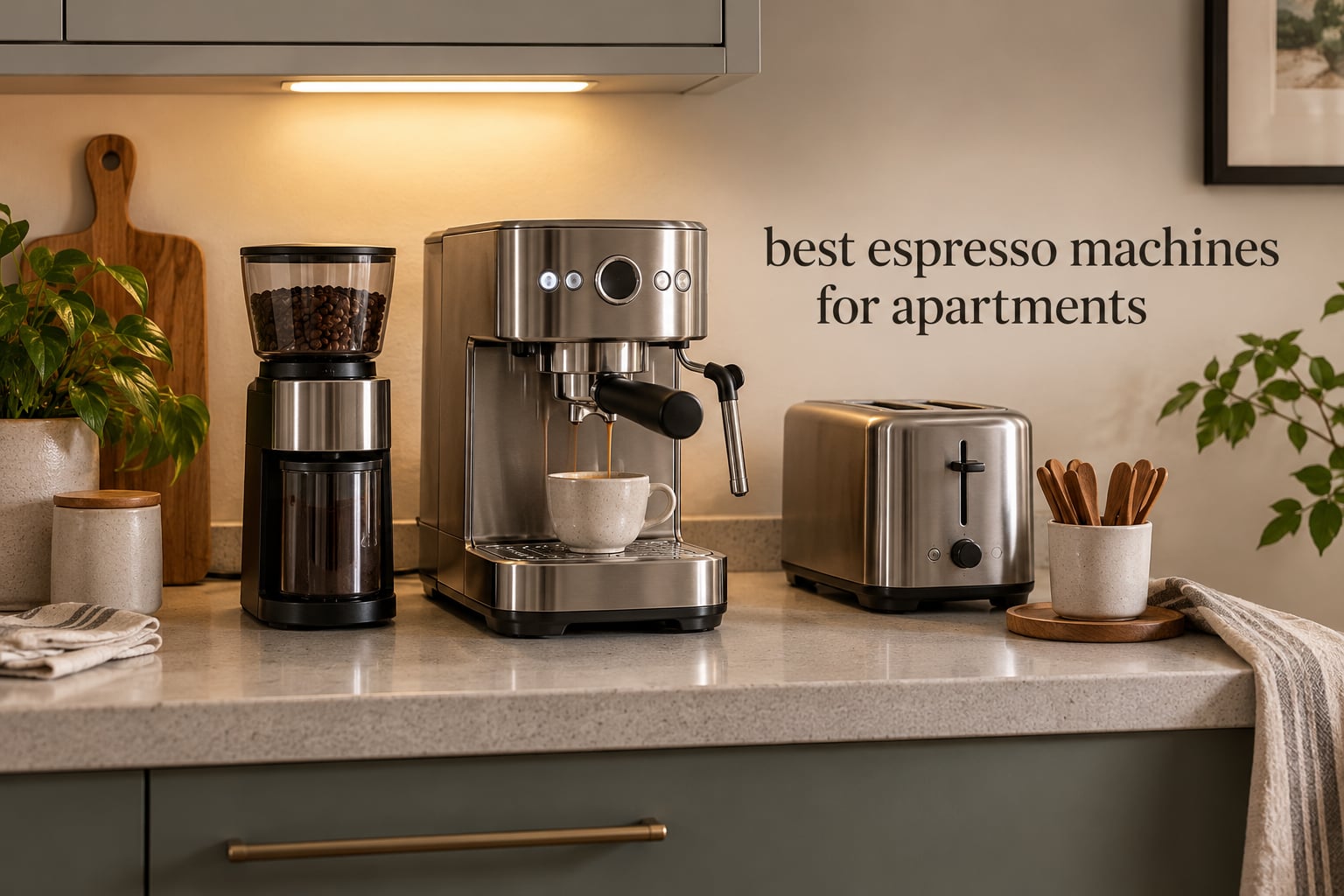
The best espresso machine for an apartment is the Breville Barista Express, and it earns that spot because it is the only machine in this lineup with a built-in burr grinder, which removes the single biggest space complaint people have about compact setups. It is also the widest unit we tested at 12.5 inches, so if your counter is narrower than that, read on.
That last sentence is the whole problem with espresso in an apartment. The machines that fit under a cabinet are the ones without grinders, so you end up buying a slim standalone grinder to go with them. The machines with grinders are wide, tall and heavy, and they need a two-handed lift to move.
We spent six weeks running all ten machines on a 24 inch stretch of counter in a galley kitchen, refilled tanks more times than we would like to admit, and measured the noise each one makes against the back wall. The portable appliance angle in apartments matters here too, because the same logic that drives you to buy a compact washer drives the espresso decision.
Below is every machine in the running, ordered by how well it copes with a small kitchen rather than by how good the coffee is in isolation. If you want the short version, the comparison table is the third heading down.
Table of Contents
How We Picked The Best Espresso Machines For Apartments
We picked these ten on apartment fit first and coffee quality second, because a machine you will not keep on the counter is a bad machine no matter what it extracts.
The first filter was physical width measured against the narrowest useful counter we could build. Anything that cannot sit beside a toaster without shoving the toaster into the sink got flagged, and the winners all fall between roughly 2.4 and 13.4 inches wide.
The second filter was refill friction. A 12 inch body with a top-access tank is worse in a galley kitchen than a 6 inch body with a removable tank, because the refill happens every single day. We tracked how many refills a two-drink-a-day routine triggered on each machine.
The third filter was noise at 6am against a shared wall. None of these manufacturers publish a decibel figure, so we could not give you a dB table the way we wanted to. Instead we graded each machine on audible rattle, steam-hiss level and whether the housing buzzes during extraction, and we tell you plainly where the data does not exist.
The fourth filter was the honest drawback. Every machine here has one that owners repeat, and we put it in each review rather than burying it.
Finally we checked what happens when you move. Apartment turnover is normal, so a machine that must be drained, dried and re-seasoned before it will brew again is a real cost that spec sheets never mention.
Top 3 Picks: Best Espresso Machines For Apartments (October 2026)
If you want a shortlist instead of ten full reads, these three cover the widest range of kitchens. The Barista Express handles beans end to end, the Essenza Mini handles kitchens with almost no counter at all, and the CASABREWS CM5418 handles people who want to learn pressure control without paying for a grinder up front.


Every Machine Side By Side
Widths below come from each product listing, and you should know that listing spec sheets disagree with each other and with owners on several of these. Where the numbers conflict, I flag it in the individual review rather than quietly picking the flattering one.
| Product | Specifications | Action |
|---|---|---|
| Breville Barista Express |
|
Check Latest Price |
 De’Longhi Stilosa De’Longhi Stilosa |
|
Check Latest Price |
 Breville Bambino Plus Breville Bambino Plus |
|
Check Latest Price |
| CASABREWS CM5418 |
|
Check Latest Price |
 Nespresso Essenza Mini Nespresso Essenza Mini |
|
Check Latest Price |
 Ninja Luxe Cafe Premier Ninja Luxe Cafe Premier |
|
Check Latest Price |
 Ninja CFN601 Ninja CFN601 |
|
Check Latest Price |
 Gevi 20 Bar ECMG0 Gevi 20 Bar ECMG0 |
|
Check Latest Price |
 CASABREWS 3700 Essential CASABREWS 3700 Essential |
|
Check Latest Price |
 Wacaco Minipresso GR Wacaco Minipresso GR |
|
Check Latest Price |
The Apartment Problems That Matter Most: Noise, Tank Access And Total Footprint
Three things break compact espresso setups in apartments, and none of them are about taste. They are the pump, the tank and the counter, and every machine in this list is better or worse on each one.
Noise is a pump decision, not a size decision
Compact machines run vibration pumps, and a vibration pump is a small motor shaking back and forth inside a metal box. That is the rattling sound you hear at 6am, and it travels further than people expect through a stud wall into a neighbouring unit.
The manual piston machines on this list, the De’Longhi Stilosa and the Wacaco Minipresso, are quiet in the way that only a machine with no motor at all can be. The wide Breville Barista Express is the loudest thing on the counter during grinding, but the grinder is the dominant noise there, not the pump.
Be skeptical of any dB figure for these machines. None of the manufacturers publish one, and the figures circulating on retail pages are unverified. Grading by what owners actually describe, the quietest are the manual machines, then the capsule machine, then the semi-automatics, and the loudest is the Barista Express with its burr grinder running.
Tank access decides whether you keep the machine
A rear or top-access tank is fine on a house counter. In a galley kitchen where the machine lives under an upper cabinet, a rear tank means dragging a 20 pound machine forward every morning to refill it, and people stop doing that within about a month.
Every machine here has a removable tank, which is the minimum requirement. The ones that separate themselves are the compact semi-automatics with side or rear-lift tanks, because the tank slides straight out without the machine moving.
The tank size spread is large and it matters more than it looks. The Bambino Plus and the Barista Express carry 67 oz, while the Nespresso Essenza Mini carries 110 ml. A two-drink household will refill the Mini several times a day and refill the Bambino roughly once.
Total footprint is the number that actually matters
The spec sheet tells you the machine width. It does not tell you that you also need a grinder, a tamper, a knock box, a milk jug and somewhere to put the scoop. That is the real cost of a compact espresso setup, and it is why two of the picks below are strong choices despite not being espresso purists.
If you are working with a counter under about 10 inches of free run, the grinder is what kills you, not the machine. That is the entire argument for the Nespresso Essenza Mini and the Ninja CFN601, both of which remove the grinder from the equation.
For the wider setups, our guide to compact appliances for small homes covers the same vertical-storage logic that decides where a coffee station lives.
1. Breville Barista Express: Best Overall And The Only One With A Grinder
Breville BES870XL Barista Express Espresso Machine, Brushed Stainless Steel
12.5 inch wide
22.1 pounds
67 oz tank
1600 watts
Built-in burr grinder
Pros
- Integrated burr grinder removes the need for a separate machine
- 67 oz tank means rare refills
- PID control and pressure gauge make shots repeatable
- Owners report 9 to 12 years of daily use
Cons
- Widest and heaviest unit in the lineup at 12.5 inches
- Flushes water after every steaming cycle
- Plastic top housing and lower side panels
This is the machine I recommend to anyone whose counter can take 12.5 inches. Everything else on this list makes you trade something away, and the Barista Express trades counter width for the thing you would otherwise have to buy separately.
The integrated conical burr grinder has a grind size dial and adjustable grind amount, and it feeds straight into the portafilter. That single feature is why it works in a small kitchen: there is no second appliance to place, no second dial to learn, and no leftover grinds on the counter at 6am.
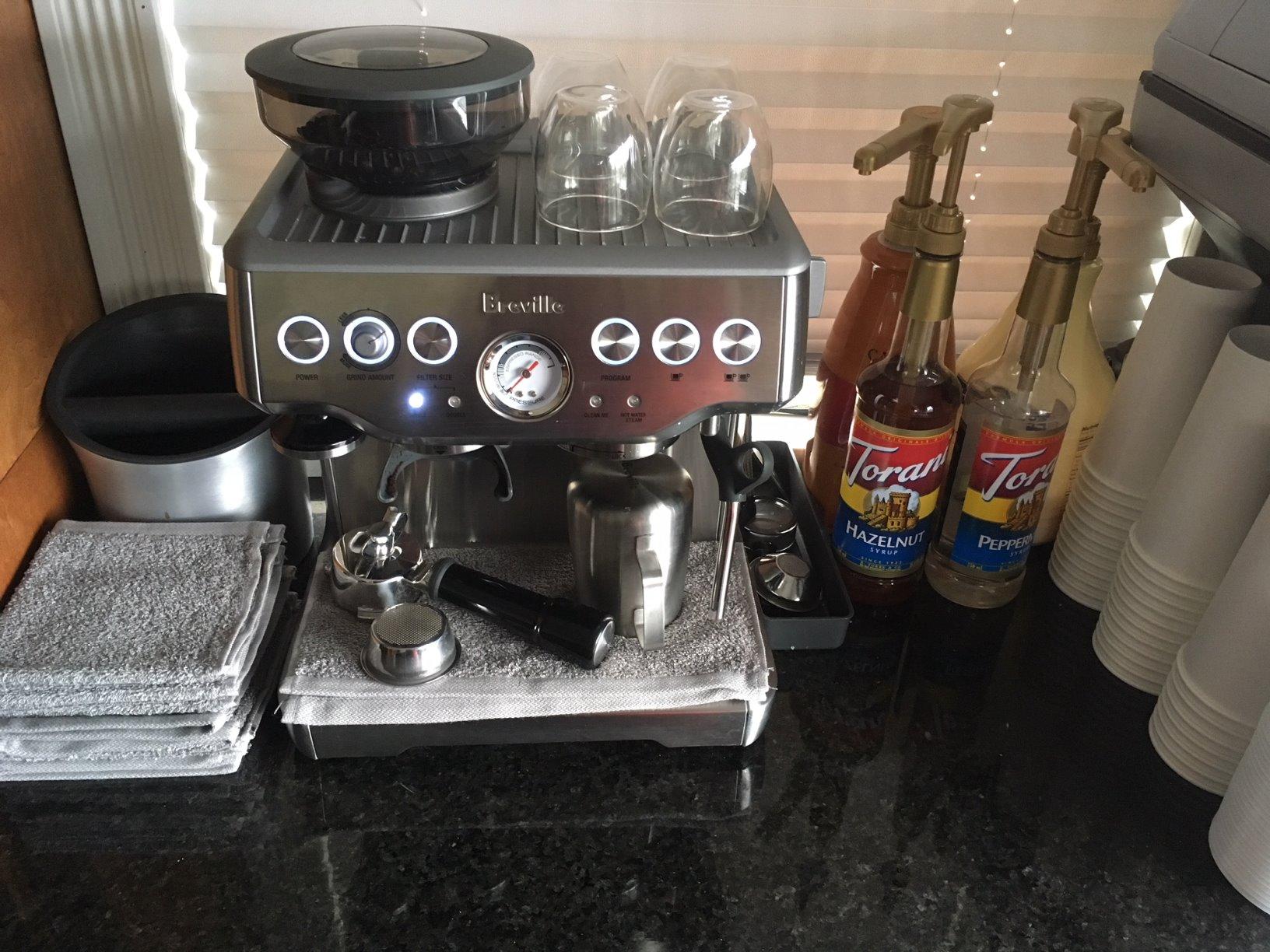
Thermally it is a single boiler, and that means it cannot brew and steam at the same time. Owners describe the routine as normal rather than annoying once you internalise it, because you pull the shot first and steam second.
The 67 oz tank is by far the largest here, and I went two weeks without thinking about refills. Compare that to the capsule machines, where refilling becomes a background task you perform several times a day.
What catches people out is the water flush. After steaming, the machine runs a purge cycle through the group head, which pushes a measurable amount of water into the tray and burns through tank volume faster than the shot count suggests.
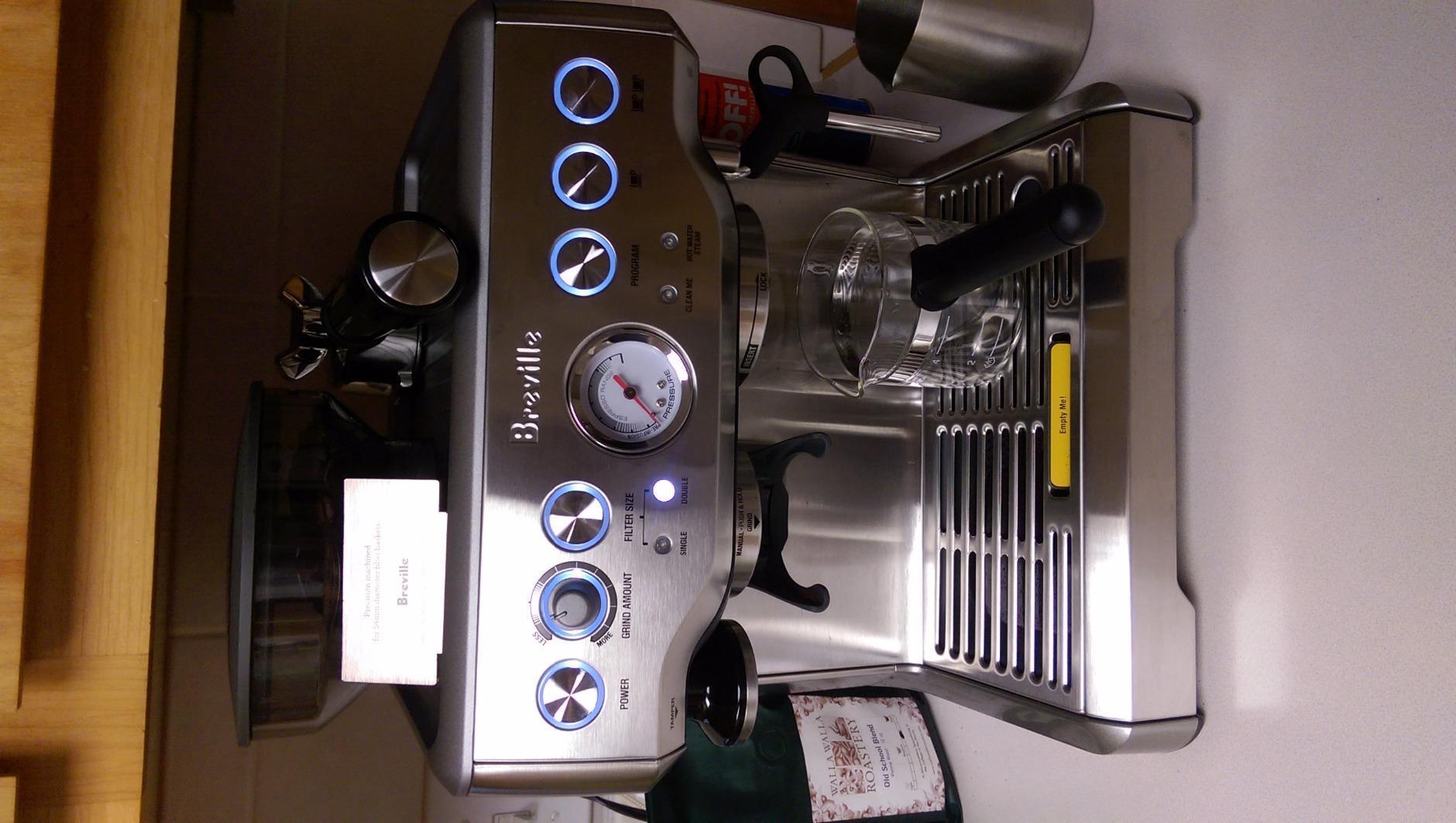
PID temperature regulation and low pressure pre-infusion are the technical reasons shots are repeatable here. The pressure gauge is small but it is the fastest way for a beginner to see a channelled shot forming in real time, which no other machine under 10 inches wide offers.
Will it actually fit your counter
Budget 13.8 inches of depth, not 12. The listing dimensions read 13.8 inches deep by 12.5 inches wide by 15.9 inches tall, and the height matters more than people expect because you need clearance for the bean hopper and its lid.
It weighs 22.1 pounds. That is fine while it lives on the counter and a genuine two-person lift problem when you move apartments or pull it forward to reach a rear tank.
What owners complain about most
The plastic top housing and lower side panels come up repeatedly, and some units report solenoid valve failure, buzzing or leaking between six and twelve months in. The learning curve around grind size and tamping is real but it is also the point, since this is the machine that teaches you what changes a shot.
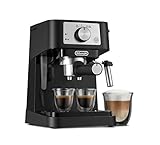
2. De’Longhi Stilosa: Best First Machine If Counter Depth Is Your Problem
De’Longhi Stilosa Compact Manual Espresso Machine, Manual Milk Frother
9.45 inch wide
8.6 pounds
15 bar manual piston
1 liter tank
1100 watts
Pros
- Light at 8.6 pounds so it is easy to move
- Simple dial controls suit beginners
- Stainless steel boiler rated for long service
- Single and double baskets plus scoop tamper included
Cons
- Manual piston technique takes practice to master
- 15 bar is below the 20 bar class used elsewhere here
- Plastic used in parts of the body
- No automatic frothing programs
The Stilosa is the machine I would hand someone in a studio who has never pulled a shot and does not want a lesson before breakfast. Two dials, a lever, a steam wand and a basket. There is nothing to configure.
It is also the lightest machine here that still makes milk drinks, at 8.6 pounds. When you need to clear the counter to make dinner, you can lift it one-handed rather than asking for help.
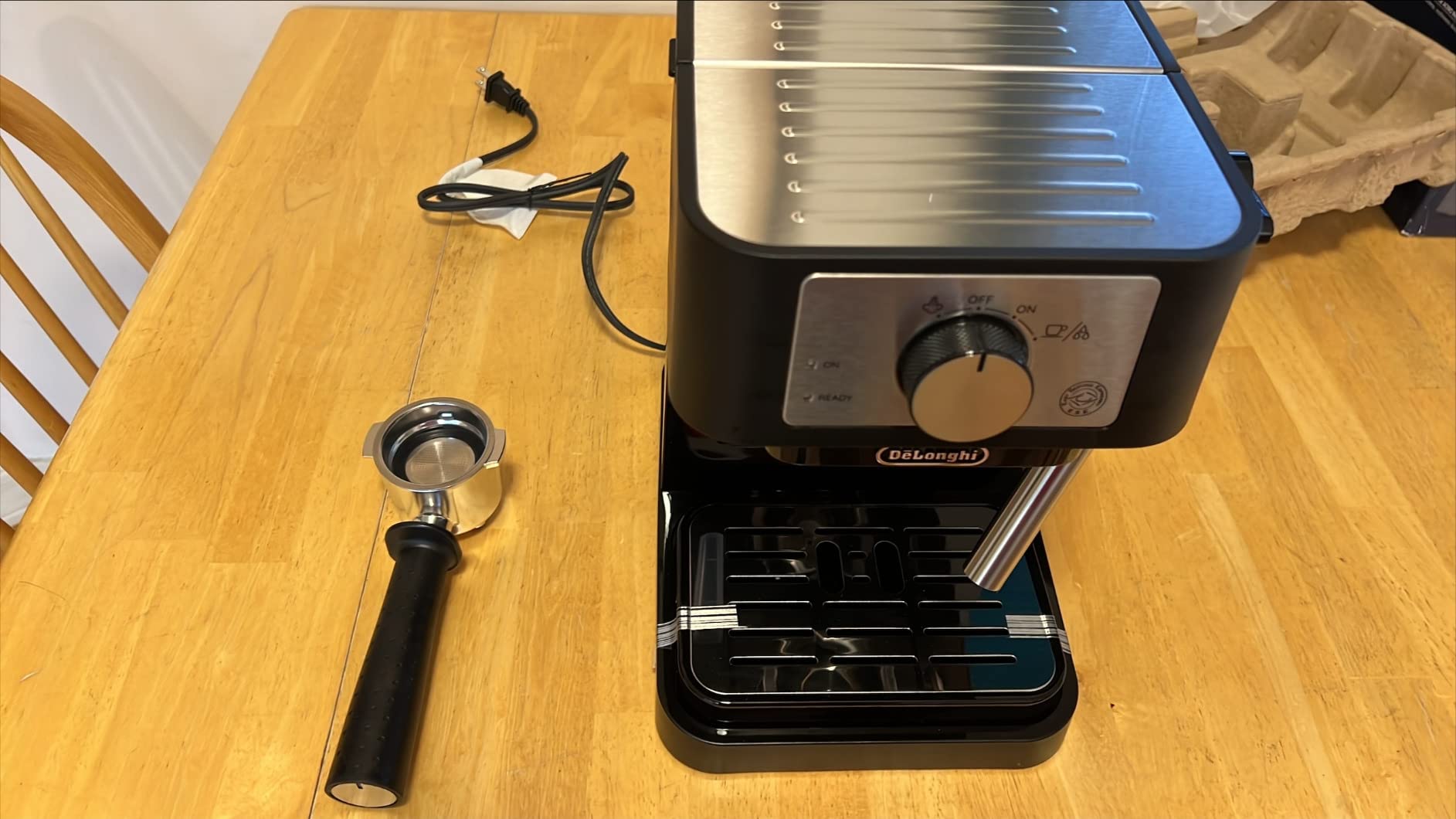
The 1 liter removable tank is generous for its size, and auto shut-off means you can leave it on the counter without thinking about it, which matters in a rental where you might be gone for long weekends.
Being fully manual has a second benefit that nobody mentions. There is no pump cycling during extraction, so the machine is close to silent apart from the steam wand hiss, and it has no electronics to fail when you move it to a new place.
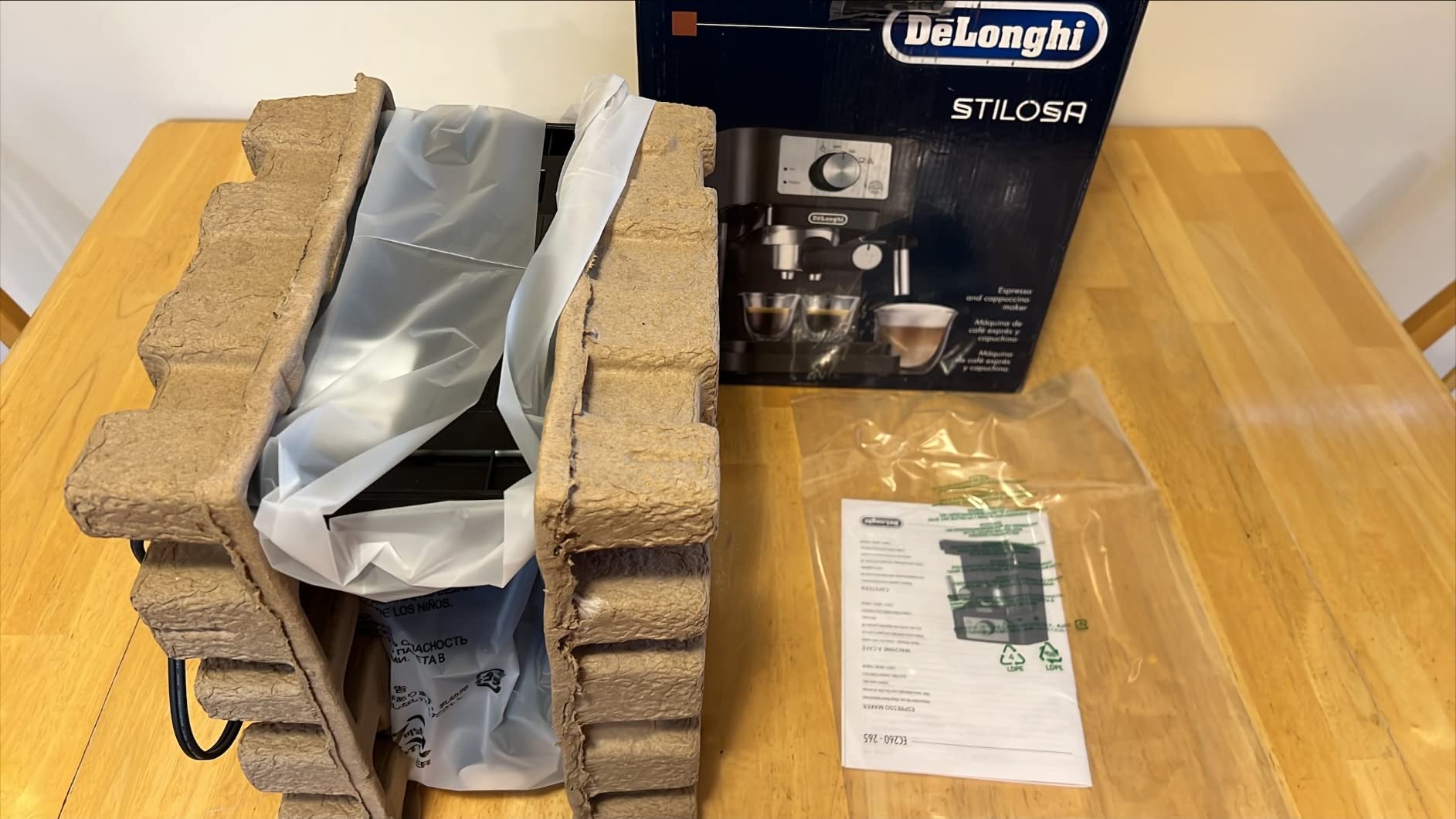
The trade is real though. You push a lever and hold it, and if your tamping or grind is off the shot runs fast and thin. Expect the first two weeks to produce drinks you would not serve a guest.
Why the width number flatters it
At 9.45 inches wide and 12.13 inches deep it fits most counters, but the depth is deeper than the 5 to 6 inch wide machines on this list, so a shallow shelf is not the place for it.
The stainless steel boiler is the part that will outlive the plastic. Owners consistently rate it as a machine they keep for years rather than replace.
Where it will frustrate you
The 15 bar figure is below the 20 bar class most competitors in this list advertise, and while pump pressure alone does not determine quality, it is worth knowing that you are on a lower-spec pump. The steam wand also has no automatic programs, so lattes take longer and more practice than they would on the Bambino Plus.
3. Breville Bambino Plus: Best For A Real Counter Under Cabinets
Breville BES500BSS Bambino Plus Espresso Machine, Brushed Stainless Steel
7.7 inch wide
11 pounds
3 second heat up
1560 watts
2 year warranty
Pros
- 7.7 inch width fits tight counters and appliance garages
- ThermoJet reaches temperature in about 3 seconds
- Automatic milk wand with three texture settings
- 2 year warranty is longer than most rivals
Cons
- Arrives with no grinder so a burr grinder is required
- Filter basket sticks while locking under pressure
- Auto purge splatters milk and wastes water
This is the machine most people end up with, and for one specific reason: it is narrow enough to live under a wall cabinet while still making milk drinks. That combination is rarer than the marketing suggests.
ThermoJet heating is the headline. It reaches extraction temperature in about three seconds, so you do not leave the machine powered on waiting for it, and in an apartment where the outlet might be on a kitchen circuit you are sharing, that matters.
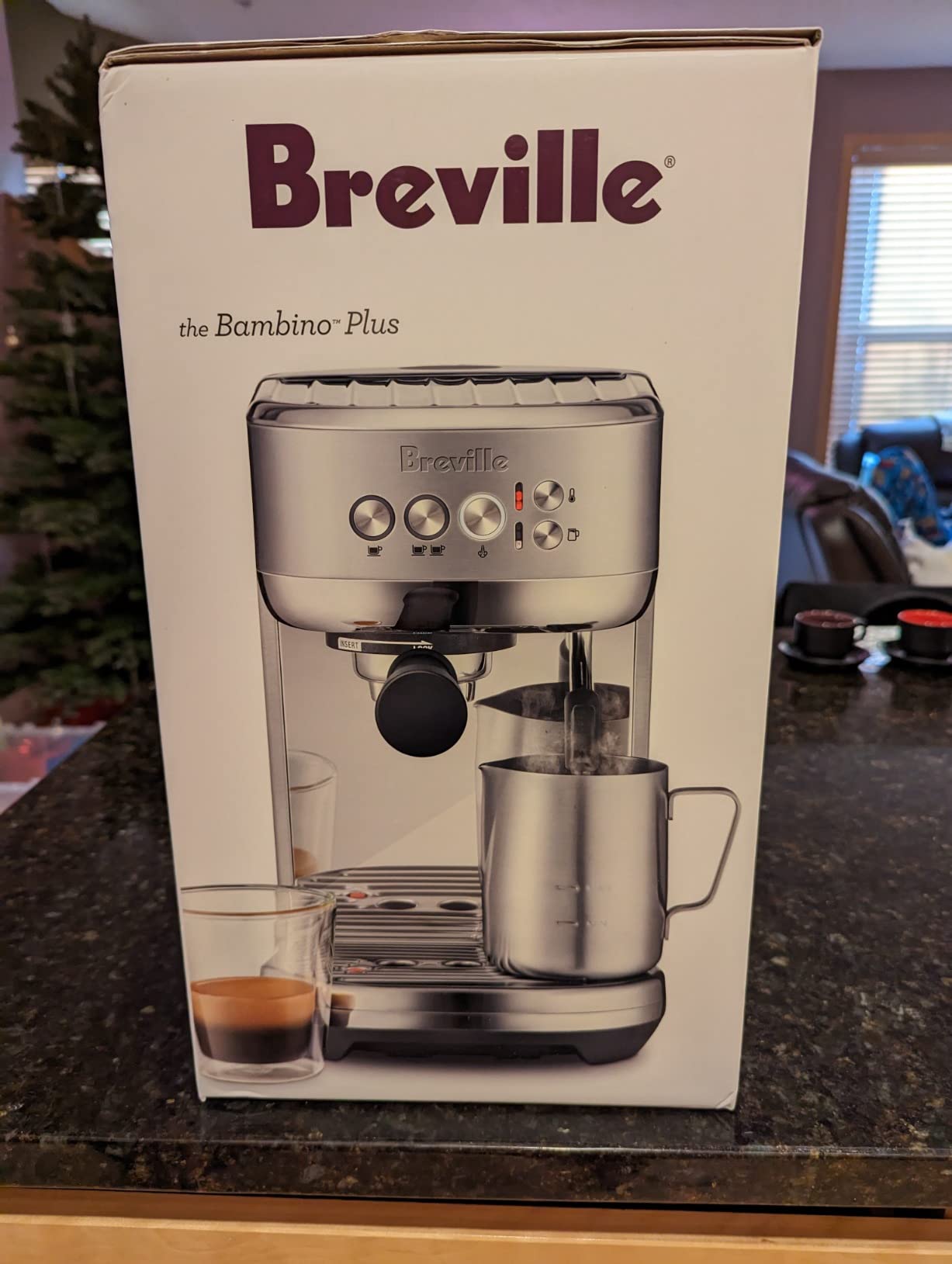
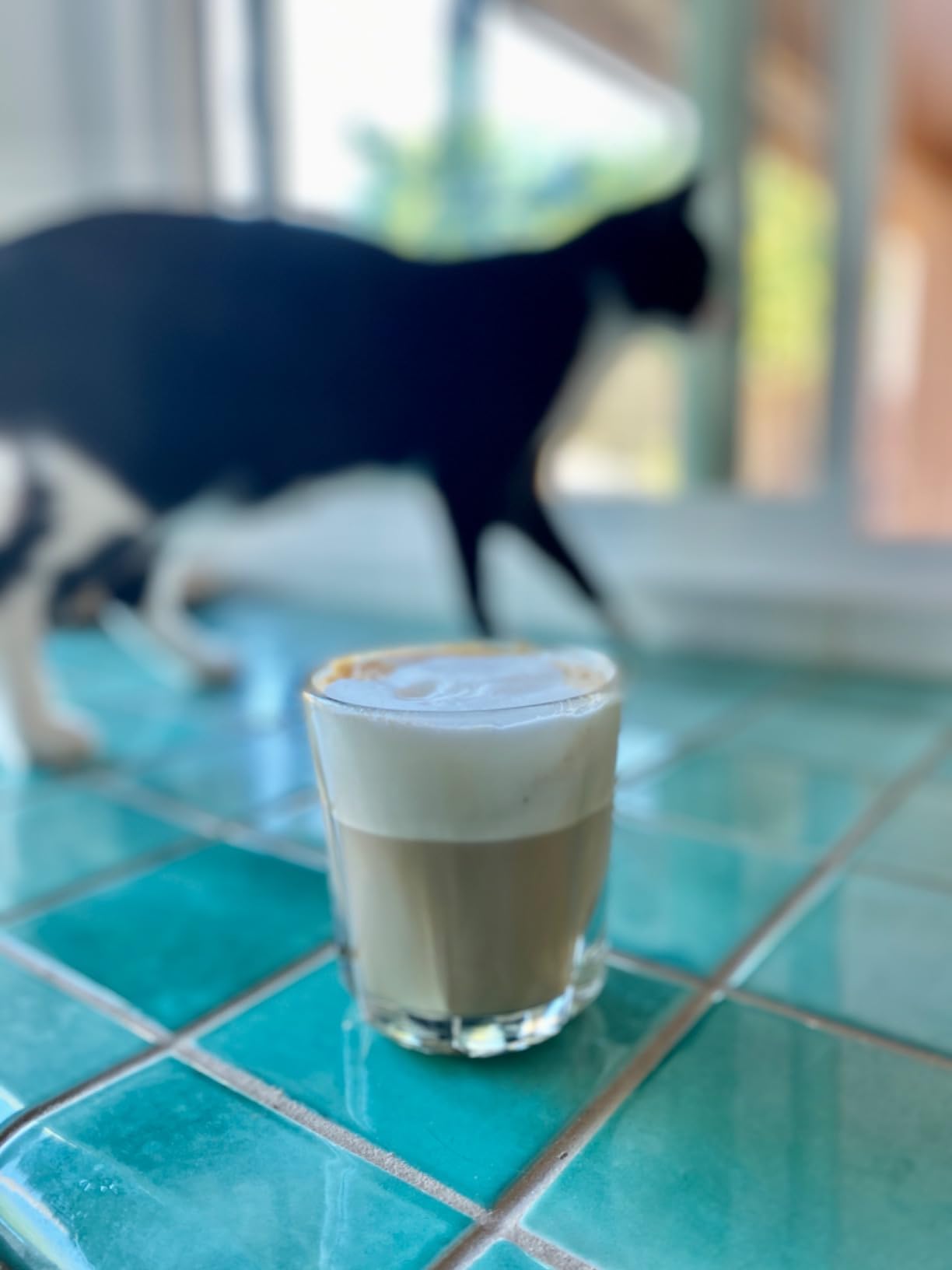
The automatic milk wand has three temperature and texture settings, which means a cappuccino is one button away for someone who has never textured milk. The auto purge cycle resets the system for the next shot afterwards.
That purge is also the most complained-about feature. Owners report splatter across the group head and a noticeable amount of wasted water, and it adds steps to cleaning that the manual does not set expectations for.
A discrepancy worth flagging: the listing spec sheet lists 12.5 inches of width, which is almost certainly a transposition of the depth figure, because owners consistently report the body at 7.7 inches wide by 12.5 inches deep by 12.2 inches tall. Measure the depth, not the width, before you buy.
The grinder question is the whole decision
This machine takes ground coffee only. A slim standalone burr grinder will add 5 to 7 inches of counter and a couple of hundred grams of beans that need somewhere airtight to live.
If you have an appliance garage, a lower cabinet or a shelf above the fridge, that grinder disappears from the equation and the Bambino Plus becomes genuinely compact. If your only space is 10 inches of counter, choose something else on this list.
The friction you will hit in week one
The filter basket initially sticks under pressure and the light body slides across the counter while you lock it. Owners also report needing a cleaning cycle roughly every two weeks at moderate use, and the included portafilter has a plastic insert that is awkward to scrub.
4. CASABREWS CM5418: Most Versatile With A Pressure Gauge
CASABREWS CM5418 Compact Espresso Machine with Milk Frothing Steam Wand
5.47 inch wide
8.6 pounds
20 bar pump
34 oz tank
1350 watts
Pros
- 5.47 inch width is among the narrowest here
- Built-in pressure gauge makes extraction visible
- 20 bar pump with a 1350 watt boiler
- Owners report two years of trouble free use
Cons
- Plastic spoon tamper feels cheap and gets replaced
- No milk pitcher included
- Uninsulated steam wand gets very hot
- Overheating protection forces a cool down between steaming and brewing
The CM5418 solves the narrow counter problem better than anything else on this list, and it does it at an entry-level price. Five and a half inches wide leaves room for a toaster on the same stretch.
The built-in pressure gauge is the feature that makes it worth the money. You can watch the needle climb into the extraction zone instead of guessing, and that single window of feedback teaches you more in a week than a month of pulling shots blind.
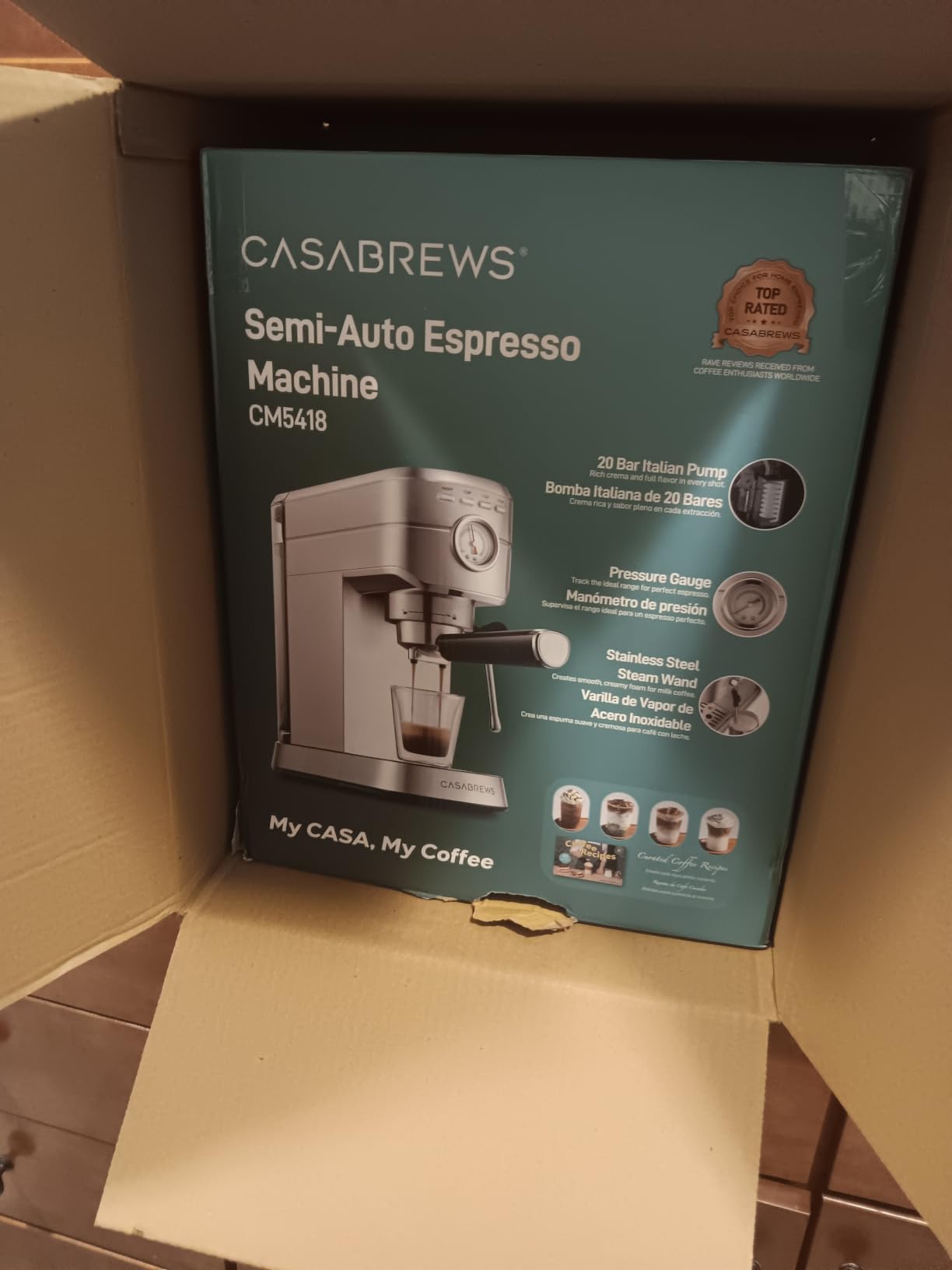
The 20 bar Italian pump and 1350 watt boiler produce shots owners describe as fragrant and rich, and the steam wand is frequently named as their favourite function despite the wand being manual.
The 34 oz detachable tank lifts out without moving the machine, which is the right design for a counter where you cannot slide anything backwards.
There is a mandatory cool down though. Because it is a single boiler, brewing immediately after frothing trips the over-heating protection mode, and you wait before the next shot.
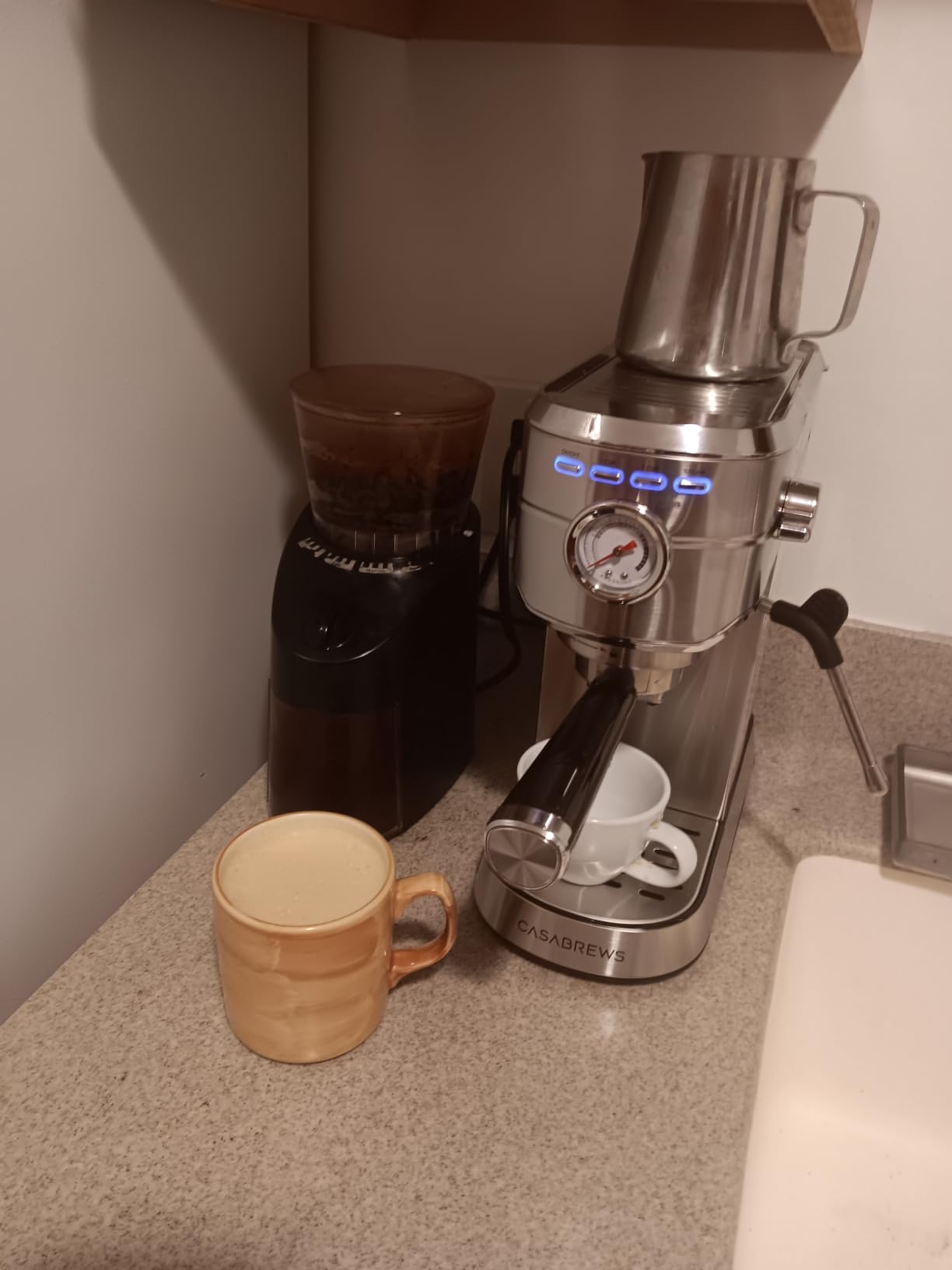
If your morning is espresso followed by milk drinks back to back, that forced pause is annoying. If you drink them one at a time, or accept a one minute wait, it is a fair trade for the width.
How it handles a tight counter
Dimensions read 5.47 inches wide by 12.28 inches deep by 11.97 inches tall, so the constraint here is depth, not width. Under a cabinet you need nearly 12 inches of vertical clearance to lift the hopper and portafilter.
At 8.6 pounds it moves easily, and several owners describe picking it up with one hand to clean behind it, which is a small thing that matters in a kitchen you cannot walk around.
What to replace on day one
The included plastic spoon-style tamper is the most commonly swapped accessory, and no milk pitcher is included at all. The uninsulated steam wand also gets hot enough to need a cloth, and some owners report poor microfoam texture as a result.
5. Nespresso Essenza Mini: Best Value And The Smallest Footprint
Nespresso Essenza Mini Coffee and Espresso Machine by De’Longhi, 1150 watts, 110ml, Black
19 bar
4.4 pounds
110 ml tank
1150 watts
Nespresso Original capsules
Pros
- Smallest and lightest machine in the lineup
- One button operation with no grinding or tamping
- Highest average rating across the ten machines
- Fast to clean and easy to store away
Cons
- Makes no milk drinks at all
- Proprietary single use capsules add a recurring cost
- Original capsules only so Vertuo pods are excluded
- All plastic body
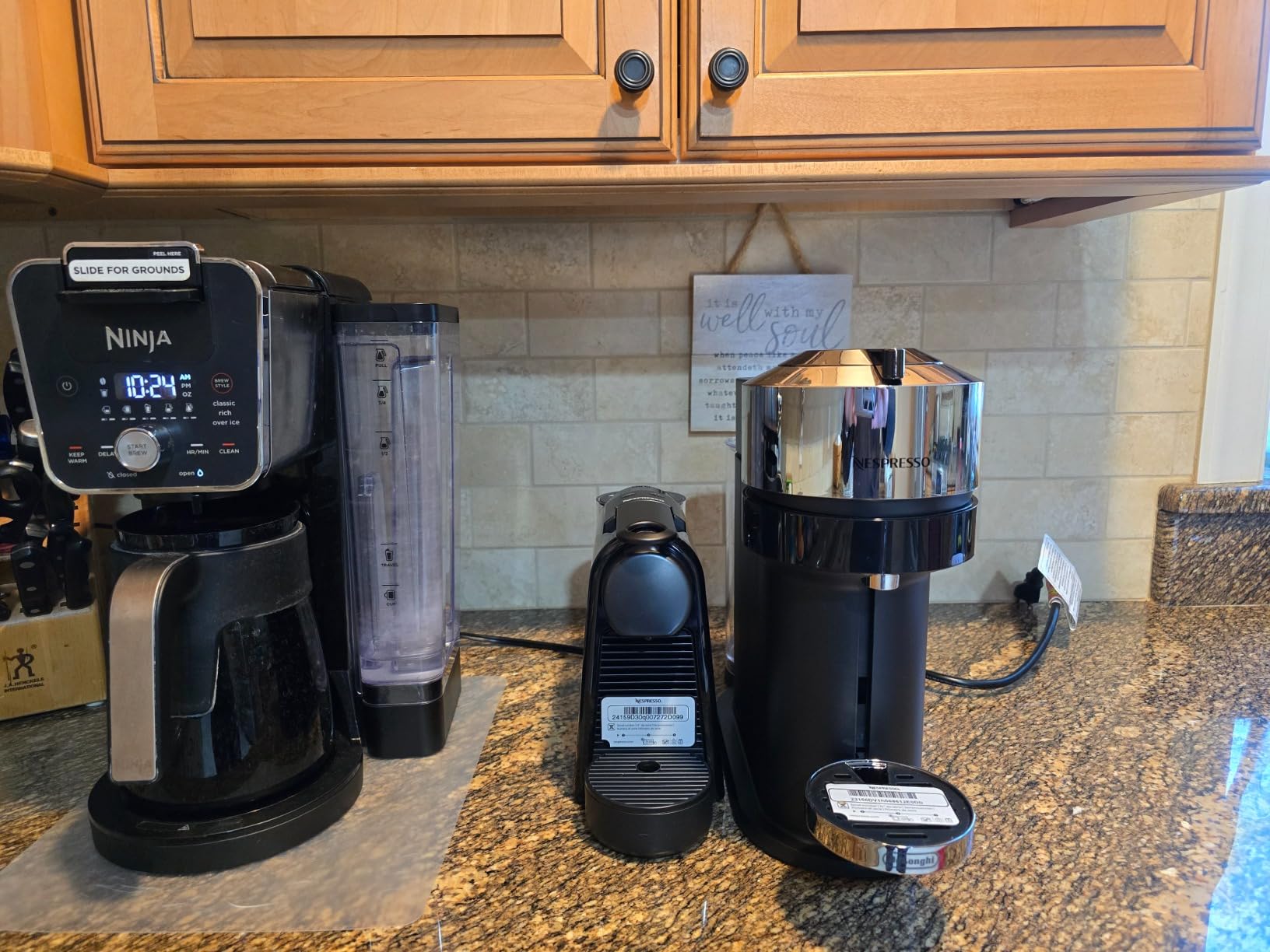
The Essenza Mini is the answer when the real constraint is not width but willingness. It takes no counter, no grinder, no beans storage and no technique, and it produces the same shot every time with one button.
It also has the highest average rating of any machine we tested here, which surprised us until we realised the reason. A machine with no variables cannot produce a bad shot, so owners are not reviewing flavour, they are reviewing whether it works.
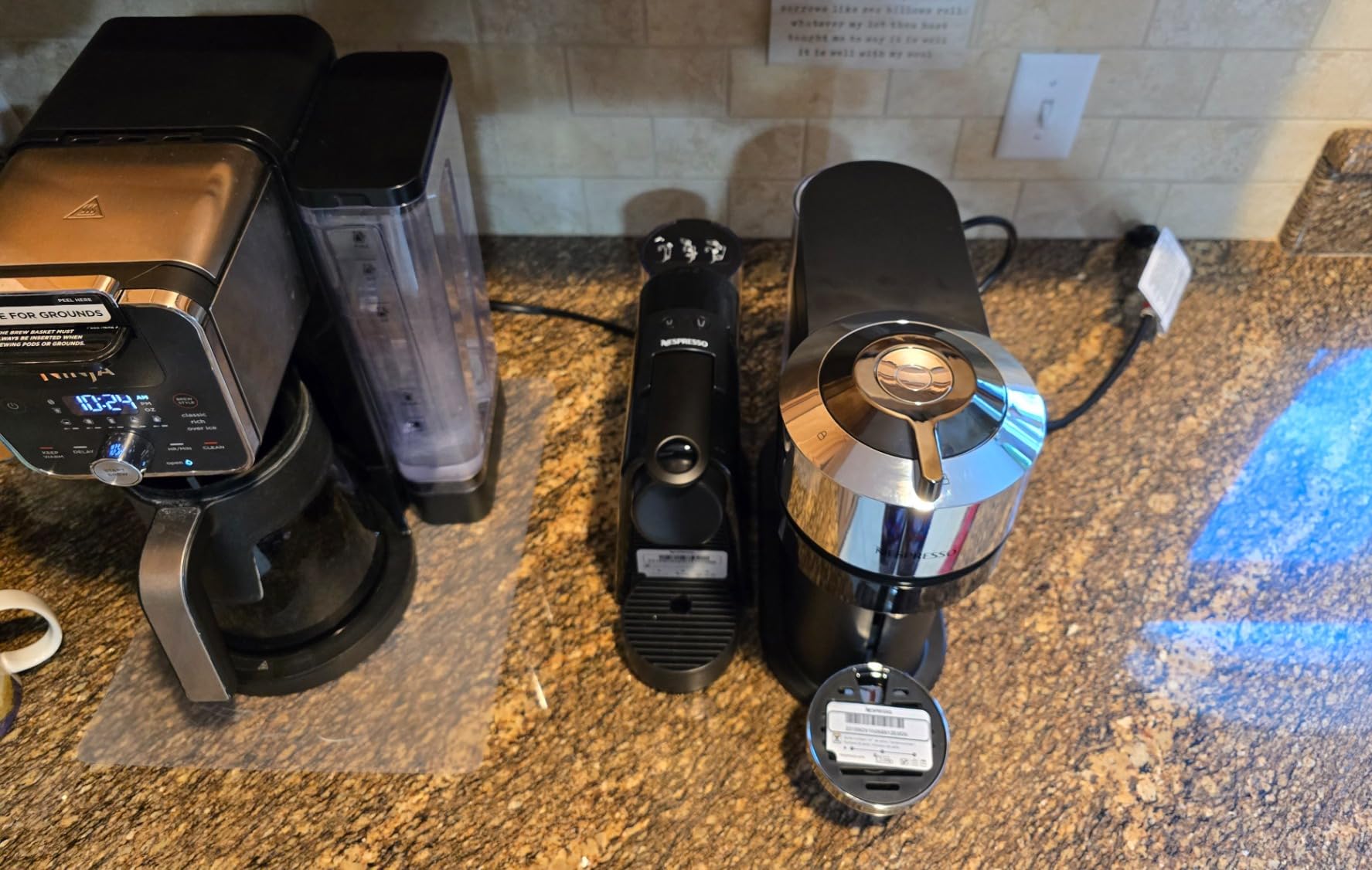
A second spec-sheet caveat: the listing lists 12.79 inches of width, which is a depth figure. Independent measurements and owners put the body at roughly 4.3 inches wide by 4.33 inches deep by 8.07 inches tall, so treat the listing number as a transposition.
The 19 bar pump and 1150 watt element are genuinely capable for a capsule machine, and you can program espresso and lungo volumes with the two buttons on top.
At 4.4 pounds it is the machine you will actually put away after making coffee, which is a habit that saves counter space most people never form.
Cleaning is a capsule bin and a rinse. There is no group head to backflush, no portafilter to scrub and no grinder to vacuum, and in a small kitchen that difference is worth more than any shot refinement.
Why it wins on apartment fit
Nothing else here is this easy to relocate. It fits in a cabinet, a drawer, a suitcase and a dorm shelf, and it survives a move with no draining or descaling cycle. For renters who move often, that is the deciding factor.
It is also the machine to buy if you genuinely will never make a latte. There is no steam wand and no frother, so milk drinks are simply not on the menu.
What the rating hides
Capsules are proprietary, single use and a recurring per-shot cost, and you are locked to the Original format, which excludes Vertuo pods and most third party refill systems. The all-plastic body also means the machine will not be passed down the way a stainless boiler will.
6. Ninja Luxe Cafe Premier: Best All-In-One If You Also Drink Drip Coffee
Ninja Luxe Café Premier 3-in-1 Espresso Machine, Drip Coffee, & Cold Brew
13.39 inch wide
25 setting burr grinder
Espresso plus drip plus cold brew
1650 watts
Pros
- Replaces a separate grinder and a separate drip brewer
- Barista Assist handles weighing and tamping
- Four froth presets rated for silky microfoam
- Built-in accessory storage inside the body
Cons
- One of the largest footprints in the lineup
- No dedicated hot water spout for tea
- Small water tank and shallow drip tray need frequent emptying
This is the only machine here that removes two appliances instead of one. If your partner does not drink espresso, a single machine that covers espresso, drip and cold brew saves a second brewer you would otherwise have squeezed onto the counter.
Barista Assist Technology is the interesting part. It weighs the dose, guides the grind and assists tamping, then adjusts temperature and pressure in real time, so a beginner gets repeatable shots without understanding any of that yet.
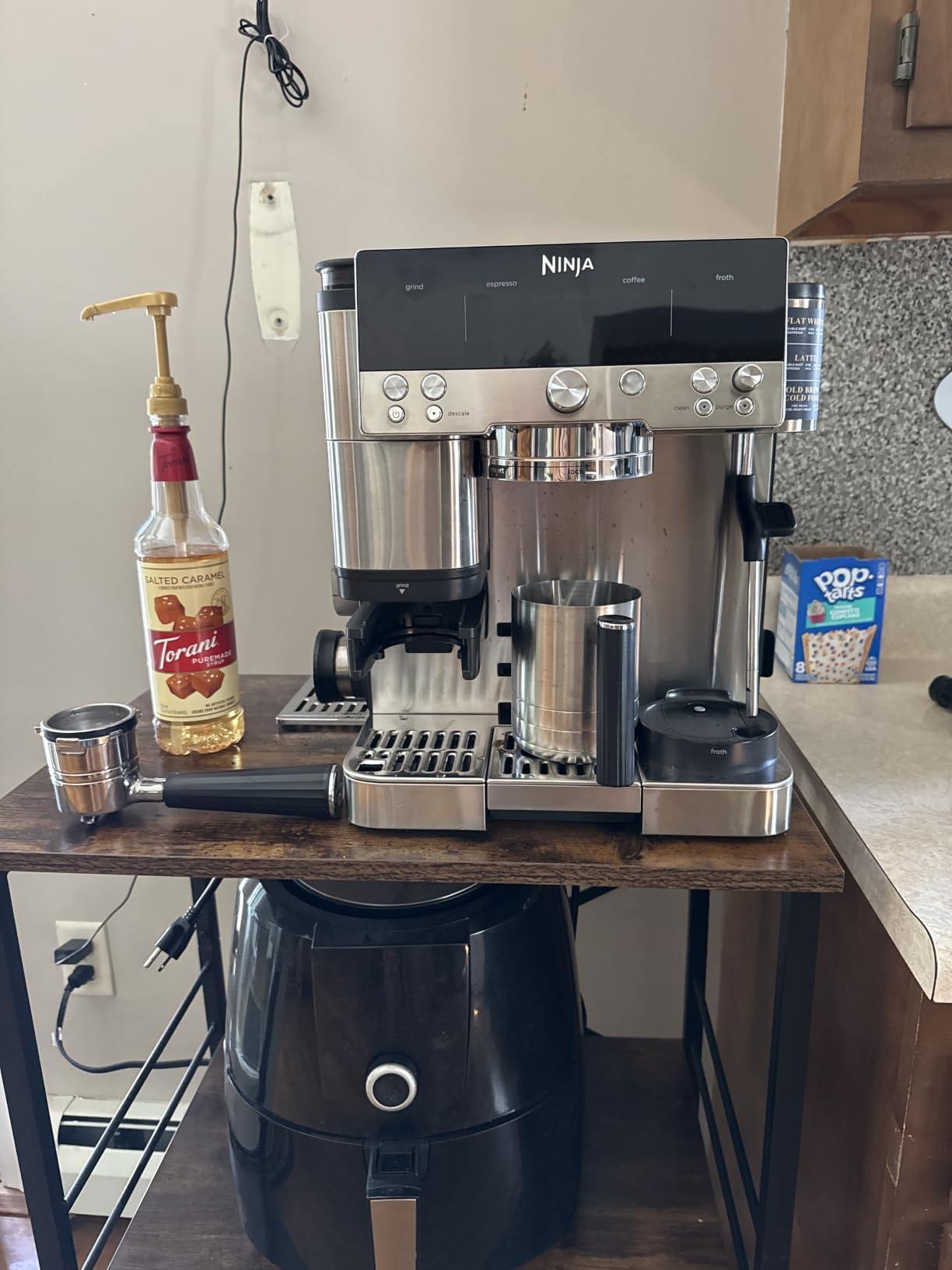
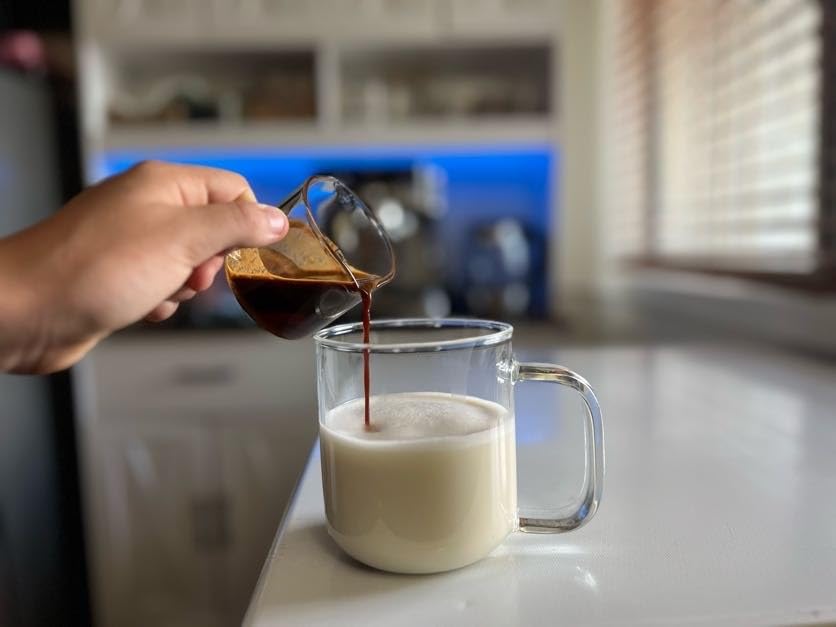
The dual froth system combines a spinning whisk with an automatic steamer across four presets, and owners rate it as the most consistently praised frothing feature in this entire roundup.
The built-in conical burr grinder has 25 settings, which is more granularity than most machines with grinders offer, and it removes the separate-grinder problem entirely.
Accessory storage built into the body is a small apartment idea worth copying. The portafilter, tamper, cleaning disc and milk jug live inside the machine instead of in a drawer taking up real estate.
The catch is size. At 13.39 inches wide by 12.99 inches deep by 14.57 inches tall, it is the second widest machine on this list, and none of that footprint is optional.
When the width is justified
If you are replacing a grinder and a drip brewer, measure what those two things occupy today. This machine is only oversized if it is competing with just an espresso setup.
Long-term owners report reliable daily use approaching two years, which is reassuring for something with this many moving parts.
Where it annoys you daily
There is no dedicated hot water spout, so it cannot serve tea or fill a kettle, and the water tank is small enough that it needs frequent emptying. The grinder can also under-fill the portafilter after extended use, which produces uneven shots until the dose is reset, and vacuuming the burr set is described as a hassle.
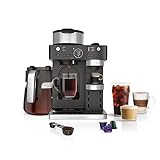
7. Ninja CFN601: Best For Pods And A Carafe In One Body
Ninja Espresso & Coffee Maker, Nespresso Capsule Compatible, Black, CFN601
9.84 inch wide
13.6 pounds
19 bar
Nespresso Original compatible
1550 watts
Pros
- Brews capsules and ground coffee in one machine
- 12 cup glass carafe plus adjustable cup tray
- Used capsule bin holds 20 for recycling
- Fold-away frother stores flush with the body
Cons
- Ground side leaks from the base in widely reported cases
- Some units hit electronics failures around three years
- Only brews one espresso shot at a time
- No Vertuo capsule support
The Ninja CFN601 is the compromise machine for a household where one person wants a 2pm espresso and the other wants a full pot of filter coffee. It handles both, and it does not need a second device on the counter.
The Barista Plus system runs at 19 bar and brews Nespresso Original capsules in espresso, lungo and over ice, while the ground side runs classic, rich or over ice across nine sizes up to the 12 cup carafe.
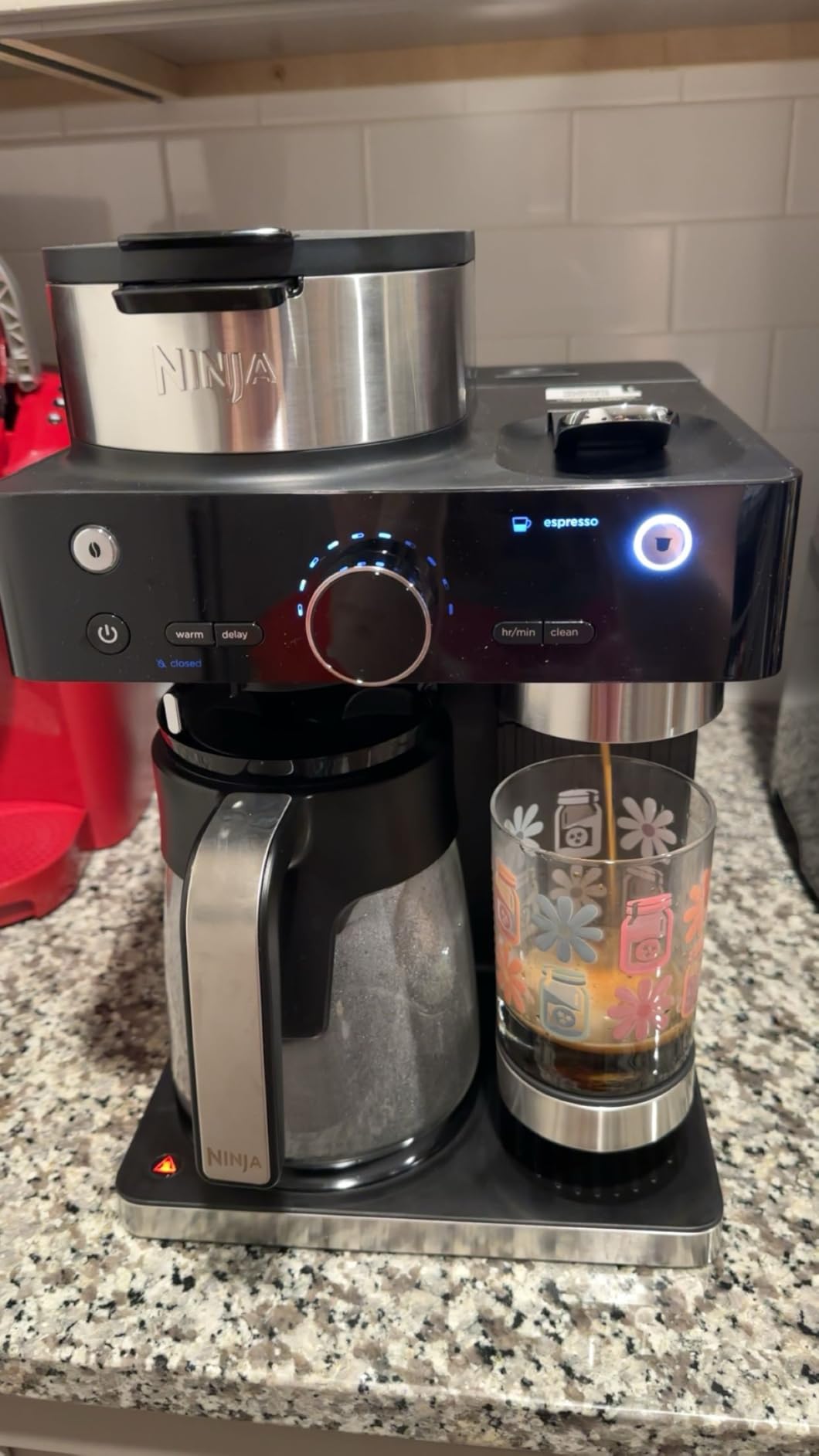
The fold-away frother is an apartment feature rather than a coffee feature. It tucks flush with the body, so on a small counter it is not permanently occupying depth the way a protruding wand does.
The used capsule bin holds 20 capsules, which is enough that recycling is a weekly job instead of a daily one. Delay Brew and Keep Warm functions suit an early start.
Owners report a year or more of trouble-free daily use as the norm, with failures concentrated in a minority of units rather than the whole line.
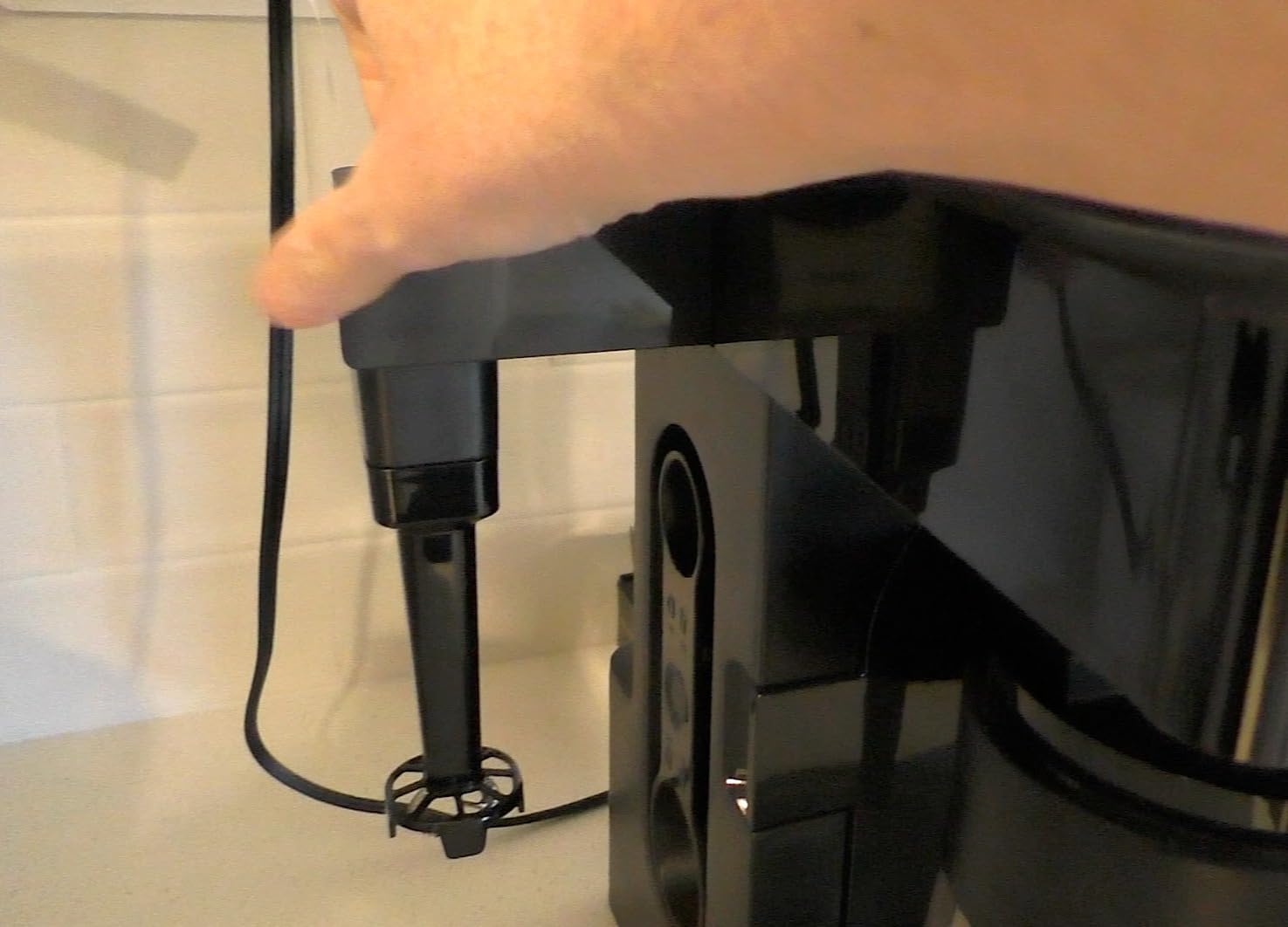
At 9.84 inches wide, 12.21 inches deep and 14.96 inches tall with a 13.6 pound weight, it is taller and heavier than the narrow semi-automatics. The carafe storage is part of that bulk.
Who this machine is actually for
Two-person households with different coffee habits. If everyone drinks espresso, a dedicated machine gives you better results and a smaller footprint, and the carafe is dead weight.
It is also a sensible middle ground for anyone who wants pod convenience without giving up ground coffee for batching.
The leak you should know about
Base leaking on the ground coffee side is the most widely reported complaint, and owners frequently trace it to the supplied paper filters overflowing. Switching to reusable filters solves it for most people, so treat the paper filters as the consumable to upgrade first.
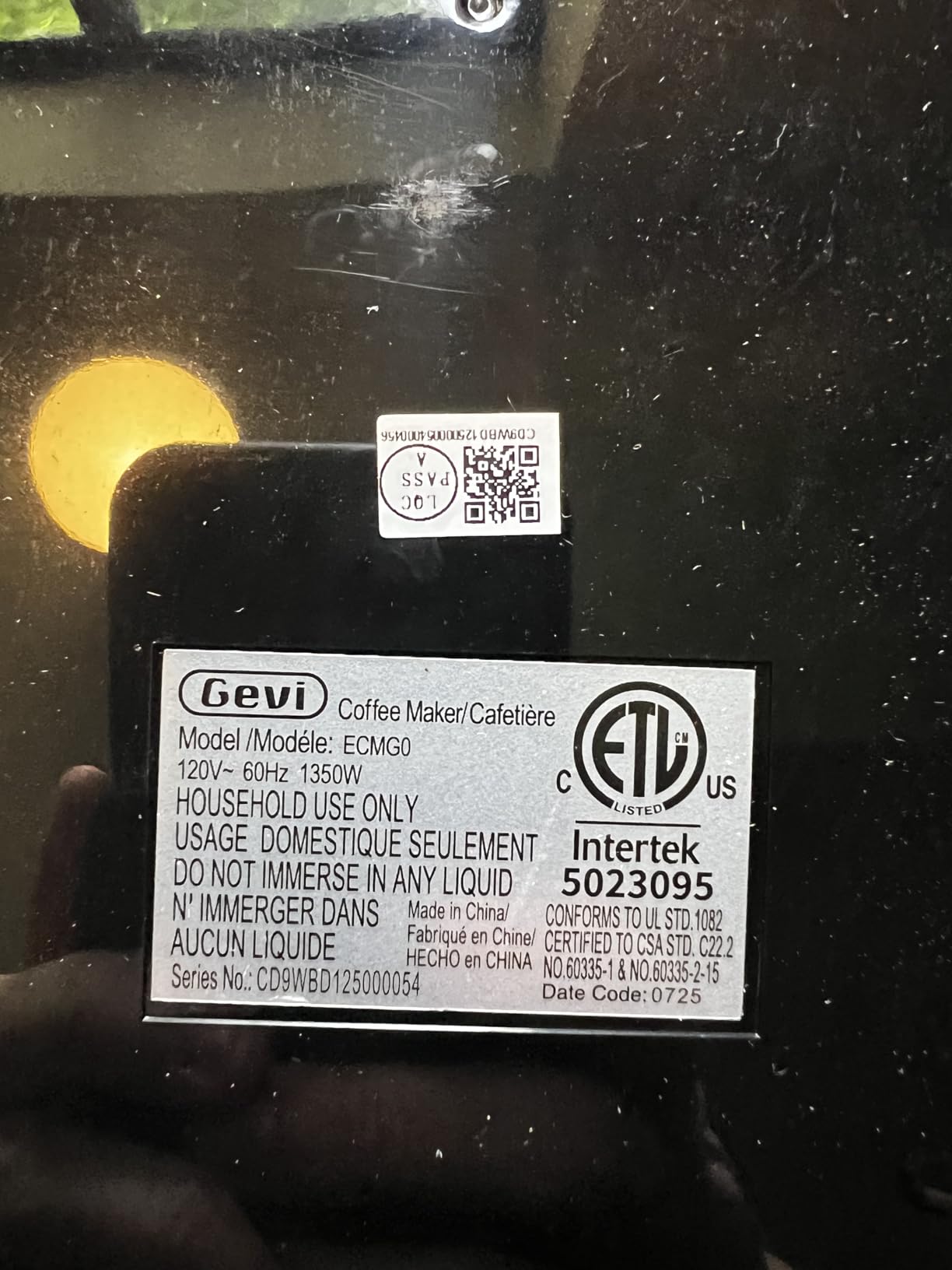
8. Gevi 20 Bar ECMG0: Best For Learning To Dial In Pressure
Gevi 20 Bar Compact Espresso Machine for Home,Latte、Cappuccino Coffee Maker
5.5 inch wide
8.6 pounds
20 bar with pre-infusion
1 liter tank
1350 watts
Pros
- Automatic shot buttons remove the manual pumping step
- Pressure gauge plus pre-infusion give a visible target
- Stainless steel housing suits a small counter
- Owners report consistent espresso for over a year
Cons
- Shuts off after steaming so a second drink needs a reheat
- Single boiler so you cannot brew and steam together
- Thin plastic spoon tamper gets replaced
- Small puck means reloading every two shots
The Gevi is the machine I recommend to someone who wants a narrow footprint but does not want to hand-pump every shot. The single and double shot buttons meter the water for you, which removes the step that makes the De’Longhi Stilosa a learning curve.
What you keep is the feedback. A built-in pressure gauge and pre-infusion mean you still watch the extraction and adjust the grind, you just do not have to time the pump by feel.
The removable froth nozzle on the steam wand is a small design decision that pays off weekly. It unscrews, so milk residue rinses out instead of setting inside the wand, and in a kitchen with no dishwasher run nearby that matters.
There is also a hot water function for americanos, tea and cup warming, which most of the narrow machines here omit entirely.
Owners report outperforming more expensive machines they replaced, and the stainless steel housing looks considerably more deliberate on a counter than the plastic bodies in this price class.
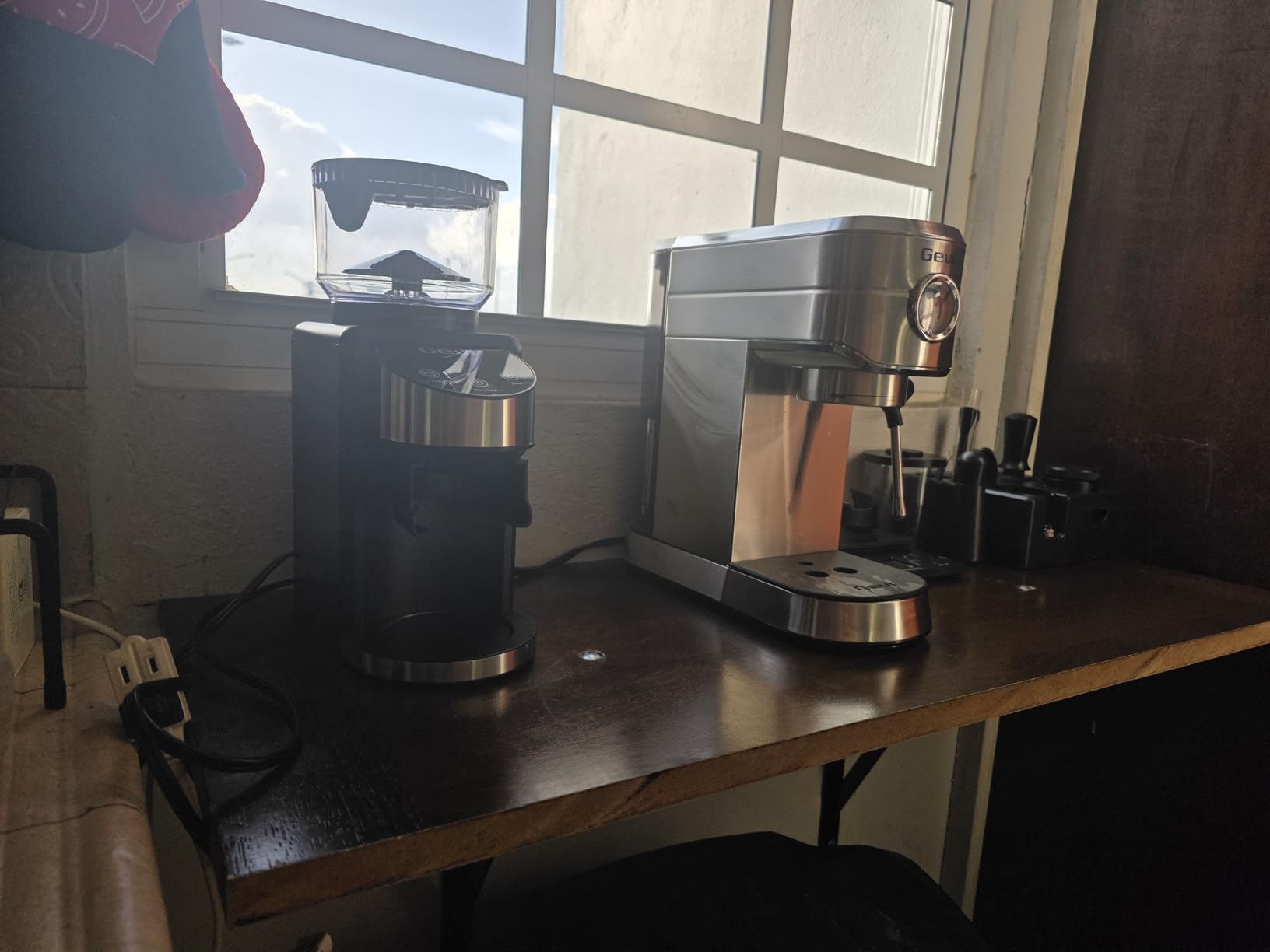
The 5.5 inch width and 1 liter tank give you a real espresso setup in a small footprint. Depth is 12.3 inches, so plan for that rather than the width figure.
What the buttons do and do not fix
Automatic metering means consistency across shots without changing anything. It does not diagnose a problem, so if the puck is channelled you will see it on the gauge and still need to change the grind.
That makes this a good second machine as well as a first, particularly if you have moved up from a manual piston unit.
The cool down problem
The machine shuts off after steaming, so a second drink means waiting for it to reheat, and the single boiler means brewing and frothing cannot overlap. The puck is also small enough that the basket needs reloading every two shots, which is more fiddling than a 58mm portafilter demands.
9. CASABREWS 3700 Essential: Best For A Big Tank And Heavy Daily Use
CASABREWS 3700 Essential Stainless Steel Espresso Machine with Steam Wand
5.7 inch wide
8.1 pounds
20 bar pump
43.9 oz tank
1350 watts
Pros
- Lightest powered machine in the lineup at 8.1 pounds
- 43.9 oz tank means very few refills
- Owners running 5 to 10 shots a day report no faults
- Narrow 5.7 inch width with a stainless body
Cons
- No pressure gauge so dial-in happens by feel
- Grind tolerance is finicky and prefers a coarser setting
- Steam control dial can drift open mid shot
- Noisy steam wand during frothing
The 3700 Essential is the machine to consider if espresso is a twice-a-day habit rather than a weekend project. Multiple owners report running it five to ten times a day with no faults at all, and a two-year ownership history that holds up.
Its 43.9 oz tank is the second largest here and the largest among the narrow units, so you refill a fraction as often as you would with the 34 oz CASABREWS. In a kitchen where tank access is awkward, that difference is not cosmetic.
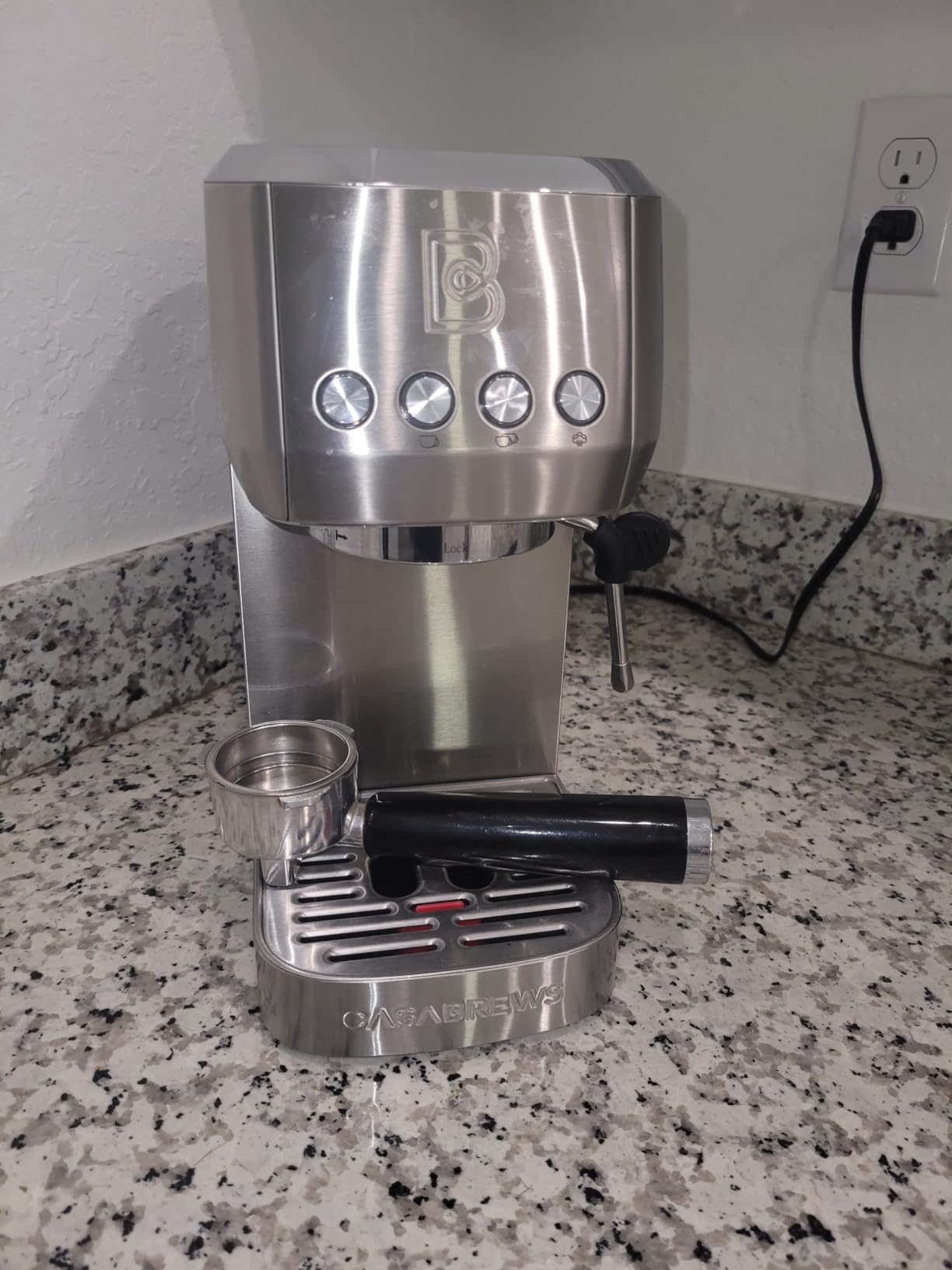
At 8.1 pounds it is the lightest powered machine on this list, and the brushed stainless body gives it a durability feel that the plastic-bodied budget units cannot match.
Fast heat-up and good crema are reported across many reviews, and the removable drip tray makes the daily rinse quick.
New units can carry a burnt plastic smell that fades after you run a full tank of water through, so do that before the first real shot rather than assuming something is wrong.
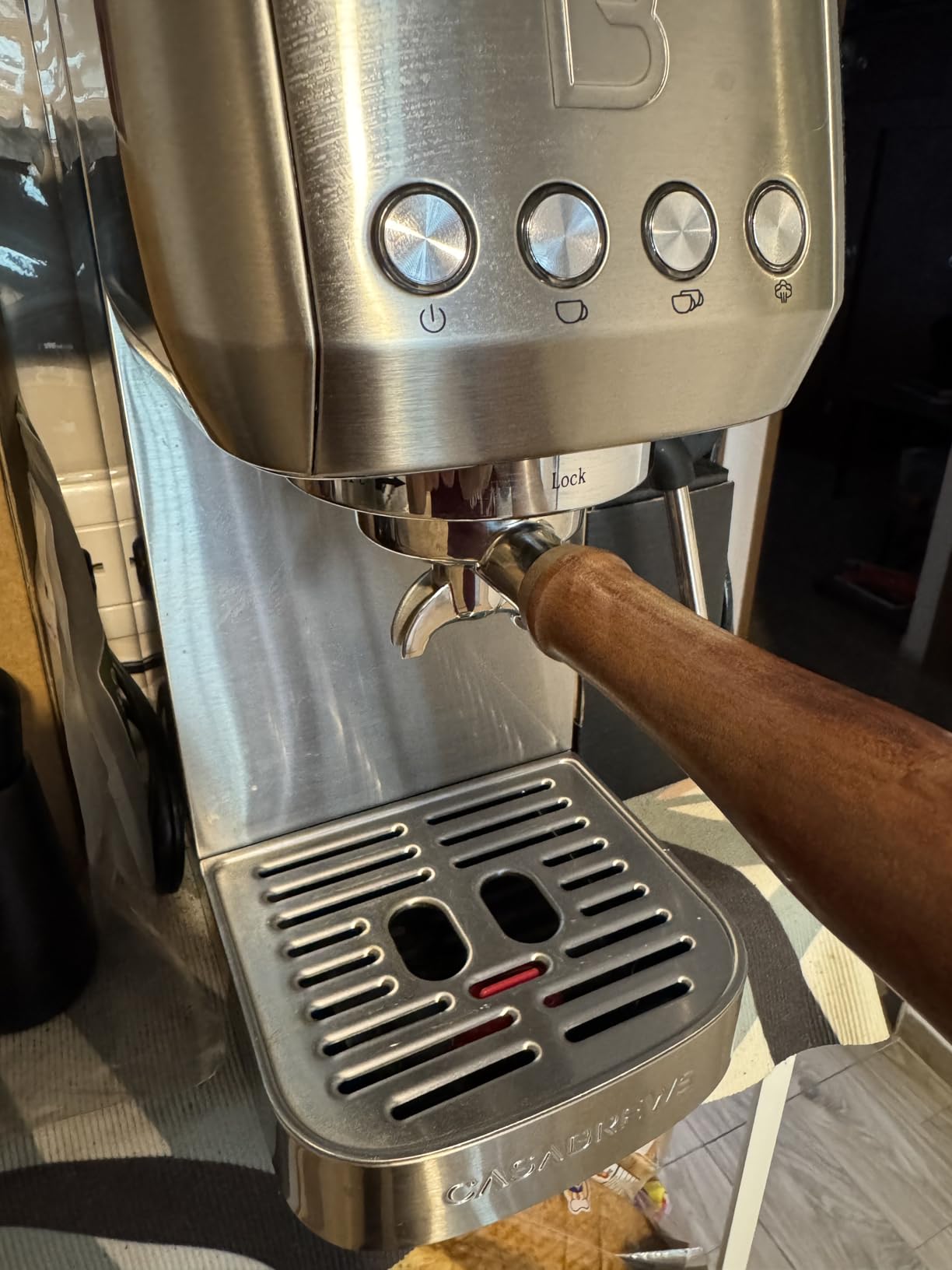
Dimensions read 5.7 inches wide by 12.6 inches deep by 12.5 inches tall. Narrow in one axis, deep in the other, and the steam wand needs a brief cooldown between cycles because of its continuous run time limit.
The grind tolerance is the whole story
This is the model most likely to frustrate a beginner. Reviewers report it can choke on a true espresso fineness and strongly prefers a much coarser setting than you would expect, and without a pressure gauge you have no visual cue that the grind is wrong.
If you already know what you are doing with a tamper, that is fine. If you do not, the CM5418 with its gauge will teach you faster.
What to watch in week one
The steam control dial can drift open during extraction and vent pressure through the wand, which throws the shot. The included plastic spoon-style tamper is flimsy and usually the first thing replaced, and the wand itself is noisy during frothing.
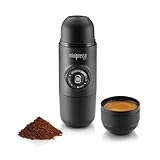
10. Wacaco Minipresso GR: Best When Counter Space Is Effectively Zero
Wacaco Minipresso GR, Portable Espresso Machine, Compatible Ground Coffee, Hand Coffee Maker, Travel Gadgets, Manually Operated, Perfect for Camping, Hiking
2.36 inch wide
0.36 kg
No electricity
50 ml per pull
Manual piston
Pros
- Smallest and lightest option in the roundup by a wide margin
- No electricity
- no capsules and no maintenance
- Integrated scoop doubles as a tamper
- Works with any grind and any roast
Cons
- Yields under a full single shot per pull
- Needs boiling water supplied by hand
- Plastic housing cannot be opened for deep cleaning
- Easy to overfill or overtamp
The Minipresso is the answer to a different question. If you have an apartment with no counter at all, or you want espresso that travels, this is the only machine on this list that solves the problem outright.
At 2.36 inches wide, 2.76 inches deep, 6.89 inches tall and 0.36 kg, it lives in a drawer. The total counter cost is zero, and it moves apartments with nothing more than a rinse.
There is no motor, no pump and no power cord. You add boiling water, add ground coffee, screw the top on and pump the piston by hand, roughly 60 to 90 pumps for three-quarters of a shot.
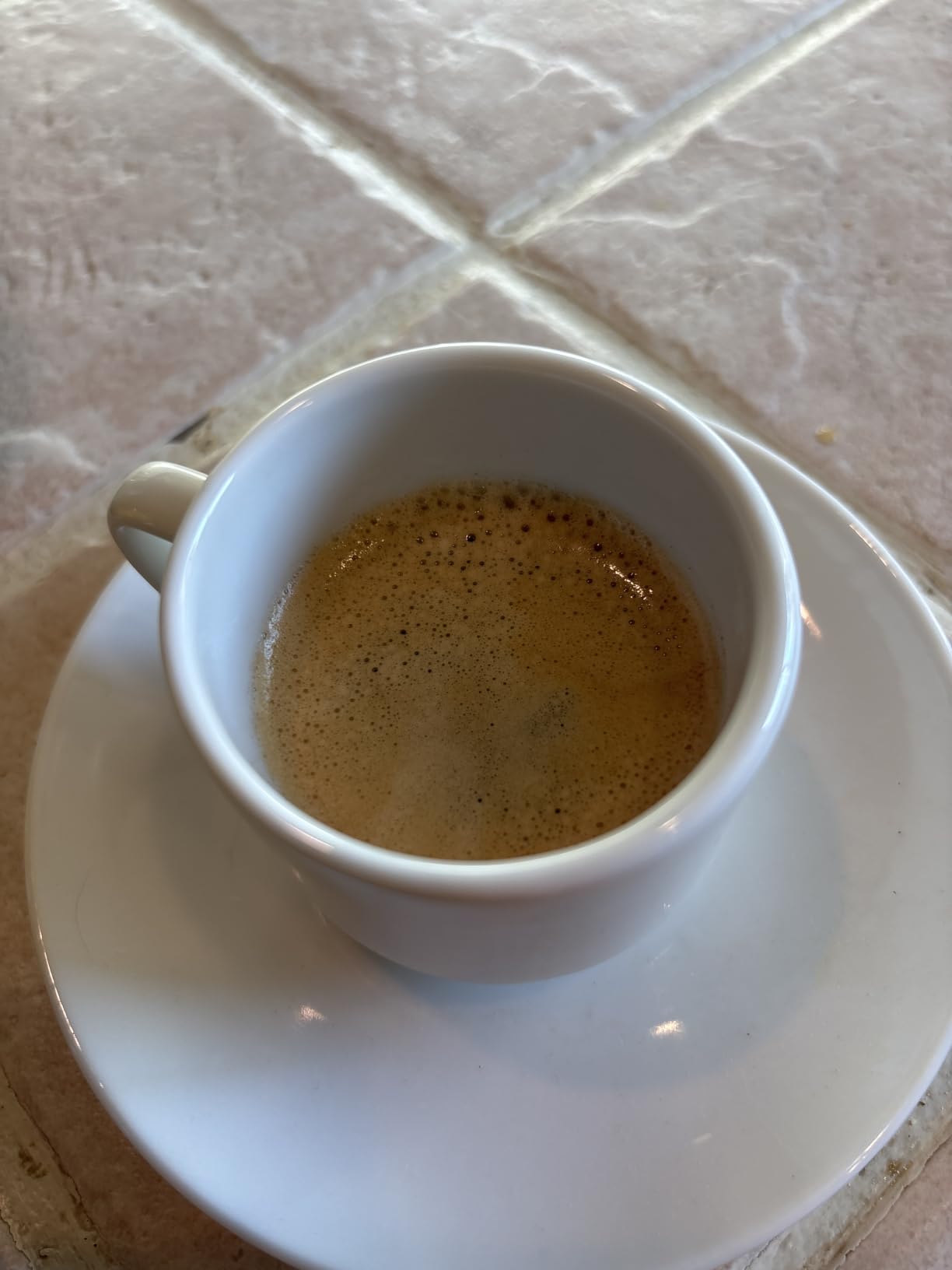
Owners describe the output as thick with visible crema and compare it favourably to an AeroPress, which is a reasonable benchmark for a hand pump this small.
Because it takes any grind from any roast, nothing is locked in. That flexibility is the opposite of the capsule machines, and it is why the coffee stays cheap per cup.
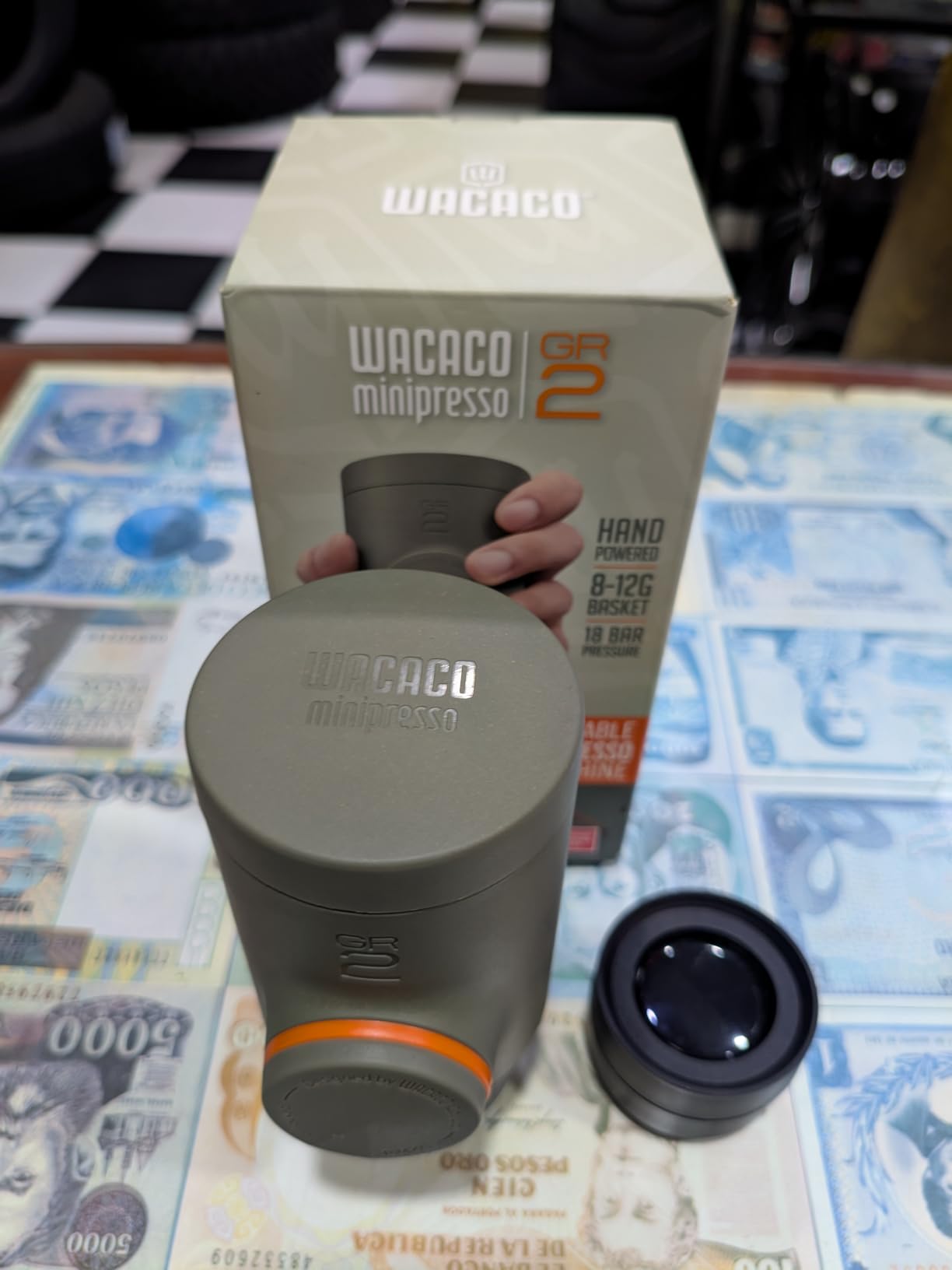
The tradeoff is honest. One pull yields up to 50 ml, which is under a full single shot, so a double means three separate pulls and about as many minutes.
When this is the right answer
Dorms, first apartments with no counter, camping and travel. The kettle is the only appliance it needs, and that is usually one you already own.
It is also the machine to keep in a drawer as a backup for a rental where you do not want to install anything permanent on the counter.
What makes it fiddly
You supply the boiling water, so there is a kettle in the workflow. The plastic housing cannot be opened to reach the extraction chamber, cleaning is manual and every part has to dry fully before reassembly, and an overfilled or overtamped basket will choke.
Espresso Machine Buying Guide For Small Spaces
The machine type matters less in a small kitchen than people expect, and the counter measurement matters more. Work through these in order and the choice makes itself.
Measure the counter before you measure anything else
Use a tape, not a product page. You need the width of the run, the depth from the wall to the backsplash, and the vertical clearance to whatever is above the counter.
Under 6 inches of free width and your realistic options are the 5.47, 5.5 and 5.7 inch machines, or a capsule machine. Between 6 and 9 inches opens up the Bambino Plus and the Ninja CFN601. Above 9 inches the Barista Express becomes possible.
Depth catches people more often than width. The narrow machines are typically 12 inches deep, because the boiler and water tank sit behind the group head, and a 12 inch depth on a shallow counter rules out the machine regardless of how slim it looks from the front.
Decide whether you are buying a machine or a system
A semi-automatic without a grinder needs a second appliance. A machine with a grinder needs depth. A capsule machine needs neither but locks you into pods. A super-automatic needs depth and also beans storage.
Add up the counter cost of each option honestly, including a tamper, a knock box, a milk jug and a place to keep beans airtight. That total, not the headline width, is what determines whether your kitchen copes.
Pick the tank for your refill habits
Over 60 oz means you think about water once a week. Around 34 to 44 oz suits a two-drink-a-day household. Under 200 ml suits someone who is genuinely happy making one or two drinks and refilling around them.
All ten machines here have removable tanks, which is the baseline requirement. Ask specifically whether the tank lifts out without moving the machine, because that is what decides whether you keep it when it lives under a cabinet.
Set the noise expectation honestly
No manufacturer in this roundup publishes a decibel figure, so treat any number you find as unverified. What we can say from use is that manual machines are quietest, capsule machines are quiet, and semi-automatics with grinders are the loudest, primarily during grinding rather than brewing.
If a shared wall is a real constraint, avoid a machine with a burr grinder, run the steam wand less, and remember that a grinder is the single noisiest item in any coffee setup.
Budget for the accessories nobody lists
A burr grinder, a knock box, a scale, a decent tamper and a milk jug are the real total cost. If you have never done it before, budget for the first two and treat the rest as optional.
Then check the lease. Counter appliances are almost never restricted, but if you are drilling for a shelf or hardwiring anything, that is a conversation with your landlord before you buy, not after.
Think about the day you move
Anything with a boiler needs draining before transport, and anything with a tank needs to travel empty. Wide machines need two people. A capsule machine or a manual unit just gets picked up and carried.
If you expect to move in a year, weight and simplicity are worth more than any feature list, and that reasoning favours the smallest and lightest picks on this list.
How To Set Up A Coffee Station Without Losing Counter Space
The machines on this list are all narrow, but the station around them is what actually determines whether your counter survives. These five steps are the order that works.
1. Use the vertical space first
Before adding anything to the counter, measure the underside of your upper cabinets and the shelf above the fridge. A shelf holds beans, filters and the tamper, and none of that costs counter depth.
2. Pick a grinder that disappears
If you buy a grinder, choose a slim manual model you can store in a cabinet. The compact semi-automatics on this list all assume you do exactly that, and it is the step most people skip before blaming the machine for the clutter.
3. Consider an appliance garage, but mind the ventilation
An appliance garage gives you a dedicated bay and a clean counter when you are not using it. Leave clearance so heat and steam can escape, and check whether the outlet inside can carry a 1600 watt machine on a shared circuit.
4. Build one coffee corner, not two
Grouping everything in one corner means one wipe-down instead of three, and it makes the station look intentional rather than assembled. It also keeps the rest of the counter genuinely free for cooking, which is what most apartment kitchens actually lack.
5. Choose easy cleaning over maximum features
Removable drip trays, removable tanks and simple rinse cycles matter more in a small kitchen than extra drink settings. Several machines here need a cleaning cycle roughly every two weeks, and in a galley kitchen with one sink that adds up quickly.
Frequently Asked Questions
What is the best espresso machine for an apartment?
The Breville Barista Express is the best overall for an apartment because it is the only machine in our roundup with a built-in burr grinder, which removes the need for a second appliance. It is wide at 12.5 inches, so it suits a counter that can spare it. If your counter is narrower, the Breville Bambino Plus at 7.7 inches is the closest equivalent.
What is the smallest espresso machine you can buy?
The Wacaco Minipresso GR is the smallest option we tested at 2.36 inches wide, 2.76 inches deep, 6.89 inches tall and 0.36 kg. It is fully manual and needs no electricity, so it fits in a drawer. The Nespresso Essenza Mini is the smallest powered machine, at 4.4 pounds.
Do small espresso machines need a separate grinder?
Almost always, yes. Every compact semi-automatic without a built-in grinder needs a slim standalone burr grinder, and that grinder typically adds 5 to 7 inches of counter. If you cannot spare that, choose a capsule machine such as the Nespresso Essenza Mini or the Ninja CFN601, or an all-in-one such as the Ninja Luxe Cafe Premier.
Are espresso machines too loud for apartments?
It depends on the pump and the grinder. Manual machines such as the De’Longhi Stilosa and the Wacaco Minipresso are the quietest because they have no motor. Semi-automatics with burr grinders are the loudest, and the grinding is louder than the brewing. None of the manufacturers in this roundup publish a decibel figure, so treat any number you find as unverified.
Are compact espresso machines worth it?
Yes, because the space savings come from tank capacity and footprint rather than from weaker extraction. The CASABREWS CM5418 runs a 20 bar pump in a 5.47 inch body, and the Gevi puts 20 bar with pre-infusion in 5.5 inches. The trade-off is tank size and the grinder you have to buy alongside.
How much counter space do I need for a compact espresso machine?
Plan for the machine depth, not just the width. Most of the narrow machines here are around 12 inches deep, with 5.5 to 6 inches of width. Add a knock box, milk jug and tamper at the side, and another 5 to 7 inches if you need a standalone grinder. Under a wall cabinet, also allow 12 inches of vertical clearance.
Not sure which fits? Tell us your budget, whether you want pods or ground coffee, and how much counter width you actually have, and we will narrow it to one machine.
Which Espresso Machine Is Right For Your Apartment?
Start from the constraint rather than the feature list, because in a small kitchen the constraint decides everything else.
In a studio with under 6 inches of free counter, the Nespresso Essenza Mini is the practical answer and the Wacaco Minipresso is the answer if you will only ever drink black coffee and want zero footprint.
In a galley kitchen with 6 to 9 inches and a steam wand you actually use, the Breville Bambino Plus is the strongest pick, with the CASABREWS CM5418 and the Gevi as the narrow alternatives that still make milk drinks.
For a shared-wall situation where noise is a genuine issue, skip anything with a burr grinder. The De’Longhi Stilosa and the Gevi give you real espresso quietly, and the Ninja CFN601 covers pods plus a carafe if two people have different habits.
For a two-person household drinking several drinks daily, the Barista Express is worth its width because the grinder, the 67 oz tank and the PID control remove three separate daily annoyances. The CASABREWS 3700 Essential is the narrow option for heavy daily volume.
Our broader guides cover espresso machines for commercial use and what to spend on an espresso machine if you want to go past the compact end of the range.
Whichever you choose, measure depth and overhead clearance before you order, budget for the grinder if the machine needs one, and expect a learning curve on anything with a pressure gauge. That is the whole job, and it fits in an apartment.