
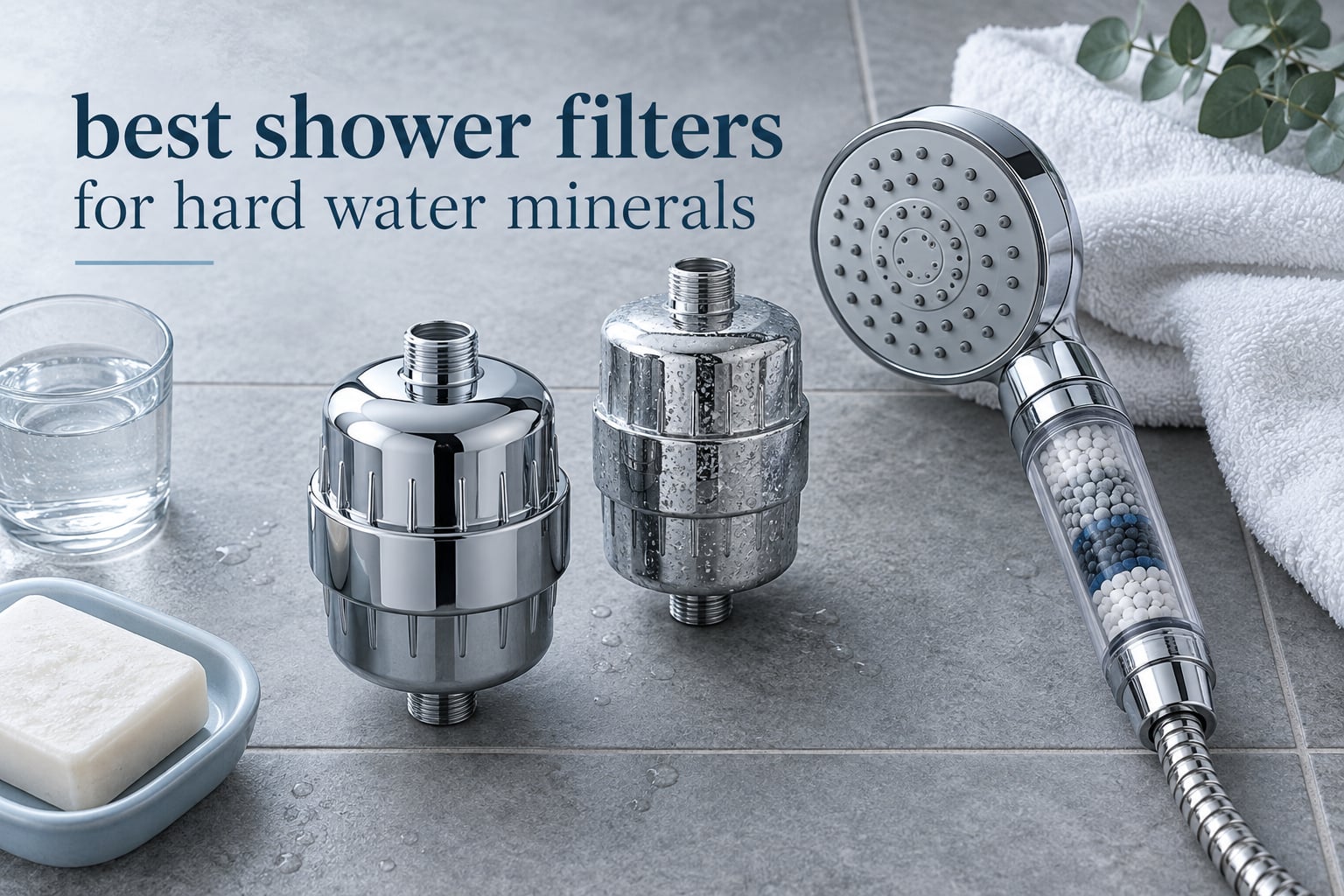
No shower filter softens hard water. That is the first thing to understand about the best shower filters for hard water minerals: every unit on the market, from a basic inline cartridge to a machined brass housing, strips chlorine, chloramine, sediment and some heavy metals, but only a salt-recharge ion-exchange unit actually swaps calcium and magnesium out of the water. So the honest question is not whether a shower filter softens anything, it is which contaminant class your water actually carries and which media handles that class best.
I spent weeks reading the engineering on ten of the most-reviewed units in this category, comparing media loads, contact paths, certification language and the cartridge cost nobody puts on the listing. The short version: for hard water minerals specifically, none of these ten will make your water soft, and the ones that promise otherwise are quietly selling you calcium sulfite or vitamin C, not an ion-exchange resin.
What they will do is measurably change how your shower water smells, how your hair behaves after a wash, and how much white film lands on your glass. Hardness minerals (dissolved calcium and magnesium, measured in grains per gallon or mg/L of calcium carbonate) react with soap to form a waxy residue, dull hair and leave limescale on glass. Chlorine and chloramine, which are a separate problem in separate water, strip the skin’s lipid barrier and are the cause most people actually mean when they say the shower ruins their hair.
Two honest expectations before you buy. First, nothing changes on day one. The consistent pattern across thousands of buyer reviews is two to three weeks of consistent showers before skin and hair differences register, and buyers who expected an overnight change are the source of most one-star ratings in this category. Second, white scale on your shower glass is not a sign the filter failed. A filter that reduces chlorine does nothing to the calcium in the water, so the glass still needs scrubbing.
Below I rank all ten by media honesty, contact time, build quality and the cost of keeping them supplied with cartridges, with an honest hardness read on each one.
Table of Contents
Top 3 Picks: Best Shower Filters for Hard Water Minerals (October 2026)

Aquabliss SF100 Inline Filter
- Compact inline housing
- six-month cartridges
- tool-free install
- 69743 verified reviews

SR SUN RISE Filtered Handheld
- KDF
- maifan stone and vitamin C beads
- 8 spray modes
- 71 inch hose
- 21828 reviews
AquaHomeGroup 20+3 Stage
- Metal body
- 90%+ chlorine reduction
- vitamins C
- E and A
- hose and spare cartridges included
These three cover the realistic buying decision for most households. The Aquabliss SF100 is the one I keep coming back to because a huge review base plus a 6-month cartridge and a compact body means it works in awkward plumbing and it does not quietly pressure-drop. The SR SUN RISE gets the nod for anyone who wants the filter and the shower head in one part. The AquaHomeGroup 20+3 is the one to buy if you want metal construction and a spare cartridge in the box on day one.
All 10 Shower Filters Compared Side by Side
| Product | Specifications | Action |
|---|---|---|
| Aquabliss SF100 Inline Filter |
|
Check Latest Price |
| SR SUN RISE Filtered Handheld |
|
Check Latest Price |
| AquaHomeGroup 20+3 Stage Handheld |
|
Check Latest Price |
 Cobbe Filtered Handheld Cobbe Filtered Handheld |
|
Check Latest Price |
 FEELSO 15 Stage Filtered Head FEELSO 15 Stage Filtered Head |
|
Check Latest Price |
 bwdm 15 Stage Inline Filter bwdm 15 Stage Inline Filter |
|
Check Latest Price |
 AquaHomeGroup 20 Stage Inline AquaHomeGroup 20 Stage Inline |
|
Check Latest Price |
 Veken One-Press Shower Filter Veken One-Press Shower Filter |
|
Check Latest Price |
 MakeFit Filtered Shower Head MakeFit Filtered Shower Head |
|
Check Latest Price |
 HammerHead Metal KDF Filter HammerHead Metal KDF Filter |
|
Check Latest Price |
Two columns deserve a note before the individual write-ups. Flow rate is not a quality signal, but a head below 2.0 GPM will feel weaker than the one you replaced. Cartridge life matters more than almost any other spec here, because a three-month cartridge that costs real money can erase the savings a cheaper housing was supposed to deliver.
Does a Shower Filter Soften Hard Water? The Honest Answer
A shower filter does not soften hard water. Removing hardness means exchanging calcium and magnesium ions for sodium ions on a resin bed, which is cation exchange, which is what a water softener does and what NSF/ANSI 44 certifies. Shower filters rely on adsorption and redox chemistry instead, and neither mechanism touches dissolved hardness.
The physics is not a marketing opinion. Adsorption works when a molecule sticks to the surface of a media bead, and activated carbon is the classic example. Calcium is already dissolved and already ionic, so it does not adsorb onto carbon or KDF-55 the way chlorine byproducts do. It simply stays in the water and later precipitates onto your glass as the water warms and carbon dioxide escapes.
The only in-shower exception is a salt-recharge ion-exchange attachment, a different category of product that needs a salt reservoir and a brine regeneration cycle. That is the unit the top answer on r/WaterFilters points to when someone asks about very hard water, and it is also the unit no brand puts in a roundup like this one, because it needs maintenance most shower buyers do not want. If your water is severe enough that scale returns within days of cleaning, read our whole-home softener roundup before you buy another inline cartridge.
Certification tells you the same thing in official language. NSF/ANSI 177 is the shower filter standard in the United States, and it certifies free available chlorine reduction, material safety and structural integrity. It is explicitly not a health-effects standard, it does not test chloramine performance, and it says nothing whatsoever about hardness. If a listing implies 177 certification proves a filter handles hard water, that listing is wrong.
What Each Filter Media Actually Does
KDF-55 is a catalytic media that converts free chlorine to a harmless chloride salt through a redox reaction, and it also binds lead, iron, copper and mercury along the way. It holds up in hot water better than carbon, which is why serious shower filters use it rather than relying on carbon alone.
Activated carbon, ideally coconut shell carbon rather than cheaper lignite, works by adsorption and handles chlorine byproducts, odors and many volatile organic compounds. Its weakness is heat: hot water strips capacity faster, so a carbon-only cartridge under a hot shower ages quickly. Calcium sulfite reacts immediately with residual chlorine and tolerates heat well, which is why it is paired with KDF in most of the units below. Vitamin C, or ascorbic acid, is the one to look for on a chloraminated system, because it attacks the chlorine bound to ammonia rather than free chlorine alone.
Polyphosphate media sequesters calcium and magnesium, keeping them dissolved and stopping them crystallising onto glass, but the minerals stay in the water and still run through your hair. Magnetic media is cheaper again and its effect on hardness is not supported by independent testing. Ion exchange resin is the only media in this list that removes hardness, and it is also the only one that requires salt brine regeneration. None of the ten products below uses it, because that is precisely why none of them softens your water.
How to Tell How Hard Your Water Is
Start with your utility’s annual water quality report. The catch most people hit is that hardness is not an EPA secondary standard, so many utilities do not report it at all, and you may need to call and ask directly. For private wells, USGS sampling of roughly 2,100 wells across the country found about 60% were hard or very hard, which is a far more defensible figure than the widely repeated statistic that 85% of American homes have hard water, which we could not locate in any USGS publication.
If your utility will not give you a number, an independent certified laboratory test is the most accurate route. Do not rely on a softener company’s free test, because they are selling you a softener. If you want a same-day read, a hardness test strip in grains per gallon costs little and is accurate enough to act on. The commonly used bands are 0 to 3 grains per gallon as soft, 3 to 7 as moderately hard, 7 to 10 as hard, 10 to 14 as very hard, and 14 and above as extremely hard. One grain per gallon is about 17 mg/L of calcium carbonate.
Two free tests work surprisingly well. Put a bar of soap in a jar of shower water and shake it: if it barely lathers and leaves a curd, you have hardness. Then check your glass: white film that returns within a week of cleaning is a hardness signal. Chlorine smell, a sharp pool smell and skin that stings for ten minutes after a shower are a different signal entirely, and they are solved by different media.
Match Your Symptoms to the Right Filter
Soap that will not lather, hair that feels heavy and waxy after one wash, brassiness on blonde hair and white film on the glass are all hardness symptoms. Expect a filter to reduce how bad these feel, not to remove them, and expect a slow timeline.
A sharp chlorine smell in the steam, colour-treated hair fading fast, and skin that tightens or itches right after you get out are disinfectant symptoms. These are the ones a KDF-55 and carbon cartridge genuinely does something about, and here the effect is usually noticeable much sooner.
Rust-coloured staining on the drain or in the tub points at iron, which most units address only partially through KDF media. Post-shower scalp itch that arrives on city water and clears on a weekend away points at chlorine and chloramine rather than hardness. If you have well water, start with a bacteria and iron assessment before spending money on a shower cartridge, and our whole-house filter guide covers that properly.
1. Aquabliss SF100 High Output Filter – The One Almost Everyone Keeps
Aquabliss High Output Revitalizing Shower Filter – Reduces Dry Itchy Skin, Dandruff, Eczema, and Dramatically Improves The Condition of Your Skin, Hair and Nails – Chrome (SF100)
Inline housing, ceramic and polypropylene body, 1 lb, 6 month cartridges
Pros
- Installs in under two minutes with no tools
- Very large review base with consistent results
- Does not choke water pressure
- Compact body fits unusual plumbing
Cons
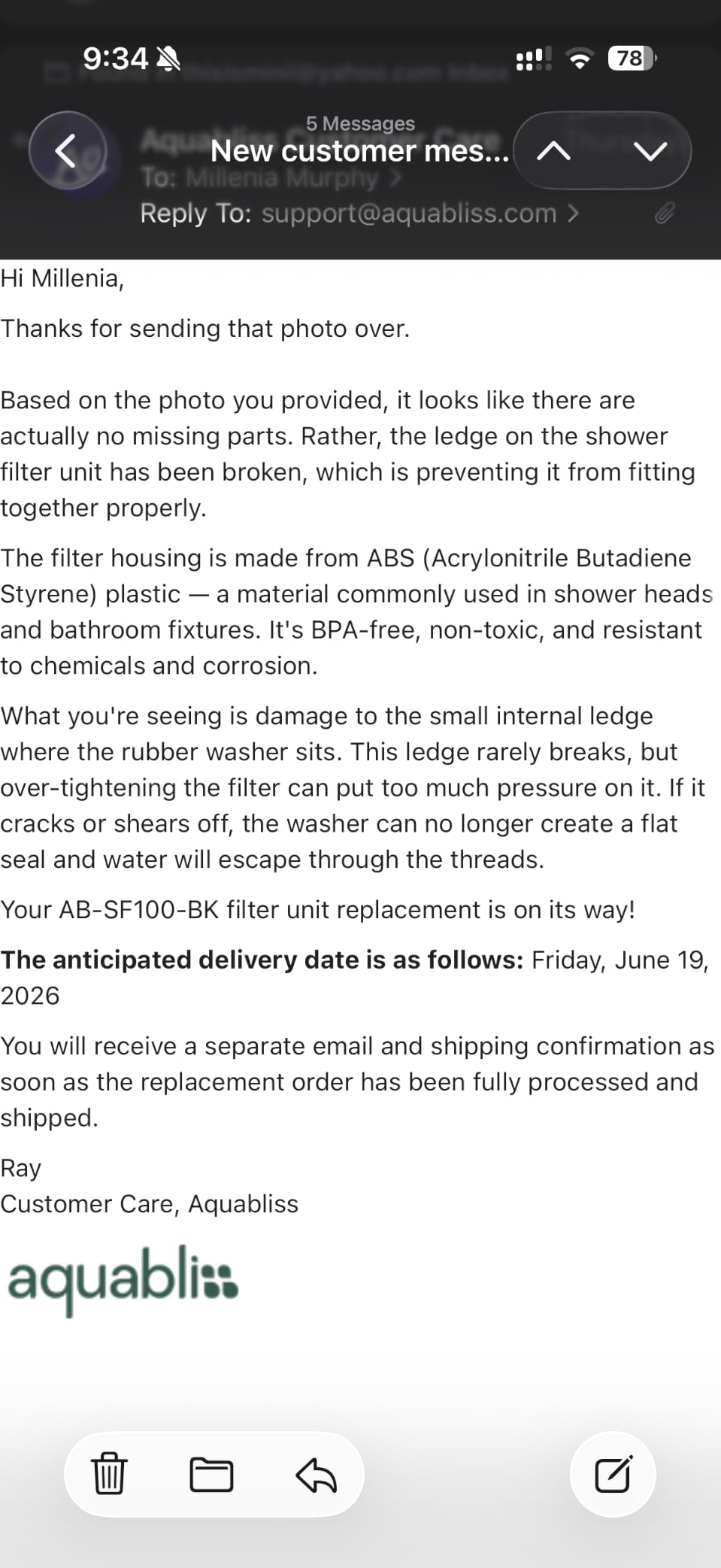
- Mesh washer is not clearly explained in the instructions
- Occasional thread leaks without generous plumber tape
- Skin and hair changes take days to show
This is the unit I recommend first, and the reasoning is unglamorous: it has 69,743 reviews averaging 4.4 stars, it is ranked number one in Showerhead Filters, and its cartridges are specified at six months rather than three. Nothing else in this roundup combines that much proven behaviour with that long a cartridge interval.
The body is ceramic, polypropylene and stainless steel at 3.3 by 3.3 by 4.7 inches and one pound, which is small enough to fit where a bulky inline filter will not. It threads onto a standard half-inch shower arm, works with fixed, rain, handheld and combo heads, and the cartridge fits either direction. Teflon tape and spare washers come in the box.
What it does not do is soften anything. The media handles chlorine, pesticides, pharmaceutical residues, dirt and odour, and it helps slow scale, which is a different job from removing calcium. Buyers on genuinely severe water describe softer hair and less irritated skin, most often within one to five washes, but they are describing a reduction in fallout, not softened water.
Reviewers repeatedly praise the fact that it does not visibly reduce water pressure, and a few report better flow than the filter they replaced. That is the practical difference between this and cheaper plastic housings, which choke as the media loads with mineral sediment.
What makes it the pick for hard water homes
The six-month cartridge is the headline. At two changes a year instead of four, the ongoing cost of owning this filter is close to half of what a three-month unit costs, which matters most in the very hard water homes that reach for a filter in the first place.
The compact housing is the second reason. Short-arm showers and cramped retrofits are where oversized inline filters fail to install, and this one at 4.7 inches tall is among the shortest here.
Where it disappoints
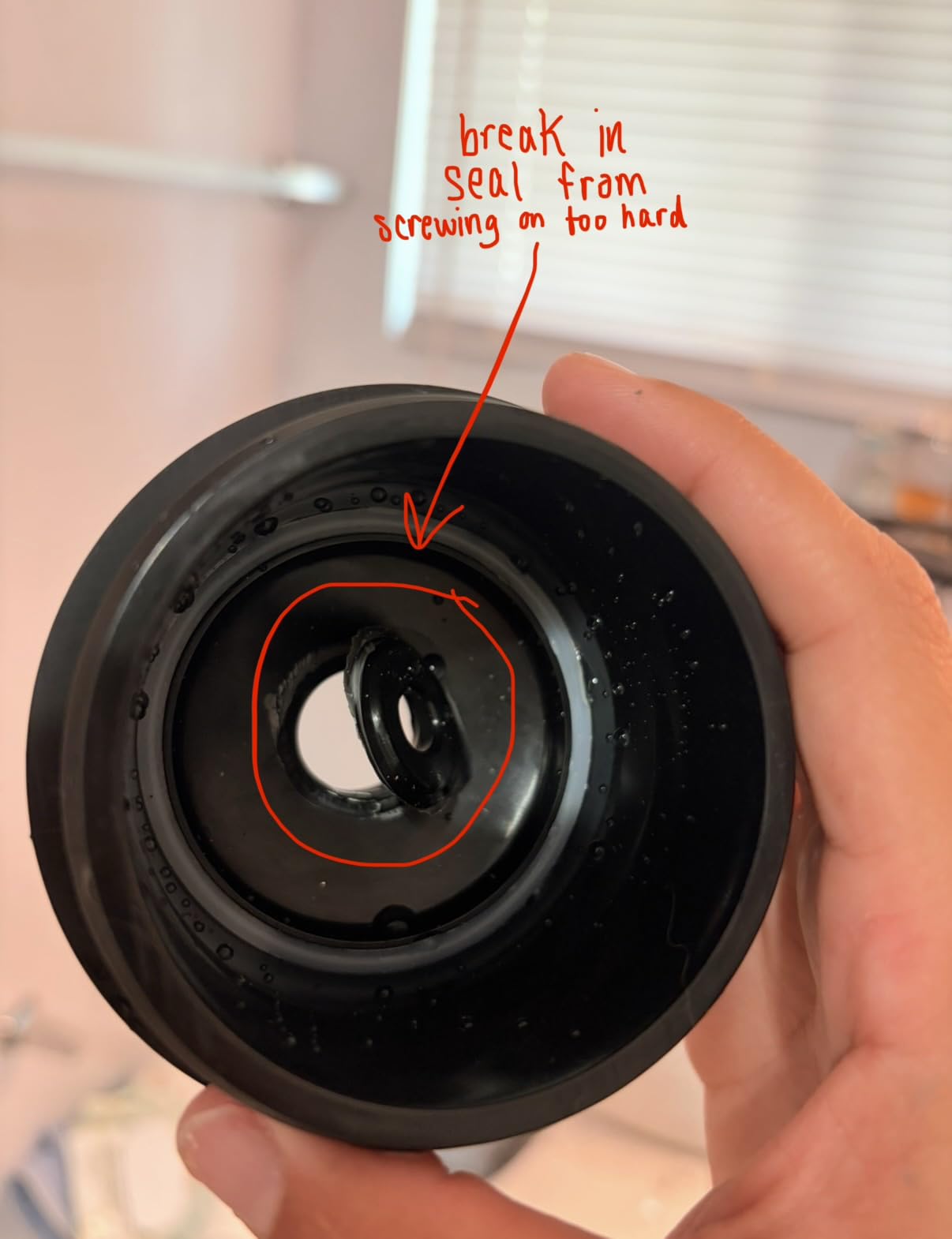
The included mesh strainer and washer are not explained in the instructions, and that single omission generates a lot of first-week confusion and small leaks at the threads. Wrapping the tape generously and hand-tightening only fixes it.
One reviewer also reported the plastic thread on the matte black variant stripping when tightened, so if you want a black finish, take care. And the effect is gradual, which is the honest downside of every product here.
2. SR SUN RISE Filtered Handheld – Filter and Shower Head in One Part
SR SUN RISE Filtered Shower Head with Handheld High Pressure 9 Spray Mode Showerhead Detachable Shower Head Water Softener Filters Beads for Hard Water Remove Chlorine 1 Filter Bright Silver
ABS handheld, KDF with maifan stone and vitamin C beads, 1.75 GPM, 71 inch hose
Pros
- Filtered shower head and handheld combined
- 71 inch hose gives excellent reach
- Boost technology helps in low pressure homes
- Silicone nozzles resist limescale
Cons
- ABS body feels cheap in the hand
- 1.75 GPM is below the 2.0 GPM standard
- Hose is long for small bathrooms
- Filter beads are a separate consumable
If you are replacing a shower head anyway, this is the efficient choice. You get filtration and a handheld in a single body, so there is no inline housing to install and no second component to keep clean. With 21,828 reviews at 4.4 stars and a number two ranking in Handheld Showerheads, the behaviour is well established.
The cartridge is a replaceable multi-layer pack using KDF, maifan stone and vitamin C balls, and water passes through it before reaching the nozzles. That combination covers free chlorine and the chloramine-bound variant, which is the pair most hard water households actually need.
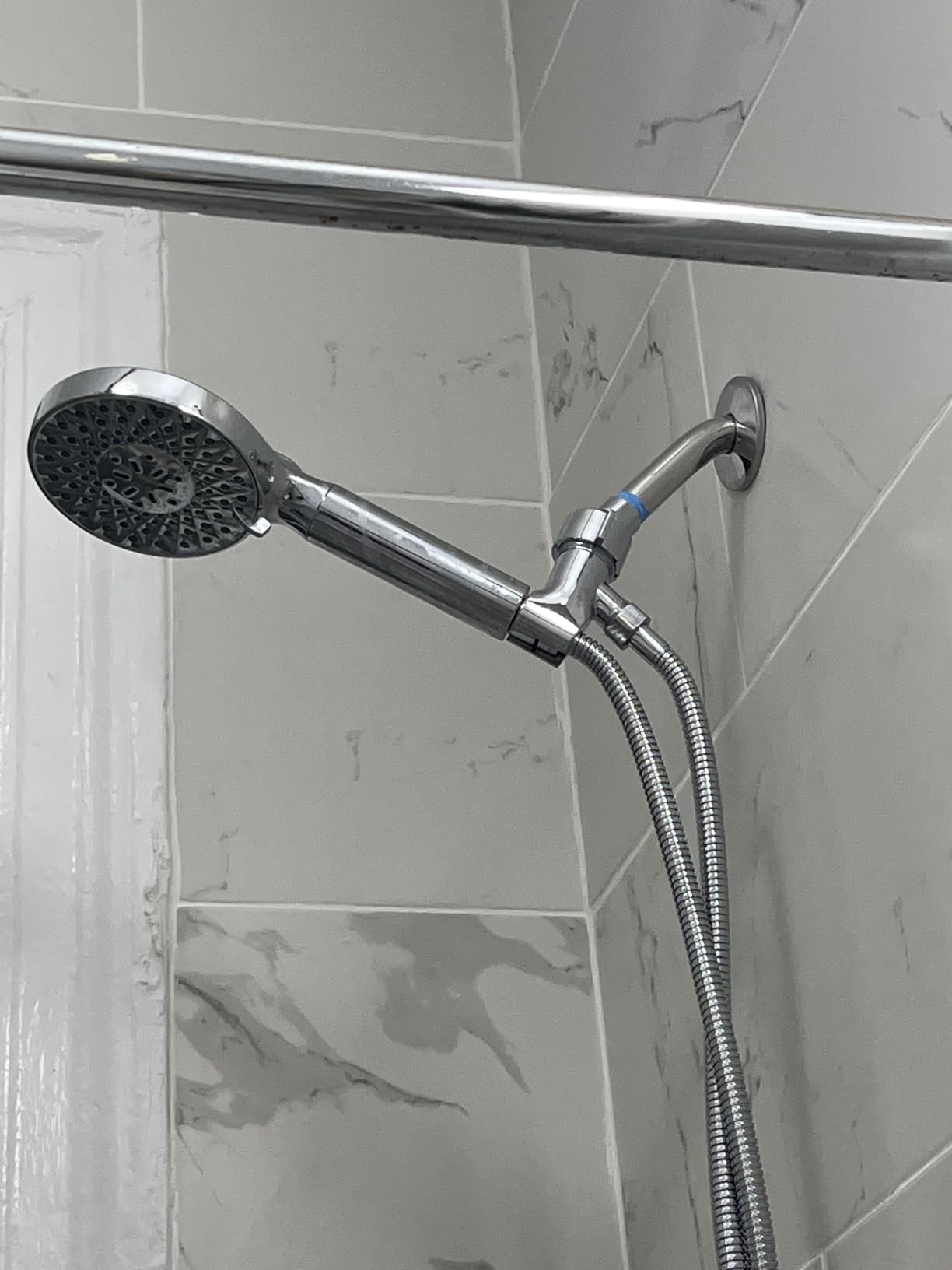
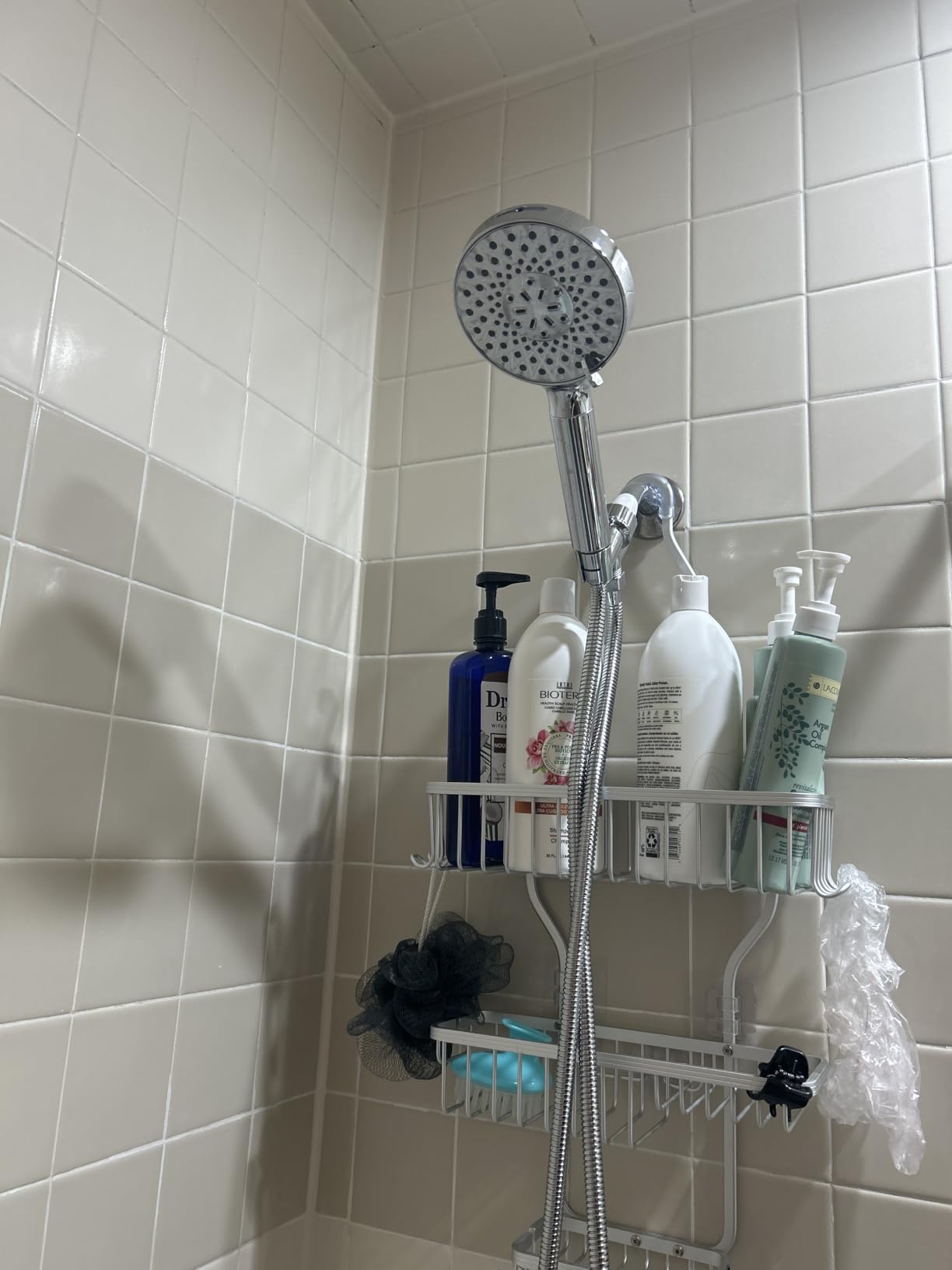
The 71-inch hose is the feature owners mention most, and it is genuinely unusual. It makes rinsing a kid’s hair, washing a dog and scrubbing the tub possible from one fixture. Eight spray settings plus a flip-activated Power Wash mode on the reverse side add to that.
Boost technology is designed to hold a steady spray in low-pressure homes, and silicone nozzles are used specifically because they shed limescale more easily than rubber. The universal half-inch connection means no plumber and no adapter hunting.
Why it suits a rental or a hard water bathroom
Nothing about it is permanently attached. You unscrew one part from the shower arm and you are back to a plain handheld, which makes it the sensible pick if you rent or if you want to take the filter with you when you move.
The silicone nozzle panel is the quiet hero in hard water areas, because scale that clogs a rubber nozzle here just wipes off. That alone cuts down the descaling routine.
What to watch out for
Flow rate is 1.75 GPM, below the 2.0 GPM federal maximum for showerheads. It will feel softer than a rain head, particularly on older plumbing.
The body is ABS rather than metal, and the 71-inch hose is awkward in a small bathroom where it has to be coiled back up. The filter beads are also a consumable bought separately, so check the refill is sold before you commit.
3. AquaHomeGroup 20+3 Stage Filtered Handheld – Metal Where Everyone Else Is Plastic
AquaHomeGroup Filtered Shower Head, 20+3 Stage, Reduces Chlorine, Chrome
Metal brass holder, 20+3 stage media, 2.5 flow rate, 59 inch stainless hose
Pros
- Metal construction holds up better than plastic rivals
- Vitamins C
- E and A target residual chlorine
- Hose and spare cartridges in the box
- Cartridge designed to hold pressure
Cons
- Higher entry cost than most filtered shower heads here
- Ongoing cartridge cost after the included set runs out
- Vitamin infusions target chlorine not hardness
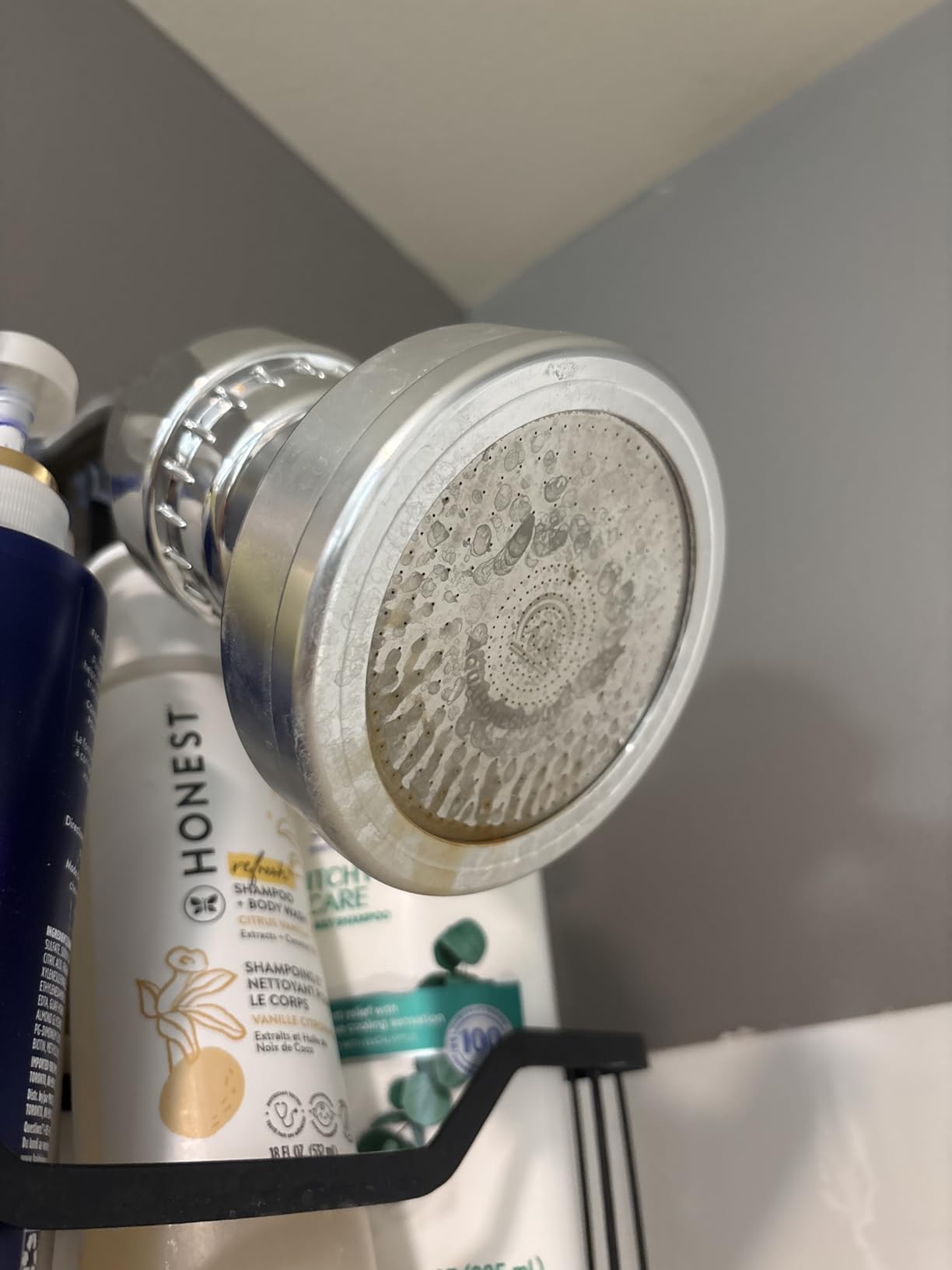
This is the one I would pick for a bathroom that will not be replaced in the next five years. The reinforced metal brass holder is the difference. Almost everything else in this category hangs off a plastic shower arm thread, and that thread is the component that cracks or strips first.
Media is 20 plus 3 stages using KDF for a claimed 90% or more chlorine reduction plus heavy metals and sediment, with vitamins C, E and A infused for residual chlorine and chloramine. Roughly 19,282 reviews at 4.4 stars back it up, with owners on eczema-prone skin reporting less tightness after showers.
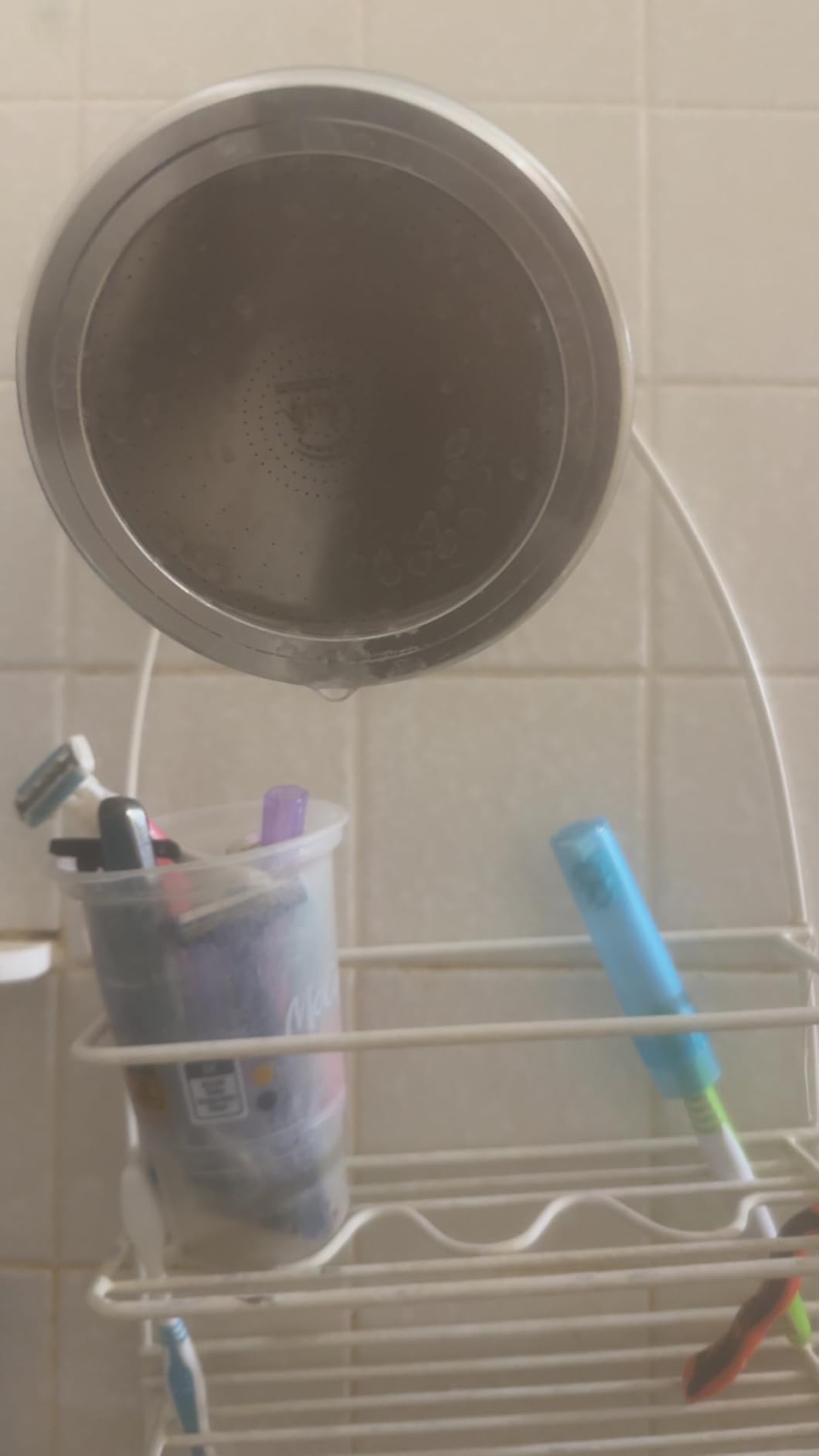
The stainless steel hose measures 59 inches and the flow rate is listed at 2.5, which is at the higher end of what a filtered head delivers and means it will not feel weak next to what you replace it with. Replacement cartridges ship in the box, which removes the awkward first-change scramble.
Universal half-inch connections mean it fits essentially any standard shower supply, including fixed, handheld and combo heads. Installation is tool-free.
Who this filter is right for
Anyone whose shower arm has cracked a plastic filter before. If you have had to re-plumb a stripped thread or replace a leaking housing, the brass holder is the reason to spend here rather than on media volume alone.
It is also the better gift or landlord-grade option, because the part most likely to fail is the part that does not fail.
Where the money goes
It sits at the expensive end of the filtered shower heads here, though the brass build is what you are paying for rather than extra media. The included cartridges only cover the first period, so budget for two or three sets a year after that.
The vitamin infusions work on residual chlorine and chloramine, not on hard water scale. If scale on your glass is your main complaint, this head does not address it and no shower head in this roundup does.
4. Cobbe Filtered Handheld – The Heaviest KDF and Calcium Sulfite Load Per Dollar
Cobbe Filtered Shower Head with Handheld, Water Softener for Hard Water
ABS handheld, high KDF-55 and calcium sulfite load, 6 spray modes, 1.8 GPM
Pros
- Owners on extremely hard water report hair improving within a week
- Six spray modes on one thumb switch
- Good pressure for a filtered unit
- Silicone nozzles resist limescale
Cons
- Plastic body
- Included thread tape is poor quality and can leak
- Mode switch can go sticky after a few months
- Integrated filter can clog after about two years
The claim worth taking seriously here is media quantity. Cobbe packs more KDF-55 and calcium sulfite balls into the cartridge than most competitors, and those two media together are the best available combination for chlorine plus heavy metals in hot shower water. At 4.3 stars across 17,934 reviews it has the lowest average in the roundup, but 69% of those reviews are five-star, so the distribution is polarized rather than bad.
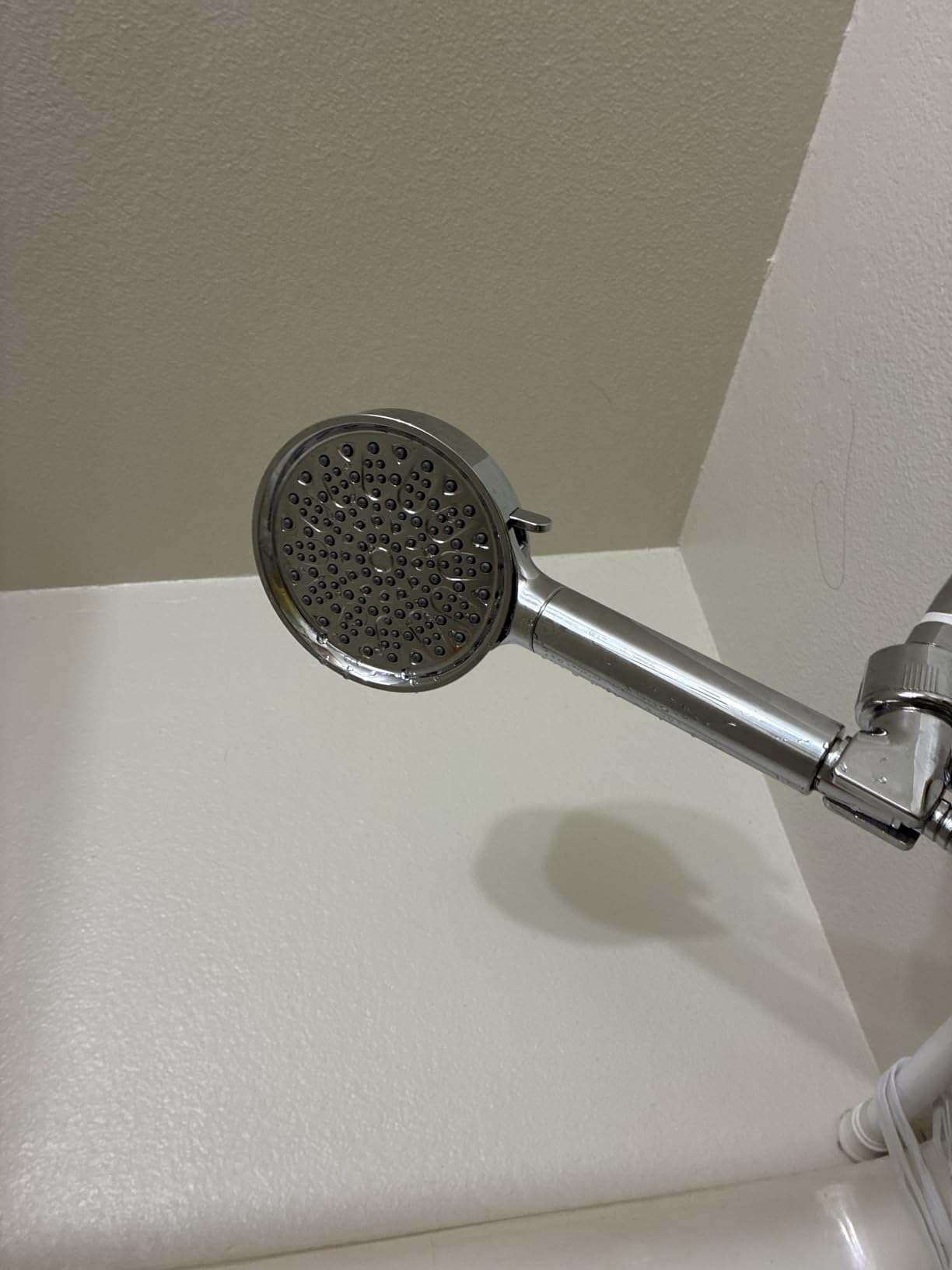
The one-button thumb press switches between six spray modes and won a design patent, which matters more than it sounds for children, older users and anyone with limited hand strength. The nozzle panel carries over 144 outlets in self-cleaning silicone, designed specifically to resist limescale.
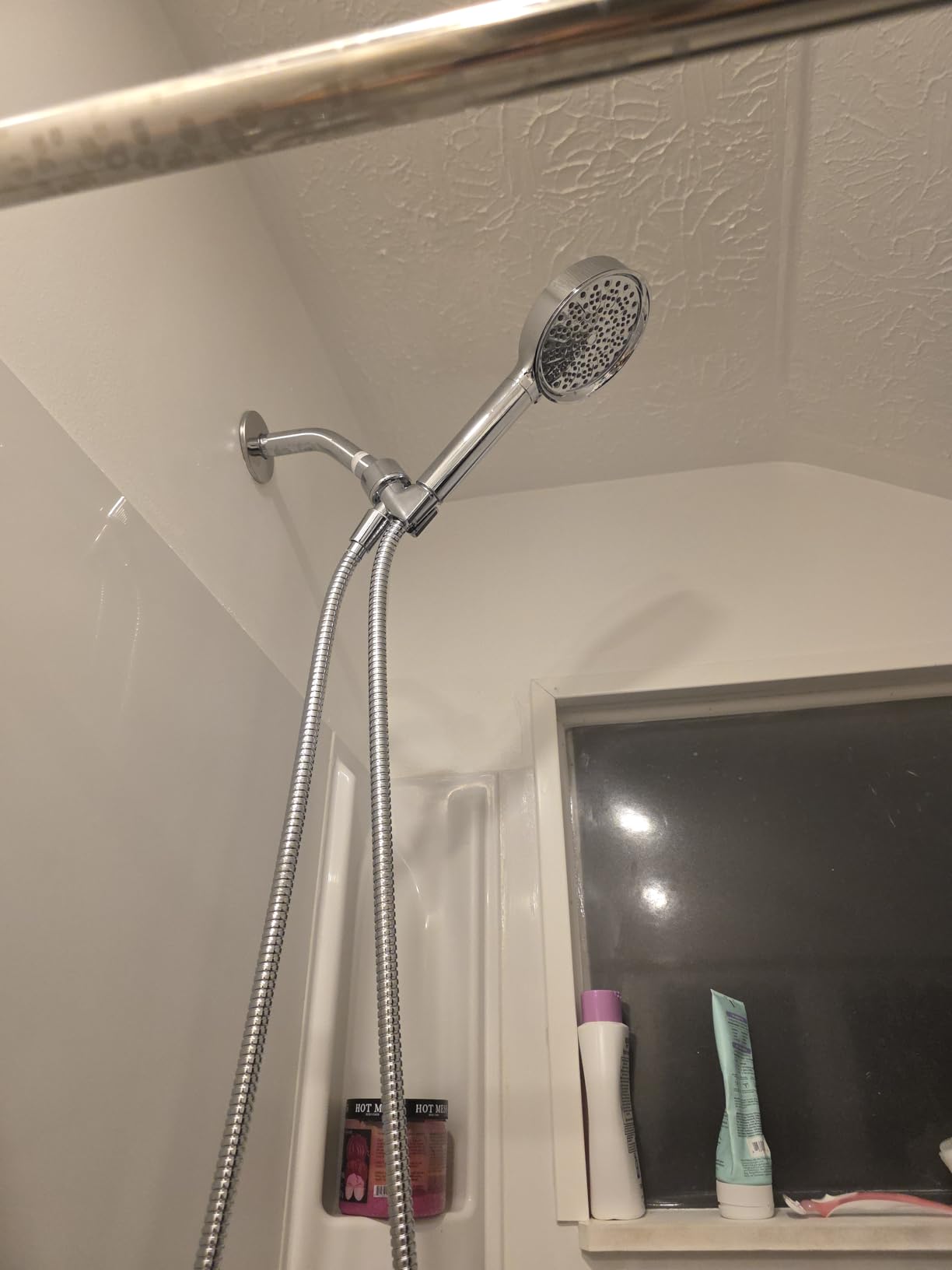
What users on genuinely severe water report is hair going from waxy and weighed down to clean within about a week. As always, that is reduced fallout from chlorine and metals, not softened water, and the glass still needs attention.
Flow is listed at 1.8 GPM and several owners remove the flow restrictor to get more, which is a two-minute job with a flathead screwdriver and worth doing in a low-pressure house.
Where it beats pricier rivals
On media load per unit of money, nothing here competes. If you are on very hard water and your budget is the deciding factor, this cartridge holds more working media than filters costing several times as much.
The six-mode thumb switch is also the easiest control layout in the roundup for a shared bathroom, and the silicone panel needs far less descaling than a rubber one.
Where it falls down
The supplied thread tape is reported as poor quality and can leave a small leak at the base. Buy proper Teflon tape and wrap it properly rather than trusting the included roll.
The thumb switch on one owner’s unit went sticky and stopped working between three and five months, and the integrated filter clogged enough to drop pressure after roughly two years in hard water. Both point to the same truth as the rest of this list: cartridge media is a consumable with a real end date.
5. FEELSO 15 Stage Filtered Shower Head – Four Point Six Stars on 13,792 Reviews
FEELSO Shower Head with Shower Filter, Filtered Shower Head for Hard Water
ABS with chrome plating, 15 stage filter, 4 inch fixed head, 1.8 GPM, 450 g
Pros
- 4.6 star average with 80 percent five star ratings
- Filter and shower head in one package
- Anti-clog nozzles made for hard water scale
- Tool-free install with spare tape included
Cons
- Water runs black for the first few minutes
- Plastic rather than metal
- Fixed head with no handheld option
- Results can take a week or more
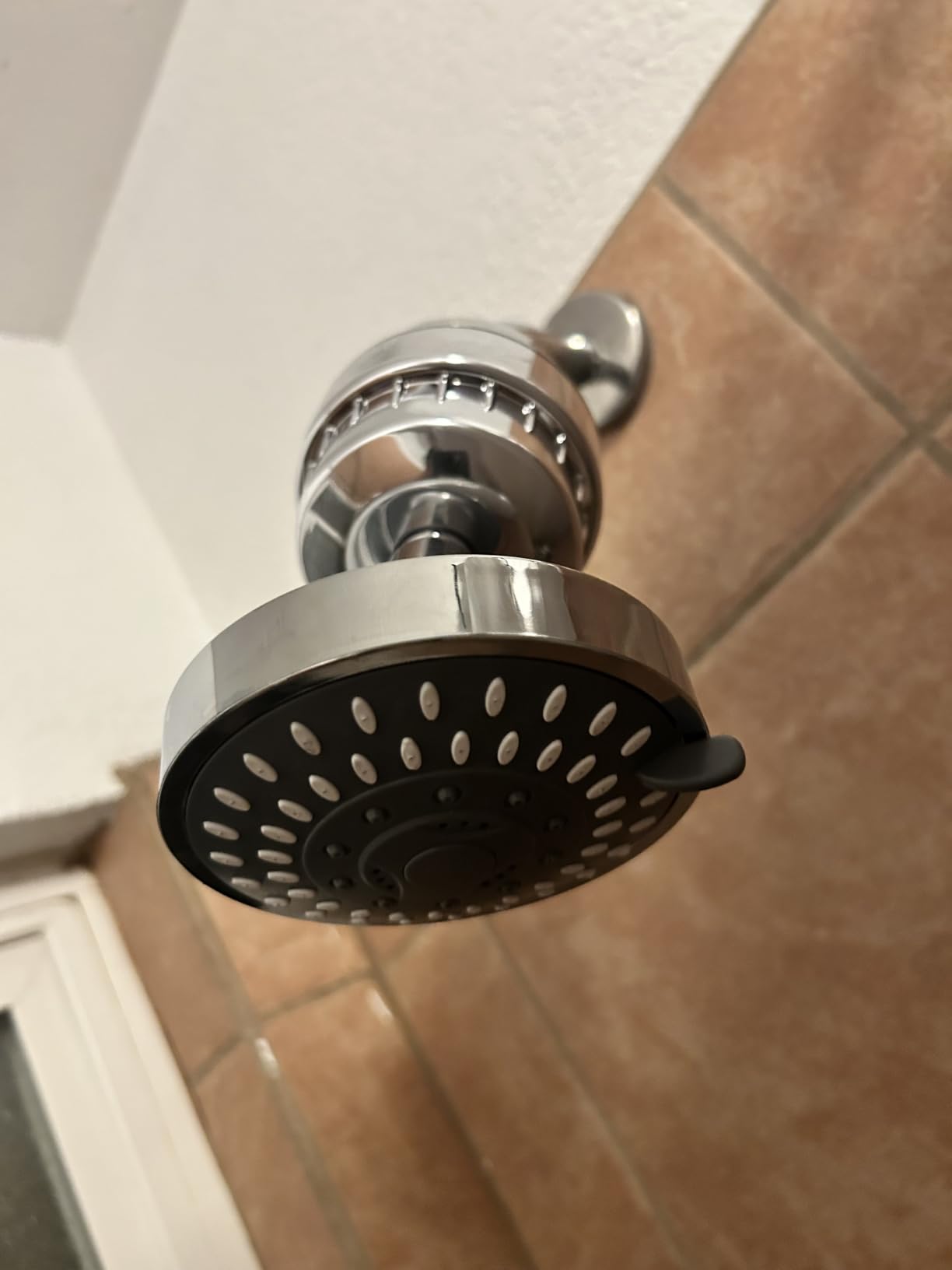
This is the statistical standout: 4.6 stars across 13,792 reviews with 80% five-star and only 4% one-star. On raw satisfaction percentage it sits alongside the metal HammerHead, while the body is ABS rather than brass, which is why we rate it as the fixed-head option rather than a premium buy.
The media removes chlorine and heavy metals including lead, mercury, nickel and chromium in both hot and cold water. The 4-inch fixed head sits on an adjustable swivel ball joint with anti-clog nozzles, and five spray modes cover rain, massage, mist and two combinations.
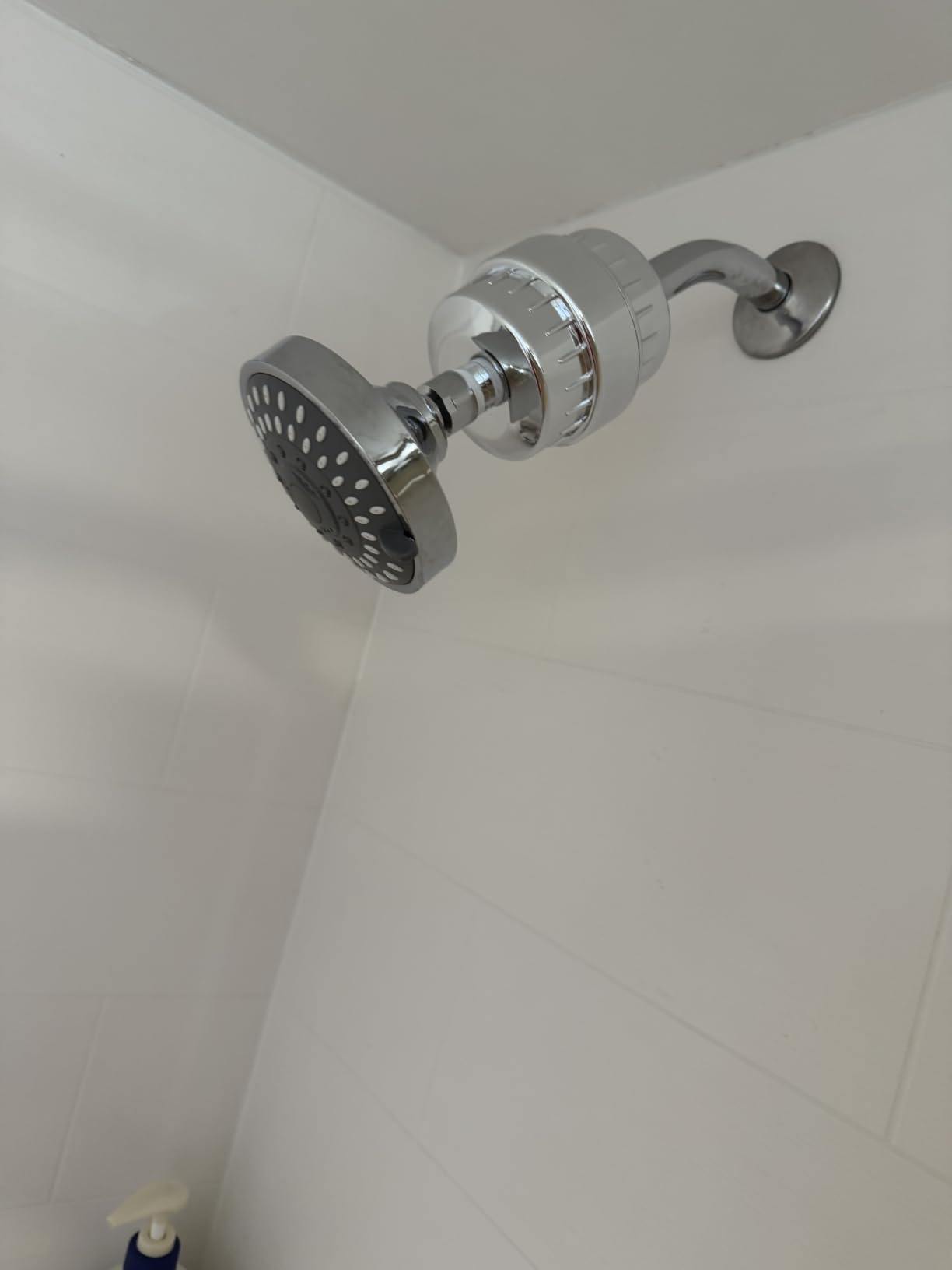
Because it is a fixed head rather than an inline filter, it adds no length to the shower arm, so you do not end up stooping or needing a riser. At 450 grams and 1.8 GPM it is light and easy to install by hand.
The one thing to know before first use is in the instructions and repeated by owners: run the water for five to ten minutes to flush carbon dust, and the water will look black while you do. Skipping that step is the single biggest source of one-star reviews on filtered heads.
Why the nozzles matter in hard water areas
Anti-clog nozzles are a designed response to scale, and in the 7 to 10 grain per gallon band it is the difference between a nozzle you have to soak in vinegar monthly and one you wipe down.
The all-in-one format also means there is no separate inline housing to service, so for a fixed-head bathroom this is genuinely simpler than the inline options above it.
What you give up
There is no handheld, so rinsing is restricted to the fixed spray pattern. If you wash pets or rinse dye out in the shower, that is a real loss.
And the black-water flush is unavoidable on the first use, because carbon dust is carbon dust. Do it in the shower, not the bath.
6. bwdm 15 Stage Inline Filter – The Lowest Cost Way Into Filtered Water
15 Stage Shower Filter – Shower Head Filter – bwdm Hard Water Filter, Remove Chlorine Heavy Metals and other Impurities, Vitamin C Water Softener Reduces Dry Itchy Skin, Dandruff (Chrome)
Inline carbon fiber housing, vitamin C 15 stage media, 12.3 oz, 2.5 gpm
Pros
- Cheapest filter in the roundup
- Skin and hair improvements reported on very hard water
- Fine
- thin hair users report shine and less breakage
- Fits essentially any shower head type
Cons
- Plastic threads can crack if over-tightened
- Adds about 4 inches and lowers the head
- Cartridges may only last one to two months in very hard water
- Cheapest build quality in the roundup
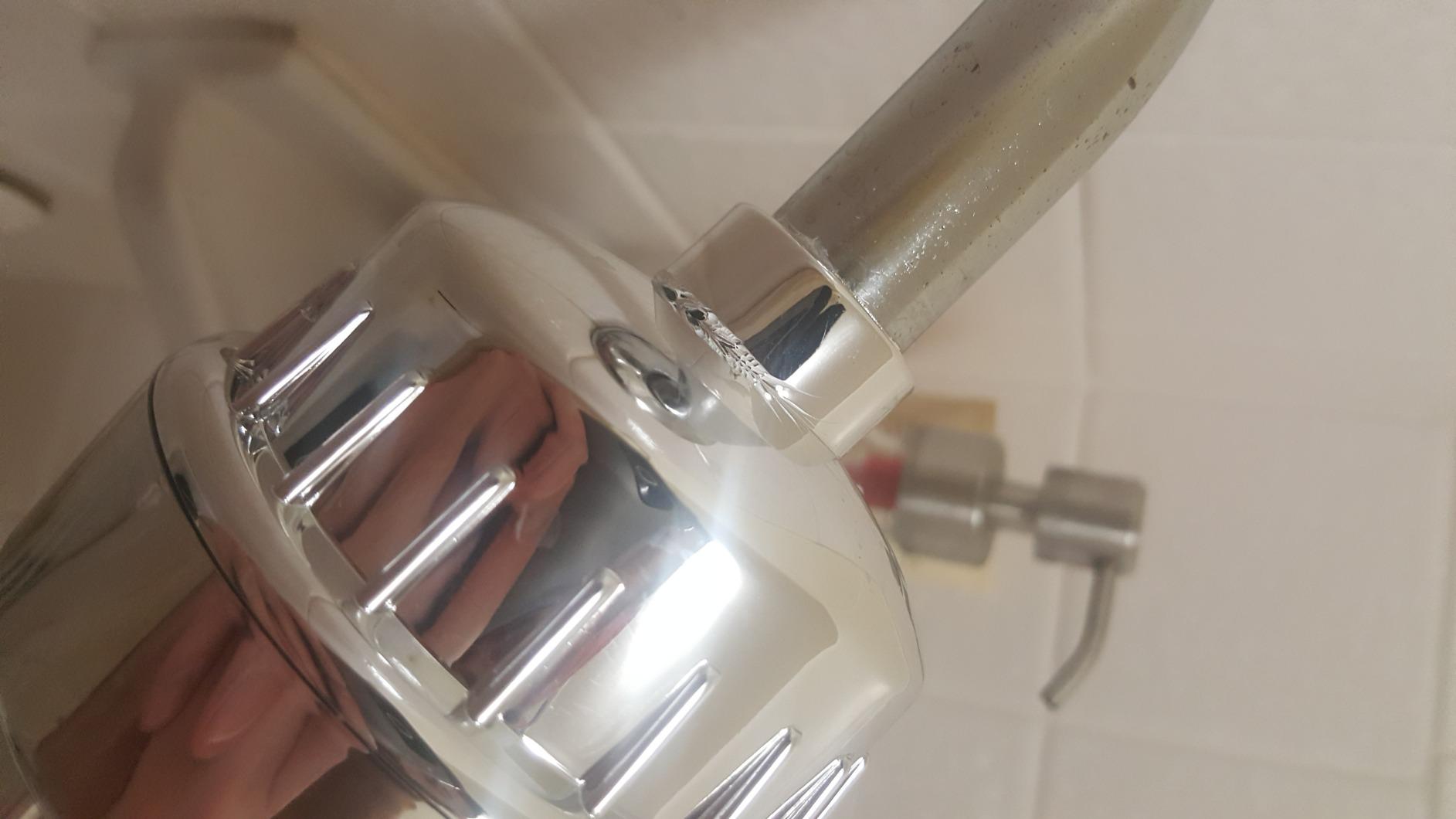
This is the cheapest way to find out whether a shower filter works for your household before you commit to a nicer one. It is 12.3 ounces, screws onto any shower head type, and installs in under a minute with no tools.
The media is 15 stage with vitamin C, formulated to work in hot and cold water and to keep body pH natural. Reviewers on very hard city and well water report less post-shower itching and better hair, particularly on fine, thin hair where mineral residue shows fastest.

Flow is listed at 2.5 gpm, which is high for a filtered inline unit and one reason buyers like it on low-pressure plumbing. Cartridges are a standard 2.7 by 2.4 inch size, which matters because it means replacements are widely available rather than locked to one brand.
Note the spread in reviews: 68% five-star but 16% four-star, the widest distribution in the group. That variance is a fair signal that build quality, not filtration, is what separates the happy customers from the disappointed ones.
When this is the correct buy
If you are in a rental, in a very hard area, or simply curious whether filtered water changes your hair and skin at all, this is the lowest-risk way to find out. Replace the cartridge and you have lost very little.
Its flow rate and universal fit make it a good match for old low-pressure plumbing where a modern shower head would leave you unsatisfied.
Where the savings evaporate
It adds roughly four inches of length, which lowers the shower head. If yours already sits low, you may end up buying a riser, and that can cost more than the filter.
Several owners report cartridges lasting only one to two months in very hard water before scale loads the housing, and the plastic threads at the shower head end can crack if you overtighten them. Hand-tight only.
7. AquaHomeGroup 20 Stage Inline Filter – Two Cartridges in the Box
AquaHomeGroup 20-Stage Shower Filter with Vitamin C and E, Brushed Nickel
Brushed nickel housing, KDF-55 with coconut carbon and calcium sulfite, 0.65 kg, two cartridges
Pros
- Second cartridge included so the first replacement is covered
- Chlorine smell clearly reduced
- Does not drop pressure like several rivals
- Brushed metal finish looks better than plastic
Cons
- Heavy housing can droop a lightweight shower handle
- Pressure falls as the cartridge ages toward month six
- Can be stubborn to thread tightly enough to stop leaks
- Vitamin benefits are subtle
The most important media claim on this listing, so take it with the usual caution: KDF-55, activated coconut carbon, calcium sulfite and ceramic balls, with the KDF stage claimed at 90% or more chlorine reduction plus lead, mercury, copper, chromium, sediment and rust. That is a complete disinfectant and heavy metal package, and coconut shell carbon rather than lignite is the right choice in hot water.
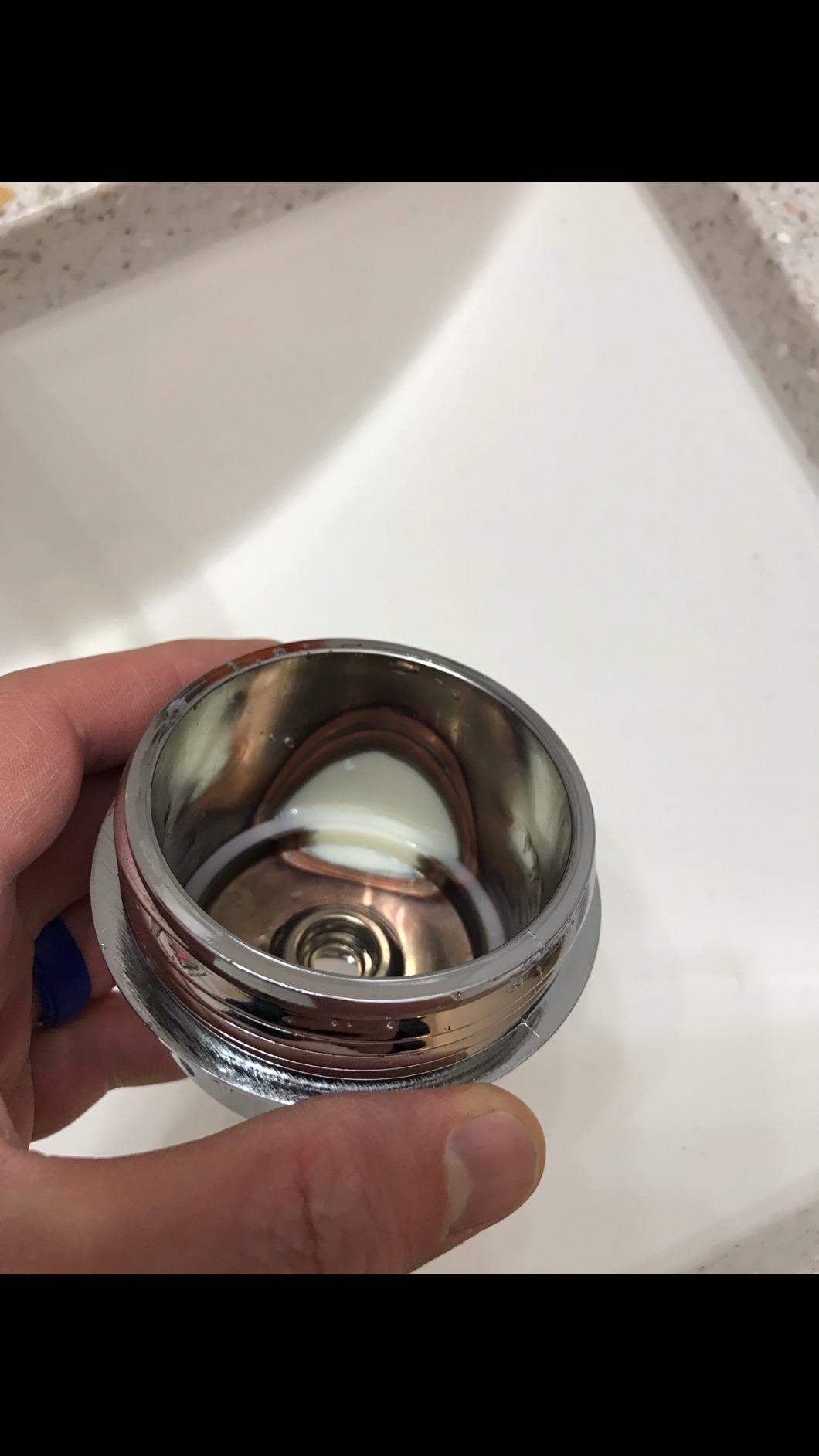
What makes it different from every other unit here is that two cartridges ship in the box. One is pre-installed and one is spare, so the six-month changeover is already paid for.
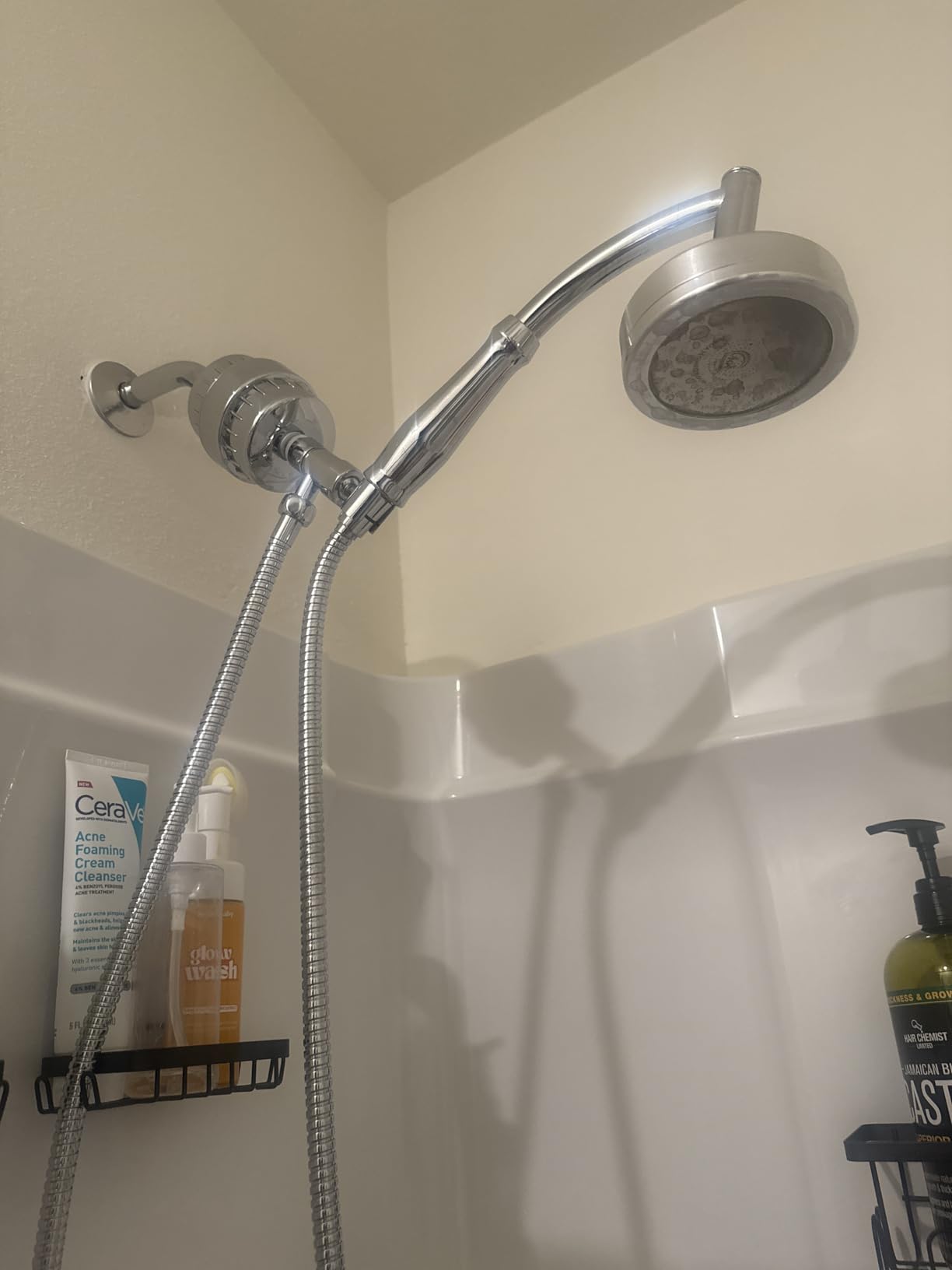
One detailed owner review reports that colour-treated and highlighted hair stayed softer and did not go brassy in hard water, which is one of the few direct reports on colour-treated hair in any roundup we have read. Owners also report water that rinses clean with no slippery residue.
Each cartridge lasts four to six months depending on water quality, and the design is meant to hold full pressure across that life.
Why the vitamin stages are worth having
Vitamin C reduces residual chlorine and chloramine on contact, and vitamin E supports skin moisture. On a chloraminated municipal supply, that C stage is doing real work rather than decorating the box.
For colour-treated or bleached hair this is the pick in the roundup, because the chlorine reduction is where colour fade actually starts.
What to watch
At 0.65 kg the housing is heavy, and several owners report the shower handle drooping forward. If your shower head is light plastic, brace it or choose a lighter filter.
Pressure declines as the cartridge ages, with some users reporting roughly four months of usable life rather than six, and the housing can be stubborn to thread tightly enough to stop leaks with a heavier head.
8. Veken One-Press Filter – The Easiest Cartridge Change on the Market
Veken Shower Filter, Chlorine, Lead & Sulphide Tested, One-Press Cartridge
One-press cartridge, calcium sulfite with coconut carbon and KDF, 13.1 oz, U-shaped channel
Pros
- Cartridge changes with one press and no disassembly
- Compact body that does not drop the head as far
- Cleaner looking than bulky inline filters
- Installs in minutes with no plumber
Cons
- Smallest review base in the roundup at 656 reviews
- Three month cartridge interval is short
- Focuses on chlorine
- lead and sulphide rather than scale
- Can be hard to seal with a heavy rain head
Here is the design decision that matters more than any media list: the cartridge changes with one press. You do not take the shower head off, you do not disassemble the housing, you press and swap. If you have ever had to change a traditional screw-in filter with slimy hands at the end of a long day, that alone justifies this pick.
Media is calcium sulfite, coconut shell carbon and KDF with no non-filtering fillers, arranged in a U-shaped channel that lengthens the path water takes through the cartridge. Longer contact time for the same media volume is a real engineering advantage, not marketing.
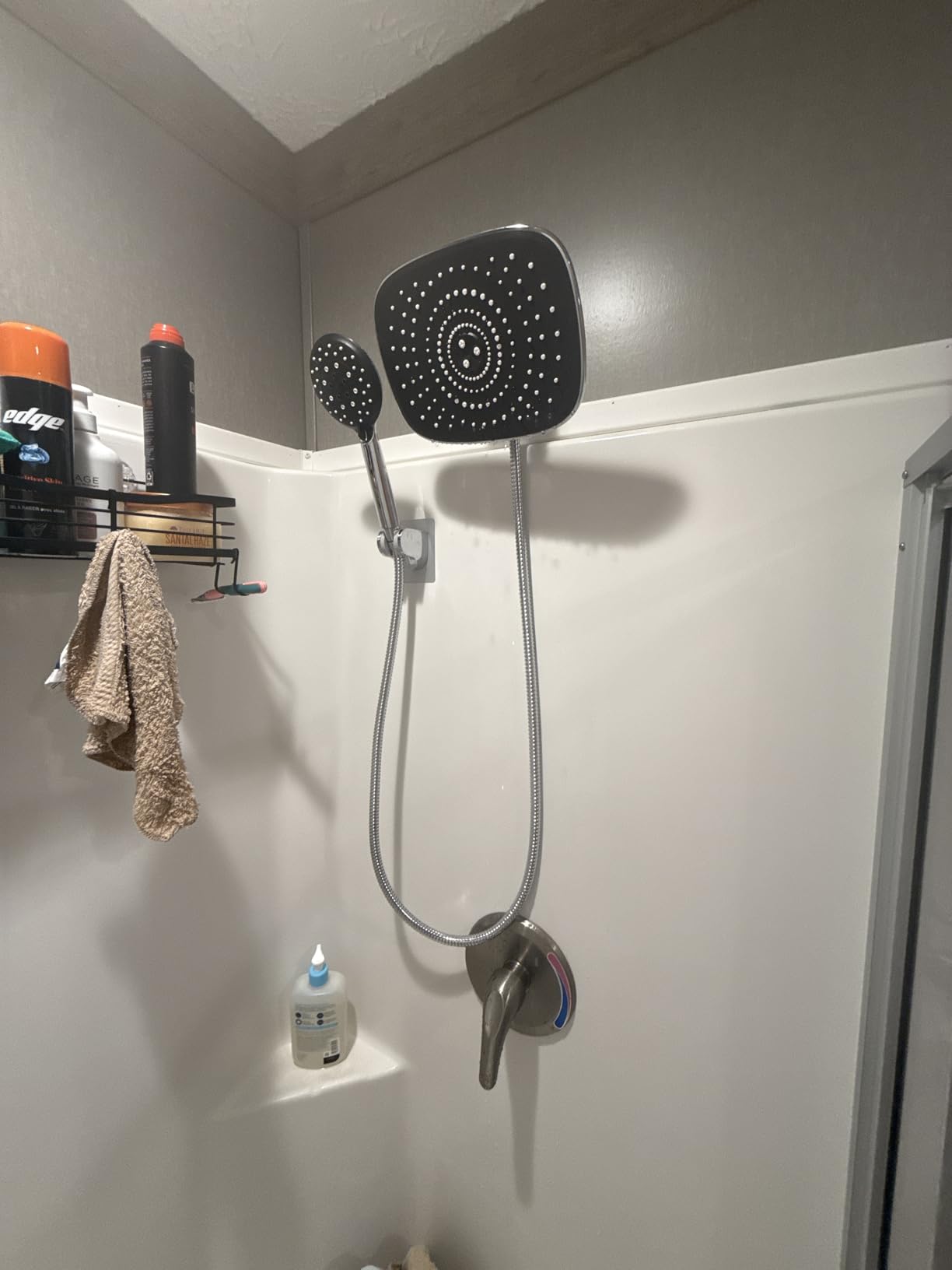
Performance was evaluated under controlled laboratory conditions for lead and sulphide reduction, and the filter targets free available chlorine. The compact body is designed specifically to avoid pushing the shower head further down than necessary, which solves the problem that ruined the budget inline unit above.
Its 4.6 average across 656 reviews is excellent, but read that number carefully. It is a recent listing with a small review base, so there is no long-term durability record yet.
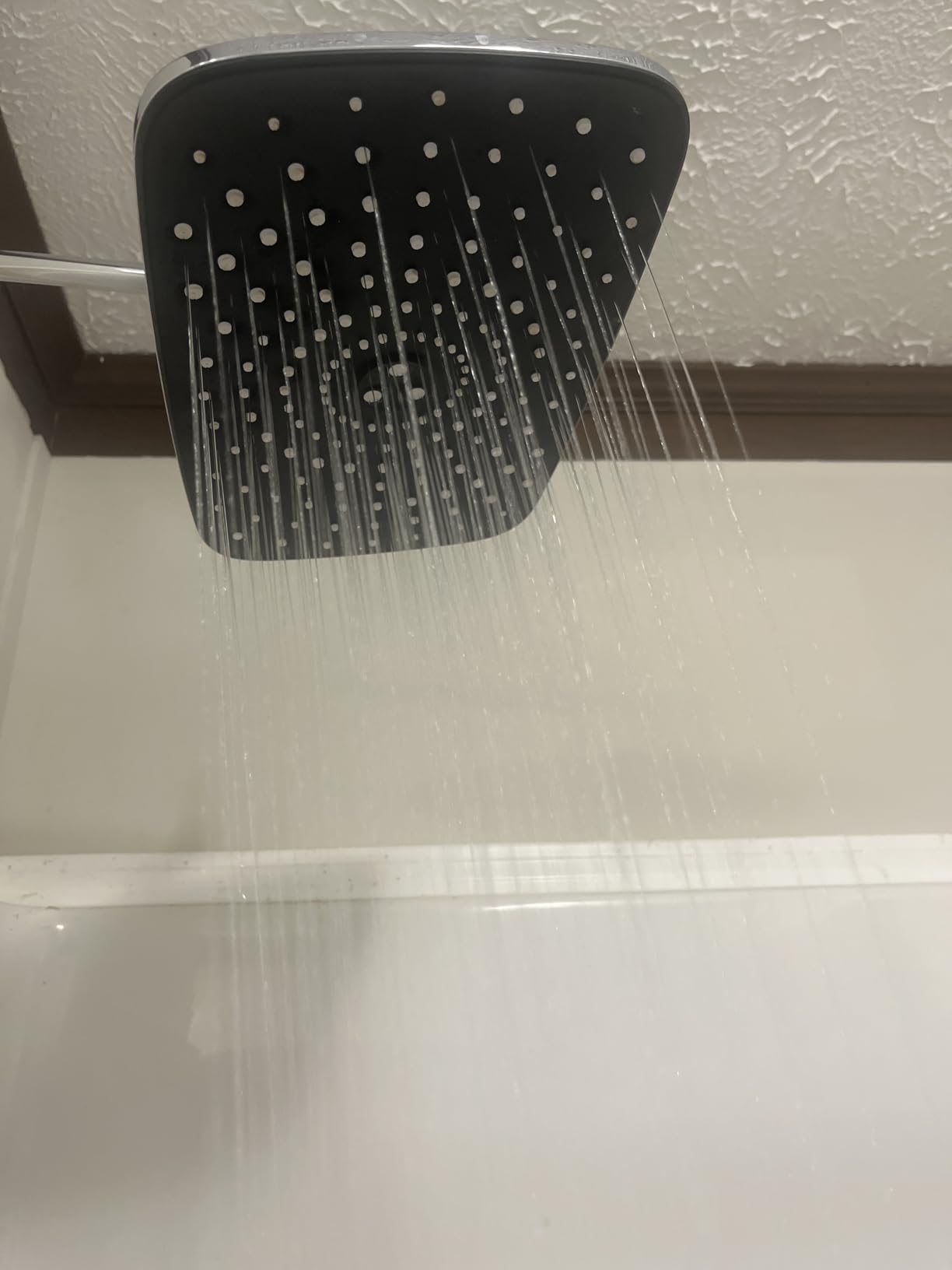
Best for renters and short-term installs
Nothing is damaged or permanently fitted, the whole body installs on a universal half-inch connection in four steps, and the shower head can be swapped back in about a minute. It is the easiest unit here to take with you.
The slim profile also helps in small showers where an extra four inches of inline filter would put the head at face level.
What the small review base hides
Three months is the recommended cartridge interval, shorter than the four to six month media used by several rivals, and that compounds into a higher annual running cost even when the unit price looks moderate.
It is also difficult to get a leak-free seal with a heavier rain shower head. And with 656 reviews, we simply do not know how the plastic body holds up at year three.
9. MakeFit Filtered Shower Head – You Can See When the Cartridge Is Spent
MakeFit Filtered Shower Head – High Pressure Shower Head with Filter for Hard Water Softener – 7 Settings Bathroom Rain Showerhead to Remove Chlorine and Heavy Metals (Chrome)
Brass swivel connector, KDF-55 with calcium sulfite and vitamin C, 7 spray modes, air induction
Pros
- Real metal construction rather than chrome coloured plastic
- Air-induction nozzle fixes low water pressure
- Some users saw softer hair within two days
- Transparent cartridge shows when to replace
Cons
- One buyer saw no measurable metals reduction when he tested the water
- Body looks bulky
- One later batch arrived with a smaller head and weak flow
- Flow restrictor often removed for full pressure
The transparent cartridge is the feature I would keep even if nothing else changed. You can see the media, which means you replace on condition rather than on a calendar, and that removes most of the wasted cartridges people buy and toss out still working.
Media is a blend of KDF-55, calcium sulfite and vitamin C for chlorine, fluoride and heavy metals. The air-induction nozzle technology delivers strong spray even at low water pressure, and reviewers with poor plumbing report it replaced a weak head successfully.
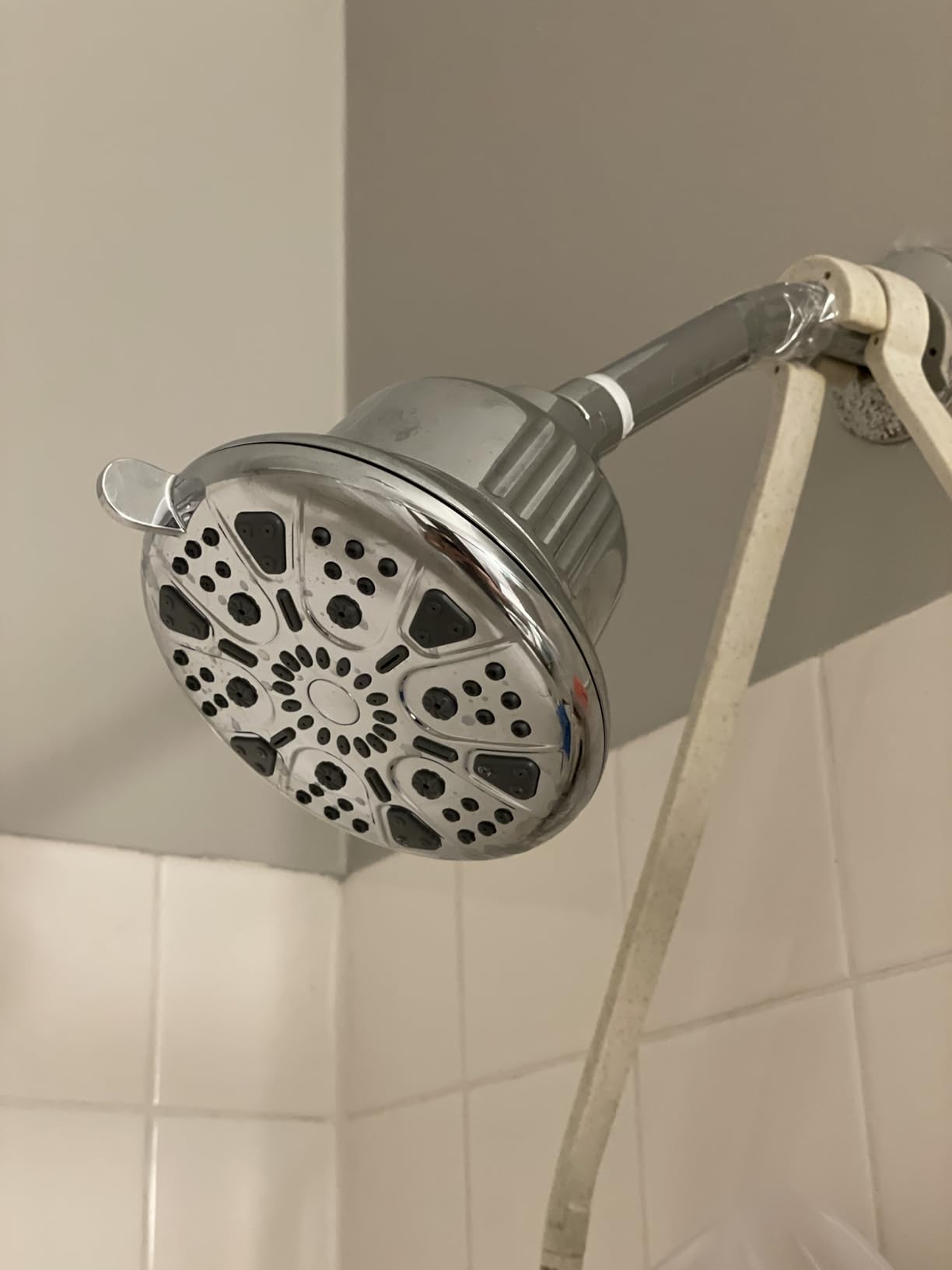
The all-in-one design keeps the head at a usable height instead of dropping it, with an angle-adjustable brass swivel ball connector. Seven spray modes and a polished chrome finish round it out, and it ranks number one in Shower Head Body Sprays.
Users on hard water report softer hair and less dry skin, some of them within two days, which is faster than the category norm.
Why air induction matters in an older house
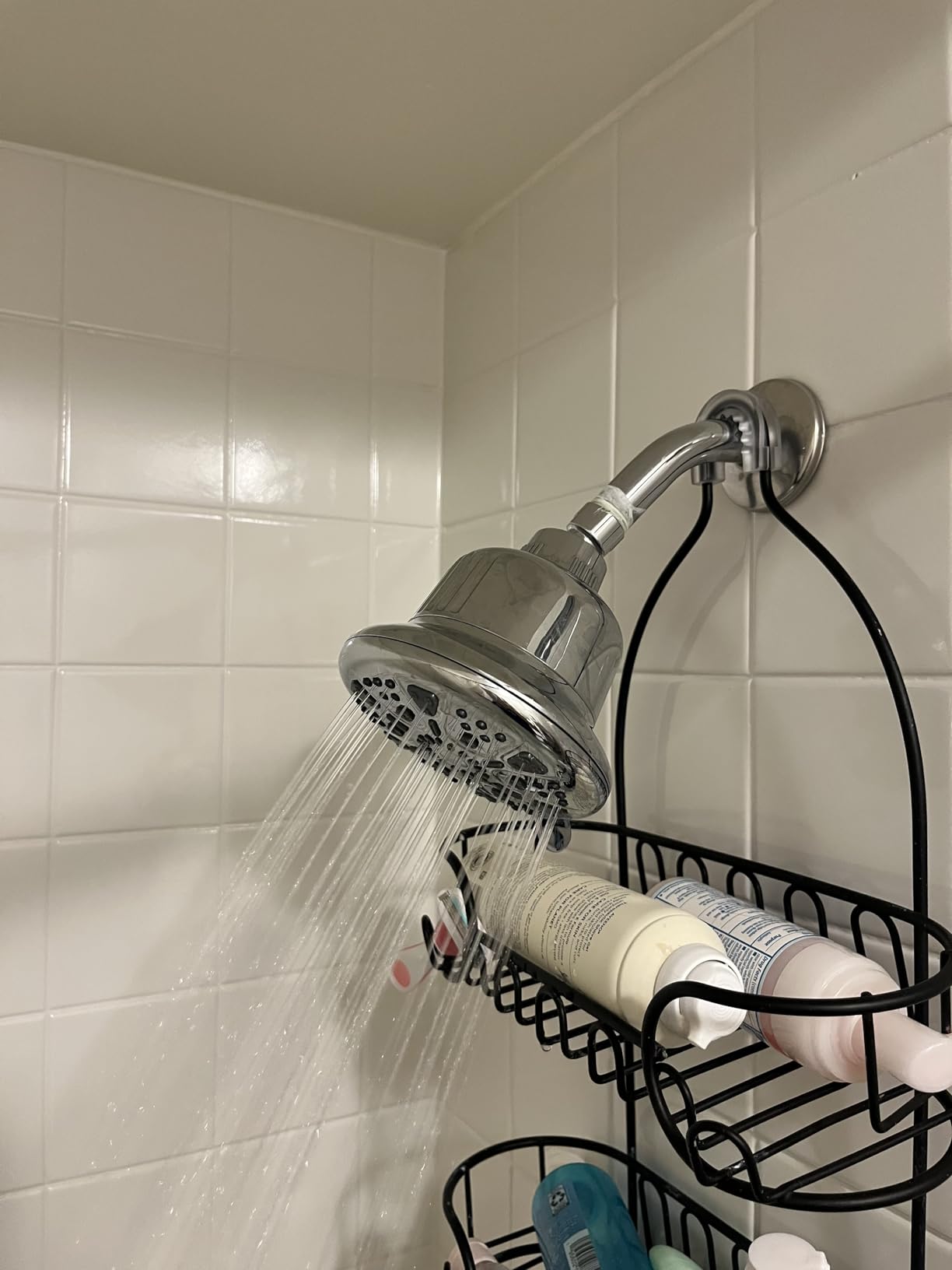
Low pressure and a filter are usually a bad combination, because filter media adds resistance. Air induction injects air into the spray to widen the stream, which recovers perceived pressure without more water, so you keep a usable shower without removing the filter.
The brass swivel connector is also the durable part, and it is exactly the part that tends to be plastic in cheaper filtered heads.
The honest caveat
One owner tested the output with a water metals monitor and saw no measurable reduction in metals or fluoride compared with unfiltered sink water. One test is not a verdict, but it matches the pattern we see across this whole category and it is worth knowing before you buy on a minerals promise.
The body is also described as bulky, and one reviewer received a later production batch with a smaller head, weaker flow and a spray mode missing. Check the head size on arrival.
10. HammerHead Metal KDF Filter – The Build Quality Answer
HammerHead Showers® Solid Metal Shower Head Filter – KDF 55 Shower Filter, High Pressure Universal Shower Filters to Remove Toxic Chemicals – Removes Chlorine and Heavy Metals – Chrome
Lead-free solid brass housing, 450 g of KDF and calcium sulfite media, rated for 3 months or 10000 gallons
Pros
- 85 percent five-star share
- Solid brass housing with machined threads
- Very large 450 g media charge
- Universal half-inch NPT fitting fits every head type
Cons
- Most expensive option in the roundup
- Three month cartridge life
- Listed maximum TDS of 500 ppm
- Bulky housing extends the shower arm
Build quality is the whole pitch. This is a lead-free solid brass housing with precision machined threads designed not to strip, crack or leak, in a category where the leading failure mode is a plastic thread that cracks when overtightened. If you have replaced filters more than once and watched each housing fail, that difference is worth paying for.
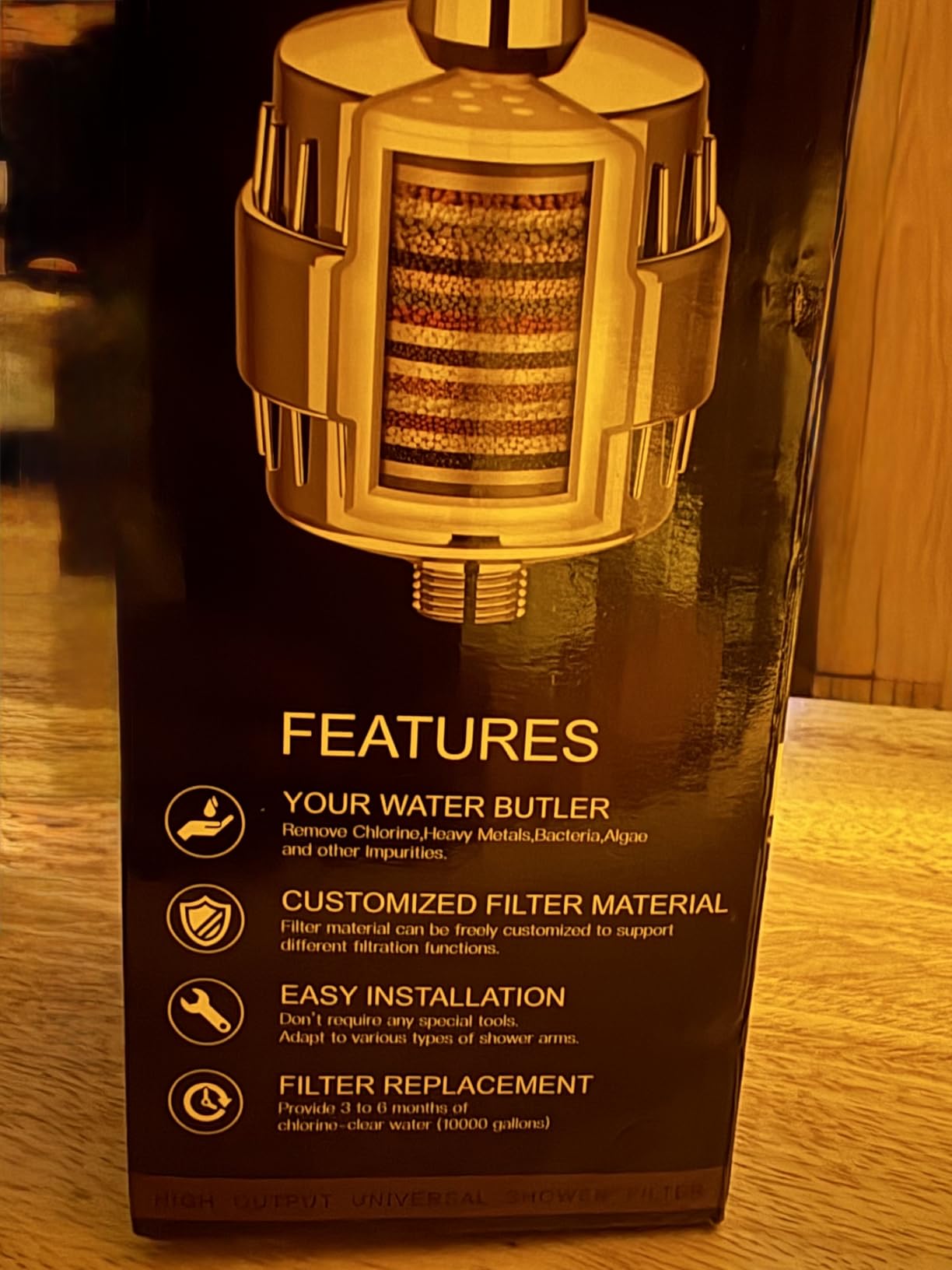
The cartridge holds 450 grams of KDF and calcium sulfite, which is far more media than most multi-stage designs carry, and it is rated for three months or 10,000 gallons. The 85% five-star share across 556 reviews is the highest satisfaction percentage in this roundup.
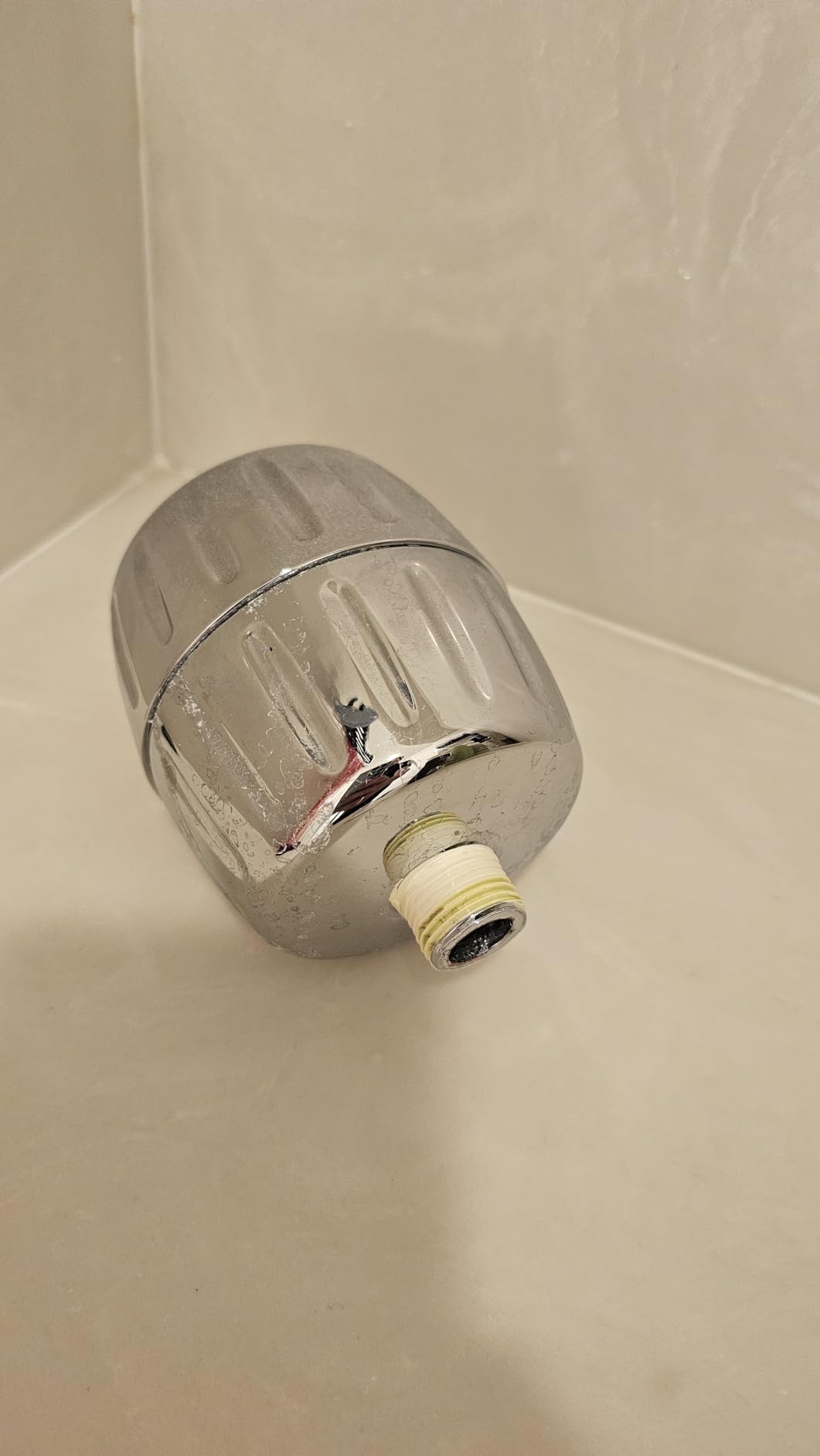
Replacement is an unscrew and swap, and the universal half-inch NPT thread pairs with fixed, handheld, rain and dual shower heads. The filtration method is stated as oxidation reduction potential, which is the honest description of what KDF actually does.
For an inline unit this is the correct shape of product: a housing you buy once and a media you replace on schedule.
Who should pay more for this one
If you are on a well, in a very hard area, or you have cracked two plastic housings, the brass body ends the cycle of replacing the whole unit every couple of years. Nobody else in this roundup solves that.
It is also the one to buy if you have a heavy rain shower head, because the machined threads hold torque that plastic cannot.
Where the specification gives you pause
The listed maximum total dissolved solids is 500 ppm, and genuinely hard water in some regions produces water above that figure. The manufacturer does not publish a grains-per-gallon ceiling, so treat the TDS number as a real limit rather than fine print.
It is also the most expensive option here, the cartridge life is three months rather than six, and the housing is bulky enough to extend the shower arm noticeably. It is a durability purchase, not a value purchase.
How to Install a Shower Filter and When to Replace the Cartridge
Installation is the easy part. Most of these thread onto a standard half-inch shower arm by hand. Unscrew your existing head, wrap the supplied Teflon tape clockwise onto the arm threads, screw the filter on and hand-tighten only, then fit your shower head back on top. If you overtighten with a wrench you can crack the plastic housing, which is the single most common self-inflicted failure.
Before the first shower, run the water for five to ten minutes if the unit contains carbon. The water will look black while carbon dust flushes out and it stops. Skipping the flush is the number one cause of early returns.
On replacement intervals, a three-month cartridge suits a two-person household on lightly treated water, while four to six month media suits a family of four or anyone already on a low chlorine load. Signs a cartridge is spent are easy to read: the chlorine smell comes back, scalp itch returns, water pressure drops, or the media looks visibly grey. In very hard water expect the short end of the published interval, and backwashable housings may need regular backwashing to hold flow.
How to Choose a Shower Filter for Hard Water Minerals
Decide the format first. An inline filter keeps the shower head you own and is the cheapest way in. An integrated filtered shower head gives you filtration and hardware in one part but means replacing your head. A salt-recharge ion exchange attachment is the only genuine hard water option and needs salt maintenance. Our previous shower filter roundup covers the format question in more detail.
Then match media to your actual problem. Chlorine and chloramine call for KDF-55 plus calcium sulfite, with vitamin C added on a chloraminated supply. Hardness alone calls for honesty rather than buying, because no shower filter in this roundup addresses it. Sediment and rust call for a fine pre-filter stage and realistic replacement intervals.
Check three practical things before checkout. Certification: look for NSF/ANSI 177 or IAPMO, and remember it covers free available chlorine only. Cartridge availability: make sure replacements are sold for the exact model, because a discontinued cartridge ends the unit. Pressure: check the flow rate, and remember anything below 2.0 GPM will feel soft. Our dishwasher guide for hard water covers the same mineral problem at the other end of the house.
When a Shower Filter Is the Wrong Fix
If your water tests above 10 grains per gallon, if white film returns on the glass within days of cleaning, or if every load of laundry is grey, you are past what any cartridge in this roundup can handle. A whole-home ion exchange softener certified to NSF/ANSI 44 addresses hardness at the point it enters the house, which is the only place it can be addressed properly.
That is a plumbing project with a meter, a brine tank, salt to carry and a drain to run, and it will do more for your shower than any filter here. Read our softener roundup first, then decide. If you are on a private well, treat bacteria and iron testing as step one, because a shower filter addresses neither.
Frequently Asked Questions
Does a shower filter soften hard water?
No. Removing hardness requires cation exchange, where sodium ions replace calcium and magnesium on a resin bed. That is a water softener process certified under NSF/ANSI 44, not a shower filter. Shower filters use adsorption and redox media such as KDF-55, activated carbon and calcium sulfite, which strip chlorine, sediment and some heavy metals but leave dissolved calcium in the water.
Can a shower filter remove calcium and magnesium?
Not the units in this roundup. Calcium and magnesium are already dissolved ions, so they do not adsorb onto carbon or KDF the way chlorine byproducts do. Polyphosphate media can keep them from crystallising onto glass, but they stay in the water and still run through your hair. Only a salt-recharge ion exchange shower attachment removes them, and it needs periodic regeneration.
Do shower filters for hard water actually work?
Partially, and it depends which contaminant you mean. On chlorine, chloramine, sediment and some heavy metals the effect is real and many owners report noticeably softer hair and less post-shower itch. On hardness minerals the effect is indirect, because less chlorine damage means hair and skin look better even though the calcium level is unchanged. Expect two to three weeks before you notice anything.
How often do you need to replace a shower filter cartridge?
Most cartridges here are rated at four to six months, with three-month media on units such as the Veken and HammerHead. A two-person household on lightly treated water can usually stretch to the long end. Families of four, very hard water and heavy chlorine load will hit the short end sooner. Replace when the chlorine smell returns, scalp itch returns or flow drops.
What are the downsides of using shower filters?
They do not soften water, so scale on glass and fixtures still needs scrubbing. Results take weeks, and buyers who expect overnight change return the product. Cartridges are a recurring cost that adds up faster on three-month media. Some housings reduce water pressure as they load, plastic threads can crack if overtightened, and inline filters add length that can push a shower head too low.
The Bottom Line on the Best Shower Filters for Hard Water Minerals
The best shower filters for hard water minerals are the ones honest about their media. Start with the Aquabliss SF100, the inline unit with 69,743 reviews, a six-month cartridge and a compact body that works in awkward plumbing. Add the SR SUN RISE if you want the filter and the handheld in one part, or the AquaHomeGroup 20+3 if you want metal construction and a spare cartridge in the box.
None of them softens your water, and in 2026 that is still true. If your hardness measures above 10 grains per gallon, buy a softener instead of a fourth cartridge. If your problem is chlorine, itch and faded colour, any of these picks will help once you pass the two to three week mark.