
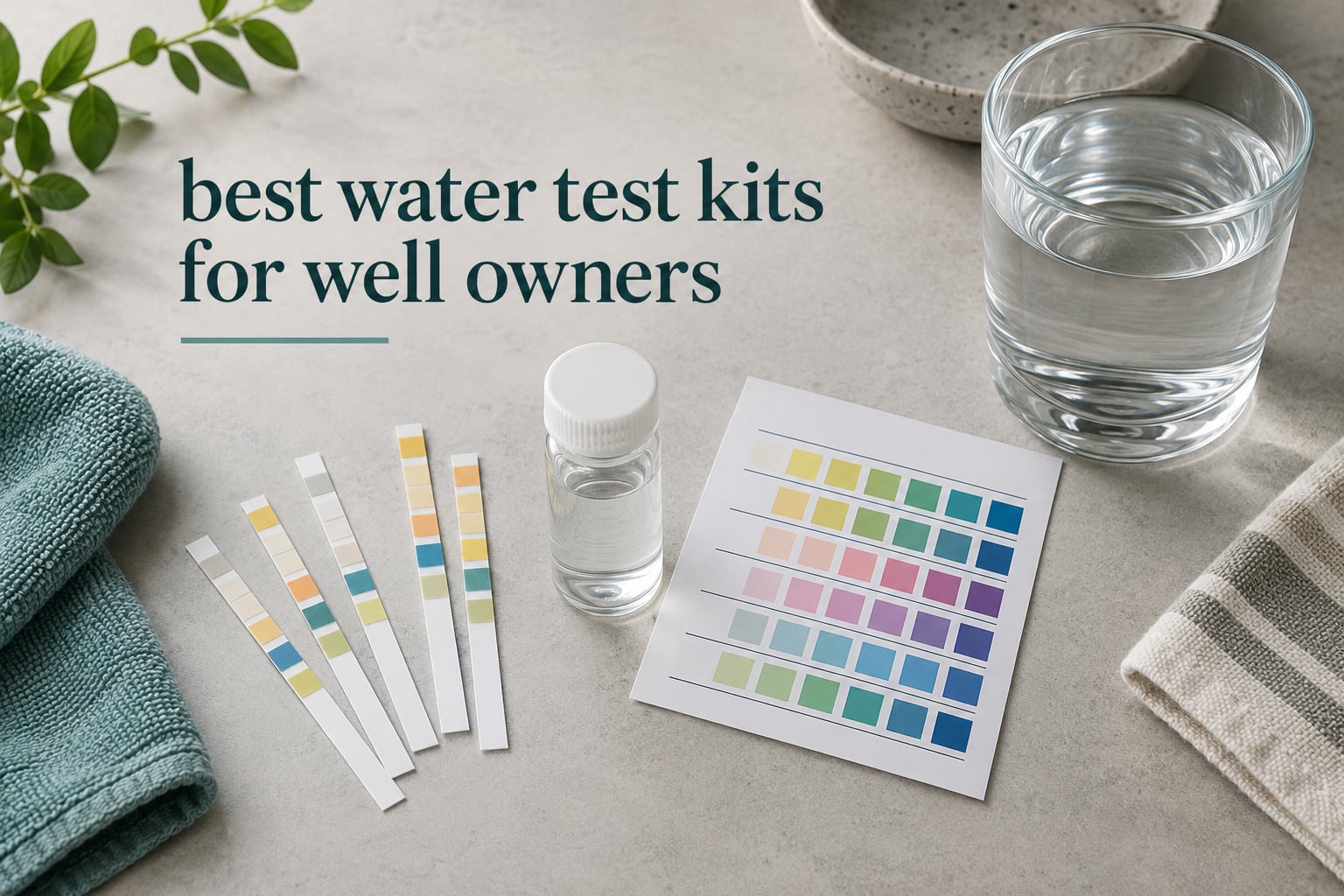
There are three practical ways to test a private well, and they are not close in accuracy. DIY strip kits dip into a glass of water and read a colour chart in about a minute, contaminant-specific kits isolate a single worry such as lead or coliform bacteria, and mail-in lab panels ship a sample to a certified laboratory for exact numbers in parts per billion. A large share of well owners start with strips, then move to a lab panel when a result looks wrong. That is the sensible order, and it is how we have used this list of the best water test kits for well owners in our own well water softener sizing work.
Nobody is checking your well. There is no utility, no annual report and no federal testing requirement, which is why roughly 43 million Americans drink from untreated private wells. The water looks fine until it does not, and taste or odour tells you about iron, sulfur and hardness but says nothing about coliform bacteria, nitrates, arsenic or lead. Those need a kit.
We spent weeks comparing the twelve kits below on the things that actually decide whether a result is useful: how many parameters they measure, whether the chart can be read without guessing, whether a bacteria test is included, and how much of the work is left to you. Everything here works on untreated groundwater, which is not true of every water kit on the market. If your main worry is a metal rather than bacteria, our guides to the best home heavy metal test kits for water and best home heavy metal test kits for drinking water go deeper on that category.
Table of Contents
Top 3 Picks: Best Water Test Kits for Well Owners (October 2026)

VARIFY 17-in-1 Complete Water Test Kit
- 17 parameters on one strip
- 100 strips in sealed pouches
- 2 bacteria tests with 48-hour results

Safe Home DIY Bacteria Test Kit
- Detects 50 coliform species
- Results as fast as 6 hours
- Third-party sterilized vials

Tap Score Advanced Home Water Test
- 116 analytes measured
- EPA/NELAC/ISO certified labs
- Pre-paid return shipping
Best all-round first kit: the VARIFY 17-in-1. Seventeen parameters, 100 strips and two bacteria tests in one box, which is enough to cover a first year of monitoring on almost any well.
Best bacteria-only screen: the Safe Home DIY Bacteria kit. It reads 50 coliform species including E. coli down to a single organism, and it is the highest-rated kit in this group.
Best for a real health decision: the Tap Score Advanced panel. It is the only option here that sends your sample to a certified laboratory and returns exact concentrations for 116 analytes, and it includes pre-paid return shipping.
All 12 Water Test Kits Compared Side by Side
| Product | Specifications | Action |
|---|---|---|
| VARIFY 17-in-1 Complete Water Test Kit |
|
Check Latest Price |
 SJ WAVE 22 in 1 Water Test Kit SJ WAVE 22 in 1 Water Test Kit |
|
Check Latest Price |
 Watersafe WS-425W Well Water Test Kit Watersafe WS-425W Well Water Test Kit |
|
Check Latest Price |
 bestprod 21 in 1 Drinking Water Testing Kit bestprod 21 in 1 Drinking Water Testing Kit |
|
Check Latest Price |
 TESPERT 16in1 Water Test Kit TESPERT 16in1 Water Test Kit |
|
Check Latest Price |
| Safe Home DIY Bacteria in Water Test Kit |
|
Check Latest Price |
 Safe Home DIY Lead in Drinking Water Combo Kit Safe Home DIY Lead in Drinking Water Combo Kit |
|
Check Latest Price |
 HEVEIS 21-in-1 Home Water Test Kit HEVEIS 21-in-1 Home Water Test Kit |
|
Check Latest Price |
 AAwipes 17 in 1 Water Test Strips AAwipes 17 in 1 Water Test Strips |
|
Check Latest Price |
 Palinoia 24 in 1 Complete Drinking Water Test Kit Palinoia 24 in 1 Complete Drinking Water Test Kit |
|
Check Latest Price |
 Leaping Lynx E. coli O157 Water Test Kit Leaping Lynx E. coli O157 Water Test Kit |
|
Check Latest Price |
| Tap Score Advanced Home Water Test |
|
Check Latest Price |
1. VARIFY 17-in-1 Complete Water Test Kit – The One Most Owners Buy First
Varify 17-in-1 Complete Water Test Kit – Water Tester for Drinking Water
17 parameters
100 strips in 5 sealed pouches
2 bacteria tests with 48-hour results
pH 0-14
Pros
- Largest strip count in the budget tier for repeat monitoring
- Covers lead
- iron
- hardness
- pH and nitrates
- Simple dip-and-compare chart beginners can follow
- Strips sealed separately to preserve freshness
Cons
- Hardness colour blocks are nearly identical shades of blue
- Lead and alkalinity pads can bleed
- Small print on the chart
- Screening-grade accuracy only
This is the kit I hand to friends who have just moved into a house with a well. It covers 17 parameters on a single strip, including lead, iron, fluoride, copper, zinc, hardness, pH and nitrates, and the box adds two bacteria tests that give an answer in about 48 hours.
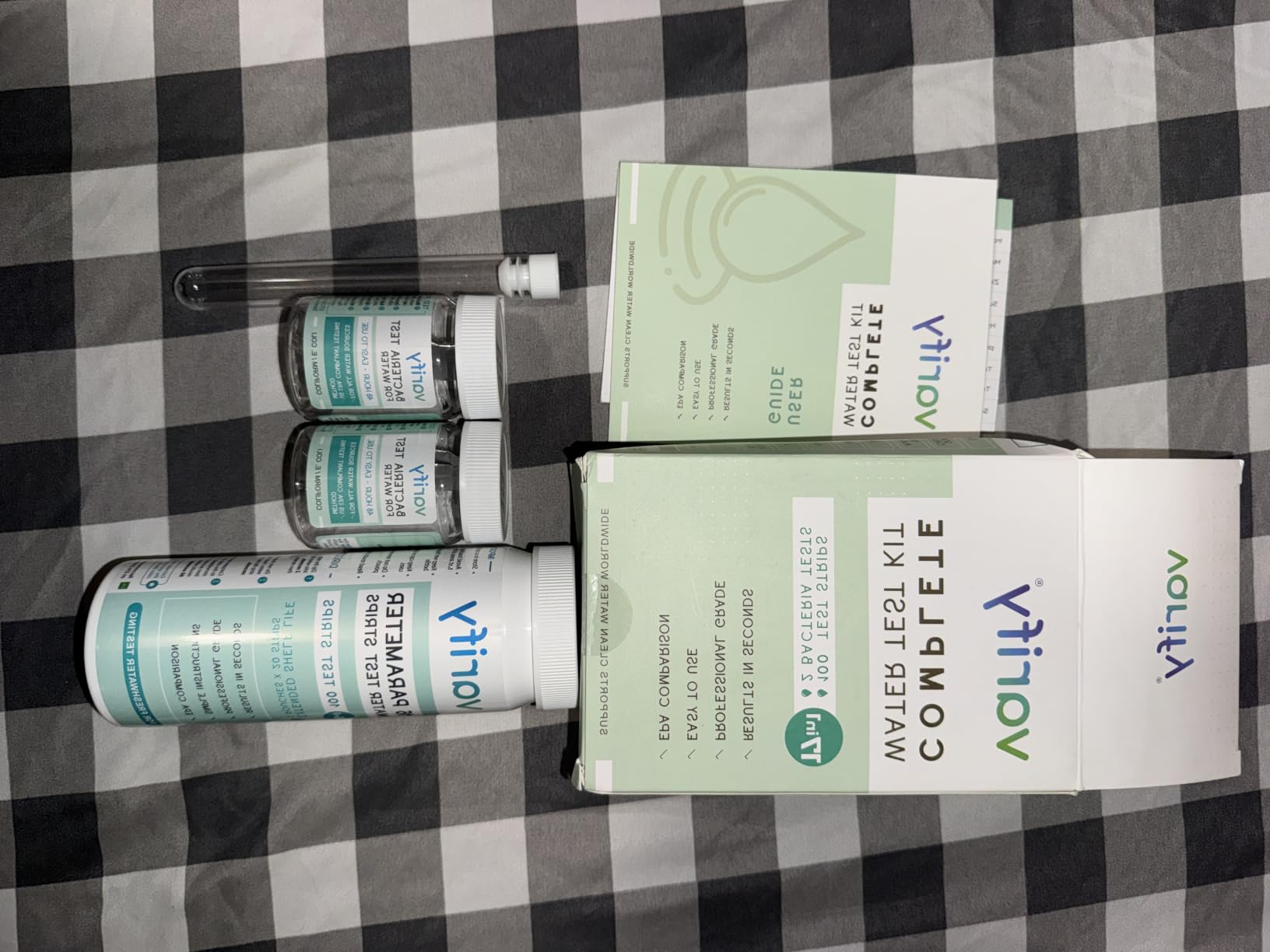
What makes it work as a first purchase is quantity. You get 100 strips split across five sealed pouches of 20, which means you can test quarterly for two years before you run out, and the separate pouches are why the pads stay reactive in a humid utility room.
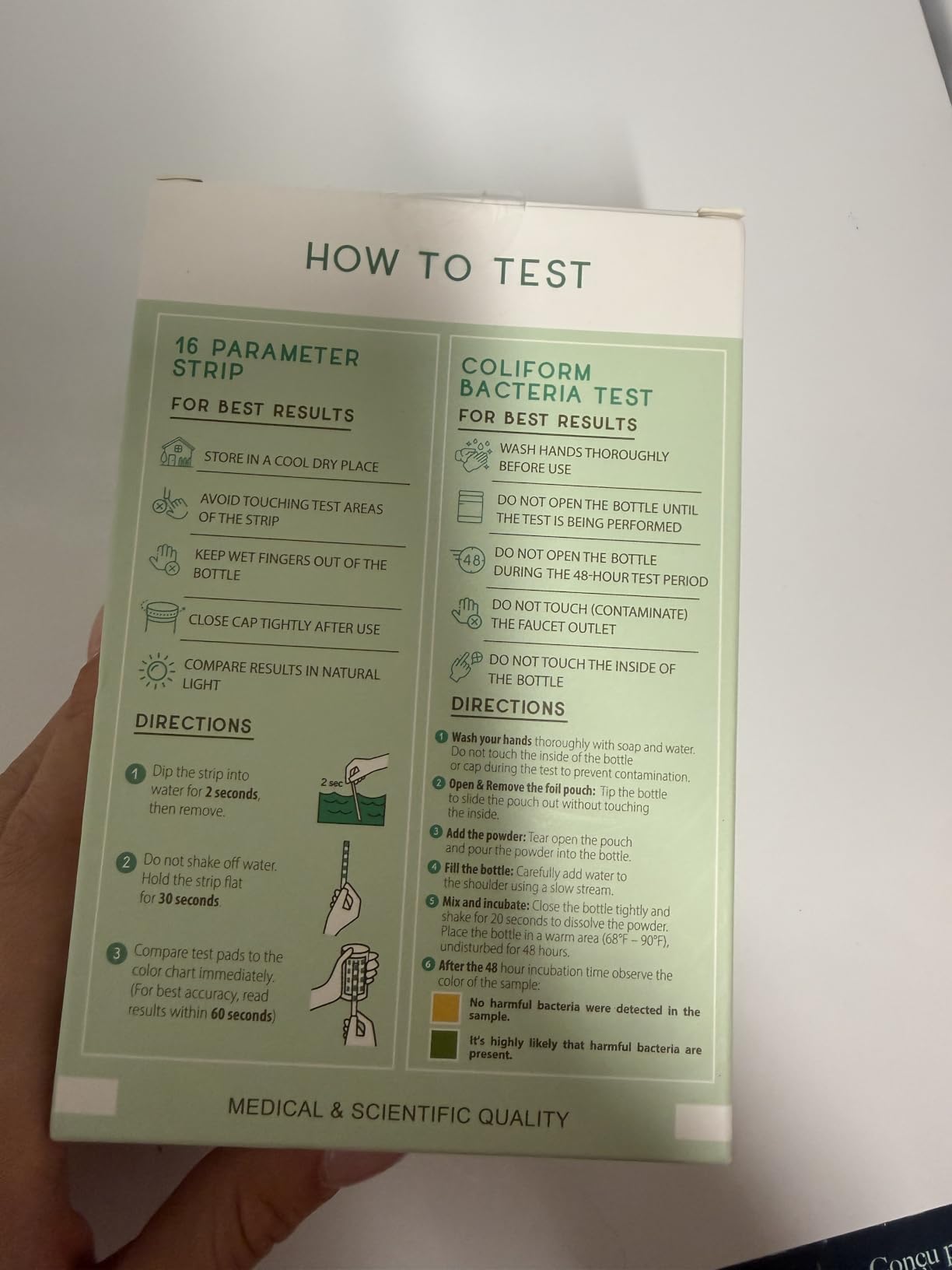
The honest weakness is the chart. Hardness readings from 0 to 100 ppm sit in shades of blue that are genuinely hard to tell apart, and if the lead or alkalinity pad bleeds, a borderline result becomes guesswork. Owners tend to treat a clean-looking strip as reassurance and a dark pad as a reason to order a lab test, which is the right way round.
Is 100 strips enough for a private well?
For a single household, yes. Quarterly testing once a year leaves plenty of margin, and the extra strips cost nothing once the kit is open. Owners with more than one well on the property, or a well shared with an irrigation system, will use them faster.
The bacteria tests are the part people forget about, and they matter more on a well than anywhere else because there is no chlorination left in the water to keep coliform in check.
When a VARIFY result needs a lab test behind it
If the lead pad reads anything above clear, or if the bacteria vial turns positive, stop there and order a certified lab analysis. A strip cannot tell you whether lead sits at 6 ppb or 60 ppb, and that difference changes what you do next.
Iron readings are also worth confirming, since the pads tend to over-react on high-iron water. Confirm before you size a softener.
2. SJ WAVE 22 in 1 Water Test Kit – Most Parameters on a Single Strip
SJ WAVE 22 in 1 Water Test Kits – 125 Strips Drinking Water Test Kit, Home Tap and Well Water Tester for Bacteria pH Hardness Lead Iron Copper Chlorine Cyanuric Acid
22 indicators
125 main strips plus specialty tests
Testing tube and dropper included
Made for well, tap, pool and aquarium water
Pros
- Widest parameter count in this group at 22 indicators
- 125 strips allow monitoring over years
- Reacts in seconds against the included chart
- Includes dedicated lead and bacteria tests
Cons
- Subtle colour differences need daylight and practice
- Borderline readings can be ambiguous
- Only a tube and dropper are included
Twenty-two parameters on one strip is the widest coverage in this roundup, and it includes metals that most competitors skip entirely: chromium, cadmium, cobalt, nickel, tin and zinc. For a well near industrial land or old farm buildings, that extra reach is worth something.
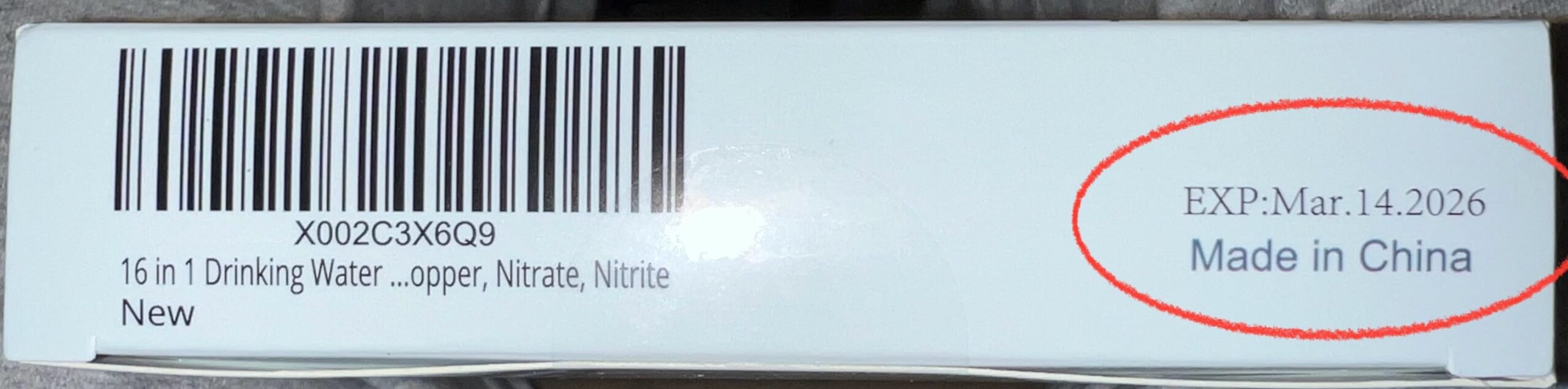
The main set holds 125 strips, with additional small sets for lead, nitrite, nitrate and bacteria. That gives you room to track a well seasonally rather than taking one snapshot and hoping it holds for a decade.
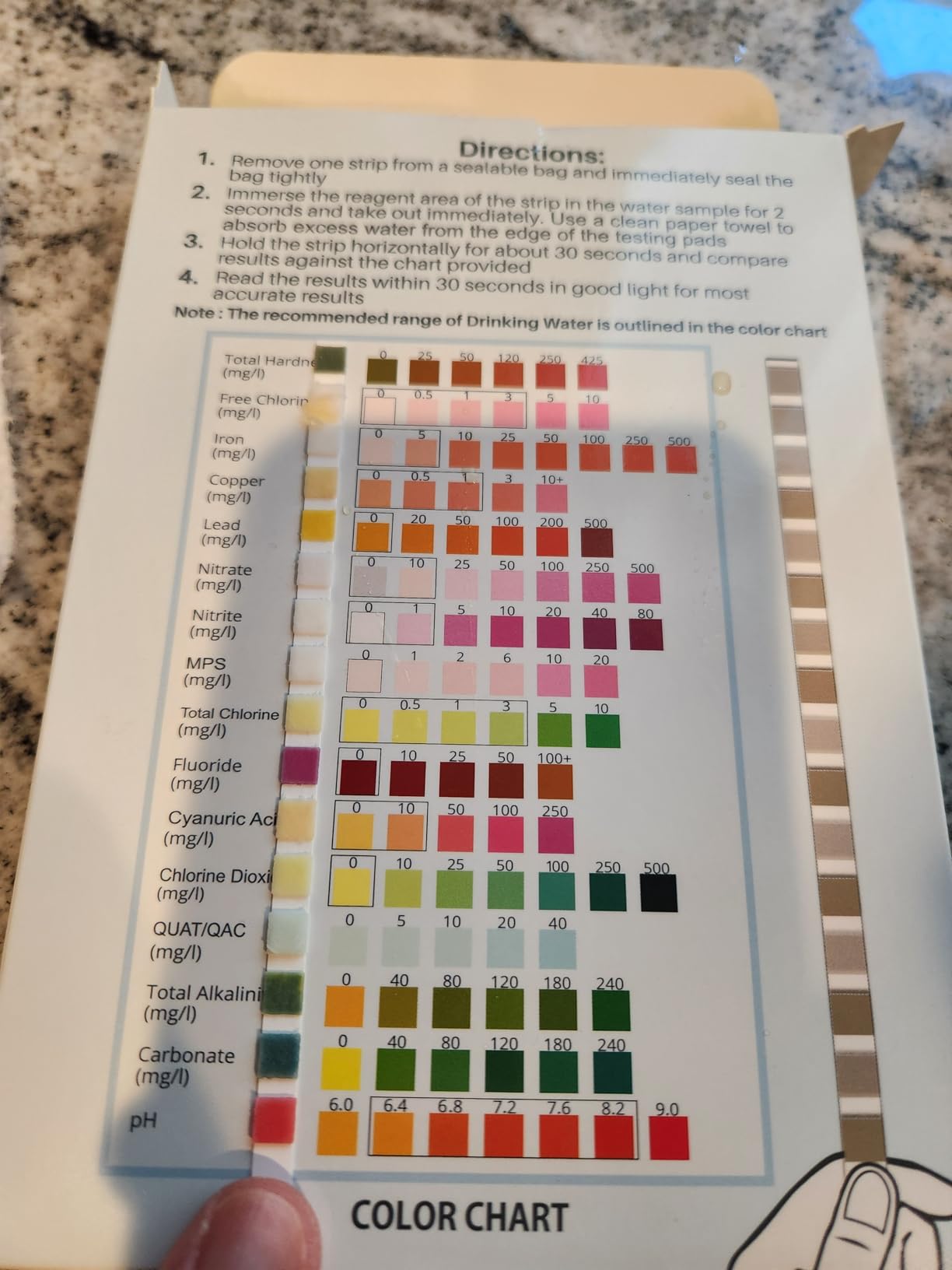
The trade-off is readability. More pads on one strip means each colour block covers a narrower range, so a soft blue for zinc can look a lot like a soft blue for nickel. Our advice is to read the strip in daylight, hold it level, and photograph each result next to the chart if you are logging it.
Does it work on water other than tap water?
The manufacturer lists tap, filtered, reverse osmosis, softened, well, pool, spa, hot tub and aquarium water as intended uses. In practice, on a private well it behaves like the other strip kits: fine for a directional picture, not a substitute for a lab.
Because it also reads nitrite and nitrate on the same pad, it is a reasonable companion to a bacteria-only kit when you want one box to cover both chemical and biological risk.
Where the extra parameters stop helping
Cobalt and tin are not on any residential health standard, so reading them accurately matters less than reading lead or nitrate correctly. Owners who fixate on the long parameter list can spend time on the least important pads while rushing the two that decide whether treatment is needed.
Treat the extra metals as a reason to repeat the test if something looks off, not as a diagnosis.
3. Watersafe WS-425W Well Water Test Kit – Lowest Lead Detection Floor
Watersafe The Original Water Testing Kit for Drinking Water, Well and Tap Water, Sensitive Lead in Water Test, Bacteria, Hardness, pH, Nitrates, Easy Instructions, Lab-Accurate Results, 1 Kit
Lead down to 5 ppb
9 contaminant tests
Bacteria vial test
pH 0-14
Made in the USA
Pros
- Lead sensitivity of 5 ppb is the lowest among the strip kits here
- Includes a pesticide screen for atrazine and simazine
- Written instructions explain first-draw sampling
- Results have matched professional lab numbers
Cons
- Single-use kit so retesting means buying another
- Colour reading for pH and iron is difficult
- Some readings drift from professional measurements
This is the one I trust when lead is the actual question. It detects lead down to 5 ppb, which is below the EPA action level, and the rest of the kit covers nine contaminants including copper, iron, pH, hardness, nitrites, nitrates and bacteria.
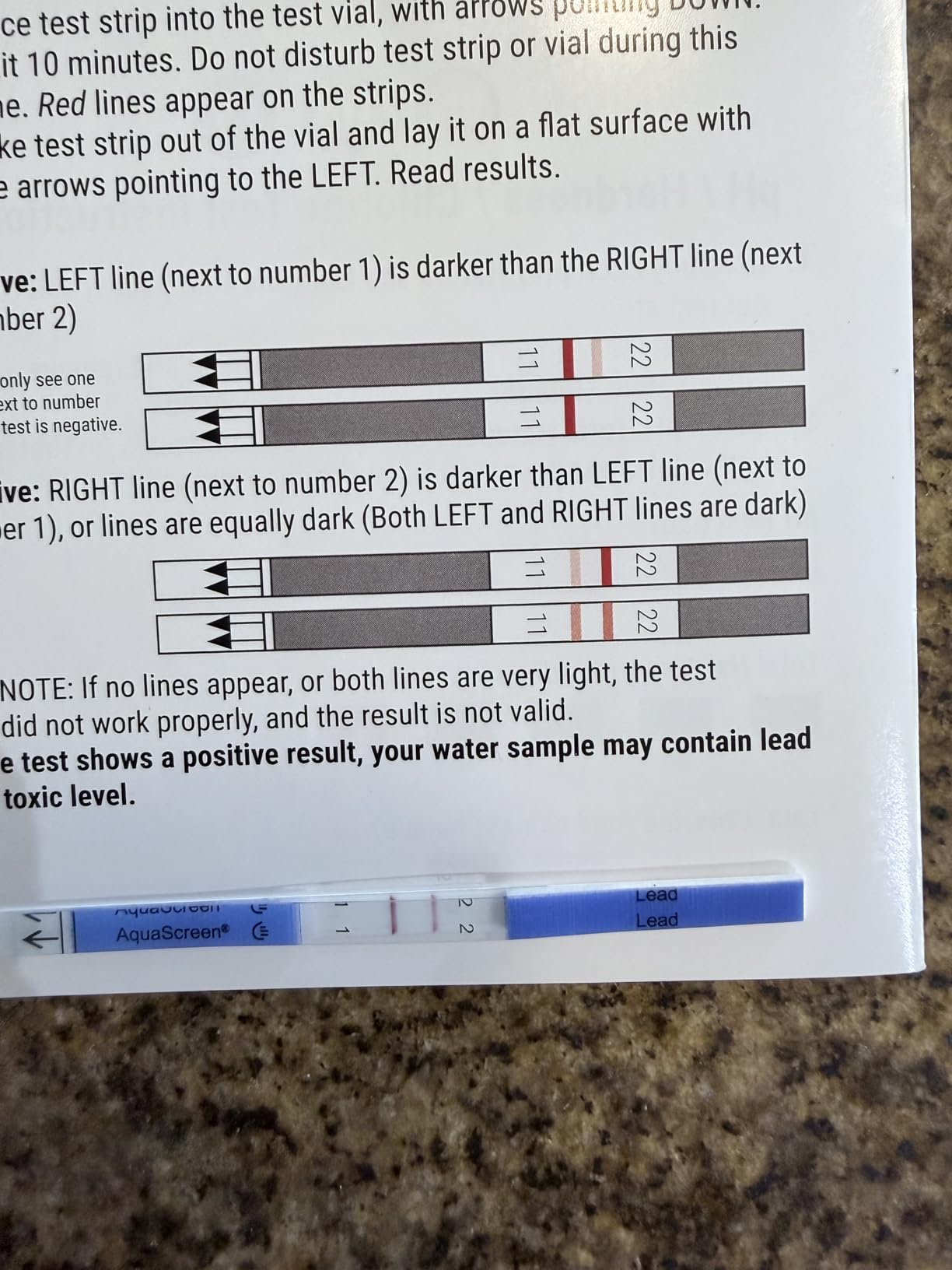
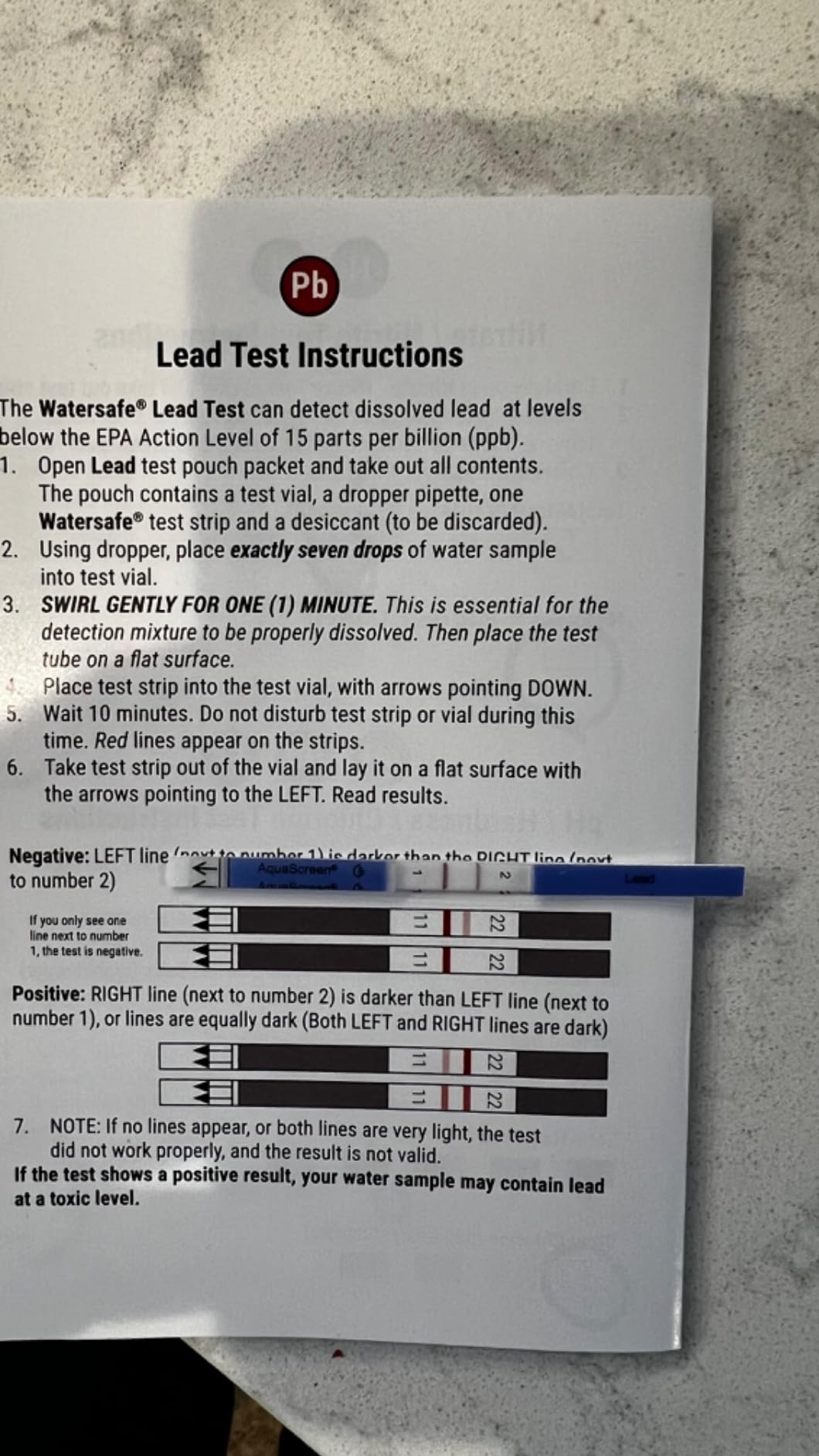
Two details set it apart from generic strip kits. The pesticide test screens for atrazine and simazine, which matters if your well sits near farmland, and the printed instructions spend real space on sampling technique rather than just how to read a colour.
Long-standing owners describe using it as a screening pass before sending a sample to a state lab. Several report that the bacteria and hardness readings lined up with numbers from a county laboratory, which is a higher bar than most DIY kits are held to.
Why the sampling instructions matter more than the chart
A lead test taken after you have run the tap for ten minutes measures your pipes more than your well. The booklet explains first-draw sampling and flushing rules, and following them is the difference between a useful number and a number that sends you chasing plumbing that is not the problem.
If your well is used for irrigation, treat the wellhead sample and the kitchen tap sample as two separate results rather than averaging them.
Is one kit enough if my well is older?
One kit is one test. For a house with lead solder, a galvanized line or a recent renovation, plan on two kits so you have a baseline and a follow-up after work is finished. That is the single most common complaint from owners, and it is fair.
For heavy metal specifics beyond lead, our dedicated metal kit guide covers the options in more depth.
4. bestprod 21 in 1 Drinking Water Testing Kit – Best Value Per Test
Bestprod All-New 21 in 1 Drinking Water Testing Kit Strips, Home Tap and Well Water Test Kit for Hardness, Lead, Iron, Copper, Chlorine, Fluoride
17-in-1 strip
120 strips included
2 bacteria tests
Bottle-mounted color guide
Data sheet included
Pros
- Bottle-mounted guide keeps the chart aligned with the strip
- Two dedicated bacteria tests for coliform and E. coli
- Data sheet helps track readings across seasons
- Enough strips for periodic monitoring
Cons
- Some buyers report identical readings across different water sources
- Colour pads can run during a read
- English-only instructions
- Lead and nitrate still need lab confirmation
The design detail that sets this kit apart is boring and excellent: the printed guide sits on the outside of the bottle, so the colour chart and the strip pad stay aligned while you read. Nobody has to flip between two pieces of paper in a dim utility room.
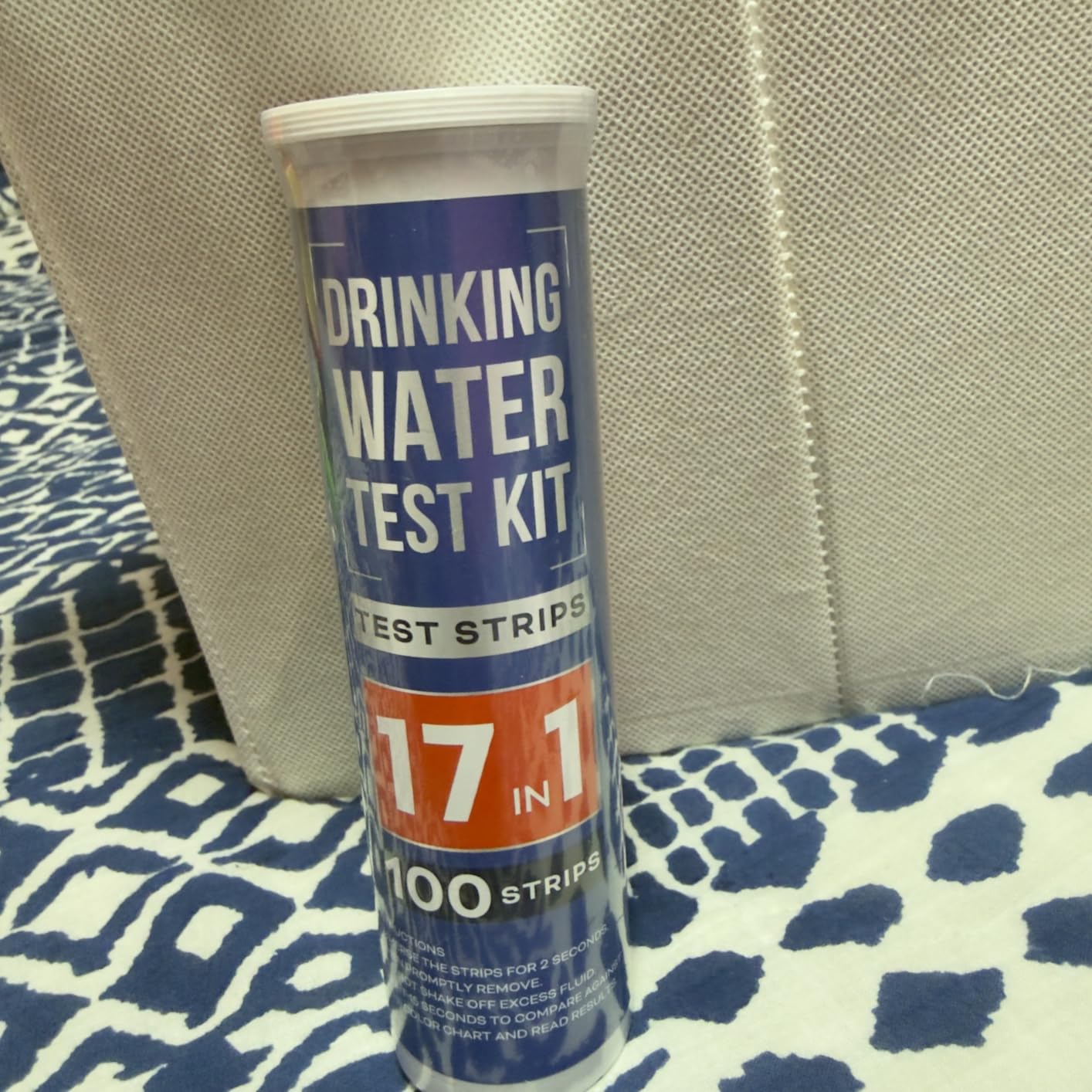
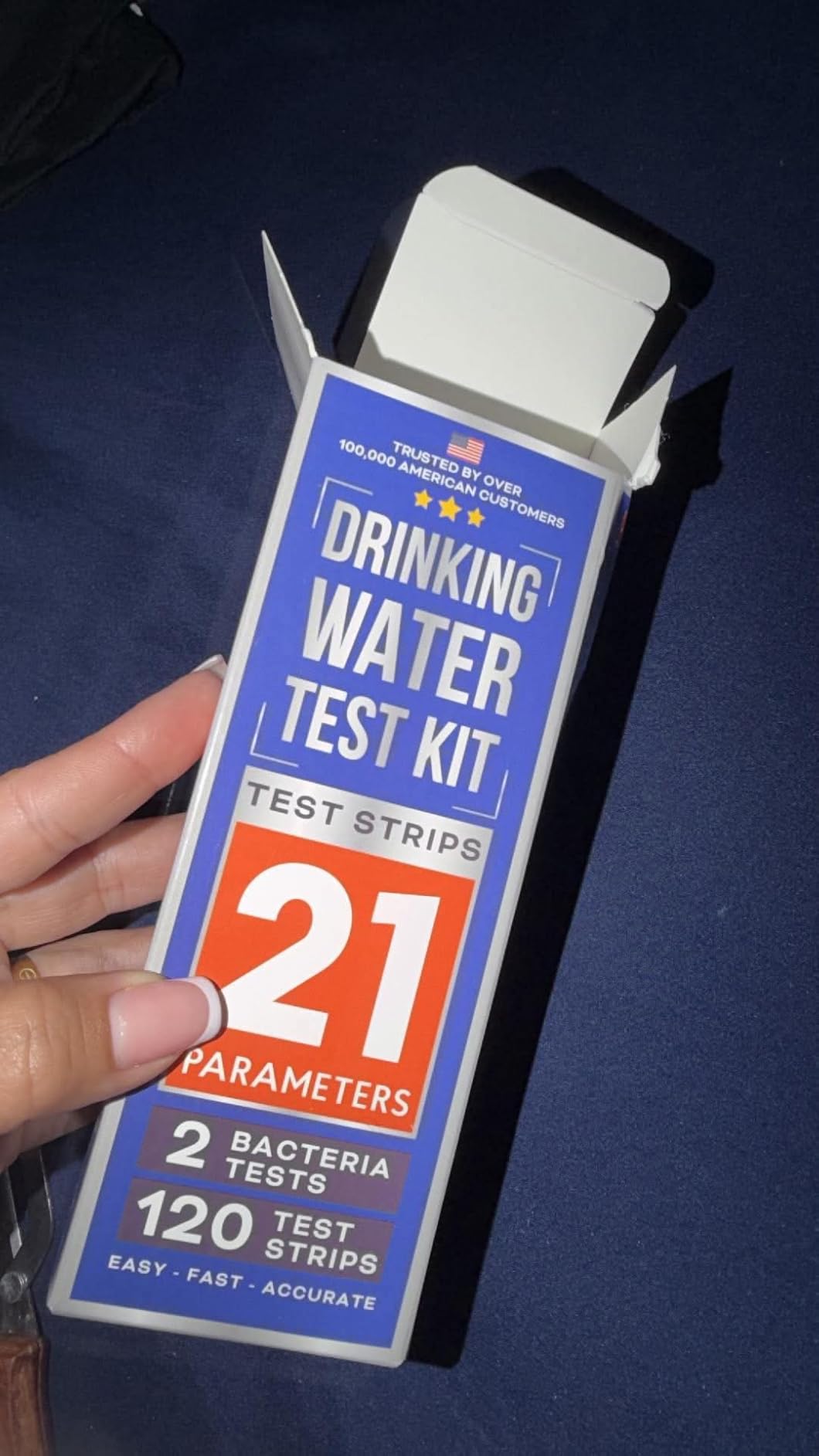
You get 120 strips and two bacteria tests covering coliform and E. coli, plus a data sheet for logging readings through the seasons. Owners buying for an older home use it mainly to confirm that lead is not a problem and to keep a record over time.
The honest caveat comes up in a recurring minority of reviews: some buyers say the same reading came back from tap water, spring water and distilled water. If that happens, the pads are not reacting to your water and the result tells you nothing.
How do I know the strips are actually reacting?
Test a sample you know differs. Run a strip in water you have boiled and cooled, then one straight from the tap, and compare the two charts. If every pad matches on both, stop and contact the manufacturer rather than trusting the reading.
The included data sheet helps here, because two sources logged side by side reveal a dead strip faster than a single sample does.
When this kit is not the right buy
If you are closing on a house and the seller will not share any testing history, you need numbers a seller can rely on. A screening kit cannot carry that weight, and a private well report carried forward to the next owner should come from a laboratory.
Use this one for the years after you have already established a baseline.
5. TESPERT 16in1 Water Test Kit – Best for Multi-Year Monitoring
TESPERT 16in1 Water Test Kit 125ct, Lead Water Tester for Drinking Water
16 parameters
125 strips
Timing window of 30-45 seconds in daylight
Well, tap, pool and aquarium water
Pros
- 125 strips make frequent well testing practical
- Brand publishes detailed lighting and timing guidance
- Useful for confirming filters and softeners are working
- pH readings have cross-checked against a meter
Cons
- Lead pad is not sensitive enough for EPA-level determinations
- Colour shades sit close together in poor light
- Some buyers report identical readings from different sources
Sixteen parameters covering total hardness, free and total chlorine, bromine, total alkalinity, pH, nitrate, nitrite, copper, iron, lead, nickel, carbonate, cyanuric acid and sulfite. Sixteen is fewer than some rivals, but each pad is doing a job most well owners actually care about.
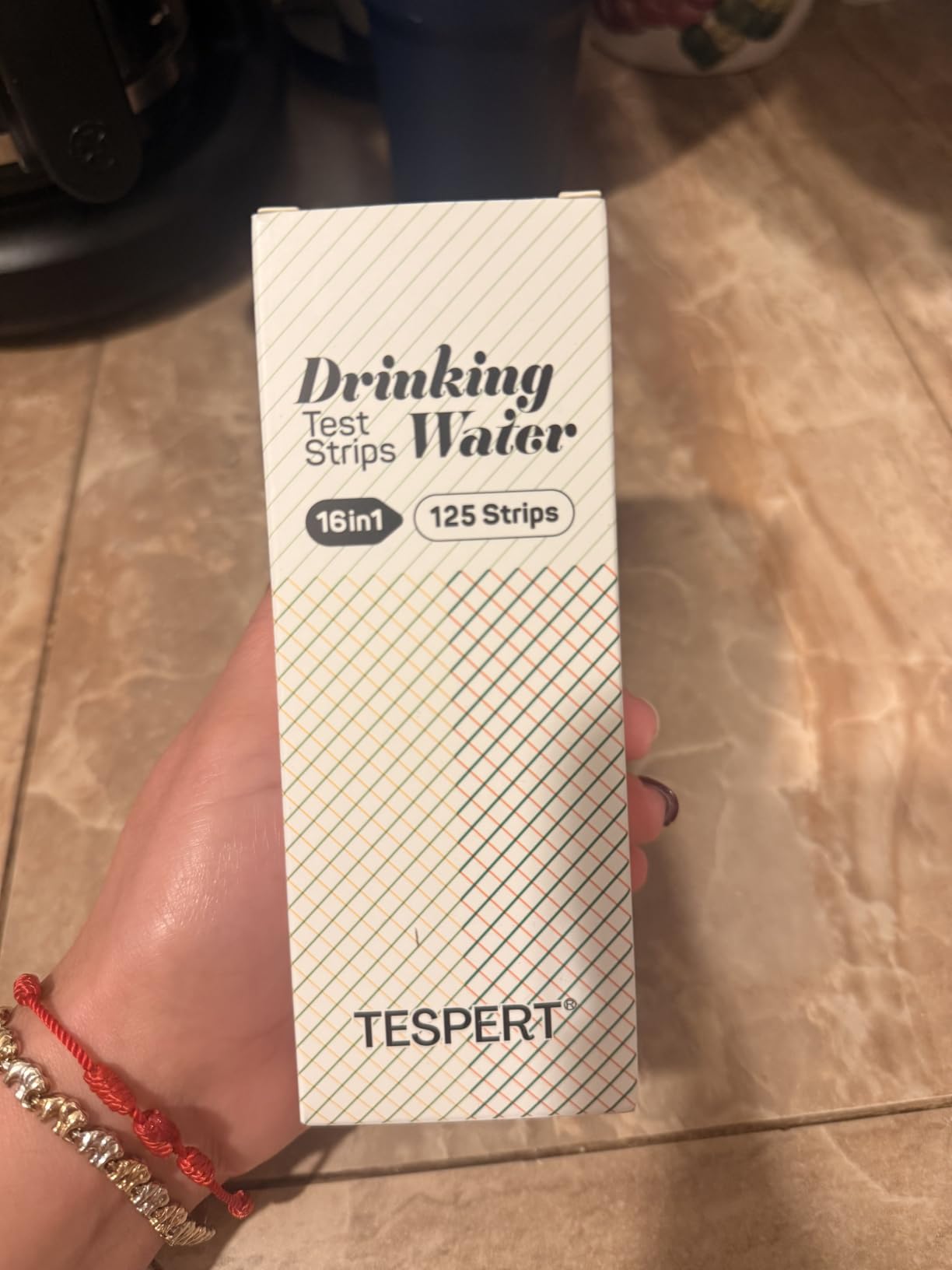
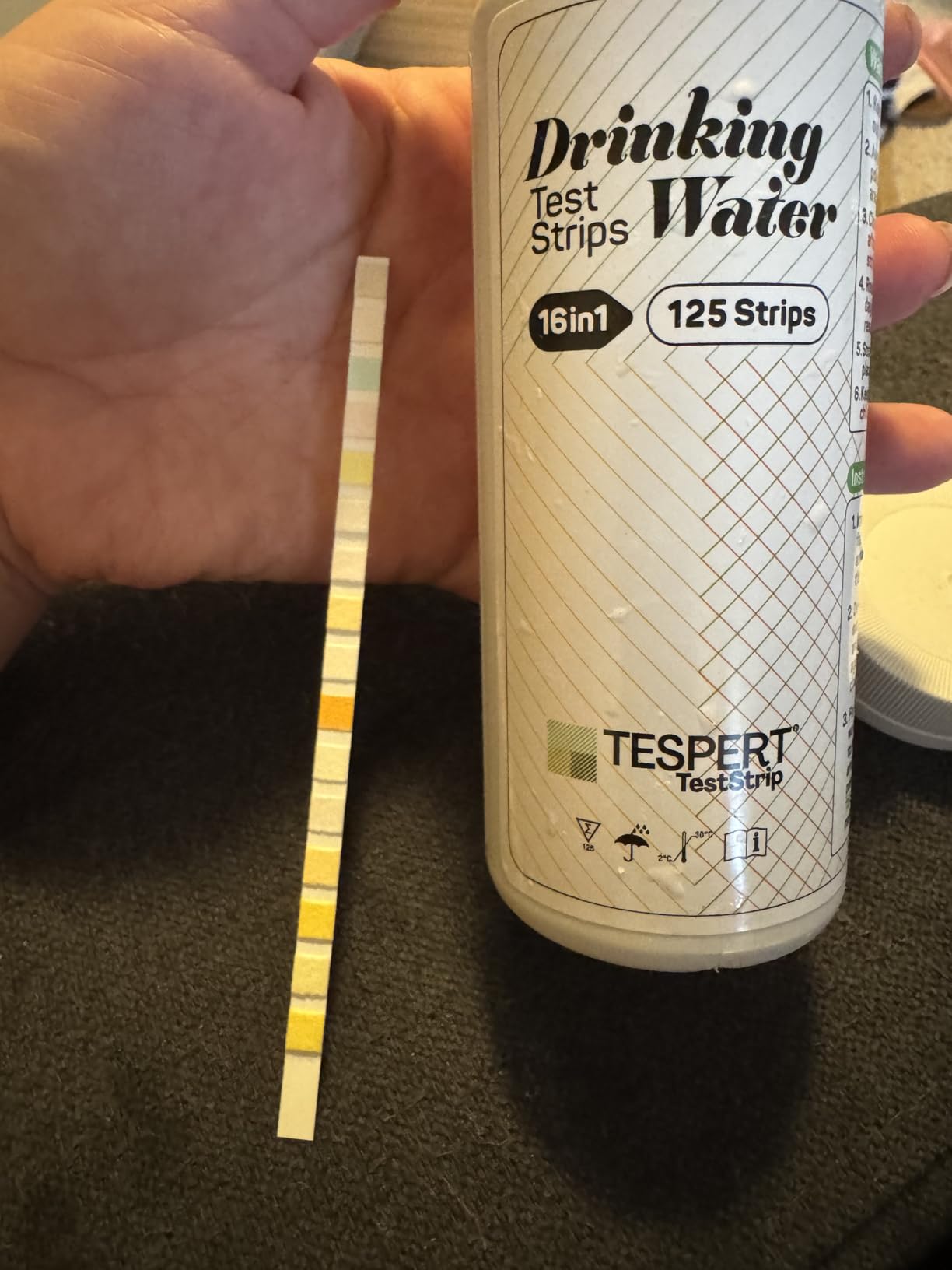
What makes TESPERT worth a look is the reading guidance the brand publishes: match the colour within 30 to 45 seconds, in daylight or 6500K light, holding the strip level. That removes most of the ambiguity that makes strip kits frustrating.
With 125 strips in the box, this is the kit we would buy for a household that wants to test every few months across several years and keep comparing.
Why the lead pad matters less here than elsewhere
Multiple reviewers make the same point: this pad is not sensitive enough to settle a lead question, and the brand’s own guidance is to send anything at or under 15 ppb to a laboratory. Read that before you treat a clean strip as clearance after plumbing work.
For lead specifically, the Safe Home combo kit later in this list has a defined detection range that is easier to interpret.
What the extra pads are good for
Alkalinity, carbonate and sulfite tell you whether your water is likely to attack copper or iron pipe, and whether a softener will work well or fight a high pH. Nobody mentions these on a product page and every plumber asks about them.
They also make this the easiest kit here for verifying that a new filtration system is doing what the seller claimed.
6. Safe Home DIY Bacteria in Water Test Kit – Best Coliform Screen You Can Do at Home
Safe Home® DIY Bacteria in Water Test Kit – Results as Fast as 6 Hours – Detects 50 Different Species of Coliform Bacteria – EPA Lab Certified – Made in the USA – (1 Pack)
Detects 50 coliform species
Results in 6 to 72 hours
Third-party sterilized
1 fluid ounce vial
Pros
- Detected coliform that a county lab later confirmed
- Third-party sterilization reduces false positives
- Far faster than shipping a sample
- Useful for isolating one fixture in a house
Cons
- Binary result does not identify the species
- Sample collection technique is sensitive
- Colour can shift from yellow to green later
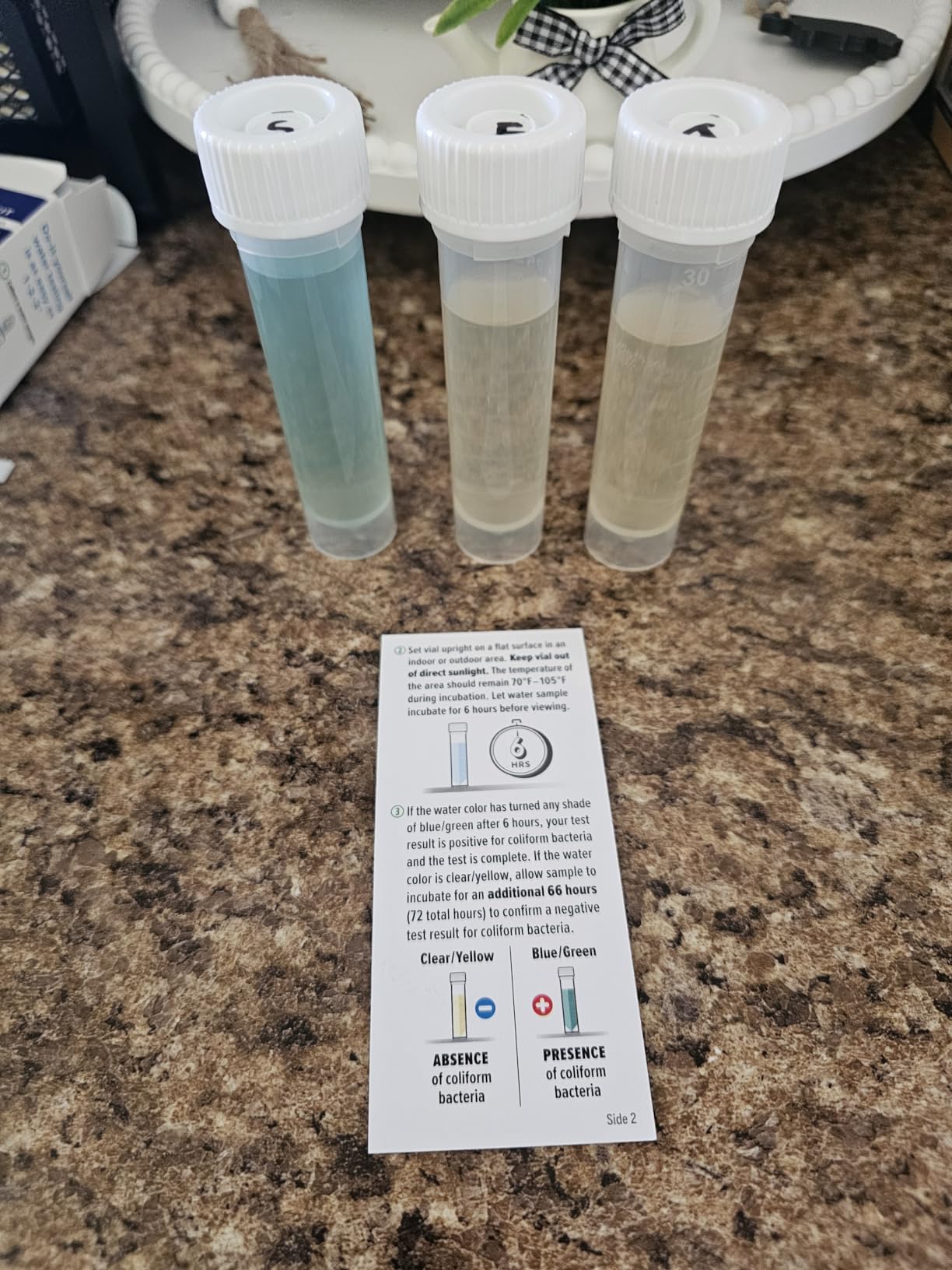
Bacteria is the contaminant a private well is most exposed to, and this kit targets it alone. It detects 50 species of coliform bacteria including E. coli down to a single organism, which is a finer threshold than most DIY options manage.
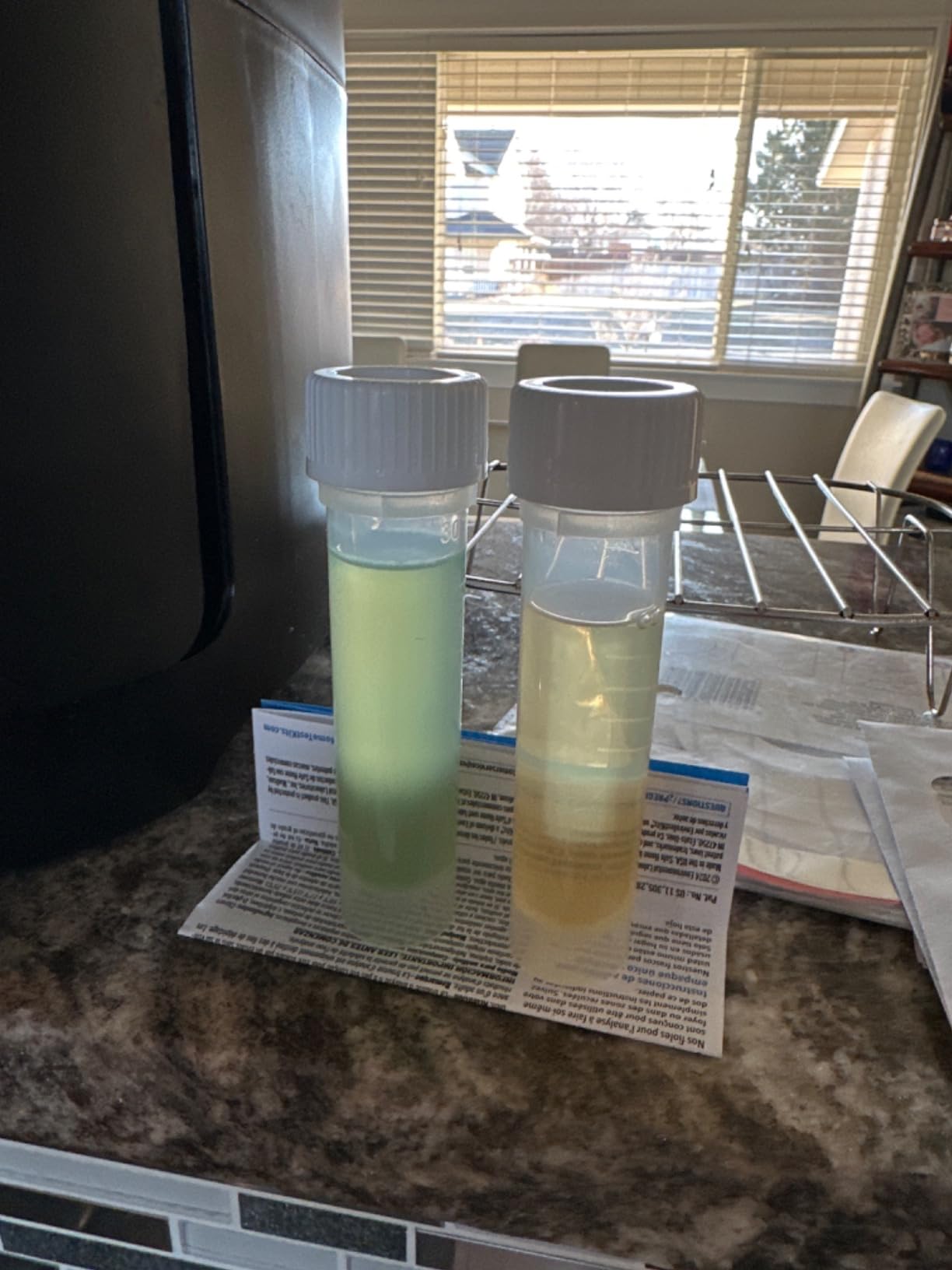
It carries the highest rating in this roundup for a simple reason: well owners report it matching county health department and laboratory results, including after pump repairs at the well head. The vials are sterilized by a third party before they reach you, which removes the most common false positive.
Results can appear in as little as 6 hours depending on concentration, though a low-level sample can take the full 72. You shake the vial again around the 24 to 48 hour mark and read it once more.
Can I use this to find which tap is contaminated?
Yes, and this is where it earns its place. If one fixture reads positive and the tap beside it reads clean, you have narrowed the problem to a specific housing, filter or piece of plumbing rather than the well itself. That saves a lot of guessing.
Flush the tap for a minute before sampling, then let it sit still so you are not measuring water that has been sitting in contact with metal.
What a positive result does not tell you
The answer is binary. You learn that coliform is present or absent, not which organism it is or how many organisms are in the water. That distinction matters for treatment, so a positive result should be followed by a laboratory panel that reports the species.
Fill the vial too full and the result skews, so follow the volume line exactly.
7. Safe Home DIY Lead in Drinking Water Combo Kit – Best After Plumbing Work
Safe Home DIY Lead in Drinking Water Combo Test Kit- (1 Pack)
Three detection levels: 0-4, 5-15 and 15+ ppb
5-minute results
Optional lab escalation
Trilingual instructions
Pros
- Three defined levels instead of a vague pass or fail
- Five-minute turnaround suits post-plumbing screening
- Several owners cross-checked against an outside lab
- Option to escalate the same sample to a certified lab
Cons
- Only one test panel per pack
- Dropper step can trap liquid and under-detect
- 4 ppb floor is not protective enough for young children
- Semi-quantitative rather than a specific number
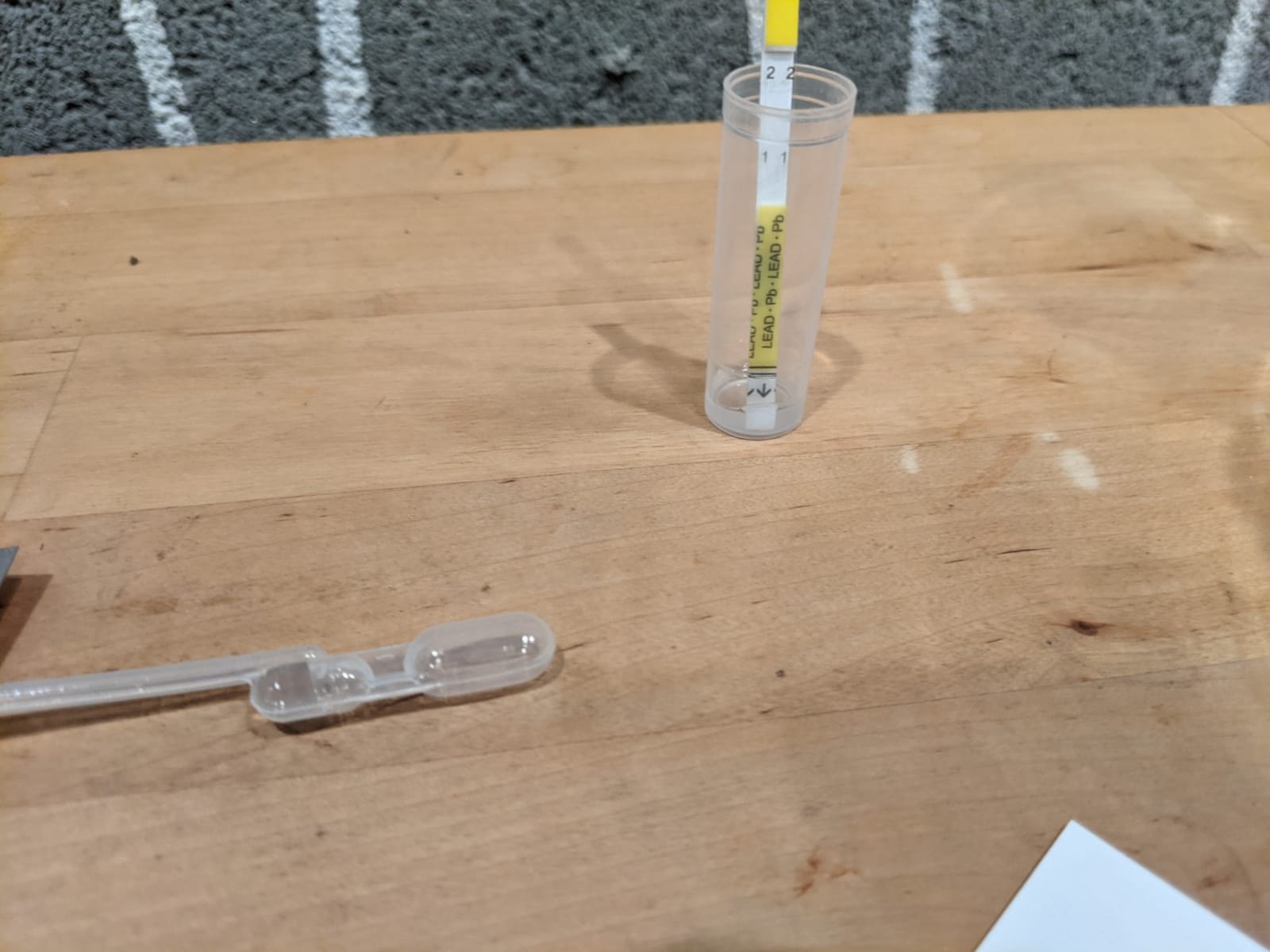
Where most lead strips give you a vague sense of whether the pad changed colour, this one gives you three defined bands: 0 to 4 ppb, 5 to 15 ppb, and 15 or more. That is far more useful when you have just replaced a lead service line or had work done on an older house.
The whole test takes five minutes, and the box includes materials to send the same sample to an EPA-certified laboratory if the reading is not what you hoped. Owners dealing with a faucet recall repeatedly mention how useful that five-minute loop was.
Instructions come in English, French and Spanish, which is more than most kits in this roundup offer.
Is a 0-4 ppb reading good enough for my children?
Not on its own, and reviewers say so directly. There is no safe level of lead for young children, and a kit with a 4 ppb floor cannot tell you whether the true value is 1 ppb or 4 ppb. Treat a clean band as a screening pass and confirm with a laboratory if anyone in the household is small.
Pay attention to the dropper step. Liquid trapped in the cap or the vial can under-detect, so drain it fully before transferring.
Which fixture should I sample?
Take a first-draw sample from a tap that has been unused for at least six hours, with the aerator removed. That is the standing water most likely to have picked up lead from solder, and it is the sample the action level is written against.
For a full picture of metals in general, see our heavy metal test kit guide.
8. HEVEIS 21-in-1 Home Water Test Kit – Clearest Chart and Record Card
21-in-1 Home Water Test Kit for Drinking, Tap & Well Water – Easy to Read
21 parameters
120 strips plus 4 bacteria tests
124 tests total
Record card and color chart included
Pros
- Largest bacteria test count in this group at four
- Record card makes trend tracking straightforward
- EPA standards guide explains what each reading means
- Three steps a non-specialist can follow
Cons
- Bacteria tests need incubation unlike instant strips
- Single colour variant limits choice
- Exact numeric values require contacting the brand
Twenty-one parameters covering lead, iron, fluoride, pH, copper and hardness, plus 120 strips and four complete bacteria tests. That works out at 124 tests in one box, the highest total count we found in the strip category.
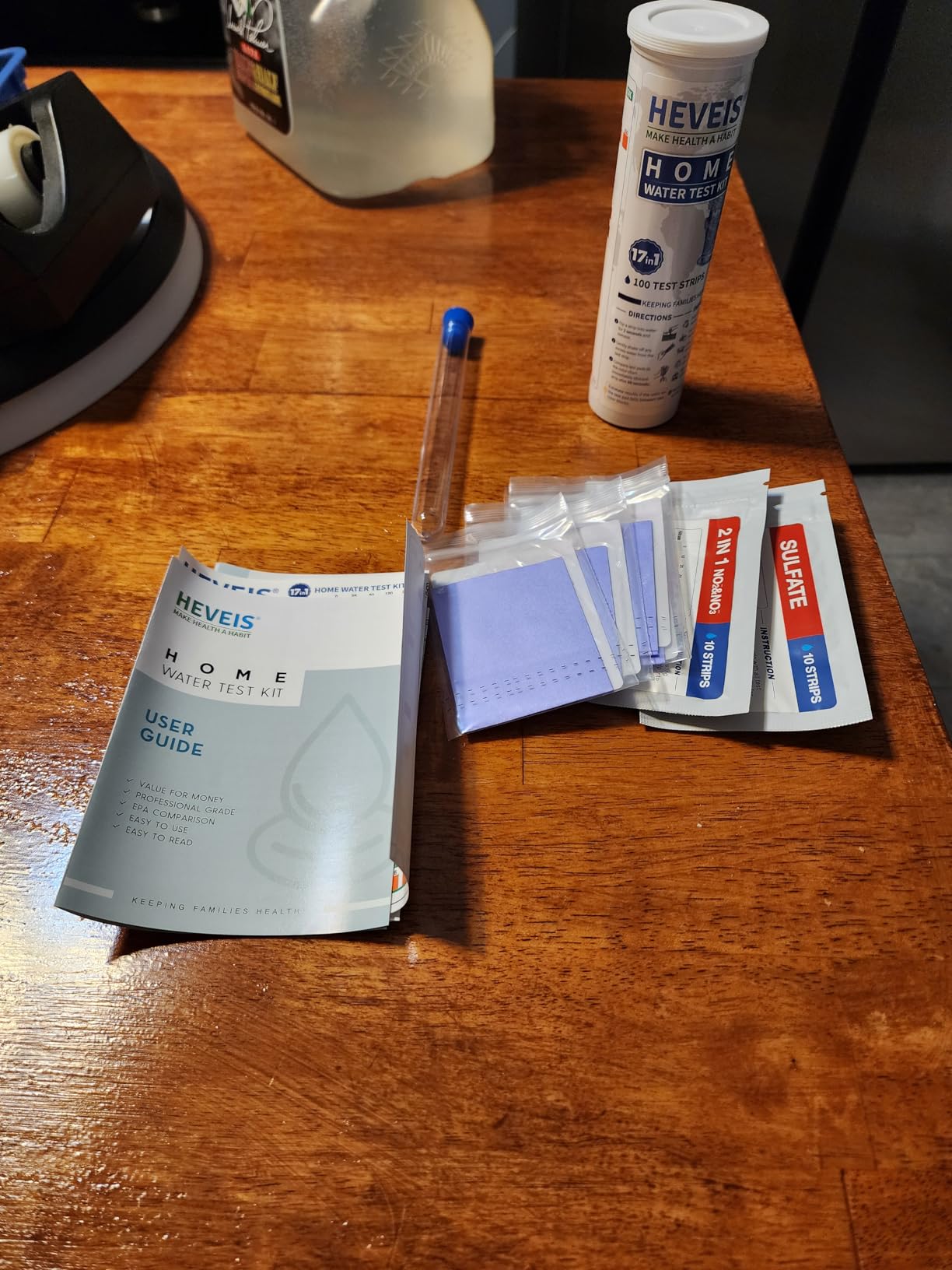
The report readability problem that owners complain about most is largely solved by the standalone colour chart and the record card. Owners can log a reading, file it, and compare against the same parameter three months later without relying on memory.
The included EPA standards guide is a small thing that makes a big difference, because a number means nothing until you know the limit to compare it against.
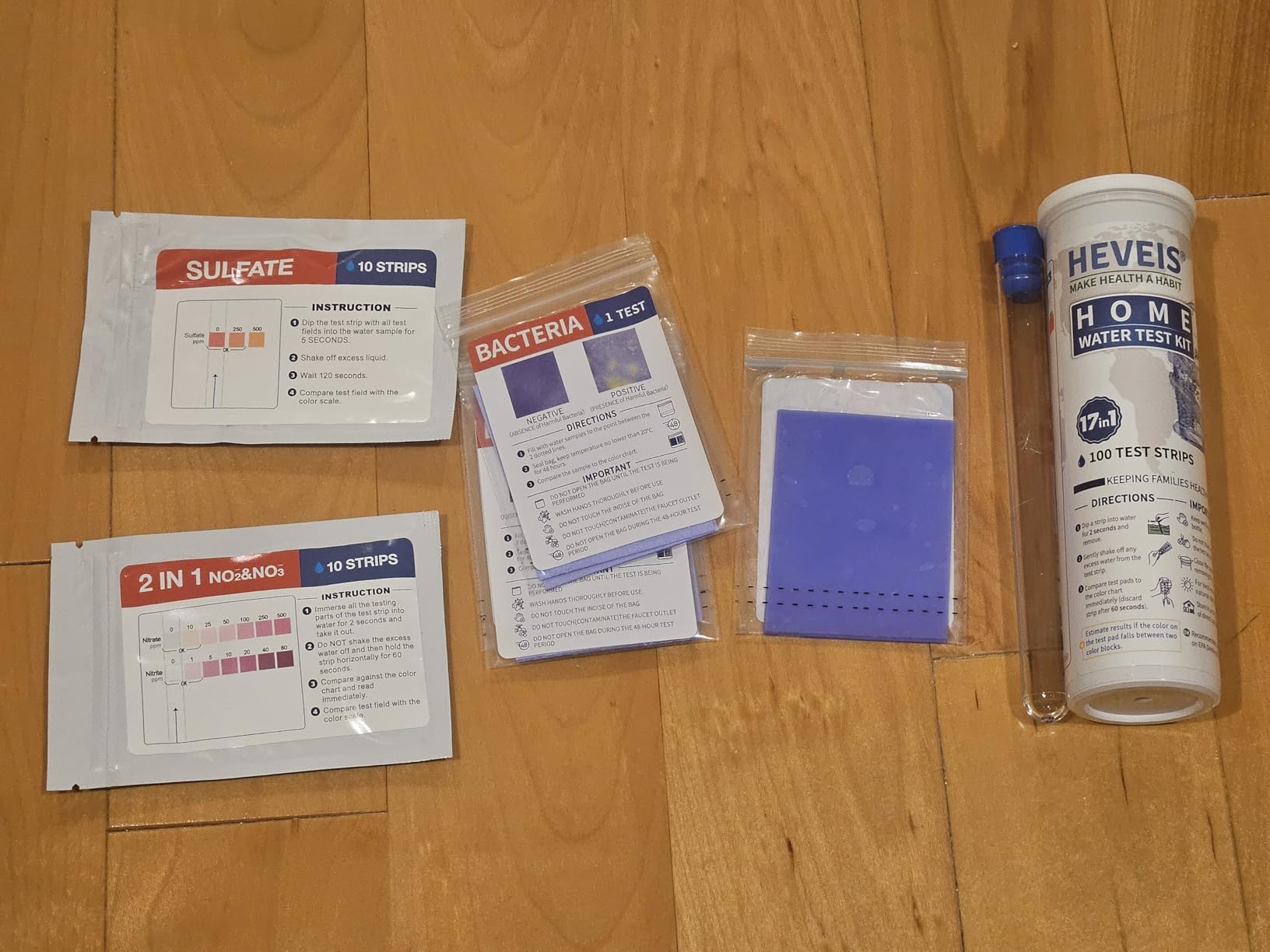
Why four bacteria tests matter for a well
Bacteria results are the slowest part of any well test because they need incubation. Having four in the box means you can check the well, check a filter housing and check two taps after a plumbing job without buying anything else.
Plan for the wait. The chemical strip reading is instant while the bacteria vials take hours, so read the strips first if you want one sitting with the colour chart.
Is a screening chart enough for a health decision?
No, but it is enough to decide whether you need one. This kit is well suited as the annual snapshot that tells you whether a laboratory panel is worth ordering this year.
Support is available by live chat and email if a reading falls outside the printed ranges and you cannot tell what it means.
9. AAwipes 17 in 1 Water Test Strips – Our Most Versatile
AAwipes Drinking Water Test Strips 17 in 1 50 Strips + 2 Bacteria Tester Kits, Complete Water Testing Kits for Home, Well, Tap Water, City Water, Flood Water Testing Strips (K03-50)
17 parameters
50 strips plus 2 bacteria tests
2-second dip and 30-second read
Covers home, well, tap, city and flood water
Pros
- Lowest entry point in this roundup while still including bacteria tests
- Good for comparing different water sources
- Simple 2-second dip and 30-second wait protocol
- Extra strip packs available for longer use
Cons
- A verified buyer with a professionally tested well found iron and manganese readings did not match
- Colour chart has fewer blocks than the kit has pad colours
- Measurements are coarse summary checks
- English-only instructions
This is the kit to try if you want a general picture of your water for very little. Seventeen parameters including chlorine, fluoride, lead, iron and bacteria, with 50 strips and two bacteria test kits that report within 48 hours.
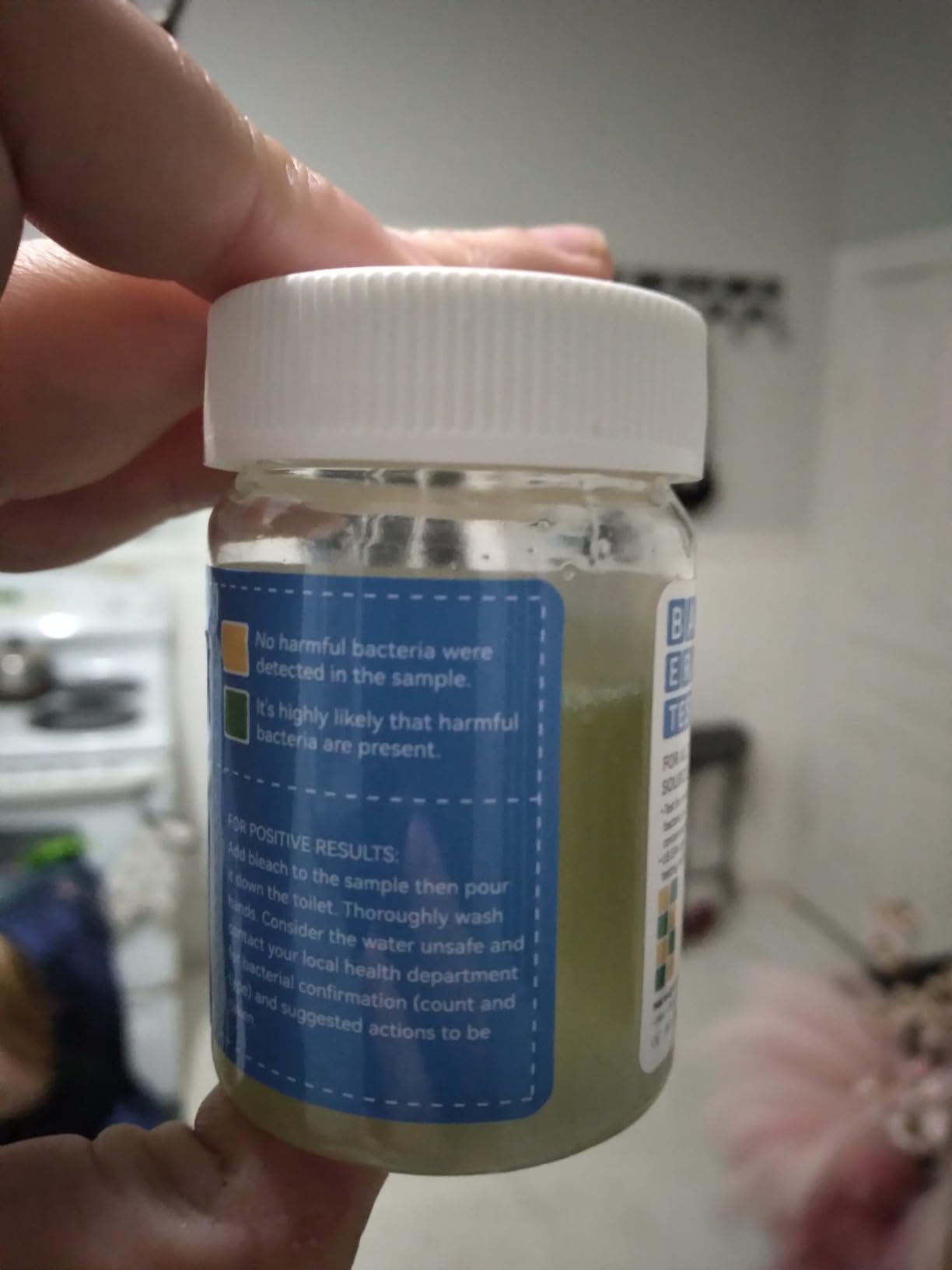
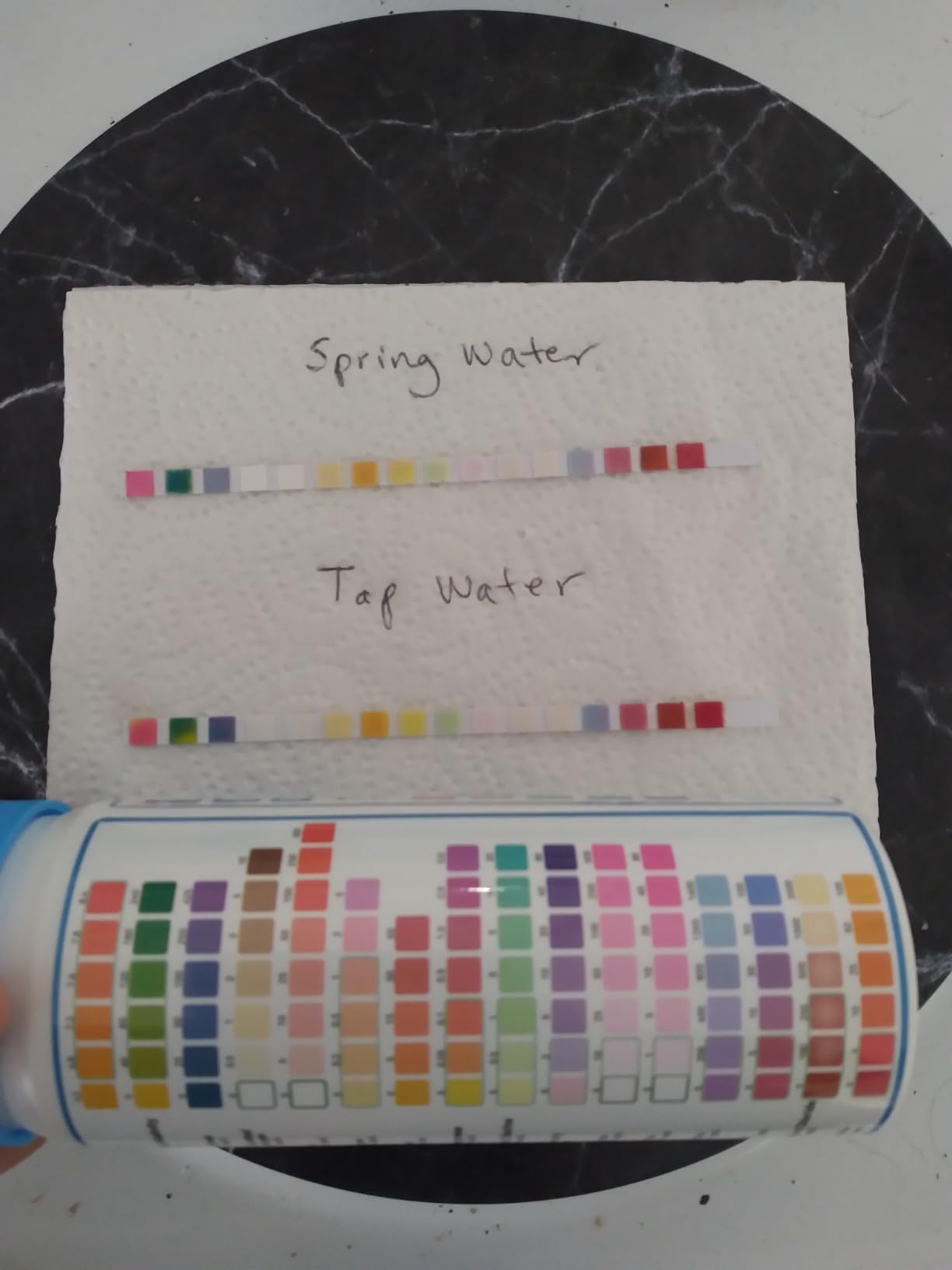
The protocol is refreshingly clear: dip for two seconds, shake off the excess, wait 30 seconds, compare to the bottle chart. Owners use it to contrast tap water against bottled or filtered water, and the box is explicitly marketed for flood water testing, which matters after heavy rain when runoff reaches a shallow well.
Its weakness is documented rather than hidden. One verified buyer with a professionally analysed well found the iron and manganese readings simply did not match, and stopped trusting the rest of the chart as a result.
When a budget kit is the right choice
If you have never tested your well at all, a kit that gives you a rough map for very little is better than no data at all. Use it to find out which parameters look odd, then spend your money on a laboratory panel for those specific problems.
It is also the practical choice for a rental, a cabin or a property you are watching remotely, where a full panel is disproportionate.
When it is the wrong choice
Skip it if anyone in your household is an infant, if your well is near a farm or a known fuel spill, or if you are trying to settle a property dispute. In those situations the coarse readings can be challenged and the ambiguity is not worth having.
It also has more pad colours than the printed chart has blocks, so match carefully rather than guessing.
10. Palinoia 24 in 1 Complete Drinking Water Test Kit – Most Strips and Specialty Metals
24 in 1 Complete Drinking Water Test Kit, 165 Strips + 2 Bacteria Tests
24 parameters
165 strips in 9 pouches
Storage bottle included
2 bacteria jars for E. coli and coliform
Pros
- Highest strip count we found at 165 across nine pouches
- Specialty strips cover sulfate
- aluminum
- chromium
- tin and nickel
- Storage bottle keeps unused pouches potent
- One owner's results matched a professional test
Cons
- Strip colours can run and make reads harder
- Some reviewers find results less accurate than the images suggest
- Badly contaminated water did not register as strongly as expected
- Specialty strips use separate instructions
- Only two bacteria jars included
The main strip reads sixteen parameters in about a minute, then specialty strips cover nitrate, nitrite, sulfate, aluminum, chromium, tin and nickel. Twenty-four parameters in total, and the metals most well kits skip entirely are the reason this one is in the list.
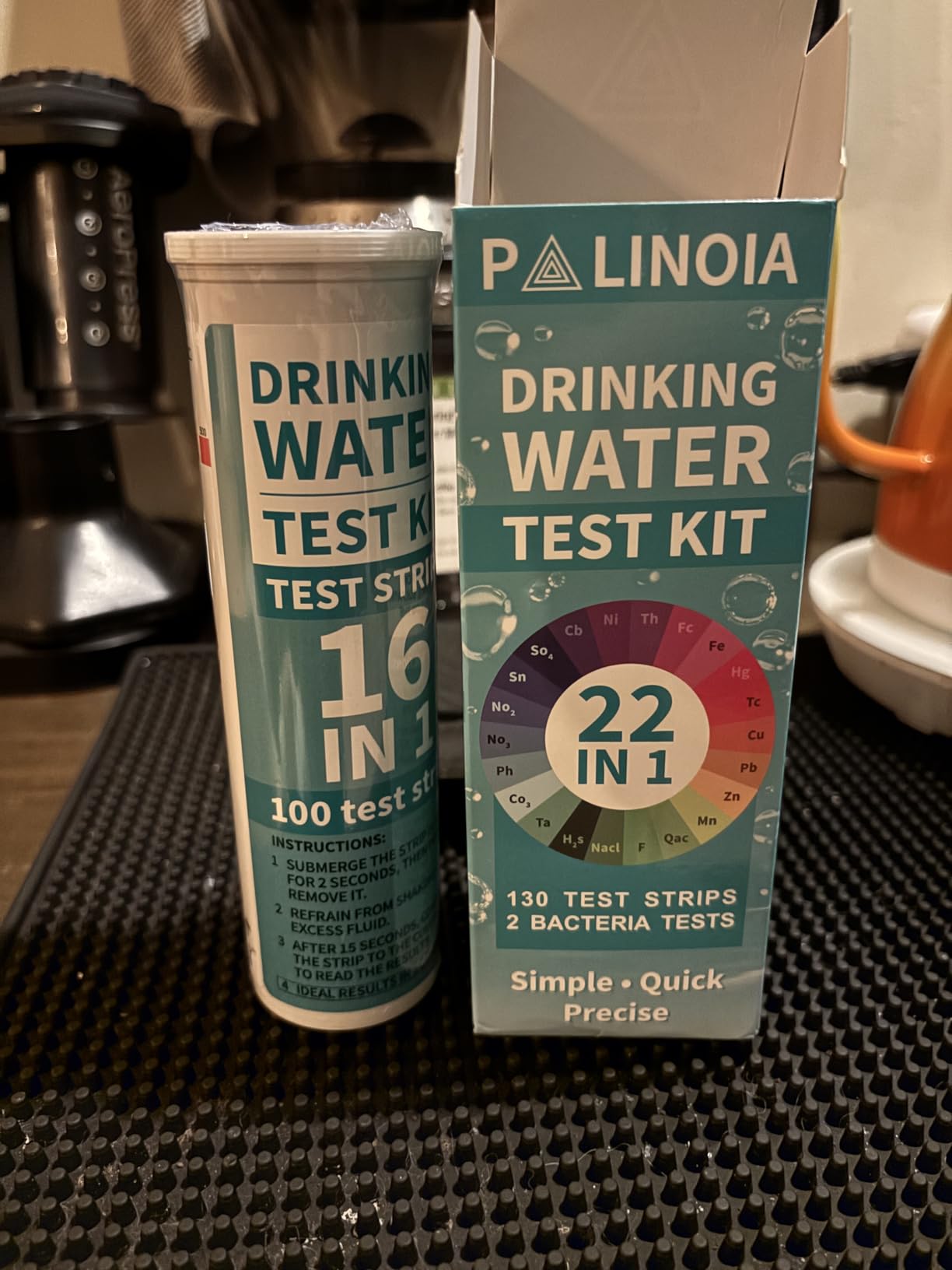
Packaging is unusually thoughtful. 165 strips come across nine pouches, five main pouches of 25 and four specialty pouches of 10, and a storage bottle keeps unopened strips potent. A reference guide with EPA-based values and a record log round it out.
One owner reported that their professional test matched the kit results closely, which is the outcome you want. Others have found that genuinely poor water did not light up the pads as strongly as expected.
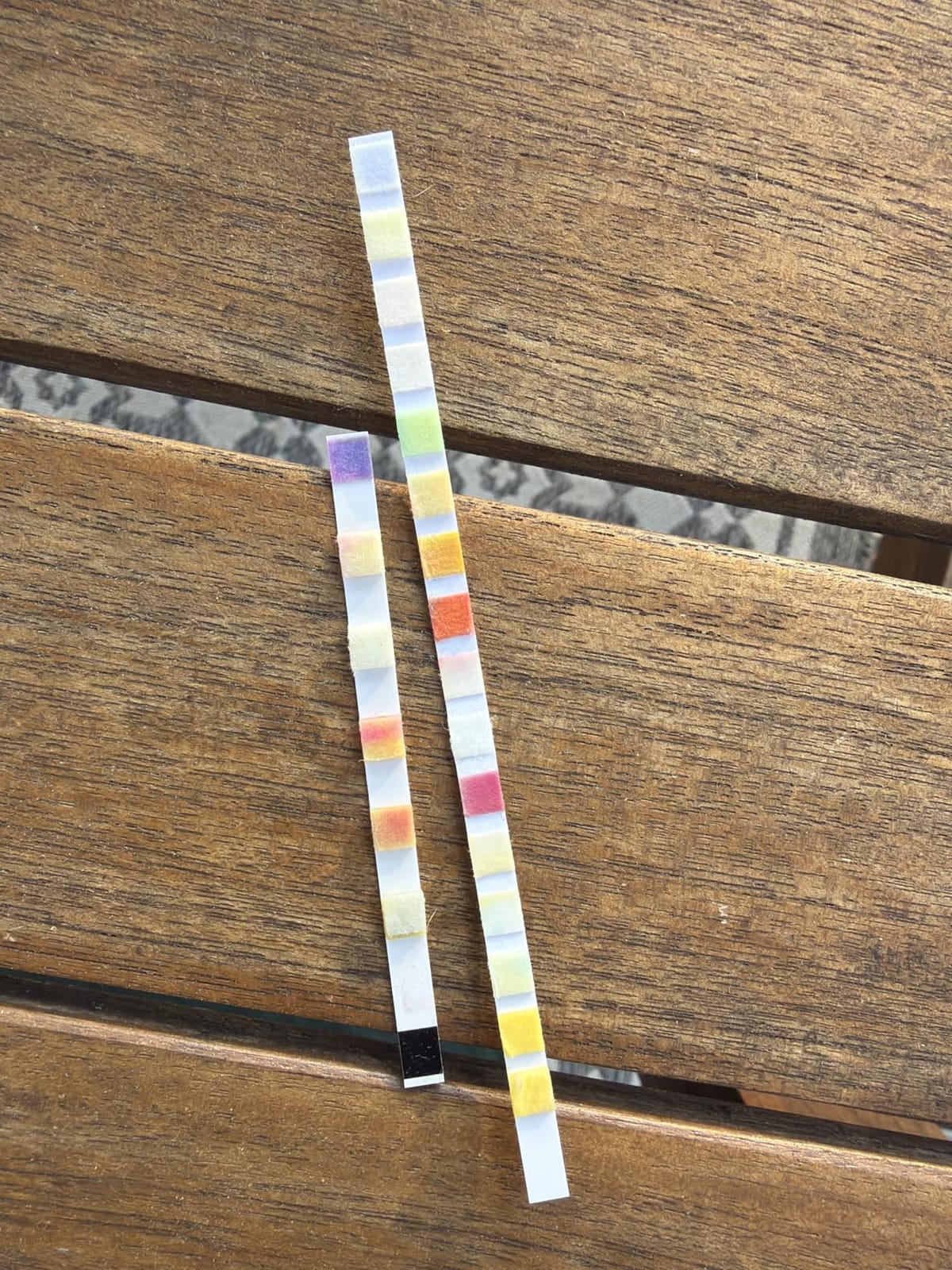
When specialty metal strips justify the extra work
Sulfate is the one most owners should care about, because high sulfate combined with a low pH is what makes copper pipe corrode. Aluminum and chromium matter if you are near industrial land or an old landfill, and nickel is a regional geology issue rather than a treatment one.
They need separate instructions, so read both sets before you start rather than guessing mid-test.
How many bacteria tests do you actually get?
Two jars, one for E. coli and one for total coliform. That is enough to run a single check, not enough to test a house fixture by fixture, so pair it with a bacteria kit if you need to isolate a problem.
Colour bleed is the recurring complaint, so read the pads on a timer and hold the strip flat.
11. Leaping Lynx E. coli O157 Water Test Kit – Bacteria Answer in 15 Minutes
E. coli O157 Bacteria Water Test Kit – 15-Minute Rapid Drinking Water Test for Well, Tap, City, Pool & Spa Water – E. Coli Water Quality Testing Kit for Home, Easy At-Home Bacterial Screening
Lateral flow cassette
Results in 5 to 15 minutes
Sensitivity to 10^3 CFU/mL
Single-use kit
Pros
- Fastest bacteria result we found
- Objective cassette read with no colour guessing
- Compact format suits cabins and seasonal properties
- No incubation or lab step at all
Cons
- Single-use so every extra test needs a new kit
- Bacteria only with no metals or hardness
- 10^3 CFU/mL threshold is coarser than incubation tests
- Cassette lines can be faint in light samples
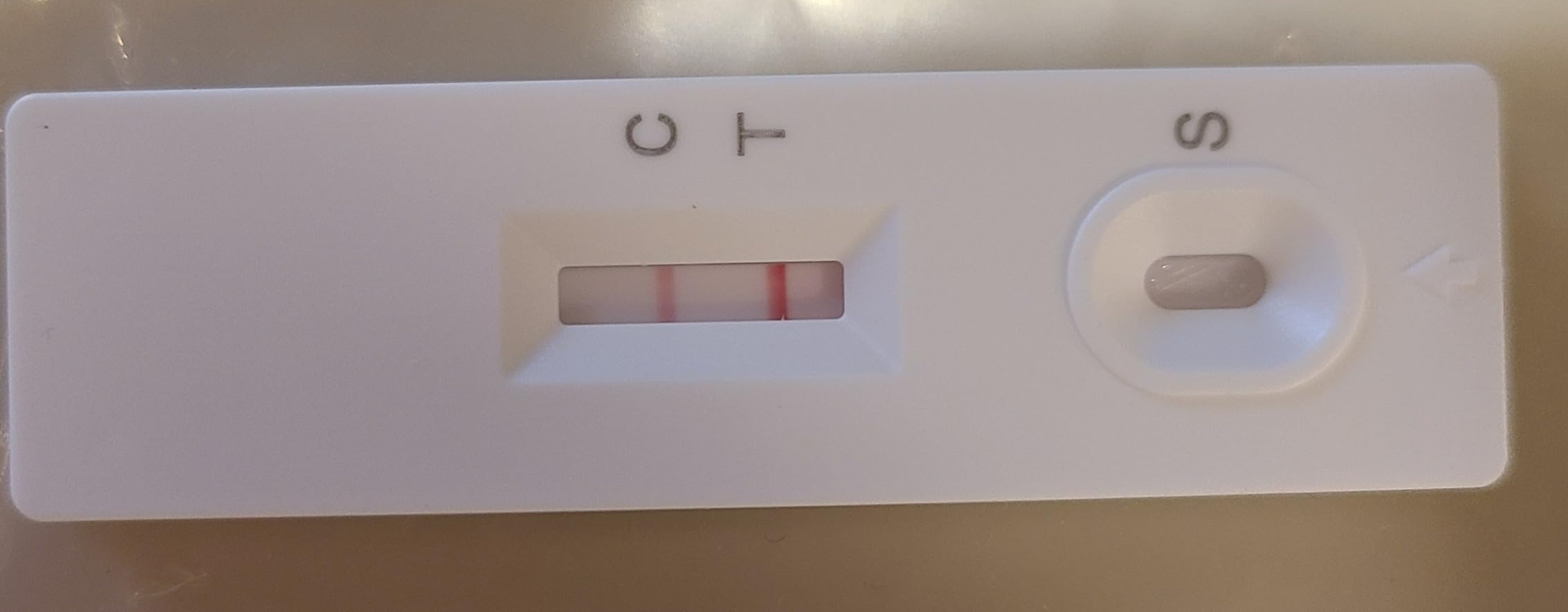
Everything else in this roundup that measures bacteria needs hours or days. This one uses a lateral flow cassette and gives you an answer in 5 to 15 minutes, with three steps: sample with the pipette, mix with the reaction buffer, apply to the cassette.
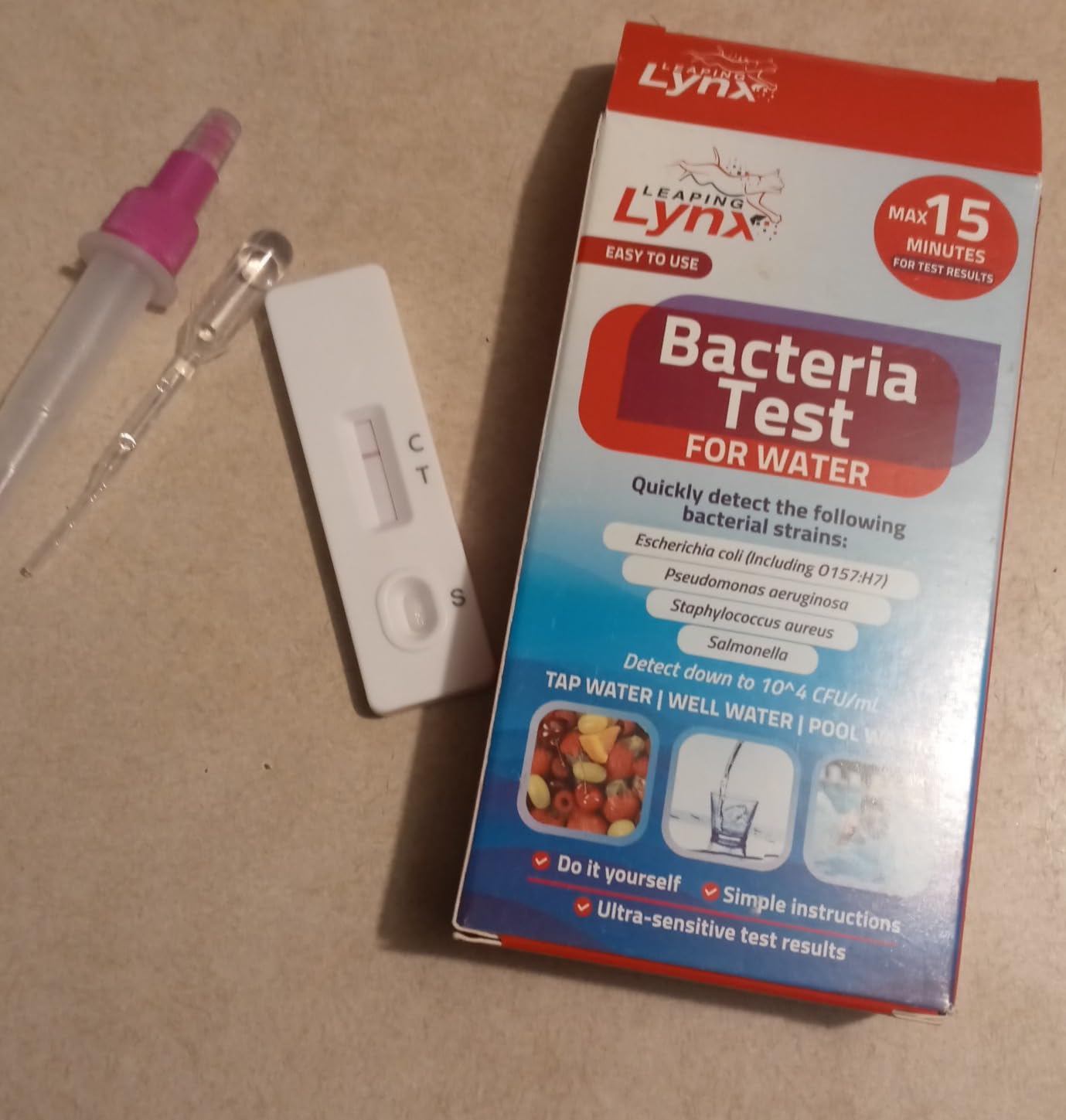
That speed is why owners buy it. For a seasonal cabin, an RV, a rental property or a pre-purchase check, waiting 48 to 72 hours for an incubation result is often impractical, and this removes the wait entirely.
The cassette read is also far more objective than a colour chart. Two lines or one line, with no shading to argue about.
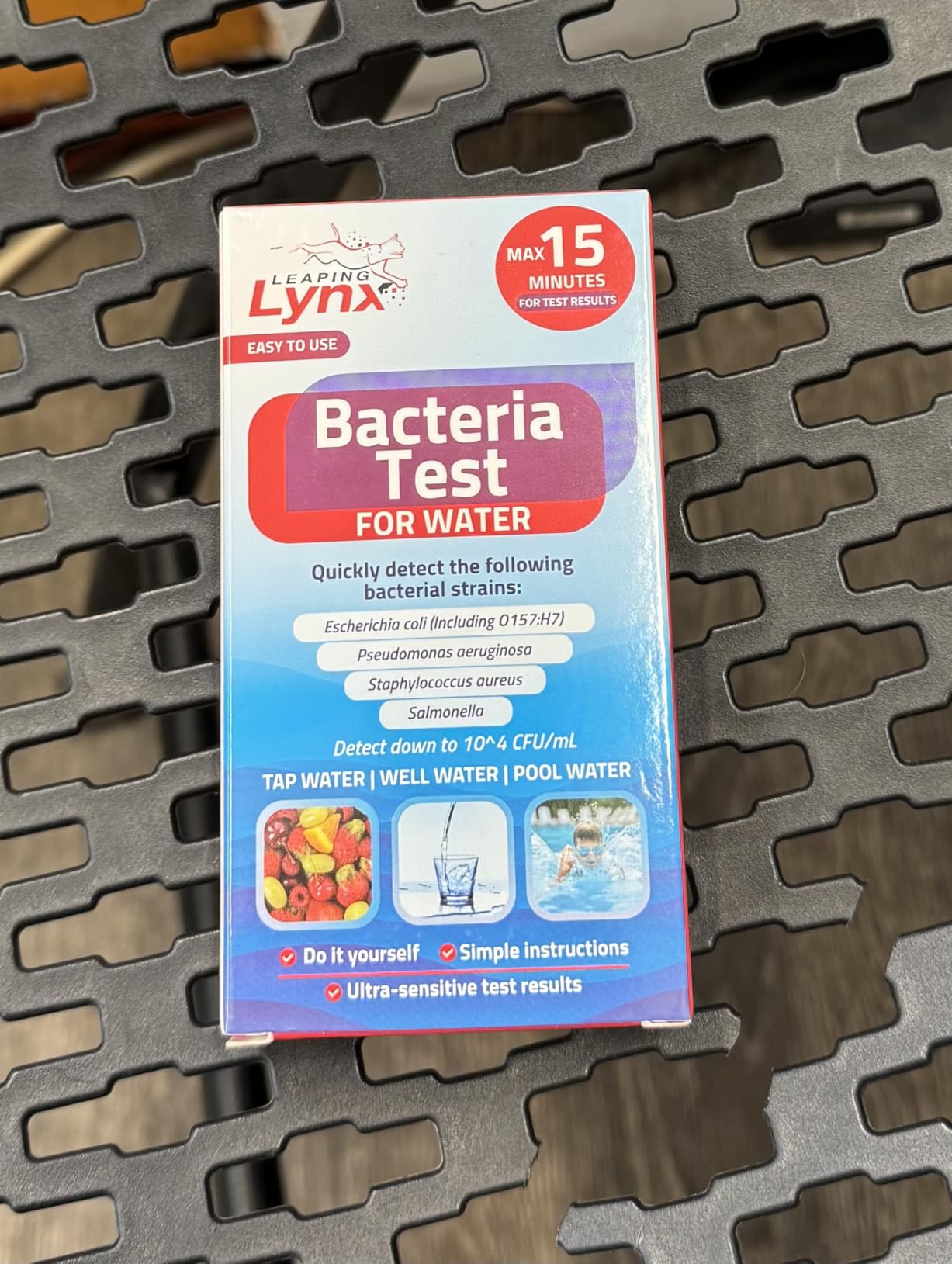
Is 10^3 CFU/mL sensitive enough for a well?
It is coarser than an incubation-based bacteria test, which means a lightly contaminated sample can read clean. For emergency screening after flooding or for a property you are about to close on, that is a genuine limitation.
Use it as a fast first look and confirm anything ambiguous with the Safe Home bacteria kit or a laboratory.
What it does not do
There is no lead, no nitrate, no hardness and no pH here. It is a single-purpose kit, and treating it as a general water test would be a mistake.
Owners who buy it for a seasonal property pair it with a multi-parameter strip kit so they cover chemistry and bacteria in the same trip.
12. Tap Score Advanced Home Water Test – the Only Certified Lab Panel Here
Advanced Home Water Test Kit | Well or City | EPA Certified Drinking Water Labs | Tests for: 116 Analytes, incl. Lead, Copper, Hardness & Alkalinity and More | #1 Best Home Water Test – Wirecutter
116 analytes
EPA/NELAC/ISO certified labs
Pre-paid return shipping
5 business day turnaround
12-month shelf life
Pros
- Only option here that returns certified laboratory data
- 116 analytes catch arsenic
- manganese and uranium that no strip covers
- Pre-paid return shipping and clear sampling instructions
- Report explains health implications and filtration options
Cons
- Costs several times more than strip kits and needs a lab round trip
- About 5 business days after the lab receives the sample
- 12-month shelf life so unused kits expire
- Does not replace periodic retesting
Everything else on this list is a screening tool. This is a laboratory analysis you mail yourself, and the difference matters when you are making a decision you might have to defend to a buyer, an insurer or a health authority.
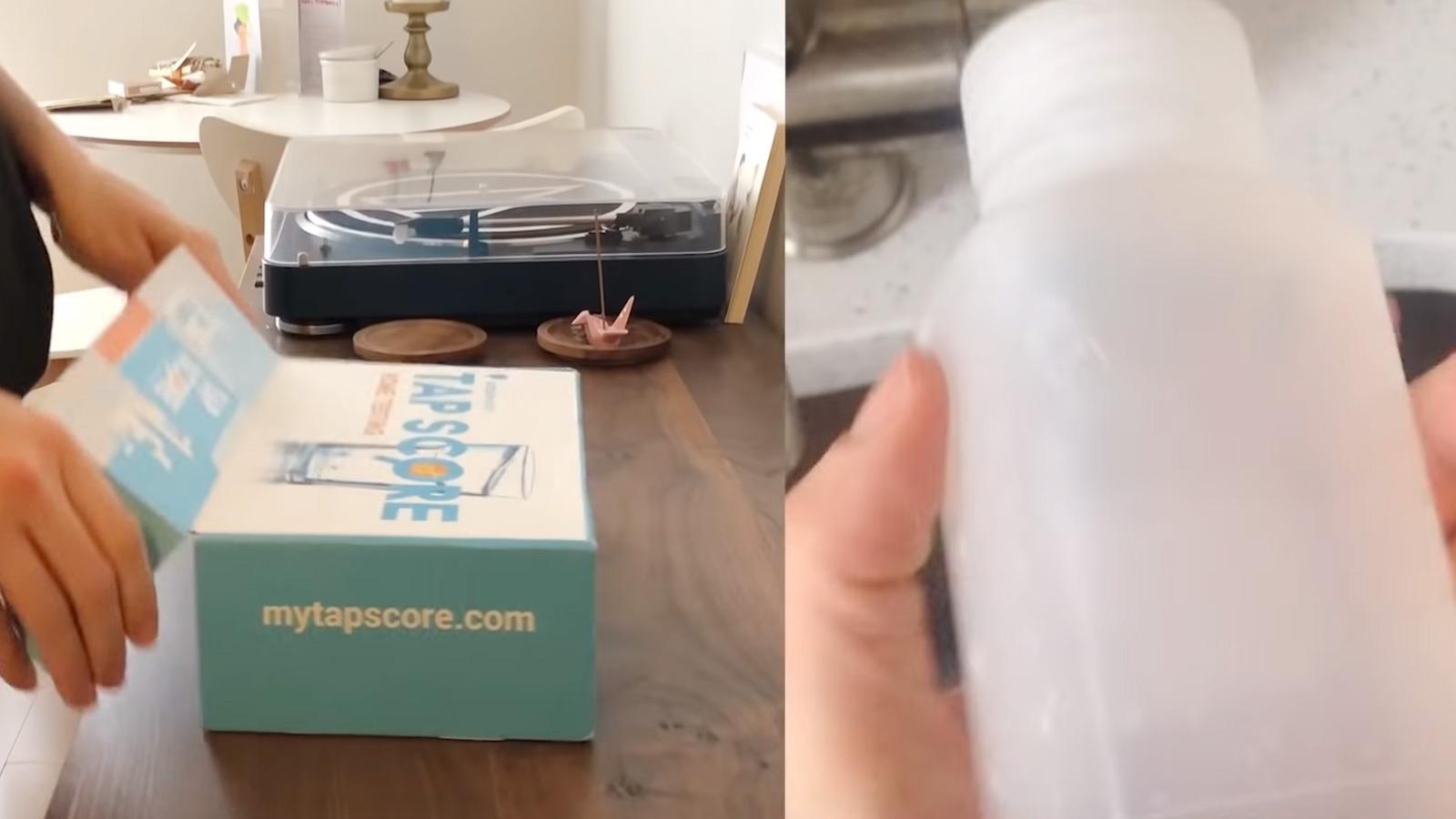
It measures 116 analytes. The metals panel alone covers aluminium, antimony, arsenic, barium, beryllium, cadmium, chromium, cobalt, copper, iron, lead, manganese, mercury, molybdenum, nickel, selenium, silica, silver, thallium, tin, titanium, uranium, vanadium and zinc, alongside coliform and E. coli bacteria, disinfection byproducts, nitrates, pH, hardness and alkalinity.
Analysis runs through a network of EPA, NELAC and ISO certified and state certified laboratories. Sampling materials, instructions, pre-paid return shipping and a readable report are all in the box, with a five business day turnaround once the lab has your sample.
Why a score out of 100 tells you less than the numbers
Owners regularly post composite scores online without knowing what they mean, and those posts attract more confusion than help. The report lists each analyte with its measured concentration and compares it to the relevant limit, and that comparison is the part that drives treatment decisions.
If you order this kit, read the analyte table rather than the headline score.
Who this is worth it for
Owners closing on a rural property, anyone whose well sits near farming or industrial land, and anyone whose water tastes or smells different after flooding. It is also the sensible baseline to take before buying a whole-house filtration system, so you can size it against measured contaminant levels.
The twelve-month shelf life means buy it when you intend to use it, and accept that well water changes seasonally, so one panel does not last a decade.
How to Choose Water Test Kits for a Private Well: The Four Archetypes
Every kit on this list falls into one of four groups, and choosing the wrong group is the most expensive mistake a well owner makes.
1. DIY strip kits. Multi-parameter strips read 16 to 24 parameters in about a minute for very little money. Use them for routine monitoring, for comparing fixtures, and for checking whether a filter is still working. Do not use them to settle a health question.
2. Contaminant-specific kits. A bacteria-only kit or a lead-only kit concentrates on one parameter with a defined detection range. These are the most useful after a specific event, such as a plumbing replacement, a flood, or a taste change in one tap but not another.
3. Mail-in lab panels. You fill included bottles, ship them to a certified laboratory and receive exact concentrations in parts per billion or parts per trillion, usually within a week. These are the only defensible option for a health decision, a property transaction, or anything involving an infant.
4. Professional meters. Handheld instruments read pH, total dissolved solids and electrical conductivity on site. Useful for a softener salesman or a plumber sizing equipment, but they are not contamination tests and they do not replace the other three.
A practical combination is a strip kit for the monthly or quarterly check, one bacteria test each year, and a lab panel every few years or after any event that changes what is in the ground near you.
What Each Water Test Kit Type Can and Cannot Tell You
Strip kits can give you a directional picture of pH, hardness, iron, alkalinity, chlorine and roughly metals, fast enough that you will actually use them. They are excellent for tracking whether a treatment system is still doing its job.
Strip kits cannot give you a defensible concentration. If a well owner needs to know whether nitrate is above the limit for an infant, a colour match is not an answer. Reviewers across every kit in this roundup repeat the same rule: screening first, laboratory second.
Bacteria-specific kits can confirm presence or absence of coliform quickly and cheaply, and the sterilized-vial designs reliably match county lab results. They cannot tell you which organism is present or at what concentration, and a negative on a coarse threshold can hide light contamination.
Lab panels can give you certified numbers across more than a hundred analytes, which is what makes them the only option for a property sale, a treatment decision or a health-driven decision. They cannot tell you about anything not on the panel, and radon is on none of them.
That last point is the coverage gap worth understanding before you buy anything.
How to Sample Well Water So Your Result Is Valid
No competitor in this category documents sampling technique, yet a bad sample is the most common way well owners waste money on an expensive laboratory panel. Follow these steps and the same kit will give you a result worth acting on.
1. Decide what you are testing for. Microbial and metal questions need different samples. A first-draw sample suits lead and copper from plumbing. A flushed sample suits chemistry, hardness and pH. A wide-pore clean bottle supplied by the kit suits bacteria.
2. Clean the tap before you sample. Remove the aerator and any strainer, wipe the spout with a clean cloth, and let cold water run for two to three minutes. For a first-draw lead sample, skip the flush entirely and let the tap sit unused for at least six hours beforehand.
3. Sample as close to the well as possible when possible. Well owners on this topic consistently advise testing at the well head or pressure tank, because that isolates the aquifer from your own plumbing. Run the sample cold, since hot water sits in a heater long enough to change the result.
4. Read strips on a timer. Dip, shake, and compare inside the window the brand specifies, in daylight. Pad colours bleed, and a strip read at the wrong moment is a guess.
5. Ship lab samples fast and cold. Put the bottles in a cooler with ice packs and mail them early in the week so the sample does not sit in a depot over a weekend. Most laboratories specify a holding time, and a late sample can be rejected.
Step three is the one people get wrong most often. Testing at the kitchen tap measures your pipes as much as your water, which is useful for lead and misleading for everything else.
How Often Should Well Owners Test Their Water?
Every year: total coliform and E. coli bacteria. Aquifer conditions shift with rainfall, freeze-thaw cycles and nearby land use, so an annual bacteria check is the baseline recommendation even when nothing has changed.
Every year if a household includes an infant, is pregnant, or has an elderly member: nitrates and nitrites, because infants are the group most vulnerable to nitrate contamination and they cannot tell you how the water tastes.
Every two to three years: a full laboratory panel covering metals, including arsenic if you are on granite or sedimentary bedrock, plus nitrates and disinfection byproducts.
Immediately, not on schedule: after flooding or heavy rainfall near a shallow well, after any work on the well, pump, casing or nearby land, after a flood or a chemical spill within a reasonable distance, after a change in taste, colour or odour, or immediately when buying a property with a well.
Never on a schedule: radon. If you are in a region with known radon in groundwater, test it once and act on the result, because no amount of annual retesting changes the geology.
Where to Get Well Water Tested for Free
Before you order any kit on this page, check whether your state already does it for nothing. Many county and state programmes run free or heavily subsidised coliform and nitrate screening, and users on water treatment forums consistently say they had no idea this existed until they were told.
1. Call your county or city health department. Ask specifically for their private well water screening programme. Coliform and nitrate are usually free because they are the two things most likely to make someone ill.
2. Check your state health or environmental agency. State certified drinking water laboratories run routine testing at cost, often well below what a mail-in panel charges, and some states subsidise the sample bottle itself.
3. Ask your county extension office. Extension services in agricultural counties often run water testing events in spring, aimed at nitrate and pesticide concerns.
4. Ask the seller before you close. In many states a seller is required to disclose well water testing results within a set period. If there is a report, read it before you decide whether to retest.
Home improvement stores such as Home Depot do not perform laboratory well water testing. They sell kits and, in some markets, run free hardness or pH demonstrations that are useful for sizing equipment but say nothing about contamination.
If your local programme does not cover the contaminant you are worried about, that is when a mail-in panel is worth paying for.
What to Do After a Failed Well Water Result
A failed result is not a disaster if you know the order of operations.
First 24 hours if coliform is positive: treat the water as unsafe for drinking. Boil it for one minute at altitude, three minutes above 6500 feet, or use bottled water. Boiling kills bacteria; it does nothing about nitrates, lead or arsenic, which is why a bacteria result needs a follow-up panel rather than a kettle.
If E. coli specifically was detected: stop drinking it entirely, including for cooking, until the source is identified and cleared. E. coli indicates faecal contamination and warrants more caution than total coliform.
Next one to three weeks: re-sample to confirm the result is real. A single strip or vial can produce a false positive, especially if collection was careless. Confirm with a laboratory before you spend money on treatment.
If confirmed: look at the cause before the cure. A failing casing or a loose sanitary cap needs repair, not a filter. A flooded wellhouse needs the floodwater excluded. A cracked casing near a livestock pen needs the pen addressed. Installing UV or a chlorinator before the source is fixed means buying a second system later.
Choose treatment to match the contaminant. Bacteria responds to chlorine, UV or an iron filter. Nitrates need reverse osmosis or ion exchange. Arsenic needs a certified arsenic media. PFAS needs reverse osmosis or a GAC system. Lead is usually addressed at the plumbing rather than the well.
Our well water softener guide covers the hardness and iron side of that decision if the panel shows heavy mineral content.
Radon: The Contaminant None of These Kits Measures
Not one of the twelve kits in this roundup measures radon, including the 116-analyte laboratory panel. That is a genuine coverage gap rather than an oversight on your part.
Radon is a radioactive gas that dissolves directly into groundwater and carries no taste, no colour and no smell. It is also the second leading cause of lung cancer in the United States, and the EPA recommends that it be tested separately rather than as part of a general drinking water panel.
If you are on granite or sedimentary bedrock, buy a radon test designed for water rather than the air test most hardware stores sell, and follow it with a certified laboratory measurement. Short-term air tests do not measure water.
Once radon is confirmed, the usual treatments are aeration and point-of-use filtration. Start with aeration, which is generally the lower maintenance option, and size it from a measured result.
Frequently Asked Questions
Are home well water test kits accurate?
Strip kits are screening tools. They reliably show relative differences between samples and are good at tracking pH, hardness, iron, alkalinity and whether a filter still works, but a colour match cannot confirm whether lead is at 6 ppb or 60 ppb. For any health decision, a property sale, or a household with an infant, use a certified laboratory panel. Use strips to decide which parameters deserve a laboratory test.
What is the best way to test my well water?
The best approach is two-layer. Keep a multi-parameter strip kit for routine quarterly checks and comparing fixtures, run one bacteria test each year, and send a full laboratory panel every two to three years plus immediately after flooding, well work, or a change in taste. Sample as close to the well as possible, remove the aerator, and follow the first-draw or flushed protocol your kit specifies. Test after heavy rain if your well is shallow.
Which water test kit is the most accurate?
Accuracy comes from the laboratory, not the kit format. Among the twelve we compared, the Tap Score Advanced panel is the only one that returns certified laboratory data rather than a screening estimate, with 116 analytes analysed through EPA, NELAC and ISO certified labs. Among home kits, the Safe Home bacteria test matched county laboratory results most consistently in owner reports. For metals, the Watersafe kit detects lead down to 5 ppb.
What is the best kit to test for hard water?
A multi-parameter strip that reads total hardness on a clear colour scale. The TESPERT 16in1 is a good pick because the brand publishes a 30 to 45 second timing window and daylight guidance, which removes most colour-matching ambiguity. For sizing a softener, confirm the reading with a laboratory or a handheld meter, since strip hardness readings can drift from professional measurements. If sulfate is high alongside low pH, treat that reading as a plumbing warning too.
Where to get well water tested for free?
Start with your county or city health department and ask for the private well screening programme, which usually covers coliform and nitrate at no charge. Your state health or environmental agency runs a certified laboratory that tests at cost, and county extension offices in agricultural areas often hold testing events in spring. Home improvement stores sell kits but do not perform laboratory well water testing. Check whether a seller has already disclosed a recent report.
Can you drink well water with coliform bacteria?
Not until it is confirmed clear. Treat any positive coliform result as unsafe for drinking, and boil water for one minute, or three above 6500 feet, or use bottled water until you understand the source. Boiling handles bacteria only, so a positive result also needs a laboratory panel to check for nitrates, arsenic and other contaminants. If E. coli specifically was detected, stop drinking the water entirely and identify the source, which is often a cracked casing or a failed sanitary cap.
Final Verdict: Which Water Test Kit Should You Buy?
If your well has never been tested, start with the VARIFY 17-in-1. One hundred strips, two bacteria tests and seventeen parameters will tell you whether anything obvious is wrong and give you a baseline worth keeping. It is the pick we would buy first, and the owner rating on it is the strongest in this roundup by a wide margin.
Add the Safe Home bacteria kit if a result comes back positive, the Watersafe kit if lead is the concern, and the Safe Home lead combo after any plumbing work. None of them needs a laboratory, and all three cost less than one panel.
Save the Tap Score Advanced panel for the years that matter: closing on a property, a flood, a taste change, a well near farmland or industry, or a household with a baby on the way. It is the only pick here that produces numbers you can hand to a buyer or a regulator.
Whatever you order in our wider water testing coverage, sample correctly and read the numbers against the limits in front of you. On a private well, the person responsible for the result is you.