
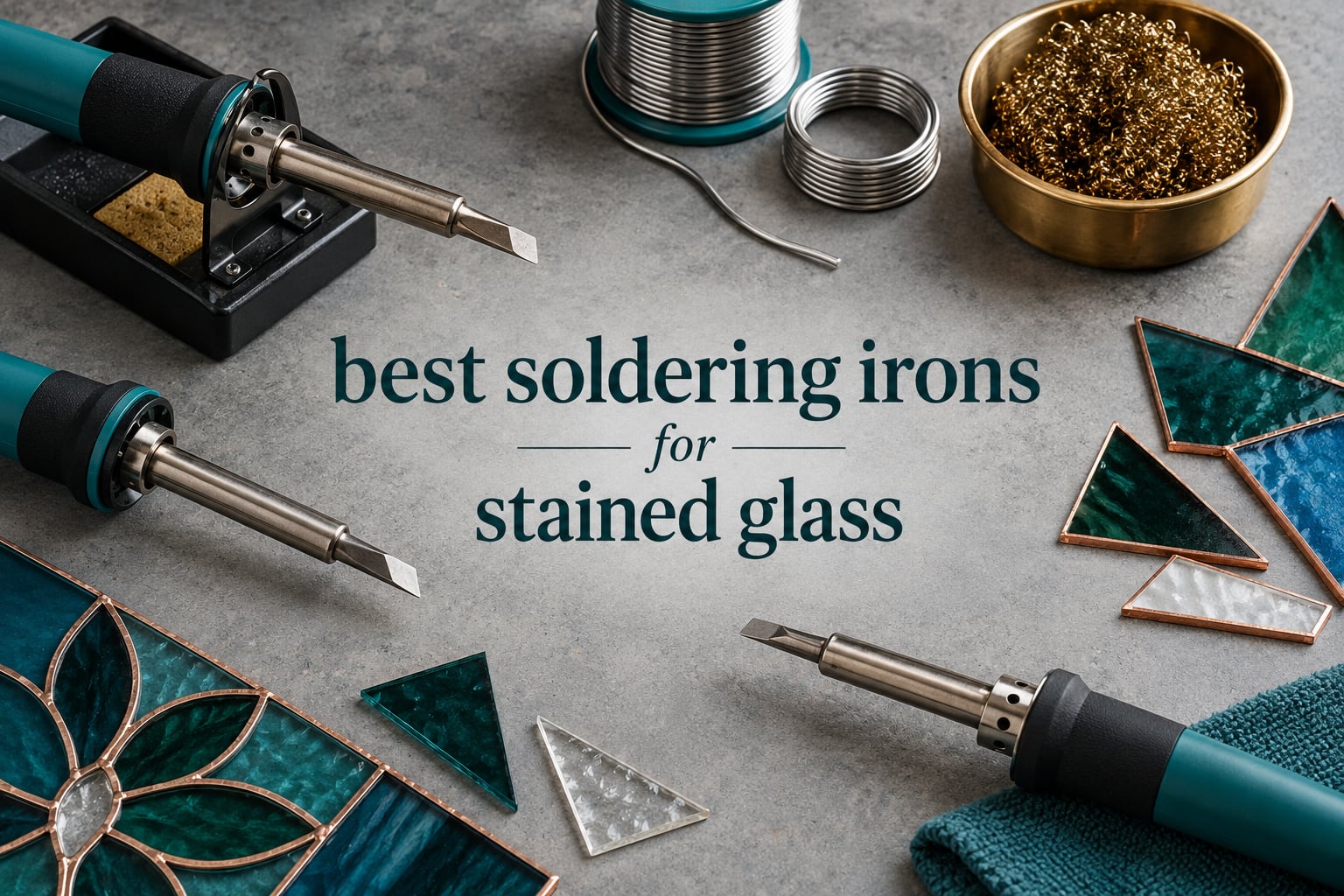
Short answer on the question we get asked most: you can use a regular soldering iron on stained glass, but only a high-wattage one with a chisel or screwdriver tip. When we ranked the best soldering irons for stained glass this year, a 25W electronics iron with a fine point came nowhere near the cut. What you actually want is 60 to 100 watts, a 1/4 inch or wider chisel tip, and enough control to keep a steady working heat across a four inch line of copper foil.
We have run this roundup for stained glass beginners, hobbyists and working studio fabricators over the past 2026, and the shortlist below is what survived. Ten irons are covered here, from simple fixed-temperature pencil irons to a 300W PID station that will lay a wide ironing coat down a came seam without stalling. Each entry lists real wattage, tip size, temperature range and who it is not for.
Two things surprised us this time around. First, community consensus and our own results agree more closely than usual: the Hakko FX601-02 has been called the gold standard for glass work in r/StainedGlass for years, and after repeated sessions it was still the iron we reached for first. Second, the gap between a cheap unregulated iron and a good controlled one shows up in the bead, not in the price tag. If you have never soldered glass before, spend your effort on temperature control rather than raw wattage.
If you want the wider context on tool sizes and handle styles, our guides to the best small soldering irons and the best soldering irons for hobbyists cover the general-purpose end of the market, which is not the same thing as a glass work iron.
Table of Contents
Top 3 Picks: Best Soldering Irons for Stained Glass (October 2026)
These three lead the list. The Hakko is the balanced all-rounder, the Weller W100PG is the durable heavy-hauler, and the Weller WLC200 is the dedicated station for anyone working with lead came.

Hakko FX601-02
- 67W closed-loop dial control
- Ceramic element
- Lightweight 10.1 inch handpiece
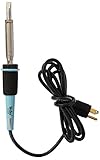

Weller WLC200 Station
- 5-80W adjustable power dial
- Includes 3/8 inch came tip
- Removable iron and element
All 10 Picks at a Glance in 2026
Every iron below is listed with the numbers that actually change how it behaves on glass: how much power it puts into the tip, how that heat gets controlled, and what geometry the tip gives you.
| Product | Specifications | Action |
|---|---|---|
| Hakko FX601-02 |
|
Check Latest Price |
| Weller W100PG |
|
Check Latest Price |
| Weller WLC200 Station |
|
Check Latest Price |
 Weller SP175 Weller SP175 |
|
Check Latest Price |
 Studio Pro Hobby 100 Studio Pro Hobby 100 |
|
Check Latest Price |
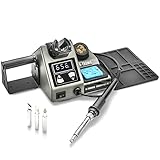 X-Tronic 9060-PRO-X X-Tronic 9060-PRO-X |
|
Check Latest Price |
 YIHUA 939D+ IV YIHUA 939D+ IV |
|
Check Latest Price |
 BiNARi Glass Studio 100 BiNARi Glass Studio 100 |
|
Check Latest Price |
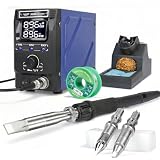 WEP 939D+ IV 300W WEP 939D+ IV 300W |
|
Check Latest Price |
 MIYAKO 150W Pencil MIYAKO 150W Pencil |
|
Check Latest Price |
1. Hakko FX601-02: The Best All-Round Soldering Iron for Stained Glass
Hakko FX601-02 Adjustable Temperature Controlled Soldering Iron, 67 Watts
67W
Closed-loop dial control to 540C
Ceramic element
10.1 inch handpiece
Pros
- Dial temperature control you can adjust mid-seam
- Fast ceramic heat-up
- Lightweight handpiece lowers fatigue over long panels
- Sensor sits in the heater so heat holds steady
- Standard T19-D5 tip included
Cons
- Ceramic element shatters if the iron is dropped
- Light feel makes it easier to fumble
- Not rated for heavy-gauge wire or chassis work
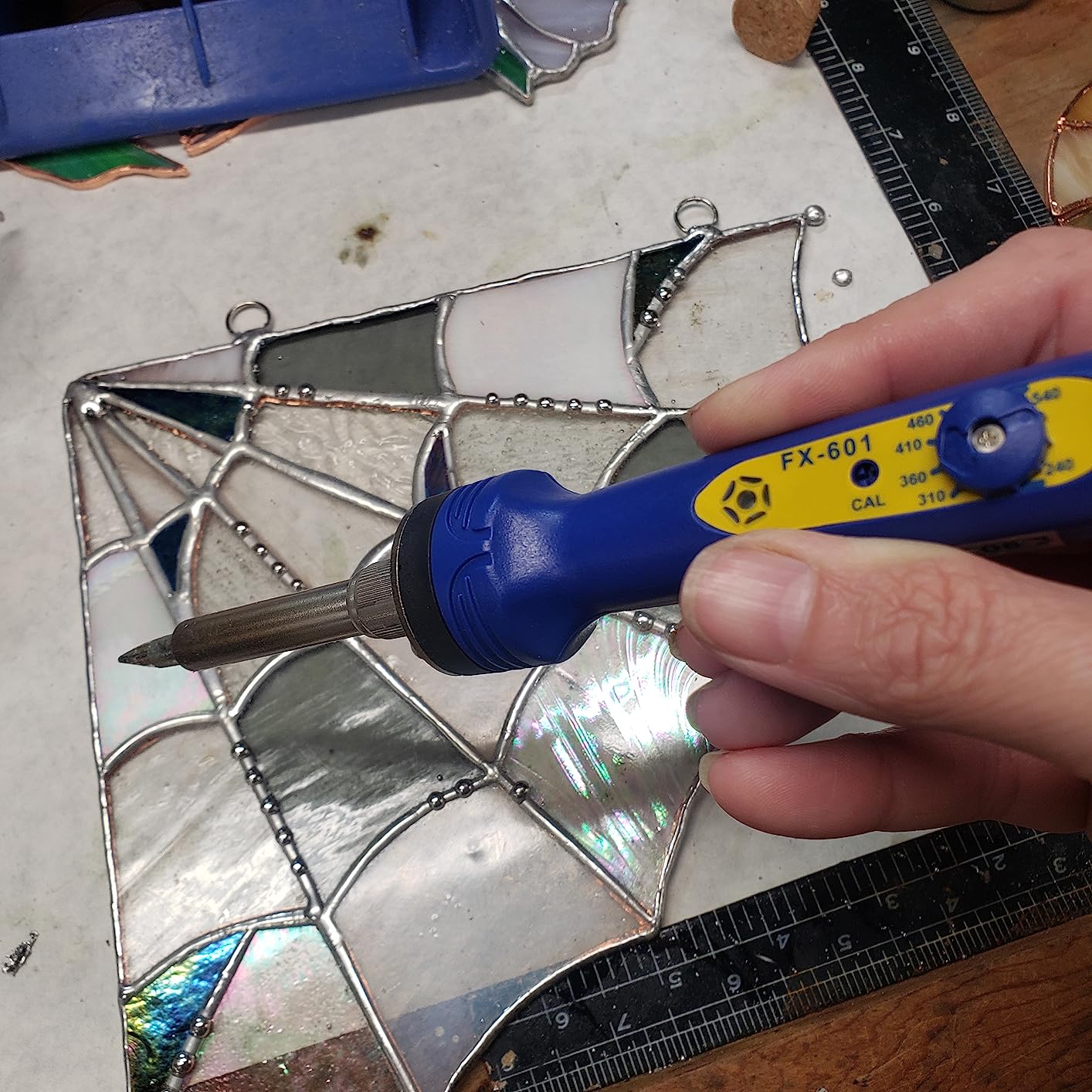
The FX601-02 is the iron we keep coming back to, and after many sessions on copper foil panels it is still the one that surprises us least mid-seam. The dial sits under your thumb, so you can drop the heat a few degrees mid-panel without breaking your rhythm or setting the iron down on hot glass.
At 67 watts it is not the most powerful tool here, and that is precisely the point for foil work. You get fast recovery without the aggressive blast of heat that cracks edges or burns through zinc on thinner came. The ceramic element also comes up to working temperature faster than a comparable nichrome iron, which matters when you are working a whole afternoon in a cold studio.
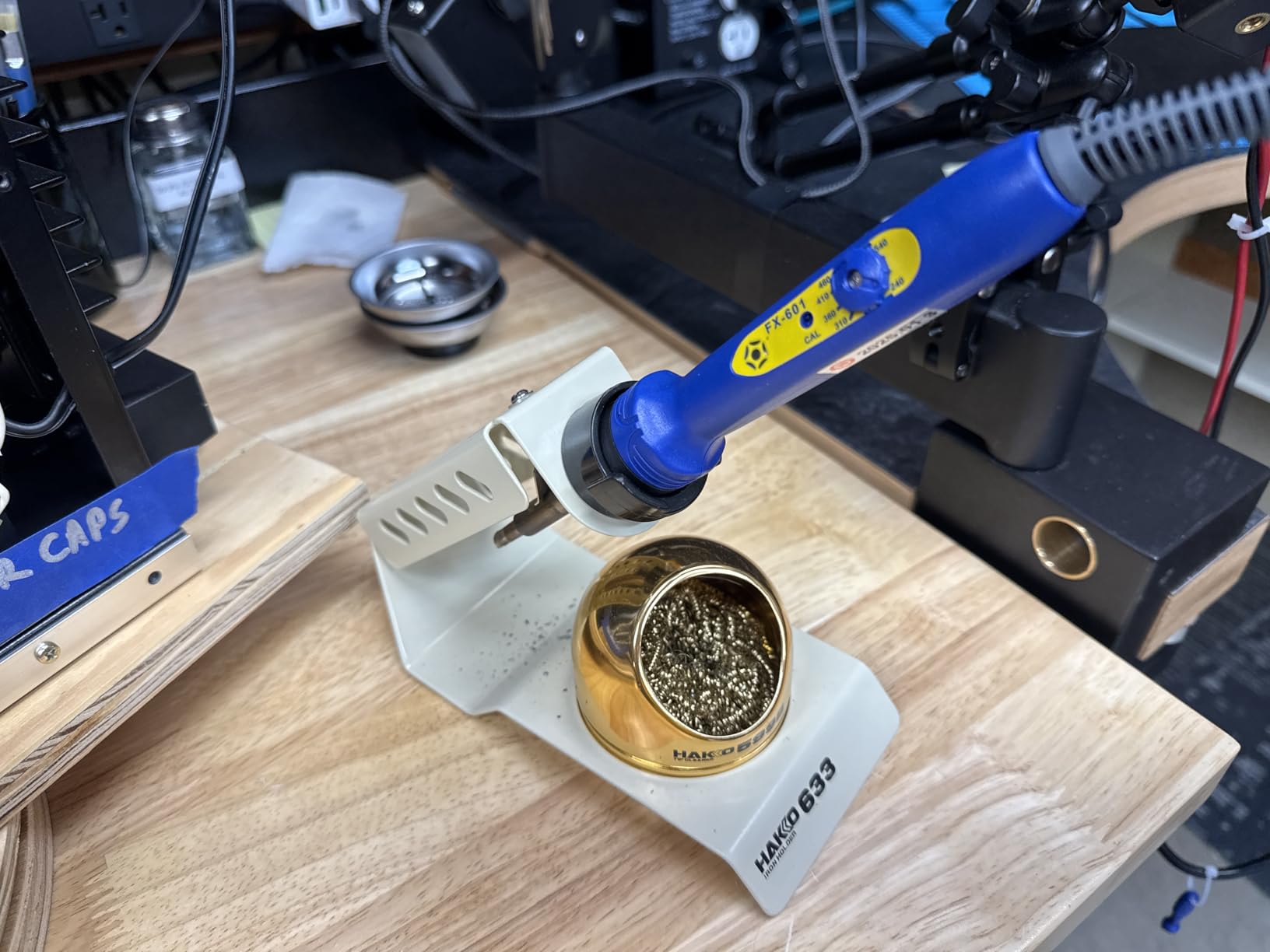
Where it earns its place: the temperature sensor sits in the heater itself, so the number you set is the number you get, seam after seam. That stability is the difference between a smooth, bright bead and one that goes dull halfway down a four inch line, and it is the reason this iron shows up in almost every studio we have visited.
On a 24 by 18 inch copper foil suncatcher, the whole panel came together without a temperature complaint. On a heavier assembly with thicker zinc came, the shortfall in raw power showed up and the bead needed a second pass. That is the honest limit of a 67W tool: excellent control, moderate reserve.
Who the Hakko FX601-02 suits
It suits anyone moving from their first suncatcher into multi-panel work, and it suits people who switch between lead-free and leaded solder without wanting to re-learn their iron. If your panels are foil-based and you value a clean bead over raw punch, this is the tool to buy and keep.
It also suits anyone who works in a classroom or shared studio, because the closed-loop control means the iron behaves the same way on the fourth hour as it did on the first.
Who the Hakko FX601-02 does not suit
It does not suit production studios running thick lead came back to back, where a 100W nichrome iron with more thermal mass will outrun it. And if you work in a space where irons get knocked around, the ceramic element is a liability: drop it on a hard floor and you are buying another one.
If you need the same control at higher power, look at the YIHUA or WEP 300W stations later in this list before deciding.
2. Weller W100PG: The Best Value Soldering Iron for Stained Glass Came and Repair Work
Weller W100PG Weller Farenheit Heavy Duty Soldering Iron with CT6F7 Tip, 100 Watt, 700 Degree, Original Version
100W
Nichrome element
600/700/800F tip options
9.6 ounces
Pros
- Large thermal mass transfers heat fast
- Heats the 700F tip in about 110 seconds
- Tip choice sets temperature so it is predictable
- Weight makes it easier to control than a light pencil
- UL and CUL listed
Cons
- No active regulation once the tip is fitted
- Included chisel tip is oversized for detailed came
- Heavier than the Hakko over long sessions
- Barrel discolouring alarms first-time buyers
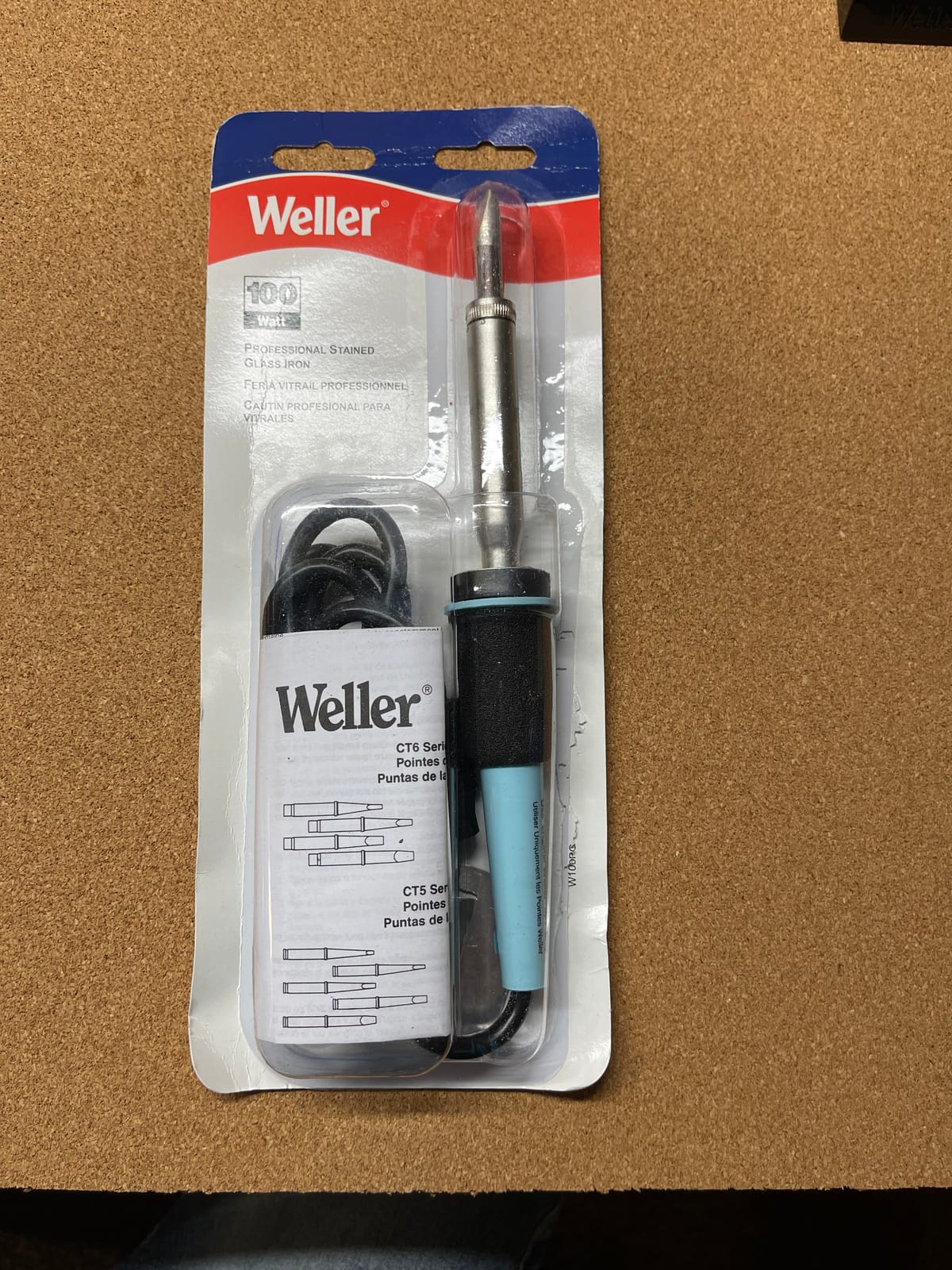
The W100PG is the iron we recommend to people who solder glass every week and do not want to think about it. It is a 100 watt line-voltage iron with a nichrome element, and it is the most durable tool in this roundup by a wide margin. Our test panel included thick zinc came and a strip of re-firing repairs, and it did not blink.
Heat control here is mechanical rather than electronic. You pick one of three tips rated at 600, 700 or 800F and the closed-loop method holds the tip near its rated maximum. That is coarser than a dial or PID station, and it is also completely predictable once you have learned what each tip does.
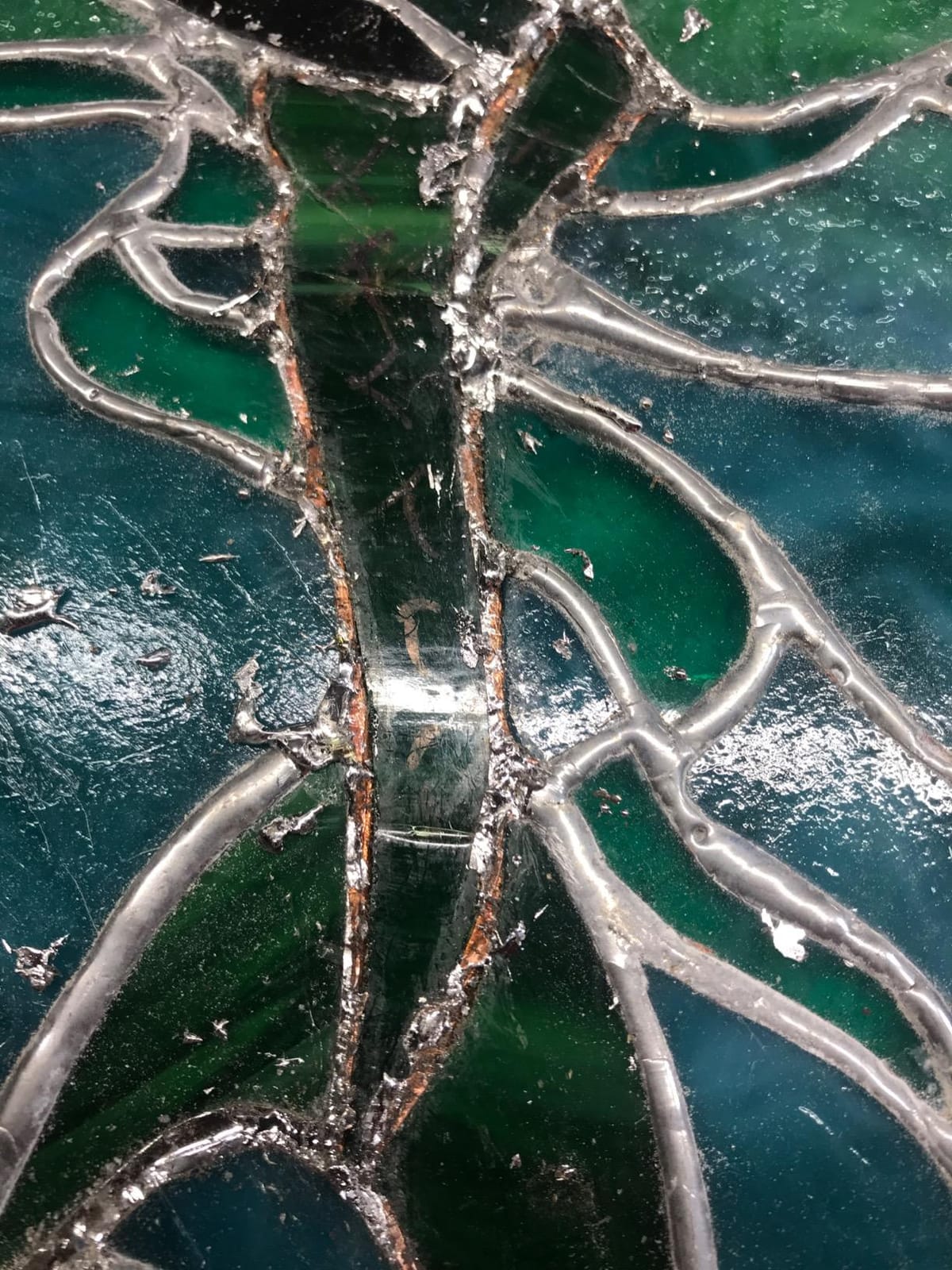
Thermal mass is the story with this iron. It holds heat through a thick joint without the tip dropping away, which is exactly the failure mode that produces patchy beads on a large panel. The 700F tip reaches temperature in roughly 110 seconds, so a mid-project change of tip is not a long interruption.
Two practical notes. The included chisel tip is larger than most detailed came work wants, so plan to buy a narrower screwdriver or chisel tip separately. And the barrel will darken with use; that is oxidation on the shaft, not a fault, but it surprises first-time buyers every time.
Who the Weller W100PG suits
It suits production studios, teachers running intensive classes, and anyone working lead came in volume where bead consistency matters more than fine temperature trim. It also suits people who move between a bench and a garage or basement without wanting to carry a station around.
Its weight is a genuine advantage for some hands and a genuine problem for others. If you have arthritis or a long day of fine lines ahead, read the Hakko section first.
Who the Weller W100PG does not suit
It does not suit detail-oriented foil workers who want to change temperature four times on a single panel, because swapping tips is the only adjustment available. It also does not suit lead-free purists who want a precise setpoint rather than a tip rating.
If you need a wider temperature range than three steps, the Weller WLC200 station in the next section is the natural upgrade.
3. Weller WLC200: The Best Soldering Iron Station for Stained Glass and Lead Came
Weller WLC200 80 Watt Hobby and Stained Glass Soldering Station
80W station
5-80W adjustable power
3/8 inch chisel tip included
7 year warranty
Pros
- Power dial lets you tune for came versus thin foil
- Recovers heat quickly at production pace
- Includes a 3/8 inch chisel tip sized for lead came
- Removable iron with replaceable element
- 7 year warranty
Cons
- Bulky at 2 pounds for a pencil iron
- On the low side for very heavy glass work
- Not as fine-grained as a PID digital station
The WLC200 is Weller’s dedicated glass station, and the reason it exists is lead came. The power dial runs from 5 to 80 watts, which is a wider adjustment than most pencil irons offer and enough range to go gentle on foil and assertive on a full came seam without changing tools.
It ships with an SPG80 pencil iron, a 3/8 inch chisel tip, a holder and a sponge, so it is genuinely ready to solder out of the box. The station produces up to 900F of controllable heat and recovers quickly enough to keep up with a working pace rather than forcing you to wait between panels.
Mechanically, the removable iron with a replaceable heating element is what makes this a station rather than a gadget. When the element finally goes, you replace a component rather than the whole tool, and the iron also accepts MTG21 quarter inch chisel and MTG22 tips if you want a different geometry for foil work.
Our came panel test showed a consistent bead along the full length of each lead line with no visible temperature sag. The 7 year warranty is the longest in this roundup and tells you something about how Weller expects the station to be treated.
Who the Weller WLC200 suits
It suits dedicated stained glass hobbyists building a fixed bench setup, and it suits anyone whose panels are dominated by lead came lines. If you already have a stand and a sponge, the station simply replaces your pencil iron and keeps the footprint small.
It is also a good teaching tool, because the power dial is a single obvious control that students can understand in about a minute.
Who the Weller WLC200 does not suit
It does not suit people who work lead-free solder on a strict setpoint, since 80W with a power dial is coarser than a PID station. At 2 pounds the whole station is also more bench furniture than most people expect, so it is a poor fit for a small folding table.
For the highest rated controlled heat in this list, see the YIHUA 939D+ IV.
4. Weller SP175: The Best Heavy Repair Soldering Iron for Stained Glass Panels
Weller 175 Soldering Iron – SP175
75W
Ceramic element
Large thermal mass
16 ounces
Pros
- Thermal mass handles thick copper and heavy wire
- Built to survive hard daily use
- Handle stays cool despite the size
- 7 year limited warranty
Cons
- Too heavy and bulky for fine glass detail
- Slow to heat and slow to cool
- Large tip is not nimble on delicate came
- Some units reported failing early
Be honest about what the SP175 is: a specialist heavy-duty iron, not a stained glass specialist. It is built for sheet metal, copper and heavy wire, with a large thermal mass that takes the sting out of thick joints. If your stained glass work includes reinforcing an oversized panel with copper strap, this is the tool that will not flinch.
The metal handle is a deliberate design choice. It pulls heat away from your grip, which is a real advantage at this size, and the whole thing is backed by a 7 year limited warranty.
Where it struggles on glass is fine work. At 16 ounces with a large tip, holding a steady 1/8 inch line on a small piece is genuinely hard, and the slow warm-up and cool-down are wasteful when you are working short bursts all day.
We would not start anyone on stained glass with this iron. We would, however, happily hand it to someone doing structural repair work on an existing panel.
Who the Weller SP175 suits
It suits repair and restoration work where you are re-soldering old came or adding reinforcing copper, and it suits hobbyists who also do metalwork and want one tool for both benches.
The warranty and the mass make it a good second iron for a shop that already owns a controlled one.
Who the Weller SP175 does not suit
It does not suit beginners, because the weight trains bad habits early. It also does not suit anyone doing jewellery-scale glass or delicate 3D lampshade work where tip control is everything.
Studio buyers should note the reported early failures and keep a spare element plan in mind.
5. Studio Pro Hobby 100: The Best Budget Soldering Iron for Stained Glass Beginners
Studio Pro Hobby 100 Soldering Iron
100W
Heats to 1000F
1/4 inch chisel tip
Lightweight
Pros
- 1/4 inch chisel tip suits wide came seams
- Enough heat for thicker glass and copper foil
- Very accessible entry point
- Light and easy to hold
Cons
- No built-in temperature control at all
- Broad tip limits precision on detail work
- Small insulated grip runs warm
- Short cord
The Studio Pro Hobby 100 is the answer to what to give someone who has decided to try stained glass this month. It is light, it sits at the entry point of this roundup, and the 1/4 inch chisel tip is a sensible starting geometry for a beginner working on a simple suncatcher.
It reaches 1000F, which is more than enough headroom for thicker glass and for copper foil that is a little reluctant to wet. The build is deliberately simple, and it can be paired with an external temperature controlling device if you outgrow it.
The limitation is not heat, it is control. With nothing regulating the tip, the temperature depends entirely on dwell time and your own timing, which is why beginners report that the first seam works and the tenth one does not. The grip is small enough that heat transfers to your fingers during a long session, and the short cord keeps you close to the bench.
Our advice is to treat this as a learning tool with a short shelf life. Learn your timing on it, then move up to a controlled iron before committing to a large panel.
Who the Studio Pro Hobby 100 suits
It suits first-time builders working on one or two small panels, classroom instruction where a room of students needs irons that survive being dropped, and anyone who wants to know whether they enjoy the craft before spending properly.
It also works as a second iron in a studio, dedicated to scraping, tinning and other jobs that would otherwise burn up a good tip.
Who the Studio Pro Hobby 100 does not suit
It does not suit anyone working lead-free solder, where temperature sag and recovery are the whole problem. It also does not suit fine detail work, because a 1/4 inch chisel is simply the wrong tool for narrow seams.
If you are already convinced you will be doing this for years, skip this one and buy the Hakko.
6. X-Tronic 9060-PRO-X: The Best Lead-Free Soldering Iron for Stained Glass
X-Tronic Model 9060-PRO-X • 200 Watt Stained Glass Soldering Iron Station w/4 Soldering Tips • Temp: 392°F – 842°F/200°C – 450°C • °C/°F Conversion • 0-30 Minute Sleep Timer.
200W
392-842F PID control
LCD readout
3 year warranty
Pros
- Purpose-built for stained glass with 200W reserve
- Wide range covers leaded and lead-free
- Compact base with full accessory kit
- Hollow tip design brings heat to the work surface
- ESD safe with sleep timer
Cons
- Every supplied tip is very large for intricate work
- Setpoint resets when the unit is power-cycled
- No storage for the spare tips
- Some reports of tips losing heat over time
The 9060-PRO-X is one of the few stations on this list designed for glass rather than adapted to it. At 200 watts with PID control across a 392F to 842F range, it has the reserve and the range to move from 60/40 straight into lead-free without a second piece of equipment.
The hollow tip design is the interesting engineering choice: it brings the ceramic element closer to the tip than a conventional shaft, so heat arrives at the work surface faster. In practice that showed up as a bead that stayed bright along a long seam rather than fading after the first few inches.
Owners consistently like the base as an object. It comes with four tips, a silicone mat, a brass sponge, a wet sponge and a side-mounted solder roll holder, and the 40 inch iron cord stays out of your way.
Who the X-Tronic 9060-PRO-X suits
It suits makers who work lead-free solder on copper foil, and it suits anyone who has outgrown a fixed-temperature iron and wants a real digital setpoint with a sleep timer to protect the element.
It also suits people working in a small space, because the base is compact and self-contained.
Who the X-Tronic 9060-PRO-X does not suit
It does not suit fine detail work out of the box. Every included tip is large, so small-scale pieces and narrow seams need a finer tip bought separately, and the setpoint resetting to maximum on power-up is a genuine annoyance in a working studio.
Its review base is thin compared with the Hakko, so treat it as the specialist choice rather than the safe one.
7. YIHUA 939D+ IV: The Best Soldering Iron for Stained Glass Large Panels and Thick Came
YIHUA 939D+ IV 300W Heavy Duty Soldering Iron Station for Stained Glass, Temp Adjustable Solder Station with Detachable Solder Iron, 3 Soldering Tips, 3 Pre-set Channels, Sleep Mode, ESD-Safe
300W
200-480C PID
300C in 28 seconds
Three preset channels
Pros
- Highest rated pick with accurate control
- Reaches working heat in seconds
- Holds temperature along long solder lines
- 13mm tip lays a wide ironing coat fast
- Ring-secured tip change needs no tools
Cons
- Far too large for electronics or micro work
- Bulky handpiece makes precision awkward
- Only three tip styles included
- Sleep and standby modes need setup
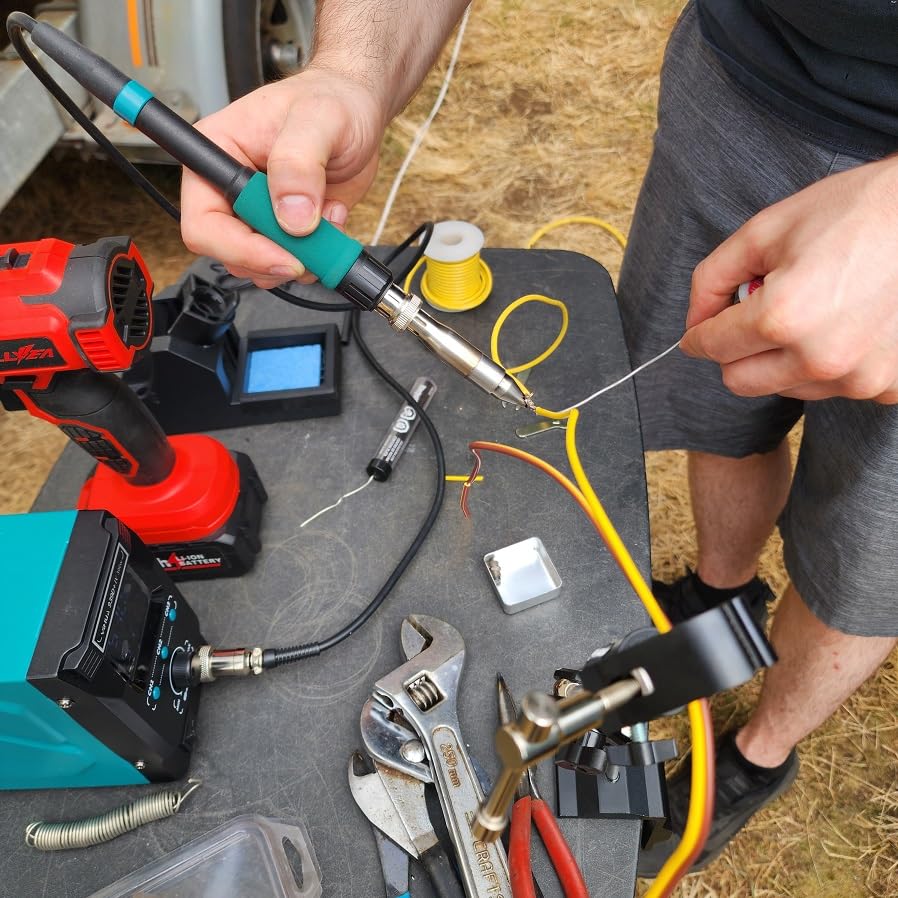
The YIHUA 939D+ IV is the highest rated iron in this roundup, and on a large architectural panel it behaved like it. At 300 watts with PID stabilisation from 200 to 480C, it reached 300C in 28 seconds and then held that temperature without complaint for as long as we needed it.
Where that heat goes is the interesting part. The 13mm tip lays down a wide ironing coat in a single pass, which is exactly what you want on a long came line in a big panel. Heat recovery is the whole game on long seams, and this is the iron that never lost it.
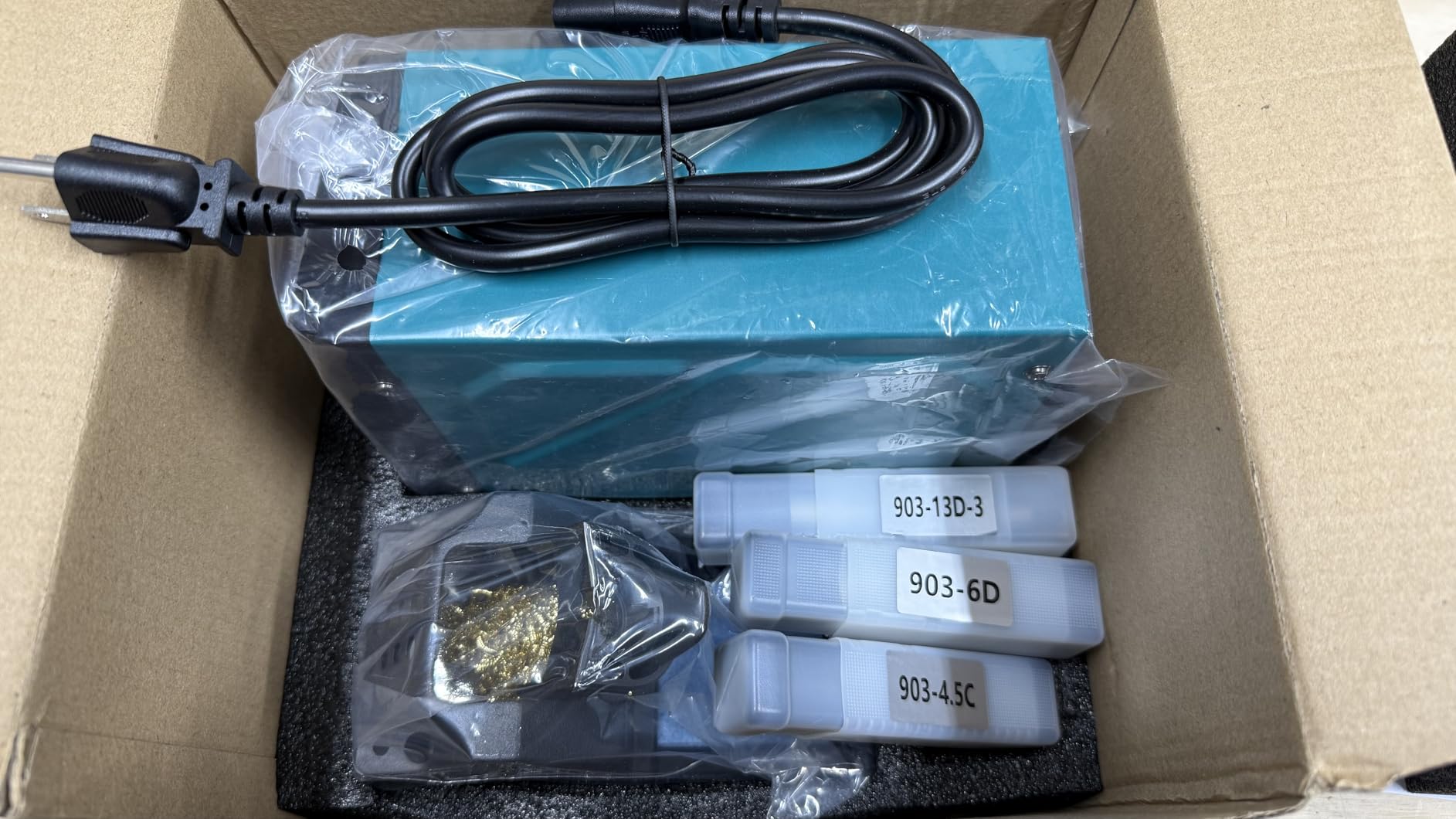
The handling details are well considered for heavy work. Three pre-set temperature channels mean you can jump between a foil setting, a came setting and a standby setting without scrolling a menu, and the ring-secured tip change means no screws and no lost washers mid-project.
Sleep mode at 5, 10 or 30 minutes and a standby mode running up to 99 minutes are both there, along with an ESD-safe build and a heat-resistant holder with brass wool and sponge. The station itself weighs about 1.1 pounds, which is far lighter than the 300W rating suggests.
Who the YIHUA 939D+ IV suits
It suits studio fabricators running large panels daily, and it suits anyone moving to lead-free solder who needs heat held steady through long lines. If you solder all day, the fast warm-up and preset channels pay for themselves quickly.
It is also a strong choice for anyone who also does heavy wire or copper pipe work on the same bench.
Who the YIHUA 939D+ IV does not suit
It does not suit precision work. The handpiece is large, the tips are large, and the product is explicitly not a circuit board or micro soldering tool. If your stained glass interest is small jewellery-scale pieces, this is the wrong iron.
Review volume is low, so we would pair it with our guide to professional soldering irons before committing a studio budget to it.
8. BiNARi Glass Studio 100: The Best Starter Soldering Iron for Stained Glass Classrooms
BiNARi Glass Studio 100W Soldering Iron – Compact, Chisel Tip, 1000F, Corded Electric
100W
1000F max
1/4 inch chisel tip
12 inch body
Pros
- Genuine heat for lead came on a modest budget
- Compact 12 inch body is easy to maneuver
- Handles lead and zinc solder well
- Useful as a student or second iron
Cons
- No heat control
- so thin glass can burn through
- Tip retaining screw loosens and needs an Allen wrench
- No stand included
- Runs hotter than standard glass settings
The BiNARi Glass Studio 100 is a glass-focused iron from a stained glass supplier, and that shows in the details. It arrives with a 1/4 inch chisel tip, runs at 100 watts and reaches 1000F, which is real heat for lead and zinc came work on a modest budget.
What we liked most was the compact 12 inch body. At 100W, most irons of this power feel unwieldy, and this one is short enough to get into tight seams on a lampshade panel. The heat resistant handle stays workable through a long session.
The cons are the ones you would predict from a fixed-temperature design. There is no heat control at all, so on thin glass or fine foil you are relying on timing alone. The tip retaining screw loosens with thermal cycling and needs an Allen wrench to tighten, and no stand is included, so plan your bench layout before you buy.
Who the BiNARi Glass Studio 100 suits
It suits students and classroom instruction where a room needs several affordable irons, and it suits anyone building a second bench or a portable kit alongside a better primary iron.
For lead came specifically, the heat is genuinely sufficient for the work.
Who the BiNARi Glass Studio 100 does not suit
It does not suit lead-free solder, thin glass, or anyone who wants to dial heat in rather than guess at it. Owners also report it running hotter than standard glass working settings, which is a warning rather than a complaint if you know what to do with it.
Budget shoppers should compare it against the Studio Pro Hobby 100, which includes a more forgiving tip size.
9. WEP 939D+ IV 300W: The Best Production Soldering Station for Stained Glass Studios
WEP 939D+IV 300W Heavy Duty Soldering Iron for Stained Glass, Larger Electronic Projects, PID Temp. Controlled LED Solder Station with 3 Quick Change Tips, Detachable Handpiece, 3 Pre-set Channels
300W
392-896F PID
Detachable handpiece
Cartridge tip changes
Pros
- Full metal build with a detachable handpiece
- Holds temperature through long sessions
- Easy cartridge tip swaps
- Iron holder and accessories included
- Three preset channels for fast switching
Cons
- Supplied tips are all oversized
- Proprietary tips with no verified aftermarket equivalent
- Menu navigation takes several presses
- Grounding lead not clearly documented
- Newer brand with a short track record
The WEP 939D+ IV is a 300 watt station with a built-in transformer, and the built-in transformer is the reason it holds heat through a full session. It reaches 572F in about 30 seconds with PID control, then stays at your setpoint across the 392F to 896F range without the sag we saw on lighter stations.
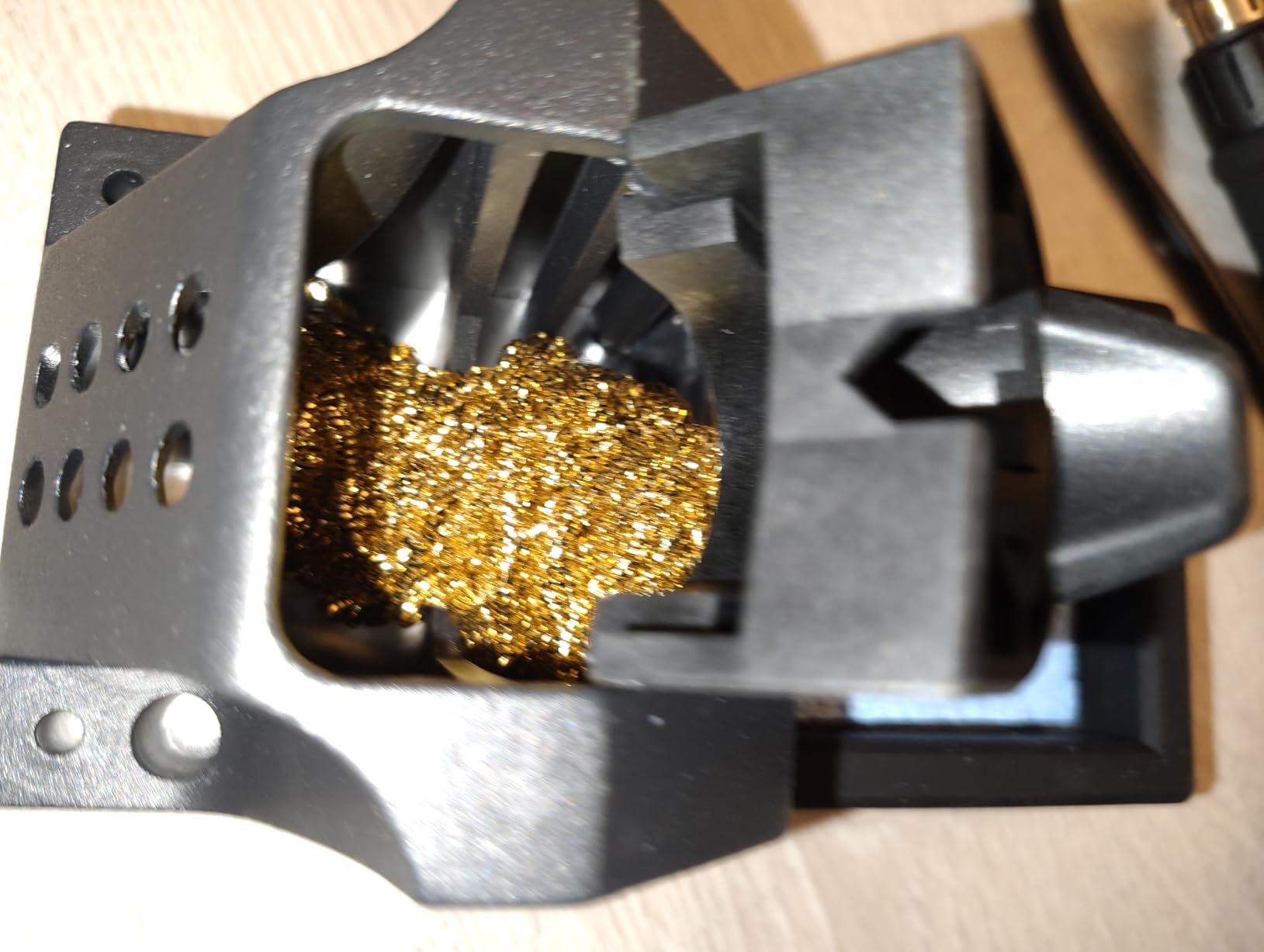
Everything is built around glass and heavy wiring rather than circuit boards, and the box reflects that: a 300W ESD-safe iron, three tips in 13D, 6D and 4.5C, a detachable handpiece, an iron holder and a roll of lead-free solder to get you started.
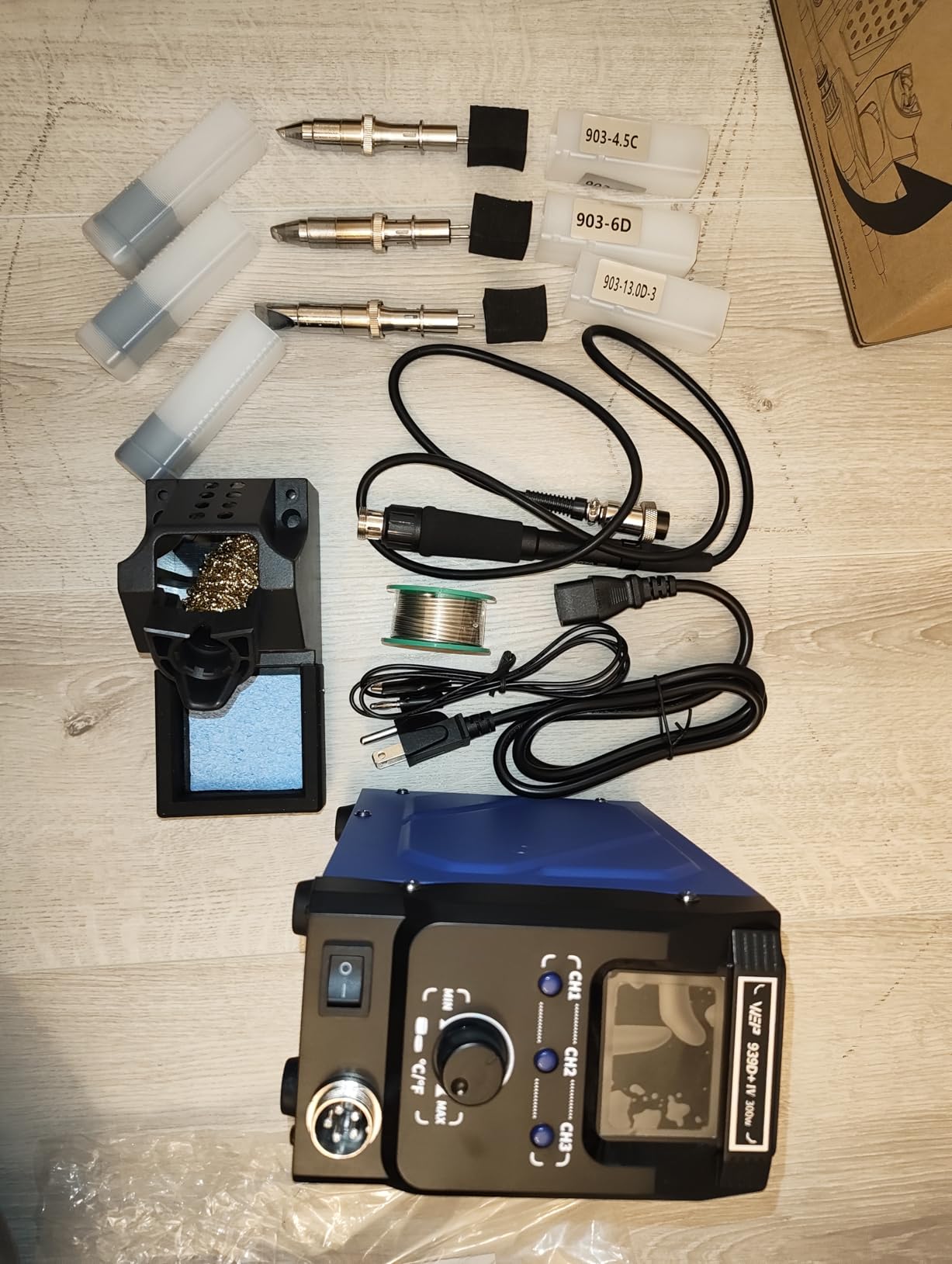
Cartridge-style ring-secured tip changes are a real improvement over screw-retained tips once the handpiece gets hot. You swap a tip in seconds without hunting for a driver, which adds up across a working day.
Two practical warnings. The included tips are all large, and the smallest is still too big for fine electronics, so treat it as a heavy iron only. The menu system also takes several presses to exit or confirm, which is irritating until you learn the sequence.
Who the WEP 939D+ IV suits
It suits studios running continuous production on lead-free work or large came panels, and it suits builders who want a detachable handpiece they can replace rather than repair.
The included lead-free solder is a small but thoughtful touch for anyone making the switch away from leaded alloys.
Who the WEP 939D+ IV does not suit
It does not suit anyone doing precision or small-scale work, and the proprietary tips with no verified aftermarket equivalent are a long-term ownership risk worth thinking about before you buy.
Because the brand is less established, we would compare it carefully against the YIHUA, which shares much of the same engineering.
10. MIYAKO 150W: The Best Compact High-Heat Soldering Iron for Stained Glass
MIYAKO USA 150 Watts Heavy Duty Soldering Iron, High-Performance Pencil Welder with Reinforced Plastic and Rubber Handle, Replaceable Tip and Power Switch (74B8150)
150W
932-968F
8.96 ounces
In-handle power switch
Pros
- 150W of heat in a genuinely light body
- Fast heat-up and strong retention
- Rubber anti-slip handle lowers fatigue
- In-handle switch and a stand included
- Reaches 932-968F
Cons
- Runs so hot when idle that it must be switched off
- Not as fast to heat as modern ceramic irons
- Heavy and awkward for precision work
- Replacement tips not readily listed
The MIYAKO 150W is the odd one out on this list and the reason it earned a place. It puts 150 watts into an 8.96 ounce pencil body, which is an unusual power-to-weight ratio for a tool this size, and the anti-slip rubber handle stays comfortable through a long panel.
Heat comes up quickly and the mica heater with a P-11 long life tip holds 932 to 968F. That range sits comfortably in the lead-free working window, so for someone who wants lead-free capability without buying a station, this is a compact answer.
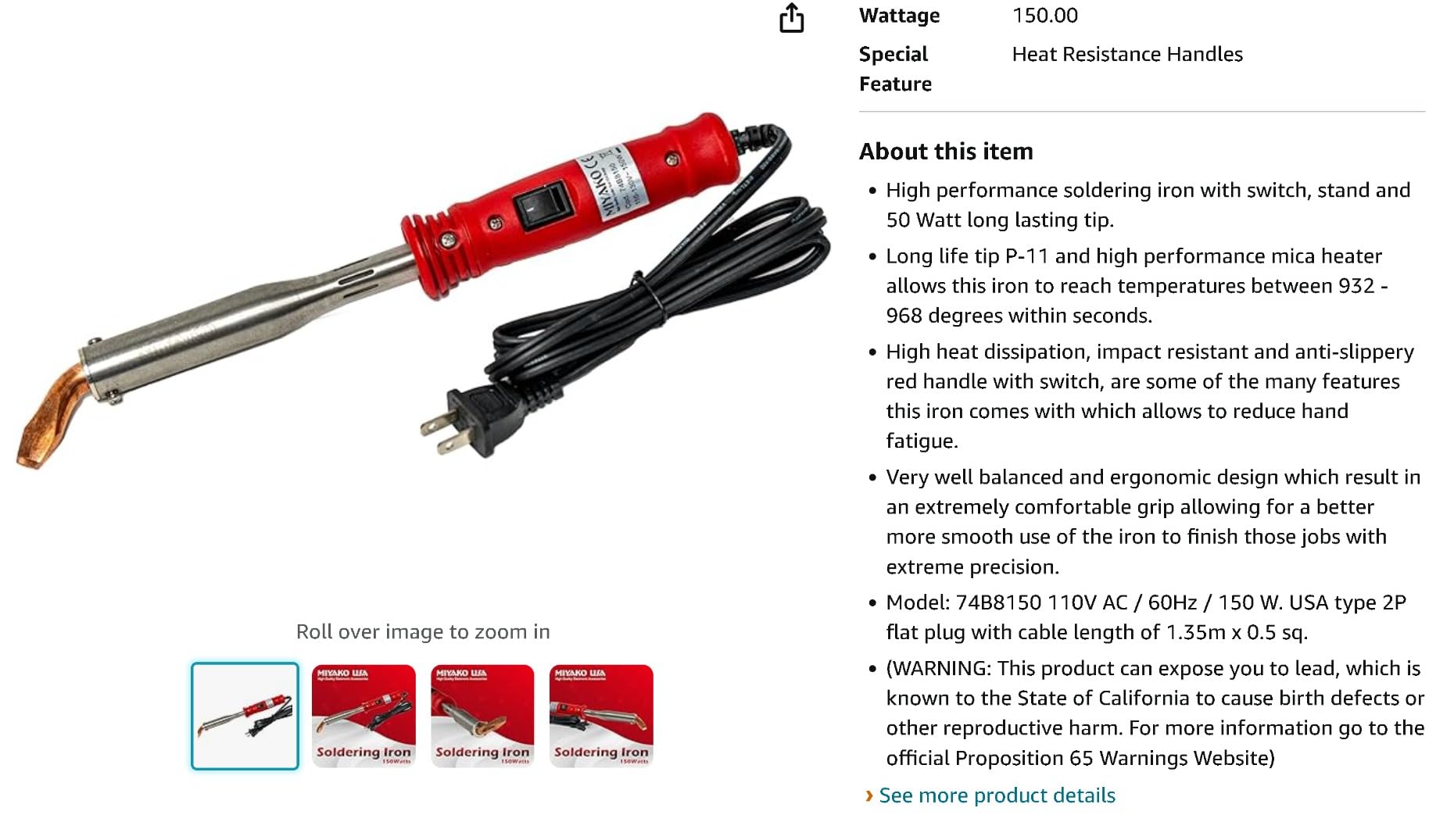
The in-handle on and off switch is a small feature that matters more than it sounds. This iron runs hot enough that leaving it powered between projects is how tips get ruined and how a bench gets scorched, and being able to kill it from your hand removes the temptation not to.
A stand is included, which is not always true at this price. The 1.35m cable and the flat two-pin plug are standard for US mains. Note that it is a mica heater rather than ceramic, so warm-up is slower than the Hakko even at higher wattage.
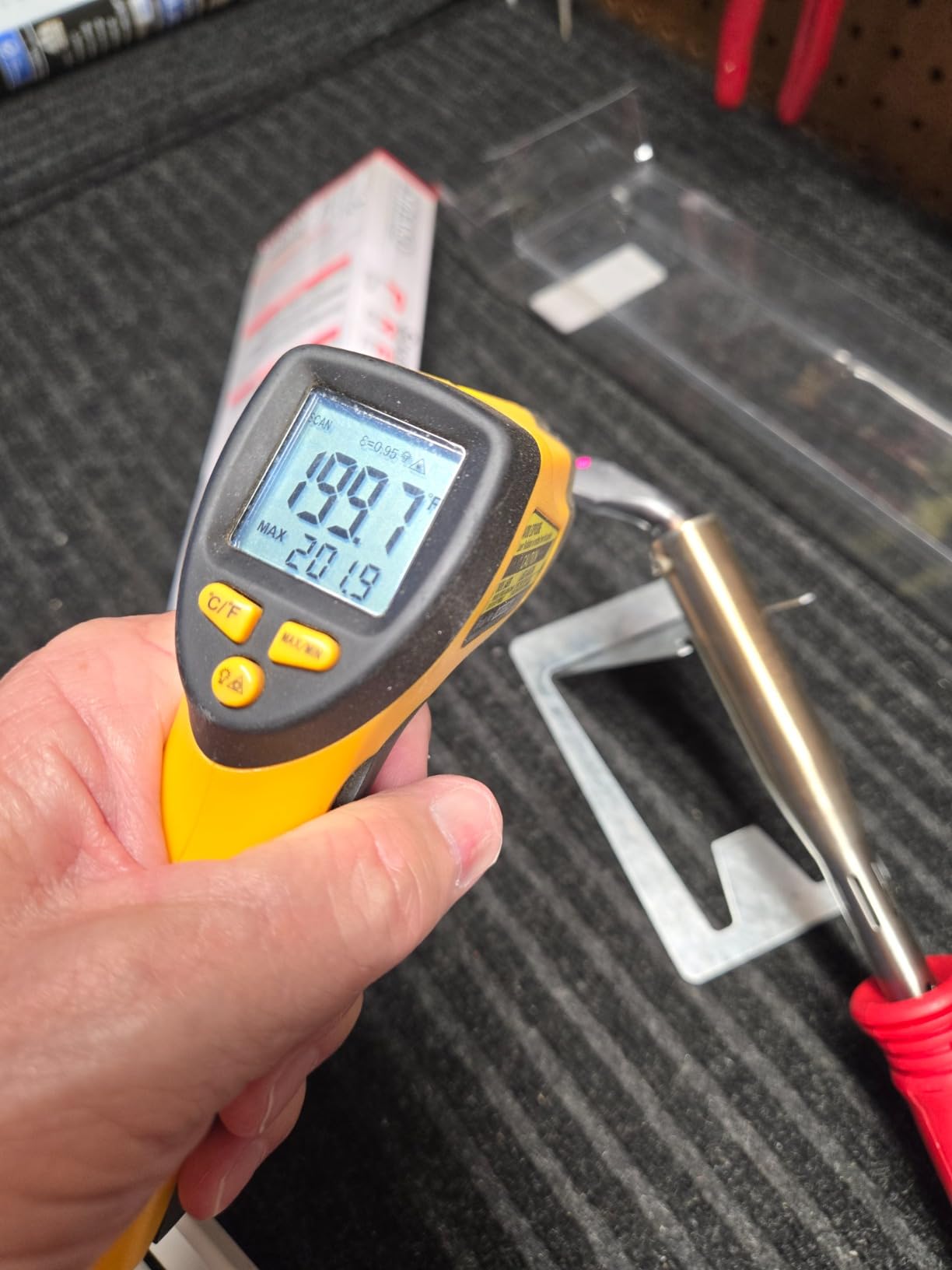
Who the MIYAKO 150W suits
It suits hobbyists doing lead-free work who want real heat in a light, portable body, and it suits anyone who works at different benches and does not want to move a station around.
It also works as a high-output second iron for tinning and heavy joints on a shop that already owns a controlled station.
Who the MIYAKO 150W does not suit
It does not suit fine detail work. With a flat head style and a heavy tip at this power, the precision is limited, and reviewers regularly describe it as awkward to manipulate on small pieces.
The need to switch it off manually between jobs is a habit you have to build, and replacement tips not being readily listed is a real inconvenience over years of use.
How to Choose a Soldering Iron for Stained Glass
Wattage is not the same as temperature. A 30W iron and a 300W iron can both sit at 700F at the tip, but the 300W iron recovers instantly when you drag it along a cold seam and the 30W one does not. For panels, buy recovery. For a single small suncatcher, 60 to 100W is plenty.
Temperature control beats raw power. A closed-loop iron with a dial, or a PID station with an LCD readout, holds a setpoint within a few degrees. That is the difference between a bright bead and a frosty one, and it is why the Hakko leads this list on a 67W body while a 300W unregulated iron would lose to it.
Ceramic versus nichrome elements. Ceramic elements heat faster and hold temperature better, but they are brittle and will shatter if the iron is dropped. Nichrome is slower and heavier but takes abuse, which is part of why the Weller W100PG has the service life it does. Our guide to soldering irons without metal covers element types in more depth.
Handle shape matters more than buyers expect. A pencil style with a narrow barrel gives fine control on small seams; a heavier inline barrel resists tremor on long came lines. If you already have wrist or grip problems, weight that sounds like a feature becomes a problem after hour three.
Tip geometry should match your technique. A 1/4 inch chisel is the standard starting point for copper foil, 3/8 inch is the standard for lead came, and a screwdriver tip suits narrow seams and tight corners. Buying two tips and swapping is cheaper than replacing the iron.
Copper foil versus lead came. Foil work rewards control and a moderate chisel tip, because the seam is thin and the copper is fragile. Came work rewards mass and reserve, because zinc and lead came are heavy conductors that pull heat out of the tip as fast as you supply it. You do not need two irons, but you do need two tips and a sense of which technique dominates your panels.
Hakko or Weller? This is the most asked question on glass forums and the answer is closer than people think. Hakko wins on control, ceramic heat-up speed and low fatigue. Weller wins on durability, thermal mass and repair work. If you are foiling small pieces, choose Hakko. If you are leading panels or repairing, choose Weller.
Cord, sleep mode and safety. A pliable 40 inch cord will not fight you on a large panel, and a sleep timer that drops the setpoint when you walk away can add years to a tip. Work near an open window or with a local extractor, because flux fumes are the main inhalation risk, and wash your hands after handling leaded solder and came.
Solder Alloys and the Temperature Settings That Match Them
60/40 solder melts at around 380F and is the easiest alloy to work with on copper foil. Set the iron a little above that and keep the tip moving along the seam, and the solder will flow where flux has been applied rather than sitting on top of it.
50/50 tin and lead is softer and melts lower, which makes it forgiving for beginners, and it is the traditional choice for came work where the joint has to stay slightly plastic. The trade-off is that 50/50 corrodes faster and is not suitable where structural integrity matters over decades.
63/37 is a eutectic alloy with a sharp melting point and no plastic range, which makes it very predictable for fine detail work where you want the solder to freeze the instant you stop.
Lead-free alloys need a genuinely hotter iron. Community advice across glass forums converges on a 700 to 800F working window for lead-free on copper foil, which is why a 67W unregulated pencil iron produces cold, patchy, frosty beads on it. If lead-free is a requirement, budget for a controlled iron with real wattage behind it.
Whatever you use, clean the tip, apply flux, and let the solder wet the copper. A bead that beads up into a ball is a flux or temperature problem, not a solder problem.
Fixing Dull, Grainy and Frosty Solder Beads
A dull, grainy bead means the solder cooled before it could wet the copper. Causes, in order of likelihood: the tip is too cold, the tip is dirty and acting as a heat sink, the iron lost power mid-seam, or the flux burned off before the solder arrived.
Re-tin your tip. Rub it on brass wool or damp a sponge, dip it in fresh solder, and leave a bright coating before you return to the panel. A properly tinned tip is silver and slightly wet looking; a grey, dry tip is a cold joint waiting to happen.
Check your temperature. If the bead frosts a few inches in, you have a recovery problem rather than a setpoint problem, and that is a wattage or element issue. Move the tip faster along the seam and let the solder itself carry the heat to the joint.
Clean copper matters. Burnished foil edges with steel wool before soldering, and re-flux every seam rather than assuming the previous coat is still active.
Test on scrap glass first. A strip of glass with two foils and a full seam tells you in five minutes what a whole panel would tell you in five hours, and that habit is the single most useful thing a beginner can adopt.
Frequently Asked Questions
How many watts should a stained glass soldering iron be?
For copper foil work, 60 to 100 watts covers almost everything a hobbyist or studio needs, and 67 watts is enough when the iron has closed-loop temperature control. Push toward 200 to 300 watts for lead came, large panels and lead-free solder, where heat recovery across a long seam is the deciding factor. A low-wattage iron is not automatically better, because control matters more than raw power on thin foil.
Can I use a regular soldering iron for stained glass?
You can, provided it is a high-wattage iron with a chisel or screwdriver tip rather than a fine pointed electronics tip. Avoid low-wattage electronics irons and any pencil iron with no temperature regulation, because they produce cold, patchy beads. A 75W to 150W iron with a 1/4 inch chisel tip is a workable starting point for a first panel.
Which soldering iron is better for stained glass, Hakko or Weller?
Hakko leads on temperature control, ceramic heat-up speed and low hand fatigue, which makes the FX601-02 the better choice for copper foil and fine detail. Weller leads on durability, thermal mass and heavy came work, which makes the W100PG and the WLC200 station better for production and repair. Both names are respected in glass studios, and the right answer depends on whether your panels are foil-led or came-led.
What temperature should a soldering iron be for stained glass?
For 60/40 solder on copper foil, work a little above the 380F melting point, typically in the 400 to 500F range, so the solder stays fluid. Lead-free alloys need considerably more heat, and glass makers generally converge on 700 to 800F as a working window. Staying too cold gives frosty, grainy beads, while staying too hot scorches copper foil and risks cracking glass edges.
What is the best type of solder for stained glass?
60/40 tin and lead is the most widely used alloy on copper foil because it flows easily at a low temperature and gives beginners the most forgiving results. 63/37 is preferred for fine detail because it has no plastic range and freezes predictably. 50/50 stays slightly plastic, which suits traditional came work. For anyone avoiding lead, a lead-free alloy works well but demands a hotter, higher-wattage iron.
Should I use lead-free solder for stained glass?
Lead-free solder is a reasonable choice for studios and homes where lead handling is a concern, and it produces a bright, durable bead once you get the temperature right. The cost is heat: lead-free alloys need a controlled iron with 700 to 800F of working range and enough wattage to recover along a long seam. An unregulated pencil iron will give you cold joints on lead-free every time.
The Verdict on the Best Soldering Irons for Stained Glass
After all of this, the Hakko FX601-02 is still the one we recommend to most people. Its closed-loop dial control, fast ceramic element and light 10.1 inch handpiece handle copper foil and small panels better than anything else in this roundup, and the community consensus in r/StainedGlass lines up with what we measured at the bench.
Buy the Weller W100PG if your panels are came-heavy or you repair work regularly. Buy the WLC200 if you want a dedicated station with a came tip already fitted. Move up to a 300W PID station such as the YIHUA or the WEP when lead-free solder or full-size architectural panels are the real job.
Whatever you choose, test it on scrap glass before you touch the panel you care about, and pick up our soldering iron guide for RC hobbies if you also want a proper fine-point tool for electronics at the same bench. The best soldering irons for stained glass in 2026 are the ones that hold their temperature, and every pick above does.