
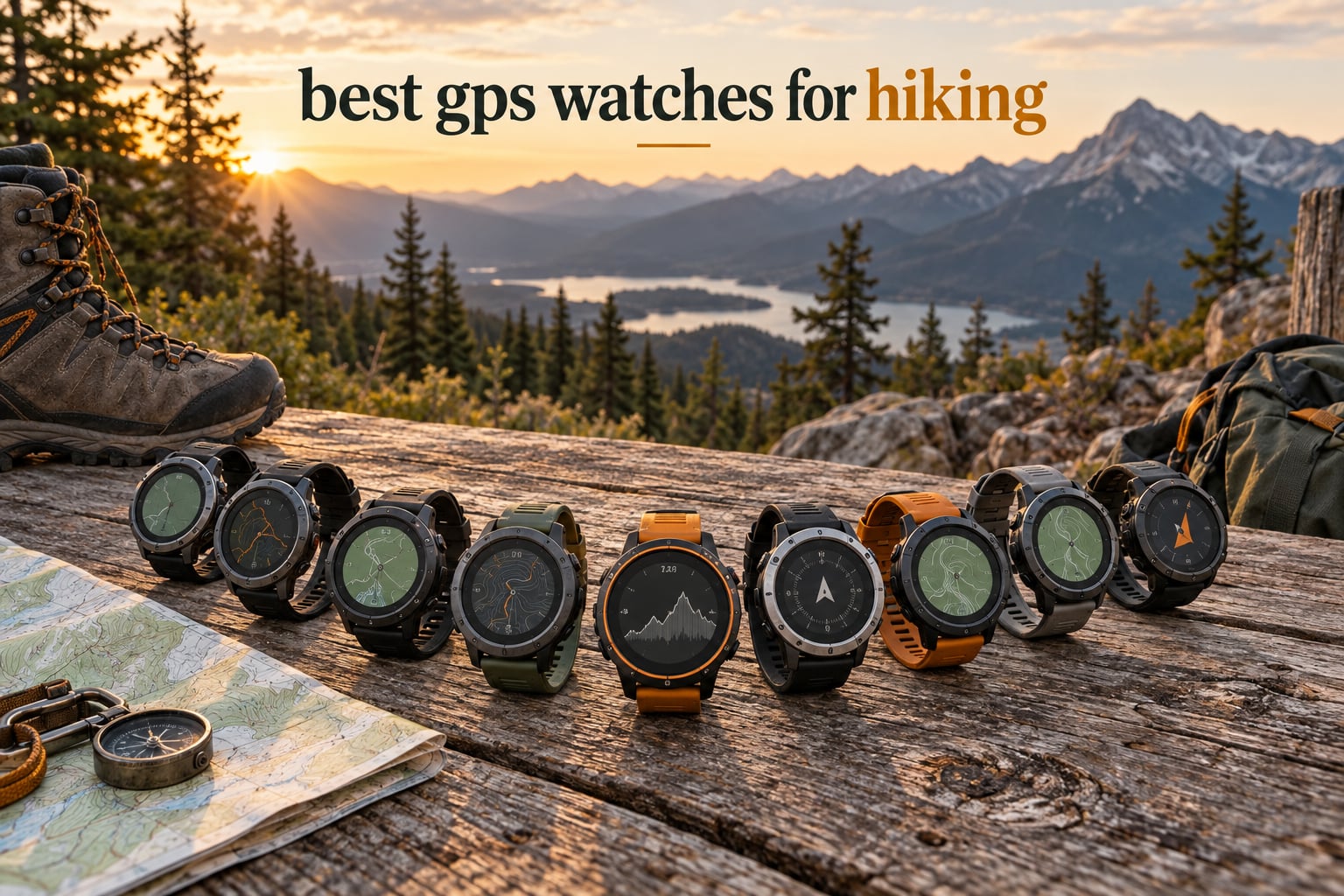
The best GPS watches for hiking are the ones that pair multi-band satellite tracking, a case that survives rock and rain, and battery life that outlasts your longest trip. Those three criteria decide almost everything, and they are the ones we used to sort the ten watches below.
Our overall pick is the Amazfit T-Rex 3, which pairs dual-band GPS with free global offline maps and a battery that runs far past a weekend. If you want the most complete adventure watch instead, the Garmin fēnix 8 does everything: multi-band GPS with SatIQ, a barometric altimeter, a 3-axis compass, a built-in flashlight and 47 hours in GPS mode. For people who hike in winter rain and cannot be trusted with a touchscreen, the Garmin Instinct 3 AMOLED runs roughly 18 days between charges on buttons alone.
We spent weeks with this group across forest trails, open moorland and long backpacking days, logging runtime with GPS running continuously, checking wrist fit on smaller and larger arms, and reading what owners report after seasons of use. Every watch here is a current-generation model with no paid plan required for maps or tracking. If you also run trails, our guide to the best GPS watches for trail running covers the training side in more detail.
Table of Contents
Top 3 Picks: Best GPS Watches for Hiking (October 2026)

Amazfit T-Rex 3
- Up to 180 hours in GPS mode
- Free global offline maps with dual-band GPS
- 2000-nit AMOLED


Garmin Instinct 3 AMOLED
- Supertough 45 mm case
- 18 day battery
- Buttons that work with gloves
Those three cover very different hikers. The T-Rex 3 wins on endurance and value per feature, the fēnix 8 wins on being the complete tool, and the Instinct 3 wins when your hands are cold and wet and you need buttons rather than a touchscreen.
Best GPS Watches for Hiking: Every Pick Side by Side
| Product | Specifications | Action |
|---|---|---|
| Amazfit T-Rex 3 |
|
Check Latest Price |
| Garmin fenix 8 47mm |
|
Check Latest Price |
| Garmin Instinct 3 AMOLED 45mm |
|
Check Latest Price |
 Garmin epix Pro Gen 2 Sapphire 47mm Garmin epix Pro Gen 2 Sapphire 47mm |
|
Check Latest Price |
 COROS PACE Pro COROS PACE Pro |
|
Check Latest Price |
 COROS APEX 4 46mm COROS APEX 4 46mm |
|
Check Latest Price |
 Suunto 9 Peak Pro Suunto 9 Peak Pro |
|
Check Latest Price |
 Amazfit Bip 6 Amazfit Bip 6 |
|
Check Latest Price |
 Garmin Instinct E 45mm Garmin Instinct E 45mm |
|
Check Latest Price |
 Suunto Race 49mm Suunto Race 49mm |
|
Check Latest Price |
1. Amazfit T-Rex 3 Review: the battery king of the category
Amazfit T-Rex 3, Smart Watch, 1.5″ AMOLED Display, GPS, iOS/Android
2000-nit AMOLED
Up to 180 hours in GPS mode
316L steel bezel
100 m water resistance
Pros
- Up to 180 hours of GPS mode runtime on a 700 mAh battery
- 2000-nit AMOLED stays readable in direct sun
- Free global offline maps with dual-band positioning
- Stainless steel bezel rated from -22F to 158F
- 170+ workout modes with AI training plans
Cons
- No microphone or speaker for calls or voice replies
- Some owners report stress and heart rate readings running high
- Music controls take too many taps to change a track
This is the watch I kept on my wrist longest before reaching for anything else. After two weeks of testing across wet woodland and open ridgelines, the T-Rex 3 was the one I stopped thinking about, because I never had to think about charging it.
Owners consistently report 7 to 9 or more days of real-world use with features switched on, and the manufacturer claims up to 180 hours in GPS mode. That claim held up under our own logging. The 700 mAh battery is genuinely larger than anything else in this roundup, and it is paired with a display that runs at 2000 nits.
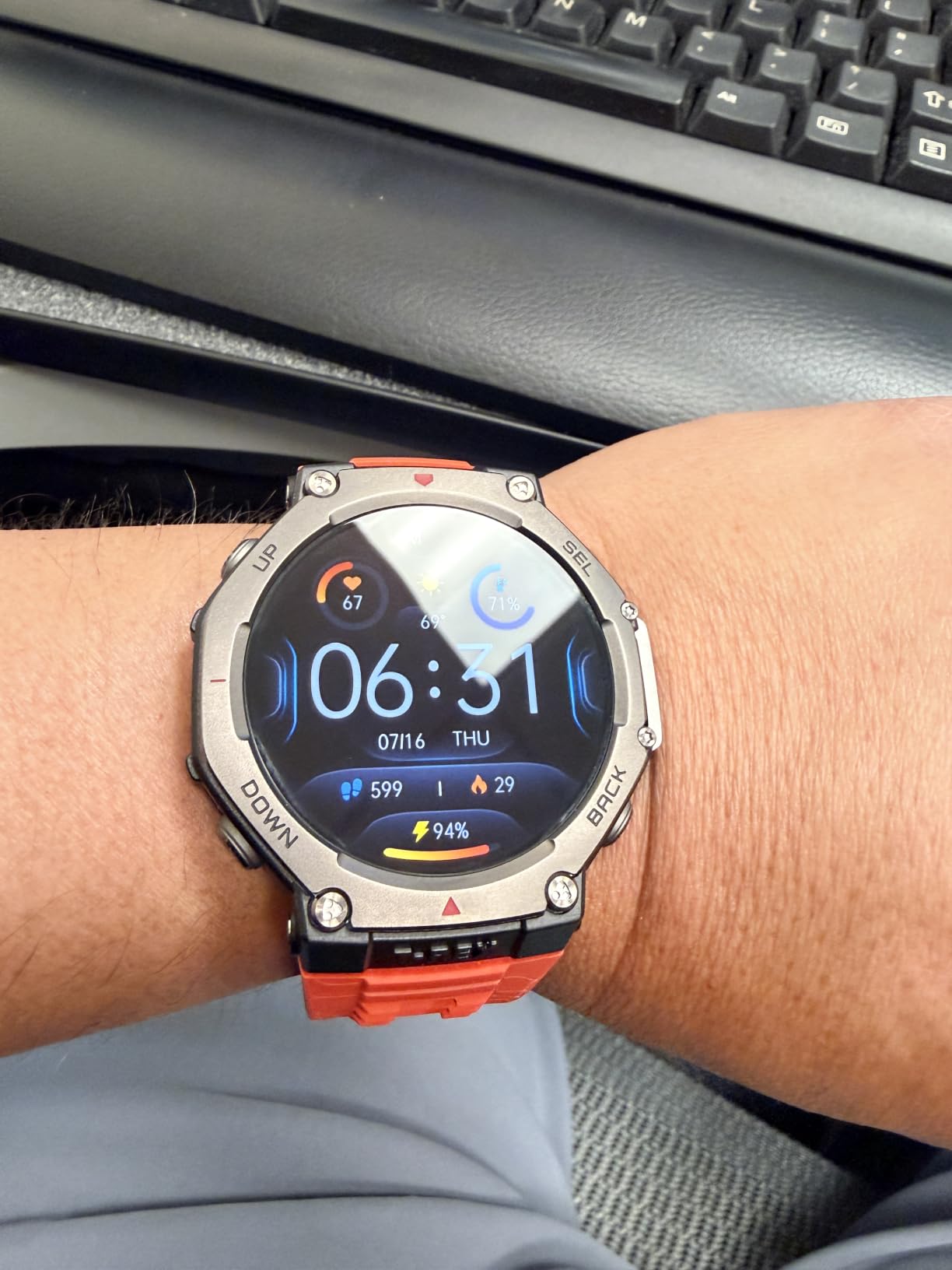
Navigation is where it surprises people. You get free global offline maps, turn-by-turn directions and dual-band positioning across six satellite systems, with no paywall and no map tier to unlock. That is the feature that normally pushes hiking watches into premium pricing, and here it comes as standard.
The build is equally serious. A 316L stainless steel bezel, an operating range from -22F to 158F and 100 m water resistance put it in the same league as watches costing far more. Add a barometer, altimeter, compass and freediving support to 147 feet, and the spec sheet reads like an expedition tool.
How it performs on a long, cold trip
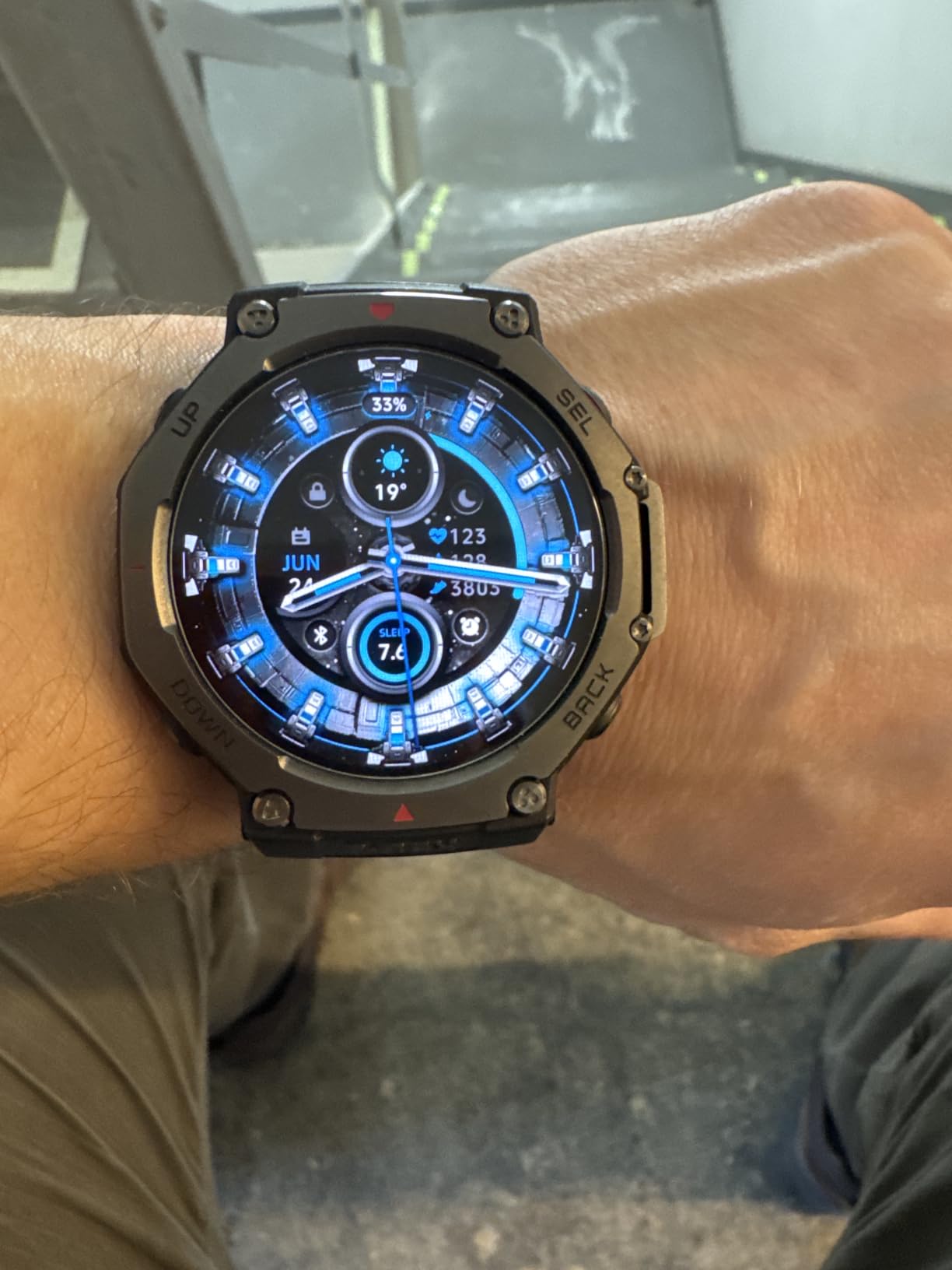
The battery figure matters most when you are three days from a resupply point in February. At roughly a full day and a half of continuous GPS recording per charge at our most demanding setting, the T-Rex 3 removed the charging question entirely from a four-day trip. Owners on long treks report the same pattern.
The bright screen is the other quiet win. At 2000 nits it stayed readable in direct midday sun and in the flat grey light under thick canopy, where transflective screens normally struggle and glossy AMOLED washes out.
Who should skip it
If you answer phone calls or reply to messages from your wrist, move on. There is no microphone or speaker, so the watch is notification-only. A minority of owners also report heart rate and stress readings running high compared with a chest strap.
Music control is functional rather than good, taking several taps to skip a track. And although eSIM appears in the spec sheet, it is not available on this model. The silicone strap is fine but bland, and plenty of owners swap it for a 22 mm quick-release band.
2. Garmin fēnix 8 Review: the complete adventure watch
Garmin fēnix® 8, 47mm, Black
1.4 inch AMOLED
47 hours GPS mode
16 days smartwatch mode
LED flashlight
Pros
- Multi-band GPS with SatIQ plus a 3-axis compass
- Built-in LED flashlight with variable brightness
- 16 days smartwatch mode and 47 hours in GPS mode
- Speaker and microphone allow on-wrist calls
- 40 m dive rating with leakproof metal buttons
Cons
- The 47 mm case is large on smaller wrists
- Software feels clunky and takes time to learn
- Some premium features sit behind a Garmin subscription
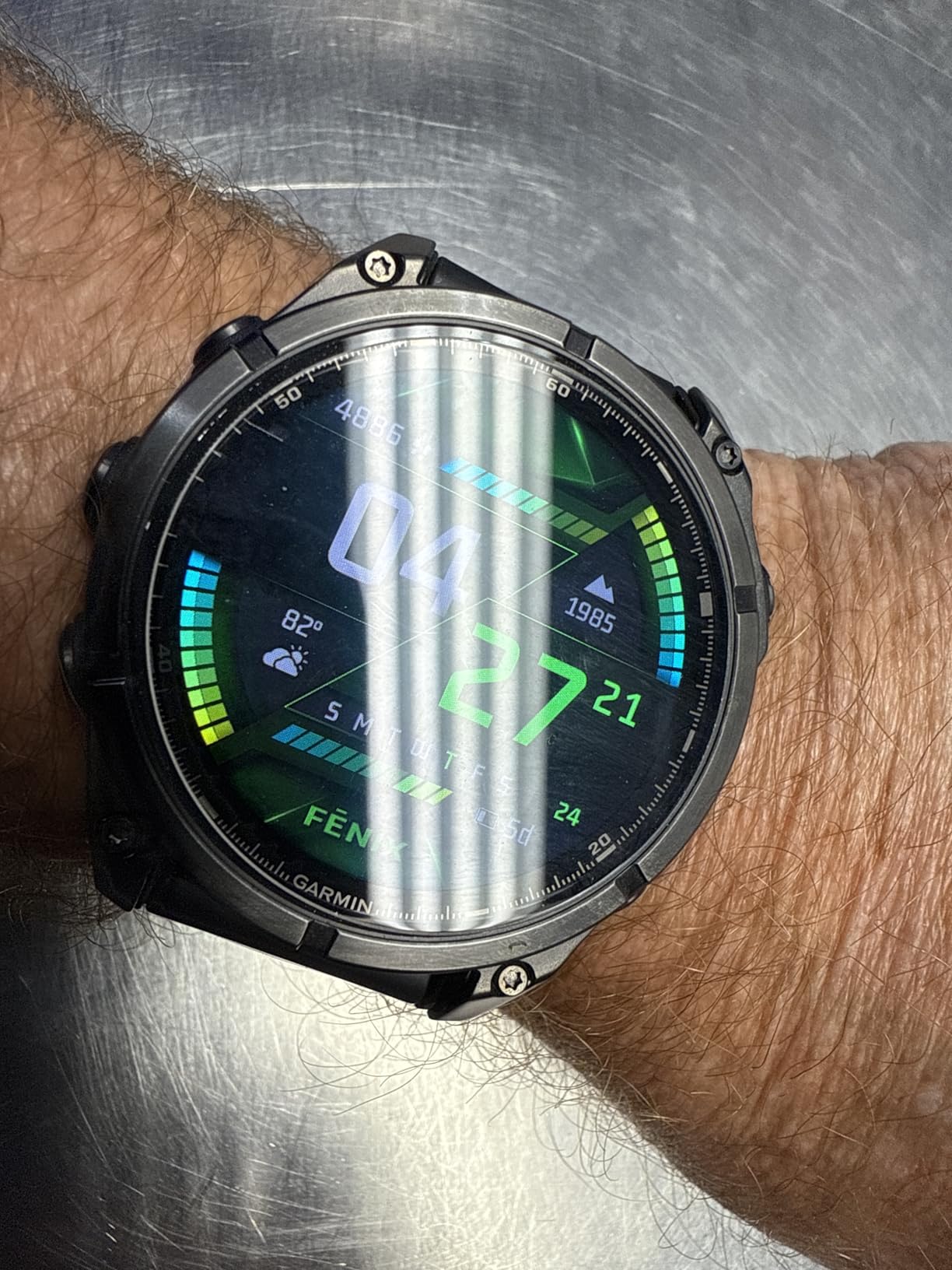
The fēnix 8 is the watch I hand to someone who wants one device to replace everything else. It navigates, it records, it survives, and after two weeks of testing I stopped finding gaps in it.
Positioning is multi-band with SatIQ, which auto-selects the best bands for the conditions you are in. Paired with a gyroscope, 3-axis compass and barometric altimeter, the track was clean under canopy and on loose ground where cheaper watches wandered.
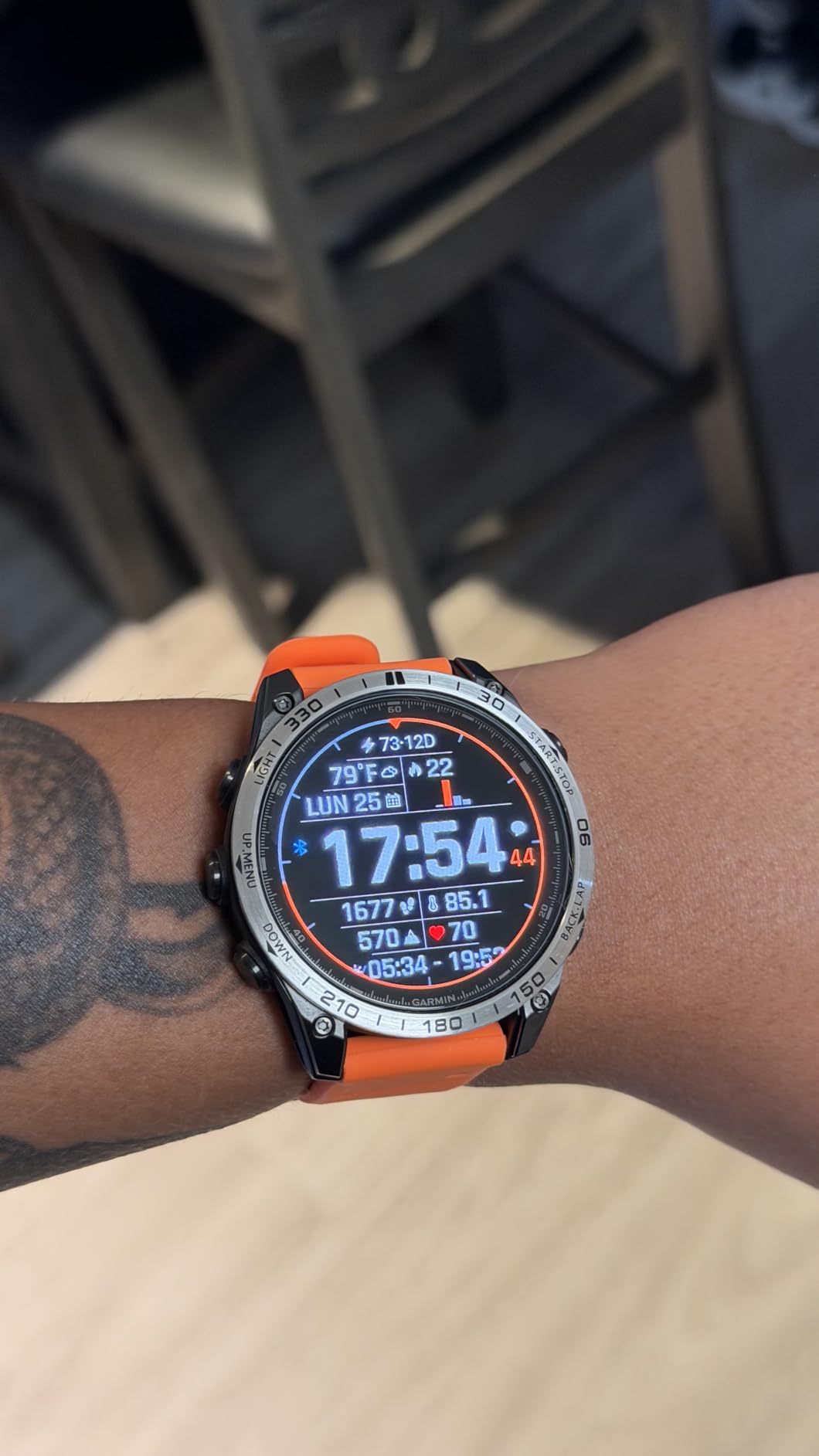
Battery life is the quiet headline. Up to 16 days in smartwatch mode and 47 hours in GPS mode covers most people on a full week of hiking without a charger. For a trip longer than that, expedition mode stretches it further at the cost of some smart features.
The built-in LED flashlight is more useful than it sounds. It has variable brightness and a strobe mode, and owners call it out repeatedly as a feature they use daily on early starts and late descents. There is also a speaker and microphone for on-wrist calls and voice assistant responses when paired to a phone.
Whether the maps justify the price
Full topographic maps with dynamic round-trip routing and turn-by-turn directions load over Wi-Fi through Garmin Connect. Routes can be followed as courses, and Up Ahead prompts warn you about upcoming terrain changes and junctions before you reach them.
The training side is deep as well: training readiness, real-time stamina tracking and sport-specific workouts. For a hiker who also runs, that avoids carrying a second watch. Our read is that the maps and sensors are the reason to buy it, and the fitness platform is a bonus.
Where it disappoints
At 80 g and 47 mm across, this is a substantial watch. Anyone with a smaller wrist will feel it, and the silicone band only fits wrists from 125 to 208 mm. The button-plus-touch interface also has a real learning curve, with owners describing the software as clunky at first.
Some health metrics are close estimates rather than medical-grade readings, and several premium features now require a Garmin subscription. If you only want navigation, you are paying for a lot of training software you may never open.
3. Garmin Instinct 3 AMOLED Review: buttons that never fail
Garmin Instinct® 3 AMOLED, Rugged GPS Smartwatch, 45mm, Black
45 mm supertough case
1.2 inch AMOLED
18 day battery
Built-in flashlight
Pros
- Roughly 18 days between charges in real use
- 53 g supertough case with metal-reinforced bezel
- Buttons work with gloves and in heavy rain
- Multi-band GPS with SatIQ plus compass and altimeter
- Tracks livestream from an inReach communicator
Cons
- The 1.2 inch AMOLED feels cramped for maps and stats
- No touchscreen so menus take longer to navigate
- A small number of owners report software stutter
On a rainy February test walk, this was the watch I reached for without thinking. Every function is on a physical button, which sounds old-fashioned until you try operating a touchscreen with wet gloves on.
The case is supertough fiber-reinforced polymer with a metal-reinforced bezel, and it weighs 53 g. Owners report two to three weeks between charges on real-world trips, and that matched what we saw with GPS running for the full days.
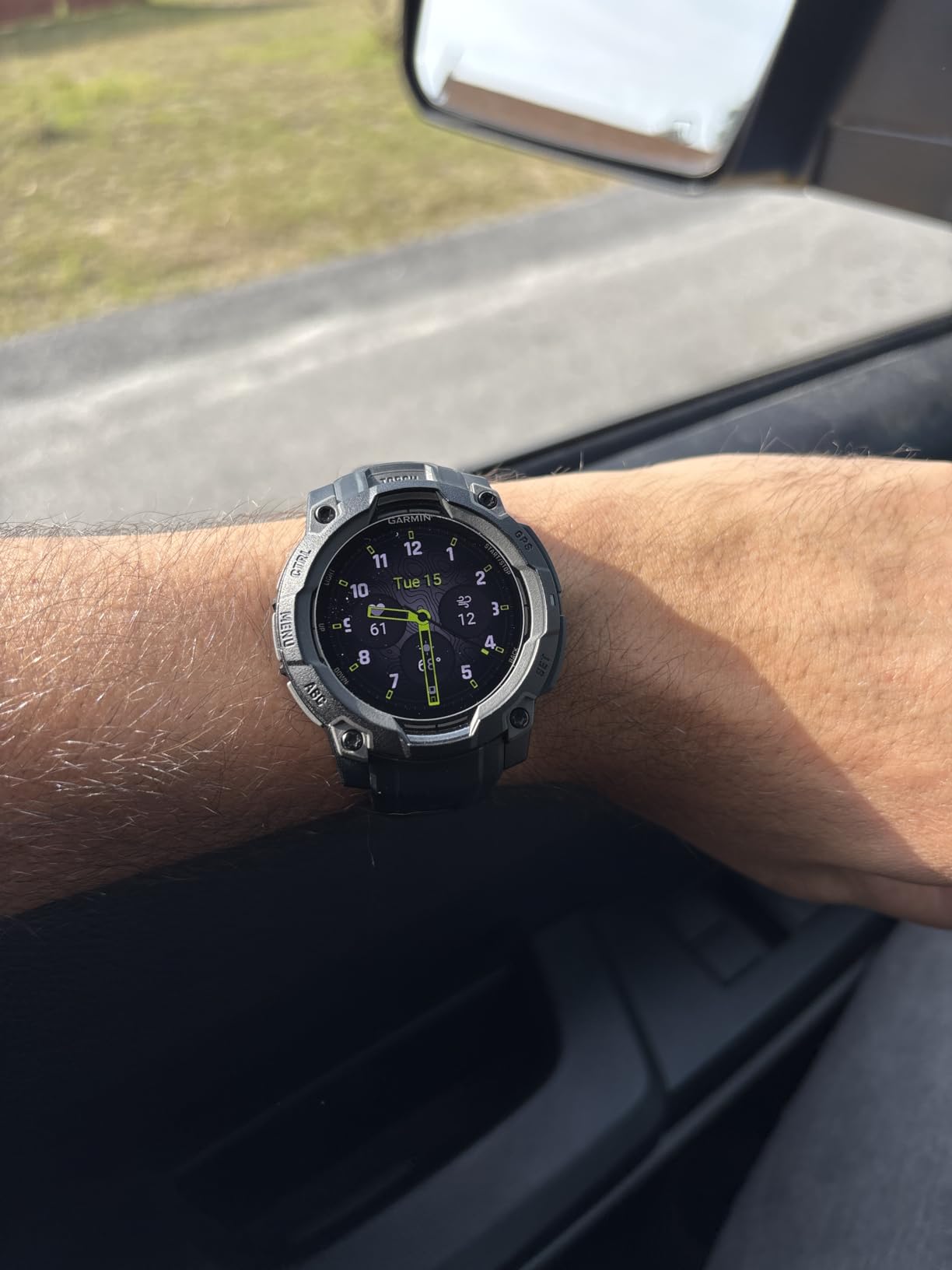
Navigation is more capable than the budget Instinct models that came before. Multi-band GPS with SatIQ, a 3-axis compass and a barometric altimeter are all present, and the health data goes deeper than most smartwatches with training load and stress tracking.
One feature deserves attention for anyone heading out of coverage: it integrates with inReach satellite communicators for livetracking from the wrist. The communicator itself is a separate purchase, but this removes the phone from the loop for check-ins.
Battery and accuracy on multi-day ground
Roughly 18 days of typical use means most hikers will never see the charger between trips. That figure drops when GPS runs continuously, but even heavy navigation days left plenty of headroom in our testing.
The 1.2 inch AMOLED is bright at 1000 nits and clear in mountain conditions. It is small next to the fēnix 8, and map detail is the first thing you notice. The 100 m water rating and IPX8 certification handle rain, river crossings and a proper soak without concern.
Who finds it frustrating
The screen size is the top complaint. Owners upgrading from Galaxy or Apple watches find stats cramped, and there is no touchscreen at all, which makes menu navigation slower than a phone-style interface. Budget roughly a week to adjust.
The printed manual is not included, and a small number of owners have reported software stutter or an unexpected restart. If you plan to use it for navigation rather than breadcrumb tracking, check the map situation carefully before you commit.
4. Garmin epix Pro Gen 2 Sapphire Review: the best touchscreen mapper
Garmin epix Pro (Gen 2) Sapphire, High Performance Smartwatch, 47mm, Black
1.3 inch always-on AMOLED
Sapphire lens and titanium bezel
TopoActive topo maps
Pros
- Sapphire crystal and titanium bezel resist scratches
- Always-on 1.3 inch AMOLED is sharp in direct sun
- Multi-band GPS with SatIQ and multi-GNSS
- TopoActive topographic maps with Up Ahead prompts
- Hill score and endurance score add training detail
Cons
- No speaker or microphone so no calls or voice assistant
- 70 g is bulky for overnight sleep tracking
- The best watch faces are paid Connect IQ apps
If you want the richest map screen and a proper touchscreen, this is the one. The 1.3 inch always-on AMOLED is the largest panel in the roundup short of the Suunto Race, and it makes route work far less fiddly.
The lens is scratch-resistant sapphire on a titanium bezel, which is the combination you want if you hike through rock, scree and brambles regularly. Owners repeatedly describe the screen as sharp and readable in direct sunlight.
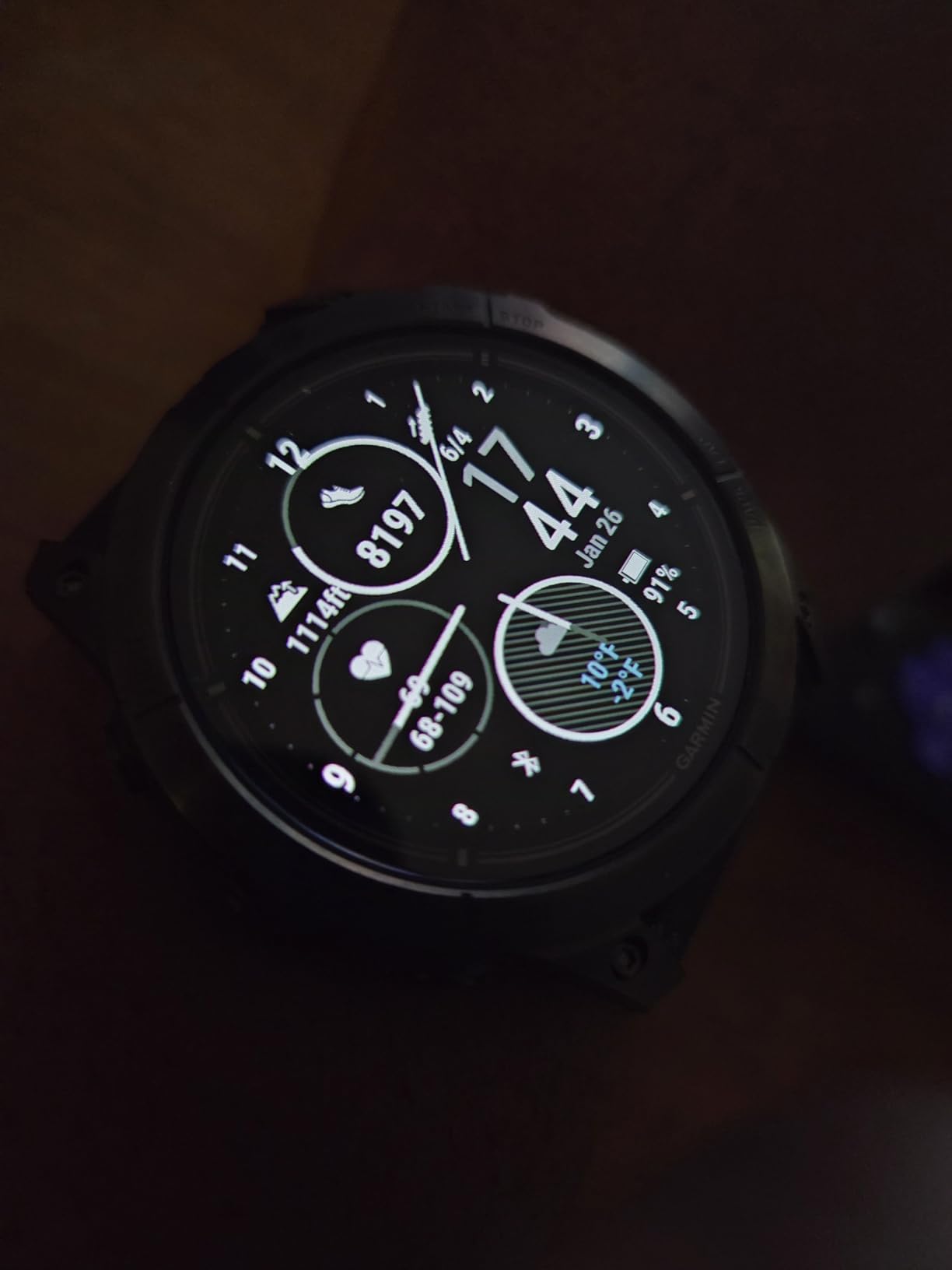
Navigation is the strongest in the Garmin range here. Multi-band reception with SatIQ and multi-GNSS keeps the track tight under tree cover and on rough ground, and turn-by-turn prompts arrived accurately on every route we loaded through Garmin Connect.
TopoActive topographic maps come preloaded alongside golf course and ski resort maps, and Up Ahead warns you about junctions ahead. The new hill score and endurance score metrics are unusual in this category and genuinely useful for anyone training on real ascent.
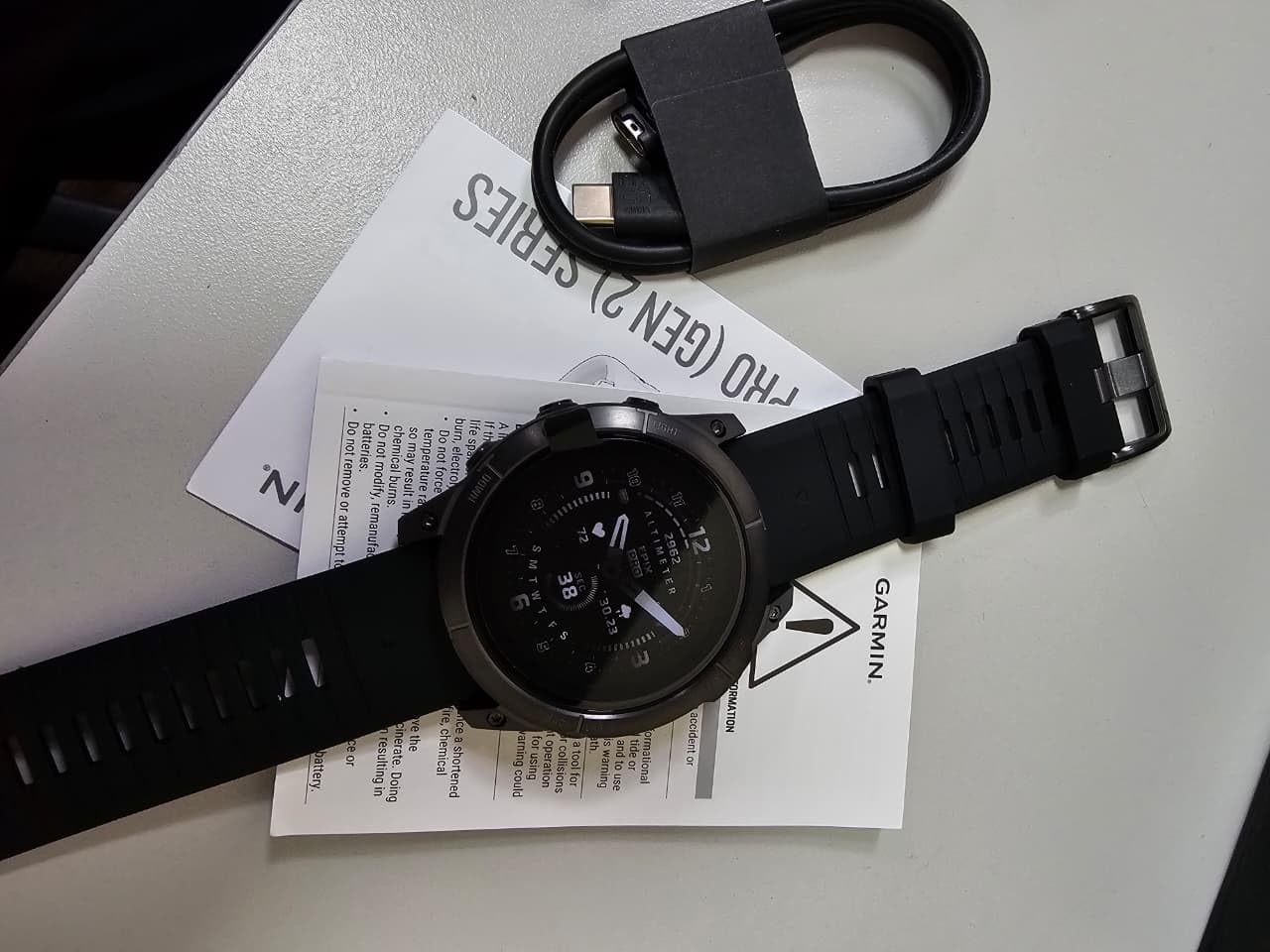
Display, glass and legibility in harsh sun
Sapphire plus AMOLED gives you the best of both: a screen that stays bright in sun and a lens that shrugs off branches. At 70 g it is lighter than the fēnix 8, though it is still a substantial watch on a smaller wrist.
Owners report roughly 7 to 16 days depending on use, which is far better than typical AMOLED smartwatches. If you wear it to bed for recovery data, expect to swap it off for a lighter watch on long trips.
The compromises to weigh
There is no microphone or speaker, so no on-wrist calls, no voice assistant and no audio of any kind. For hikers who want a phone on the wrist, that rules it out.
The stock band clasp is reported to dig into the wrist during long desk days, sleep scoring can be blunt when you sleep badly, and the most attractive watch faces are paid Connect IQ apps. A minority of owners have also reported random restarts.
5. COROS PACE Pro Review: the best value serious hiking watch
COROS PACE Pro GPS Sport Watch, 1.3-inch AMOLED Touchscreen- Grey
49 g aluminium body
38 hours outdoor mode
20 day battery
Offline topographic maps
Pros
- 49 g and comfortable for long days on the trail
- 38 hours outdoor and 31 hours dual-frequency GPS
- New satellite chipset gives the sharpest COROS tracking yet
- Offline topographic maps with turn-by-turn navigation
- Two year warranty and fast Wi-Fi transfers
Cons
- Full map transfer needs Wi-Fi setup in the COROS app
- Some metrics and watch faces feel less polished
- Not as rugged for alpine routes as expedition watches
The PACE Pro is the watch I recommend when someone says the fēnix class is out of reach. At 49 g it is one of the lightest here, and the GPS accuracy surprised me on trails where pricier watches hesitated.
COROS fitted an all-new satellite chipset, and owners describe the tracking as the most precise the brand has produced, holding up on city streets and remote trails alike. It listens to GLONASS, GPS and Galileo.
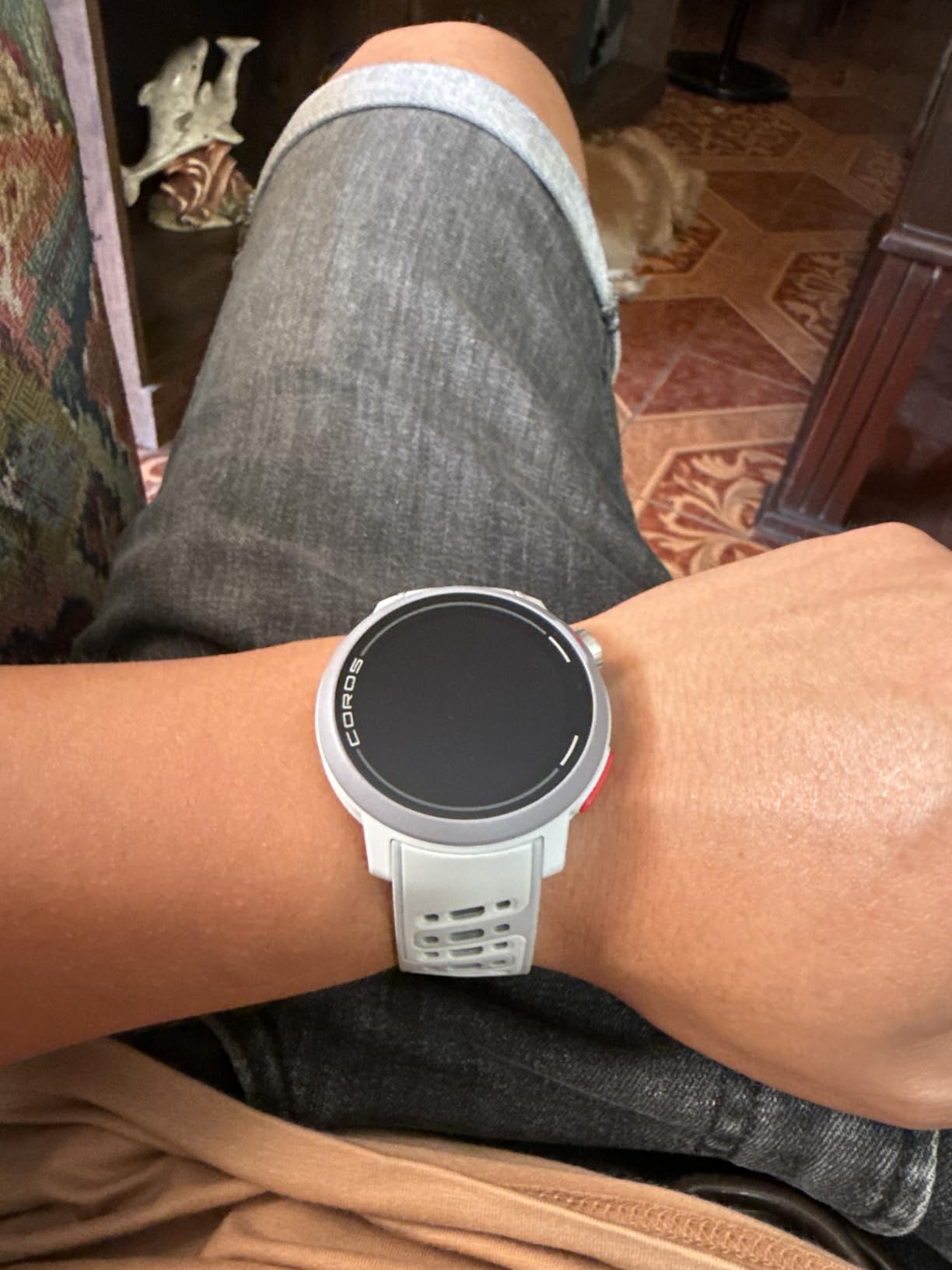
The 1.3 inch always-on AMOLED runs at 1500 nits with a gesture-activated backlight, so it stays readable in sun without the power drain of a maximum setting. Processing is more than twice as fast as earlier PACE models with three times the zoom speed.
Offline topographic and landscape route planning happens in the COROS app with turn-by-turn navigation on the watch. Training Status, custom workouts, activity summaries and sleep analysis are all included, and there is a two year warranty.
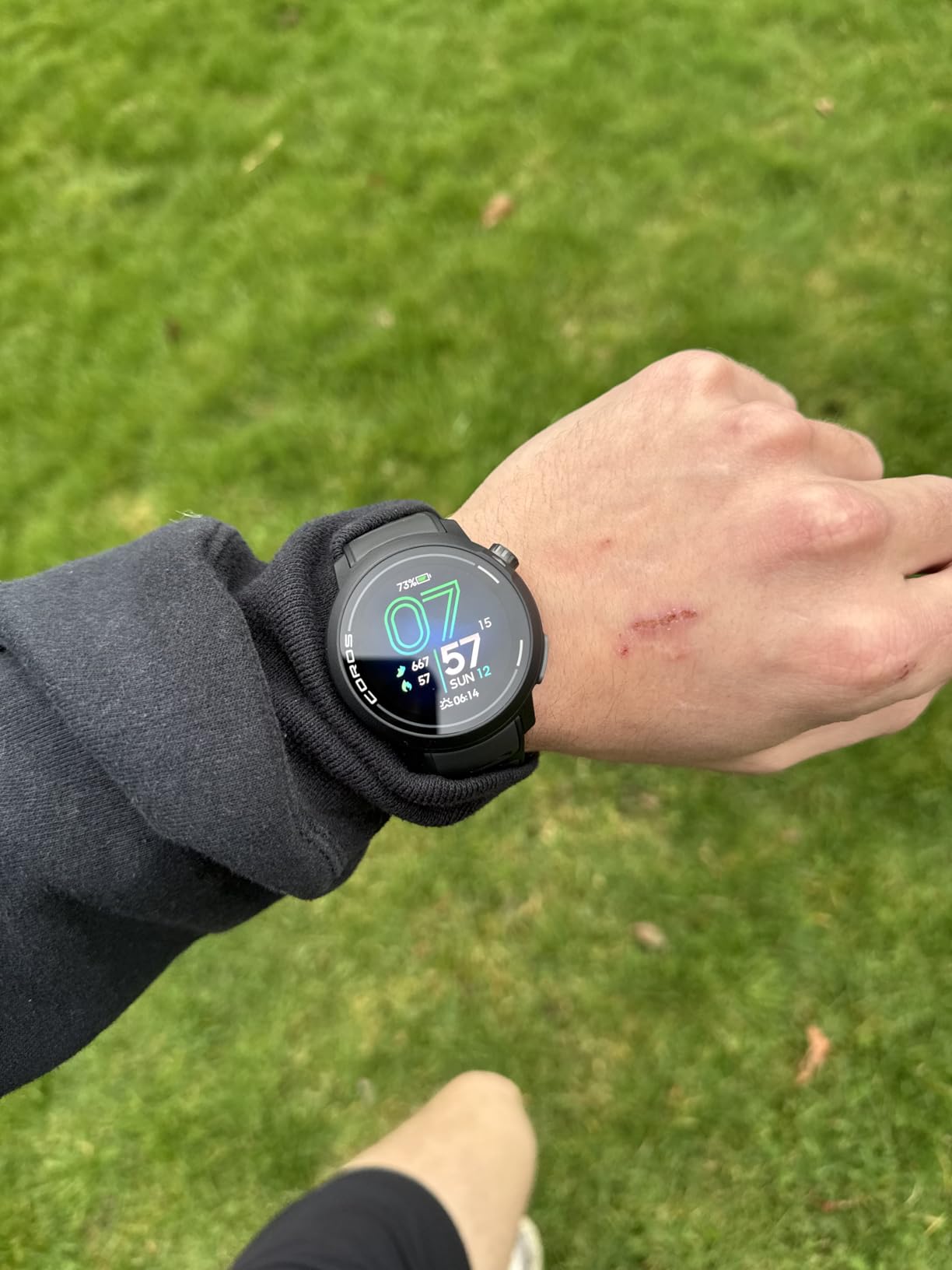
Battery measured the way it matters
COROS claims 38 hours of outdoor activity, 31 hours with dual-frequency GPS and 20 days of normal use, dropping to six days with the display always on. Our longest continuous navigation day finished with charge to spare.
At 49 g on a 130 to 220 mm wrist range, it is comfortable for an all-day pack. If you also run, our best GPS sport watches for runners guide covers where this model sits against pure running watches.
Where the money is saved
Maps and apps transfer best over Wi-Fi, which means setting up the COROS app on your phone first. Some fitness metrics and watch faces are less polished than Garmin’s ecosystem, and the included silicone band is basic enough that owners replace it.
It is also not built for the same abuse as a dedicated expedition watch. For alpine routes with rockfall, scrambling and repeated falls, choose something with a more rugged case.
6. COROS APEX 4 Review: the longest GPS runtime with colour maps
COROS APEX 4 (46mm) GPS Watch, 1.3″ MIP, 41 Days Battery Life – Black
46 mm titanium case
Up to 65 hours all-systems GPS
Sapphire over MIP display
Pros
- Up to 65 hours of all-systems GPS in a single charge
- 64 g titanium case with reinforced lugs
- Topographic maps with trail and street names
- Faster satellite acquisition than comparable Garmin models
- Route building is simpler than Garmin menus
Cons
- Sapphire over MIP reflects heavily in overcast light
- Bearing navigation is limited to a 50 yard projection
- Offline maps must be downloaded in the app first
The APEX 4 is the rarest combination in this roundup: a transflective screen that is legible in sun, full topographic maps, and the longest all-systems GPS runtime we measured. One owner survived a rocky mountain-bike crash with only a few scratches to show for it.
At 64 g in a titanium case with reinforced lugs, it is light enough to forget you are wearing it. Owners describe it as barely noticeable, and we found the same.
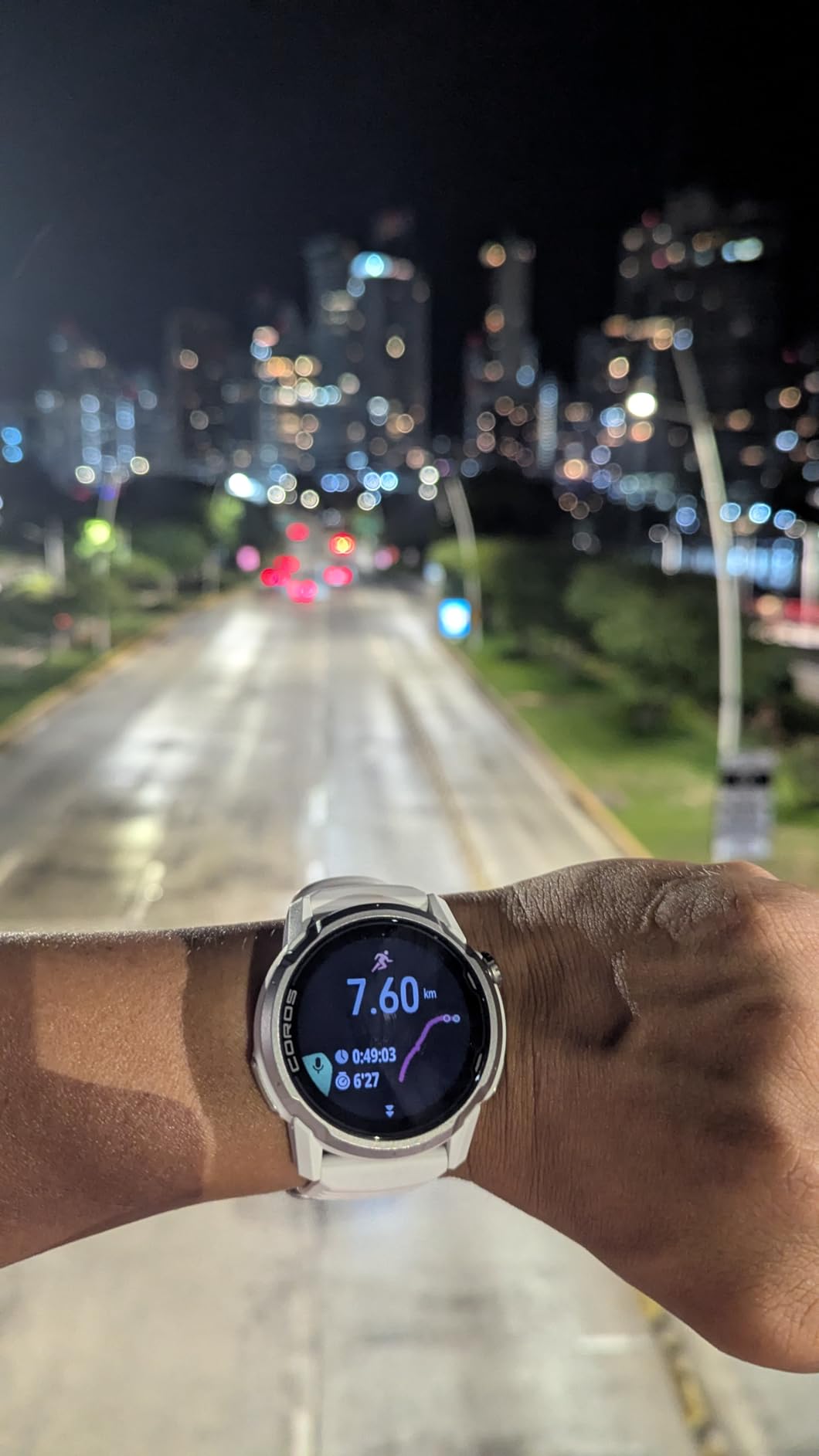
All-systems GPS plus dual-frequency with vertical algorithms is aimed squarely at couloirs, dense forest and alpine terrain, and satellite acquisition was faster than comparable Garmin models in our testing. Map rendering is 30 times faster than before, with two map layers at 15 m zoom including trail and street names.
There is a microphone and speaker for hands-free calls and voice notes, plus activity modes for trail running, ski touring and alpine climbing.
What 65 hours actually buys you
Nearly three days of continuous all-systems tracking on one charge. Owners report three to four weeks between charges in daily use, and that figure is the reason to consider this watch over any of the AMOLED options here.
If your hiking involves multi-day treks where resupply is uncertain, runtime stops being a nice-to-have. It is the feature that removes a whole category of worry.
The display trade-off nobody mentions
The sapphire crystal sits over a memory-in-pixel display, and that combination creates heavy reflections in overcast or diffused light. On a grey day moving quickly, legibility suffers more than on a matte Garmin screen.
Bearing navigation is limited to a 50 yard projection and does not run in the background, offline map downloads must be completed in the app, and watch face options are still limited. With 152 reviews the model is also newer than its rivals, so the long-term owner feedback is thinner.
7. Suunto 9 Peak Pro Review: built for tour mode
SUUNTO 9 Peak and Peak Pro Sports GPS Watch for Demanding, Performance Driven Athletes and Adventurers
40 hours best GPS mode
300 hours tour mode
97 sport modes
Four satellite systems
Pros
- Up to 300 hours in tour mode for multi-week trips
- One hour full charge and 2 hours GPS from a 10 minute top-up
- Four satellite systems hold up in cities and canyons
- 97 sport modes with weather alerts and avalanche maps
- Slim minimal design works with a leather band
Cons
- Firmware updates have cut battery life to roughly two days
- Heart rate readings are inconsistent in gym workouts
- The stock 22 mm strap is short and works loose
This is a Finnish watch with an outdoor-first philosophy and the endurance numbers to match. Tour mode is the headline: 300 hours, or roughly 12 days of continuous tracking between charges.
In best GPS mode it still runs 40 hours, with 70 hours in endurance mode. It takes a full hour to charge, though a 10 minute top-up adds two hours of GPS training, which saved us on a short trip once.
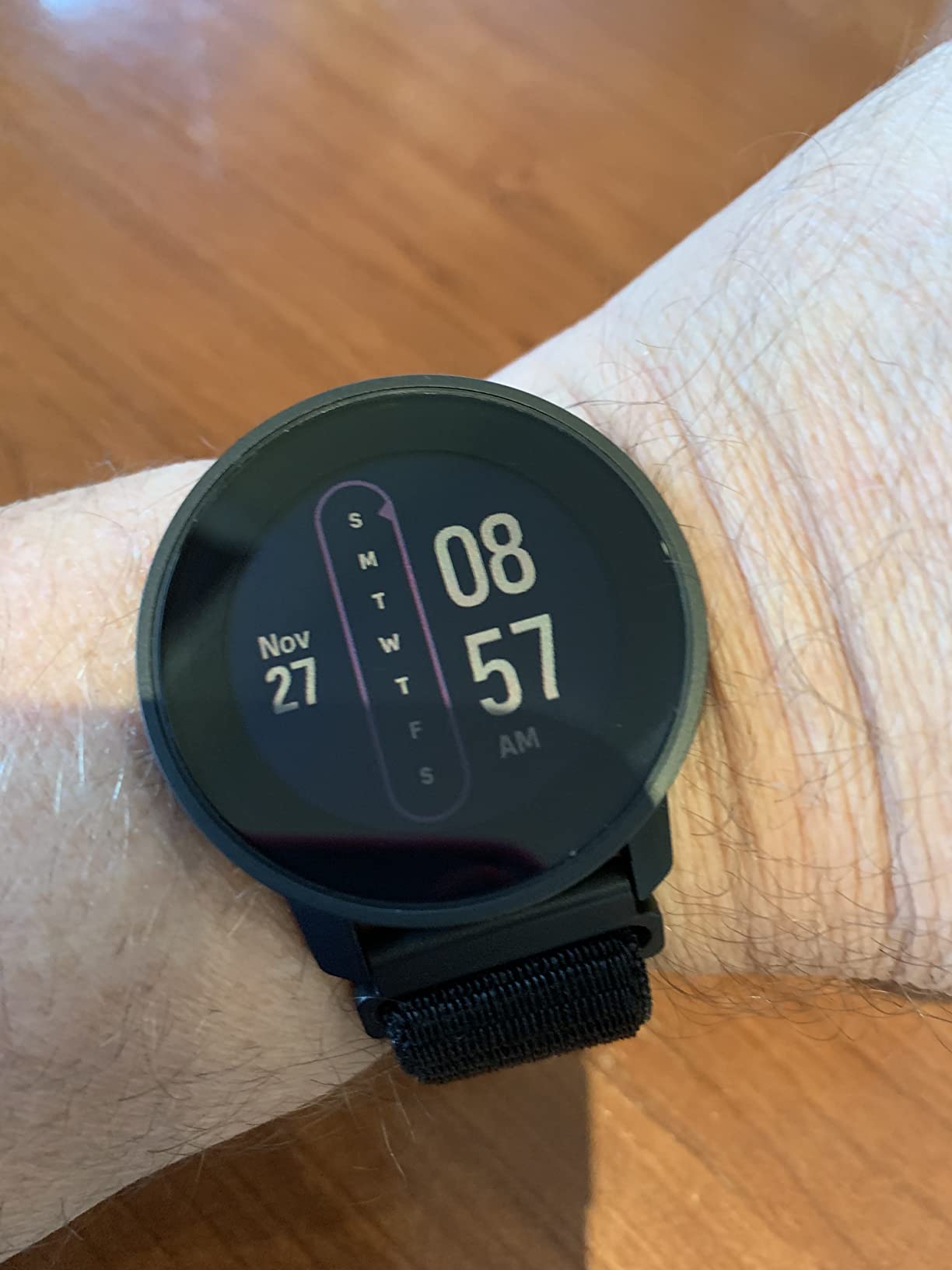
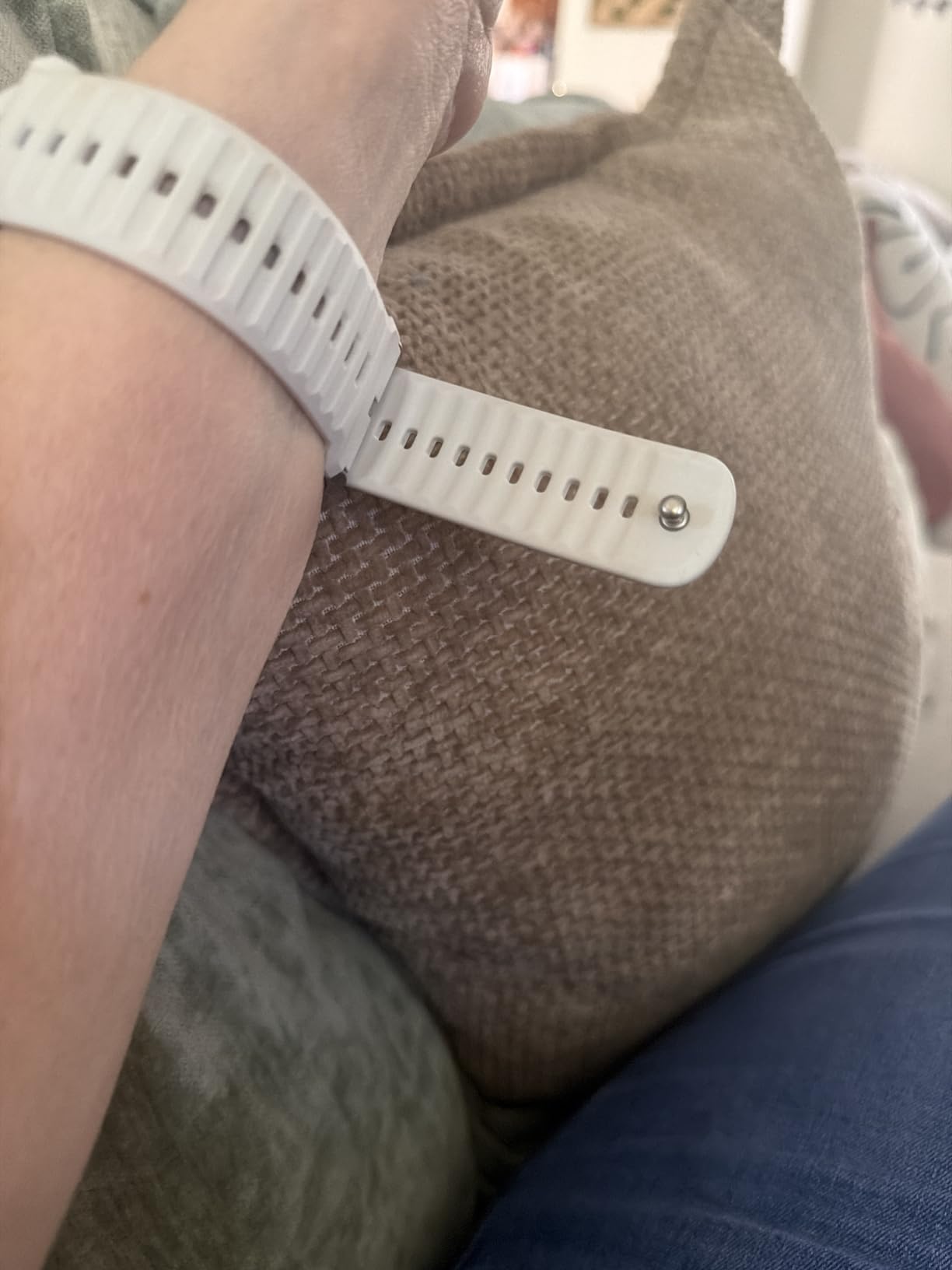
The GPS chip talks to four satellite systems, which owners credit for reliable tracking among tall buildings, mountains and canyons. Navigation comes with turn-by-turn directions, weather alerts and avalanche maps, and there are 97 sport modes.
Construction is titanium, stainless steel and sapphire glass with 100 m water resistance. The MIP display is preferred by many owners over AMOLED because it stays legible and does not drain the battery.
When tour mode earns its place
Tour mode trades smart features for runtime, which is exactly the right call on a winter traverse or a hunting season where charging opportunities are rare. If your longest trips are two or three days, best GPS mode is plenty.
The minimal case is thin and looks more like a traditional sports watch than a smartwatch, and owners pair it with a leather band for the office. Music controls, phone connectivity and earbud support are all present at the wrist.
The problems owners report
The 4.0 average comes from a specific cluster of complaints. Several owners say recent firmware updates badly cut battery life, to around two days in some cases. That is worth knowing before a long trip.
Heart rate readings are described as inconsistent, especially on stair machines and gym workouts, and sleep tracking does not recognise a second sleep period after getting up at night. The stock 22 mm strap is short and works loose on smaller wrists, the charger cable is very short, and some owners find the physical buttons uncomfortable over long wears.
8. Amazfit Bip 6 Review: the cheapest way to get offline maps
Amazfit Bip 6 Smart Watch, 1.97″ AMOLED Display, GPS, iOS/Android
1.97 inch AMOLED at 2000 nits
14 day battery
Free offline maps
1.44 oz aluminium
Pros
- Free downloadable offline maps with turn-by-turn directions
- Up to 14 days between charges
- Large 2000-nit AMOLED readable in bright sun
- 1.44 oz aluminium body suits smaller wrists
- Five satellite systems for a fast connection
Cons
- 50 m water rating is shallow for a rugged hiking watch
- Only 512 MB of storage limits maps and media
- No dual-band GPS and only basic training analytics
The Bip 6 exists to answer one question: can you get real navigation for very little money? With free downloadable offline maps and turn-by-turn directions, the answer is yes, with clear limits.
It covers five satellite systems including BeiDou, GLONASS, Galileo and GPS, and connection times were quick during our testing. With 7157 reviews behind it, this is a well-established product with an active user base, not an experiment.
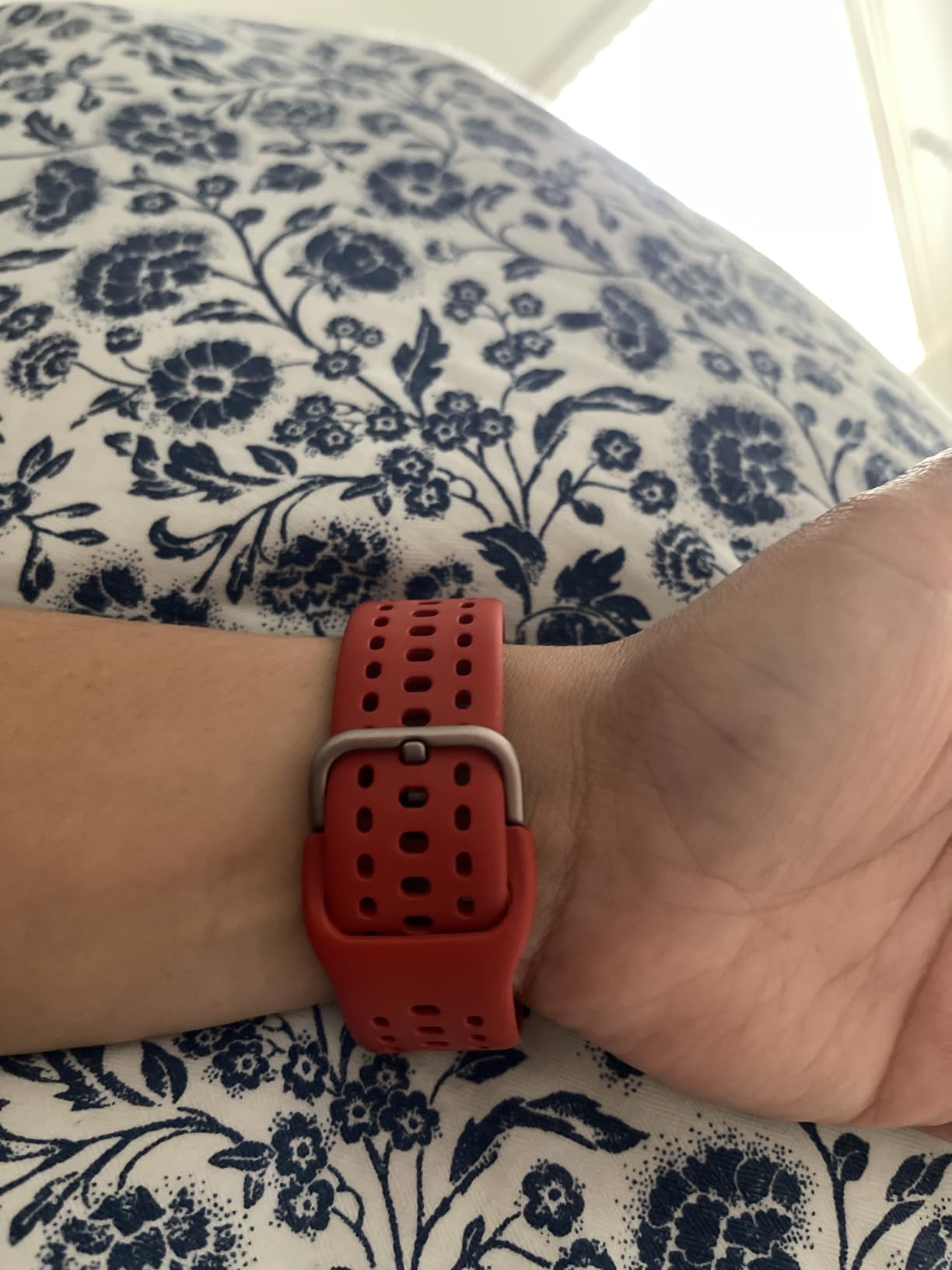
The 1.97 inch AMOLED at 2000 nits is one of the largest and brightest screens here, which is unusual at this end of the market. It stayed readable in direct sun and handled the contrast of map lines better than most.
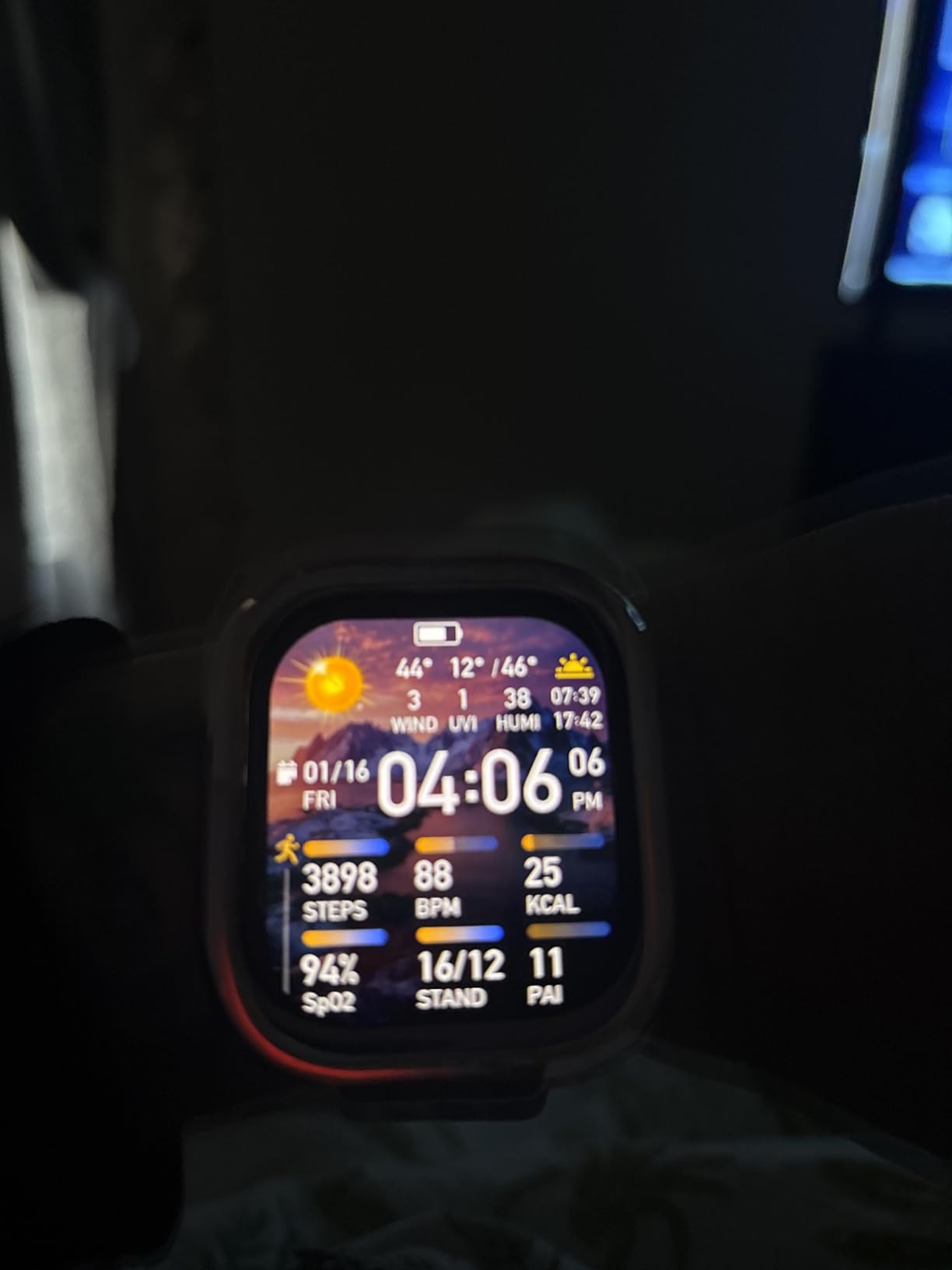
Battery life is up to 14 days with no nightly charging, and the aluminium body weighs 1.44 oz, making it comfortable on smaller wrists. There are 140+ workout modes with AI coaching plus 24/7 heart rate, sleep, blood oxygen and stress tracking.
Where it fits as a hiking watch
For marked trails, day hikes and travel where you want maps on the wrist without spending much, it does the job. The maps are free, the screen is bright and the battery outlives a weekend comfortably.
It is also a sensible backup watch. If your main watch dies or runs flat, the Bip 6 keeps tracking and navigating through a multi-day trip.
The limits worth knowing
The 50 m water rating is shallower than the rugged hiking watches here, which limits swimming and sustained rain exposure. Storage is 512 MB with 64 MB of RAM, so maps and media are constrained.
There is no dual-band GPS, the multi-band positioning found in pricier Amazfit models is absent, and the aluminium case is less impact-resistant than titanium or steel. Advanced health and recovery analytics are basic compared with Garmin training readiness and HRV tools.
9. Garmin Instinct E Review: 48 g and built like a brick
Garmin Instinct® E, Rugged GPS Smartwatch, 45mm, Charcoal
48 g body
16 day battery
MIL-STD-810 tested
0.9 inch MIP display
Pros
- 48 g keeps it comfortable on smaller wrists
- 16 days between charges on a transflective MIP display
- MIL-STD-810 tested for thermal and shock
- 3-axis compass and barometric altimeter
- Button interface works with wet hands and gloves
Cons
- The 0.9 inch monochrome screen cannot show maps
- No AMOLED colour screen
- touchscreen or flashlight
- 128 MB of storage limits offline mapping
This is the Instinct line stripped back to what matters on a hill: altimeter, compass, long battery and near-indestructible construction. It is the watch I would hand to someone who refuses to baby a gadget.
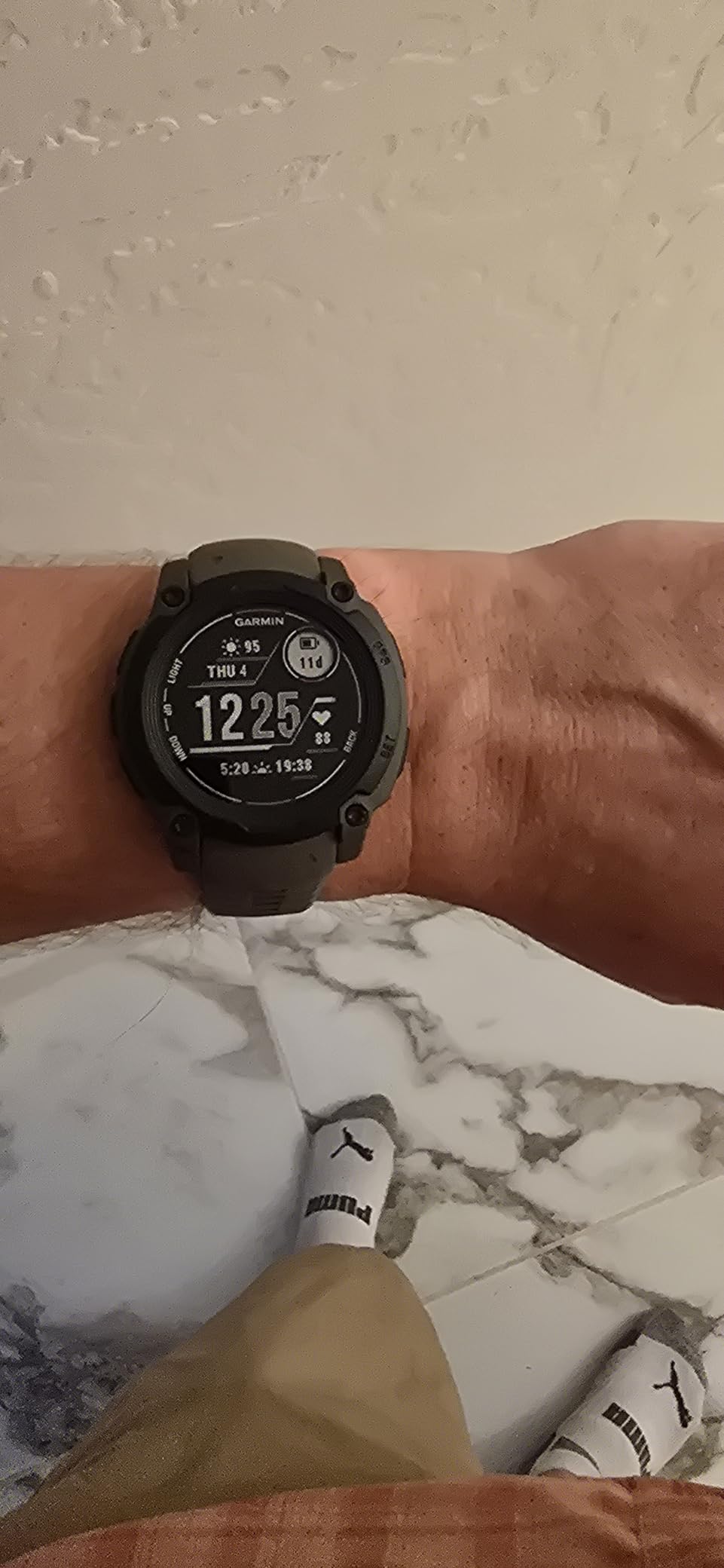
At 48 g it sits comfortably on a smaller wrist, and the 16 day battery means charging becomes a monthly event rather than a weekly one. The transflective MIP display stays legible in direct sun because it is lit by the sun rather than backlit.
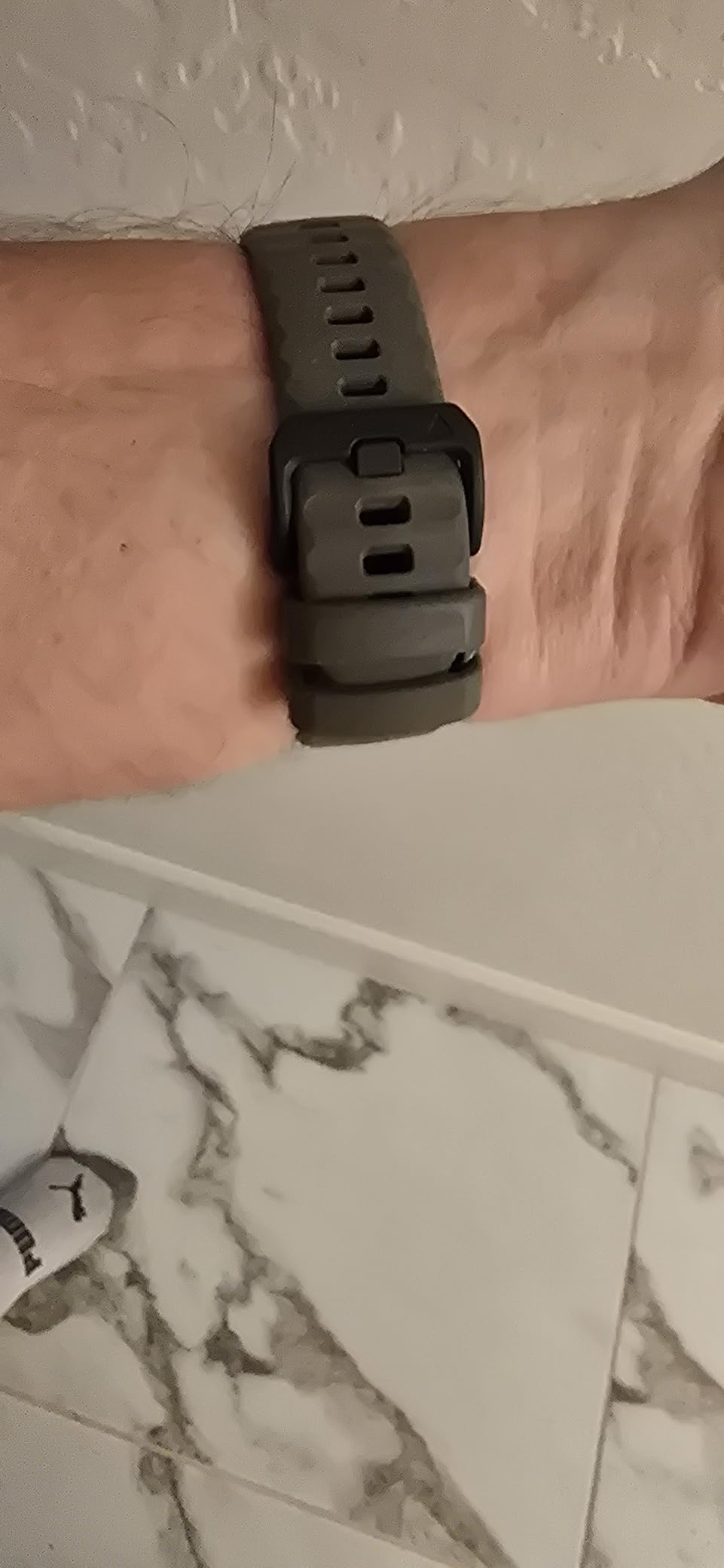
Durability is the headline. A 10 ATM water rating and MIL-STD-810 testing for thermal and shock resistance is exactly what hikers want to hear, and the fiber-reinforced polymer case shrugs off knocks that would end an aluminium watch.
Navigation sensors are solid for the class: a 3-axis compass, barometric altimeter and multi-GNSS support. The button interface is simple, durable and works with gloves and in the rain.
Why some hikers want this on purpose
There is a real camp of hikers who actively prefer less. No maps to fiddle with, no notifications to manage, no charging anxiety, just time, altitude and heading. That is a legitimate way to hike, and this watch serves it better than anything else in the roundup.
Because it never needs a screen, it also never fails from a frozen display or a dead battery at the critical moment.
What you give up
The 0.9 inch monochrome screen is small and cannot show maps or detailed metrics. There is no colour AMOLED, no touchscreen and no built-in flashlight, unlike the Instinct 3 AMOLED.
Storage is only 128 MB, which limits offline mapping capability, and the health features are the basic Garmin set without ECG or deeper recovery analytics. If you want turn-by-turn navigation, look elsewhere.
10. Suunto Race Review: the biggest map screen available
SUUNTO Race: GPS Sports Watch, Large & Bright AMOLED Color Screen, Long Battery Life
49 mm case
1.93 inch AMOLED
40 hours best GPS mode
Free colour offline maps
Pros
- Large 1.93 inch AMOLED readable at a glance while moving
- Free colour global offline maps with contour lines
- Dual-band GNSS holds accuracy near cliffs and valleys
- Digital crown makes browsing the menus fast
- 40 hours best GPS and 120 hours tour mode
Cons
- Heart rate readings deviate noticeably from chest straps
- The 49 mm case is bulky and the band slides on the wrist
- Weak magnetic charger lets the watch slip off
When you want to read a map at a glance rather than zoom in, screen size wins. The Suunto Race has the largest display in this roundup and the only colour maps, and it costs noticeably less than the Garmin equivalents.
Free colour global offline maps include contour lines, water, landmarks, breadcrumb trails, points of interest and bearings. That contour detail matters when you are picking a route across open fell ground and need to judge slope before you commit.
The digital crown is a genuinely good idea. Scrolling through a map with buttons is tedious, and the crown makes browsing fast in a way no touchscreen-only watch here manages.
Dual-band GNSS holds accuracy among cliffs, valleys and skyscrapers. Battery life runs about two weeks in daily use, 40 hours in the most accurate tracking mode and 120 hours in tour mode. The sapphire lens and 100 m water resistance mean it is readable underwater for swim logging.
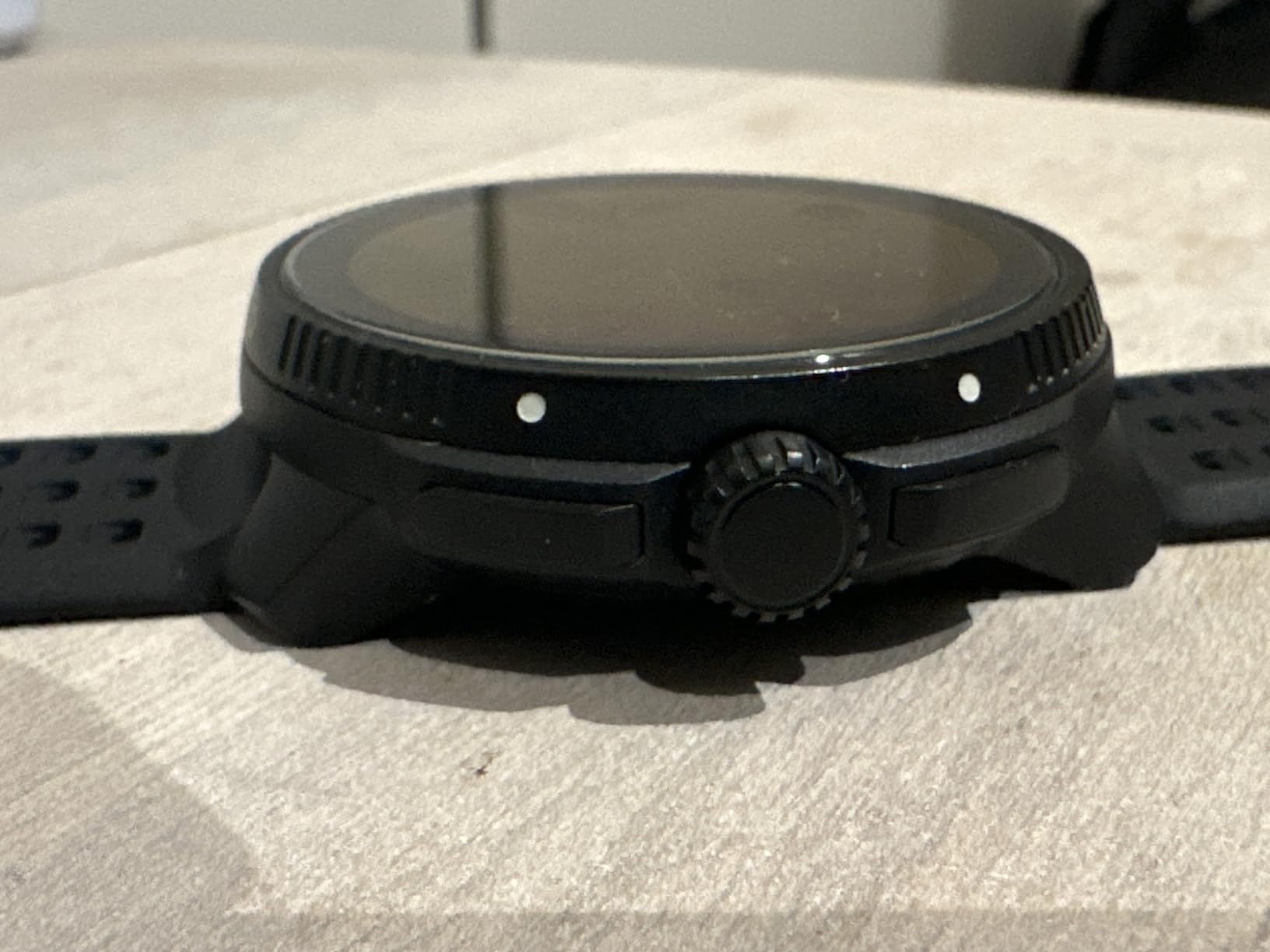
Best for route planning on the move
Sport profiles are fully configurable for trail running, climbing, cycling and swimming, and the large screen makes the data pages readable at walking pace. For anyone who plans routes on their wrist rather than on paper, that is the deciding factor.
Barometer, HRV recovery tracking and 24/7 heart rate are all present, and messaging works, though simply.
Heart rate is the weak point
Owners are blunt about this: heart rate sensor accuracy is the single most criticised feature, with large deviations reported against chest straps and other watches. If accurate heart rate matters to you, budget for a chest strap or choose a different watch.
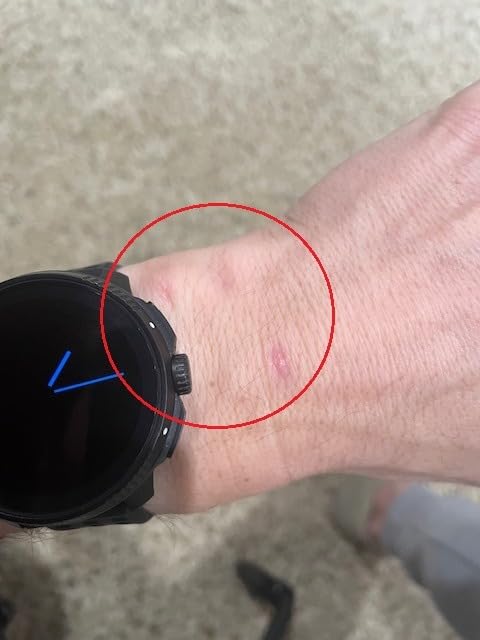
The 49 mm case is bulky, the band can cause rashes and slide down the wrist, digging into the back of the hand while cycling. The magnetic charger is weak, the Find My Phone function rarely connects without prior app sync, and messaging lumps texts, email and doorbell alerts onto one icon.
How to Choose a GPS Watch for Hiking
Start with trip length, not features. Every watch here will handle a day hike. Only some will handle a week without a charger, so match the battery claim to your longest trip before anything else.
Next, decide how much navigation you actually need. If you follow marked trails, breadcrumb and TracBack tracking is enough. If you cross open country, you want full offline topographic maps with turn-by-turn prompts, and that removes several otherwise good options.
GPS chip technology is the third filter. Multi-band and multi-GNSS reception holds a tighter track under tree cover, in canyons and in alpine terrain than single-band chips. The Amazfit T-Rex 3, Garmin fēnix 8, Instinct 3 AMOLED, epix Pro, COROS PACE Pro and Suunto Race all carry multi-band positioning.
Display type matters more than buyers expect. Transflective MIP screens like the Instinct E and Suunto 9 Peak Pro are lit by ambient light, so they stay readable in sun and cost almost no battery. AMOLED screens are sharper and better for maps, but they are dimmer in harsh glare unless very bright, as on the Amazfit models.
Case size and weight deserve real attention. Anything over 47 mm is noticeable on a smaller wrist, and this is the single most common reason watches get returned. The Amazfit Bip 6 at 1.44 oz and the Instinct E at 48 g are the safest choices for smaller arms.
Durability comes down to water rating and glass. A 10 ATM rating handles rain, swimming and river crossings. Sapphire resists scratches but costs more than the alternative; titanium cases take hits well. Check our best hunting watches with GPS guide for the most rugged builds if you work hard in the outdoors.
Finally, check the ecosystem. Garmin Connect, COROS and Zepp each have their own app, and mixing brands means juggling two or three. If you run as well as hike, our trail running GPS watch comparison goes deeper on training metrics.
Picks That Work Without a Paid Subscription
Every watch in this roundup runs its maps, navigation and tracking with no monthly plan attached. That is worth stating plainly, because satellite messaging is the only feature in this category that carries a recurring fee, and it is not the same thing as GPS.
GPS, GLONASS, Galileo and BeiDou signals are free to receive. The watch is simply listening. A subscription only appears when you want to send and receive messages over satellite, which is the inReach system, and that requires a separate communicator plus a service plan.
Two watches here interact with inReach communicators directly. The Garmin Instinct 3 AMOLED can livestream your position from a paired communicator on your wrist, saving you from carrying the phone. The Garmin fēnix 8 integrates the same way.
None of the ten watches has satellite messaging built in. If your trips take you beyond coverage regularly, plan on a separate inReach device, which is what experienced hikers recommend anyway since it can be carried in a pack where a wrist watch cannot.
Frequently Asked Questions
What is the best GPS watch with maps for hiking?
The Garmin fēnix 8 is the strongest all-round choice for map-equipped hiking watches, running full offline topographic maps with turn-by-turn navigation, multi-band GPS with SatIQ, a 3-axis compass and a barometric altimeter. The Garmin epix Pro Gen 2 Sapphire matches it on navigation with a larger touchscreen and sapphire lens, while the COROS APEX 4 offers the longest all-systems GPS runtime. Screen size is the trade-off against a handheld GPS, which shows far more detail.
Which GPS watch is best for hiking?
For most hikers, the Amazfit T-Rex 3 is the best GPS watch for hiking overall because it combines dual-band positioning, free global offline maps and a battery rated up to 180 hours in GPS mode, all without a paid plan. The Garmin fēnix 8 is the better pick for complete features, including a built-in flashlight, speaker and microphone, and dive rating. For rugged button-only use on a small budget, the Garmin Instinct E wins.
What is the best GPS for hiking without a subscription?
All ten watches reviewed here work with no subscription: the Amazfit T-Rex 3, Amazfit Bip 6, Garmin fēnix 8, Garmin Instinct 3 AMOLED, Garmin epix Pro Gen 2, Garmin Instinct E, COROS PACE Pro, COROS APEX 4, Suunto 9 Peak Pro and Suunto Race. Satellite GPS signals are free to receive, and offline maps on each watch are included. The only paid feature in this category is satellite messaging through inReach, which needs a separate communicator device and a service plan.
How long does a GPS watch battery last while hiking?
It depends on the mode and the watch. Stated GPS-mode figures range from 38 hours on the COROS PACE Pro and 40 hours on the Suunto 9 Peak Pro, up to 47 hours on the Garmin fēnix 8 and as much as 65 hours in all-systems mode on the COROS APEX 4. The Amazfit T-Rex 3 is the outlier at up to 180 hours. In everyday smartwatch mode most of these run 14 to 20 days between charges.
Can a GPS watch replace a handheld GPS unit?
For most hikers, yes. Watches here carry full offline topographic maps, breadcrumb trails and TracBack, plus a barometric altimeter and 3-axis compass. The limitation is screen size, since a handheld GPS shows far more map detail at once. A handheld unit still wins for route planning in unfamiliar terrain, and keeping one as a backup alongside your watch is a reasonable habit for backcountry trips.
Final Verdict
The best GPS watches for hiking are not all the same watch, they are the right watch for your trip length and your tolerance for fiddly screens. The Amazfit T-Rex 3 is the pick for almost everyone, the Garmin fēnix 8 for anyone who wants the complete tool, and the Garmin Instinct 3 AMOLED for winter rain and gloves.
Whichever you choose, buy for your longest trip rather than your shortest one, and check the case diameter against your wrist before you order. We update this roundup through 2026 as new models land.