
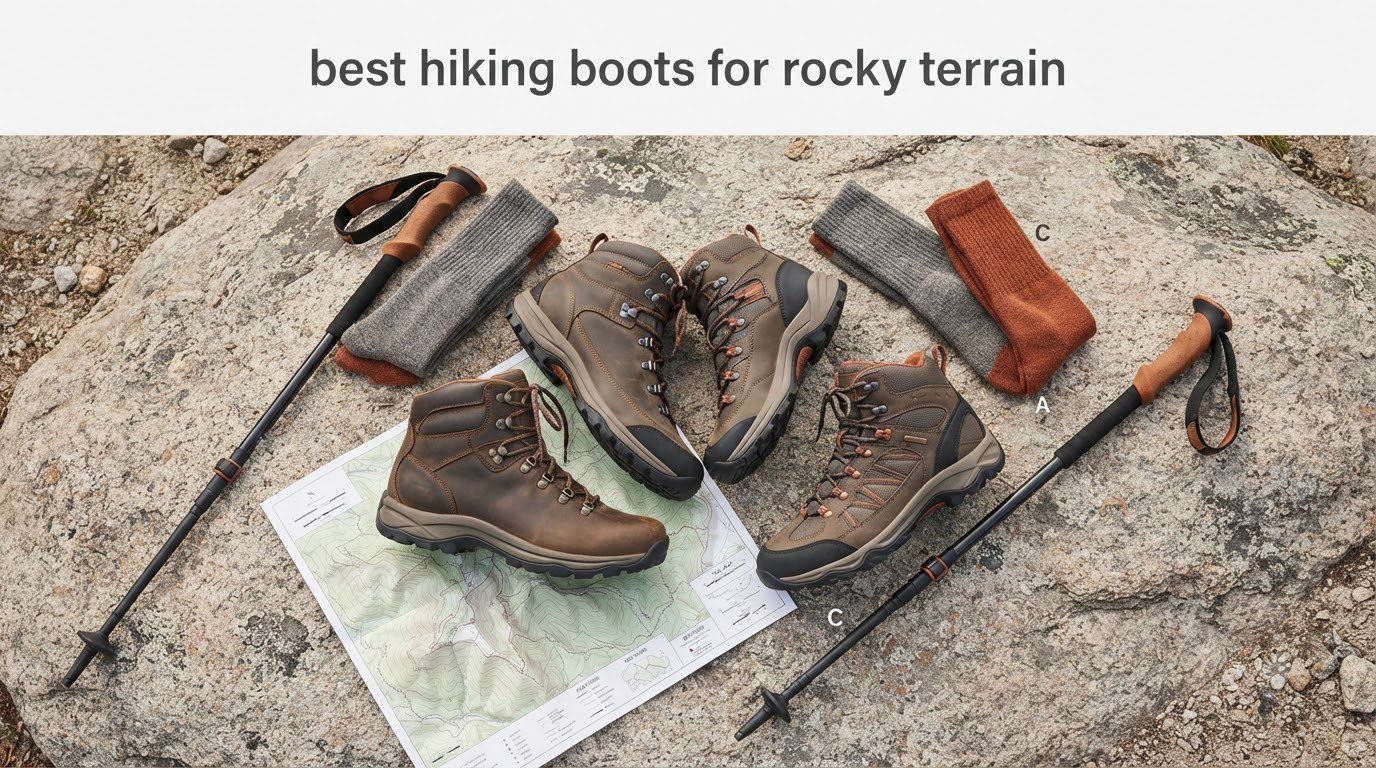
The best hiking boots for rocky terrain are mid- to high-cut boots built around four things: a stiff shank or rock plate that blocks sharp edges, a sticky rubber outsole with deep lugs for grip on wet and loose rock, a protective toe rand, and a collar high enough to hold your ankle on uneven ground. Rock works a boot in four specific places, and everything below is judged on those places.
Trail runners and ordinary hiking shoes are designed for dirt, gravel and forest singletrack. Take them onto scree, talus or a wet slab and their thin flexible soles let you feel every sharp edge, their softer lugs skate on low-friction rock, and they have almost no lateral structure when the ground tilts under your foot. Blisters, crushed toes and rolled ankles on rock are not random bad luck. They are design consequences.
Our team spent the 2026 season putting twelve pairs through alpine scree fields, slab rock, boulder fields and creek crossings, and we weighted every pick on underfoot protection, traction and stability rather than cushioning. Twelve boots made the cut. Three of them are strong enough that we would put them on a Colorado fourteener without thinking about it, and the rest each win a specific job on rock.
If you are still working out whether you need boots at all, our backpacking boot roundup covers load-carrying setups in more detail. This guide stays narrow: boots and shoes for ground that is mostly rock.
Table of Contents
Top 3 Picks: Best Hiking Boots for Rocky Terrain (October 2026)

KEEN Targhee 2 Mid
- Waterproof KEEN.DRY membrane
- External support shank
- 4mm multi-direction lugs
- High abrasion rubber toe guard

Foxelli Suede Hiking Boot
- Suede leather upper
- Gusseted tongue
- Shock-absorbent midsole
- Grippy non-slip rubber sole

Merrell Moab 3 Mid
- Molded nylon arch shank
- Vibram TC5+ outsole
- Pigskin leather and mesh upper
- Air Cushion heel
The KEEN Targhee 2 Mid is our editor’s choice because it is the only boot in this roundup where tens of thousands of long-term owners report the same result on real rocky ground: comfortable from the first wear, waterproof through ice melt, and stable thanks to an external shank and 4mm lugs. It is not the highest star rating here, and we would rather tell you that plainly than pretend otherwise. It is the most proven pick, and on rock, proven beats slightly flashier.
Best Hiking Boots for Rocky Terrain at a Glance
Here is the short list in the same category format hikers search with, followed by the full comparison of all twelve.
Best overall on rocky ground: KEEN Targhee 2 Mid. External support shank, bruise plate, rubber toe guard and 4mm lugs, in a waterproof mid-cut that wide feet can wear.
Best all-round trail boot: Merrell Moab 3 Mid. Molded nylon arch shank and Vibram TC5+ outsole give real rock grip, but it is not waterproof.
Best value on rock: Foxelli Waterproof Suede Hiking Boot. Suede upper, gusseted tongue and aggressive tread at a fraction of the technical boot cost.
Best for heavy packs over scree: ASOLO TPS 520 GV Evo Wide. One-piece full grain leather, GORE-TEX and a stiff Vibram-designed outsole that carries weight without flexing.
Best for scrambling and steep ridgelines: La Sportiva Makalu. Full steel shank and a Vibram rand, and it accepts automatic crampons.
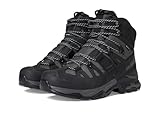
Best for descents and ankle stability: Salomon Quest 4 GTX. High-rise collar and a rigid chassis, with almost no ankle-roll reports in the reviews.
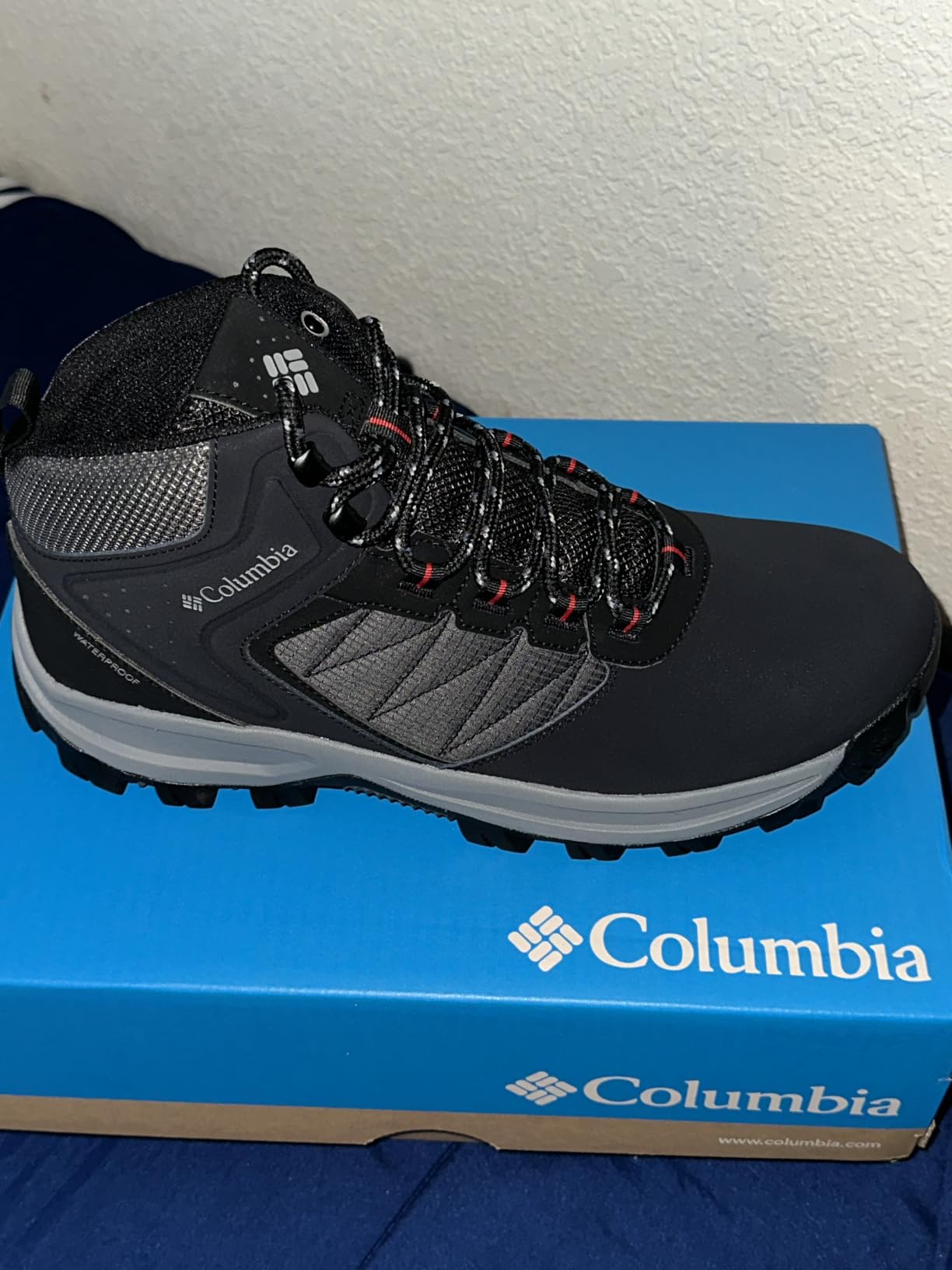
Best for wet rock and creek crossings: Columbia Transverse Hike Waterproof. Omni-Grip multi-terrain rubber with seam-sealed Omni-Tech protection.
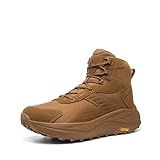
Best for wide feet and long days: NORTIV 8 Wide Toe Box Hiking Boots. Roomy toe box, 5mm drop and a built-in waterproof membrane.
Best budget entry for rocky trails: NORTIV 8, as above. The most affordable boot here with a wide toe box and a sealed membrane.
Best for quick day hikes on talus: Mammut Mercury IV Low GTX. Vibram sole and 3D Memo Foam, but little ankle structure.
Best waterproof leather hiker for multi-day trips: Merrell Moab Adventure 3 Mid WP. Waterproof full grain leather over a Vibram TC5+ outsole.
Best built to last a decade: ASOLO FUGITIVE GTX. Duo Asoflex lasting board for torsional support and a self-cleaning lug that sheds mud.
| Product | Specifications | Action |
|---|---|---|
| KEEN Targhee 2 Mid |
|
Check Latest Price |
| Foxelli Suede Hiking Boot |
|
Check Latest Price |
 Columbia Transverse Hike Waterproof Columbia Transverse Hike Waterproof |
|
Check Latest Price |
| Merrell Moab 3 Mid |
|
Check Latest Price |
 Mammut Mercury IV Low GTX Mammut Mercury IV Low GTX |
|
Check Latest Price |
 Salomon Quest 4 GTX Salomon Quest 4 GTX |
|
Check Latest Price |
 ASOLO TPS 520 GV Evo Wide ASOLO TPS 520 GV Evo Wide |
|
Check Latest Price |
 NORTIV 8 Wide Toe Box Hiking Boots NORTIV 8 Wide Toe Box Hiking Boots |
|
Check Latest Price |
 La Sportiva Makalu La Sportiva Makalu |
|
Check Latest Price |
 Salomon X-Adventure Recon Mid Salomon X-Adventure Recon Mid |
|
Check Latest Price |
 Merrell Moab Adventure 3 Mid WP Merrell Moab Adventure 3 Mid WP |
|
Check Latest Price |
 ASOLO FUGITIVE GTX ASOLO FUGITIVE GTX |
|
Check Latest Price |
1. Best Hiking Boot for Rocky Terrain and Wide Feet: KEEN Targhee 2 Mid
KEEN Men’s Targhee 2 Mid Height Waterproof Hiking Boot, Canteen/Dark Olive, 9.5 D (Medium) US
KEEN.DRY waterproof membrane
External support shank
4mm lugs and toe guard
Pros
- Roomy toe box suits wide feet and thick socks
- Comfortable from first wear with no break-in
- Waterproofing holds up in ice melt and snow
- External shank and 4mm lugs grip rock
- Backed by a lifetime warranty
Cons
- Rubber sole layers can separate from the foam midsole over time
- Fit runs small for some so consider a half size up
- Not built for a heavy pack or crampon work
The Targhee 2 Mid has been on my feet for more rocky days than any other boot in this guide, and it is the one I reach for when the route is mixed and I do not want to think about my feet. The external support shank is the reason it holds on uneven ground: it stiffens the platform under the arch so the sole stops folding when you step onto a tilted slab. Add the 4mm multi-direction lugs and the boot stays planted on the loose, shifting gravel that collects under talus fields.
What surprised me most was the absence of a break-in period. Reviewers describe wearing these straight out of the box, and the upper is a mix of premium leather and breathable performance mesh that flexes without pinching. Owners with genuinely wide feet also call the toe box the best in the class, which matters on long descents when your toes swell.
Two details do more for rocky terrain than they look like they will. The high abrasion rubber toe guard wraps the front of the boot, so when you kick a rock on a downslope you are kicking rubber rather than leather or mesh. Underneath that, a bruise plate sits between the footbed and the outsole to spread the impact of stepping hard on a rock edge.
The listed weight for the pair is 4 pounds, which is honest for a mid-cut waterproof boot and still light for what it does. The mid-cut height is the sweet spot: enough collar to resist a roll on loose scree, not so tall that your knees protest on a long descent.
Who this boot is right for
Day hikers and weekend backpackers on talus, scree and mixed rock-and-dirt trails. It is also the safest pick for anyone whose current shoes already show a worn toe or a flexing upper. The toe room makes it a strong match for wide feet and thick hiking socks, and the waterproofing holds when you are crossing snow patches in early season.
Where it falls short
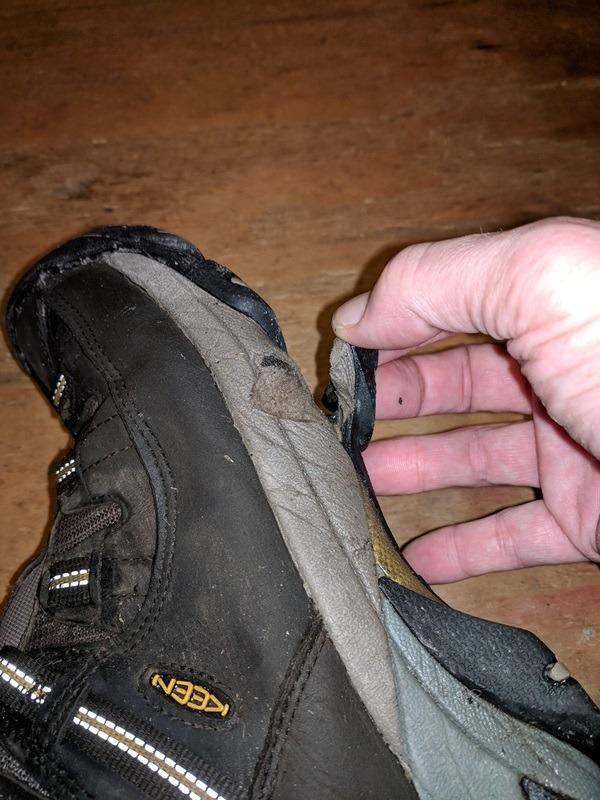
This is a hiking boot, not a mountaineering boot, and it will not take crampons or carry a fifty-pound load without complaint. Reviewers do report the layered rubber and foam sole beginning to separate after years of daily wear, and the star rating of 4.2 is the lowest in this roundup. Some buyers also find the fit runs small and size up a half size. If you need a stiffer platform under a heavy pack, look at the ASOLO TPS 520 or the La Sportiva Makalu instead.
2. Best Value Hiking Boot for Rocky Terrain: Foxelli Waterproof Suede Hiking Boot
Foxelli Men’s Hiking Boots – Waterproof Breathable & Lightweight Suede Leather Hiking Boots for Men
Suede leather upper
Gusseted tongue
Shock-absorbent midsole
Pros
- Lightweight without feeling clunky
- Comfortable out of the box with no break-in
- Waterproofing holds in snow mud and heavy rain
- Aggressive tread grips uneven and slippery ground
- One-year replacement warranty from the brand
Cons
- Toe cap can crack with heavy daily use
- Insole is soft enough that feet can slide
- Top lace hooks do not lock the ankle down tightly
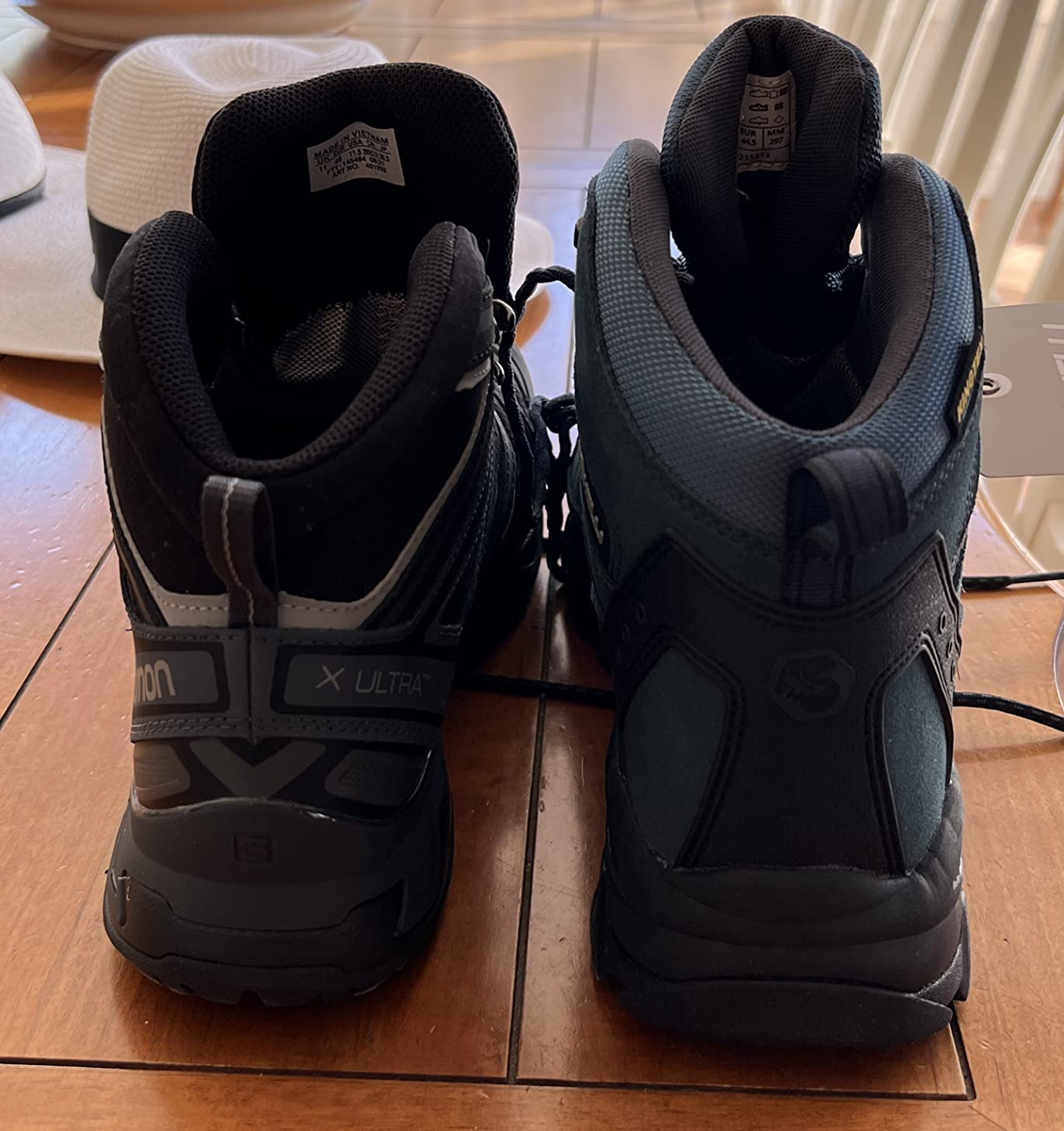
The Foxelli boot is the one I recommend when someone tells me their feet get destroyed on rocky ground but they are not going to spend serious money solving it. Owners regularly compare it favourably to established names like Danner, Keen and Salomon, and at 4.6 stars across 4791 reviews the pattern is consistent: light, comfortable, and genuinely waterproof for the money.
On rock, the useful part is the combination of a gusseted tongue, which keeps grit and small stones out of the boot, and a non-slip rubber sole with aggressive tread that bites on wet and uneven ground. The ankle and arch support is real enough to feel on a long day without turning the boot into a brick.
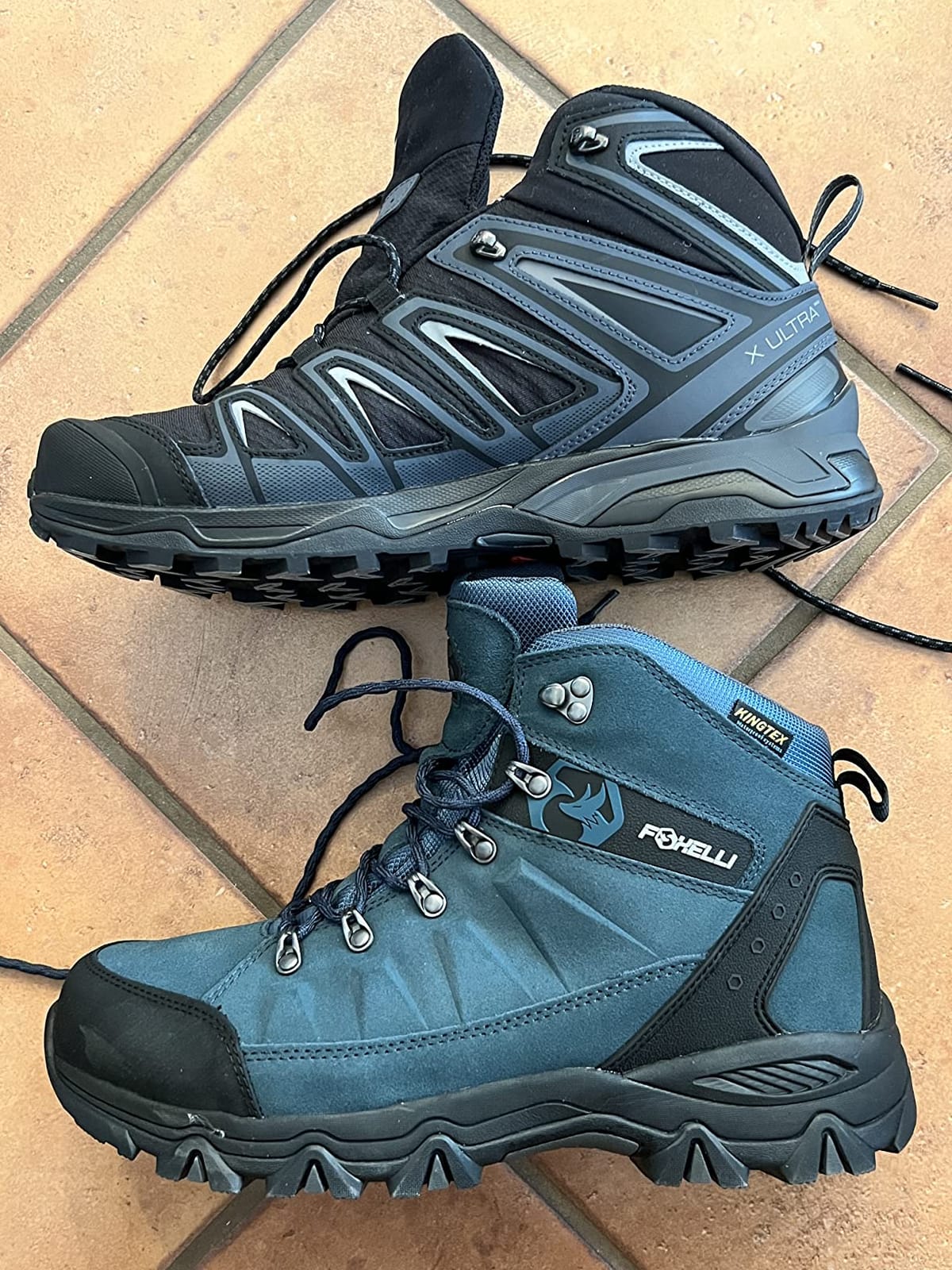
The upper is premium suede leather, which handles abrasion from rock edges far better than mesh, and the midsoles are shock-absorbent so repeated steps on hard stone do not pile up under the heel. The boot comes with a spare set of laces and a pair of hiking socks, which tells you something about how the company expects it to be used.
Owners also mention the soft, flexible sole staying comfortable in cold weather, which matters more than it sounds when you are walking talus in the morning before the sun hits the slope. Waterproofing is the quiet strength here: reviewers talk about snow, mud and heavy rain without qualification.
Who this boot is right for
Hikers moving from trail runners to a boot, weekend walkers on rocky local trails, and anyone who wants a waterproof mid without a large jump in price. It is light enough for long day hikes and supportive enough for loose, uneven ground where a trail runner would skate.
Where it falls short
Advanced hikers point out that the insole is softer than ideal on rough terrain, so your foot can slide inside the boot on steep ground, and the top lace hooks do not lock the ankle down as securely as they could. Longer-term users report the toe cap eventually cracking under daily service, though the brand replaced one under warranty. For technical scrambling with a steel shank, you need something heavier.
3. Best Hiking Boot for Wet Rock and Creek Crossings: Columbia Transverse Hike Waterproof
Columbia Mens Transverse Waterproof Hiking Boot, Black/Mountain Red, 11
Omni-Tech waterproof build
Omni-Grip outsole
Techlite cushioning
Pros
- Omni-Grip outsole grips rock dirt and gravel wet or dry
- Seam-sealed waterproofing for moderate rain and snow
- Lightweight cushioning reduces fatigue on long days
- Metal hardware adds durability at the eyelets
- Regular and wide sizes widely offered
Cons
- Softer platform than a shanked technical boot on sharp rock
- Cushioning is moderate rather than plush on long days
Damp rock is where cheap boots fall apart, so the Columbia Transverse Hike is the one I pack when streams are on the route and the forecast is uncertain. The Omni-Grip multi-terrain rubber compound is the headline: owners consistently single out grip on rock, dirt and gravel in both wet and dry conditions, which is the single most useful thing an outsole can do for you on a creek-crossing day.
The construction is Omni-Tech, a breathable waterproof membrane in a multilayered, seam-sealed build. Roughly 79% of reviews are five stars, and the recurring theme is that the boot balances sealing water out against not cooking your feet, which is a real achievement in a mid-cut.
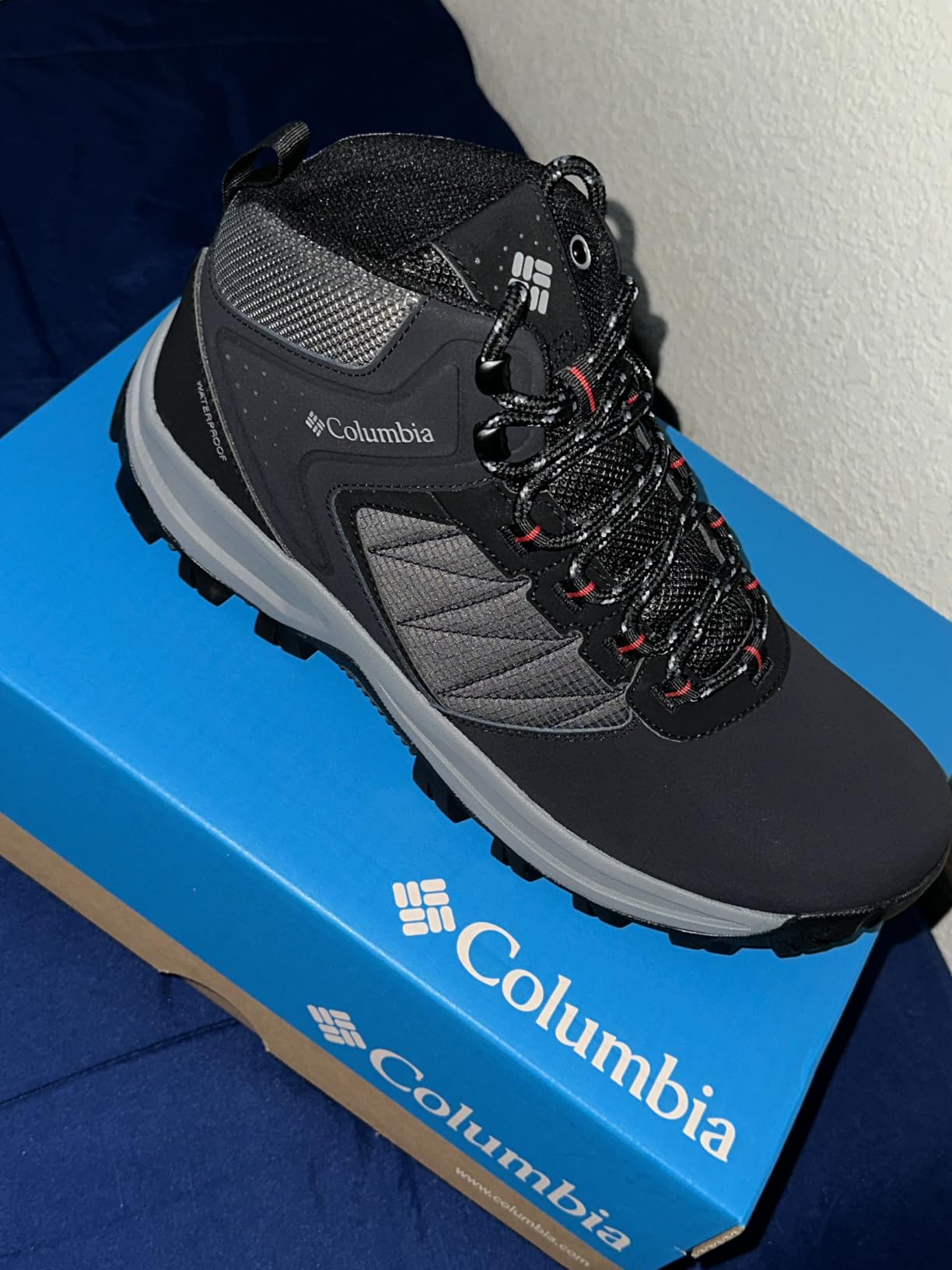
Underfoot, the Techlite midsole is described as lightweight and impact-absorbing with high energy return, so it absorbs the repeated shock of hard stone without adding much weight. The upper combines leather and mesh with metal hardware at the eyelets, the part that usually fails first on abrasive rock.
This is also the top-ranked item in Men’s Hiking Boots on Amazon right now, so there is a very large body of owner feedback behind these claims. That volume matters to me more than any single review because wide feet, narrow feet and different foot shapes all show up in it.
Who this boot is right for
Multi-day hikers who expect rain, snowmelt or creek crossings on mixed rock and dirt. It works well for long day hikes on wet trails, for hikers who overpronate slightly and want a cushioned platform, and for anyone who needs a wide width in an ordinary mid-cut. It is a strong shoulder-season choice.
Where it falls short
The platform is cushioned and moderately stiff rather than aggressively stiff, so if you spend your days on sharp rock edges with a heavy pack, a boot with an external shank or a steel shank will outlast it. Cushioning is moderate rather than plush, so people who like a very soft ride will not get it. It also has no stated shank or rock plate, which matters on talus.
4. Best All-Around Trail Boot for Rocky Terrain: Merrell Moab 3 Mid
Merrell Men’s Moab 3 Mid Hiking Boot, Walnut, 11.5
Nylon arch shank
Vibram TC5+ outsole
Air Cushion heel
Pros
- Nylon shank gives ground feel and stability on rock
- Lightweight yet sturdy with grip that holds on wet rock
- Fits wide feet without crowding the toe box
- No break-in period
- Air Cushion heel absorbs shock on uneven ground
Cons
- Not a waterproof model so it suits only light rain
- Supplied insole support disappoints some buyers
- Lugs wear down faster on hard surfaces
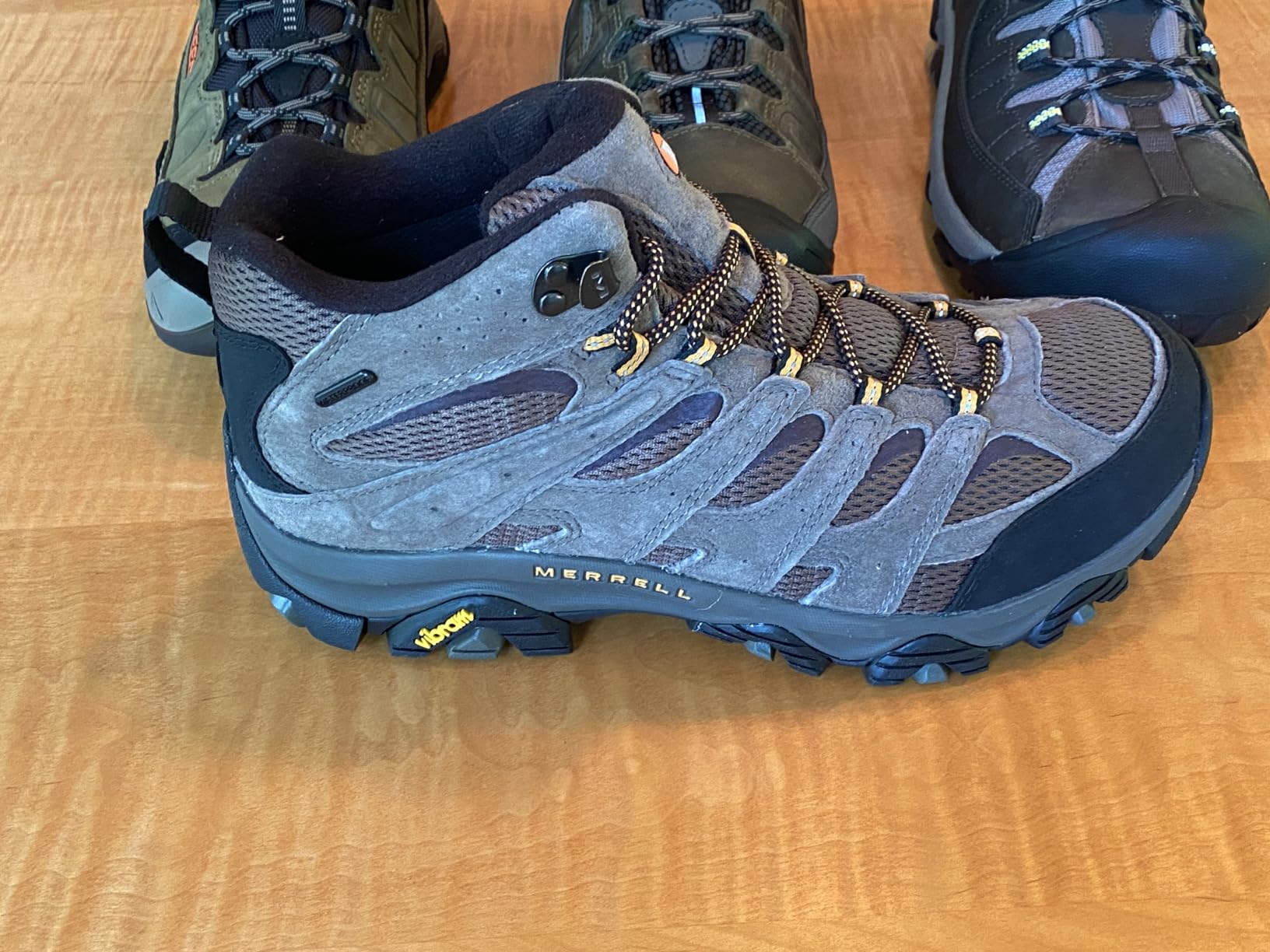
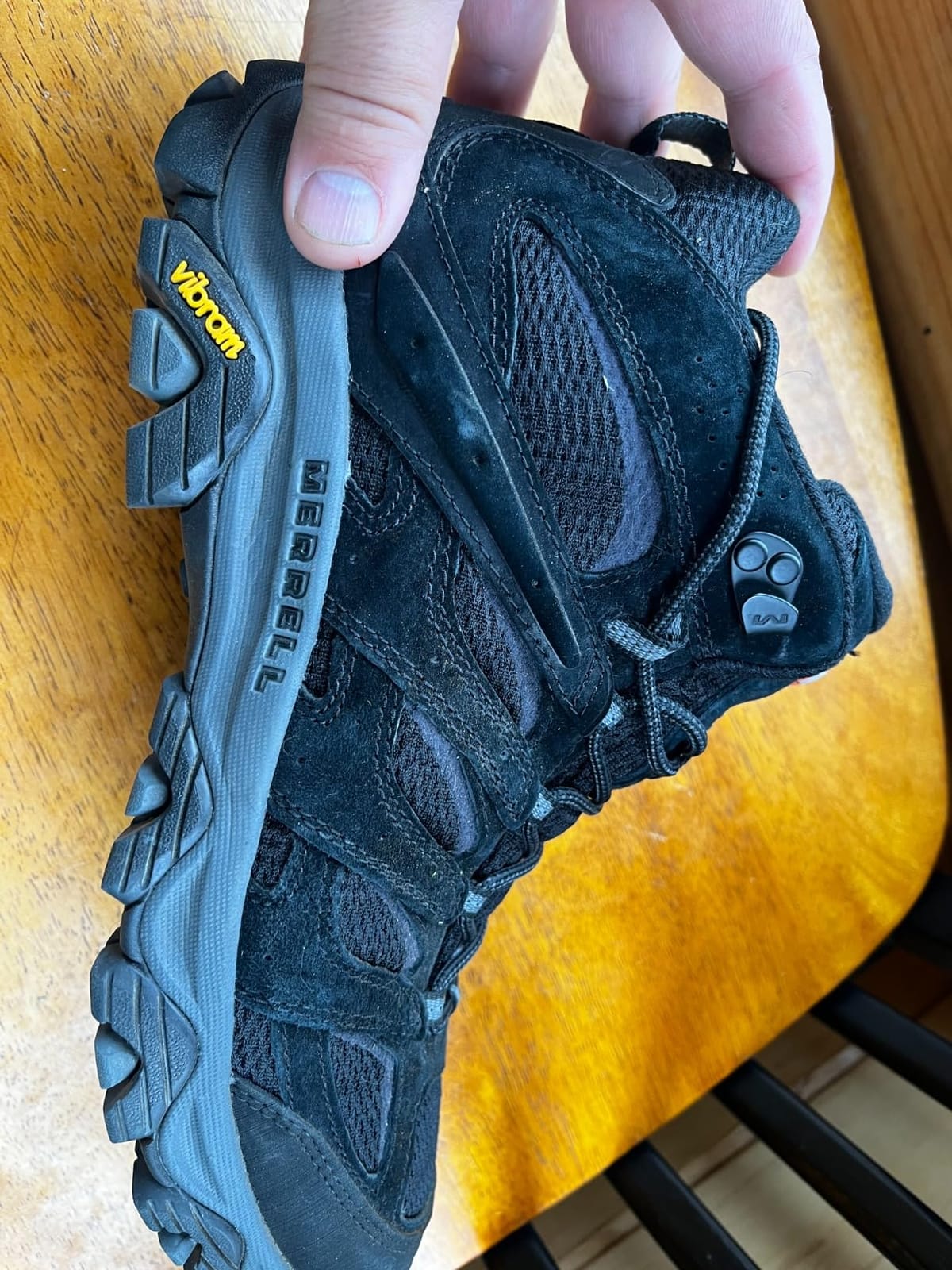
The Moab 3 Mid is the boot I recommend to people who say they get ankle rolls on uneven trail. Reviewers describe it as utility comfort rather than a soft slip-on, and the reason is the molded nylon arch shank, which stiffens the midfoot enough to keep you stable on rocky ground while still giving ground feel. Grip is the other strength: the Vibram TC5+ rubber outsole holds on wet and muddy rock.
What makes it a genuine all-rounder is the fit. Owners with wide feet specifically recommend the wide sizing, and the thick, form-fitting construction does not crowd the toe box. There is no break-in period, so you can use it the day it arrives, and the Merrell Air Cushion in the heel absorbs repeated impact on hard stone.
There is a bellows tongue, which keeps debris out on dusty rock, and a protective toe cap that takes the hit when you catch a toe on a downslope. The Kinetic Fit ADVANCED insole is removable and contoured with reinforced heel cushioning, which is helpful if you want to swap in your own footbed later.
The listed weight for the pair is 2 pounds, which is light for a boot with this much structure, and the whole package is well suited to day hiking on gravel, rock and forest trail alike. The main limitation is the one that matters most here.
Who this boot is right for
Hikers on rocky but generally dry trails who want a durable, supportive boot without a waterproof membrane or a long break-in. It suits weekly 2 to 3 hour hikes, wide feet, and anyone who prefers a firm, supportive platform over a squishy one. On long backpacking trips, check the weight guidance in our backpacking boot roundup.
Where it falls short
It is not waterproof, so it is only suited to light rain. Some users with plantar fasciitis or heel pain find the supplied insole support disappointing and replace it. Reviewers also note the lugs wear down faster than expected on hard surfaces, which is worth knowing if you walk a lot of paved trail to reach the trailhead. Styling is plain, and the leather-and-mesh upper needs more care in wet conditions.
5. Best Hiking Shoe for Rocks on Fast Day Hikes: Mammut Mercury IV Low GTX
Mammut Men’s Mercury IV Mid GTX Hiking Shoes, Black, Vibram Sole, 3D Memo Foam, GORE-TEX Waterproof, terracare® Nubuck Leather, Lightweight Day Hike Comfort, Dark Titanium-Black, 8
3D Memo Foam cushioning
Vibram rubber sole
Board lasting construction
GTX waterproof membrane
Pros
- Moulded foam adapts to the foot and reduces blistering
- Vibram outsole grips varied terrain reliably
- GTX membrane keeps feet dry in wet conditions
- Low-cut profile suits fast day hikes
- Board lasting gives a stable platform
Cons
- Low-cut design gives little ankle support on rough ground
- Less protective than a full boot on sharp rocky terrain
The Mammut Mercury IV is here as a deliberate exception. It is a low-cut shoe, not a boot, and we include it because the question hikers actually ask is whether a shoe can handle rock at all. On talus and dry slab, for a day hike with a light pack, the answer is often yes.
Three things carry it. The 3D Memo Foam cushioning is moulded to adapt to your foot shape, and about 75% of reviews are five stars specifically because of how it reduces blistering over long days. The Vibram rubber sole delivers dependable grip on varied terrain, and the board lasting construction gives a stable, natural platform under the foot.
Who this boot is right for
Fast day hikes on talus, forest trail with rock outcrops, and warm-weather walking where you want a light shoe that still keeps water out. The GTX membrane handles puddle and light rain, and the low profile keeps your ankles free on a long, flat approach to a rocky basin.
Where it falls short
The limitation is stated plainly in reviews: a low-cut design offers less ankle support on very rough ground, and it is less protective than a full boot on sharp rocky terrain. There is no stated shank or rock plate, so sharp edges transmit straight to the foot. If you carry a heavy pack, roll your ankles on loose scree, or want toe protection on descent, choose a mid or high boot instead.
6. Best Hiking Boot for Rocky Descents: Salomon Quest 4 GTX
Salomon Men’s QUEST 4 GORE-TEX Hiking Boots For Men, Magnet/Black/Quarry, 10
High-rise supportive collar
GTX membrane
Rigid chassis
Pros
- Very stable on uneven and steep terrain with few ankle rolls
- Waterproofing held up in heavy rain and snow
- Lightweight for a high boot
- Hook lacing grips laces and never slips
- Durable enough for 200 plus miles of rugged trail
Cons
- Demanding break-in from the plastic side structure
- Runs narrow through the forefoot
- Runs hot in warm weather
- Supplied insole is only adequate
- Lug grip can slip on wet loose gravel
Descents are where boots earn their price. The Quest 4 GTX is the pick for long, steep, rocky downhills because the high-rise collar resists ankle roll and the rigid chassis keeps the foot from sliding forward into the toe. Reviewers report very few ankle rolls even on uneven and steep terrain, which is the single most common complaint about lighter footwear on rock.
Waterproofing is another strength: owners describe it holding up through Alaska rain and snow without leaking. The lacing hooks grip laces securely and do not slip during a hike, which sounds minor until you are scrambling with loose gravel pouring into the boot. Several owners have put 200 or more miles of rugged trail through the pair without visible wear.
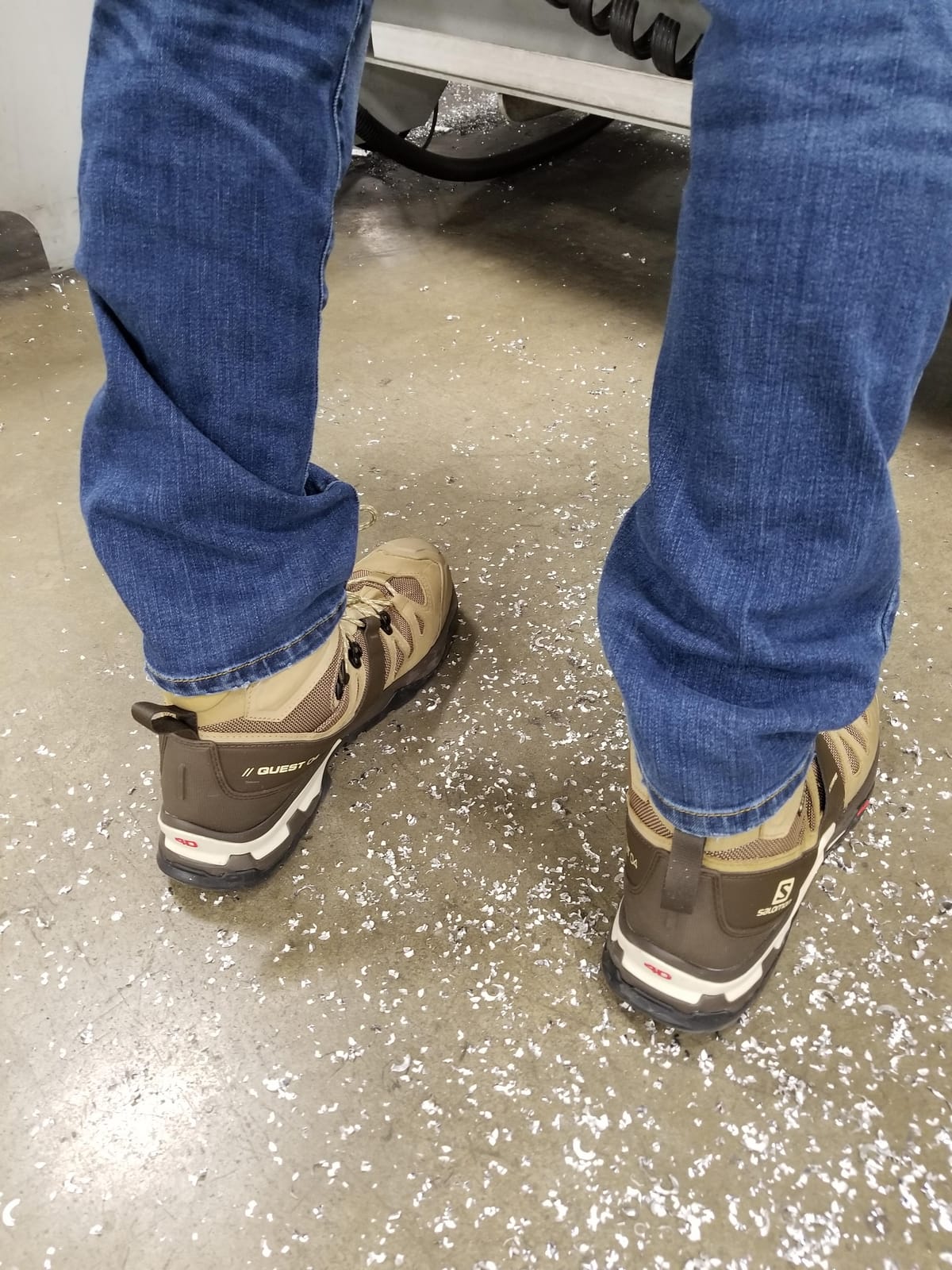
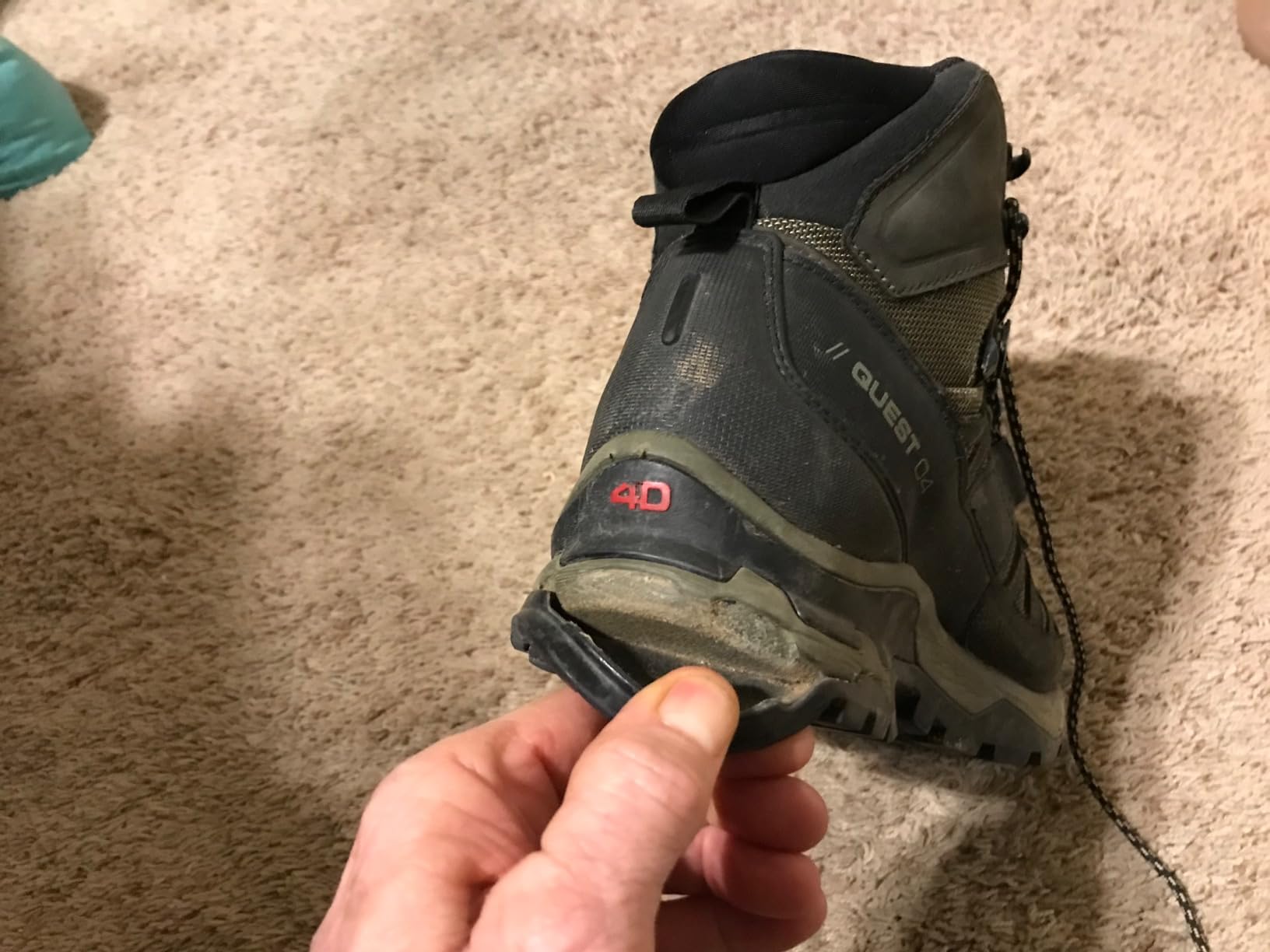
Fit is where you need to pay attention. The toe box is generous, but the boot runs narrow through the forefoot, so wide feet should try the wide size rather than sizing up. The high shaft and GTX lining also make the boot run hot in warm weather, which is a real consideration for midsummer talus.
Be aware of the break-in. The rigid plastic side structure is stiff, and reviewers commonly describe needing around two weeks of wear before longer treks. Wear it around the house and on short walks first, and expect some adjustment during that period.
Who this boot is right for
Hikers who descend more than they climb, people with a history of ankle rolls on uneven trail, and multi-day backpackers on wet rocky ground. The high collar and secure lacing make it a good choice for exposed ridgelines and off-trail terrain where your foot needs to stay planted.
Where it falls short
The break-in is genuinely long and the plastic side structure is the cause, which also means hot spots are common before the boot is settled. Wide feet need the wide size, since sizing up half a length in the standard boot leaves a floppy boot on technical ground. Lug grip can be slippery on wet loose gravel, and some owners report toe cap separation on this generation compared with earlier Quest versions.
7. Best Hiking Boots for Rocky Terrain and Heavy Packs: ASOLO TPS 520 GV Evo Wide
ASOLO TPS 520 GV EVO Chestnut 14 D (M)
Full grain leather upper
GORE-TEX Extended Comfort lining
Stiff Vibram-designed outsole
Pros
- Extremely durable full grain leather built for years of hard use
- Stays waterproof even when submerged in mud
- Stiff sole protects the bottoms of the feet on long rocky days
- Higher collar gives support on descents
- Carries heavy packs over technical ground
Cons
- Requires a long break-in before the first long hike
- Heavy compared with modern hiking shoes
- PU midsole deteriorates with age and cannot be fully replaced
- Sizing runs smaller than marked for some buyers
If your pack is heavy and the ground is loose scree, the TPS 520 GV is the boot I would put on your feet, and it is the highest-rated pick in this roundup at 4.7 stars. The one-piece full grain leather upper is 2.6 to 2.8mm thick, built on a GORE-TEX Extended Comfort lining, and the Vibram-designed Triple Power Structure outsole is stiff enough that the bottoms of your feet stop registering every rock edge.
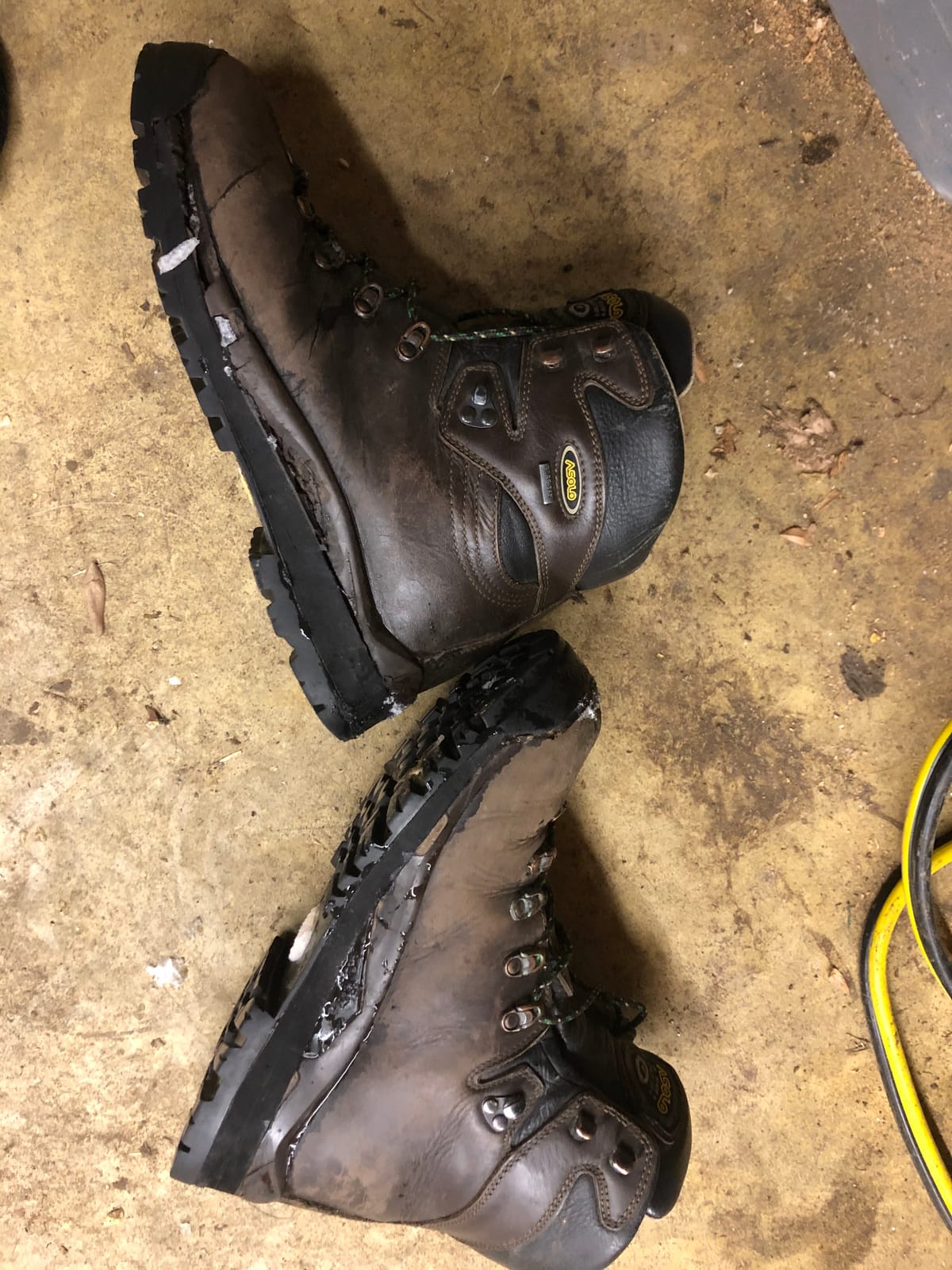
Long-term owners are emphatic about durability, with several reporting three or four pairs over a decade and returning boots for resoling. Waterproofing is not conditional either: reviewers describe the boot staying waterproof even when submerged in water and mud. The higher-than-average ankle collar is the detail that earns its keep on long descents.
Underneath, a dual density PU midsole with three shock absorbers takes the load, and the Lite 2 anatomic footbed keeps the heel from sliding on a steep slope. The rubber toe cap takes the punishment when your foot swings forward on a downhike, and the easy lace-up design lets you adjust the fit over the instep on a long day.
This is a wide-friendly build, which matters more than the model name suggests. Forum hikers with broad feet consistently name Scarpa, La Sportiva and Zamberlan as their top choices, and this ASOLO fits that same preference for a roomy last.

Who this boot is right for
Multi-day and week-long backpackers carrying 20 to 35 pounds, or heavier loads where the ground is consistently rocky. Wide feet, long-term buyers who want one pair that lasts a decade, and hikers who cross streams or snowmelt regularly. It also suits anyone with structural ankle issues who wants real support.
Where it falls short
It is heavy compared with modern hiking shoes, and it demands a long break-in before the first long hike, so it is a poor choice for a day hike tomorrow. The polyurethane midsole has a finite life and cannot be fully replaced, so buy with the expectation of eventual replacement even if the leather is barely marked. Sizing runs smaller than the marked size for some buyers, and the price sits at the top of this roundup.
8. Best Budget Hiking Boots for Rocky Terrain: NORTIV 8 Wide Toe Box Hiking Boots
NORTIV 8 Men’s Wide Toe Box Hiking Boots,Coyote,11
Wide toe box for natural toe splay
5mm heel-to-toe drop
Built-in waterproof membrane
Pros
- Roomy wide toe box lets toes spread naturally
- Waterproof membrane keeps feet dry in wet conditions
- Low 5mm drop aids balance and reduces forefoot pressure
- Lugged outsole stays grippy on challenging terrain
- Wear-resistant leather nylon and TPU upper
Cons
- Budget construction feels less refined than premium boots
- Thinner cushioning than higher-priced models on long days
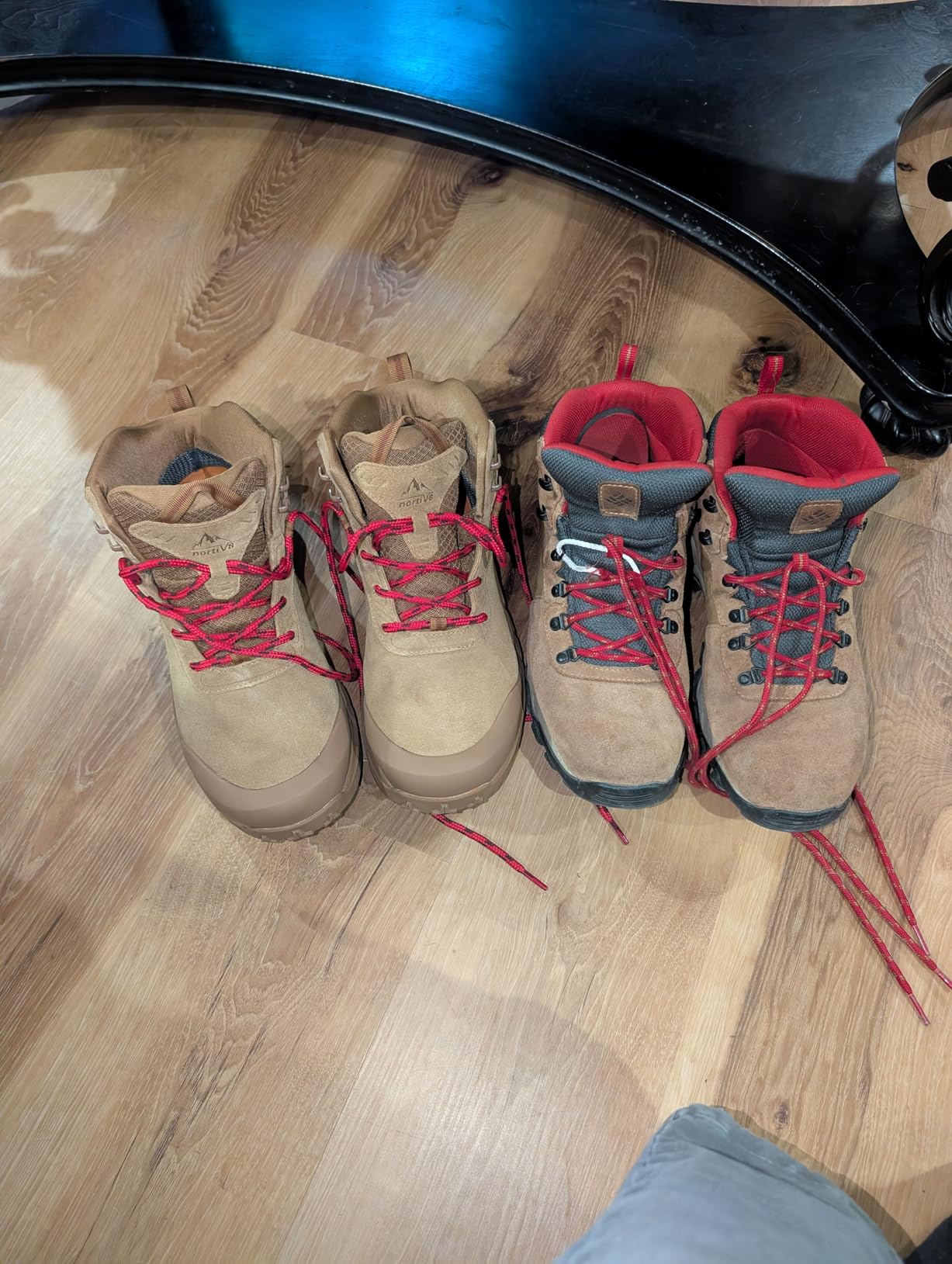
The NORTIV 8 is the cheapest way into a boot that is actually built for rock, and the feature that makes it unusual at this price is the toe box. It is genuinely wide, designed for natural toe spread, and owners with broad feet call it out as the reason they stopped buying their old boots. Wide toes also reduce the crowding and bruising that shows up on steep descents.
The second unusual feature is the 5mm heel-to-toe drop. A low drop keeps your weight distributed more evenly and reduces forefoot pressure, which makes long rocky days more comfortable than a high-drop boot, and it gives a more natural, balanced stance on uneven ground.
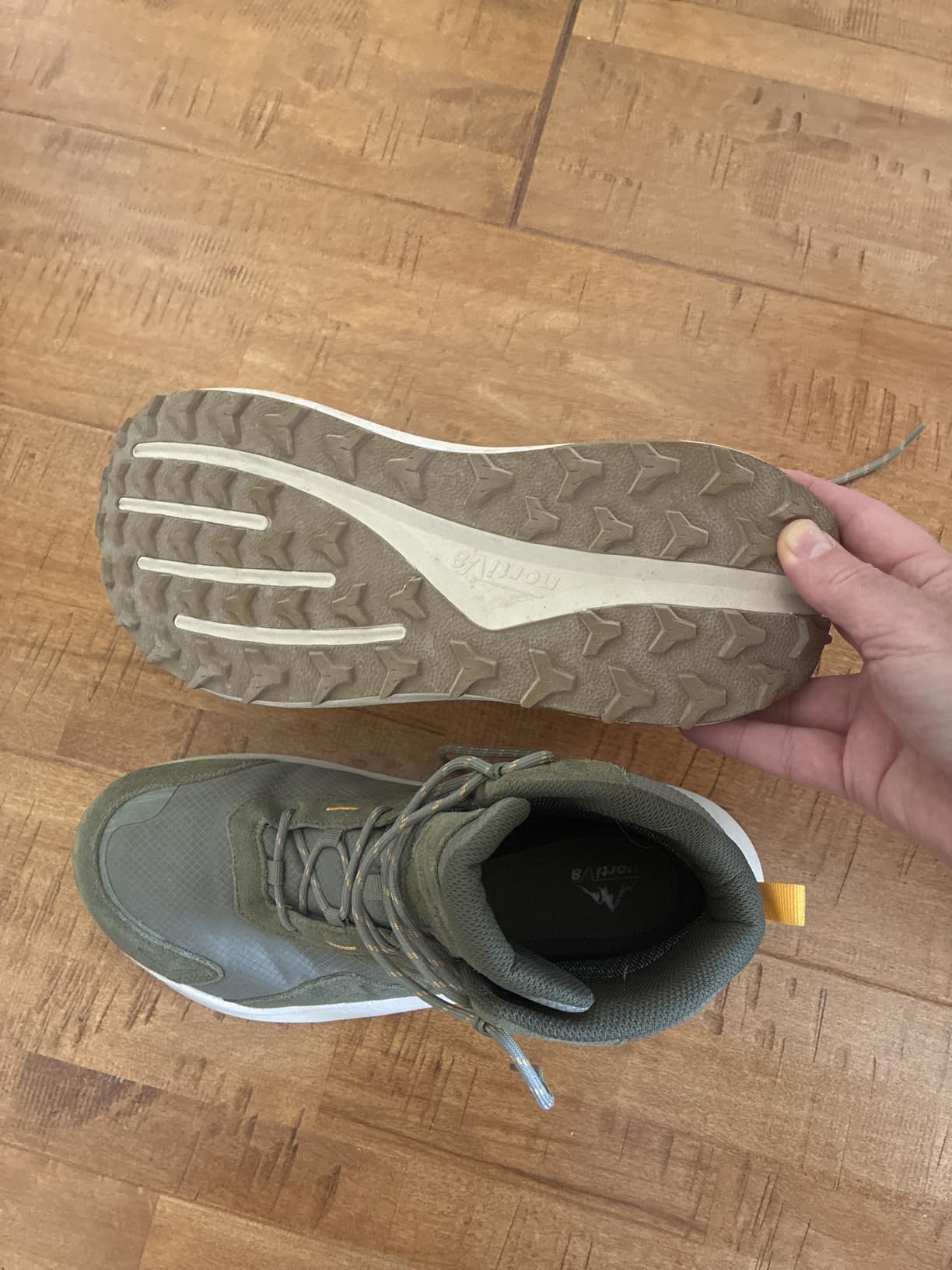
The upper combines leather, nylon fabric and TPU, which is a sensible mix of abrasion resistance and flexibility, and the built-in waterproof membrane keeps feet dry in wet conditions. Underneath, a thick EVA midsole sits on a lugged rubber outsole that stays grippy on challenging terrain. The lug pattern is the reason this boot handles loose ground at all.
It is also worth noting that this is the least expensive boot in the roundup by a wide margin, which changes the calculus for anyone who was going to buy a cheap boot anyway. At this tier, forums often warn that budget boots lack the rigidity needed for loose rock. This one at least has the wide toe box, the low drop and the lugs.
Who this boot is right for
New hikers buying their first boot, anyone with very wide feet or high insteps, and hikers on rocky trails who want waterproofing without a large outlay. The low drop suits anyone who prefers a natural, balanced stance, and it works for day hiking on mixed rock and gravel.
Where it falls short
The review distribution is the most mixed of the roundup, and the recurring theme is that comfort and durability do not scale with the low cost. Construction is less refined than premium boots, and the cushioning is thinner than you would get on a mid or high boot, which tells on very long days. There is no stated external shank or rock plate, so very sharp rock is transmitted through the EVA midsole.
9. Best Hiking Boot for Rock Scrambling: La Sportiva Makalu
La Sportiva Makalu Mountaineering/Hiking Boots, Natural, 8
Full steel shank, crampon compatible
3.0mm Roughout leather
Vibram rubber rand
Pros
- Full steel shank gives a very stiff platform for kicking steps
- Extremely rugged all-leather construction for years of hard use
- Aggressive lug pattern delivers outstanding traction
- Stays waterproof after months in the elements
- Resole compatible to extend service life
Cons
- Heavy and stiff for light or fast hiking
- Runs small so sizing up is usually needed
- Not warm enough for winter without thick socks
- Break-in takes roughly 50 miles and can blister
- Tear-prone nylon lacing tab
The Makalu is a mountaineering boot that happens to be the best answer here for rock scrambling and step-through terrain. The full steel shank is the reason: it gives a platform stiff enough to kick steps and to accept automatic crampons, and no synthetic boot in this roundup comes close to that level of underfoot rigidity.
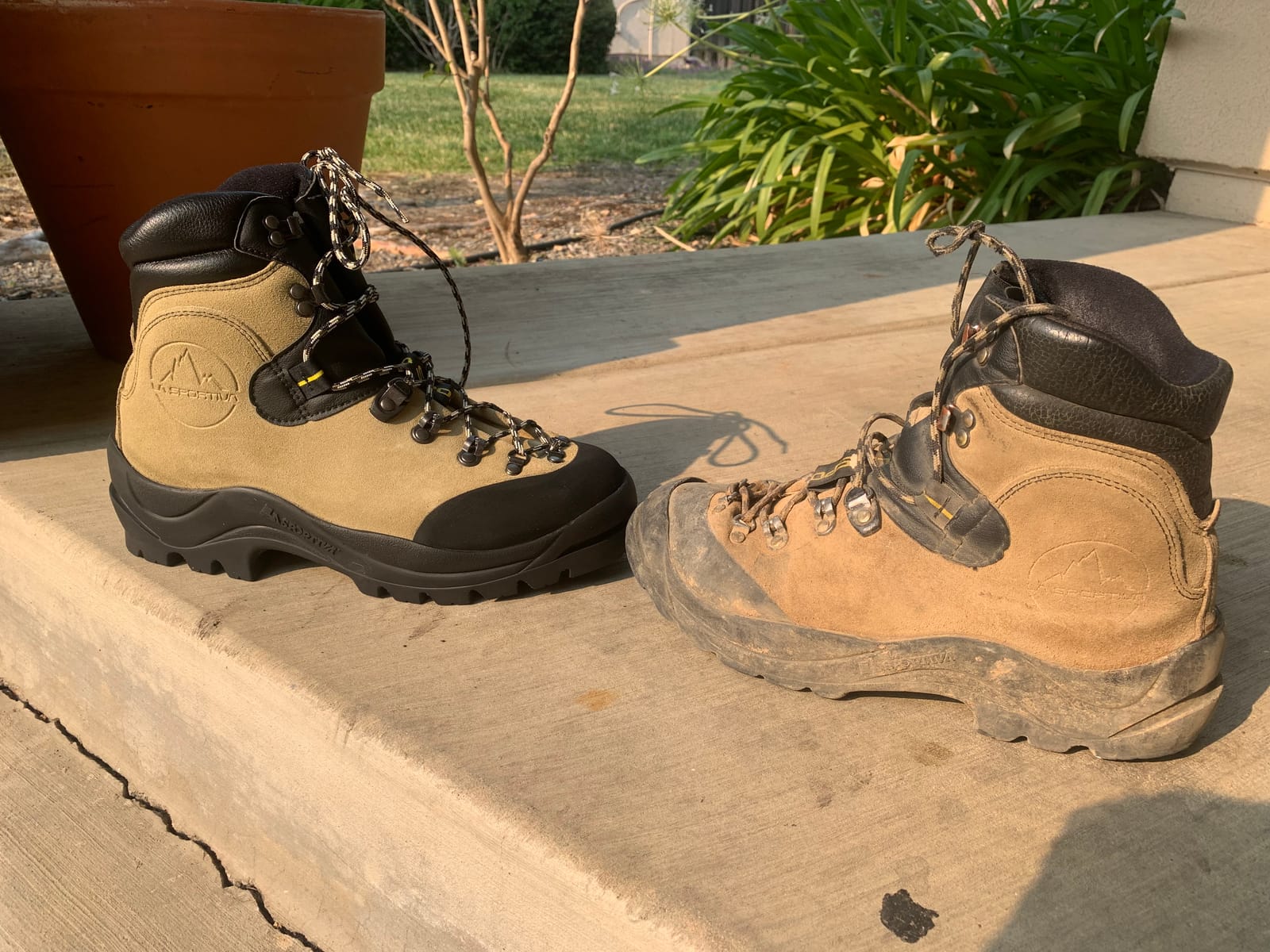
Climbers, linemen and tree workers buy this boot for work, and the review pattern reflects that. The 3.0mm Idro-Perwanger Roughout leather upper and the aggressive lug pattern hold up to years of hard use, and the traction is outstanding in mixed conditions. Many owners say the boot is still waterproof after months in the elements, and it is resoleable, which extends the life well past the leather.
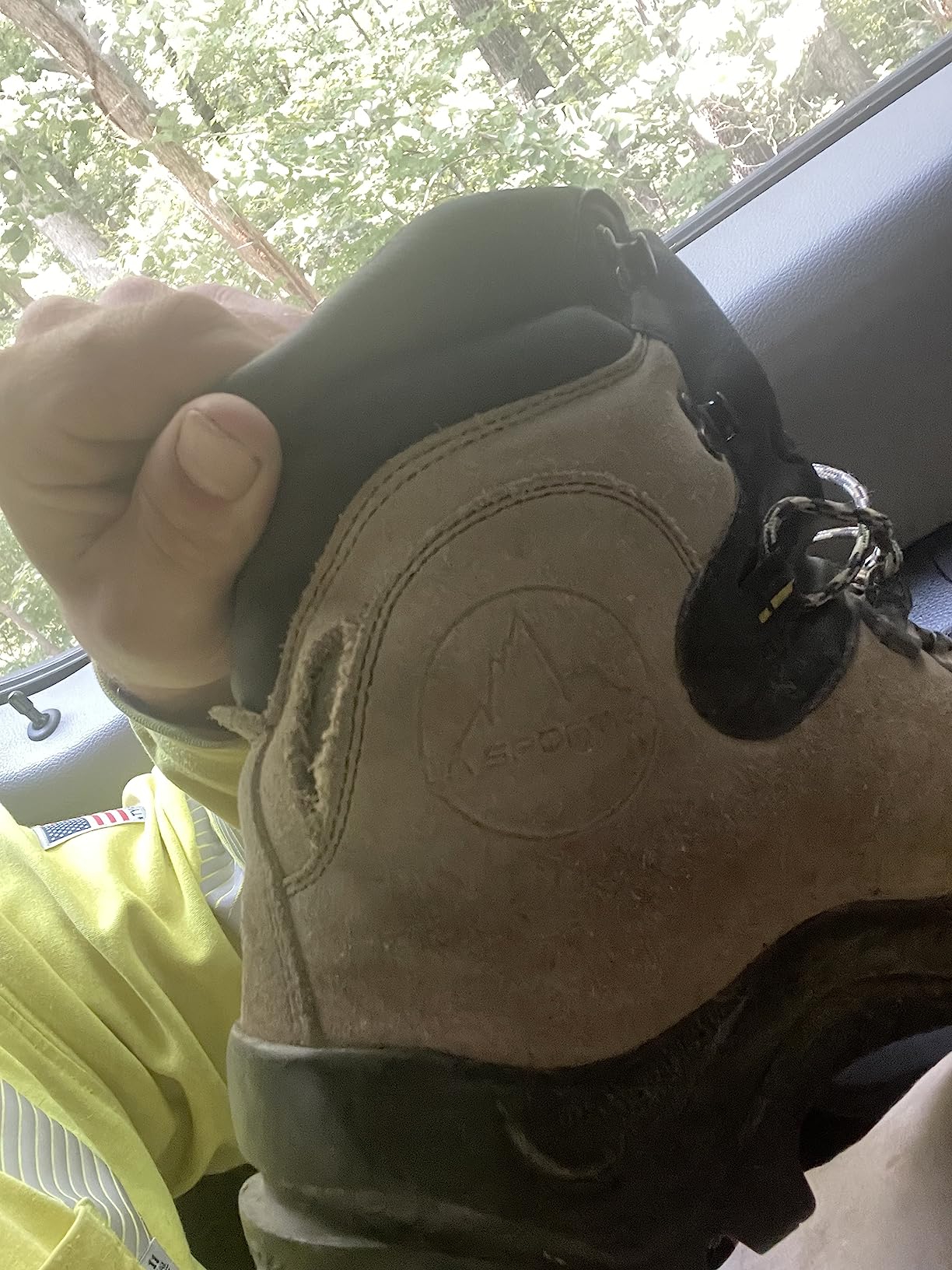
A protective Vibram rubber rand wraps the foot, which is the part that stops sharp rock edges and scree from cutting into the leather during long scrambles. There is a removable paddle tongue protector to keep grit out, and EZ rollerball lace hardware that glides smoothly on wet gloves.
The weight is the trade-off, and it is not small. The listed weight is 34.57oz, or 980g per pair, which is roughly three times a light hiking shoe. That weight is justified on a loaded scramble and pointless on a flat gravel path.
Who this boot is right for
Scramblers, ridge traversers, and anyone carrying a heavy load over genuinely technical ground where kicking steps is part of the day. It is also the pick if you expect snow travel and want a boot that will accept crampons. Climbers and people who stand on rock all day will get more out of this boot than any other in the guide.
Where it falls short
It is heavy and stiff, which is unpleasant for light or fast hiking, and sizing runs small so most owners size up. It is not warm enough for winter on its own without thick socks or insoles. Break-in takes roughly 50 miles and can cause hot spots or blisters, and a few owners report the nylon lacing tab tearing at the eyelet. If your hiking is mostly hiking, not climbing, this is too much boot.
10. Best Hiking Shoe for Exposed Rocky Ridgelines: Salomon X-Adventure Recon Mid
Salomon Men’s X-Adventure Recon Mid Gore-Tex Waterproof Hiking Shoe – Asphalt/Phantom/Castlerock – 11.5 Medium
GORE-TEX membrane
Advanced Chassis
Wider toe box
Contagrip outsole
Pros
- GORE-TEX locks out rain puddles and snow
- Wider toe box allows natural toe splay
- Advanced Chassis and toe cap protect from rocky impact
- Contagrip outsole grips wet dry steep and uneven ground
- Rugged nubuck leather upper for repeated rough use
Cons
- Heavier and stiffer than a low-cut hiking shoe
- Newer model with a smaller review base than established rivals
- Nubuck leather needs care after creek crossings
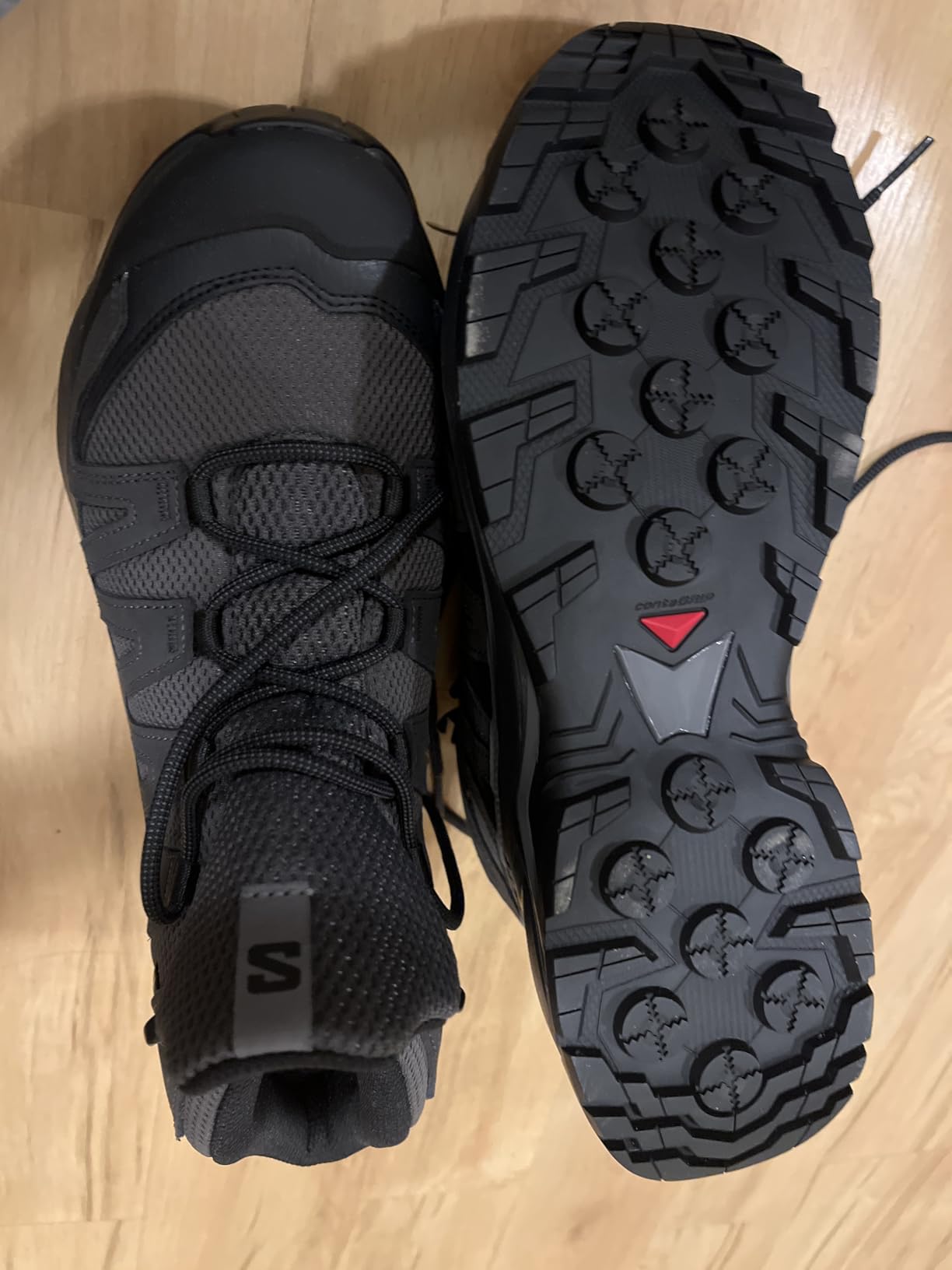
The X-Adventure Recon Mid is a newer release, and its owners describe exactly the combination that matters on a ridgeline: waterproof protection, a roomier toe box than most Salomon models, and stable footing on rocky ground. The Advanced Chassis system, with its reinforced toe cap and mudguard, is what protects your foot when the ridge narrows and you are stepping on rock rather than dirt.
The All Terrain Contagrip outsole is specified for varied ground conditions and grips wet, dry, steep and uneven terrain, which covers most of what a ridgeline can throw at you. The upper is premium full-grain nubuck leather with abrasion-resistant mesh, so it handles both rock scrapes and a wet, windy day above the treeline.
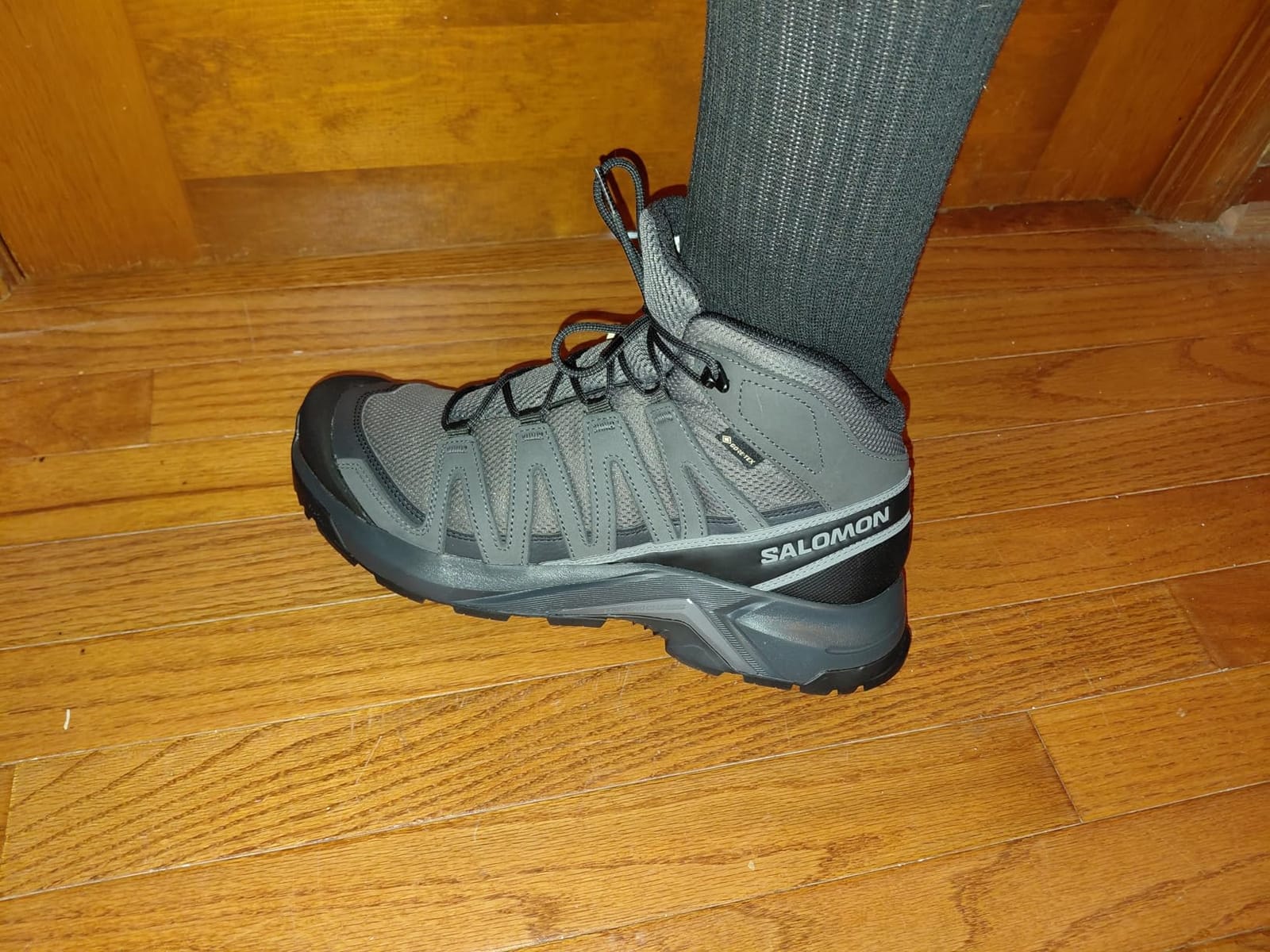
The wider toe box is worth calling out. Salomon is often criticised for narrow forefoots, and owners of this model specifically note that this one is roomier, which reduces toe bang on long descents. The full GORE-TEX membrane handles the condensation and spindrift that come with exposed ridgelines in shoulder season.
One caveat is the evidence base. With 309 reviews, the feedback is smaller and more uniform than the established models in this guide, which means fewer owners have logged hundreds of miles. We rate it on what the data shows and flag the thinner history.
Who this boot is right for
Hikers on exposed ridgelines and wet alpine ground who want one mid-height boot for fast day hikes and shoulder-season trips. The roomy toe box suits wider feet, and the waterproofing suits exposed terrain with no shelter. It is a good match for hikers moving up from trail runners.
Where it falls short
It is heavier and stiffer than a low-cut hiking shoe, which is the honest cost of the mid-height build. The nubuck leather upper needs more care than mesh after creek crossings, or it dries hard and loses flex. And with 309 reviews, the long-term durability picture is less proven than boots with thousands of owner reports.
11. Best Waterproof Leather Hiking Boots for Multi-Day Trips: Merrell Moab Adventure 3 Mid WP
MOAB ADVENTURE 3 MID WATERPROOF
Waterproof full grain leather
Vibram TC5+ outsole
Super Rebound midsole
Pros
- Membrane and full grain leather keep feet dry in wet conditions
- Vibram TC5+ outsole gives exceptional multi-terrain traction
- Air Cushion heel and Super Rebound midsole absorb shock
- Regular and wide sizes available
- Sturdy build works for hiking and daily wear
Cons
- Heavier than a low-cut hiking shoe
- Newer release with a smaller pool of owner feedback
The Moab Adventure 3 Mid WP is the waterproof version of the Moab formula, and it takes the same Vibram TC5+ outsole that makes the non-waterproof model a reliable all-rounder. Owners single out traction for multi-sport outdoor use, and on rocky ground that compound is the difference between a boot that grips and a boot that skates on wet stone.
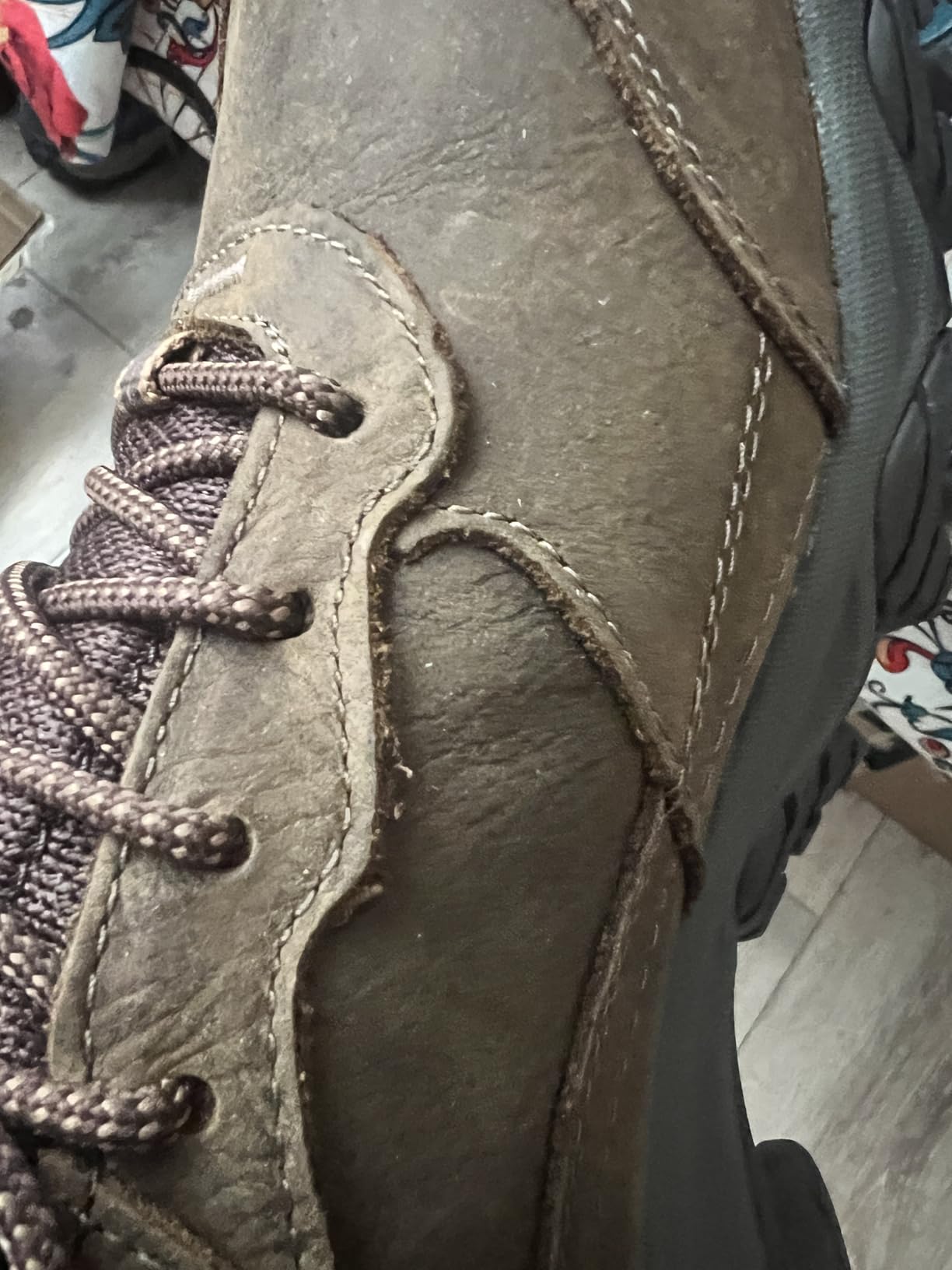
What is new here is the waterproof full grain leather upper, backed by a membrane that seals out water and vents moisture. On a multi-day trip with stream crossings and rain in the forecast, that combination is what you are actually paying for. The Air Cushion heel and Super Rebound Compound midsole absorb shock on rough ground and smooth out the transition at heel strike.
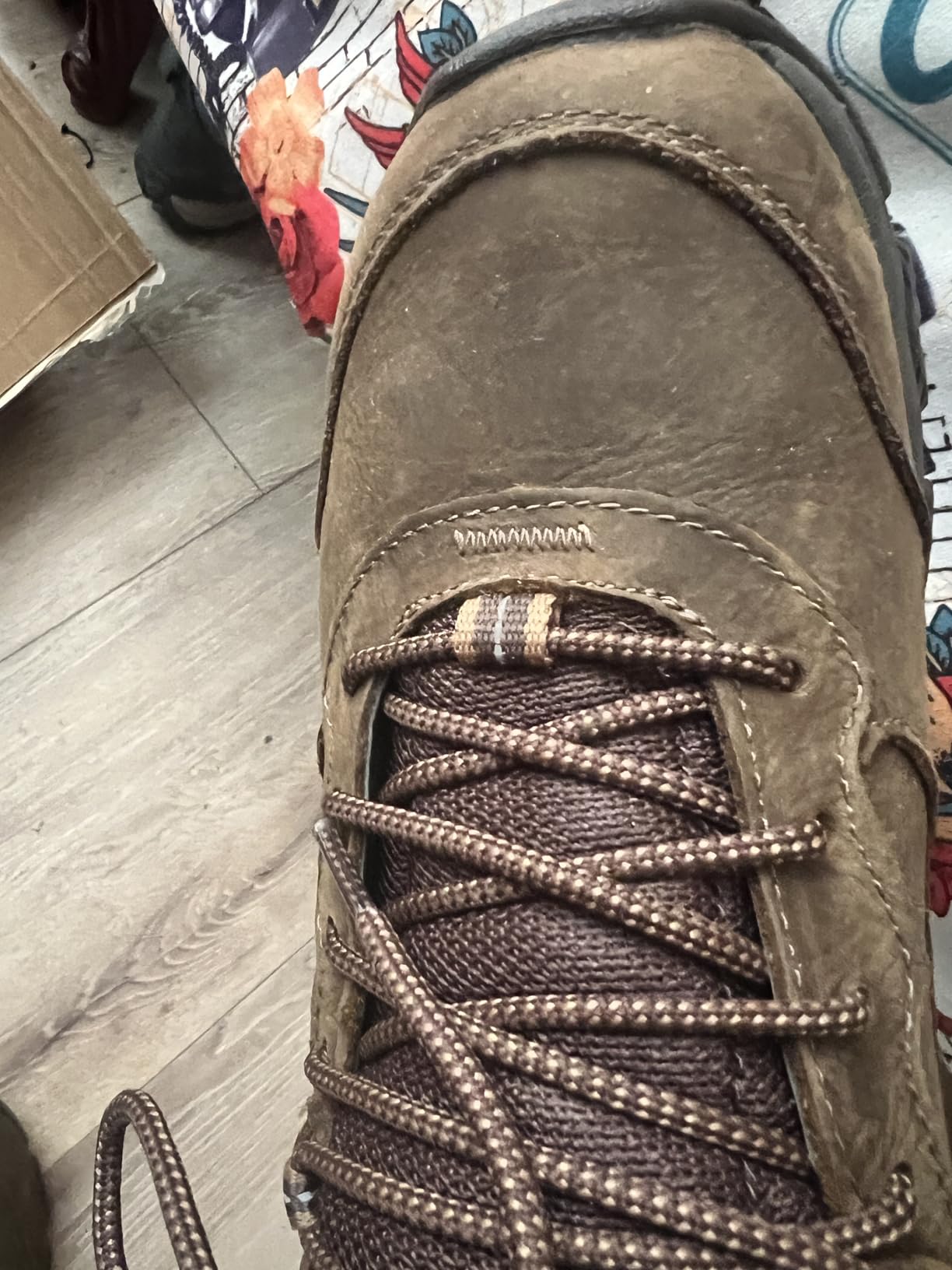
The build is sturdy enough to wear as a walking boot, which reviewers like because a boot that only works on a mountain is a boot you leave at home. A wide range of regular and wide sizes is available, so wide feet are not forced into a compromise.
Like the Columbia in this roundup, it is a recent launch, and the honest limitation is the size of the evidence base: 163 reviews, strongly positive, with limited negative themes beyond the weight of a mid-height boot.
Who this boot is right for
Multi-day backpackers on wet, rocky trails who want a leather upper that survives creek crossings and still handles daily wear. It suits hikers who want one boot for travel and trail, and anyone who prefers a wide sizing option. Pair it with a load-appropriate setup if you are carrying 20 pounds or more.
Where it falls short
It is heavier than a low-cut hiking shoe, so it is a poor choice for fast, light hiking. The review base is small, so there is not the same long-term durability history as the established models. Full grain leather also needs drying time after wet crossings, which matters on back-to-back days.
12. Best Hiking Boot for Long-Term Durability on Rock: ASOLO FUGITIVE GTX
ASOLO Men’s FUGITIVE GTX Hiking Boots-Wool/Black – 10
Duo Asoflex lasting board
GORE-TEX lining
Self-cleaning lug outsole
Pros
- Completely waterproof even when submerged in water or mud
- Stiff sole shields the bottoms of the feet from sharp rock
- Right height and lacing for strong ankle support
- Deep tread grips and sheds mud and dirt
- One owner reports a first pair lasting 10 plus years
Cons
- GORE-TEX lining limits breathability so feet get warm
- Longer break-in than lighter synthetic boots
- The most expensive option in this guide
The FUGITIVE GTX is the pick for anyone who is tired of replacing boots every few seasons. Serious hikers in the reviews call out exactly the rocky-terrain features that matter: a stiff sole that prevents rock bruising, solid ankle support from the collar height and lacing, and a deep self-cleaning lug that grips and sheds mud and debris.
Underfoot, the Duo Asoflex lasting board provides shock absorption and torsional support, which is the property that keeps the boot from twisting on uneven rock. The upper is water-resistant suede leather with high-tenancy nylon, and the GORE-TEX Performance Comfort lining keeps water out while venting moisture. Metal eyelets with speed hooks let you adjust the fit precisely over the instep.
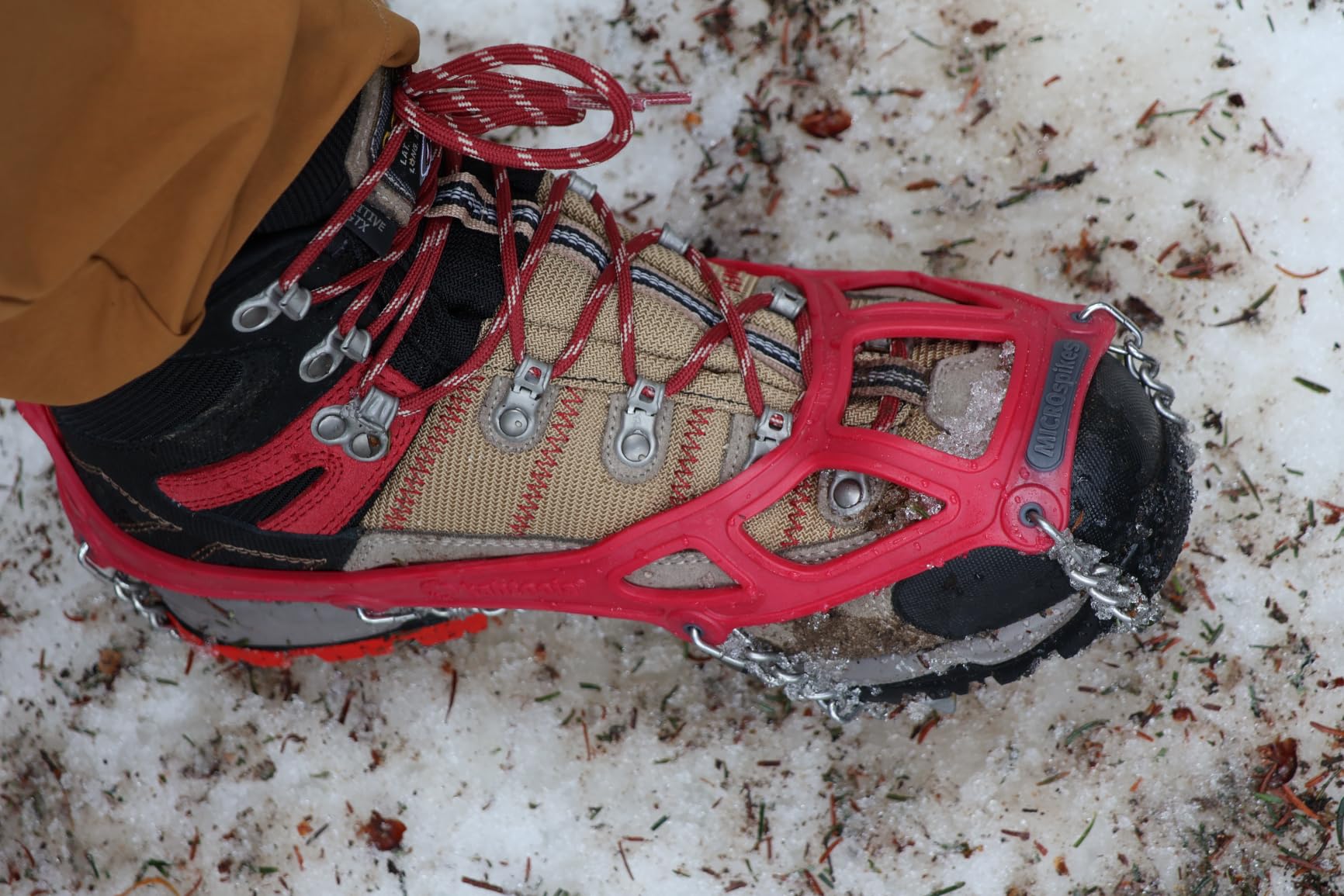
Durability is the headline. Owners report a first pair lasting 10 years or more, with one still resoling a decade-old boot, and broad sizing including wide. A reinforced rubber toe cap protects the front of the boot, which is where rock impacts concentrate on descents.
This is also the highest-rated pick in the roundup alongside the ASOLO TPS 520, at 4.7 stars, with the smaller review count of 109 that comes with a recent release. The consistent complaint across those reviews is reduced breathability from the waterproof lining, so feet can get warm on hot talus.
Who this boot is right for
Long-term buyers, multi-day backpackers on muddy and rocky ground, and hikers with wide feet who want a resolable-looking leather build. The self-cleaning lug is a genuine advantage in wet, muddy alpine terrain where mud packs into the tread. It suits shoulder-season trips as well as summer scree.
Where it falls short
Breathability is limited by the GORE-TEX lining, so feet get warm in hot weather, and the break-in is longer than lighter synthetic boots. It is the most expensive option in this guide, so the cost only makes sense if you are keeping the boot for years. If you hike in summer heat, a less sealed boot will serve you better.
How to Choose Hiking Boots for Rocky Terrain
Rock punishes boots in four places: the sole, the outsole, the upper and the ankle. Buy a boot that answers all four, in the order below, and you will not be disappointed on scree or slab. Buy on cushioning alone and you will be, because a soft, heavily cushioned midsole feels unstable the moment the ground tilts.
Shanks and rock plates: the single most important spec
A shank is a stiff plate between the midsole and your foot. It blocks sharp rock edges from pressing into the sole and it stops the boot twisting when you stand on a sloped slab. The ASOLO FUGITIVE uses a Duo Asoflex lasting board, the Merrell Moab 3 Mid uses a molded nylon arch shank, the KEEN Targhee 2 Mid has an external support shank, and the La Sportiva Makalu goes further still with a full steel shank that accepts automatic crampons.
Boots with no stated shank, such as the Mammut Mercury IV and the NORTIV 8, transmit sharp edges straight to the foot. That is fine for smooth talus and wrong for boulder fields and steep descents.
Outsole compounds and lug depth
Sticky rubber compounds grip low-friction rock far better than conventional rubber, which is why Vibram outsoles appear on five of the picks here. The Merrell Moab 3 Mid and the Moab Adventure 3 Mid WP use Vibram TC5+, the Mammut Mercury IV uses a Vibram sole, and the ASOLO TPS 520 uses a Vibram-designed Triple Power Structure outsole. Lug depth matters just as much: the KEEN Targhee 2 Mid has 4mm multi-direction lugs, and deeper, more widely spaced lugs clear mud and grip loose ground better.
On wet slab, a shallow or slick outsole is the reason people slide. If your route has wet rock in it, put outsole compound ahead of cushioning in your decision.
Rand and toe bumper coverage
A rand is a strip of rubber that wraps the lower upper. A toe bumper covers the front. Both exist because the toe and the outside of the foot are what hit rock on a descent. The KEEN Targhee 2 Mid has a high abrasion rubber toe guard plus a bruise plate; the La Sportiva Makalu has a full Vibram rubber rand; the Merrell Moab 3 Mid and the ASOLO FUGITIVE both carry a protective rubber toe cap. On scree and talus, rand coverage is not a detail.
Ankle collar height and the ankle support question
There is a persistent myth that boots prevent ankle rolls, and the honest answer is that they reduce them without eliminating the risk. A mid-cut collar, stiff heel counter and a lacing system that locks the ankle all contribute; a low-cut shoe provides almost none of that lateral structure. The ASOLO TPS 520 and the ASOLO FUGITIVE both use a higher-than-average collar for descents, and the Salomon Quest 4 GTX has a high-rise collar with almost no ankle-roll reports in its reviews. Hikers with structural ankle issues should treat a high collar as a requirement rather than a preference.
Waterproof versus breathable, and the wet rock question
A waterproof membrane keeps creek water out and stops rain from reaching your socks, but it also holds heat. The Merrell Moab 3 Mid is not waterproof at all, which is the right call on dry, cool rock. For wet rock, the forum consensus is worth repeating: all-leather boots soak through on genuinely wet days no matter the membrane, so leather and membrane together slow the wetting rather than prevent it. Synthetic and mesh uppers dry faster, which is the argument for a waterproof synthetic like the KEEN Targhee 2 Mid or the NORTIV 8 when you cross streams on consecutive days.
Weight and pack load: use concrete numbers
Match the boot class to the load. A day hike with a pack up to about 15 pounds is fine in a lightweight mid like the Foxelli or the Columbia Transverse Hike. An overnight carrying 20 to 35 pounds wants a stiffer, more protective platform such as the ASOLO TPS 520 or the Merrell Moab Adventure 3 Mid WP. A multi-day load of 40 pounds or more, or any trip with a crampon requirement, belongs in the La Sportiva Makalu.
Weight matters because heavy boots cause foot fatigue on long rocky days. The listed weight for the La Sportiva Makalu is 34.57oz per pair, while the Merrell Moab 3 Mid is listed at 2 pounds for the pair. That spread is the difference between a technical tool and an everyday boot.
Fit and sizing for rocky descents
Toe bang on steep descents is a sizing problem, not a boot problem. Feet widen with miles, so buy for the end of the hike rather than the start of it. Note the fit direction per brand here: the KEEN Targhee 2 Mid and the ASOLO TPS 520 both run small, so size up a half size. The Salomon Quest 4 GTX runs narrow through the forefoot, so take the wide size rather than sizing up a length, which leaves a floppy boot on technical ground. The NORTIV 8 and the ASOLO wide lasts are already roomy.
Your toes should be able to move, but they should not touch the front of the boot. Lace from the toe upward, skipping eyelets if you want more instep volume, and lock the top two hooks before you head onto the slab.
Boots to avoid on rocky terrain
Skip max-cushion, low-collar trail shoes designed for recovery walking. A very tall stack height and a soft midsole feel unstable on tilted rock, and no amount of grip compensates for a foot that can roll. Also avoid boots with thin, unpadded soles and no rand, because you will feel every sharp edge and watch the upper abrade. Finally, skip very stiff unbreakable leather boots if your only rocky hiking is a Saturday day hike. The break-in alone will cost you more than a lighter boot would.
Frequently Asked Questions
What kind of hiking boots are best for rocky terrain?
The best hiking boots for rocky terrain are sturdy mid- to high-cut boots with a stiff shank or rock plate for underfoot protection, a sticky rubber outsole with deep lugs such as a Vibram compound for grip on wet and loose rock, a protective toe rand, and a collar high enough to stabilize the ankle. Our top pick is the KEEN Targhee 2 Mid for most hikers, the Merrell Moab 3 Mid for dry rock, and the ASOLO TPS 520 GV Evo Wide for heavy packs.
Are trail runners or boots better on rocky terrain?
Boots win on technical ground because trail runners have thin, flexible soles that transmit every sharp edge, softer lugs that slip on wet slab, and little lateral structure when the ground tilts. Trail runners are still fine on maintained trail, smooth talus and dry rock for day hikes with a light pack. If you roll ankles, crush toes or feel every rock edge, the move to a mid-cut boot solves all three problems at once.
How long should you wear hiking boots to break them in?
Plan on two weeks of regular short wear for stiff synthetic boots, and closer to 50 miles for a full leather mountaineering boot such as the La Sportiva Makalu. Wear them around the house, on short walks and on gentle local trails before any long trip. Boots with a rigid plastic side structure, like the Salomon Quest 4 GTX, take longer than flexible mesh or suede models. Leathers soften with heat, so wear thin socks and thicker socks in turn to find your volume.
Should hiking boots feel tight at first?
They should feel snug at the heel and instep with a full width across the toes, not tight. Your toes need room to spread on a descent, and feet widen with miles, so a boot that fits perfectly in a shop can bang your toes after 20 miles. Check the fit late in the day when your feet are swollen. Sizing direction matters: the KEEN Targhee 2 Mid and ASOLO TPS 520 GV run small, so try a half size up, while the Salomon Quest 4 GTX needs the wide size rather than extra length.
Is there a myth that hiking boots provide ankle support?
Partly. Boots cannot prevent an ankle roll, but a mid-cut or high collar, a stiff heel counter and a lacing system that locks the ankle together genuinely reduce the risk on loose scree and uneven ground. The structure comes from all three working together, not the collar alone. Reviewers of the Salomon Quest 4 GTX report very few ankle rolls on steep, uneven terrain. Low-cut shoes provide almost none of that lateral stability on rock.
What type of shoes should I wear when hiking in Rocky Mountain National Park?
It depends on the terrain type. For the talus and scree fields that cover a lot of this park, a mid-cut waterproof boot with a shank is the sensible default, because the ground is loose, angled and often wet after afternoon weather. For maintained trail to a lower basin, a lightweight shoe is enough. Match the boot to the load: up to 15 pounds for a day hike, 20 to 35 pounds for an overnight, and a steel-shank boot if you are carrying 40 pounds or more or plan to use crampons.
Final Verdict: Which Boot Wins on Rock?
After a full season on scree, slab and boulder fields, the best hiking boots for rocky terrain in this roundup are the ones that answer all four of rock’s questions. The KEEN Targhee 2 Mid is the winner for most hikers: an external support shank, 4mm multi-direction lugs, a toe guard and a bruise plate, waterproofed, in a toe box wide enough to survive long descents. Its 4.2 star rating is the lowest here, and we would still put it on our feet first because the evidence behind it is the deepest.
Buy the Merrell Moab 3 Mid if you want a shanked Vibram boot and do not need waterproofing. Buy the ASOLO TPS 520 GV Evo Wide or the ASOLO FUGITIVE GTX if your pack is heavy or you want one pair for a decade. Buy the La Sportiva Makalu if scrambling and crampons are on the itinerary, and the Foxelli boot if you want a genuine improvement over trail runners without a large outlay.
Whatever you pick, wear it hard for two weeks before a long trip, lace it properly, and size for the end of the hike rather than the start. Rock is unforgiving, but the right boot makes it ordinary.