
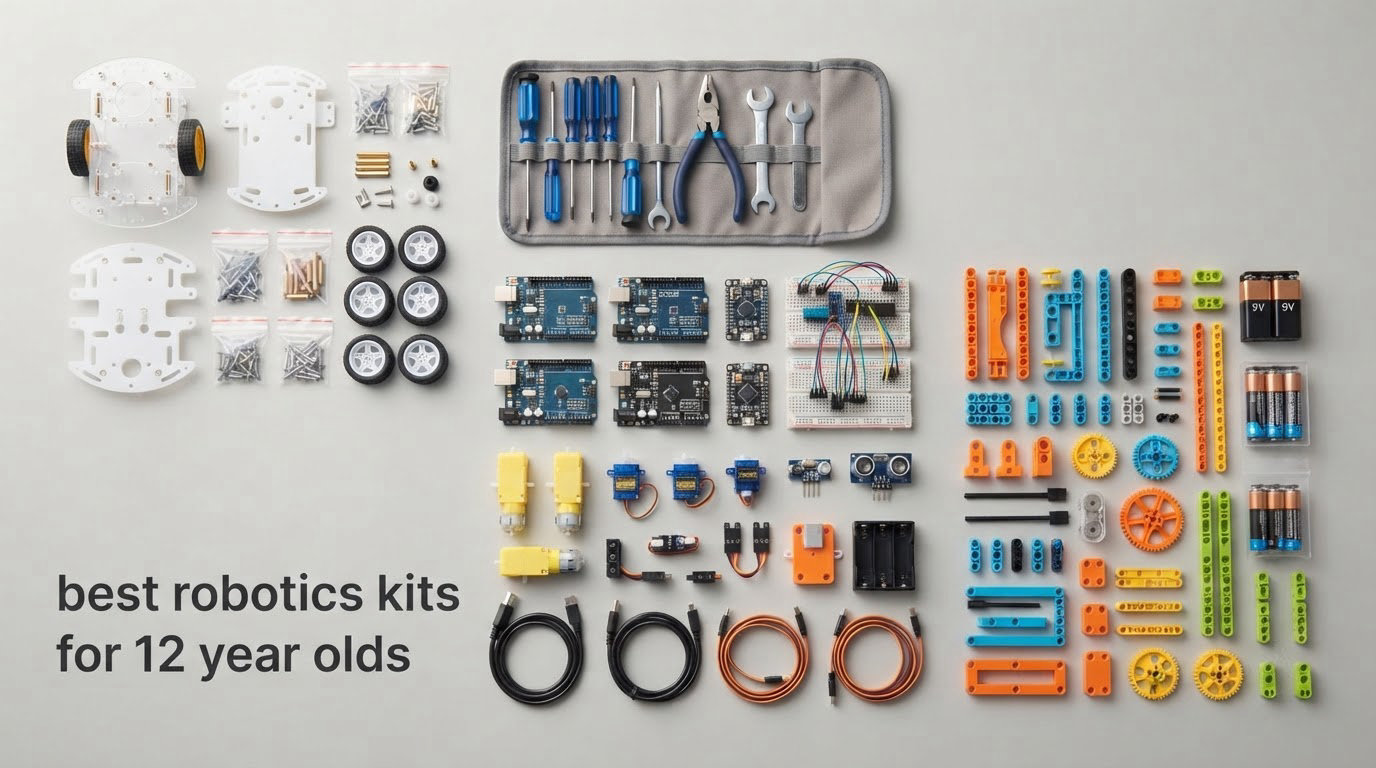
Here is the short answer: the ELEGOO UNO R3 Smart Robot Car Kit V4 is the best all-round robotics kit for a 12 year old in 2026. It works the moment it is unboxed, with pre-loaded code, an FPV camera, line tracking and obstacle avoidance already on the board, and it still opens up to real Arduino programming once your child outgrows the demo modes. The Teach Tech Mech-5 is the best value pick for a first build, and the Makeblock mBot is the smoothest introduction to coding robots.
Twelve is a genuinely awkward age for robotics kits. It is old enough to have outgrown snap-together bricks that only make a car drive forward, and young enough that a bare Arduino IDE still looks intimidating. It is exactly the window where block coding starts to feel babyish but text-based code has not yet clicked.
Our team read through thousands of owner reviews across these ten kits, compared the build instructions, sensor counts and control methods side by side, and sorted them by what actually matters at this age: how long the build takes, whether an adult has to help, and whether the child will still be playing with it a year later. We deliberately left out marble runs and logic puzzles, because they are not robotics.
Table of Contents
Top 3 Robotics Kits for 12 Year Olds in 2026

ELEGOO UNO R3 Smart Robot Car V4
- FPV camera and Wi-Fi video
- Line tracking and obstacle avoidance
- Arduino IDE programmable
- 2000 mAh rechargeable battery

Teach Tech Mech-5
- Mechanical coding wheel
- Throws
- lifts
- kicks and draws
- No electronics or app needed
- Ages 10 and up

Makeblock mBot
- Scratch and Arduino via mBlock
- Builds in about 15 minutes
- 100+ modules and 500+ parts
- Line-follow and obstacle-avoid modes
Best Robotics Kits for 12 Year Olds in 2026 at a Glance
All ten kits below are real robots that assemble, sense and respond. The table gives you the age label the manufacturer uses, how the child controls it, and the single best reason to pick it.
| Product | Specifications | Action |
|---|---|---|
| ELEGOO UNO R3 Smart Robot Car Kit V4 |
|
Check Latest Price |
| Teach Tech Mech-5 Coding Robot |
|
Check Latest Price |
| Makeblock mBot Coding Robot |
|
Check Latest Price |
 Apitor Robot J 6-in-1 with 480 Blocks Apitor Robot J 6-in-1 with 480 Blocks |
|
Check Latest Price |
 Sillbird 5-in-1 Programmable Robot Set Sillbird 5-in-1 Programmable Robot Set |
|
Check Latest Price |
 Henoda 468-Piece Robot Building Kit Henoda 468-Piece Robot Building Kit |
|
Check Latest Price |
 Makeblock mBot2 Coding Robot Makeblock mBot2 Coding Robot |
|
Check Latest Price |
 LECPOP 5-in-1 RC Robot Excavator Kit LECPOP 5-in-1 RC Robot Excavator Kit |
|
Check Latest Price |
 Butterfly EduFields 10-in-1 STEM Robotics Kit Butterfly EduFields 10-in-1 STEM Robotics Kit |
|
Check Latest Price |
 Kyanio 3-in-1 Robot Building Set Kyanio 3-in-1 Robot Building Set |
|
Check Latest Price |
1. ELEGOO UNO R3 Smart Robot Car Kit V4 – Best Overall for 12 Year Olds
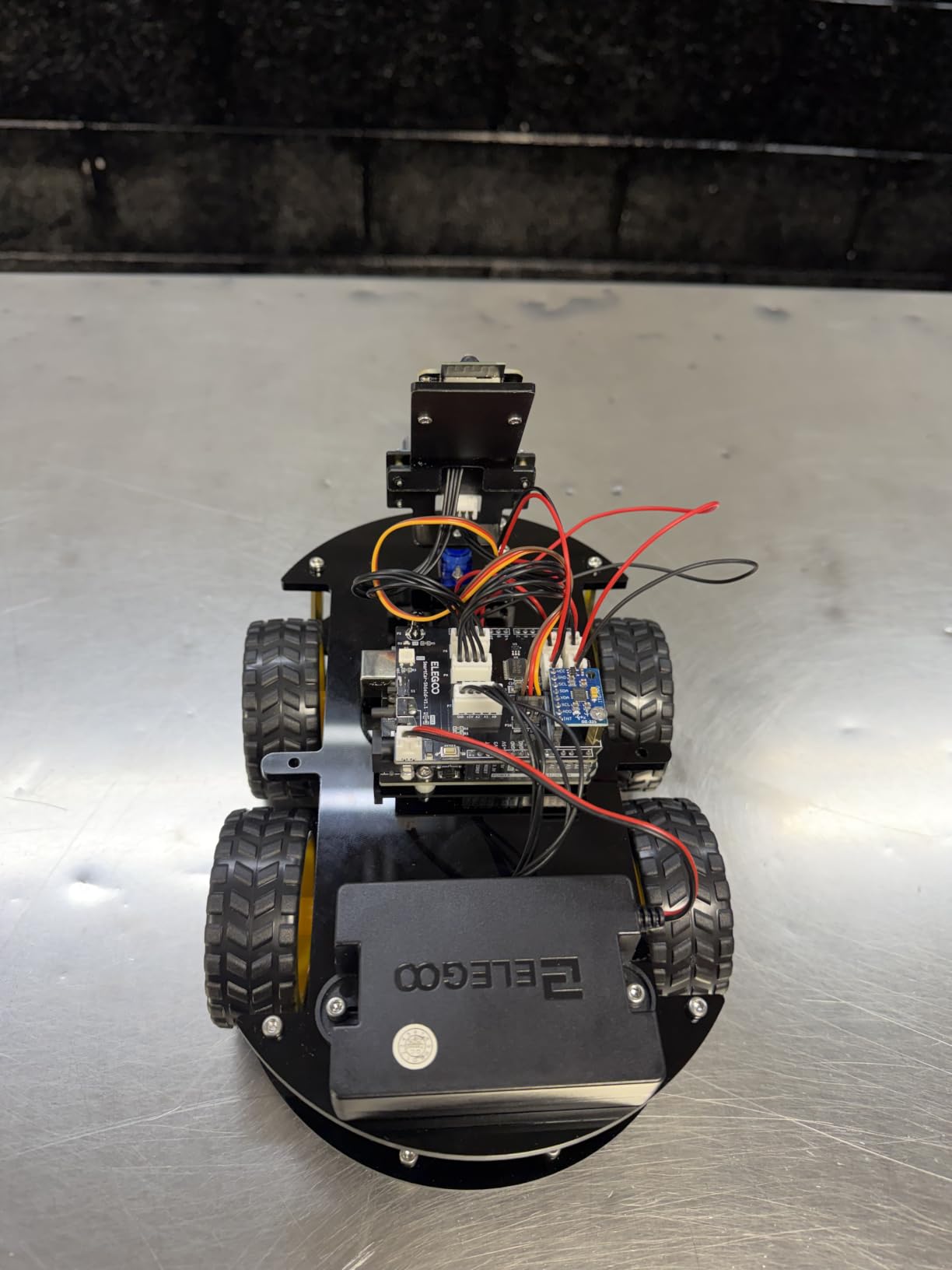
ELEGOO UNO R3 Smart Robot Car Kit V4 with Camera, Compatible with Arduino
ELEGOO UNO R3 board
ESP32-WROVER camera and Wi-Fi
2000 mAh rechargeable battery
8 x 7 x 6 inches
Pros
- Works immediately with pre-loaded code
- FPV camera streams video to a phone
- IR remote and app control both reliable
- Line tracking and obstacle avoidance perform well
- Clear illustrated instructions with labelled parts bags
Cons
- Bundled software is basic with no motor speed ramping
- Single expansion connector for extra sensors
- Fixed camera mount angle
My overall pick has a simple argument in its favour: nothing else on this list does more in the first ten minutes. The robot arrives with code already flashed, so the child can drive it, follow a line and dodge a chair before the manual is even open. That matters enormously at 12, because the fastest way to lose a child on a robotics kit is a build that stalls on step one.
The camera module is the feature that separates it from everything cheaper on this list. It is ESP32-WROVER based, so it handles the video stream and Wi-Fi connection, and the FPV feed can be watched on a phone while the car drives. For a 12 year old who has been on Scratch for a year, seeing their own code produce a live video feed feels like a genuine result rather than a toy.
Owners consistently single out the documentation. Parts come in labelled bags, the wiring is guided with keyed XH2.54 connectors so a wire physically cannot go in backwards, and the printed steps are well illustrated. That combination does more to prevent mid-build abandonment than any clever feature.
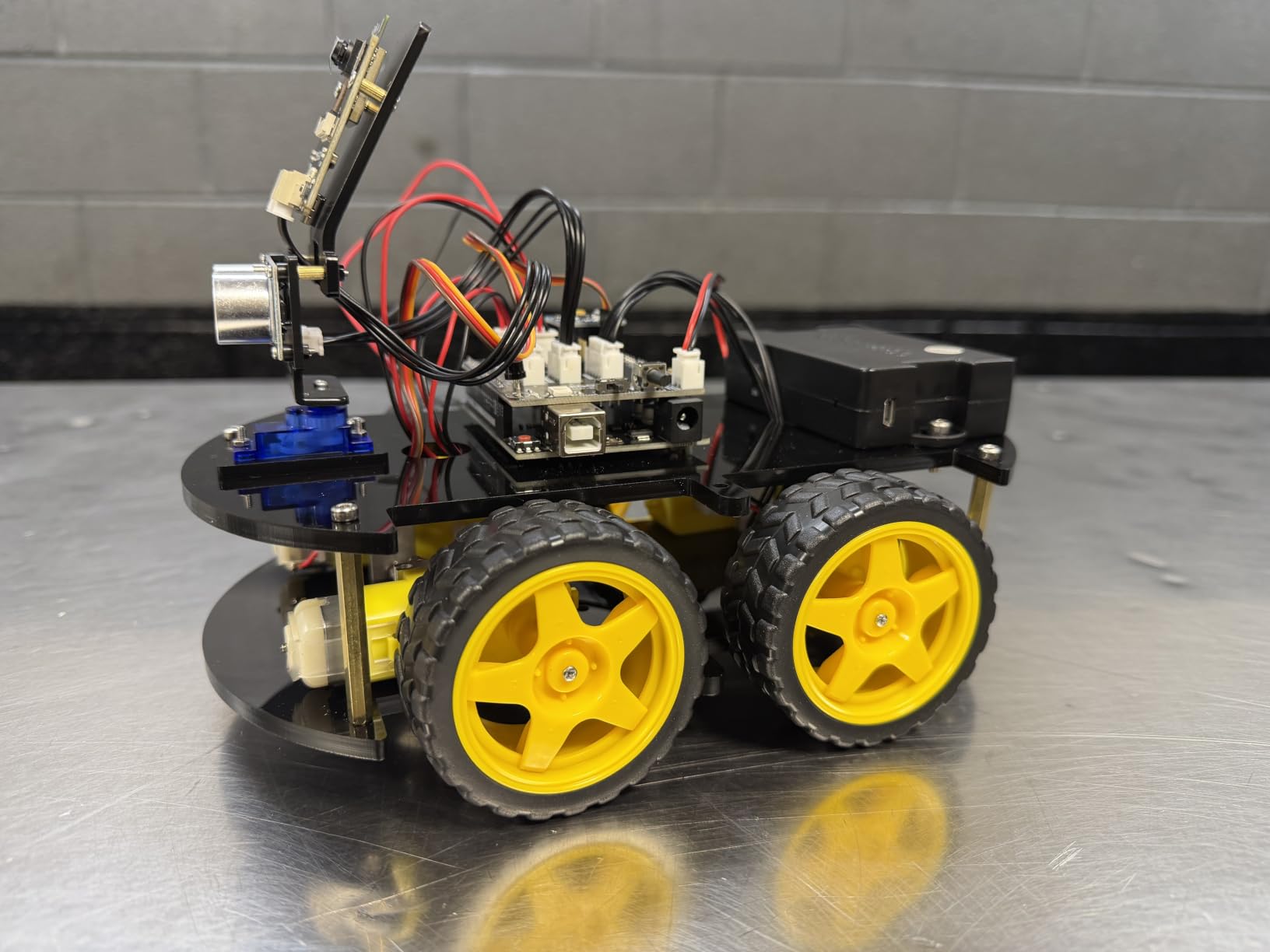
The technical story underneath is an UNO R3 controller board, which is the same Arduino-compatible architecture used in classrooms. That means a child who gets good here can move to a bare UNO board and a solderless breadboard later without relearning anything. The line tracking and ultrasonic sensors are standard parts too, so anything they learns transfers.
There are honest weaknesses. The stock software has no motor speed ramping, so acceleration is abrupt. There is only one expansion connector, so adding a second sensor means replacing rather than adding. Some owners also report Wi-Fi connection problems on certain Android phones until the channel is changed in settings.
Is the Arduino programming actually usable for a 12 year old?
Yes, but as a second stage, not the first. The example code that ships with the kit is real Arduino C++ that a parent or older sibling can read, and a motivated 12 year old can copy, modify and flash it with help. Most children will spend the first month in the app and the guided modes before touching it.
Think of the Arduino half as the reason the kit stays interesting in year two, not the reason to buy it. If your child is already writing Python, this is the fastest route on the list from a working demo to real text-based code.
Is this the right kit if the child dislikes screens?
No. This is a screen-based kit and the FPV feed is a headline feature, so it will pull a child toward screens rather than away from them. For a household actively managing device time, the Teach Tech Mech-5 or the Henoda set in remote-only mode is a better fit.
Skip this one only if your child has already mastered Scratch and wants a Python platform immediately, in which case the mBot2 is the more direct route.
2. Teach Tech Mech-5 Coding Robot – Best Value First Build
TEACH TECH Mech-5 STEM Coding Robot Building Kit for Kids Ages 10+
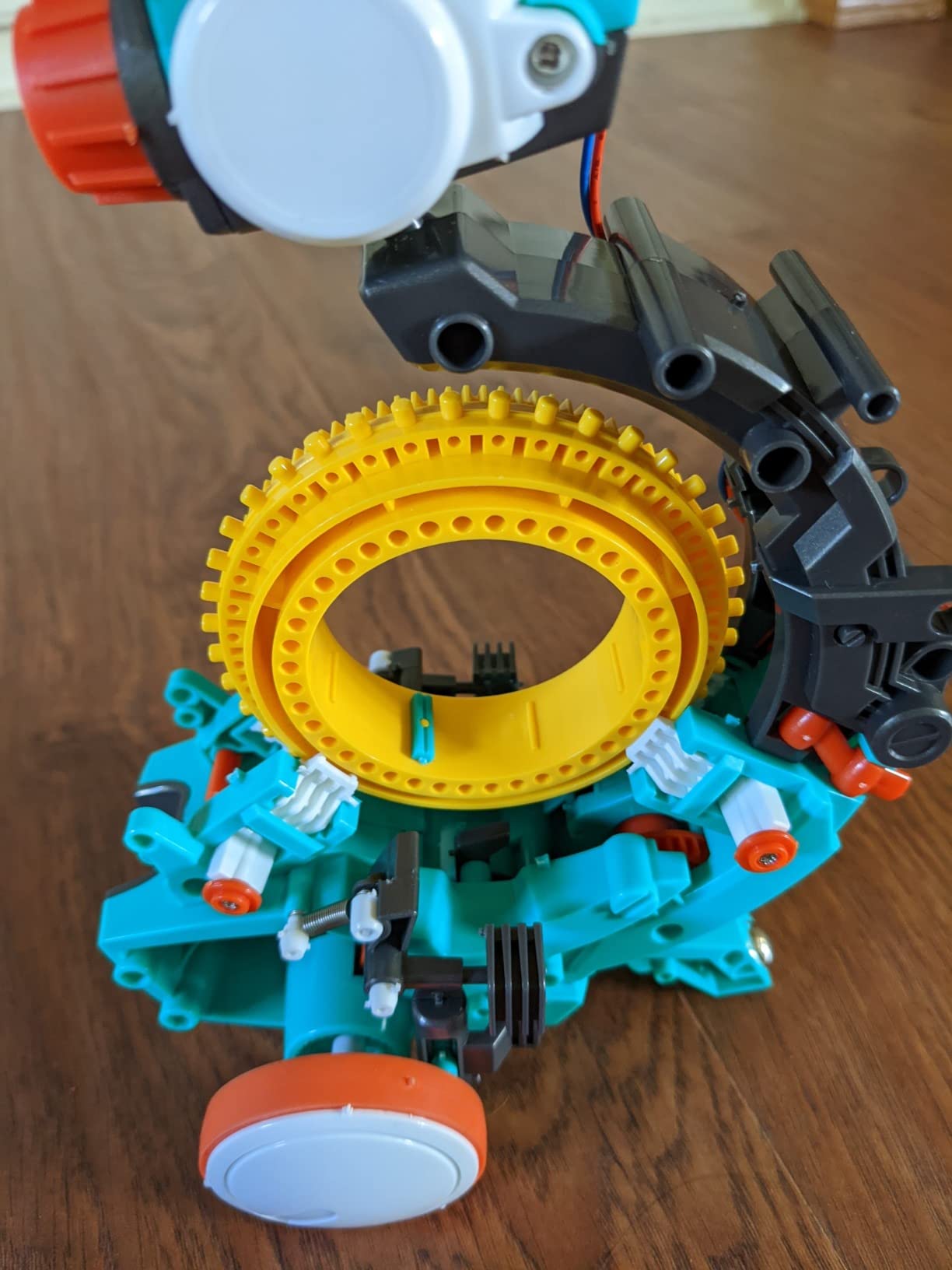
Mechanical coding wheel with snap-on buttons
Robot throws, lifts, kicks and draws
12.4 x 2.5 x 9.1 inches
2 AAA batteries required
Pros
- Coding wheel teaches sequencing without any electronics
- Substantial hands-on build rather than a pre-assembled toy
- Long track record with close to 5000 reviews
- Works immediately once assembled
Cons
- Coding is limited to a mechanical wheel
- No software or app programming at all
- Several hours of building before any play
The Mech-5 solves a problem most coding robots have in reverse. Instead of a screen and an app, programming happens physically: you snap coloured buttons onto a wheel, in order, and the robot executes that sequence. A 12 year old learns loops, ordering and cause and effect without ever touching a keyboard.
It is also a real build rather than a snap kit. Expect a few hours of assembly with a screwdriver, and the mechanical work is the point. The finished robot uses a coded action wheel to throw, lift, kick and draw, which gives the coding a visible result that block-based robots struggle to match.
The rating here is backed by more owner reviews than anything else in this roundup, at close to 5000. Reviewers buy it for the unusual mechanism and stay for the build quality, and the recurring note is that it feels more like a project than a toy.
It also runs on two AAA batteries and no electronics programming, so there is no app to install, no account to create and no firmware to update. For a gift, that simplicity is genuinely valuable. Hand it over, let them build it, and it works the same way a year later.
The limitation is obvious and needs saying plainly. There is no text-based programming here, and there is no bridge to one. If a child is already writing code, this kit will feel like a step backwards, however charming the mechanism is.
Will a 12 year old still find this challenging?
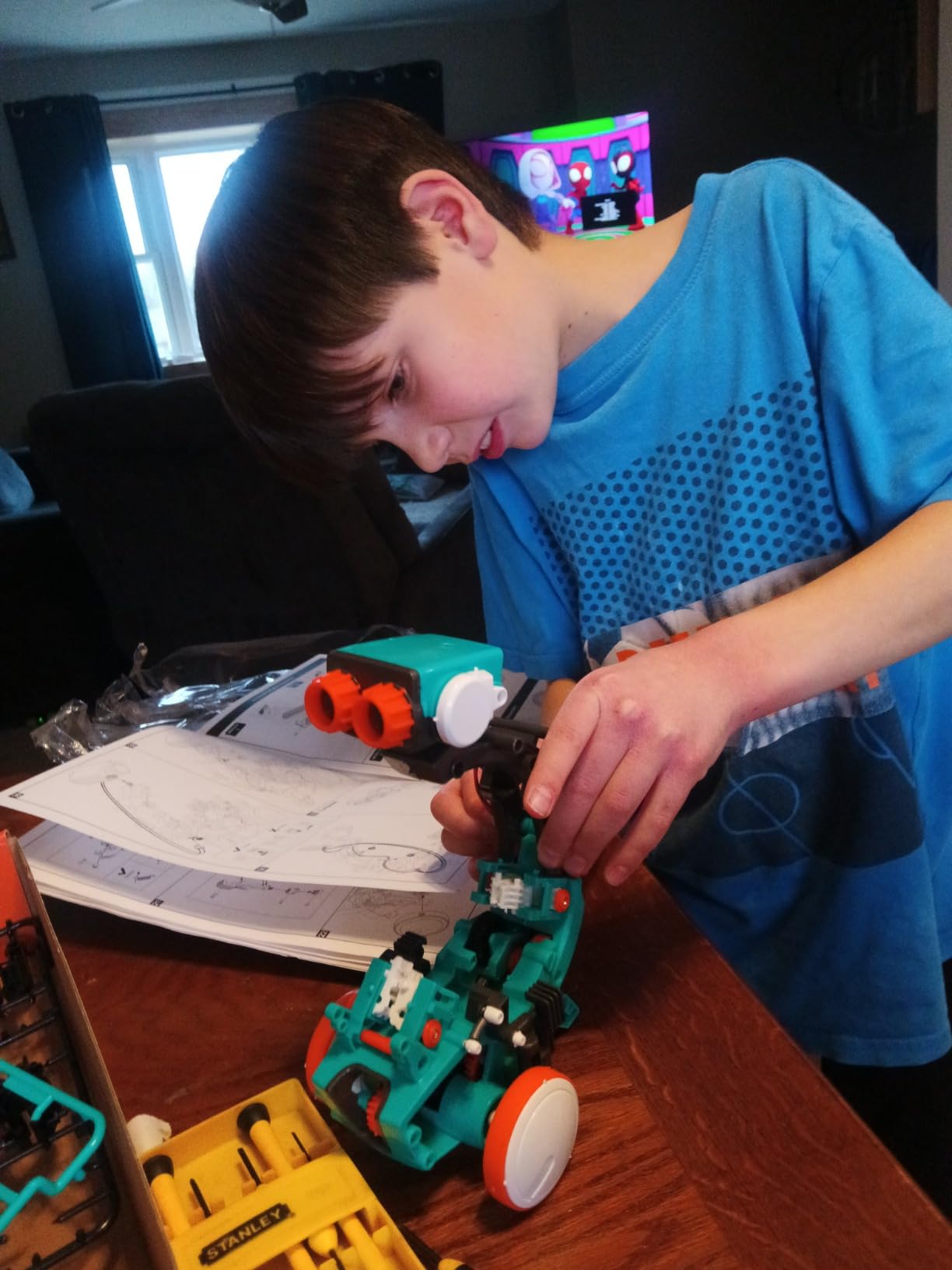
For about a month, yes, and the build itself is the challenge. The coding wheel is simple enough that a 12 year old will master it in an afternoon, and the honest answer is that the mental game here is mechanical assembly, not programming depth. It suits a child who has never coded and does not want to start with a screen.
Best for a first robotics purchase, or a sibling who is not the one doing the coding. Skip it if your child already uses Scratch and asks for more difficult things, because there is nowhere to go next inside this kit.
How much adult help does the build need?
Plan on sitting down for at least the first hour. The plastic parts are small and the arm assembly is fiddly, and reviewers consistently describe the build as substantial. Once that section is done, the rest goes quickly and the child can finish independently.
For comparison, our beginner robotics kit guide covers the cheaper snap-together options if you want something a younger child can finish alone.
3. Makeblock mBot Coding Robot – Best for First Coders
Makeblock mBot STEM Coding Toys Robotics for Kids Ages 8-12
Scratch and Arduino via mBlock
6.69 x 3.54 x 7.87 inches, metal and plastic
Builds in about 15 minutes
4 AA batteries required, not included
Pros
- Assembles in about 15 minutes
- Block coding in Scratch is genuinely approachable
- Metal and plastic frame feels durable
- Works as a remote control car out of the box
- Line-follow and obstacle-avoid modes
Cons
- Batteries are not included
- First build is confusing if instructions are not followed closely
If your child has never written a line of code, this is where I would start. mBlock puts a Scratch-style interface on top of the robot, so the blocks a child drags together control real motors on a real chassis. The feedback loop is immediate and the robot visibly does what the code says.
Build time is the standout. Roughly 15 minutes from box to running robot, with a metal and plastic frame that survives being dropped and driven into furniture. That combination of fast assembly and sturdy construction is why it has held a 4.6 average across thousands of reviews for so long.
The expansion path is the other reason to buy it here rather than a cheaper app-controlled set. It works with more than 100 electronic modules and over 500 parts, and it accepts LEGO elements, which means the chassis can keep growing long after the first robot is finished.
One practical warning before you hand it over. The build is fast but not forgiving, and owners most often report confusion when parts are fitted in the wrong order. Sit with your child for the 15 minutes and follow the manual exactly.
How long does a 12 year old stay interested in the mBot?
Long enough to matter, and the module ecosystem is the reason. The base robot has line-following and obstacle-avoidance behaviours already working, and adding sensors one at a time turns it into a different machine. The recurring question in parent communities is what to buy after the mBot is mastered, and the usual answer is to stay with the same ecosystem rather than switch brands.
Best for a first coding robot with plenty of runway. Skip it if your child is already comfortable with Python, because block coding will feel like a step back, or if your household does not want to keep spare batteries on hand.
Is the age label of 8 and up too conservative?
It is. The manufacturer says 8 years and up, and that is accurate for a young child building it with help. For a 12 year old who can follow a printed manual, the build is at the easy end and the programming is at exactly the right difficulty. The age label is not a ceiling.
Once the base robot is mastered, our guide to robotics kits for STEM learning covers the next tier of complexity.
4. Apitor Robot J 6-in-1 Building Kit – Best for Block Builders
Apitor STEM Coding Robot Toy 6-in-1 Building Kit for Boys 8-12 480 Blocks
480 snap-together blocks
Icon-based app covering loops and variables
Bluetooth with four control modes
Ages 7 to 12
Pros
- Holds 4.7
- the highest average rating in this roundup
- Blocks rival name-brand bricks for grip
- Children complete builds with minimal help
- Good battery efficiency
- Four app control modes
Cons
- Coding app is occasionally finicky
- Some instructions exist only inside the app
This is the one to buy for a child who builds constantly with bricks and wants the robot to be made of them too. The 480 blocks snap together firmly enough that reviewers regularly compare them favourably with name-brand elements, which is unusual at this piece count.
Coding happens through an icon-based app rather than a text or block interface. The icons still cover loops and variables, so the underlying concepts are real, but there is no keyboard and nothing to type. That makes it the least intimidating coding kit here and, at the same time, the shallowest in terms of syntax.
Control runs over Bluetooth in four modes: dual-motor, single-motor, gyro and path. The gyro mode in particular produces the kind of tilting-and-reacting play that keeps a 12 year old interested long past the first build, and the 6-in-1 design means six different models come out of the same box.
The 4.7 average is the highest in this group, though it comes from a much smaller pool of about 300 reviews than the leaders. Judge it on build quality and app quality rather than on rating volume.
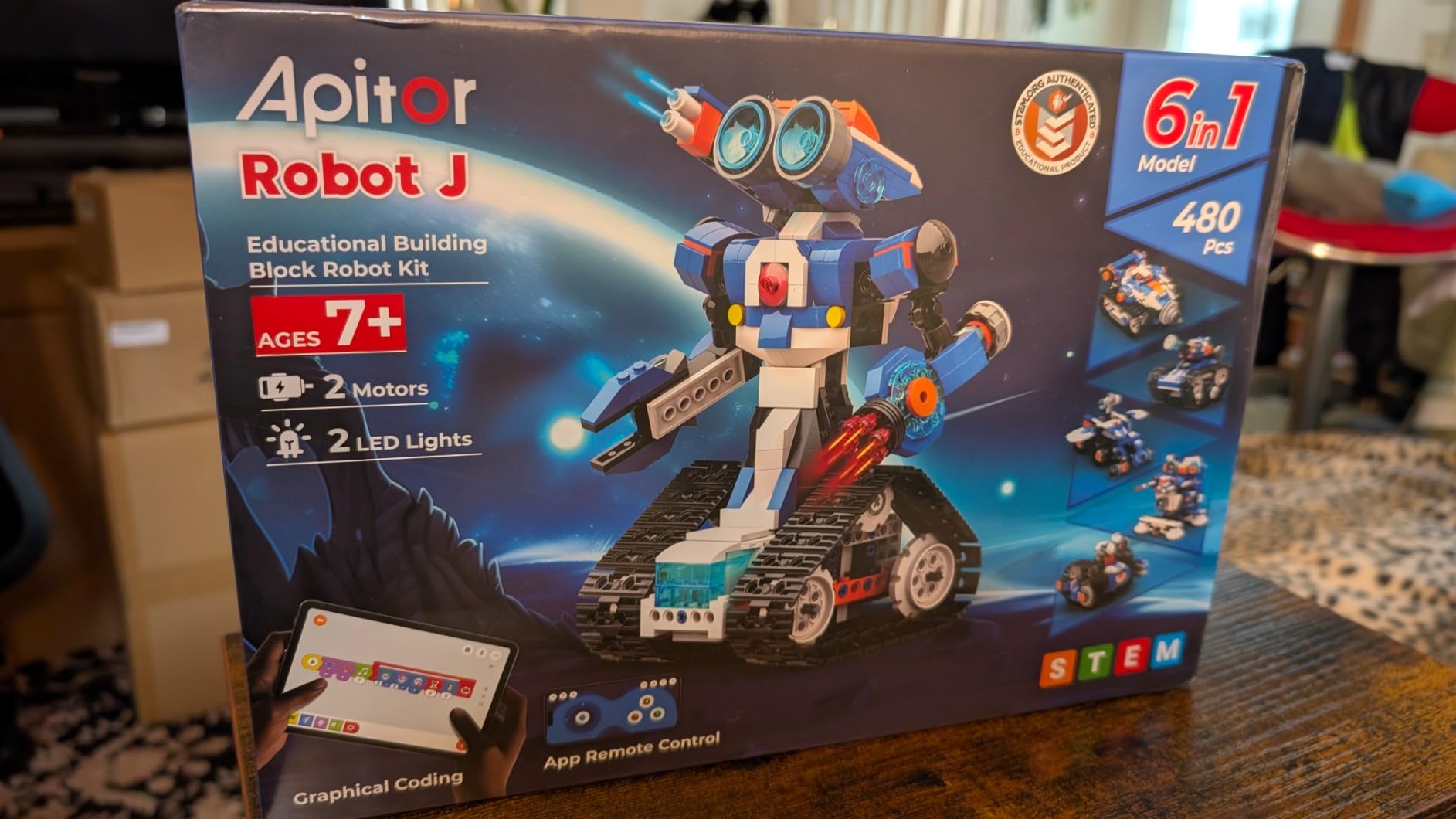
Assembly needs no tools, no screws and no adhesive, which makes it a good shared build with a sibling or a cousin. The control module has two built-in motors and multicolor LED lights, and a sorting tray is included, which sounds trivial until you have counted 480 pieces onto a rug.
Two practical points. Three AA batteries are required and not included, and some of the build guidance lives only in the app rather than the printed booklet, so the tablet needs to be nearby. The app itself is the most common source of frustration, with occasional glitches during code upload.
Is a 480-block kit too much for a 12 year old to finish?
No, and the six models are the reason. Rather than one long build with an anticlimax at the end, there are six smaller builds, each producing a working robot. The sort tray and the app instructions make the piece count manageable, and reviewers report children finishing builds with little help.
Best for a child whose play is physical and creative, and for a household that wants coding introduced without a keyboard. Skip it if the goal is learning to write code, because icon-based programming will not transfer directly to Scratch or Python.
How does it hold up to being driven hard?
Well. The blocks grip firmly, which is the failure point for most kits of this style, and the app support includes 360-degree stunts. The one trade-off against the Arduino-based kits is that the control module is proprietary, so third-party add-ons are not an option.
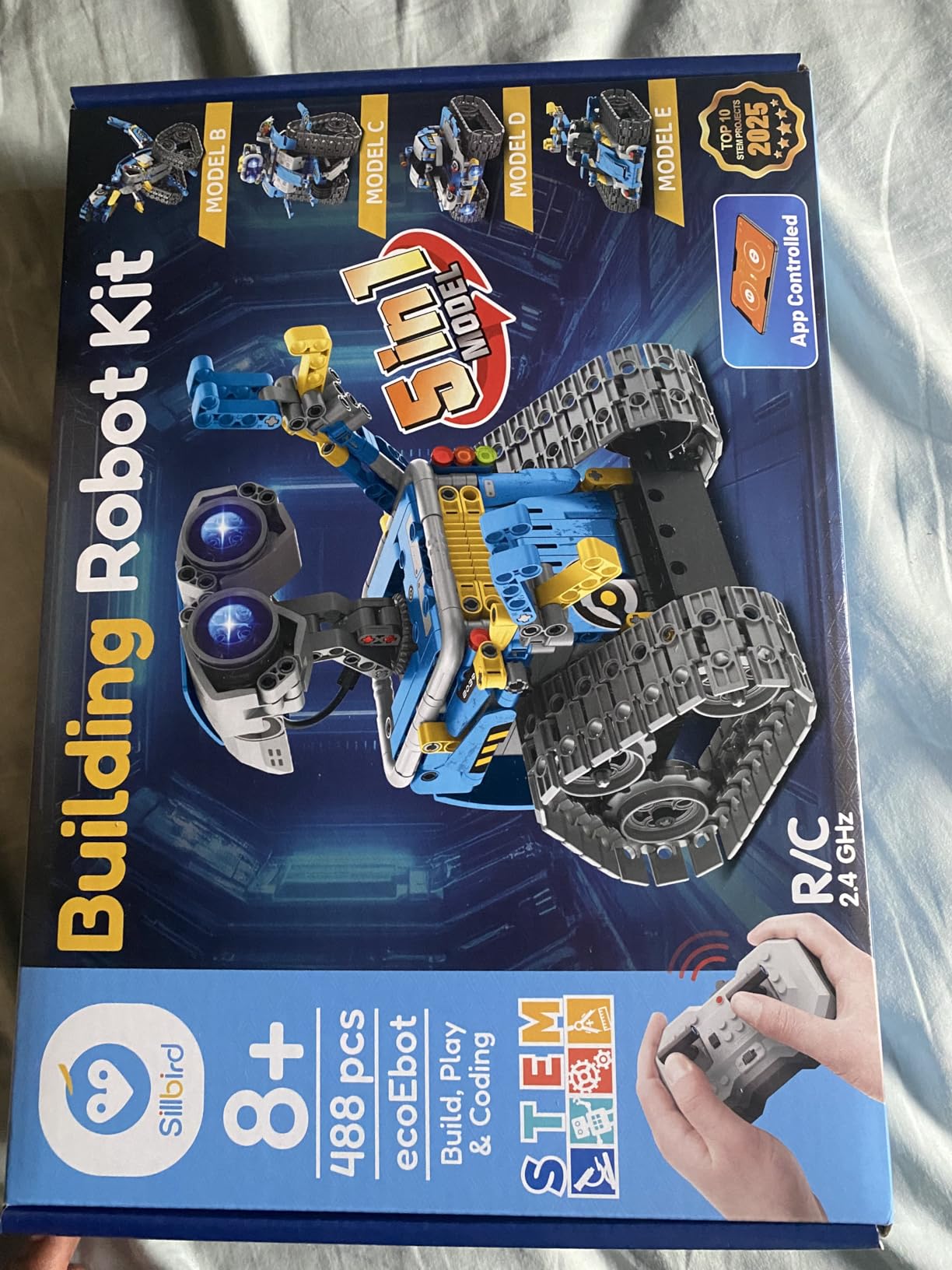
5. Sillbird 5-in-1 Programmable Robot Set – Best for Multi-Model Builds
Sillbird STEM Robot Building Kit with Remote Control Gifts for Boys 8-13
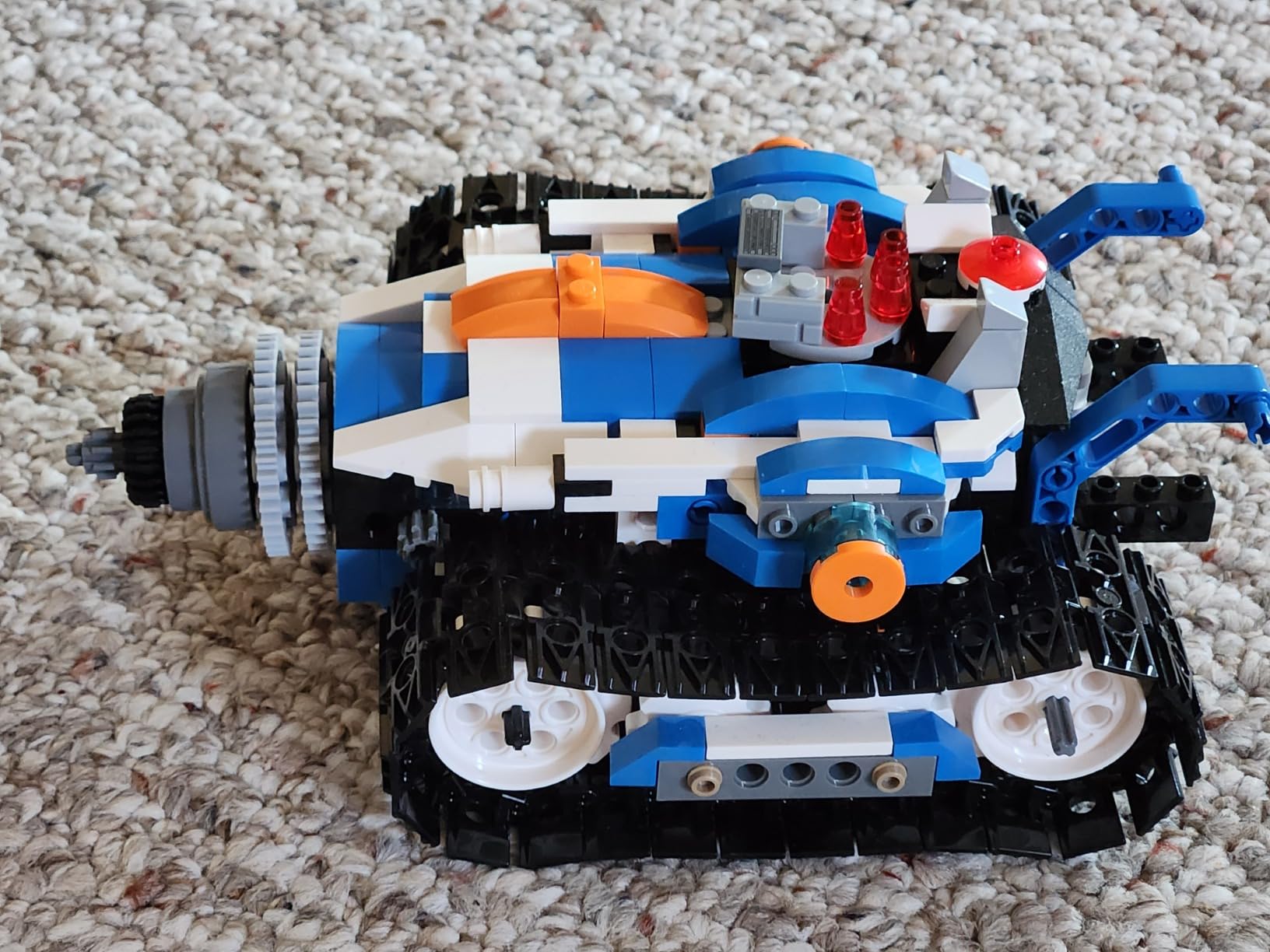
488 pieces across five configurations
Bluetooth app and remote control
Rechargeable battery, up to 40 minutes of play
Ages 6 to 16
Pros
- Children build it independently in about a day
- App and remote control both work well
- Five buildable configurations
- Handles carpet and small bumps
- Clear colorful step-by-step instructions
Cons
- Remote control joystick directions are not intuitive
- Replacement batteries can be hard to source
- Minor mold flash on some pieces
The strongest argument for this kit is independent buildability. Owners repeatedly describe children completing the build on their own over about a day, with clear step-by-step instructions doing the work of the parent. For a household where both adults work, that is worth more than an extra sensor.
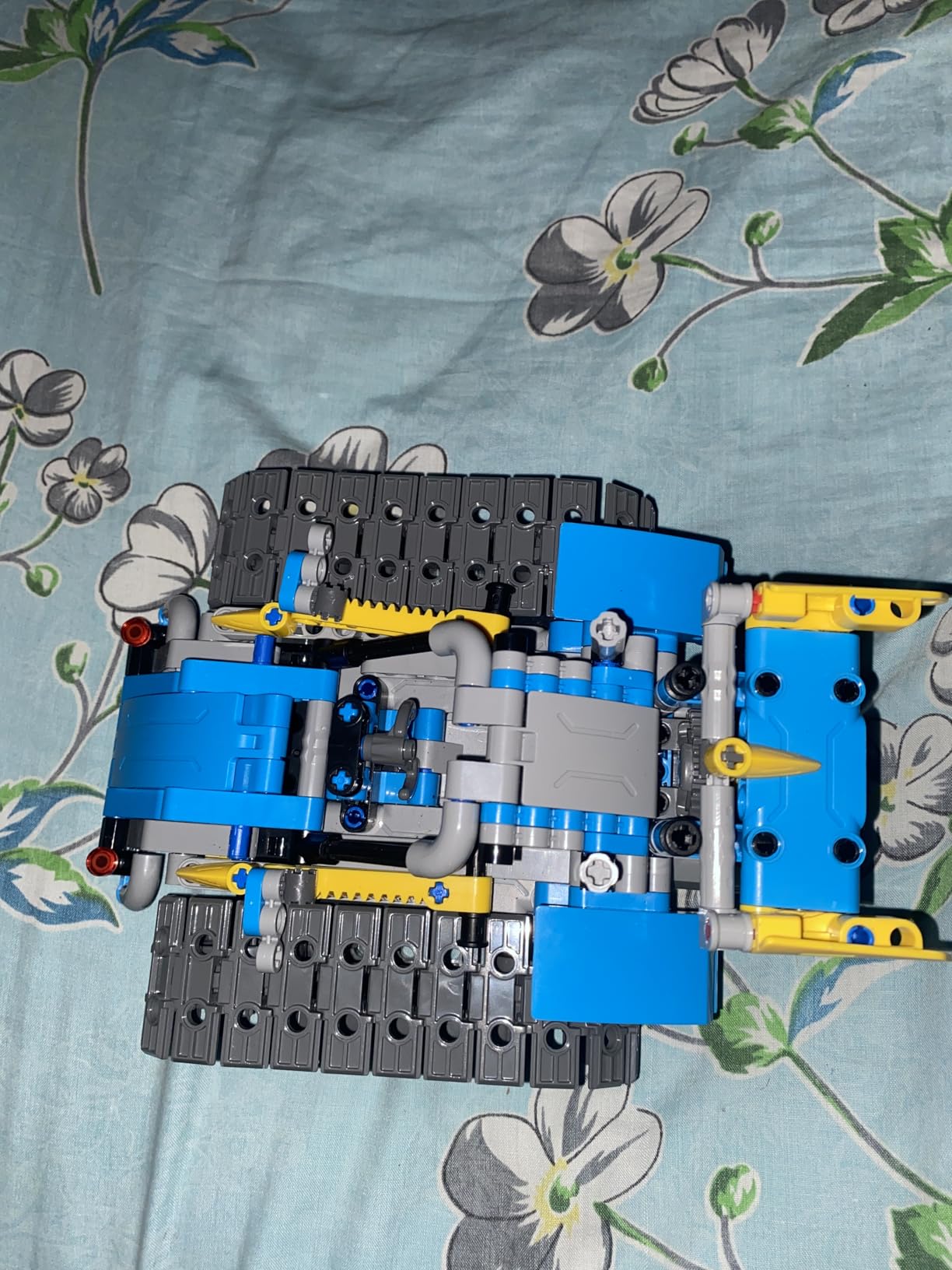
Five configurations come out of 488 pieces, including a robot, a dinosaur, a car and a tank, plus adjustable head, arm and tail sections. Progressive difficulty across the five builds is what keeps a 12 year old coming back after the first one is finished, which is precisely the failure mode parents worry about.
Driving performance is a genuine strength. Once assembled it handles carpet and small bumps well, and control works through both a Bluetooth app and a handheld remote, so a child can hand the controller to a friend without any setup.
The rechargeable battery gives up to 40 minutes of play per charge, which is shorter than a session for an enthusiastic child. It is also the main ongoing cost, and reviewers report difficulty finding replacements, so check that before committing.
There is no text-based programming and the coding here is limited compared with dedicated coding robots. The manufacturer age range of 6 to 16 is wide, and for a 12 year old the upper half of that range is where the interest lies rather than the coding depth.
Will five different models prevent the one-build-and-done problem?
Mostly. Each rebuild takes real time and produces a visibly different result, which is what stops a kit from sitting on a shelf after a weekend. Add to that a drivable robot with an app and remote, and the combination holds attention better than a single fixed build.
Best for a child who finishes things quickly and needs a reason to start again. Skip it if you are buying to teach programming, because the coding is a small part of what this kit does.
Is 40 minutes of battery life a problem in practice?
It is enough for one good run rather than an afternoon, and a mid-session recharge is likely with a motivated child. Our robotics kits with long battery life guide covers the alternatives if that matters.
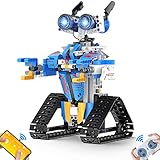
6. Henoda 468-Piece Robot Building Kit – Budget Pick
Henoda Robot Toys for 8-16 Year Old Boys Girls Kids with APP or Remote Control Science Programmable Building Block Kit, STEM Projects Educational Birthday Gifts
468 pieces plus stickers
App control and 2.4GHz remote at 20m plus range
Voice, path, gravity sensor and programming modes
Lithium ion battery included
Pros
- Color-coded manual with red box and arrow callouts
- Every part sorted into its own bag
- Works as both app-controlled and remote-controlled
- Thick sturdy ABS with smooth edges
- Good value for the piece count
Cons
- Programming depth is limited versus dedicated coding robots
- Some steps need adult help with younger children
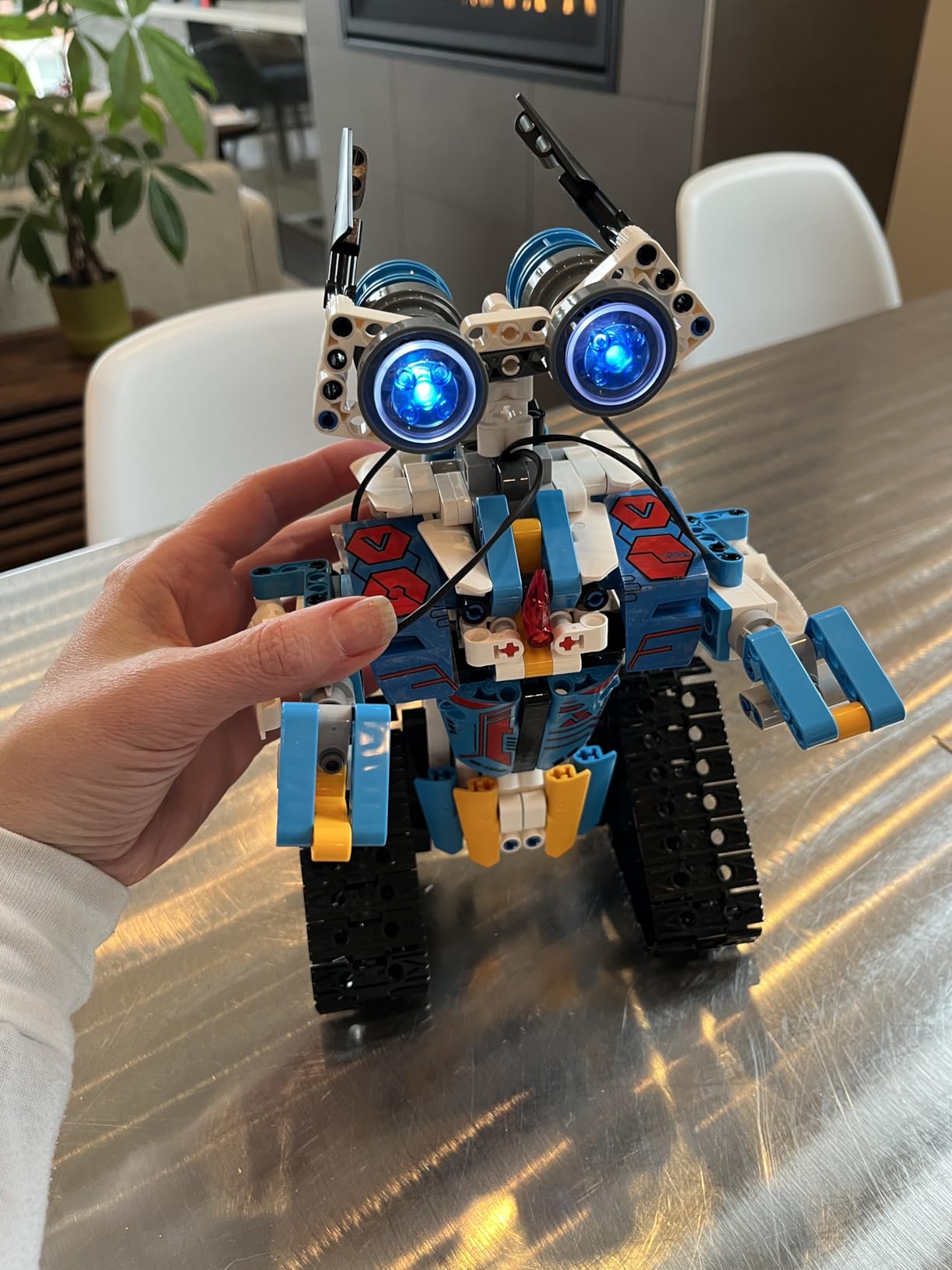
This is the kit to buy when you want a robot that looks impressive and drives well, without paying for a coding platform your child may never open. At 468 pieces with an included lithium ion battery and USB charging cable, the value is in the hardware rather than the software.
The manual gets specific praise. Parts are sorted into individual bags, the instructions use colour coding with boxed callouts and arrows, and 90 day manufacturer cover is included. For a first build with a child, that combination removes most of the friction that causes abandonment mid-project.
Control is unusually flexible for a kit at this level. There is Bluetooth app control, a 2.4GHz remote with 20 metre plus range, and separate remote, path, voice, gravity sensor and programming modes. The gravity sensor mode is the one that most often surprises children, because tilting the robot changes its behaviour directly.
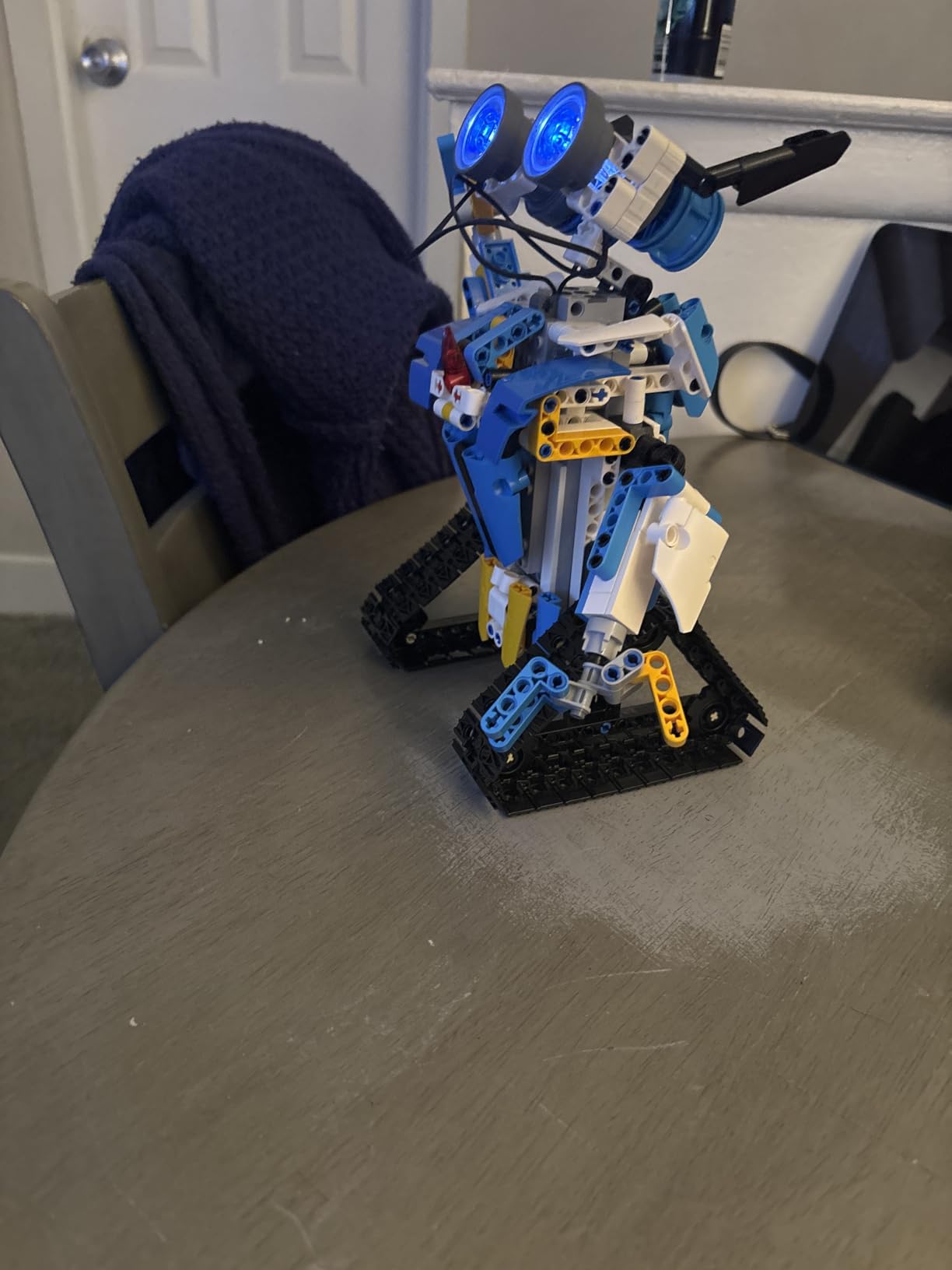
Construction is thick ABS with smooth, non-toxic edges, which matters if there is a younger sibling in the house. Glowing eyes and flexible rotating hand joints give it enough visual character that it reads as a finished robot rather than a pile of parts.
The honest limit is programming depth. The STEM programming mode exists, but it is nowhere near the block coding environment on the mBot, and it will not teach syntax. Treat this as a driving and building kit with a programming bonus.
Is this kit good enough for a child who is already coding?
No. If your child writes Scratch or Python, the programming modes here will frustrate rather than stretch them, because there is nowhere to type and nothing new to learn. The same child will be delighted by the voice and gravity modes, which is a different kind of fun.
Best for a first hands-on robot where driving and building matter most. Skip it if coding is the entire point of the purchase.
How much help does assembly take?
Less than the piece count suggests, because the sorting bags and colour-coded callouts do most of the work. Younger children will still need an adult for a handful of tight sub-assemblies. The build is a good weekend project with a result at the end of it.
7. Makeblock mBot2 Coding Robot – Best for Python-Ready Kids
Makeblock mBot2 Coding Robot for Kids, Code Learning Support Scratch & Python Programming, Robotics Kit for Kids Ages 8-14 and up, Building STEM Robot Toys Gifts for Boys Girls
Scratch and Python programming
10+ sensors and 30+ expandable modules
Up to 5 hours of play per charge
Aluminum body, 5.91 x 3.54 x 7 inches
Pros
- Genuine Scratch to Python learning path
- Builds in about 30 minutes
- Ten plus sensors and thirty plus modules
- Eight play modes including drawing and voice control
- Wi-Fi lets several robots work together
Cons
- Steeper learning curve than simpler block kits
- Software setup and updates are fiddly for some buyers
This is the only kit here that treats Python as a first-class option rather than a future upgrade. A child can start in Scratch, feel confident, and move the same robot into Python when the block interface starts to feel like training wheels. That is the exact transition parents ask about most.
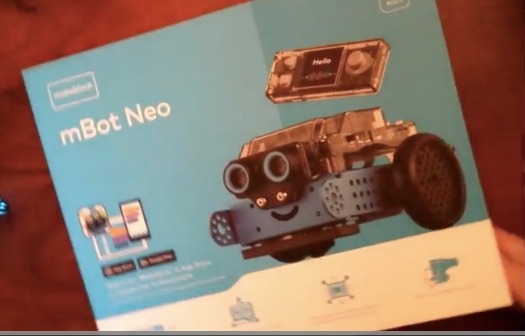
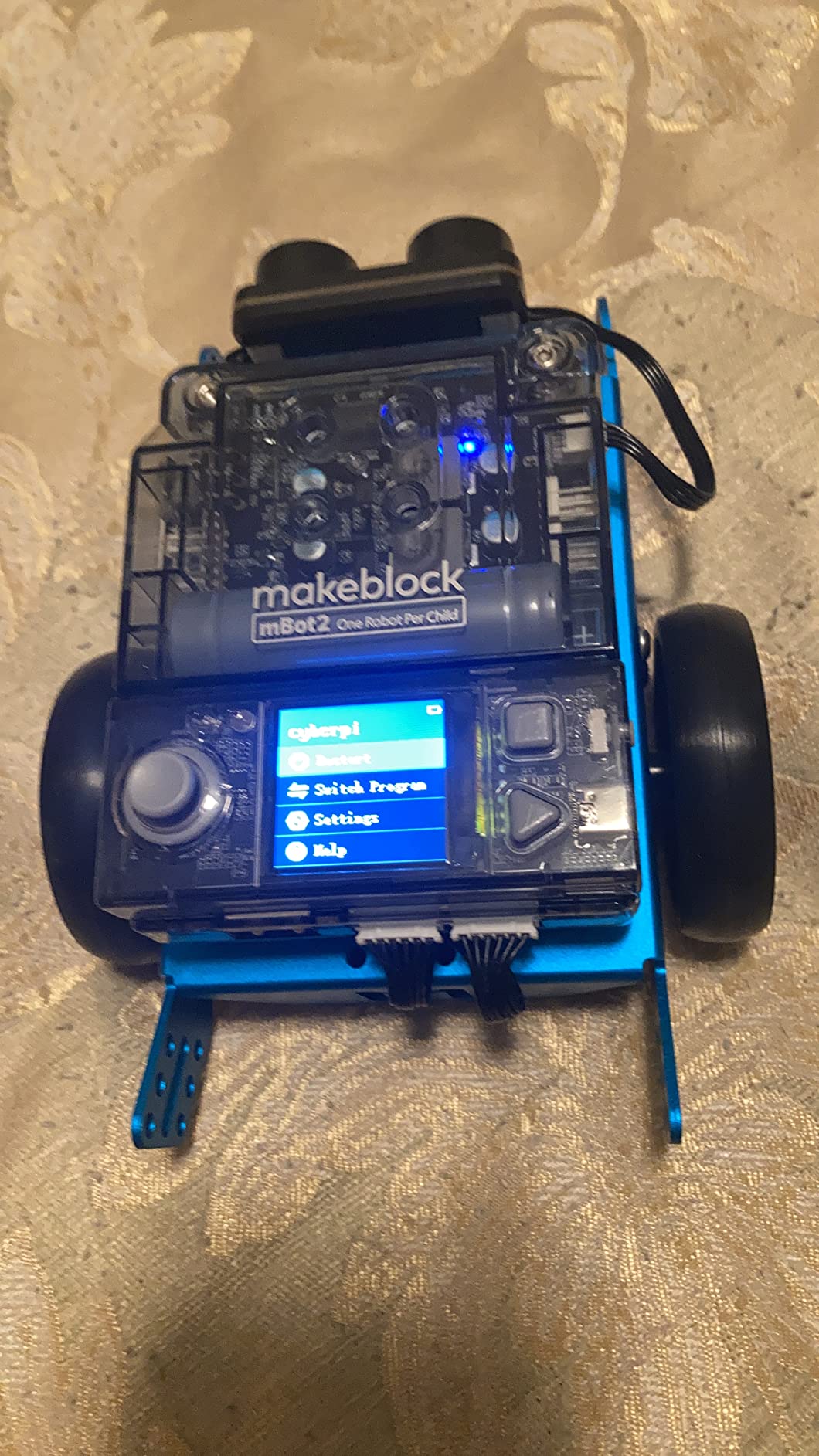
The hardware backs it up. There are more than 10 sensors, including line following, obstacle avoidance and colour identification, and it expands with more than 30 modules for connected device work. Eight-plus play modes including drive, draw, musician and voice control give plenty of ways in before any coding is needed.
It builds in about 30 minutes, and the aluminum body is a step up in durability from plastic chassis. Battery life is up to 5 hours per charge, which comfortably outlasts a school evening and removes the mid-session recharge problem.
The 4.4 average is the lowest in this roundup, and the reason is honest: the learning curve is steeper than a block-coded kit. Buyers who came from the mBot or from Scratch rate it highly; first-time builders sometimes stall at software setup.
Four coding project cards and a line-following track map are included, which is a small detail that matters. Structured projects give a 12 year old something specific to aim at instead of an empty app and a blank canvas.
The Wi-Fi module is the feature classroom buyers care about most, because several robots can be connected together on one network for group work. At home it is less relevant, but it is the reason teachers rate this kit the way they do.
Is 12 the right age to start Python on a robot?
It is one of the better ones, provided the child has block coding already in their head. The Scratch half gives a safety net, so a beginner can still make the robot move while working out what the Python version is doing. A child with no coding background should start with the mBot and move up later.
Best for a child already on Scratch who wants the next rung. Skip it as a first ever coding kit unless an adult is prepared to sit alongside the software setup.
Will this connect to a school robotics team later?
It helps. The block-to-text progression, the sensor vocabulary and the fact that the modules are standard components are all directly transferable to a school team environment. More on that pathway is in the section after the reviews.
8. LECPOP 5-in-1 RC Robot Excavator Kit – Best for Construction Fans
LECPOP 5-in-1 STEM Building Block Kit RC Robot Excavator Toys for Ages 8-13
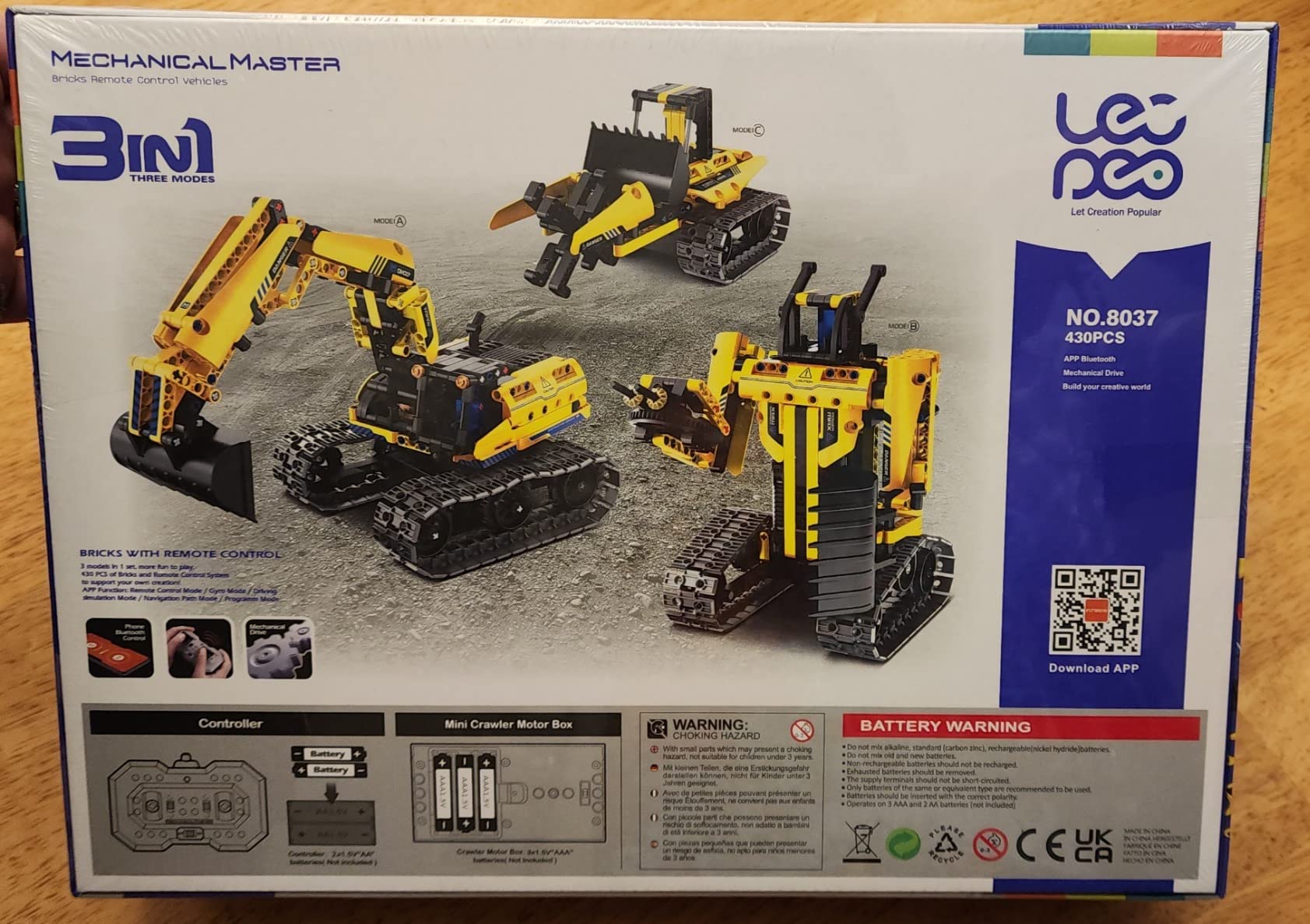
430 parts, five model styles
Remote control and app control
ASTM and CPSIA certified ABS
12 x 9 x 2 inches
Pros
- Sturdy blocks that hold together and drive strongly
- Five buildable configurations
- Handles ramps carpet and small terrain
- Sufficiently challenging without causing frustration
- Good value as a family build
Cons
- Instructions can be unclear and hard to follow
- Rechargeable pack needs the cover unscrewed
- Blocks are stiff on smaller fingers
If your child is into diggers, loaders and building sites, this is the kit where the theme does the motivating. The five model styles include a remote control excavator, a robot and a construction loader, all from 430 parts, and the excavator arm and tracked base are the parts children actually want to play with.
Control is dual mode, a four-channel remote for immediate fun and an app with gyro, driving simulation, navigation path and STEM programming modes. The 360-degree rotation and four-channel control make it drive well over ramps, carpet and small terrain, which is where cheaper kits bog down.
Material certification is a genuine plus for a kit with this many small parts. The ABS is ASTM and CPSIA certified and non-toxic, and one AA battery is included for the remote.
Assembly takes real time, and the build is described by families as a good shared weekend project. The driving performance afterwards is the part children rate highest.
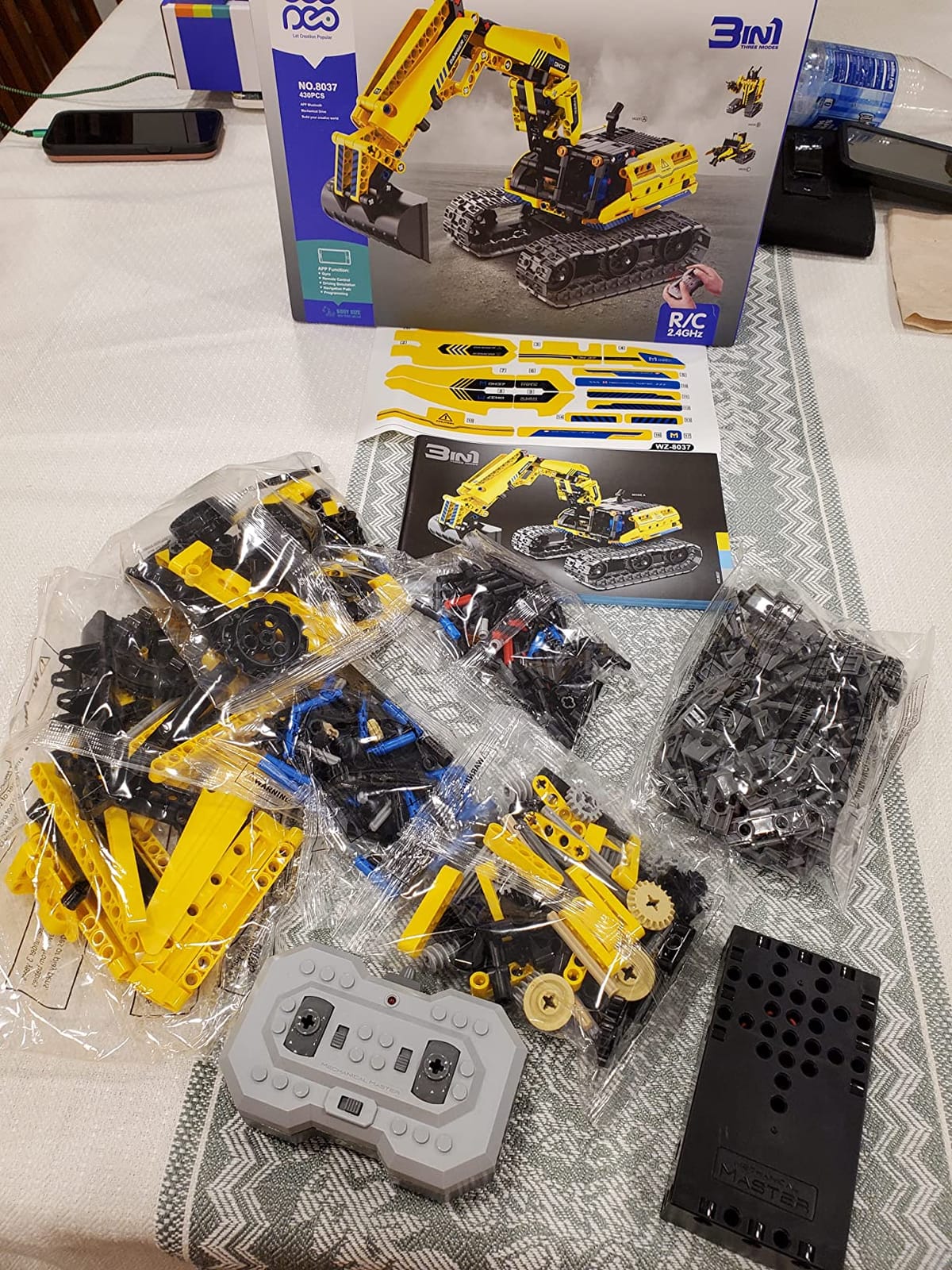
Two friction points are worth planning around. The instruction clarity is the most repeated complaint in reviews, so read through the whole booklet first and identify the tricky sub-assemblies before starting. The blocks are also stiff, which can be uncomfortable for smaller hands, though it means they hold together firmly once built.
The rechargeable battery arrangement is awkward: the cover has to be unscrewed and the pack unplugged to charge, so a charge break interrupts play more than it should.
Is the programming here deep enough for a 12 year old?
No, and pretending otherwise would waste your money if coding is the goal. The app has navigation path and STEM programming modes, but they are shallow next to a real coding environment. What this kit does well is mechanical assembly, drivetrain behaviour and the satisfaction of operating a machine you built.
Best for a construction-mad child who wants to drive something, not program it. Skip it for a child whose interest is software.
Does the manufacturer age label match this kit?
The listing says 6 to 10 years, which is well below your buyer. In practice the 430-piece build is challenging for a 10 year old and comfortably within reach of a 12 year old working with the manual. The label reflects frustration tolerance, not capability.
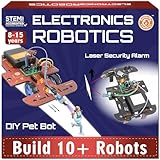
9. Butterfly EduFields 10-in-1 STEM Electronics Kit – Best for Electronics Learning
Butterfly EduFields 10in1 STEM Electronics Robotics Kit for Kids Ages 8-12
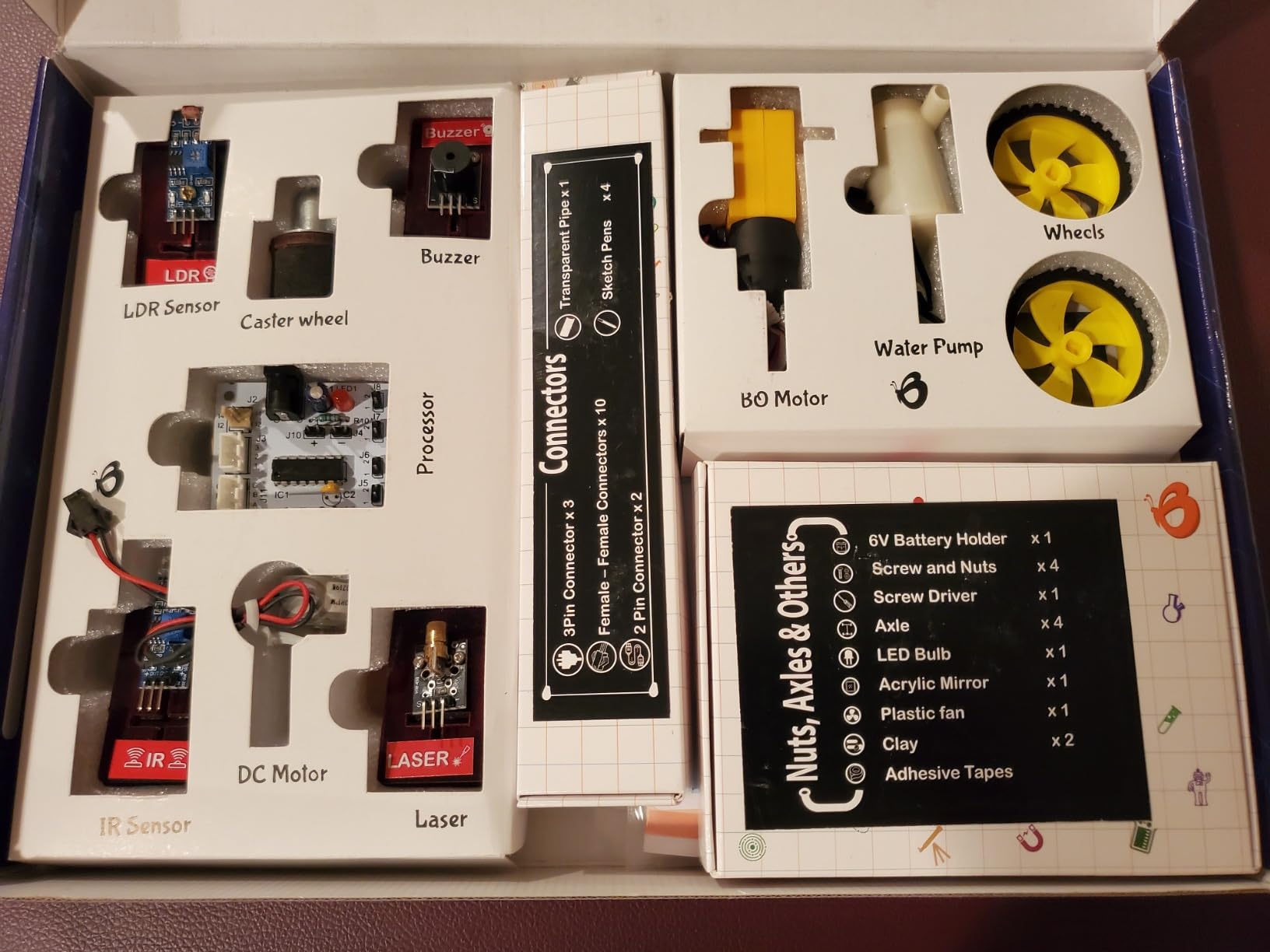
100+ electronic components
Ten working models
Sensor control robot with line following and obstacle avoidance
Ages 8 to 17
Pros
- Ten different working models from one kit
- Clear illustrated step-by-step manual
- Engages older kids who have outgrown block kits
- Good introduction to basic electronics and circuits
Cons
- Sensor board reported not working on some units
- Some components arrive broken and may need soldering
- Wheel axle shafts may need minor modification
- Customer service responses reported as unhelpful
This is the pick for a child who wants to understand electronics rather than drive a car around. There are more than 100 components including wires, switches, connectors and LED lights, and the kit builds 10 different working models, so the learning compounds across projects rather than resetting each time.
The multi-function sensor control robot is the centrepiece, with line-following and obstacle-avoidance behaviour. Each project takes roughly 15 minutes, which makes the whole thing genuinely repeatable and far less of a single-use gift.
For a 12 year old who has outgrown snap-together brick kits, this is often described in reviews as the thing that re-engages them. Working with a circuit board rather than a plastic shell changes the feel of the project completely.
There is a real quality-control issue to know about, and we would rather say it plainly. A small but persistent group of owners report sensor boards with failing output pins, and some components arriving broken enough to need soldering. Those reports are why the 4.4 average sits below the leaders despite a long feature list.
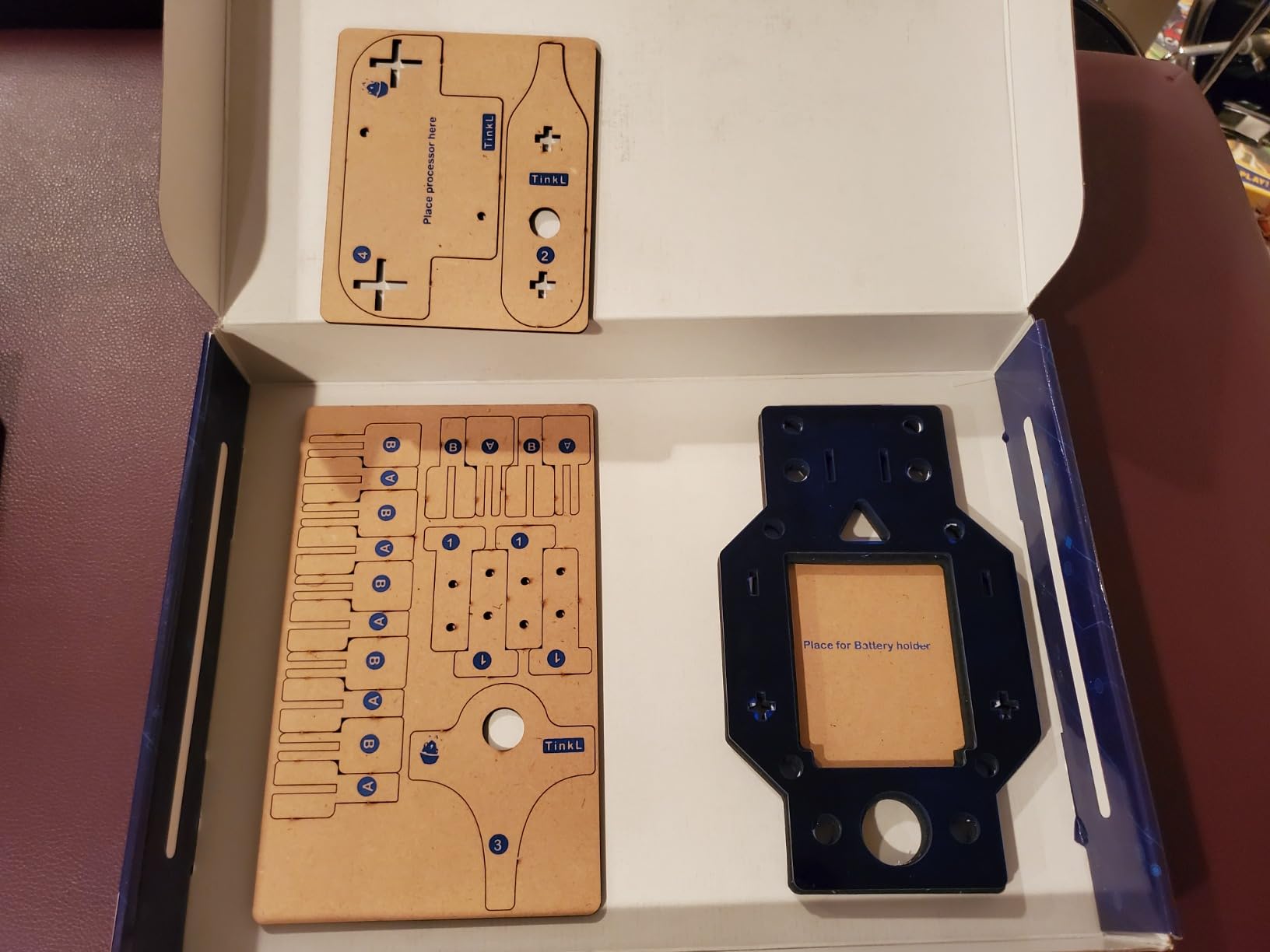
Wheel axle shafts may need slight modification to fit, which is a small job but not something every family can do without tools to hand. Check the parts on arrival rather than discovering a problem halfway through the third project.
The kit is wood and electronic components rather than a moulded plastic robot, so it will not survive being thrown across a room. It rewards a careful child. That is a fair trade, but it is a trade.
Is soldering required to complete the projects?
It should not be for a well-made kit, and most owners complete all ten projects without it. The reports of soldering being needed come from units where components arrived damaged, which is a fault issue rather than a design feature. That is a meaningful distinction when you are weighing the risk.
Best for a methodical child who enjoys circuits and wants real electronics content. Skip it for a child who wants to drive something immediately, and consider a plug-and-play kit instead.
How does ten models beat one good model?
Because each project is a new problem with the same parts, which is how electronics actually gets learned. Reviewers specifically credit the kit with keeping older children engaged and avoiding boredom where single-build kits failed. If you are worried about the one-build-and-done trap, this is the shape of kit that avoids it.
10. Kyanio 3-in-1 Robot Building Set – Best for Multiplayer Play
Kyanio STEM Robotics Kits for Kids Ages 8-12 8-14 Year Old, 3 in 1 Remote/APP Control & Programming Robot Building Set, Toy Coding Science Projects, Birthday Gift Ideas for 8 9 10 11 12+ Boys & Girls
560 building pieces, three models
2.4GHz remote with multi-player support
APP programming and remote control
Type-C charging, ages 8 to 18
Pros
- Clear color-coded instructions most kids can follow
- Well-made parts that fit together properly
- Three different models including two tracked vehicles
- Multi-player remote supports more than one robot
- Ages 8 to 18 is the widest stated range here
Cons
- Build is demanding and may need adult help
- One report of incomplete instructions missing sub-assembly steps
The reason this kit is on the list is multi-player capability. The 2.4GHz remote supports multiple robots, and the set includes two tracked vehicles, so two children can race or stage a duel rather than taking turns. Very few kits in this price band do that.
At 560 pieces it has the largest block count here, and the three models are a machine gun robot, an armoured tracked vehicle and a mechanical cannon tank. Tracked drivetrains handle uneven ground better than wheeled ones, which is why the tank and vehicle models are the ones children gravitate to.
Build quality gets consistent praise. Parts fit together properly rather than being forced, and the color-coded instructions are clear enough that most children follow them. Type-C charging removes the old rechargeable-cable problem entirely.
At about 290 reviews it has a smaller owner base than the leaders, and one report mentions missing instruction pages for certain sub-assemblies. Check the booklet is complete on arrival.
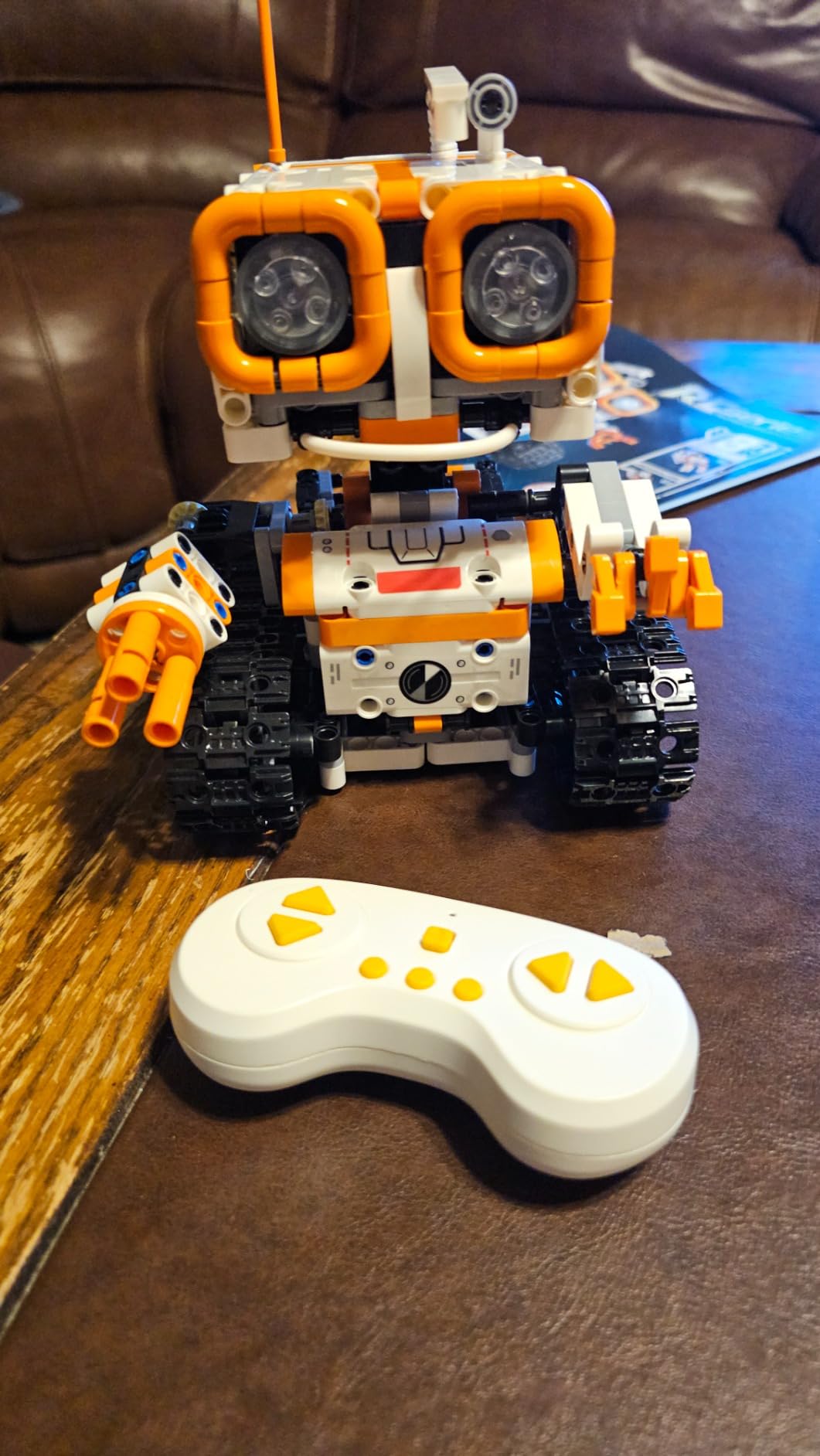
For a 12 year old, this is a build-then-compete kit rather than a coding platform. The app supports programming, but the honest headline is mechanical assembly, tracked vehicle behaviour and the appeal of robot-versus-robot play with a friend or sibling.
The stated age range of 8 to 18 is the widest in this roundup, which tells you something about how much headroom the mechanical content has. A child who enjoys the build at 12 will still find things to work on later.

Is the 560-piece build realistic for a 12 year old alone?
Realistic with help at the start. Owners describe the build as demanding, and adult input on the first sub-assemblies makes a large difference. Once past that stage the piece count is mostly repetition rather than difficulty, and children finish it comfortably.
Best for a child with a sibling or friend to build and race with. Skip it as a solo gift if your child tends to abandon builds that need company, and pick something that finishes in one sitting instead.
Does the app programming add much?
Enough to keep a curious child interested, not enough to teach code. The value here is the hardware, the tracked drive and the multi-player remote. If programming is the goal, the mBot or mBot2 is the correct purchase instead.
How to Choose a Robotics Kit for a 12-Year-Old
Start with what your child already knows, not with the age printed on the box. Manufacturer labels are inconsistent at this age, and kits marked 14 and up are often fine for a motivated 12 year old, while kits marked 8 and up can be finished in an afternoon. The single most useful question is whether your child has already used Scratch.
If the answer is no, pick a kit where the first hour produces a working robot. The Mech-5, the mBot and the Apitor set all do that. If the answer is yes, look at the ELEGOO UNO R3 or the mBot2, because both expose real code rather than hiding it behind icons.
Next, be honest about adult time. Build times here range from about 15 minutes for the mBot to a full weekend for the 430-piece LECPOP or the 560-piece Kyanio. A kit that takes two sessions with a parent present is a better purchase than a bigger kit that gets abandoned on Saturday afternoon.
Third, think about the programming ladder before the birthday. Kits that move from block coding to text code in a smooth path, rather than a wall, are the ones still in use a year later. The ELEGOO UNO R3 and the mBot2 are the two that stay in that category.
Fourth, count the hidden costs. Batteries are not included with the mBot, the Apitor set or the Mech-5, so add a pack to your order. App-controlled kits need a phone or tablet with Bluetooth, and an older device can cause Wi-Fi connection problems, as some ELEGOO owners report. Expansion modules are usually sold separately, so check the ecosystem size before committing.
Fifth, decide on screen time deliberately. If your household is trying to reduce device time, the Mech-5 teaches sequencing with a physical coding wheel and needs no screen at all. If screens are fine, the camera and app features on the ELEGOO and mBot2 are the reason those kits hold attention.
Finally, weigh durability against younger siblings. Kits made of ABS blocks and snap-together elements survive a household with a five year old far better than wood and loose electronic components. Check the small-parts situation before buying anything with more than 400 pieces if there is a toddler in the house.
The Programming Readiness Ladder: Scratch to Python to Arduino
Most parents ask the same question in a slightly different form: is my child ready to leave block coding? The answer is usually yes at 12, and the transition does not have to be abrupt. Four steps describe the whole ladder.
Step one, block coding. Scratch on a screen, or the mBlock environment on the mBot, teaches sequence, loop, condition and variable without syntax. Expect a child to stay here for several months, which is correct and not a waste.
Step two, guided projects. The Apitor icon app and the Henoda programming mode belong here, with structure provided so the child is not staring at a blank canvas. This is the shortest step and the one most kits skip.
Step three, Python on hardware. The mBot2 supports Python directly alongside Scratch, which is why it appears in this roundup at all. Running a real Python script on a moving robot is the moment many children decide programming is worth the effort. A keyboard becomes useful rather than optional around this age.
Step four, text-based microcontroller code. The ELEGOO UNO R3 accepts Arduino C++ in the Arduino IDE, using the same UNO R3 architecture found in classrooms. Expect to help with flashing code at first, and expect the child to spend a long time changing one number and driving into a wall. That frustration is the point at which the concept of iteration lands.
The practical advice is to buy one rung below where you think your child is. A kit that feels slightly easy for six months is worth more than one that feels impossible on day one, because the abandoned kit teaches nothing at all.
What Comes After the Kit: Clubs, Teams and Testing Interest First
The most common complaint in parent communities about robotics gifts is not quality. It is that the kit gets built once in a weekend and then sits on a shelf. Three things prevent that, and all three are about what happens after the box opens.
Plan a second build before the first finishes. Every kit here with more than one configuration, including the Sillbird, LECPOP, Kyanio and Butterfly sets, gives you a reason to return to it. Agree the second build date in advance and put it in the calendar.
Test the interest before an expensive purchase. Borrowing a robotics club session, a library makerspace programme or a school demonstration costs nothing and tells you more in an afternoon than any review. If a child will not commit to an hour of the club, a larger kit will not fix that.
Know where the pathway goes. Middle school robotics clubs commonly use VEX and VEX GO systems, and older teams run FIRST Robotics, where students design, build and compete with a mentor. A home kit that teaches block coding, sensors and engineering vocabulary shortens that learning curve considerably, which is a real argument for the mBot2 or the ELEGOO over a purely mechanical kit.
One more forum-tested strategy is worth repeating. Parents frequently recommend starting with a durable construction brick set and then layering electronics on top, because the bricks get reused for years while the electronic modules are upgraded. It costs more to do gradually, but it means nothing is wasted when the child outgrows a stage.
Frequently Asked Questions
What is the best starter robotics kit for kids?
The best starter robotics kit is one that produces a working robot within the first hour. The Makeblock mBot builds in about 15 minutes and runs block coding in a Scratch-style interface, while the Teach Tech Mech-5 uses a physical coding wheel that needs no screen at all. Both suit a child with no coding experience.
What is the best-rated robot kit for kids?
By average rating, the Apitor Robot J scores highest in our roundup at 4.7 stars, with owners particularly praising the 480 snap-together blocks for grip. By volume of owner reviews, the Teach Tech Mech-5 leads with close to 5000 reviews at 4.5 stars, and the Makeblock mBot holds 4.6 across thousands more.
What is the best age to start robotics?
Around 8 to 10 is a practical start for block coding, and 12 is a strong point to move toward text-based programming. Manufacturer age labels are inconsistent at 12, so judge the build difficulty and the control method rather than the printed range. A kit that feels slightly easy is better than one that stalls on the first session.
Do 12 year olds need a tablet to use robotics kits?
Most do, if the kit uses app control or block coding. The ELEGOO UNO R3, mBot2, Apitor and Sillbird sets all rely on a phone or tablet for programming or control. Screen-free alternatives exist, most notably the Teach Tech Mech-5, which programs with a mechanical coding wheel and needs no device at all.
Are robotics kits good for 12 year olds?
Yes, provided the kit matches the child’s current coding level. At 12 most children can handle a genuine 100-step build, which is the age when block coding starts to feel too easy. Kits with sensors, multiple configurations or a Python option hold attention far longer than a single fixed build.
What STEM toy holds up past the first build?
Kits with more than one buildable model or a real expansion ecosystem hold up best. The Sillbird, LECPOP, Kyanio and Butterfly sets each offer several configurations from one box, and the mBot expands with more than 100 electronic modules. A kit with only one build is the most likely to sit unused after a weekend.
The Final Word on Robotics Kits for 12 Year Olds
The best robotics kits for 12 year olds are not the ones with the most features. They are the ones that produce a result quickly, survive a household, and offer a clear next step once the first build is finished. Our overall pick, the ELEGOO UNO R3 Smart Robot Car Kit V4, wins because it runs on day one and still teaches real code in year two.
Match the kit to the child instead. A first-time coder gets the mBot or the Mech-5, a Scratch-experienced child gets the ELEGOO UNO R3 or the mBot2, a builder who wants mechanics gets the LECPOP or the Henoda set, and a child who needs electronics gets the Butterfly 10-in-1. Buy the one rung below where you think they are, and give them a second build date before the first one ends.
Our beginner robotics kit guide and our STEM learning picks cover the surrounding categories if you are still deciding.