
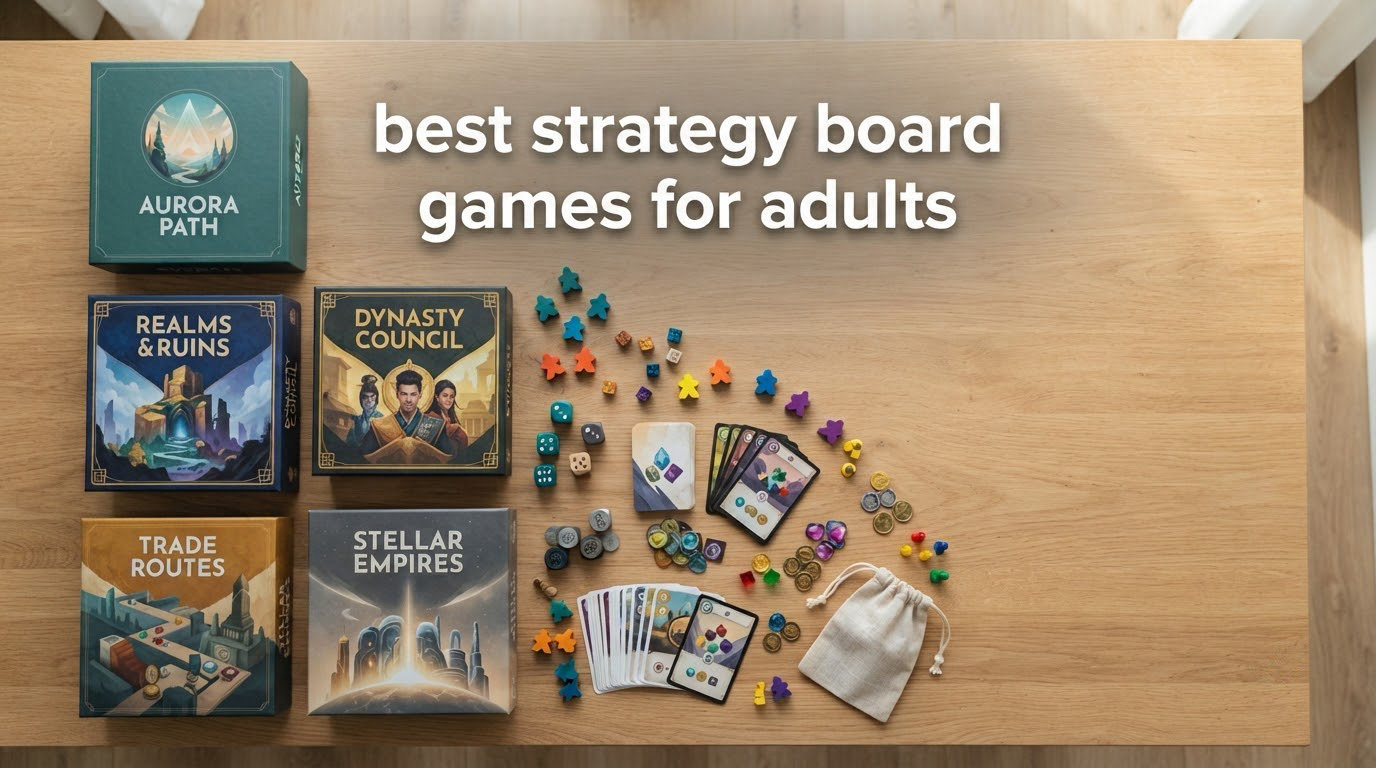
The best strategy board games for adults range from deep economic builders where every network you build is a threat to a rival, to tight abstract duels that finish in half an hour and leave you thinking about them in the car. That span is the whole point: a good strategy game makes the table go quiet while someone plans three moves ahead.
Our team played through this list across dozens of sessions, with groups of two, four and five, and against the automa solo modes that several of these games ship with. We sorted the twelve on five things that actually decide whether a game gets played again: how long the rules take to explain, how long a session runs, how hard the decisions get, how much the players actually interact, and whether a bad draw can sink you. Ratings and review counts come from other buyers’ reports on Amazon, and we treat them as evidence rather than as our own verdict.
Two things we refuse to skip. First, teach time, which is the number one reason a group quietly abandons a game mid-session. A two-hour game with a three-minute teach is a great weeknight pick; a forty-minute game with a forty-minute teach never gets to the table twice. Second, conflict level, because some adults want to trade favours and smile, and others want to watch a friend lose everything. Nobody on the search results pages answers that question, so we do.
Last updated for 2026. No sponsored placements, and if a game is dated or luck-heavy we say so in the same paragraph that praises it.
Table of Contents
Top 3 Picks for the Best Strategy Board Games for Adults in 2026


The runner-up for couples is Azul, and the smoothest entry point for a mixed-skill group is Wingspan. Both sit below the pandemic on pure strategic depth, and both win on how quickly a table gets moving.
All 12 Picks at a Glance in 2026
Every title below, sorted by where it sits on the complexity ladder rather than by what it costs. Weight means how much rules overhead and forward planning the game demands: light games teach in minutes, heavy games expect you to read ahead.
| Product | Specifications | Action |
|---|---|---|
| Pandemic |
|
Check Latest Price |
| Azul |
|
Check Latest Price |
| Wingspan |
|
Check Latest Price |
 Carcassonne Carcassonne |
|
Check Latest Price |
 Risk Risk |
|
Check Latest Price |
 Scythe Scythe |
|
Check Latest Price |
 Terraforming Mars Terraforming Mars |
|
Check Latest Price |
 Ticket to Ride Rails and Sails Ticket to Ride Rails and Sails |
|
Check Latest Price |
 7 Wonders 7 Wonders |
|
Check Latest Price |
 Spirit Island Spirit Island |
|
Check Latest Price |
 Root Root |
|
Check Latest Price |
 Viticulture Essential Edition Viticulture Essential Edition |
|
Check Latest Price |
1. Pandemic – Best Strategy Board Game for Adults Who Play Cooperatively
Pandemic Cooperative Strategy Board Game, 2-4 Players, 45-60 Min
2 to 4 players
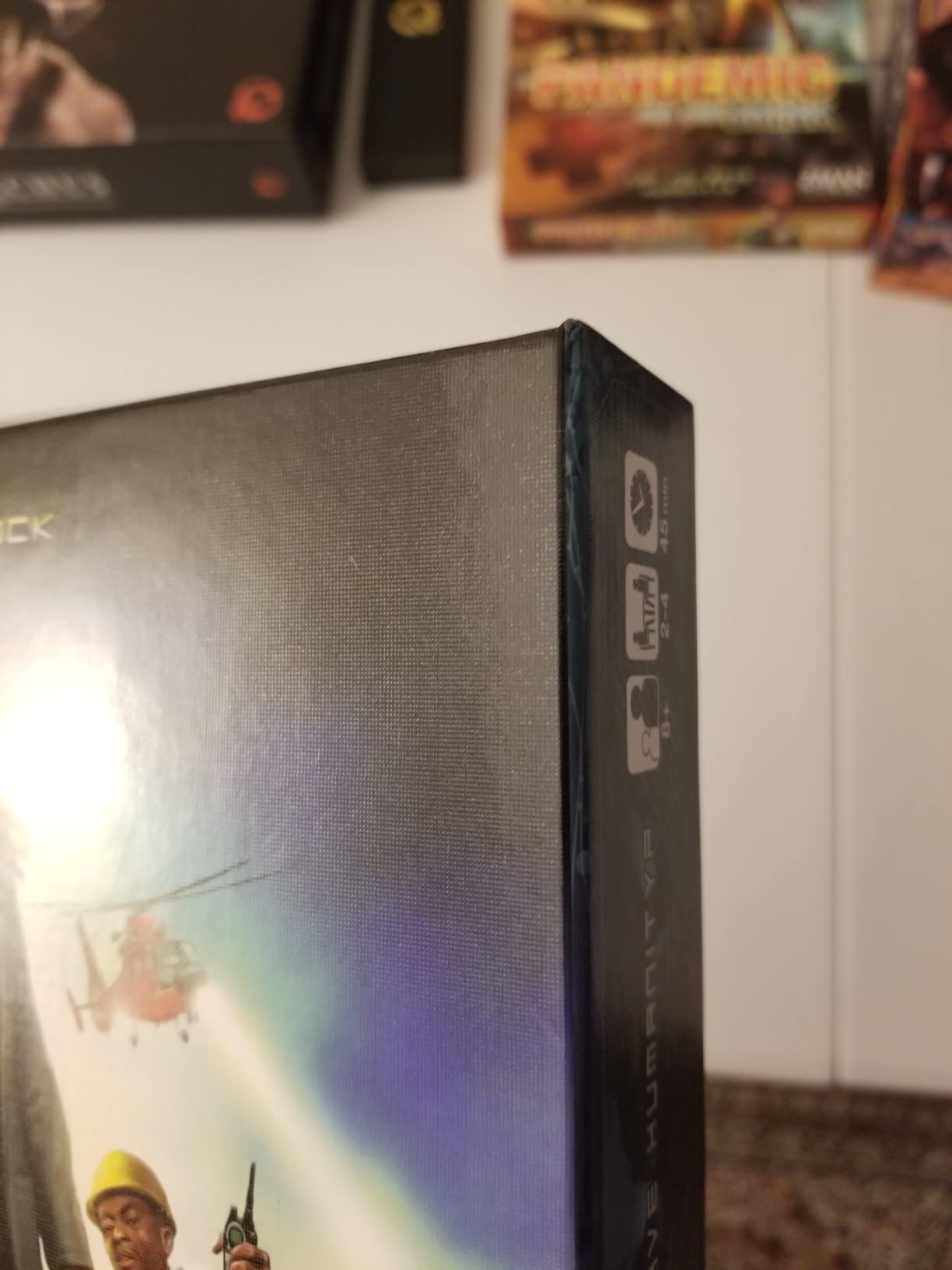
Ages 8 and up
About 45 minutes
Five-plus specialist roles
Pros
- Cooperative
- so the whole table wins or loses together
- Randomised specialist roles make every playthrough different
- Low learning curve with real planning tension
- Scales from two roles at the table down to solo play
Cons
- Setup is fiddly because the decks need careful shuffling
- Small city spaces crowd disease cubes stations and pawns
Pandemic is the game we bring out when we do not know who is in the mood. Nobody is eliminated, nobody is singled out, and the only person who can feel stupid is the person who held back a card the team needed. It plays in about 45 minutes, and 4.8 stars across more than 18k reviews reflects how few people bounce off it.
Each player is dealt a role with one specific job. The Scientist cures in a single action, the Medic can travel far to help, the Operations Expert builds a research station with no city of its own. Those five or six roles mean a full game of Pandemic is not the same game twice, and the deck shuffling does the same job on top of that.
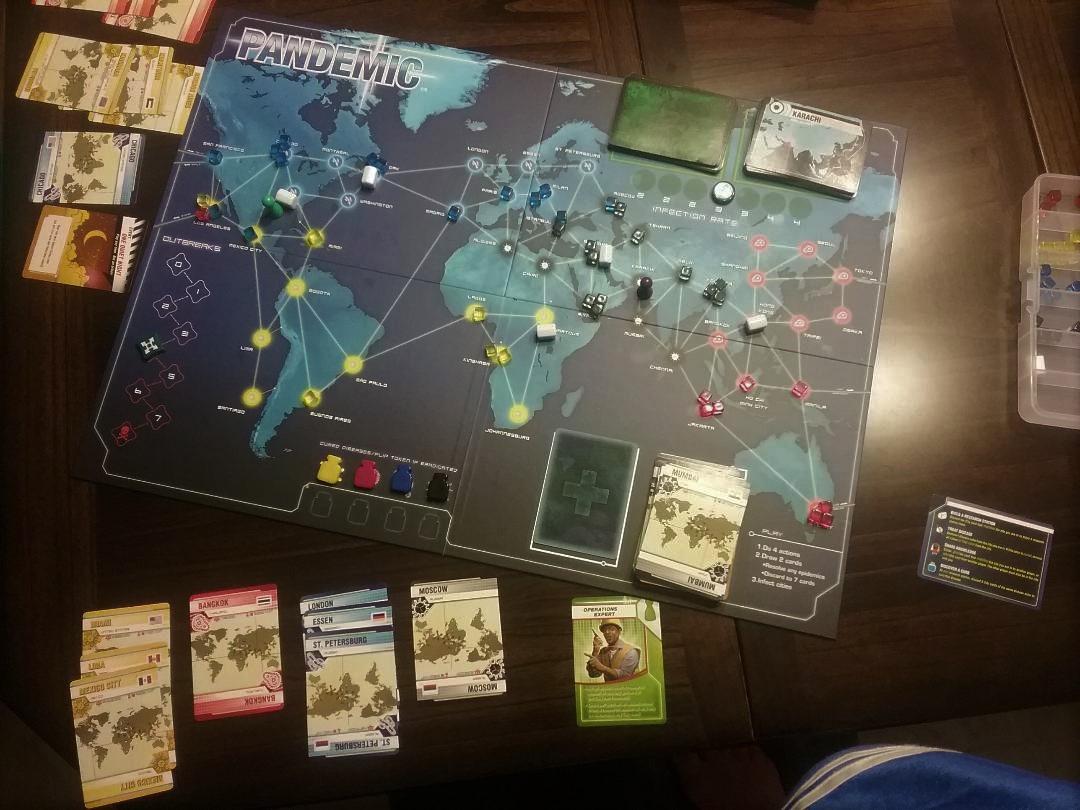
What actually makes it work at the table is that the pacing is constant. There is no long quiet stretch and no explosive finish. You move, you talk, you decide whether to treat now or treat the board that is about to blow, and then the next outbreak card turns up. Roughly 86 percent of ratings are five stars, and the complaints cluster around physical details rather than the design.
The parts we would change are practical. Setting up the two decks properly takes a minute longer than it should, and the city circles are small enough that fitting a pawn, a research station and several disease cubes into the same space is genuinely awkward. Nothing here ruins the game, but it is why the components attract a lot of aftermarket upgrades.
Who Pandemic suits
It suits groups with a wide skill range, because a beginner can contribute a cure or two and still feel useful. It suits families, since the box says ages 8 and up, and it suits the sort of game night where one person was worried about being the weakest player in the room.
It also suits solo players. Running two roles solo works, and the difficulty scales through the number of epidemic cards, so you can pick your own difficulty. If you want a cooperative game that respects you, start here rather than with something heavier.
Who should skip Pandemic
Skip it if you want a game where you personally out-think your friends. Nobody in Pandemic gets to out-think anybody; the opponent is a deck. Also skip it if you have already played it a lot, because once a group knows the map, the challenge falls away fast.
2. Azul – Best Value Tile Drafting Strategy Game for Adults
Azul Mosaic Tile-Placement Strategy Board Game, 2-4 Players, 30-45 Min
2-4 players
Ages 8 and up
30-45 minutes
100 resin tiles
Pros
- 2018 Spiel des Jahres winner with a rare mix of elegance and depth
- Rules are picked up in minutes
- Drafting and denying tiles keeps everyone involved
- Resin tiles give the finished wall real table presence
Cons
- Light interaction compared with heavier euros
- Can turn repetitive once you own a lot of games
- A single placement can swing the final score
Azul is the most direct route into real strategy and it has held that position for years. It won the 2018 Spiel des Jahres, it teaches in about two minutes, and at 4.8 stars over more than 16k reviews it has the kind of volume that tells you the design has survived a lot of tables.
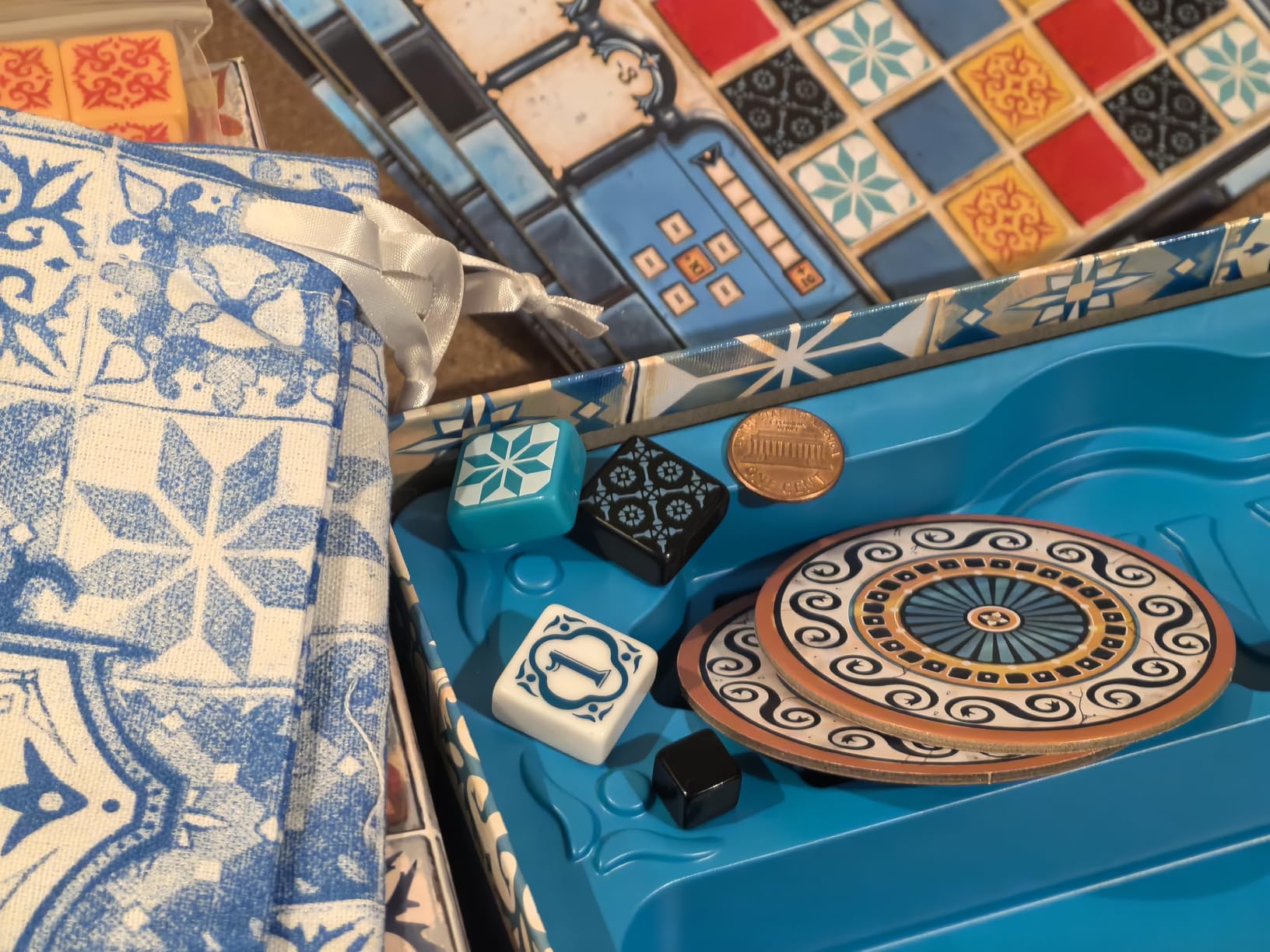
You draft coloured tiles from shared factory displays, and taking a tile can leave a colour you did not want sitting in the middle. Placing them into your wall means matching patterns by row and by colour. The whole design is one idea repeated with escalating pressure, which is why the rules fit on one page and the decisions still matter on turn fourteen.
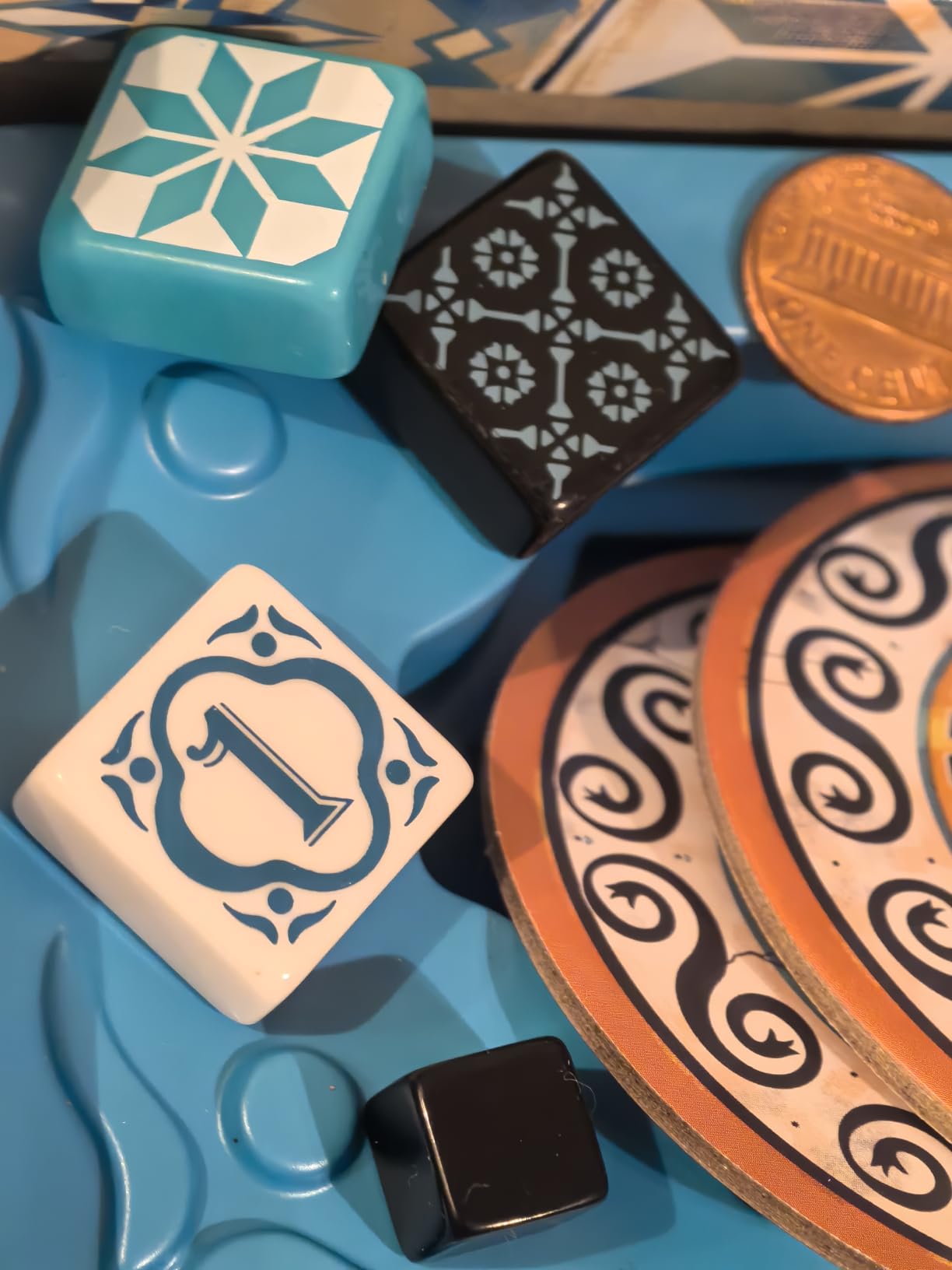
At two players it is a proper duel, because every draft takes something from your opponent. At four it loosens up and becomes more of a race. The tiles are resin rather than cardboard, and once the walls are finished they genuinely look like something you would leave on a shelf, which matters more than reviewers of pure strategy games usually admit.
The honest weakness is how little the players touch. Azul is drafting denial rather than direct conflict, so nobody can attack you and nobody gets betrayed. Groups who own fifteen games sometimes report that it starts to feel repetitive, because the core decision never changes shape.
Who Azul suits
It suits couples, because it is a clean duel with no downtime and a clean end. It suits mixed groups with children and adults since the box says ages 8 and up, and it suits anyone who wants strategy without a single page of dense rules text.
It also works as a bridge title. Play Azul twice, then try Wingspan, and the jump in complexity feels small rather than terrifying.
Who should skip Azul
Skip it if you want real interaction. Nobody in Azul can block your scoring track or knock out your plan, and players who enjoy that kind of friction tend to drift to heavier euros within a few sessions. If your group already owns several drafting games, this is a duplicate rather than an upgrade.
3. Wingspan – Best Strategy Board Game for Beginners Moving Up
Stonemaier Games: Wingspan by Elizabeth Hargrave
1-5 players
Adult and older
60-90 minutes
170 bird cards
Pros
- Components and bird art are repeatedly called the best in the hobby
- Card abilities are tied to real bird behaviour
- The birdfeeder dice tower is a ritual players look forward to
- Relaxing pace suits couples and families
- Automa solo mode included
Cons
- Many moving parts make the first read-through feel complicated
- Strategies only click after a full first game
- Less decisive than heavier competitive games
Wingspan is the step-up game we hand to people who have finished Catan and Ticket to Ride and want something that rewards planning. It won the 2019 Kennerspiel des Jahres, and Elizabeth Hargrave built the card abilities around real bird behaviour, so the theme and the mechanics push in the same direction instead of fighting each other.
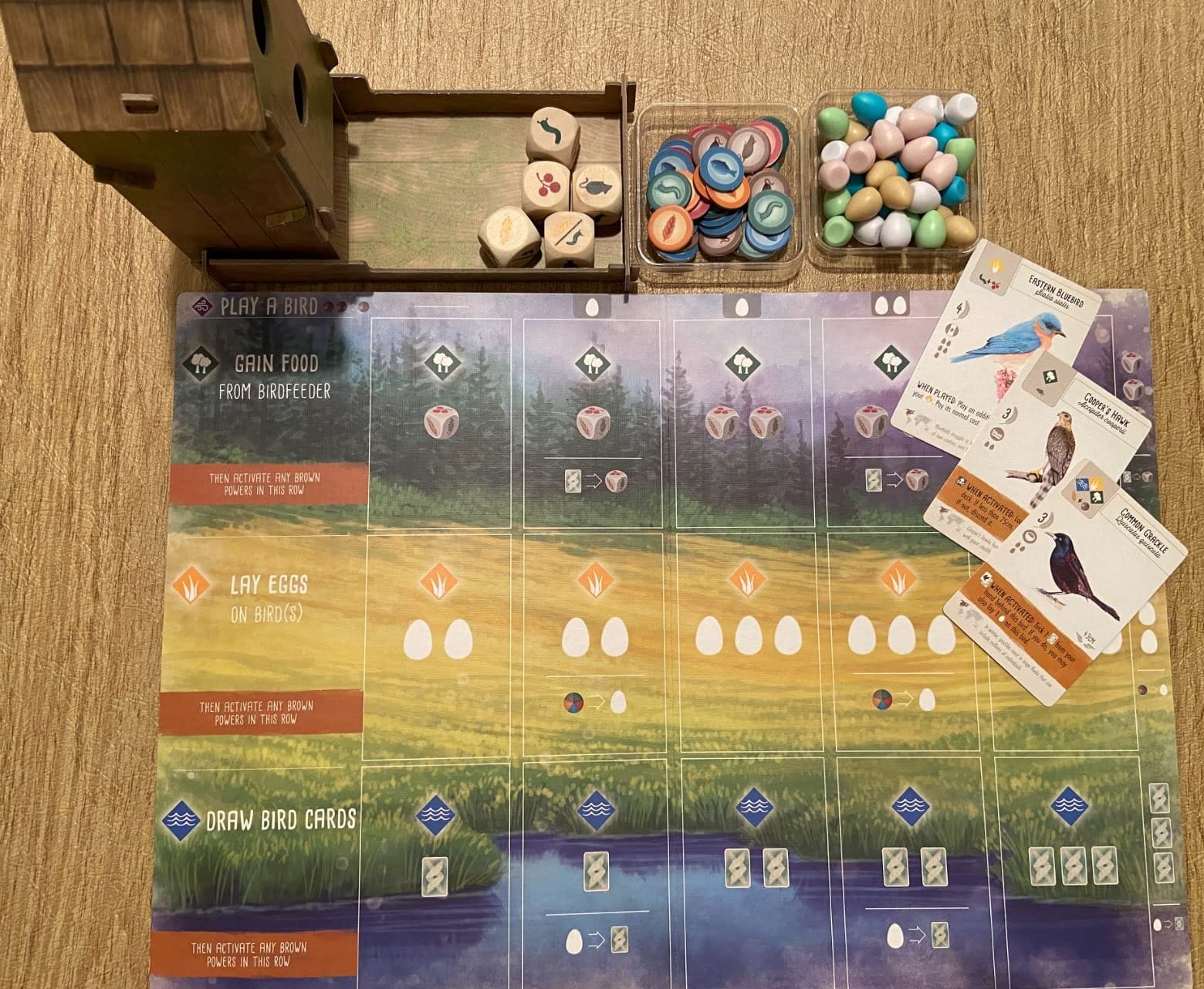
You build a wildlife preserve by buying birds, laying eggs, and feeding them from a dice tower. The feed dice are the hook: you gain food by rolling, so every turn starts with a small problem to solve before the real decisions begin. Over 170 bird cards means the combinations change constantly.
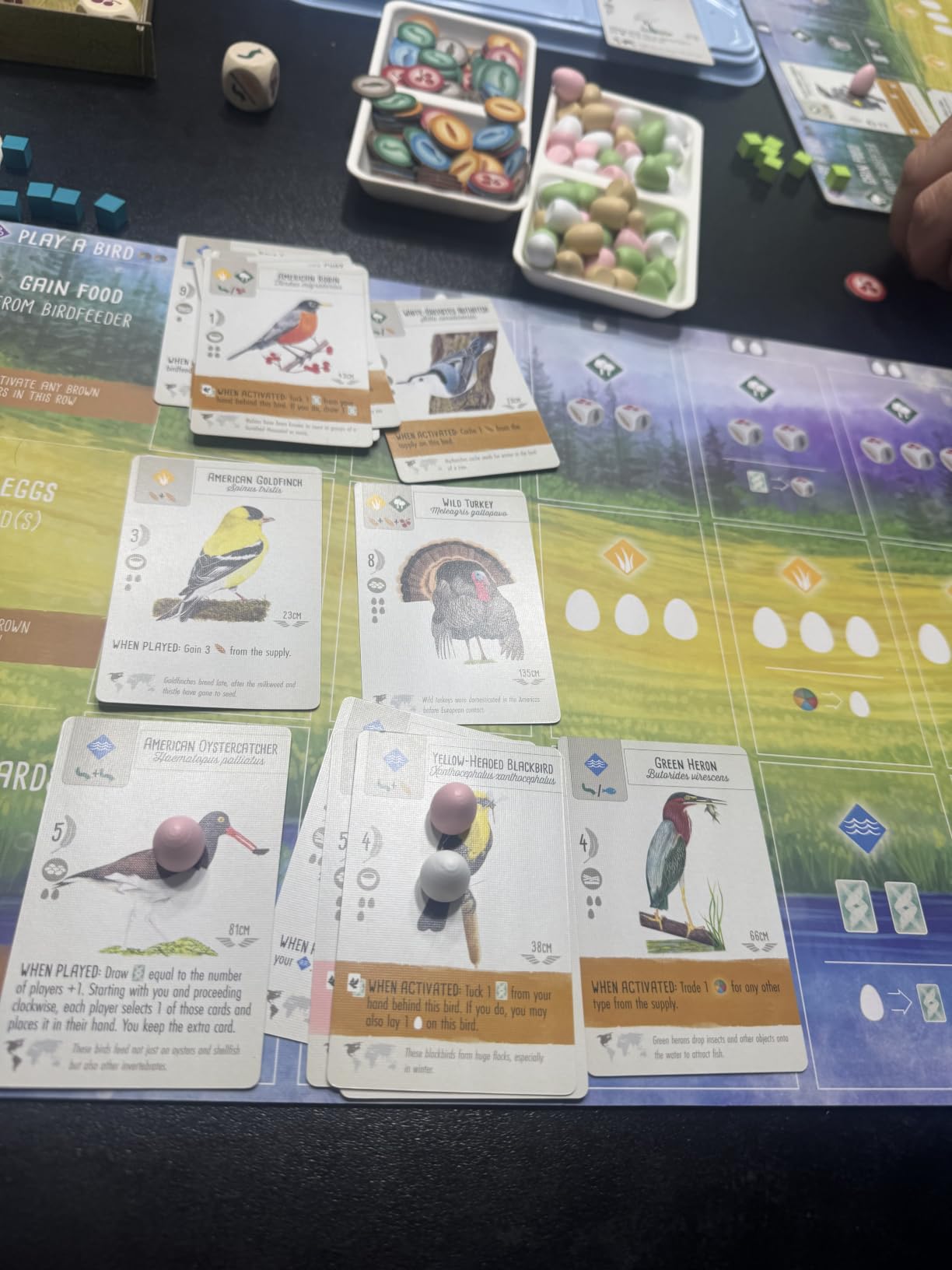
The production is the other half of the appeal. Wooden dice, a laser-cut birdfeeder tower, layered bird cards with real habitat art, and a 170-card deck that rewards browsing. Reviews repeatedly single this out, and one buyer even reports that Stonemaier replaced a missing wooden die at no charge, which tells you something about the support behind the product.
What trips people up is the first read-through, not the difficulty. Players open the rulebook, see several icon families and a bonus card with power text, and assume they have bought a heavy euro. Almost all of them are playing well within an hour, because the game is simpler than it is printed.
Who Wingspan suits
It suits mixed groups, because the pace is relaxed enough that a quiet player is never punished for thinking. It suits couples, and it suits players who mostly want an attractive object on the table as much as a tight decision. Solo players get a competent automa rather than an afterthought.
It also works as a teaching tool for the genre. The round structure makes it easy to explain in fifteen minutes, which means you can add Wingspan to a night with a new player and still have time for something else.
Who should skip Wingspan
Skip it if you want a game where a bad decision visibly wrecks your opponent. Wingspan has very little direct conflict, and the review consensus is that it feels less decisive than heavy euros. Players who like being attacked will find it too polite, and players who hate a rulebook with a dozen symbols should look at Azul first.
4. Carcassonne – Best Strategy Board Game for Adults Playing With Families
Carcassonne Tile Placement Strategy Board Game, 2-5 Players, 35 Min
2-5 players
Ages 7 and up
About 35 minutes
Tile placement
Pros
- Teaches almost instantly
- Random tile draws make each landscape different
- Wooden meeples and clear tile art
- Plays as a tense duel at two players
- The Abbot and The River mini expansions are in the box
Cons
- Meeple scoring rules overwhelm newcomers at first
- Pre-cut cardboard can tear when separated
- The farmer rule confuses new and younger players
Carcassonne is the oldest design in this roundup and still the fastest way to fill an evening. Draw a landscape tile, drop it on the board, place a meeple on a feature, score the biggest one you own. The rules are almost one paragraph long, and a session runs about 35 minutes.
What keeps it interesting is the interaction. Every tile you play reshapes the map for everyone, so a large completed city can be claimed by the player who got there first or shut down by the player who splits it. It is area control compressed into something a seven-year-old can grasp, which is why the box says ages 7 and up.
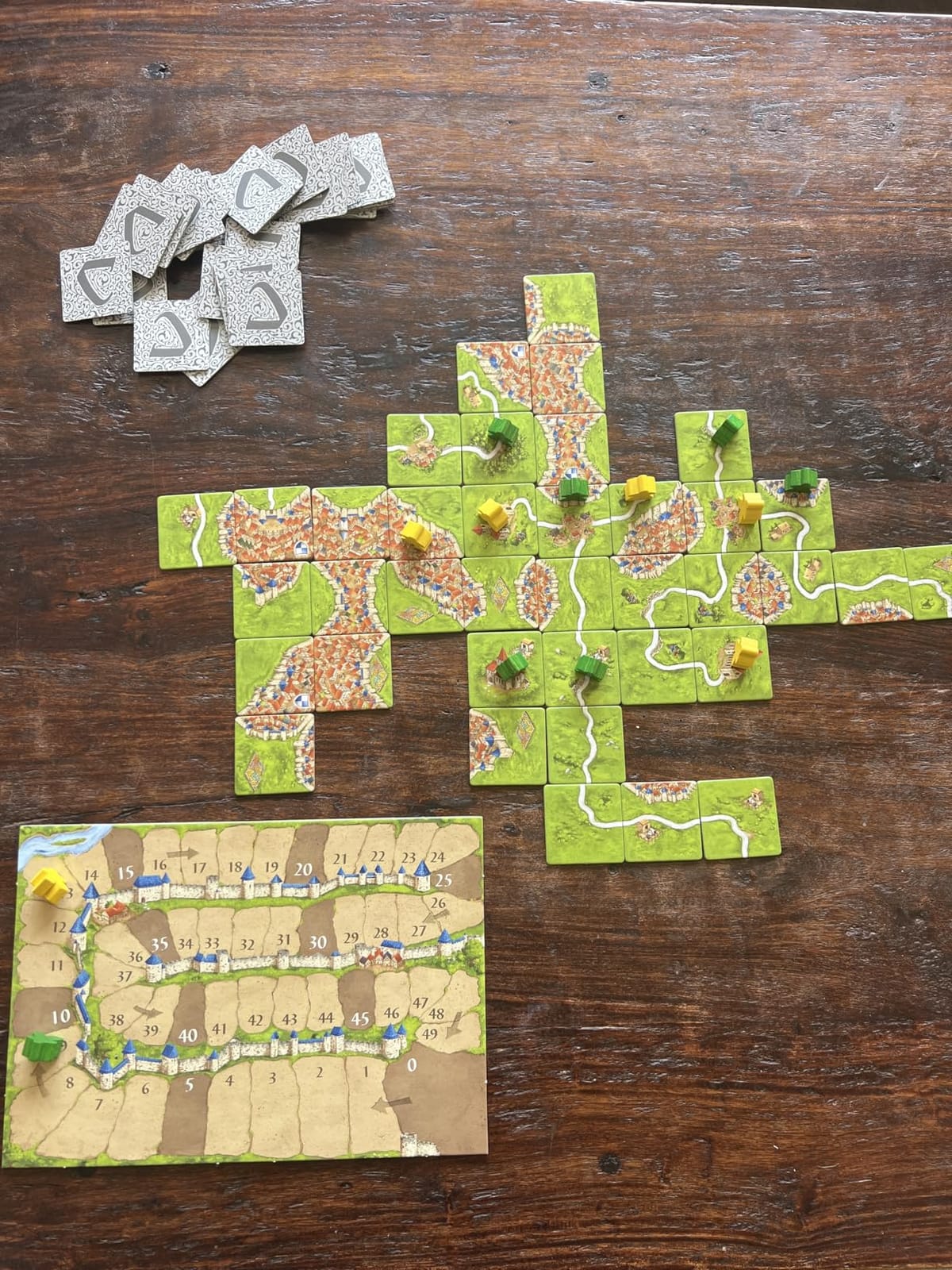
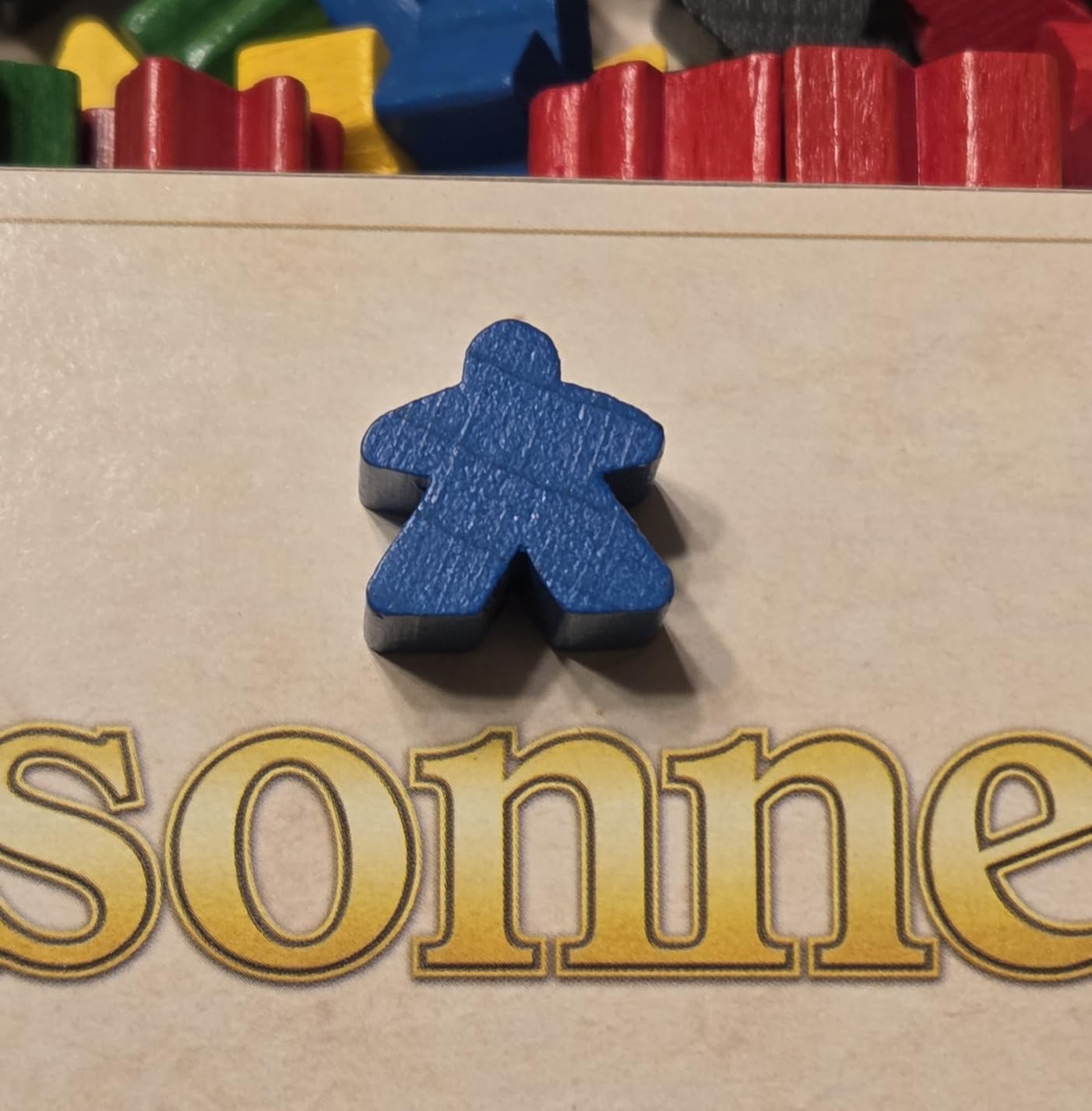
The edition here is the classic one and it already includes two mini expansions, The Abbot and The River, so you are not starting from a bare base game. The wooden meeples are the component people notice; the tile art is clear enough that a child can score a feature without help.
Our practical advice from repeated plays: skip the farmer rule and both mini expansions for the first game. Reviewers reach the same conclusion. Once the group is comfortable, the scoring rules are the part that actually creates the tension, and holding those back on the first evening keeps the table moving.
Who Carcassonne suits
It suits family game nights, with a stated age floor of 7, and it suits adults who want a 35-minute session rather than a commitment. Five players is the ceiling and the design absorbs the extra players without a rule change, which makes it a safe pick for an unpredictable guest list.
It also suits anyone who wants the genre’s history in one box. Almost every modern area control game is a descendant of putting a tile next to someone else’s tile.
Who should skip Carcassonne
Skip it if your group wants depth rather than accessibility, because the strategy tops out earlier than the playtime suggests. The flipside of teaching in minutes is that there is less to discover across the twentieth play than there is in a heavier euro. If your group already knows it, the design will feel thin by comparison.
5. Risk – Best Strategy Board Game for Adults With a Big Table and a Long Evening
Risk Board Game, Strategy Games for 2-5 Players, Strategy Board Games for Teens, Adults, and Family, War Games, Ages 10 and Up
2-5 players
Ages 10 and up
About 120 minutes
Area control and dice combat
Pros
- Most players already know the rules
- so teaching is quick
- Tense dice-driven area control produces constant negotiation
- Complete component set in the box
- Works for mixed groups of teens and adults
Cons
- Around two hours can outlast attention spans
- Combat is luck-heavy and frustrates skill-focused players
- Alliances and arguments put some groups off
Risk is the only game in this list most people can buy without anyone reading the rules, and that is exactly why it survives. Everyone knows the shape of it, which means you can start playing in minutes and spend the rest of the evening on the part people actually enjoy, which is negotiating who attacks whom.
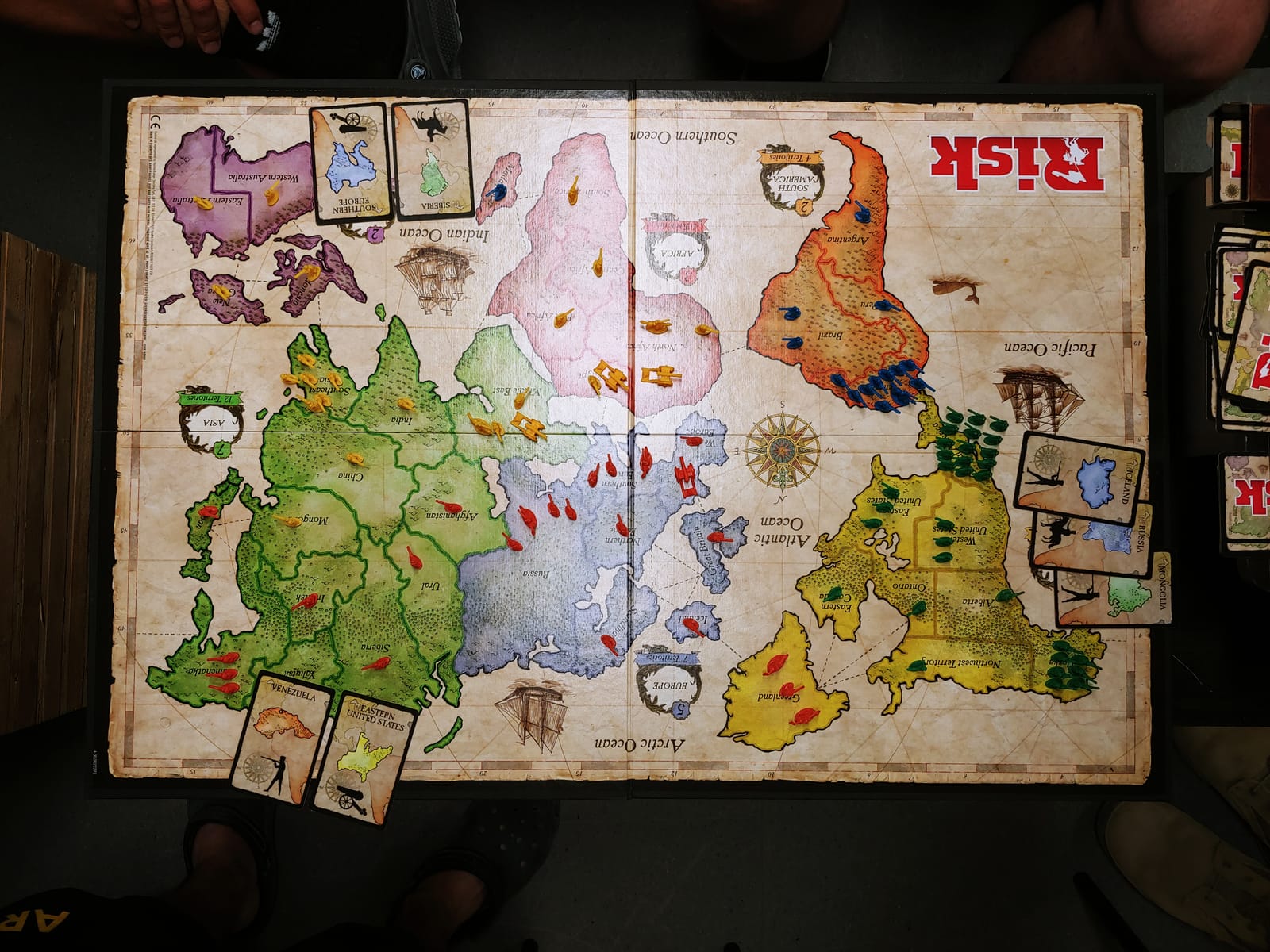
The set here includes five complete armies of 40 infantry, 12 cavalry and 8 artillery each, a 56-card deck, five dice and cardboard war crates. That sounds like a lot until you spread it out; the components are plastic and cardboard, and the weight is about a kilogram, so it is not a fragile object.
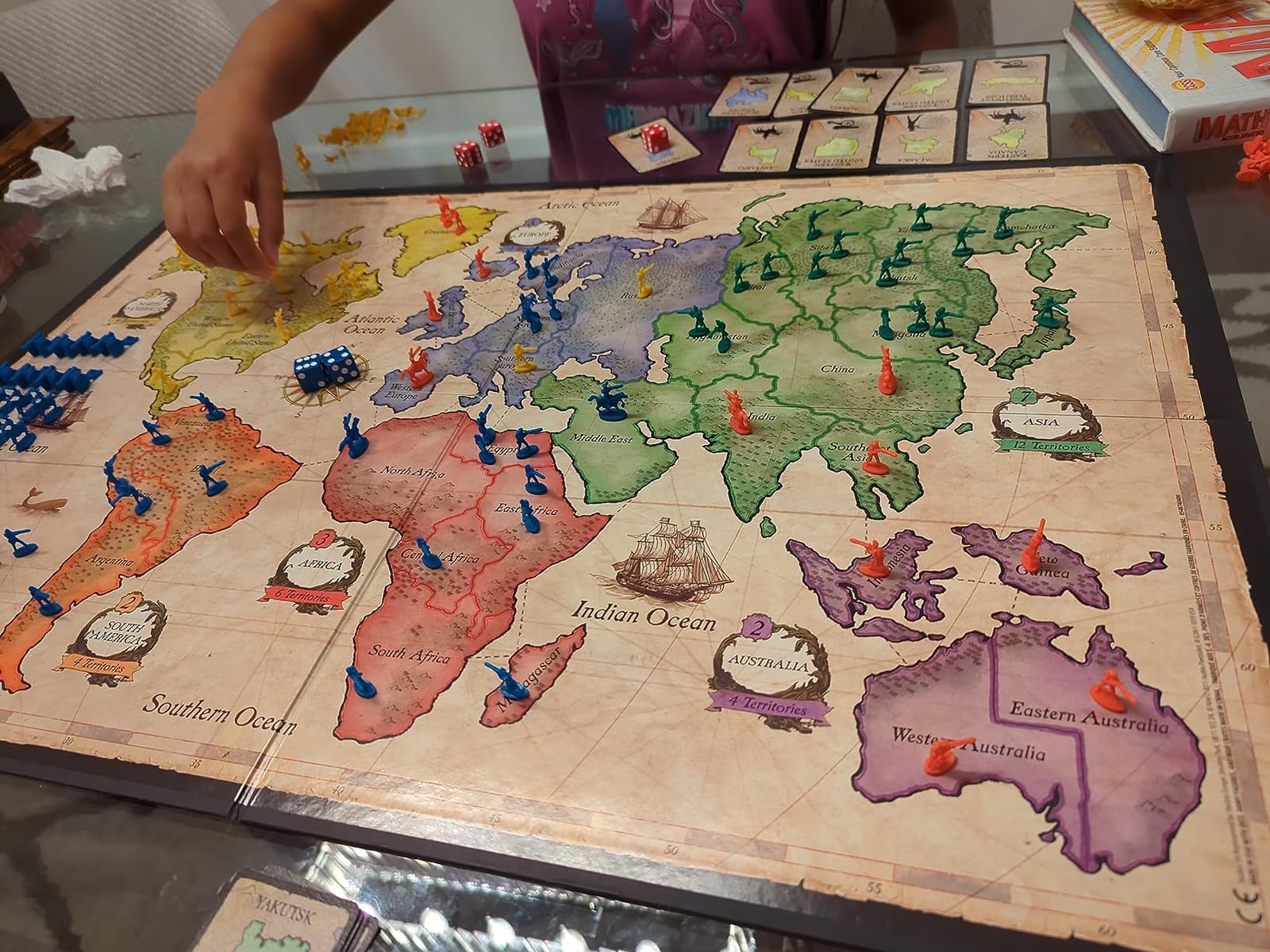
What it does well is fill a room. Five players keeps everyone involved in a way that most strategy games cannot, and the map keeps producing reasons to talk. Reviewers rate the conversation and the tension more than the balance, and the optional Alexa skill adds an electronic layer for groups who want it.
What it does badly is reward planning. Combat is decided by dice, so a player who built the perfect position can be rolled over, and that is the single most common complaint in the reviews. The included dragon token variation exists precisely because the base game needs something to break a run of good luck.
Who Risk suits
It suits five-person game nights, families with teenagers, and anyone who wants an event rather than a puzzle. The stated age floor is 10 and the two-hour runtime means you should start after dinner, not during it.
It also suits groups that do not want a rules lesson. That is the real value here, and it is a value none of the modern euros in this list can offer.
Who should skip Risk
Skip it if you are a planner. At 4.7 stars it sits at the bottom of this list’s ratings, and the drop from 4.8 reflects real friction: the game is not cruel, it is arbitrary. Groups that hate negotiation or that have a history of arguments over hidden objectives should pick something with less room for a grudge.
6. Scythe – Best Strategy Board Game for Adults Who Want Theme and Presentation
Stonemaier Games: Scythe – A Strategy Board Game by Jamey Stegmaier
1-5 players
Ages 14 and up
About 115 minutes
Five factions
Pros
- Outstanding 1920s artwork and production quality
- Skill matters far more than luck since there are no dice
- Streamlined turns keep downtime low even at five players
- Five factions and player boards for high replay value
- Automa solo mode is genuinely challenging
Cons
- Steep learning curve that can take hours of reading
- The board looks busier than it plays
- Not ideal for large groups who will not read the rulebook
Scythe is the one that surprises people. It has twenty mech miniatures and character figures, and you would expect a war game; instead it plays like an economic euro with occasional skirmishes. Combat is rare, resolved with power dials and cards rather than dice, and almost the entire game is resource conversion and popularity management.
The structure is a worker-placement grid with a power gauge on the side. You build structures, which produce resources, which you spend on more structures, which raise your power, which is how you win. Four factions give four different experiences on the same board, and Jamey Stegmaier’s alternate-history 1920s Eastern Europe setting gives every faction a distinct identity.

Downtime is the quietly brilliant part. The action-selection system has no rounds or phases, so at five players the table keeps moving. Combined with almost no randomness, that makes it a rare heavy-feeling game that works at a full table, and it holds 4.8 stars across more than 5k reviews.
Component quality is genuinely top tier: miniatures, wooden tokens, layered player boards, and a faction board for each power. At roughly 7.3 pounds it is also the heaviest box here, so check your shelf before you commit.

Who Scythe suits
It suits players who want weight and presentation in the same purchase, and solo players, because the automa is widely praised as intuitive and hard. It also suits four-player groups that hate downtime, which is a real problem in this genre and one Scythe solves through its turn structure rather than through a rule.
Experience helps a lot here. If you have played a heavy euro before, the first session is about following the flow; if you have not, budget an evening for learning rather than playing.
Who should skip Scythe
Skip it for casual groups and for anyone under 14 in the room. The density is the point, and a group of five where two people refuse to read the rulebook will have a poor evening. It is also a commitment: at 115 minutes plus setup and teaching, it is a weekend game, not a weeknight one.
7. Terraforming Mars – Best Strategy Board Game for Adults Who Want Huge Replay Value
Terraforming Mars by Stronghold Games, Strategy Board Game
1-5 players
Ages 14 and up
About 120 minutes
Card-driven engine building
Pros
- Deep card-driven engine building with dozens of corporation options
- Milestones and awards keep scoring tight all game
- Very high replay value across corporations and card combinations
- Shared goal of raising temperature oxygen and oceans
Cons
- Around two hours plus setup
- Heavy card draw adds real luck
- Dense rules and many symbols slow early games
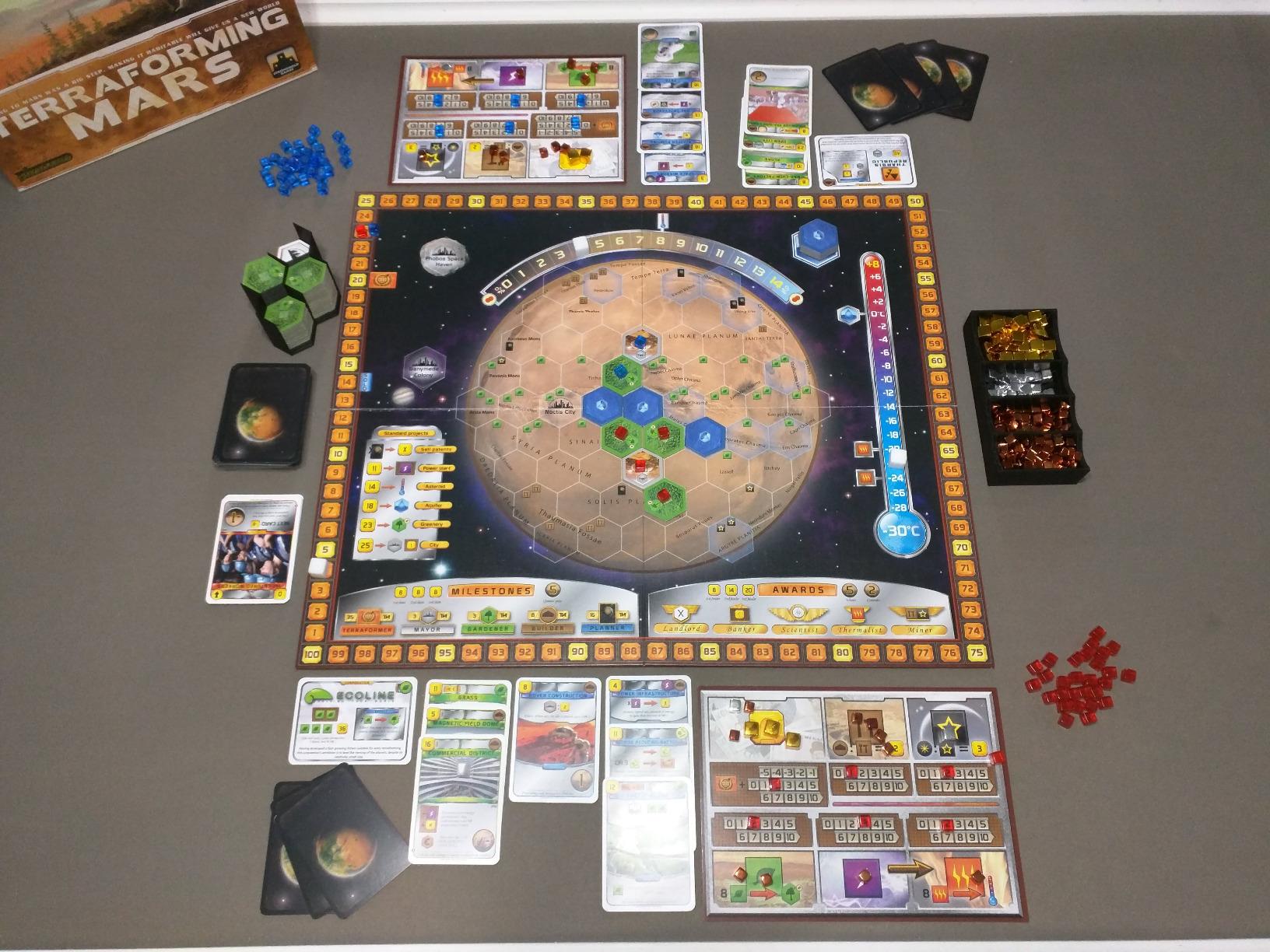
Terraforming Mars is the game our group has played most often over the longest period, and that is the strongest argument for it. Every corporation gives you a completely different first ten turns, and the deck rebuilds its market every round, so a game you have played before still surprises you.
The structure is card-driven engine building. You buy projects, pay for them in resources, and the projects generate more resources, so a good opening cascades. Milestones and awards sit on the board and pay out for collective goals, which is the mechanism that stops anyone running away with the game.
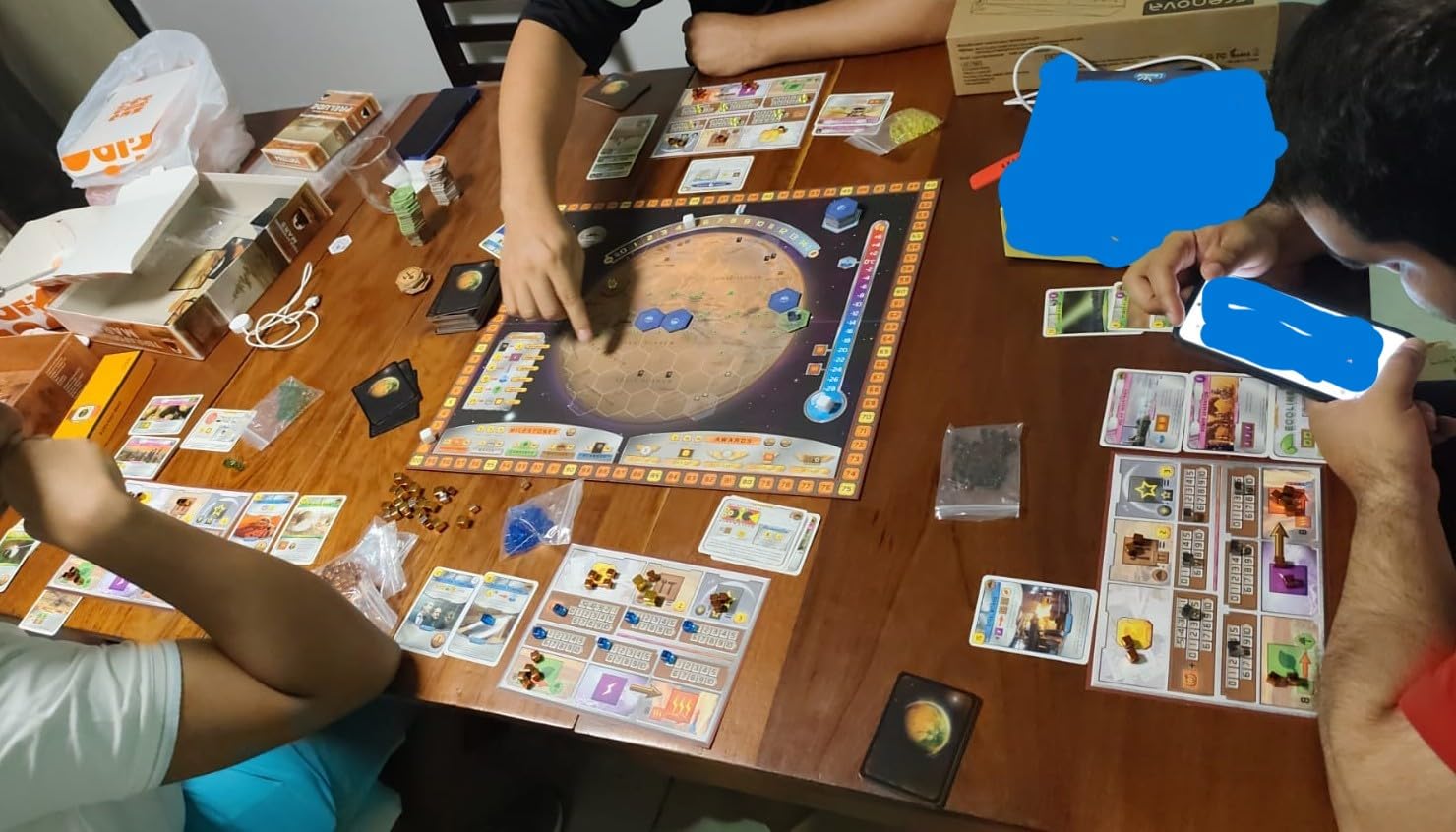
It is listed for 1 to 5 players and works in every configuration, which makes it the safest large-group heavy pick we know. The 4.8 rating across 4554 reviews is not the highest here, and the reason is the runtime and the luck: reviewers repeatedly describe a two-hour session that is pushed further by a bad card draw.
One practical warning. The base components are famously flat cardboard, and a lot of players buy an upgrade tray to store the player boards and cards. It is a cheap upgrade and it changes how the game feels to set up, because the default storage solution is genuinely poor.
Who Terraforming Mars suits
It suits patients. A two-hour game with a dense rulebook is only fun if your group enjoys the middle. It also suits anyone building a collection, because the replay value means it does not go stale the way a fixed-scenario game does after ten plays.
It suits groups who want planning to matter more than speed. Almost every decision is a bet about where the market will go in three rounds, which is the definition of strategic thinking in tabletop form.
Who should skip Terraforming Mars
Skip it for a casual adult game night. This is the pick most likely to stall, because mid-weight strategy games encourage over-optimising rather than playing. Groups that want under an hour, or that include players who dislike card luck, will have a worse time here than with Wingspan or Azul.
8. Ticket to Ride: Rails and Sails – Best Route Building Strategy Game for Families
Asmodee Ticket to Ride Rails & Sails Board Game – Train Route-Building Strategy Game, Family Fun for Kids & Adults, Ages 10+, 2-5 Players, 90-120 Minute Playtime
2-5 players
Ages 10 and up
90-120 minutes
Double-sided board
Pros
- 4.9 average with 92 percent five-star ratings
- Double-sided world and Great Lakes boards add real replay value
- Quick to learn while keeping route-building tension
- Generous components including 250 sea-route pieces and 165 train cars
- Works well for mixed-age groups
Cons
- Longer sessions than the standard Ticket to Ride entries
- Sea-route and harbor rules add complexity relative to the base game
This one holds a 4.9 average, and the reason is consistency rather than excitement. Ticket to Ride: Rails and Sails is a card-drafting route builder that plays the same way every time while the board underneath changes.
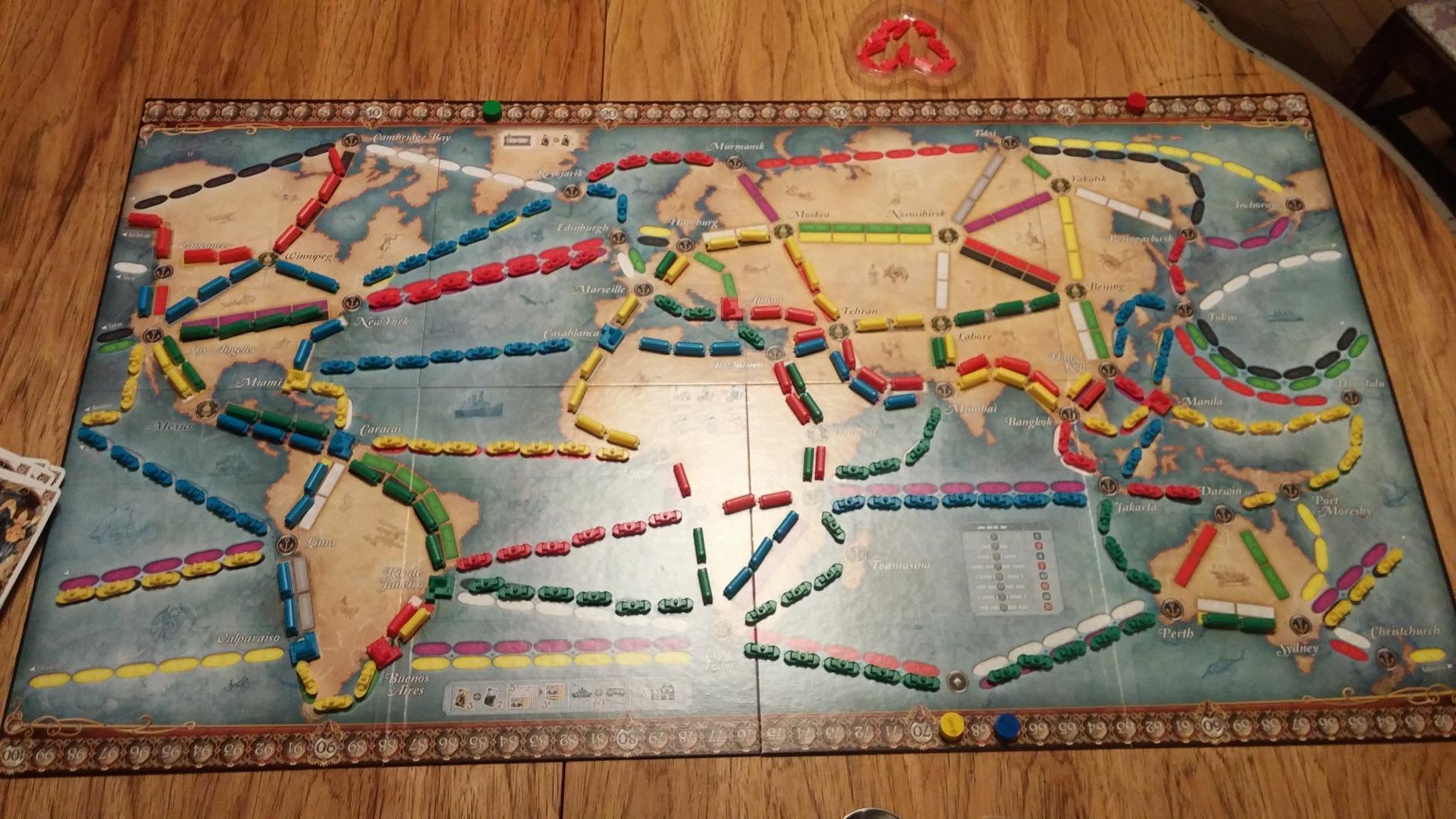
You collect train and ship cards, then claim railway and sea routes to connect your cities and claim destination tickets. Rails and Sails adds a second resource type, harbours, and a second board: one side is the world map, the other is the Great Lakes of North America. That is a genuine replay boost rather than a reskin, because the two boards produce different bottlenecks.

Components are generous. 250 coloured ship pieces, 165 train cars, 140 transport cards, 120 destination tickets, 15 harbours, and two scoring marker sets, all in the box. At 2 kilograms it is the heavy one on the shelf, but nothing in it breaks.
The trade-off is length. At 90 to 120 minutes it is longer than the base series, and the harbour rule adds a step that casual players need explained. Reviewers who loved the base game report the same thing: same elegance, more to remember.
Who Ticket to Ride: Rails and Sails suits
It suits families and mixed-age groups, with a stated age floor of 10. It suits people who want an easy teach and a real game, because the rules are simple and the strategic decisions arrive within two turns. Newcomers usually understand the whole system during their first trip.
It suits casual competition. There is no elimination, no direct attack, and the outcome is decided by tickets you claimed and routes you built, so nobody gets knocked out of the game and nobody stops playing.
Who should skip Ticket to Ride: Rails and Sails
Skip it if your group wants to be attacked. Nothing here hurts anyone directly, and players who thrive on conflict will find it flat. It is also the wrong choice if your evening is 60 minutes, because even a fast group runs over an hour with the two board types.
9. 7 Wonders – Best Strategy Board Game for Groups of Six or More
Asmodee 7 Wonders Board Game (New Edition) – Lead Your Civilization to Prosperity, Strategy Game for Kids and Adults, Ages 10+, 3-7 Players, 30 Minute Playtime
3-7 players
Ages 10 and up
About 30 minutes
Card drafting
Pros
- Fits one evening with minimal setup
- Simultaneous drafting means almost no downtime
- Scales from 3 to 7 players without rule changes
- Military conflict is resolved by simple neighbour comparison
Cons
- Needs at least 3 players so it does not work for couples
- Very little direct interaction compared with heavier card games
Seven players is the number that makes this list worth reading. Almost every strategy game falls apart above four, and 7 Wonders is designed around the problem: everyone drafts simultaneously, so nobody watches three other people think for four minutes. The whole game fits in about 30 minutes and scores reliably regardless of how many players are sitting there.
You lead one of the seven wonders of the ancient world, drafting cards over three ages to build a civilisation. The turn structure is the innovation: pass two cards, place one, score, repeat. You can see your neighbours’ progress, which drives a lot of the targeting, and military strength is compared with a neighbour rather than simulated, so there is no combat bookkeeping.
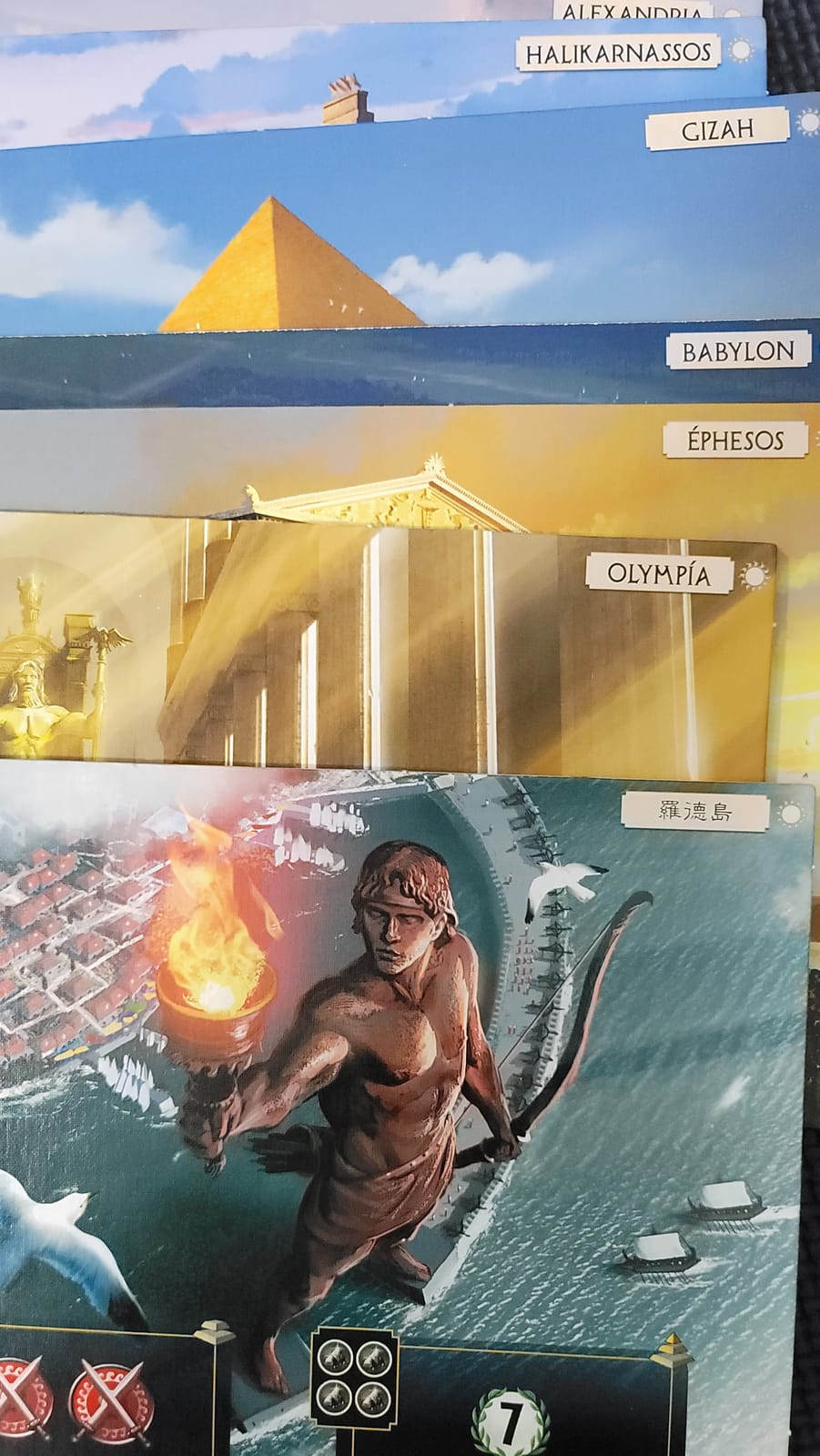
At seven the draft is thinner per player but the tension is higher, because every card you take is one a neighbour needs. The box includes 148 age cards, 78 coins, 48 conflict tokens and seven player boards, and expansions named Cities, Leaders and Armada add a great deal for a group that plays it repeatedly.
What it will not do is produce stories. There is very little direct contact between players, and the interaction is entirely through cards and neighbour comparisons. Groups that want to negotiate, bluff or attack should not expect that here.

Who 7 Wonders suits
It suits big groups, which is its defining strength and the group size most roundups ignore. It suits holiday gatherings, family reunions, and any table where the number of players is unknown until the day. It suits players who want strategy in under an hour.
It also suits anyone who wants a low-downtime default. If you host people often and one of them always ends up staring at their phone, this is the game that fixes it.
Who should skip 7 Wonders
Skip it for couples, because the minimum is 3 players and it simply will not start at two. Skip it for players who want to interact with opponents directly, and skip it if you dislike a light card-drawing element, since the three cards you are given sometimes hand you nothing useful.
10. Spirit Island – Best Cooperative Strategy Board Game for Adults
Greater Than Games Spirit Island – Cooperative Strategy Board Game
1-4 players
Ages 14 and up
90-120 minutes
Eight spirits
Pros
- Deep cooperative planning that rewards several sessions
- Eight spirits with very different powers
- Dedicated solo rules as well as co-op for up to 4
- Multiplayer lets players work semi-independently on their own boards
- Strategy can outplay bad card draws
Cons
- Not suitable for beginners or players who prefer simple games
- Considerable rules complexity with frequent mistakes
- Long play time of 90-120 minutes
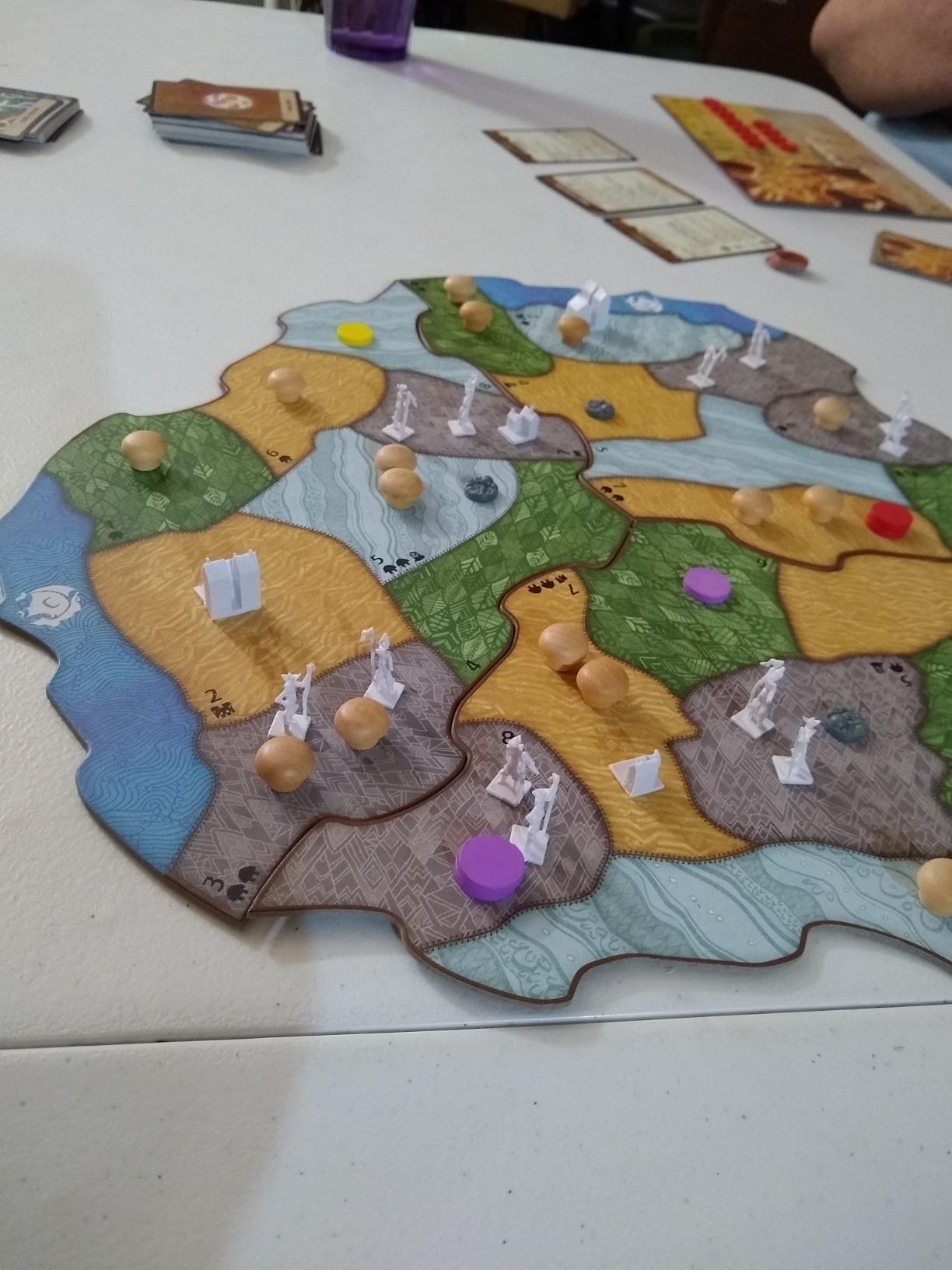
Spirit Island is the deepest cooperative game in this list and the one we recommend most often for solo play. You play a Spirit defending an island from colonising invaders, and the fiction is written from the perspective of the people doing the colonising, which is unusual and deliberate.
Each of the eight spirits has a completely different playstyle, from a defensive builder to a power that transforms how land works. Optional adversaries and difficulty levels let you scale the challenge, and expansions named Branch and Claw, Jagged Earth and Horizons add new spirits, adversaries and events.
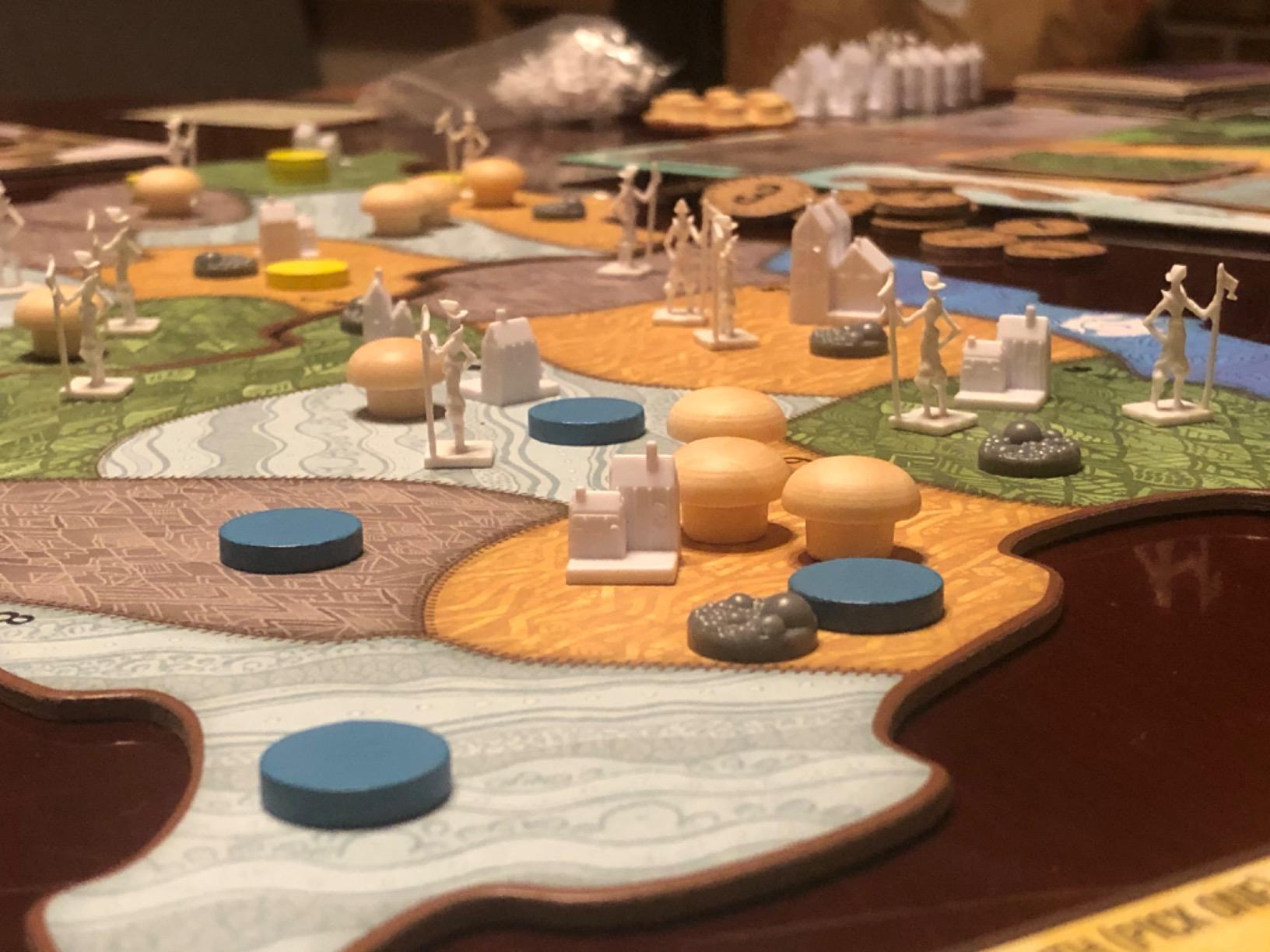
In multiplayer you work semi-independently on your own spirit board while still supporting each other, which solves the co-op problem of one player carrying the group. Reviewers also note that a bad card draw can be mitigated by better play, which is the rarest and most satisfying property in a co-op game of this weight.
The dominant complaint is rules complexity. Even experienced players make rule mistakes, and the first two or three games feel overwhelming. Anyone buying this should plan to lose once before forming an opinion.
Who Spirit Island suits
It suits experienced strategists who have already finished the light and medium tier. It suits solo players specifically, because the dedicated single-player rules are a first-class mode rather than an afterthought. It suits groups who like discussing plans out loud for an hour and a half.
It also suits players who have bounced off cooperative games. Because each player runs their own board, there is far less of the one-person-drives-the-whole-team dynamic that ends co-op sessions early.
Who should skip Spirit Island
Skip it if anyone at the table is new to the hobby, or if the evening has to end inside 90 minutes. At 90 to 120 minutes plus teaching, it is a planned event rather than a casual one. If your group wants a cooperative game that is easy to teach, this is the opposite of what you need.
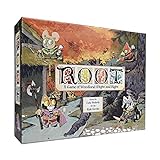
11. Root – Best Asymmetric Strategy Board Game for Adults
Root: A Game of Woodland Might and Right | Asymmetric Strategy Board Game by Leder Games | 2–4 Players | Ages 14+ | Adventure, Conflict & Area Control
2-4 players
Ages 14 and up
About 90 minutes
Four factions
Pros
- Superb artwork and print quality
- Each faction plays a genuinely different game
- Excellent replayability once players can swap roles
- Well balanced across factions
- Deceptively cute components hide a brutal game
Cons
- Roughly 3.8 out of 5 complexity on BoardGameGeek
- Four separate rules sections make the first game confusing
- Weak with only 2 players without a hirelings pack
Root is the only true asymmetric game here, and it is the one people describe as the most intense thing on their shelf. The Marquise de Cat, the Eyrie Dynasty, the Woodland Alliance and the Vagabond do not share a ruleset, do not share a win condition, and do not even use the board in the same way. Everyone is playing a different game in the same box.
It is also mechanically elegant. Each faction manipulates the deck and the board in its own way, and a turn is a single action, so the game moves fast once the tables learn. Once that happens, a match can be decided in 60 to 90 minutes despite the long teach.
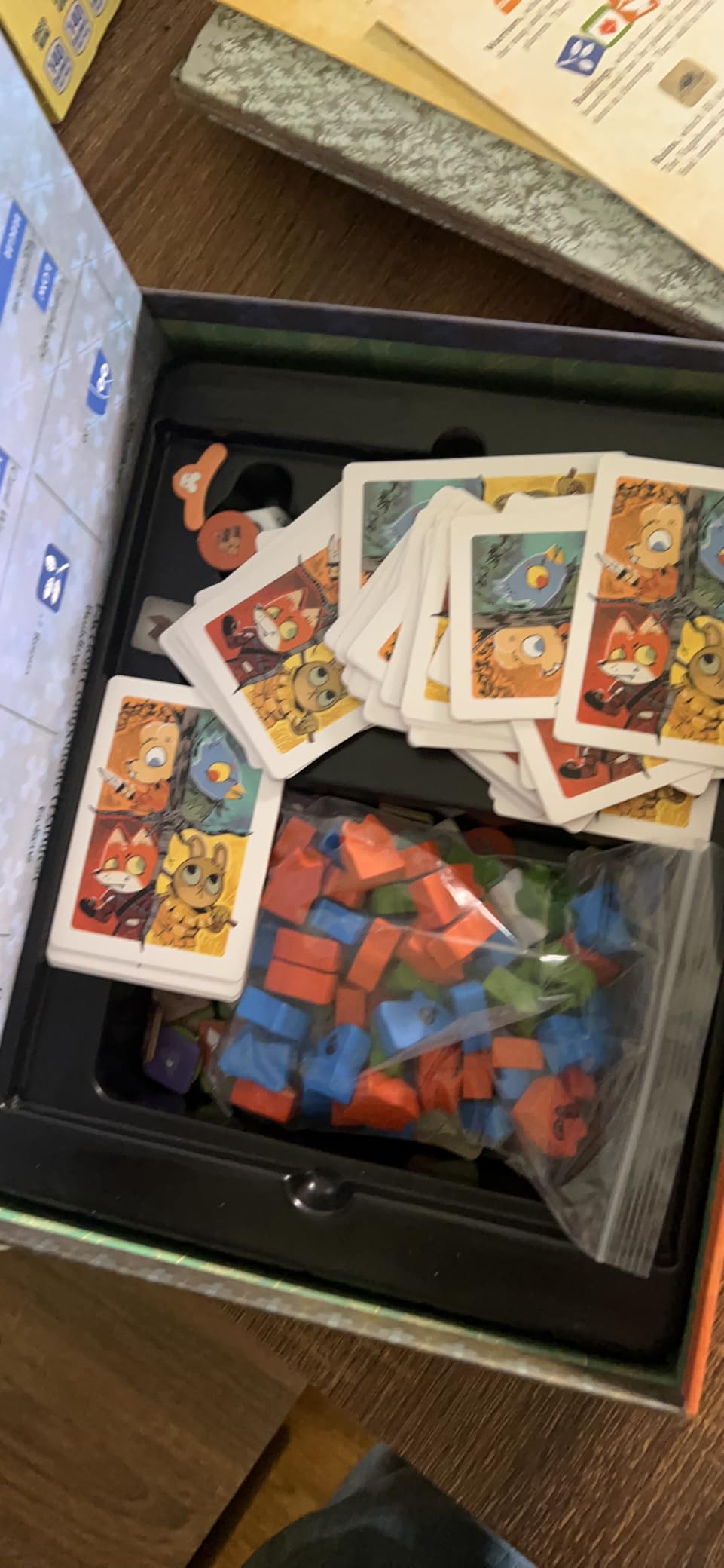
Production quality is a genuine strength here, and reviewers say so repeatedly. The art has a storybook quality and the cards and boards feel luxurious to handle, which is why it makes such a good display piece even when it is not in play.
The difficulty is real. Root sits around 3.8 out of 5 for complexity on BoardGameGeek, higher than anything else in this list, and the first game is confusing for everyone at once because you are all reading different rules. Hirelings and Landmark expansions exist if you want more, but start with the base game.
Who Root suits
It suits groups of three or four with at least one heavy gamer. It suits players who want a game that produces stories afterwards, since the faction asymmetry makes the table feel personal. Reviewers consistently report excellent replayability once players can swap roles rather than always bringing the same faction.
It suits collectors. The presentation has no real competition in this roundup, and the theme is unusual without getting in the way of the systems.
Who should skip Root
Skip it at two players. Reviewers are direct about this: the base game is not much fun as a duel without the hirelings pack, and adding an expansion to make a two-player game work is a bad first purchase. Also skip it as a first modern board game for newcomers, and expect to flatten the boards by hand when they arrive.
12. Viticulture Essential Edition – Best Worker Placement Strategy Game for Two People
Stonemaier Games: Viticulture Essential Edition by Jamey Stegmaier
1-6 players
Ages 14 and up
45-90 minutes
Glass and wooden tokens
Pros
- Beautiful components including glass grape and wine tokens
- Distinct Tuscan vineyard theme
- Easy to learn and not confrontational
- Works well at 2 thanks to the grande worker
- High replayability from varied visitor cards
Cons
- First games can run long once learning time is included
- Light iconography
- Round score tokens roll and scatter
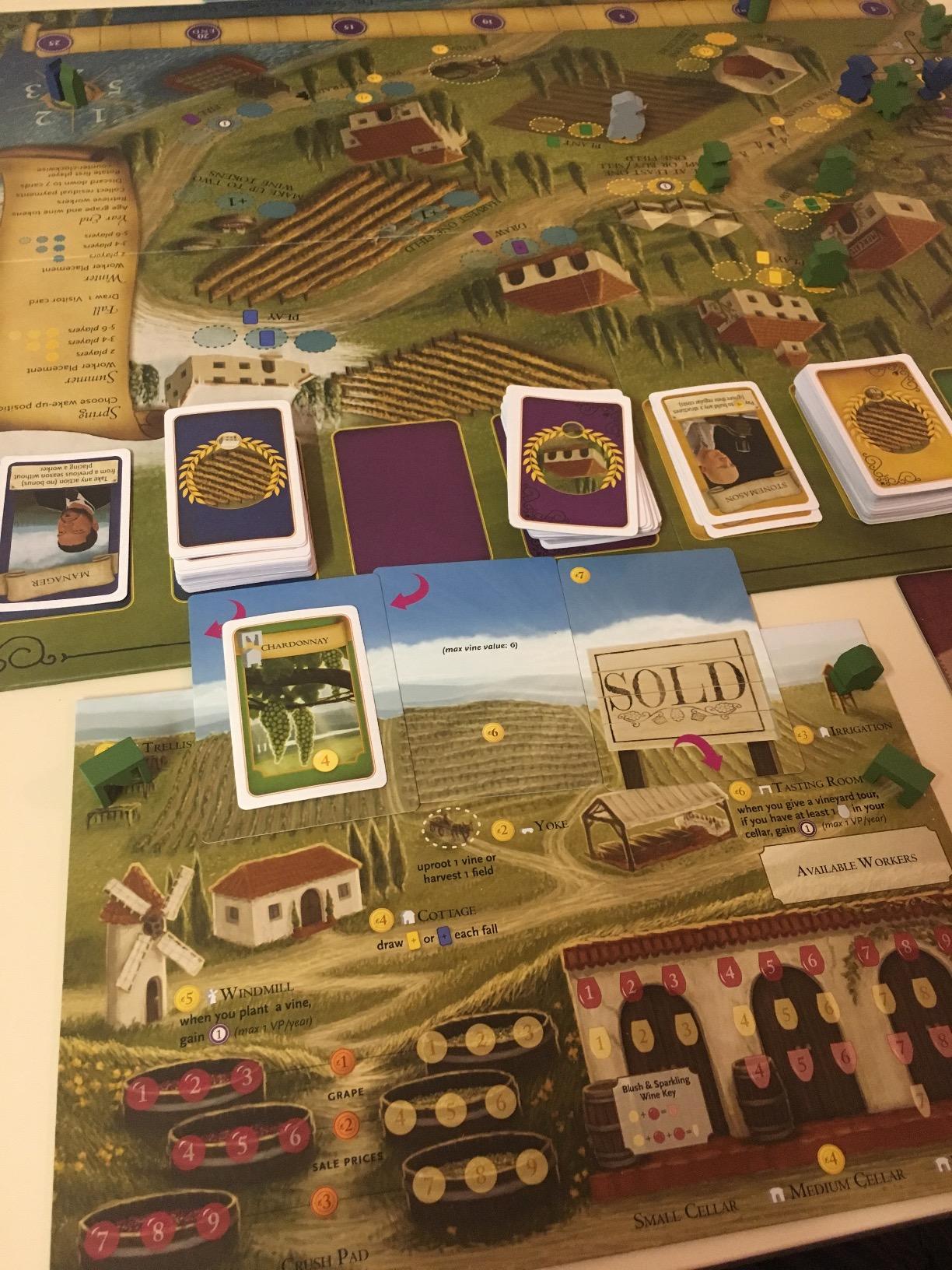
Viticulture is the game we recommend most often for couples who have outgrown Azul. It holds a 4.9 average across 2296 reviews, it is explicitly not confrontational, and at two players the grande worker is the quiet detail that makes it work, because it can occupy a space another worker is already using.
The system is worker placement with hand management. You have workers, you have a hand of vine, wine and visitor cards, and the twist is the season structure: you build vineyard positions during summer, then harvest in winter using an action set chosen from your hand. Spending a single action early on a big grape can lock you out of a better payoff later.
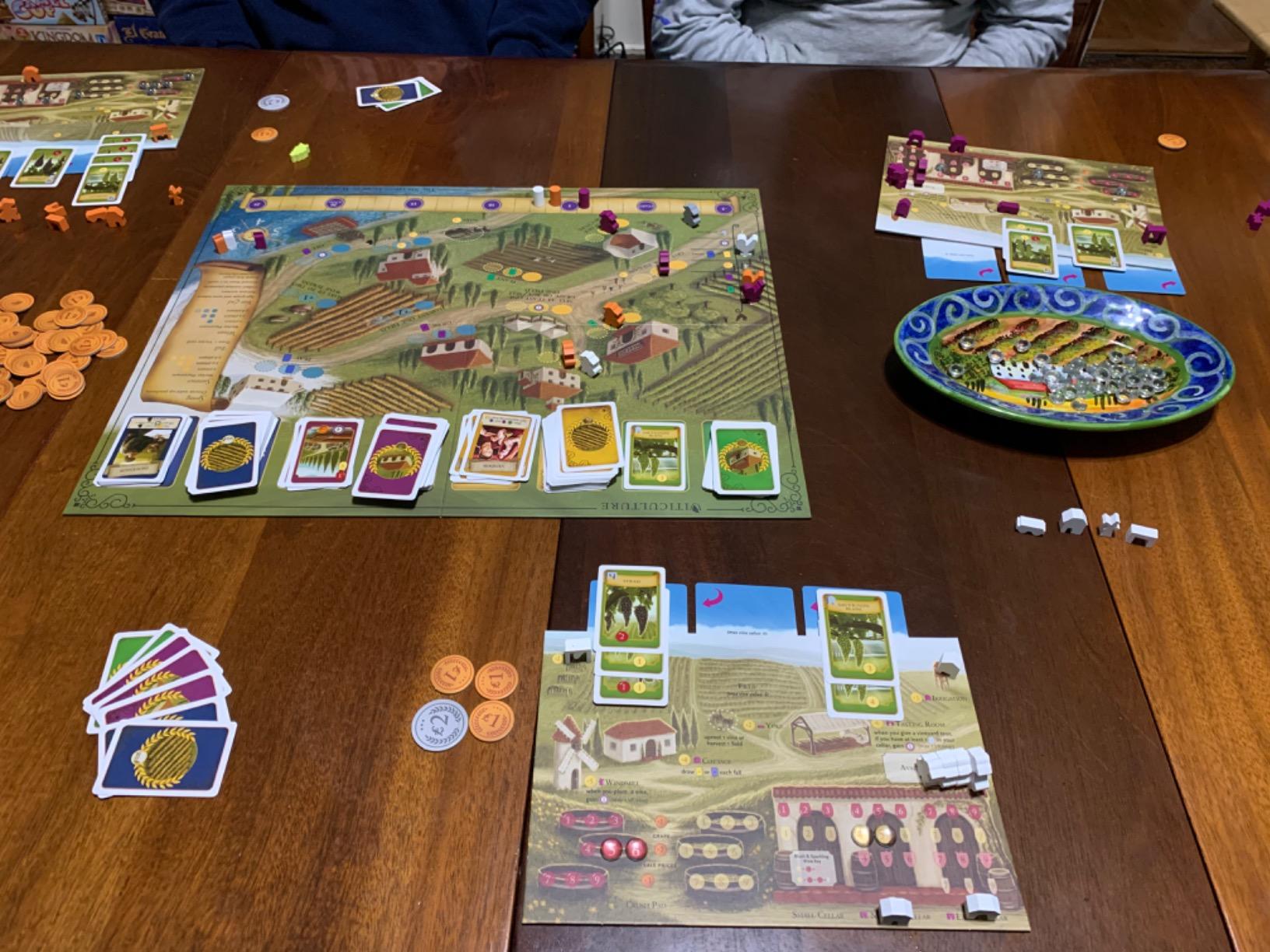
Components are the highlight, and unusually so for a strategy box. Glass grape and wine tokens, thirty wooden worker meeples plus six grande workers, wooden structures, and the board itself. Jamey Stegmaier designed it and the theme of running an inherited Tuscan vineyard is specific enough that it does not feel like a reskinned farm game.
The Essential Edition bundles the base game with Mamas and Papas, Fields, revised and expanded Visitors, and Automa solo cards, so it is a complete purchase rather than a base box you will want to expand immediately. Automa cards are included for solo play.
Who Viticulture suits
It suits couples, which is its defining strength. The two-player experience is considered excellent, the pace is gentle, and there is no betrayal, no attack and no early elimination. Reviewers also mention that playing it while drinking actual wine is a near-perfect fit for the theme.
It suits players who want a beautiful, tactile object. The glass tokens and wooden pieces change the feel of a session, and it plays up to 6 people if a group turns up, with the visitor cards changing the shape of every game.
Who should skip Viticulture
Skip it if you want a game that ends in under an hour with no learning curve; first games can take hours once setup and teaching are counted. Light iconography is the other real issue, so reference cards or a cheat sheet help. And if your group suffers from analysis paralysis, note that reviewers flag it here, because the hand and season structure gives over-thinkers a lot of room.
How to Choose a Strategy Board Game for Adults
Buying strategy games goes wrong in a predictable way: people buy the most talked-about title instead of the one that fits their table. The filters below are ordered by how much damage getting them wrong does. Get player count and session length right and everything else is negotiable, because a game that is too long or too many players never gets played again.
Filter 1: player count and how many friends you actually have
Be honest about the realistic table size, not the theoretical one. Most buyers of this genre end up playing with 3 to 4 people, so any game that peaks there should be your default. In this list, 7 Wonders is the only real answer for 6 or more players, and everything else drops off past five.
At two, the picture is narrower than the marketing suggests. Purpose-built duels are a category that cannot absorb a third player at all, and it is worth asking how often you actually have exactly two. In this roundup, Azul, Carcassonne, Pandemic, Wingspan and Viticulture all play well at two, and 7 Wonders is the one title that simply will not start.
Filter 2: session length and teach time
Teach time matters more than playtime, and it is the one metric almost nobody publishes. It is the difference between a game people finish and a game that gets abandoned halfway through with somebody reading the rulebook aloud. In this list, Azul and Carcassonne explain in a few minutes, 7 Wonders and Ticket to Ride take a short while, and Root and Spirit Island need a planned evening before play even begins.
Then match the session length to the slot you actually have. Under 45 minutes, your realistic list is Carcassonne, Azul and 7 Wonders. An hour to 90 minutes covers Pandemic, Wingspan and Viticulture. Anything past 100 minutes is a weekend decision, and 7 Wonders is the one pick that stays under 40 minutes even with seven people at the table.
If your group has a hard stop, respect it. Games that get cut off teach a group that games are inconvenient, and that is the fastest way to stop people suggesting game night. If you want something that fills a whole evening, our larger-format picks like the best giant yard games cover the outdoor version of the same idea.
Filter 3: weight, explained in three rungs
Weight is how much rules overhead and forward planning a game demands, and it is the single most useful sorting tool in the genre. The BoardGameGeek complexity scale runs from 1 to 5, and the rungs below map onto it closely enough to shop with.
Light, roughly 1.5 to 2.5 on the scale: teach in minutes, one page of rules, decisions stay shallow. Azul and Carcassonne sit here. Medium, roughly 2.5 to 3.5: a real system with a strategy that takes several plays to see. Pandemic, Wingspan, Ticket to Ride, 7 Wonders and Viticulture are in this band. Heavy, roughly 3.5 and up: expect a rulebook, a long teach and a steep first evening. Scythe, Terraforming Mars, Spirit Island and Root belong here, and Root is the highest of the lot at about 3.8.
The jump from light to heavy is the one that ends friendships, so buy the medium band first. The other trap is confusing complexity with learning curve. A game can have a large rulebook and a gentle start, and a game can have three rules and still be hard, because the difficulty is in the decision space rather than the rules.
Filter 4: cooperative, competitive or solo
Cooperative games share an outcome, which removes the quiet player who never gets to do anything. That is the appeal and the cost: in Pandemic, everyone contributes or everyone loses, and a group with uneven skill can feel the weak link loudly. Cooperative picks in this list are Pandemic, Spirit Island and, in part, 7 Wonders, where military conflict is a scoring comparison rather than a fight.
Competitive is the default in this genre and where the best decisions come from, because every action denies something to someone else. Solo-capable is a separate axis that a lot of buyers care about more than they expect. Wingspan, Scythe, Terraforming Mars and Viticulture all ship with automa solo modes, and Spirit Island has dedicated single-player rules. The quality of that automa varies enormously, and Scythe’s and Wingspan’s are the ones reviewers single out.
Filter 5: conflict level, from friendly trading to direct war
This is the filter nobody publishes, and it answers the question people actually ask when a roundup will not narrow it down. The scale runs from friendly trading through indirect blocking to direct combat and betrayal, and picking the wrong end is the most common reason a great game gets shelved after three plays.
At the friendly end you have Viticulture, Azul and Ticket to Ride, where nobody attacks anybody and the interaction is drafting and blocking. In the middle sit Wingspan, 7 Wonders, Pandemic and Terraforming Mars, where the competition is real but mostly about efficiency rather than attacks. At the sharp end you have Root and Risk, where the whole point is ruining someone’s position, and Scythe, which looks like war and mostly is not.
A practical test: ask who is playing, how long they want to sit, and whether they would rather their opponents were smiling or sweating. Those three questions decide almost every purchase in this genre. Players who want the other two to sweat should start with Root. Players who want a clean duel should start with Azul or Viticulture, and if your table runs to six or more, the only sensible starting point is 7 Wonders.
Strategy terms in plain English
Euro game: a strategy game with indirect interaction, low conflict and no elimination, where the competition runs through a shared economy rather than through attacking people.
Engine-building: setting up combos on early turns so that later turns become dramatically more powerful. It is the defining structure of Wingspan and Terraforming Mars, and it is why those games get lighter the more you play them.
Worker placement: sending a limited pool of workers to spaces on a board that refresh. First placement is usually advantaged, which is the whole tension in Viticulture.
Area control: claiming and denying parts of a shared map, which covers everything from Carcassonne to Spirit Island.
Conflict level: how directly players interfere with each other, from trading to outright war.
Downtime: the time you spend waiting while other players think. It is the main killer of good games above four players, and 7 Wonders is built specifically to remove it. If you know you will be dealing with a table that hates waiting, sort by downtime before anything else.
One more thing worth knowing before you buy anything expensive: the software and patching habits around modern games are a different conversation from physical components, and we covered that separately in our piece on why games have day-one patches. The short version for this list is that the durability of a boxed board game is a physical question, not a software one.
Frequently Asked Questions
What is the no. 1 strategy game?
There is no single answer, because the best strategy board games for adults split by audience. Pandemic is the easiest recommendation for a group because it teaches in minutes and nobody gets eliminated. Azul and Wingspan are the usual choices for couples and for mixed-skill groups, while Root and Scythe are the picks when you want maximum competitive depth.
What is the most strategic board game ever?
It depends on what you mean by strategic. For sheer competitive depth and interaction, Root sits at the top of the complexity scale in our roundup at roughly 3.8 out of 5 on BoardGameGeek. For planning depth with almost no luck, Scythe and Terraforming Mars are harder to argue with, and both reward long-term thinking more than any single dramatic moment.
What are some good heavy board games for 2 players?
Root is the weakest option at two, so skip it unless you add the hirelings pack. Better heavy two-player choices from this list are Viticulture, which uses a grande worker to share occupied spaces and is explicitly non-confrontational, and Wingspan, which includes an automa and scales cleanly to a duel. At a lighter weight, Azul is a genuine two-player head-to-head.
Which strategy board game is best for beginners?
Azul for the shortest teach, or 7 Wonders if your group is four or more people, since simultaneous drafting means no one waits. Carcassonne is the fastest of all at about 35 minutes with an age floor of 7. If you want a beginner game that still feels like a real strategy game rather than a warm-up, Wingspan is the step-up choice.
What is a euro game?
A euro game is a style of strategy game with indirect player interaction, low conflict and no elimination. Instead of attacking opponents, players compete through a shared economy, taking space, drafting cards or buying actions. The genre is defined by low luck, meaningful choices every turn, and a focus on planning over reflexes, and most of the light and medium titles in this roundup are euro games.
Final Verdict: Where to Start With the Best Strategy Board Games for Adults in 2026
Start with Pandemic. It teaches in minutes, plays in about 45 minutes, never eliminates anyone and works for 2 to 4 players, which makes it the one purchase here with almost no wrong conditions. It is our editor’s choice and the game we hand to people who do not know what they like yet.
Match the rest to your table. Two people who want a clean, gentle duel should get Viticulture; two who want sharp competition should get Azul. A family with children over 7 should get Carcassonne, and a mixed group of five should get Ticket to Ride: Rails and Sails. Six or more players means 7 Wonders, with no alternative worth considering.
Then move up the ladder, in this order, whenever a group is ready: Wingspan, then Terraforming Mars or Scythe, and only after that Root and Spirit Island. Buying the heavy end first is the most common and most expensive mistake new players make, and the games will still be there after a few months of the good stuff. If you want a second opinion on the larger formats, our guide to how permanence shapes game design covers the same idea from a different angle.