
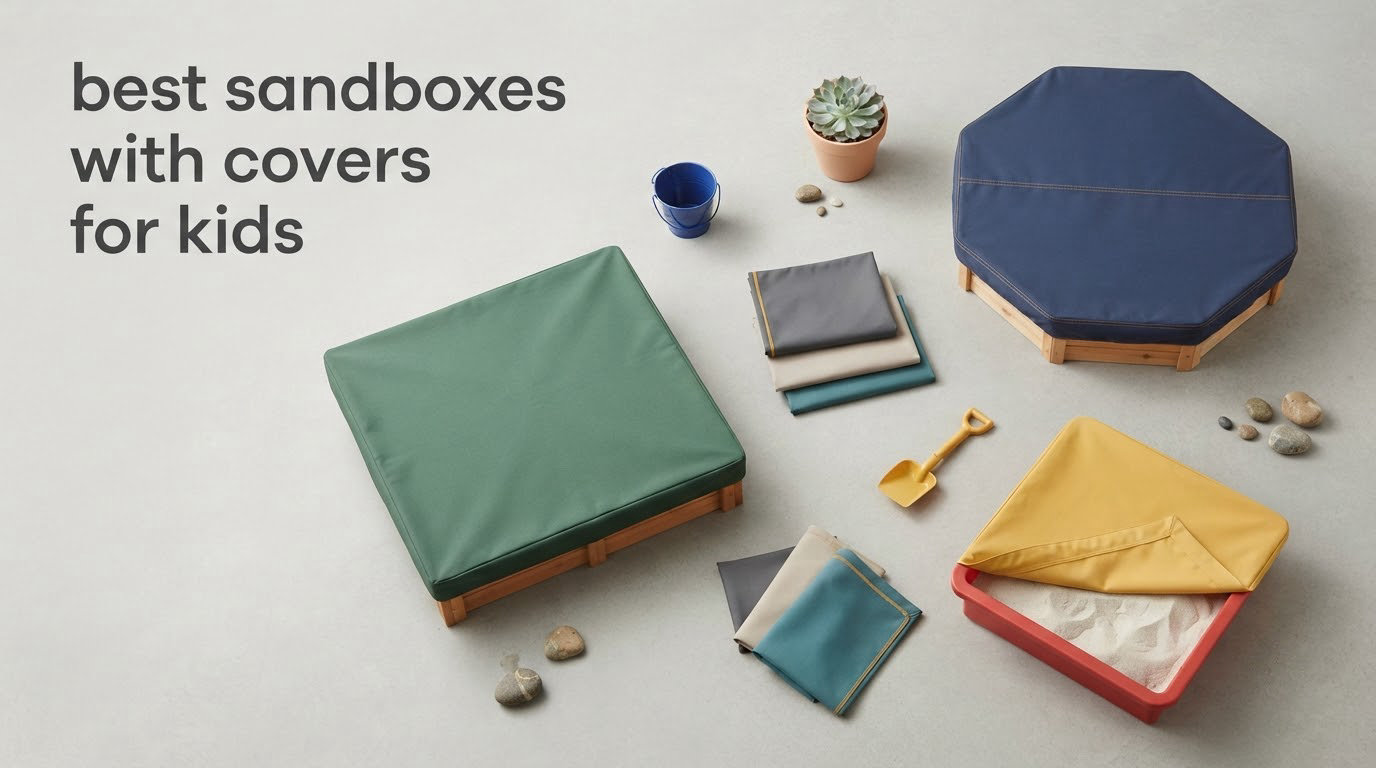
If you only read one thing, read this: the Best Choice Products 47-inch Cedar Sand Box with Convertible Bench Cover is the best sandboxes with covers for kids pick for most families, the Aivituvin 47-inch Retractable Canopy Sand Box is the one to buy if sun protection matters more than raw capacity, and the Badger Basket Cedar Sandbox with Folding Lid wins on cedar quality for a box that has to survive several winters. All three seal the sand away from rain, leaves and pets when play stops, and all three let kids sit on the edges while they dig.
We spent weeks comparing the covered sandboxes on the market for 2026, reading assembly instructions, digging through customer reviews, and working out how much sand each pit actually holds. What separates a good covered sandbox from a disappointing one is rarely the color or the price tag. It is how tightly the lid closes, whether the base lets water drain, and whether the hardware survives a child folding the cover open and shut fifty times a day.
This guide covers 12 of the strongest covered sandboxes for kids currently available, from a molded plastic sensory table for toddlers to an 85-inch octagon that fits a whole birthday party. We explain what each cover type actually does, how much sand to buy for the size you choose, and how to keep play sand sanitary. We also report the weak spots plainly, because a few of the highest-selling models in this category carry visible complaints that you should know about before checkout.
If you are still deciding between a plain sandbox and a covered one, start with our general sandbox roundup, then come back here for the sealed-up versions.
Table of Contents
Top 3 Picks for the Best Sandboxes With Covers for Kids (October 2026)

Best Choice Cedar 47in Bench Cover Box
- Benches fold into a split lid
- Heat-treated cedar
- 47x47in with bottom liner

Aivituvin Retractable Canopy Sand Box
- Retractable roof gives shade and seals sand
- Bottomless with sand screen
- Benches seat four children

Badger Basket Cedar Folding Lid Box
- Benches convert to a solid cedar lid
- 46.5x46.5in pit
- Pre-drilled cedar boards
Why a Covered Sandbox Is Worth the Extra Money
Yes, and the reason has almost nothing to do with comfort. The cover solves a sanitation and maintenance problem that decides whether a sandbox stays usable after its first season.
Without a lid, rain scours fine play sand out of the pit and leaves a heavy sludge behind that takes days to dry. Leaves, twigs, and grass clippings blow in from the yard all season. And in neighborhoods with cats, an open sandbox is an open litter box. Parents on r/Parenting describe the same two failure modes repeatedly: sand that ends up dumped all over the lawn but never back in the pit, and pet waste that forces an entire box of sand to be thrown out.
Covering the box when it is not in use is the standard mitigation for the pet problem, and it is the only fix for the leaf and rain problem short of building a roof over your whole yard. A tight-fitting lid solves all three at once, which is why we treat cover fit as the single most important criterion in this guide.
One honest caveat: a lid does not stop a determined toddler from flinging sand over the side rails. It keeps the pit clean between sessions, not during one. If spills are driving you crazy, a smaller pit with a rim and a ground cloth underneath solves more than any cover does.
Our broader sandbox guide covers uncovered and bottomless designs in more detail if you are still weighing that trade-off.
The 12 Best Sandboxes With Covers Compared in 2026
| Product | Specifications | Action |
|---|---|---|
| Best Choice Products Cedar Sand Box 47×47 |
|
Check Latest Price |
| Aivituvin Retractable Canopy Sand Box 47in |
|
Check Latest Price |
| Badger Basket Cedar Sandbox with Folding Lid |
|
Check Latest Price |
 Mederra Wooden Octagon Sandbox 85×78 Mederra Wooden Octagon Sandbox 85×78 |
|
Check Latest Price |
 KidKraft Covered Sandbox with Striped Canopy KidKraft Covered Sandbox with Striped Canopy |
|
Check Latest Price |
 Step2 Natural Playful Sandbox with Lid Step2 Natural Playful Sandbox with Lid |
|
Check Latest Price |
 BIRASIL Wood Sand Box with 48in Canopy BIRASIL Wood Sand Box with 48in Canopy |
|
Check Latest Price |
 Best Choice Products Octagon Sandbox 78in with Lid Best Choice Products Octagon Sandbox 78in with Lid |
|
Check Latest Price |
 YOLENY Sand Box with Lid and Rotating Canopy YOLENY Sand Box with Lid and Rotating Canopy |
|
Check Latest Price |
 Agitree Cedar Sandbox with Canopy and Storage Agitree Cedar Sandbox with Canopy and Storage |
|
Check Latest Price |
 Outsunny Wooden Sand Box with Lid and Canopy Outsunny Wooden Sand Box with Lid and Canopy |
|
Check Latest Price |
 Pipleo Wooden Sand Box with Canopy and Funnel Pipleo Wooden Sand Box with Canopy and Funnel |
|
Check Latest Price |
How We Chose These 12 Covered Sandboxes
Every model below was judged on the same five things, in this order.
1. Cover fit and weather sealing. Does the lid or canopy close down onto the frame with no gap wide enough for a leaf or a cat? Fabric covers that merely drape over the box ranked below anything that latches or folds flat onto the frame.
2. Sand capacity. We convert each pit size into a usable sand figure so you can buy the right number of bags the first time. Small pits under 45 inches suit one or two children; pits at 47 inches and up work for a group.
3. Drainage and the base. A bottomless design that sits on bare ground drains best. A plastic floor holds water longer. Either way, a liner stapled to the inside of the frame keeps sand from escaping into the soil.
4. Build quality and hardware. In this category, hinges, latches, and screws decide how long a box lasts. We read the hardware complaints in customer reviews and weighted them heavily, because that is the part that breaks first.
5. Setup and age fit. Zero-assembly plastic wins on day one. A 30-minute cedar build is a fair trade for a box that lasts years. We also flagged listings with inconsistent age labels so you are not guessing.
1. Best Choice Products Cedar Sand Box 47in – Benches That Fold Into a Cover
Best Choice Products Large Outdoor Wooden Sand Box for Kids, Sandbox with Cover, Bench Seats Support up to 220 lbs, Bottom Liner for Drainage, Cedar Wood – Brown
Cedar wood
47x47in pit
Benches seat 220 lbs
32.5 lbs total weight
Pros
- Benches fold down into a split lid that keeps sand dry
- Heat-treated cedar resists warping
- Open bottom with liner aids drainage
- Highest review volume of any box here
Cons
- Supplied screws are undersized for soft cedar
- Hardware and latches reported to loosen with use
- Included liner fabric is smaller than the pit
This is the sandbox we keep coming back to, and the reason is the cover mechanism. The two built-in benches do double duty: they seat up to four children or two adults during play, then fold down to form a split lid that closes over the sand. Nothing has to be unscrewed, detached, or stored separately.
The frame is heat-treated cedar in a 47 by 47 inch footprint, which puts it in the sweet spot for two to three kids. Rated bench load is 220 lbs, so an adult can sit on the edge and supervise without worrying. Total unit weight is 32.5 lbs empty, which is light enough to reposition if you want the shade in the afternoon.
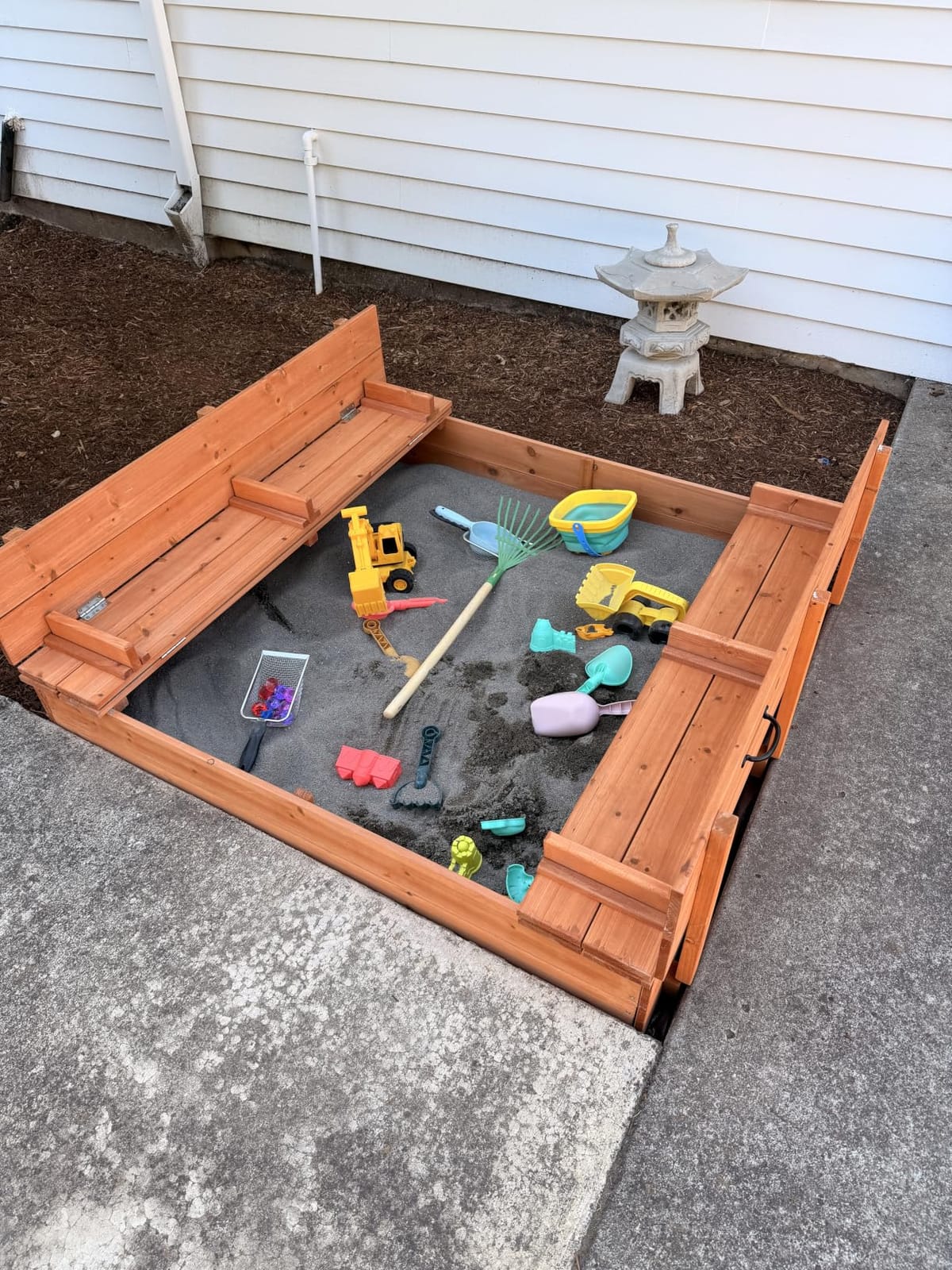
The open bottom is the part owners appreciate most in wet climates. Water drains straight into the ground instead of pooling in a plastic tray, and the included liner gives you a washable surface that also sets sand depth. Adjust the liner position and you change how deep the digging gets without buying more sand.
Our one reservation is hardware. Owners frequently mention that the supplied screws are undersized for soft cedar and loosen over a season, and that latches can break with daily folding. It is a five-minute fix with a hardware store trip, but know it going in.

What you get for your sand money
A 47-inch square pit fills comfortably with roughly 8 to 10 bags of play sand at a workable depth. Buy the sand in spring, not the first warm weekend, because you will want it settled before anyone digs.
Keep the liner snapped in tight and the cover down whenever the box is idle, and the sand should stay clean for a full season before you think about replacing it.
Who should pass on it
If you want a toddler sensory table you can move between rooms, this is too heavy and too tall. It is built for a fixed spot in a yard or on a patio, not for indoor rotation.
If you have young children who fold the benches without supervision, watch their fingers at the hinge line. The pinch point is real, even on a well-made box.
2. Aivituvin Retractable Canopy Sand Box – Shade That Doubles as a Seal
Aivituvin Kids Sand Boxes with Canopy Sandboxes with Covers Foldable Bench Seats, Children Outdoor Wooden Playset – Upgrade Retractable Roof (47x47Inch)
Wood with canopy
47.2x47.2x51.9in
12 months and up
45 lbs total weight
Pros
- Retractable roof gives shade during play and closes over the sand
- Bottomless design with sand screen for drainage
- Benches seat four children or two adults
- Pre-drilled holes simplify assembly
Cons
- Soft wood can split at the canopy uprights
- Canopy is awkward to raise and lower alone
- Hook and loop fastener can tear in the first season
This is the shade answer. The retractable roof slides back for open-air digging and pulls forward to shade the whole pit, which is the difference between sand play that ends at 11 am and sand play that lasts through a July afternoon. It also closes down over the pit, so it performs as a cover as well as a canopy.
At 47.2 inches square with 51.9 inches of overall height, this is a substantial build. The bottomless design sits directly on the ground and comes with a sand screen that doubles as a storage bag for the sand when winter comes. Manufacturer age guidance starts at 12 months, one of the lower thresholds in this roundup.
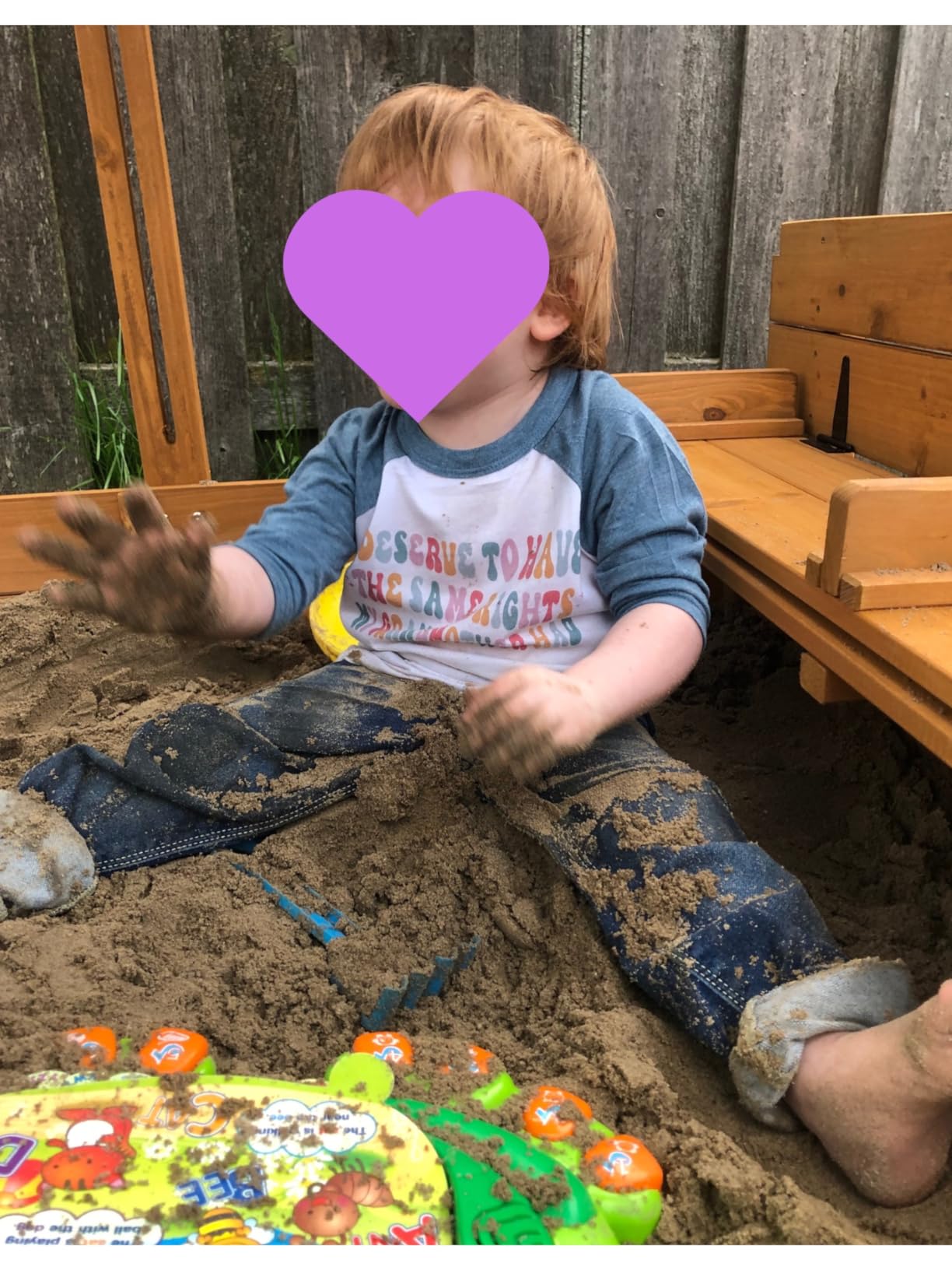
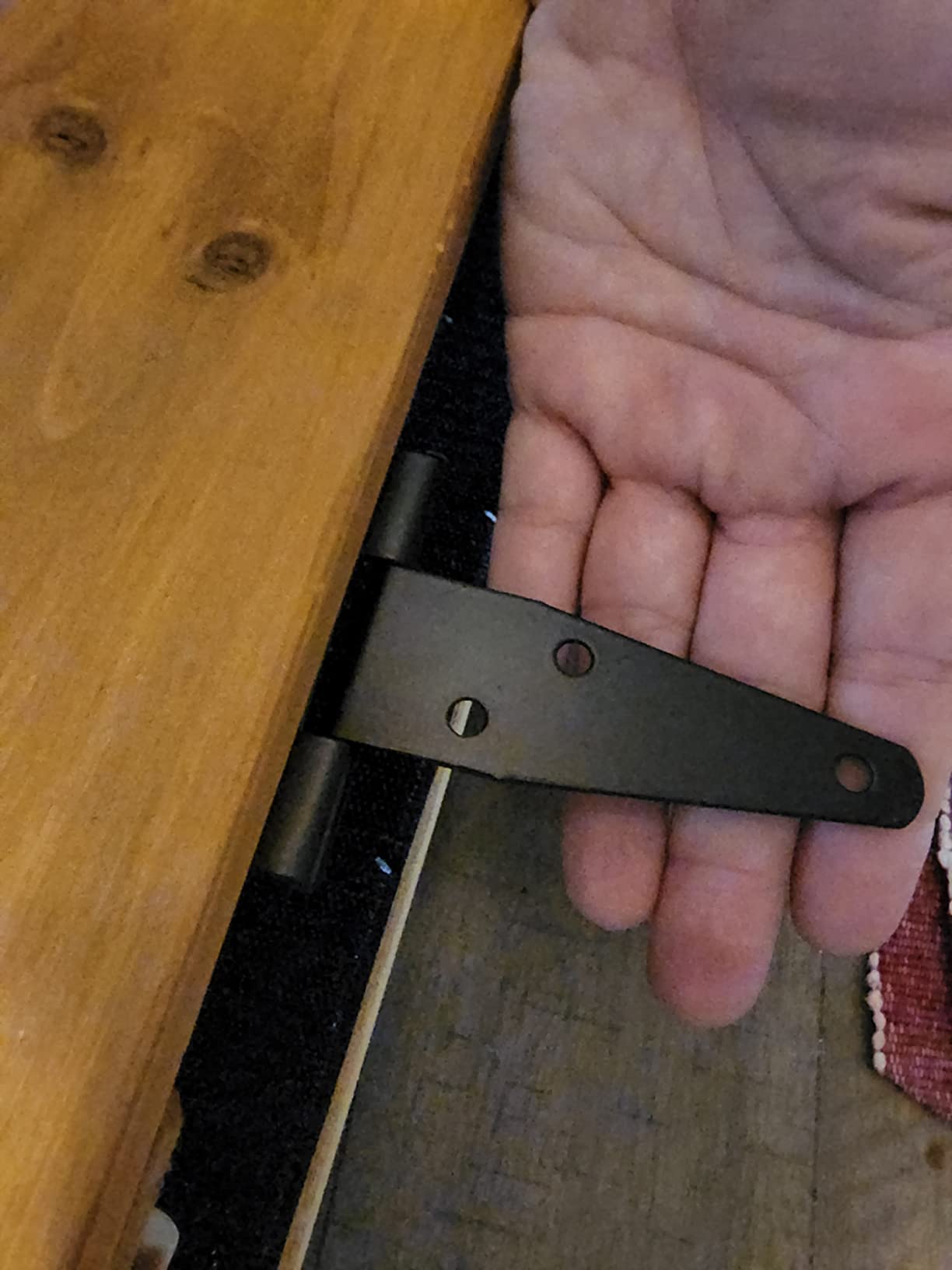
The benches are the same convertible style as the cedar boxes: they seat four children or two adults, then fold flat. T-shaped hinges and hand grips make the fold easier than it looks in photos, and pre-drilled holes keep assembly to a single afternoon.
Where it gets soft is the timber. Owners report splitting and cracking at the canopy uprights after a season or two of weather cycling, and the detachable canopy is held by a hook and loop fastener that can tear or fade. A parent with a two-year-old who leaves the roof up all summer will see this sooner than most.
Shade, or a hard seal
This box gives you partial protection: the canopy keeps rain off the sand and sun off the kids, but it is fabric, so wind is your enemy. A gust can lift the roof edge and drop leaf litter into a freshly raked pit.
If your priority is a pit that stays bone dry all week with no attention, a bench-lid design like products 1 and 3 beats a canopy every time. Canopies win on midday play comfort.
Age and weight limits
Maximum recommended load is 250 lbs and each bench handles 200 lbs, so adults can sit on the rim without concern.
With a 45 lb empty weight and a full canopy frame, repositioning takes two people. Plan the site before you fill it, because moving a filled box means moving a great deal of sand.
3. Badger Basket Cedar Sandbox with Folding Lid – Solid Boards That Age Well
Badger Basket Cedar Sandbox with Lid & Benches – Outdoor Wooden Sandbox for Kids with Folding Cover – Large Backyard Playset (46.5 x 46.5 x 9.5)
Solid cedar
46.5x46.5x9.5in
Ages 36 months to 12 years
42.9 lbs total weight
Pros
- Folding benches become a solid protective lid
- Weather-resistant cedar that survives multiple winters
- Pre-drilled aligned holes make assembly quick
- Room for several children plus an adult on the bench
Cons
- Supplied hardware is thin and hinges are a weak point
- Cover slats leave gaps that admit dirt and insects
- Heavy to reposition once filled
The Badger Basket is the box we would buy if we were buying one cedar sandbox and nothing else. The wood is solid cedar rather than a soft pine or fir substitute, and cedar is the species that genuinely shrugs off rain, snow, and repeated wet-dry cycles over multiple seasons.
At 46.5 inches square and 9.5 inches tall, the proportions are lower and more open than the canopy models. That means a wider view of the pit, easier reach into the middle, and a bench that an adult can sit on comfortably while supervising two kids.
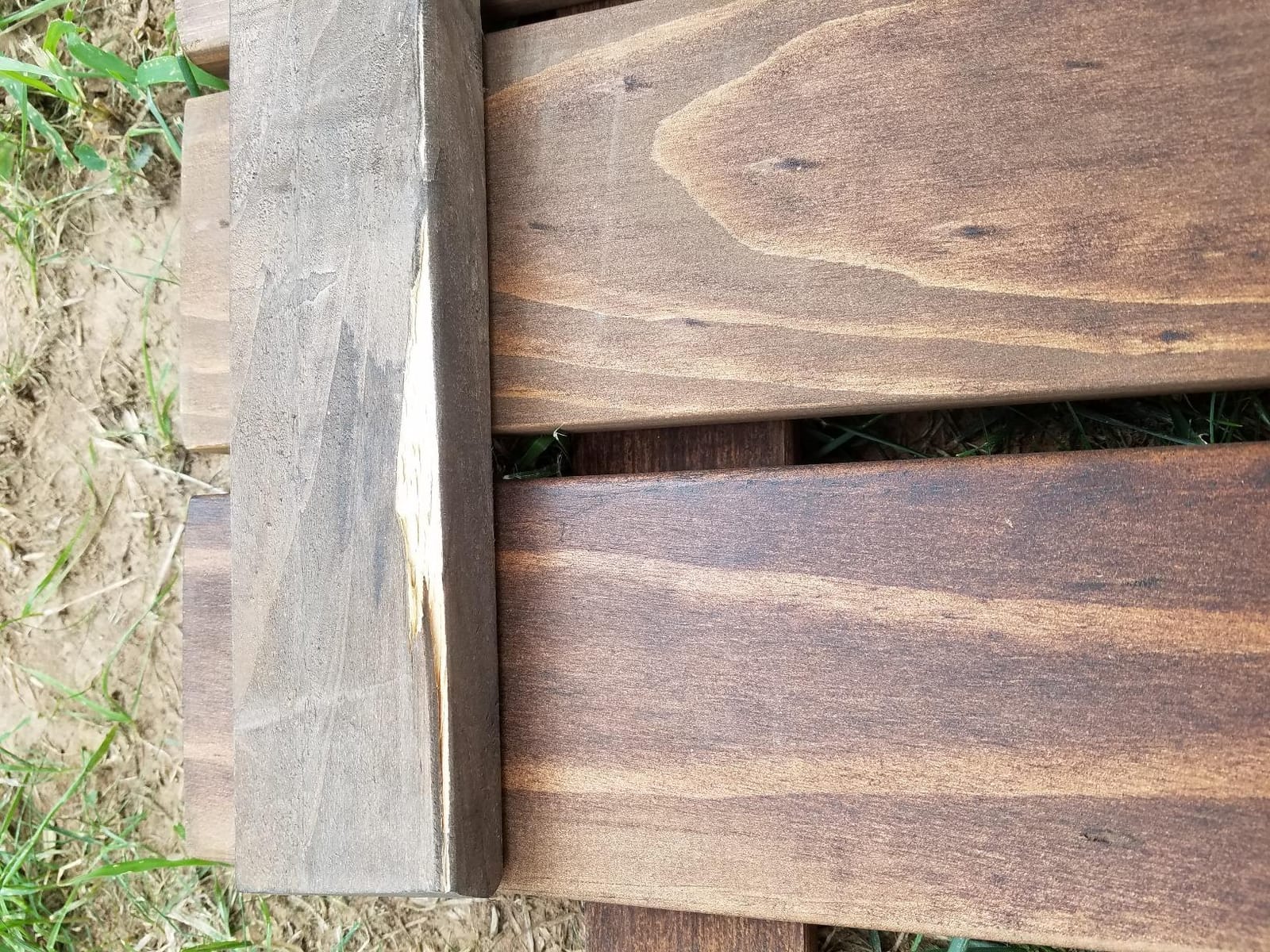
Cover function comes from the two folding benches, which collapse down to form a lid over the sand. There is no fabric to mildew, nothing to tear, and no separate panel to lose in the shed. It is the simplest possible answer to the question of how to cover a sandbox.
Assembly is quick because the holes are pre-drilled and aligned. The manufacturer suggests ages 3 through 12 and carries a 30 day warranty against defects. Reviewers also mention genuinely good customer service, including free replacement slats when a board cracked.
Fix the hardware before the first winter
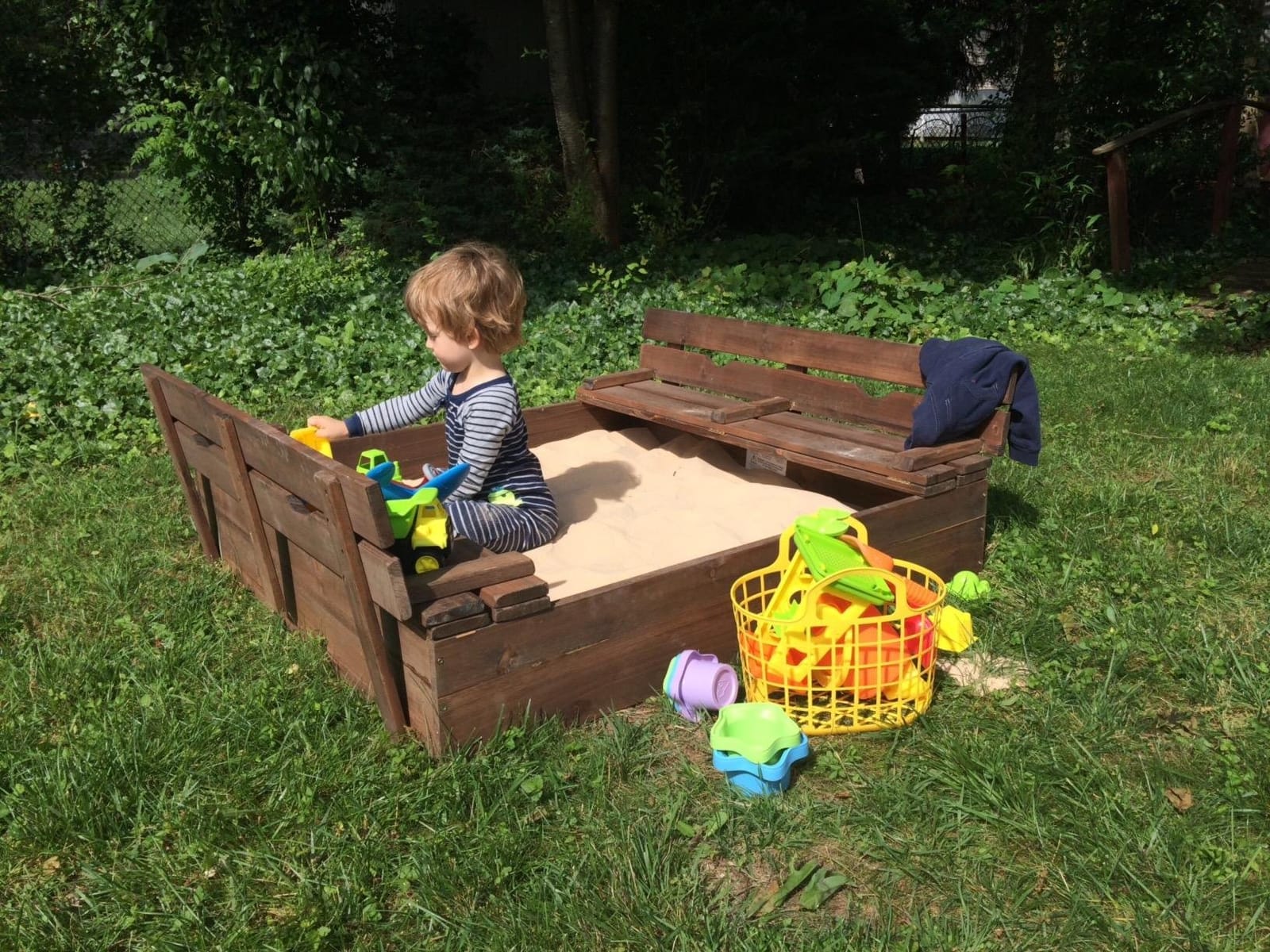
The most common complaint is the supplied hardware. Hinges in particular are cited as the weak point, and some owners upgrade them after a year of daily folding. Twenty minutes with a hinge screw pack and a screwdriver resolves it permanently.
Because the cover is made of slats, small gaps remain between boards. They will not let a cat in, but they will let ants and small debris through. Rake the surface before closing the lid and most of it stays out.
Sizing and spacing reality
Plan for roughly 8 to 10 bags of play sand to fill a 46.5 inch pit to a workable depth. Buy it in one order so the batch is consistent.
At 42.9 lbs empty, this is a two-person move once it is full. Level the ground first, and lay down a weed-barrier fabric under the frame if you want the drainage benefit of the open bottom without the weeds.
4. Mederra Wooden Octagon Sandbox 85×78 – The Group Play Answer
85”x78”x9” Wooden Octagon Sandbox with Cover, Large Sandpit for Kids Outdoor Patio Backyard Play, Easy & Quick Assemble
Cedar wood
85x78x9in octagon
Holds 800 to 1000 lbs of sand
Ages 3 to 12
Pros
- Largest play surface in this roundup at 800 to 1000 lbs of sand
- Seats 6 to 8 children plus adults on four benches
- Meets ASTM
- F963 and CPSIA standards
- Bottom liner and cover included
Cons
- Included plastic cover blows off in wind and pools water
- Cover needs snaps or straps to stay attached
- Some owners report lower quality cedar that cracks
- Needs 15 to 20 bags of sand to fill properly
This is the only sandbox here built for a crowd. At 85 by 78 inches, the octagonal pit has enough open sand for six to eight children at once, and the manufacturer rates the frame for 1000 lbs, which is a real load limit rather than a decorative one.
Four benches run around the perimeter, so a whole group can sit and dig simultaneously instead of taking turns on two seats. The octagon shape is not just styling: angled corners let kids sit facing each other without knees colliding.
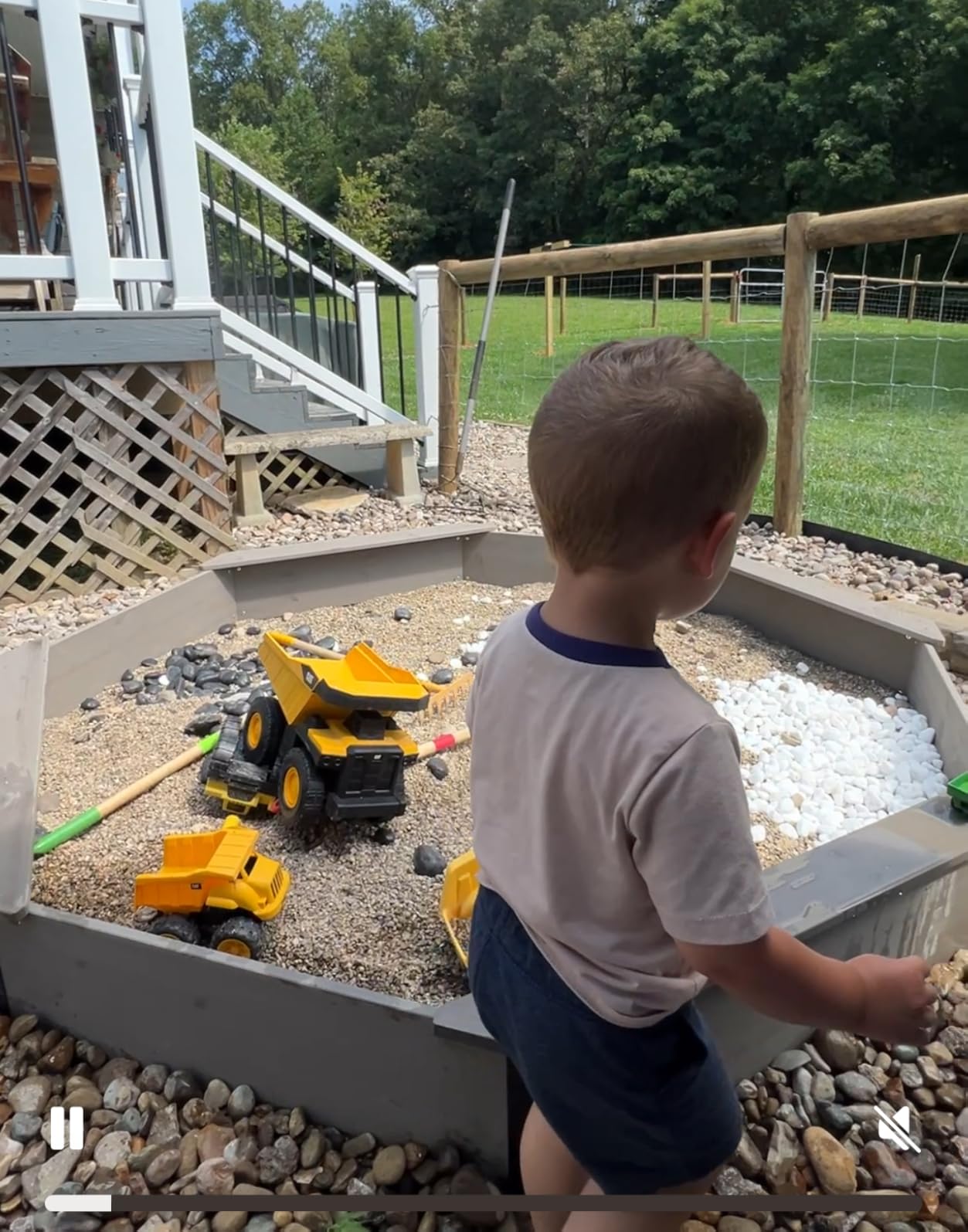
It is also the only box in this roundup with stated certification. Meeting ASTM, F963, and CPSIA standards matters if you are building a full play zone rather than dropping a single toy into a corner of the yard.
Assembly comes from pre-cut, pre-drilled parts with clear instructions, and the cedar carries a water-resistant finish connected by angle iron posts. The bottom liner and a cover are both in the box.
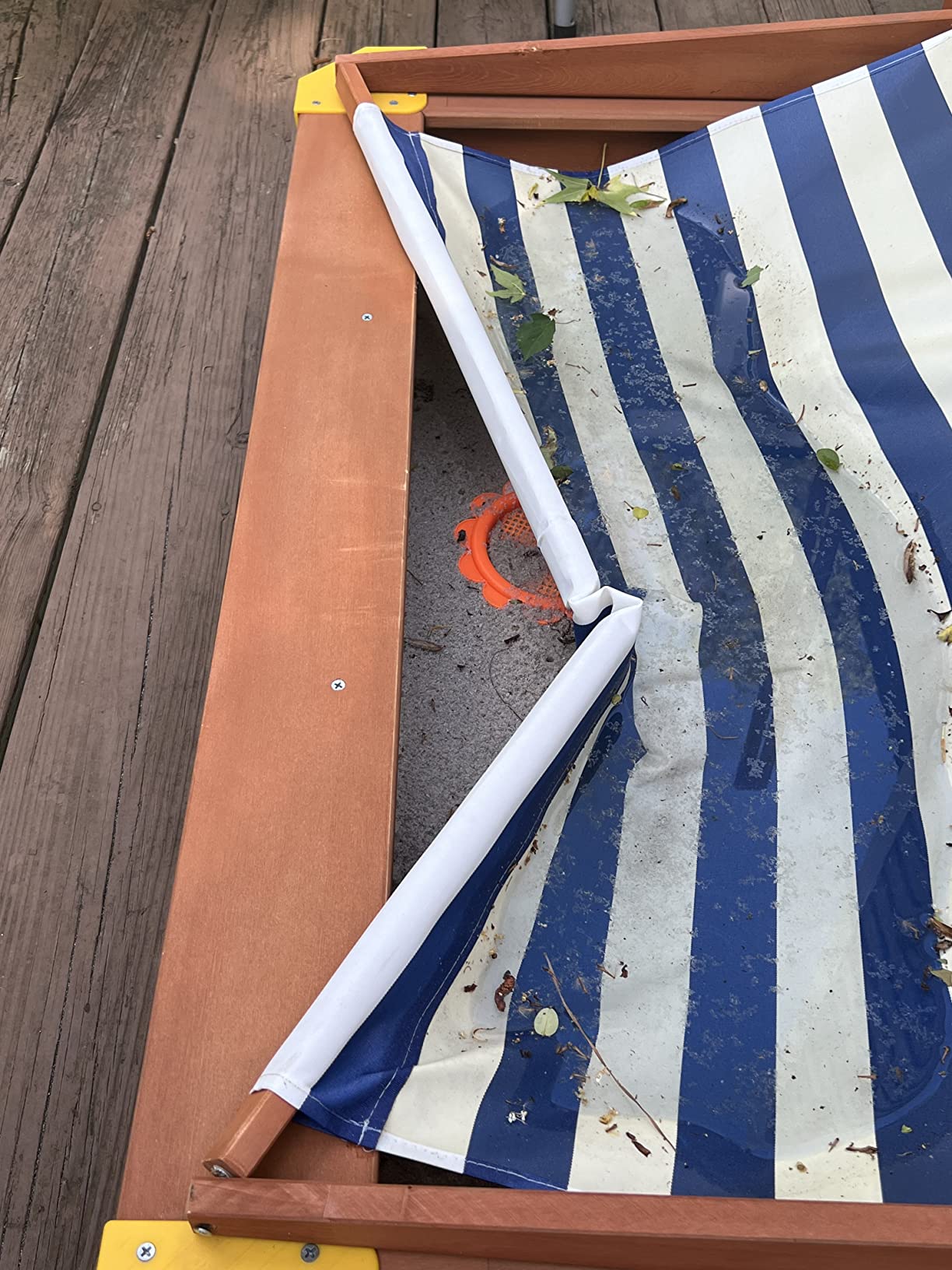
Be honest about the cover
The cover is the weak point, and owners say so clearly. It is a soft plastic sheet that does not stay attached in wind and lets rainwater pool on top, which then sits over dry sand and creates a slick, cold layer the next morning.
Plan on adding snaps or straps to fix it to the frame yourself. It is a simple hardware upgrade, and without it the cover performs more like a splash guard than a seal.
What filling it actually costs you
Owners report 15 to 20 bags of sand to fill properly. That is a meaningful difference in storage and cost versus the 8 to 10 bags a 47-inch box needs, and it is worth budgeting for before you commit.
Give this box a wide, level footprint. At 85 inches across it is a playset-scale purchase, and it will dominate a small yard.
5. KidKraft Covered Sandbox with Striped Canvas Canopy – Full Shade Over a Big Pit
KidKraft Outdoor Covered Wooden Sandbox with Bins and Striped Canvas Canopy, Kids’ Outdoor Furniture, Navy & White, Gift for Ages 2-8, Natural, 58.7 x 57.8 x 52, 00165
Fabric and wood
58.7x57.8x52in
Ages 24 months to 8 years
56.1 lbs total weight
Pros
- Striped canvas canopy shades the entire play area
- Large enough for several children at once
- Reinforced panels resist warping and weathering
- Includes two sand and water bins plus a liner
Cons
- Heaviest unit here at 56.1 lbs with no fold-flat cover
- Wood needs staining or painting periodically
- Canopy is added and removed by hand
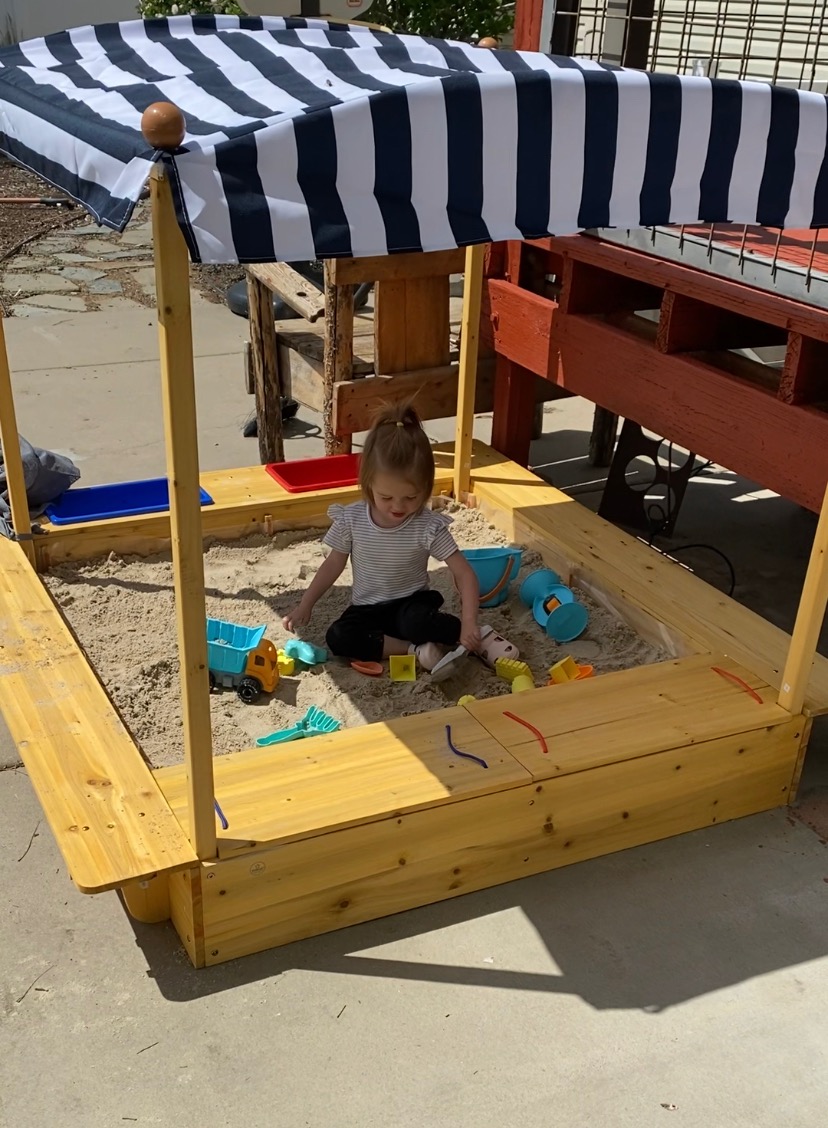
The KidKraft is a covered playset rather than a bare sandpit. The striped canvas canopy stretches over the whole structure, so a child can dig in full shade through the middle of the day, which is the single biggest quality-of-life difference in hot climates.
At nearly 59 by 58 inches, the pit is larger than the standard 47-inch box, and the manufacturer rates it for ages 2 through 8. Reinforced wooden panels are the reason it holds shape through wet seasons, where cheaper pine frames bow and twist.
Two plastic sand and water bins are included, and a plastic liner goes under the sand. The bins matter more than they sound: they give the water table portion of play a home, which is what keeps a sandbox interesting for kids past the age of three.
Maximum weight is listed at 300 kg for the whole unit, and there is a 90 day warranty against manufacturer defects.
Shade versus a sealing lid
The canopy is fixed in place and has to be removed by hand to access the sand. There is no bench that folds down into a lid, so the sand is only protected when the fabric is on and doing its job.
If your priority is keeping rain and animals out, a convertible bench lid is a better mechanism. If the priority is comfortable midday play, this canopy covers far more area than any of the retractable roofs in the roundup.
The trade-offs are physical
At 56.1 lbs empty, this is the heaviest unit in the guide, and it has no fold-flat benches. Once filled, it is not a moveable object.
Plan on a light stain or paint every year or two to keep the wood looking right. Skip it and the finish will grey unevenly within two seasons.
6. Step2 Natural Playful Sandbox with Lid – Zero Assembly, Highest Rated
Step2 Natural Playful Sandbox, Kids Activity Sensory Table, Summer Outdoor Toys, Lid Included, For Toddlers 1+ Years Old
Double-walled plastic
44x32x15.5in
Ages 12 months and up
Holds 200 lbs of sand
Pros
- Highest customer rating in the roundup at 4.7 stars
- Arrives fully assembled with no build step
- Double-walled plastic resists chipping and fading
- Four built-in seats for shared toddler play
Cons
- Holds less sand than the cedar boxes
- Plastic floor drains more slowly than a bottomless pit
- Too shallow for deep digging and tunnels
If the word assembly makes you tired, this is the answer. The Step2 arrives complete: take it out of the packaging, place it, and hand over the shovel. There is no hardware bag, no confusing diagram, no second adult required on a Sunday afternoon.
It carries the highest customer rating in this roundup at 4.7 stars across 764 reviews, and the reason is consistent in the feedback. The double-walled plastic does not chip, fade, crack, or peel, and the whole thing hoses down in seconds after a session.
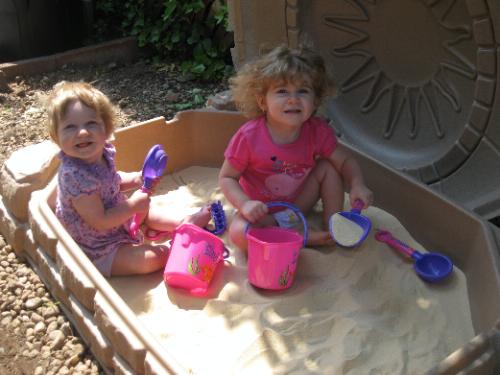
Four built-in seats are molded into the rim, which makes it a genuine social play station for toddlers rather than a one-child tray. Manufacturer guidance starts at 12 months, and there is a 2 year warranty on the unit.
At 44 by 32 inches and 15.5 inches tall, it is a true sensory table format that works indoors on a playroom floor or outdoors on a patio. Sand is sold separately, and the pit holds up to 200 lbs.
Perfect for a first sandbox
For a child between one and three years old, this is the strongest pick in the guide. The low walls are easy to see over, the seats are at toddler height, and there is nothing to pinch.
It doubles as a sensory activity station for water, rice, beans, or beads when the weather turns, which stretches the value well past summer.
Know the limits before you buy
Capacity is the constraint. Two hundred pounds of sand is roughly four to five bags, and at this size that gives a shallow, wide play area suited to scooping and pouring rather than building tall structures.
It also cannot handle deep digging. Kids who want to dig tunnels and castles in earnest will outgrow it quickly, and the plastic floor holds water longer than a bottomless cedar design after rain.
7. BIRASIL Wood Sand Box with 48in Canopy – Adjustable Shade and Backrests
BIRASIL Wood Sandbox with Cover, Sand Box with 2 Bench Seats for Aged 3-8 Years Old, Sand Box for Backyard Garden, Beach Patio Outdoor (Natural Wood, 48 Inch)
Fir wood
48x48x48in
Ages 3 to 8
42 lbs total weight
Pros
- Height-adjustable canopy lets you control sun exposure
- Two benches with backrests rated to 200 lbs each
- Bottomless design improves drainage and ventilation
- Smooth splinter-free solid fir boards
Cons
- Age label is inconsistent between 3 months and 3 years
- Fir is a softer species than cedar and wears faster
- Fixed canopy rather than a closing lid
The BIRASIL is a 48-inch wooden pit with a canopy that adjusts in height, so you can lower it for a toddler who wants full shade and raise it as the kids get taller and want more open sky. That adjustability is genuinely useful across a multi-child household.
The two benches have backrests, which most 48-inch wooden boxes in this roundup skip. A backrest keeps a younger child from toppling backward into the sand mid-scoop, and each bench is rated to 200 lbs so an adult can sit down.
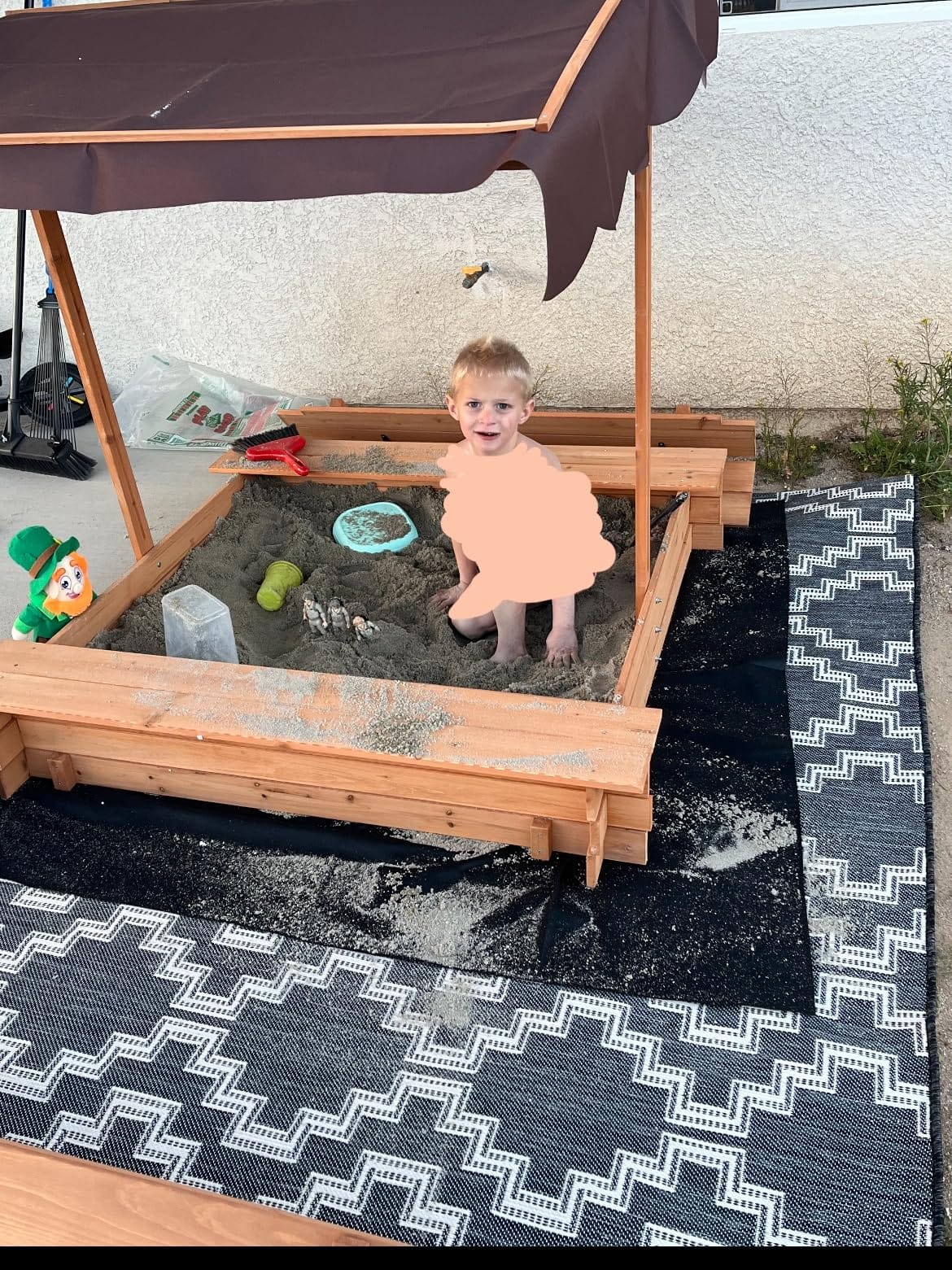
The bottomless design is a real advantage here. Sand depth is adjustable because the base is the ground itself, and drainage happens naturally. Assembly is reported at roughly 15 minutes with hardware and manual included.
Overall dimensions run 48 by 48 by 48 inches including the canopy frame, giving generous headroom for a standing child.
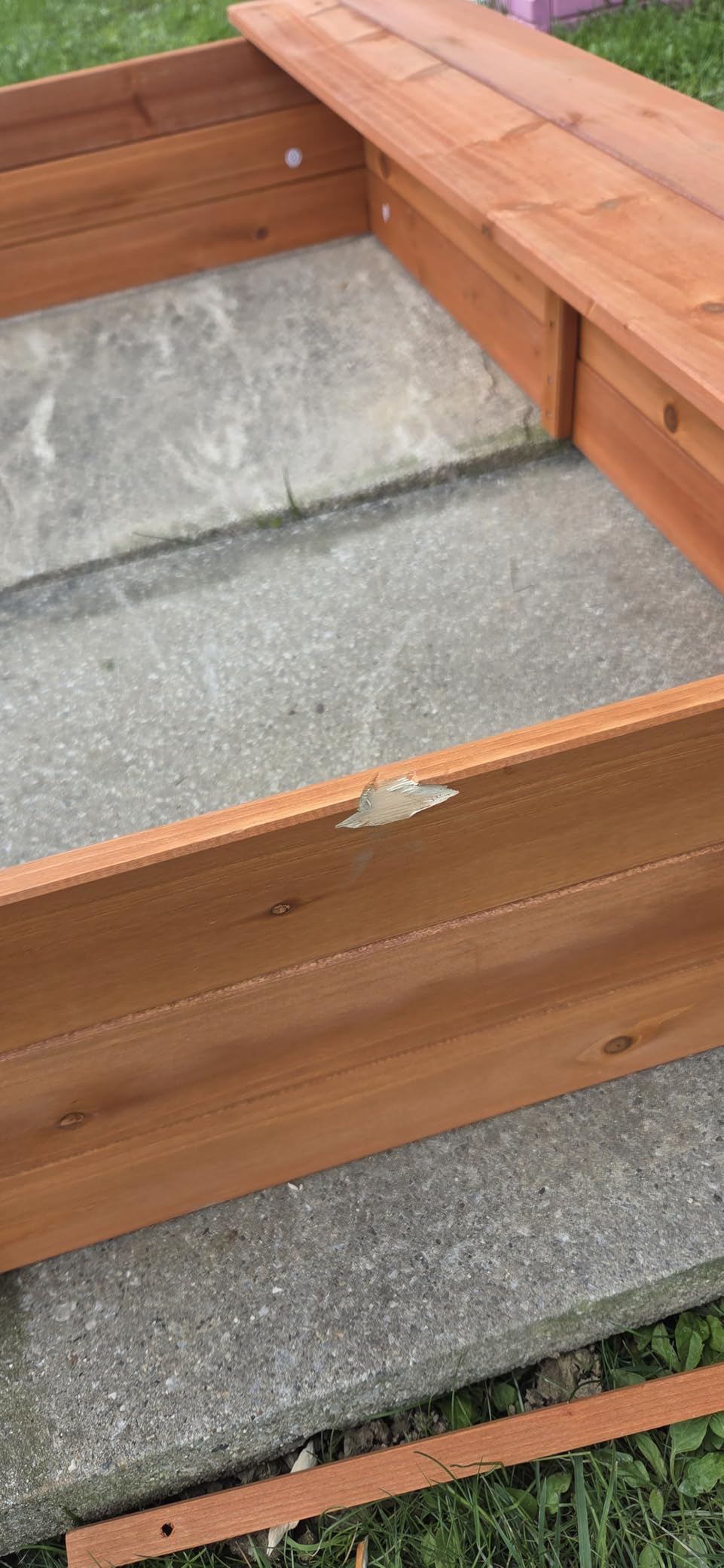
Watch the age label
The listing shows an age recommendation of 3 months and up in one place and over 3 years old in another. Treat this as a 3-and-up product. A 3-month-old in an open pit of play sand is not the use case the manufacturer is describing.
It carries the lowest average customer rating in this roundup at 4.0 stars, with reviewers pointing at build quality and value for money rather than any single failure point.
Species and canopy reality
Fir is a softer, less rot-resistant wood than cedar or hemlock. With a water-resistant finish and annual checks, it holds up; left untreated in a wet climate, it ages faster.
The canopy is fixed rather than closing over the pit, so the sand is only partly protected. Treat it as shade first, seal second.
8. Best Choice Products Octagon Sandbox 78in with Lid – Quick Solo Assembly
Best Choice Products Large Wooden Octagon Sandbox w/Lid for Kids, Brown
Heat-treated hemlock
78x78x9in octagon
Ages 24 months to 18 years
36.5 lbs total weight
Pros
- Wide 78 inch octagon with seating for 8
- Interlocking heat-treated hemlock panels
- Assembles in about 10 minutes
- Open bottom with liner for drainage and weed deterrence
Cons
- Cover is not fully waterproof and slows drying after heavy rain
- Fabric cover can break down within a first season
- Liner leaks sand if not stapled to the frame
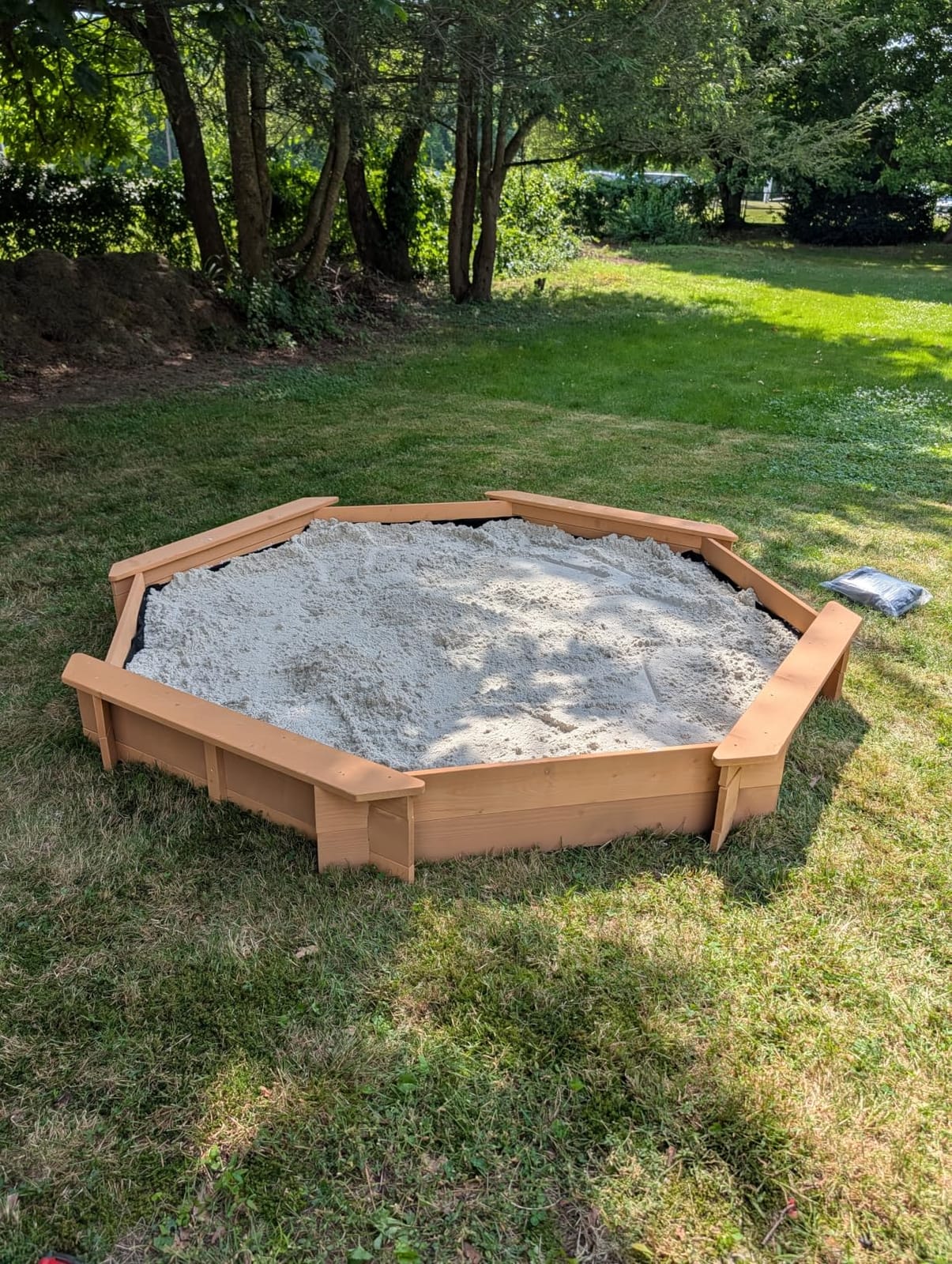
This octagon is the one to buy if two adults are not available. Owners report assembling it alone in roughly ten minutes from interlocking heat-treated hemlock panels. No mitred joints, no hardware bag to sort, just panels that slot together.
At 78 inches square with seating for eight and benches rated to 220 lbs each, it is a genuinely large group pit that is dramatically faster to put together than the 85-inch Mederra. The open bottom drains directly into the soil, and the included liner blocks weeds while letting water through.
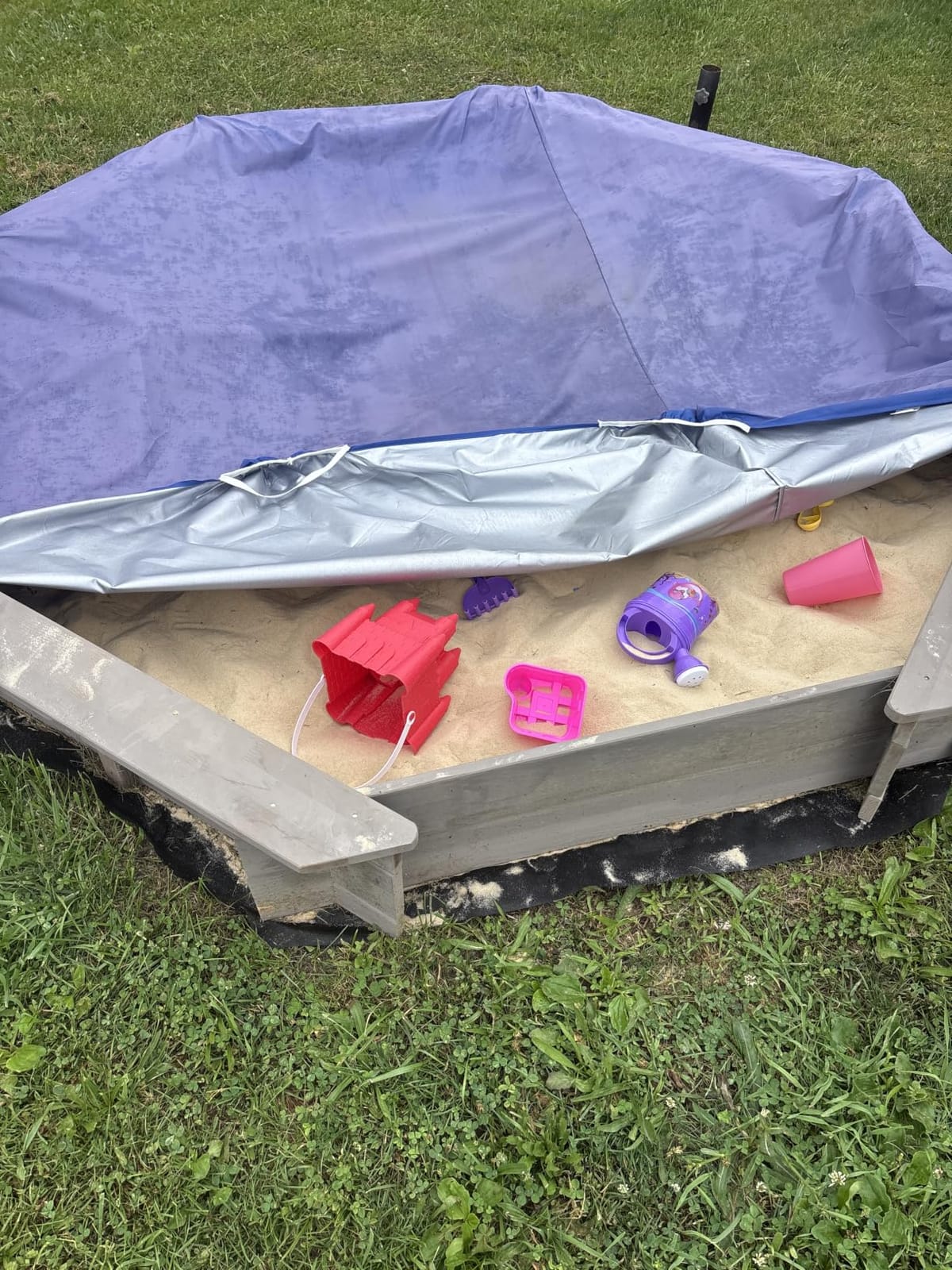
The age range listed is 24 months to 18 years, which tells you the manufacturer expects this to stay in use for a long time. Hemlock is a dense, rot-resistant softwood that holds shape better than fir in wet ground.
Owners also note that it holds a very large amount of sand, with reports of 18 to 20 bags and still room to spare. That is a lot of sand to buy and store, so plan your shed space.
Upgrade the cover from day one
The cover is the weak point, and it is honest to say so. It is UV and water resistant rather than waterproof, so after heavy rain the sand underneath stays wet and takes days to dry. Owners also report the fabric degrading within the first season of sun and wind.
Two fixes help: snap or strap the cover to the frame so it cannot billow, and open it after rain so the top layer can dry and be raked.
Fit and lining tips
The side seats are sized more for children than for adults. Adults will perch, not lounge, which is fine for supervision.
Staple the bottom liner to the inside of the frame yourself on day one. Owners report sand escaping into the ground when it is not secured, and this takes ten minutes to prevent a slow leak that is impossible to fix later.
9. YOLENY Sand Box with Lid and Rotating Canopy – Compact With a Serious Canopy
YOLENY Sandbox with Lid,Kids Sandbox with Cover Outdoor,Wooden Sand Box with 2 Foldable Bench Seats,Adjustable UV-Resistant Roof & Bottom Liner,Sand Box for Kids Ages 2-8, Perfect for Backyard,Beach
Treated spruce
43.7x43.7x43.3in
UV50 canopy
Ages 3 and up
47.8 lbs total weight
Pros
- 420D Oxford cloth canopy rated UV50 rotates 180 degrees
- Convertible bench set doubles as a protective lid
- Includes liner
- staples
- manual and install video
- Two benches with backrests rated to 200 lbs each
Cons
- Smallest pit here at 43.7 inches suits one or two children
- Treated softwood wears faster than cedar or hemlock
- Column and canopy hardware add assembly steps
The YOLENY is an entry-level covered sandbox with one standout feature: the canopy. The 420D Oxford cloth is rated UV50 and rotates 180 degrees with upgraded height adjusters, which is real midday shade from an otherwise compact box.
Its cover system is the convertible kind. The bench set folds down to become a lid, so unlike a pure canopy design you get a genuine seal over the sand, and the Oxford cloth liner with included staples keeps sand inside the frame and blocks animals from below.
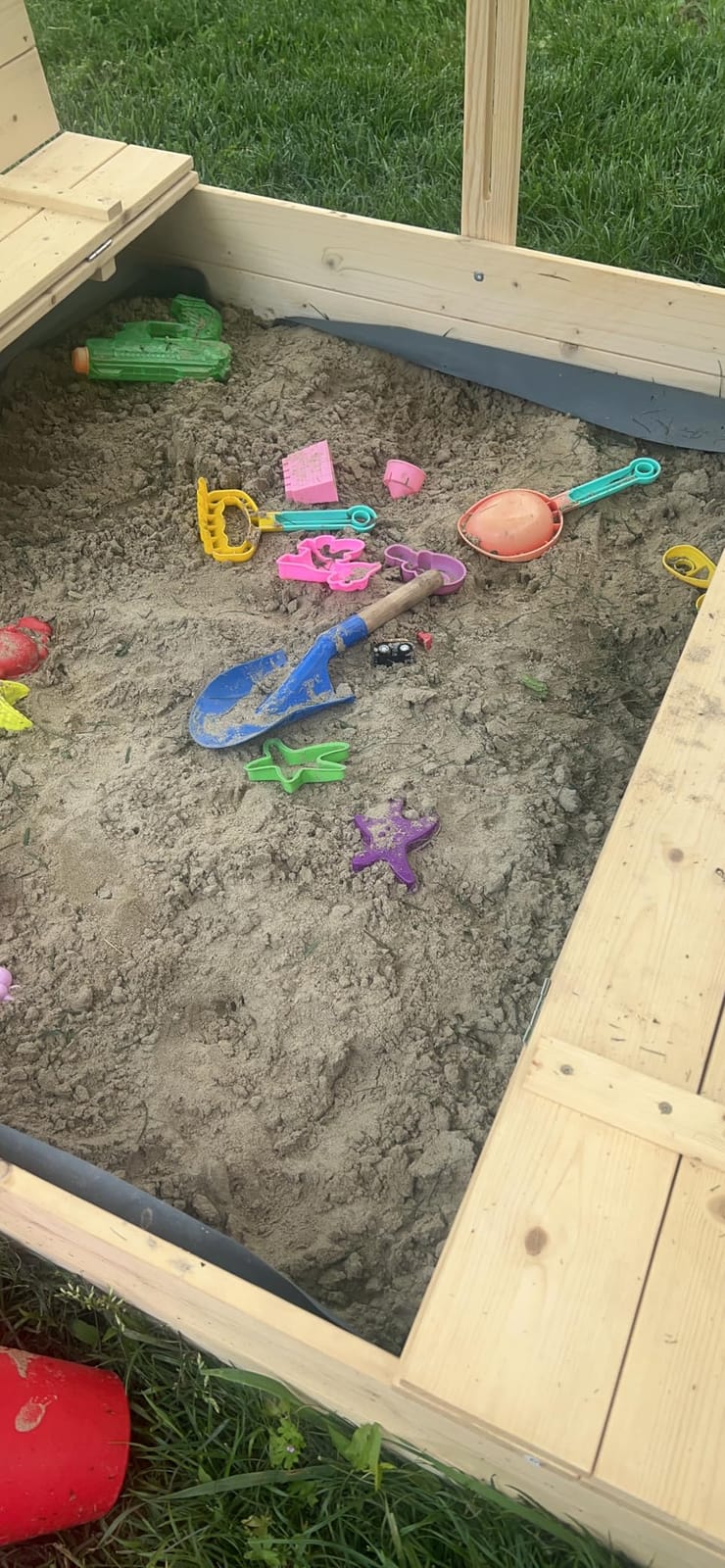
It holds up to 250 lbs of sand, which is generous for a pit this small, and both bench seats with backrests are rated to 200 lbs. The whole package includes a manual and an install video, which helps with the extra hardware the canopy column requires.
You can remove the column when you want the footprint back for storage or winter. That is a genuinely useful feature in a small yard.
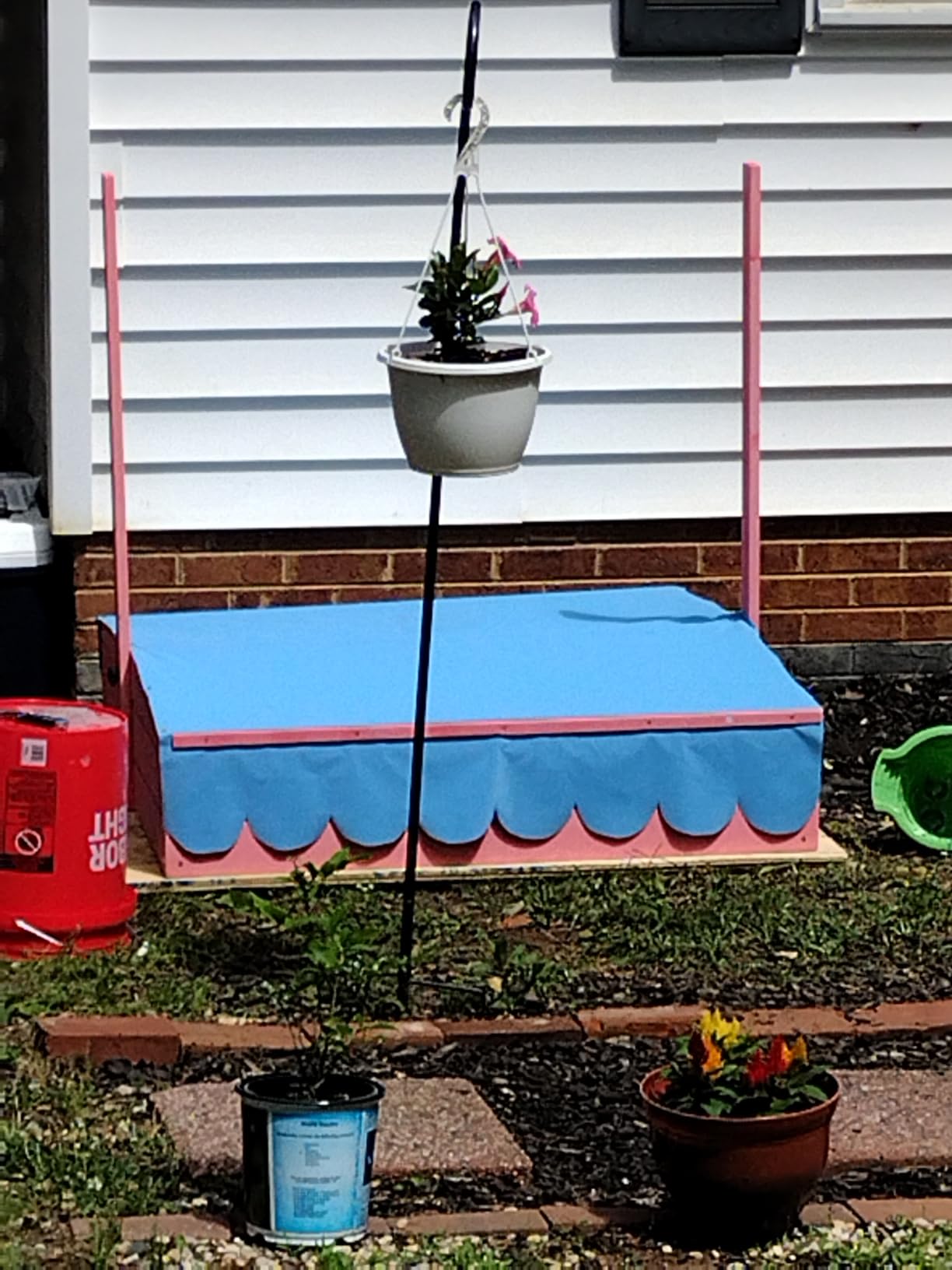
Right size for one or two
At 43.7 inches square, this is the smallest pit in the guide. It suits one or two children, or one child plus a supervising adult on the rim. Three kids in this pit will be elbows.
Plan on five to six bags of sand. Beyond that you are paying to fill the space between the sand and the lid.
Know the wood you are buying
Treated spruce is a softwood and wears faster than cedar or hemlock. Check the frame each spring for rough spots and sand them down before kids use it.
At 47.8 lbs for a 43.7 inch box, it is heavy per inch of footprint. Site it once and leave it.
10. Agitree Cedar Sandbox with Canopy and Storage – Toy Storage Under the Bench
Agitree Wooden Sandbox with Lid and Canopy for Kids Ages 3-8, 47″ Outdoor Sand Box with Foldable Storage Bench Seats, Bottom Liner Included
Heat-treated fir
47x47in
Ages 3 to 8
360 degree canopy
Pros
- 360 degree rotating height-adjustable canopy gives all-day shade
- Benches fold into separate cover panels
- Under-seat compartment stores beach and sand toys
- Closed lid doubles as extra seating
Cons
- Highest share of one-star reviews among wooden options at 12 percent
- Cover and canopy mechanisms add roughly 30 minutes of assembly
- Canopy and roof hardware are common failure points
The Agitree solves a problem most sandboxes ignore: where do the toys go. There is a storage compartment built under the bench seats, so buckets, shovels, and molds live with the box rather than scattered across the patio. The closed lid doubles as extra seating when the cover is down.
The canopy rotates 360 degrees and adjusts in height, so you can follow the sun around the yard with a single unit instead of moving the whole sandbox. Combined with the fold-down bench cover panels, you get both shade during play and debris protection between sessions.
The frame is heat-treated fir with an eco-friendly water-based paint and stain. At 47 by 47 inches it sits in the standard size band, with benches rated to 200 lbs and ages 3 to 8.
It is also the most feature-dense box in this guide, and that cuts both ways. The same complexity that gives you rotating shade and hidden storage is what makes assembly take about 30 minutes instead of 10.
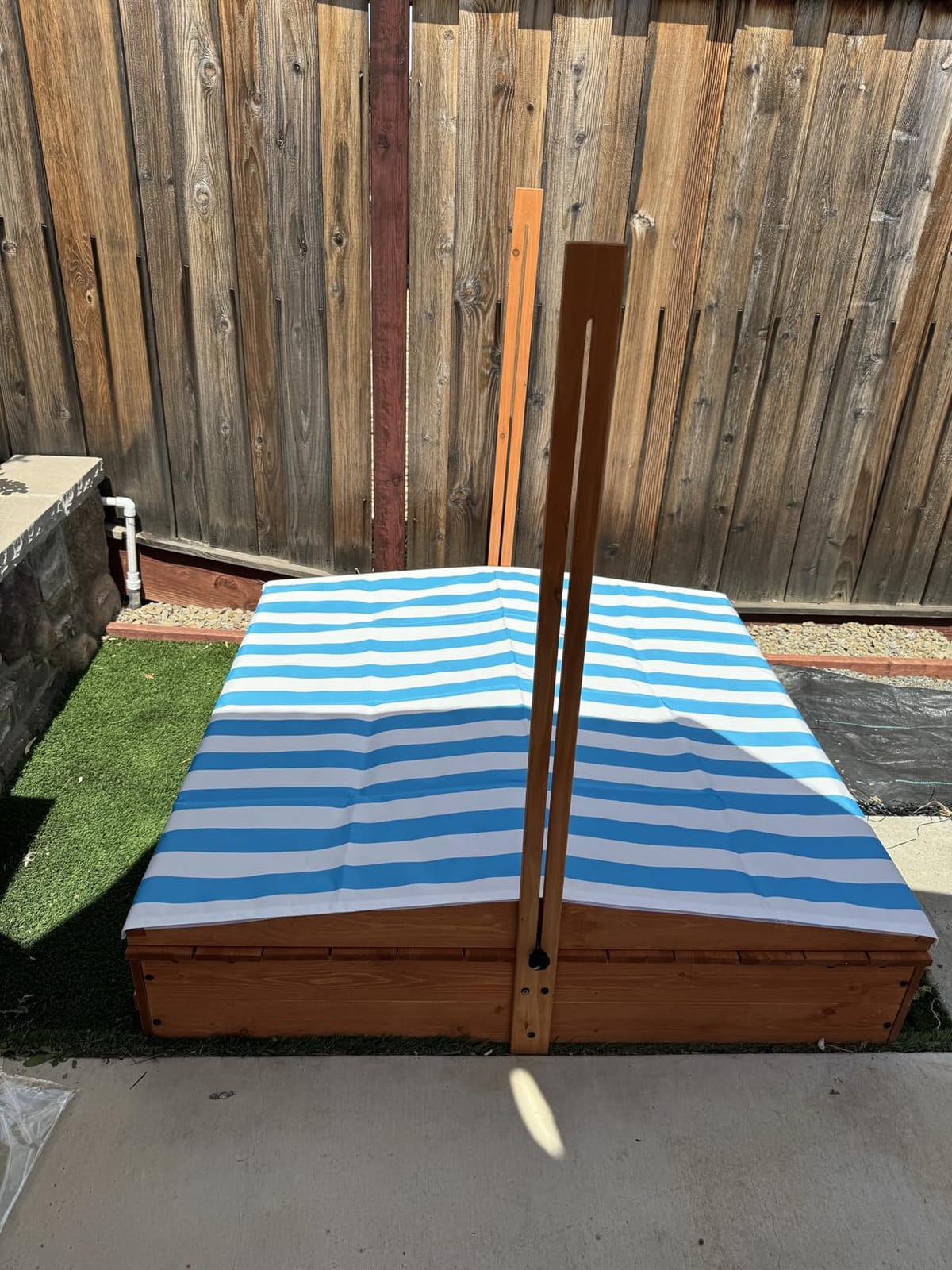
Read the hardware reviews carefully
This model carries the highest one-star share among the wooden options at 12 percent. Feedback points at the canopy and roof hardware as the recurring failure point, and the pattern suggests the moving parts are the weak link rather than the wood frame itself.
If you buy it, check every screw and cam fitting during assembly, and tighten the canopy hardware twice in the first month as things settle.
Value versus the simpler boxes
You are paying for features here: rotating shade, hidden storage, and dual-purpose benches. A plain convertible box gives you a better seal for less money, and the reviews reflect that split.
Worth it if your yard gets strong afternoon sun or your toys are a constant mess. Skip it if you want the simplest possible cover mechanism.
11. Outsunny Wooden Sand Box with Lid and Canopy – Small Footprint, Quick Build
Outsunny Wooden Sandbox with Lid Canopy for Aged 3-7 47X47 in Brown
Fir wood with canopy
41.7x41.7x45.3in
Ages 36 months to 7 years
Pros
- Adjustable canopy blocks sun from any angle and keeps kids dry
- Removable bench seats free up extra play space
- Non-woven fabric liner held by wooden plates drains water
- Detachable design stores compactly
Cons
- Smallest play area in the roundup at 41.7 inches
- Bench wood is thin and not built for adult weight
- Canvas faded within the first week in owner reports
The Outsunny is the pick when yard space is the limiting factor. At 41.7 inches square it is the smallest canopy sandbox in the guide, and the detachable design means you can break it down in winter and reclaim the patio.
The adjustable canopy blocks sunlight from any angle and keeps a child dry in a light shower. Two removable bench seats with backrests can be lifted out entirely when you want more open sand, which is a small touch that makes a compact pit feel less cramped.
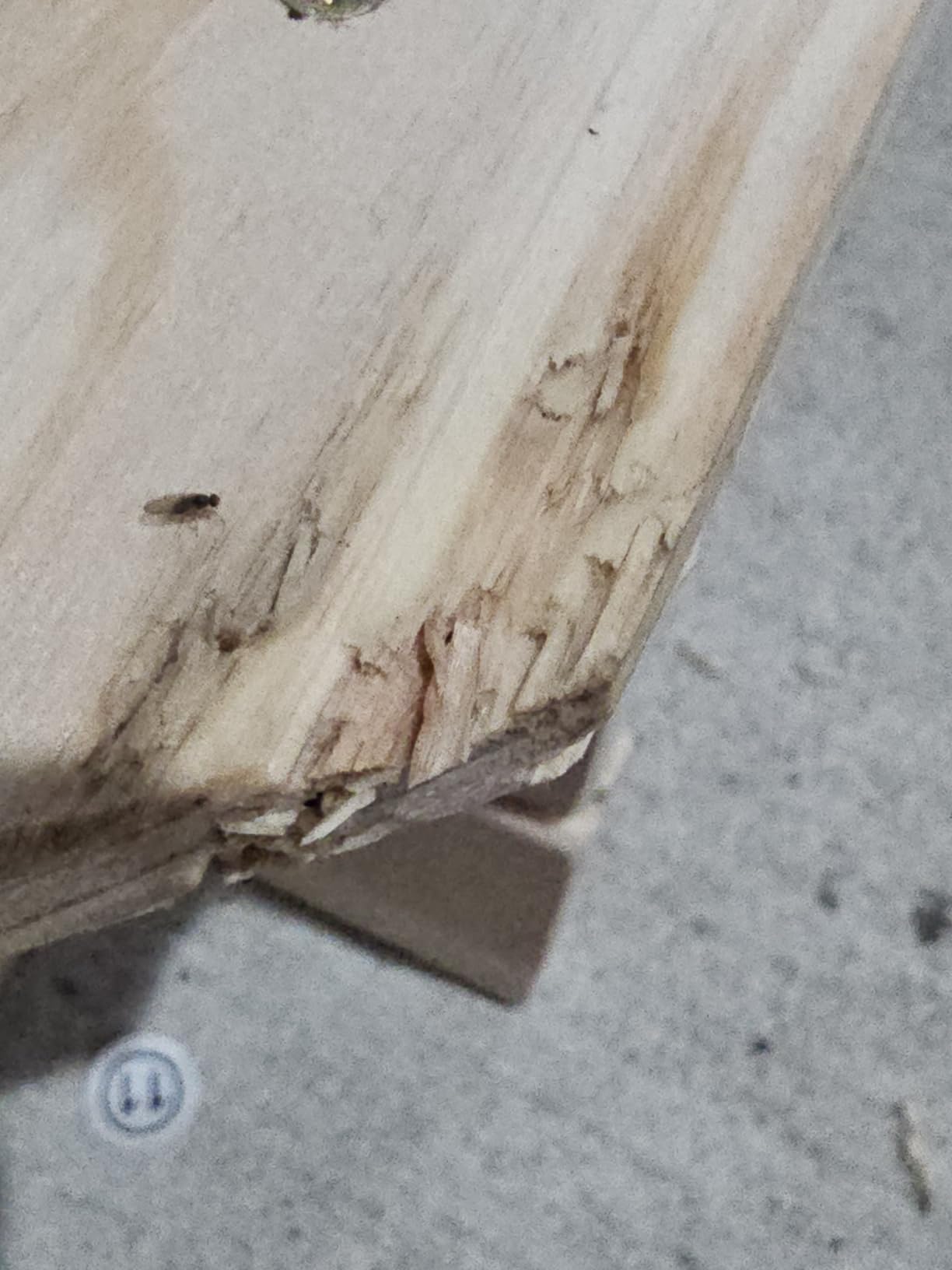
The non-woven fabric liner is held in place by wooden plates rather than staples, which drains water and contains sand without the slow leak you get from a loose liner. Assembly is straightforward, and the manufacturer lists ages 3 through 7.
Solid fir wood carries a water-based paint finish, and there is a 1 year warranty against defects.
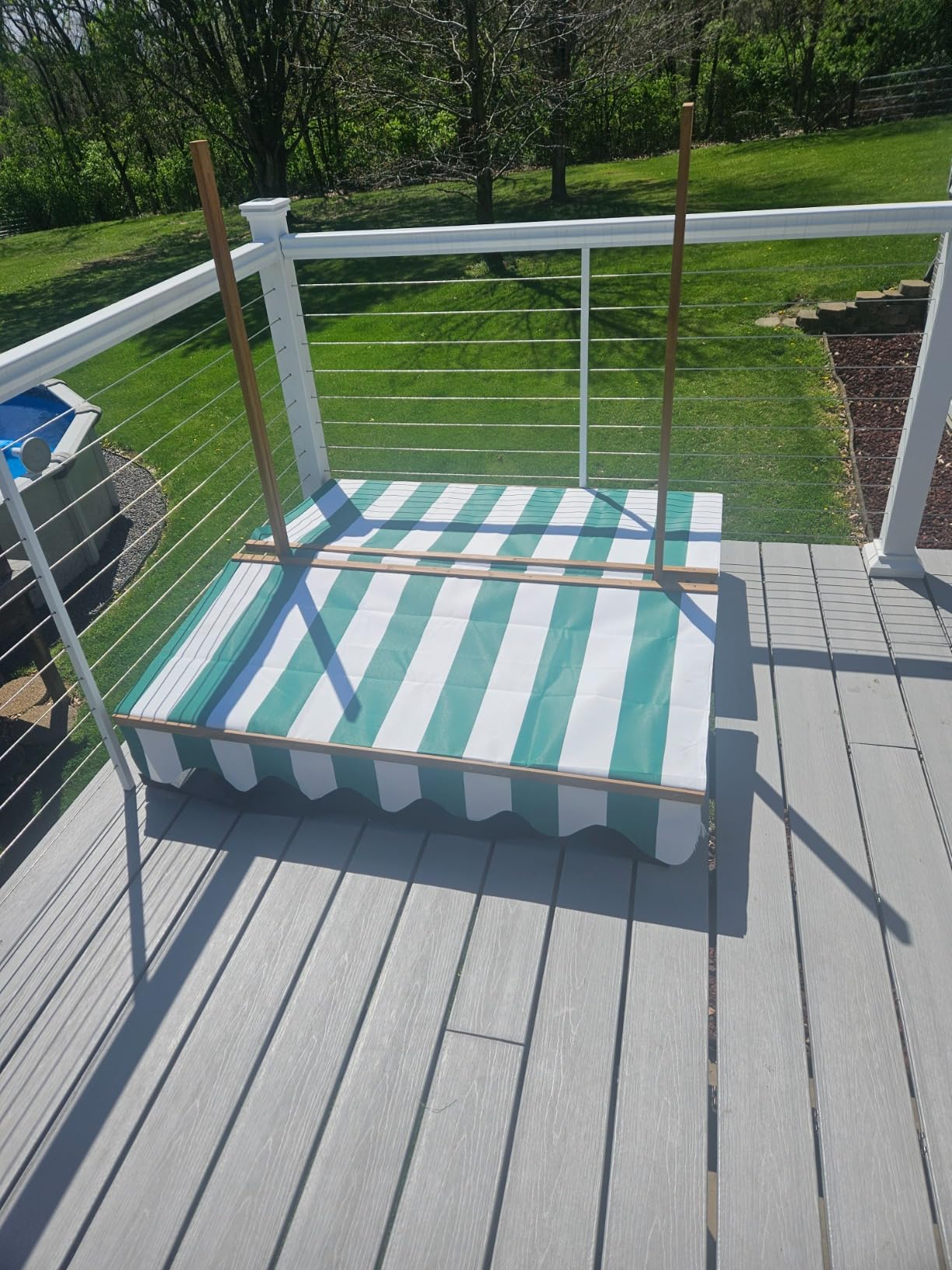
What the weight rating really means
The listed maximum weight is 50 lbs, which is far below the sibling units in this guide at 200 to 300 lbs. That tells you the structure is built for children, not for an adult sitting on the rim.
Plan on standing supervision rather than sitting beside the box. If you want to sit and dig with your child, choose a model with a 200 lb bench rating.
Buy it for the canopy, expect the fade
Owners report the canvas fading to a dingy yellow within the first week and finding it hard to raise and lower. Treat the canopy as seasonal shade rather than a long-term fixture, and have a replacement cover plan by year two.
Some owners also received cracked or damaged boards, so inspect the package on arrival before you start building.
12. Pipleo Wooden Sand Box with Funnel and Drawing Board – Most Ways to Play
Kids Large Wooden SandBoxes with Roof, Pipleo Outdoor Sand Box Play w/Canopy for Backyard Garden Beach, Sand Pit for Beach Patio Outdoor, [Adjustable Cover & Funnel & Drawing Board] – Brown Oak
Heat-treated fir
44x40.3x44in
Holds 250 lbs of sand
Ages 12 months and up
Pros
- Funnel
- spiral chute
- buckets
- faucet and drawing board extend play
- Retractable waterproof canopy with adjustable height
- ASTM and CPSIA certified with non-toxic paint
- Black liner and Oxford cover keep sand dry
Cons
- Assembly takes 1 to 2 hours with all the accessories included
- Canopy down under heavy rain can stress the middle boards
- Narrower footprint than the 47 inch wooden models
The Pipleo is a sandbox with an activity wall attached, and that is the point. A sand funnel, a spiral chute, a sand wall, two plastic buckets, a sink with a faucet, and a drawing board give kids six different ways to play in a footprint barely larger than a standard 47 inch box.
For a child who has already decided sandcasting is boring, the extra stations are what keep the box interesting past the first summer. The drawing board in particular turns a messy outdoor activity into something with a finish line.
![Kids Large Wooden SandBoxes with Roof, Pipleo Outdoor Sand Box Play w/Canopy for Backyard Garden Beach, Sand Pit for Beach Patio Outdoor, [Adjustable Cover & Funnel & Drawing Board] - Brown Oak customer photo 1](https://www.spencerlocke.net/wp-content/uploads/2026/09/B0C7Z3CQ1P_customer_1.jpg)
It is also certified to ASTM and CPSIA standards, and the heat-treated fir carries a non-toxic water-based paint with splinter-free surfaces. The retractable canopy is waterproof and adjustable in height, and the black liner and Oxford cover hold 250 lbs of sand.
Maximum recommended weight is 250 lbs, and manufacturer guidance starts at 12 months.
![Kids Large Wooden SandBoxes with Roof, Pipleo Outdoor Sand Box Play w/Canopy for Backyard Garden Beach, Sand Pit for Beach Patio Outdoor, [Adjustable Cover & Funnel & Drawing Board] - Brown Oak customer photo 2](https://www.spencerlocke.net/wp-content/uploads/2026/09/B0C7Z3CQ1P_customer_2.jpg)
Budget your build time honestly
Owners report 1 to 2 hours of assembly because of the number of accessories. Every funnel, chute, and faucet is another fitting to align, and the instructions assume you are not rushing.
Set aside a Saturday, and assemble before you buy sand. The parts are pre-cut and pre-drilled, which keeps the work to patience rather than tools.
What the activity wall costs you
The narrower 44 by 40.3 inch footprint leaves less open digging space than a plain 48 inch box, because some of the pit is occupied by the activity wall and accessories.
Owners also note that leaving the canopy down under heavy rain can stress the middle boards. Open it after a downpour and let the frame breathe.
How to Choose a Covered Sandbox: Cover Types, Size and Sand
Four cover mechanisms, explained
A hard hinged lid drops straight down onto the frame. It seals best and needs no fabric, but it occupies space above the pit and gives no shade.
A convertible bench lid is the mechanism on products 1, 3, 9, and 10. The same boards that seat kids during play fold down to cover the sand. It is the best balance of seating, sealing, and simplicity, and it is our default recommendation.
A retractable or adjustable canopy roof slides or pivots over the pit. It gives shade and partial weather protection, but fabric is a weak point in wind and sun.
A soft fabric or tarp cover is the cheapest mechanism and the least reliable. Several models in this roundup include one, and owners consistently report it lifting in wind, pooling rainwater, or degrading inside a year. Snaps and straps are a worthwhile add-on.
Size the pit to the number of children
A rough rule of thumb is 3 to 4 square feet of sand surface per child. A 41 to 44 inch pit gives about 12 to 15 square feet, which suits one or two children. A 47 to 48 inch pit lands near 19 square feet, which works for two to three.
Anything above 78 inches is group-play territory, seating six or more, and needs a correspondingly large yard.
Height matters more than parents expect. A 9 inch wall is easy to dig over, and a canopy frame gives 43 to 52 inches of headroom depending on the model.
How much sand to buy
Buy sand in 40 lb bags and fill to a depth where the layer is roughly even and still below the top of the walls. Plan on 4 to 6 bags for a 41 to 44 inch pit, 8 to 10 bags for a 47 to 48 inch pit, and 15 to 20 bags for the 78 and 85 inch octagons.
Order all your sand at once if you can. A single batch behaves consistently in texture, and mismatched sand grades feel strange underfoot.
If you plan to store sand in winter, buy a sand screen or tarp and keep it off the ground so it does not absorb moisture and freeze into a solid block.
Choosing and replacing play sand
Look for sand labelled as play sand, playground sand, or washed fine sand rather than construction sand or beach sand. Construction sand can contain sharp or dusty particles, and beach sand is coarse and gritty for small hands.
For health, choose a product labelled non-toxic and free of silica dust, and never let children play in sand that has been exposed to pet waste. Replacing sand once a year is standard practice, and once immediately if a pet has used it.
Cover the box between sessions, scoop out visible debris, and rake the surface before refilling. That routine alone keeps most boxes fresh for a year.
Maintenance and end-of-season storage
Open the cover after rain even if the sand is dry, so trapped moisture can escape. Fabric covers in particular develop mildew if they sit wet and folded for weeks.
In autumn, sift out leaves, remove the liner, and let the frame dry fully before covering it. A mildewed canvas cover replaced at the start of spring costs far less than discovering it after the first warm week.
Check wooden frames each spring for raised grain, rough joints, or loose screws, and sand any splinters down before children use them. Heat-treated cedar needs less of this than softwood, but no wood is maintenance free.
Storage gear matters here as much as the box. If you are already kitting out a garage for winter, our snowmobile covers guide covers the same fitted-cover logic, and our truck seat covers roundup covers the UV-resistant fabric question from a different angle.
When a tarp retrofit makes more sense than buying new
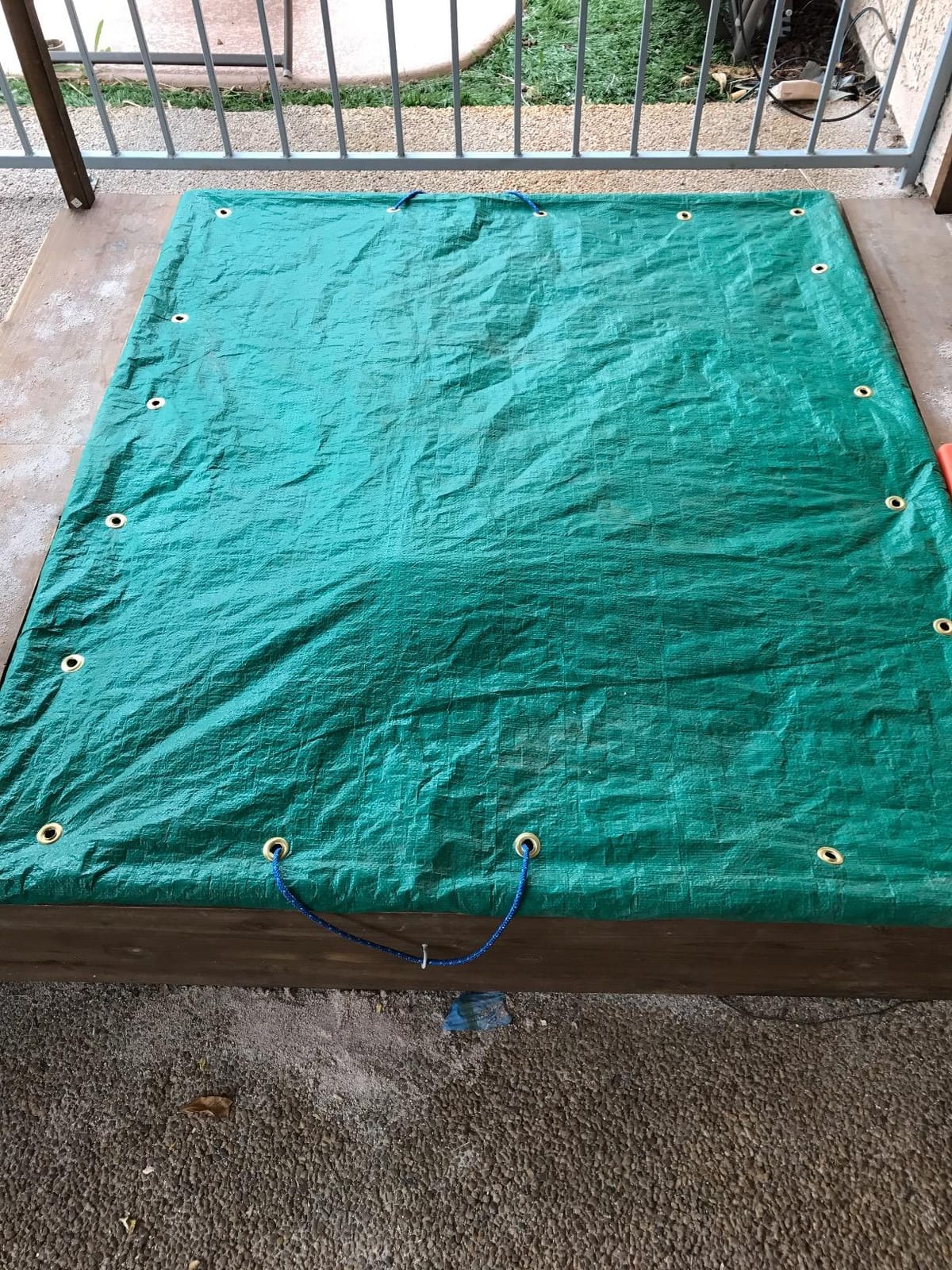
If you already own a working sandbox, a fitted cover with grommets and a ratchet strap is a legitimate option. It will not seal like a bench lid and it will not stop determined paws, but it stops rain washout and most leaf litter. Getting the grommet spacing and strap tension right matters as much as the material, and our aircraft covers guide explains the fitting details for anyone who wants to know how a tight cover should behave.
Buy new when you also need more capacity, seating for several kids, or a structure that will last. Skip new when your only real problem is a wet pit between rain showers.
How much play sand does a sandbox need?
Fill the pit to a depth that leaves the cover or canopy clear of the sand and keeps the load within the frame rating. For most 47 to 48 inch wooden boxes that is 8 to 10 bags of 40 lb play sand. Larger octagons at 78 and 85 inches need 15 to 20 bags.
Do not overfill. Sand that presses against the lid transfers load into the hinges, which is the most common cause of the hardware failures owners report in this category.
If you want more play value per bag, a good shovel set and a few rigid molds do more than doubling the sand depth does.
Frequently Asked Questions
What is the best sand box for kids with a lid?
For most families the Best Choice Products 47-inch cedar sand box is the strongest all-round pick, because its two benches fold down to form a split lid over the sand. Choose the Aivituvin 47-inch box if midday shade matters more than a tight seal, the Badger Basket cedar box for the best solid-wood build, or the Step2 plastic table if you want zero assembly and toddler-scale play.
Should sandboxes be covered?
Yes, whenever the box is not in use. A cover keeps rain from washing fine play sand out of the pit, blocks leaves and grass clippings, and is the standard way to stop neighborhood cats from using an open sandbox as a litter box. A tight cover also keeps sand dry, which is easier on small hands and cuts down on how often you need to replace it. A cover does not stop sand being fluffed over the sides during play, so plan on a ground cloth if spills bother you.
What is the best way to cover a sandbox?
The most reliable method is a convertible bench lid, where the same boards that seat children fold down to close over the pit. It seals without fabric, cannot be blown away, and leaves no separate cover to store. A retractable or adjustable canopy is the best option when you want shade for the child during play. A soft fabric or tarp cover is the cheapest but the least durable, and needs snaps or straps to stay attached in wind. Whichever you choose, leave a small gap for drainage and dry the cover before folding it away.
What is the healthiest play sand for children?
Buy sand labelled as play sand, playground sand, or washed fine sand, and choose a product marked non-toxic and free of silica dust. Avoid construction sand, which can be coarse or dusty, and beach sand, which is gritty for small hands. Keep the box covered when not in use, remove any visible animal waste straight away, wash hands after play, and replace the sand once a year or immediately after any pet contamination.
What age is appropriate for sandbox?
Sensory sand play works well from around 12 months with a shallow, low-walled table. A 47 to 48 inch wooden box with benches is usually best from age 3, since children need enough legroom to sit and enough depth to dig. Canopy models with a stated age of 3 to 8 suit toddlers through early school age. Always check the listing, because a few models show inconsistent age labels, and supervise younger children closely around bench hinges.
What are the pros and cons of having a sandbox at home?
The pros are real: open-ended physical play, sensory development, cooperative play with siblings, and hours of screen-free entertainment in the yard. A covered sandbox adds sanitation, weather protection, and a bench for adults to sit on. The cons are the sand. It gets tracked indoors, it blows around in wind, and it has to be replaced periodically. A ground cloth, a broom, and a firm decision about where the box goes solve most of the mess before you buy anything.
The Best Covered Sandbox for Your Family in 2026
The Best Choice Products 47-inch cedar box remains our top pick for the best sandboxes with covers for kids in 2026. Its benches fold into a split lid, the cedar is heat-treated, and the open bottom drains properly, which is the combination we could not improve on across 12 models. It also carries more customer reviews than anything else in this roundup, so its pros and cons are well documented rather than surprising.
Buy the Aivituvin canopy box if shade at midday is the priority, the Badger Basket if you want the best solid cedar build, and the Step2 plastic table if zero assembly and easy cleaning matter most. For a group of six or more, the Mederra and Best Choice octagons are the only pits in this guide sized for them.
Whichever you choose, buy the sand in one order, staple the liner down on day one, and check the cover hardware before winter. Those three habits decide whether the box is still pleasant to use two seasons from now.