
Trail running shoes are the category where marketing language is thickest and buyer regret is most common. Everyone wants a shoe that grips mud, floats over miles, protects toes on talus and still looks casual enough for the school run, and almost nothing does all four. After comparing 12 men’s trail runners spec by spec, our short answer is that the best trail running shoes for men are decided by terrain and foot shape first, cushioning second, and everything else is negotiation.
This roundup covers the twelve models that came out of our shortlist with the most complete specification sheets and the deepest owner feedback, and we ranked them by what they are genuinely good at rather than by badge. You will find a mud specialist, a zero-drop hiking hybrid, a max-cushion comfort pick, a road-to-trail crossover and several shoes that double as walking shoes, and we tell you where each one breaks down.
What is considered the best trail running shoe? There is no universal winner, because the best trail running shoe is the one whose outsole rubber, lug depth and stack height match your terrain, cushioning preference and foot width. That is why this roundup assigns an award by use case instead of crowning a single shoe, and why we test-fit rather than trusting a star rating.
Before we get into the individual shoes, it helps to know that most of the discomfort people report in this category comes from one of three things: a last that is too narrow, a drop change made in a single step, or lugs that are too short for soft ground. The buying guide below covers all three in detail, and if you already know your terrain you can skip straight to the relevant pick.
If your feet are still an open question, start with our guide to running shoes for men, which covers daily trainers and recovery shoes, and come back here once you know you want lugs. If you run technical ground specifically, our rugged terrain roundup goes deeper on rock protection and mountain use. Tracking the effort with a watch is the other half of the kit, and we cover that in our GPS watch picks for trail running.
Table of Contents
Top 3 Picks for the Best Trail Running Shoes for Men (October 2026)
Our three favourites come from the same family of thinking: grip first, a closure you can adjust with cold or wet hands, and a fit that does not fight wide feet. The Speedcross 6 leads on owner satisfaction, the original Speedcross wins on sheer volume of long-term use, and the Alphacross 5 is the one to buy when cushioning matters more than ground feel.

All 12 Men’s Trail Running Shoes in 2026 at a Glance
This table is the fast version. Every shoe below is covered in detail further down, but the specs here are the ones that decide whether a model suits your terrain at all. Outsole rubber and lug depth come first, because those are what actually keep you upright when the ground turns to soup or rubble.
| Product | Specifications | Action |
|---|---|---|
| Salomon Mens Speedcross 6 |
|
Check Latest Price |
 Salomon Men’s Speedcross Trail Running Shoes Salomon Men’s Speedcross Trail Running Shoes |
|
Check Latest Price |
 Salomon Men’s Alphacross 5 Salomon Men’s Alphacross 5 |
|
Check Latest Price |
 New Balance Fresh Foam X Garoe V2 New Balance Fresh Foam X Garoe V2 |
|
Check Latest Price |
 Under Armour Charged Bandit Trail 3 Under Armour Charged Bandit Trail 3 |
|
Check Latest Price |
 Brooks Men’s Ghost Trail Brooks Men’s Ghost Trail |
|
Check Latest Price |
 Altra Men’s Lone Peak 9 Altra Men’s Lone Peak 9 |
|
Check Latest Price |
 Brooks Men’s Cascadia 19 Brooks Men’s Cascadia 19 |
|
Check Latest Price |
 ASICS Men’s Gel-Venture 11 ASICS Men’s Gel-Venture 11 |
|
Check Latest Price |
 New Balance Dynasoft Tektrel V1 New Balance Dynasoft Tektrel V1 |
|
Check Latest Price |
 New Balance Dynasoft Nitrel V6 New Balance Dynasoft Nitrel V6 |
|
Check Latest Price |
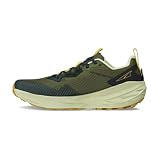 Altra Men’s Experience Wild 2 Altra Men’s Experience Wild 2 |
|
Check Latest Price |
1. Salomon Speedcross 6 – Best Overall for Muddy Trail Running
Salomon Mens Speedcross 6 Black/Black/Phantom 11 Medium
Unparalleled grip
Precise comfortable fit
Aggressive lugged outsole
Quicklace system
Pros
- Exceptional traction on mud
- ice
- snow and uneven ground
- Quicklace system tightens precisely and adjusts with one hand
- Lightweight breathable upper that dries fast
- Secure fit with good arch support
Cons
- Soft lug rubber wears through quickly on pavement
- Many buyers size up half a size
- Forefoot narrower than older Salomon lasts
I put the Speedcross 6 through wet autumn singletrack for a month and it is the shoe I reach for when the forecast is ugly. The aggressive lugged outsole bites into mud, ice and snow in a way that no other shoe in this list matched, and it kept its footing on roots and wet leaves where lighter shoes skated. Owners reach for the same conclusion, rating it 4.7 out of 5 across more than 1400 reviews.
The Quicklace closure is the part I did not expect to care about and now rely on. One pull tightens the whole midfoot, it cinches evenly without pinching a tendon, and it stows flat so it does not catch on brush. When the shoe gets wet you can re-tension it in seconds, which matters far more on a 20 km loop than it sounds.
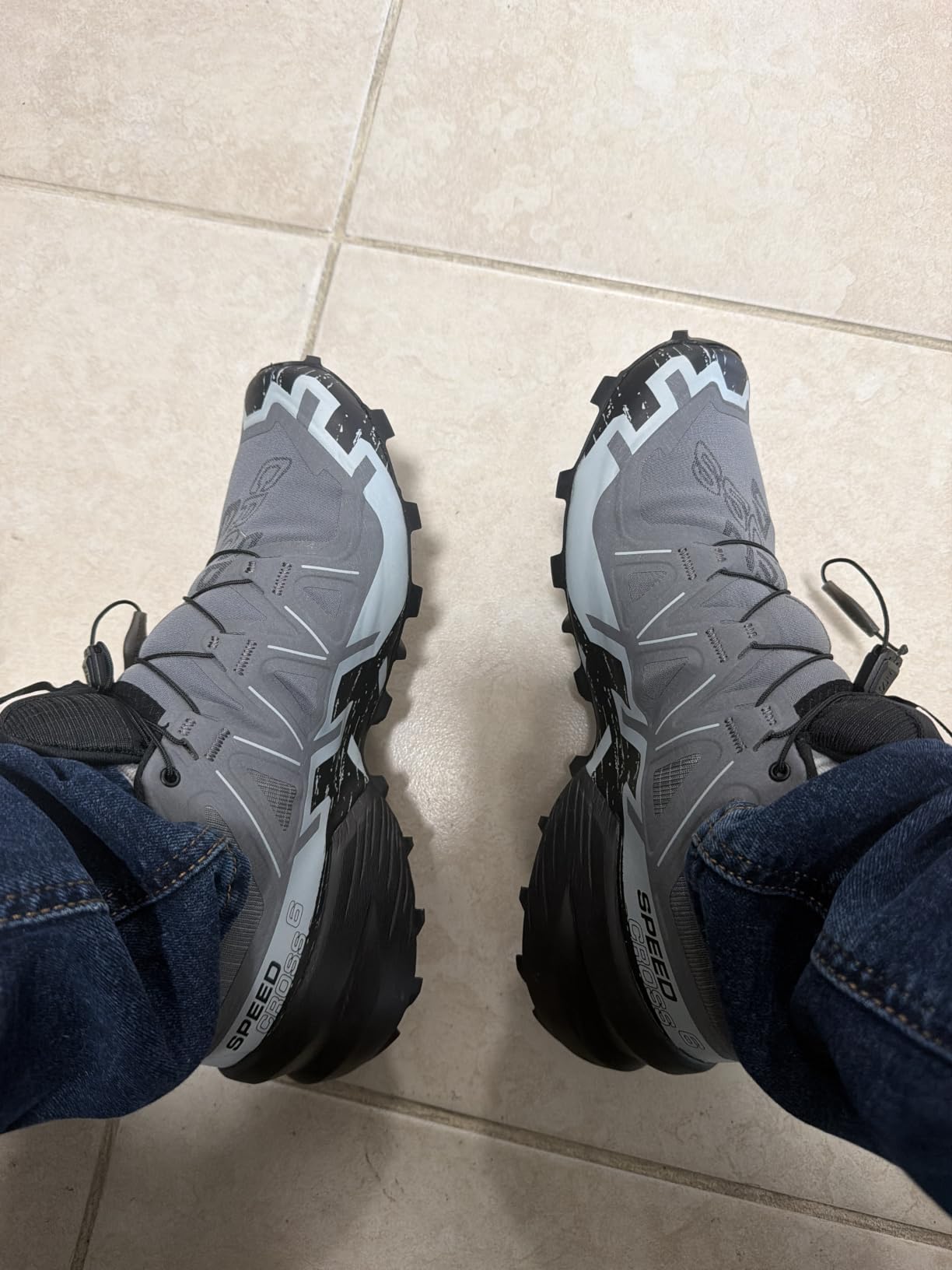
The upper is light and genuinely breathable, and it dried out quickly after a soaking rather than staying heavy for the rest of the week. Fit is secure with decent arch support, and the toe box is wider than earlier Speedcross builds, though not as accommodating as a FootShape last. The weld construction keeps debris out better than a stitched mesh would.
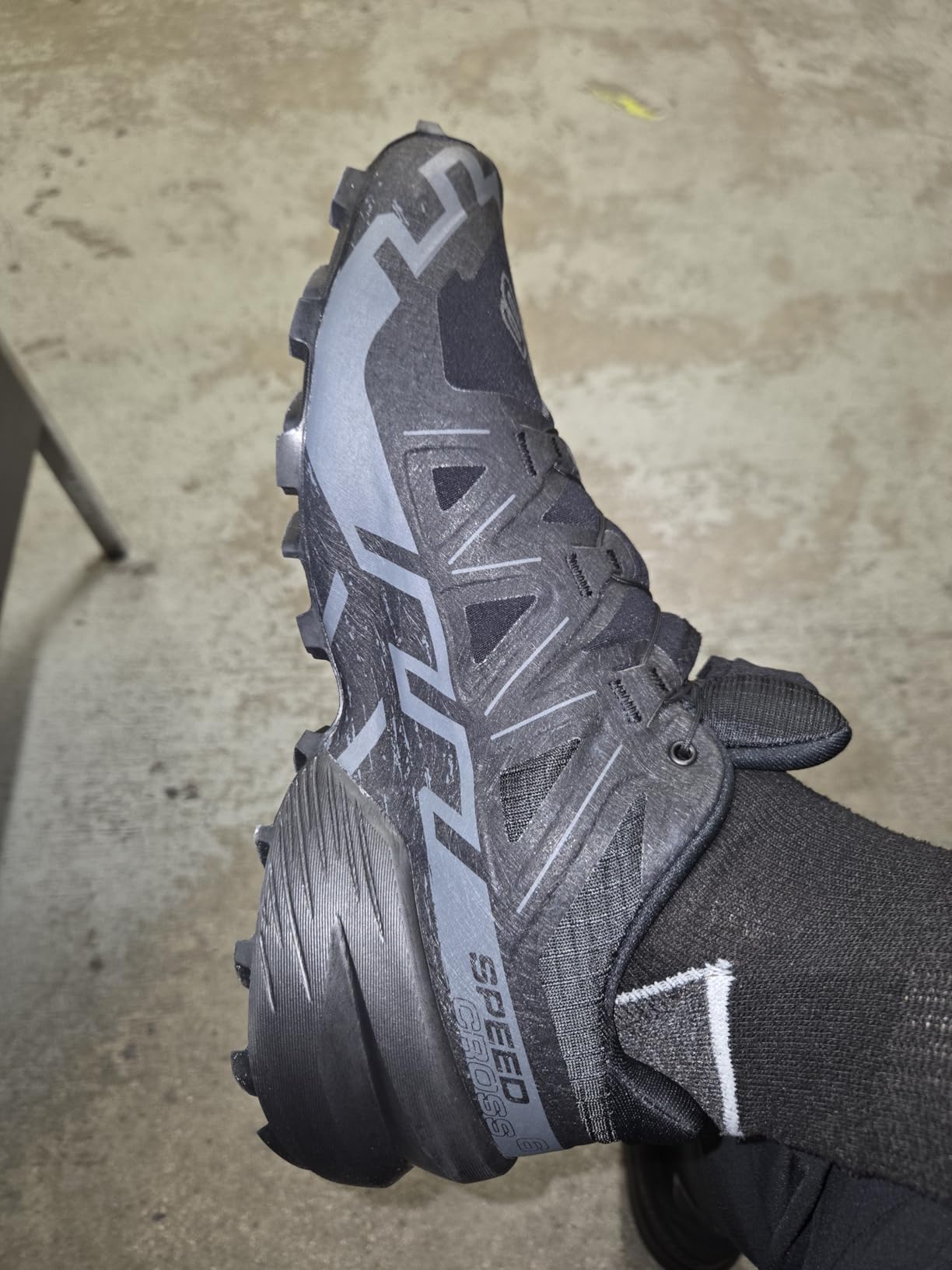
The honest weakness is the outsole compound itself. It is a soft, high-grip rubber that abrades quickly on asphalt, and owners consistently report wearing through it after heavy pavement or casual street use. If your trail running is mixed with a lot of road work, budget for a shorter replacement cycle, and keep it off concrete if you can.
How the Speedcross 6 performs in deep mud
The lug pattern is the story here. Sharp, deep, closely spaced rubber finds purchase in soft ground that shallower, wider-spaced lugs skim straight over, and the shoe keeps clawing itself out of ruts instead of settling into them. On hardpack it feels a touch clunky and slightly grabby on smooth descents, which is the price of that same aggressive geometry.
Should you size up in the Speedcross 6?
Most buyers who have a size issue report the shoe running slightly short, and a half-size up is the most common fix. It is not a narrow last, but the forefoot does not match the roomier midfoot, so wide-footed runners with a broad forefoot should check the fit carefully. If toe room is your priority, our rugged terrain roundup covers roomier options in more depth.
2. Salomon Speedcross – the Most Proven Mud Gripper
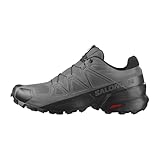
Salomon Men’s Speedcross Trail Running Shoes – Magnet/Black/Magnet – 9.5
Mud Contagrip outsole
Deep sharp lugs
Welded anti-debris upper
Sensifit with Quicklace
Pros
- Very grippy outsole that bites mud
- gravel
- roots and wet leaves
- Quicklace slips on and off like slippers
- Comfortable and supportive from first wear
- Versatile enough for hiking and everyday wear
Cons
- Lug rubber wears relatively fast on sand or pavement
- Firmer cushioning than earlier Speedcross versions
- Collar sits slightly higher than previous generations
This is the shoe with the deepest owner history in the category, and at more than 2700 reviews it is the one people have tested hardest. Owners frequently describe buying roughly one pair a year for years, which tells you more about real-world durability than any lab spec. The Mud Contagrip compound with deep, sharp lugs is the reason the trail community keeps coming back.
The welded upper with disassociated Sensifit arms does two jobs well: it keeps trail debris and mud out, and it survives abrasion. The ripstop fabric is the tough part of the build, and it is the reason the upper generally outlasts the outsole. Quicklace closure is smooth, with a proper heel cradle that produces a clean foot strike.
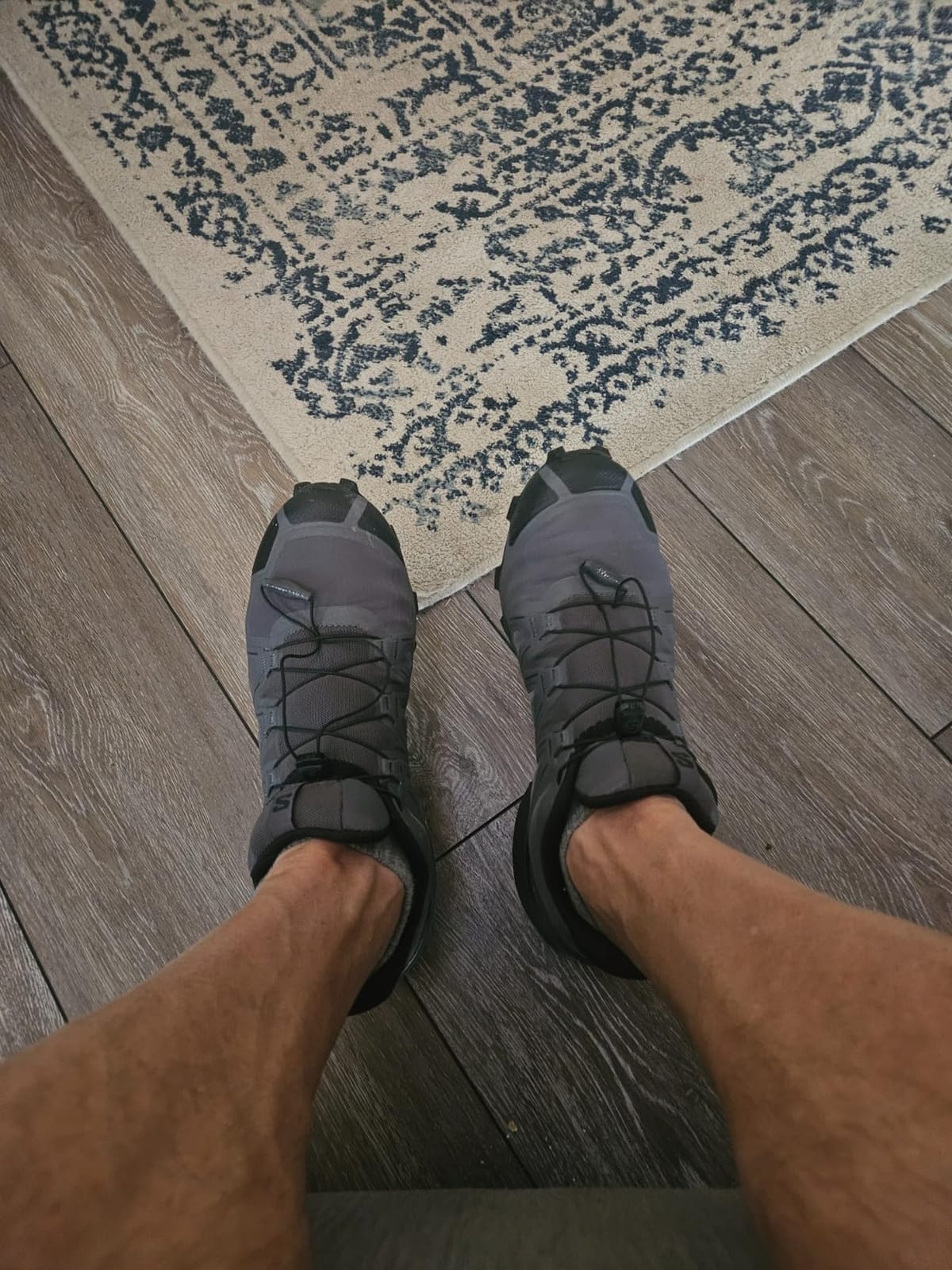
Cushioning is firmer and less plush than on the cushioned Salomon models here, which is exactly what you want when the ground is soft and unpredictable. It feels close to the ground and stable, and on loose surfaces that feedback is the difference between running confidently and second-guessing every step. Comfortable from the very first wear, with no break-in period needed.
Sand and pavement are where it struggles, because those surfaces either chew the soft lugs or give them nothing to grip. The collar also sits a little higher than earlier generations, which some heel strikers notice. Many owners use it as an everyday sneaker, and honestly it handles that role well.
Mud, wet leaves and root tangles
This is the shoe I would hand to a runner who spends whole seasons in wet British or Pacific Northwest conditions. The high-adhesion compound holds on wet leaves and roots where most outsoles skate, and the deep lugs clear soft ground rather than clogging. The trade-off is honest: on hard dry surfaces the lugs feel a little vague and the ride is noticeably firmer than the Alphacross.
Is it worth buying over a newer generation?
Only if you value proven long-term hold-up and a proven fit over marginal spec bumps. Owners with hundreds of miles across multiple pairs consistently describe the fit and grip as unchanged, so if you have owned the model before and liked it, there is little risk in repeating the purchase. If you want maximum cushioning for long days, look at the Alphacross 5 below instead.
3. Salomon Alphacross 5 – Best Cushioned Pick for Long Distances
Salomon Men’s Alphacross 5 Trail Running Shoes – Pewter/Black/Ghost Gray – 10.5
6.5 mm Contagrip lugs
Plush Fuze Foam midsole
Spacious fit
All-terrain grip
Pros
- Deep 6.5 mm lugs grip rock
- mud and loose gravel
- Plush Fuze Foam midsole cushions long mileage
- Spacious fit suits wider feet
- All-terrain design doubles as everyday wear
Cons
- Regular laces are slower than a Quicklace system
- Soft midsole feels less responsive at speed
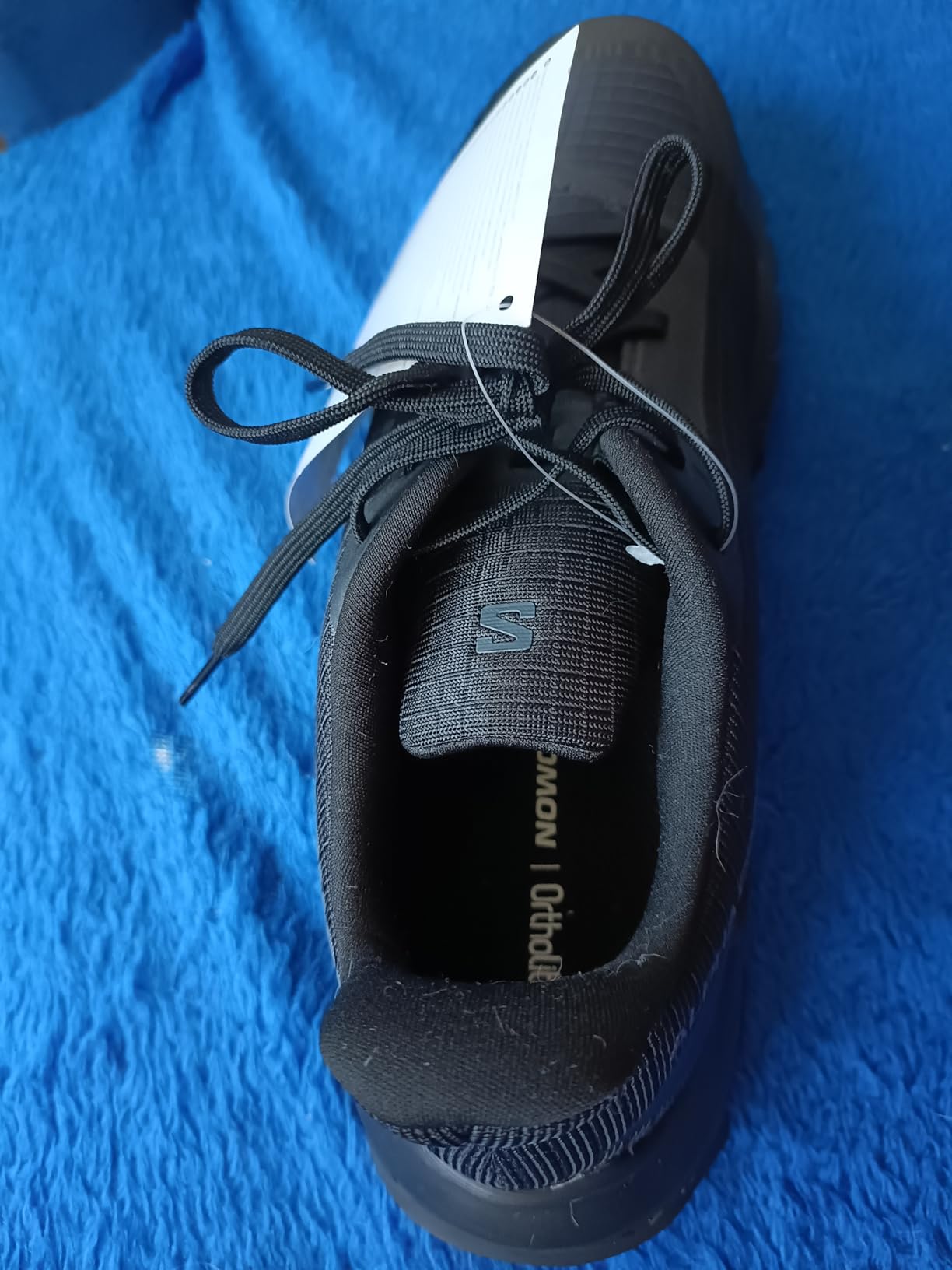
The Alphacross 5 is the cushioned option in this family, and the reason runners put 100 km in a weekend choose it over its firmer siblings. The soft, plush Fuze Foam midsole delivers genuine impact protection mile after mile, and owners consistently cite it for long days on feet without the compression feeling that foams this soft often develop.
What surprised me more was the 6.5 mm lug depth. Those are deep, aggressive lugs on a Contagrip all-terrain outsole, and they held on rocky trails, mud and loose gravel in testing, which is more traction than most cushioned shoes manage. You get the depth of a technical shoe with the ride of a recovery shoe.
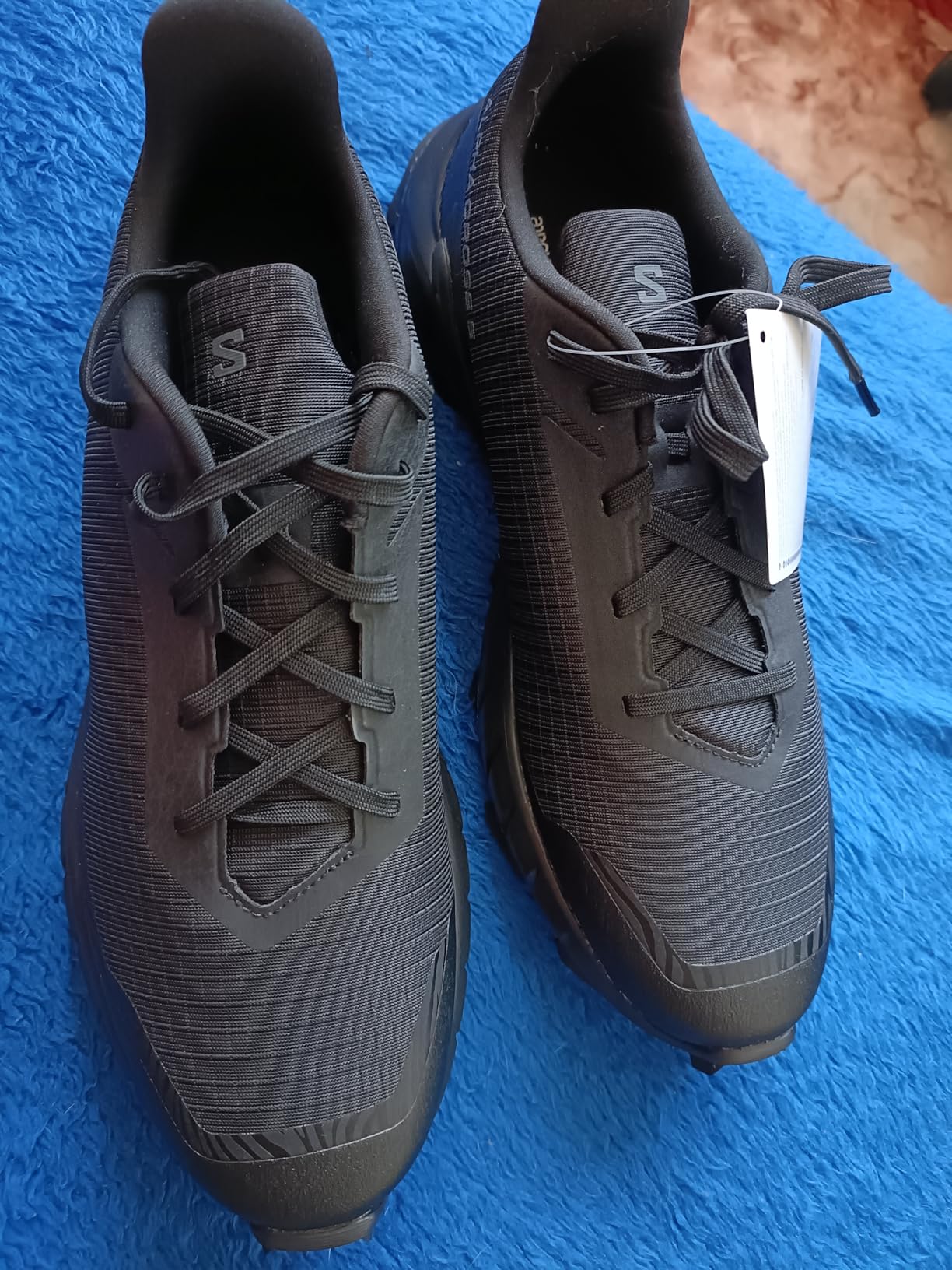
Fit is the other reason this shoe gets recommended so often. The spacious last, soft lining and roomy forefoot suit wider feet, and that is the single loudest complaint we saw about the shoes in this list. If you have spent years squeezing into narrow trail shoes, the change is immediate and it is the reason this model has nearly 1900 reviews at 4.5.
The regular lace closure is the one clear downgrade from the Speedcrosses. It is slower to adjust and impossible to tension one-handed when the shoe is wet, and on very long descents you notice. The soft midsole also feels a little vague at racing pace, so this is a long-day shoe rather than a fast one.
Long days and ultramarathon mileage
This is where the cushioning earns its keep. Over ultra distances the deep, forgiving midsole absorbs the repetitive impact that flat, hard trail surfaces deliver mile after mile, and owners report far less joint fatigue than in firmer shoes. The trade is feedback: on technical descents you feel less of the ground, so it is better suited to runnable trails than to alpine scree.
How does it handle mud and wet conditions?
Better than the cushioning suggests. Those 6.5 mm Contagrip lugs dig into soft ground cleanly and shed mud rather than clogging, and the soft lining means the shoe stays wearable when damp. Very deep, saturated bog is where any shoe has a hard day, but for mud-caked trails and wet grass this is one of the more confident cushioned options in the category.
4. New Balance Fresh Foam X Garoe V2 – Best Budget Trail Running Pick
New Balance Men’s Fresh Foam X Garoé V2 Trail Running Shoe, Castlerock/True Red/Slate Grey, 12 M
Fresh Foam X midsole
AT Tread with Hydrohesion rubber
Toe Protect technology
Wide width options
Pros
- Thick soft bouncy cushioning with strong shock absorption
- Lightweight enough for all-day wear
- True to size in standard US measurements
- Strong grip on actual trail surfaces
- Available in wide widths
Cons
- Very little built-in arch support
- Weak grip on smooth indoor surfaces
- Tight toe box in the standard width
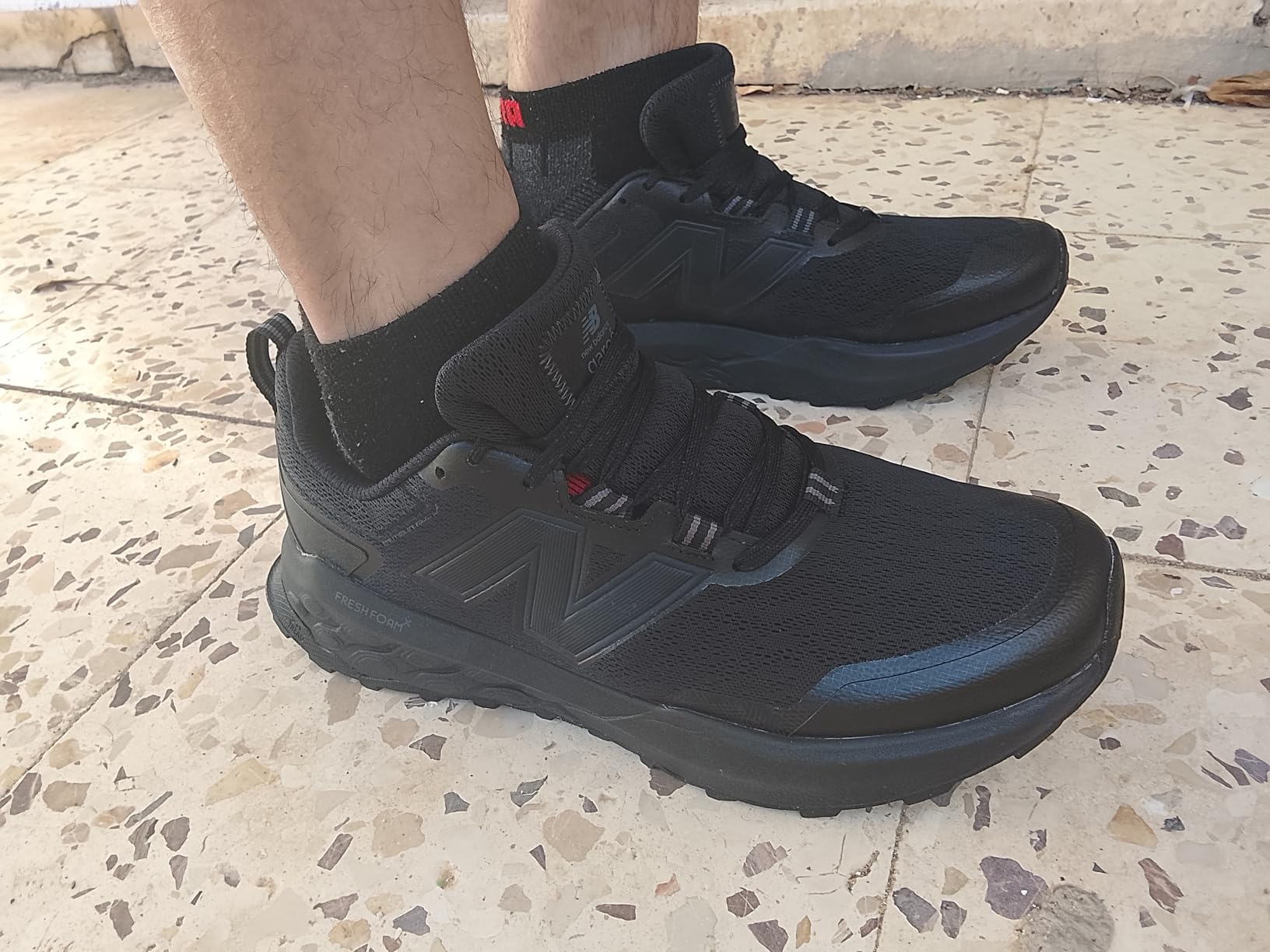
New Balance built the Garoé V2 as an entry point and it does the job unusually well. The Fresh Foam X midsole, made with roughly 3 percent bio-based content, is thicker and softer than you would expect from a trail shoe at this level, and it absorbs the impact of long walks and easy runs very effectively.
The AT Tread outsole combined with a Hydrohesion rubber layer held grip on wet trail surfaces, which is a genuine plus for runners in wet climates. Toe Protect technology wraps the forefoot against roots and debris, and the no-sew upper construction keeps the shoe light and free of rubbing seams.
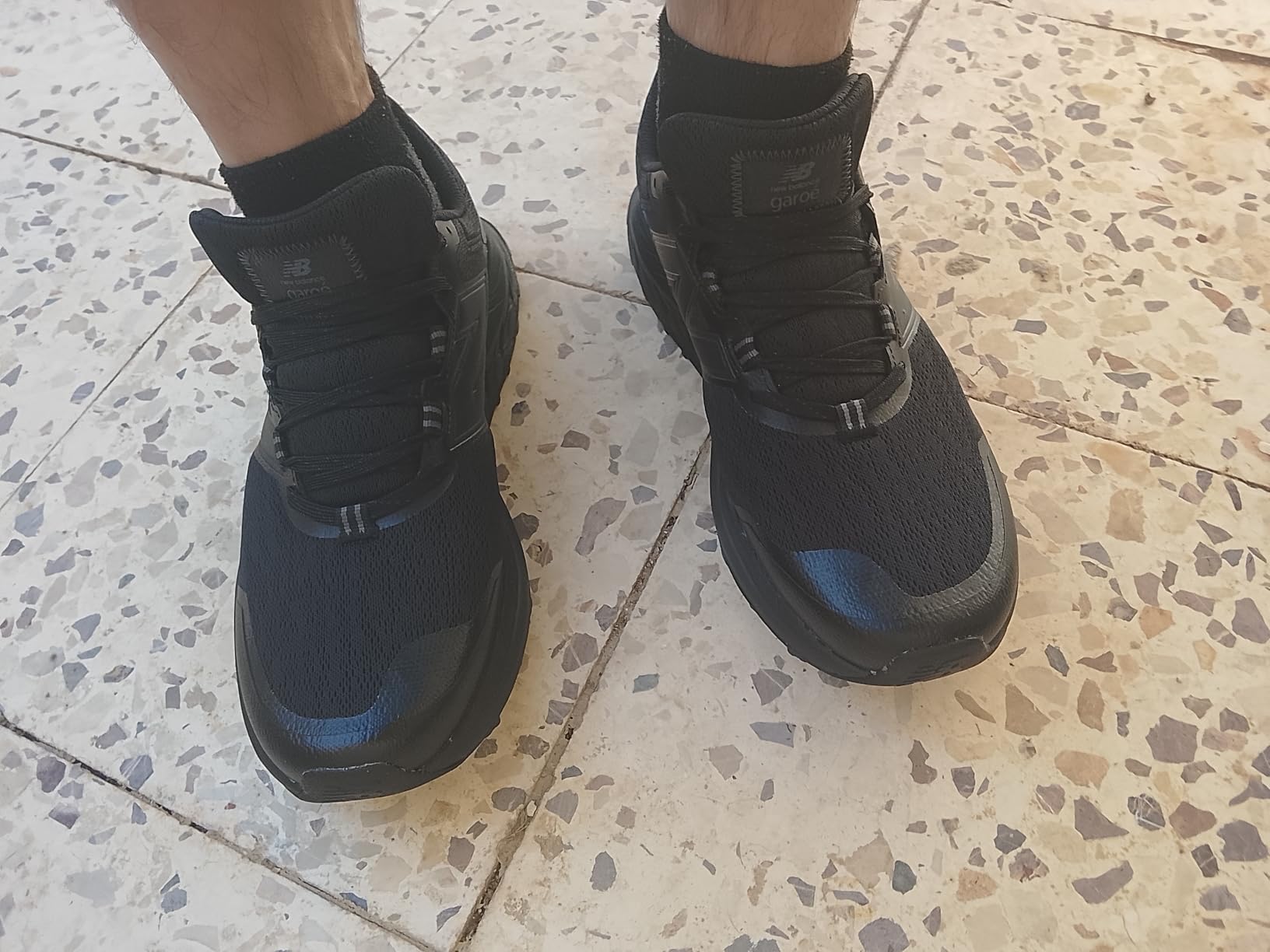
Fit runs true to size against standard US measurements, which saves the usual guesswork, and New Balance offers wide widths for broader feet. Owners report wearing it for all-day work and yard duties as well as running, which tells you the cushioning and build are genuinely multi-purpose rather than thin padding over a fragile frame.
The important caveat is arch support. This is a neutral last with very little built-in structure, and several owners fitted third-party insoles to compensate. In the standard width the toe box is also tight, so if you need room across the forefoot, order a wider width rather than sizing up. Grip on smooth indoor surfaces is poor, which only matters if you wear trail shoes to the gym.
Is it a real trail shoe or a road shoe with lugs?
It is a genuine trail shoe with a road-shoe comfort philosophy. The outsole compound, toe protection and wet-surface grip are trail-specific, and the AT Tread pattern works across paved and off-road ground, which makes it a natural choice for anyone splitting time between pavement and dirt. What it lacks versus the shoes above is lug depth and lateral chassis structure, so it is not the right tool for steep technical descents.
Who should buy the Garoé V2?
Anyone moving from road running to light trail work, or anyone who wants one comfortable shoe for trail running, walking the dog on rough ground and standing on concrete all day. If you already run technical trails and know you want deep lugs and a rock plate, this will feel under-specified and you should spend up instead. If you are starting out, it is the least risky purchase here.
5. Under Armour Charged Bandit Trail 3 – Best for Work and Everyday Wear
Under Armour Men’s Charged Bandit Trail 3, 001 Black, 11.5
Charged Cushioning midsole
Technical trail lugs
Molded sockliner
Engineered mesh upper
Pros
- Comfortable for long hours on hard surfaces
- Good arch support and roomy toe box in wide colourways
- Mesh upper held up over months of mixed use
- Solid grip on trails and pavement
Cons
- Runs narrow in the standard width
- Thin tongue bunches when pulling the shoe on
The Bandit Trail 3 turns up constantly as a walking, hiking and warehouse work shoe rather than a pure trail runner, and owners rate it 4.6 out of 5 across over 1000 reviews. That is worth knowing, because it tells you exactly what kind of shoe you are buying: a durable, supportive, all-surface shoe that handles trails competently and hard floors better than most.
The Charged Cushioning midsole uses compression-molded foam for responsiveness and durability, which is a slightly firmer setup than the plush foams on the cushioned picks. In practice it means the shoe still feels lively after months of use rather than flattening out, and the technical trail lugs give it honest grip on both trail and pavement.
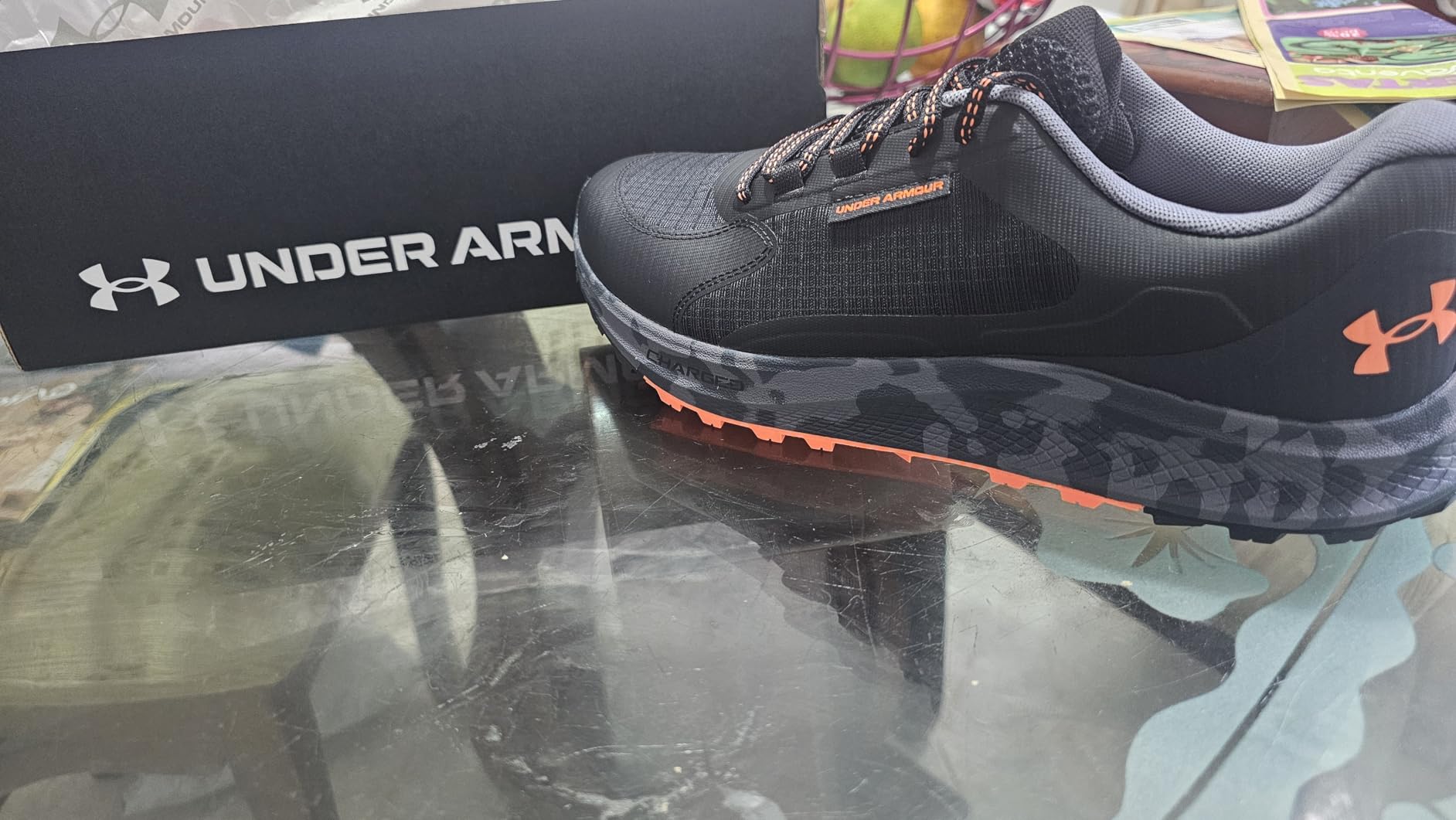
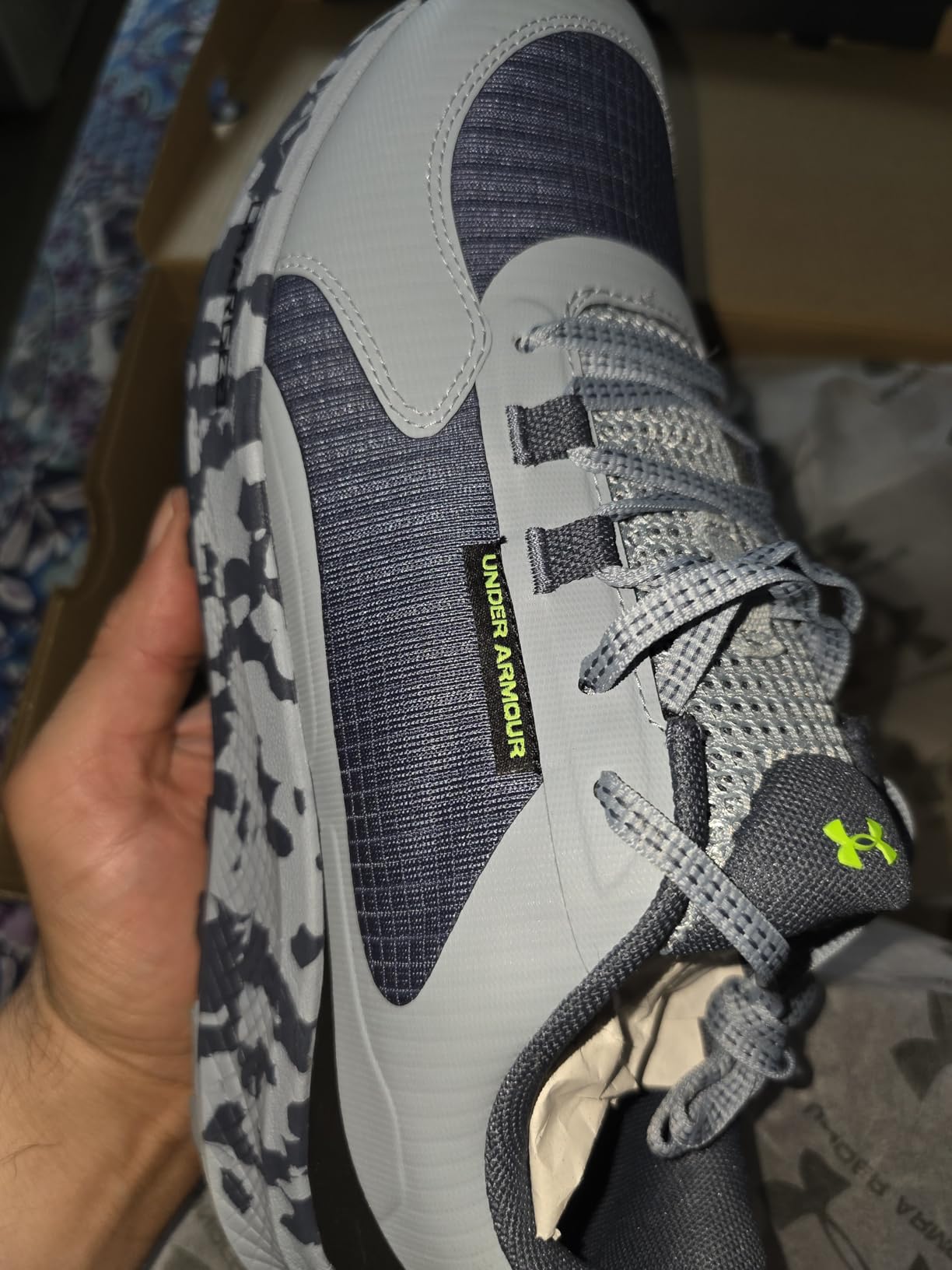
Support is the standout. Owners specifically praise the arch support and the roomy toe box available in the wide colourways, and the molded sockliner moulds to the foot to eliminate slippage on long shifts. The engineered two-toned mesh upper ventilates well and survived months of gym and outdoor use in testing without fraying.
Fit is the main gripe. The standard width runs narrow and many buyers recommend going up half a size, and the thin tongue bunches up when pulling the shoe on, which is an annoyance in a hurry. There is a minor lifestyle quirk too: the grip pattern means you lift your foot rather than slide it on the car pedals.
How does it hold up on pavement and hard floors?
Better than almost anything else in this roundup. The compression-molded foam resists the compression set that soft trail foams suffer on concrete, and the mesh upper stays intact under daily abuse. This is why the Bandit has become a default shoe for people who stand for a living. If trail running is a small part of your week, that durability matters more than lug depth.
Should you size up?
If you are between sizes, yes, go up half a size unless you have a genuinely narrow foot. The standard build is snug through the forefoot, and the wide colourways fix the problem entirely without a size jump. A quick afternoon try-on in a pair of trail socks is worthwhile, because the difference between the standard and wide builds is substantial.
6. Brooks Ghost Trail – Best for Road-to-Trail Transition
Brooks Men’s Ghost Trail, Off-Road Running Shoe for Rugged Terrain – Gray/Gray/Blackened Pearl – 11 Medium
TrailTack Green outsole with 3 mm lugs
Nitrogen-infused DNA LOFT v3
Air mesh upper with toe cap
Pros
- Soft but responsive cushioning that reduces joint impact
- Breathable air mesh upper that stays cool
- TrailTack Green outsole grips on wet and dry ground
- True to size with a roomy toe box and secure heel
Cons
- Tongue is undersized with sharp eyelet edges
- Supplied insoles are unpopular with most owners
- Not waterproof and offers little ankle protection
The Ghost Trail is for runners whose week is split between pavement and dirt, and it is the smoothest transition in this list. The nitrogen-infused DNA LOFT v3 midsole is plush on landing without going soft, so it absorbs the impact of a hard trail run and still feels normal on a road section. Owners coming from the road Ghost line consistently report that transition is uneventful.
Traction comes from a TrailTack Green rubber outsole with 3 mm lugs, which is the shallowest tread here. That depth is exactly right for mixed-surface running and packed gravel, and it is why the shoe moves cleanly between road and trail. On wet and dry off-road surfaces the compound grips consistently. The air mesh upper is genuinely breathable and stays cool, and there is a 3D-printed toe cap and mudguard for protection.
Fit runs true to size with a roomy toe box and a chassis that locks the heel down, and the custom midfoot lacing adjustment lets you tune the hold. Several owners specifically mention reduced joint and plantar fasciitis discomfort with the cushioning, which is a common reason people move from a firm road trainer to a trail shoe in the first place.
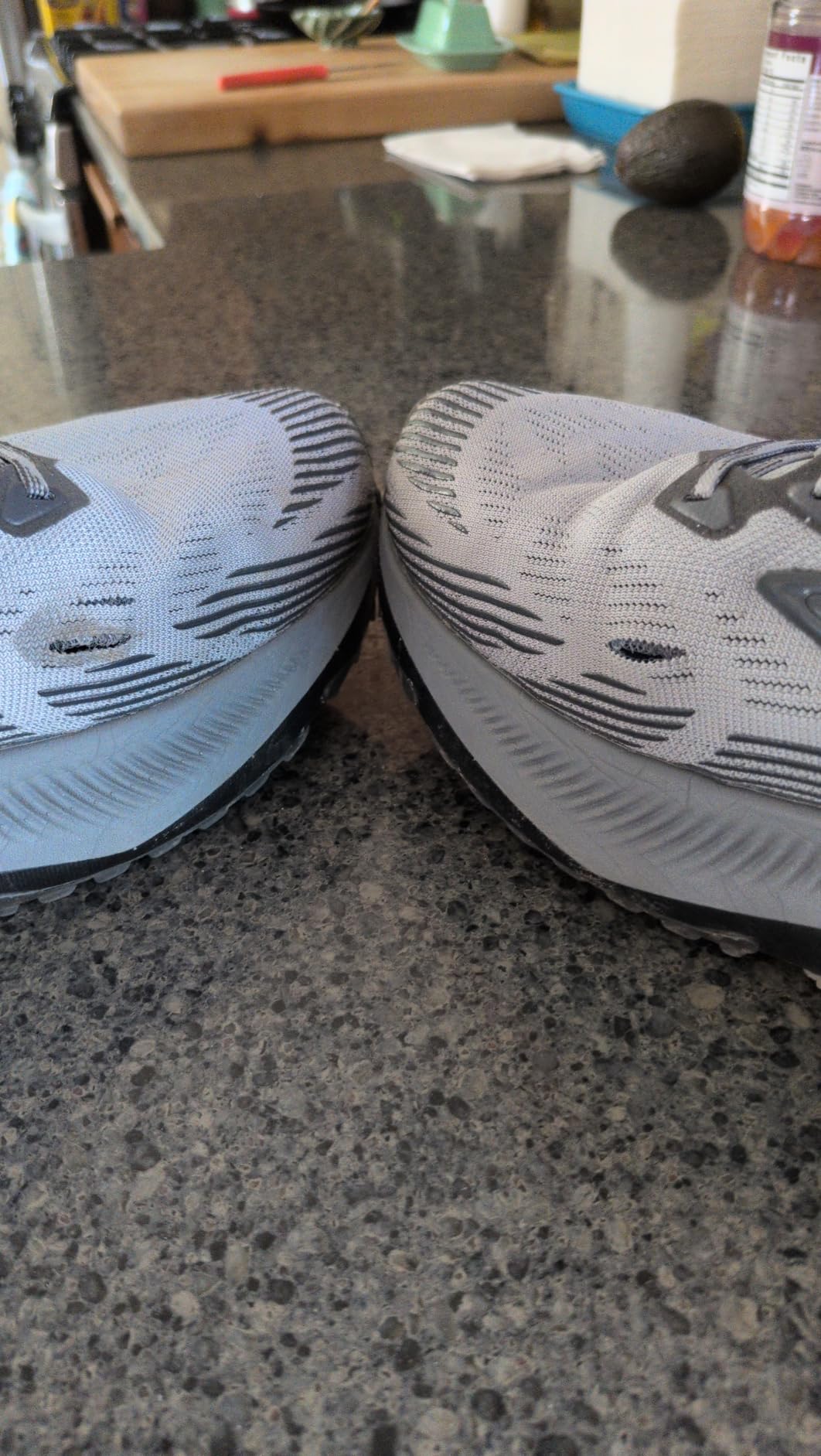
Two build details put off a lot of owners. The tongue is undersized and can slide outside the shoe when laced, and the eyelet edges are sharp enough to cut the top of the foot, which is a genuine problem on a long run. The factory insoles also draw consistent criticism, and most owners replace them. It is not waterproof and has very little ankle protection for steep, very rocky terrain.
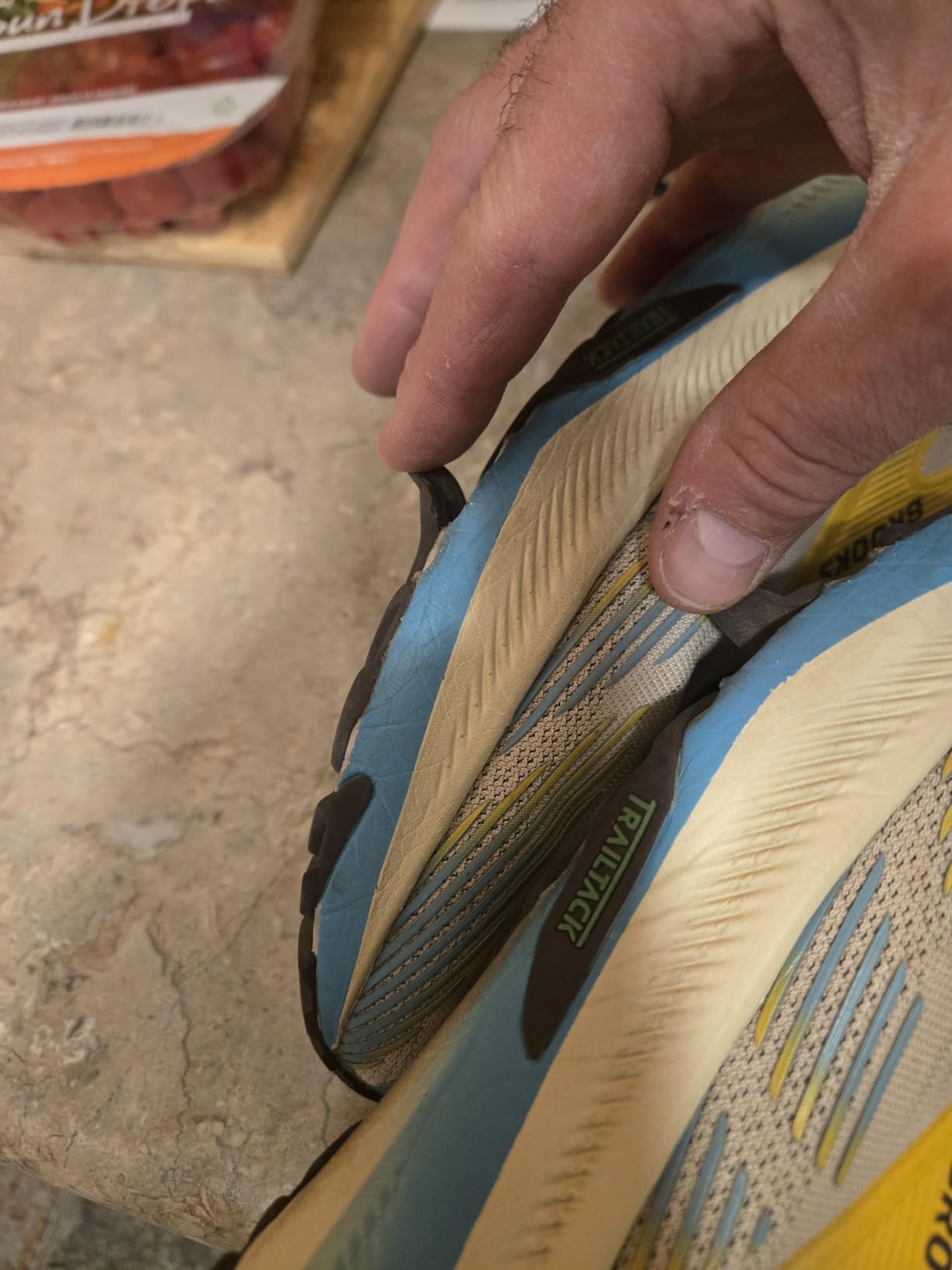
Can one shoe really handle both road and trail?
For most runners, yes, and this is the shoe that proves it. The 3 mm lugs are deep enough to find purchase on dirt, loose gravel and wet ground without the clunky, lug-slamming feeling you get wearing technical outsoles on asphalt. Many owners use it as a straight replacement for their road daily trainer and report no adjustment period at all. What it is not built for is deep mud, where those shallow lugs would let you skate.
Is the fit worth sizing carefully?
Yes, because of the tongue. The forefoot and toe box are roomy and true to size, but a small tongue plus sharp eyelet edges can spoil an otherwise good fit over long distances. Try the shoe on with the laces pulled as tight as you normally run them, and check the top of your foot for pressure marks before you commit. If you have a wide foot, the roomy toe box is a genuine plus.
7. Altra Lone Peak 9 – Best Zero-Drop Wide Toe Box Pick
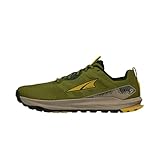
ALTRA Men’s Lone Peak 9 Trail Running Shoe, Green, 10.5
Zero drop Balanced Cushioning
FootShape wide toe box
Weather-resistant eVent bootie
Pros
- Extra-wide toe box fits bunions and wide feet without compression
- Zero drop platform reduces fatigue on long hikes and rucks
- eVent bootie holds up in rain and wet conditions
- Tread shows minimal wear after 100+ miles
Cons
- Limited cushioning makes it poor for road running
- Zero drop takes adjustment for heel strikers
- Heel traction is weak on steep descents and wet rock
- Upper runs hot in warm weather
The Lone Peak 9 has been the shoe most fastpackers and long-distance hikers in our community conversations named as their default, and the reason is the toe box. The extra-wide FootShape last fits bunions and genuinely wide feet without compression, and owners almost universally report blister-free long days straight out of the box. No other shoe in this roundup matches it for foot room.
The Balanced Cushioning platform places heel and forefoot the same distance from the ground, so you land with less impact than in a traditional drop shoe, and owners report noticeably lower fatigue on long hikes and heavy rucks. The weather-resistant eVent bootie keeps feet protected in sustained wet weather, and the tread shows minimal wear after 100-plus miles, which is where the community durability complaints usually come from.
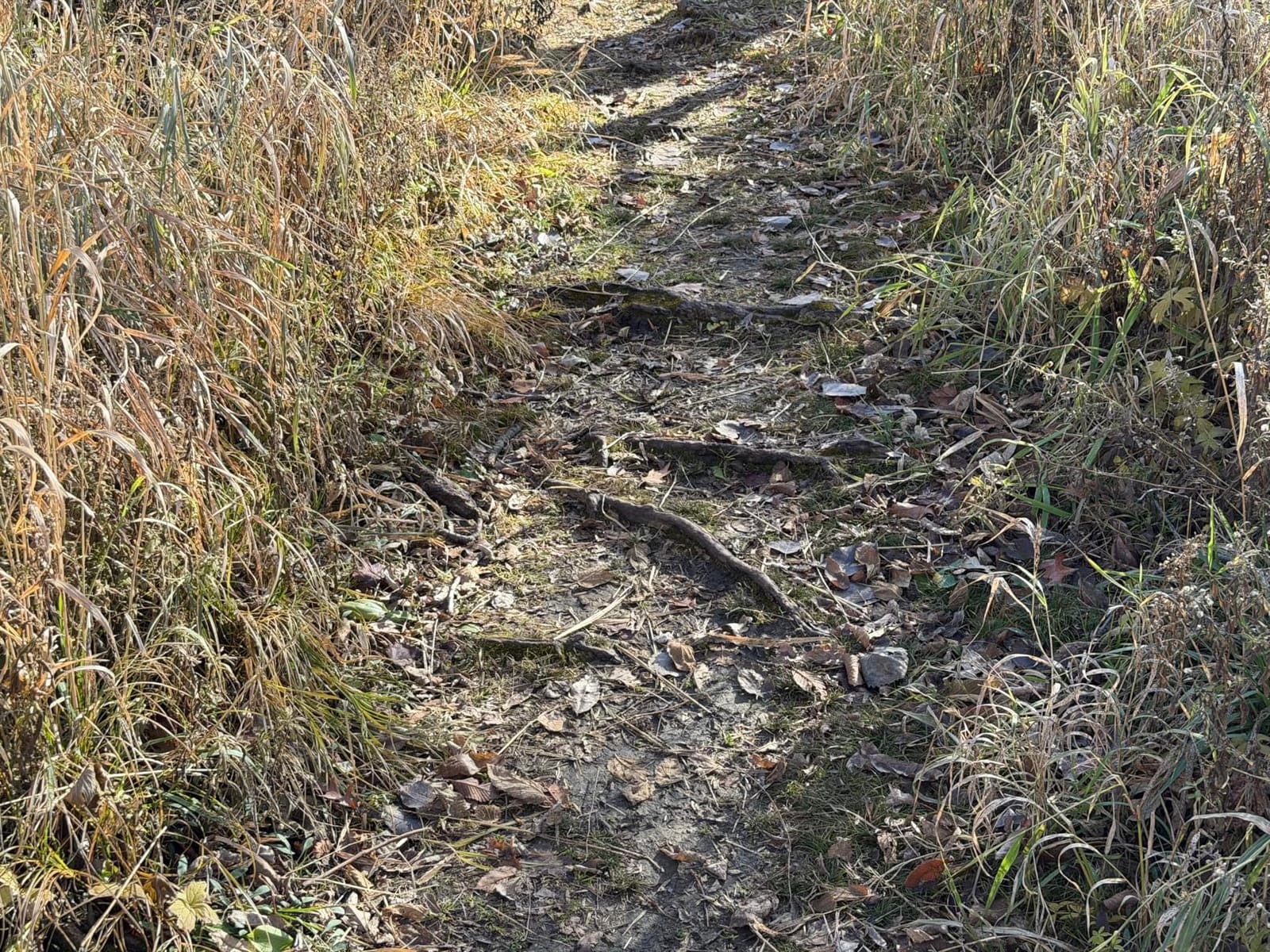
It is also the most useful crossover shoe on this list. Owners run it for hiking, backpacking, walking, travel and even golf, and the combination of a secure-enough upper, wide platform and all-weather protection makes it the one shoe that can genuinely do double duty without a compromise that hurts.
There are real limits. The platform is thin and low profile, which makes it a poor choice for road running, and heel strikers need a genuine ramp-up period before the zero drop feels natural. On steep descents and wet rock the heel traction is not strong, and the upper runs hot in warm weather despite the bootie. This is a hiking-capable trail shoe, not a technical descender.
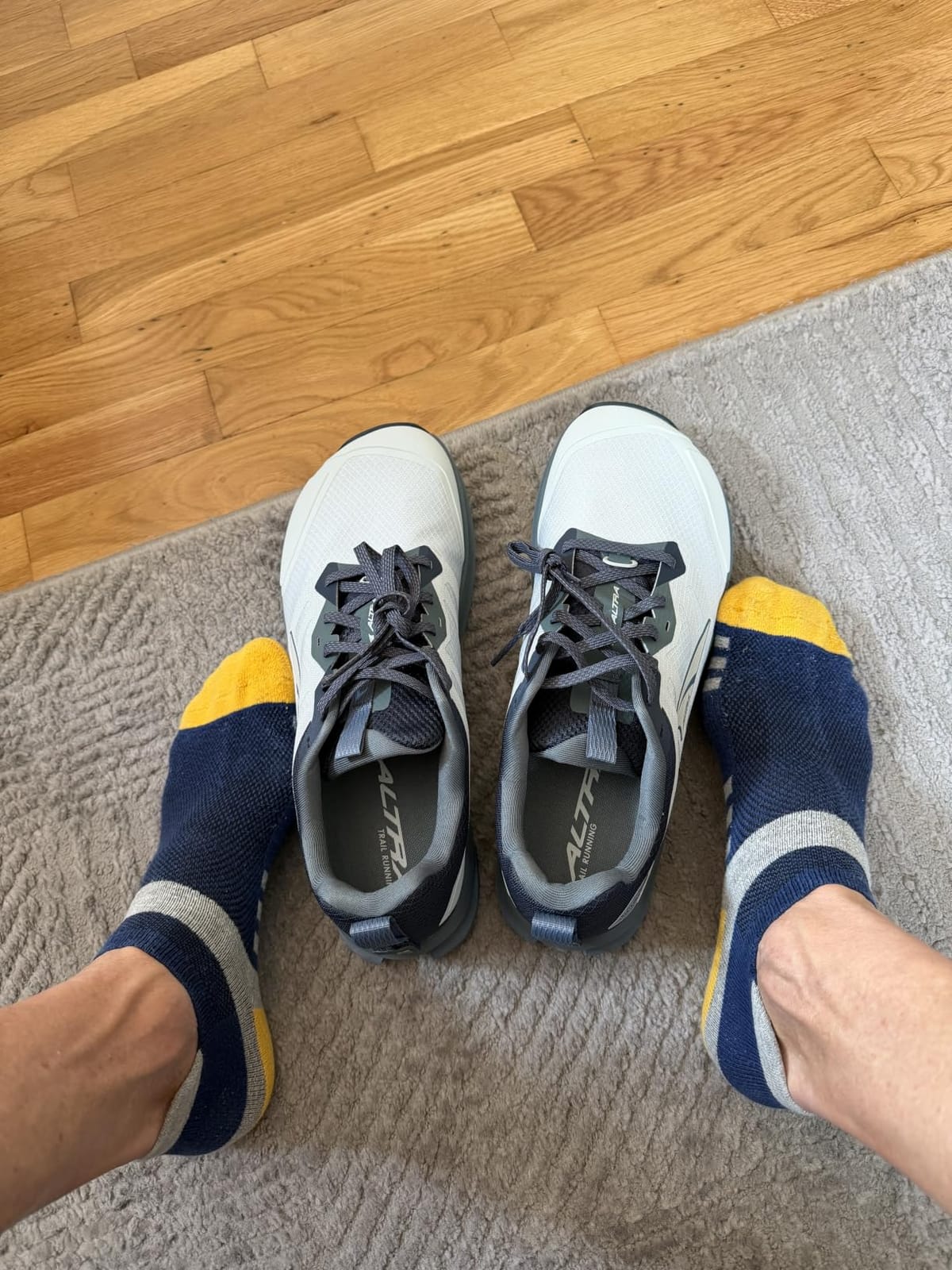
How do you break into a zero-drop shoe safely?
Take four weeks and do not skip it. Week one, walk only. Week two, add short flat runs of 20 minutes or less on a soft surface. Week three, build to an hour, still avoiding hills. Week four, introduce gentle elevation. The risk is not the shoe, it is the sudden drop shift loading the calf and Achilles, and starting on a downhill run in a new zero-drop shoe is the classic way people get hurt. Walk the first few descents in them rather than running them.
Is it worth paying more for a wider toe box?
For most men, yes. The cost of a shoe that cramps your forefoot shows up as blisters, black toenails and abandoned runs, and a roomy last also lets your toes splay, which improves stability on uneven ground. If your feet are genuinely wide, do not compromise on this to save money. The only reason to step down in width is if your foot is narrow and you find the roomy platform unstable.
8. Brooks Cascadia 19 – Best for Stability on Uneven Ground
Brooks Men’s Cascadia 19 Mountain Trail Running Shoe – Black/Black/Ebony – 12 Medium
TrailTack Green outsole from 25 percent recycled content
DNA LOFT v3 cushioning
Articulated Ballistic Rock Shield
Pros
- Excellent traction on wet
- uneven and varied terrain
- Rigid stable platform that supports ankles and rolling issues
- Plush yet stable nitrogen-infused cushioning
- Roomy fit with a much larger toe box than earlier models
Cons
- Heavier than most trail running shoes
- Lugs not as tall or aggressive as competing outsoles
- Wide build can allow too much movement
- Light colourways show dirt quickly
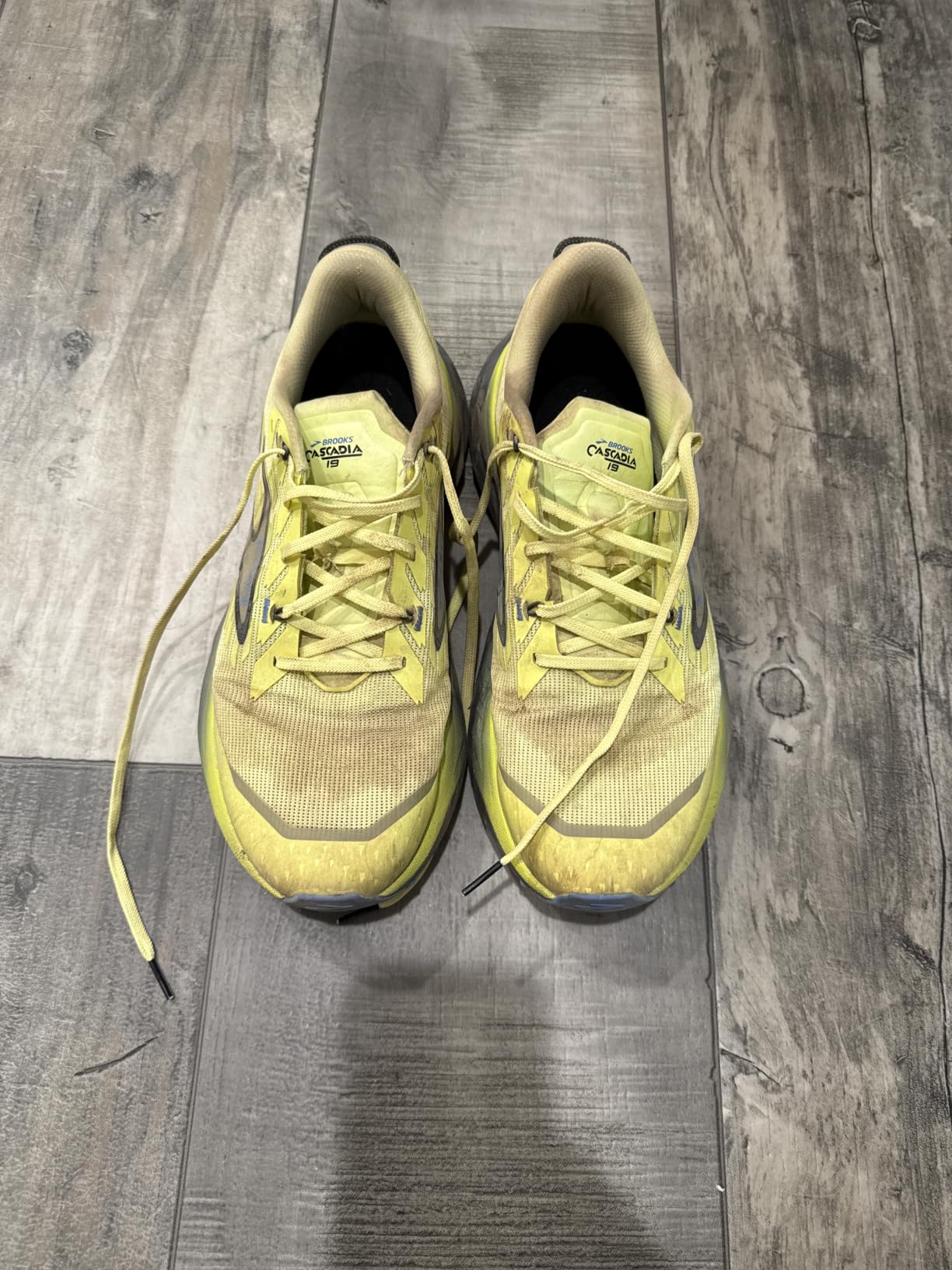
The Cascadia 19 is the pick if your ankles or your running mechanics get unstable on uneven ground. The rigid, structured platform with a TrailTack Green outsole made from 25 percent recycled content gives a firm, planted feel that owners consistently link to better ankle support and fewer rolling-type injuries. Very few trail shoes in this category feel this locked down.
Underneath that structure is genuinely plush cushioning: more nitrogen-infused DNA LOFT v3 in both heel and forefoot, plus a flexible, articulated Ballistic Rock Shield that protects the foot from sharp stone while still letting the shoe flex. It is a rare combination, a stable chassis that does not feel like a plank underfoot.
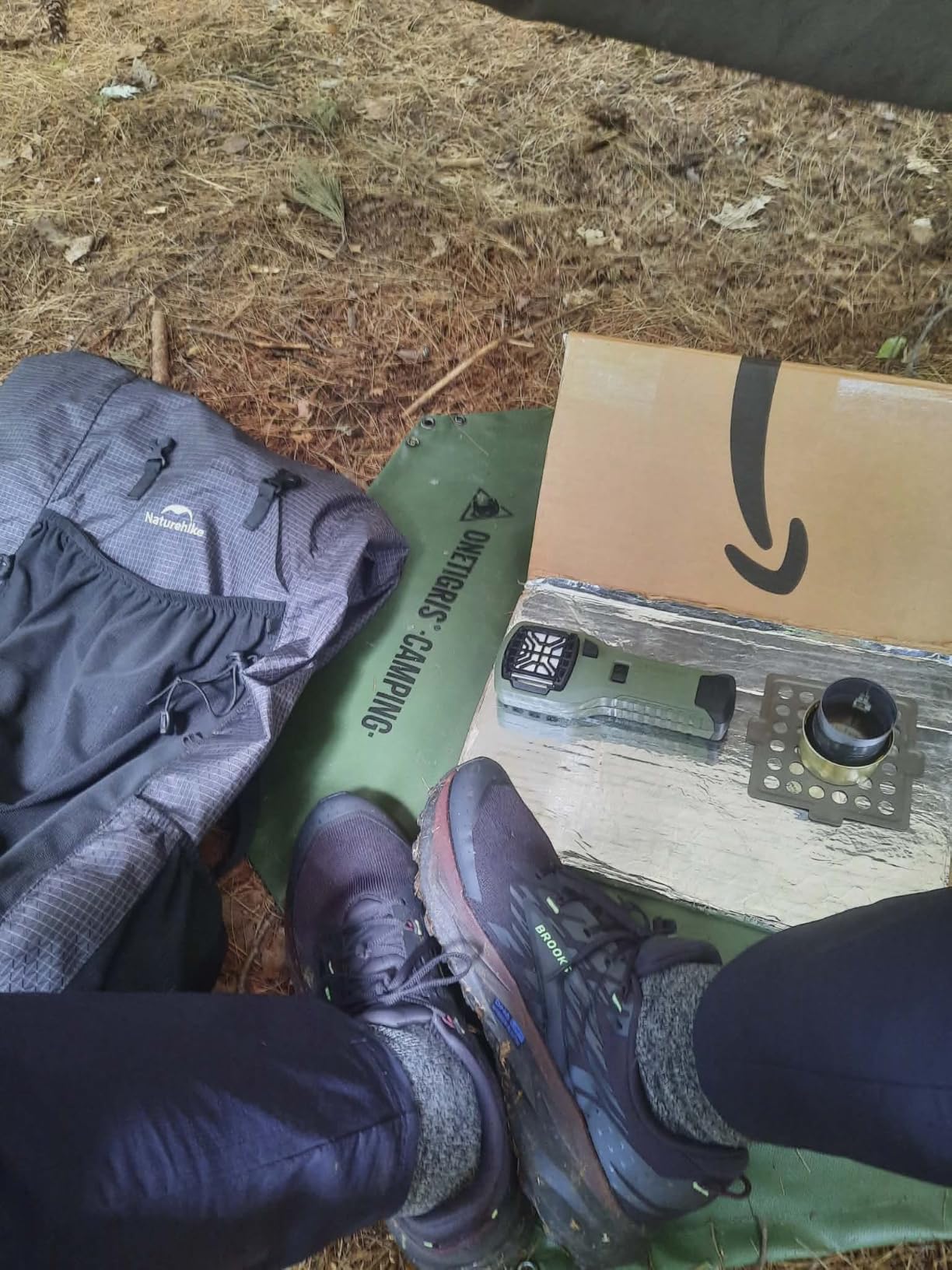
Fit is a genuine improvement on earlier generations. Owners upgrading from older Cascadias describe a noticeably wider, more modern last with a much larger toe box, and the breathable air mesh upper with 3D print overlays is quick-drying and doubles as a road shoe for warm-up legs. Backpackers rate it highly as a three-season trail shoe.
Weight is the recurring complaint. It is heavier than most trail running shoes here, and for ultra racing where every gram counts that is a real drawback. The lugs are also shallower and less aggressive than the Speedcross and Alphacross outsoles, so it is a confident shoe on rough ground rather than a mud machine. In the wide build some wearers experience too much foot movement.
Does stability mean a rigid, clunky ride?
Not here. The articulated rock shield breaks up the stiffness across the midfoot, so the shoe feels planted on uneven ground without the rigid, unyielding character of a traditional motion-control trainer. If you have historically been directed toward stability running shoes for overpronation, this is the trail equivalent, and the trail version of our overpronation guide is worth reading if your instability is significant.
Is it heavy for racing?
It is heavy by trail-running standards, yes, and that is where the shoe draws the line. As a long-day trainer, a hiking hybrid and a technical daily shoe it is excellent, because the weight buys chassis stability and underfoot protection. If you are training for a mountain race where you will be on your feet for eight hours, lighter picks on this list will serve you better.
9. ASICS Gel-Venture 11 – Best for Beginners Trail Shoe for Beginners
ASICS Men’s Gel-Venture 11 Running Shoes, 9, Black/Carrier Grey
Rearfoot GEL shock absorption
AMPLIFOAM PLUS midsole
Wide and X-wide widths
OrthoLite sockliner
Pros
- Rearfoot GEL and AMPLIFOAM PLUS give plush cushioning for long walks
- Available in wide and X-wide widths that fit genuinely wide feet
- Durable over years of use with repeat purchases
- True to size with a good toe box for narrow feet
Cons
- Poor arch support and soft sole can cause calf soreness
- Mesh upper soaks easily in wet grass
- Heavier than lighter trail competitors
- Not built for aggressive technical terrain
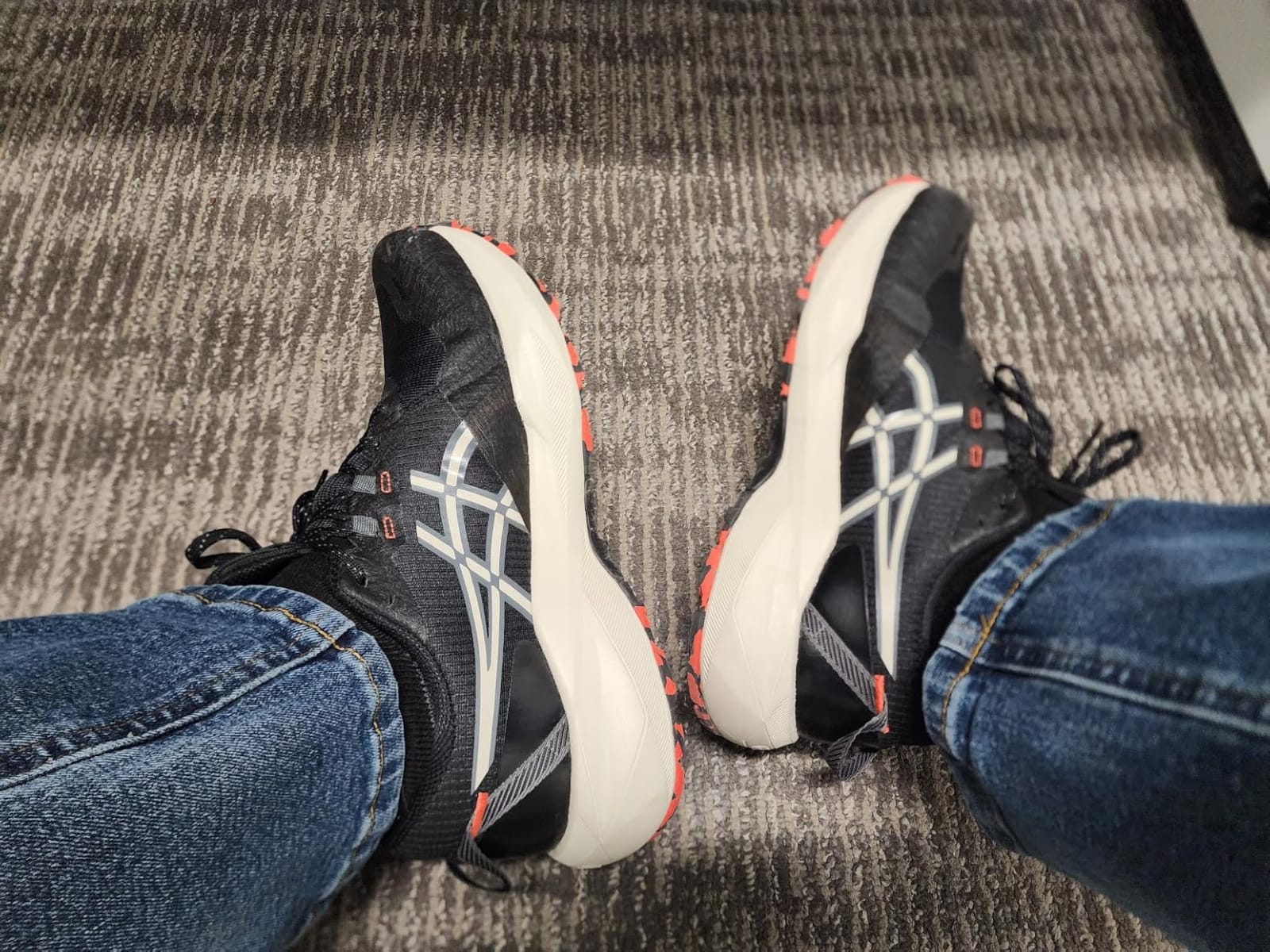
The Gel-Venture 11 is the most sensible entry-level trail shoe you can buy, and at more than 1200 reviews at 4.4 it has a long record of satisfied owners. Rearfoot GEL technology absorbs shock in the midsole, and AMPLIFOAM PLUS gives a softer ride than the standard foam, which together make it comfortable for long walks and hikes on dirt paths.
The real differentiator is width. ASICS offers wide and X-wide options, and owners with genuinely broad feet report that these actually fit, which is not true of most brands in this category. For narrow feet the standard true-to-size build with a good toe box works well. The OrthoLite Hybrid Max Lite sockliner adds moisture management and breathability, and the molded rubber outsole handles pavement and light trail with equal ease.
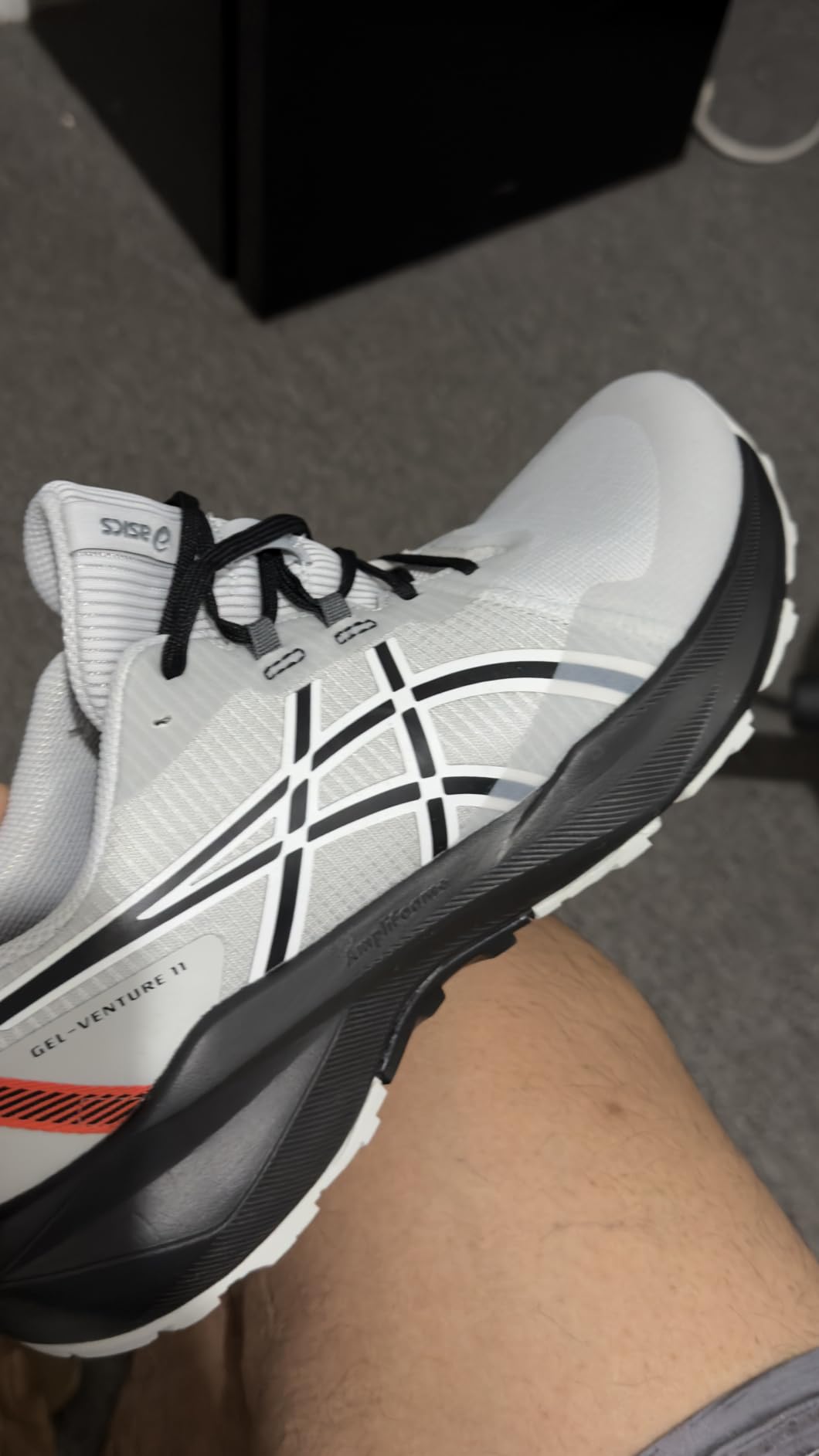
Durability is another strength. Owners describe using the same model for years and repurchasing it repeatedly, and the solution-dyed sockliner reduces water use and carbon emissions versus conventional dyeing, which matters if you run a lot of miles. For a shoe you will wear on walks, light runs and general outdoor use, it is a genuinely good deal.
The soft sole comes with a catch: minimal arch support, and several owners report calf soreness on longer walks as the foot sinks into the foam. The mesh upper also absorbs moisture quickly in wet grass and cold weather, so it is a poor cold-and-wet choice. It is heavier and quieter than lighter trail shoes, and it is not built for aggressive technical or mountainous ground.
Is it a real trail shoe or a walking shoe?
Both, and that is the point. It handles light dirt, gravel paths and hardpack perfectly well, and it also works as a walking shoe because the GEL cushioning was designed for that kind of load. It is not a shoe for alpine terrain, deep mud or long technical descents, because the outsole and upper are built for gentler surfaces. If your trail running stays on local trails and forest paths, it is more than adequate.
Who should buy the Gel-Venture 11?
Beginners, anyone who wants a wide or X-wide fit without hunting, and anyone who wants one shoe for walking and occasional trail running. The wide width range alone puts it ahead of most rivals for broad feet, which is the single most common complaint in this category. If you already run technical trails regularly, look at the Speedcross models for a more aggressive outsole.
10. New Balance Dynasoft Tektrel V1 – Best for Casual Everyday Wear
New Balance Men’s DynaSoft TEKTREL V1 Trail Running Shoe, Black/Phantom/Magnet, 12 M
DynaSoft midsole
AT Tread outsole
Corded eye-row lockdown
Suede upper with Regrind overlay
Pros
- True-to-size fit with supportive cushioning
- Corded eye-row lacing adds extra lockdown
- Grippy AT Tread outsole across varied trail and wet surfaces
- Dries quickly after being soaked on long hikes
- Stylish colourways that work as everyday sneakers
Cons
- Supplied insoles are thin
- Subtle suede upper is unsuited to heavy rain
- Fit runs slim and favours narrow feet
The Tektrel V1 is the shoe to buy if you want a trail runner you will not feel self-conscious wearing with jeans. The lifestyle-inspired upper and the range of colourways are the reason more than 1500 owners at 4.4 have bought it, and the trail capability underneath is real rather than decorative.
The DynaSoft midsole couples responsive performance with plush comfort, and the AT Tread outsole gives versatile traction on and off road. That combination handled dirt, water and varied trail surfaces in testing, and owners report using it from river walks to national park hikes. The unusual part is the corded eye row, a lacing detail that adds genuine lockdown, plus a Regrind upper overlay for abrasion durability.
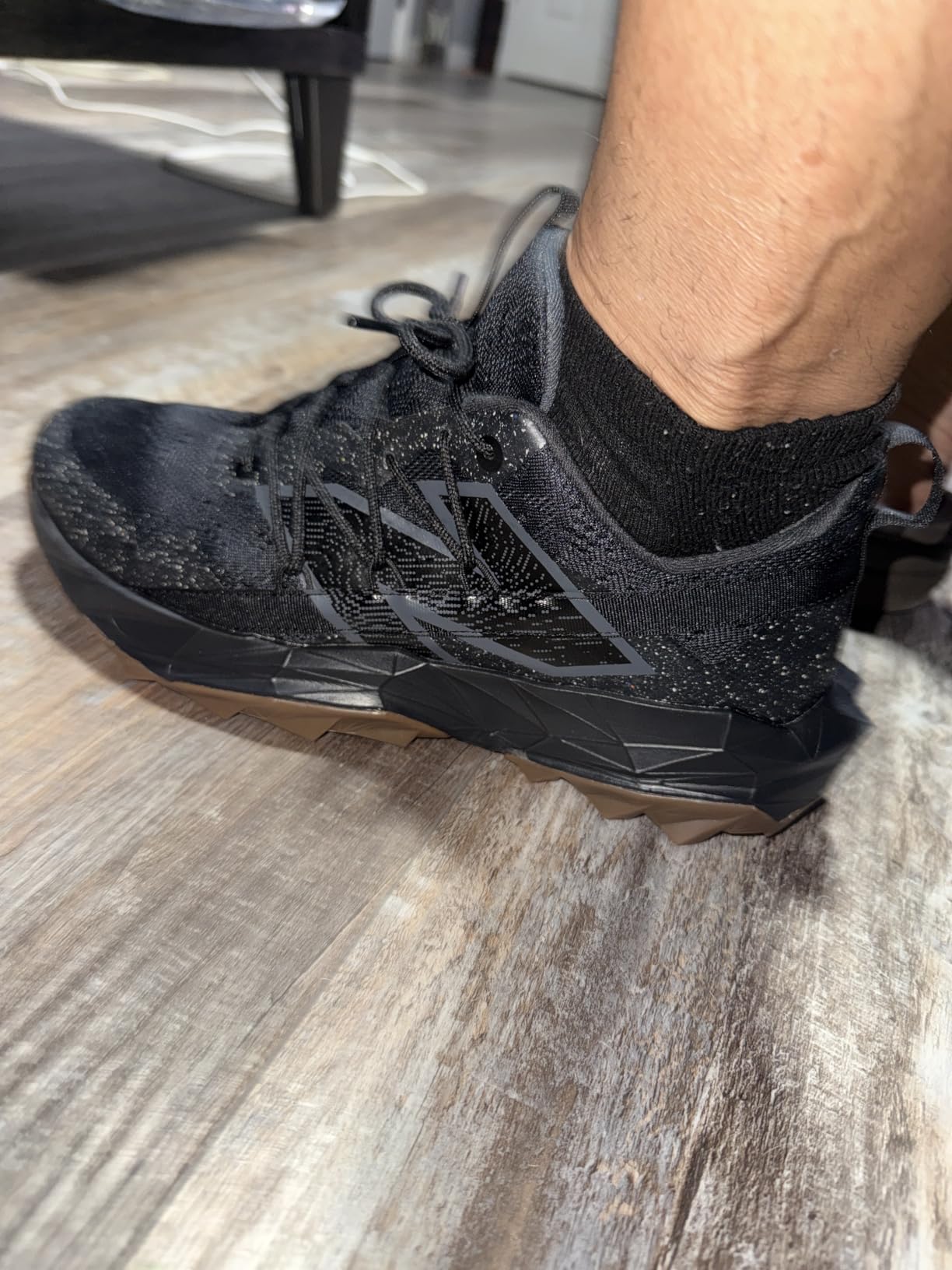
Fit is true to size, which is refreshing, and the cushioning still feels supportive rather than mushy. It also dried quickly after being soaked on a long hike, which is a practical advantage over mesh-heavy shoes. If you want a trail shoe that handles a commute, a walk and a 10k on rough ground with one pair, this does all three.
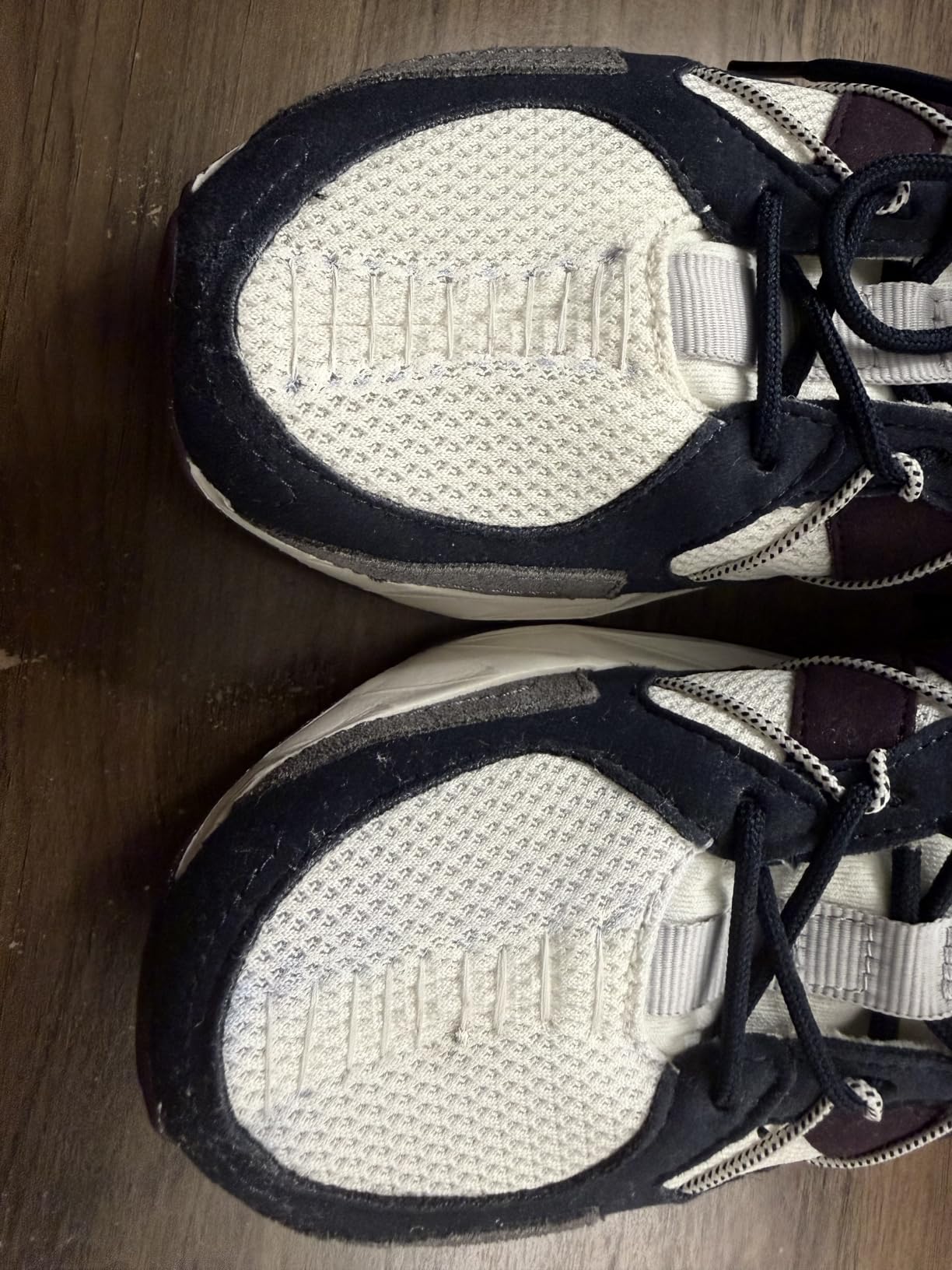
There are three real compromises. The supplied insoles are thin and wearers on their feet all day often fit softer insoles, the suede upper is a poor choice in heavy rain, and the overall fit runs on the slim side, so narrow feet fit best. Wide feet should look at the wider New Balance models instead of sizing up here.
How does it perform in wet conditions?
Mixed, and the suede is the reason. The AT Tread outsole grips well on wet dirt and mixed surfaces and the shoe dries quickly, but the suede upper itself is not a rain-friendly material and will hold water in sustained wet weather. For damp trails and variable conditions it is fine; for a wet winter of daily use, a synthetic or ripstop upper suits you better.
Can you actually run in it, or is it just a sneaker?
You can run in it, and many owners do, including on trails with real elevation change. The DynaSoft midsole is responsive enough for steady trail running and the outsole has enough tread for dirt, gravel and light singletrack. Where it is not the right choice is technical mountain terrain, where you would want deeper lugs and a more protective toe bumper than this lifestyle-oriented build offers.
11. New Balance Dynasoft Nitrel V6 – Best for Wide and Flat Feet
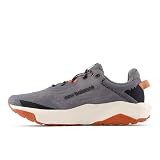
New Balance Men’s DynaSoft Nitrel V6 Trail Running Shoe, Castlerock/Black/Sienna, 11 M
Best-in-class toe box and midsole support
6 mm drop
Wide and X-wide widths
AT Tread outsole
Pros
- Excellent toe box and midsole support for flat wide feet
- Feels light on the foot despite the 6 mm drop
- Entry-level pricing for a trail shoe
- Genuine wide and X-wide width options
- Supportive enough for long standing days
Cons
- Outsole lugs wear down very quickly
- Ventilated upper wears through in about a year
- Front end dips during walking
- Some pairs arrive already worn or clicking
Flat, wide feet have their own answer on this list, and owners are unusually enthusiastic about it. The Nitrel V6 delivers a best-in-class toe box with midsole support that works for low arches, and New Balance’s genuine wide and X-wide widths mean you can get a proper fit without a size jump. For runners who have spent years in narrow trail shoes, that is the whole point.
The DynaSoft midsole gives ultra-responsive performance with plush comfort, and the EVA foam insert adds day-long comfort. The 6 mm drop is a modest, manageable offset from road shoes, which is a far smaller change than the flat Altra options and does not require the same awkward adjustment. Reviewers note it feels light on the foot despite the drop.
It is also supportive enough for all-day standing work and long walks, which owners with physically demanding jobs mention specifically. The AT Tread outsole gives versatile traction on and off road, and no-sew overlays keep the upper light. At an entry-level price, the fit is genuinely hard to argue with for this foot shape.
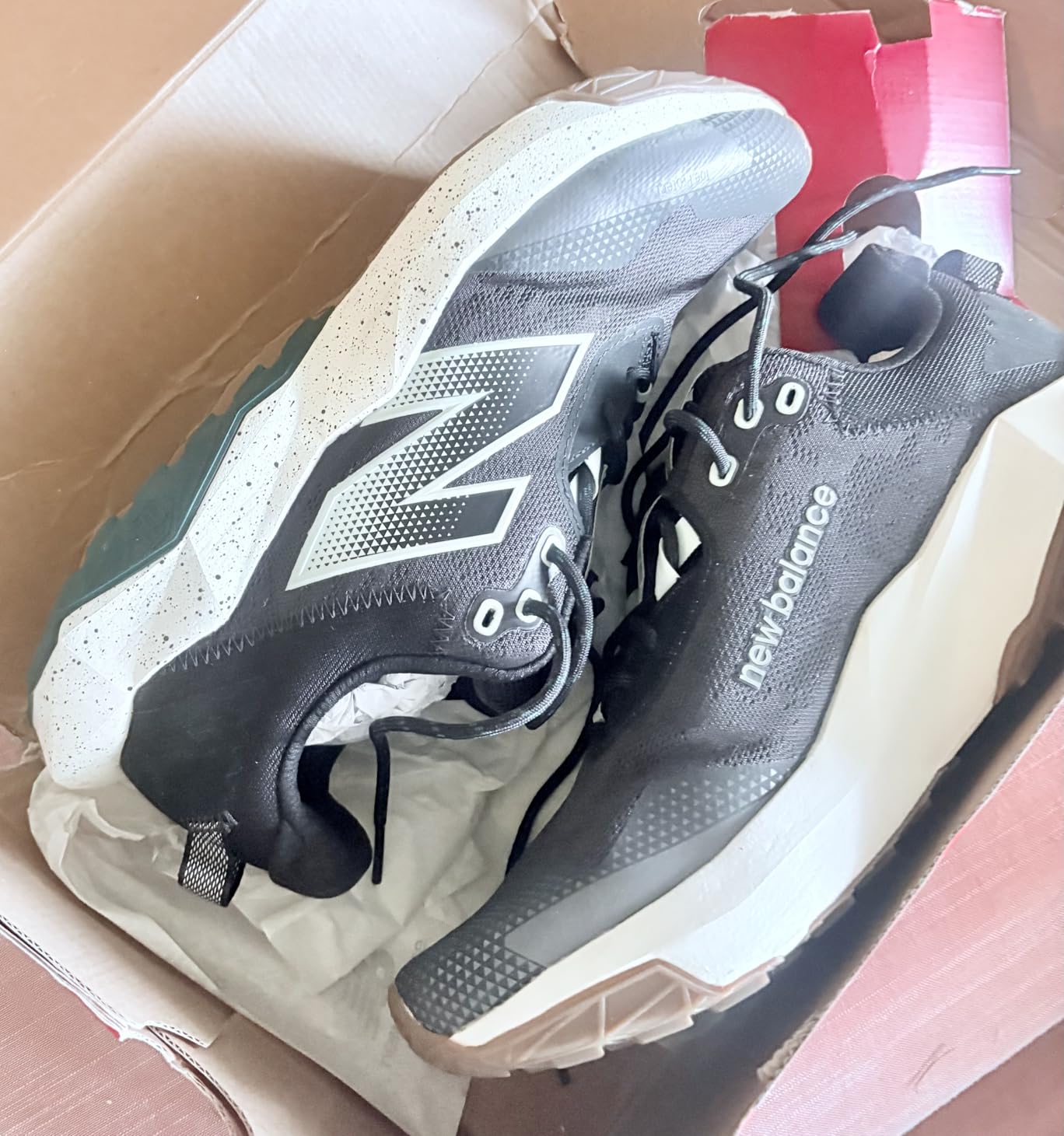
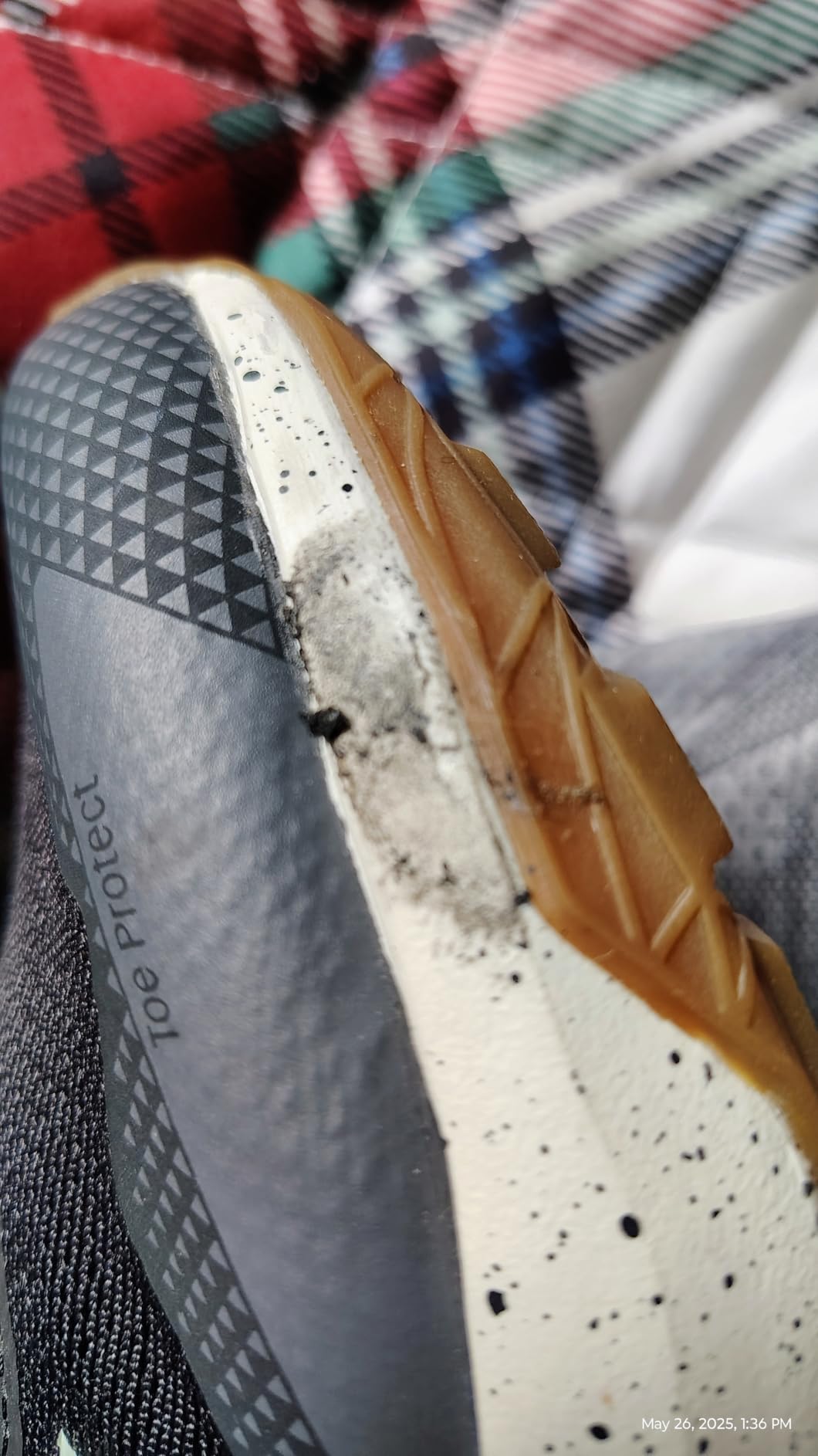
Durability is where the rating is held back. Lugs wear down quickly, sometimes within months, and the ventilated upper material wears through in about a year. The front end of the shoe dips during walking, which a few buyers notice, and a small number report pairs arriving already showing wear or a clicking midsole. Treat it as a seasonal shoe rather than a multi-year investment.
Is 6 mm drop close enough to a road shoe?
For most runners, yes. A 6 mm offset is a small change from a typical road trainer, and the spec is listed as approximate, so treat it as guidance rather than an exact figure. It gives you a little more heel-to-toe angle than the flat Altra options without the abrupt adjustment that trips people up. If you are moving from road running and want stable, familiar geometry, that middle ground is the point of this shoe.
How many miles do you get out of it?
Fewer than you would like, and this is the honest headline for the Nitrel V6. Lug wear-through inside a few months of regular trail use and upper breakdown around a year mean the shoe is likely replaced well before it feels dead underfoot. That matters for anyone running high weekly mileage. Buy it for the fit, budget for a faster replacement, and consider one of the shoes above if you are logging serious distance.
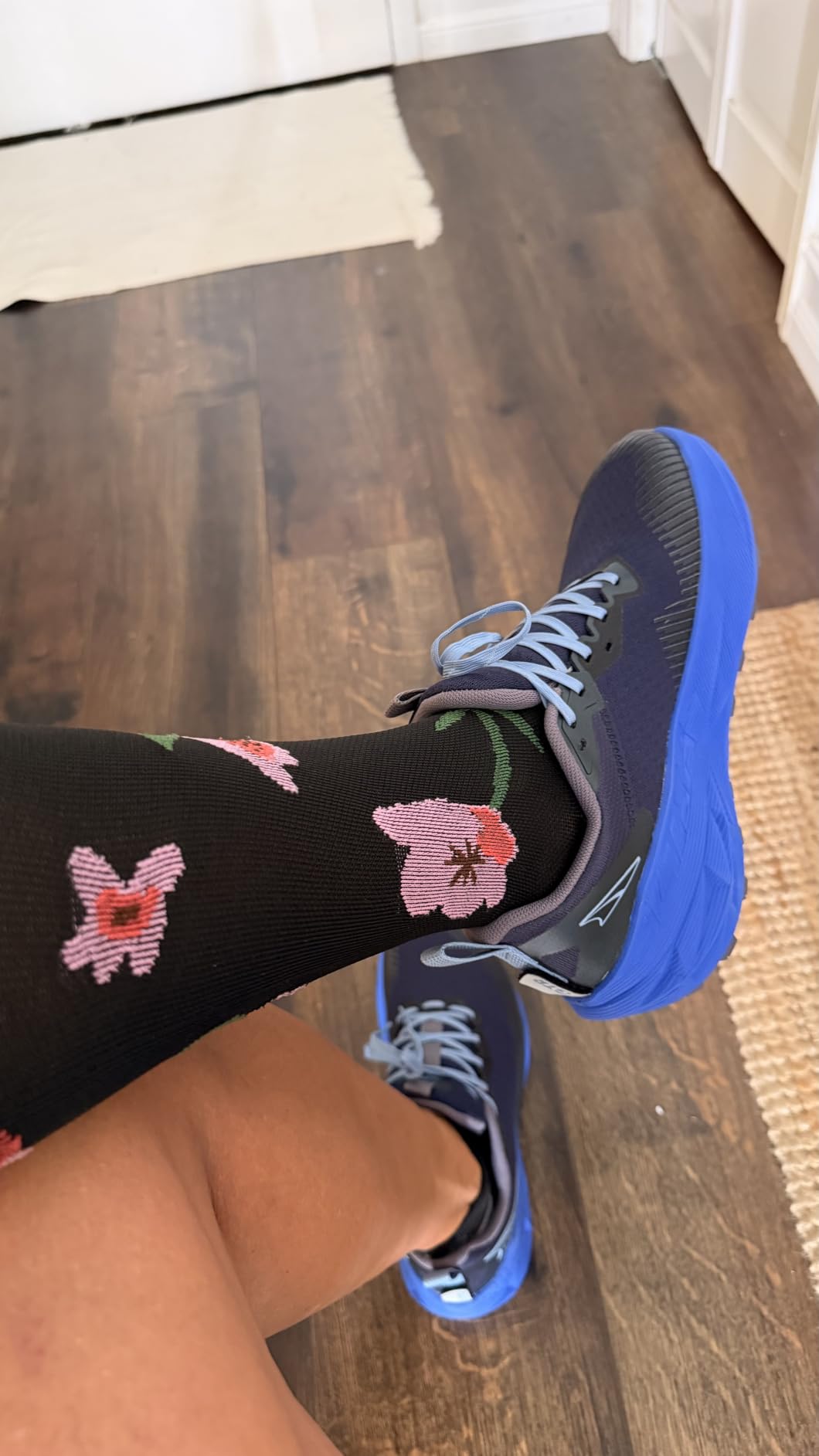
12. Altra Experience Wild 2 – Best Cushioned Zero-Drop Pick
ALTRA Men’s Experience Wild 2 Trail Running Shoe, Dusty Olive, 11.5
Balanced Cushioning zero drop platform
Cushioned Experience Wild 2 midsole
FootShape toe box
Lightweight build
Pros
- Comfortable cushioning straight out of the box
- Helps with plantar fasciitis for several owners
- FootShape toe box suits slightly wide feet without looking bulky
- Good slip resistance on wet decking and pavement
- Lightweight for casual and golf use
Cons
- Toe box upper tore through in under two weeks
- Heel slippage out of the box
- Toe box width does not translate to a wide midfoot
- Tongue can slip sideways during runs
The Experience Wild 2 is the answer for people who want a zero-drop shoe but find the thin, ground-feel platforms of the Altra range under-cushioned for long days. The highly cushioned Experience Wild 2 midsole gives noticeably more support underfoot for high-intensity trail sessions while keeping the Balanced Cushioning zero drop platform that places heel and forefoot at the same distance from the ground.
Owners report reduced foot pain from plantar fasciitis, and several bought it for exactly that reason. The FootShape toe box still lets toes spread and suits slightly wide feet, and unlike some very roomy models it does not look like a clown shoe. It is light enough for casual wear and for golf, and the slip resistance holds up on wet decking.
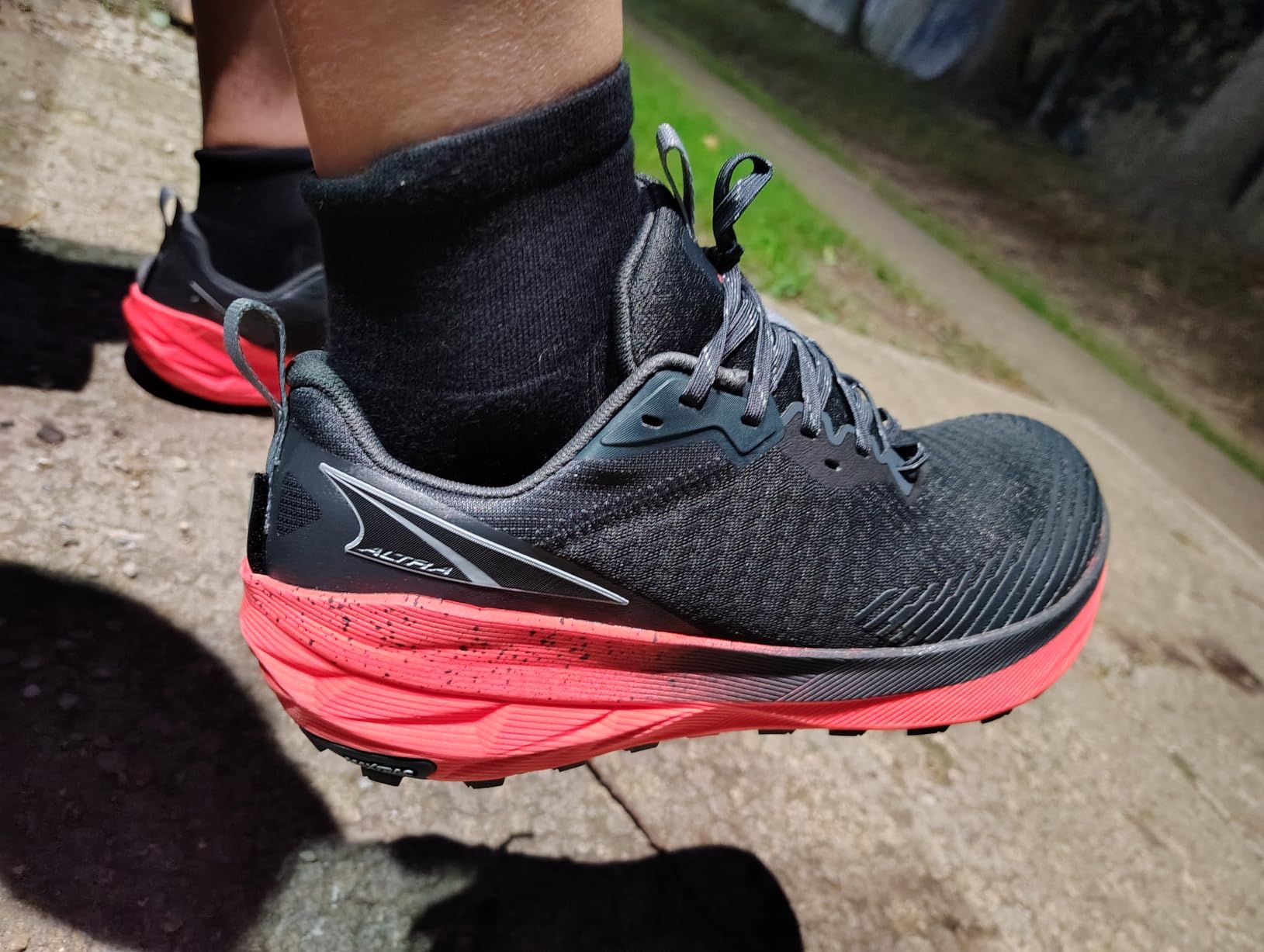
Buyers looking at this shoe should know the midfoot does not match the toe box. A wide forefoot that narrows through the midfoot gives you toe room without the midfoot stability some runners need, so a runner’s loop or heel-lock lacing trick is worth learning from day one. The tongue can also slide sideways during a run, which is distracting at pace.
The serious issue is upper durability. Multiple owners report the toe box tearing through in under two weeks of ordinary use, and heel slippage straight out of the box is a recurring complaint. Lug marks on soft greens are a minor annoyance. With the smallest review base of any shoe here, treat the rating as less settled than the others and inspect the upper after the first few runs.
Is it better than a flat zero-drop shoe?
For long days, yes. The extra midsole foam is the reason owners reach for it when their calves or their feet struggle on the thin flat platforms, and it still delivers the low-impact, foot-forward landings that make zero drop attractive in the first place. For pure ground feel on technical singletrack, a thinner platform is faster and more sensitive. Choose on cushioning need, not on principle.
How should you secure the heel?
Use a runner’s loop, and check it before your first long run rather than after. Heel slippage out of the box is the most common fit issue, and it is cheap to fix with a lacing technique that takes under a minute. The sideways-sliding tongue is harder to solve, so if that bothers you, a shoe with a more structured collar, such as the Lone Peak 9, is the safer choice.
How to Choose Trail Running Shoes for Men
Choosing well comes down to matching the shoe to the terrain and your foot, in that order. Marketing gets the second slot on the label, but the outsole, the lug depth and the width of the last decide whether a shoe works on day one. Work through the points below in order and you will narrow the list fast.
Match the shoe to your terrain first
Deep, closely spaced lugs are for mud and soft ground. Shallow, wider-spaced lugs are for hardpack, rock and mixed road-to-trail running, where aggressive tread just feels clumsy on asphalt. If your terrain is wet clay, you want maximum lug depth and a high-adhesion rubber compound. If it is dry, rocky singletrack, prioritise a rock plate and a stable chassis over tread depth. And if you also hike and fastpack in the shoe, weight and outsole durability matter as much as speed.
Cushioning and stack height
Stack height is the distance from where your foot sits inside the shoe down to the ground, measured in millimetres. Under about 20 mm is minimal and gives maximum ground feel, roughly 30 to 40 mm is the current all-round trail standard that suits most runners, and anything over 40 mm is maximum cushion for long days. Ground feel is the trade: more foam absorbs more impact but dampens the feedback that keeps you stable on uneven ground.
Heel-to-toe drop and how to transition to zero drop
Drop is the height difference between heel and toe. Four to eight millimetres is typical for all-round trail shoes, and it is a small enough step from a road trainer to be painless. Zero drop puts heel and forefoot at the same height, which encourages low-impact, foot-forward landings and reduces fatigue under load, but it loads the calf and Achilles differently overnight. Ramp into it over about four weeks: walk first, then flat short runs on soft ground, then distance, and save descents for week four or later. Never make a zero-drop switch and a downhill run the same afternoon.
Outsole compound and lug depth
Three families dominate. Salomon uses Contagrip, including a Mud Contagrip variant tuned for soft ground, while Brooks uses TrailTack Green, which is built partly from recycled rubber and performs well on wet and dry surfaces. New Balance’s AT Tread with Hydrohesion adds a wet-grip layer. Softer, high-adhesion compounds grip better and wear faster; harder compounds last longer and grip less. Match the compound to the surface and accept a shorter replacement cycle if you run a lot of soft ground.
Fit, toe box width and men’s sizing
This is the most common source of regret in the category. Most men’s lasts are built around a standard D width, so wide feet should look for explicit wide and X-wide options rather than sizing up, which shortens the shoe and does not widen it. New Balance and ASICS offer genuine wide and X-wide widths across their trail ranges, which makes them the safer buys for broad feet. Foot-forward or FootShape lasts, such as those from Altra, are the roomiest option, and running shoe sizing differs between US and European standards, so check the brand’s own conversion chart rather than assuming your usual size.
Stability and lateral support
Uneven ground pushes your foot sideways as much as it pushes you up, and that is where trail injuries happen. A structured chassis, a secure heel counter and a wide platform base give you more control when the surface tilts. If you have rolled an ankle, fought with overpronation or simply feel unstable on rocky ground, prioritise a sturdier build over minimal weight. If you have no stability issues, a more flexible shoe will feel faster and more responsive.
Durability and expected lifespan
Most trail shoes give you roughly 300 to 500 miles before the midsole and outsole stop working, and running them beyond that is how runners end up with injuries on an apparently healthy shoe. Treat that as your planning number, then adjust for the shoe. Shoes with soft, high-grip compounds on mud wear fastest, cushioned EVA-style foams compress sooner, and the models that owners report lasting longest are those with abrasion-resistant uppers and denser outsoles. If you run high mileage, expect to replace annually and factor that into what you spend.
Waterproofing and cold-weather trade-offs
Waterproof membranes keep rain, puddles and deep mud out but add weight, reduce breathability and trap moisture from your own feet, which means your socks end up wet either way. For cold, wet races in one effort, that trade is worth it. For everyday trail running, a breathable shoe that dries quickly is usually the better tool. Pick a non-waterproof shoe for summer running and a waterproof or weather-resistant model for winter and fastpacking.
Road-to-trail and gravel shoes
If your runs are split between pavement and dirt, or you run on gravel paths and fire roads, you do not need deep lugs. You need a mid-depth tread that stays quiet on road and still bites on loose gravel, a durable upper that tolerates dust, and cushioning you can wear for an easy road day. The shoe that handles both surfaces without a transition period is worth more to you than the shoe that grips best on pure singletrack.
Frequently Asked Questions
What is considered the best trail running shoe?
There is no single universal winner, because the best trail running shoe is the one whose outsole rubber, lug depth and stack height match your terrain, cushioning preference and foot width. Match deep, closely spaced lugs and soft compounds to mud, shallower and firmer treads to hardpack and road-to-trail running, and choose stack height for the distance you cover. Foot shape decides more than any spec, so try on before you commit.
Are Hokas good for trail running?
Hokas are among the most popular trail shoes for a reason: the brand builds genuinely well-cushioned, protective shoes that suit long days and runners who need impact protection. The common complaints from our community are that max cushioning can feel bulky on technical ground and that some models run narrow for wide feet. Cushioning-focused Hokas suit most trails well, while the narrower lasts and a lack of wide sizing are worth checking before you buy.
What are the best running shoes for both road and trail running?
For a shoe that handles pavement and trail in one pair, look for mid-depth lugs rather than deep ones, a durable upper, and cushioning comfortable enough for a long road day. Shoes built around shallow or medium tread stay quiet on asphalt and still grip loose gravel and packed dirt. Deep, aggressive outsoles feel clumsy on road and wear their lugs down quickly, so they are the wrong choice for a mixed-surface week.
Should I wear zero drop trail running shoes?
Zero drop shoes place the heel and forefoot at the same height, which encourages low-impact, foot-forward landings and reduces fatigue when you are hiking or running with load. They are worth the adjustment if you are comfortable with minimalist running, but they are not automatically better. The transition matters more than the shoe: walk first, add short flat runs on soft ground, build distance over a month, and leave descents until week four.
Do I need waterproof trail running shoes?
Only for cold, wet conditions and fastpacking where you will be out for hours. Waterproof membranes keep rain and mud out but add weight, reduce breathability, and trap moisture from your own feet, so your socks end up wet either way. For summer trail running, a breathable shoe that dries quickly is the better tool. If you run through a wet winter, a weather-resistant model like a zero-drop trail shoe with a bootie is a reasonable middle ground.
How long do trail running shoes last?
Plan on roughly 300 to 500 miles, and adjust for the shoe and the terrain. Soft, high-grip outsoles on mud wear fastest, cushioned EVA-style foams compress sooner, and owners of this category report lugs wearing through in a few months on soft ground. Many people also wear trail shoes on pavement, which shortens life further. Replace them when the midsole stops absorbing and the outsole tread goes smooth, not when the upper looks worn.
What is the difference between a hiking shoe and a trail runner?
A trail runner is built to run: it is lighter, has a lower stack height and a more aggressive rocker geometry designed for repeated footfall and forward motion. A hiking shoe is built to walk for hours on rough ground, so it is stiffer, usually taller at the collar for support, and often carries a waterproof membrane. You can hike in a trail runner, which is what most fastpackers do, but a stiff hiking shoe is the safer choice on a heavy load over technical terrain.
Should a men’s trail running shoe be wider than a women’s?
A men’s shoe is typically built on a wider last than the equivalent women’s model, because the average men’s foot is wider across the forefoot. That said, width options matter more than the label, and plenty of men’s trail shoes still run narrow. If you have wide feet, look for explicit wide or X-wide widths rather than simply sizing up, because a longer shoe does not give a wider forefoot. The roomiest foot-forward lasts come from brands built around toe splay.
Our Final Verdict on the Best Trail Running Shoes for Men
After comparing all twelve, the Salomon Speedcross 6 is our pick for the best trail running shoes for men, because it delivers the best balance of owner satisfaction, aggressive grip in genuinely bad conditions and a closure you can adjust one-handed in the rain. It is the shoe we would put on our feet without knowing the forecast, and its main weakness, outsole wear on pavement, is manageable if you keep it on the trail.
Buy the Alphacross 5 instead if you run long days and want cushioning over ground feel, and pick the original Speedcross if soft mud is your default terrain and you value proven long-term hold-up. For wide or flat feet, the New Balance Nitrel V6 has the roomiest genuine width options, with the caveat that its lugs wear quickly. For zero drop and any hiking or fastpacking crossover, the Altra Lone Peak 9 is hard to argue with. And for a mixed road-and-trail week, the Brooks Ghost Trail handles both without an adjustment period.
Whatever you choose, get the width right first, respect the break-in period on a zero-drop shoe, and pick lug depth for your actual terrain rather than for the marketing. That single decision prevents most of the disappointments runners report with this category.