
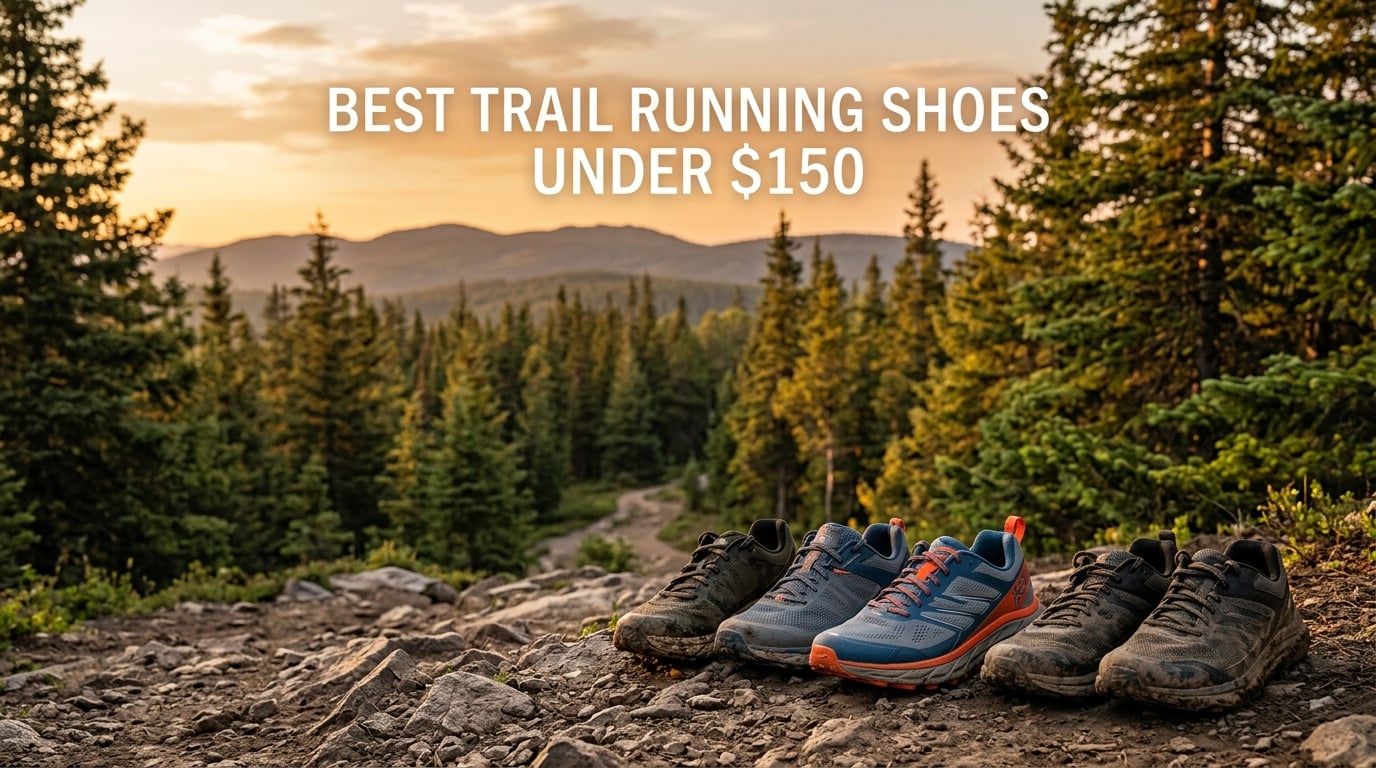
Trail running has a price problem, and it is not a small one. Plenty of runners first assume that real off-road shoes start well above the budget most of us actually have, and that the cheapest option on the shelf is a road shoe with a few extra bumps glued to the rubber. That assumption is out of date. The best trail running shoes under 150 dollars are genuine trail platforms with real lug depth, proper trail rubber and midsoles built for uneven ground, and in most cases they are not cheap shoes at all.
The catch is how you read the price. Plenty of flagship trail shoes carry a list price above 150 dollars and trade consistently below it, so an under-150 guide has to qualify picks on what you actually pay rather than on the number printed on the box. Everything in this roundup was selected on that basis, and both the picks and the caveats come from owner feedback rather than guesswork. The buttons below each review show the current price.
We compared all twelve picks on the things that decide whether a trail shoe works: outsole compound and lug depth, midsole foam and stack height, heel-to-toe drop, toe box width, weather handling and stated weight. What you give up at this budget is real but predictable, and we spell it out in the buying guide rather than burying it. If your feet are still finding their road shoes, start with our road shoe picks first, then come back here.
Last updated for October 2026. Prices move constantly, so treat every pick as qualifying on current street price and re-check before you buy.
Table of Contents
Top 3 Picks: The Best Trail Running Shoes Under 150 Dollars
These three cover the most common profiles: deep-grip mud and soft ground, all-round value with a lifestyle edge, and the cheapest legitimate way into the sport.

Salomon Speedcross 4
- Wet Traction Contagrip outsole
- Aggressive mud grip
- Secure Quicklace feel

All 12 Picks at a Glance
Every shoe below is a real trail platform or a hybrid built for off-road use, and every one qualifies under a 150-dollar budget on current street price.
| Product | Specifications | Action |
|---|---|---|
| Salomon Speedcross 4 |
|
Check Latest Price |
| Vans Range EXP |
|
Check Latest Price |
 WHITIN W20 WHITIN W20 |
|
Check Latest Price |
 Salomon Speedcross 6 Salomon Speedcross 6 |
|
Check Latest Price |
 Under Armour Charged Surge 4 Under Armour Charged Surge 4 |
|
Check Latest Price |
 Saucony Cohesion 14 Saucony Cohesion 14 |
|
Check Latest Price |
 Altra Lone Peak 9 Altra Lone Peak 9 |
|
Check Latest Price |
 New Balance Tektrel V1 New Balance Tektrel V1 |
|
Check Latest Price |
 Under Armour Bandit Trail 3 Under Armour Bandit Trail 3 |
|
Check Latest Price |
 Merrell Speed Strike 2 Merrell Speed Strike 2 |
|
Check Latest Price |
 Saucony Excursion TR13 Saucony Excursion TR13 |
|
Check Latest Price |
 ASICS Gel-Venture 11 ASICS Gel-Venture 11 |
|
Check Latest Price |
12 Best Trail Running Shoes Under 150 Dollars, Reviewed
Each pick below is ordered by how broadly it works rather than by brand. Every section names the terrain it suits, the weakness that could rule it out, and the runner type most likely to be happy in it.
1. Salomon Speedcross 4 – Best Overall for Mud and Soft Ground
Salomon Men’s Speedcross 4 Trail Running Shoes, Lime Green, 11 D US
Contagrip wet traction outsole
Molded EVA midsole
Listed weight 1.65 pounds
Pros
- Exceptional traction on mud wet rock and soft ground
- Quicklace is fast and holds the foot securely
- Lightweight close-to-foot feel
- Owners report 450-600 miles per pair
Cons
- Aggressive lugs wear quickly on asphalt
- Runs narrow through the forefoot
- Factory insole is widely replaced
The Speedcross 4 is the shoe that made trail grip affordable, and it is still the reference point buyers mention first when the conversation turns to mud. The Contagrip outsole bites into wet clay and soft ground in a way that nothing else at this budget manages, and the close-to-foot fit keeps the shoe stable when the ground turns unpredictable.
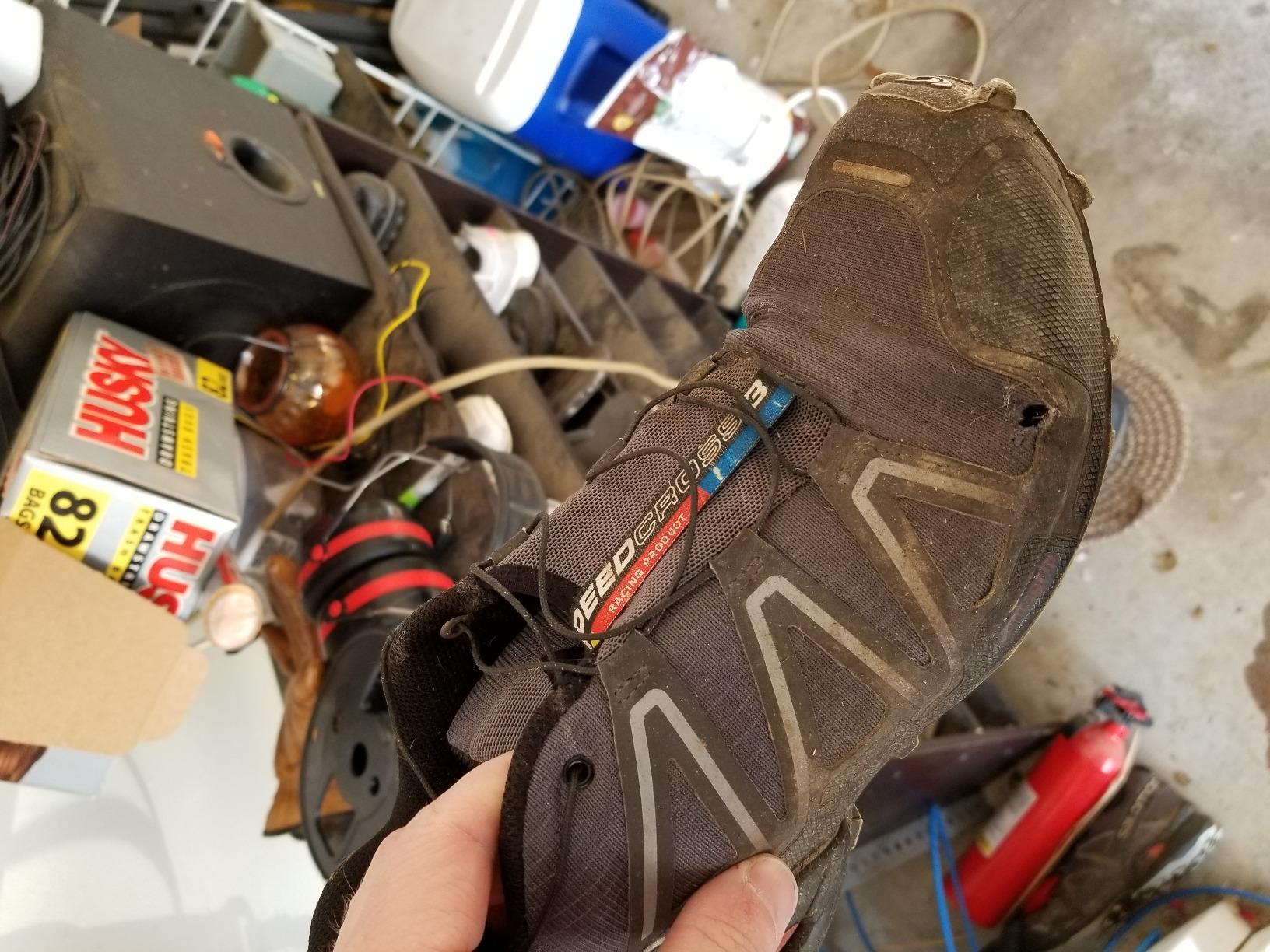
Owners consistently report 450 to 600 miles per pair, which works out to a very reasonable cost per mile for anyone who logs real distance. That longevity comes with a caveat: the lug pattern is aggressive by design, and it wears down faster if you mix in a lot of asphalt.
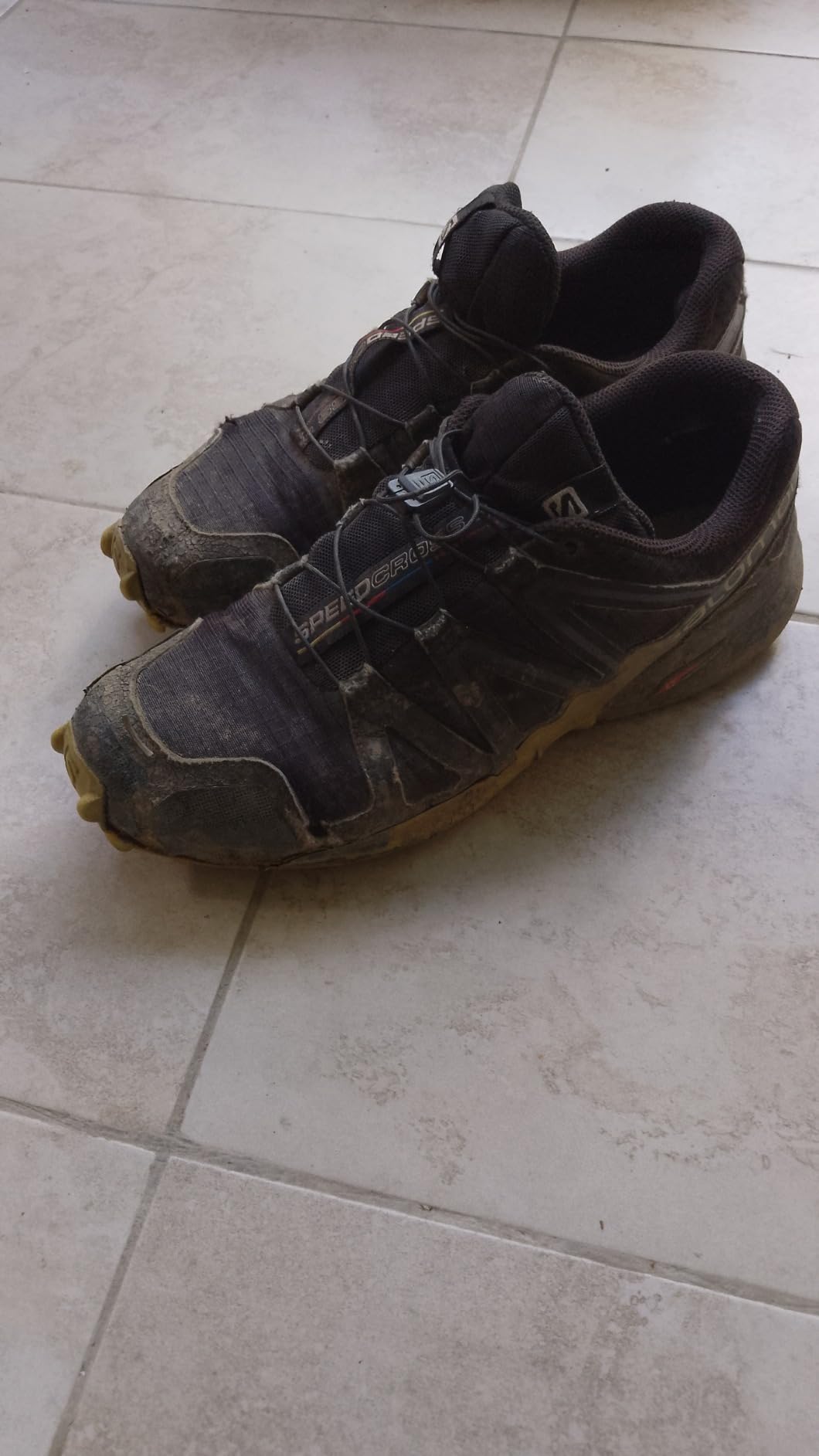
The midsole is a molded EVA with injected sections, which keeps weight down and gives the shoe a lively feel rather than a plush one. It is a firm, ground-feeling platform, so long days on smooth surface are less comfortable than on dirt, where the shoe actually belongs.
Fit is the main risk. The forefoot runs narrow, and wide feet often need to size up a half size. Nearly every buyer replaces the factory insole anyway, so treat that as a free upgrade rather than a defect.
Who the Speedcross 4 suits
It suits muddy singletrack, wet rock, wet grass and soft ground more than any other shoe on this list. If your local trails turn to clay in spring or you run a hilly route with roots and rocks, this is the pick.
It also works for fast hiking and light fastpacking, where the sticky outsole and quick lace earn their keep. Reviewers report it doubling as a general outdoor shoe without complaint.
Who should skip the Speedcross 4
Skip it if you have genuinely wide feet and cannot size up, because the forefoot narrows through the midfoot. Also skip it if your mileage is mostly pavement, where those deep lugs chew out faster than road rubber would.
Buyers who want a soft, cushioned ride for long hours will find the EVA firm by comparison. If you run ultras on rocky ground, our rugged terrain roundup covers heavier-duty options.
2. Vans Range EXP – Best Value Hybrid for Light Trail and Everyday Wear
Vans Men’s Range EXP Shoe, Suede/Canvas Black/Black, 10.5
Grippy reverse waffle tread
Flexible cushioned EVA midsole
Dual-density removable insole
Pros
- All-day comfort from the EVA midsole and padded collar
- Grippy tread handles light trail and hiking
- Suede and canvas uppers work in town
- Lightweight build with pull tabs
Cons
- Lifestyle sneaker construction
- Not built for deep mud or technical terrain
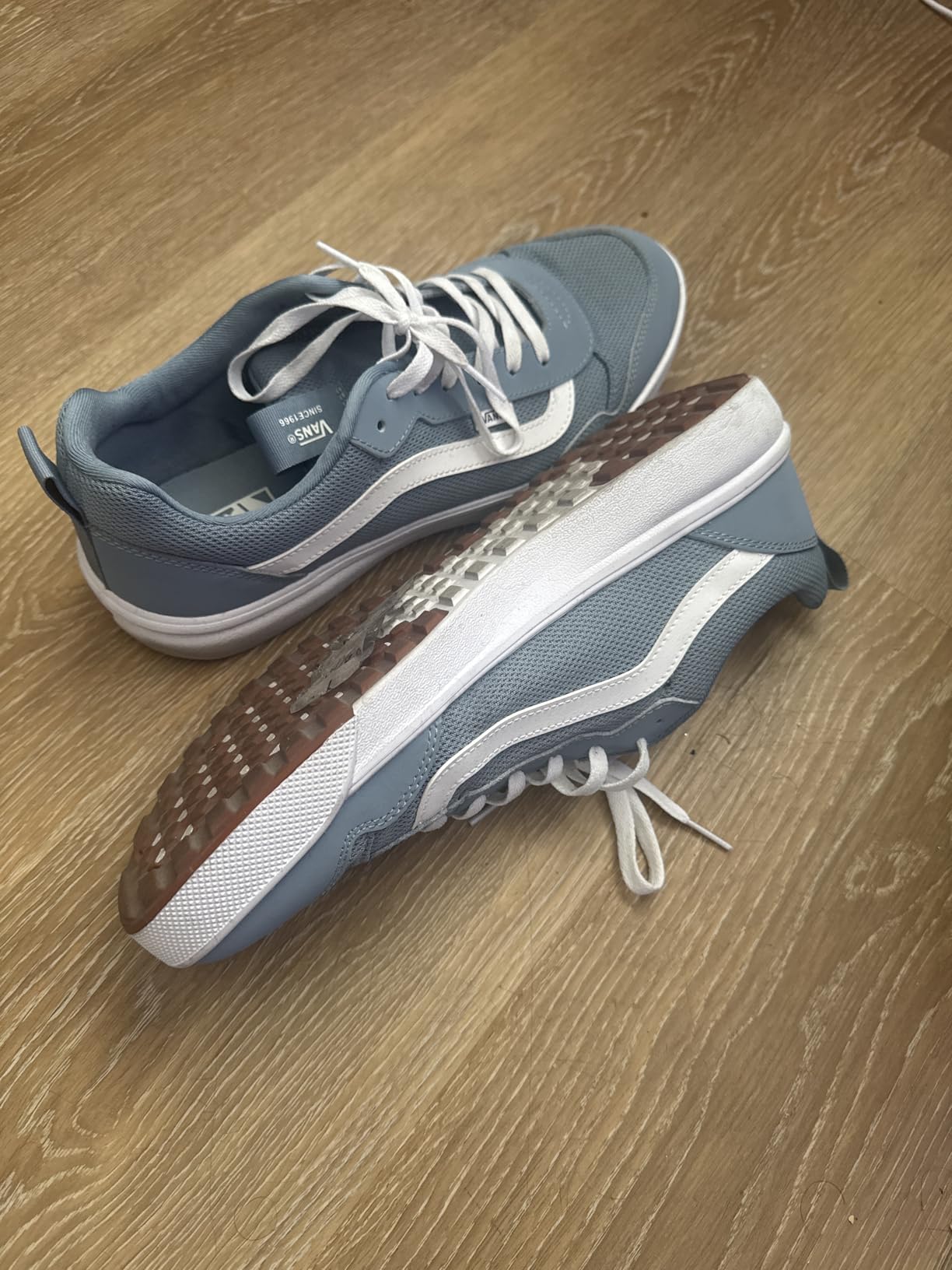
The Range EXP is the pragmatic answer for someone who wants one pair of shoes for the trailhead, the grocery run and the office. The reverse waffle tread grips packed dirt and gravel well enough for light hiking, and the flexible EVA midsole keeps long walks comfortable.
What makes it interesting for this roundup is the rating. Buyers rate it at 4.7 across more than five thousand reviews, which is the highest average on this list, and the recurring praise is about comfort and versatility rather than performance extremes.
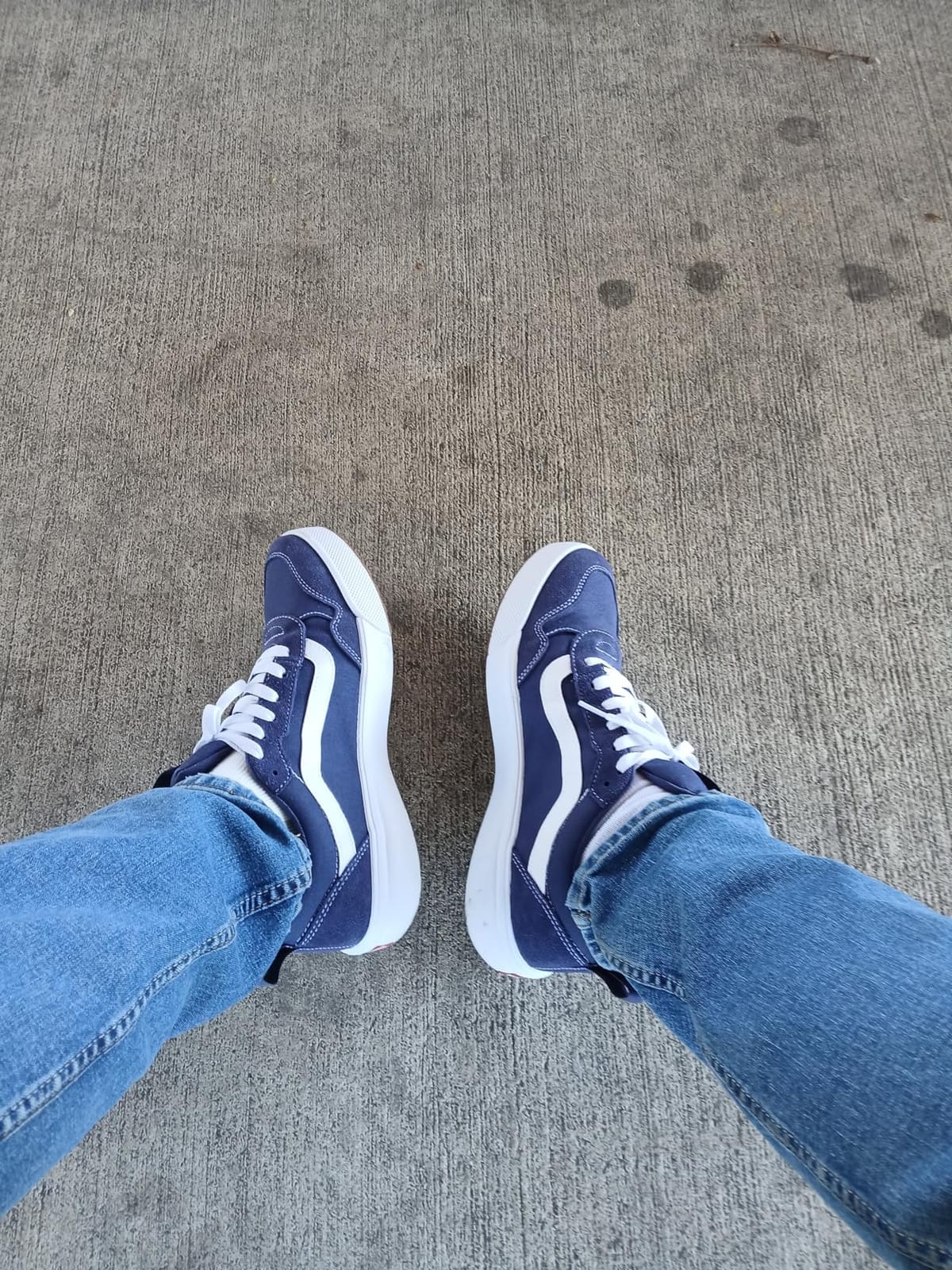
The suede and canvas upper is the reason it works in a trail guide without looking out of place in a city. Pull tabs make it easy to get on, and the padded collar means you can wear it for hours without sock pressure marks.
Dual-density removable insoles add a layer of comfort that most hiking shoes at this budget skip. That matters more than most specs when you are walking a full day on uneven ground.
Who the Range EXP suits
It suits casual trail runners, hikers who do not need technical footing, and anyone splitting time between trail and town. If your routes are fire roads, gravel paths and maintained tracks, this covers them.
It also works as a travel shoe. Reviewers mention using it for walking tours and long days where cushioning matters more than lug depth.
Who should skip the Range EXP
Skip it for technical terrain, deep mud and slick wet rock, because the waffle tread is a light-duty pattern. Nothing on this shoe is built for the kind of grip that keeps a foot planted on a steep scramble.
Also skip it if you care about running form. The build is a lifestyle sneaker with trail traction, and it will never feel like a dedicated trail platform no matter how good the rating looks.
3. WHITIN W20 – Best Budget Pick for Zero Drop and Natural Stride
WHITIN Men’s Wide Toe Box Trail Running Minimalist Shoes, Grey, 9
Zero drop heel to toe
Adaptive minimalist construction
Vegan materials, true to size
Pros
- Zero-drop design encourages a natural stride
- Anatomical foot shape gives natural comfort
- Lightweight breathable build
- True to size with vegan materials
Cons
- Minimal cushioning on long road runs
- Less protective on rocky ground than lugged trail shoes
The W20 is the cheapest way to get a genuine trail running platform on your feet, and the zero-drop geometry is the point rather than a compromise. It sits at the lowest end of this budget range, which leaves room for the rest of your kit.
Buyers like the anatomical foot shape and report that sizing is true, so you can order your normal size with more confidence than most shoes on this list allow. That is a genuine advantage when buying an unfamiliar minimalist brand.
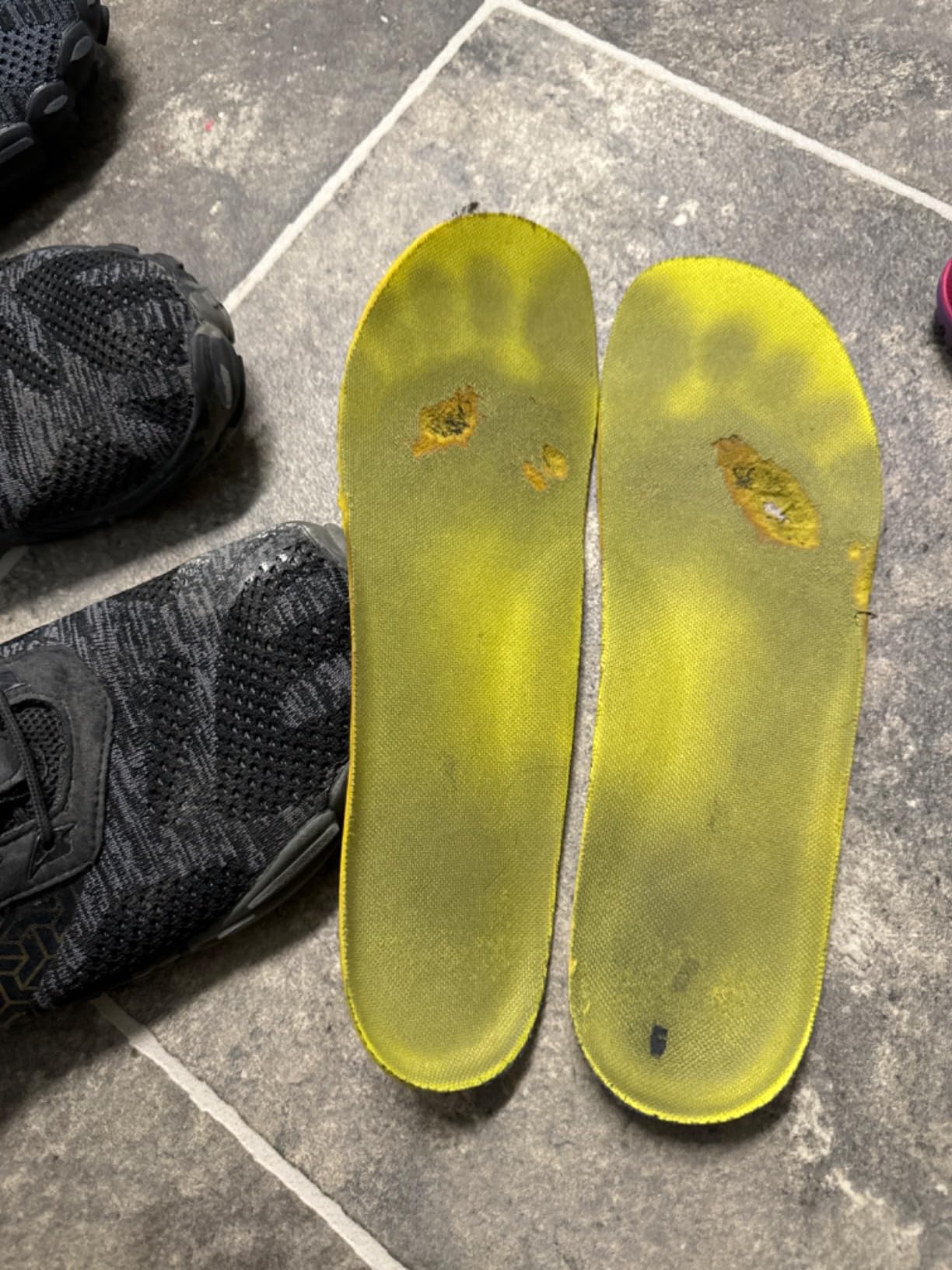
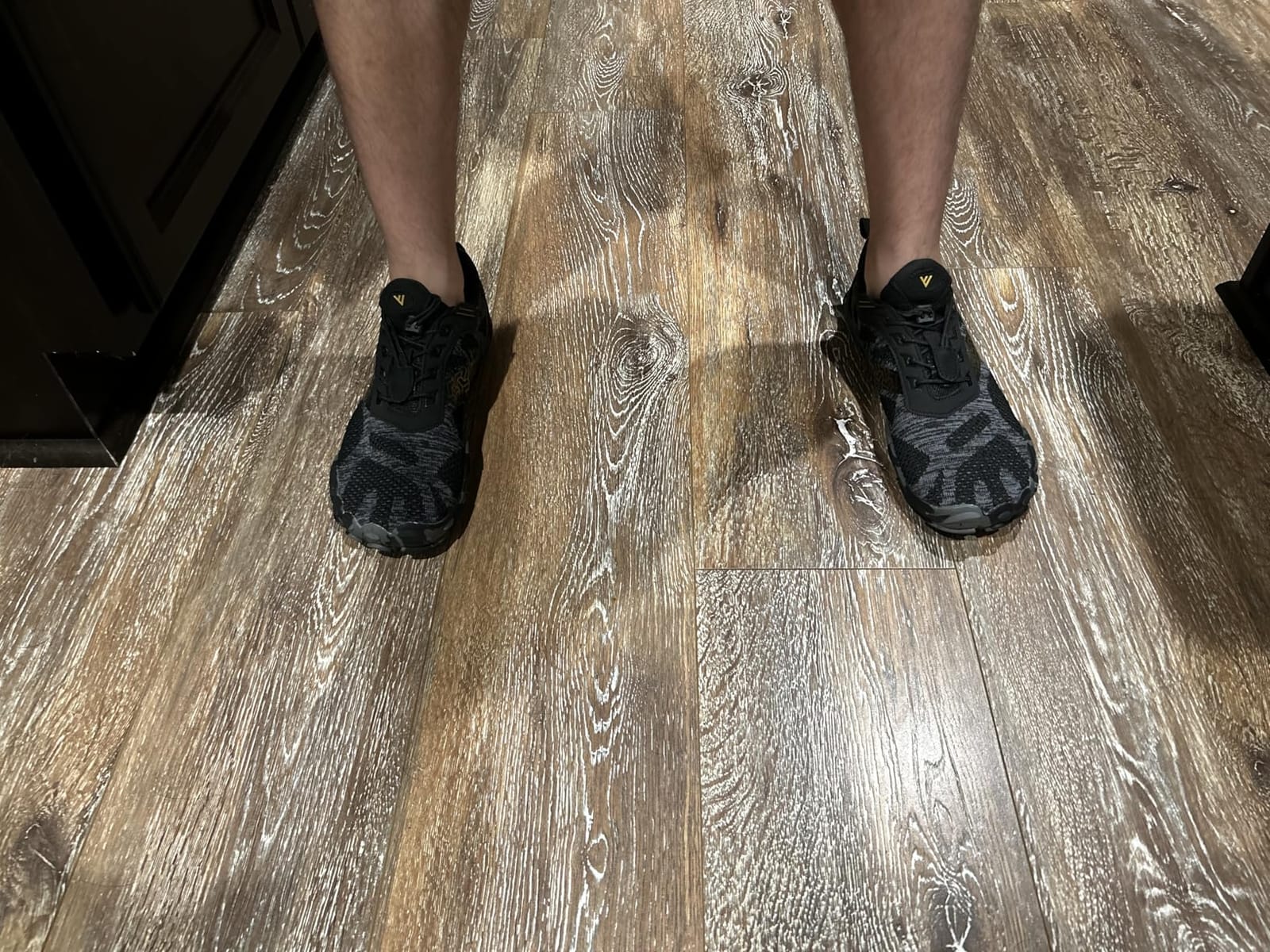
The minimalist construction uses adaptive materials rather than heavy overlays, which keeps the shoe light and flexible. It moves with the foot in a way that heavier trail shoes do not, and that matters on smooth trails and packed dirt.
There is very little protection here, though. Rocks come through, sharp debris reaches the foot, and there is no rock plate between you and the ground. Runners treat it as a trainer for dirt paths rather than an alpine shoe.
Who the W20 suits
It suits anyone making the move from road running who wants lighter, faster-feeling footwear without paying flagship money. Flat dirt, grass track and short loop trails are its natural home.
It also suits runners already training for zero-drop and who want a cheap pair to rotate with road shoes. Vegan materials are a bonus for buyers who look for that.
Who should skip the W20
Skip it for rocky, technical or long-distance trail running. Minimal cushioning and no rock plate means ground feel is high but protection is low, and that combination is unpleasant after the first hour.
Skip it if you run a lot of pavement. Reviewers consistently note that the thin cushioning is not built for long road miles, so keep it on the dirt where it belongs.
4. Salomon Speedcross 6 – Best for Technical Ground and Slick Conditions
Salomon Mens Speedcross 6 Black/Black/Phantom 11 Medium
Contagrip outsole with aggressive lugs
Quicklace system
Lightweight breathable upper
Pros
- Exceptional traction on mud snow ice and slick rock
- Quicklace is easy to set and very secure
- Lightweight breathable upper that dries fast
- Outsole rubber holds up better than earlier versions
Cons
- Soft compound wears faster with frequent street use
- Forefoot narrower than the XA Pro
The Speedcross 6 is the newer version of the shoe that defined budget trail grip, and reviewers consistently call it the best version yet. It handles mud, snow, ice and wet rock better than anything else in this roundup, and the pattern bites hard in exactly the conditions that end lesser outsoles.
Where it separates from the Speedcross 4 is durability. Owners report the outsole holding up better than earlier versions, which matters if you run mixed surfaces and do not want a shoe that flattens out within a season.
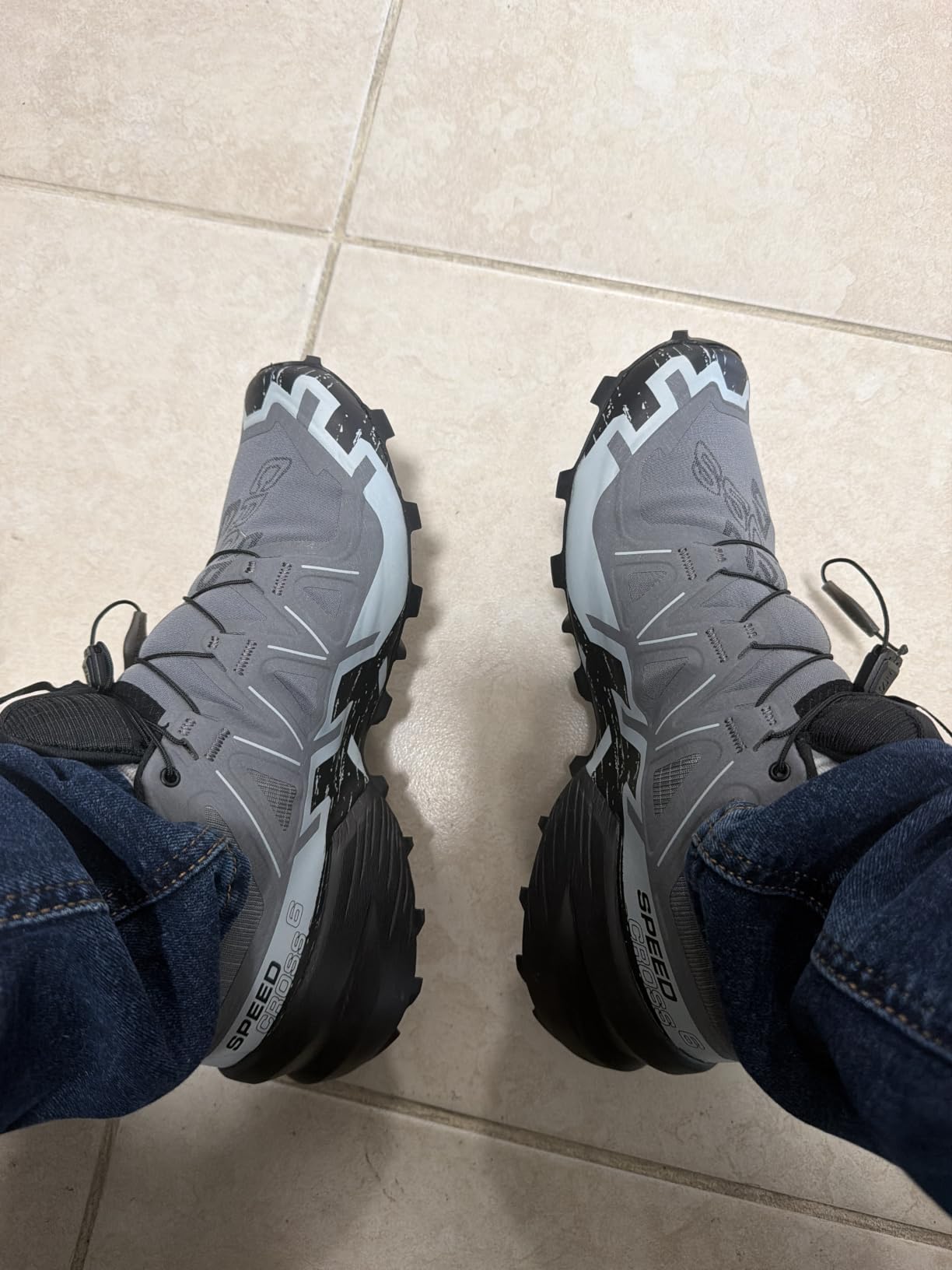
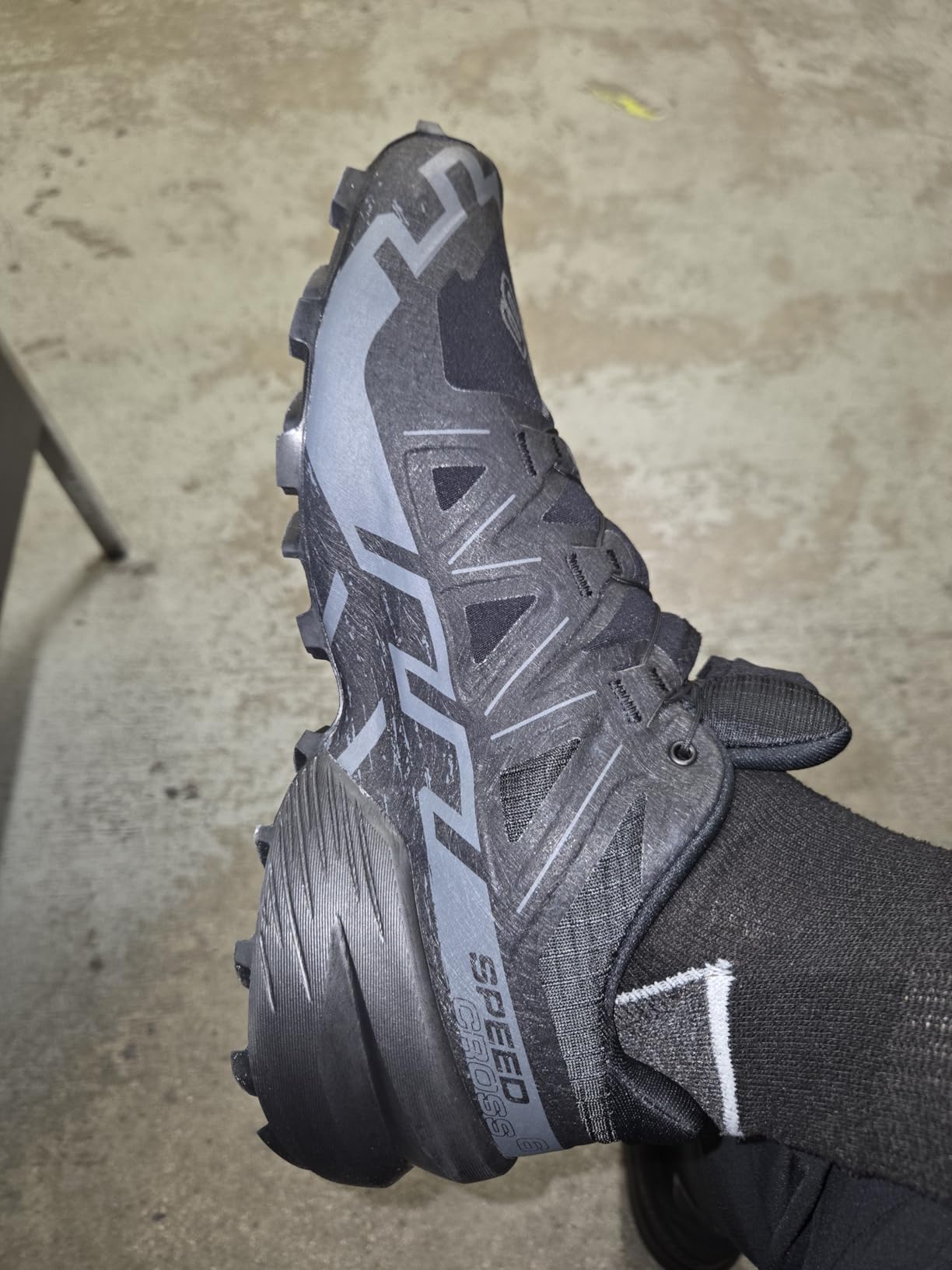
The Quicklace system sets in seconds and stays put on descents, and the upper is lighter and more breathable than the version it replaced. It dries quickly, which matters in the wet conditions where this shoe performs best.
The midsole is tuned for responsiveness rather than cushioning, so the ride stays lively underfoot. That is a good trade on technical ground and a mediocre one on long flat stretches.
Who the Speedcross 6 suits
It suits technical terrain and wet-weather running, including ice, snow and slippery rock where other budget trail shoes lose grip. Precise-feet runners who like a close fit will feel at home in it.
It also suits anyone who rotates between trail and pavement and wants a shoe that grips both without changing. The lug pattern clears light asphalt without feeling absurd.
Who should skip the Speedcross 6
Skip it if your feet are wide. The forefoot is narrower than the XA Pro and some buyers size up, so test carefully before committing. A close-fitting shoe is only an advantage if it actually fits.
Skip it for long-distance cushioning, because the responsive foam gives ground feel rather than softness. And note that the softer compound still wears faster with heavy street use.
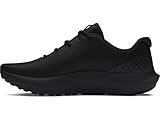
5. Under Armour Charged Surge 4 – Best for Road-to-Trail Hybrids
Under Armour Men’s Charged Surge 4, 002 Black, 10.5
Charged Cushioning midsole
8mm offset
Breathable mesh upper
Pros
- Comfortable breathable fit with good arch support
- Lightweight yet sturdy for walking and light trails
- Flexible sole that is not overly stiff
- Wide colourway range
Cons
- Sizing is inconsistent between models
- Toe box can feel pointed
- Road-oriented outsole
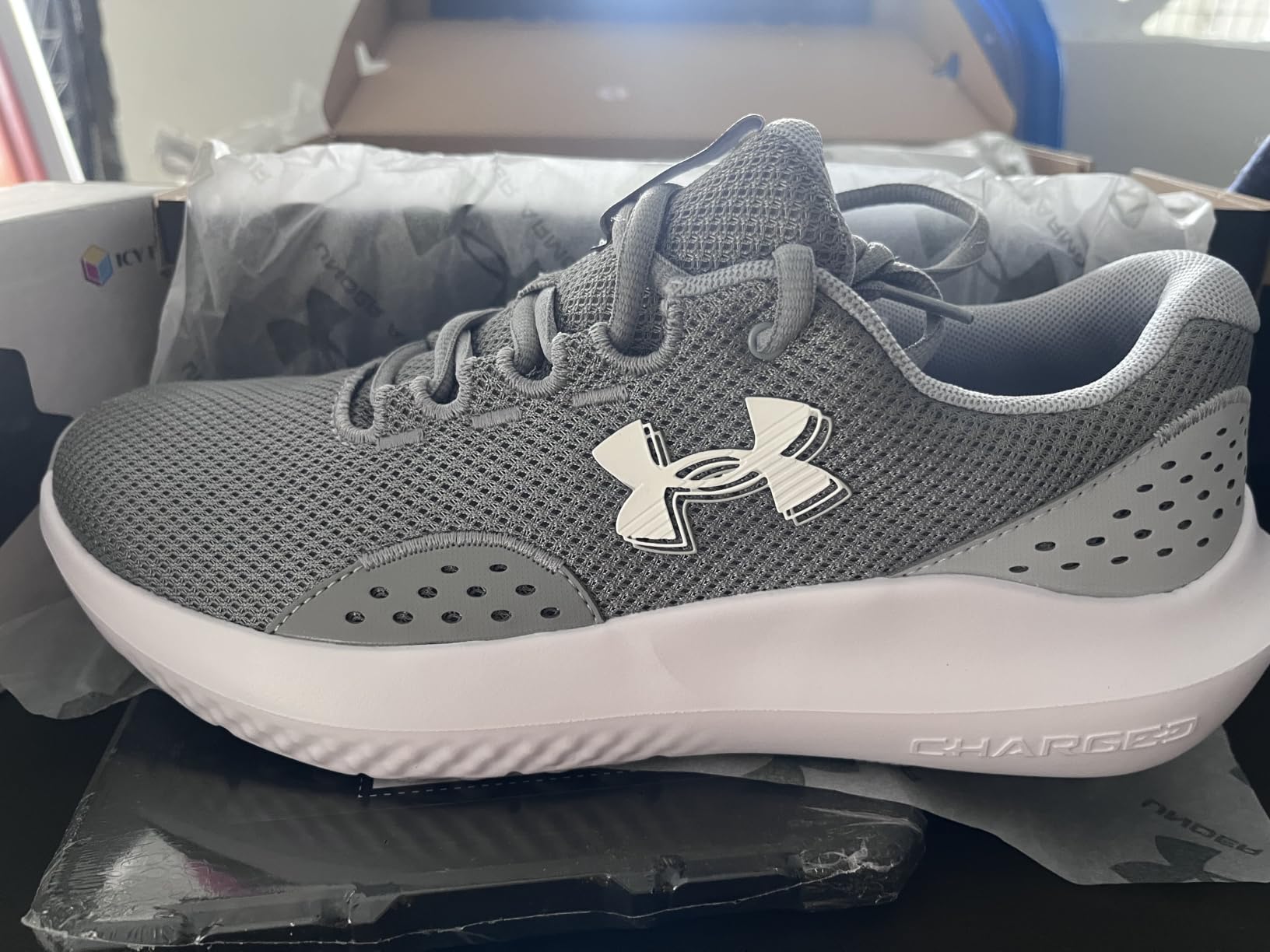
The Charged Surge 4 is the bridge shoe for runners whose week is split between pavement and gravel. It is a road runner with genuine off-road capability rather than a trail shoe, and it is honest about that in a way that keeps it useful.
More than sixteen thousand reviews back it up, and the recurring theme is comfort. Arch support, breathable mesh and a flexible sole make it a comfortable everyday option that handles light trails without complaint.
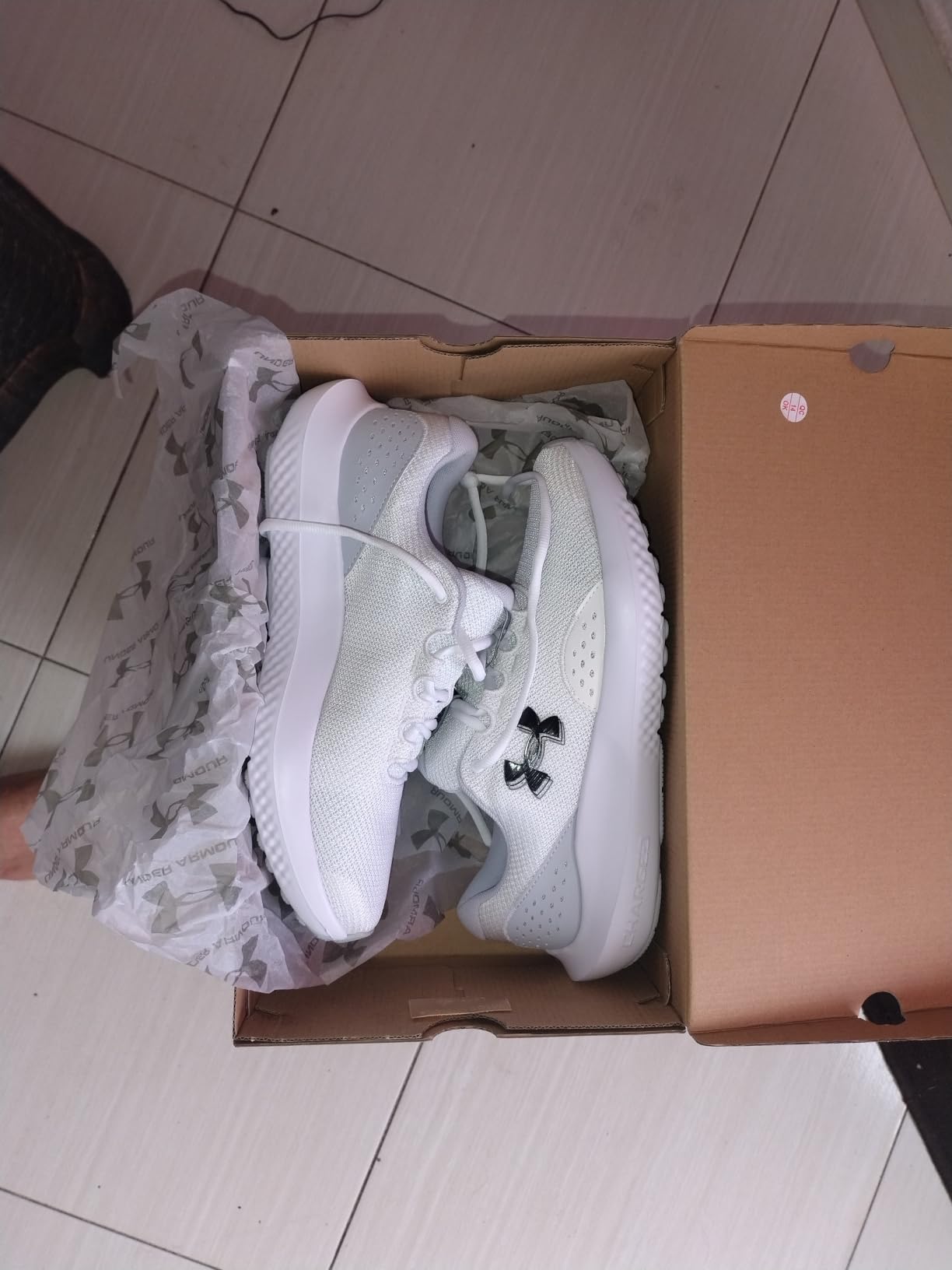
The Charged Cushioning midsole gives it a softer, more forgiving ride than most of the trail shoes here, and the 8mm offset keeps heel-to-toe drop conventional. If you are moving from road running, that familiar geometry shortens the adjustment period.
The outsole is a durable rubber with enough pattern for gravel and packed dirt. It is not built for deep mud, and any claim beyond light trail would be overstating it.
Who the Surge 4 suits
It suits road-to-trail hybrids, walkers who want one shoe for pavement and paths, and anyone who wants trail capability without giving up road cushioning. Beginners often find this an easy first step.
It also suits runners with arch support needs, since the sockliner and midsole are consistently praised for holding the foot shape over long days.
Who should skip the Surge 4
Skip it if your terrain is technical, rocky or muddy. The outsole and toe protection are road-first, and the toe box can feel pointed to anyone who has moved to wider trail lasts.
Sizing is the other warning. Reviews flag inconsistency between models, so if you are between sizes, expect to test before you commit. Our guides on fit and support can help you narrow that down.
6. Saucony Cohesion 14 – Best for Beginners on Mixed Ground
Saucony Men’s Cohesion TR14 Trail Running Shoe, Alloy/Cobalt, 10
VERSARUN cushioning
Grippy off-road outsole
Listed weight 3 pounds
Pros
- VERSARUN cushioning absorbs impact on every stride
- Grippy outsole gives solid footing off road
- Comfortable for trail and walking use
Cons
- Listed weight of 3 pounds is heavier than most trail shoes here
- Cushioning is basic against newer trail models
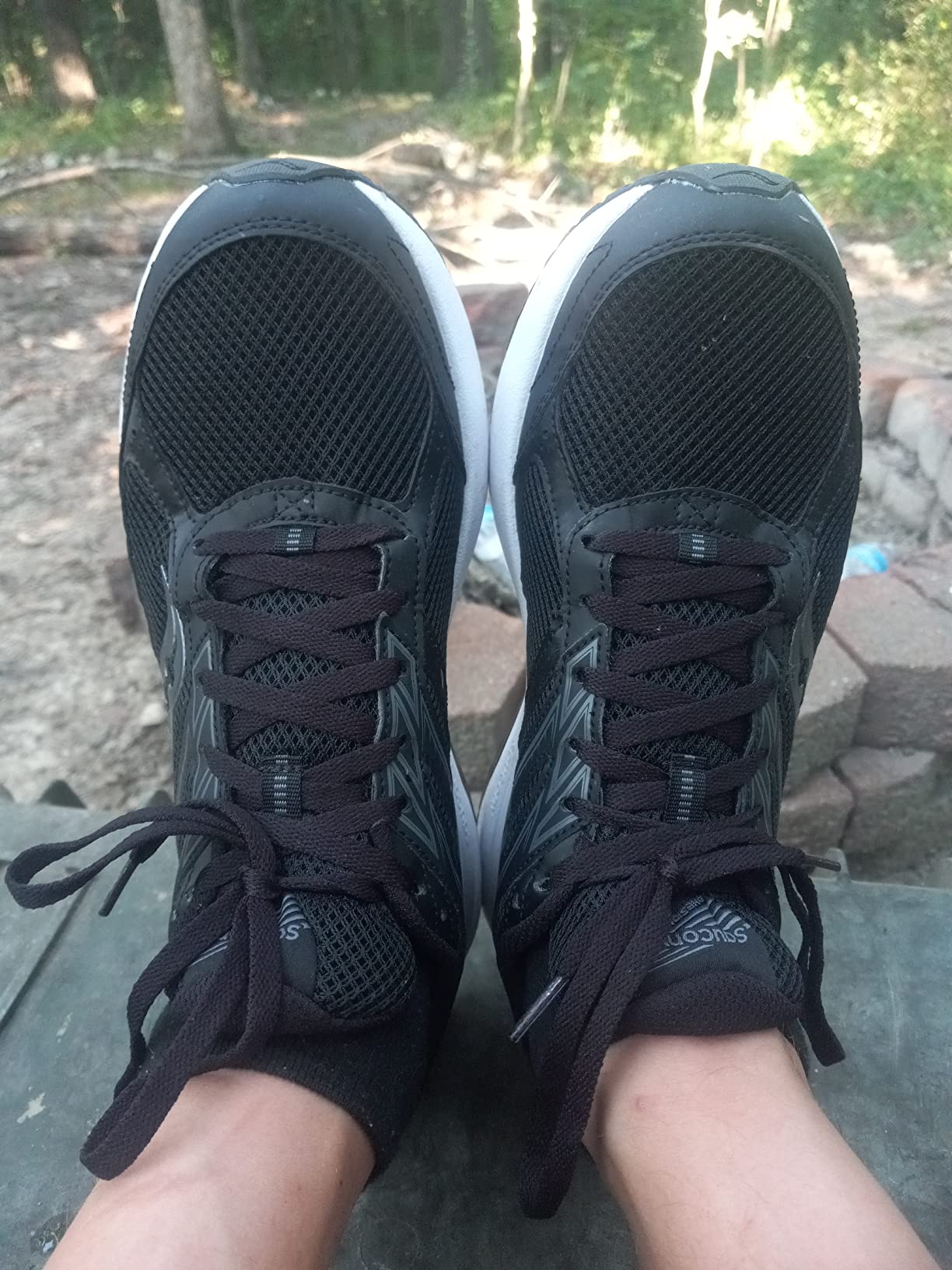
The Cohesion 14 is a dependable first trail shoe. VERSARUN cushioning absorbs impact well enough for beginners whose calves and shins are still adapting to off-road running, and the grippy outsole holds on mixed surfaces.
It does not try to be anything more than that. Reviewers describe it as a comfortable, uncomplicated budget trail option that handles dirt, gravel and the occasional wet patch without drama.
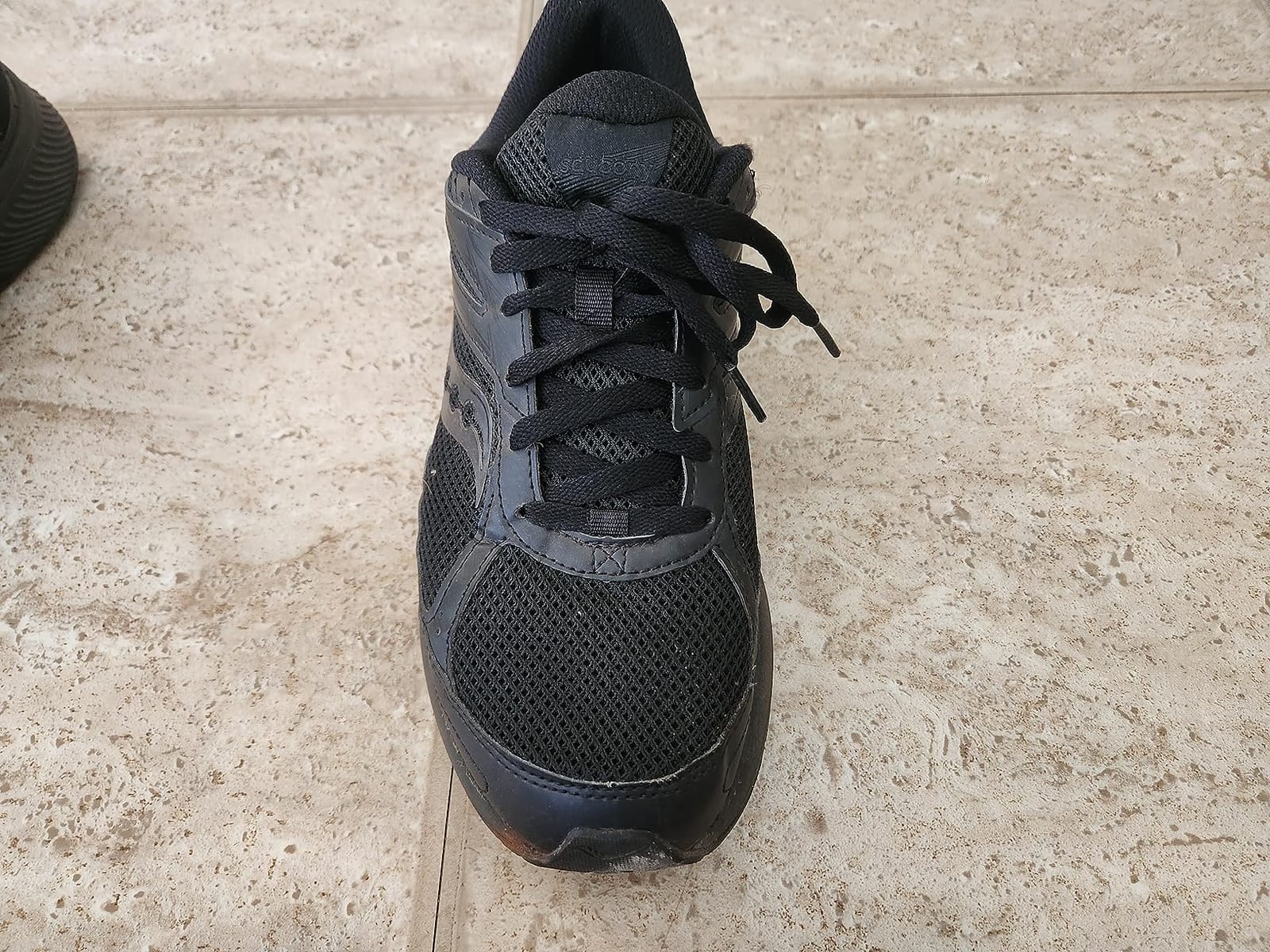
Where it struggles is weight and modernity. The listed weight of 3 pounds puts it at the heavy end of this list, and the foam is an older-generation cushioning setup that newer trail shoes have moved past.
That age shows in the ride more than the price. You get protection and comfort rather than responsiveness, which is exactly what a first-time trail runner needs and exactly what a racer does not.
Who the Cohesion 14 suits
It suits beginner trail runners who want forgiving cushioning before they worry about ground feel. Anyone joining a local trail group for easy weekly miles will find it perfectly adequate.
It also suits runners who walk part of their route, since the grippy outsole and cushioning handle mixed hiking and running without a shoe change.
Who should skip the Cohesion 14
Skip it if weight matters to you. The listed weight is the heaviest in this roundup, and lighter trail platforms are available for a similar outlay if you care about pace.
Skip it for technical ground or racing. The cushioning is basic and the outsole is a general trail pattern, so it will feel vague on rock and slow on anything with a clock involved.
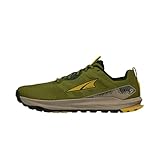
7. Altra Lone Peak 9 – Best for Zero Drop and Wide Feet
ALTRA Men’s Lone Peak 9 Trail Running Shoe, Green, 10.5
Balanced Cushioning zero drop platform
FootShape toe box
eVent weather-resistant bootie
Pros
- Very wide FootShape toe box suits wide feet and bunions
- Zero drop encourages natural low-impact landings
- Excellent tread grip and durability
- Little to no break-in needed
Cons
- Limited cushioning makes it poor for road running
- eVent bootie is water-resistant not waterproof
- Some report weaker heel traction on wet descents
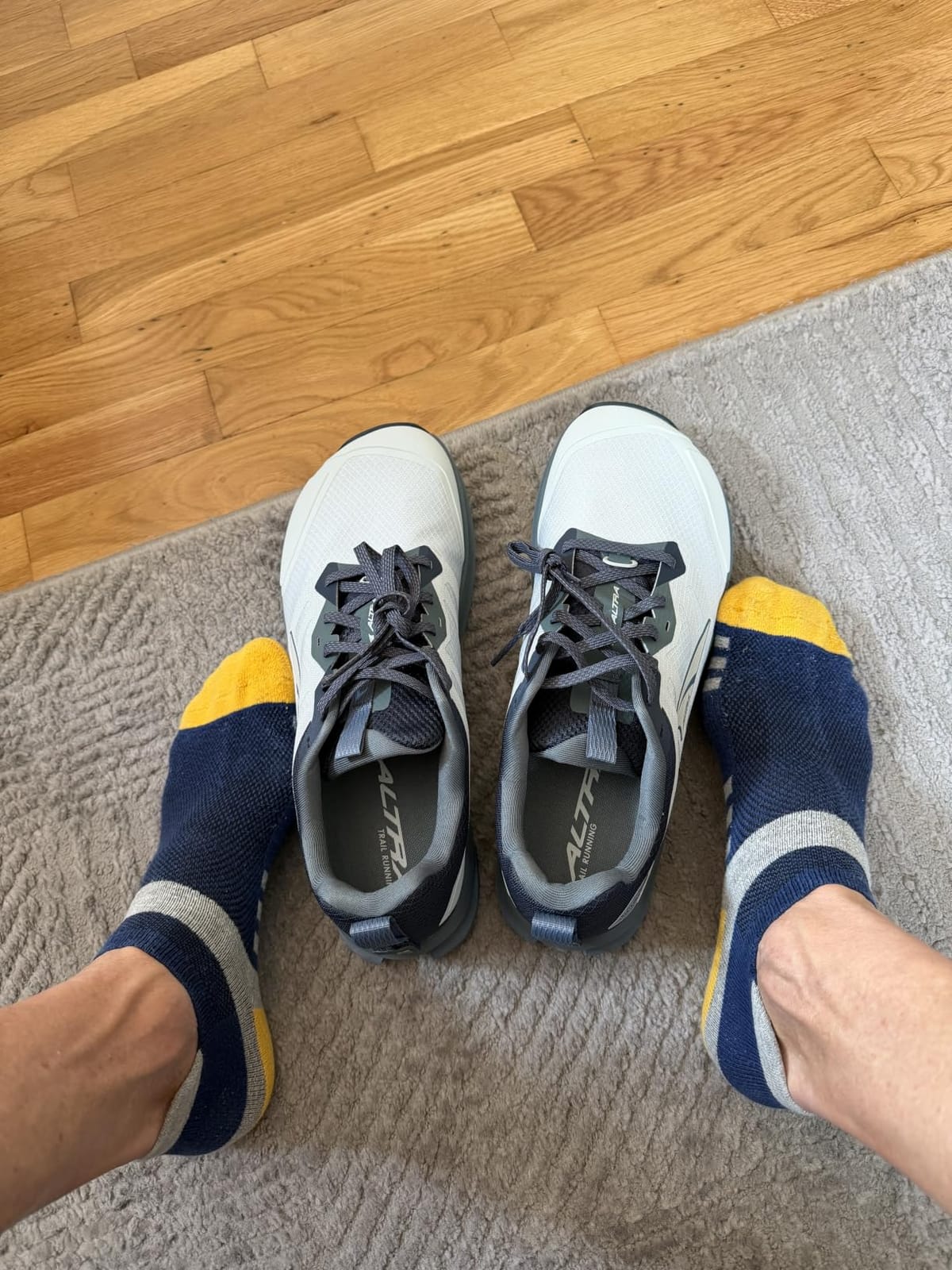
The Lone Peak 9 is the reference zero-drop trail shoe, and it combines a genuinely wide FootShape toe box with durable tread. If you have wide feet, bunions or a toe box that feels cramped elsewhere, this is the pick worth starting from.
The Balanced Cushioning platform places heel and forefoot at the same distance from the ground, which encourages low-impact landings. Reviewers also report almost no break-in, so you can put them on a long hike the same day they arrive.
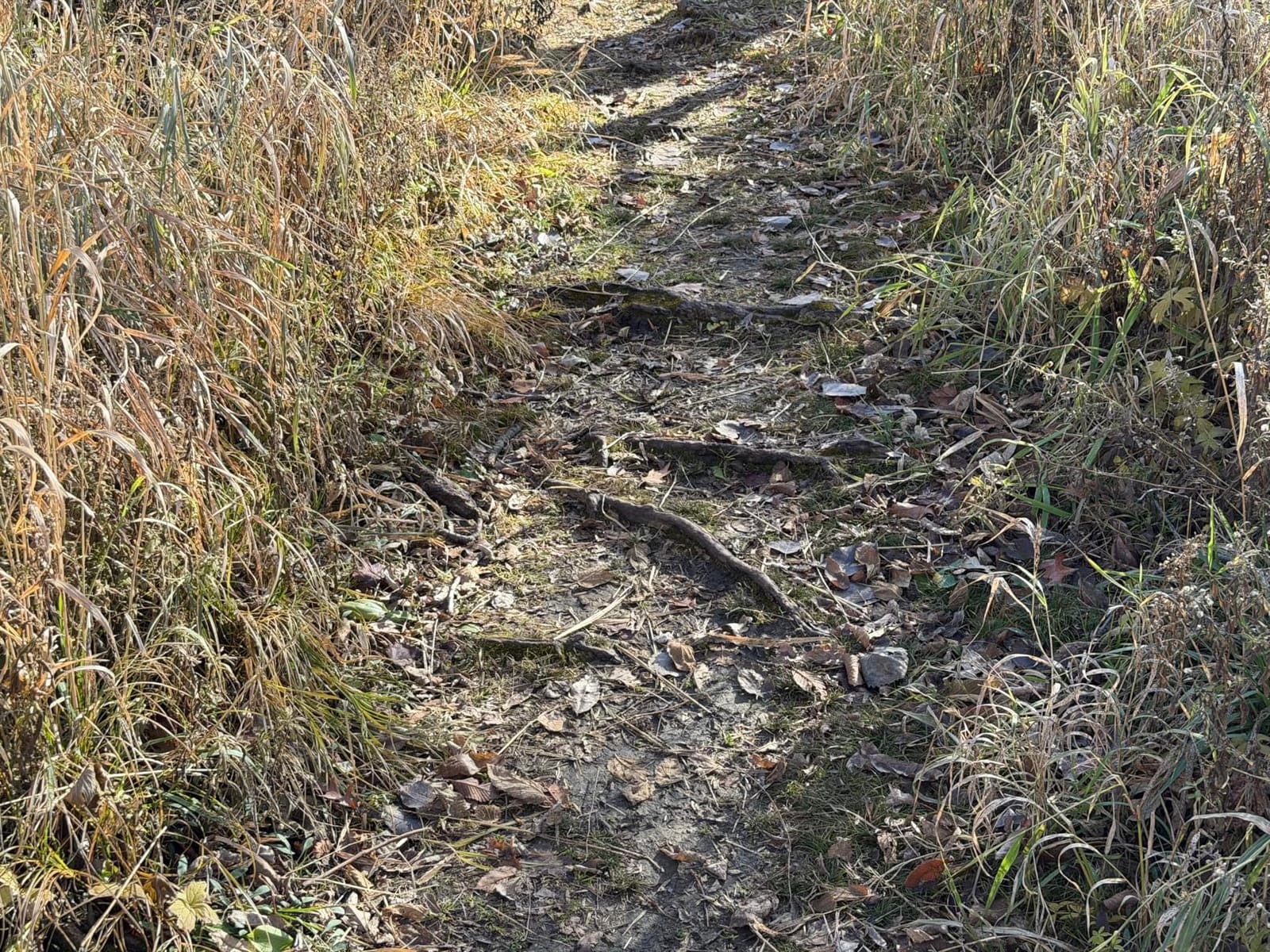
Comfort comes from the roomy fit and the tread grip, both of which owners praise repeatedly. It carries a listed weight of 1.54 pounds, which sits in the middle of this roundup and is respectable for a shoe this roomy.
The eVent bootie handles wet weather better than a breathable mesh, though reviewers are careful to describe it as water-resistant rather than waterproof. In sustained rain your feet will eventually get damp.
Who the Lone Peak 9 suits
It suits wide-footed runners and hikers who spend long days on uneven ground, including backpacking. The toe room and grip combination is hard to match at this budget.
It also suits anyone training for zero-drop form, because the platform is built around it rather than adapted to it. Runners who need arch support for road mileage should pair it carefully.
Who should skip the Lone Peak 9
Skip it for road running. The limited cushioning is the most common complaint, and it exists by design so the platform stays balanced.
A few reviewers also report weaker heel traction on wet descents and rock. If your terrain is steep and wet, pick a shoe with a more aggressive Contagrip pattern instead.
8. New Balance Tektrel V1 – Best for Hiking and All-Day Standing
New Balance Men’s DynaSoft TEKTREL V1 Trail Running Shoe, Black/Phantom/Magnet, 10 M
DynaSoft midsole
AT Tread outsole for on and off-road
Regrind upper overlay
Pros
- Comfortable for all-day standing and easy hiking
- Runs true to size with plenty of width options
- DynaSoft cushioning is supportive yet plush
- Understated colourways that work off-trail and in town
Cons
- Lugs are not deep enough for strong muddy traction
- Not grippy on wet slick rock
- Some buyers add insoles after long days
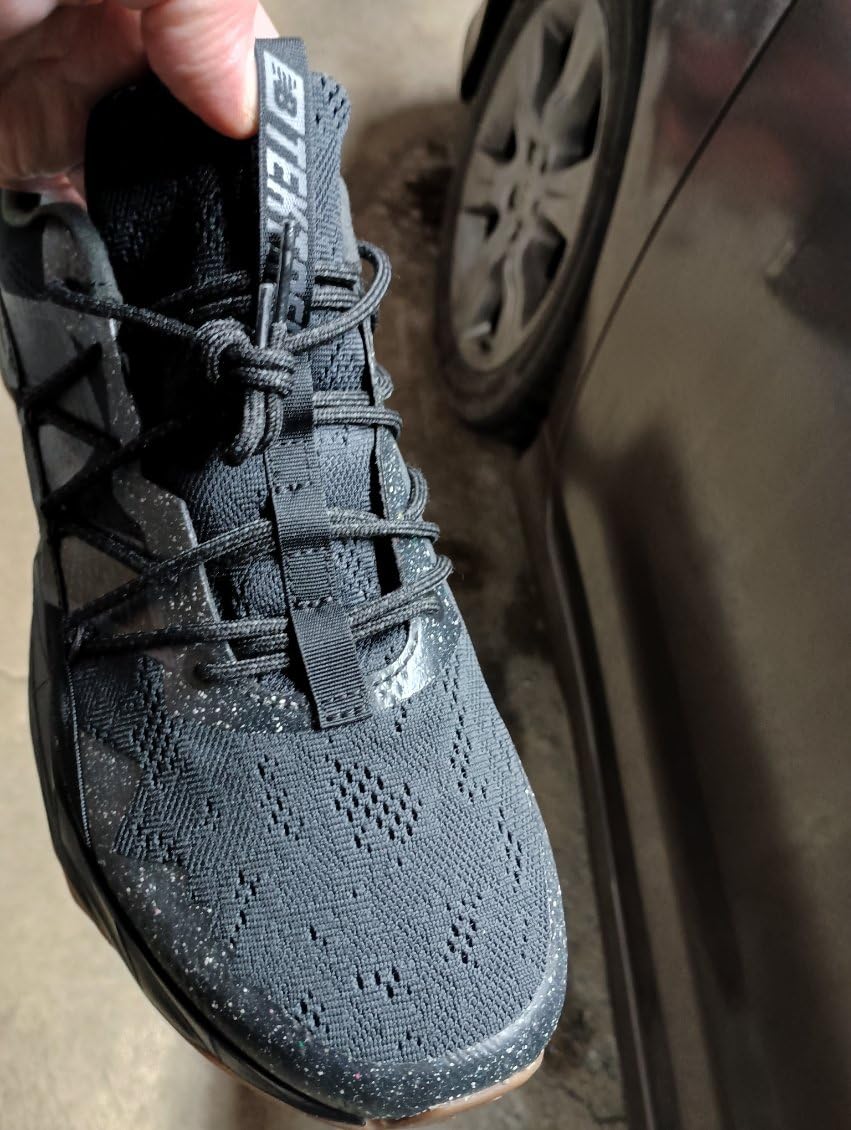
The Tektrel V1 is a lifestyle hiking shoe that happens to run well, which makes it a strong choice for runners who spend more time walking than running. Buyers describe it as comfortable enough for standing all day and supportive enough for easy hiking.
DynaSoft cushioning is the quiet strength here. It is supportive and cushioned at the same time, which is exactly what a long day on uneven ground needs, and it does not feel flat the way some trail shoes do.
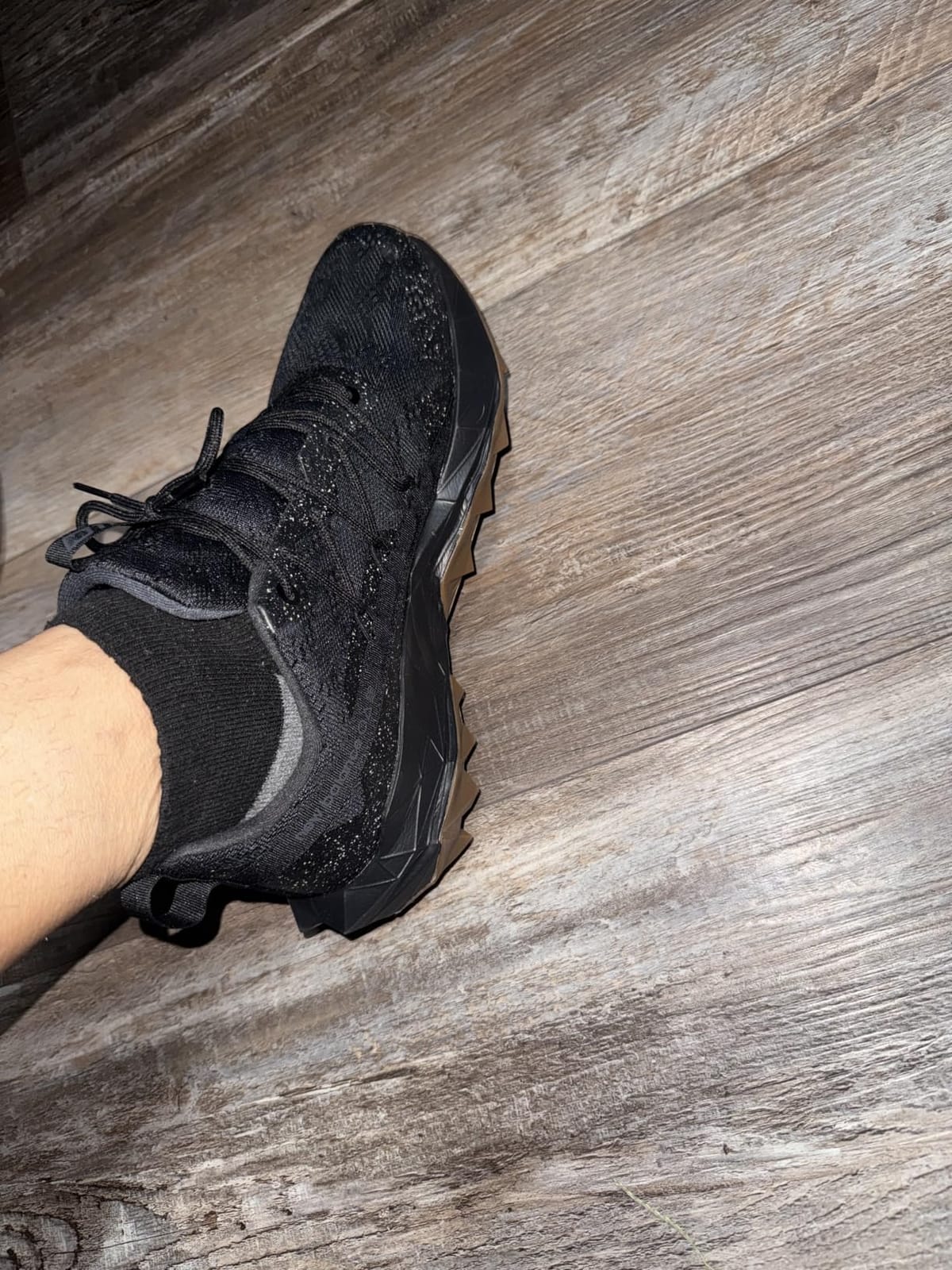
The AT Tread outsole handles both on and off-road use, and the Regrind upper overlay adds durability where abrasion happens first. Colourways are deliberately understated, so it works in town without looking like trail kit.
Sizing is straightforward. Reviewers say it runs true to size with plenty of width, which removes one of the usual risks of buying a trail shoe online.
Who the Tektrel V1 suits
It suits hikers, fast walkers and runners who want one shoe for a day that blends trail walking with short runs. All-day comfort is the reason it earns its place in this roundup.
It also suits anyone who works on their feet and wants footwear that transitions from trail to desk without looking out of place.
Who should skip the Tektrel V1
Skip it for mud and wet rock. The lugs are not deep enough for serious muddy traction, and reviewers specifically flag poor grip on slick surfaces. It is a hiking shoe, not a technical trail platform.
Some buyers add insoles after long days, which tells you the stock cushioning has limits. Plan for that if you stand for eight hours or more.
9. Under Armour Charged Bandit Trail 3 – Best for Long Days on Foot
Under Armour Men’s Charged Bandit Trail 3, 001 Black, 14
Compression-molded Charged midsole
Technical trail lug outsole
Molded sockliner
Pros
- Comfortable for long days with good arch support
- Wide toe box adds stability without bulk
- Breathable durable mesh
- Technical trail lugs grip trails and pavement
Cons
- Tongue is thin and bunches when putting it on
- Grippy lugs require lifting the foot rather than sliding
- Runs slightly narrow for very wide feet
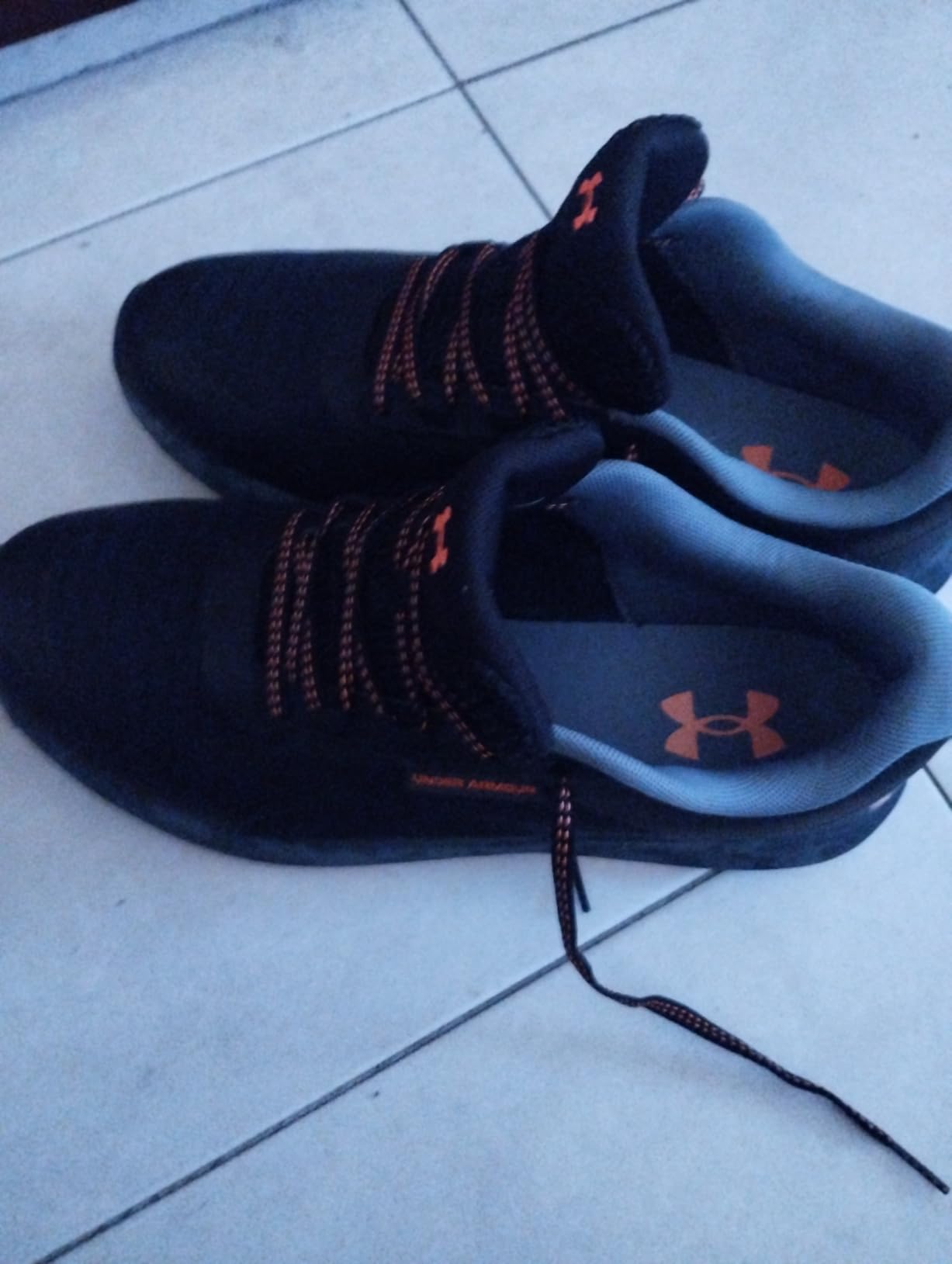
The Bandit Trail 3 is the most complete all-round trail platform at this price for anyone who spends long hours on their feet. The compression-molded Charged midsole gives responsive cushioning, and the technical trail lug outsole provides genuine grip on both dirt and pavement.
Owners highlight arch support and a stable, roomy toe box as the reasons it holds up through long days. The lightweight engineered mesh keeps it breathable across summer months and stands up to repeated outdoor use.
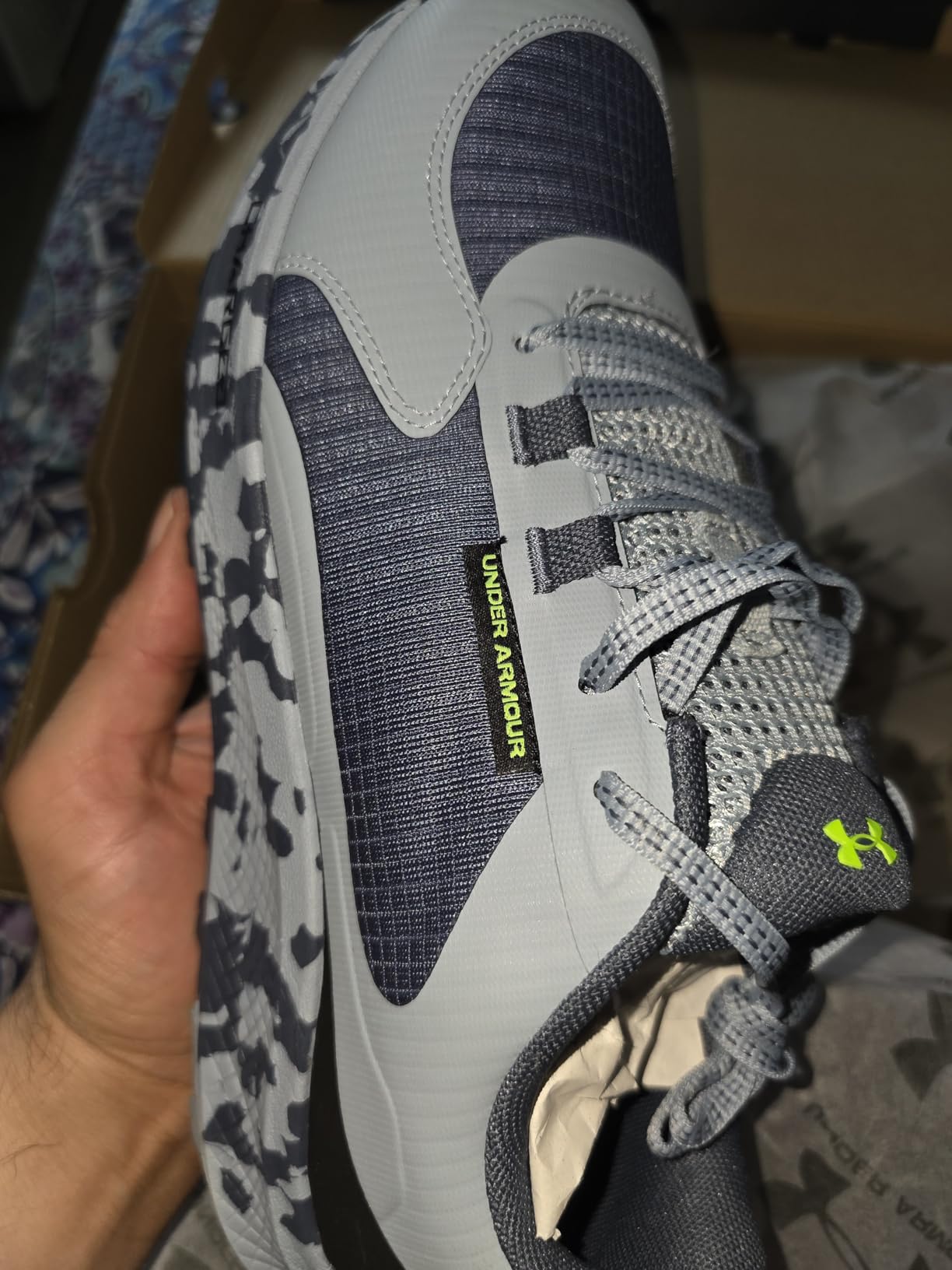
The molded sockliner forms to the foot and removes internal slippage, which is the detail most overlooked at this budget and most obvious once you have it. Strategic overlays in high-abrasion areas protect where trail debris actually hits.
There is a learning curve with the outsole. Grippy lugs reward a gait that lifts rather than slides, and runners coming from road shoes often need a few runs to adjust.
Who the Bandit Trail 3 suits
It suits workers and walkers who need a shoe that performs on trails and survives a full day on concrete. Arch support and stable width make it a solid all-purpose pick.
It also suits runners who want real trail grip without giving up the ability to run on roads. The lug pattern handles mixed surfaces without being absurd on pavement.
Who should skip the Bandit Trail 3
Skip it if you have very wide feet, since reviewers flag a slightly narrow last. Compare it with the Altra pick if toe room is your deciding factor.
Also note the thin tongue, which reviewers say bunches when you pull it on. It is a minor irritation rather than a defect, but it appears often enough to be worth knowing.
10. Merrell Speed Strike 2 – Best for Packing Light and Fast Hiking
Merrell Men’s Speed Strike 2 Hiking Shoe, Rock, 15.0
Merrell Sticky Rubber outsole
Lightweight EVA midsole
Listed weight 1.5 pounds
Pros
- Lightweight EVA midsole gives stability and comfort
- Sticky rubber outsole grips varied terrain
- Synthetic heel and toe cap resist abrasion
- Heel loop allows quick entry and a carabiner clip
Cons
- Mesh upper offers limited weather protection
- Minimalist build gives little cushioning on long road miles
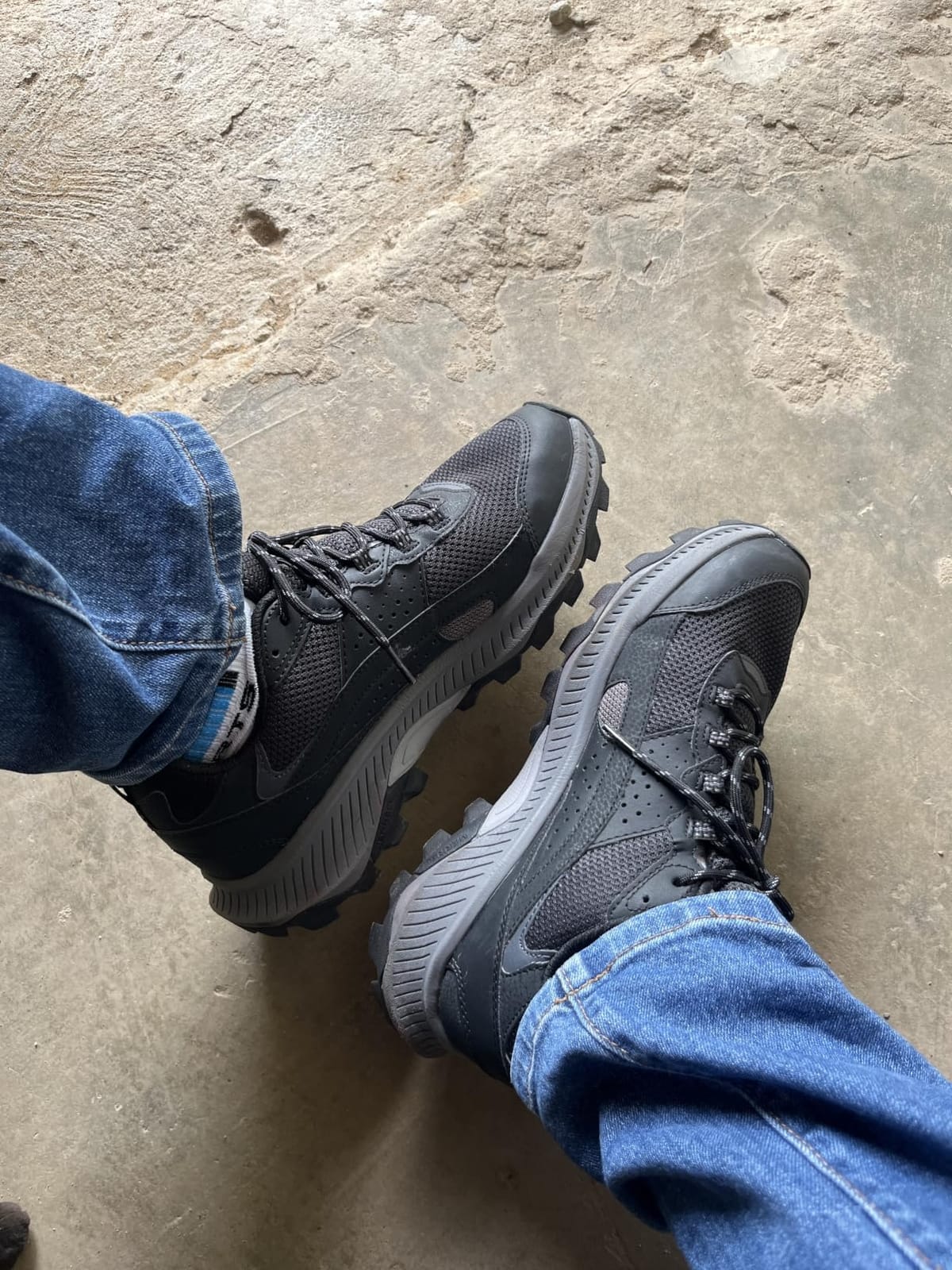
The Speed Strike 2 is the pick for anyone who cares about weight. The Sticky Rubber outsole grips well across varied terrain, and the listed weight of 1.5 pounds keeps it light without feeling flimsy.
It started life as a hiking shoe and it still shows. The heel loop for quick entry and carabiner compatibility sounds minor until you are putting shoes on with cold hands at a car park after dark.
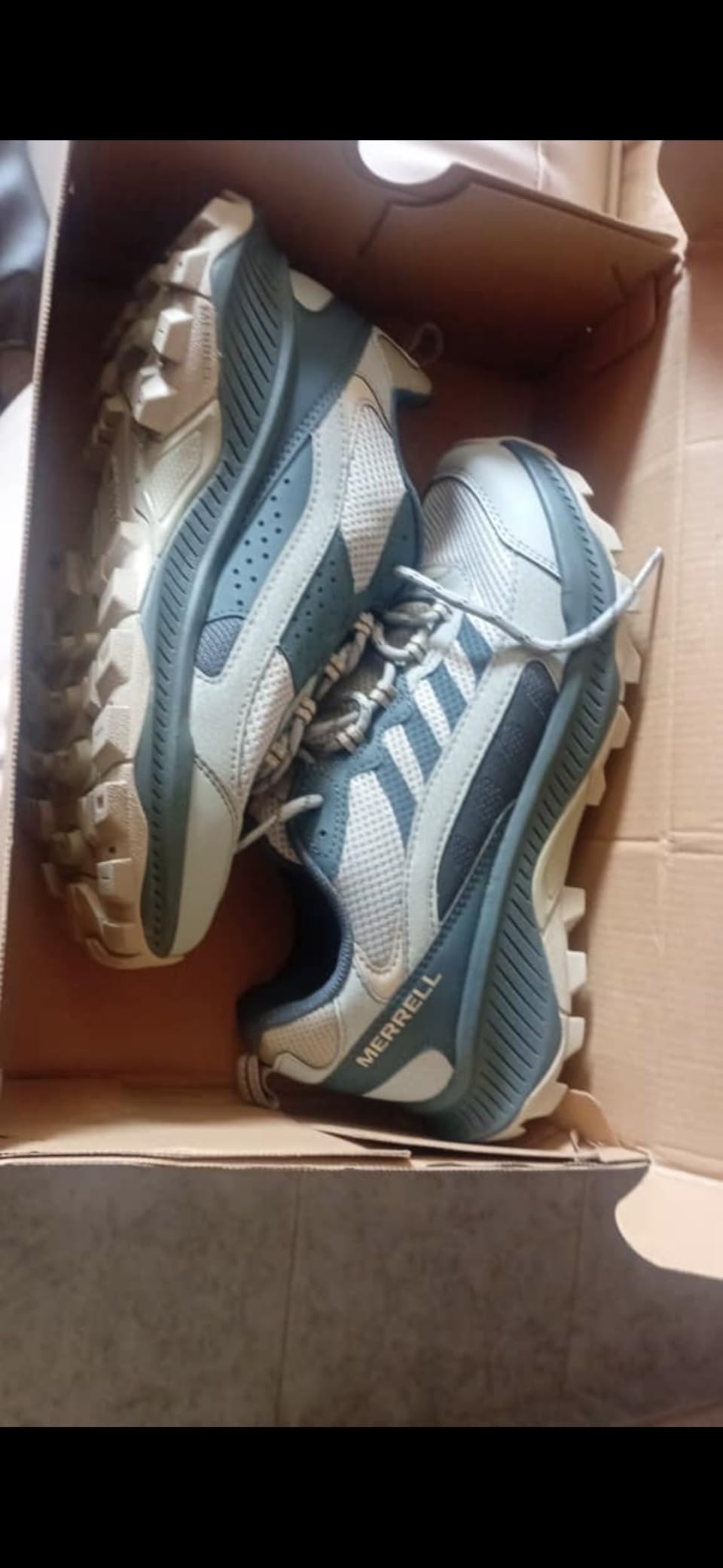
The lightweight EVA midsole gives stability and comfort for a minimalist build, and the abrasion-resistant synthetic heel and toe cap protect the highest-wear points. That combination holds up on rock and gravel better than the weight suggests.
Weather protection is where it stops. The synthetic and mesh upper is breathable and light but offers very little in rain, so treat it as a fair-weather hiking and trail running shoe.
Who the Speed Strike 2 suits
It suits fast hikers, ultralight packers and runners who cover ground quickly on mixed trails. Anyone who counts grams will find the build sensible.
It also suits casual off-road users who walk more than they run, since the outsole and toe cap take the punishment of trail use well.
Who should skip the Speed Strike 2
Skip it for wet weather. The upper has minimal weather protection and will let water in during sustained rain or deep puddles.
Skip it for long distance on hard surfaces, because the minimalist build provides little cushioning. Pair it with a proper recovery plan for road miles.
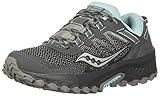
11. Saucony Versafoam Excursion TR13 – Best for Very Wide Feet
Saucony Women’s Excursion TR13 Trail Running Shoe, Charcoal/Blue, 7.5
Triangular-lugged outsole
Trail knit mesh upper
Wide and extra-wide sizing
Pros
- Lightweight and comfortable from first wear
- Wide and extra-wide sizing suits very wide feet
- Roomy toe box with good arch support
- Good traction on loose gravel dry rock mud and wet ground
Cons
- Cushioning feels thin on rocky trails
- Heel lining durability is a recurring complaint
- Flat laces feel cheap
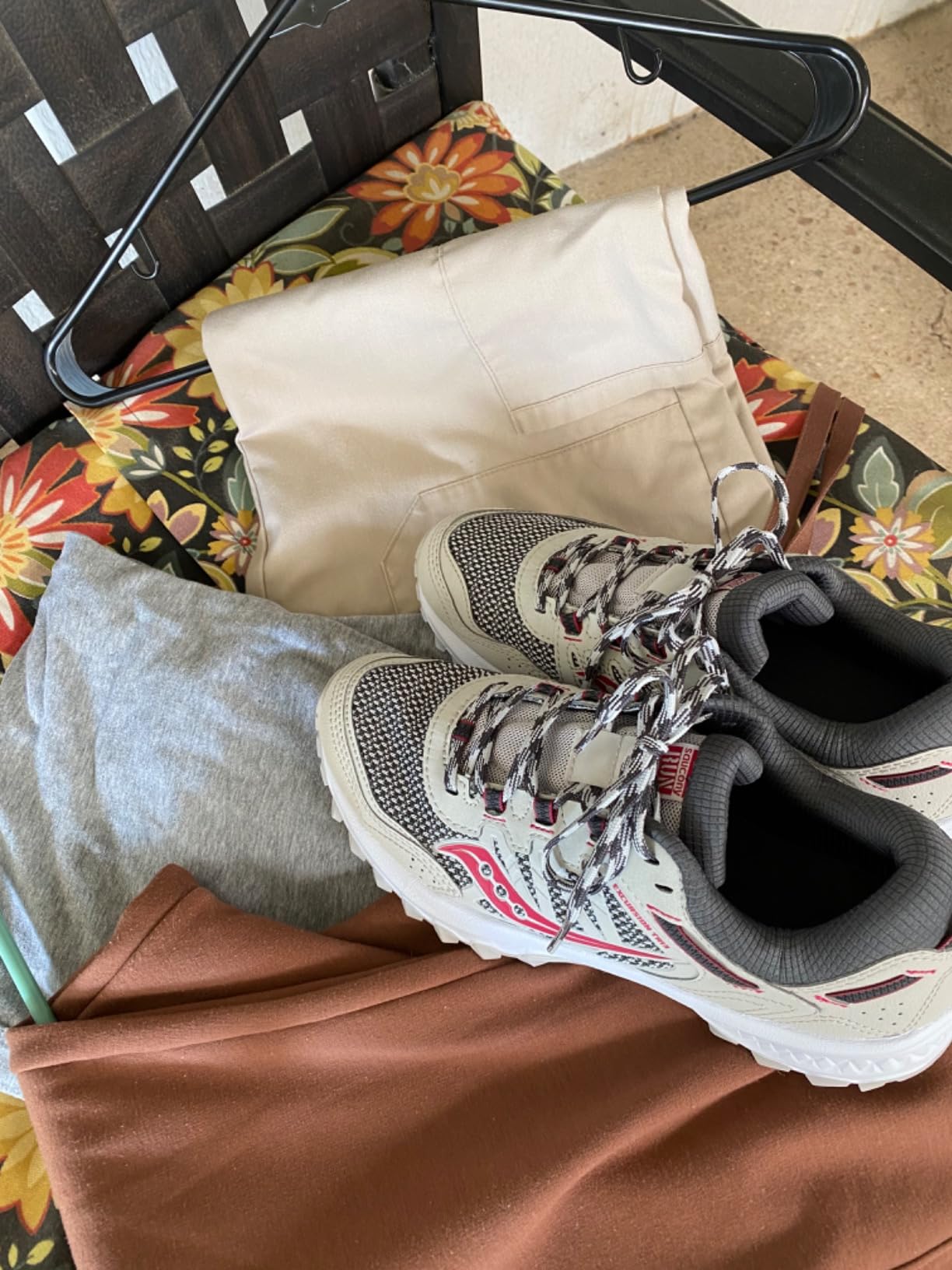
The Excursion TR13 solves a problem most budget lists ignore: finding genuine trail sizing for very wide feet. It is offered in wide and extra-wide options, and buyers with wide feet describe the roomy toe box and arch support as the reason they keep coming back.
More than five thousand reviews give it the deepest owner feedback on this list, and the traction story is solid for the class. It grips loose gravel, dry rock, mud and wet ground well enough that most runners will not feel short-changed.
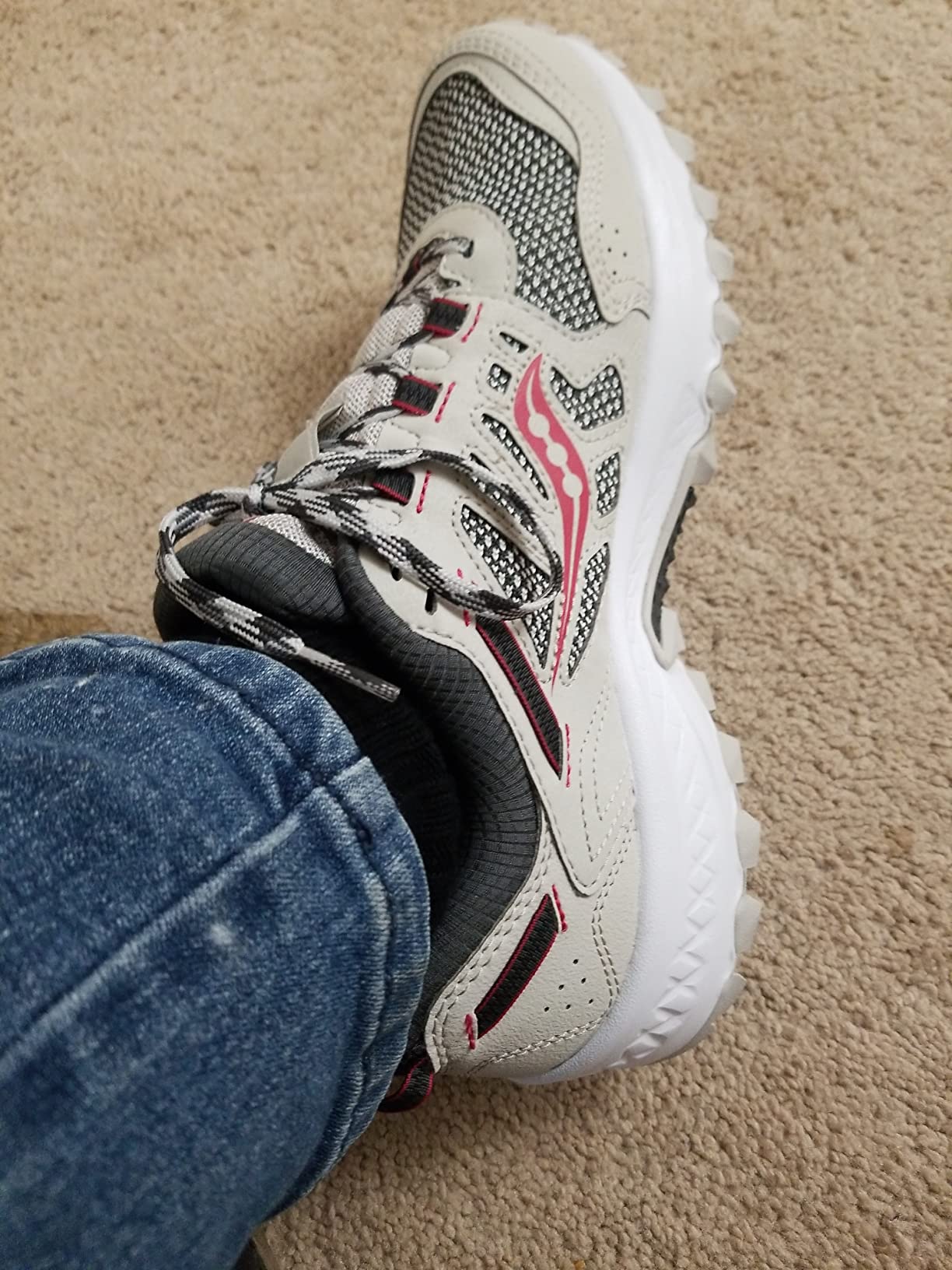
The trail-specific knit mesh upper uses supportive overlays to lock the foot in place and keep debris out, which is a genuinely trail-focused detail. It is light and comfortable from the first wear with no break-in period.
It is closer to a hiking sneaker than a technical trail runner, though. Cushioning and underfoot support get thin over rocky ground, and rocks are felt through the sole.
Who the Excursion TR13 suits
It suits very wide feet that cannot find room in most trail shoes, and runners who want a size range beyond standard wide. That sizing availability alone sets it apart.
It also suits long walks on mixed terrain and beginners who want comfort before speed. Buyers report it holding up well for everyday support work.
Who should skip the Excursion TR13
Skip it if you run technical rocky trails and want a stiffer, more protective sole. The thin cushioning will not satisfy you, and neither will the feel-through-the-foot experience.
Watch the heel lining. Durability there is a recurring complaint, with owners reporting wear around six months, and the flat laces are widely described as cheap-feeling.
12. ASICS Gel-Venture 11 – Best for Mixed Surfaces and Durability
ASICS Men’s Gel-Venture 11 Running Shoes, 9, Black/Carrier Grey
AMPLIFOAM PLUS midsole
Rearfoot GEL cushioning
Molded rubber outsole
Pros
- Supportive well-cushioned ride over long walks
- Lightweight breathable mesh upper
- Wide and X-Wide sizing options
- Durable outsole that holds up over months
Cons
- Runs small so size up
- Some report weak arch support once walking
- Upper soaks easily in wet grass
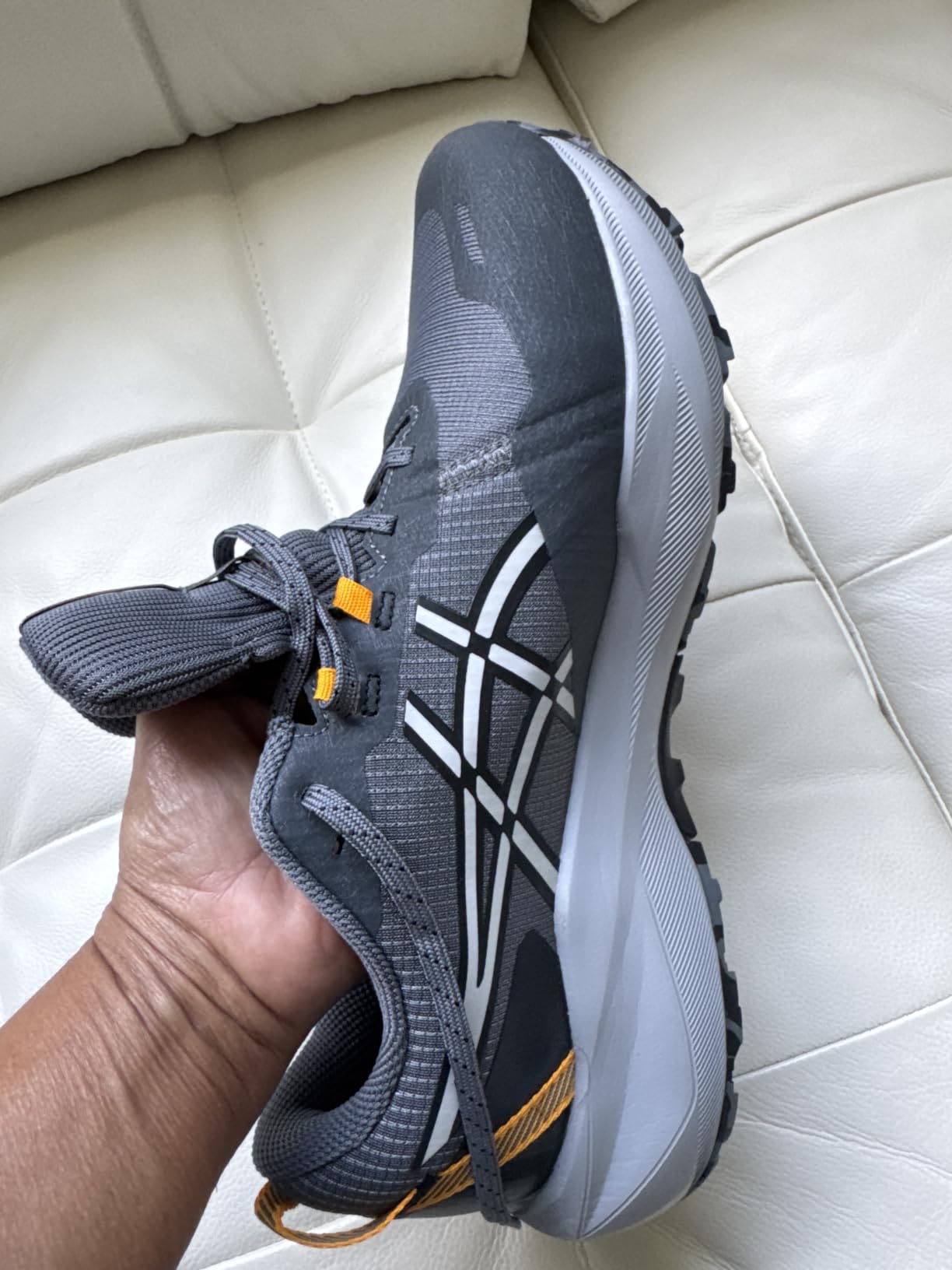
The Gel-Venture 11 is the sturdiest all-round trail shoe here for runners who split their week between dirt and asphalt. Rearfoot GEL absorbs shock, AMPLIFOAM PLUS adds a softer ride than the standard foam, and the molded rubber outsole handles dirt paths, pavement and light hiking.
Durability is the headline. Repeat buyers report the outsole holding up well after months of use, which makes it a sensible pick for anyone who refuses to replace shoes every season.
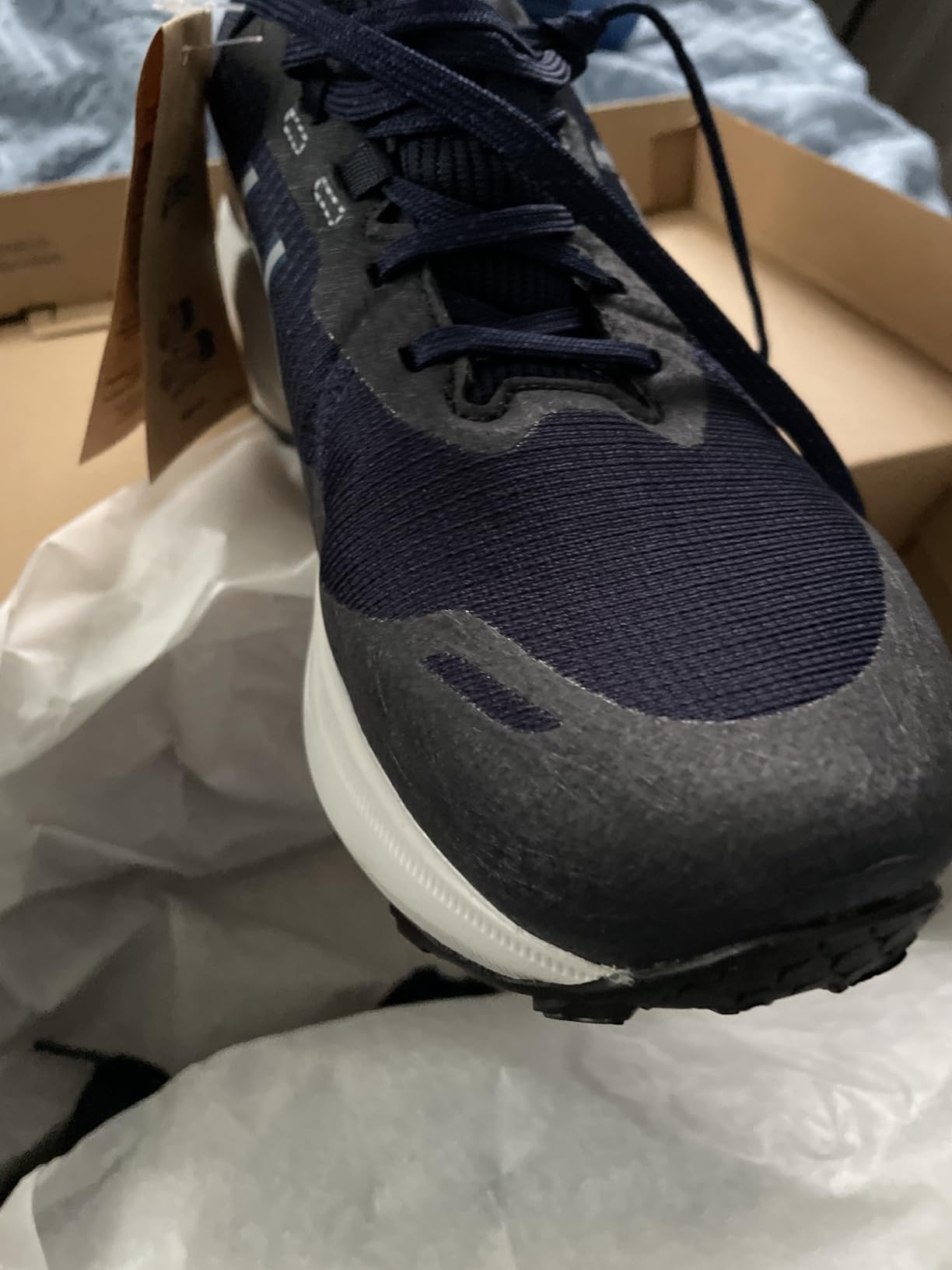
The OrthoLite Hybrid Max Lite sockliner manages moisture and adds breathability, and the mesh upper keeps air moving on warm days. It is a comfortable shoe for long walks where cushioning matters more than ground feel.
Wide and X-Wide sizing is available, which matters more than the running-small label suggests once you account for the size-up instruction. Plan for one size above your usual.
Who the Gel-Venture 11 suits
It suits runners who want one shoe for trail, pavement and light hiking without compromise. Durable construction suits high-frequency users who log weekly mileage.
It also suits anyone who needs rearfoot cushioning for long days on foot. The GEL setup is the reason it feels comfortable without being flat.
Who should skip the Gel-Venture 11
Skip it for technical or mountainous terrain. This is a moderate trail and walking shoe, not a serious gripper, and lug depth is modest.
A minority of reviewers find the soft sole gives little arch support once walking, which leaves calves sore on longer outings. If you need structured support, our stability guides cover that side better.
How to Choose Trail Running Shoes Under 150 Dollars
Choose by terrain first, cushioning second, and fit always. Here is what actually changes your experience, ordered the way you should think about it.
1. Outsole rubber and lug depth decide whether you grip
Lug depth is the single most important number on a trail shoe. Around 3mm suits fire roads and packed paths, 5 to 6mm handles general trail, and 6mm or deeper is for mud and technical ground. The Salomon picks on this list sit at the aggressive end, which is why they hold in wet clay.
Compound matters as much as depth. Contagrip and Sticky Rubber blends are the grippiest options here, while molded rubber patterns are durable but more modest. Check the heel too, because heel braking on a wet descent is where lesser outsoles fail first.
2. Cushioning and ground feel are a straight trade
Stack height and foam density determine how much you feel the ground. Soft, thick midsoles protect feet on rocky terrain and long distances but dull the feedback that helps you adjust on technical ground. Firm, thin platforms give you control and cost you comfort after a few hours.
Beginners and long-distance runners want cushioning. Fast technical runners and anyone already confident on trails want ground feel. Buying the wrong one is the most common way a budget trail shoe ends up unused.
3. Heel-to-toe drop changes your calves
Drop is the height difference between heel and forefoot, and most trail shoes sit between 4mm and 8mm. The Under Armour Surge 4 uses an 8mm offset, while zero-drop models like the Altra Lone Peak 9 and WHITIN W20 place heel and forefoot at the same height.
Zero drop encourages a natural, low-impact stride but loads the calf and Achilles more. Move up gradually, and do not switch from an 8mm road shoe to zero drop for a long run in week one.
4. Fit and toe box width decide whether you keep them on
Wide feet need room at the widest point of the forefoot, not just a longer shoe. The Altra and Saucony Excursion picks carry genuine wide and extra-wide options, which is rare at this budget. Several narrow lasts, including both Salomon models, need a half size up.
Test in the evening when feet are largest, wear the socks you run in, and confirm your toe stays about a thumb’s width from the front. Return windows matter more at this budget, because a wrong fit means losing the whole outlay.
5. Waterproof or breathable is a terrain decision
Waterproof uppers keep rain out but trap sweat, and they add weight. Breathable uppers vent heat but let water through. Most sub-150 trail shoes sit at water-resistant rather than fully waterproof, including the Altra’s eVent bootie.
For cold, wet winter running, a water-resistant upper with fast-drying socks beats a breathable one. For hot summer trails, breathable always wins. There is no compromise here, so pick your season.
6. Weight matters most to runners who care about pace
Listed weights on this roundup range from a listed 1.15 pounds on the Under Armour Surge 4 to a listed 3 pounds on the Saucony Cohesion 14, though package weights are often padded. Heavier shoes feel stable on rough ground and tiring on long flat runs.
Compare weights across the same brand where you can, since listings are inconsistent. Treat weight as a tiebreaker, not a decision, unless you run fast or race.
What you give up under 150 dollars
You give up some things, and it is better to know now. Most budget trail shoes have no carbon plate, so they will not deliver the energy return of a plated race shoe. Lug depth tends to be shallower than flagship models, and the rubber compounds wear faster on road contact.
Midsole foams are older-generation or single-density rather than supercritical foams, so you get less rebound and less rebound recovery over long distances. Stack heights also tend to be lower, which means less rock protection. Durability is usually shorter, and you will replace shoes sooner.
What you do keep is the thing that actually matters at this price: real outsole traction, a trail-specific upper with debris protection, a stable base and a heel-to-toe drop your legs can handle. Those are non-negotiable, and they are present in every genuine trail shoe on this list.
How to tell a real trail shoe from a road shoe with lugs
Check four things. First, lug depth: if the tread pattern stops at the toe and does not extend under the ball of the foot, it is a road shoe. Second, the outsole compound, which should be named and trail-specific. Third, upper construction, where trail shoes add debris-protective overlays and a stiffer heel cradle. Fourth, midsole width and stability, since trail platforms are wider and flatter to handle uneven load.
The Under Armour Surge 4 is the clearest example on this list of a shoe that clears the first three checks and is honestly a road shoe. That is fine if you want a hybrid, but it is not a substitute on technical ground.
When to replace and how to buy cheap
Replace a trail shoe when the lugs flatten and you start sliding on terrain that used to be fine, when the midsole stops returning energy, or when the upper stops keeping debris out. Budget shoes often reach that point around 300 to 500 miles, and the aggressive-lug models can go sooner if you run a lot of asphalt.
To buy cheaply, watch the sale cycle rather than buying at full price. Prior-season colourways and outlet channels carry the same shoe at lower prices, and that is where most runners in our research said they found value. Running forums repeatedly frame trail running as an expensive sport, and the discount channel is the answer to that worry.
Tracking what you run on also pays off. If you are moving from road to trail, our GPS watch guides help you measure distance and time on routes where your pace data will otherwise mislead you.
Frequently Asked Questions
What are the best and most affordable trail running shoes?
The Salomon Speedcross 4 is the strongest all-round budget pick, with Contagrip traction that grips mud and wet rock. The Vans Range EXP is the cheapest comfortable option for light trail and hiking, and the WHITIN W20 is the lowest-cost genuine trail platform with a zero-drop build. Each qualifies under a 150-dollar budget on current street price.
What are the best running shoes under 150 dollars?
For trail use specifically, the Speedcross 4 and Speedcross 6 lead on grip, the Altra Lone Peak 9 leads for wide feet and zero drop, and the Saucony Excursion TR13 offers genuine extra-wide sizing. Road-to-trail hybrids are served by the Under Armour Surge 4. All qualify on street price rather than list price.
What are some good running shoes under 150 dollars?
On value rather than outright performance, the Vans Range EXP, the New Balance Tektrel V1 and the Under Armour Bandit Trail 3 stand out. The Range EXP wins for comfort and versatility, the Tektrel V1 for hiking and long days standing, and the Bandit Trail 3 for genuine trail grip with arch support. None of the three is a technical race-day shoe.
What are the best shoes for 150 dollars?
Split the budget three ways and the answer is simple. For an all-round do-everything trail shoe, take the Salomon Speedcross 4. For long-distance comfort, take the ASICS Gel-Venture 11 or Saucony Cohesion 14. For technical grip in mud and wet conditions, take the Speedcross 6. All three clear the budget on current street price.
Are trail running shoes under 150 dollars any good?
Yes, with caveats. You get real lug depth, trail-specific rubber, debris-protective uppers and a stable platform, which are the parts that decide whether a shoe works on trail. You give up carbon plates, supercritical foams, the deepest lugs and some durability, so budget pairs often last 300 to 500 miles rather than 500 to 800.
Bottom Line: Where to Start With a 150-Dollar Trail Budget
Start with the Salomon Speedcross 4 if you want one pair that handles mud, wet rock and soft ground without a learning curve, and if you can live with a forefoot that may need a half size up. It is our pick of the best trail running shoes under 150 dollars because traction is the thing that ends runs early, and it has the strongest grip of anything in this roundup with the deepest owner feedback behind it.
If you have wide feet, change the order and read the Altra and Saucony fit notes first. If you only want shoes for light trail and daily wear, the Vans Range EXP is the sensible choice and costs less than half of what a flagship trail shoe asks for. Budgets move, so re-check the price on any of these before you commit, and update this page each season.