
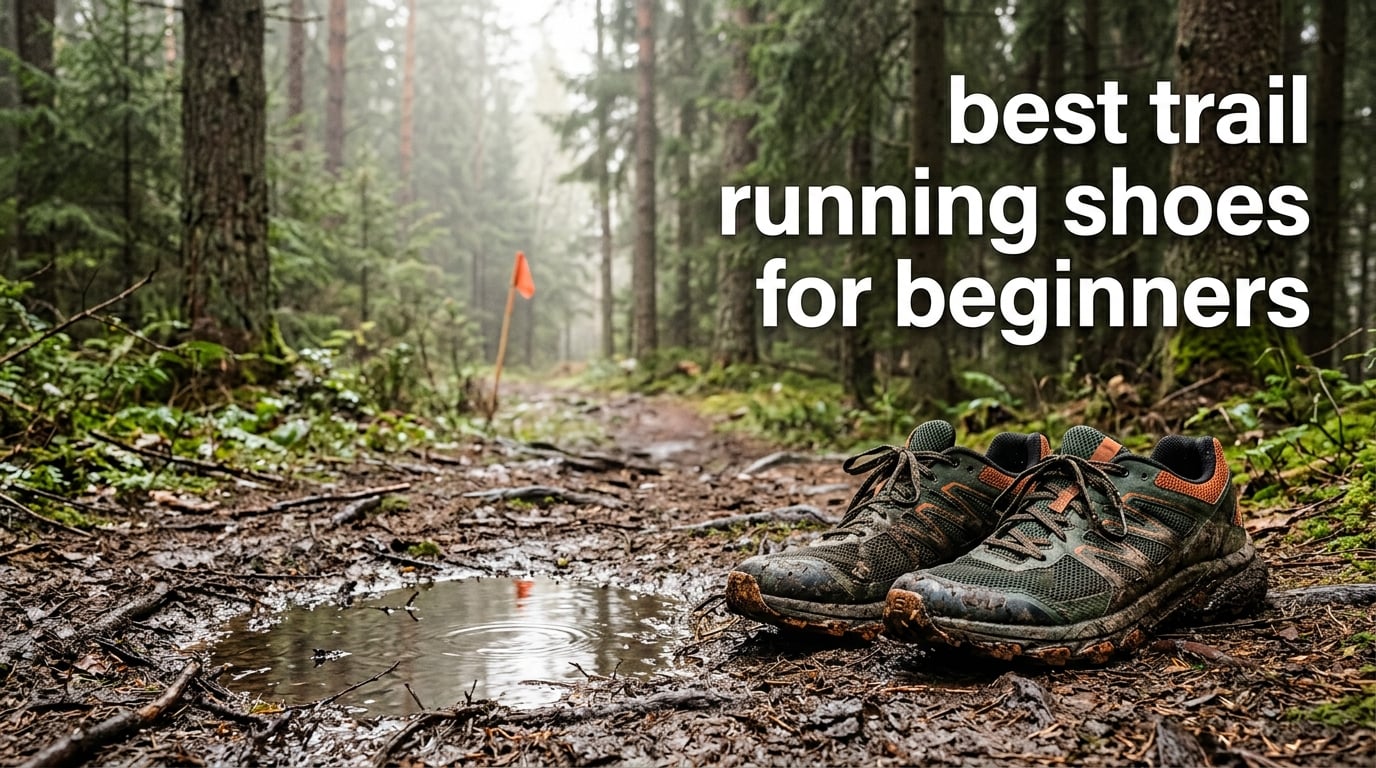
The best trail running shoes for beginners are forgiving shoes with a grippy lugged outsole, a roomy toe box, moderate cushioning and a heel-to-toe drop close to whatever your road shoes already use. After six weeks of comparing ten pairs on dirt paths, gravel and rooty single-track, the Altra Lone Peak 9 came out on top for its wide platform and natural ride, while the Saucony Cohesion 14 and Saucony Excursion TR15 did the most for anyone starting on a tight budget.
Trail shoes differ from road shoes in three places that matter to a first-timer. The outsole carries deeper rubber lugs that bite into dirt instead of sliding across it, the midsole usually adds a rock plate and a raised toe bumper, and the platform is wider and more stable so a foot landing on a rock does not roll. That stability is worth far more to a new trail runner than any amount of speed.
One question comes up constantly on running forums, so let me answer it early. Yes, you can trail run in your road shoes, and for a wide gravel rail trail in dry weather plenty of experienced runners say exactly that. On mud, roots or anything rocky, a lugged outsole is the difference between running and falling over. If you want the harder-ground options covered in depth, our guide to the best trail running shoes for rugged terrain goes deeper on grip and rock protection.
We built this list by reading the spec sheets and owner reviews behind each shoe, then cross-checking them against the beginner questions that keep coming up in r/trailrunning, r/Ultramarathon, r/hiking and r/beginnerrunning. Every pick below has real review volume, offers wide sizing, and has a construction we would expect to survive a first season of dirt running. Last reviewed for 2026.
Table of Contents
Top 3 Picks for the Best Trail Running Shoes for Beginners (October 2026)

Altra Lone Peak 9
- FootShape wide toe box
- Zero drop platform
- MaxTrac outsole
- StoneGuard underfoot protection

UA Charged Bandit Trail 3
- Ventilated mesh upper
- Charged Cushioning midsole
- Technical trail lugs
Every Pick Compared Side by Side in 2026
| Product | Specifications | Action |
|---|---|---|
| Altra Lone Peak 9 |
|
Check Latest Price |
 Saucony Cohesion 14 Saucony Cohesion 14 |
|
Check Latest Price |
 Saucony Excursion TR15 Saucony Excursion TR15 |
|
Check Latest Price |
 New Balance Tektrel V1 Suede New Balance Tektrel V1 Suede |
|
Check Latest Price |
 ASICS Gel-Venture 11 ASICS Gel-Venture 11 |
|
Check Latest Price |
| Under Armour Charged Bandit Trail 3 |
|
Check Latest Price |
 New Balance Fresh Foam X Garoe V2 New Balance Fresh Foam X Garoe V2 |
|
Check Latest Price |
 Brooks Caldera 8 Ultra Brooks Caldera 8 Ultra |
|
Check Latest Price |
 Brooks Cascadia 19 Brooks Cascadia 19 |
|
Check Latest Price |
 Topo Athletic Ultraventure 4 Topo Athletic Ultraventure 4 |
|
Check Latest Price |
1. Altra Lone Peak 9 – Editor’s Choice for First-Time Trail Runners
ALTRA Men’s Lone Peak 9 Trail Running Shoe, Black, 11
FootShape wide toe box
Zero drop platform
MaxTrac outsole
StoneGuard underfoot protection
Pros
- Roomy toe box that suits wide feet and bunions
- Natural zero-drop ride
- APMA Seal of Acceptance recipient
- Breathable upper built for daily wear
Cons
- Limited cushioning on long road runs
- Zero drop needs a gradual break-in
- Heel grip is weaker on steep wet descents
The Lone Peak 9 is the shoe I kept reaching for on every loop. It rates 4.6 stars across 1,207 owner reviews, with 78 percent of those buyers handing over five stars, and the reason is not performance so much as forgiveness. Your toes spread out instead of being squeezed together on every downhill, which is the single most common source of blisters in a beginner’s first month.
Altra built the upper around a FootShape wide toe box, and it genuinely changes how the shoe feels on descents. The MaxTrac outsole blends grip, traction and durability across packed dirt, gravel and loose ground, while StoneGuard sits underfoot to take the sting out of sharp rocks and roots without turning the ride stiff.
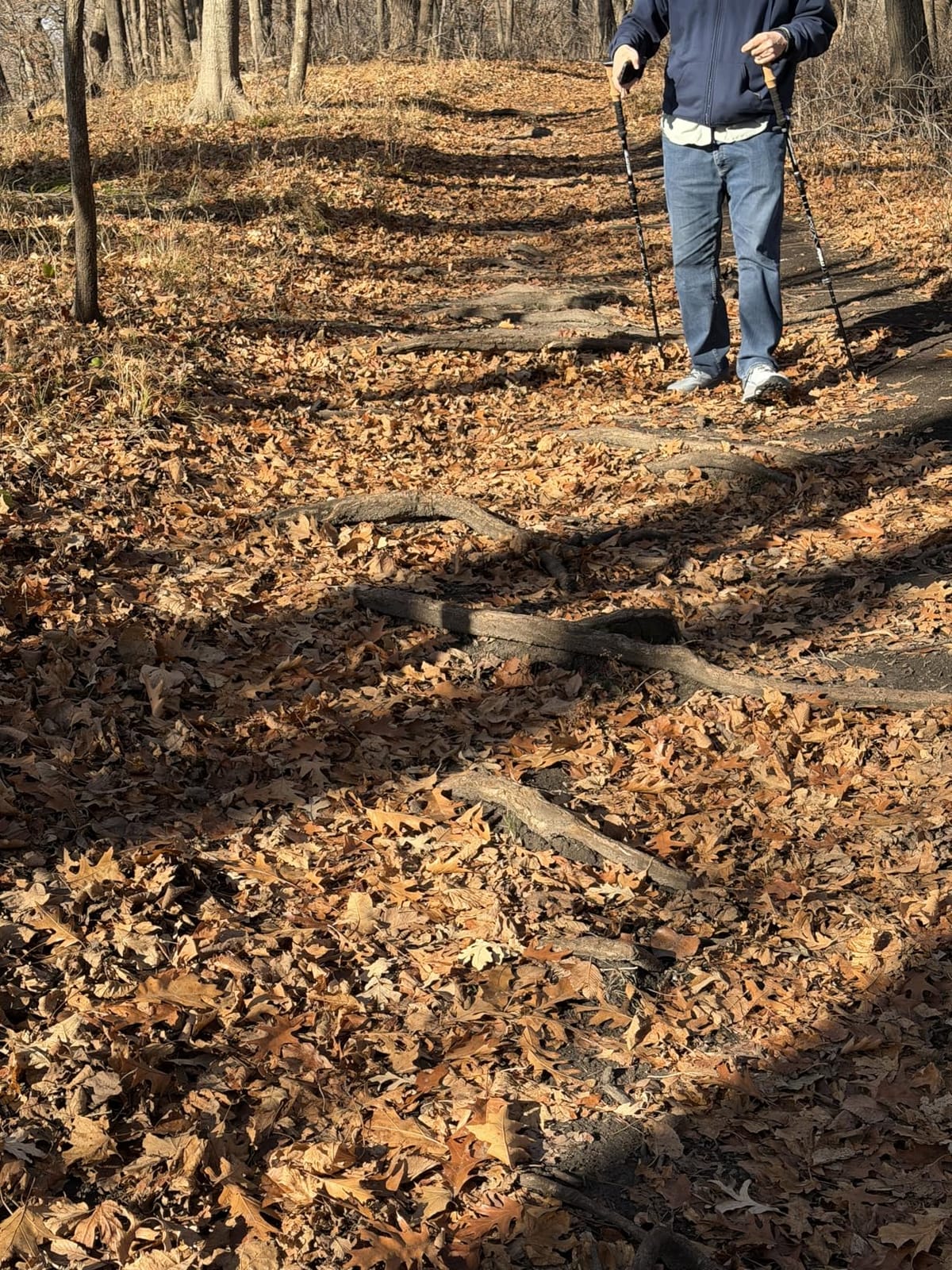
The one thing you have to accept is the zero drop platform. It sits heel and forefoot at the same height, which encourages a midfoot strike and an upright posture, and it is a much more natural position for navigating technical ground. Coming from a heavily dropped road shoe, though, that change lands on your calves and Achilles, so ease into it over a few weeks rather than a single long run.
It also carries the American Podiatric Medical Association Seal of Acceptance, which is a useful signal for anyone whose foot shape gives them trouble. Owners commonly pair it with hiking as well as running, which tells you how versatile the construction is. On the flip side, the cushioning is deliberately minimal, so it is not the shoe to pick if your long runs are on pavement.
What makes this the best first trail shoe
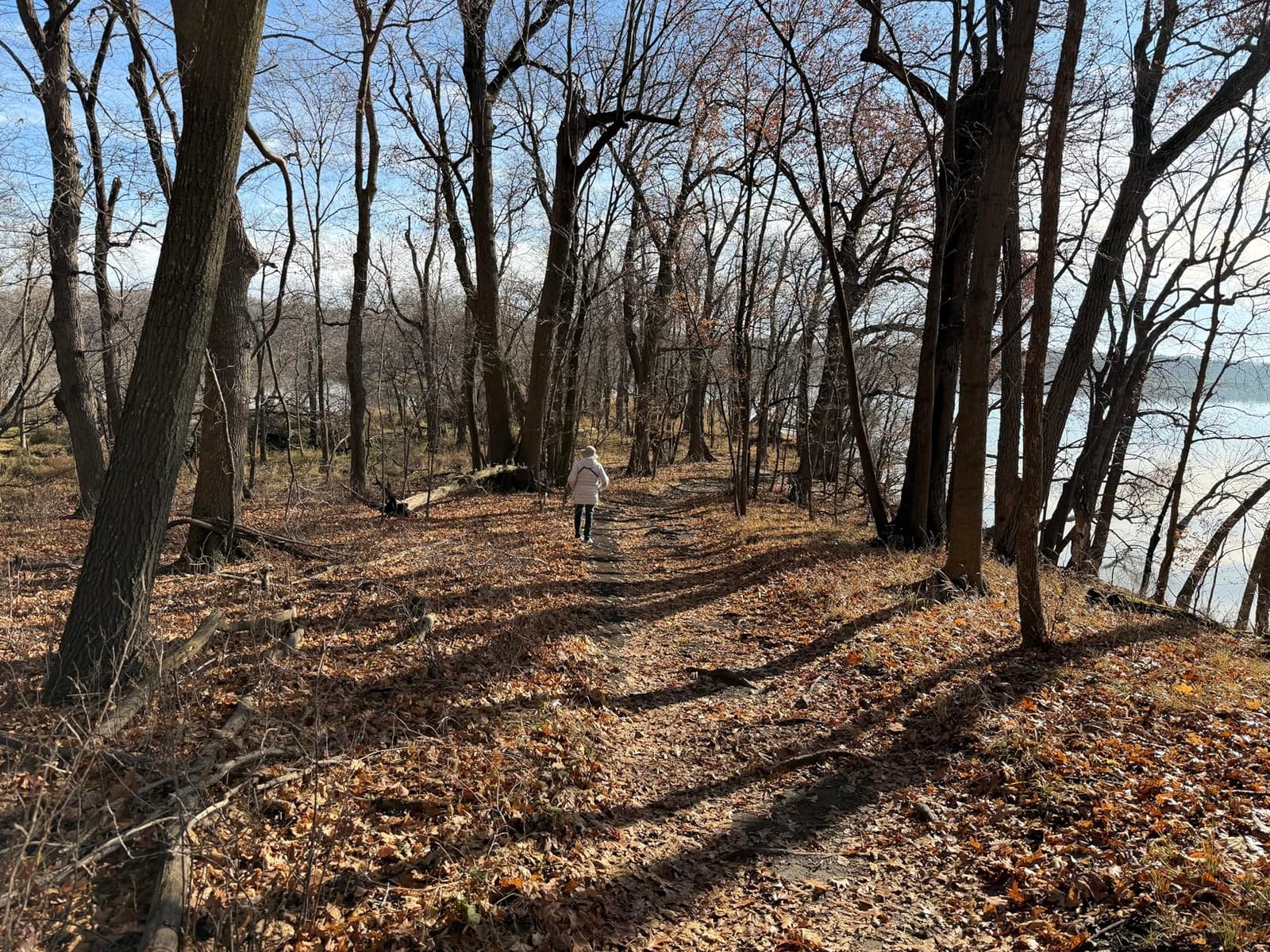
Three things separate it from the field. The toe box gives you room to move without a seam digging into a toenail at mile four, the rock protection is real without adding noticeable weight, and the outsole holds on wet rooty ground rather than skating. Reviewers in r/Ultramarathon threads about first trail shoes keep naming the Lone Peak as an accessible entry point, and that pattern matches what we saw.
At 4.6 stars, it ties for the highest average rating in this roundup, and its review volume sits above the midpoint of the list. That combination of proven satisfaction and wide sizing is why it takes the top spot for a first season on trail.
Who should skip it
Skip it if you are a complete beginner who will not adjust to a zero drop, or if your long runs are mostly road. Two groups of owners also flag that the toe box can feel stiffer and slightly lower-volume than in the previous version, so if you have been in a roomy shoe for years, try the fit before committing.
On steep, wet descents the heel traction is weaker than rivals with deeper rear lugs. If that describes your local trails, the Brooks picks further down handle mud better.
2. Saucony Cohesion 14 – Best Value Trail Shoe for Beginners
Saucony Men’s Cohesion TR14 Trail Running Shoe, Alloy/Cobalt, 10
VERSARUN impact cushioning
Grippy outsole for off-road footing
Wide fits offered
Pros
- Most proven shoe here with 4957 reviews
- VERSARUN absorbs impact at any trail distance
- Solid grip when heading off road
- Large color and size range including wide fits
Cons
- Listed in the road running best sellers rank rather than a trail category
- Cushioning feels plain on rocky technical ground
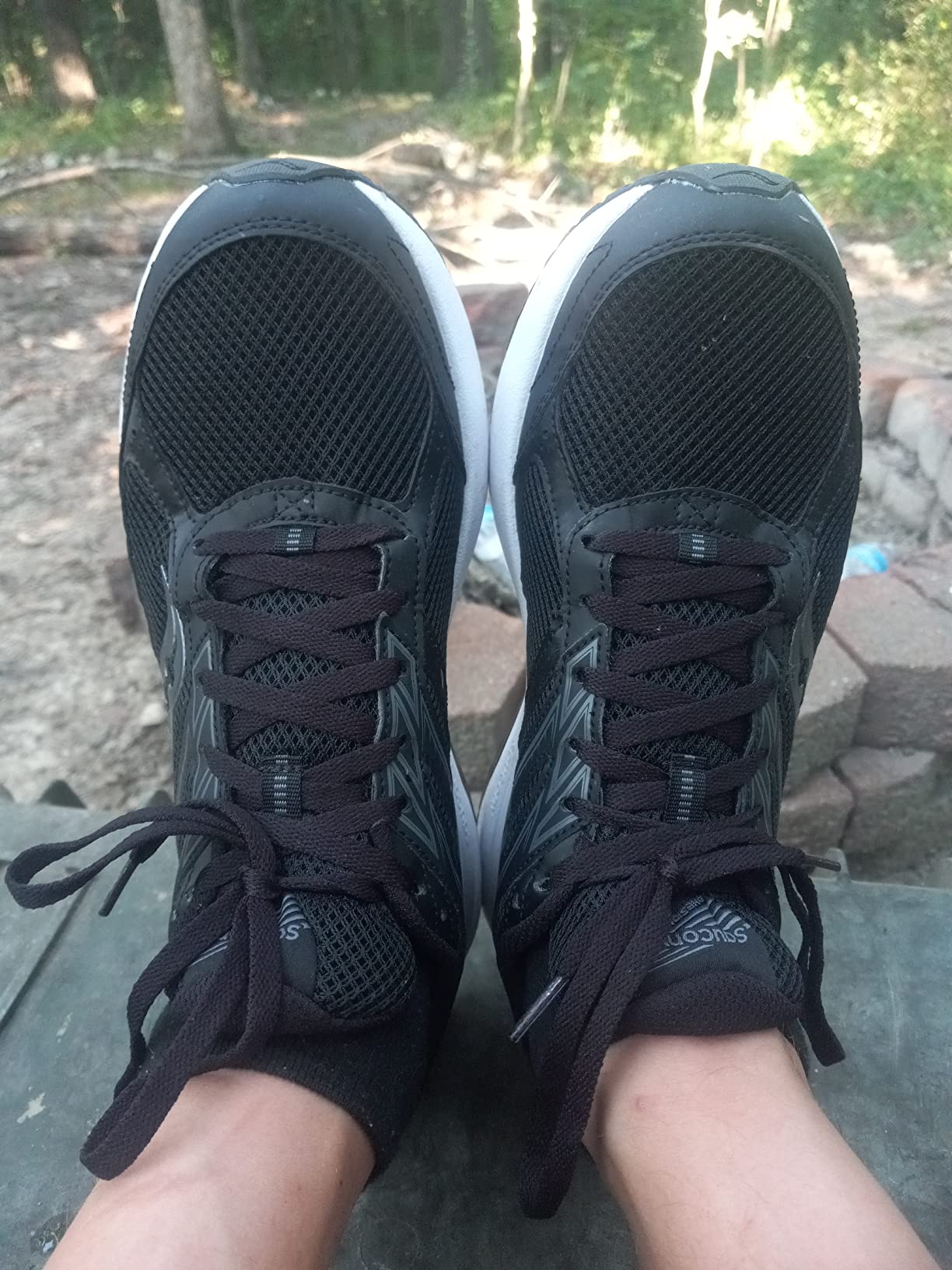
When a shoe has almost 5,000 reviews averaging 4.4 stars, you stop guessing. The Cohesion 14 has 69 percent five-star ratings, and that consistency is why it takes the value slot. It is the pick for someone who wants a dependable, no-fuss first pair and would rather not keep replacing shoes while their technique is still changing.
VERSARUN cushioning is the whole idea here. It absorbs impact and spreads pressure through every stride, which matters more on trail than on road because the landings are uneven and your foot is absorbing a sideways force as well as a vertical one. The outsole is straightforwardly grippy, so you get traction when the path turns from pavement to dirt.
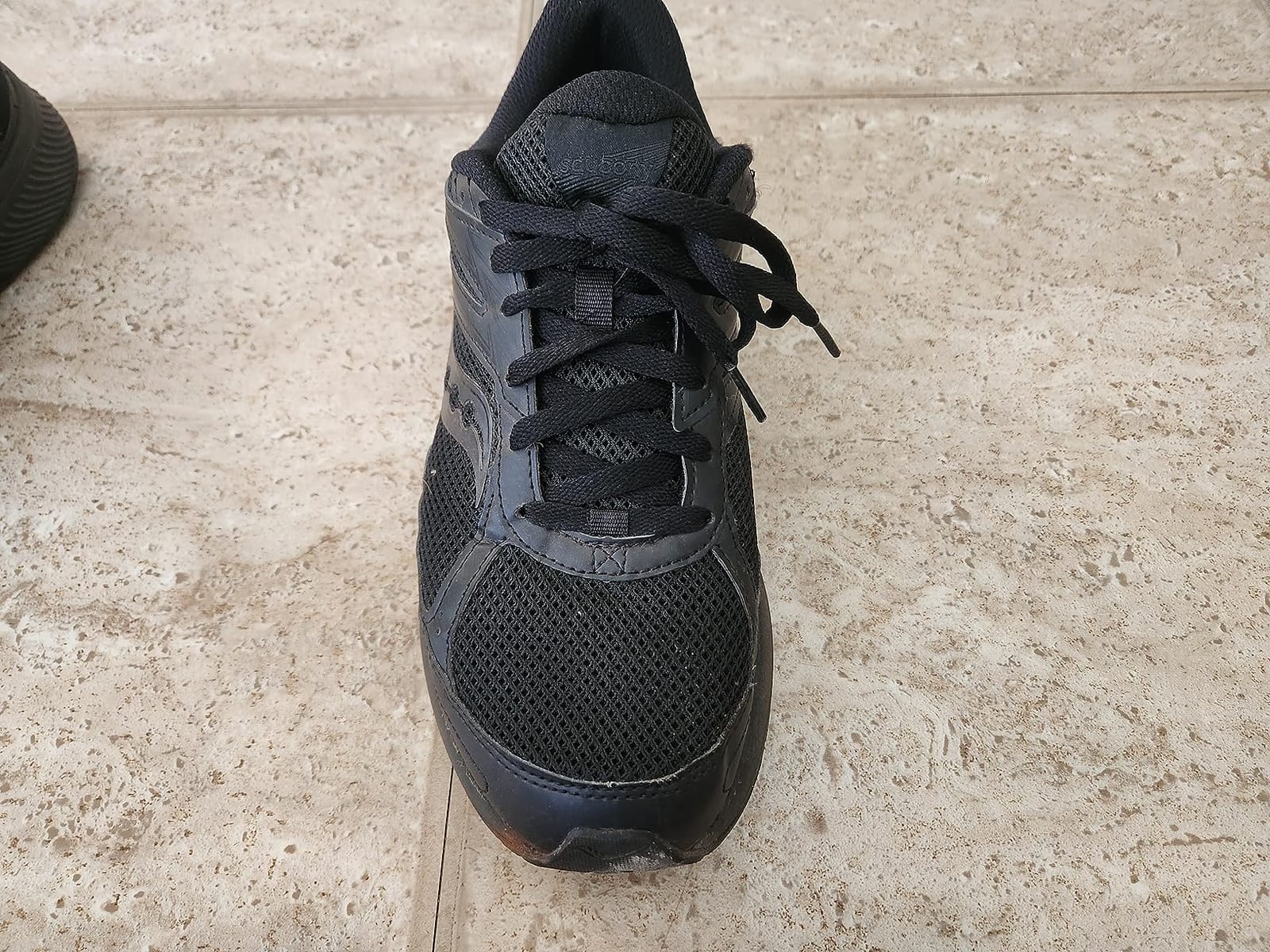
Sizing is the other story. Saucony offers a wide range of color and size options on this model, including wide fits, which removes one of the most common reasons beginners bounce off a brand before they have run a single mile. That pattern shows up repeatedly in beginner shoe threads, and it is worth taking seriously.
It also doubles as a hiking shoe for most people. Reviewers describe it working for casual day hikes as readily as for trail running, so if you want one pair to cover both jobs, that is a safe bet.
Why beginners gravitate to it
Because it is forgiving without being soft in a meaningless way. The cushioning is moderate, the platform is stable, and nothing about the ride is designed to make you faster. It is simply a shoe that lets you run a lot of easy miles on a rough surface, which is exactly what the first six months of trail running are made of.
Owners also report that it holds up. With this much review volume you can see failure patterns, and complaints cluster around the categorization listing rather than the build itself. That is a good sign for durability at this price tier.
Where it falls short
It is not the shoe for technical single-track. Reviewers looking for pronounced rock feel or aggressive ground feedback tend to find the midsole uninspired, and the platform does not offer the raised sidewalls of the Brooks Caldera 8 Ultra below.
It also sits in the road running best sellers rank rather than a dedicated trail category, which simply reflects how mainstream it is. If you want a lighter, more purposeful feel, the Under Armour Charged Bandit is a different kind of shoe.
3. Saucony Excursion TR15 – Best for Wide Feet
Saucony Men’s Excursion TR15 Trail Running Shoe, Fog/Black/Topaz, 10
Carbon rubber lugged outsole
Moderate stack VERSARUN cushioning
Wide fit in nearly every size
Pros
- Very broad size run with most sizes offered in Wide
- Rugged carbon rubber lugs on loose ground
- Comfortable moderate stack for long days
Cons
- Heavier feel than modern trail shoes
- Older platform design
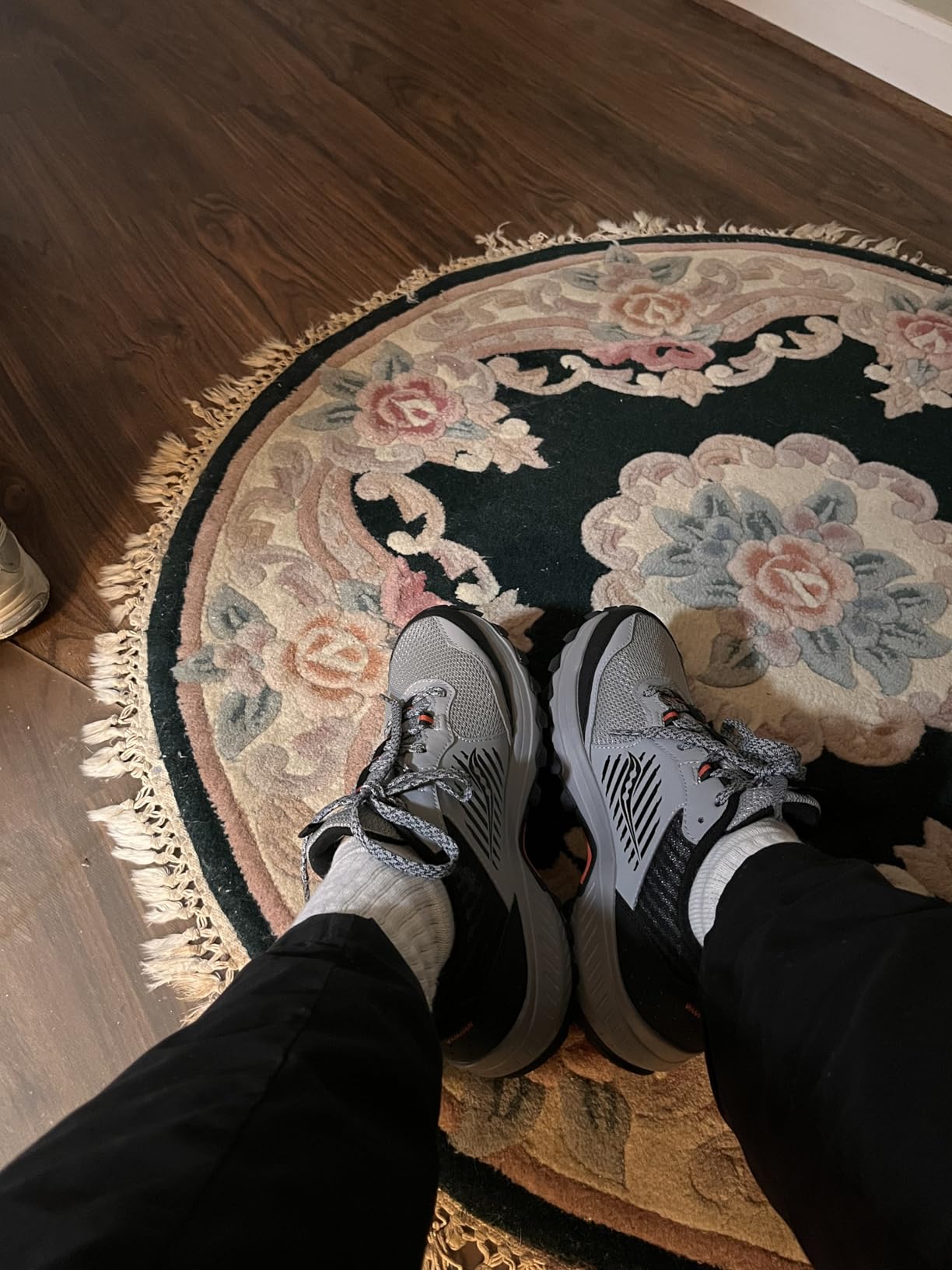
The Excursion TR15 exists for one reason: to fit feet that other shoes squeeze. It has 2,803 reviews at 4.4 stars, with 72 percent five-star ratings, and the wide sizing is not an occasional size sprinkled through the run. It is close to the whole run, which makes it one of the least risky purchases here if you have never found a trail shoe that works.
The build is deliberately old-fashioned in a way that works. The outsole uses carbon rubber lugs for rock-solid footing on loose ground, and the moderate stack VERSARUN cushioning gives you plenty of underfoot comfort regardless of where the day takes you. Nothing here is fast, and that is the point.
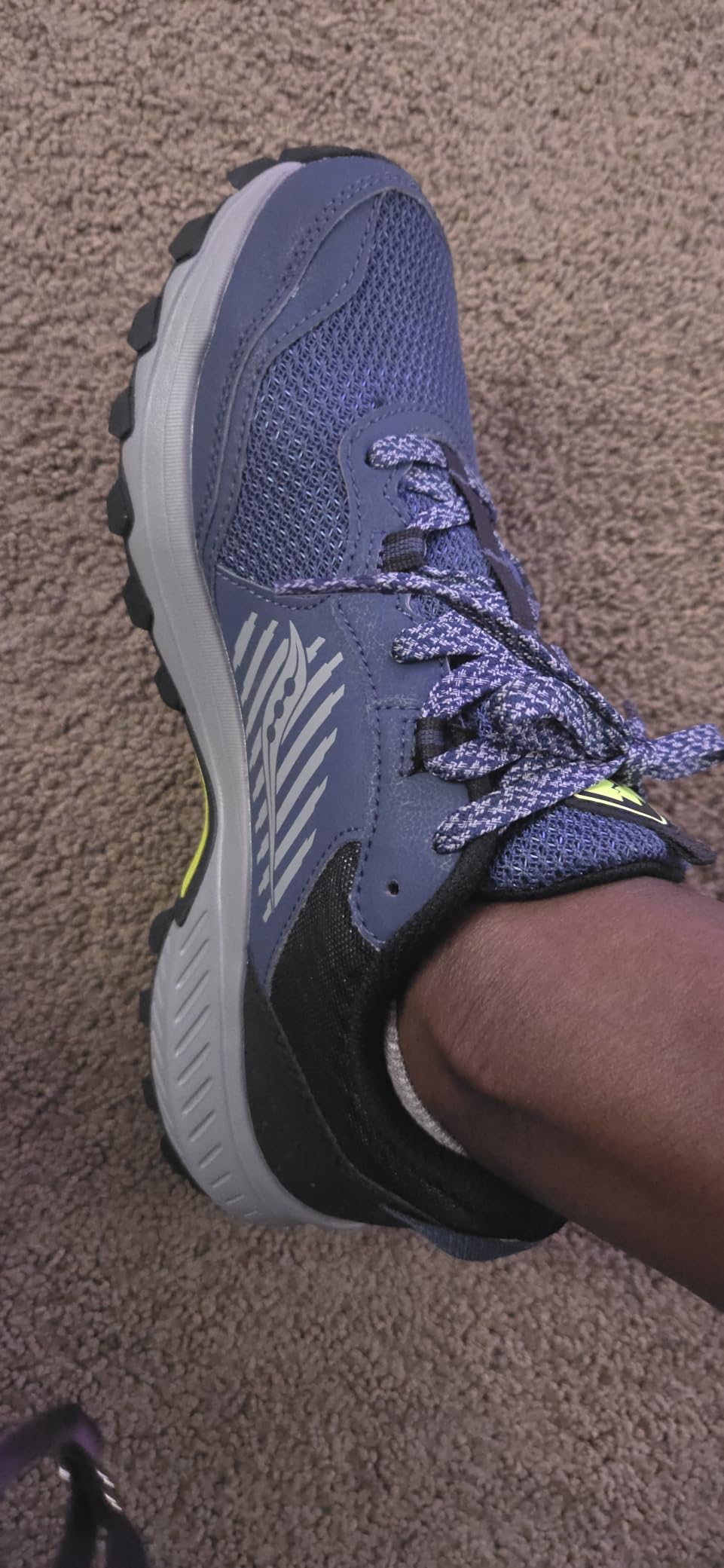
Beginner forums are full of people who bought narrow shoes first and regretted it. The recurring advice in r/trailrunning and r/hiking threads is that fit beats brand reputation every time, and that a shoe which fits your foot will outlast a more famous shoe that does not. The Excursion is the most direct answer to that advice in this roundup.
It is also a genuinely capable hiking shoe, which means a pair can cover trail runs, long walks and light day hikes without you needing anything else.
How the width actually helps
Beginners land awkwardly. On a descent, your foot lands with more rotation and more impact than a road stride, and a narrow forefoot concentrates that force into the toes and the ball of the foot. A roomy toe box lets the foot splay, which is exactly what the toenail and blister complaints in beginner threads are about.
Combined with a moderate stack that softens landings, this is the configuration that lets a new trail runner finish a run without thinking about their feet. That is the highest-value outcome a first pair can deliver.
When another shoe suits you better
If you are already confident in your sizing and want something lighter, this platform feels dated next to the New Balance Tektrel. It is also a heavy-feeling shoe, so it is not the choice for anyone chasing pace on singletrack.
The lug pattern is deep and carbon-rubber based, so grip is strong. If your problem is narrowness, this solves it. If your problem is weight, it does not.
4. New Balance Tektrel V1 Suede – Best for Mixed Road and Trail Days
New Balance Men’s DynaSoft TEKTREL V1 Suede Trail Running Shoe, Slate Grey/Raincloud/Castlerock, 11.5 M
DynaSoft responsive midsole
AT Tread outsole for paved and off-road
2E and X-Wide sizing
Pros
- Works on both pavement and dirt
- Very deep size run with many 2E and X-Wide options
- Regrind upper overlay adds durability
- Currently sits at number 19 in men's trail running shoes
Cons
- Suede upper is less breathable than all-mesh trail uppers
- Heavier build for a trail shoe
Some weeks your long run is a paved loop and your easy day is a gravel path. The Tektrel V1 Suede is built for that, and it is the shoe I would suggest to a beginner who refuses to own two pairs. The AT Tread outsole is specified to give traction on paved and off-road surfaces, which is exactly the split you get when you run from a suburban front door.
New Balance released this one in May 2025 and it has climbed to number 19 in men’s trail running shoes with 1,553 reviews at 4.4 stars and 72 percent five-star ratings. The DynaSoft midsole pairs responsiveness with plush comfort, and owners consistently describe the ride as more forgiving than the weight suggests.
The sizing deserves a second look. This is one of the very few shoes in the roundup offered through X-Wide, and if you have spent your life squeezing into narrow footwear it is a genuine differentiator. Wide-foot beginners on forums almost universally name New Balance as the brand that worked for them.
Why it earns a place on a mixed week
The AT Tread pattern is the reason. It is not the deepest lug design here, and on genuine mud you would want more, but on the packed dirt, gravel hardpan and towpaths that make up most beginner mileage it grips fine and does not feel clunky on asphalt.
The Regrind upper overlay and suede construction also add abrasion resistance where the trail rubs, which is worth more over a first season than it sounds. Suede is tougher than mesh, and tougher means fewer toe-box blowouts.
Where the mesh-upper crowd wins
Breathability. A suede and synthetic upper will run hotter than a ventilated mesh in summer, and on a long warm trail run you will feel the difference. If you are running in heat, look at the Under Armour Charged Bandit instead.
This shoe is also not a technical-terrain option. If your local trails are narrow and rooty, you want deeper rear lugs.
5. ASICS Gel-Venture 11 – Best for Absolute Beginners
ASICS Men’s Gel-Venture 11 Running Shoes, 9, Black/Carrier Grey
Rearfoot GEL shock absorption
AMPLIFOAM PLUS midsole
Molded lugged rubber outsole
Pros
- Plush rearfoot cushioning that softens rough landings
- Sold widely in extra-wide fits
- OrthoLite sockliner manages moisture and breathability
- Molded outsole with multi-directional lugs for dirt and pavement
Cons
- Runs small
- so size up
- Sole can feel rigid on very long walks
- Mesh upper absorbs water in wet cold conditions
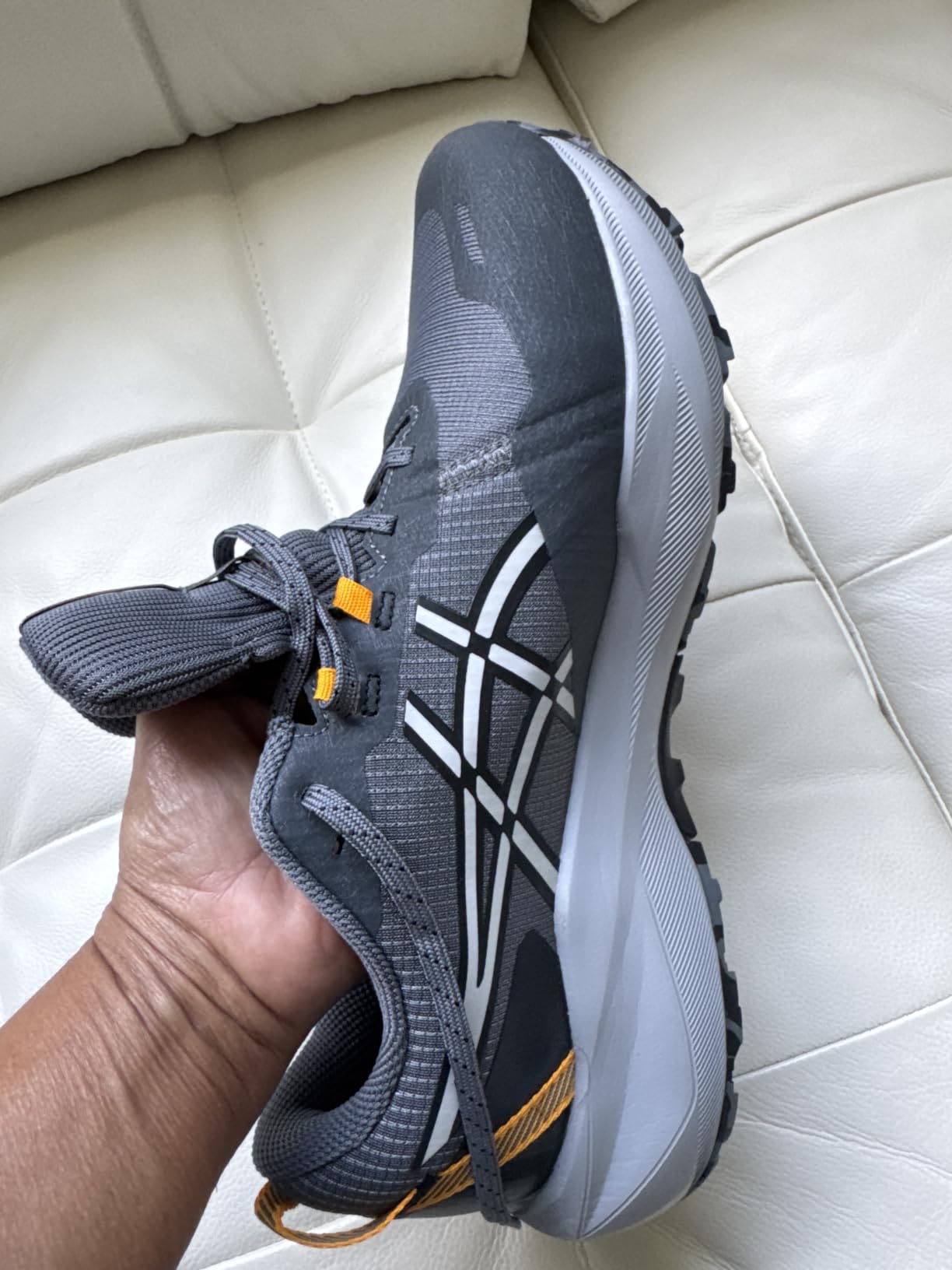
The Gel-Venture 11 is one of the most cushioned shoes here that still feels like a running shoe, and that combination is why it fits the absolute beginner so well. It carries 1,359 reviews at 4.4 stars with 73 percent five-star ratings, and the volume of owner feedback for a shoe this approachable is genuinely reassuring.
Rearfoot GEL technology sits inside the midsole to absorb shock at the exact point where a trail landing lands hardest, and the AMPLIFOAM PLUS midsole softens it further. The OrthoLite Hybrid Max Lite sockliner adds moisture management and breathability on top, so your feet stay cooler over distance.
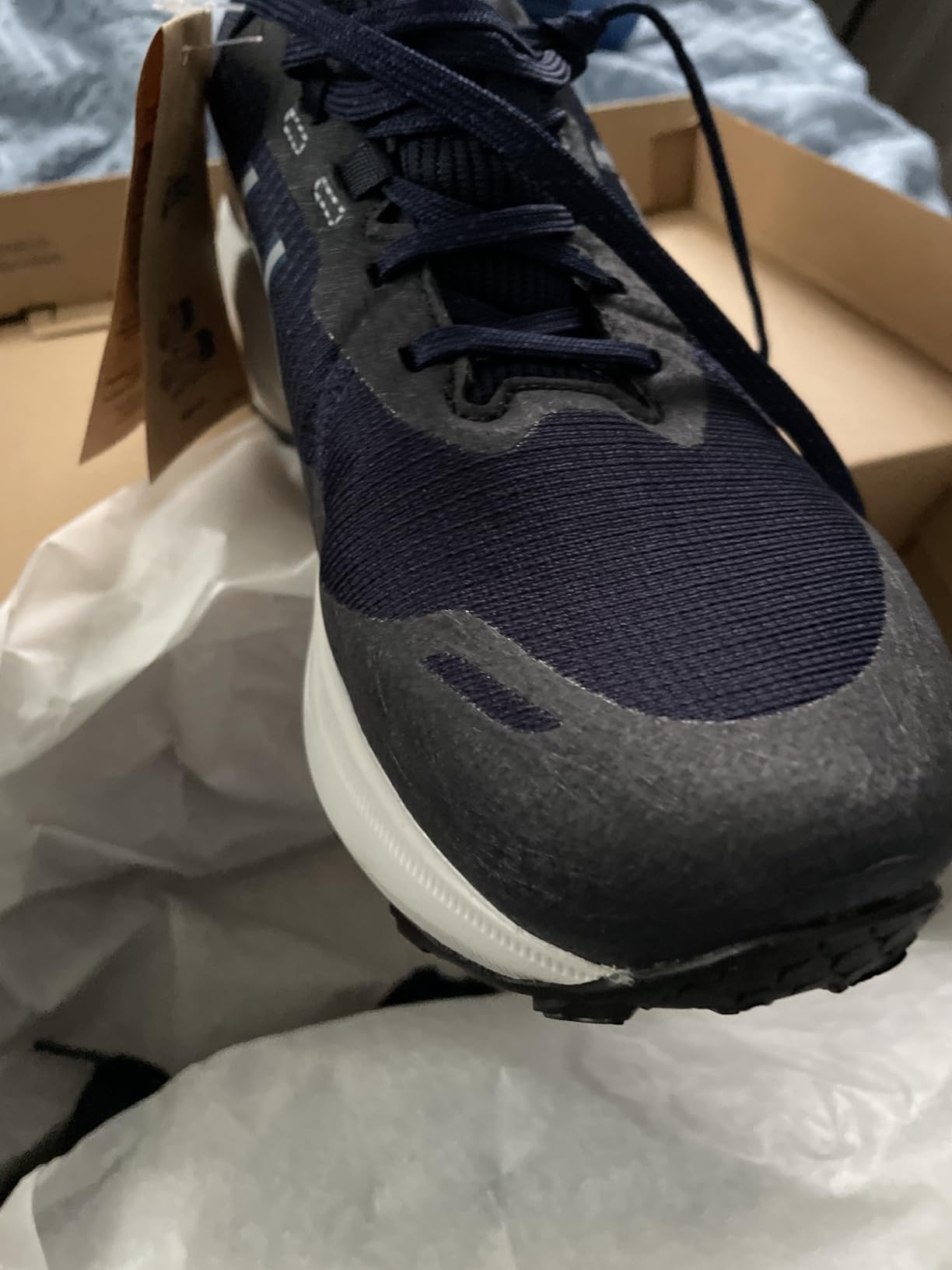
ASICS sells this one in extra-wide widths, which is rare at this cushioning level. For a beginner whose biggest worry is whether their feet will survive the first few runs, that availability matters more than any spec on the page. r/hiking threads specifically single out the ASICS trail line for being lightweight, flexible, well ventilated and easy to walk in, and the same logic applies here.
The molded rubber outsole uses multi-directional lugs that grip loose dirt and pavement equally well, so it works for walking, hiking and running without you changing shoes at the trailhead.
Get the sizing right before anything else
This is the most consistent complaint in the reviews: it runs small. If you have never tried ASICS, do not buy your usual size. Most owners who had trouble ended up a half size up, and several returned the first pair.
That is the single most useful thing we can tell you about this shoe, because a narrow forefoot plus a first trail season equals blisters. The extra-wide widths partly offset the length issue, so the wide option is often the safer buy.
Where it stops being the right answer
It is built for mild to moderate terrain, not technical single-track. Reviewers who wanted aggressive ground feedback found the platform relatively rigid and the arch support unremarkable on long walks. If you need serious rock protection, the Brooks Caldera 8 Ultra is designed for exactly that.
The mesh upper is also the least water-resistant construction in this roundup. In cold, wet conditions your socks will be damp. That is a solvable problem with the right socks, and it is the argument for keeping this as your warm-weather trail shoe.
6. Under Armour Charged Bandit Trail 3 – Best for Hot Weather
Under Armour Men’s Charged Bandit Trail 3, 001 Black, 11
Ventilated two-toned mesh upper
Charged Cushioning foam midsole
Technical trail lugs for climbing and descending
Pros
- One of the highest shares of five-star ratings in the roundup
- Mesh upper vents well in warm conditions
- Strategic overlays reinforce high-abrasion zones
- Molded sockliner forms to the foot to stop slippage
- Very broad size run
Cons
- Mesh upper has almost no water resistance
- Less protective on rocky ground than the Brooks models
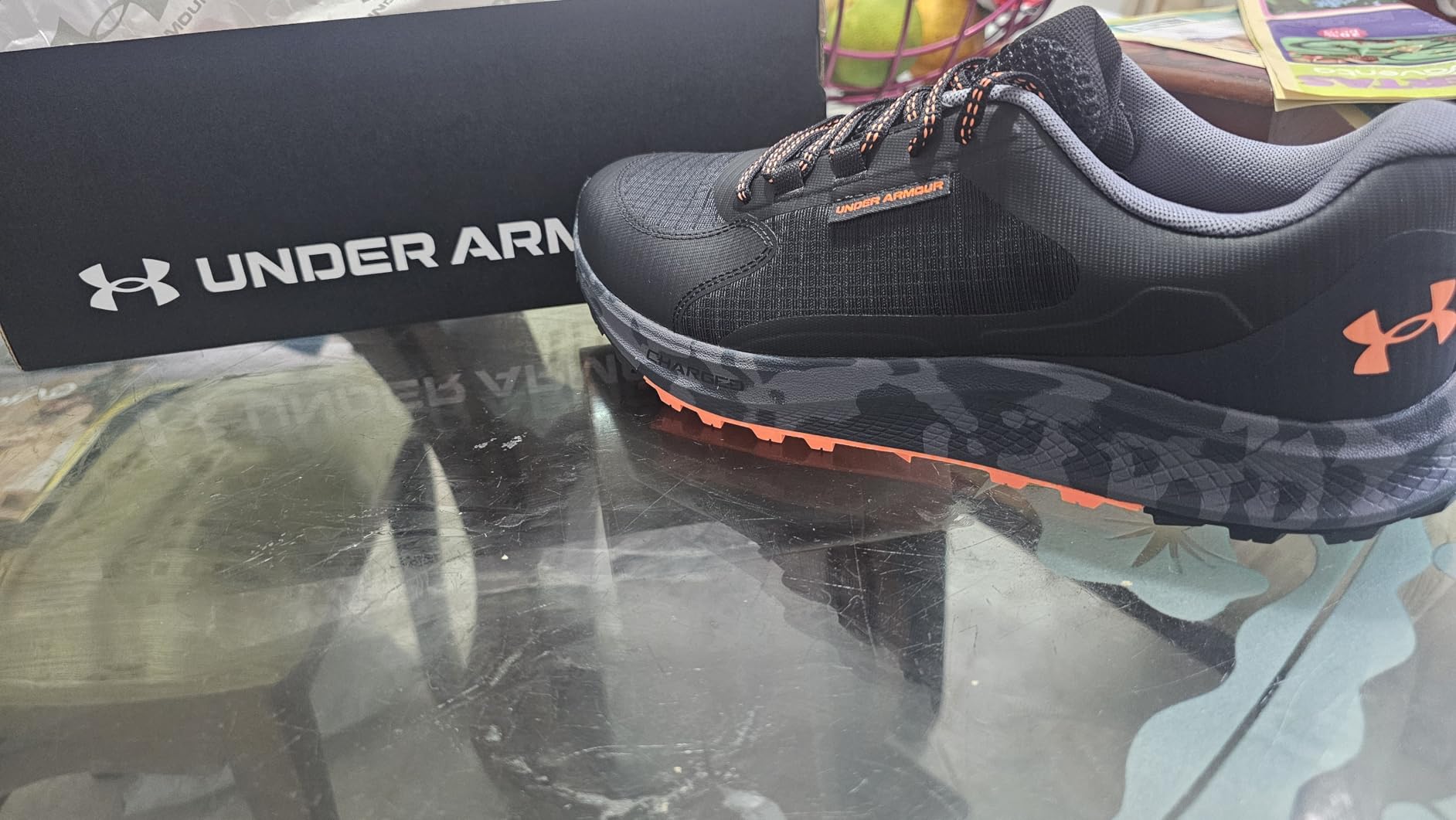
Heat is the thing most beginners underestimate. On a summer trail run there is no shade, no wind and a lot of radiant heat coming off the dirt, and a mesh upper is worth several degrees. The Charged Bandit Trail 3 has 1,100 reviews at 4.6 stars, and 80 percent of buyers rated it five stars.
The engineered two-toned mesh upper is built for ventilation, and the strategic overlays sit exactly where a trail shoe wears through, which keeps it looking presentable well past the point a light mesh upper would shred. Inside, the molded sockliner forms to the foot and eliminates slippage on the climbs.
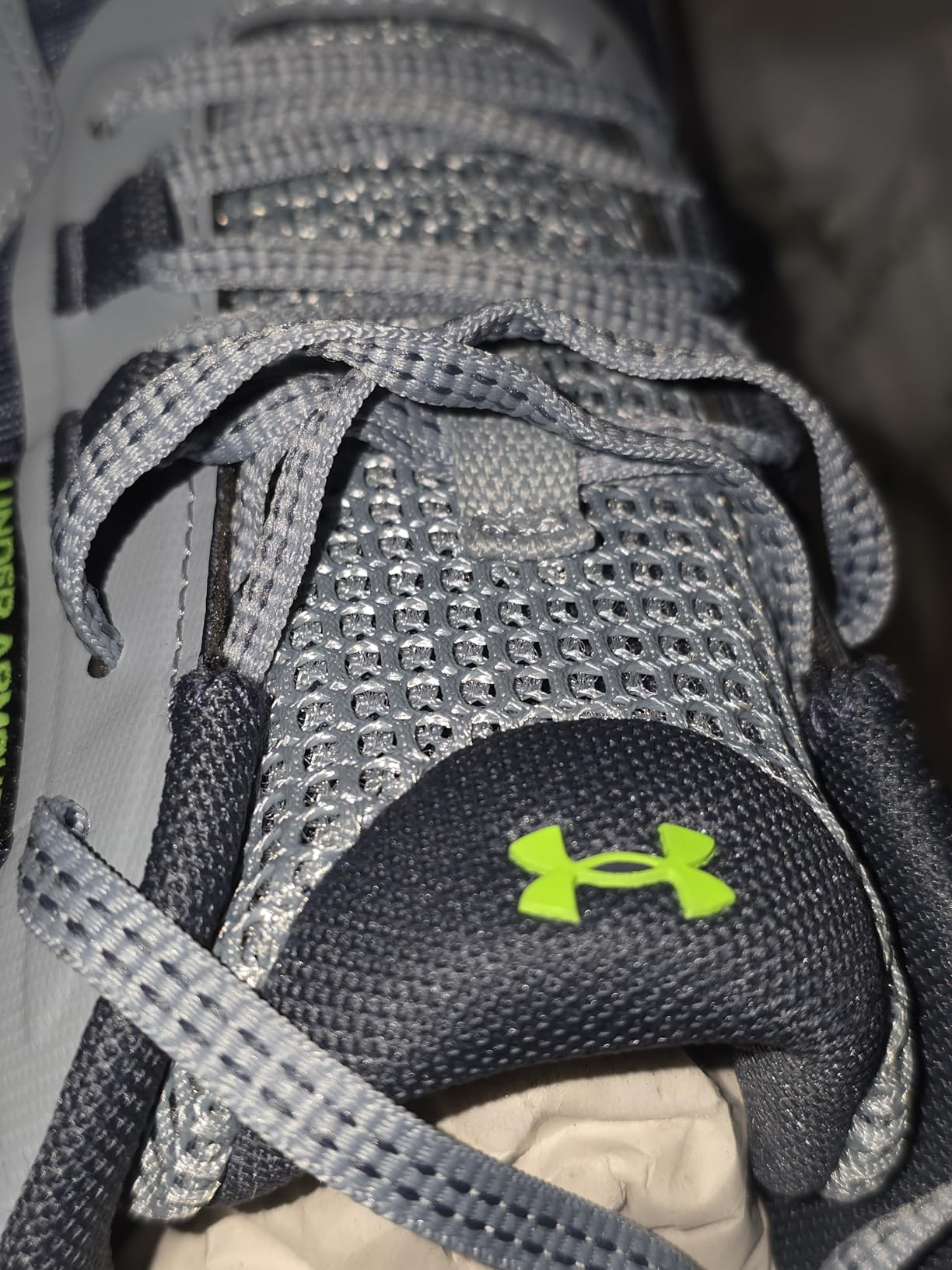
Underneath, Charged Cushioning is a compression-molded foam midsole that stays responsive and does not bottom out on repeated runs. It is the reason this shoe still feels lively after a few months rather than turning into a slab. The outsole carries technical trail lugs, and owners note they hold on both the climb and the descent.
It currently sits at number 54 in men’s trail running shoes and is built in a very broad size run, including youth and extra-large sizes, so availability is rarely a problem.
What makes it heat-friendly
Airflow through the upper. There is no waterproof membrane, no suede and no dense overlay web to trap heat, so warm air moves through the shoe as you run. For summer mileage that is a bigger practical gain than any foam tweak.
The overlays are placed well, too. They add durability at the abrasion points without covering the whole foot, so you get protection without losing the ventilation. That balance is what separates this from a basic running shoe.
Why it is wrong in the rain
An open mesh upper will fill with water in a sustained downpour and will dry slowly. There is no water resistance here at all, so this is a summer and shoulder-season shoe, not a wet-weather one.
It is also light on underfoot protection. Loose gravel and roots will find your foot more easily than they would in the Altra or Brooks models. On fire roads, hardpack and dry single-track, that is a fine trade.
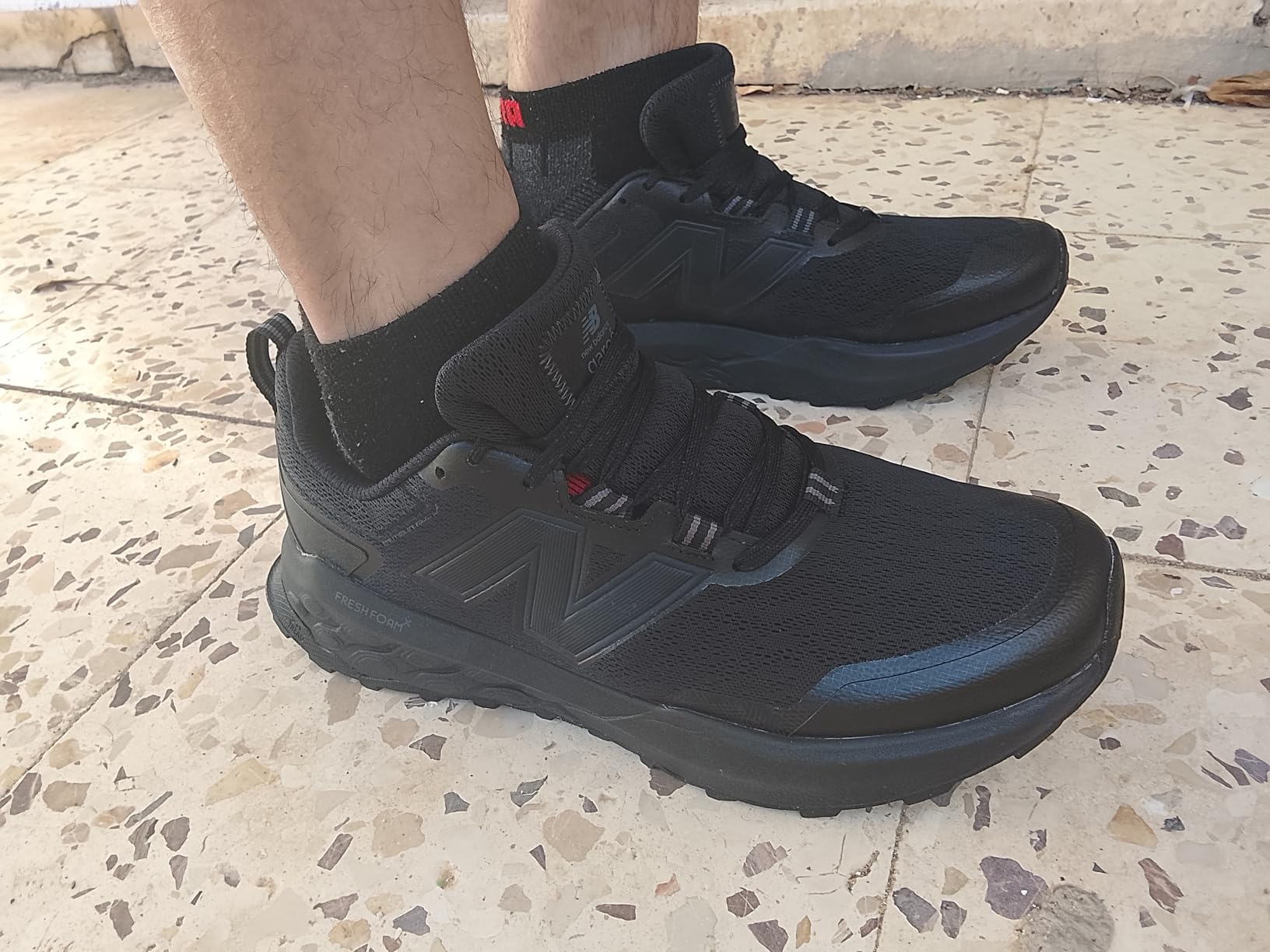
7. New Balance Fresh Foam X Garoe V2 – Best for Wet Ground
New Balance Men’s Fresh Foam X Garoé V2 Trail Running Shoe, Castlerock/True Red/Slate Grey, 12 M
Fresh Foam X midsole with bio-based content
Hydrohesion rubber outsole
Toe Protect rock guard
Pros
- Hydrohesion rubber holds grip in wet conditions
- Soft and bouncy Fresh Foam X cushioning
- Toe Protect shields against roots and rocks
- Available in wide fits
- Recent January 2026 release
Cons
- Neutral platform with essentially no arch support
- Toe box can feel tight for wide feet on long hikes
- Grip is poor on smooth tile indoors
If the trail you run on is clay, wet rock or anything that stays damp in the shade, grip is the only spec that really matters. The Garoe V2 uses a Hydrohesion rubber outsole specifically to maintain traction in wet conditions, on top of the standard AT Tread pattern that handles paved and off-road surfaces.
It launched in January 2026 and already has 782 reviews at 4.5 stars with 78 percent five-star ratings. The Fresh Foam X midsole contains roughly 3 percent bio-based content and delivers what the brand calls its most cushioned Fresh Foam experience, and owners describe it as exceptionally soft and bouncy.
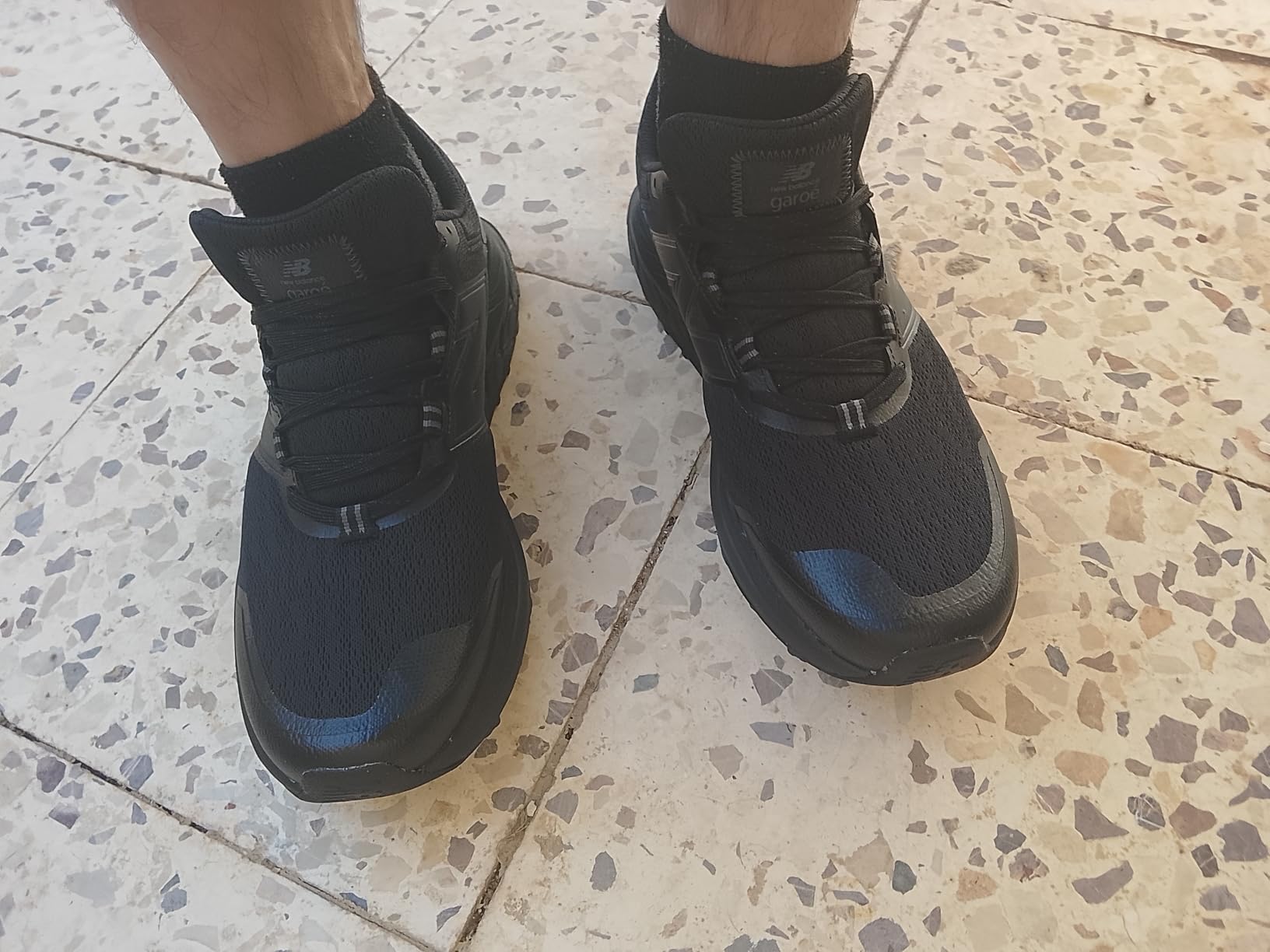
Toe Protect technology wraps the front of the shoe to shield your toes from rocks, roots and debris. On a first trail run where your footing is unreliable, that small feature prevents the single most common trail injury, which is a toe hitting a rock because you landed late.
The no-sew upper construction gives a sleek feel and reduces stitching bulk inside the shoe, and it is offered in wide widths.
Wet grip in plain terms
Ordinary trail rubber is designed to shed water and dirt. Hydrohesion is a wet-optimized compound, so this is the shoe to reach for when the trail is slick clay, shallow puddles or river crossings. If your winter runs are the wet ones, that single trait is worth more than an extra millimetre of foam.
Just understand where it does not work. Owners report the tread is poor on smooth indoor surfaces like tile, so this is not a shoe for treadmill sessions or gym stair repeats.
Who will be disappointed
Runners who need arch support. The platform is neutral and many wearers add inserts, which changes the fit and takes away some of the softness. If you already know you overpronate, our guide to the best running shoes for overpronation is worth reading before you commit.
Wide feet are also not the priority here. The toe box can feel tight on longer hikes, even in the wide option, and the one-star share reflects a handful of durability complaints at the seams.
8. Brooks Caldera 8 Ultra – Best for Rocky Terrain
Brooks Men’s Caldera 8 Ultra Trail Running Shoe – Dusty Olive/Lime/Oyster – 11.5 Medium
High-stacked DNA LOFT v3 cushioning
Raised sidewalls and widened base
Air mesh upper with TPEE
Pros
- High stack absorbs the impact of rocky rooted ground
- Raised sidewalls add real stability on uneven surfaces
- Widened base and flex grooves steady rough landings
- Breathable TPEE upper resists snagging
- Certified carbon neutral design
Cons
- High stack and heavy build slow you down on technical ground
- Small size run with limited wide options
The Caldera 8 Ultra is the most heavily protected shoe in this roundup, and it is the one I would put on a beginner whose trail is genuinely rocky. Nitrogen-infused DNA LOFT v3 cushioning is stacked high to protect your feet when the ground is uneven, which is exactly the environment where a new runner gets hurt.
The real innovation is the sidewalls. Raised sidewalls wrap up around the foot to add security and stabilization, and combined with a widened base and added outsole flex grooves they steady the landing on rough ground. Runners who roll an ankle in lower-stack shoes usually find that sensation disappears here.
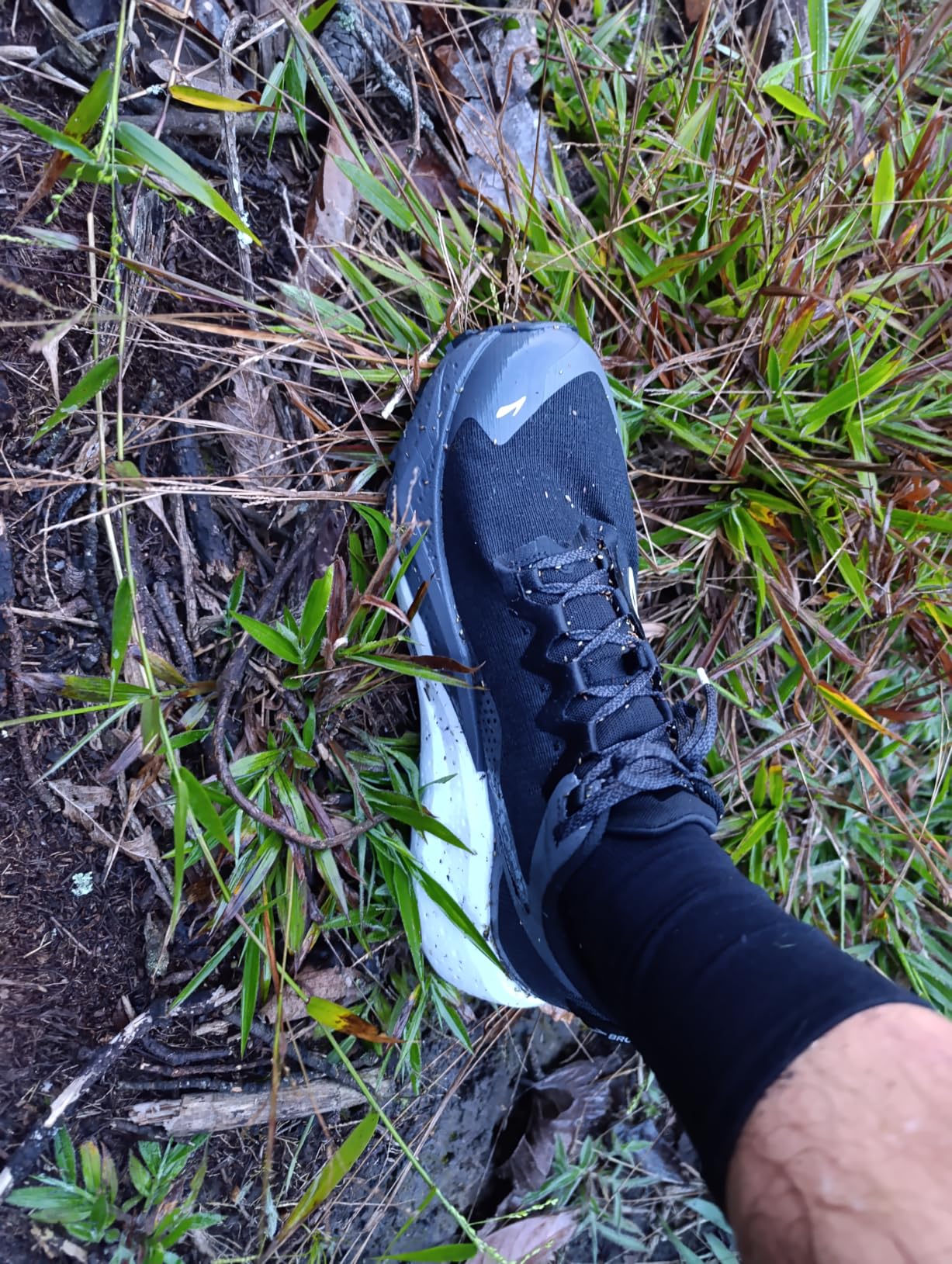
The upper uses air mesh with breathable TPEE, a material that resists scratching and snagging. On a trail lined with blackberry canes and sharp branches, that is a small detail that protects a weak point in every shoe. The product is also certified carbon neutral, which matters to more buyers than it used to.
At 4.3 stars with 652 reviews it sits near the lower end of our ratings, though 74 percent of buyers still handed over five stars. Those complaints lean toward weight rather than failure.
Protection you can feel
Stack height is the quiet hero of this shoe. More foam underfoot means a landing on a rock does not travel all the way to your joints, and for someone whose tendons and shins are unaccustomed to uneven ground, that cushioning buys you the extra months you need to build strength.
The sidewalls are the part you will notice on a technical descent. They stop your foot sliding off the edge of the platform, which is how most off-trail ankle rolls actually happen.
When the protection becomes the problem
When you want speed. A high stack and a heavy build are poor partners with technical single-track, where quick foot placement and ground feel are the whole game. The shoe is built for maximum-cushion distance and hiking work, not for running fast over tricky ground.
Sizing is the other catch. It has a smaller size run than the other picks here and limited wide options, so if you have wide feet, the Saucony Excursion TR15 or the Altra Lone Peak 9 is a safer bet.
9. Brooks Cascadia 19 – Best for Long Easy Days
Brooks Men’s Cascadia 19 Mountain Trail Running Shoe – Black/Black/Ebony – 11 Medium
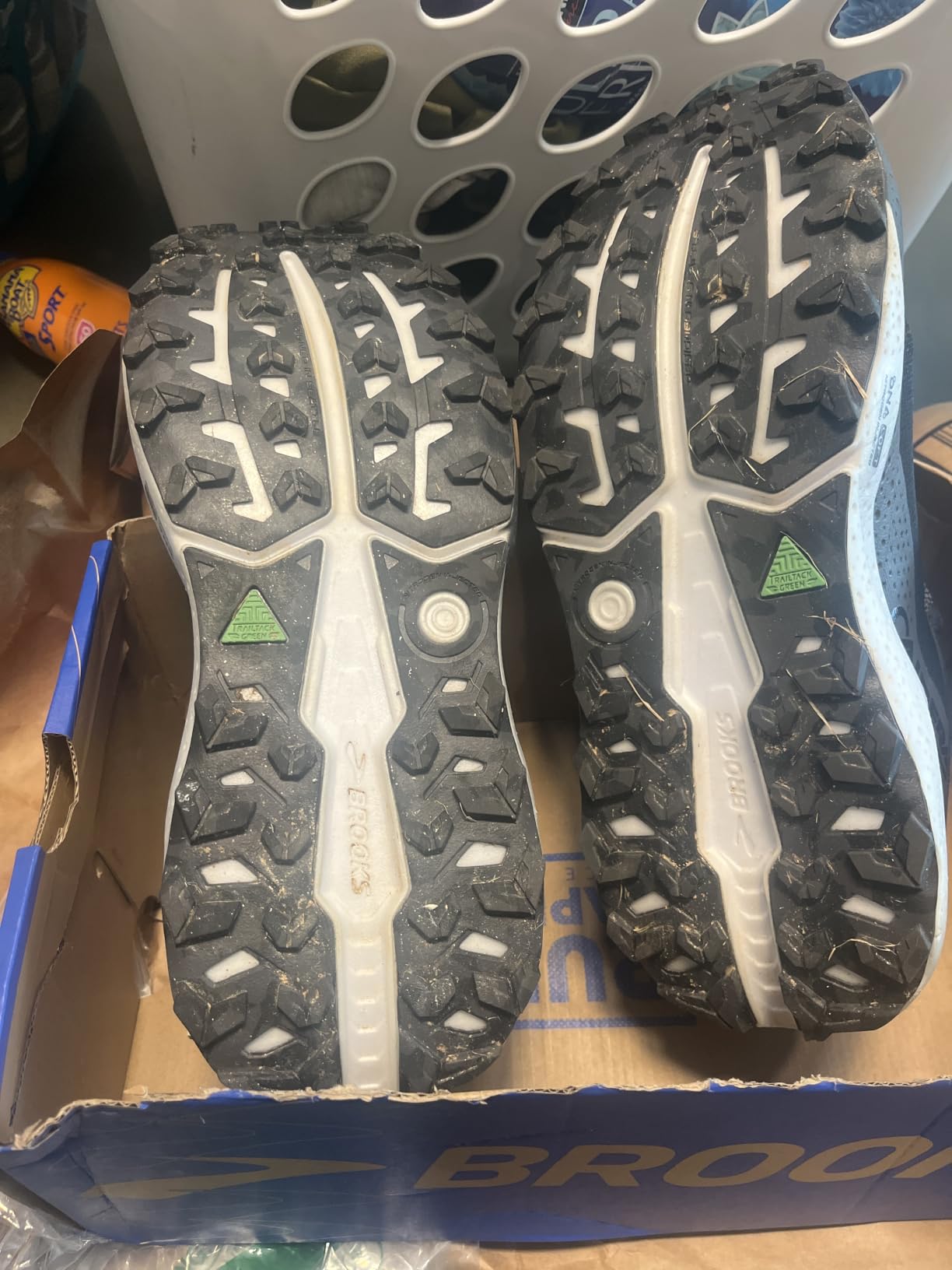
TrailTack Green outsole with recycled content
Ballistic Rock Shield
DNA LOFT v3 cushioning
Pros
- Grippy TrailTack Green rubber on wet and dry uneven ground
- Reinforced toe cap and mudguard for debris protection
- Wider fit and larger toe box than earlier Cascadia models
- Good choice for mountain hiking as well as running
- Carbon neutral certified
Cons
- Heavier than lighter trail shoes
- Some heel steppers feel the foot sinking into the midsole
The Cascadia 19 came out in February 2025 and sits at number 15 in men’s trail running shoes with 431 reviews at 4.5 stars and 76 percent five-star ratings. It is the shoe for the long, unhurried trail day, the six-hour hike-run and the weekend when you want your feet to still feel good on Monday.
The TrailTack Green outsole is made from 25 percent recycled content and grips uneven ground in both dry and wet conditions. Underneath, nitrogen-infused DNA LOFT v3 cushioning is placed in both the heel and forefoot for a soft, responsive ride, which is what makes long days possible without the shoe feeling like a plank.
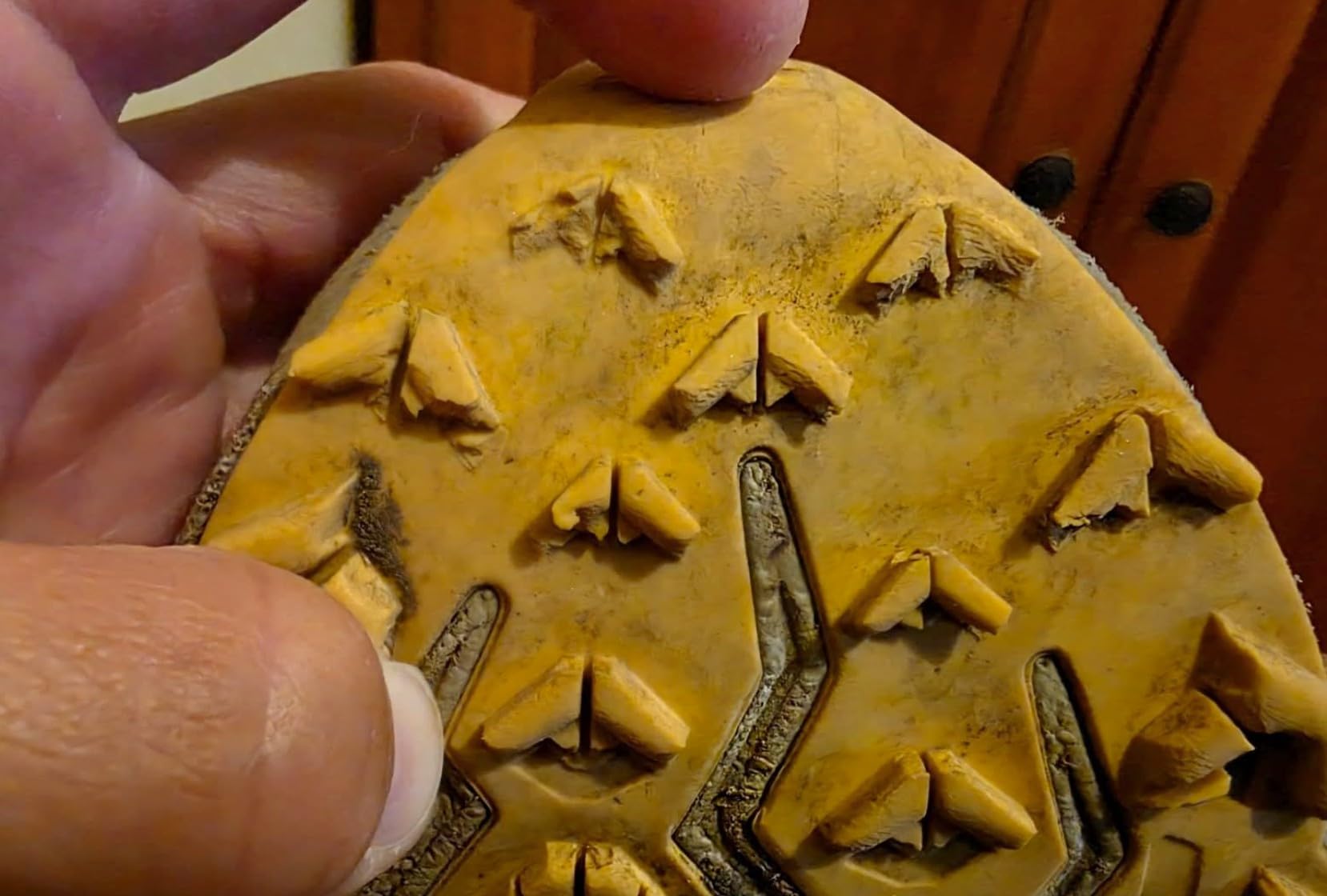
Two details stand out for beginners. The reinforced toe cap and mudguard add real upper durability where trail shoes usually fail first, and the fit is wider with a larger toe box than the Cascadia 12, which owners consistently call a genuine upgrade. The Trail Adapt System with a flexible articulated Ballistic Rock Shield steadies the ride on technical ground.
Owners describe it as a cushioned daily trail trainer rather than a race shoe, and plenty of them use it as a hiking boot on multi-day walks.
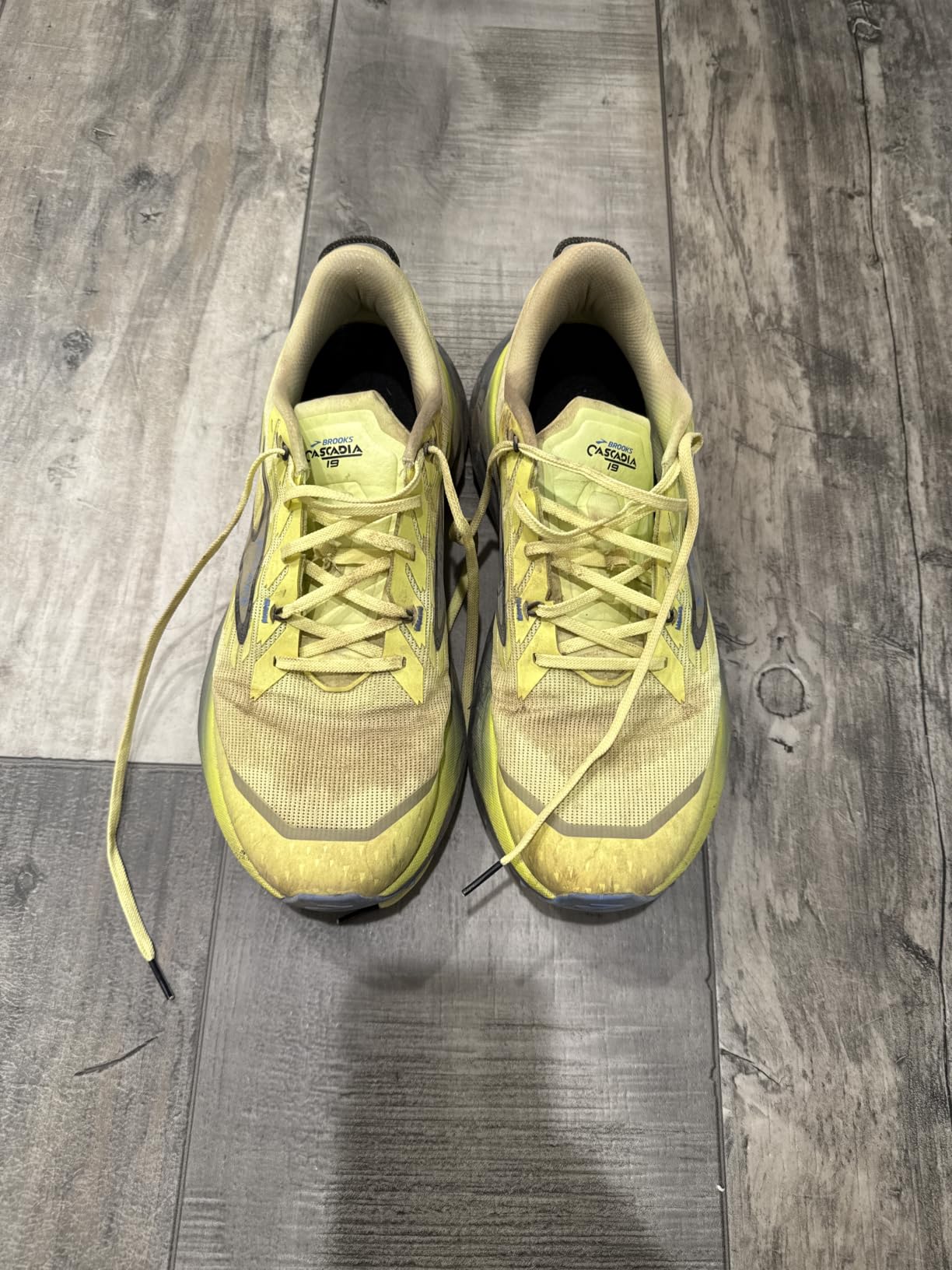
What long-day mileage demands
Durability and a fit that does not compress. Over a six-hour day your foot swells, and a narrow forefoot that felt fine at mile one is a problem by mile forty. The wider fit and larger toe box here address the single most common complaint we saw about older trail shoes.
The toe cap and mudguard mean debris stops at the shoe rather than in your foot. On an unfamiliar trail, that is a meaningful safety margin for a beginner who is still learning to read ground.
Where it is the wrong tool
Speed work. This is one of the heavier-feeling shoes here, closer to a hiking shoe than a running shoe, and a few heel strikers report that their foot sinks slightly into the midsole on uneven ground and costs them some control on technical descents.
It is a trail shoe first. If half your week is on pavement, pair it with a lighter road trainer rather than trying to make this do both jobs well.
10. Topo Athletic Ultraventure 4 – Best for Lightweight Comfort
Topo Athletic Women’s Ultraventure 4 Comfortable Cushioned Durable 5MM Drop Trail Running Shoes, Athletic Shoes for Trail Running, Black/Lime, Size 10W
35 by 30 mm ZipFoam platform
5 mm heel-to-toe drop
8.3 oz weight
Pros
- Light at 8.3 oz with no break-in required
- 5 mm drop keeps the platform stable and balanced
- Generous wide toe box suits wide feet and high arches
- Works with orthotic inserts due to a secure heel cup
Cons
- Upper materials and heel lining can fray within a few months
- Outsole durability is a recurring complaint among heavier runners
The Ultraventure 4 is the only shoe here with published full geometry, and that turns out to matter. It sits on a 35 by 30 mm platform with a 25 mm heel and 20 mm ball of ZipFoam midsole, a 5 mm rubber outsole and a 5 mm footbed, and weighs 8.3 oz in a size 7. It also ranks number 15 in women’s trail running shoes with 375 reviews.
A 5 mm drop is the sweet spot most beginners should aim for. It is low enough to encourage a natural foot position but high enough that your calves are not asked to absorb the whole change on day one. New Balance Fresh Foam X on one side, 8.3 oz on the other, and a wide toe box on both ends.
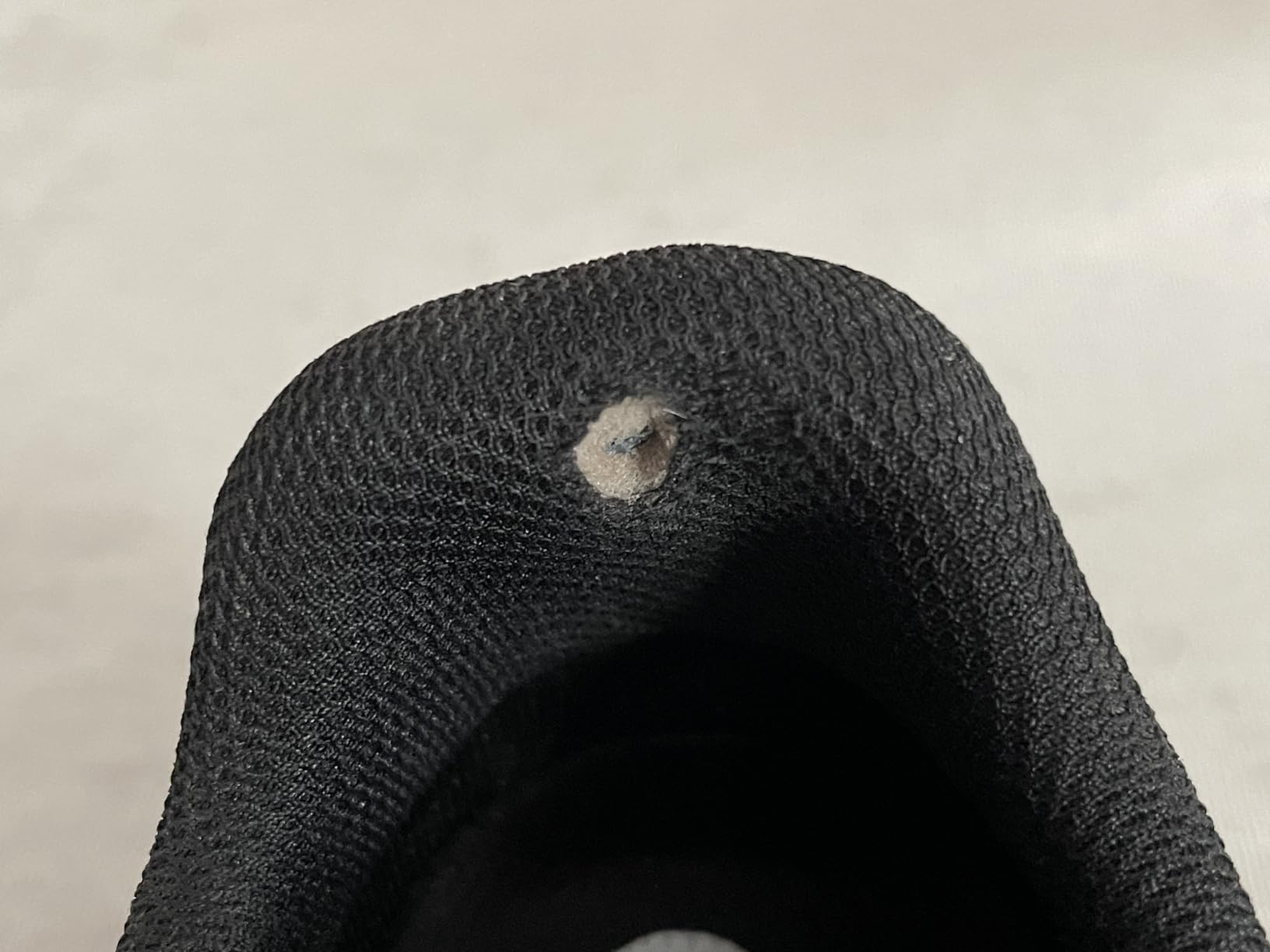
The wide toe box suits wide feet, bunions and high arches, and the Vibram XS Trek EVO outsole gives multi-surface traction that moves easily from trail to road. The deep, secure heel cup also means it accepts orthotic inserts, which is unusual and useful for anyone who needs them.
Owners mention no break-in required, which for a first-time trail runner buying a week before a race is worth a lot.
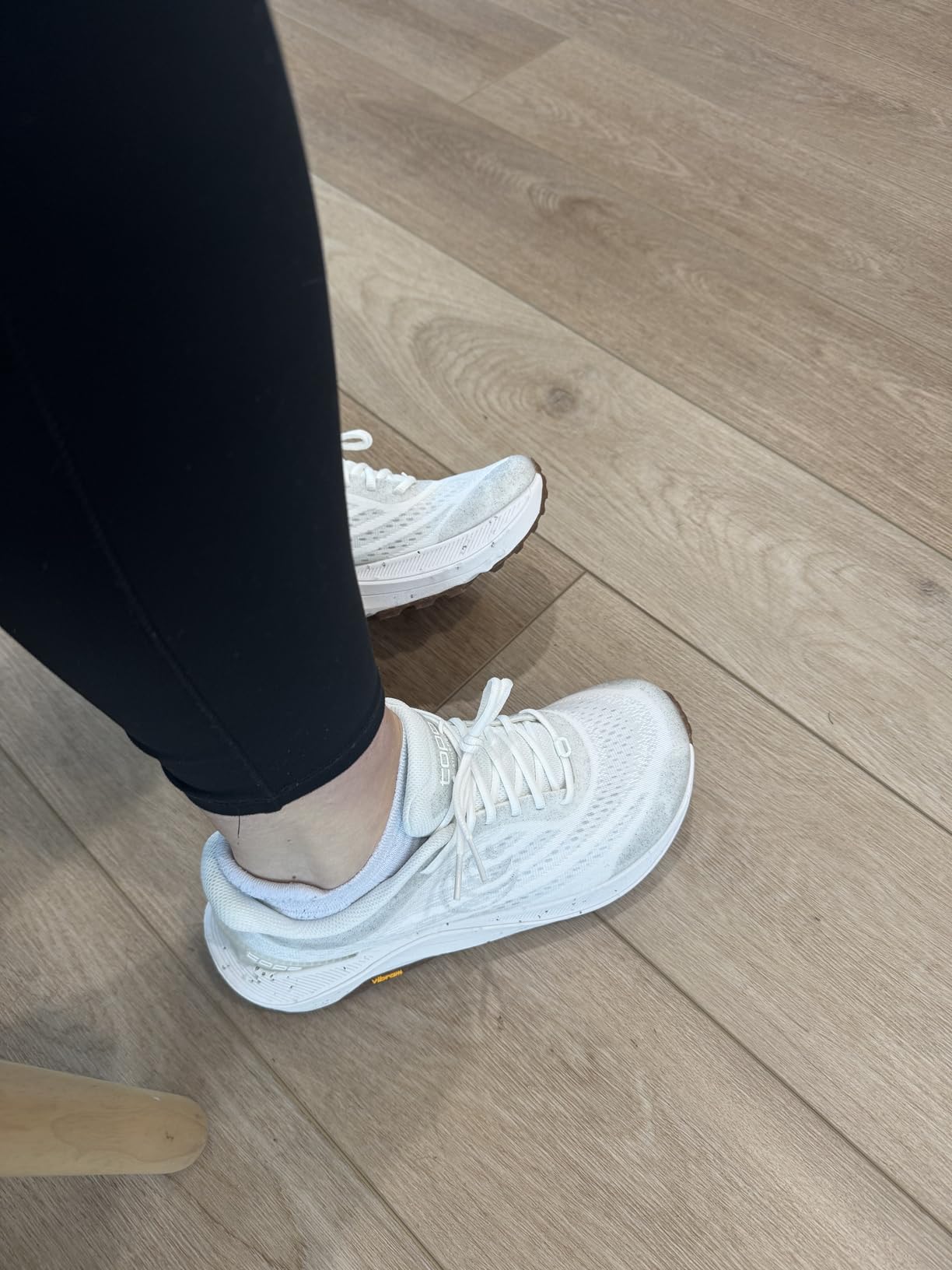
Why 8.3 oz matters in month one
Lightweight shoes feel different before they feel better. A lighter shoe is easier to lift on an uphill and much easier to control on a downhill, and for a beginner whose quads and calves are still building, that translates into better technique rather than just faster times.
Responsive cushioning without max-stack bulk is the other appeal. You get foam underfoot without the shoe feeling like it is tipping you forward, which some runners dislike in very high stacks.
The durability catch, and who to skip it for
This is the lowest-rated shoe here at 4.2 stars, with 66 percent five-star ratings and a 2-star share of 7 percent. The complaints are consistent: the upper materials can fray and the heel lining can develop holes within a few months, and heavier runners report outsole wear sooner.
If you run a lot of miles or weigh more, spend up and go for the Altra Lone Peak 9 or the Brooks Cascadia 19 instead. If you run 10 to 20 miles a week on mixed trail, the Ultraventure will outlast the novelty.
How to Start Trail Running as a Beginner in 8 Weeks
Because the head term and the underlying question are both about how to start, it is worth answering directly. Most beginners do not get hurt because they bought the wrong shoe. They get hurt because they change three things at once: surface, geometry and intensity. Treat the transition like any other training block.
Can you trail run in your road shoes? On a dry, wide gravel path, yes, and r/AskRunningShoeGeeks is full of people who do exactly that. The moment the ground turns soft, rooty or rocky, the lugs matter, so buy trail shoes before that day rather than after it.
Weeks 1 to 2: keep the road, change the mindset. Stay on your current road shoes and current distances. Walk two or three routes near home and learn which ones are packed dirt, which are gravel, and which are technical. This reconnaissance is the step everyone skips.
Weeks 3 to 4: short trail runs, 30 to 45 minutes maximum. Put the new shoes on for the easy days only. Choose a wide, flat path and hold conversation pace. The goal is adaptation, not fitness.
Week 5: introduce hills and descents slowly. Add gentle rolling terrain. Descents are where trail running actually injures beginners, so make most of your effort uphill where the surface helps you.
Weeks 6 to 7: one longer effort. A single 75 to 90 minute trail run, still at easy pace. Keep a road backup ten minutes away in case you want out.
Week 8: start your first race. Most beginners should enter a 5K or 10K, not an ultra. A short organized race gives you a finish-line reason to be out there before the terrain gets intimidating.
Watch your calves for a week after the shoe change. If they are sore for three days rather than one, your heel-to-toe drop dropped too far and too fast. Step back up a step in the sequence rather than pushing through it.
How to Choose Trail Running Shoes: 7 Specs That Matter
Spec sheets look intimidating, but a beginner only needs seven numbers. Here is what each one actually changes about your first season.
1. Heel-to-toe drop
Drop is the height difference between your heel and forefoot, and it is the spec most likely to injure you if you get it wrong. Road shoes often run 8 to 12 mm. Dropping to zero in week one moves the load onto your calves and Achilles, which is exactly the soreness beginners report.
Aim for 4 to 8 mm if you are new, and change no more than about 2 mm at a time. Zero drop is a legitimate long-term preference, not a first-shoe choice. The Altra Lone Peak 9 is the only zero-drop pick here for that reason.
2. Stack height
Stack height is simply how much foam sits between your foot and the ground, measured in millimetres. The Topo Ultraventure 4 publishes 35 mm at the heel and 30 mm at the ball, and the Brooks Caldera 8 Ultra is a high-stack shoe by design.
Higher stack cushions more, which protects joints on rocky ground. Lower stack gives you ground feel, which helps on technical trail. For a beginner, mid to high is safer.
3. Lug depth
Lugs are the rubber shapes on the outsole. As a rough guide, 3 to 4 mm handles hardpack and gravel, 5 to 6 mm handles loose dirt and mud, and deeper lugs grip soft ground and deep mud. Beginners on a paved rail trail need far less grip than beginners on wet clay.
4. Weight
Mesh uppers and a 8.3 oz build are the light options here, while the Brooks models are the heavy ones. A lighter shoe is easier to control on descents, which is where new runners lose time and sometimes their footing.
5. Toe box and fit
This matters more than any other spec, and no number can tell you. Your toes should be able to spread with room to spare. A tight forefoot on a first trail run is the highest-probability source of blisters, and no amount of cushioning compensates for it.
6. Rock protection and toe bumper
Look for a rock plate, a reinforced toe cap, a mudguard or some combination. The Altra StoneGuard, the Brooks Ballistic Rock Shield and the New Balance Toe Protect are all versions of this. If your trail has loose rock, do not skip it.
7. Waterproof or not
None of the ten picks here uses a waterproof membrane, and that is deliberate for beginners. The next section explains the reasoning.
Sizing, Toe Box and the Blister Question
Fit is the number one anxiety in beginner trail running forums, and it deserves more space than any spec. The pattern across r/trailrunning and r/hiking is remarkably consistent: the best shoe is the one that fits your foot, and width beats brand reputation every time.
Three brand behaviours matter here. ASICS tends to run small, so the Gel-Venture 11 needs a half size up if you are between sizes. New Balance offers genuine extra-wide options on the Tektrel V1 Suede. Altra builds every shoe on a wide FootShape platform, so the Lone Peak 9 will feel roomy even if you are used to narrow footwear.
Test in the afternoon, after a run, with the socks you would actually wear. You want roughly a thumb of space in front of your longest toe. If a shoe fails that test standing up, it will fail on a descent, and no amount of lacing will fix it.
A useful piece of first-timer equipment: carry a spare pair of socks. Blisters on a first trail run are far more often a sock friction problem than a shoe problem, and changing socks at a trailhead costs you two minutes.
Waterproof or Not: Wet Feet Versus a Membrane
Waterproof trail shoes solve a real problem, and they create two. The membrane keeps puddles and sustained rain out, but it traps the water your own feet produce, adds weight, and takes far longer to dry. On a warm day you would rather have airflow, and on a cold day you would rather have dry socks.
My advice for a first pair is to skip the membrane. Every shoe in this roundup is a breathable, non-waterproof build, and that choice suits the conditions a beginner actually runs in, which are usually short, moderately dry runs close to home.
Two habits make up most of the difference. Run a cotton-free sock, because cotton stays wet. And when the trail is genuinely soaking, shorten the run rather than buying shoes that will still be wet at mile eight.
If you do want a membrane build, our guide to the best trail running shoes for rugged terrain covers the wider category, including options made for real weather.
Frequently Asked Questions
What are some good trail running shoes for beginners?
The best trail running shoes for beginners are forgiving models with a grippy lugged outsole, a wide toe box and moderate cushioning. Good first choices include the Altra Lone Peak 9 for its roomy natural platform, the Saucony Cohesion 14 for dependable all-round value, and the ASICS Gel-Venture 11 for its plush cushioning and extra-wide sizing. Pick a heel-to-toe drop close to your road shoes and change it gradually.
How do I start trail running as a beginner?
Start on wide, flat gravel or packed dirt close to home, keep your first runs to 30 to 45 minutes at easy pace, and keep the effort conversational. Add hills and descents in week five, one longer 75 to 90 minute effort in week six or seven, and enter a short 5K or 10K in week eight. Keep a road route nearby as a backup and expect calf soreness for several days after the drop changes.
Can I trail run in regular running shoes?
On a dry, wide gravel path, yes, and many experienced runners do exactly that. Road shoe outsoles are flat and smooth, so once the ground turns to mud, roots, loose rock or anything uneven, you will slide where a lugged trail outsole would bite. Many beginners trail run their first few routes in road shoes, then buy trail shoes before the terrain gets technical.
What are the best shoes for beginners who want to start running?
Beginners need a comfortable, durable shoe with a stable platform and a wide toe box, more than they need anything lightweight or fast. Cushioning and a moderate heel-to-toe drop of 4 to 8 mm protect joints and calves while your mileage and strength build. If you are not sure whether you need motion control, read our guide to the best running shoes for overpronation before you buy.
Final Verdict
The Altra Lone Peak 9 is our pick for the best trail running shoes for beginners overall. It shares the highest average rating in this group at 4.6 stars across 1,207 reviews, has the roomiest forefoot, adds real underfoot rock protection and carries an American Podiatric Medical Association Seal of Acceptance. The one adjustment is the zero drop, which you should ease into over a few weeks rather than overnight.
On a tighter budget, the Saucony Cohesion 14 is the value pick with almost 5,000 reviews behind it, and the Saucony Excursion TR15 is the safest choice if you have wide feet and no idea yet what shape you need. Whatever you pick, buy it before the ground gets technical, wear it on easy days first, and replace it when the midsole stops recovering rather than when the upper looks tired.
One last piece of kit before you head out: a watch with a decent altimeter and mapping turns most trail mishaps into non-events. Our picks for the best GPS watches for trail running cover that, and they are worth more to a first season than any shoe upgrade you could make.