
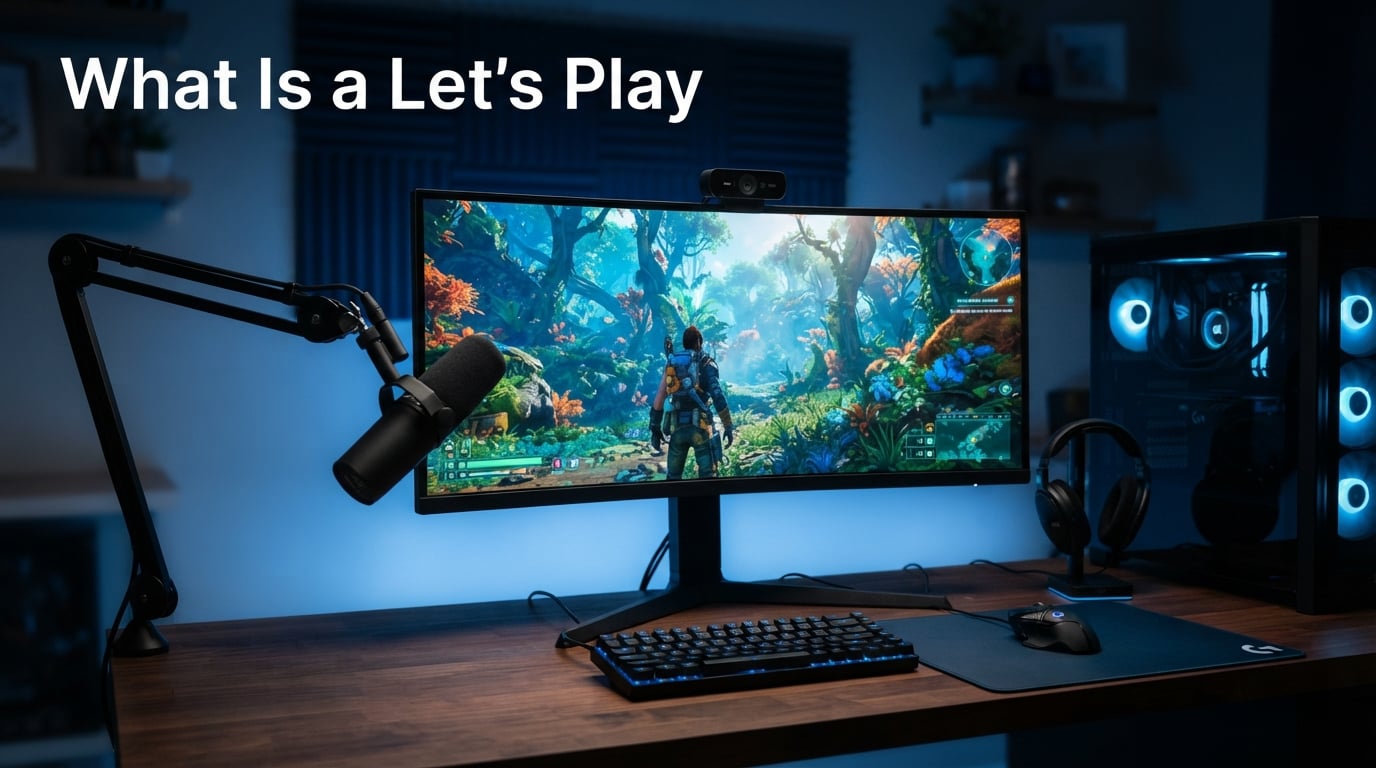
If you’ve spent any time on YouTube or Twitch, you’ve probably seen the term “Let’s Play” thrown around. It sounds simple, but “What Is a Let’s Play” is actually one of the most common beginner questions in gaming content. I’ve been following this format for years and helping new creators start their own channels, so let me walk you through everything you need to know.
A Let’s Play (often shortened to LP) is a video or series of videos that records someone playing through a video game, usually with commentary, reactions, or personality layered on top. The point isn’t just to show the game; it’s to entertain, connect, and share the experience of playing it. In 2026, this format is still one of the most-watched genres on gaming platforms.
Quick note before we dive in: there’s also a romance webcomic called Let’s Play by Mongie. This guide is about the gaming/video format, not the webtoon. If your search brought you here looking for the comic, you’ll want a different resource.
Table of Contents
What Is a Let’s Play? Breaking Down the Basics
A Let’s Play is a video or series of videos documenting the playthrough of a video game, almost always featuring commentary from the person playing. The commentary can be live, recorded after the fact, written as on-screen text, or in some cases just a face cam capturing the player’s reactions. Wikipedia’s featured-snippet definition lands it cleanly: “a video (or screenshots accompanied by text) documenting the playthrough of a video game, often including commentary and (in some cases) a camera view of the gamer’s face.”
At its core, a Let’s Play blends three ingredients: the game itself, the player’s personality, and the audience’s entertainment. Drop any one of those and you end up with something that isn’t really a Let’s Play anymore. A video with no commentary is just gameplay footage. A video with no game is a vlog. The magic is in the mix.
The format started as a hobby and turned into a career path for thousands of creators. Some Let’s Players have audiences in the millions and full production teams. Others stream to a handful of regulars on a Saturday night. Both qualify as Let’s Plays.
Key Characteristics That Define a Let’s Play
Not every gaming video is a Let’s Play. Here’s what separates one from the rest of the gaming video ecosystem:
- The creator is playing the game themselves. Curated highlight reels or “best moments” compilations aren’t Let’s Plays. The player is at the controls, even if their skill level varies.
- Commentary is present in some form. This can be live voice, post-recorded voiceover, text captions, or simply a face cam showing reactions. Silence doesn’t disqualify it, but personality usually makes the difference.
- The video is focused on a playthrough. The goal is to experience the game from start to finish (or close to it), not to speedrun, complete a challenge, or review it like a critic.
- It’s edited (at least a little). Most Let’s Plays trim out the slow parts, cut repetitive deaths, and arrange moments for better pacing. Even lightly edited raw gameplay still counts.
- The creator’s personality is part of the appeal. People come back for the player as much as the game. Funny commentary, hot takes, and reactions are part of the product.
If a video has those five ingredients, you’re watching a Let’s Play. If it’s missing two or more, it probably belongs in a different category like a review, a walkthrough, or a tutorial.
Let’s Play vs Walkthrough vs Playthrough: What’s the Difference?
This is one of the most asked questions about the format, and the confusion is fair, because the terms get used interchangeably all the time. Here’s how I separate them:
A walkthrough is a guide. It’s designed to help you finish a game, solve puzzles, or find collectibles. Walkthroughs are usually text-based or video guides optimized for utility. Personality takes a back seat to information.
A playthrough is broader. It just means playing through a game from start to finish, with or without commentary. A playthrough can be silent, edited for highlights, or even scripted. It’s the most generic of the three terms.
A Let’s Play is a specific kind of playthrough where the entertainment, commentary, and creator personality are the main point. Walkthroughs inform. Playthroughs document. Let’s Plays perform.
| Format | Main Purpose | Commentary | Entertainment Focus |
|---|---|---|---|
| Walkthrough | Help you finish the game | Minimal / instructional | Low |
| Playthrough | Document gameplay | Optional | Medium |
| Let’s Play | Entertain and engage | Essential | High |
Think of it this way: if you’re stuck in a boss fight and search “boss fight walkthrough,” you want a walkthrough. If you want to watch someone react to that boss fight for the first time, you’re looking for a Let’s Play.
Commentary Styles: Live vs Post-Recorded
The two main commentary approaches are live and post-recorded, and they create very different viewer experiences.
Live commentary means the player talks while playing. This is the default for Twitch streamers and most YouTube Let’s Players. The appeal is authenticity. You get genuine reactions, real-time decision-making, and the feeling of hanging out with someone while they play. The downside is that live commentary can ramble, miss quiet story moments, or fall silent during intense scenes.
Post-recorded commentary (sometimes called post-commentary) means the player records the gameplay first, then adds voiceover later while watching it back. This style is common in heavily edited YouTube series. Post-commentary lets creators tighten jokes, time reactions perfectly, and avoid long stretches of silence. The trade-off is that it can feel a bit less raw.
There’s also text commentary, where captions or speech bubbles carry the personality instead of voice. This style is older and more common in screenshot-based Let’s Plays from the late 2000s, but it still shows up in niche communities. And finally, face cam only videos rely on reactions without a voice track, which works surprisingly well for horror or story-heavy games.
The “right” style depends on the creator, the game, and the audience. Most successful Let’s Players pick one as their default and stick with it.
Where You Find Let’s Plays: YouTube, Twitch, and Beyond
YouTube is still the home base for Let’s Plays, especially longer series and edited episodes. It’s where most evergreen searchable content lives, and it’s the platform most people associate with the format.
Twitch is where live Let’s Plays happen. Twitch streamers play games in real time and interact with chat as they go. The VOD (video on demand) archive lets viewers catch up later, but the live element is the main draw.
Other platforms have joined in. TikTok and YouTube Shorts host short-form Let’s Play clips. Facebook Gaming streams a smaller live audience. Some creators publish full episodes on their own sites or on Rumble. The format is portable, and creators distribute wherever their audience lives.
A Brief History of the Let’s Play Format
The Let’s Play format traces back to 2006 and 2007, with early examples appearing on forums like Something Awful. The original creators used screenshots rather than video because most home internet connections couldn’t handle large video files. Players would post image-heavy threads documenting their run through a game, often with witty captions and commentary.
Around 2007 to 2010, video capture became more accessible and broadband improved. YouTube launched in 2005 and quickly became the natural home for the format. By 2010 to 2012, popular creators like PewDiePie, Markiplier, and Game Grumps had turned Let’s Playing into a full-time career, and the term entered the mainstream gaming vocabulary.
The format evolved alongside streaming. Twitch launched in 2011 (originally as Justin.tv) and brought live Let’s Plays to a wider audience. Since then, the core idea hasn’t changed much, but production quality, commentary polish, and platform options have all grown. In 2026, Let’s Plays remain a major part of gaming culture, even if the creator economy around them looks very different than it did a decade ago.
Equipment You Need to Make a Let’s Play
You don’t need a Hollywood setup to start. Our team has helped new creators get going with surprisingly modest gear. Here’s the realistic baseline:
- A computer or console capable of running the game. Self-explanatory, but worth noting: consoles need a capture card, while PC games can be recorded directly with software.
- Screen capture software or a capture card. Tools like OBS Studio (free), Bandicam, or Elgato capture cards handle the recording side. OBS is the most popular starting point.
- A microphone. This matters more than most beginners realize. Clear audio beats crisp video every time. Even a budget USB mic like a Blue Snowball or Fifine K669 is a huge step up from headset audio.
- Optional: a webcam or face cam. Face cams help build a personal connection, but plenty of successful Let’s Players never show their face. It’s a stylistic choice, not a requirement.
- Basic editing software. DaVinci Resolve (free) or Adobe Premiere Pro handles the cutting. Trimming out boring parts and keeping pacing tight is the main job.
You can spend hundreds or thousands on gear, but most of that is polish. The format works on a budget.
Why Let’s Plays Are So Popular
Let’s Plays satisfy a few things at once, which is why they’ve stuck around for almost 20 years.
First, they’re entertainment. Watching someone react to a horror game, rage at a difficult boss, or discover a twist in a story is genuinely fun. The player’s personality turns familiar games into new experiences.
Second, they’re a form of game discovery. Many viewers use Let’s Plays to decide whether to buy a game. Watching 30 minutes of honest gameplay is often more useful than reading a review.
Third, they’re low-effort for the viewer. You can put on a Let’s Play in the background while you work, eat, or wind down. It’s companion content. That’s also why long, multi-hour episodes do so well.
Fourth, they’re community. Live chat, comment sections, and Discord servers turn Let’s Plays into shared experiences rather than one-way broadcasts. People come back for the community as much as for the game.
Legal and Copyright Considerations
Let’s Plays live in a tricky legal space, but it’s more navigable than it looks. Most major game publishers actively allow Let’s Play content because it markets their games. Nintendo, Sony, Microsoft, Ubisoft, and many indie publishers have public guidelines that permit monetized Let’s Plays under specific conditions.
That said, you can’t just record any game and assume you’re safe. A few rules of thumb:
- Check the publisher’s content creator policy before you start a series. Some games, especially Japanese titles, have stricter rules or require permission.
- Avoid using copyrighted music in your videos unless the game’s official soundtrack is licensed for creator use.
- Don’t claim a game as your own or imply you made it. Transformative commentary and gameplay are usually fine; passing off the game itself as original work is not.
- DMCA strikes happen, but most platforms have counter-notice processes. One strike isn’t the end of a channel.
When in doubt, focus on commentary, reactions, and analysis. The more transformative your content is, the stronger your position under fair use principles in most jurisdictions.
Tips for Starting Your Own Let’s Play
If you’re thinking about starting a channel, here’s what I’d recommend based on what I’ve seen work over the years.
- Pick a game you actually enjoy. Your enthusiasm shows. Forced content flops faster than almost anything else.
- Start small. A working mic, free recording software, and one game is enough for episode one. Upgrade gear as the channel grows.
- Be consistent. A weekly upload schedule beats irregular marathon sessions for audience growth.
- Find your voice. Imitating big creators rarely works. Your own take on a game is more interesting than someone else’s.
- Engage with your community. Reply to comments, run polls, and listen to what viewers want. The conversation is half the product.
Frequently Asked Questions
What is a let’s play on YouTube?
A Let’s Play on YouTube is a video or series of videos where a creator records themselves playing through a video game, usually with voice commentary, on-screen reactions, or a face cam. The creator edits the footage and uploads it as YouTube content for viewers to watch on demand. It’s one of the most popular gaming categories on the platform.
How long should a let’s play be?
There is no fixed length, but most successful Let’s Play episodes fall between 20 and 45 minutes. Long-form series on YouTube often run 30 to 60 minutes per episode, while Twitch streams commonly last 2 to 6 hours. The best length depends on the game, your editing style, and what your audience watches all the way through. Check your retention analytics and let that guide your pacing.
What’s the difference between a Let’s Play and a playthrough?
A playthrough is the broader term for any video that documents playing through a game from start to finish. A Let’s Play is a specific type of playthrough where the player’s commentary, personality, and entertainment value are the main focus. Every Let’s Play is a playthrough, but not every playthrough is a Let’s Play. The difference comes down to whether the creator’s voice and reactions drive the experience.
What equipment do I need for a Let’s Play?
At minimum, you need a device that can run the game, screen capture software like OBS Studio (free), and a decent microphone for clear audio. A webcam and capture card are optional but common. Most successful Let’s Players started with budget gear and upgraded over time. Audio quality matters more than video quality for audience retention.
Should I show my face in Let’s Play videos?
Showing your face is optional, not required. Many top Let’s Players use a face cam because it builds a stronger personal connection with the audience. Others have built huge audiences with voice-only or text-based commentary. If you’re camera-shy, try a few episodes with face cam and a few without, then check which videos hold viewers longer. The format works either way.
What is the legal side of Let’s Play?
Most major game publishers allow monetized Let’s Play content under their content creator policies, but the rules vary by publisher and game. Generally, you need to add transformative commentary, avoid using copyrighted music, and not claim the game as your own work. Some publishers require you to link to their store or follow specific branding guidelines. Always check a publisher’s content policy before starting a series on their game.
Are Let’s Play videos still popular?
Yes, Let’s Play videos remain one of the largest gaming content categories on YouTube and Twitch in 2026. Top creators still pull in millions of views per video, and the format continues to evolve with short-form clips on TikTok and YouTube Shorts. The audience has shifted and grown more competitive, but demand for personality-driven gaming content is as strong as it has ever been.
Final Thoughts on What Is a Let’s Play
So, what is a Let’s Play in 2026? It’s a creator playing a video game on camera while adding the personality, commentary, and reactions that turn raw gameplay into entertainment. The format has been around since 2006, has shifted from text-heavy screenshot posts to polished YouTube and Twitch productions, and shows no signs of slowing down.
If you’re a viewer, hopefully this clears up what you’ve been watching all these years. If you’re thinking about starting your own channel, the next step is simple: pick a game, hit record, and find your voice. The rest is just consistency and time.
Either way, now you can answer the question the next time someone asks you, “What Is a Let’s Play, anyway?”