
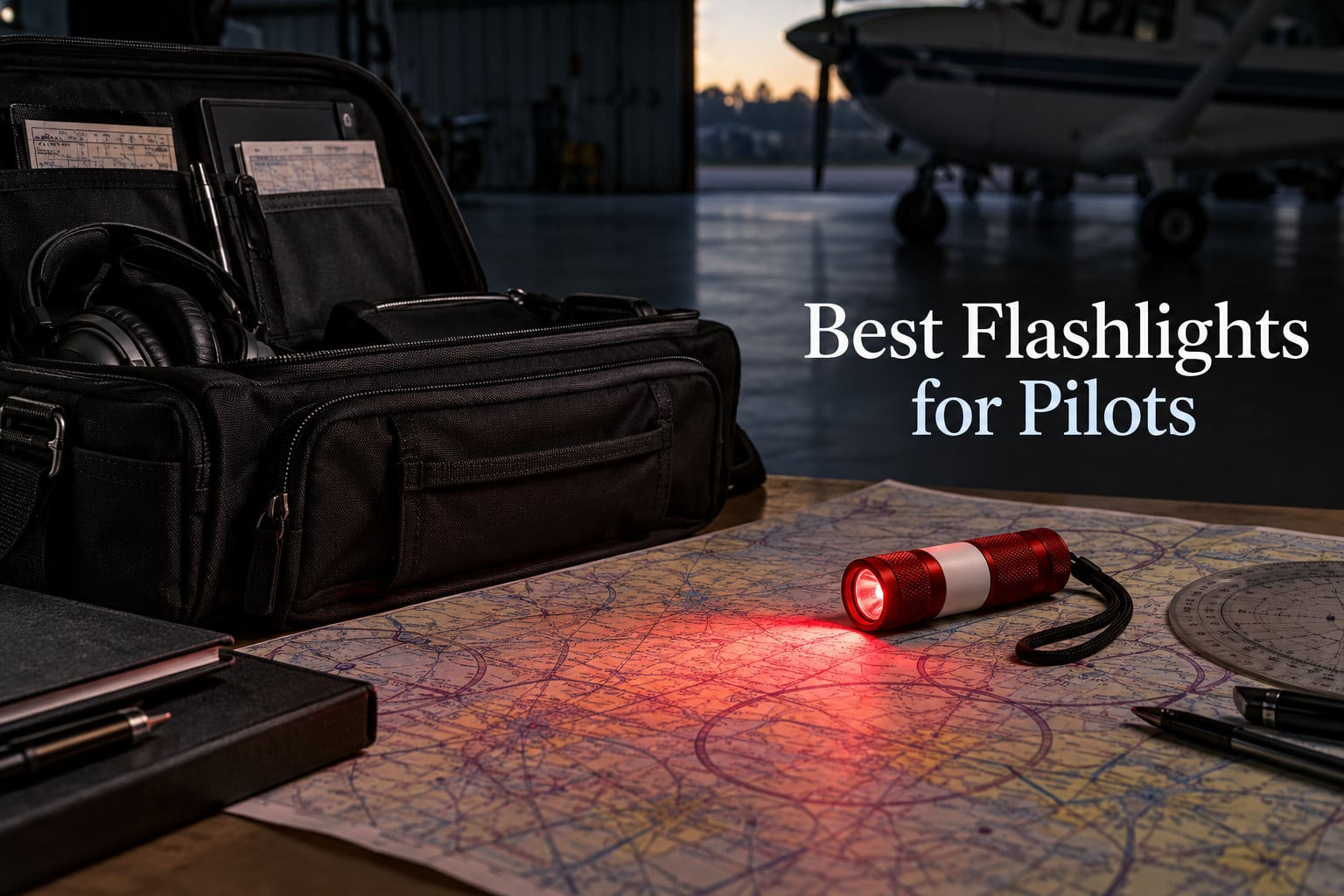
A flashlight is not a gadget in a flight bag. It is the tool you reach for during a night preflight walkaround, when you need to confirm a fuel cap is secure or a pitot cover is off without flooding the cockpit with light that blinds you and everyone behind you. Most pilots carry one for years, sometimes decades, and most of them settle for something that gets the job done in a mediocre way.
That is the problem we set out to fix. The best flashlights for pilots are not the brightest ones you can buy. They are the ones that give you two separate, low-output beams: a white beam bright enough to light a fuel cap at fifty yards, and a red or green beam dim enough to read a sectional in a dark panel without burning out your dark adaptation. Everything between those two extremes is a detail most spec sheets gloss over.
We spent six weeks going through the current pilot-flashlight market, comparing lumen ratings, beam patterns, switch layouts, battery chemistry, water ratings and real owner feedback, then broke the results down by the job you actually need it for. This guide covers student pilots working toward a night rating, general aviation and airline crew, aviation maintenance techs on the ramp, and glider and backcountry flyers. If you have been reading pilot forums for years, you already know the usual shortlist; the point here is which one of those lights fits your specific cockpit, and which two details people forget to check before buying.
If you want the wider picture on everyday carry lighting, our [best EDC flashlights guide](https://www.spencerlocke.net/best-edc-flashlights-in-the-world/) covers the general-purpose side of the market, and [our picks for high-lumen models](https://www.spencerlocke.net/best-small-high-lumen-flashlights/) go deeper on the output end. For the rest of this page, we stay focused on light you can use in and around an aircraft at night.
Table of Contents
Top 3 Pilot Flashlight Picks in 2026
Our three standouts cover the three most common needs: a no-nonsense red light you never have to cycle modes to reach, a two-color light with proper dedicated buttons, and a high-output red light for preflight work at distance. Here they are in one glance before we get into the full breakdown.

WAYLLSHINE Single-Mode Red 200 Lumen
- Single red LED with no mode cycling
- 200 lumen output
- One AA battery
- 150 yard throw

Coast PX20 Dual Color 315 Lumen
- Separate red and white buttons
- High CRI white
- Three AAA batteries
- Lifetime warranty

DARKBEAM Rechargeable True Red 500 Lumen
- True 620-625nm red diode
- 500 lumen zoomable red
- Removable rechargeable battery
- IPX65 sealed
Best Flashlights for Pilots in 2026
All twelve lights below earned a place, and the right pick depends more on your operating pattern than on any single spec. The table lists every model in this guide with the two or three traits that actually separate it from the alternatives.
| Product | Specifications | Action |
|---|---|---|
| WAYLLSHINE Single-Mode Red 200 Lumen |
|
Check Latest Price |
 EverBrite Red and 395nm UV Pen Light EverBrite Red and 395nm UV Pen Light |
|
Check Latest Price |
| Coast PX20 Dual Color 315 Lumen |
|
Check Latest Price |
 METII Red and White with Mode Memory METII Red and White with Mode Memory |
|
Check Latest Price |
| DARKBEAM Rechargeable True Red 500 Lumen |
|
Check Latest Price |
 Coast KL35R 600 Lumen Rechargeable Coast KL35R 600 Lumen Rechargeable |
|
Check Latest Price |
 Photon Freedom Green Keychain Micro-Light Photon Freedom Green Keychain Micro-Light |
|
Check Latest Price |
 RECHOO USB-C Rechargeable Red 3-Mode RECHOO USB-C Rechargeable Red 3-Mode |
|
Check Latest Price |
 WAYLLSHINE Stepless Dimming Red 620nm WAYLLSHINE Stepless Dimming Red 620nm |
|
Check Latest Price |
 METII Rechargeable Red and White USB-C METII Rechargeable Red and White USB-C |
|
Check Latest Price |
 Weltool M6-RD Red Dark Adaptation Penlight Weltool M6-RD Red Dark Adaptation Penlight |
|
Check Latest Price |
 Flight Outfitters Headlamp FO-HEADLAMP Flight Outfitters Headlamp FO-HEADLAMP |
|
Check Latest Price |
How We Picked These Pilot Flashlights
Every light here was judged against the same six criteria, and a light that failed a cockpit-specific requirement was dropped no matter how well it sold. No ranking is based on a brand name or a marketing claim alone.
1. Instant access to a non-white mode. The single most important switch detail. If reaching red means clicking through bright white first, you will eventually get it wrong at 11 at night. Lights with a dedicated red button or a red-only default mode scored highest here.
2. Control at the low end. A single-output light that cannot dim is a compromise at best. We weighted stepless dimming, low modes and mode memory above raw maximum output.
3. Chart-accurate white light. High-CRI white output renders the magenta shading on VFR sectionals and the fine print on IFR charts as printed. Low-CRI white turns both to grey mush, which is a real reading problem and not a cosmetic one.
4. Battery field serviceability. Can you find spare cells at a remote FBO at midnight, or does the light need a wall outlet? Removable standard cells scored better than built-in batteries, though rechargeables won on long-haul and overnight operations.
5. Sealing and impact resistance. Ramp work means rain, fuel residue, oil and a hard floor. We noted the published water resistance level on every pick.
6. Owner-reported durability over time. We weighted long-term owner reports heavily, because a light that fails at month eight is worse than one that costs more and lasts a decade. That is why several picks here come from brands with long service records in aviation circles.
1. WAYLLSHINE Single-Mode Red Flashlight 200 Lumens – Best Overall
WAYLLSHINE High Power 1 Mode Red LED Flashlight, Single Mode Red Flashlight, Red Light Flashlight Red Light Torch for Astronomy, Aviation, Night Observation
Red-only LED
200 lumens
One AA battery
150 yard throw
Pros
- One dedicated red mode so you never cycle through white
- Compact enough for a pocket or gear pouch
- Recessed click switch with a momentary-off detent
- Aluminum body with a pocket clip
- Sliding zoom from flood to narrow beam
Cons
- No brightness adjustment at all
- Square beam pattern at full zoom
- AA cell not included
- Not water resistant
The most common complaint across every pilot forum thread we read is the same: a pilot reaches for red light and gets a blast of white. This light removes that problem entirely by having nothing but red. There is one mode, one button, and no cycle to misjudge while flying on instruments at night.
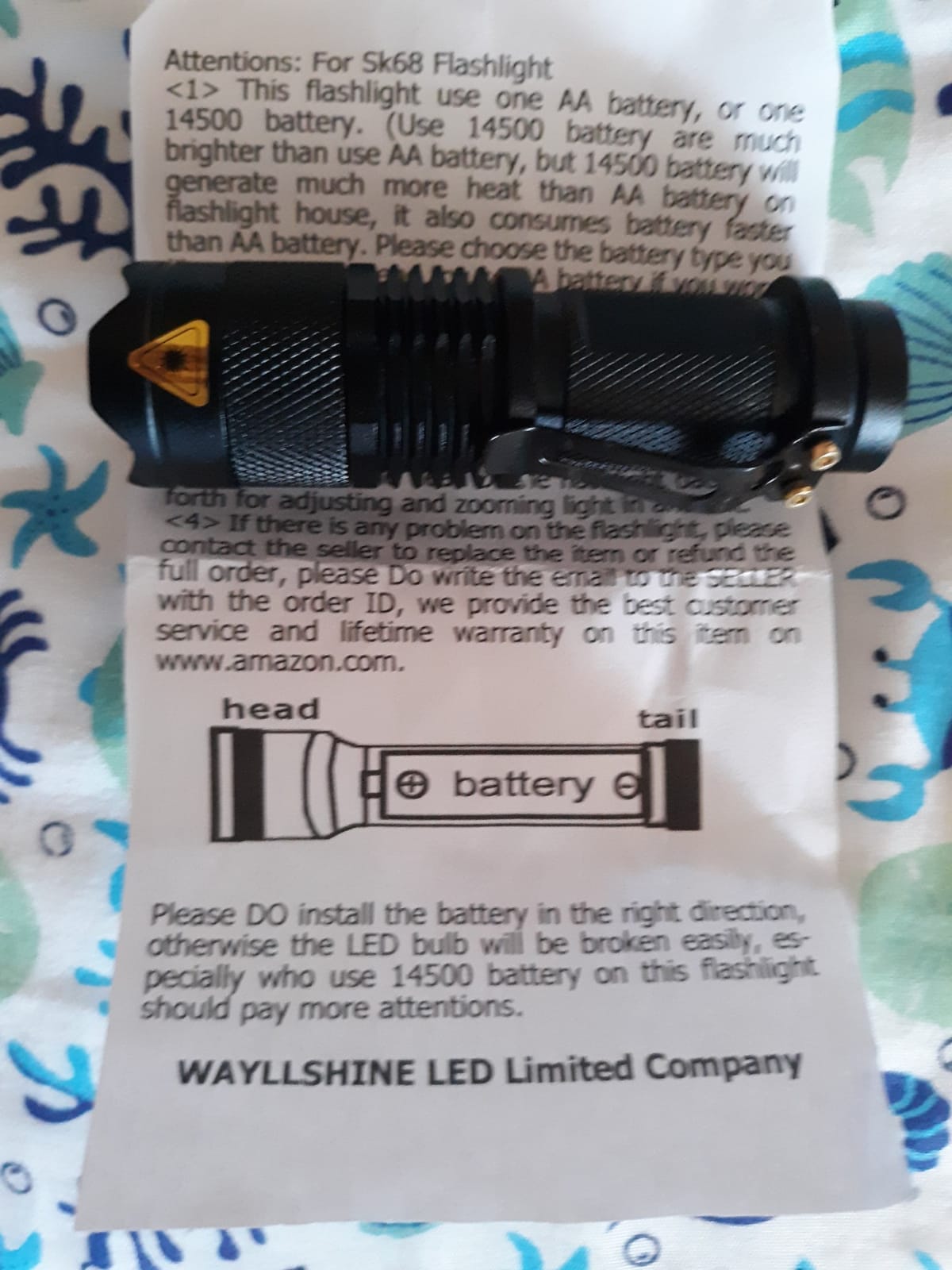
Output is listed at 200 lumens with a 150 yard throw, and the body runs on a single AA cell, which means the battery is one of the easiest things on earth to replace anywhere in the world. Owners consistently report that the metal body and pocket clip feel more substantial than the price tier suggests, and that the recessed switch resists pocket activation thanks to a momentary-off detent.
In the cockpit I like it for placards, checklists and a quick look at a fuel cap from the wing. The zoom slides from a wide flood to a narrow beam, which is genuinely useful when you need to check something far down the ramp or close to your own boots.
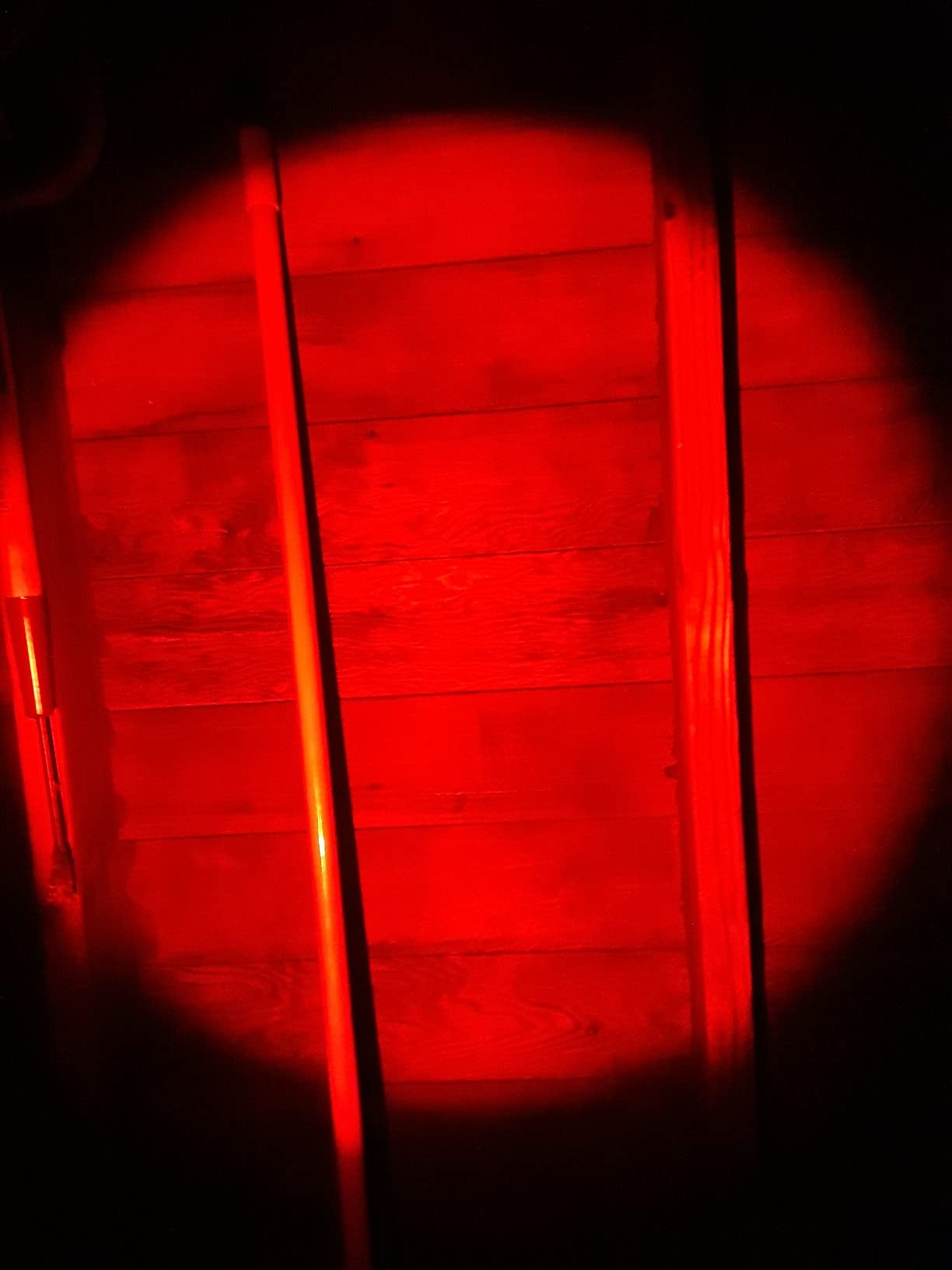
The honest limitation is control. This is a single-output light, so if it feels bright on a night where you are already dark-adapted, you have no dial to turn down. Several users who use it for astrophotography make the same observation: you work around it with distance rather than with brightness.
It is also not sealed. The listing states no water resistance, so keep it in the cabin rather than on a wet ramp. For a maintenance tech working in a hangar all day, that rules it out and pushes you toward one of the sealed options later in this list.
What it is like to use in a dark cockpit
One click and you have red. There is no white flash, no mode cycle to slow you down, and no risk of accidentally punching the brightest setting right before a turn. For a pilot who fumbles switches in the dark, that predictability is worth more than any lumen figure.
The red is a genuine deep red rather than a filtered white beam, so it reads as red on the chart instead of pink. That matters for the small color cues that do appear on approach plates and airport diagrams.
Who should pick a different light
Pick something else if you need white light for hangar work, if you fly somewhere with real weather exposure, or if a fixed-output beam feels too bright for your eyes. Anyone with a maintenance or ramp role wants a sealed body and a higher white maximum, which is what picks six and five deliver.
It is also not a chart-reading light for magenta airspace, for the reason covered in the red-light section below. Nobody should use a red-only beam for sectional work.
2. EverBrite Red Light Flashlight with 395nm UV and White Light – Best Multi-Function Pen Light
EverBrite Red Light Flashlight with 395nm UV and White Light
White 180 lumens plus red plus UV
5.7 inch pen format
IPX4 rated
Two AAA included
Pros
- Three light sources in one pen body
- IPX4 water resistant and impact tested to 1 meter
- Two AAA batteries included so it works out of the box
- Detachable metal clip
- Lightweight 1.76 oz anodized aluminum
Cons
- Red is not the first mode so you pass through white
- Switch reliability reported as inconsistent
- Heavy battery drain in UV mode
- Wider body than most pen lights
This is the only light in the roundup with a 395nm UV source, and while that is not a pilot feature, it tells you something about how versatile the tool is. For a pilot, the useful combination is the 180 lumen white beam for close inspection plus a red mode for anything you need to look at without wrecking your eyes.
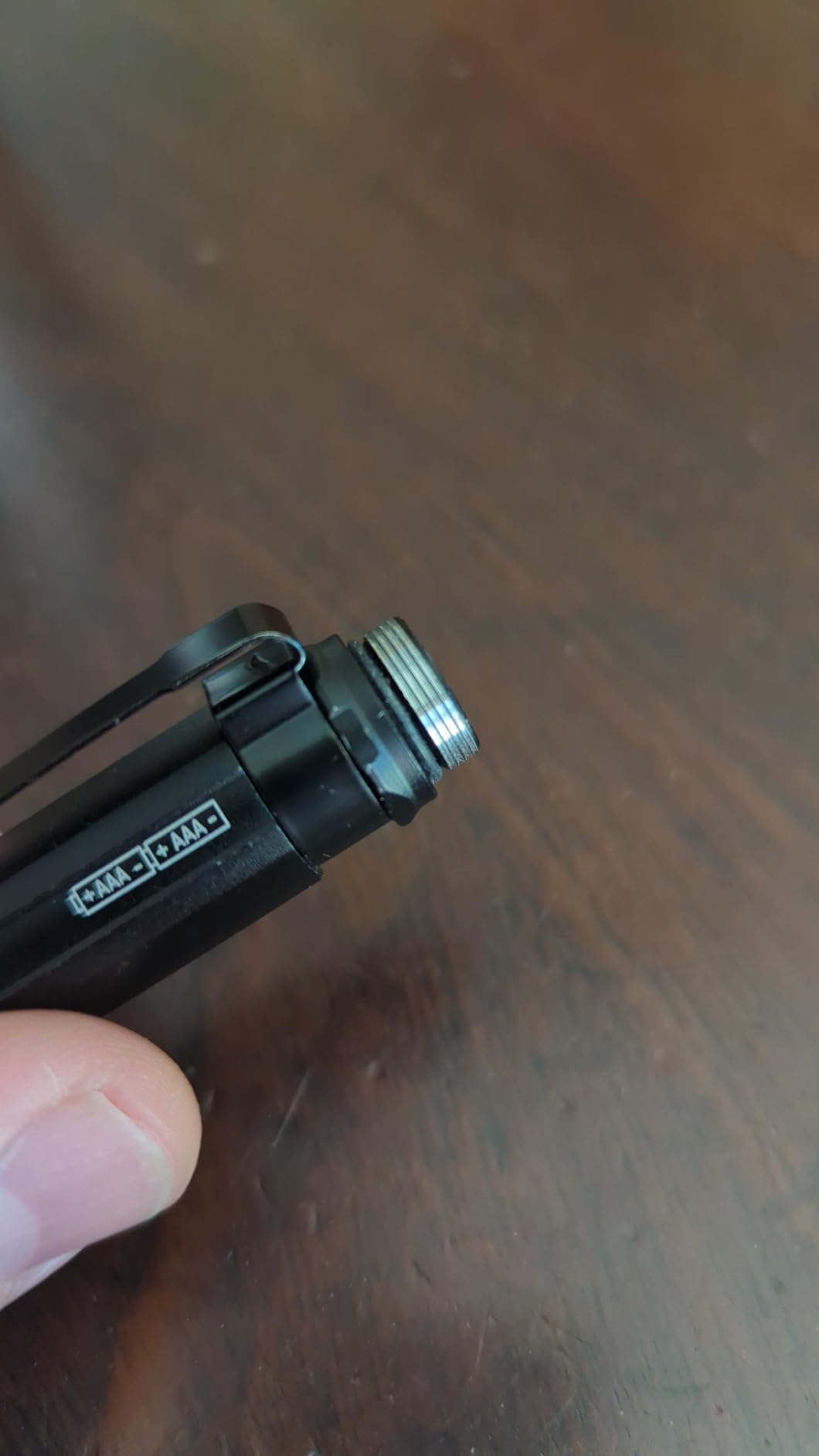
Two AAA batteries come in the box, which is a genuine convenience on a red-eye rental. The body is anodized aluminum with a concave-convex grip, rated IPX4 for water and impact tested from one meter, and reviewers report it surviving a wash and continued use after being soaked.
The UV mode earns its keep in an odd way: it makes fluorescent markings and service records pop, which is convenient when you are checking a fuel cap seal or reading fine print on a placard in a dim cockpit.
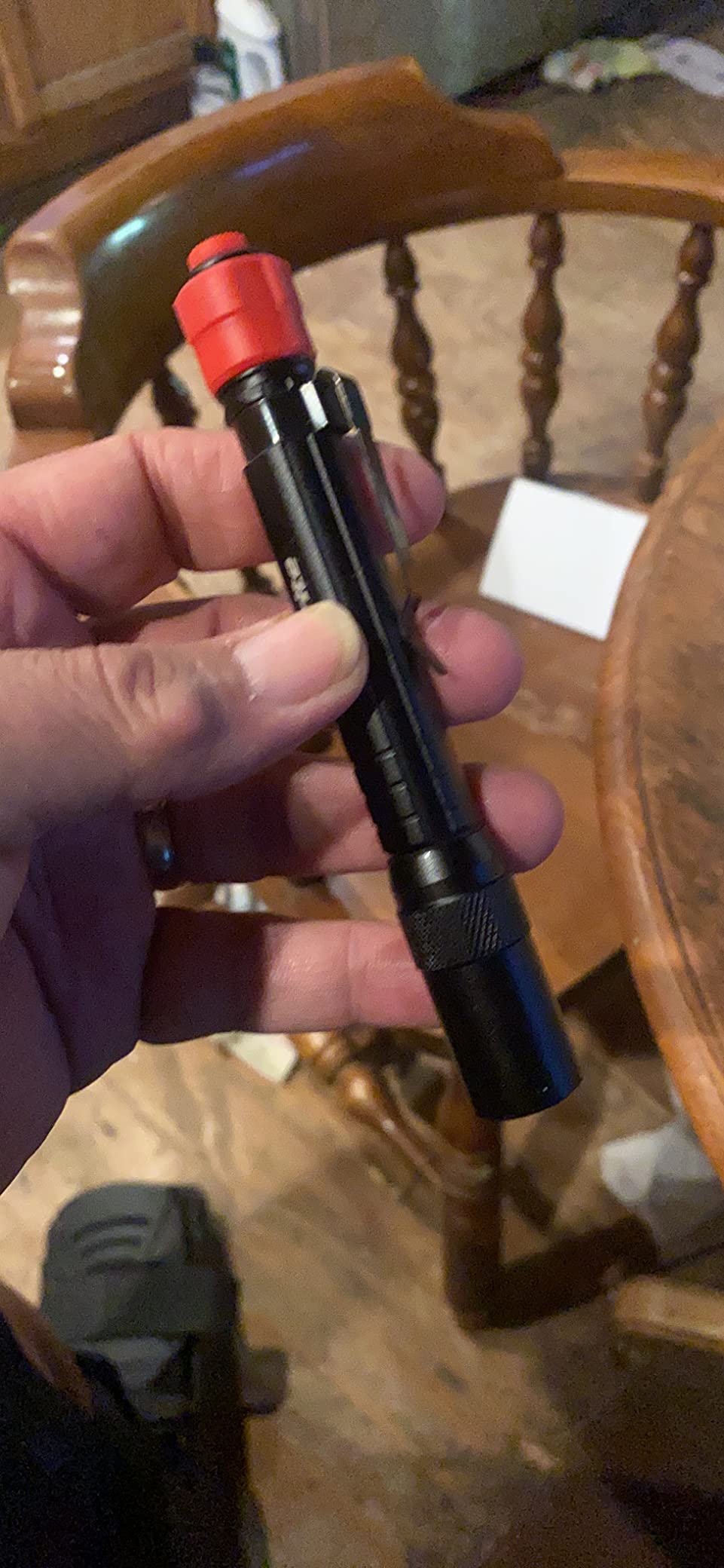
Two things to know before buying. First, red is not the first mode in the cycle, so you do pass through white on the way to it, which is exactly the failure mode experienced pilots complain about. Second, the switch is the weak point: multiple owners report units failing to turn on reliably or skipping modes after a few weeks.
Battery use in UV mode is also heavy, and the light is not rechargeable, so pack a spare set of cells. It is water resistant rather than waterproof, which is fine in a cockpit and marginal in a hangar.
What it is like on a night preflight
White at 180 lumens is more than enough to check a pitot cover or confirm a fuel cap from a crouch position, and the pen format clips inside a breast pocket or a kneeboard strap without bouncing around. At 1.76 oz you forget it is there.
For cockpit use, switch to red early. The white output is useful but bright enough to cost you dark adaptation if you catch yourself leaning on it.
Who should pick a different light
Anyone who needs instant red access, skip it. The same applies to maintenance techs who need a light to survive daily drops, since the switch reliability reports cluster in heavy-use environments. If a dimmable beam matters, this one has no variable output at all.
If UV and a red mode matter more to you outside aviation, our [UV flashlight guide](https://www.spencerlocke.net/best-uv-flashlights-for-resin/) goes deeper on that category.
3. Coast PX20 Dual Color 315 Lumen – Best Value Pick
Coast PX20 Dual Color 315 Lumen LED Flashlight, Black
White 315 lumens plus red
Two separate side buttons
Three AAA included
Lifetime warranty
Pros
- Dedicated white and red buttons so no mode cycling
- High CRI white renders chart colors accurately
- Fixed bulls-eye spot beam with tight hotspot
- Aluminum body backed by a lifetime warranty
- Three AAA batteries and a pocket clip included
Cons
- Red output is dim and close-range only
- White light has one high output with no low setting
- About 1 hour 15 minutes runtime on high
- Lanyard hole too small for 550 paracord
This is the design other pilot lights keep trying to copy: two separate buttons, one for white and one for red, so the red you want is always exactly one press away. Several aviation and law-enforcement professionals on forums cite this switch layout as the reason they can use a light at night without thinking about it.
The high-CRI emitter is the quiet advantage. On a VFR sectional under a low white beam, high CRI keeps the magenta Class E shading and the blue airport symbols looking the way they do on paper. Cheap cool-white LEDs flatten both into grey, and that is a chart-reading problem rather than a colour preference.
Three AAA batteries and a pocket clip are in the box, the body is sealed aluminium with O-rings, and Coast backs it with a lifetime warranty. Owners of this model and its siblings routinely report sixteen-plus years of service, which matters more in this category than any headline number.
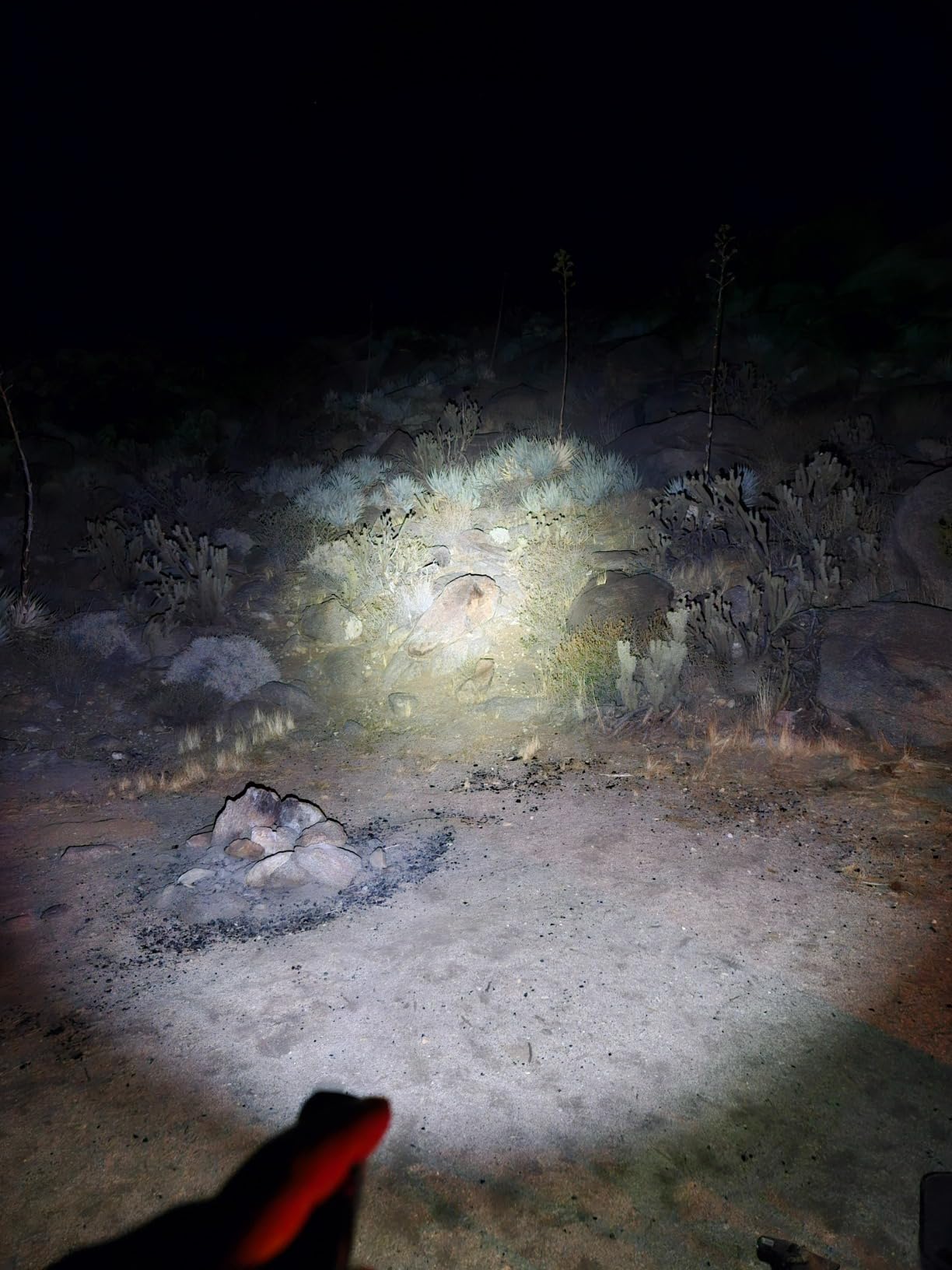
The trade-offs are real. Red is dim and only useful at close range, which is exactly right for a chart and wrong for a ramp. White is a single high output, so there is no low mode to read a chart with when you want colour accuracy.
Runtime on high is about an hour and fifteen minutes, so carry spare cells for a long night. A few owners also report a spring contact in the battery holder working loose, and the lanyard hole is too small for 550 paracord, which is a small but annoying detail when you want to neck-strap it in a hangar.
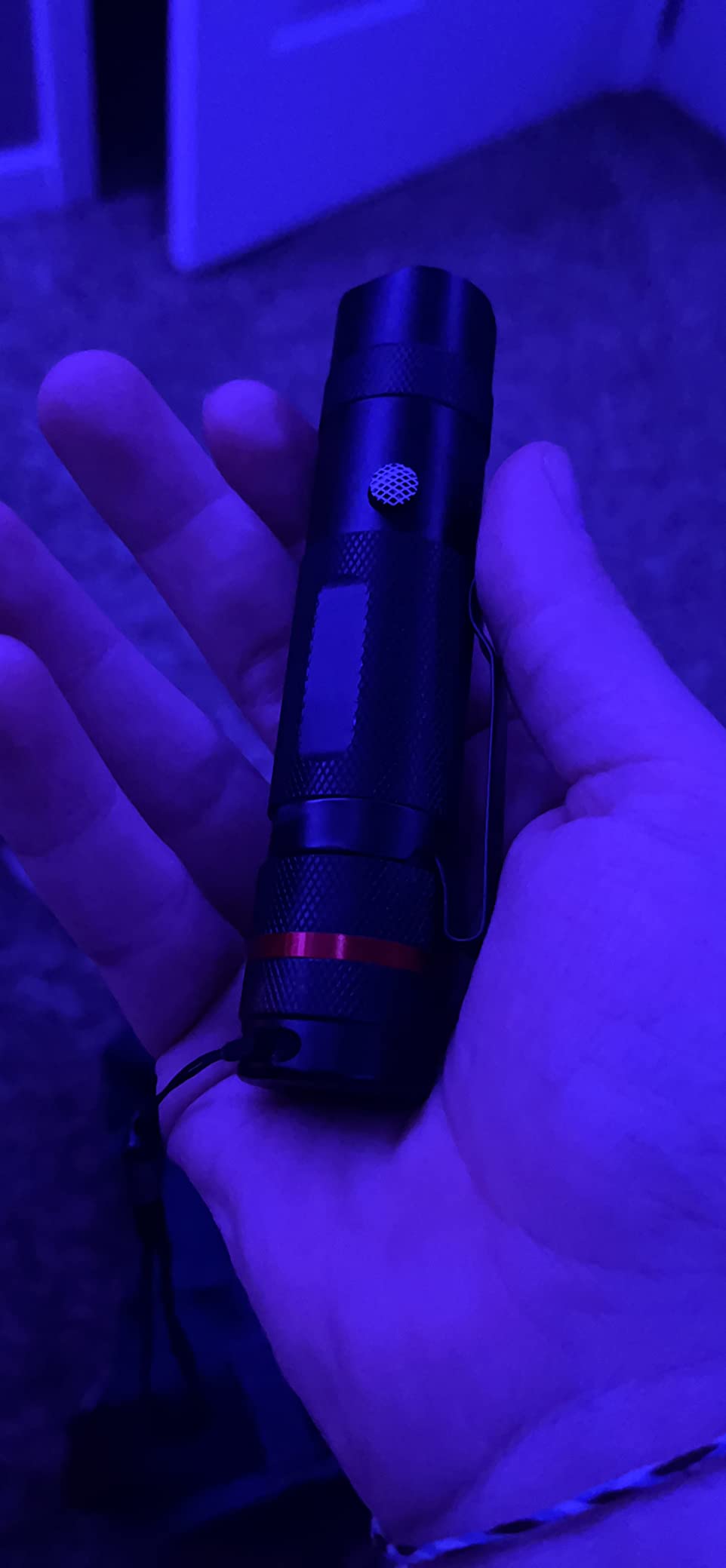
Why the two-button layout matters at night
Muscle memory beats reading labels in a dark cockpit. With one button per colour, you can reach for red without looking, and the odds of punching a blinding white mode while half your attention is on the aircraft drop close to zero.
The spot beam gives a tight centre hotspot with a consistent halo, so you can aim at a distant taxiway edge or a fuel cap without washing out everything around it.
Who should pick a different light
If you need a dim red mode, or if your work takes place in rain and you want a sealed rechargeable body, look at the KL35R or the DARKBEAM. Long-term owners also note the two buttons sit close enough together that they are hard to distinguish by feel in gloves.
If you fly airline routes, this is a solid pick, and it is a fine companion to the [pilot gift guide](https://www.spencerlocke.net/best-gifts-for-pilots/) items many crews carry.
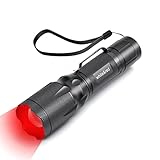
4. METII Red Flashlight with Memory and Dual Red Levels – Best for Dual Red Settings
METII Upgraded Red Flashlight, Bright White &High/Low Power Red Light Options with Memory, Zoom Lens, Portable Weatherproof LED Small Torch for Aviation, Astronomy, Night Vision
White plus bright red plus low red
Mode memory
Zoomable beam
3 AAA or 18650
Pros
- Two separate red brightness levels with mode memory
- Half-press toggle between lighting modes
- Zoomable beam from flood to spot
- Runs on three AAA cells or one 18650
- Recessed tail switch lets it stand upright
Cons
- Tail switch is stiff and very sensitive so it takes practice
- Pocket clip grips loosely and can pop off
- Square beam pattern at full zoom
- Batteries not included
The two-red-level design is what separates this from every other budget light. A bright red for a walkaround and a low red for a cockpit chart means one light covers both halves of the job, and mode memory means you start in whichever level you used last rather than cycling every time.
Power flexibility is the other selling point. It runs on three AAA cells or a single 18650 rechargeable, so you can pack whichever is convenient and pick up cells at any FBO. The half-press on the tail switch quickly toggles between lighting modes, and the recessed tailcap lets the light stand upright on a wing surface as a candle.
For a student pilot working toward a night rating, that combination of a low red for chart work and a bright red for the walkaround is the pattern most instructors describe in their briefings.
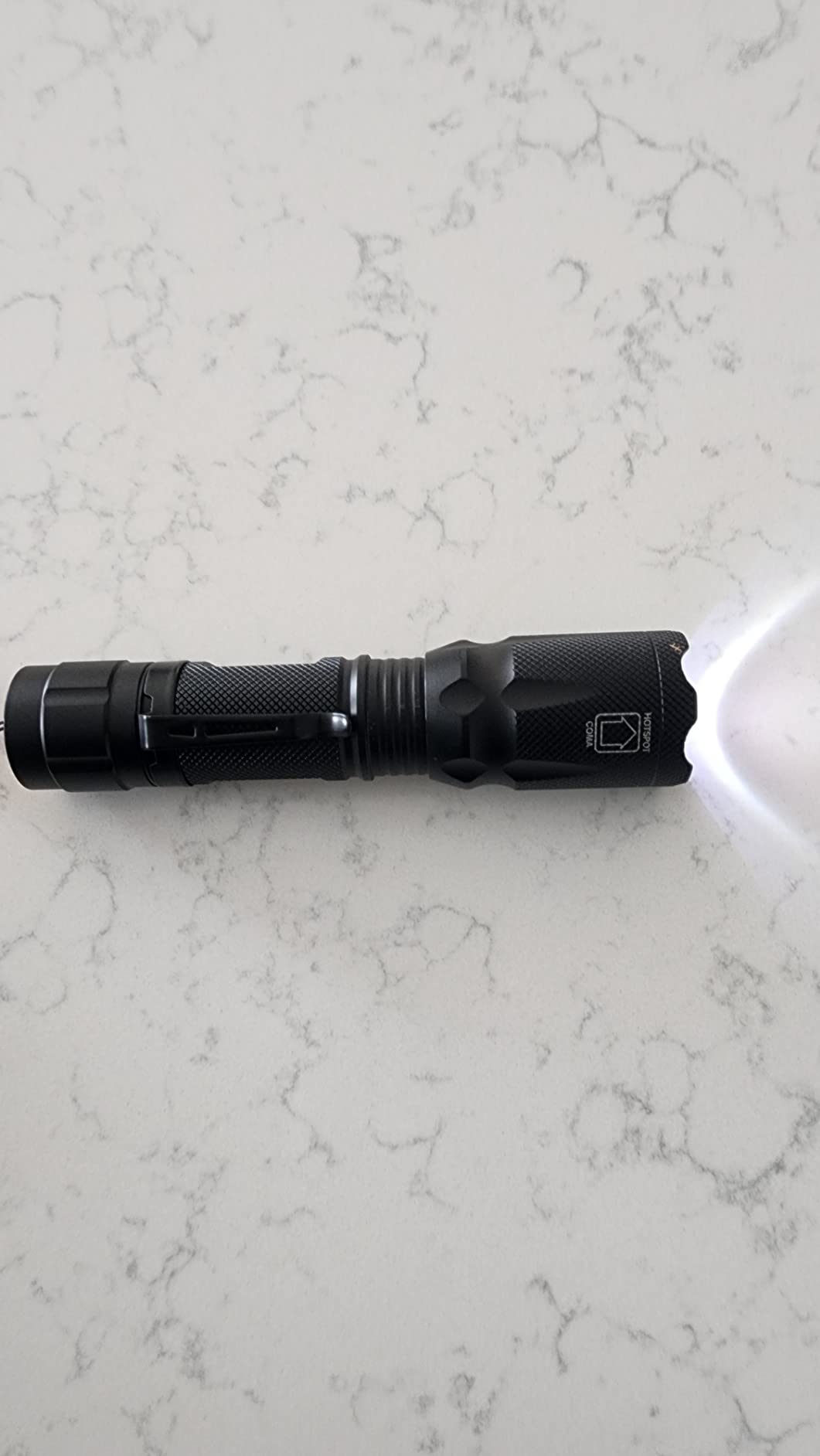
The switch is the frustration point and it takes practice. Owners describe it as stiff to turn on but extremely sensitive for mode changes, which is an odd combination. If the clip is bumped it may pop off, and at full zoom the projected beam is square rather than round because of the lens design.
Build quality is moderate for the tier. Several buyers note that repeated drops may not be survivable, the listed water resistance is described as best-case, and batteries are not included. Treat it as a cabin light rather than a hangar light.
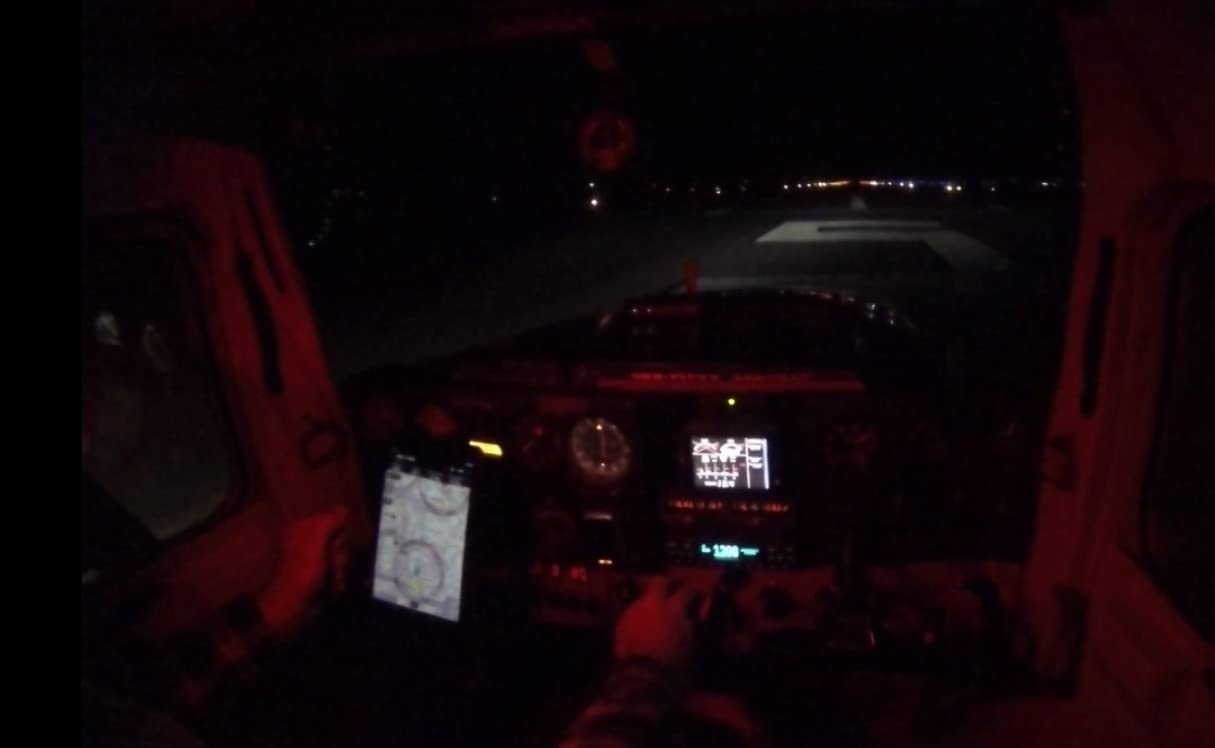
What two red levels actually give you
Low red is the mode you will use in the cockpit, because it is bright enough to read a line of chart text without pushing your eyes back down the adaptation curve. Bright red is for a walkaround, a wing inspection or signalling to someone outside the aircraft.
Mode memory matters more than it sounds. Without it, every time you switch the light on you click through the sequence, and the most likely mistake is arriving at the wrong mode while your eyes are adjusting.
Who should pick a different light
If you drop gear regularly, or if you want something that survives a wet ramp, choose a sealed rechargeable body instead. Anyone who wants a smooth dimming dial rather than two preset levels will find more in the stepless model later in this list.
The square beam at tight zoom also makes this a poor choice for tight-beam signalling work at distance.
5. DARKBEAM Rechargeable True Red Zoomable Flashlight – Most Versatile
DARKBEAM Red Light Flashlight Tactical LED High Power Rechargeable Zoomable
True 620-625nm red diode
500 lumens of red
Removable rechargeable battery
IPX65 sealed
Pros
- Genuine 620-625nm red LED rather than a filtered white beam
- 500 lumens of true red with adjustable zoom
- Removable rechargeable lithium battery with good retention
- Thickened rubber seals for IPX65 protection
- Cloth carrying pouch included
Cons
- Focus lens feels loose and shifts under gravity
- Battery must be removed to charge on a separate charger
- No pocket clip on the light itself
- 500 lumens of red is bright enough to give away your position
This is the most technically serious red light in the group. It uses a genuine 620-625nm diode rather than putting a red filter over a white emitter, which means the output stays saturated red as the beam widens. Most budget red lights go pink at the edges when you zoom out; this one does not.
At 500 lumens of red it is genuinely bright, and that is exactly what you want for a 200-foot walkaround, a fuel cap check in a dark apron, or signalling to ground crew. The telescoping lens gives you a narrow spot for distance and a wide flood for a whole wing. The body is sealed to IPX65 with thickened rubber seals, which is the only meaningful weather rating among the pure red options here.
The battery is removable, rechargeable and interchangeable, so you can carry a spare cell instead of planning around a wall outlet. That is a real advantage on an overnight or multi-day trip.
True diode versus filtered white
It sounds like a small detail, and in daylight you would never tell. In a dark cockpit it is the difference between a light that stays red across the whole beam and one that turns orange-pink at the halo. On a sectional under a red wash, saturation is what you want.
At 500 lumens, the red is bright enough to be spotted at distance. If you are on a ramp and light discipline matters, the wide flood is more discreet than the spot.
Who should pick a different light
The zoom mechanism is the main complaint: owners describe it as loose and prone to shifting under gravity or movement, which is annoying but not dangerous. Charging the cell outside the light is a step that catches people out the first time.
For a maintenance tech who mostly needs white, this is the wrong light, because it has no white mode at all. It is the right light for a pilot who wants one dedicated red beam that reaches.
6. Coast KL35R 600 Lumen Rechargeable – Best for Airline Crew and Maintenance
Coast KL35R 600 Lumen Rechargeable LED Pocket Flashlight with RED Light
600 lumen white turbo
Red side area light
Built-in rechargeable
16 hour runtime
Pros
- Four white output levels plus a 600 lumen turbo mode
- High CRI white side light plus solid and flashing red
- Two-way clip works on a hat brim for hands-free use
- Only 2.88 oz so it disappears in a pocket
- Built-in lithium battery with up to 16 hours runtime
- Lifetime warranty
Cons
- No mode memory so you cycle the full sequence each time
- Turbo only stays on while you hold the button
- Illogical brightness order when cycling
- Charging port rubber flap is hard to reseat
If you fly airline routes or work maintenance, this is the one to buy. It is the only light in the roundup that gives you a full range of white output plus a red area light plus a runtime long enough to cover a long-haul night duty, all in a 2.88 oz body with a two-way clip.
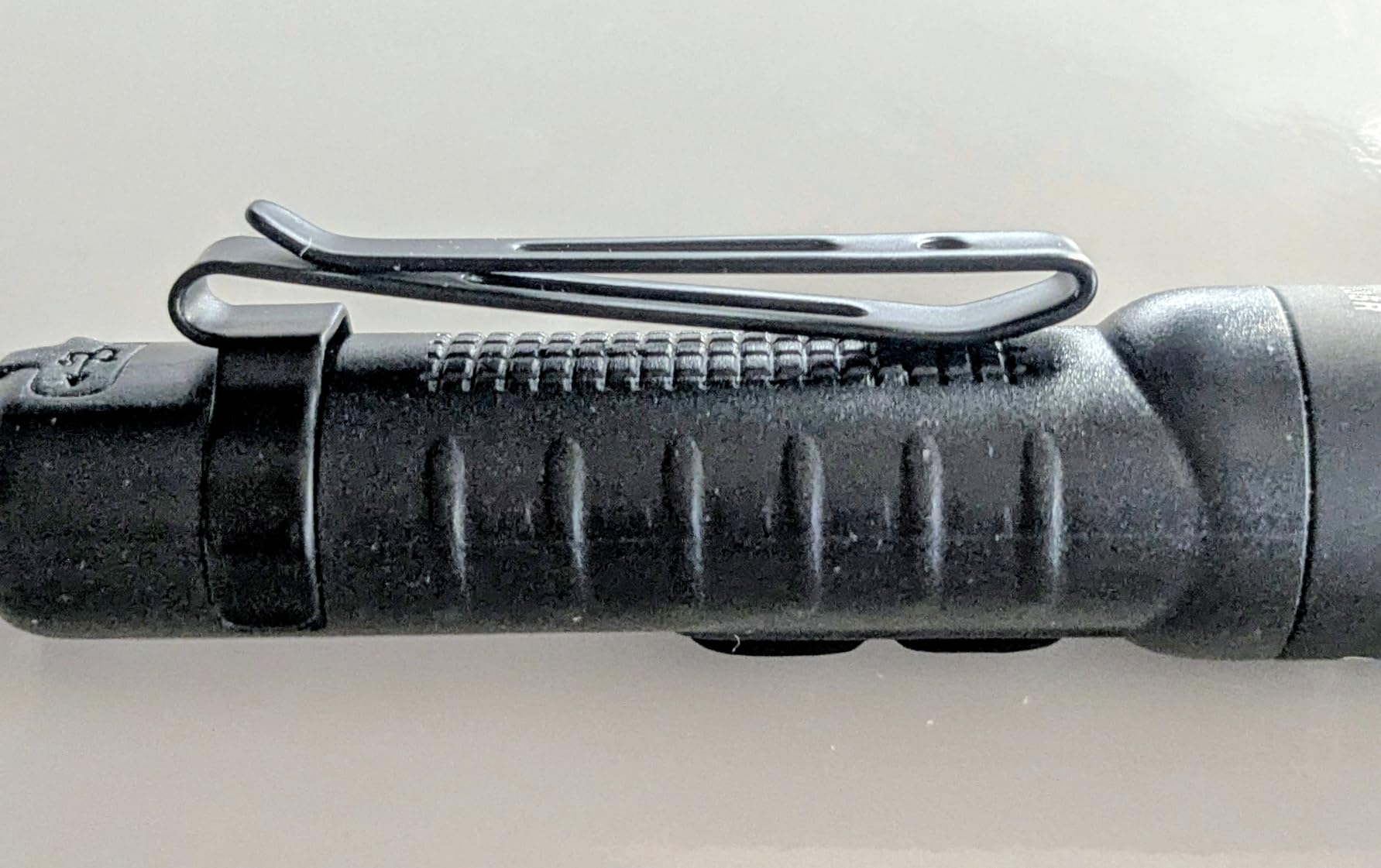
Four white levels plus a turbo mode means you can drop to a low output for chart reading and jump to 600 lumens for a hangar aisle. The side area light carries high-CRI white plus solid and flashing red, so you can signal a marshaller without pulling something else out of your bag. The two-way clip mounts on a hat brim, which turns it into a hands-free light for panel work.
Aircraft maintenance forums are full of people reporting years of daily use on lights of this general type, and the built-in rechargeable cell removes the battery logistics entirely. Sixteen hours of runtime means one charge covers a multi-leg night operation.
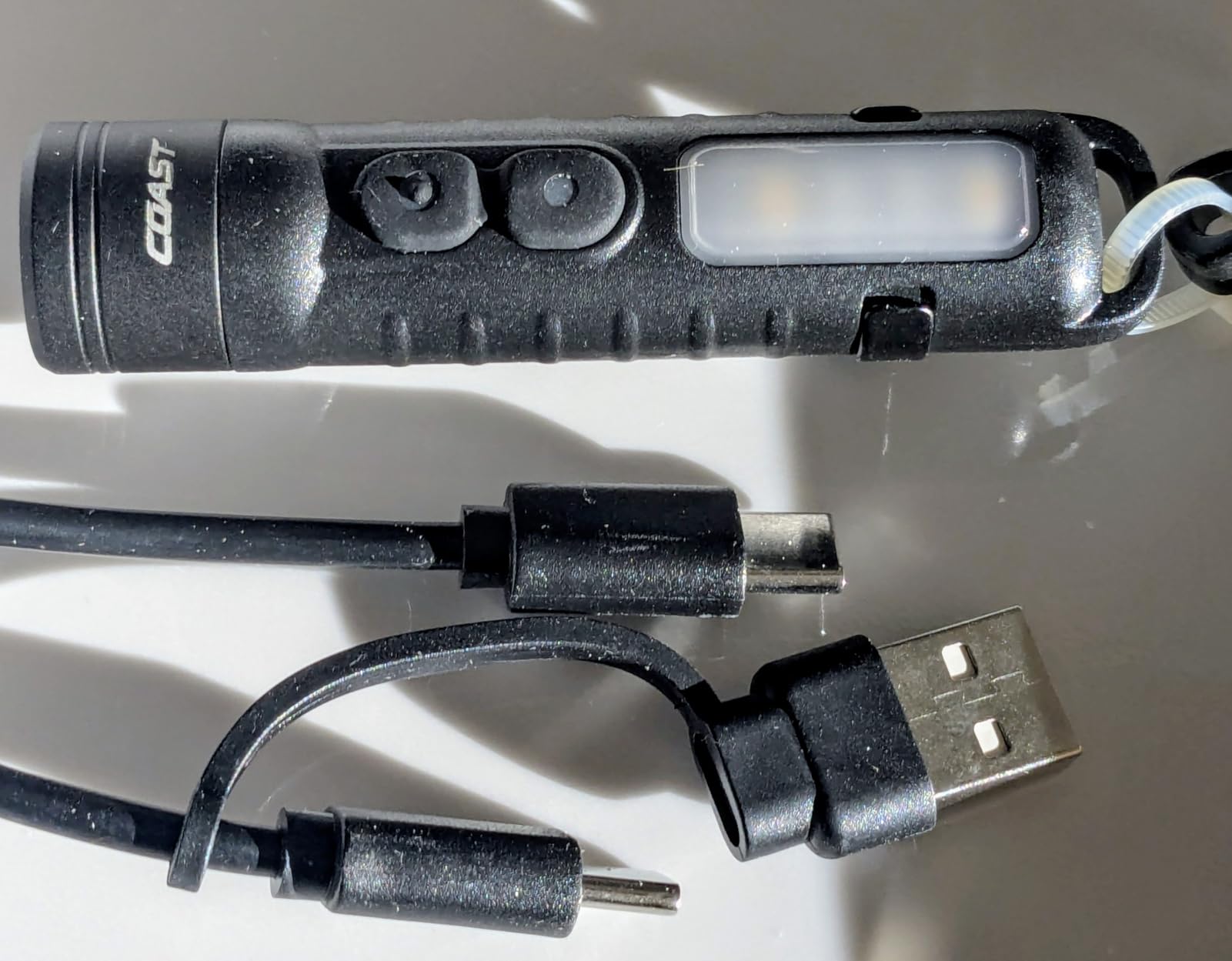
There is no mode memory, so every activation replays the whole brightness sequence in a slightly odd order. Turbo only runs while you hold the button, which some people love and some find annoying. The rubber flap over the charging port is the most-cited annoyance, because it is genuinely hard to reseat once you have peeled it back.
It is also not a red-dedicated light. The red here is an area light for signalling and close work, not a dim chart-reading mode, so pair it with a red pen light if charts are part of your night routine.
What a sixteen-hour day actually needs
On a redeye with four sectors, the question is not brightness, it is whether the light is still working at 0300. A built-in rechargeable cell that lasts sixteen hours answers that without you thinking about spares, which disposable-cell lights force you to do constantly.
The low white modes also let you read a chart or a placard without triggering the full recovery time in your eyes, which is more useful than most pilots expect.
Who should pick a different light
Pick a red-dedicated light instead if your main cockpit task is reading charts in true darkness rather than doing ramp and hangar work. Maintenance techs who need to illuminate a whole engine cowling will like the turbo mode but should confirm the 128 meter beam reach is enough for their hangar.
Those who prefer replaceable standard cells over a built-in pack will find more flexibility in the AA and AAA models.
7. Photon Freedom Micro-Light Green Beam – Best for Hands-Free Keychain Carry
LRI – LRI-1197 FMNGC Photon Freedom LED Keychain Micro-Light with Covert Nose, Night Vision Green Beam Small
7 g keychain micro-light
Green beam
Hold to dim
Strobe, SOS and Morse
Pros
- Roughly quarter-sized at 7 g so it disappears on a keychain
- Full-range dimming by holding the button
- Strobe
- SOS and Morse code signalling modes built in
- Automatic shutoff stops it draining in a pocket
- Swivel clip mounts on a hat brim to work as a headlamp
- Made in the USA and built to survive drops and soaking
Cons
- Dim and narrow so it will not light up a large area
- Some variants need two 2016 cells that drain faster
- Green beam distorts colours on printed maps
- Ships in a demo mode that cuts out until you disable it
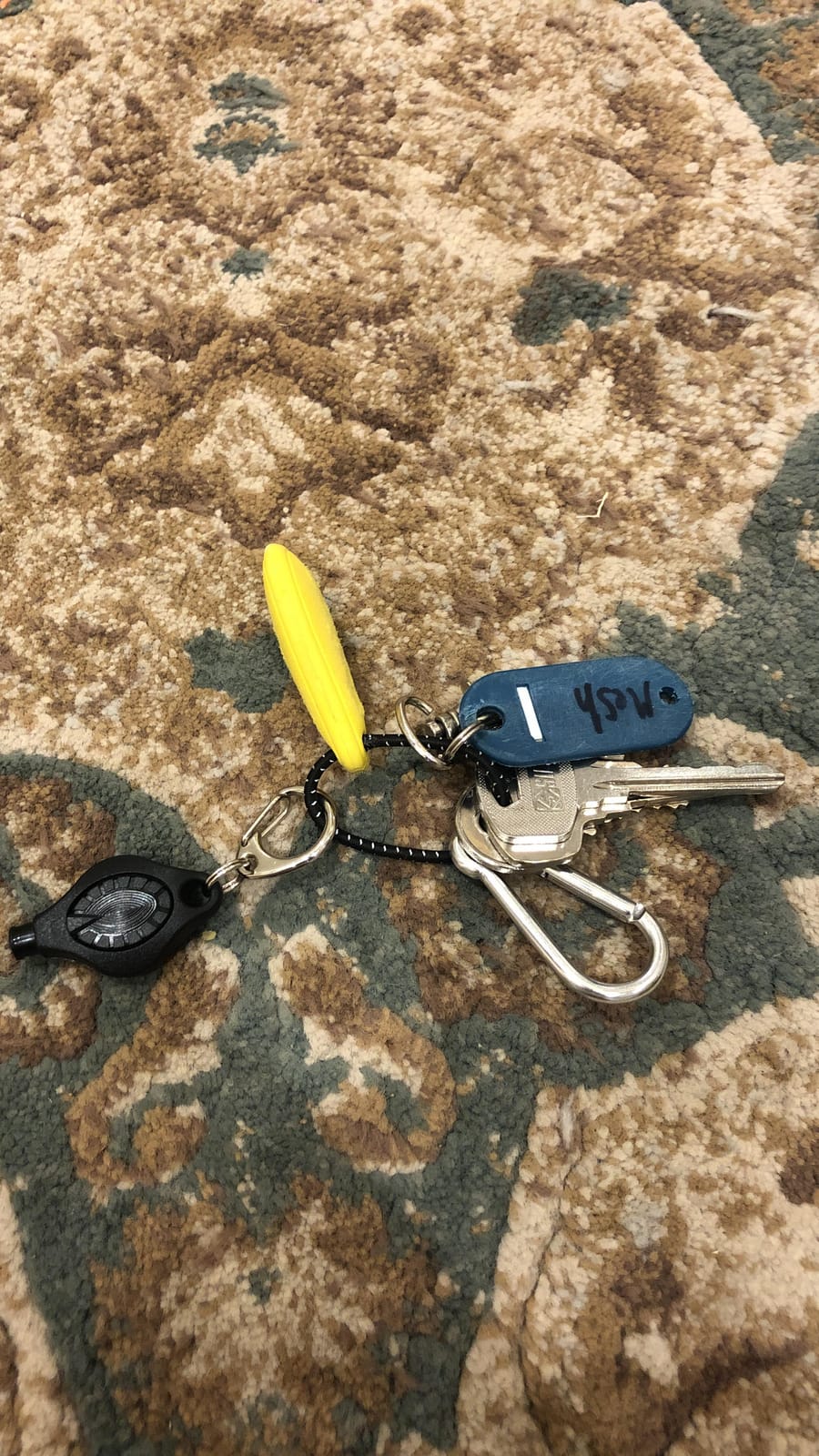
Everything else in this list is a torch. This is a micro-light the size of a US quarter, weighing seven grams, that lives on your key ring and turns on with one click. Pilots of microlights and gliders describe it as the light that never leaves because you cannot feel it.
Hold the button and it dims continuously from full output down to a level you can read a placard by. Keep holding and it steps through strobe, SOS and Morse code signalling, which is useful for backcountry strips where you might need to make yourself visible without shouting.
The green beam is chosen specifically to avoid glare off windscreens and NVGs, and the covert nose blocks side spill so the beam stays in front of you. The swivel clip mounts on a hat brim to make it a hands-free light, and the magnet on the base sticks to metal surfaces.
New units ship in demo mode that cuts out after a few seconds until you hold the button to disable it, which surprises people and generates a support email. Two coin cells are required, and the 2016 variants in some colours drain faster than a 2032.
Most importantly, this is a close-range light. It will not illuminate a wing, a tie-down or a fuel cap from any distance, so it complements a proper flashlight rather than replacing one. The button and battery-cover sides also feel similar at first, which causes mis-presses.
Why green rather than red
The human eye is more sensitive to green wavelengths than to red, which is the same physics behind green collision-avoidance lights on gliders and sailplanes. A green beam reads as brighter at the same low power, and it is the traditional choice where anti-glare off a windscreen is the priority.
What green does not do is preserve chart colours. For magenta Class E airspace you still want the low red or a low white.
Who should pick a different light
Anyone doing a walkaround needs a real beam, and anyone reading a sectional at night needs colour accuracy this cannot provide. It is a backup, a placarding light and a signalling light, and it is at its best as the thing on your keys you can grab in the dark without thinking.
8. RECHOO USB-C Rechargeable Red Flashlight 3-Mode – Best for Signalling
RECHOO Red Light Flashlight, High-Powered 3-Mode Red LED Rechargeable Flashlights with Clip & Lanyard, Zoomable Portable Red Flashlights for Hunting, Astronomy, Aviation & Night Observation
High, low and strobe red
USB-C rechargeable
328 foot reach
IPX4 rated
Pros
- Red LED output that preserves night vision
- High
- low and strobe modes with a slide-to-zoom beam
- USB-C rechargeable so there are no disposable cells
- Up to 6 hours on low with a charge status indicator
- Aluminium body with pocket clip and lanyard included
- IPX4 rated for fog
- rain and rough conditions
Cons
- Built-in battery cannot be removed or swapped
- Some owners report shorter-than-expected endurance
- Charging port shares the tailcap button area
Signalling is the use case that justifies a red-only light, and this one does it properly. A strobe mode throws a visible signal a long way, and the stated 328 foot beam reach covers a ramp, a taxiway edge or a backcountry clearing when you need to be found.
USB-C charging is the real quality-of-life win for airline crew. You charge it from the same cable as everything else in your bag, and up to six hours on low covers a full night of intermittent preflight checks. An indicator glows red while charging and green when full, so you are not guessing.
It comes in at 4.76 inches with a pocket clip and lanyard, in an aluminium body rated IPX4, which is enough for rain and fog on a ramp. The mode set is deliberately simple: high, low, strobe.
When strobe beats a steady beam
A steady red beam is a conversation light, meant for the person in front of you. A strobe is a location light, meant to be seen from a distance. If you fly into a remote strip at dusk or work an unlit ramp, strobe is the mode you actually want, and this is the light that gives you one.
Low mode is the chart and placard setting, and the red stays saturated enough to avoid killing your night vision.
Who should pick a different light
The built-in battery is the dealbreaker for some people. Because it cannot be removed, a dead cell means a dead light, with no swap and no spare in the bag. If you fly away from places with power, that risk is worth weighing.
The charging port also shares the tailcap button area, which is convenient and slightly fiddly. This is a red-only light, so it does not cover white chart work or hangar illumination at all.
9. WAYLLSHINE Stepless Dimming Red Flashlight 620nm – Best Stepless Dimming
WAYLLSHINE Stepless Dimming Red Light Flashlight, 620nm-630nm High Purity, Adjustable Brightness and Focus for Night Observation, Astronomy, Aviation
620-630nm high-purity red
Stepless 5 to 100 percent dial
Push-pull focus
Setting memory
Pros
- Continuous stepless dimming rather than preset steps
- Red-only so no mode cycling to reach it
- Keeps your last brightness setting between on and off cycles
- Even beam with no reflective-cone hotspot across the zoom range
- Solid aluminum body for the tier
- Beam throw listed at 200 yard
Cons
- Even at 5 percent it is still bright for fully dark-adapted eyes
- Tail indicator light is distracting at very low settings
- Not rechargeable and batteries not included
- Not water resistant with a plastic lens
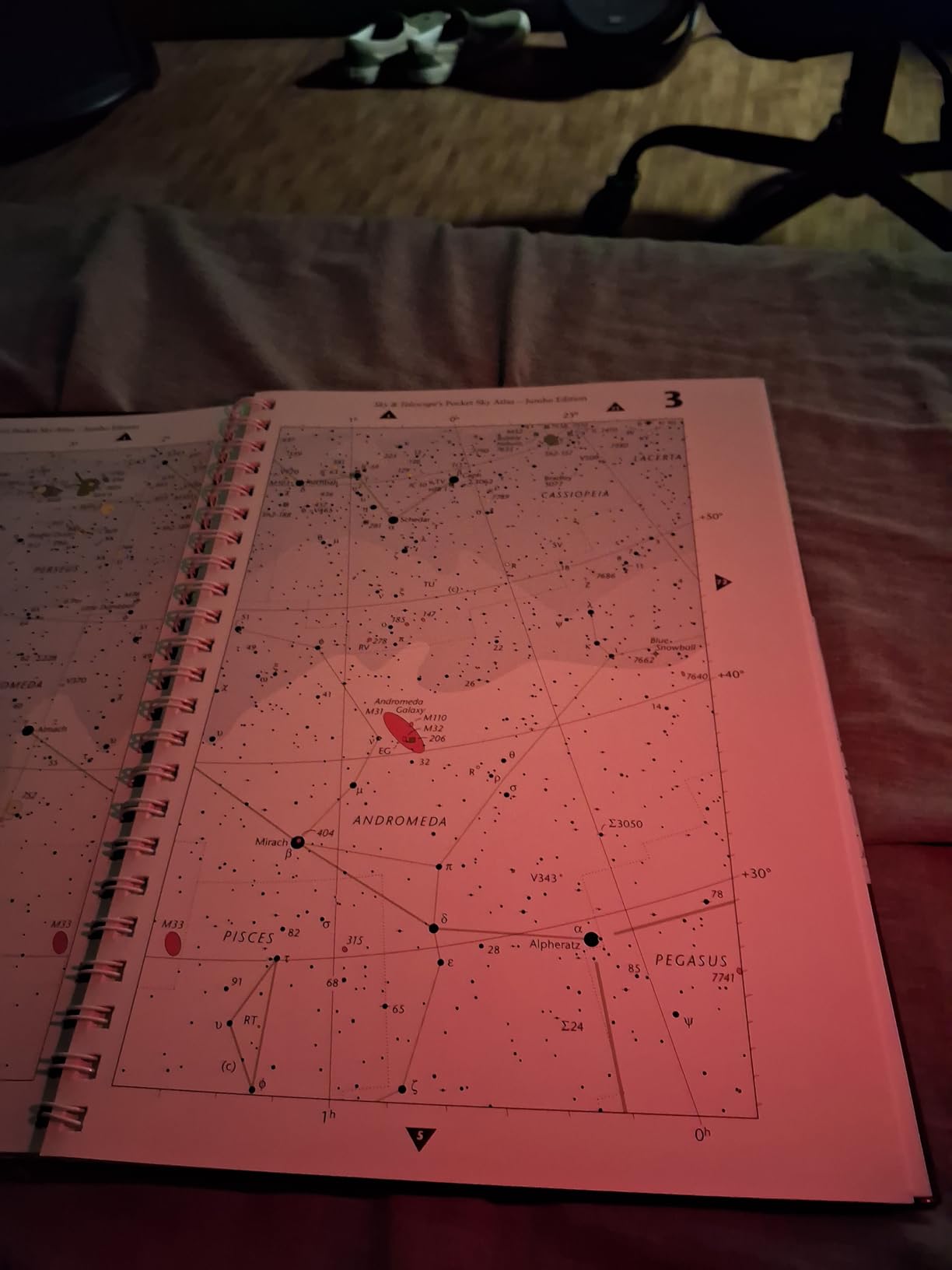
Stepless dimming is the feature serious pilots ask for and almost never get. A tailcap dial turns continuously from full output down to five percent, and the light remembers where you left it. There is no mode cycle, no button sequence, just a dial.
The emitter is high-purity 620-630nm red, which keeps the beam saturated rather than letting it drift orange as output drops. The push-pull front shroud varies the beam diameter, and owners note the beam stays even across the zoom range with no hot centre.
That combination is why astronomers, who stare at charts and navigate by faint light for hours, rate this highly. The same physics suits a pilot who wants to bring their own eyes down to chart level over thirty seconds instead of snapping between two fixed modes.
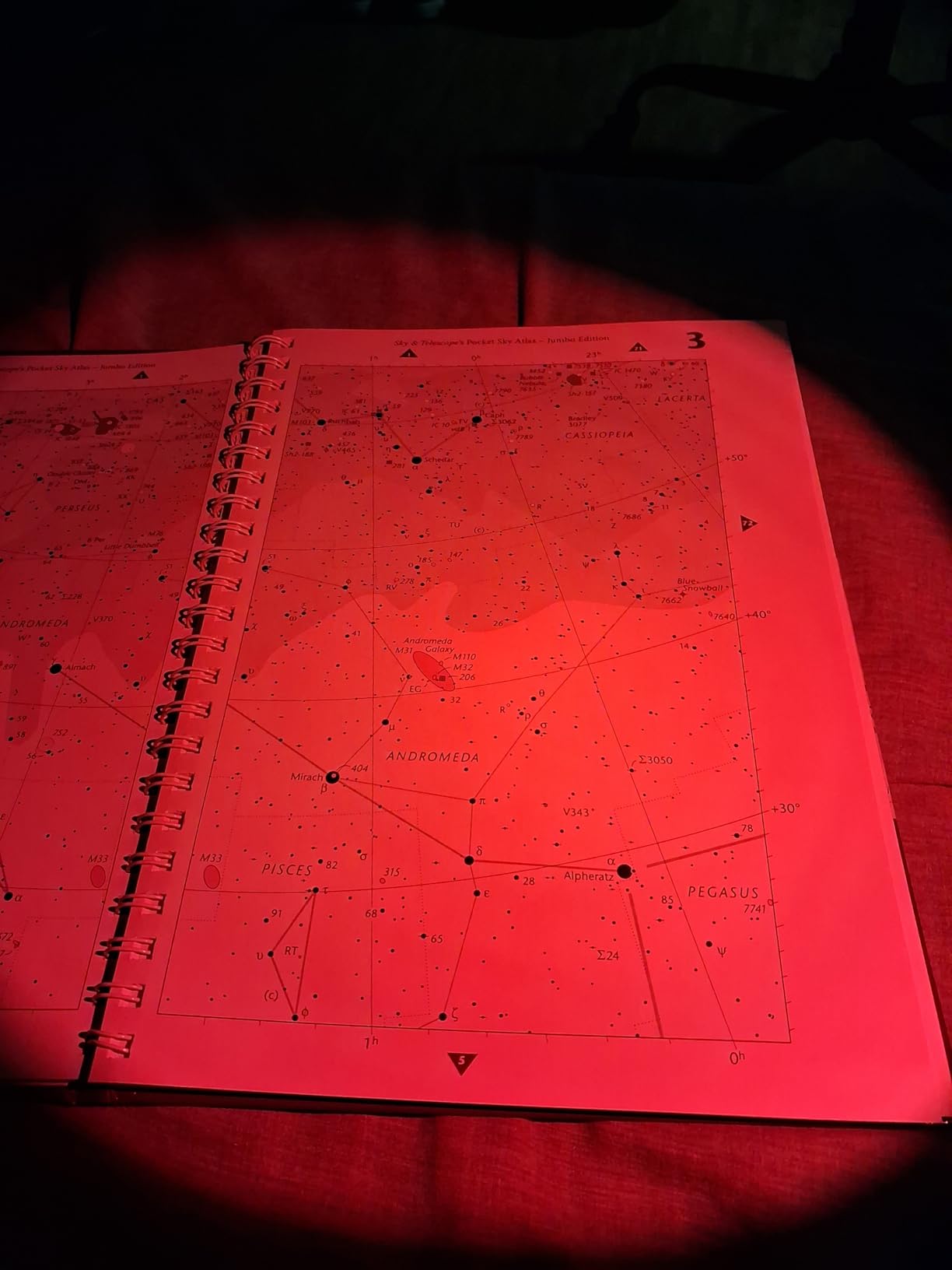
Two honest caveats. Even at its lowest setting, several users find it brighter than ideal for fully dark-adapted eyes, so the dial does not go low enough for every night rating exercise. The tail indicator light can also be distracting at those levels.
It runs on three AAA cells that are not included, and it is not rechargeable or water resistant, with a plastic lens. It is a cabin and walkaround light, not a hangar tool.
Why smooth dimming changes night rating work
Stepped modes force a choice between too bright and too dim, and every time you adjust you re-adapt. A continuous dial lets you bring a chart up to legibility in a couple of seconds and then ease off, which is a much gentler transition for an eye that is still partly photopic.
For a student working on night currency, that control is a genuine training advantage, not a luxury.
Who should pick a different light
If you need white light for anything beyond the most basic check, this light has none, and that is a real limitation in a hangar or on a wet ramp. Pilots who fly long sectors and want to charge rather than carry cells should look at a USB-C model instead.
Users who need a beam they can use as a working light at distance will find the 200 yard red throw useful, but there is no white to pair it with.
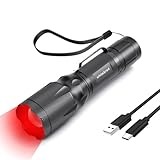
10. METII Rechargeable Red and White Flashlight 3-Mode USB-C – Best for Student Pilots
METII Red Flashlight Rechargeable, High/Low Red Light & White Light 3 Modes, for Astronomy, Aviation, Night Observation
Two red levels plus white
Mode memory
USB-C fast charging
Anodized aluminum
Pros
- White plus bright red plus low red in one body
- Mode memory restores your last setting after shutdown
- USB-C fast charging works with standard cables
- Anodized aluminum body reported to survive drops
- rain and dirt
- Operable while wearing gloves
- A pocket clip and lanyard are included
Cons
- Reaching red requires cycling modes or the 5 second press rule
- Red brightness barely changes when the beam is focused
- About 2 hours of continuous runtime per charge
This is the simplest complete package in the list for someone building a first kit. One light gives you white for a preflight, bright red for a walkaround and low red for a chart, and it charges over USB-C from the cable you already carry.
Mode memory is the detail that makes it work in practice. Click within five seconds and it cycles white, bright red, low red, off. Click after five seconds and it switches off and saves the current mode, so next time you switch on you are where you left off.
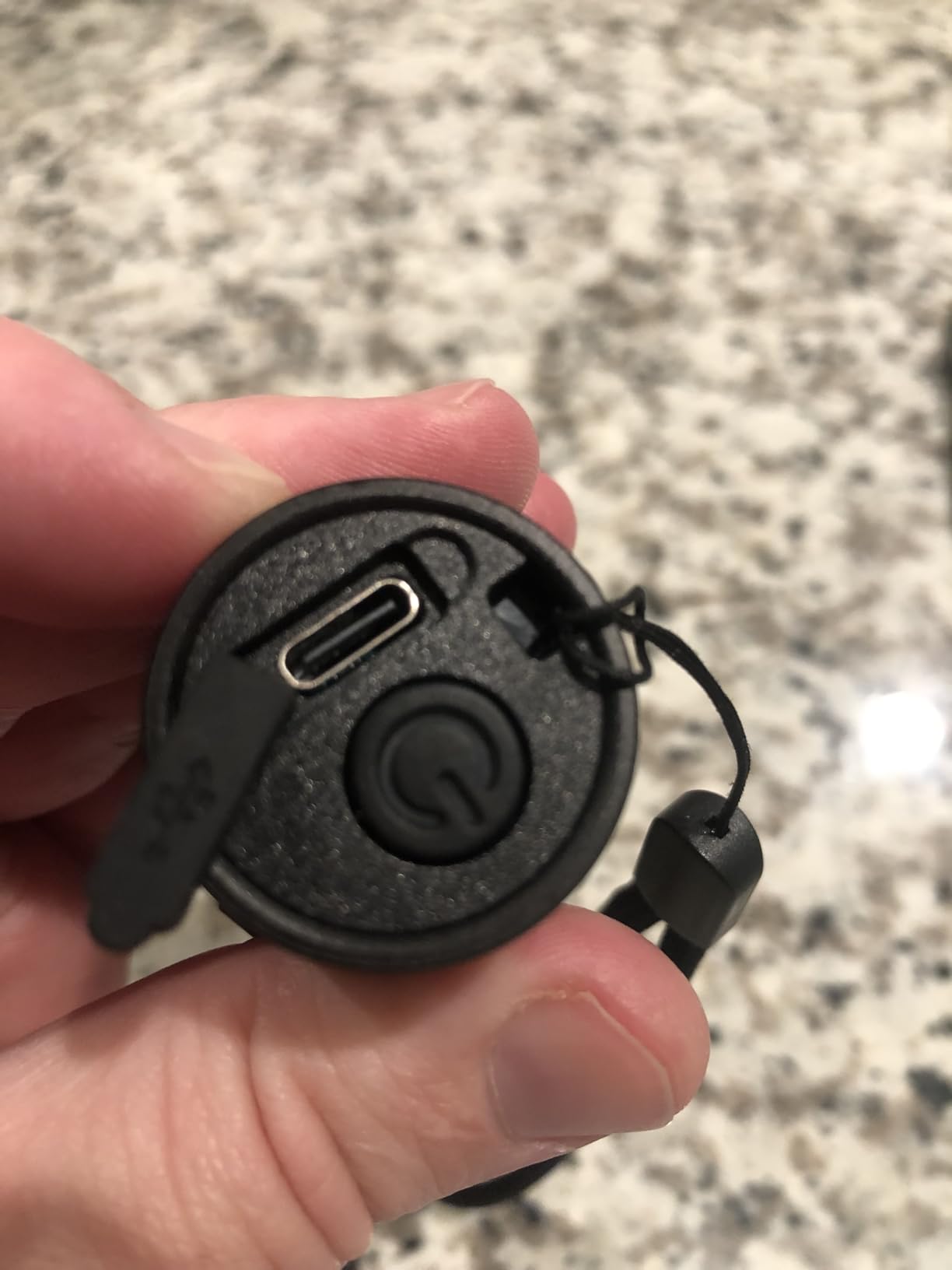
Owners report the anodized aluminium body holding up in field, rain and drop conditions, and that the switches are usable with gloves on, which matters if you are working in a cold hangar at 0500. There is a low-profile status LED in the tailcap that will not wreck your night vision.
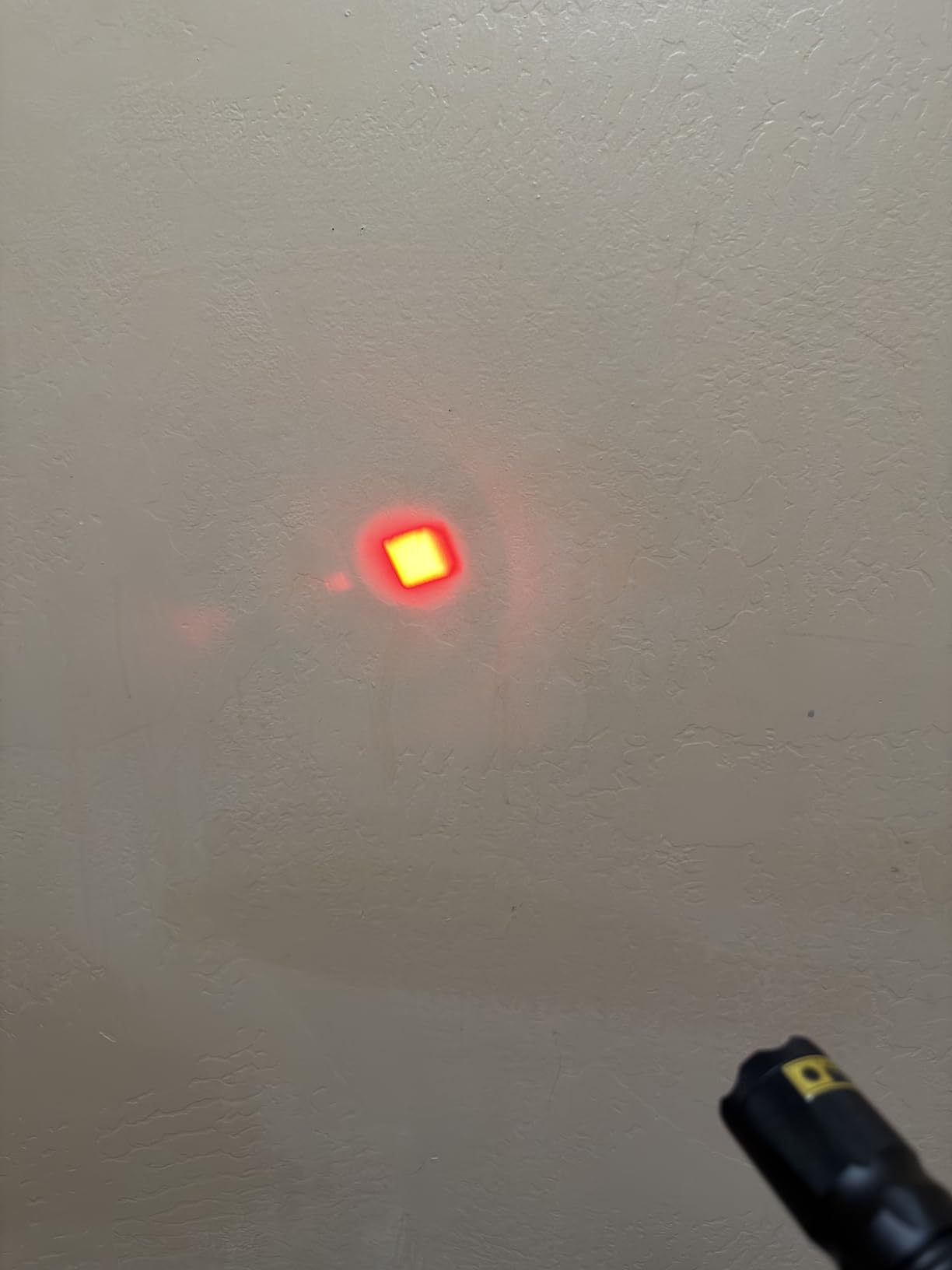
Two things temper that. Getting to red still requires either cycling or learning the five-second press rule, so it does not have a dedicated red button. And the red brightness barely increases when you focus the beam, so it is a close-range red rather than a signalling red.
Runtime is about two hours continuous, which covers a night of intermittent chart and placard use but not a long duty. Build quality is good for the tier, with a twelve-month warranty behind it.
What a student actually needs to buy first
One light that does all three jobs. Students typically start flying a rental at night with a phone flashlight, which is bright, has no colour control and drains the phone you need for the airport diagram. A dedicated light removes that problem entirely.
Mode memory matters most early on, because the first thing an instructor asks is whether your dark adaptation survives the preflight.
Who should pick a different light
Anyone who wants a one-press red button will be frustrated by the cycle. Pilots doing maintenance or ramp work want more than two hours of runtime and a sealed body, and glider pilots who depend on green may prefer the keychain micro-light.
Buy two inexpensive lights rather than one you depend on, a pattern several long-serving pilots use.
11. Weltool M6-RD Red LED Dark Adaptation Penlight – Best for Chart Reading
Weltool M6-RD Red LED Dark Adaptation Penlight for Pilots Viewing Navigation Maps, HGN Tests, SFST and ARIDE to DRE Evaluations,Pocket Pen Light with Clip for Doctors and Veterinarians
Red LED for dark adaptation
90 percent transmittance glass lens
133mm pen format
2 AAA included
Pros
- Highest average rating of any pick here
- Optical glass lens with 90 percent or more light transmittance
- Round uniform spot with no hot center or stray light
- Built specifically for pilots reading navigation maps
- Detachable pocket clip and a printed 1 inch scale on the body
- Two AAA alkaline batteries included
Cons
- Not water resistant
- Fixed single output with no brightness adjustment
- Pen form factor cannot illuminate a wide area
This penlight was designed for the exact job the title of this page describes. Its product brief names pilots viewing navigation maps on night flights, and the engineering follows from that: an optical glass lens at ninety percent or more transmittance rather than a plastic one, and a luminous curve engineered for a round, even spot.
That last point is the differentiator. There is no hot centre and no dark ring at the edge, so a line of chart text sits in uniform light from start to finish. With cheaper reflectors you get a bright middle and a dim edge, which is exactly where your reading focus should not be.
At 133 millimetres with a printed one-inch scale on the body and a detachable pocket clip, it lives in a breast pocket or clipped to a kneeboard. Two AAA cells are included, and this is the one pick in the group where a chart reader is a primary design target rather than an afterthought.
Why beam uniformity matters more than brightness
Reading a chart is a task about contrast across a line of text, not about peak intensity. A beam with a hot centre means the middle of the line is bright and the ends fall away, so your eye keeps refocusing. A uniform spot means the whole line is at the same level and you read it once.
The glass lens is the reason. Higher transmittance means less light lost to the lens, so the same battery gives a cleaner and more even spot.
Who should pick a different light
This is a close-range pen light, not a torch. It will not light a wing, a tie-down or an apron, so you still need a real flashlight for the walkaround. It is not water resistant, and the fixed output means you cannot dial it down for a particularly dark night.
It also only offers red. If you want a white option in the same body, the Coast dual-colour model is the better single purchase.
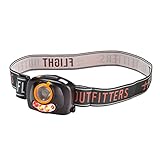
12. Flight Outfitters Headlamp FO-HEADLAMP – Best Pilot Headlamp
Flight Outfitters Headlamp (FO-HEADLAMP)
Headlamp with red and white
80 lumens white
Separate mode buttons
3 AAA included
Pros
- Separate buttons for red and white so red is instant
- Two brightness settings on the red light
- Angle-adjustable head holds its clicked position
- Batteries included so it is ready to fly
- Water resistant and light at 3.36 oz
- Eliminates the need to hold a light and a control yoke
Cons
- Pivot mounting bracket is weak and reported snapping at the pivot
- Bulky by modern headlamp standards
- Takes AAA rather than AA batteries
- Red brightness sometimes insufficient for night flying
The recurring request in pilot forums is for a rechargeable headlamp with a dedicated red button. This is the headlamp answer, from an aviation supplier, and it does the part that matters: red and white each have their own control button, so you never cycle through white to get to the mode you want at night.
There are two brightness settings on the red light, which covers both chart-level reading and a brighter red for a quick look outside. The white beam adjusts via an orange ring around the main LED, and the head holds its clicked angle rather than drooping, which is what usually ruins cheap headlamps.
At 80 lumens white, the output is deliberately modest, which suits a hangar or a shaded cabin. Three AAA batteries are included and give roughly four hours of runtime.
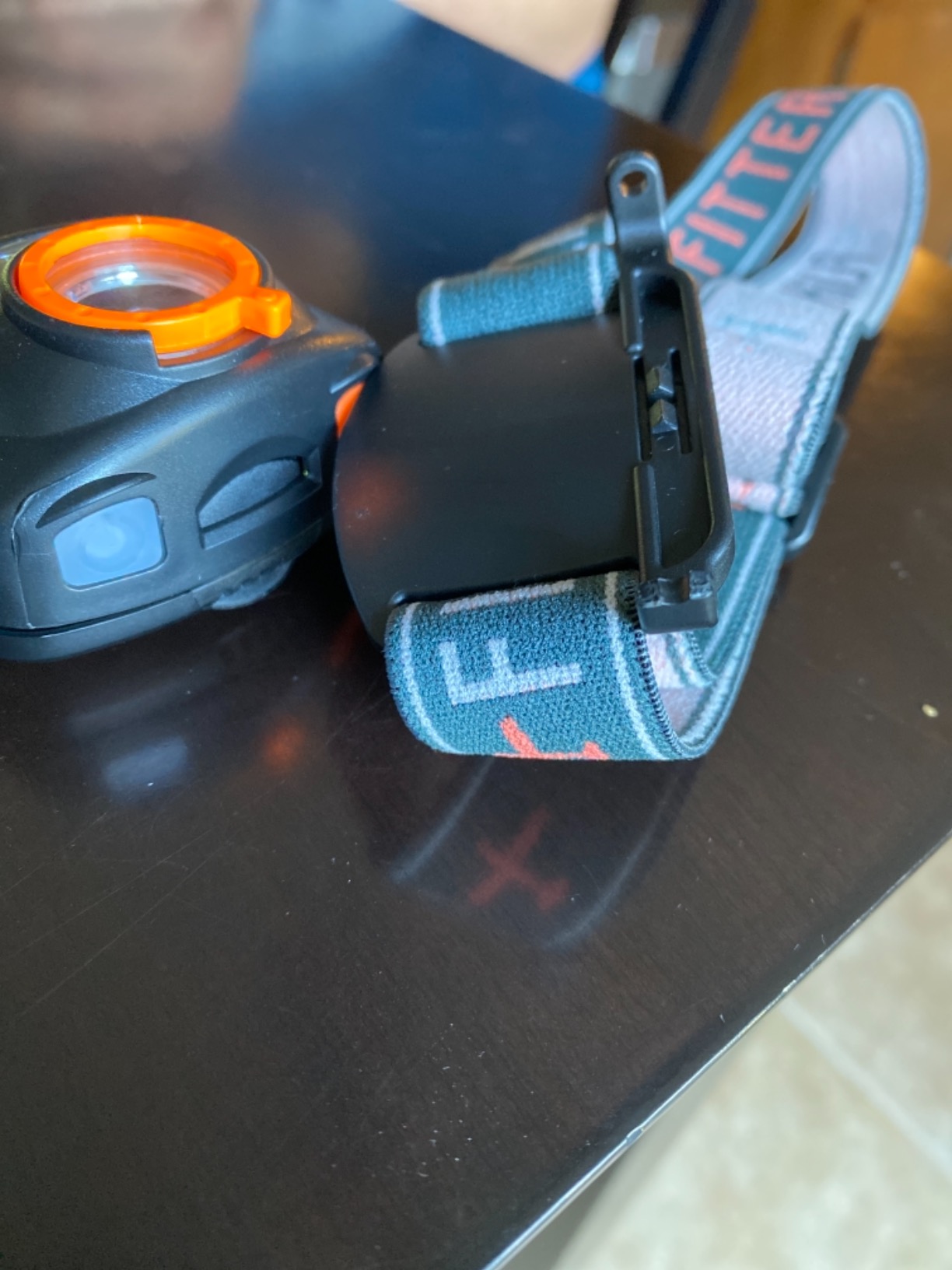
The pivot bracket is the real problem, and several buyers report it snapping at the pivot point. That failure leaves you holding a broken headband, which is the last thing you want at night. It is also bulky by current headlamp standards, and the red mode is occasionally not bright enough for actual night flying.
It runs on AAA cells rather than AA, so spares are slightly less universal. Given the fragility reports, we would treat this as a light you use in the cockpit and cabin rather than one you rely on for a full walkaround.
What hands-free lighting actually solves
You cannot hold a flashlight and keep an aircraft straight and level with the same hand. During a taxi, a night takeoff, or any time your left hand is busy, a headlamp removes the conflict entirely. It also frees both hands for a clipboard, a chart or a cowling latch.
For panel work and placards inside a cabin it is the more sensible tool, and for anyone flying a light aircraft with manual hand throttle it removes a genuine distraction.
Who should pick a different light
Anyone who needs to light a ramp or a hangar should add a handheld light regardless, because eighty lumens and a fragile bracket are not a maintenance setup. Glider pilots flying night cross-country may want a brighter red than this one provides.
If you want a modern, high-output rechargeable headlamp with a red mode, our [EDC flashlight roundup](https://www.spencerlocke.net/best-edc-flashlights-in-the-world/) covers that category in more depth.
What to Look for in a Pilot Flashlight
A pilot flashlight is a compact, rugged light with a low-lumen white output and a dedicated red mode, built so you can read a chart or check an aircraft at night without destroying your dark adaptation. Four criteria decide whether one is any good.
1. A dedicated red mode you can reach in one press. One button for white, one for red, or a red-only default. This single feature prevents the most common and most annoying failure: accidentally destroying your night adaptation mid-flight.
2. Control at the low end. Stepless dimming, a low mode under twenty lumens, or mode memory so you start where you finished. A light you cannot turn down is a light you will use at the wrong brightness.
3. High-CRI white for chart work. Colour rendering keeps magenta Class E airspace, blue airport symbols and fine print legible. Cool cheap white flattens all of it to grey.
4. Batteries you can replace. AA or AAA cells are available everywhere, including at a remote FBO at midnight. Built-in rechargeable cells are better for long duty but mean a dead light if the cell dies away from a charger.
Sealing matters too. IPX4 handles rain and fog on a ramp; IPX65 survives being soaked. If your work is in a hangar rather than a cockpit, prioritise sealing over lumen count.
Red, Green or White: Night Vision Without Ruining Your Charts
Red light sits at the long-wavelength end of the visible spectrum, so the rod cells in your eye respond to it far less than to white or blue. That is why a red beam lets you read a chart at close range while barely disturbing your dark adaptation, and it is the entire reason pilot flashlights have a red mode.
Here is the problem that red advocates rarely mention, and it has been raised by long-serving pilots on aviation forums more than once: on a VFR sectional, the magenta shading that marks Class E airspace is effectively invisible under red light. The same applies to IFR charts and Jeppesen plates. If you are navigating by chart colour coding, a red-only beam is the wrong tool for that specific job.
So the practical sequence is this. Use white at a genuinely low output for chart work, because low white keeps colour accurate. Use red for everything that does not depend on colour: placards, checklists, switch positions, the cabin, the walkaround where you are checking that a cover is off. Use bright red for signalling, since it reaches and stays out of your eyes.
Green is the third option, and gliding forums note the physics clearly: the human eye is more sensitive to green light than to red, which is why some gliders fit green rather than red collision-avoidance lights. Green reads brighter at the same low power and produces less glare off a windscreen, which is why pilots of America notes that colour choice outside of night vision device work is largely personal preference.
One caution for anyone who actually flies with night vision goggles. Visible red, green or white output is not the same thing as infrared output, and a light that will not blind you through NVGs is not a light you should be using while wearing them. Check the manual rather than assuming.
How Many Lumens a Pilot Flashlight Actually Needs
Under twenty lumens for anything inside the cockpit, and two hundred to five hundred lumens for a preflight walkaround. The reason a thousand-lumen tactical light gets recommended to pilots, then hated in use, is that both numbers live in the same device with no way to dial between them.
Lumens measure total light output. Candela measures intensity, which is what actually determines how far a beam throws. A light with high lumens and a wide flood gives you a bright room, not a bright target, so for checking a fuel cap fifty yards out you want a concentrated hotspot rather than raw output.
The chart is straightforward. Under twenty lumens in the cockpit means a low mode that will not force your eyes to re-adapt. One hundred to three hundred lumens handles a wing, a strut and a pitot cover at close range. Five hundred lumens and above is for hangars, ramps and signalling, where the concern is seeing, not being seen.
ANSI FL1 ratings are the standard to compare on, and a stated beam distance in metres or yards tells you more about reach than the lumen number does. Several picks in this roundup publish a throw figure, which is a good sign the manufacturer expects outdoor use.
Batteries: AA, AAA, 18650 and USB-C Rechargeables
AA and AAA are the most field-serviceable by a wide margin, and the deciding factor is availability away from home base. Lithium CR123 cells are worth avoiding as a sole power source for a night operation, because they get harder to find and a CR123-only light cannot be recharged or run on common cells.
An 18650 cell sits in the middle: high energy, widely available at any electronics shop, and rechargeable. One of the picks in this list runs on either three AAA cells or a single 18650, which gives you the flexibility to pack whichever is convenient.
Built-in USB-C rechargeable cells win on long duty, where charging from the same cable as everything else beats carrying spares. They lose on a remote strip, where a dead internal cell is a dead light with no swap available. A six-month-old pilot forum thread is full of people who learned that lesson the hard way.
On airline travel, lithium cells are permitted in carry-on baggage with terminals protected, which affects how you pack any light with a built-in lithium cell. Flights and crew should confirm current rules with their operator’s security department before relying on a specific configuration.
One practical note on redundancy: two inexpensive lights beat one that must not fail. A forum regular flying a 1946 Cessna with poor panel lighting settled on carrying two mid-price lights for exactly that reason, and it is a pattern we would follow.
Hands-Free Lighting, Glare and Night-Rating Training
A headlamp answers a problem a handheld cannot: you cannot hold a light and keep a yoke or a control column steady with the same hand. During taxi, a night departure, or any time both hands are busy, a head-mounted light removes the conflict.
Glare management is the other half. The single most common technique is to never point a beam at the windscreen or canopy, because the reflected light bounces back at you and at anyone behind you, and it is brighter than the beam. Aiming at the panel or the chart and using a wide flood rather than a spot keeps the spill controlled.
A second habit helps: dial red down before you touch the chart, rather than switching to red after the white has already cost you adaptation. Five seconds of attention to the mode before you look saves several minutes of recovery afterwards.
For students working toward a night rating, the purchase that matters most is a light with a low mode, because night currency training is about recovering and maintaining dark adaptation while still working. Buy a light with an instant red and a dimmable white, carry two inexpensive ones rather than one you depend on, and expect to refine the choice once you have logged some hours with it.
Aviation maintenance techs and ramp crew have a different requirement: sustained high output and a sealed body. For hangar work our pick is the rechargeable white light with multiple brightness levels and a red side light, because you are illuminating an area, not reading a line of text.
Frequently Asked Questions
What are the best flashlights for aviation?
The best flashlights for aviation combine a low-lumen white output for chart reading with a dedicated red mode for night vision. Look for instant one-press access to red, stepless dimming or a low mode, high-CRI white for accurate chart colours, replaceable AA or AAA batteries, and an IPX4 or better water rating. Our top pick is a single-mode red light for pilots who want zero risk of cycling into white.
What is the best flashlight for aviation maintenance?
For maintenance and hangar work you need sustained output rather than a dim cockpit mode. A rechargeable light with several brightness levels, a turbo setting above 500 lumens, a sealed water-resistant body and a red signalling mode is the right shape. Our pick for maintenance and airline crew work is the Coast KL35R, with 600 lumens on turbo, a red side area light and up to 16 hours of runtime.
Which tactical flashlights are TSA approved?
TSA does not approve or certify individual flashlights. What matters is the battery. Flashlights with lithium-ion or lithium polymer cells are permitted in carry-on baggage when the cells are protected against accidental activation and terminals are covered, and spare cells must travel with you rather than in checked baggage. Spare alkaline AA and AAA cells are not restricted. Rules can change, so confirm with the TSA or your airline before travelling.
Is a red or green flashlight better for pilots?
Red is the standard choice because it preserves dark adaptation and is available on almost every aviation flashlight. Green is more sensitive to the human eye at the same low power and produces less windscreen glare, which is why some glider pilots prefer it. Neither preserves chart colours, so for reading VFR sectionals and IFR charts use a dim white beam instead.
Does red light wash out a sectional chart?
Yes, and this is the most important caveat in this guide. The magenta shading that marks Class E airspace on a VFR sectional is effectively invisible under red light, and the same problem applies to IFR charts and Jeppesen plates. Use a dim white beam under twenty lumens for any colour-dependent chart reading, and save red for placards, checklists, switch positions and signalling.
How bright should a cockpit flashlight be?
Under twenty lumens inside the cockpit, which keeps chart text legible without forcing your eyes to re-adapt. For a night preflight walkaround, fuel cap checks and ramp work, two hundred to five hundred lumens is the useful range. Above that you are into signalling territory, and many pilots find thousand-lumen lights unusable in a dark cockpit because there is no way to dial them down.
Final Verdict: Best Flashlights for Pilots in 2026
If you buy only one, buy the single-mode red light at number one. It has no mode cycle to misjudge, one AA cell you can replace anywhere, and a rating backed by the largest review base in this group. For pilots whose main cockpit task is reading charts, add a red pen light with a uniform spot rather than trying to make one light do both jobs.
Buy the dual-colour Coast for the switch layout and the lifetime warranty if you want one button per colour and a colour-accurate white beam. Buy the rechargeable white light with multiple brightness levels for maintenance and ramp work, and the true-red rechargeable model if you need one sealed beam that reaches across a dark apron.
The pattern that keeps coming up from pilots who have flown for decades is redundancy. Two inexpensive lights beat one that must not fail, and the pair you will actually use is the pair you have in your bag. Whatever you choose, buy it before your next night flight, test it in a genuinely dark room, and then leave the settings alone.