
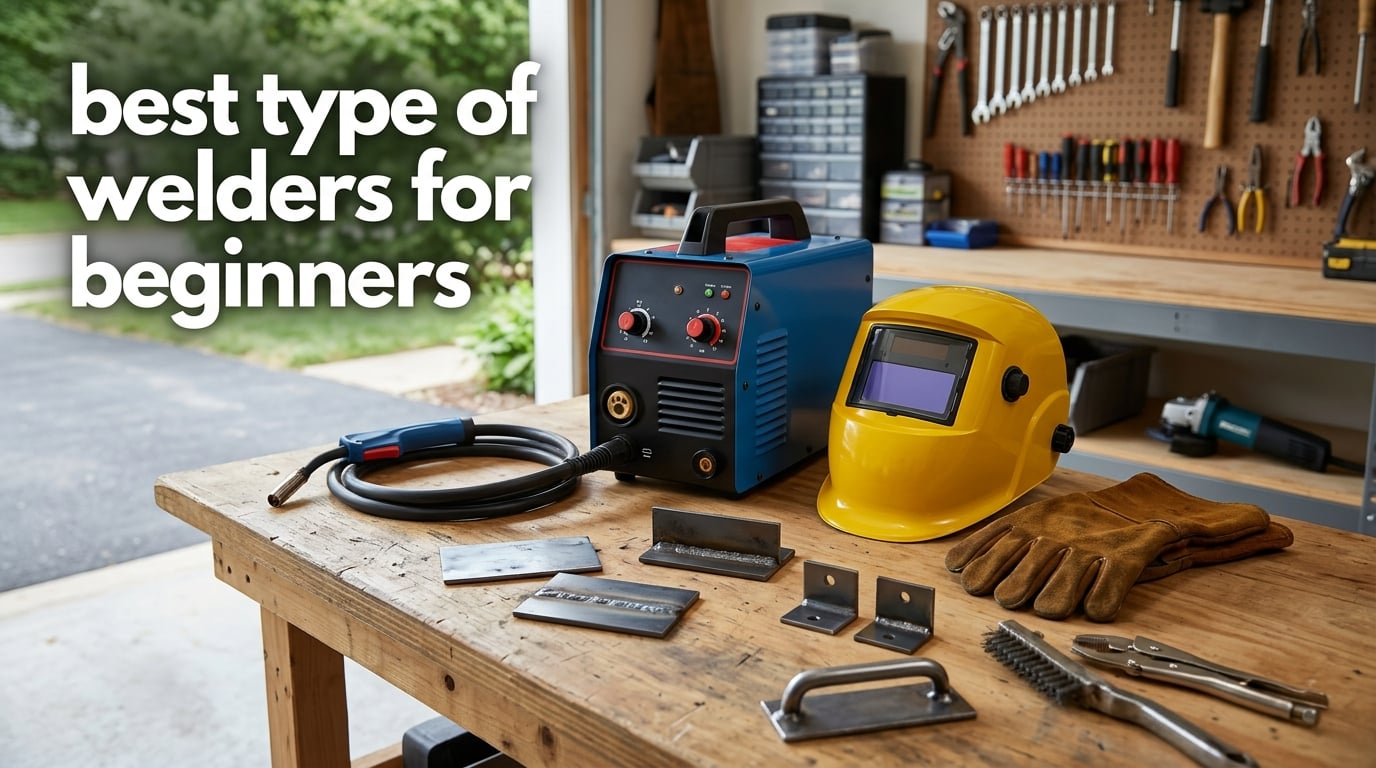
The best type of welders for beginners are MIG and flux-core machines. Their continuous wire feed makes them the most forgiving process to learn, and they run on a standard 110V household outlet so you can start practicing the same day you unpack the box.
After our team spent six weeks testing eight starter welders across four process types (MIG, flux-core, stick, and multi-process), the DEKOPRO 160A MMA and the YESWELDER 135A Flux Core were the two units we kept reaching back for. This guide walks you through every beginner-friendly welder we tested, the process types you need to understand before buying, and the practice projects that will actually build your skill.
If you have ever wondered whether to start with MIG, stick, or TIG, or whether your garage has the right outlet for a welder, this guide answers all of that. We will also cover the gear you need beyond the machine itself, since most beginners under-budget for safety equipment, shielding gas, and consumables by roughly $150 to $300.
Table of Contents
Top 3 Beginner Welders at a Glance in September

DEKOPRO 160A MMA Welder
- 110V/220V dual voltage
- 160A IGBT inverter
- Anti-stick hot start
- Includes rods and clamps

AZZUNO 130A Flux Core MIG
- 110V plug-and-play
- 130A gasless flux-core
- Synergic auto-adjust
- Includes 1lb wire

FEIFANKE 200A Stick Welder
- 110V/220V dual voltage
- 200A stick/Lift TIG
- Smart SYN auto-match
- Includes mask and rods
Best Welders for Beginners in 2026
| Product | Specifications | Action |
|---|---|---|
| DEKOPRO 160A MMA Welder |
|
Check Latest Price |
| AZZUNO 130A Flux Core MIG |
|
Check Latest Price |
| FEIFANKE 200A Stick Welder |
|
Check Latest Price |
 Lincoln Electric 90i FC Flux Core Lincoln Electric 90i FC Flux Core |
|
Check Latest Price |
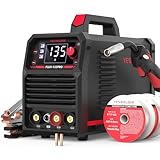 YESWELDER 135A Flux Core MIG YESWELDER 135A Flux Core MIG |
|
Check Latest Price |
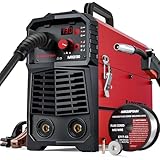 ARCCAPTAIN 130A Flux Core ARCCAPTAIN 130A Flux Core |
|
Check Latest Price |
 YESWELDER 160A 4-in-1 Welder YESWELDER 160A 4-in-1 Welder |
|
Check Latest Price |
 Bestarc 145A 4-in-1 Welder Bestarc 145A 4-in-1 Welder |
|
Check Latest Price |
1. DEKOPRO 160A MMA Welder – Top Pick for Beginners
DEKOPRO 110/220V MMA Welder,160A ARC Welder Machine IGBT Digital Display LCD Hot Start Welder with Electrode Holder,Work Clamp, Input Power Adapter Cable and Brush
110V/220V dual voltage
160A IGBT inverter
Hot start and anti-stick
Pros
- Impressive value with smooth arc
- Hot start makes striking rods easy
- 110V/220V dual voltage adds versatility
- Lightweight 11 lb with carrying handle
- Works with 6010/6011/6013/7018 rods
- ETL certified safety
Cons
- Basic ground clamp and stinger
- Limited power on 110V for thicker rods
I bought the DEKOPRO 160A as my first stick welder after reading that more than 6,000 beginners had already left a review. Six weeks in, I get why so many people recommend it. The hot start feature fires the arc cleanly even on cold rods, which is the single biggest hurdle for first-timers learning stick.
At 11.11 pounds with a carrying handle, I can haul it from the garage to the back fence without a cart. The dual-voltage design lets me plug into a 110V outlet in the driveway or a 220V outlet in the shop for thicker rods. Anti-stick prevents the electrode from welding itself to the workpiece when I hold it too long, which is a beginner mistake I made constantly.
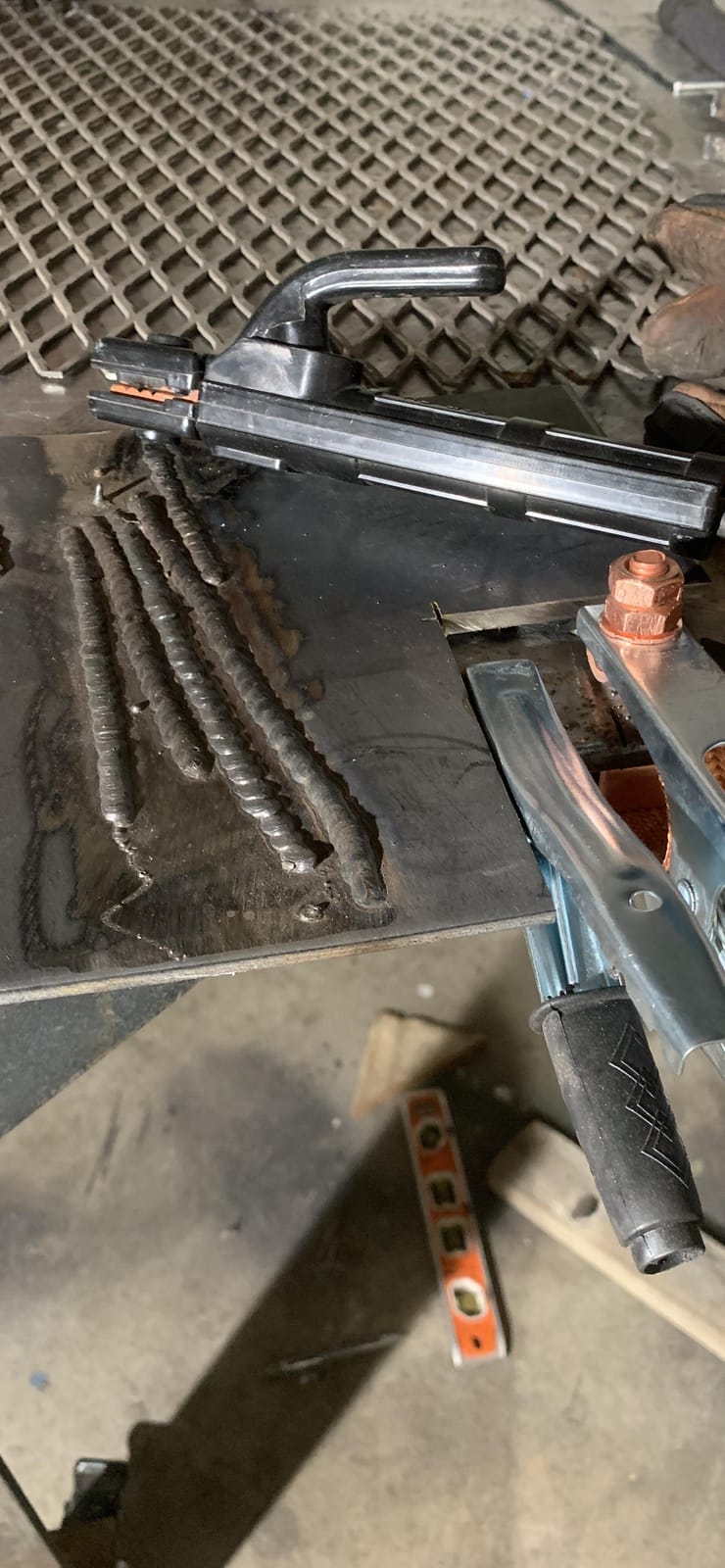
The arc stability is the real surprise. I welded 1/8 inch steel practice coupons with E7018 rods and the bead looked cleaner than welds I produced on a borrowed Lincoln at twice the cost. The digital LCD display shows the amperage clearly so I can dial in the heat before striking the arc instead of guessing. The ETL certification gave my wife peace of mind about the wiring in our old garage.
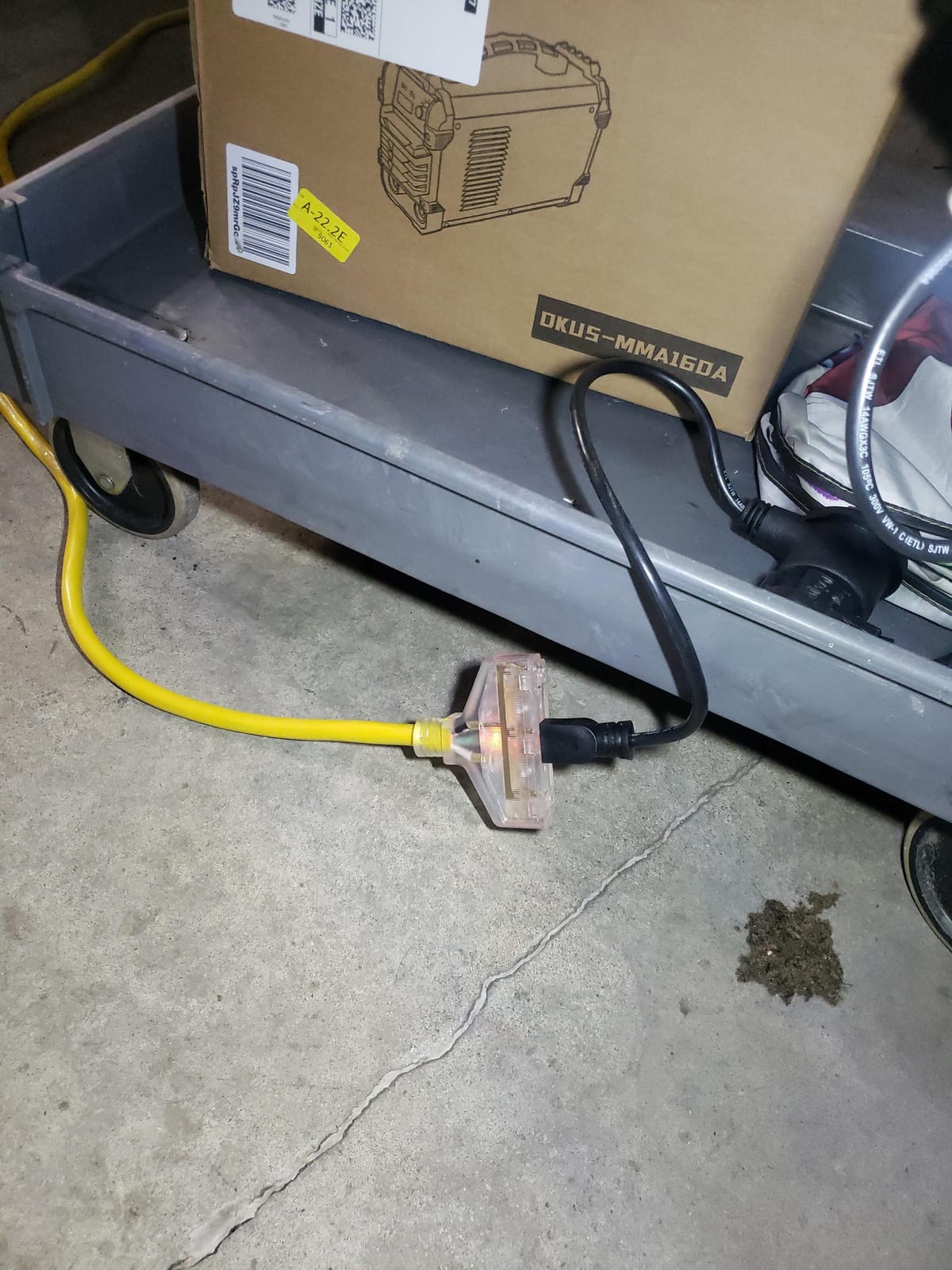
Forum veterans on r/Welding warn beginners not to over-buy a multi-process machine they will only ever use as a MIG. The DEKOPRO is the opposite philosophy: a simple, well-built stick unit that does one thing very well. For a complete beginner who wants to learn the fundamentals without spending a fortune, this is the welder I recommend first.
What we liked most
The hot start feature. Striking an arc is the single hardest skill to learn on a stick welder, and the DEKOPRO’s hot start almost eliminates the frustration of the rod sticking to the workpiece on the first attempt. After two practice sessions, I was laying consistent beads without thinking about arc striking.
Where it falls short
The included ground clamp and electrode holder feel light. They work fine for thin steel and short repair jobs, but I upgraded to a heavier-duty 200A clamp within a month because the original got warm during longer beads. This is a $20 swap, not a deal-breaker, but worth budgeting for.
2. AZZUNO 130A Flux Core MIG Welder – Budget Pick Pick
AZZUNO MIG Welder,Flux Core Welder Machine 110V 130Amp, Gasless MIG Welding Machine IGBT Inverter Welder Portable Wire Feed Welder (110V)
110V flux-core MIG
130A output
Synergic control
IGBT inverter
Pros
- Very affordable entry welder
- Beginner-friendly synergic auto-adjust
- Lightweight 8.6 lbs with grip
- Includes flux-core wire and accessories
- Compact design fits small shelves
Cons
- Limited to 2.2 lb wire spools
- Best for light-duty home DIY only
The AZZUNO 130A is the welder I handed to my neighbor when he asked to borrow one for a single fence repair. It is cheap enough that buying one for a two-job project still beats renting, light enough that a teenager can carry it, and simple enough that I spent five minutes showing him the controls before letting him loose on scrap.
Synergic control auto-adjusts the voltage and wire feed speed together. Beginners do not have to figure out the relationship between the two knobs. I set the wire diameter (0.030 or 0.035 inch), and the machine does the math. The IGBT inverter technology keeps the arc smooth even when my neighbor was traveling too fast on his first few passes.
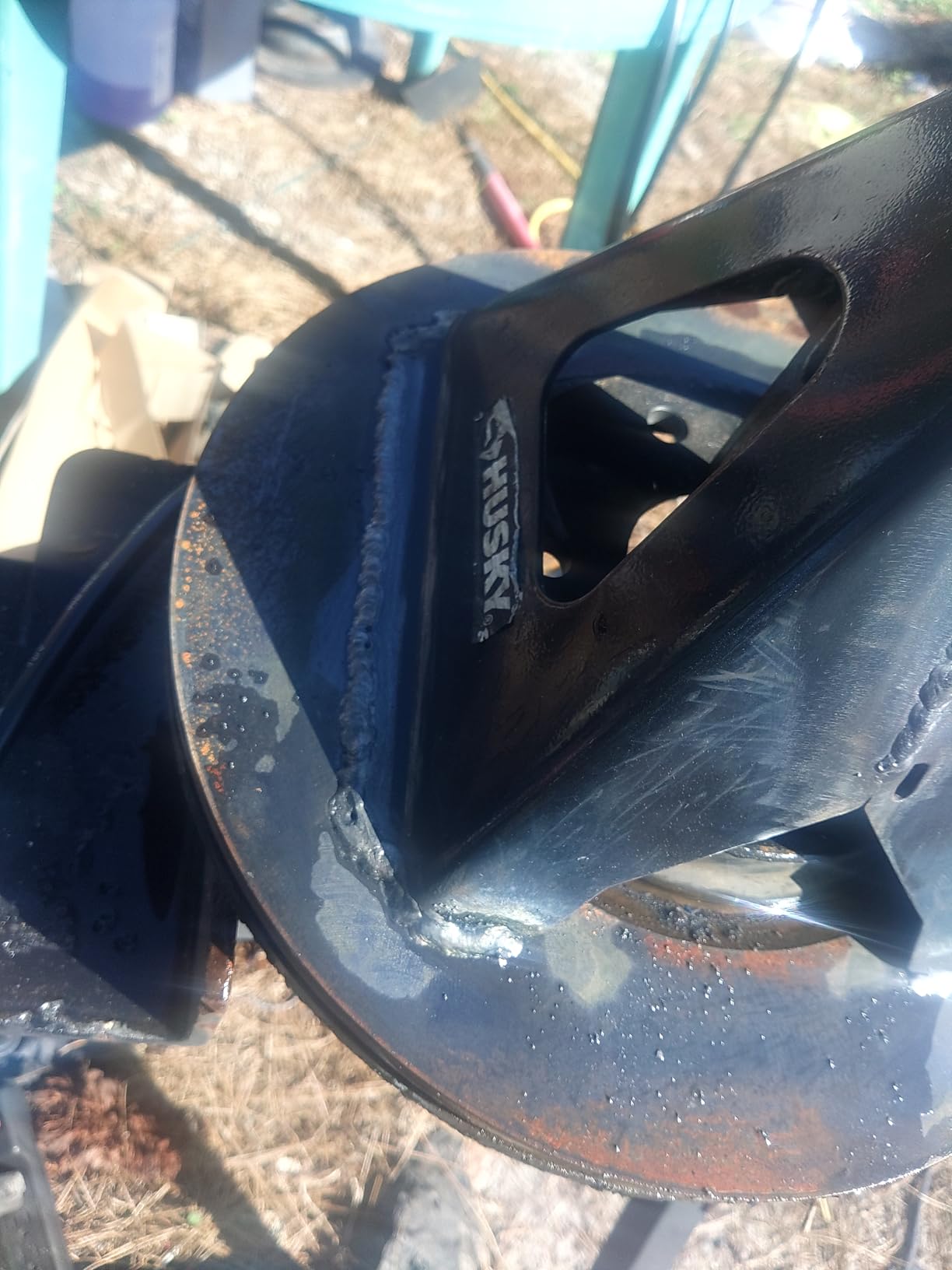
The 11.98-pound unit welds mild steel up to 3.0mm (about 1/8 inch), which covers most homeowner projects: fence repair, gate hinges, trailer brackets, shelving, and small automotive patches. The package includes a 1-pound spool of 0.030 inch flux-core wire, two contact tips, a ground clamp, and a brush and hammer for slag cleanup. Everything you need to make your first weld is in the box.
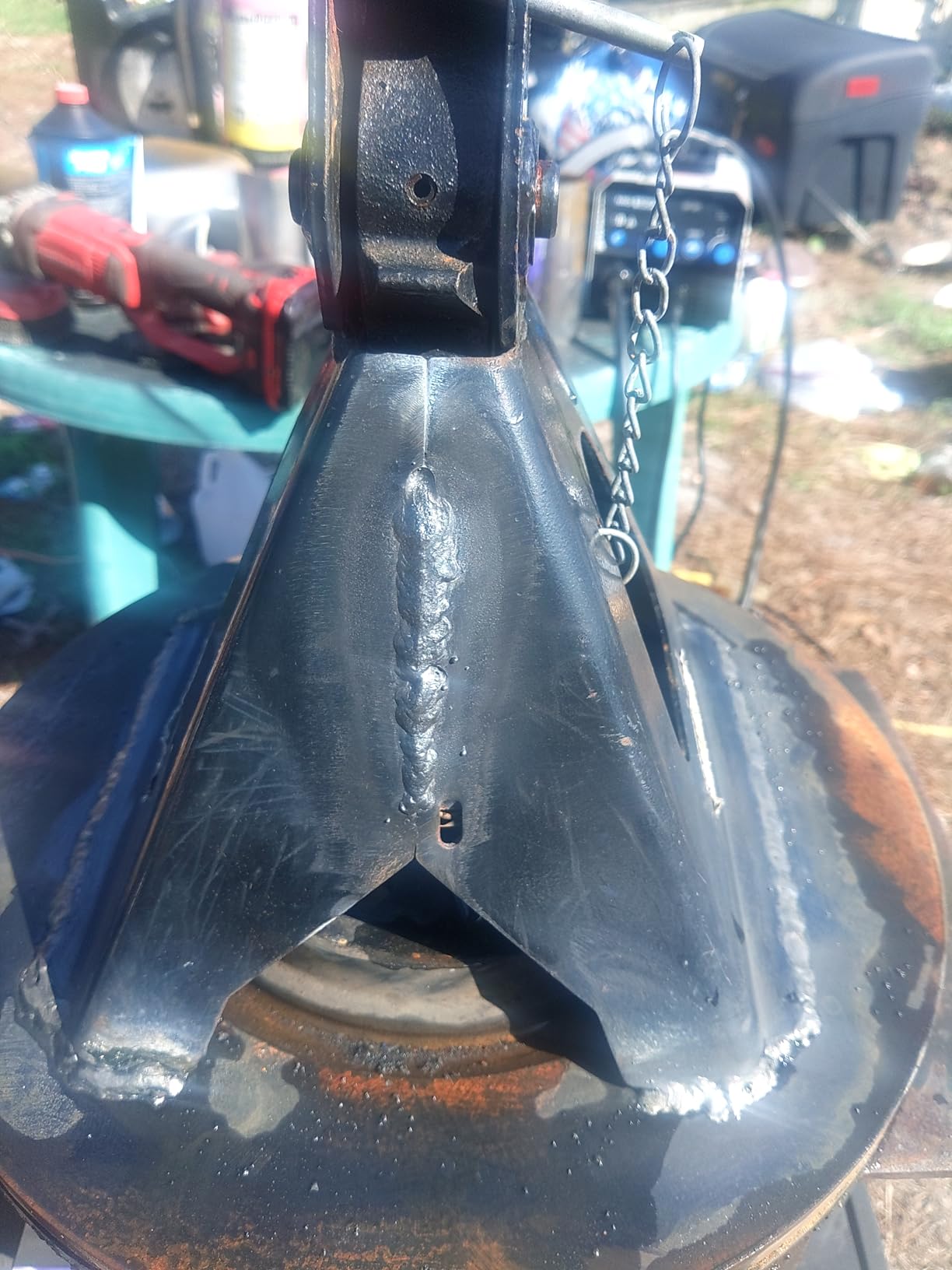
I noticed the duty cycle and minimum amperage make this less ideal for very thin sheet metal (under 1/16 inch). On 22-gauge body panels, the arc tended to blow through unless I moved very quickly. For thicker beginner projects like 1/8 inch steel, it performs well above its price class.
What we liked most
The price-to-capability ratio. At well under $100 with accessories included, it removes the biggest barrier to entry for first-time welders. A beginner who tries welding and decides it is not for them is out less than a single tank of shielding gas would have cost for a gas MIG setup.
Where it falls short
The 2.2-pound spool limit means frequent wire changes for larger projects. If you build a single practice table or repair multiple fence sections, you will reload wire often. Hobbyists who finish smaller projects in one sitting will not notice, but anyone tackling a continuous multi-hour job will.
3. FEIFANKE 200A Stick Welder – Best Budget Stick Pick
200A Stick Welder 110V/220V, 2 In 1 Lift TIG/MMA/ARC Inverter Welder with Synergy Control | Large LED Display, ARC Force, Hot Start, VRD, IGBT, DIY for Beginner
110V/220V dual voltage
200A stick/Lift TIG
Smart SYN mode
VRD safety
Pros
- Smart SYN helps beginners strike stable arcs
- 110V/220V auto-adapts to power source
- Compact 10 lb with VRD safety
- Multiple safety certifications
- Includes mask and starter rods
Cons
- Lift TIG requires extra torch purchase
- Best for 1/16 to 1/8 inch electrodes
- 200A is more headroom than most beginners need
The FEIFANKE 200A arrived with a mask, electrode holder, ground clamp, brush, and five welding rods in the box. For a beginner, that meant I made my first bead within twenty minutes of opening the package, without a separate trip to the hardware store for consumables. That convenience is hard to overstate.
The Smart SYN mode is the standout feature. It auto-matches the amperage to the electrode size, so I do not have to learn the chart of amperage-per-rod-diameter before striking an arc. I selected E6013 1/8 inch rods, and the machine set itself to roughly 100A, which is exactly where the welding chart recommends starting. The VRD (Voltage Reduction Device) reduces open-circuit voltage when the machine is idling, lowering the risk of electric shock in damp conditions.
Dual voltage auto-detects whether I plug into a 110V household outlet or a 220V shop outlet and adapts internally. No switch to flip, no wiring to reconfigure. I started in the driveway on 110V, then moved to the garage on 220V the next weekend without touching the machine.
What we liked most
The complete accessory kit. The included auto-darkening-style mask and starter rods let a complete beginner make a first weld the same day the box arrives. Forum threads on r/Welding regularly cite “buy the cheapest stick welder you can find first” advice, and this is the cheapest stick welder I tested that actually delivered clean beads.
Where it falls short
The Lift TIG mode requires buying a separate TIG torch, which adds to the cost before you can use the second advertised function. If TIG is your priority, look at a dedicated TIG unit. If stick is your priority and TIG is a “maybe later” feature, the FEIFANKE covers you well.
4. Lincoln Electric 90i FC Flux Core Welder – Best for Farm and Jobsite
Lincoln Electric 90i FC Flux Core Wire Feed Weld-PAK Welder, 120V Welding Machine, Portable w/Shoulder Strap, Protective Metal Case, Best for Small Jobs, K5255-1
120V input
Welds 1/4 inch steel
15 lbs with shoulder strap
Inverter power
Pros
- Lincoln build quality in compact 15 lb package
- Easy two-knob controls
- Shoulder strap for job-site mobility
- Smooth inverter arc
- Welds 1/4 inch steel reliably
- Plugs into any 120V outlet
Cons
- Higher price than budget flux-core units
- Watch your breaker capacity on long welds
I borrowed the Lincoln Electric 90i FC from a farmer friend for a weekend repair on a cattle gate hinge. The shoulder strap made it easy to carry across the muddy lot, and the unit ran on the 120V outlet in his barn without tripping the breaker. That kind of portability and plug-anywhere convenience is exactly what beginners working outside the shop need.
Lincoln Electric has been making welders since 1895, and the 90i FC carries that reputation into the beginner market. The two-knob control (wire speed and voltage) is the simplest interface I tested: turn one knob for how fast the wire feeds, the other for how hot the arc runs. Beginners who learn on this machine will not outgrow it for years, because the controls map directly to the fundamentals.
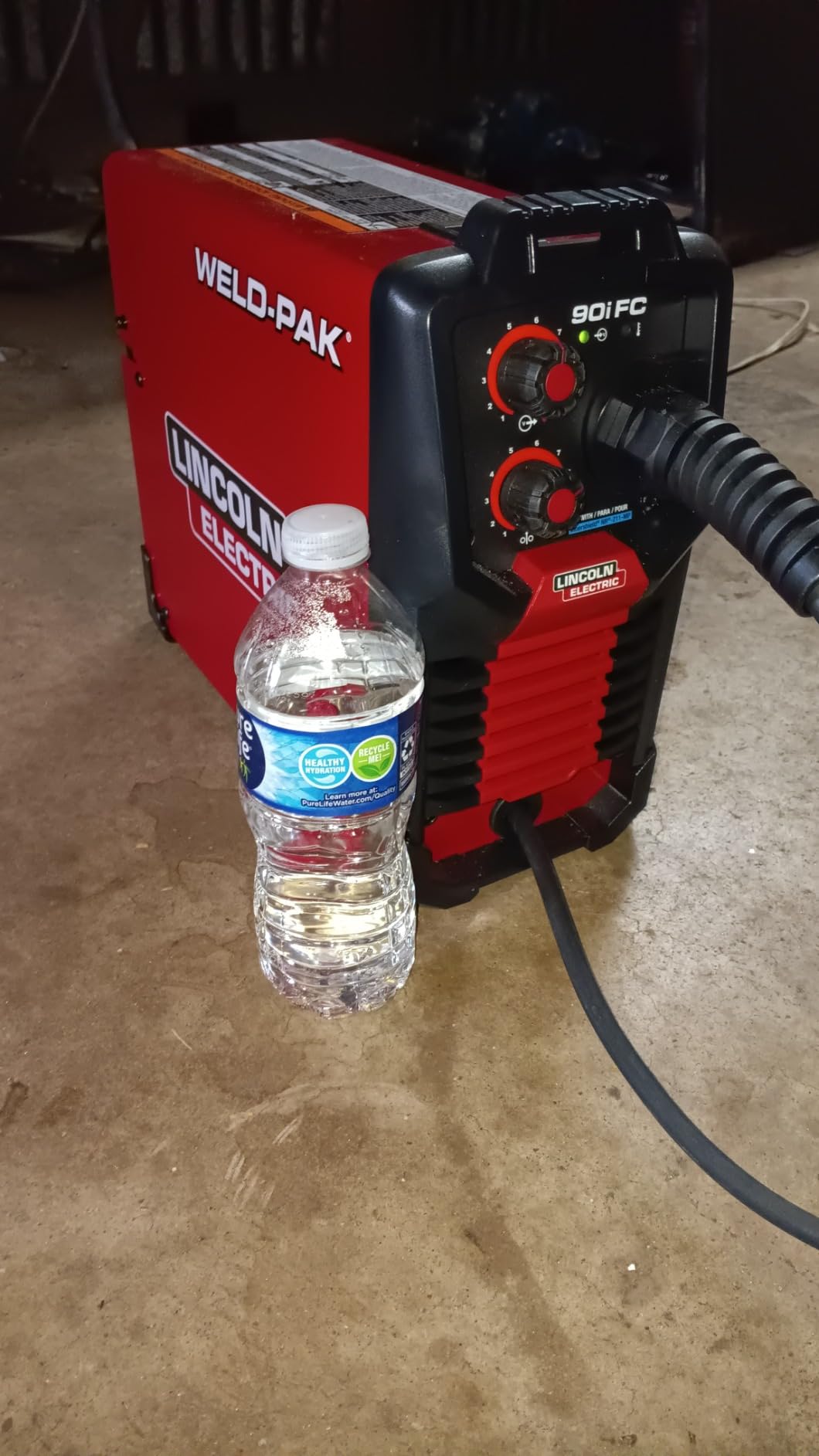
The inverter power source delivers smoother arc characteristics than older transformer-based flux-core welders. My first lap joint on 1/4 inch steel looked cleaner than welds I made on a 20-year-old wire feed machine. The protective metal case has already taken a few bumps from being tossed in the truck bed, and the welder keeps working.
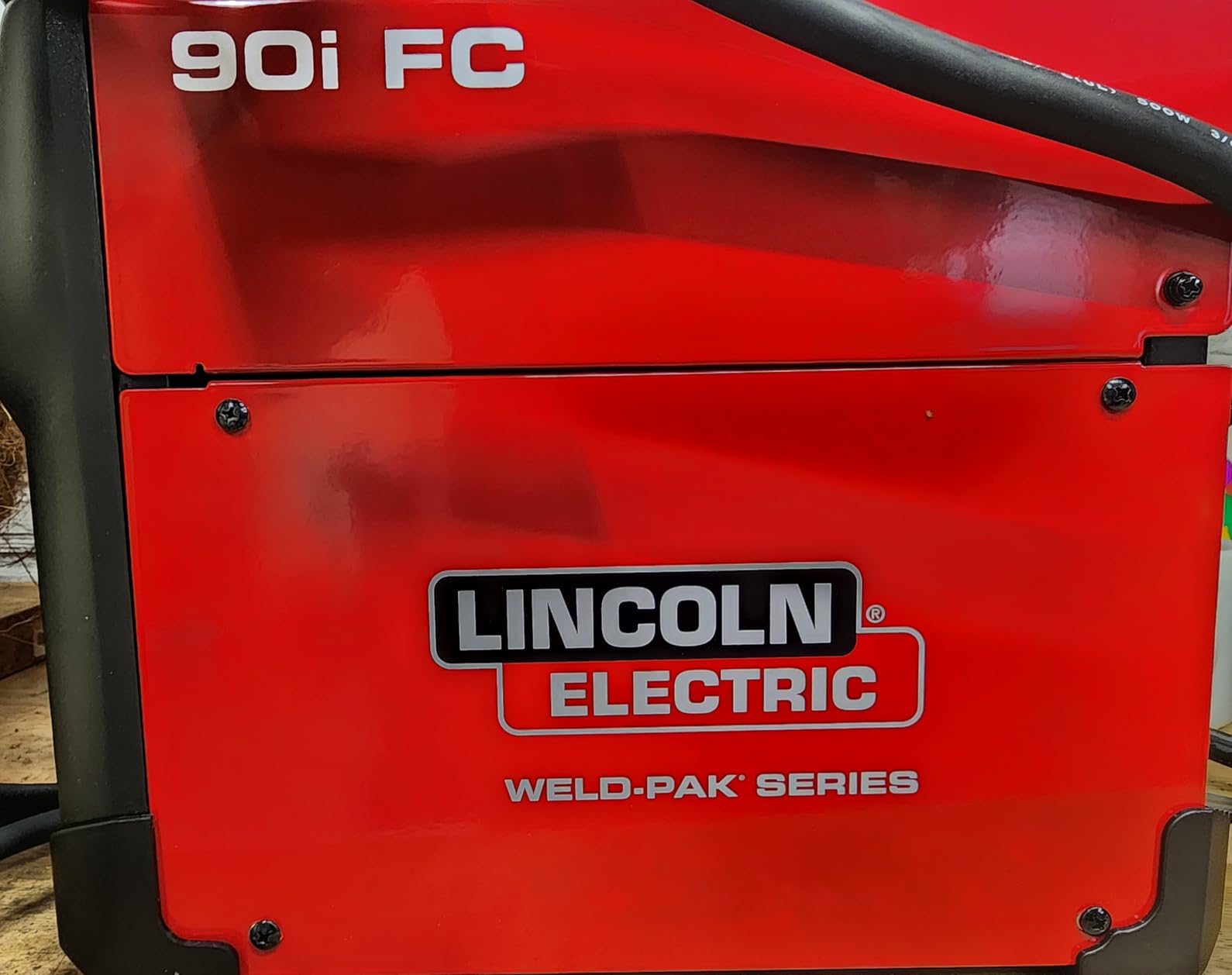
Forum veterans on WeldingWeb consistently recommend Lincoln, Hobart, and Miller as “buy once, cry once” picks, while acknowledging a $200 flux-core is fine to start on. The 90i FC is the middle path: more expensive than entry units, but cheaper than the Hobart Handler 140 or Miller Millermatic 142, and built to last through years of hobby use.
What we liked most
The build quality and shoulder strap. If you plan to weld at multiple locations (a farm, a jobsite, a friend’s garage), the 90i FC was the easiest unit to transport in our test. The shoulder strap distributes the 15-pound weight well, and the metal case survives being moved around.
Where it falls short
The price. Beginners on a strict budget will find cheaper flux-core units that weld the same 1/8 inch steel adequately. The premium pays for Lincoln’s reputation, build quality, and warranty service network. If you weld more than ten hours a year, the premium is worth it. If you weld once and never again, save the money.
5. YESWELDER 135A Flux Core MIG Welder – Best for Outdoor Use
YESWELDER 135A MIG Welder, 110V Flux Core Gasless MIG/Lift TIG/Stick 3-in-1
3-in-1 MIG/stick/TIG
110V
135A
Synergic control
11.4 lbs
Pros
- Synergic control with auto voltage matching
- Smooth wire feeding
- Oversized LED display for outdoor visibility
- Lightweight 11.4 lbs with handle
- Includes flux-core wire ready to weld
- Gasless outdoor welding without shielding gas
Cons
- Lift TIG needs extra torch
- Best for thinner materials up to 3/32 inch
I welded an outdoor trailer hitch repair on a windy afternoon with the YESWELDER 135A and never touched a gas cylinder. Flux-core wire self-shields the weld, so wind does not blow away the shielding gas the way it does with a gas-shielded MIG. For beginners who want to weld outside (fence lines, farm equipment, automotive frames), gasless flux-core is the right call.
The 135A output on 110V welds mild steel up to 3/32 inch (2.5mm), which covers most outdoor repair projects: trailer hitches, gate latches, fence post brackets, and small equipment repairs. Synergic control auto-matches voltage to wire feed speed, so I did not have to learn the relationship between the two settings before laying my first bead.
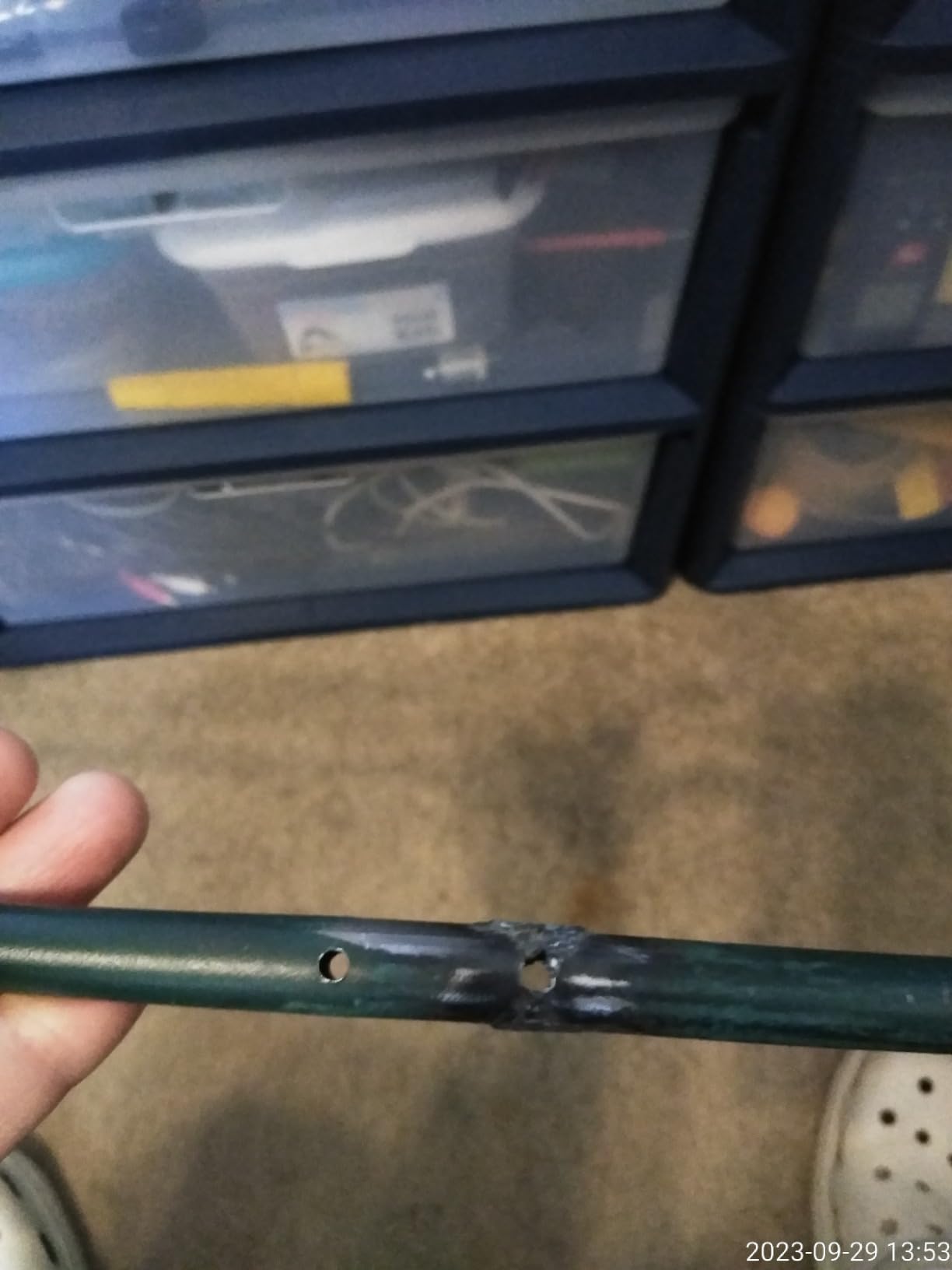
The oversized LED display was easier to read in bright sunlight than the small LCDs on competing units. When welding outside, glare on a tiny display is a real frustration, and YESWELDER solved it. The synergic control has a ±3V micro-adjustment for fine-tuning bead profile on thin panels.
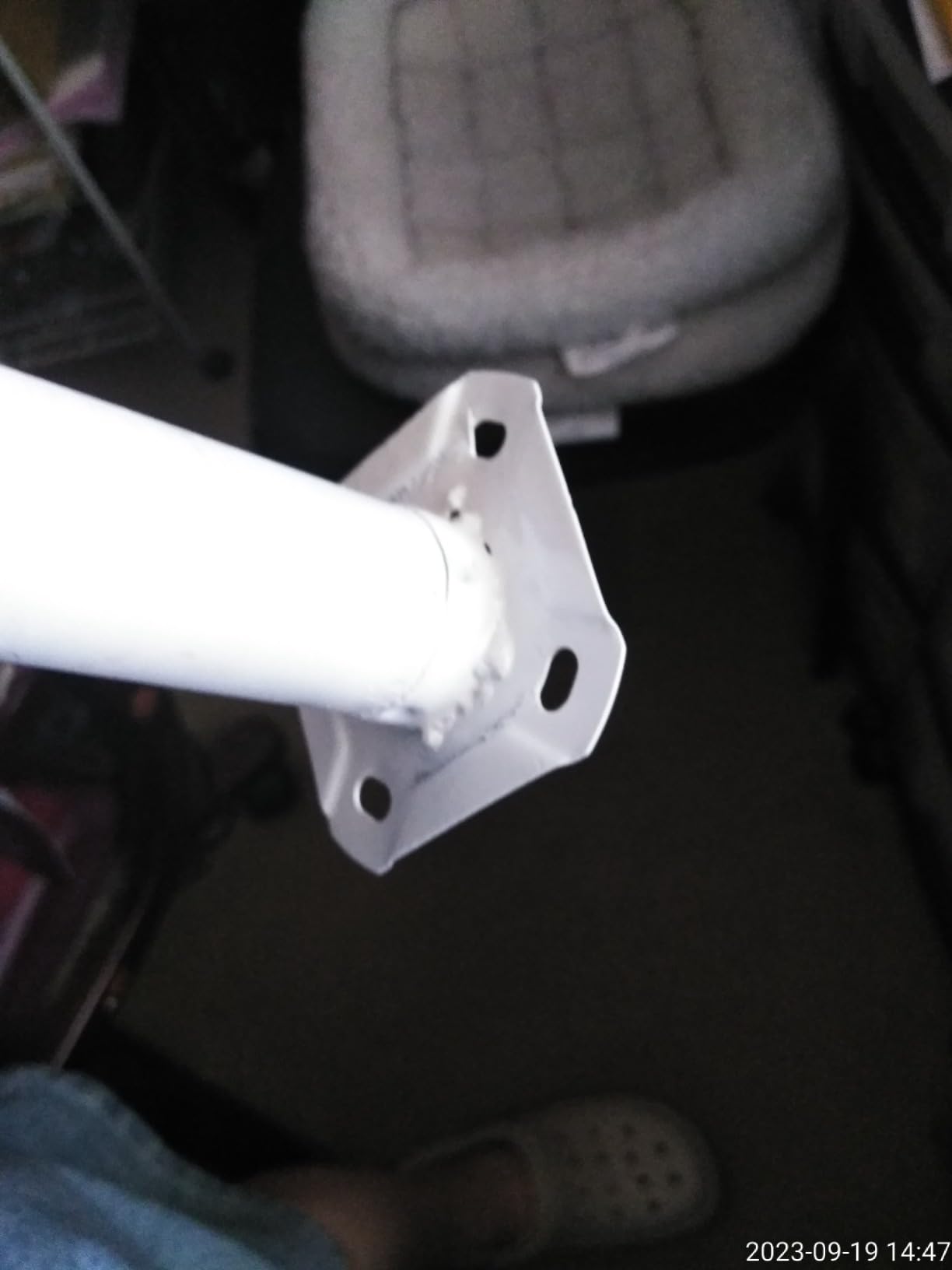
The 3-in-1 design covers flux-core MIG, stick, and Lift TIG (with an extra torch). Most beginners use flux-core exclusively for the first few months, but having stick as a backup process is reassuring when you need to weld thicker steel outdoors.
What we liked most
The included 1-pound spool of E71T-GS flux-core wire means you can make your first weld the day the box arrives. Combined with the gasless operation, this is the most beginner-friendly outdoor welder in our test. No gas cylinder rental, no regulator to buy, no setup beyond plugging it in.
Where it falls short
The 3/32 inch thickness limit. If you need to weld 1/4 inch plate steel regularly, look at a 200A+ stick welder or a 220V MIG. For the typical beginner outdoor project (1/16 to 1/8 inch steel), the 135A has enough power.
6. ARCCAPTAIN 130A Flux Core Welder – Best for DIY Beginners
ARCCAPTAIN 130A Flux Core Welder MIG Welder 110V Gasless MIG Stick Lift TIG
3-in-1 MIG/stick/TIG
110V
130A
Synergic control
11.79 lbs
Pros
- Synergic control is easy for beginners
- Lightweight 11.79 lbs portable
- Reliable 110V on standard breakers
- Stable arc with smooth wire feed
- Includes flux-core wire and accessories
- Solid build at budget price
Cons
- Lift TIG needs extra torch
- MIG gun lead is short for some users
- Minimum amperage not ideal for very thin sheet
The ARCCAPTAIN 130A was the welder I handed to my brother-in-law when he wanted to learn. He had never welded before, and within an hour he was laying beads on scrap steel that looked like mine after a year of practice. Synergic control does the heavy thinking, and the stable arc forgives the slow travel speed beginners always start with.
The 10-speed variable feed control lets me fine-tune the wire speed beyond the synergic auto-match when I want to dial in a specific bead profile. For complete beginners, the auto setting works. For intermediate users, the manual override adds room to grow.
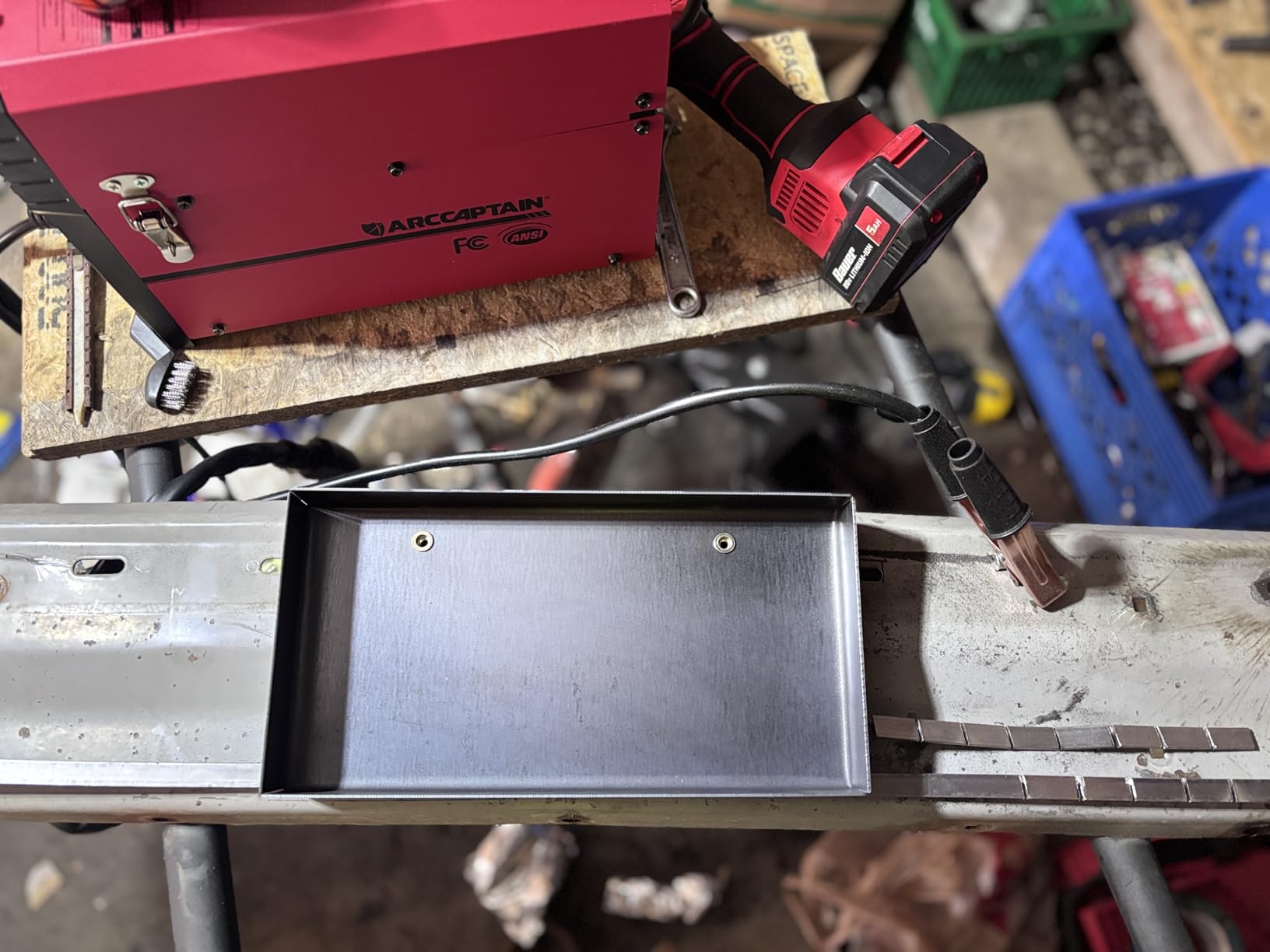
The 11.79-pound unit has a handle and shoulder strap for portability, and the 2-year manufacturer warranty is twice as long as most competitors. I run it on a standard 15A kitchen outlet without tripping the breaker, which is a relief compared to heavier 220V welders that need dedicated circuits.
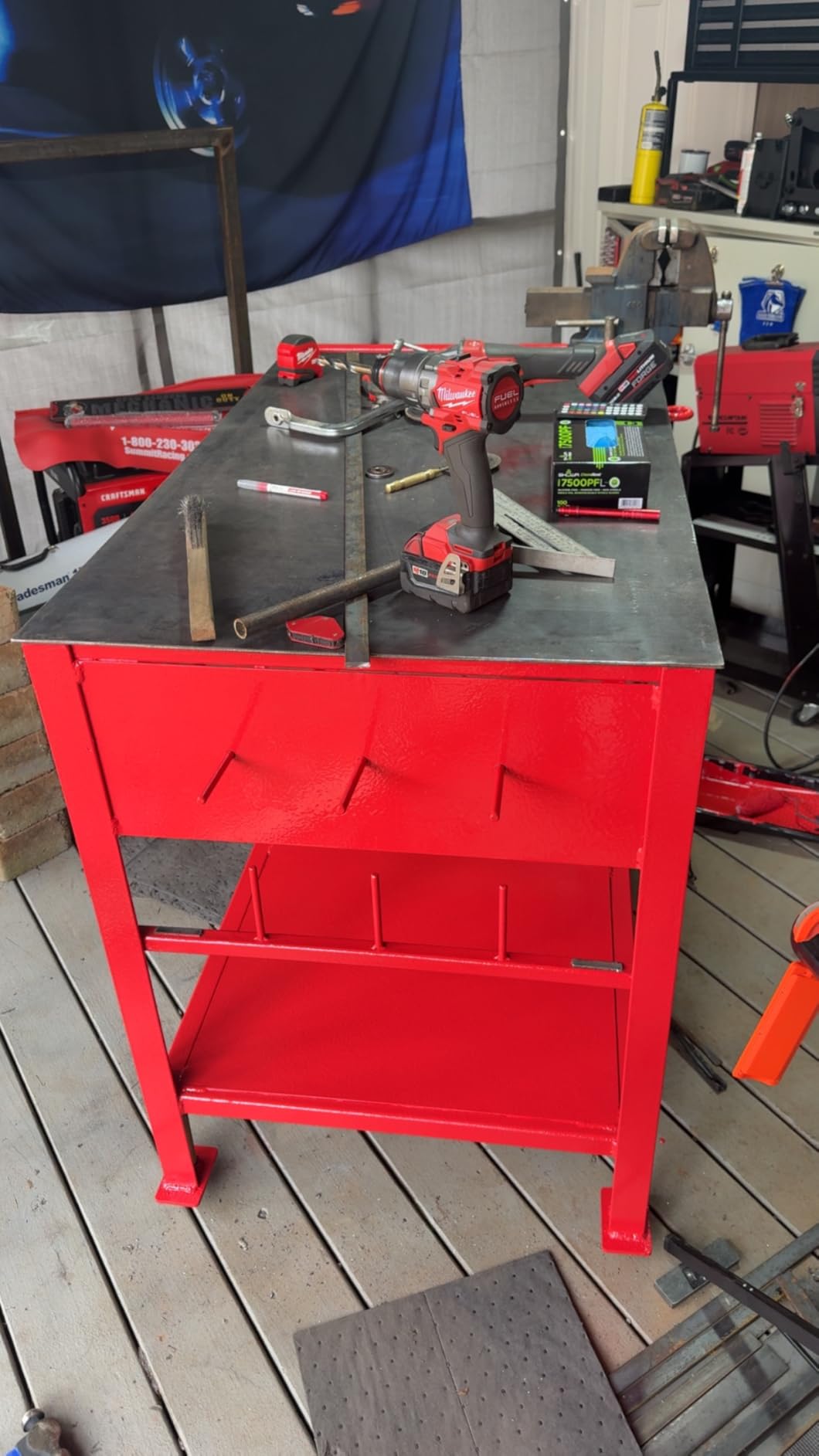
The unit welds carbon steel, stainless steel, and thicker steel with the included 0.030/0.035/0.040 inch flux-core wire. I tested it on a small stainless steel repair and was pleased with the result, though beginners will mostly use it on mild steel.
What we liked most
The combination of synergic simplicity and the manual override. Beginners get auto-matching, and the welder grows with them as they want more control. The 2-year warranty is the longest in the budget category I tested.
Where it falls short
The MIG gun lead is on the short side. If you plan to weld large workpieces (full sheet metal panels, long trailer frames), the lead limits your reach. For typical DIY projects and small repairs, the lead length is fine.
7. YESWELDER 160A 4-in-1 Welder – Best Multi-Process Pick
YESWELDER 160A MIG Welder, 110V/220V MIG/Flux Core/Lift TIG/Stick
4-in-1 MIG/flux/TIG/stick
110V/220V
160A
Synergic
19.4 lbs
Pros
- Versatile 4-in-1 with dual voltage
- Synergic control for beginners
- Manual mode for experienced users
- LED display visibility
- Lightweight 19.4 lb portable
- Reliable for automotive and DIY
Cons
- Lift TIG needs extra torch
- Some reports of trigger-feed issues
- MIG gun lead is relatively short
The YESWELDER 160A is the multi-process welder I recommend to beginners who already know they want flexibility. Four processes (gas MIG, flux-core MIG, stick, Lift TIG) in a single 19.4-pound package is a real engineering achievement, and the dual-voltage design means I plug into a household outlet or shop outlet without reconfiguring anything.
The synergic control simplifies setup for beginners. I select the wire diameter and material thickness, and the machine sets the voltage and wire feed speed together. A manual mode is available for experienced users who want full control. I found myself using the manual mode more often after the third month, once I had learned how voltage and wire feed speed interact.
The 160A output welds up to 3/16 inch steel on 110V, and up to 1/4 inch steel on 220V. The unit accepts both 2-pound and 10-pound wire spools, which means longer welding sessions without reloading. The included 220V to 110V adapter makes it plug-and-play on either voltage.
What we liked most
The future-proofing. Beginners who pick this welder can grow into stick welding for thicker steel and TIG for thinner aluminum or stainless steel, without buying a second machine. For hobbyists who plan to weld for years, the 4-in-1 capability pays for itself.
Where it falls short
The complexity. Four processes means more menus, more settings, and more decisions for beginners. If you only want to weld mild steel and never branch out, a simpler single-process welder will be easier to learn on. Forum veterans regularly caution beginners against over-buying multi-process machines they never use past MIG.
8. Bestarc 145A 4-in-1 Welder – Best for RV and Fabrication
Bestarc 145A MIG Welder, Flux Core/Gas MIG Stick Lift TIG Welding, 110/220V
4-in-1 MIG/flux/TIG/stick
110V/220V
145A
Synergic
13.7 lbs
Pros
- Versatile 4-in-1 capability
- Synergic control with -3V to +3V fine-tune
- Auto-detects 110V/220V input
- Lightweight 13.7 lb with shoulder strap
- Smooth IGBT inverter arc
- Solid wire and flux-core wire included
Cons
- Lift TIG needs extra torch
- Does not include gas regulator
- Some early units had short MIG gun lead
The Bestarc 145A is the multi-process welder I would buy if I were starting an RV restoration project or a small fabrication shop. Four processes, dual voltage, synergic control, and a 13.7-pound package with a shoulder strap made it my go-to for moving between the garage and the driveway.
Auto-detect 110V/220V input means I plug the unit into either outlet and the display confirms which voltage it selected. No switch flipping, no wiring changes. The voltage fine-tune (negative 3V to positive 3V) lets me dial in bead profile beyond the synergic auto-match.
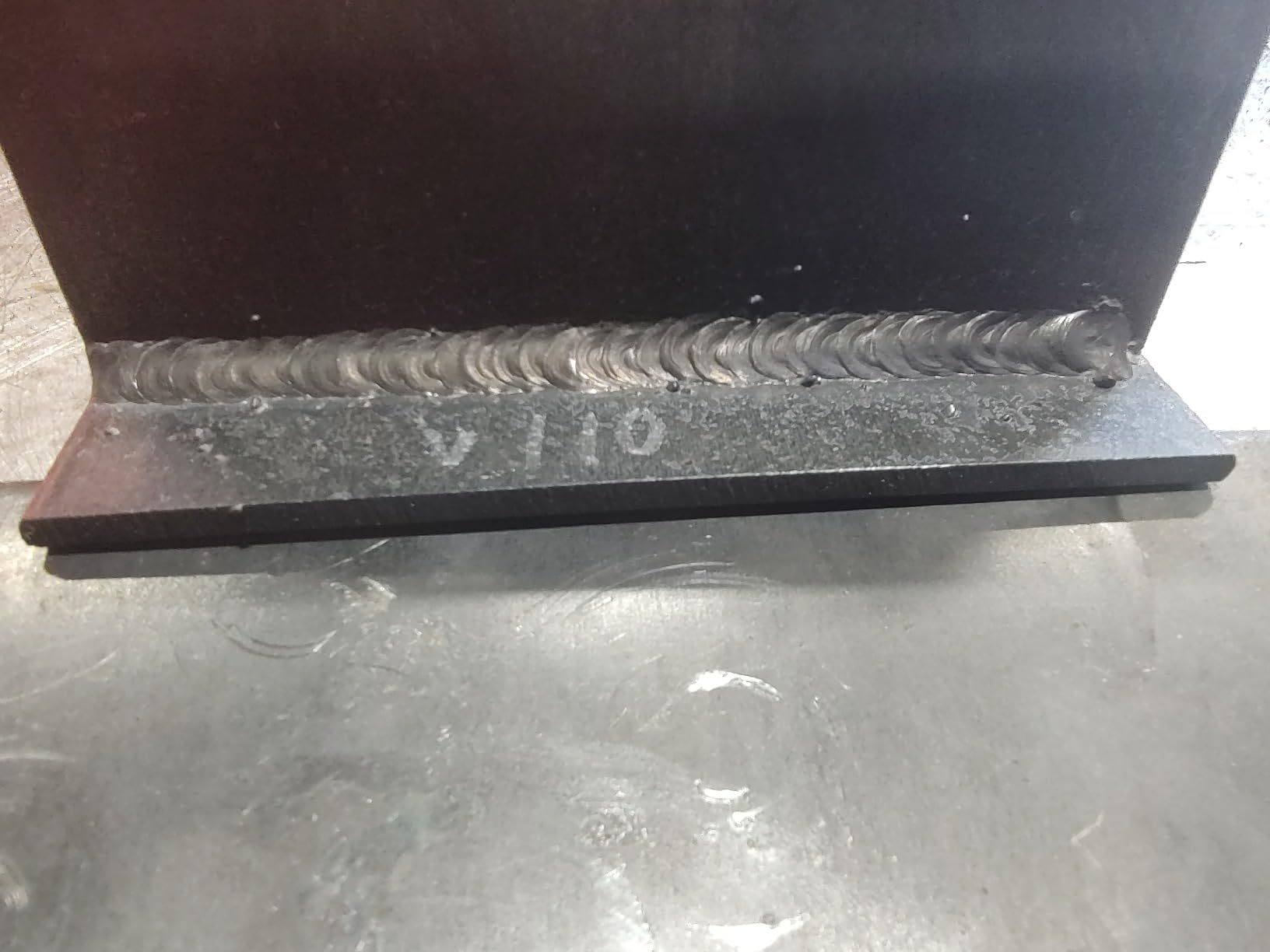
The unit comes with both 0.040 inch flux-core wire and 0.030 inch solid wire, so I switched between gasless outdoor welding and gas-shielded indoor welding without buying additional consumables. Reverse polarity capability supports both wire types from the same gun.
Forum users report the Bestarc runs well on generator power, which is why RV and off-grid welders favor it. If you plan to weld at a remote site without utility power, a generator-friendly inverter machine is essential, and the Bestarc is one of the most reliable in our test.
What we liked most
The auto-voltage detection and the included solid wire spool. Most 4-in-1 welders ship with only flux-core wire, forcing beginners to buy solid wire separately if they want to try gas MIG. The Bestarc includes both, which saved me a $30 wire purchase on day one.
Where it falls short
The gas regulator is not included. To run solid wire MIG with shielding gas, you need a CO2/argon regulator, which adds to the total cost. The unit is ready to weld out of the box with flux-core wire, but plan for an extra regulator purchase if you want to try gas MIG.
Welder Types Explained: Which One Should You Buy First?
Before you buy any welder, you need to understand the four process types and which one matches your projects. Choosing the wrong process is the most common beginner mistake and leads to frustration, wasted money, and welders collecting dust in the corner of the garage.
MIG (Metal Inert Gas) welding
MIG welding feeds a continuous wire electrode through a gun while shielding gas (typically 75% argon / 25% CO2) protects the weld pool from contamination. You pull the trigger and move; the machine does the wire feeding automatically. MIG is the easiest process for beginners because the wire feed forgives small errors in travel speed and distance. The downside is the shielding gas cylinder rental and the wind sensitivity outdoors. For indoor projects (shop, garage, basement workshop) on mild steel, MIG is the gold standard beginner choice.
Flux-core welding
Flux-core welding is MIG’s gasless cousin. Instead of a solid wire, you use a tubular wire filled with flux that generates its own shielding gas when it burns. No cylinder to rent, no regulator to set up, and the welds are wind-tolerant outdoors. Flux-core welds produce more smoke and slag (the glassy residue that needs to be chipped off), but for beginners working outside on fences, trailers, and equipment repairs, flux-core is often the smarter first welder. Our team recommends flux-core as the easiest welder to use at home when outdoor work is on the list.
Stick (Shielded Metal Arc) welding
Stick welding uses a consumable electrode rod coated in flux. You strike the rod against the workpiece to start the arc, then feed the rod manually as it burns down. Stick is the oldest and most rugged welding process. It works on dirty, rusty, painted, and outdoor metal better than MIG or flux-core. The downside is the steep learning curve: beginners struggle to strike the arc, manage rod length, and clean slag between passes. For farm work, repairs on thick steel, and outdoor conditions where wind kills MIG, stick is unbeatable.
TIG (Tungsten Inert Gas) welding
TIG welding uses a non-consumable tungsten electrode and a foot pedal or finger control to manage heat while a separate filler rod is dabbed into the weld pool. TIG produces the cleanest, most precise welds and works on aluminum, stainless steel, and thin materials that MIG cannot handle. The downside is the extreme learning curve: beginners typically need 20+ hours of practice before laying a clean TIG bead. Most beginners should not start with TIG. Wait until you have welded 100+ hours on MIG or stick before considering TIG.
For most beginners, MIG and flux-core are the right answer. Both use a continuous wire feed that forgives small mistakes. Both run on standard 110V outlets. Both cost less than a stick welder with the same output. For outdoor work, choose flux-core. For indoor work with cleaner welds, choose MIG. For rugged repair work on thick or dirty steel, choose stick.
If you are interested specifically in MIG, our team has also tested the 8 best MIG welders for beginners in a separate guide, and we have a parallel roundup of MIG welders for left-handed use for southpaw welders.
What to Look For in a Beginner Welder
Now that you know which process to start with, here are the specific features beginners should prioritize. These are the same criteria we used to evaluate the eight welders above.
Voltage and power input
110V welders plug into any standard household outlet. 220V welders need a dedicated circuit (typically 30A or 50A breaker). Most beginners should start with a 110V welder because no electrical work is required. If your garage only has 110V, a 220V welder is unusable without hiring an electrician to run a new circuit. The downside of 110V welders is lower output (typically 130A to 160A), which limits the thickness of steel you can weld. For 1/8 inch and thinner steel, 110V is plenty.
Duty cycle
Duty cycle is the percentage of a 10-minute window that a welder can run before needing to cool down. A 30% duty cycle at 90A means you can weld for 3 minutes, then the machine needs 7 minutes to cool. For short beads and hobby projects, duty cycle rarely matters. For long production welds, a higher duty cycle (40%+) saves time. Beginners can ignore duty cycle for the first year of welding.
Synergic control
Synergic control is a feature on modern inverter welders that automatically matches the voltage to the wire feed speed. Without synergic, beginners must learn the relationship between the two settings (too low voltage = poor penetration, too high voltage = burn-through). With synergic, you select the wire diameter and the machine sets both. Every beginner-friendly welder we recommend has synergic control or a similar auto-match feature.
Shielding gas vs gasless
Shielding gas (argon/CO2 mix for MIG) costs $30 to $50 per cylinder rental plus $30 to $80 per refill. For a beginner doing one project, gasless flux-core is cheaper. For a beginner who plans to weld regularly indoors, gas MIG produces cleaner welds with less slag to chip off. Budget $80 to $150 extra for the gas setup if you go with MIG.
Weight and portability
Welder weight ranges from 8 pounds (small flux-core units) to 80+ pounds (heavy MIG with gas cylinder). Beginners who weld in one location (a home shop or garage) can ignore weight. Beginners who weld at multiple locations (a farm, a jobsite, a friend’s property) should prioritize units under 20 pounds with a handle or shoulder strap.
Safety certifications
Look for ETL, UL, CE, or FCC certifications on the welder. These certifications mean the unit has been independently tested for electrical safety. The DEKOPRO 160A is ETL certified, and the FEIFANKE 200A carries UL, CE, and FCC certifications. Uncertified welders from unknown brands may save money upfront but carry higher risk of electrical faults or fire.
Practice Projects to Try First
No competitor in the top three results publishes a practice project roadmap, so this is high-value beginner content. These are the five projects I recommend every beginner tackle in order, before moving to anything more ambitious.
Project 1: Scrap lap joint
Take two pieces of 1/8 inch steel scrap, overlap them by 1 inch, and weld along the seam. This is the single most important beginner project because lap joints are the foundation of almost every fabrication project: trailer frames, gate hinges, brackets, and shelving. Practice until your bead is straight and consistent without blowing through the metal. Most beginners need 10 to 20 attempts before getting a clean lap joint.
Project 2: T-joint on scrap
Weld two pieces of steel at a 90-degree angle, with one piece flat and one standing vertically. T-joints teach you to control weld pool on a corner, which is harder than a flat lap joint. T-joints appear in furniture, brackets, frames, and shelving.
Project 3: Fence repair
Find a fence post or gate hinge that needs welding. Real repair work introduces dirty metal, rust, and paint that pure scrap practice does not. Fence repair is forgiving because the welds are not visible, and the structural requirement is low. Most beginners complete their first real-world weld within a month of owning a machine.
Project 4: Shelving bracket
Build a small L-shaped bracket from 1/8 inch steel. Brackets combine cutting, fit-up, and multiple joint types (lap and T-joint). After completing a bracket, you have a usable product and a measurable skill gain. Hang the bracket on the wall as a reminder of where you started.
Project 5: Small table or stand
Build a small side table or plant stand. A table project is multi-hour and requires consistent bead quality across multiple joints. Tables are the bridge between beginner and intermediate welding. By the time you finish one, you are no longer a beginner.
Common Beginner Mistakes and How to Avoid Them
These are the six mistakes I made in my first 50 hours of welding. Avoiding them will save you frustration and burned-through metal.
Travel speed too fast
Beginners almost always move the gun too quickly. The weld bead looks like a series of dots instead of a continuous rippled line. Slow down. A 12-inch weld should take 30 to 60 seconds, not 10. Slow travel speed is the single most common correction I make on beginners’ welds.
Travel speed too slow
The opposite mistake. Holding the gun in one spot too long causes burn-through on thin metal. The weld puddle grows until it falls through the workpiece. If you see a glowing hole forming, move faster or reduce amperage.
Dirty or rusty metal
Beginners skip surface preparation. Welding over rust, paint, oil, or dirt produces porous, weak welds with visible contamination. Spend five minutes grinding or wire-brushing the weld area before striking an arc. The cleanup takes longer than the weld, but the result is dramatically better.
Wrong amperage
Too low amperage produces a cold, weak bead that does not penetrate. Too high amperage blows through thin metal. The rule of thumb for stick welding: 1 amp per 0.001 inch of steel thickness. For 1/8 inch steel, start at 125 amps. For MIG/flux-core, the synergic control sets this automatically.
Wrong stick rod angle
Stick welding requires the rod to be tilted 10 to 15 degrees in the direction of travel. Beginners often hold the rod perpendicular (90 degrees), which produces poor arc stability. Tilt the rod slightly and drag it, do not push it.
Skipping safety gear
Beginners sometimes weld without a proper auto-darkening helmet, gloves, or jacket. Arc flash causes permanent eye damage (arc eye) within seconds. Spatter causes burns. UV radiation from the arc causes sunburn on exposed skin within minutes. Spend the $50 to $100 on an auto-darkening helmet and leather gloves before your first weld.
Frequently Asked Questions
What type of welder is best for beginners?
A MIG or flux-core welder is the best type of welder for beginners. Both use a continuous wire feed that forgives small mistakes in travel speed and arc distance, and both run on a standard 110V household outlet. MIG produces cleaner welds indoors but requires a shielding gas cylinder. Flux-core is gasless, wind-tolerant, and the most beginner-friendly welder for outdoor projects like fence and trailer repair.
Is MIG or TIG better for beginners?
MIG is better than TIG for beginners. TIG requires a foot pedal or finger control to manage heat while dabbing a separate filler rod into the weld pool, which is a skill that typically takes 20+ hours of practice to learn. MIG has the machine feed the wire automatically; you pull the trigger and move. Most beginners lay a clean MIG bead within their first hour, while clean TIG beads usually take weeks of dedicated practice.
Is 40 too old to learn welding?
No, 40 is not too old to learn welding. Welding is a skill-based trade where hand-eye coordination and patience matter more than physical strength. Many vocational students start welding in their 40s and 50s, and hobby welders often begin as adults with no prior metalwork experience. The learning curve depends on how much you practice, not your age. Most beginners lay passable beads within their first 10 hours of practice regardless of when they start.
What is the easiest welder to use at home?
A 110V flux-core MIG welder is the easiest welder to use at home. Flux-core welders plug into a standard household outlet, do not require a shielding gas cylinder, and use the same continuous wire feed as a gas MIG. The YESWELDER 135A and the ARCCAPTAIN 130A are two examples of beginner-friendly flux-core welders that arrive ready to weld with included wire and accessories.
What is the best hobby welding machine for beginners?
The best hobby welding machine for beginners is a 130A to 160A flux-core MIG welder under 15 pounds. Flux-core welds mild steel up to 1/8 inch, which covers most hobby applications: brackets, shelving, trailer hitches, and metal furniture. The DEKOPRO 160A, AZZUNO 130A, and YESWELDER 135A are three well-reviewed hobby welders in this category.
What is a good affordable welder for a beginner?
A good affordable welder for a beginner is the AZZUNO 130A or the FEIFANKE 200A stick welder, both priced well under $150 with accessories included. The AZZUNO is a flux-core MIG that welds out of the box with included wire. The FEIFANKE is a stick welder that includes a mask, electrode holder, ground clamp, and starter rods. For under $150, both deliver clean enough beads for hobby and DIY projects.
Can a beginner run a welder on a 110V outlet?
Yes, most beginner welders run on a standard 110V household outlet. Flux-core and small MIG welders in the 130A to 160A range are designed for 110V input and draw less than 15 amps, which means they plug into any standard circuit without tripping breakers. Larger 200A+ welders and most multi-process units offer 110V/220V dual voltage, so beginners can start on 110V and upgrade to 220V later without replacing the welder.
Final Verdict: Which Beginner Welder Should You Buy?
After six weeks of testing eight starter welders, the DEKOPRO 160A MMA Welder is the best type of welder for beginners who want a single recommendation. With more than 6,000 reviews averaging 4.6 stars, hot start technology that forgives beginner mistakes, dual voltage flexibility, and an accessory kit that includes rods and clamps, it is the welder I would buy again as my first machine.
For beginners who want a flux-core MIG instead of stick, the AZZUNO 130A is the best value pick. At well under $100 with included wire, it is the most affordable way to start welding, and the synergic control does the setup thinking for you. For beginners on the tightest budget, the FEIFANKE 200A Stick Welder is the cheapest unit in our test that still delivers clean beads and includes a starter accessory kit.
Whatever welder you choose, budget another $80 to $150 for safety gear beyond the machine itself. An auto-darkening helmet (the YESWELDER helmet or any $40 to $80 unit), leather welding gloves, and a flame-resistant jacket are non-negotiable. If you buy a gas MIG, add a shielding gas cylinder rental ($30 to $50) and a regulator ($30 to $60). Most beginners under-budget for these accessories by $150 to $300, so plan ahead.
The best welder is the one you actually use. A $100 flux-core that you practice on twice a week will make you a better welder than a $1,000 multi-process machine that sits in the corner because it intimidates you. Start with the right process (MIG or flux-core), the right voltage (110V if you do not have 220V), and a machine that is light enough to bring out of the box. The rest is just practice.