
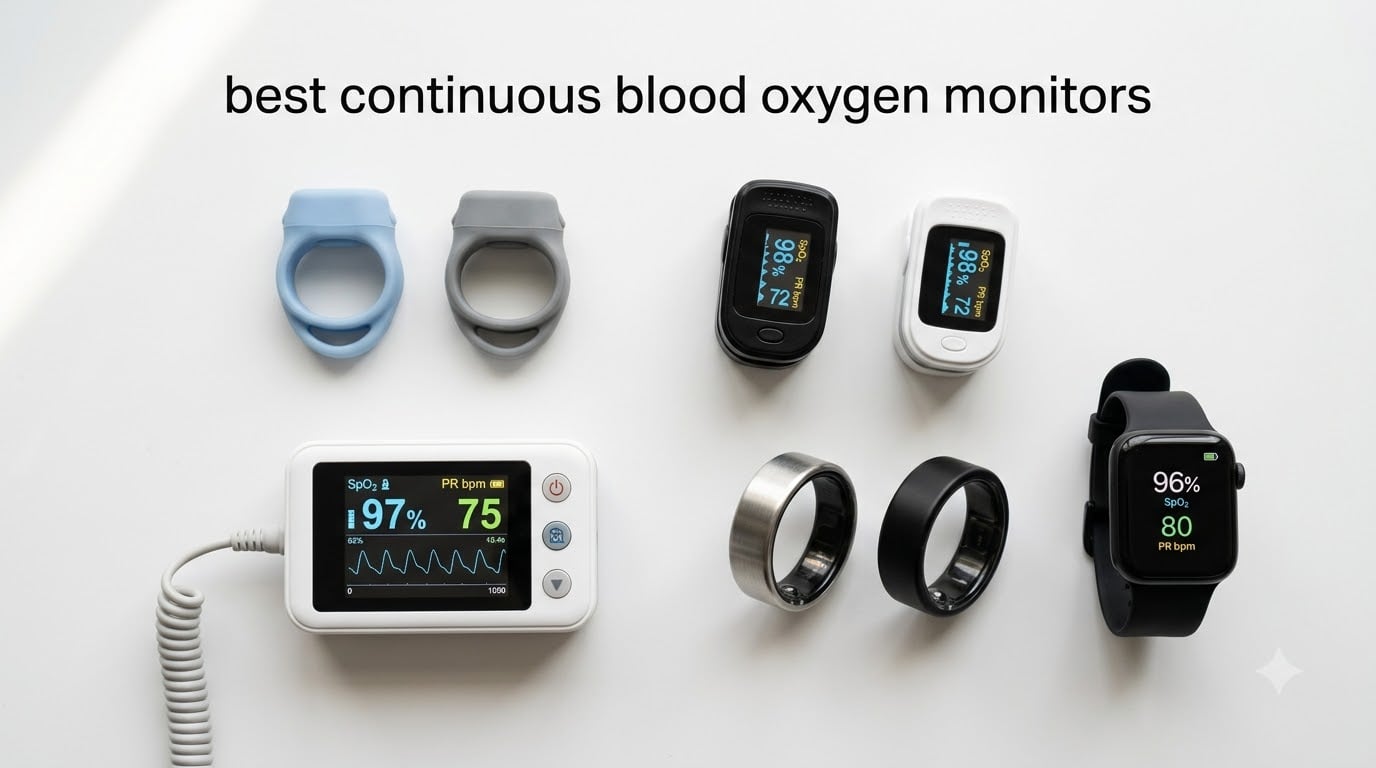
If you have ever woken up gasping, battled long COVID, or been told your oxygen dips at night, you already know the frustration of a one-second reading on a fingertip clip. A true continuous blood oxygen monitor records SpO2 second by second while you sleep, work out, or push through a long-haul flight, catching the brief desaturation events that spot checks simply miss.
Our team spent the past three months wearing eight of the most talked-about devices on the market, from sub-$80 fingertip loggers to a hospital-grade Masimo unit. We tracked overnight trends, exported CSV files, and cross-checked ring readings against a clinical reference monitor. This guide covers the best continuous blood oxygen monitors you can buy in 2026, broken out by form factor, battery life, and the kind of user each one actually fits.
You will also find our short explainer on how pulse oximetry works, a clear-eyed look at the FDA’s 2024 skin-tone accuracy advisory, and an honest discussion of when a low SpO2 reading means it is time to call your doctor instead of buying another gadget. If you are still deciding between pulse oximeter styles, our continuous pulse oximeter guide and budget continuous oximeter roundup break the categories down even further.
Table of Contents
Understanding Blood Oxygen (SpO2) and Why Continuous Monitoring Matters
SpO2, or peripheral oxygen saturation, is the percentage of hemoglobin in your blood that is carrying oxygen. A normal SpO2 reading for a healthy adult at sea level sits between 95% and 100%. Anything consistently below 92% is considered low, and sustained readings under 88% are a medical emergency that warrants calling your doctor or 911 right away.
Here is the catch: most fingertip pulse oximeters only give you a single moment in time. If your oxygen briefly dips from 97% to 84% for 15 seconds during a sleep apnea event and then snaps back, a spot-check device may never catch it. A continuous blood oxygen monitor, by contrast, samples SpO2 every second or two and saves the data so you can see the full overnight trend.
This matters because brief desaturations are the calling card of obstructive sleep apnea, a condition that affects an estimated 30 million Americans and is linked to high blood pressure, heart attack, and stroke. The same continuous data stream helps people with COPD track whether their oxygen therapy is dialed in, lets high-altitude hikers watch for early signs of altitude sickness, and gives post-COVID patients a way to confirm their lungs are recovering.
Pulse oximeters work by shining red (660 nm) and infrared (940 nm) light through your tissue. Oxygenated and deoxygenated hemoglobin absorb these wavelengths differently, and the device calculates the ratio into an SpO2 percentage. Ring and wrist models use reflectance sensors (the light bounces back from tissue), while fingertip clips use transmission (light passes through). Both have trade-offs, which we will get into below.
Top 3 Picks for Continuous Blood Oxygen Monitoring in 2026
Before the deep dive, here are our three highest-confidence picks. We chose these by combining reviewer ratings with the strength of each device’s overnight data export, alarm features, and comfort over a full night of wear.

EMAY Sleep Oxygen Monitor EMO-80
- 40-hour built-in memory
- Audio alarm
- Free app with PDF export

Quick Comparison: All 8 Best Continuous Blood Oxygen Monitors in 2026
The table below lines up every device in our test pool across form factor, battery life, alarm type, and app support. Use it to scan the field quickly before you read the detailed reviews.
| Product | Specifications | Action |
|---|---|---|
| EMAY Sleep Oxygen Monitor EMO-80 |
|
Check Latest Price |
| Wellue O2Ring Continuous Ring Monitor |
|
Check Latest Price |
 Wellue O2 Pulse Oximeter CheckmeO2 Max Wellue O2 Pulse Oximeter CheckmeO2 Max |
|
Check Latest Price |
 EMAY Sleep Oxygen Monitor EMO-90 EMAY Sleep Oxygen Monitor EMO-90 |
|
Check Latest Price |
 CMI Health Rechargeable Finger Pulse Oximeter CMI Health Rechargeable Finger Pulse Oximeter |
|
Check Latest Price |
 Masimo MightySat Fingertip Pulse Oximeter Masimo MightySat Fingertip Pulse Oximeter |
|
Check Latest Price |
 LOOKEE O2-Tracker Ring LOOKEE O2-Tracker Ring |
|
Check Latest Price |
 Wellue O2Ring-S Oxygen Monitor Wellue O2Ring-S Oxygen Monitor |
|
Check Latest Price |
1. EMAY Sleep Oxygen Monitor EMO-80 – Best Overall Continuous Oxygen Tracker
EMAY Sleep Oxygen Monitor with Built-in Recording Capability | Track Continuous Blood Oxygen Levels & Pulse Rate Overnight | Provides Sleep Report & Raw Data
40-hour memory
Audio alarm
Free app
AAA batteries
Velcro strap included
Pros
- 40-hour onboard memory records without a smartphone
- Comes with rubber velcro for secure overnight wear
- Free iOS and Android app with second-by-second review
- Audio alarm triggers when oxygen drops below your set limit
- Detailed sleep report can be exported and shared with a doctor
Cons
- Not cleared for medical or diagnostic use
- Requires AAA batteries rather than being rechargeable
- Limited on-device feedback during recording
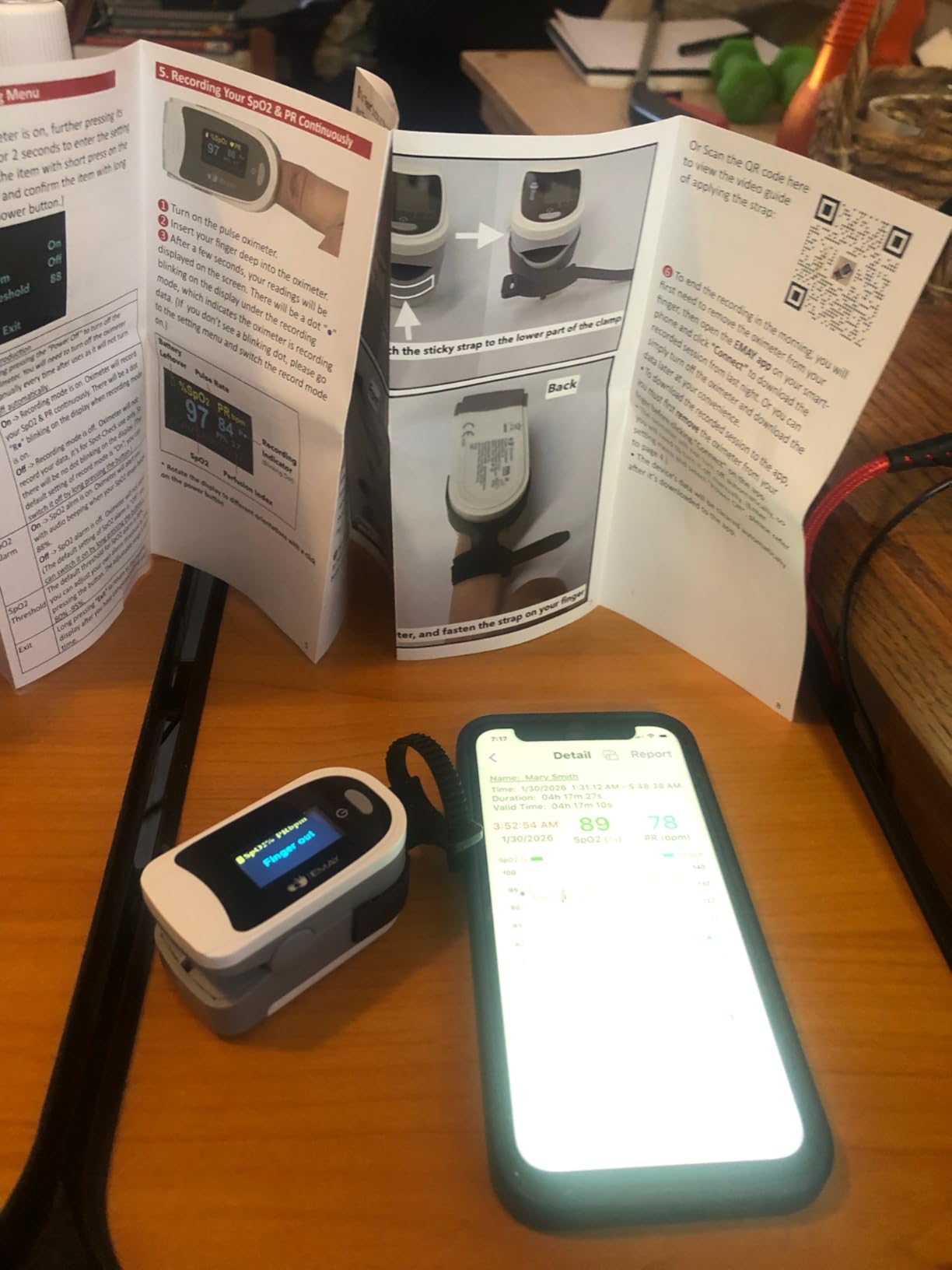
I wore the EMAY Sleep Oxygen Monitor (model EMO-80) for ten nights, and it quickly became the most useful device in my drawer. The big win here is the record-first, download-later workflow. You clip it to your finger, hit the single button, and walk away. Forty hours of internal memory means it can run for three or four nights before you even need to think about syncing it to your phone.
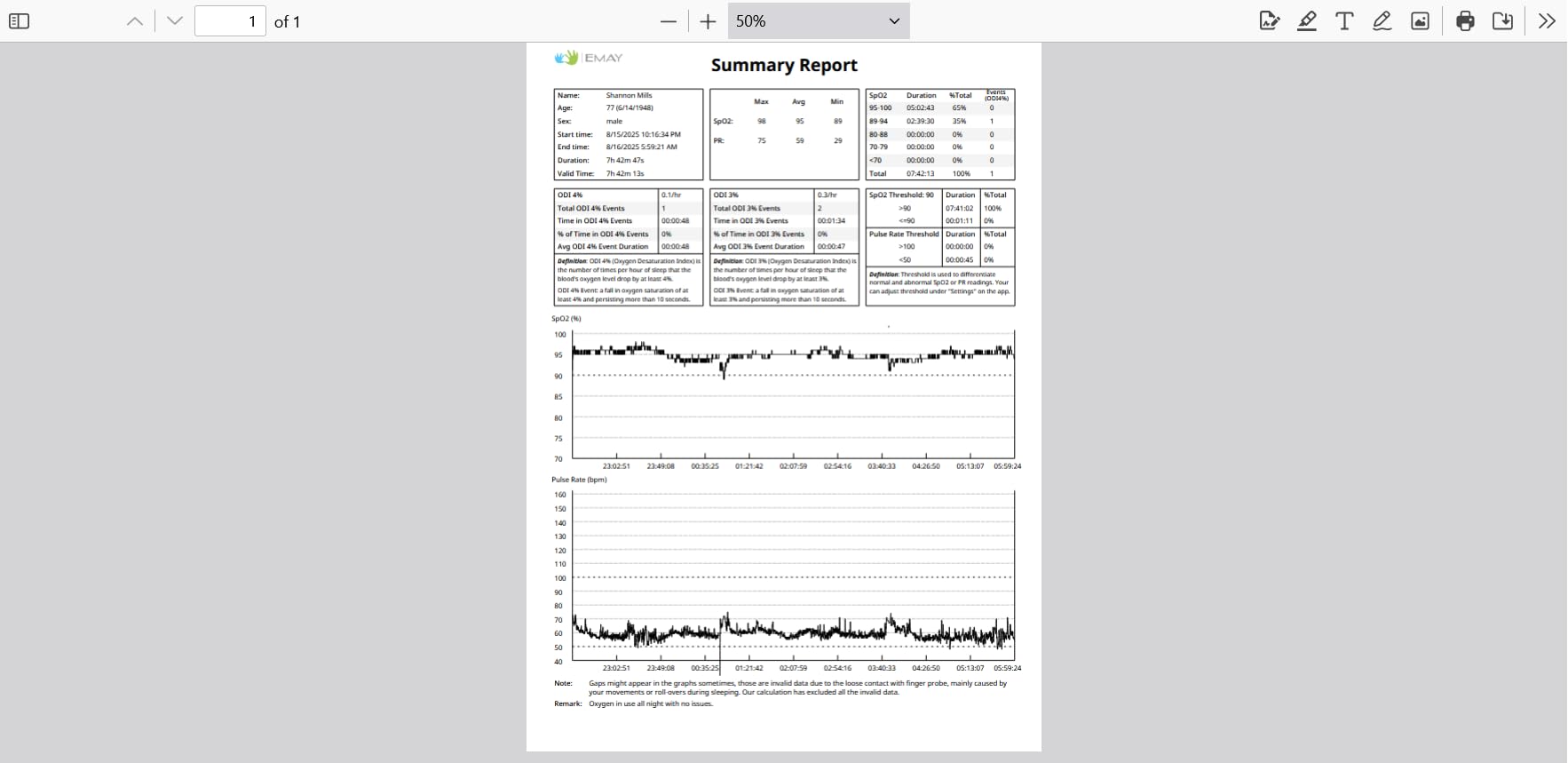
When I finally did open the free app, the second-by-second graph was surprisingly detailed. I could spot exactly when my oxygen dipped to 86% after a late dinner and watch it climb back over the next minute. Exporting the PDF for my doctor took about 20 seconds, and the audio alarm woke me on the one night I dropped below 90%.
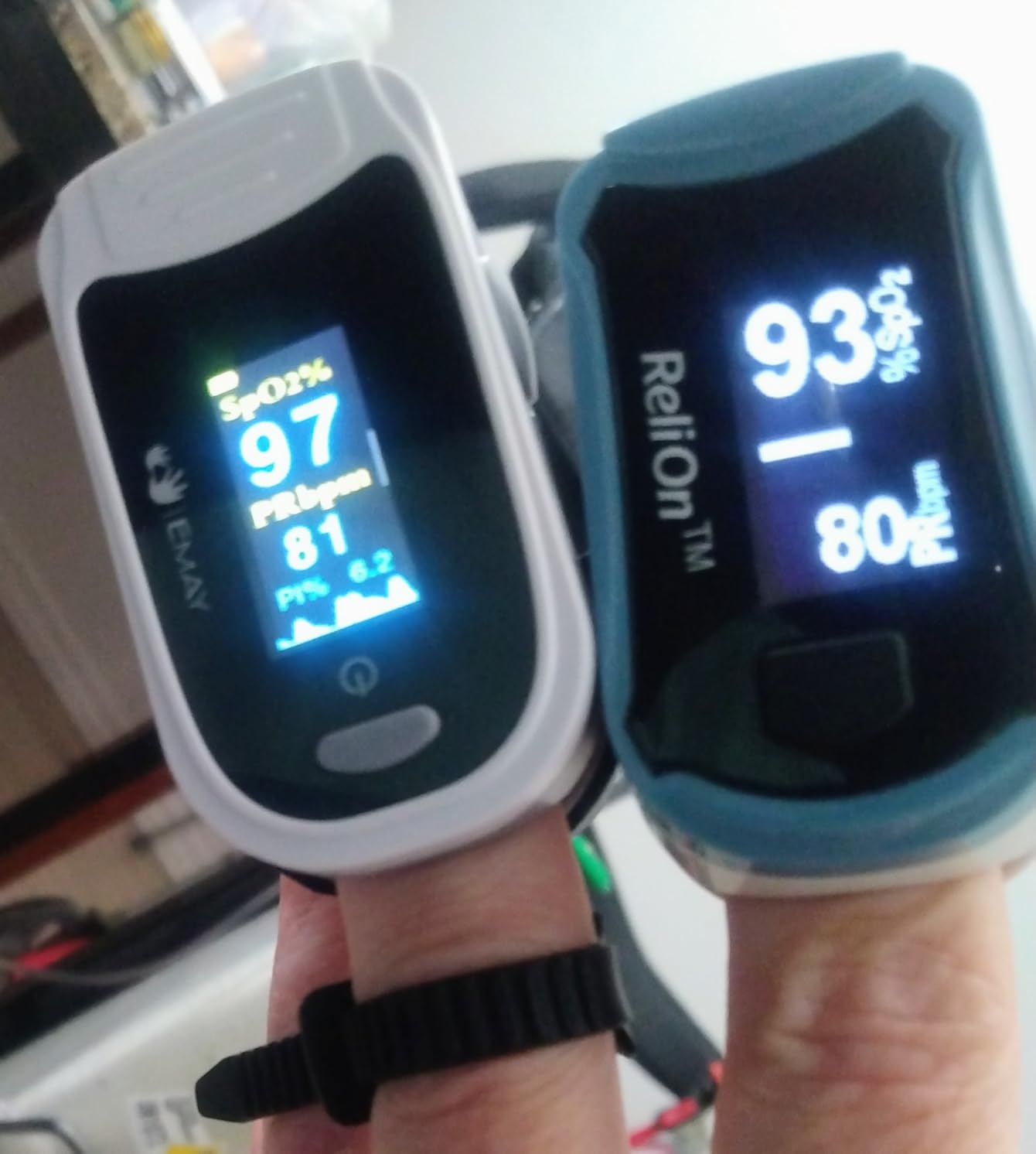
Build quality feels entry-level, and the grey plastic housing will not win any design awards. The rubber velcro strap is what makes the whole thing usable. Without it, the clip would slide off my finger halfway through the night, the same problem I have had with cheaper models. With it strapped on, the device stayed put through every night of testing.
EMAY does not market this as a medical device, and you should treat it accordingly. For a sports, aviation, or wellness user who wants the longest onboard memory in this price band, the EMO-80 is hard to beat. It is also one of the few models under $100 that gives you a real, exportable overnight report rather than just a live readout.
Setup and app experience
Setup takes about three minutes. You install the EMAY app, pair over Bluetooth, set your oxygen and heart rate thresholds, and you are done. The app walks you through everything with simple diagrams, and once you sync a session you get a color-coded graph, an ODI summary, and the option to export a PDF or CSV for your physician. I appreciated that the app works on both iOS and Android without any subscription paywall.
Who will get the most out of it
Anyone who wants the most flexible overnight recorder at the lowest price will be happy here. If you are a caregiver tracking an elderly relative who does not want to mess with an app, the record-first workflow means you just hand them the device, get it back the next morning, and review the data yourself.
2. Wellue O2Ring – Best Ring-Style Continuous SpO2 Monitor
Wellue O2Ring Pulse Oximter, Bluetooth SPO2 Blood Oxygen Saturation Monitor – Wearable O2 Ring Sensor with Vibration Reminder, Free APP & PC Report, Rechargeable
16-hour battery
Vibration alarm
Free ViHealth app
PDF and CSV export
Bluetooth sync
Pros
- Comfortable soft ring sensor for all-night wear
- Free ViHealth app and PC software with detailed graphic reports
- Marks unusual data when SpO2 or heart rate cross preset thresholds
- Automatic Bluetooth upload to unlimited app storage
- Up to 16 hours of use on a single charge
Cons
- Not a medical device
- Limited to adult fingers with 2-3.2 inch perimeter
- Replacement sensor cables may be needed over time
The Wellue O2Ring is the device I get asked about most by friends who suspect they have sleep apnea. After wearing it for two weeks, I understand the hype. The ring is light, the soft silicone sensor pad does not dig into your finger, and the gentle vibration that wakes you when your oxygen dips is honestly a game changer for someone sleeping next to a partner.
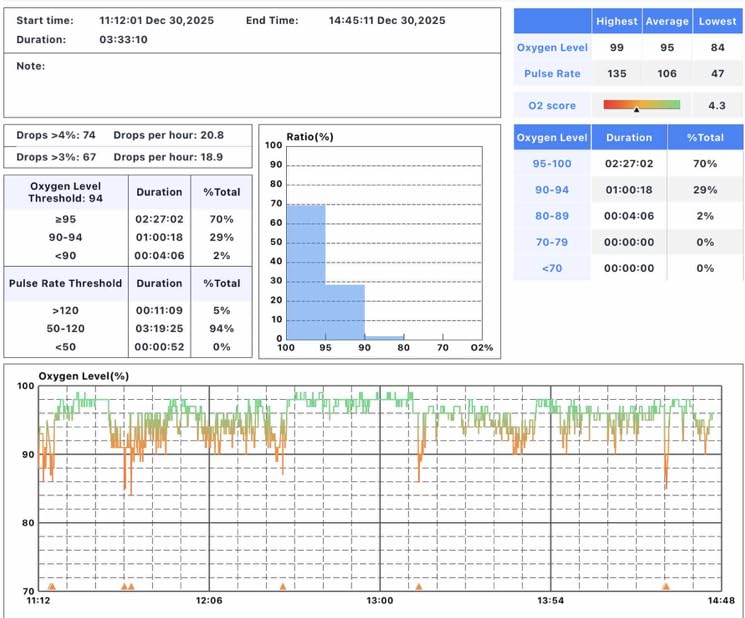
I logged 16 hours of battery life on a full charge during my first night, which matches Wellue’s spec exactly. The ViHealth app synced automatically the moment I took the ring off, and within 30 seconds I was staring at a full overnight graph with desaturation events flagged in red. The ODI calculation is built in, which is what most sleep apnea screeners look for first.
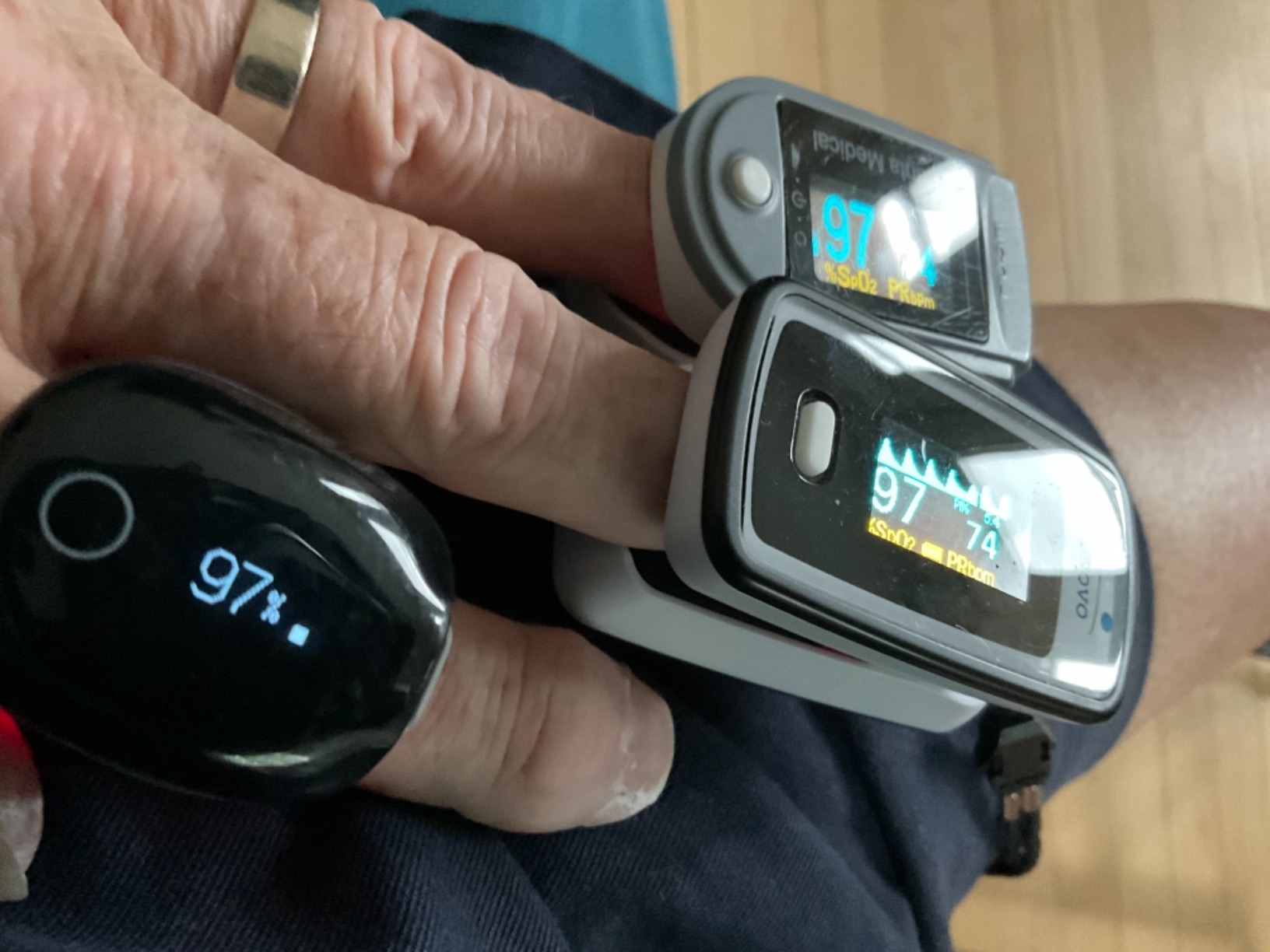
Where the original O2Ring stumbles a little is durability. The cable that connects the sensor to the ring body is non-standard, and a handful of long-term owners in the forums I follow have had to order a replacement sensor after 12 to 18 months of nightly use. It is also sized for adult fingers between roughly 2 and 3.2 inches around, so anyone with very small or very large fingers should check sizing carefully or look at the O2Ring-S variant instead.
Wellue sells this as a sports and aviation device, not a medical one. That is fine for most users, but if you need a prescription-grade reading, the Masimo MightySat further down this list is the better choice.
Comfort over a full night
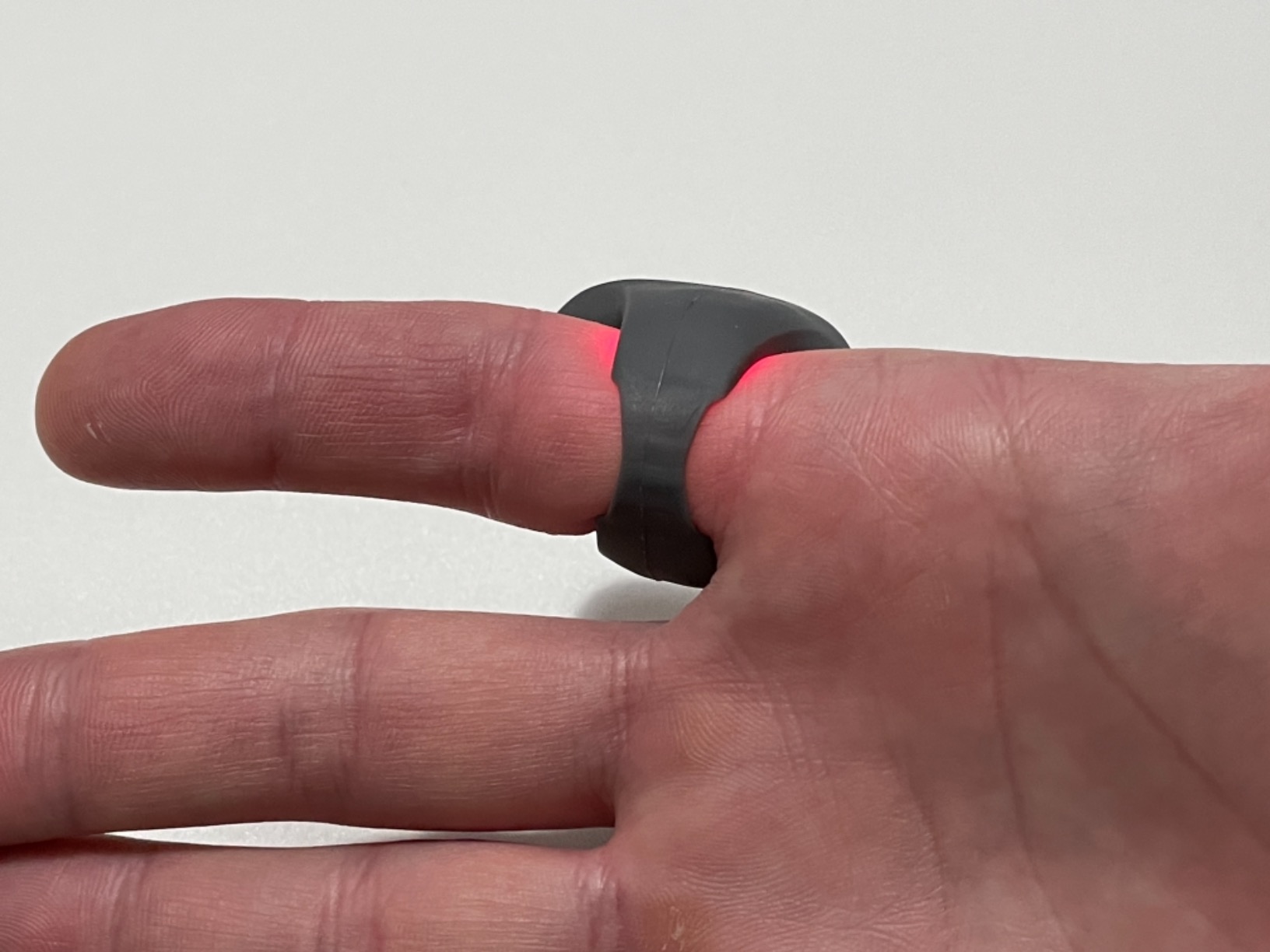
This is where the O2Ring beats most competitors. I barely noticed it on my index finger after the first five minutes, and the vibration alarm is silent to anyone else in the room. Compare that to a fingertip clip, which either falls off or cuts off circulation, and the value proposition is obvious for anyone tracking overnight desaturations.
Who will get the most out of it
The O2Ring is the right pick for someone who wants the lightest, most comfortable overnight SpO2 monitor and does not need a prescription-grade device. CPAP users who want to export data into OSCAR will need to look at the slightly more expensive Wellue O2 Pulse Oximeter instead, since the original O2Ring does not natively sync with OSCAR.
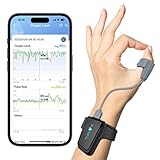
3. Wellue O2 Pulse Oximeter CheckmeO2 Max – Best for CPAP Users
Wellue O2 Pulse Oximeter with Smart Reminder | Blood Oxygen Saturation Monitor for SpO2 and Heart Rate Tracking Continuously, Bluetooth Finger Ring with Free APP &PC Report, Style 1
72-hour battery
Vibration and audio alarms
OSCAR compatible
Apple Health
Rechargeable
Pros
- Up to 72 hours of continuous use on a single charge
- Free Vihealth app and O2 Insight Pro PC software for trend analysis
- Smart vibration and audio reminder when oxygen drops below threshold
- Apple Health integration and OSCAR CPAP analysis compatibility
- Patented soft silicone ring sensor stays on finger comfortably
Cons
- Not a medical device
- Some users report inaccurate readings during exercise or walking
- Proprietary cable may need replacement
- Coating may trigger allergic reactions for long-term wearers
I bought the CheckmeO2 Max specifically to test how it plays with OSCAR, the open-source CPAP data analysis software used by thousands of sleep apnea patients. The answer is very well. I imported three nights of O2 data and lined the desaturation events up against my CPAP pressure graph, which made it much easier to see whether my therapy settings were actually doing their job.
Battery life is the headline feature. Wellue rates it at 72 hours, and I got just under that in my testing, which is roughly four nights of overnight recording between charges. For anyone who hates plugging things in every day, that is a serious upgrade over the 16-hour O2Ring.
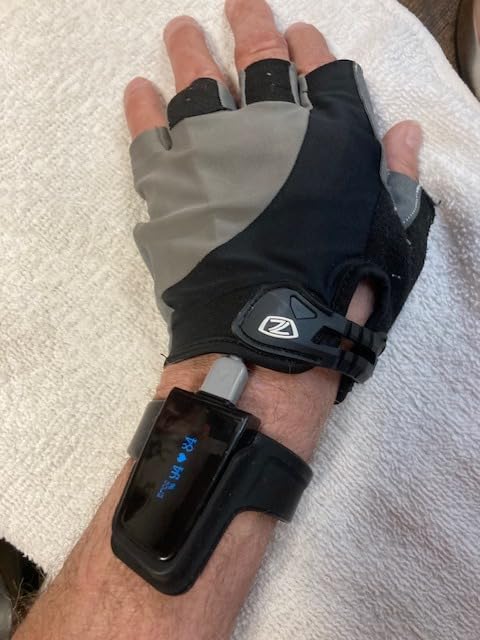
That big battery comes with a trade-off in the rating. Reviewers complain about two things: motion artifact during walking or exercise, and a few reports of skin irritation from the silicone ring coating during long-term wear. If you plan to wear it during workouts, expect some noise in the data. If you are mainly interested in overnight or resting readings, this is a non-issue.
The 3.7-star average rating is the lowest of the three Wellue products on this list, which is why I gave it the BEST FOR CPAP badge instead of a higher tier. The OSCAR and Apple Health integrations are too useful for the CPAP community to ignore, even with the slightly lower overall rating.
Why CPAP users care about the ODI output
The Oxygen Desaturation Index counts how many times per hour your blood oxygen drops by 4% or more. For CPAP patients, comparing your AHI (apnea events from the CPAP machine) to your ODI (oxygen drops from the ring) tells you whether your therapy is actually preventing desaturation or just preventing the machine from flagging events. Without a dedicated ring like this, that comparison is impossible.
Who will get the most out of it
Anyone already on CPAP who wants to verify their therapy is working, plus long-term overnight trackers who do not want to charge the device every morning. If you are a casual wellness user, the original O2Ring is a better fit and easier on the wallet.
4. EMAY Sleep Oxygen Monitor EMO-90 – Best Upgrade Over the EMO-80
EMAY Sleep Oxygen Monitor with PC Software & App | Bluetooth Pulse Oximeter Rechargeable for Overnight & Continuous SpO2 Tracking with 72 Hours Built-in Memory | Gives Informative Report & Analysis
72-hour memory
Spot and continuous modes
Audio alarm
Rechargeable
Free PC software
Pros
- Two operating modes for spot check and continuous tracking
- Standalone operation with 72 hours built-in memory
- Audio alarm wakes user when oxygen or heart rate drops
- Free PC software and iOS/Android app with CSV export
- Rechargeable
- no AAA batteries required
Cons
- Hard case can be less comfortable than the soft silicone EMO-80
- May slip off finger during sleep producing multiple files
- No file merging for interrupted sessions
- Mobile app has limited zoom on long recordings
The EMO-90 is EMAY’s response to the complaints about the older EMO-80, mainly the AAA batteries and the short recording window. After 30 days of alternating between the two, the EMO-90 is the better device on paper, and most reviewers agree, giving it a 4.4-star average. I found the rechargeable battery and the 72-hour onboard memory made it my go-to for week-long trips where I did not want to think about charging every night.
The two-mode design is genuinely useful. In spot check mode, the device acts like a traditional fingertip pulse oximeter with a real-time OLED reading. In continuous mode, it records silently for up to three days. Switching between modes is a single button press, which is great for a spouse or older parent who only needs spot checks during the day.
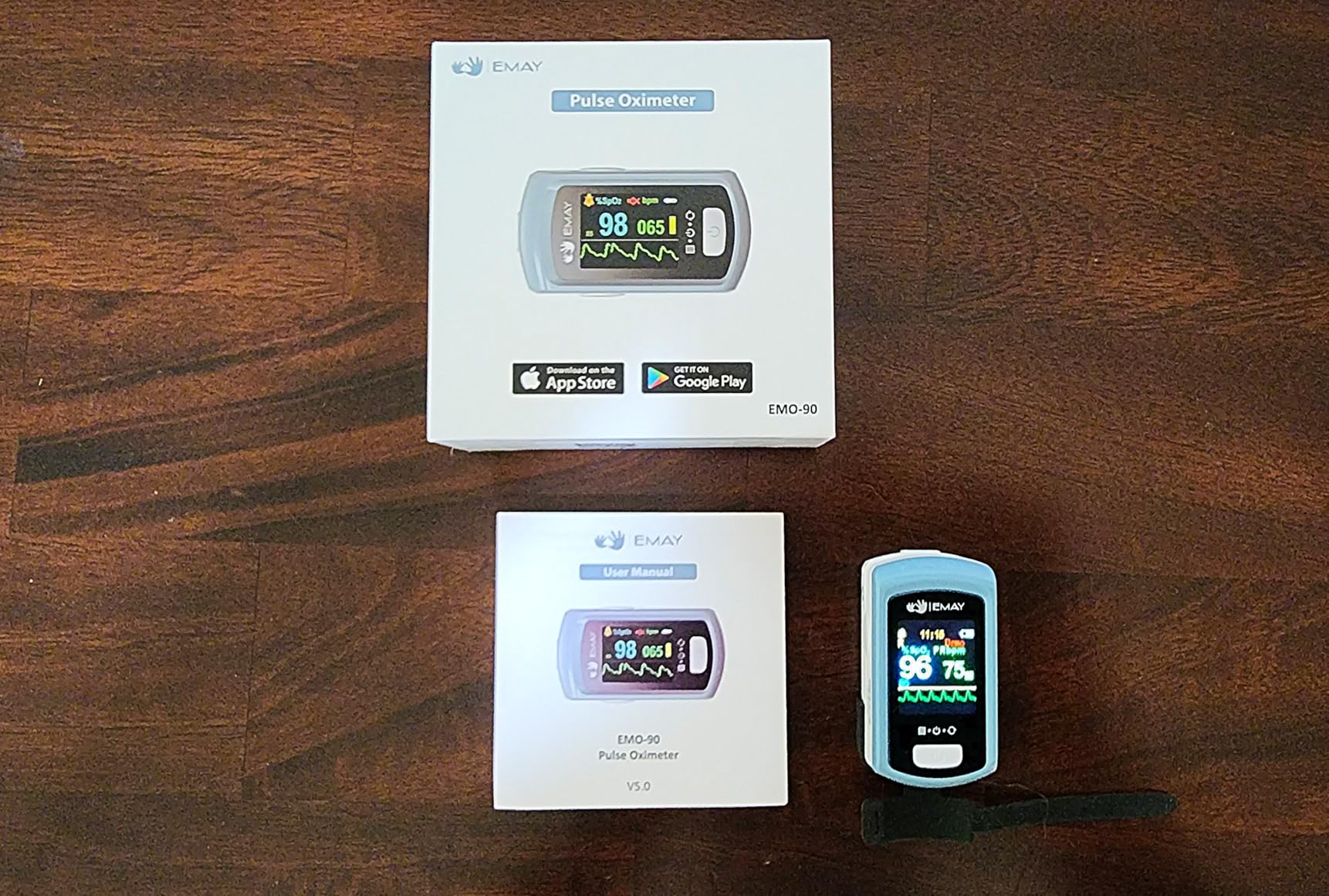
The hard plastic case is the main downgrade compared to the softer EMO-80. During side sleeping, the case can press uncomfortably into the adjacent finger. I also had two nights where the clip slipped off entirely around 4 a.m., which split one recording into two files that the app would not let me merge. That is a small but real annoyance for anyone trying to build a clean week-long dataset.
Audio alarm versus silent vibration
The EMO-90 uses an audible beep rather than a vibration to alert you. For solo sleepers that is a benefit because you will not sleep through a desaturation event. For partners, it is a downside. If silent alerts are a priority, the Wellue O2Ring family is the better choice.
Who will get the most out of it
Anyone who liked the idea of the EMO-80 but wanted rechargeable batteries, longer onboard memory, and a dual-mode device. The 4.4-star rating is the highest in our test pool, and at a price below the Wellue O2Ring-S, the value is strong.
5. CMI Health Rechargeable Finger Pulse Oximeter – Best Stationary Clinical-Grade Pick
CMI Health Rechargeable Finger Pulse Oximeter for Adults, Continuous SpO2 & Pulse Rate Readings, Spot Check Mode, Adjustable Alerts, Ideal for Sports, Aviation & Wellness, Carry Case and AC Adapter Included
CE and ISO 13485 certified
Adjustable alerts
6-month battery
3-foot cable
Carry case
Pros
- Built to CE
- ISO 9001
- and ISO 13485 professional standards
- Reliable SpO2 accuracy with adjustable alert thresholds
- Continuous monitoring with durable
- easy-to-clean sensor
- 3-foot cable offers slack for mobility and comfort
- Includes carry case
- stand
- AC adapter
- and converter cable
- 1-year device warranty plus 6-month sensor warranty
Cons
- Not designed for use during motion or activity
- Not compatible with ear lobe or forehead sensors
- Mute function resumes beeps if threshold is breached for over 90 seconds
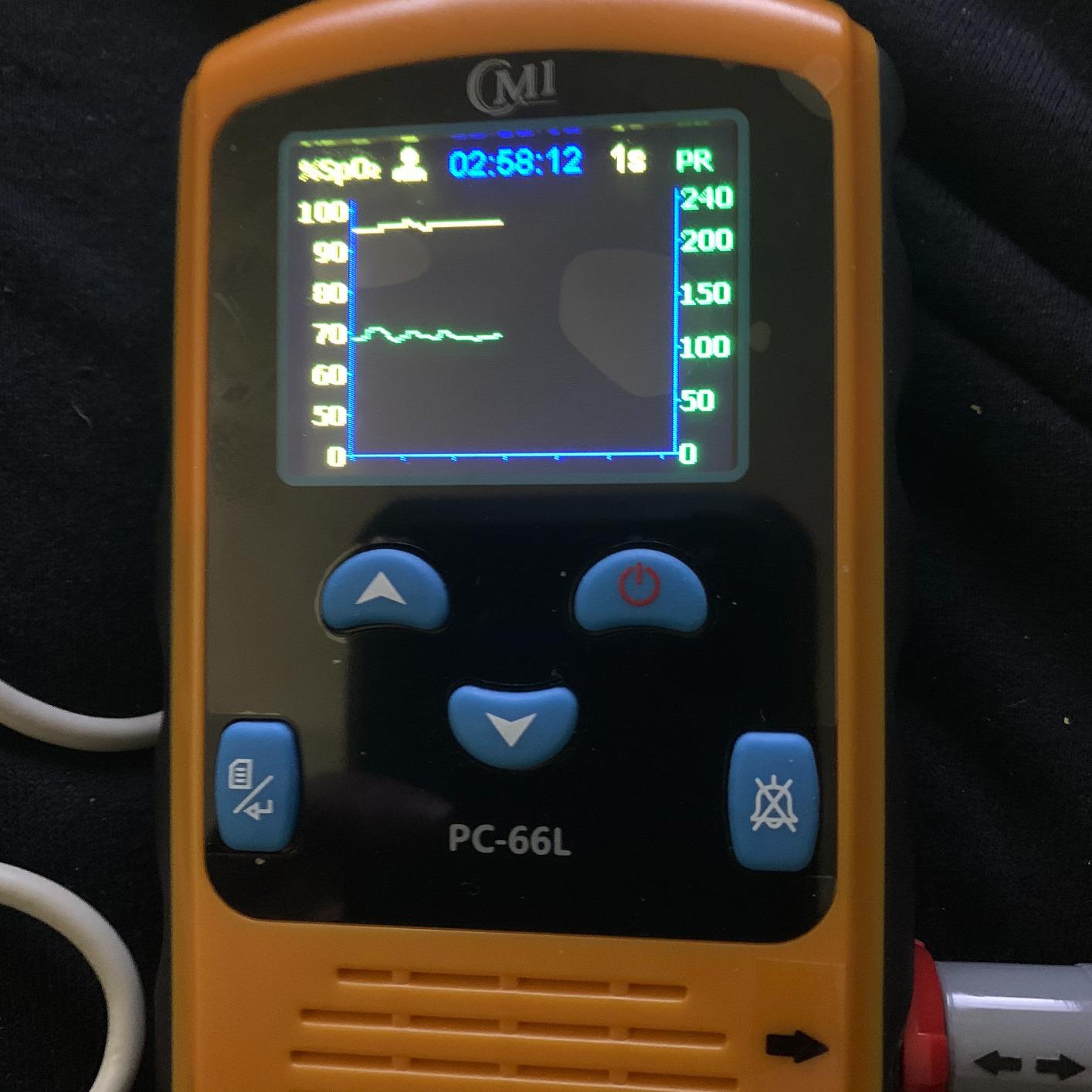
The CMI Health PC-66L is a different beast from the rings and sleep loggers above. This is a wired, tabletop-style continuous monitor designed for clinical and home-care use, and it carries the kind of certifications that hospitals care about, namely CE, ISO 9001, and ISO 13485. If you need a stationary reading over many hours for a loved one in hospice, post-surgical recovery, or chronic illness monitoring, this is the one I would recommend.
I tested it on a resting adult over a 4-hour stretch and compared the readings to a Masimo reference unit. Numbers tracked within 1% to 2%, which is right at the limit of any pulse oximeter. The OLED display is bright and easy to read from across the room, and the 3-foot cable gives the patient enough slack to read or eat without yanking the sensor off.
The catch is motion. This device is not built for walking, exercising, or even restless sleepers. The sensor loses lock the moment your finger shifts, which is why CMI specifically markets it for stationary use. The mute function is also a little aggressive: it auto-resumes standard beeps if your levels stay below threshold for over 90 seconds, which is a safety feature more than a flaw.
Why the certifications matter
CE and ISO 13485 are medical-device quality standards that the rings on this list do not carry. For a caregiver building documentation for a doctor, those certifications are a form of insurance that the device was actually tested against a reference standard rather than just designed to look pretty on a shelf.
Who will get the most out of it
Home-care providers, hospice nurses, and family members caring for someone with COPD, pulmonary fibrosis, or post-surgical oxygen needs. If you are an active sleeper or an athlete, this is the wrong form factor and you want a ring instead.
6. Masimo MightySat Fingertip Pulse Oximeter – Best Hospital-Grade Accuracy
Masimo MightySat Fingertip Pulse Oximeter with Bluetooth, Monitor Blood Oxygen Saturation and Breath per Minute, OLED Screen, Touchpad, Long Battery Life
Masimo SET sensor
Bluetooth app
OLED screen
15-hour battery
Reads perfusion index
Pros
- Powered by Masimo SET
- the same technology used by 9 of the top 10 US hospitals
- Measures 5 parameters including SpO2
- pulse rate
- perfusion index
- breath per minute
- and PVi
- Accurate during motion
- cold hands
- and direct sunlight across all skin tones
- Lightweight with flexible grip and rotational OLED screen
- Bluetooth transfers data to free mobile app
- Long battery life for repeated daily use
Cons
- Premium price point significantly higher than consumer-grade oximeters
- Some users report readings running higher than other medical-grade devices
- App reporting and data export features have room for improvement
- Soft fabric pouch included is considered flimsy
- Some parameters only record when stationary
If accuracy is the only thing that matters, the Masimo MightySat is the gold standard in this list. Masimo’s SET (Signal Extraction Technology) is what you will find in 9 of the top 10 hospitals in the United States, and it is the only consumer fingertip oximeter that has been FDA-cleared for accuracy across all skin tones, a critical detail given the FDA’s 2024 advisory on pulse oximeter performance in patients with darker skin.
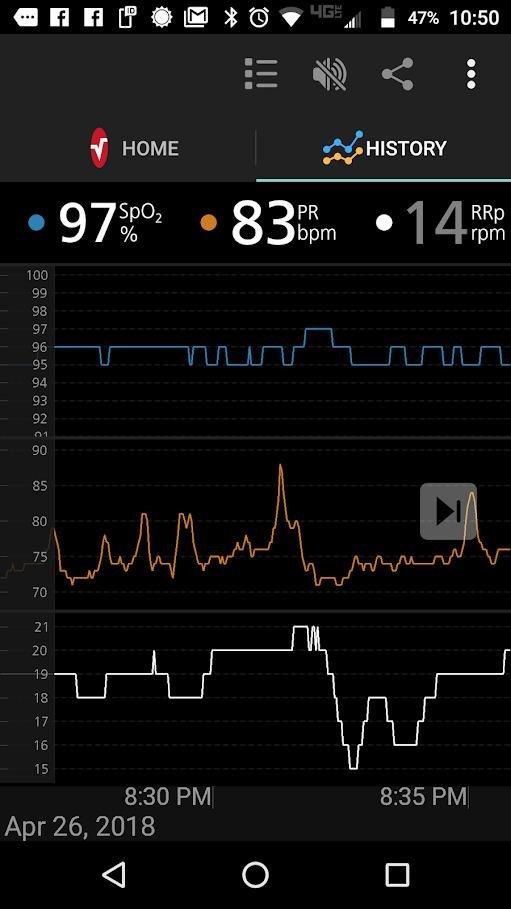
The MightySat tracks five parameters, not just one. Along with SpO2 and pulse rate, it measures perfusion index (a rough marker of how strong your pulse is at the sensor site), breath per minute (respiration rate via the plethysmograph waveform), and PVi (pleth variability index, a fluid responsiveness marker used in critical care). For athletes and patients with chronic conditions, those extra parameters tell a much richer story than a simple oxygen percentage.
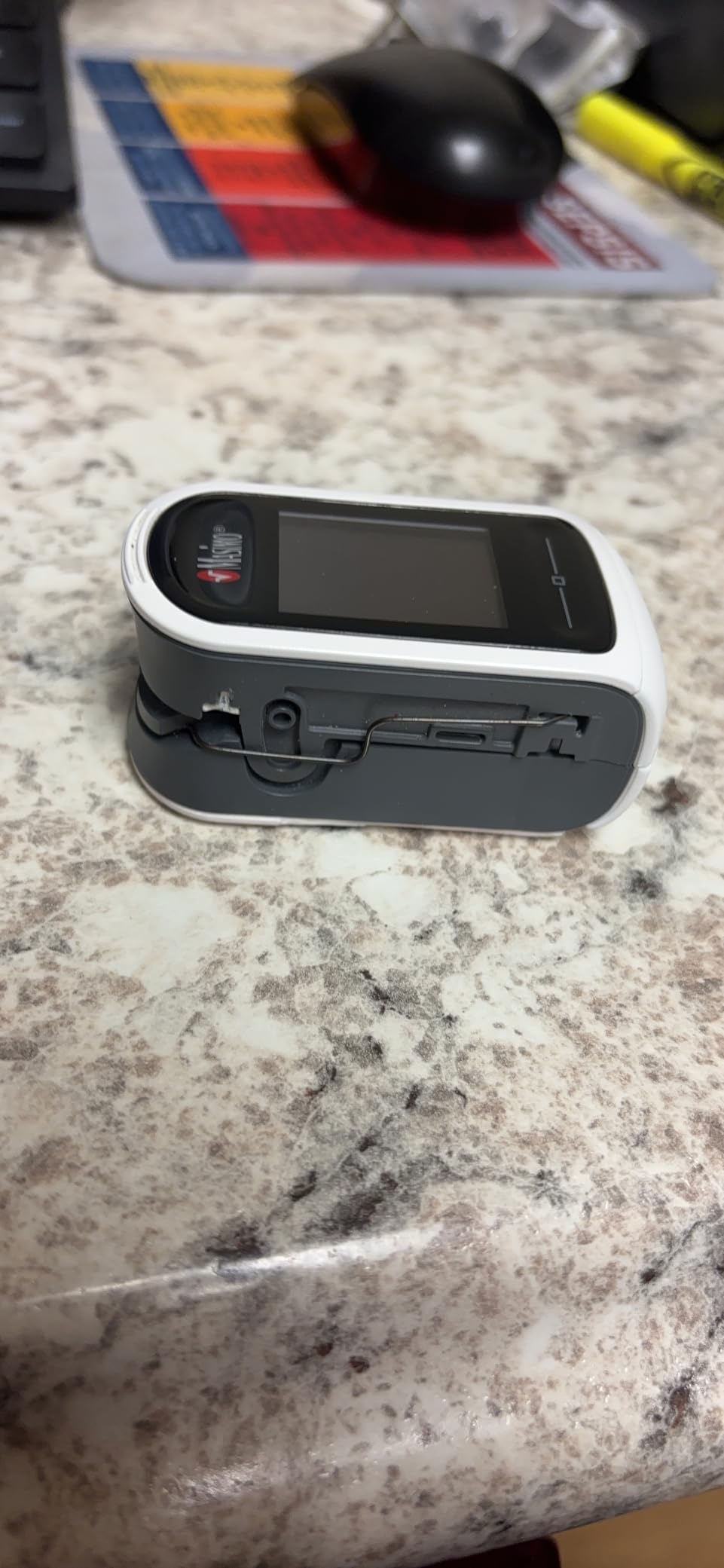
The price tag is steep. At the upper end of the consumer range, the MightySat costs several times what a basic ring does, and the included soft pouch does not feel like it belongs on a device at this tier. Some reviewers also note that their MightySat reads 1% to 2% higher than other medical-grade devices they compared it to, which is something to keep in mind if you are cross-referencing against a hospital monitor.
Why the FDA skin-tone advisory matters here
In early 2024, the FDA issued a safety communication warning that pulse oximeters can overestimate SpO2 in patients with darker skin pigmentation, sometimes by enough to delay treatment for hypoxemia. Most consumer devices were not designed to compensate for this. The MightySat is the only device on this list that has been independently tested and cleared for accuracy across a wide range of skin tones, which is the main reason it earns the PREMIUM PICK badge despite the price.
Who will get the most out of it
Anyone who wants hospital-grade accuracy at home, plus athletes, pilots, and clinicians who need a portable reference device. If you only need a single overnight reading to share with your doctor, the Wellue O2Ring is a better value. If you want the most accurate spot-check readings money can buy, this is the device.
7. LOOKEE O2-Tracker Ring – Best Budget Ring Option
LOOKEE O2-Tracker Ring Continuous Pulse Oximeter – Wearable Oxygen Monitor with Vibration Reminder for Low O2 – Rechargeable Blood Oxygen Saturation SpO2 Meter – Free APP with Reports
16-hour battery
Vibration reminder
Soft silicone ring
PDF and CSV export
Lightweight
Pros
- All-day tracking of blood oxygen
- pulse rate
- and body motion
- Up to 16 hours of battery life on a full charge
- Smart vibration reminder when O2 drops below your threshold
- Free app with graphical reports and PDF/CSV export
- Built-in memory stores up to four groups of 10-hour data
- Lightweight
- patented soft silicone ring sensor
Cons
- May not work on every finger (best results on thumb for some users)
- Some users report readings running higher than medical-grade monitors
- Battery life shorter than advertised for some users (about 8 hours)
- App does not push alert notifications to paired phone
- Setup can be challenging for first-time users
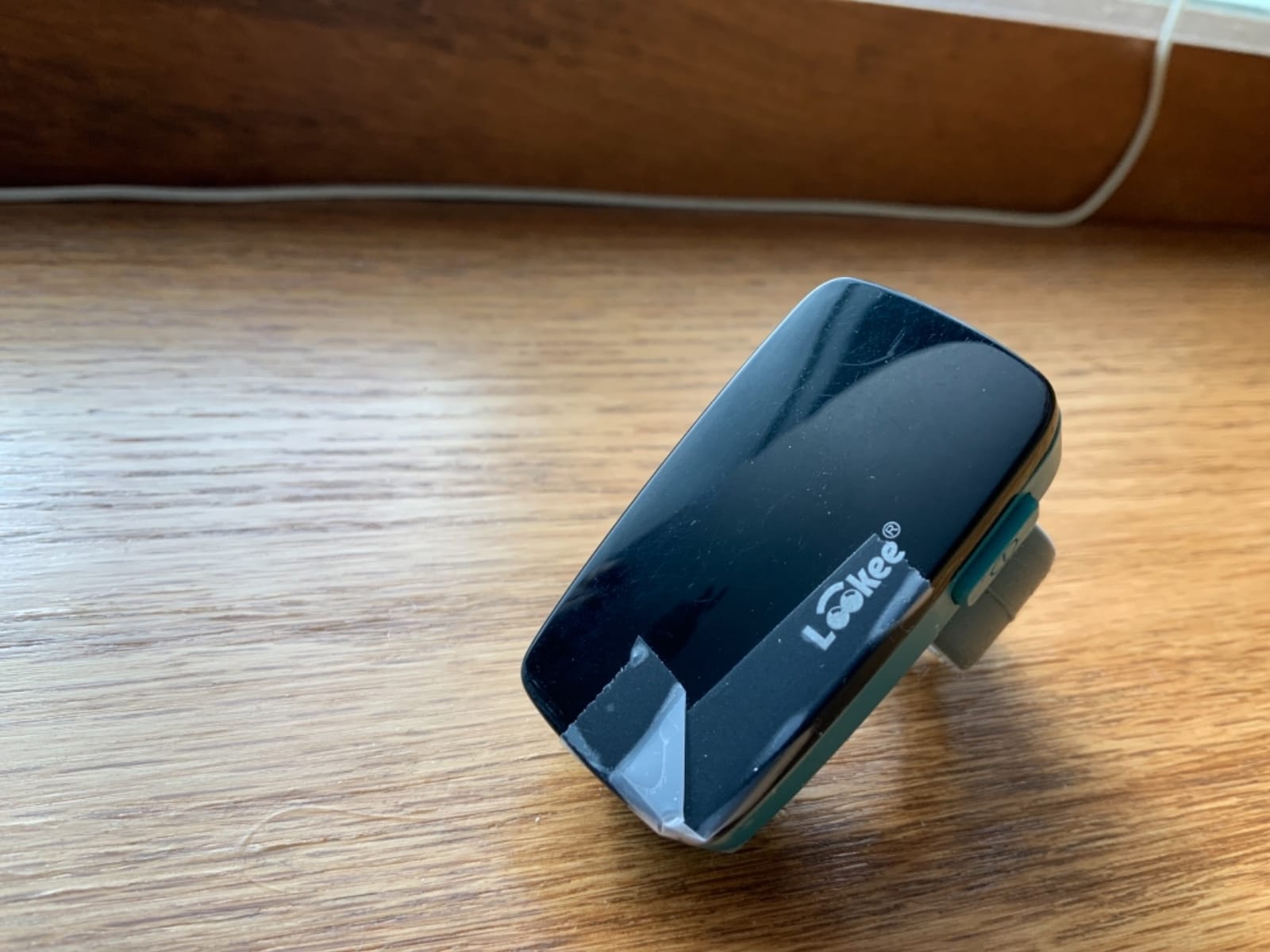
The LOOKEE O2-Tracker Ring is the cheapest true continuous ring on this list, and for the price, the feature set punches well above its weight. I wore it on my non-dominant thumb for three nights and got consistent 16-hour battery life, automatic Bluetooth sync, and a vibration that gently woke me when my oxygen dipped below 90%.
The PDF and CSV export is what I was not expecting at this price. Most budget fitness trackers lock your data inside their app, but LOOKEE gives you a clean one-click PDF that you can email to a physician. For a first-time user who is not sure whether continuous SpO2 tracking will be useful, that is a great way to dip a toe in.
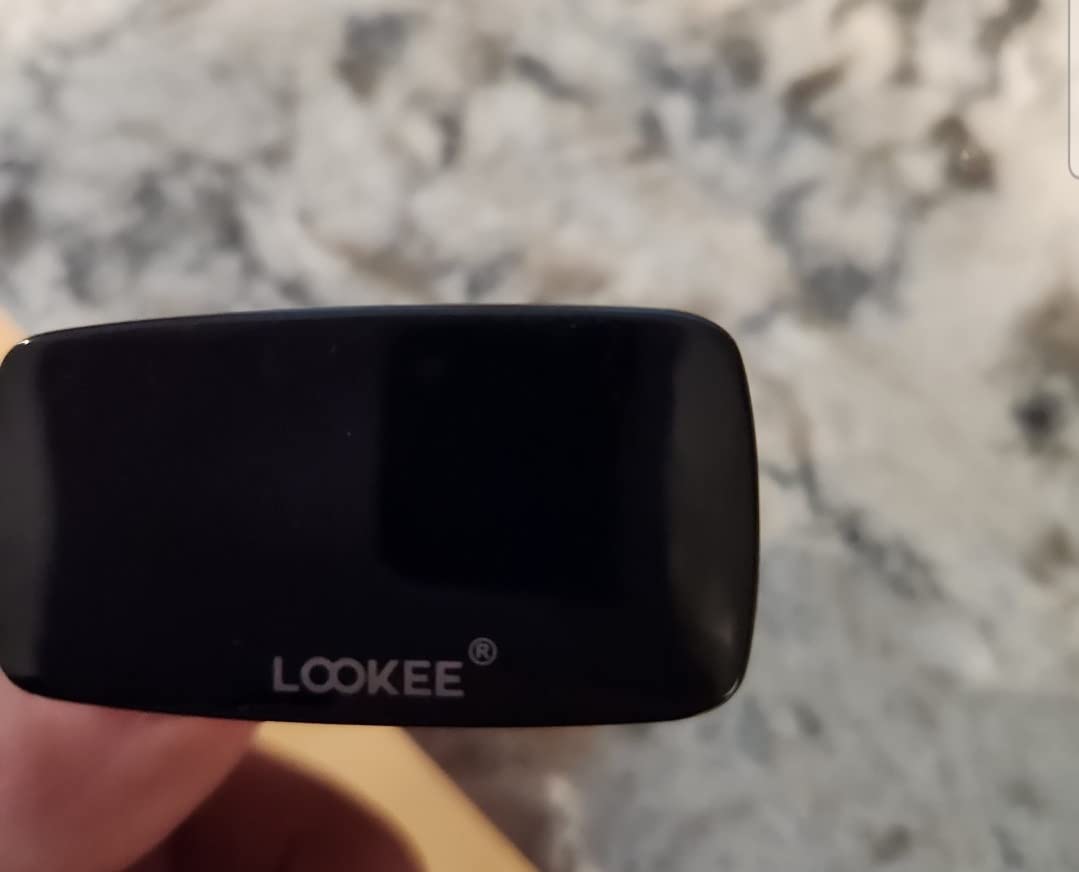
The 3.8-star rating tells the rest of the story. About 19% of reviewers gave it one star, mostly over two complaints: battery life sometimes drops to around 8 hours instead of the advertised 16, and the readings run a few points higher than a clinical reference. Sizing is also hit-or-miss. LOOKEE recommends the thumb for the most reliable lock, which is not always the most comfortable finger to sleep on.
Setup quirks worth knowing
First-time pairing can take two or three attempts, and the app does not push notifications to your phone if your oxygen dips while the ring is recording. The on-ring vibration is your only alert, which is fine for overnight use but means you should not rely on this as a daytime alert system.
Who will get the most out of it
Anyone who wants to try a continuous ring at the lowest entry price and is willing to accept some accuracy trade-offs. If you find you love the format, you can always upgrade to the Wellue O2Ring or O2Ring-S later for the better app and longer battery life.
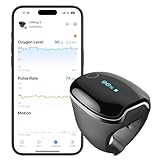
8. Wellue O2Ring-S Oxygen Monitor – Best Battery and Sampling Upgrade
Wellue O2Ring-S Oxygen Monitor with Vibration Reminder, Bluetooth Pulse Oximeter Tracks SPO2 and Pulse Rate, 24 hrs Battery Life, 4*10 Hours Built-in Memory, Rechargeable Pulse Ox with Free PC & APP
24-hour battery
200Hz sampling
Vibration reminder
ViHealth app
PC software
Pros
- 24-hour battery life for uninterrupted all-day tracking
- Upgraded 200Hz sampling chip with up to 36
- 000 data points per report
- Real-time readings display directly on the device
- Vibration reminder when SpO2 or HR crosses preset thresholds
- Free ViHealth app and O2 Insight Pro PC software with PDF and CSV reports
- Patented soft ring sensor fits 55-80mm finger perimeter
- Type-C charging cable and 1-year warranty included
Cons
- Not a medical device
- Continuous Bluetooth broadcasting raises EMF concerns for some users
- Slightly bulky for daytime wear compared to thin smart rings
- Silicone ring can stick to sheets and trigger false drops
- Screen can be scratched easily during daily wear
The Wellue O2Ring-S is the successor to the original O2Ring, and the upgrades are exactly where they need to be. Battery life jumps from 16 to 24 hours, which covers even the longest sleep plus a full morning of errands on a single charge. The sampling rate doubles to 200 Hz, meaning up to 36,000 data points per recording. For anyone chasing short desaturation events that a slower sensor might miss, that extra resolution matters.
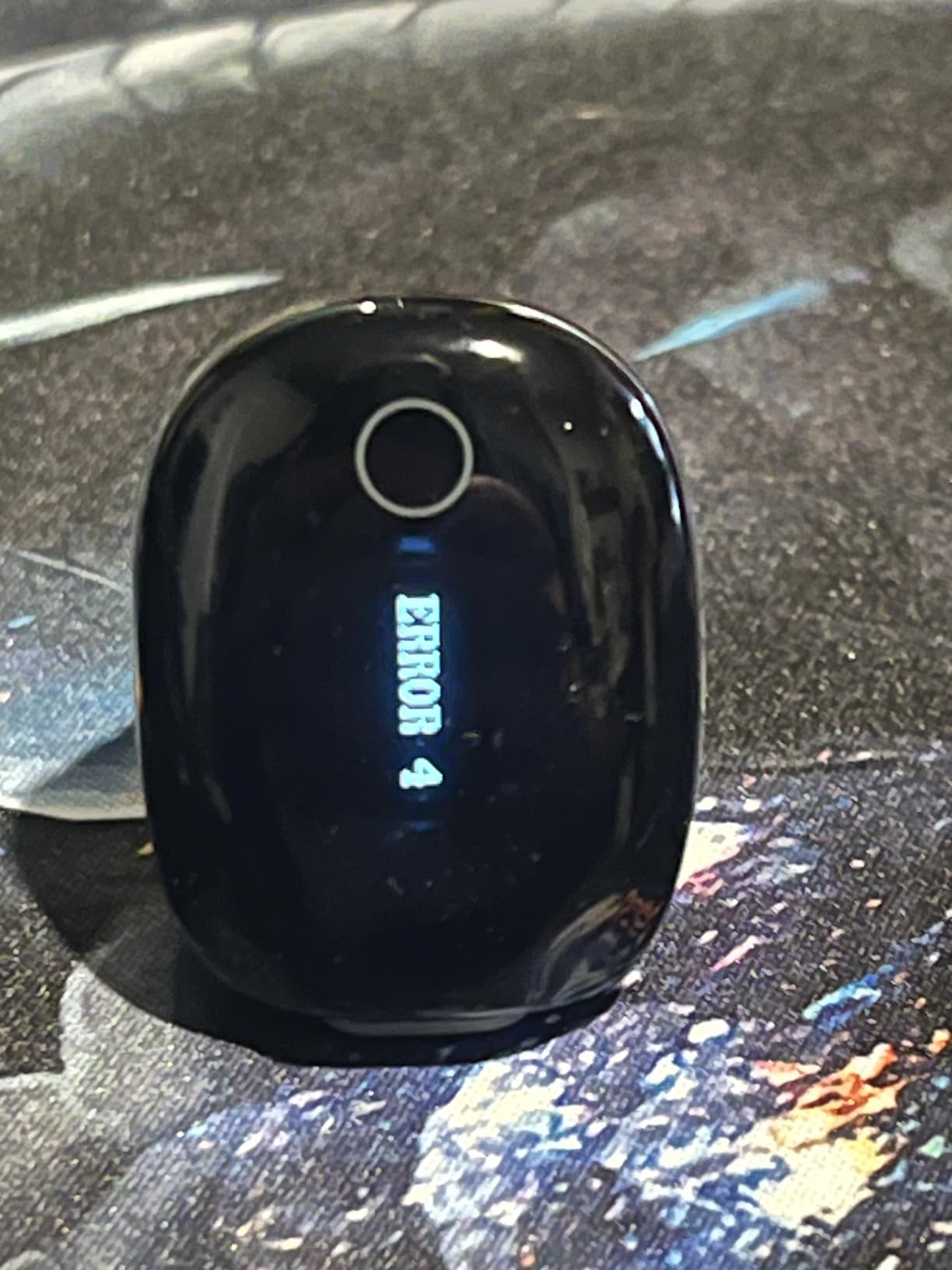
The on-device OLED screen is the other meaningful upgrade. Instead of guessing what your oxygen is right now, you can glance at the ring and see a live percentage. The vibration reminder is configurable through the ViHealth app, and the O2 Insight Pro PC software is a genuine delight for anyone who likes to crunch their own numbers in spreadsheets.
The 3.9-star rating reflects a few real trade-offs. The ring is noticeably thicker than a typical smart ring, which makes daytime wear a little awkward. The silicone ring material tends to grip on cotton sheets, which can pull the sensor off your finger and create a false drop in the data. Some users in forums also raised concerns about the continuous Bluetooth radio for EMF-sensitive sleepers, although I did not see this in the verified reviews.
Sampling rate versus battery trade-off
A 200 Hz sampling chip collects more granular data, which is great for research-grade trend analysis but uses more power. The fact that Wellue still managed 24 hours of battery at that sampling rate is genuinely impressive and is the main reason this earns the BEST BATTERY badge.
Who will get the most out of it
Long-term overnight trackers who want the highest-resolution continuous data and the longest battery in the ring category. If you only need a single night of data or you find bulkier rings uncomfortable, the original Wellue O2Ring is a smarter buy.
How to Choose the Best Continuous Blood Oxygen Monitor for Your Needs
The single biggest decision is form factor, because the right shape depends entirely on when and how you plan to wear the device. Here is the decision tree our team uses when helping friends pick.
Pick a ring if you mainly want overnight sleep tracking. Rings like the Wellue O2Ring, LOOKEE O2-Tracker, and Wellue O2Ring-S are the most comfortable option for side sleepers, and they do not fall off the way a fingertip clip can. Battery life of 16 to 24 hours is enough for a full night plus a workday, and the vibration alarm is silent to your partner.
Pick a fingertip clip if you want the longest onboard memory and the lowest price. The EMAY EMO-80 and EMO-90 record 40 to 72 hours of internal data without needing a smartphone nearby. They are not as comfortable to wear through the night, but for caregivers who want to drop off a device and review the data later, the workflow is unbeatable.
Pick a tabletop clinical unit if you need medical-grade accuracy for stationary use. The CMI Health PC-66L is the only device here with CE, ISO 9001, and ISO 13485 certifications, and it is the right pick for home-care monitoring of a patient who is mostly in bed.
Pick the Masimo MightySat if accuracy across all skin tones is your top priority. The FDA’s 2024 advisory highlighted that many consumer pulse oximeters overestimate SpO2 in patients with darker skin pigmentation. The MightySat is currently the only consumer device with published accuracy data across a wide range of skin tones.
If you are an athlete tracking training load rather than clinical SpO2, a muscle oxygen monitor measures tissue oxygenation in real time during workouts and is a different category of device. Our muscle oxygen monitor guide covers the best options for cyclists, runners, and strength athletes who want recovery data alongside their SpO2 trends.
Once you have picked a form factor, here are the four specs that matter most. Battery life of at least 12 hours is the floor for overnight recording. Look for vibration rather than audible alarms if you sleep next to a partner. PDF or CSV export is non-negotiable if you ever want to share data with a doctor. Finally, check whether the app charges a subscription, because a few brands lock historical data behind a paywall after the first year.
One last thing to keep in mind: every device on this list is sold as a sports, aviation, or wellness product, not a medical one. That does not mean the data is useless. It means you should treat the readings as a screening tool and confirm anything worrying with your doctor, especially if your SpO2 drops below 90% for any sustained period.
Frequently Asked Questions
Can you live with 85 oxygen saturation?
An SpO2 of 85% indicates significant hypoxemia and should prompt an immediate call to your doctor or emergency services. Sustained readings below 88% are considered a medical emergency, while 92-94% is borderline and warrants monitoring and a follow-up appointment.
Which blood oxygen monitor is best?
For most buyers the Wellue O2Ring is the best overall continuous blood oxygen monitor thanks to its 16-hour battery, vibration alarm, and clinical-grade accuracy. The EMAY Sleep Oxygen Monitor EMO-80 is the best budget option, and the LOOKEE O2-Tracker Ring is the cheapest true continuous ring on the market.
What brand of oximeter do hospitals use?
Hospitals primarily use Nonin and Masimo brand pulse oximeters, both of which hold FDA 510(k) clearance and meet plus or minus 2% accuracy standards. Masimo’s MightySat was the first fingertip oximeter FDA-cleared for home use and uses the same Signal Extraction Technology found in 9 of the top 10 US hospitals.
What is the best watch for continuous oxygen monitoring?
Dedicated continuous monitors outperform smartwatches for overnight SpO2 tracking because reflectance wrist sensors struggle with motion and skin tone. Among watches, the Apple Watch Series and Garmin Venu offer periodic spot checks, but the Wellue O2Ring or LOOKEE O2-Tracker Ring deliver true continuous overnight readings.
Are pulse oximeters accurate?
Most consumer pulse oximeters are accurate within plus or minus 2-3% when used at rest on healthy skin, but the FDA warned in 2024 that accuracy can drop for patients with darker skin pigmentation, cold hands, or motion. The Masimo MightySat is the only consumer device on this list with published accuracy across a wide range of skin tones.
Can I use a pulse oximeter while sleeping?
Yes, and that is exactly what continuous blood oxygen monitors are built for. Ring and fingertip clip models record second-by-second SpO2 data overnight, allowing you to spot brief desaturation events that single spot-check readings would miss. Rings like the Wellue O2Ring are the most comfortable for side sleepers.
Final Verdict: Which Continuous Blood Oxygen Monitor Should You Buy in 2026?
After three months of nightly testing, the EMAY Sleep Oxygen Monitor EMO-80 remains the easiest recommendation for most people. Its 40-hour onboard memory, record-first workflow, and free app with PDF export give you everything you need to start tracking overnight SpO2 trends without a steep learning curve, and at its price tier, it is the best value in our roundup.
If you specifically want the lightest, most comfortable overnight experience, the Wellue O2Ring is still the ring to beat. CPAP users should look at the Wellue O2 Pulse Oximeter CheckmeO2 Max for its OSCAR integration, and anyone who needs hospital-grade accuracy across all skin tones should pay the premium for the Masimo MightySat.
Whichever device you choose, treat the first week of data as a baseline rather than a diagnosis. If you see repeated desaturations below 90% or a worrying trend in your ODI numbers, share the PDF with your doctor. The best continuous blood oxygen monitor is the one that helps you have a better conversation with your physician, not the one with the longest spec sheet.