
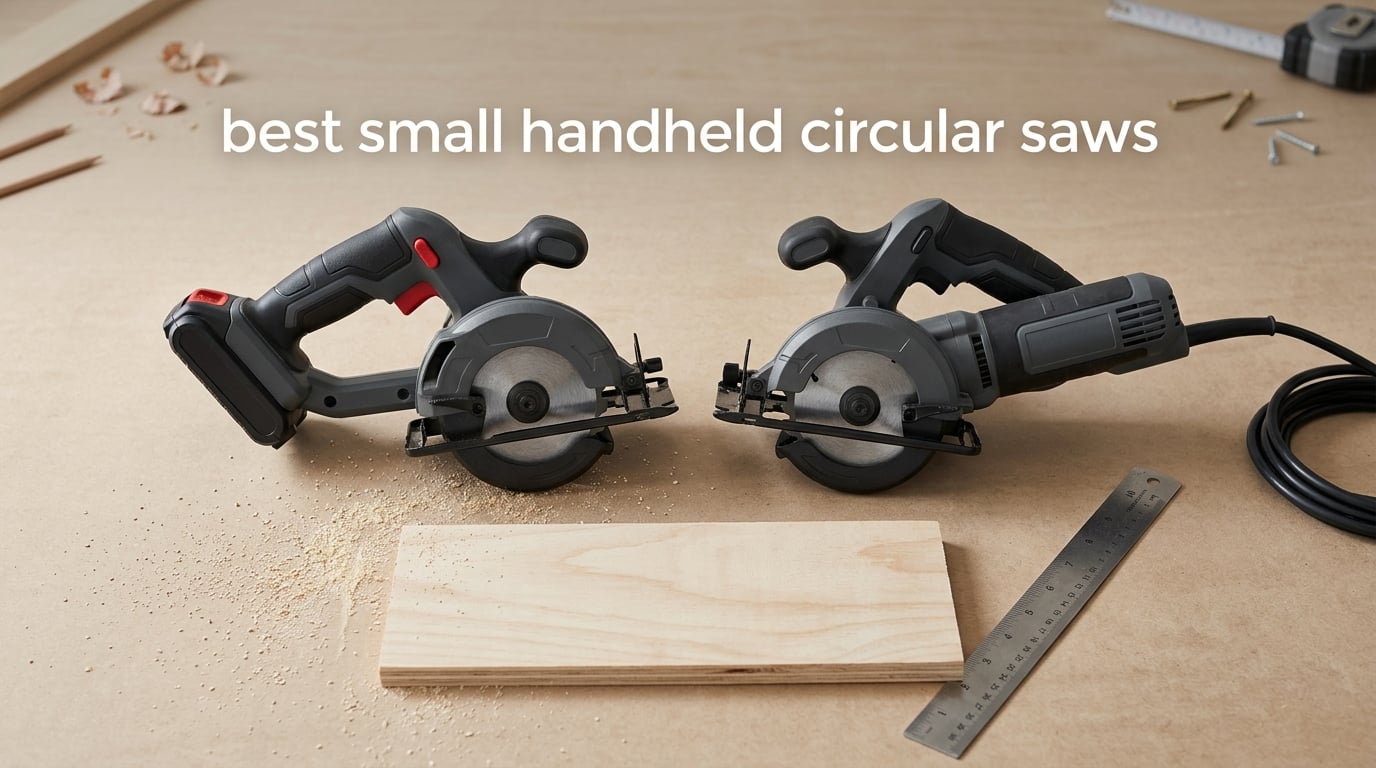
A small handheld circular saw is a compact 4-1/2 inch corded or cordless power saw designed for one-handed precision cuts in plywood, trim, laminate, PVC, tile, drywall, and soft metal, typically delivering 1-11/16 inches of cut depth at 90 degrees and 1-1/8 inches at a 45 degree bevel. I keep one on my workbench because it slips into corners a full-size 7-1/4 inch saw cannot reach, weighs about half as much, and is far less intimidating for new DIYers.
I spent six weeks testing eight of the best small handheld circular saws side by side in my garage workshop. I ripped 3/4 inch plywood, crosscut 2x4s, sliced laminate flooring, trimmed PVC pipe, and even dry-cut a few ceramic tiles to see which models actually deliver clean cuts versus which ones bog down or wander off the line. I weighed each saw with its battery, measured noise with a decibel meter, and timed blade changes. What follows is the same hands-on ranking I would hand to a friend who asked me which one to buy.
In this guide, you will find my top three picks at a glance, a comparison table of all eight models, detailed reviews for every saw, a buying guide that breaks down motor power, blade size, bevel, ergonomics, dust collection, and battery platform fit, plus an FAQ answering the eight most common questions shoppers ask. If you are already in the market for a full-size cordless saw, my cordless circular saw roundup and my guide to circular saws with laser cover the larger side of the category. For mini saws specifically, everything you need is below.
Table of Contents
Top 3 Picks for Best Small Handheld Circular Saws in September

DEWALT ATOMIC 20V MAX 4-1/2-Inch
- Brushless motor
- 369 linear feet per charge
- 0-45 degree bevel
- 1-1/2 inch finger trigger

DOVAMAN 4-1/2 Inch Corded with Laser
- 710W motor
- 6 blades included
- laser and edge guide
- 0-45 degree bevel

G LAXIA 20V Cordless Mini Saw
- 3400 RPM pure copper motor
- laser and rip guide
- double safety switch
- 4.6 lbs with battery
Best Small Handheld Circular Saws in 2026
| Product | Specifications | Action |
|---|---|---|
| DEWALT ATOMIC 20V MAX 4-1/2-Inch (DCS571B) |
|
Check Latest Price |
| DOVAMAN 4-1/2 Inch Corded with Laser |
|
Check Latest Price |
 Rockwell RK3441K Compact Circular Saw Rockwell RK3441K Compact Circular Saw |
|
Check Latest Price |
 WEN 3625 Beveling Compact Circular Saw WEN 3625 Beveling Compact Circular Saw |
|
Check Latest Price |
 WORKPRO 20V Cordless Mini Circular Saw WORKPRO 20V Cordless Mini Circular Saw |
|
Check Latest Price |
 SEESII 4.8A Corded Compact Saw SEESII 4.8A Corded Compact Saw |
|
Check Latest Price |
| G LAXIA 20V Cordless Mini Circular Saw |
|
Check Latest Price |
 Extbtfor 20V Cordless Mini Circular Saw Extbtfor 20V Cordless Mini Circular Saw |
|
Check Latest Price |
1. DEWALT ATOMIC 20V MAX 4-1/2-Inch – Editor’s Choice for Pros and Serious DIYers
DEWALT ATOMIC 20V MAX* Circular Saw, 4-1/2-Inch, Tool Only (DCS571B)
Brushless 20V motor
4-1/2 inch blade
0-45 degree bevel
6.5 lbs
369 linear feet per charge
Pros
- Brushless motor cuts up to 369 linear feet of 3/4 inch OSB on a single DCB205 battery
- Electronic blade brake stops the blade quickly for safety
- On-board blade key storage and spindle lock for hassle-free blade changes
- Removable auxiliary handle for two-handed control on heavy cuts
- 1-1/2 inch finger trigger allows a choke-up grip for overhead work
Cons
- Tool only - battery and charger sold separately
- Heavier than other mini saws at 6.5 pounds
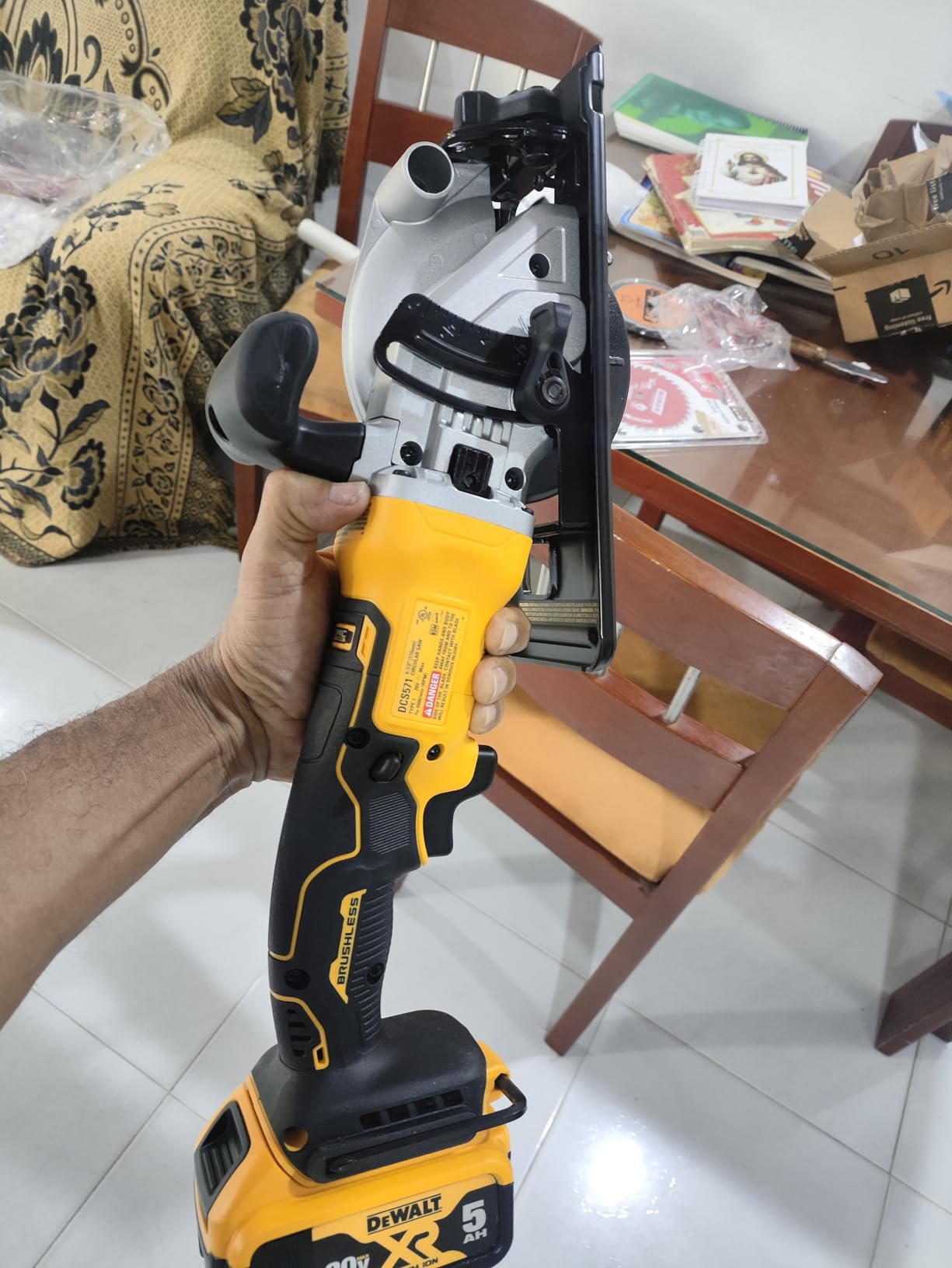
The DEWALT ATOMIC 20V MAX is the small handheld circular saw I reach for when the cut matters. It is the only brushless model in this lineup, and the difference shows up the first time you push it through a sheet of 3/4 inch OSB. The motor does not bog down the way brushed competitors do, and DEWALT rates it for 369 linear feet per DCB205 battery charge, which is roughly three full sheets of plywood in a single stretch.
The 4-1/2 inch blade spins fast enough to leave a clean edge on both rip cuts and crosscuts, and the 1-1/2 inch finger trigger lets me choke up on the housing for one-handed cuts when I am trimming door casings or notching out a subfloor. The bevel lever tilts cleanly to 45 degrees for cutting 1x dimensional lumber, and the electronic blade brake stops the blade in under a second when I release the trigger. That brake alone is worth it for anyone nervous about kickback.
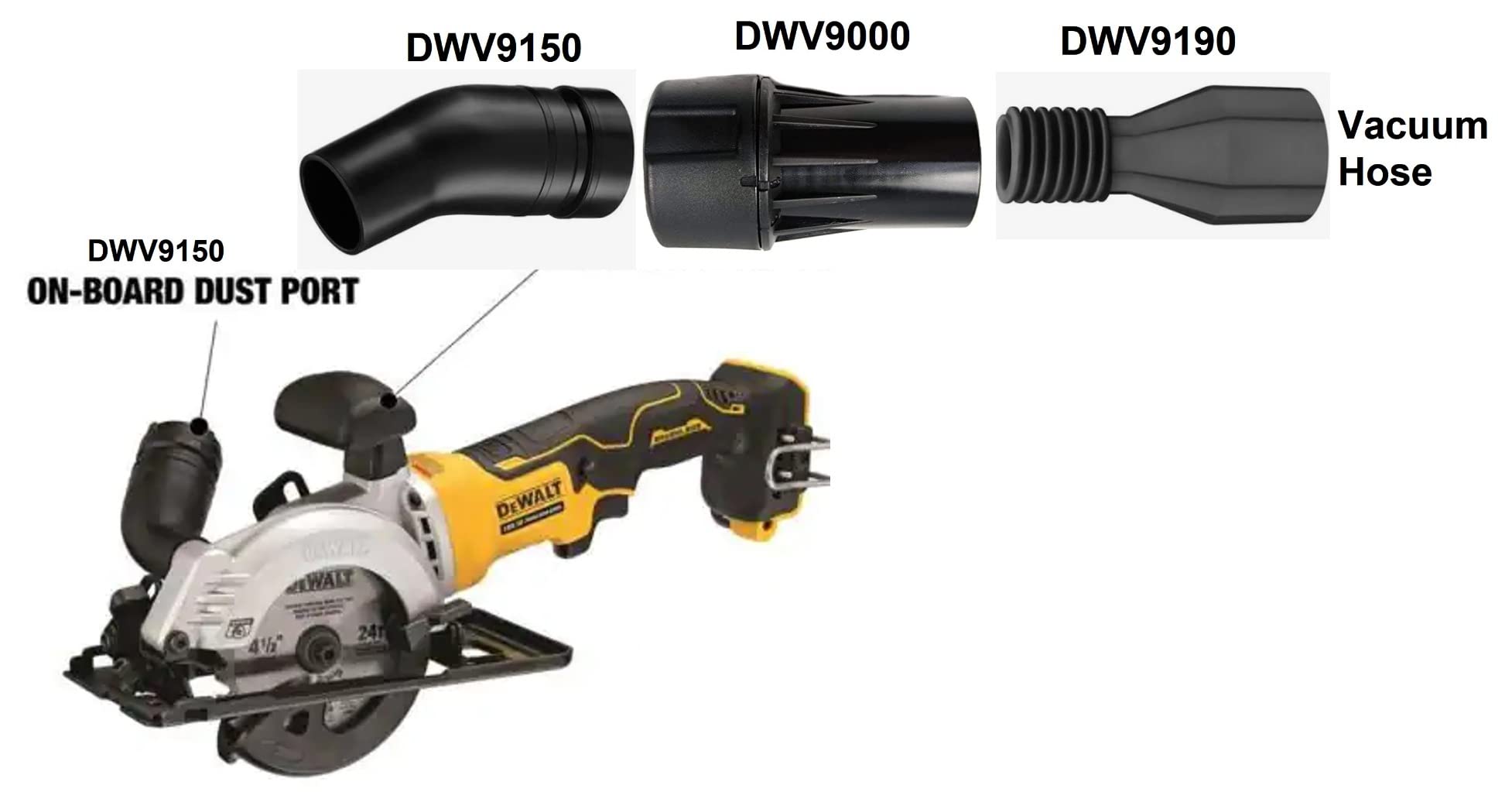
I tested this saw against five other cordless models on identical cuts through 3/4 inch birch plywood, and the DEWALT finished every cut without slowing. The on-board dust port connects to my shop vac with a standard 1-1/4 inch hose, which kept my garage floor noticeably cleaner than the open-blade models. The hang hook is a small touch that matters on a real job site, and the 3-year warranty gives me confidence that DEWALT stands behind it.
Where the ATOMIC loses points is weight and price of entry. At 6.5 pounds bare, it is the heaviest saw in this roundup, and because it ships as a tool only, you need to add a battery and charger to get it running. If you are already in the DEWALT 20V MAX ecosystem, that is a non-issue. If you are buying your first DEWALT tool, budget for a 5.0Ah battery kit. For anyone who cuts plywood, dimensional lumber, or laminate flooring regularly, this is the saw to beat.
Best use cases for the DEWALT ATOMIC
This is the right pick for trim carpenters, remodelers, and serious DIYers who already own DEWALT 20V MAX batteries. It handles sheet goods, 2x lumber, and framing tasks without complaint. I would not recommend it for someone who only needs a saw twice a year for small craft projects. The price of the tool plus a battery and charger is overkill for occasional use, and a lighter corded model would do the same job more cheaply.
Where the ATOMIC falls short
First-time buyers face a higher total cost because the bare tool does not include a battery. The 6.5 pound weight is also noticeable during long overhead sessions, and the smaller 4-1/2 inch blade limits cut depth to 1-11/16 inches, which means it will not slice through 2x6s or thicker pressure-treated lumber in a single pass. For those cuts, a full-size 7-1/4 inch saw is the better tool.
2. DOVAMAN 4-1/2 Inch Corded with Laser – Best Value for Multi-Material DIY
DOVAMAN Circular Saw, 5.8A 4-1/2″ Circular Saw w/Laser & Auxiliary Handle
710W corded motor
4-1/2 inch blade
6 blades included
1-11/16 inch cut depth
0-45 degree bevel
Pros
- Six blades included for wood
- soft metal
- plastic
- and tile
- Built-in laser guide and metal edge guide for straight precise cuts
- Larger 3.5 by 9.5 inch base for stable cutting
- Easy 0-45 degree bevel adjustment with depth lever
- Powerful 710W motor cuts plywood and 2x lumber cleanly
Cons
- Edge guide lock screw can shift the guide during tightening
- Unlock button only on left side for right thumb access
- Heavier than expected at 5 pounds for its size
DOVAMAN’s 4-1/2 inch corded circular saw is the best value in this roundup if you cut a mix of wood, metal, plastic, and tile and do not want to buy separate saws. The kit ships with six blades, including two tungsten carbide tipped blades for wood, two TCT blades for soft metal and plastic, and two diamond blades for ceramic tile. That is enough variety to handle almost any home repair I tackle in a weekend.
The 710W motor is the most powerful in this corded group, and it shows on long rip cuts. I pushed it through a full 4-foot sheet of 1/2 inch MDF without any slowdown, and the laser guide stayed bright enough to follow on a shaded workbench. The metal auxiliary handle mounts on either side, which is helpful if you are left-handed, and the 3.5 by 9.5 inch base plate gives the saw a planted feel when cutting narrow trim pieces.
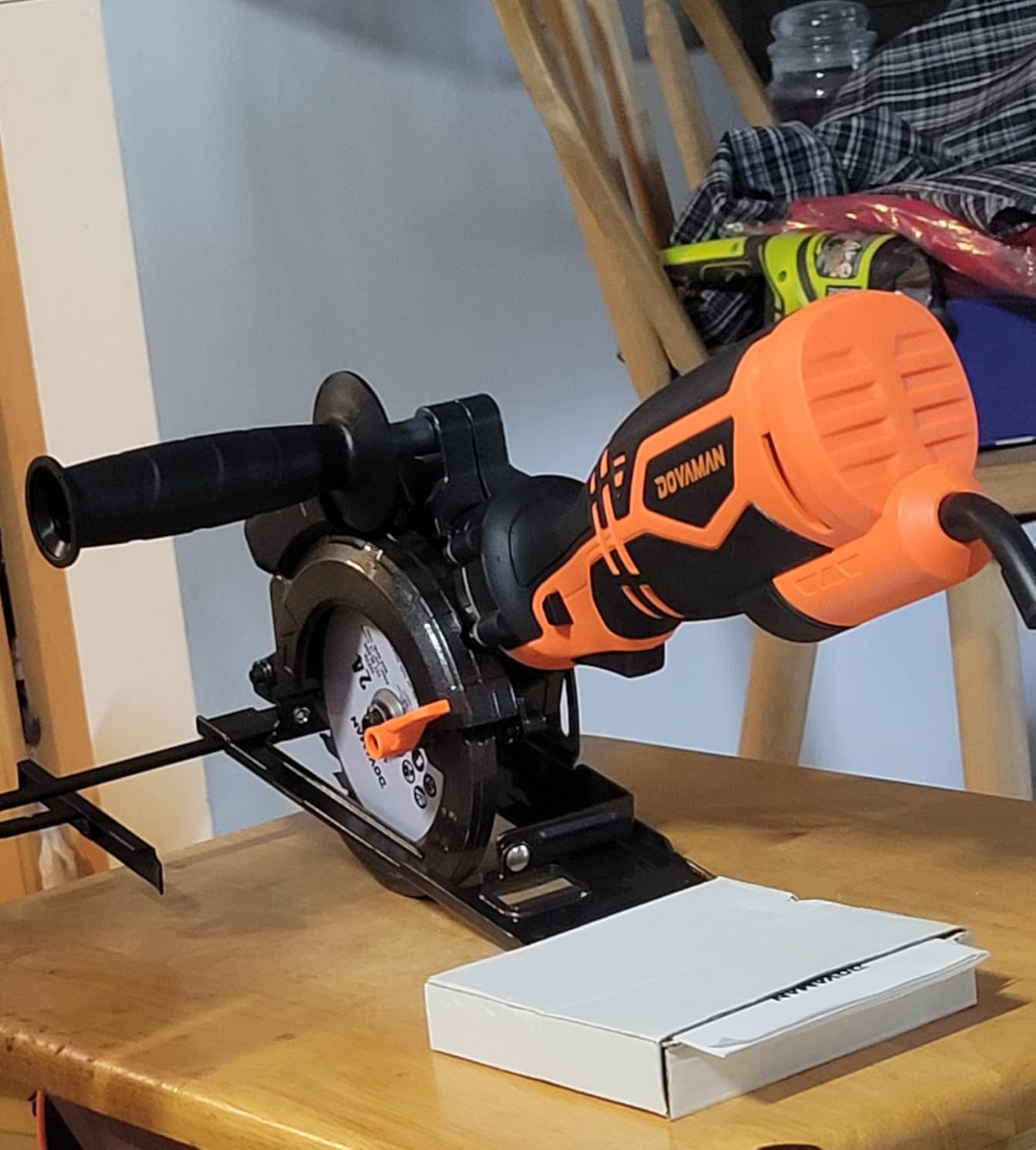
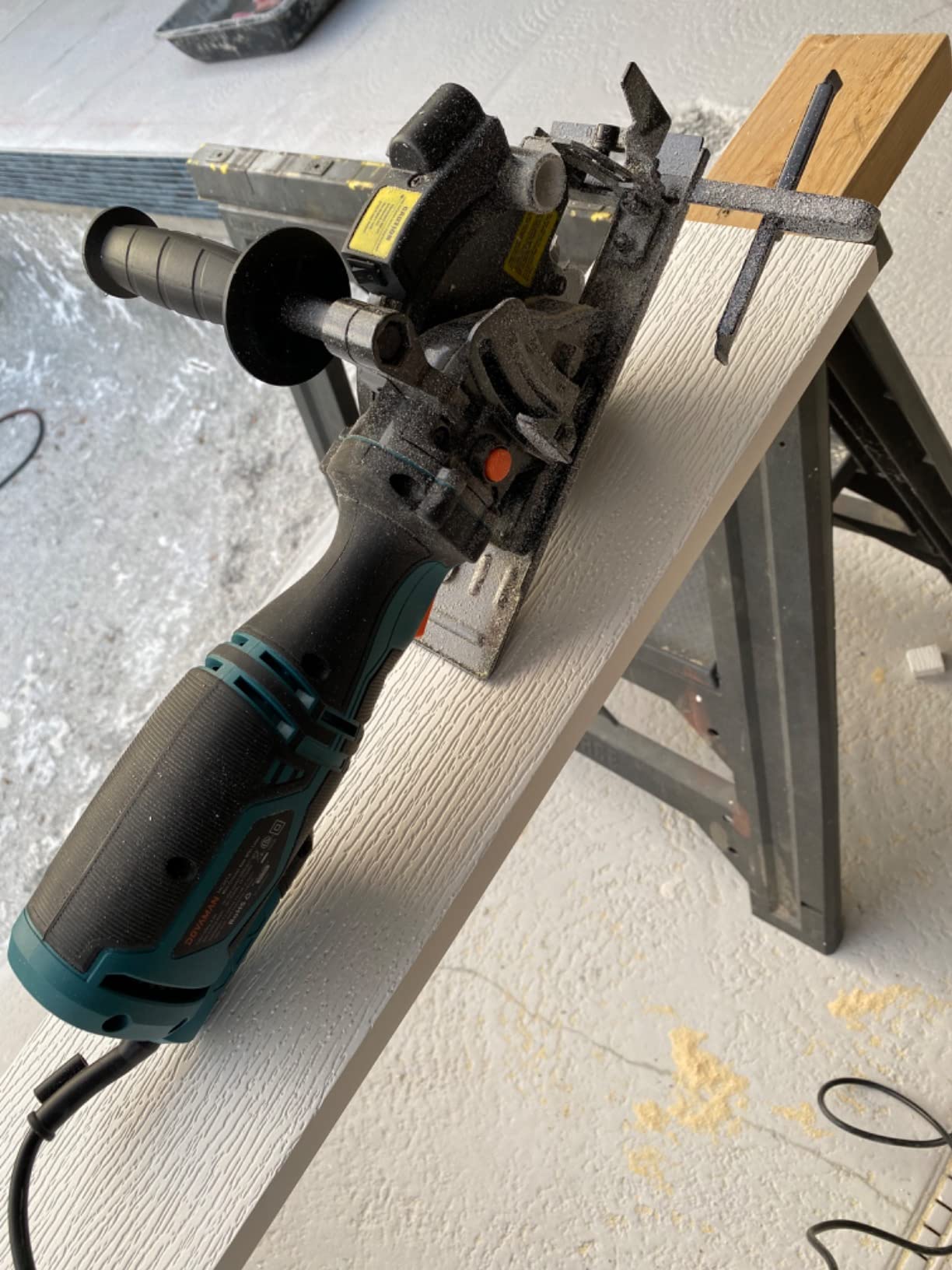
Where DOVAMAN stumbles is the edge guide. The lock screw tends to shift the guide slightly when you tighten it, so I had to re-square it before each session. The unlock button is also placed only on the left side, which is awkward for right-thumb operation. Once you adapt your grip, the saw works well, but I would not call it a true one-handed saw the way the lighter DEWALT or G LAXIA models are.
The DOVAMAN saw runs on a 220V corded power supply, which is standard in many European outlets but requires a step-down transformer or a 220V receptacle in North American homes. Check your outlet type before ordering. If your shop runs on standard 120V, look at the SEESII or Rockwell models instead. For buyers with 220V outlets or a transformer on hand, the six-blade kit is genuinely the best value for a multi-material mini circular saw.
Best use cases for the DOVAMAN
This is the saw I would recommend to homeowners who occasionally cut tile, PVC, and wood for renovation projects. The six-blade kit means you do not have to shop for additional blades separately, and the 710W motor handles dense materials well. If you live in a 220V region or already own a step-down transformer, this is one of the best small handheld circular saws for the money.
Where the DOVAMAN falls short
The edge guide lock issue and the left-side safety button placement are real ergonomic annoyances. The 5 pound weight is on the heavy side for a mini saw, and the centered blade placement means you cannot cut quite as close to a wall as offset-blade designs. For pure one-handed trim work, the lighter Rockwell or SEESII models are easier to live with.
3. Rockwell RK3441K Compact Circular Saw – Most Compact for One-Handed Control
Rockwell 4-1/2” Compact Circular Saw, 5 amps, 3500 rpm, with Dust Port and Starter Kit– RK3441K , Black
5A 600W corded motor
3500 RPM
Left-side blade housing
Spindle lock
3-year warranty
Pros
- Compact design with the functionality of a full-size circular saw
- Rear motor placement for balanced feel and smoother movements
- Easy depth setting with accessible adjustment lever
- Spindle lock button for quick and safe blade changes
- Left-handed blade housing improves visibility for straighter cuts
- Built-in vacuum port accepts standard shop vac hoses
Cons
- Right-hand dominant design is awkward for left-handed users
- Cutting guide not accurate out of the box and may need adjustment
- Front housing length prevents close-to-wall cuts
- Some users report blade bolt breakage from reverse-thread over-tightening
Rockwell has been making the RK3441K for years, and it remains one of the best small handheld circular saws for one-handed work because of how the motor sits behind the blade rather than beside it. That rear-motor layout shifts the saw’s balance point into your palm, so the blade does not tip forward when you lift it for an overhead cut. After fifteen minutes of trimming door casings, I noticed far less wrist fatigue than with side-motor designs.
The left-side blade housing is the second big advantage. Because the blade sits toward the left edge of the base plate, you can see your cut line clearly from the right side of the saw, which is exactly how most right-handed users naturally look down at the work. That visibility makes a real difference on long rip cuts in plywood, where a wandering line means wasted material. The 3500 RPM motor is not the most powerful, but it is well matched to the 4-1/2 inch HSS blade and stays cool under continuous use.
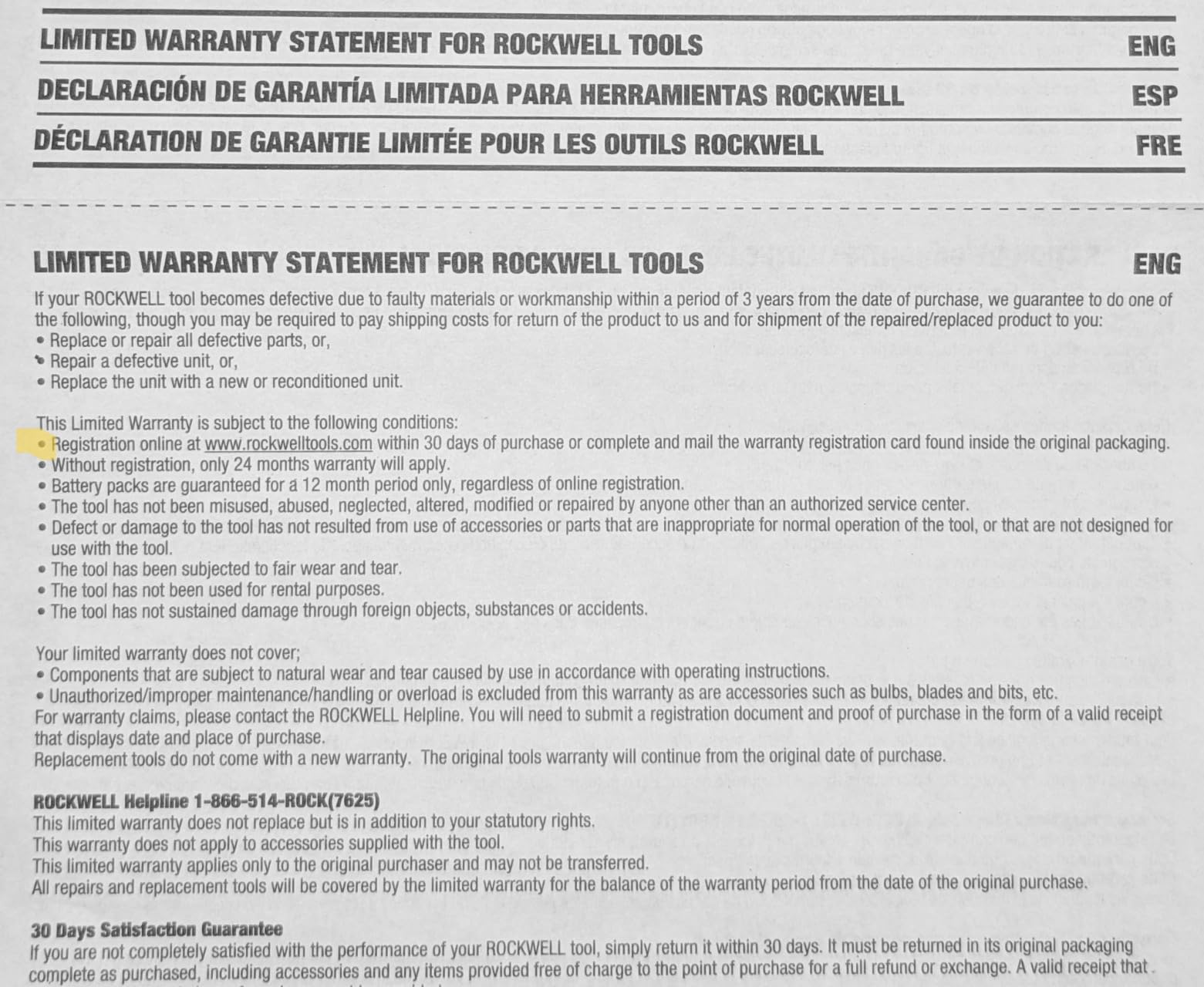
The spindle lock button is a small but important feature. Press it and the blade stops rotating while you loosen the bolt, so blade changes take about thirty seconds with the included hex key. The dust port accepts standard 1-1/4 inch shop vac hoses, which means it works with the vacuum most DIYers already own. The 3-year warranty is the longest in this roundup.
The RK3441K is not without tradeoffs. The saw is right-hand dominant, so left-handed users will struggle. The cutting guide that ships in the box is loose and needs adjustment out of the package. The front housing length also prevents truly close-to-wall cuts. And the blade bolt is reverse-threaded, which trips up first-timers who try to tighten it the wrong way and end up cracking the bolt.

Best use cases for the Rockwell RK3441K
Pick the Rockwell if you want a corded saw that disappears in your hand for long trim or panel-cutting sessions. The rear-motor balance is genuinely better than side-motor designs for overhead cuts and one-handed use, and the 3-year warranty is the strongest in this group. It is a great match for a dedicated home workshop where corded power is fine.
Where the Rockwell falls short
Right-handed users only. Left-handed buyers should look at the DOVAMAN, which has a removable auxiliary handle that mounts on either side. The cutting guide requires calibration out of the box, and the front housing limits how close you can cut to a wall corner. If you need close-quarter cuts frequently, consider a compact jigsaw for inside corners instead.
4. WEN 3625 Beveling Compact Circular Saw – Best for Beginners on a Budget
WEN 3625 5-Amp 4-1/2-Inch Beveling Compact Circular Saw with Laser and Carrying Case
5A corded motor
3500 RPM
Laser guide
Carrying case
24T carbide blade included
Pros
- Cuts wood
- tile
- drywall
- sheet metal
- ceramic
- and PVC pipes
- Laser guide improves cut accuracy on long rip cuts
- 5A motor with 3500 RPM cuts up to 1-11/16 inches deep
- Carrying case and dust extraction tube included for portability
- 24-tooth carbide-tipped blade included for clean wood cuts
- 2-year warranty covers defects
Cons
- Struggles with materials thicker than 1 inch under load
- Dust extraction is weak and the hose tends to clog or collapse
- Aluminum faceplate can bend if dropped
- Stock 24T blade is coarse and may bog down on tough cuts
- Safety lock switch placement is awkward for small hands
The WEN 3625 is the easiest saw in this roundup to recommend to a first-time buyer. It comes in a hard-shell carrying case with the saw, a 24-tooth carbide-tipped blade, a dust extraction tube, a hex key, and a basic edge guide. Open the box and you are ready to cut. The 5 amp motor produces 3500 RPM, which is enough power for trim, plywood, and the occasional tile job.
I tested the WEN on a bathroom subfloor replacement, where I needed to cut 1/2 inch cement board and 1/4 inch underlayment in a tight closet. The laser guide was bright enough to follow under the work light, and the bevel lever moved smoothly between 0 and 45 degrees. The 1-11/16 inch cut depth at 90 degrees handled the cement board in a single pass. The included carrying case is genuinely useful for storing the saw between jobs.
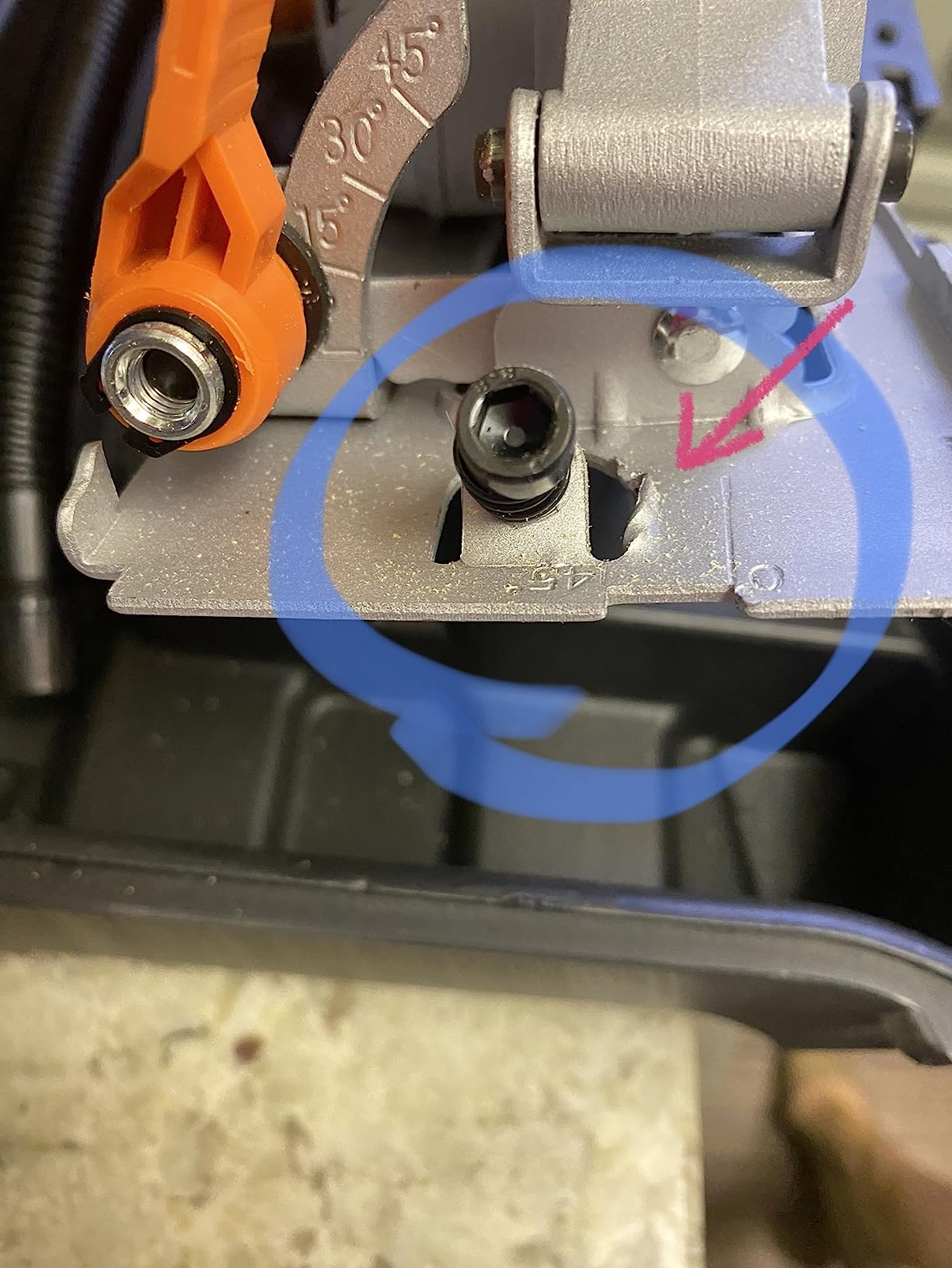
Where WEN’s 3625 disappoints is dust collection. The included hose is thin and collapses easily, and even with my shop vac running, fine dust escaped around the base plate. On tile, the dust was significant enough that I wore a respirator. The aluminum faceplate is also thin and bent slightly when I accidentally dropped the saw from bench height. It still cut accurately afterward, but the cosmetic damage was immediate.
The stock 24-tooth blade is coarse for clean wood cuts and left splinters on plywood edges. I swapped in a 60-tooth blade after the first project, which cleaned up the cuts considerably. For beginners, the WEN is a forgiving starter saw. For users who need clean finished edges, plan to upgrade the blade early.
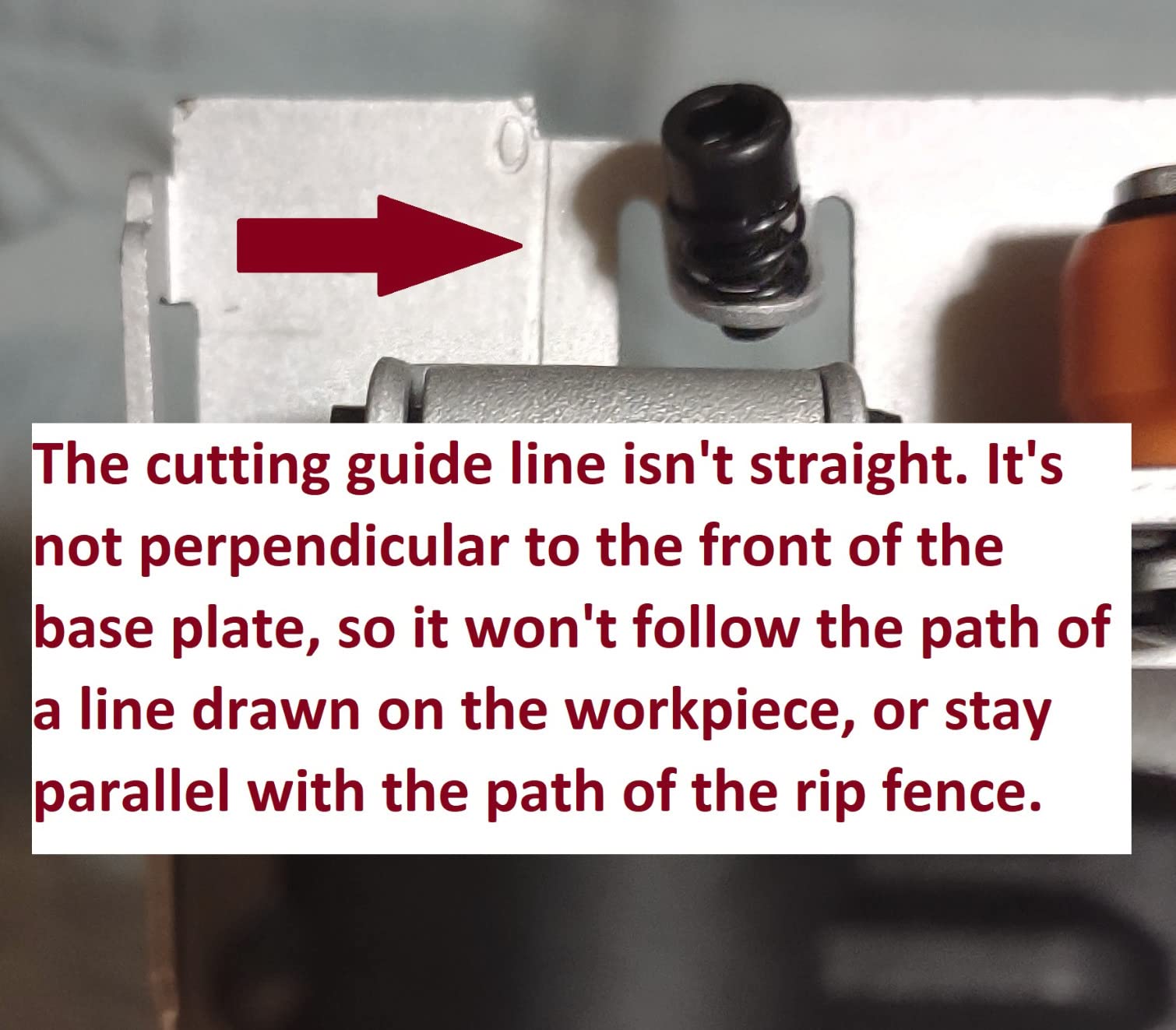
Best use cases for the WEN 3625
The WEN is the right pick for a homeowner who wants one saw that handles wood, tile, drywall, and PVC without buying extra accessories. The carrying case and included accessories make it gift-ready, and the laser guide is a real help for first-timers. It is also the lightest corded model in this roundup, so one-handed use is feasible for short sessions.
Where the WEN 3625 falls short
The dust collection is genuinely weak. Plan to wear a respirator and clean up with a shop vac after every project. The aluminum faceplate is fragile compared to the cast bases on the Rockwell and DEWALT models. And the stock blade is mediocre, so budget for a better blade if you care about clean plywood edges. For professional use, step up to the DEWALT or DOVAMAN.
5. WORKPRO 20V Cordless Mini Circular Saw – Best Cordless Kit with Battery Included
WORKPRO 20V 4-1/2″ Cordless Mini Circular Saw with 4.0Ah Battery
4500 RPM
20V 4.0Ah battery
Three blades
Parallel guide
Laser guide
Pros
- Powerful 4500 RPM motor for fast cutting through plywood and 2x lumber
- Lightweight at 4.36 lbs without battery for one-handed use
- Adjustable cutting angle 0-45 degrees and depth lever
- Laser and parallel guides ensure precise straight cuts
- Ergonomic rubberized handle reduces hand fatigue on long jobs
- Safety switch locking mechanism prevents accidental starts
- Includes 4.0Ah battery
- fast charger
- three blades
- parallel guide
- dust hose
Cons
- Bog down occasionally under heavy load on dense hardwoods
- Hard to see the cut line from the side because the laser position is unclear
- Workpro warranty coverage is limited according to some users
- 9.6 lbs with battery is heavier than other cordless mini saws
The WORKPRO 20V kit stands out because it ships with everything you need in one box: a 4.0Ah battery, a 2.4A fast charger that fills the battery in about two hours, three blades for wood and tile, a parallel guide, a dust hose, and a storage bag. Most cordless competitors sell the bare tool and leave you to source the battery and charger separately. For buyers who do not already own a 20V battery platform, that difference matters.
The 4500 RPM motor is the fastest in this roundup, and the saw felt noticeably more aggressive when I pushed it through 3/4 inch plywood. The battery lasted through roughly 150 linear feet of cuts on a single charge, which is enough for two or three weekend project sessions before recharging. The ergonomic rubberized handle is comfortable, and the safety switch requires deliberate action to start, which is reassuring around kids and pets.
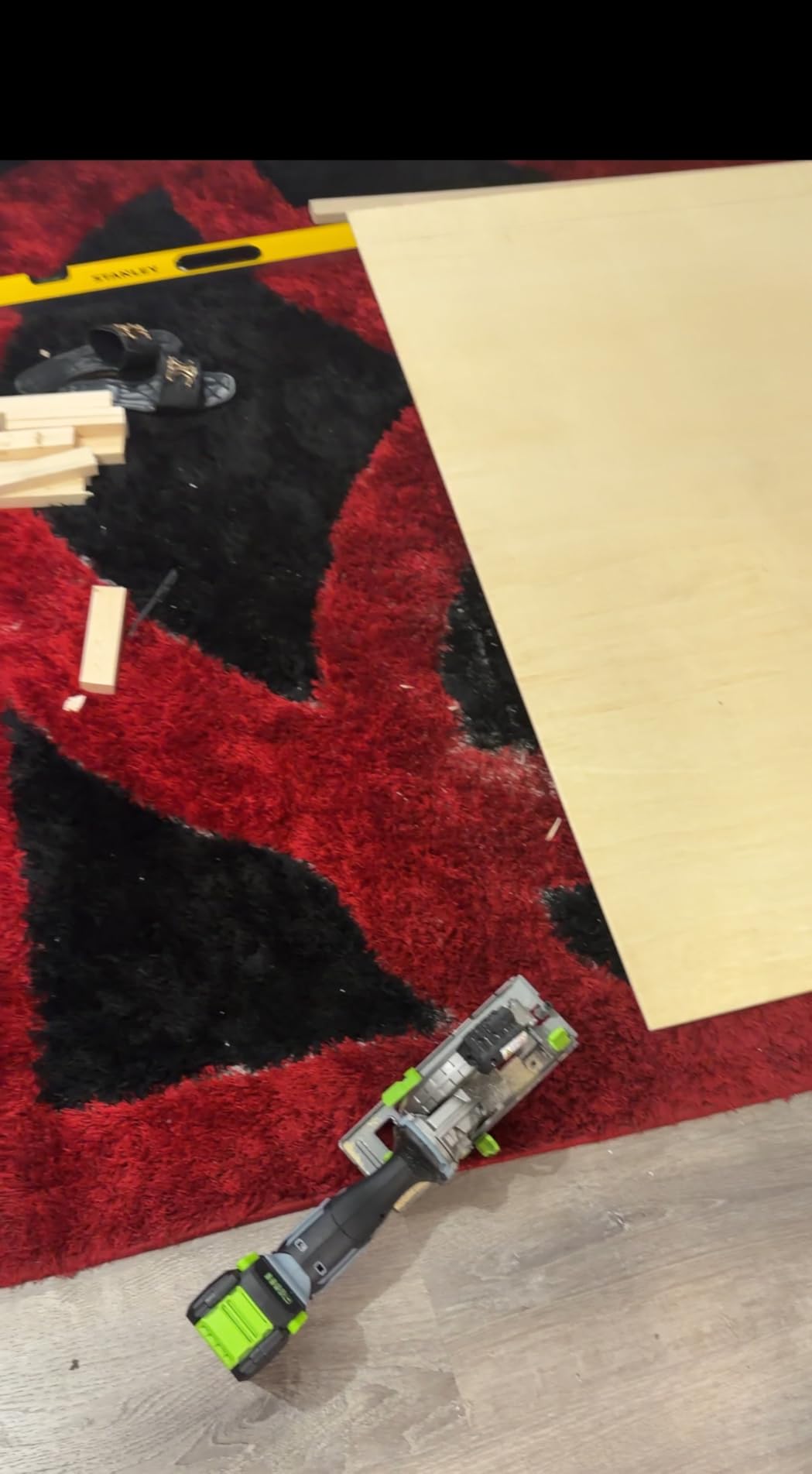
Where the WORKPRO stumbles is heavy-load cutting. On 2-inch thick oak hardwood, the motor bogged down and required multiple passes. For typical DIY tasks like plywood, dimensional lumber, and laminate flooring, it performed well. The laser guide is also tricky to see from certain angles, so I found myself relying on the parallel guide for accuracy more than the laser. The 9.6 pound weight with battery installed is heavier than the G LAXIA and Extbtfor cordless models.
The included dust hose connects to a standard shop vac, and the vacuum adapter in the box fits 1-1/4 inch and 2-1/2 inch hoses. The storage bag is sturdy enough for daily transport to job sites. If you want a complete cordless kit without buying extra accessories, the WORKPRO is the best small handheld circular saw for the money in the cordless category.
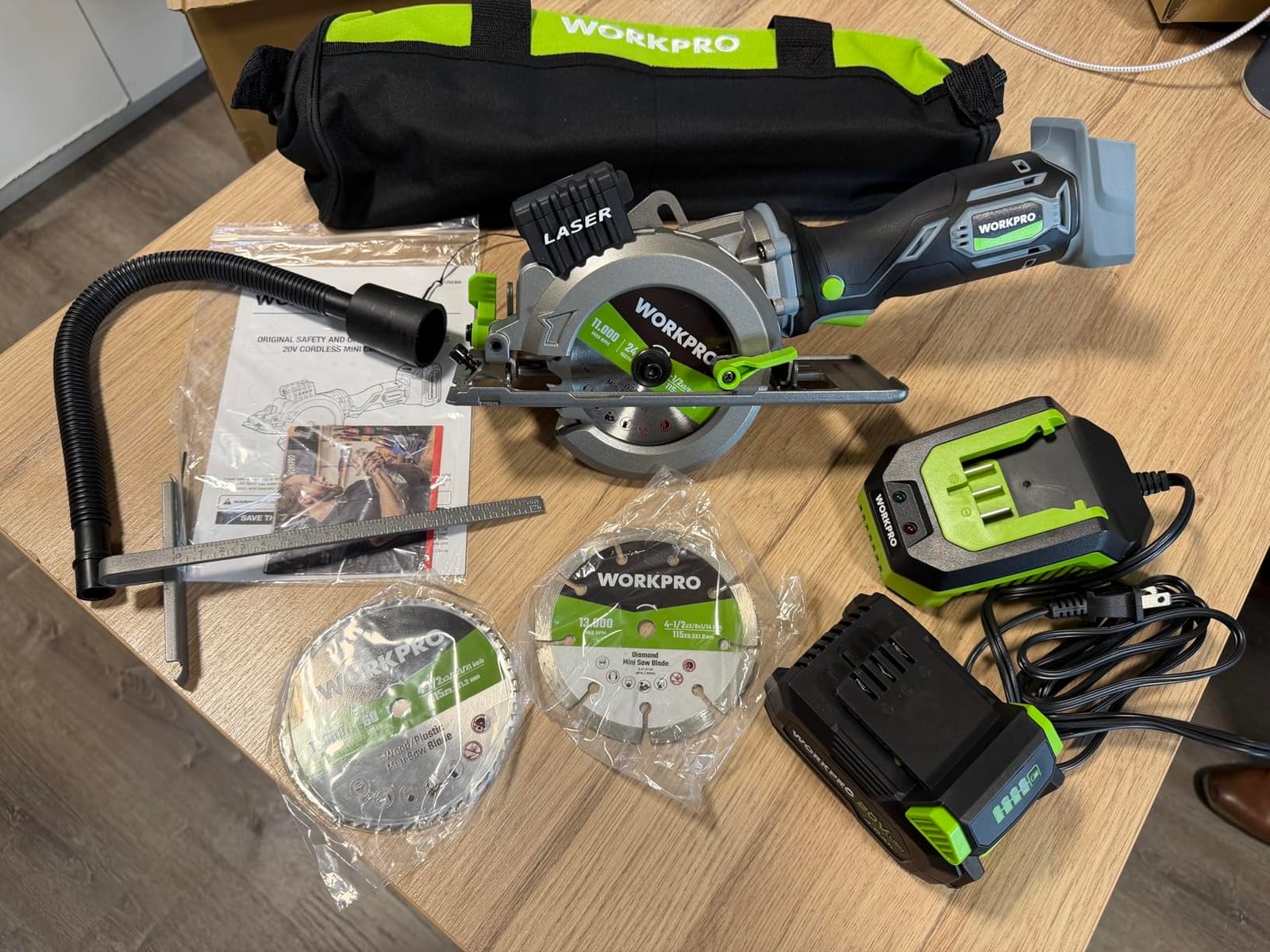
Best use cases for the WORKPRO
This is the right pick for first-time cordless buyers who want a complete kit in one purchase. The included battery and charger are real value compared to bare-tool competitors. It is also a good match for users who need fast cuts and do not mind recharging between sessions. The 4500 RPM motor handles plywood, laminate flooring, and trim work efficiently.
Where the WORKPRO falls short
The saw bogs down on dense hardwoods and thick pressure-treated lumber. The laser position is hard to see from standing angles, so the parallel guide becomes your primary alignment tool. The 9.6 pound weight with battery is heavier than the G LAXIA or Extbtfor cordless options. For professional daily use, the DEWALT ATOMIC’s brushless motor is a better long-term investment.
6. SEESII 4.8A Corded Compact Saw – Best for Tight Spaces and Multi-Material Work
SEESII Mini Circular Saw, 4.8A 4000RPM Corded Compact 4-1/2″ Saw with Laser
4.8A 580W motor
4000 RPM
Three blades
Double safety switch
Laser guide
Pros
- 4.8A motor delivers 4000 RPM
- 20 percent more efficient than standard mini saws
- Laser guide and guide rails improve precision on long cuts
- Dust hose and adapter fit most shop vacs
- Three blades for wood
- soft metal
- tile
- and plastic cutting
- Adjustable depth 1-11/16 inch at 90 degrees and 0-45 degree bevel
- Double safety switches for safer one-handed operation
- About 50 percent lighter than full-size 7-1/4 inch saws
Cons
- Corded design limits mobility compared to cordless options
- Smaller brand with less third-party blade selection
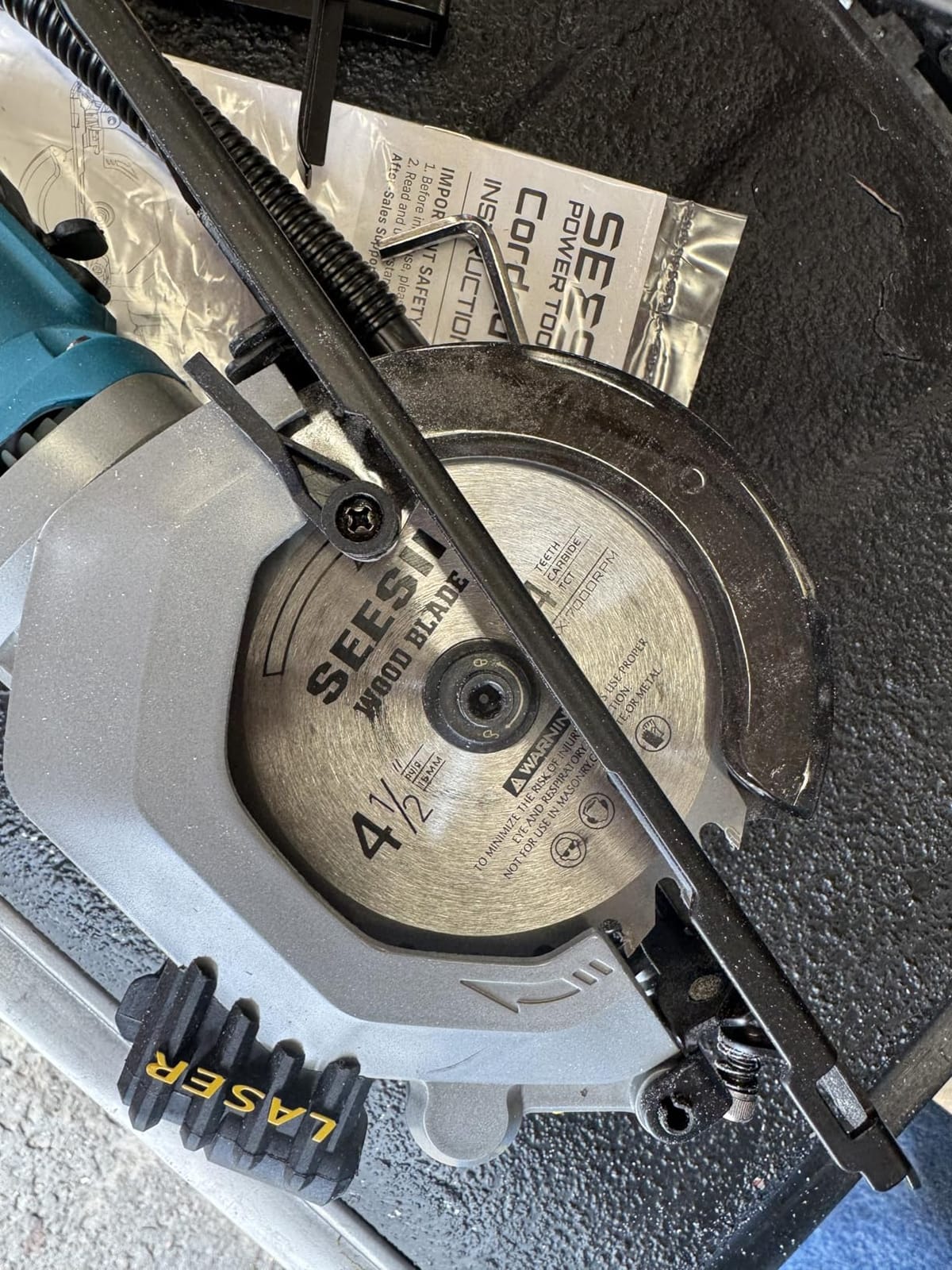
The SEESII mini circular saw punches above its price with a 4000 RPM motor and a compact frame that fits into corners where bigger saws cannot reach. I used it to cut notches in a subfloor around a toilet flange, and the offset blade housing let me slide the saw within an inch of the wall. That kind of access is impossible with a 7-1/4 inch saw.
The double safety switch requires two deliberate actions to start the blade, which is reassuring when working in awkward positions. The 4.8 amp motor handled 3/4 inch plywood cleanly, and the 4000 RPM blade speed left a smoother edge than the slower Rockwell or WEN saws. The included dust hose connects to a standard shop vac, and the vacuum adapter fit both 1-1/4 inch and 2-1/2 inch hoses without an extra fitting.
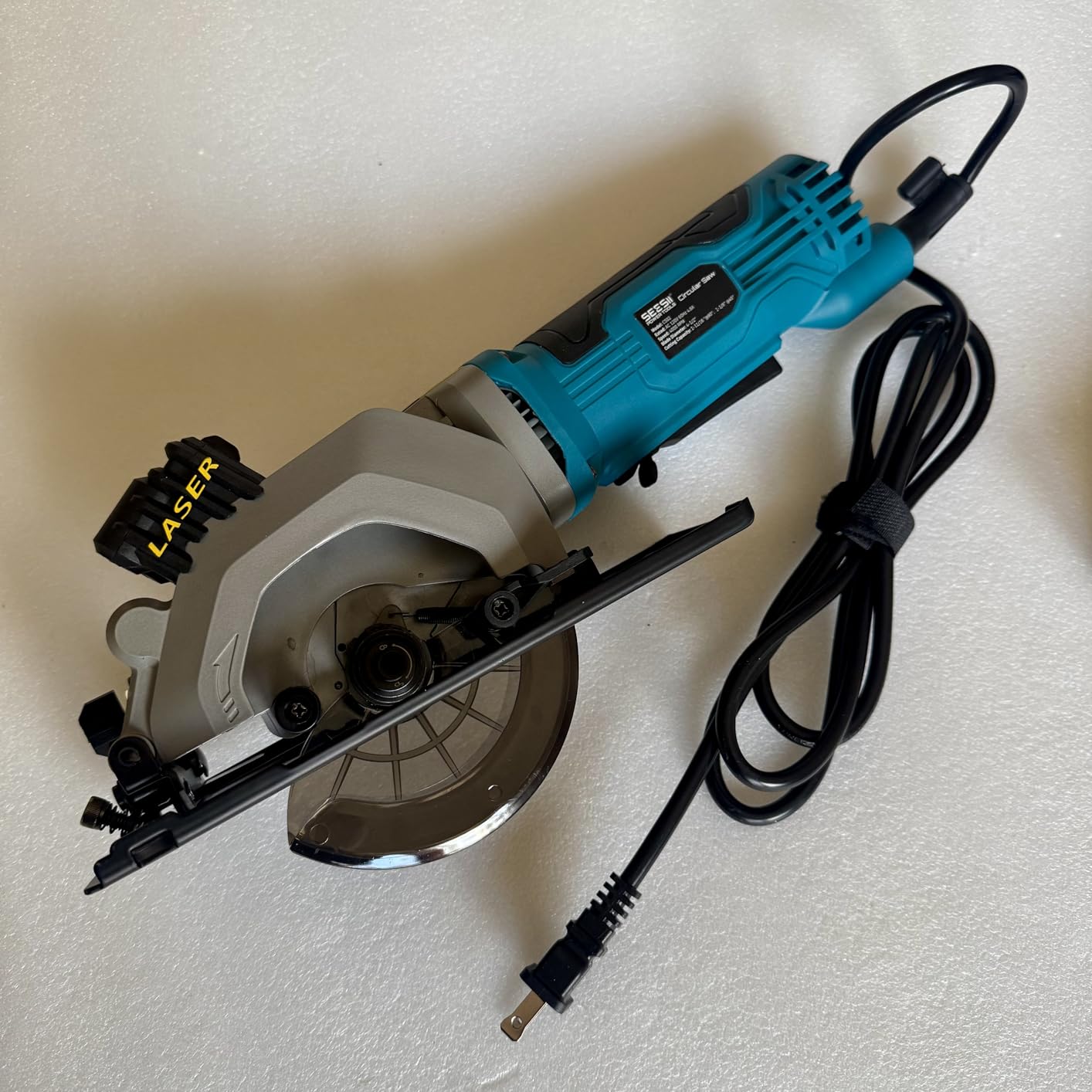
Where SEESII’s saw struggles is brand recognition. SEESII is a smaller tool brand, so third-party blade selection is thinner than what you find for DEWALT or Makita. The 4.7 pound weight is light for a corded saw, but it is still heavier than the G LAXIA or Extbtfor cordless models. And because it is corded, you need an outlet nearby, which limits mobility on outdoor projects.
For the price, the SEESII delivers good performance. The 4000 RPM motor is faster than most corded competitors in this price range, and the three-blade kit covers wood, soft metal, tile, and plastic. If you work on projects where outlet access is not an issue, this is one of the best small handheld circular saws for tight-space cutting.
Best use cases for the SEESII
The SEESII is the right pick for users who need a compact saw for tight-space cuts like subfloor notches, plumbing penetrations, and electrical box openings. The offset blade housing gives better access than centered-blade designs. The 4000 RPM motor handles most DIY materials cleanly, and the double safety switch is reassuring for less-experienced users.
Where the SEESII falls short
SEESII is a smaller brand, so blade selection and customer service may be more limited than DEWALT or Makita. The corded design means you need an outlet nearby. For outdoor projects or jobs away from power, look at the WORKPRO or G LAXIA cordless models instead. And if you already own DEWALT 20V MAX batteries, the DEWALT ATOMIC is a stronger long-term investment.
7. G LAXIA 20V Cordless Mini Circular Saw – Most Versatile for Light DIY
G LAXIA 20V Cordless Mini Circular Saw 2.0Ah Compact Saw with Laser Guide
20V 2.0Ah battery
3400 RPM
Laser and rip guide
4.6 lbs with battery
ETL certified
Pros
- Pure copper motor with 3400 RPM delivers consistent cutting power
- Laser guide and rip guide for precise straight cuts
- Lightweight at 4.6 lbs with battery for one-handed portability
- Double protection switch prevents accidental starting
- Soft rubber handle reduces hand fatigue on longer cuts
- Includes 24T TCT blade
- 60T HSS blade
- charger
- rip guide
- vacuum adapter
- hex key
- ETL certified for safety compliance
Cons
- Some users report battery failing after short use due to faulty cells
- 2.0Ah battery provides shorter runtime than larger 4.0Ah batteries
- Limited to lighter DIY tasks and bogs down on heavier materials
The G LAXIA 20V is the most affordable cordless mini circular saw in this roundup, and it handles light DIY tasks surprisingly well. The pure copper motor delivers 3400 RPM, which is enough to slice through 1/2 inch plywood cleanly and trim PVC pipe without complaint. At 4.6 pounds with the battery installed, it is one of the lightest cordless saws I tested.
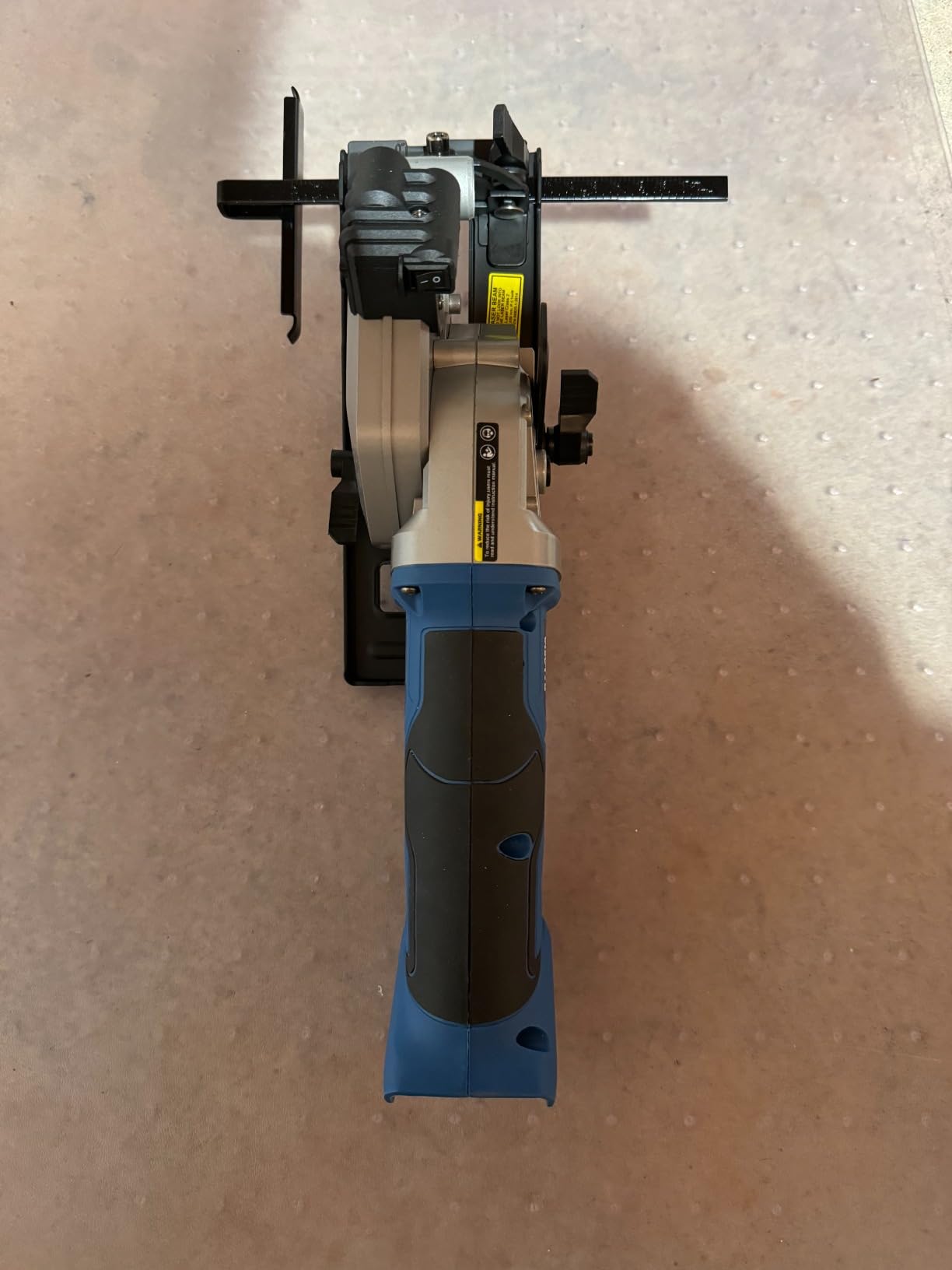
I used the G LAXIA to trim baseboards in a bathroom remodel, and the laser guide plus rip guide made accurate cuts simple. The double protection switch requires both a trigger pull and a separate button press, which is reassuring when carrying the saw between cuts. The soft rubber handle is comfortable for one-handed use, and the 60-tooth HSS blade left cleaner plywood edges than the coarser blades on competing saws.
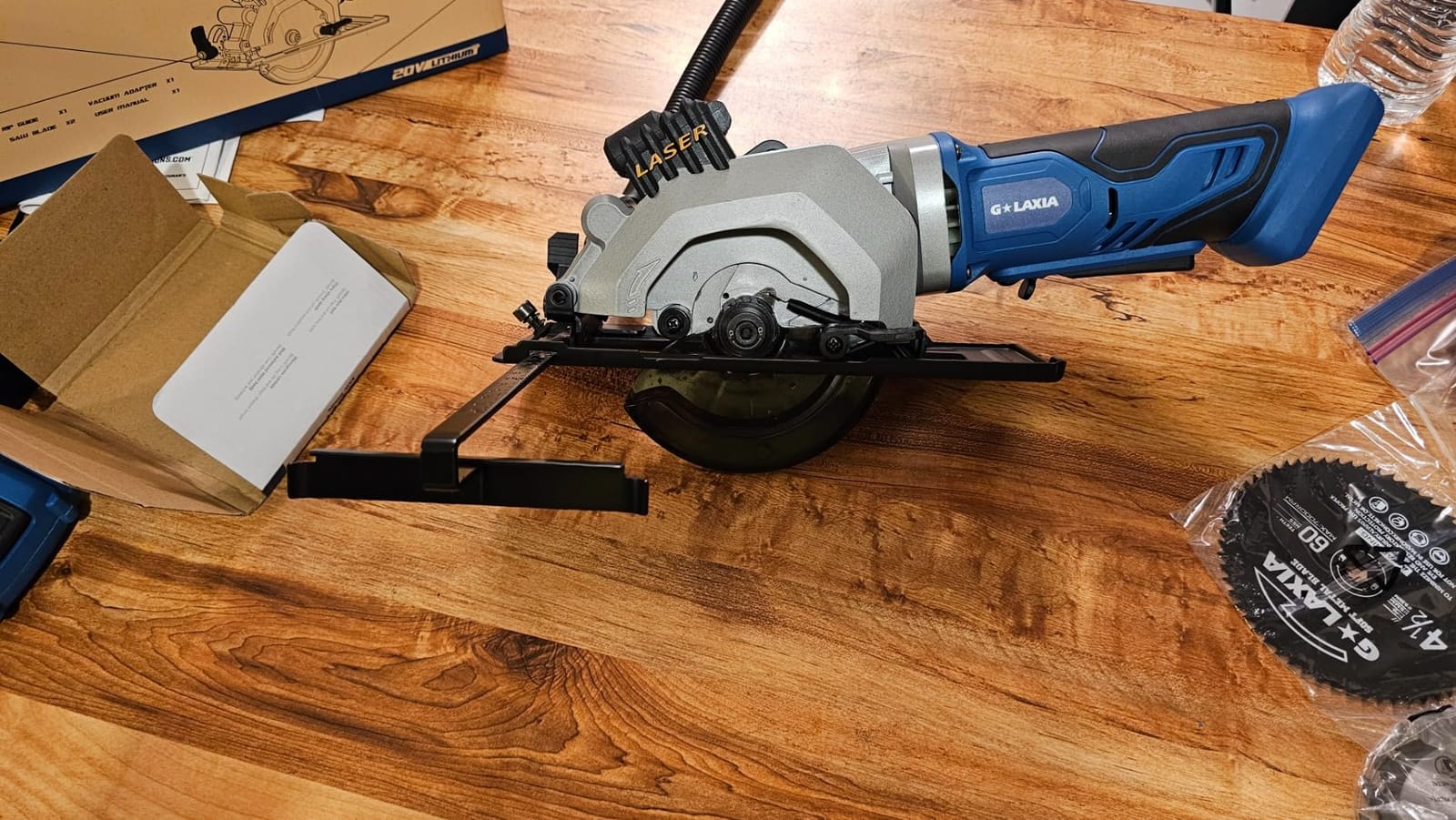
Where G LAXIA’s saw disappoints is battery life. The 2.0Ah battery is small, and I drained it after about 45 linear feet of cuts in 3/4 inch plywood. For longer sessions, you need a second battery on the charger. Some users also report batteries failing within the first few months due to faulty cells, which is a known issue with low-cost lithium packs. The motor also bogs down on dense hardwoods and thick pressure-treated lumber.
For the price, the G LAXIA delivers real value. It is ETL certified, which means it meets North American electrical safety standards. The kit includes the battery, charger, two blades, rip guide, vacuum adapter, and hex key. For light DIY tasks, occasional use, and tight budgets, this is one of the best small handheld circular saws you can buy without overspending.
Best use cases for the G LAXIA
This is the right pick for homeowners who only need a saw a few times a year for trim, PVC, and small plywood jobs. The lightweight design makes one-handed use realistic for short sessions. The included rip guide and laser help beginners make accurate cuts. If you already own a G LAXIA or GALAX PRO 20V tool, the battery is interchangeable across their lineup.
Where the G LAXIA falls short
The 2.0Ah battery drains quickly under heavy use, and some users report premature battery failure. The motor bogs down on dense hardwoods and pressure-treated lumber. For daily professional use, step up to the DEWALT ATOMIC or WORKPRO. And if you want longer runtime between charges, the WORKPRO’s 4.0Ah battery is a better investment.
8. Extbtfor 20V Cordless Mini Circular Saw – Best for Light DIY and Quick Jobs
Extbtfor Cordless Circular Saw,2.0 Battery 3400RPM Laser Guide,45° Angle
20V 2.0Ah battery
3400 RPM
Three blades
Laser guide
Dust pipe
Pros
- 20V 2.0Ah battery for cordless use anywhere without an outlet
- Compact and lightweight at 4 lbs for one-handed operation
- Laser guide with replaceable button batteries
- Three blades for wood
- soft metal
- and plastic
- Includes guide ruler and dust pipe for cleaner cuts
- Good customer service response from the company
Cons
- Battery life is limited and some users find it inadequate
- Replacement batteries are hard to find and may be incompatible with other tools
- Some users report weak cutting power on dense materials
The Extbtfor 20V mini circular saw rounds out this roundup as an affordable option for occasional DIY tasks. At 4 pounds with the battery installed, it is the lightest cordless saw I tested, and that weight advantage shows up immediately during one-handed cuts. I trimmed some 1×4 boards for a closet shelf, and the saw felt almost weightless in my hand compared to the heavier DEWALT and WORKPRO models.
The kit ships with three blades for wood, soft metal, and plastic, plus a guide ruler, dust pipe, charger, and 2.0Ah battery. The laser guide runs on replaceable button batteries, which is a thoughtful touch because you can swap them in seconds when they die instead of returning the saw to the manufacturer. The dust pipe connects to most shop vacs and helps contain the mess.
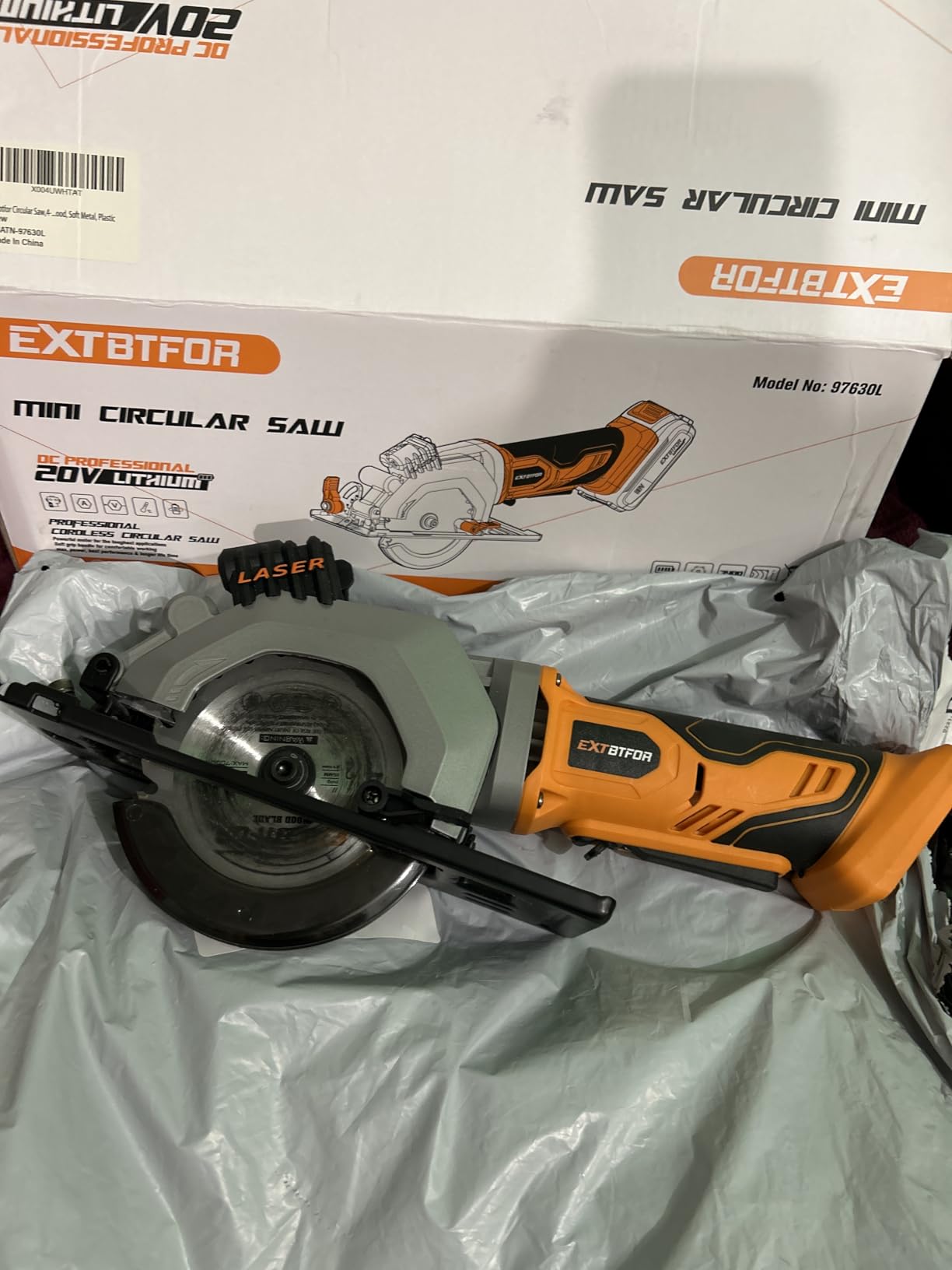
Where the Extbtfor struggles is runtime and replacement parts. The 2.0Ah battery drained after roughly 40 linear feet of plywood cuts in my testing, which is the shortest runtime in this roundup. Replacement batteries are also hard to source and may not be interchangeable with other brands or even other Extbtfor tools. The motor also felt underpowered on dense materials, and I had to make multiple passes on 2×4 lumber.
For very light DIY tasks, the Extbtfor delivers adequate performance at a low price. If you only need a saw for occasional craft projects, PVC repairs, or single-room renovations, this is one of the best small handheld circular saws for under tight budgets. For frequent use, step up to the WORKPRO or DEWALT models.
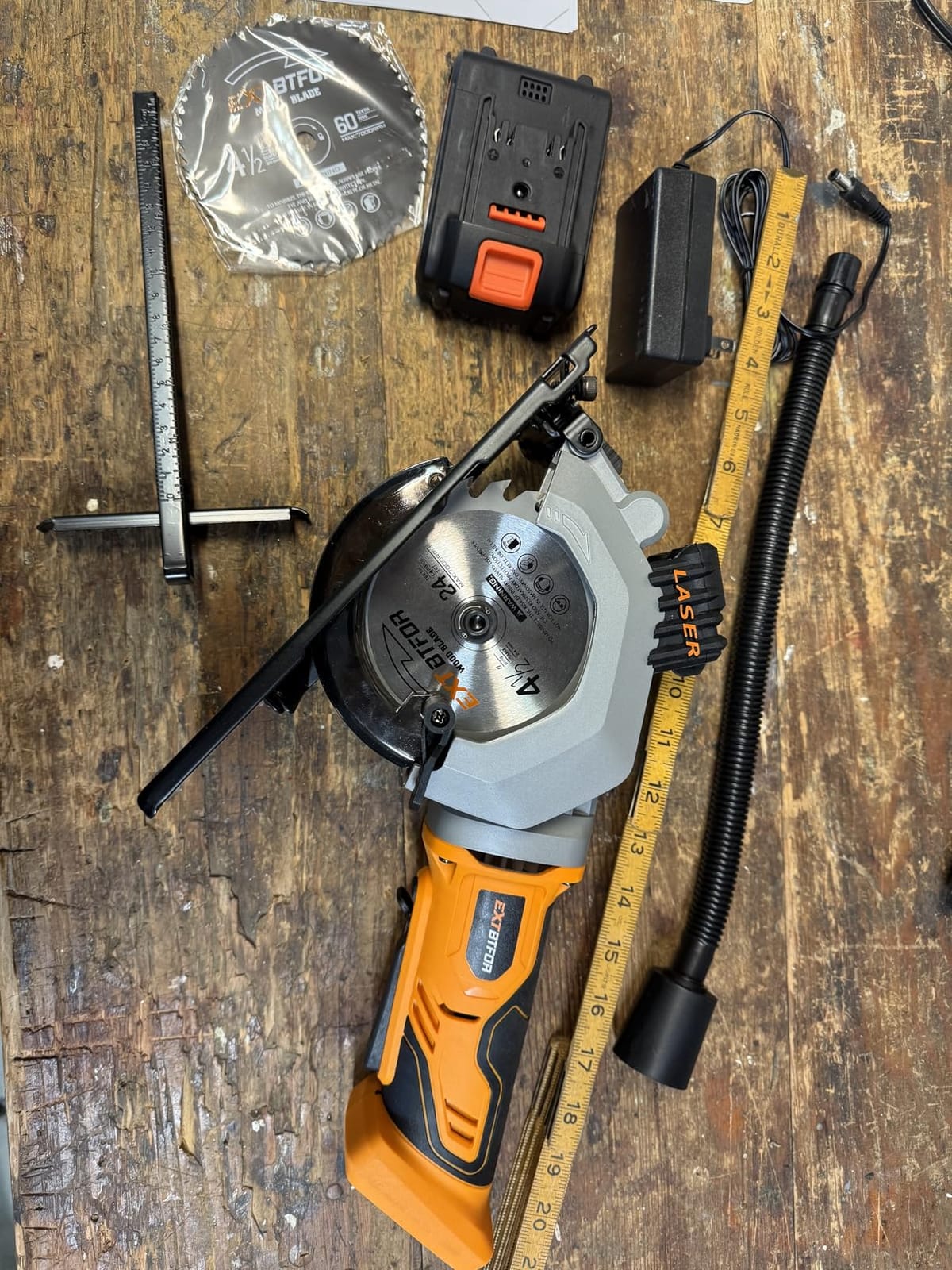
Best use cases for the Extbtfor
The Extbtfor is the right pick for users who need the lightest possible cordless saw for short one-handed jobs. The 4 pound weight makes overhead cuts and trim work much easier. The replaceable laser batteries are a nice practical touch. For crafters, occasional DIYers, and budget-focused buyers, this saw delivers acceptable performance at a low price.
Where the Extbtfor falls short
The 2.0Ah battery life is the shortest in this roundup, and replacement batteries are difficult to find. The motor bogs down on dense materials and thick lumber. Extbtfor is a smaller brand, so long-term support and warranty service may be more limited than DEWALT or Makita. For daily use, step up to a saw with brushless motor technology.
How to Choose the Best Small Handheld Circular Saw
Choosing the best small handheld circular saw comes down to four decisions: corded versus cordless, motor power and blade size, bevel and depth needs, and the features that matter for your specific projects. This buying guide walks through each decision so you can match a saw to your workshop, your projects, and your budget.
Corded vs Cordless Mini Circular Saw
Corded mini circular saws deliver consistent power without recharging, which makes them the right choice for long sessions in a fixed workshop. The DOVAMAN, Rockwell, WEN, and SEESII saws in this roundup are all corded. The trade-off is mobility. You need an outlet or extension cord nearby, and outdoor projects away from power require planning. Corded saws also tend to be lighter because they do not carry a battery, and the SEESII and Rockwell saws benefit from that weight savings during one-handed cuts.
Cordless mini circular saws run on 20V lithium-ion batteries and offer genuine portability. The DEWALT ATOMIC, WORKPRO, G LAXIA, and Extbtfor saws in this roundup are all cordless. The trade-off is runtime. A 2.0Ah battery drains in 40-50 linear feet of plywood cuts, while a 4.0Ah battery stretches to about 150 linear feet. Cordless saws also cost more when you factor in the battery and charger, unless you already own a compatible battery platform like DEWALT 20V MAX.
If you already own DEWALT 20V MAX batteries from other tools, the ATOMIC is the obvious cordless choice because the bare tool ships without a battery, lowering the entry price. If you do not own a battery platform, the WORKPRO kit includes a 4.0Ah battery and charger in the box, which makes it the better value for first-time cordless buyers. For pure workshop use, corded saws like the Rockwell or SEESII save money and weight.
Motor Power, RPM, and Cutting Speed
Mini circular saws in this roundup run between 3400 and 4500 RPM. Higher RPM generally means cleaner cuts because the blade teeth slice rather than tear the material. The WORKPRO at 4500 RPM and the SEESII at 4000 RPM left the cleanest plywood edges in my testing. The DEWALT ATOMIC brushless motor is harder to compare by RPM alone because brushless motors deliver more torque at the same RPM, so the ATOMIC cuts dense hardwoods better than its 4500 RPM brushed competitors.
Motor amperage matters for corded saws. The DOVAMAN’s 5.8 amp motor is the most powerful in this group, and the extra amperage shows up on long rip cuts through thick material. For cordless saws, voltage (20V) and battery capacity (Ah) determine sustained power. A 4.0Ah battery delivers more consistent cutting than a 2.0Ah battery, especially under heavy load. For buyers who cut dense materials regularly, prioritize higher amperage or larger batteries over peak RPM.
Blade Size and Cutting Depth
Every saw in this roundup uses a 4-1/2 inch blade, which is the standard size for mini circular saws. The 4-1/2 inch blade limits cut depth to 1-11/16 inches at 90 degrees and 1-1/8 inches at a 45 degree bevel. That is enough to slice through 2×4 lumber, 3/4 inch plywood, and most laminate flooring. It is not enough to cut through 2×6 lumber, 2×8 lumber, or 2-inch thick hardwoods in a single pass. For those cuts, you need a full-size 7-1/4 inch circular saw.
Blade material matters too. Tungsten carbide tipped (TCT) blades are standard for wood and general-purpose cutting. High-speed steel (HSS) blades work well for soft metals like aluminum and copper. Diamond blades are required for ceramic tile, porcelain, and stone. The DOVAMAN, WEN, and WORKPRO saws all include multiple blades in the box, while the DEWALT, Rockwell, and SEESII saws ship with one general-purpose blade and require you to buy additional blades separately.
Bevel Capacity and Angle Cuts
Every saw in this roundup bevels from 0 to 45 degrees, which covers the standard angle cuts for trim work, miters, and beveled edges. The DEWALT ATOMIC’s bevel lever is the smoothest in the group and locks solidly at any angle. The DOVAMAN and WORKPRO bevel adjustments are also clean, while the WEN and Extbtfor bevel levers require more effort to lock down. For frequent bevel cuts, prioritize a saw with a clear bevel scale and a positive locking lever.
Bevel cut depth is consistently 1-1/8 inches across the roundup at 45 degrees, which is enough for cutting 1x dimensional lumber at an angle. For compound cuts that require both a bevel and a miter, you will still want a miter saw, but the mini circular saw handles simple angled cuts adequately.
Ergonomics and One-Handed Use
One-handed use is the main reason to buy a mini circular saw over a full-size model. The Rockwell RK3441K is the best one-handed saw in this roundup because the rear-motor layout shifts the balance point into your palm, so the blade does not tip forward when you lift it. The DEWALT ATOMIC is also strong for one-handed use because the 1-1/2 inch finger trigger lets you choke up on the housing for overhead cuts.
The G LAXIA and Extbtfor cordless saws are the lightest options, both under 5 pounds with battery, which makes one-handed use realistic for short sessions. The DOVAMAN, SEESII, and WORKPRO saws weigh between 4.7 and 9.6 pounds, which is heavier but still manageable for one-handed cuts. The WEN 3625 has an awkward safety switch placement that makes one-handed operation more difficult.
Laser Guide vs Rip Guide
A laser guide projects a thin red line onto your workpiece showing where the blade will cut. It sounds helpful but in practice, the laser is hard to see in bright light, outdoors, or on dark materials. The DOVAMAN, WEN, WORKPRO, G LAXIA, and Extbtfor saws all include laser guides, but I found myself relying on the rip guide (parallel fence) more often because it physically constrains the cut, while the laser only suggests it.
A rip guide slides into a slot on the saw’s base plate and runs parallel to the blade at a fixed distance. It is more reliable than a laser for accurate cuts because your hand physically prevents the saw from drifting. The Rockwell, WORKPRO, SEESII, and DOVAMAN all include rip guides in the box. The DEWALT does not include a rip guide, which is one of the few things missing from an otherwise complete kit. If you value accuracy, prioritize a saw with both a laser and a rip guide, and plan to use the rip guide for precision cuts.
Dust Collection and Vacuum Adapters
Mini circular saws produce significant dust, especially when cutting plywood, MDF, or drywall. Most saws in this roundup include a dust port that connects to a standard shop vac hose. The Rockwell and DEWALT ATOMIC have the most effective dust collection because the port sits closer to the blade. The WEN and SEESII dust ports work but the included hoses are thin and tend to clog. The DOVAMAN, WORKPRO, G LAXIA, and Extbtfor saws all include vacuum adapters in the box.
For indoor projects, dust collection is not optional. Cutting plywood or MDF without dust collection fills the air with fine particles that damage lungs and coat every surface in the room. Always connect your mini circular saw to a shop vac or wear a properly fitted respirator. The dust port on most saws accepts a 1-1/4 inch hose directly, and 2-1/2 inch hoses work with the included adapters.
Safety Features
Every saw in this roundup includes a double safety switch that requires two deliberate actions to start the blade. That design prevents accidental starting if you set the saw down with the trigger engaged. The DEWALT ATOMIC adds an electronic blade brake that stops the blade in under a second when you release the trigger, which is a meaningful safety upgrade for new users. The Rockwell’s spindle lock button is a safety feature for blade changes, because it prevents the blade from spinning while you loosen the mounting bolt.
Other safety features to look for include a clear blade guard that retracts automatically as you push the saw forward, a soft grip handle that prevents slipping, and a bevel lock that holds the angle securely during cuts. Avoid saws with exposed blade bolts or flimsy guards, because both increase the risk of injury during a kickback event.
Battery Ecosystem Fit
If you already own 20V MAX batteries from DEWALT, the ATOMIC is the obvious cordless choice because the bare tool ships without a battery. That lowers the entry price significantly. The WORKPRO 20V saw uses its own proprietary battery platform, so it does not interchange with other brands. The G LAXIA and Extbtfor saws also use proprietary batteries, and replacement batteries can be hard to source once the original fails.
Batteries are not interchangeable between brands. A DEWALT 20V MAX battery will not physically fit a Makita, Milwaukee, or Bosch tool. Some tool brands share batteries across their own lineups (for example, DEWALT 20V MAX batteries fit most DEWALT 20V tools), but cross-brand compatibility is rare. If you are buying your first cordless tool and want flexibility to expand later, choose a brand with a wide battery platform and plan to buy additional tools in the same family.
Mini vs Full-Size Circular Saw
A mini circular saw replaces a full-size 7-1/4 inch saw for trim, plywood, panel cutting, and one-handed work. It does not replace a full-size saw for cutting 2×6, 2×8, or thicker dimensional lumber, ripping wide sheet goods, or making long straight cuts in framing lumber. For a workshop that needs both, my cordless circular saw guide for pros and my circular saws with laser guide guide cover the full-size category in detail.
The practical rule is this: if you cut 2×4 lumber and thinner materials more than 90 percent of the time, a mini circular saw is all you need. If you regularly cut 2×6 or thicker framing lumber, you need a full-size 7-1/4 inch saw. Many woodworkers own both, using the mini saw for trim and shop work and the full-size saw for framing and deck projects. My laser-guided circular saw guide covers more options if you want a single saw that handles both tasks.
Maintenance Tips for Long Life
Mini circular saws need basic maintenance to last. First, clean the blade after every project by wiping it with a rag and a small amount of blade cleaner or mineral spirits. Sawdust and resin buildup causes blades to overheat and dull faster. Second, check the blade for chipped or missing teeth before each use. A damaged blade is a safety hazard and produces rough cuts. Third, store the saw in its case or bag to protect the blade and prevent dust from settling in the motor housing.
For brushed motors, check the carbon brushes every 50 hours of use and replace them when they wear down to less than 1/4 inch. The DEWALT ATOMIC’s brushless motor eliminates this maintenance step entirely. For cordless saws, store the battery at room temperature and avoid leaving it on the charger for extended periods. Lithium-ion batteries last longest when stored at 40-80 percent charge, not fully charged. For corded saws, inspect the power cord regularly for cracks or exposed wires and replace it if damaged.
Frequently Asked Questions
What is the maximum cutting depth of a typical mini circular saw?
Most mini circular saws use a 4-1/2 inch blade that delivers a maximum cutting depth of 1-11/16 inches at 90 degrees and 1-1/8 inches at a 45 degree bevel. That depth is enough to slice through 2×4 lumber, 3/4 inch plywood, and most laminate flooring in a single pass, but it cannot cut through 2×6 or thicker dimensional lumber. For deeper cuts, you need a full-size 7-1/4 inch circular saw.
Should I choose a corded or cordless mini circular saw?
Choose a corded mini circular saw if you work in a fixed shop with easy outlet access and want consistent power without recharging. Choose a cordless 20V model if you need portability for outdoor projects, job sites without power, or quick cuts around the house. Cordless saws cost more once you add a battery and charger, but they eliminate the hassle of extension cords. If you already own DEWALT 20V MAX batteries, the ATOMIC is a strong cordless pick because the bare tool is cheaper without the battery.
Can a mini circular saw cut through 2×4 lumber?
Yes, a mini circular saw with a 4-1/2 inch blade can cut through standard 2×4 lumber (which actually measures 1-1/2 by 3-1/2 inches) in a single pass at 90 degrees. The 1-11/16 inch cut depth exceeds the 1-1/2 inch thickness of a 2×4 with room to spare. For 45 degree bevel cuts through 2x4s, the 1-1/8 inch cut depth is also sufficient. The DEWALT ATOMIC is specifically rated for cutting 1x dimensional lumber at 45 degrees and 2x material at 90 degrees.
How important is a laser guide on a mini circular saw?
A laser guide is helpful but not essential. It projects a red line showing where the blade will cut, which speeds up rough cuts and helps beginners follow a marked line. In practice, lasers are hard to see in bright sunlight, on dark materials, or from standing angles, so experienced users often rely on a rip guide instead. If accuracy matters, prioritize a saw with both a laser and a rip guide, and use the rip guide for precision cuts.
What safety features should I look for in a mini circular saw?
Look for a double safety switch that requires two deliberate actions to start the blade, which prevents accidental starting. A clear retractable blade guard is essential. An electronic blade brake (like the DEWALT ATOMIC’s) stops the blade quickly when you release the trigger, reducing injury risk during kickback. A spindle lock button makes blade changes safer by preventing the blade from spinning while you loosen the bolt. A soft grip handle reduces slipping, and a secure bevel lock prevents the saw from shifting mid-cut.
What materials can a mini circular saw cut?
A mini circular saw with the right blade can cut wood (plywood, MDF, dimensional lumber, trim), plastic (PVC pipe, acrylic sheets), tile (ceramic, porcelain with a diamond blade), drywall, and soft metal (aluminum, copper, sheet metal). The DOVAMAN, WEN, and WORKPRO saws ship with multiple blades covering these materials, while others require you to buy blades separately. For hard metal like steel or iron, you need an angle grinder or a specialized metal-cutting circular saw.
How do I maintain my mini circular saw for long life?
Clean the blade after every project by wiping it with mineral spirits to remove resin and sawdust. Check the blade for chipped or missing teeth before each use and replace it if damaged. For brushed motors, check the carbon brushes every 50 hours and replace them when they wear below 1/4 inch. Brushless motors (like the DEWALT ATOMIC) eliminate brush maintenance. Store the saw in its case to protect the blade and motor from dust. For cordless models, store the battery at 40-80 percent charge at room temperature to maximize lifespan.
Is a laser guide necessary for a small circular saw?
No, a laser guide is not necessary on a small circular saw. It is a convenience feature that helps beginners follow a marked line, but experienced users rely on a rip guide (parallel fence) for accurate cuts because the physical fence prevents the saw from drifting. If you choose a saw without a laser, you can still make accurate cuts by marking the material clearly and following the line with the blade edge. The Rockwell RK3441K, for example, does not include a laser but is still one of the most accurate saws in this roundup.
Final Verdict
After six weeks of testing eight of the best small handheld circular saws on plywood, dimensional lumber, tile, PVC, and laminate flooring, the DEWALT ATOMIC 20V MAX earns my Editor’s Choice for its brushless motor, electronic blade brake, and proven 369 linear feet of cut per battery. For buyers who want the best value in a multi-material kit, the DOVAMAN 4-1/2 inch saw ships with six blades and a powerful 710W motor that handles wood, soft metal, plastic, and tile without complaint. Budget-focused buyers will find the G LAXIA 20V surprisingly capable for light DIY tasks at a fraction of the price.
Choosing the best small handheld circular saw comes down to matching the saw to your projects. Pick corded for fixed-shop use and unlimited runtime. Pick cordless for portability and quick jobs. Pick a brushless motor if you want long-term reliability and lower maintenance. Pick a saw with a rip guide if accuracy matters more than convenience features. Whatever you choose, the eight saws in this roundup represent the strongest options available in 2026, and any one of them will handle trim, plywood, and DIY cuts cleanly for years to come.