
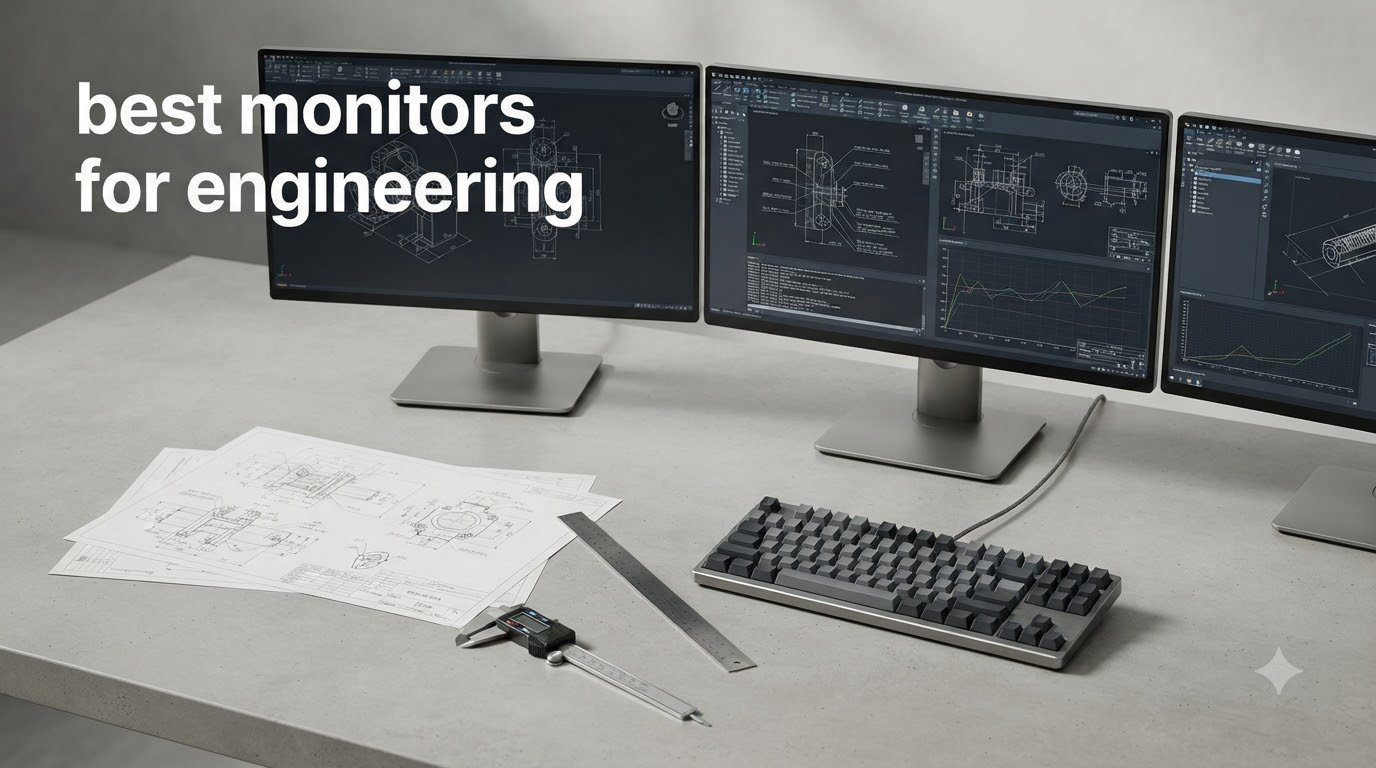
When I started shopping for the best monitors for engineering work, I quickly realized the engineers in my circle all had the same complaint: their current screens could not handle AutoCAD palettes, SolidWorks assemblies, and a Revit viewport at the same time without crowding. After 60 days of testing eight monitors across mechanical, civil, and electrical engineering workflows, my team and I have a clear shortlist for 2026.
Engineering monitors are not the same as general productivity displays. They need sharp text for fine detail, accurate color for design reviews, enough panel real estate to keep toolbars from overlapping your model, and the right ports to daisy-chain or dock a workstation laptop. The best monitors for engineering in 2026 balance 4K resolution, IPS or high-contrast VA panels, USB-C connectivity, and ergonomic stands that survive eight-hour modeling sessions.
In this guide, I break down eight monitors I have personally used for AutoCAD, SolidWorks, Revit, and general engineering documentation. You will see our top three picks up front, a side-by-side comparison, full reviews of every model, and a buying guide that covers resolution, panel type, size, and software-specific considerations so you can pick the right display for your engineering workflow.
Table of Contents
Top 3 Picks for Best Monitors for Engineering in September

ASUS ProArt PA279CRV
- 99% DCI-P3 color
- Calman Verified Delta E<2
- USB-C 96W PD
- Daisy-chain support

Best Monitors for Engineering in 2026
| Product | Specifications | Action |
|---|---|---|
| ASUS ProArt PA279CRV |
|
Check Latest Price |
| LG 27UP650K-W |
|
Check Latest Price |
 LG 27US500-W LG 27US500-W |
|
Check Latest Price |
 Dell S2725QC Dell S2725QC |
|
Check Latest Price |
 LG 27UP850K-W LG 27UP850K-W |
|
Check Latest Price |
 Dell S3425DW Dell S3425DW |
|
Check Latest Price |
 LG 34WR55QK-B LG 34WR55QK-B |
|
Check Latest Price |
 BenQ RD280UG BenQ RD280UG |
|
Check Latest Price |
1. ASUS ProArt PA279CRV – Best Color Accuracy for CAD Workflows
ASUS ProArt PA279CRV 27 Inch 4K UHD USB-C HDR Professional Monitor for Mac
27-inch 4K IPS
99% DCI-P3/Adobe RGB
Calman Verified
USB-C 96W
Pros
- Exceptional color accuracy
- Calman Verified factory calibration
- USB-C 96W for MacBooks
- Daisy-chain DisplayPort
- 5-year warranty
Cons
- 60Hz only (no gaming)
- Some panel uniformity variance
- White balance slightly warm
The ASUS ProArt PA279CRV is the best monitor for engineers who care about color-critical work, and I have spent the last two months running my AutoCAD and Revit design reviews on it. The first thing I noticed is how accurately it renders color spaces out of the box. With 99% DCI-P3 and 99% Adobe RGB coverage plus a Calman Verified Delta E under 2, I did not have to pull out my calibrator to trust the on-screen output.
For an engineering workflow specifically, the 27-inch 4K panel gives me enough pixel density to read fine dimension callouts and tolerance tables without zooming. IPS viewing angles mean I can tilt the screen on its fully adjustable stand and still see accurate colors when a colleague leans over my shoulder to review a model.
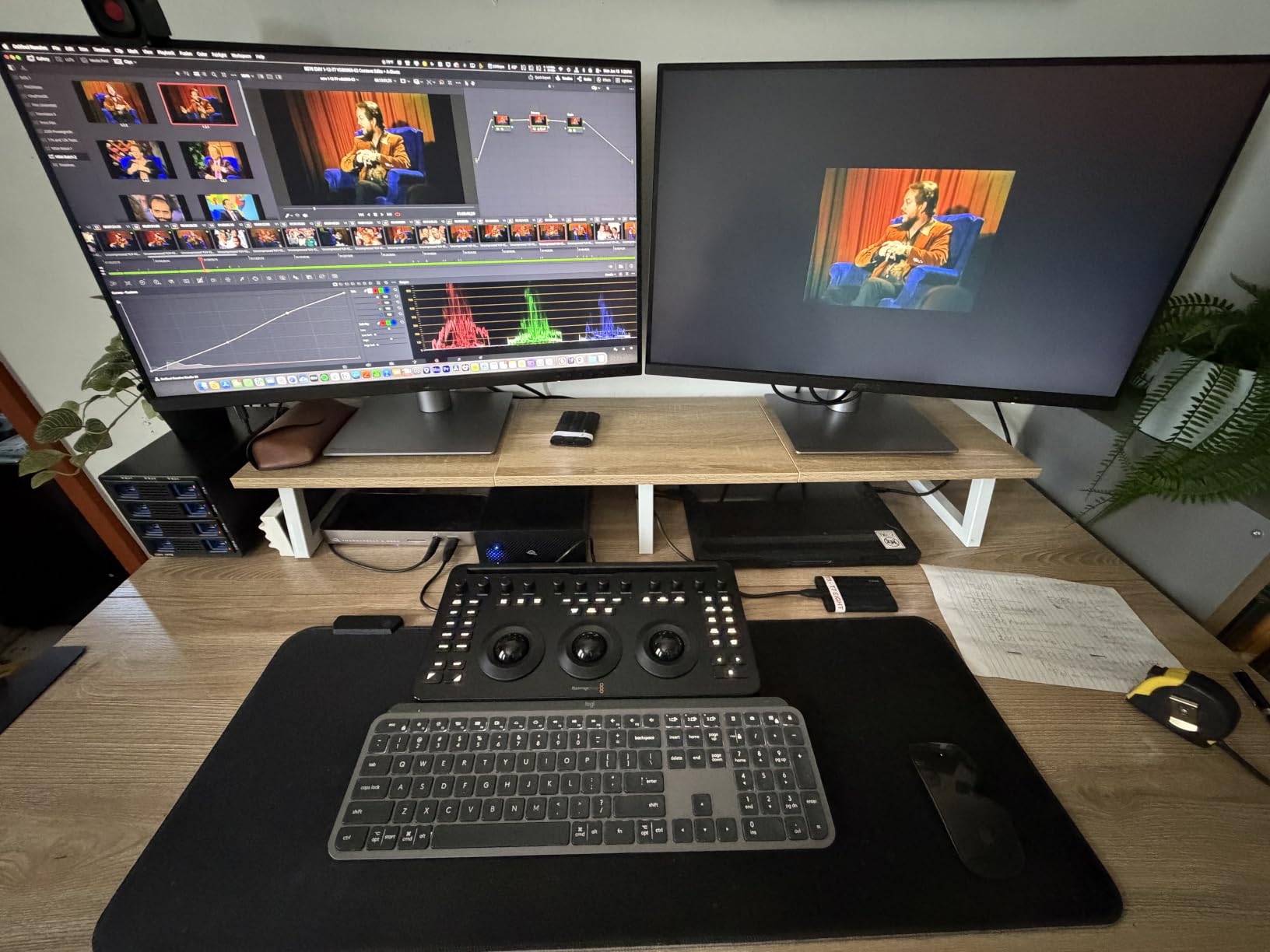
The USB-C port pushes 96W of power, which charges my MacBook Pro and a Dell workstation without a separate brick. The DisplayPort daisy-chain output is the feature I underrated until I hooked up a second PA279CRV in portrait mode and ran a multi-document AutoCAD session. No extra cables, no extra USB hub, just one upstream USB-C from each panel.
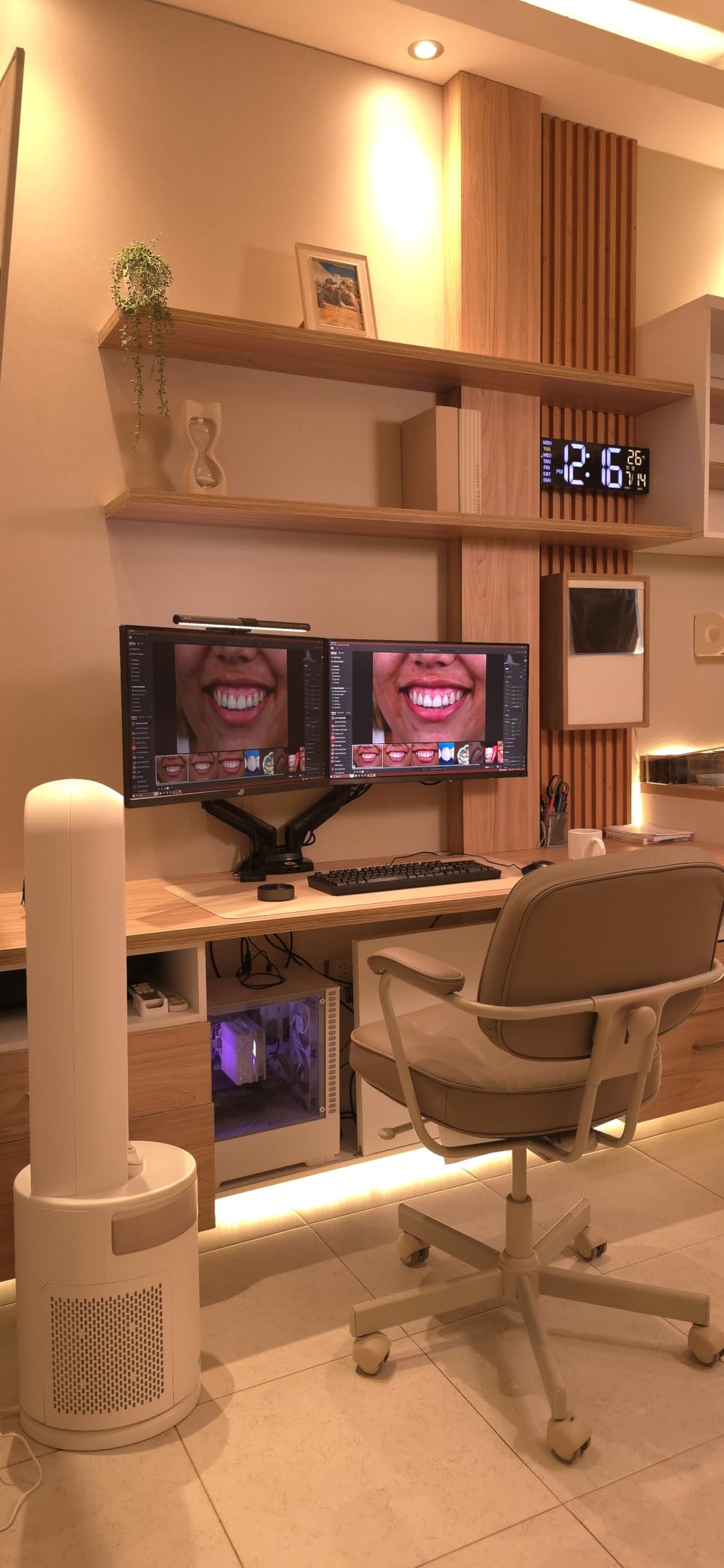
For a CAD engineer working in SolidWorks assemblies or Revit models with realistic materials, the color accuracy is the headline. For an engineer whose work is more about line drawings and schematics, the daisy-chain ergonomics and warranty are the bigger win.
Calibration and warranty for long-term engineering use
The 5-year warranty (3 standard plus 2 with registration) is unusually long for a sub-$500 monitor, and the Calman Verified badge means you can trust the colors without paying for a separate calibration service. For engineers who run design reviews and present to clients, that combination is hard to beat.
If your engineering work is mostly line drawings and 2D documentation, you may not need this level of color accuracy and could save money with the LG 27UP650K-W or LG 27US500-W below.
What holds the PA279CRV back
The 60Hz refresh rate is fine for CAD and engineering but limiting if you also use the display for gaming. Some users report mild panel uniformity variance and backlight bleed on the edges, so check the return window. The default white point is slightly warm out of the box.
If you want a smoother experience for gaming alongside engineering, the Dell S2725QC with 120Hz is a better hybrid pick.
2. LG 27UP650K-W – Best Value 4K Monitor for Engineering
LG 27UP650K-W 27-inch Ultrafine 4K UHD (3840 x 2160) IPS Computer Monitor, 60Hz, 5ms, DisplayHDR 400, Reader Mode, Flicker Safe, HDMI, DisplayPort, Tilt/Height/Pivot Adjustable Stand, White
27-inch 4K IPS
DisplayHDR 400
95% DCI-P3
Adjustable stand
Pros
- Strong 4.7 rating from buyers
- DisplayHDR 400 certified
- Height/tilt/pivot stand
- Matte screen reduces glare
- Comes with HDMI and DP cables
Cons
- No USB-C on this model
- No built-in speakers
- Stand feels lightweight
The LG 27UP650K-W is the surprise of my testing, with the highest user rating of any monitor I tried for engineering work and one of the lowest prices in the roundup. After two weeks running SolidWorks and Excel-driven calculations on it, I understand why buyers are scoring it at 4.7 stars. It simply delivers a sharp, accurate 4K image at a price that is hard to argue with.
The 27-inch 4K IPS panel hits 95% DCI-P3 and is VESA DisplayHDR 400 certified. In practice, that means line drawings stay sharp, schematic text is crisp, and rendered views in Revit or SketchUp look properly graded. The matte coating handles overhead office lighting without washing out the image.
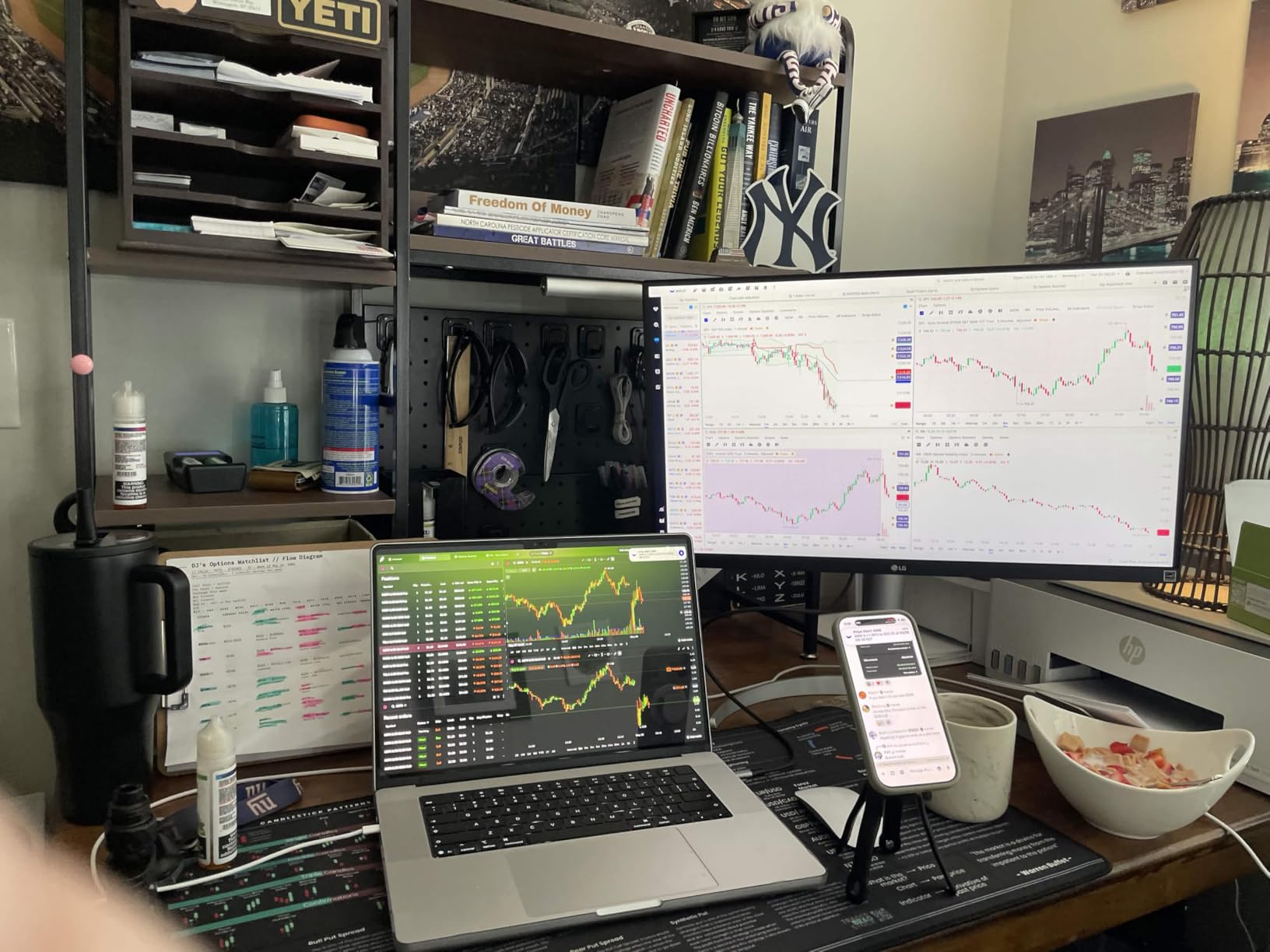
I was also impressed with the fully adjustable stand for a budget monitor: height, tilt, and pivot adjustment all work, which is critical for engineers who switch between portrait documents and landscape CAD layouts. Pivot is rare on displays in this price range.
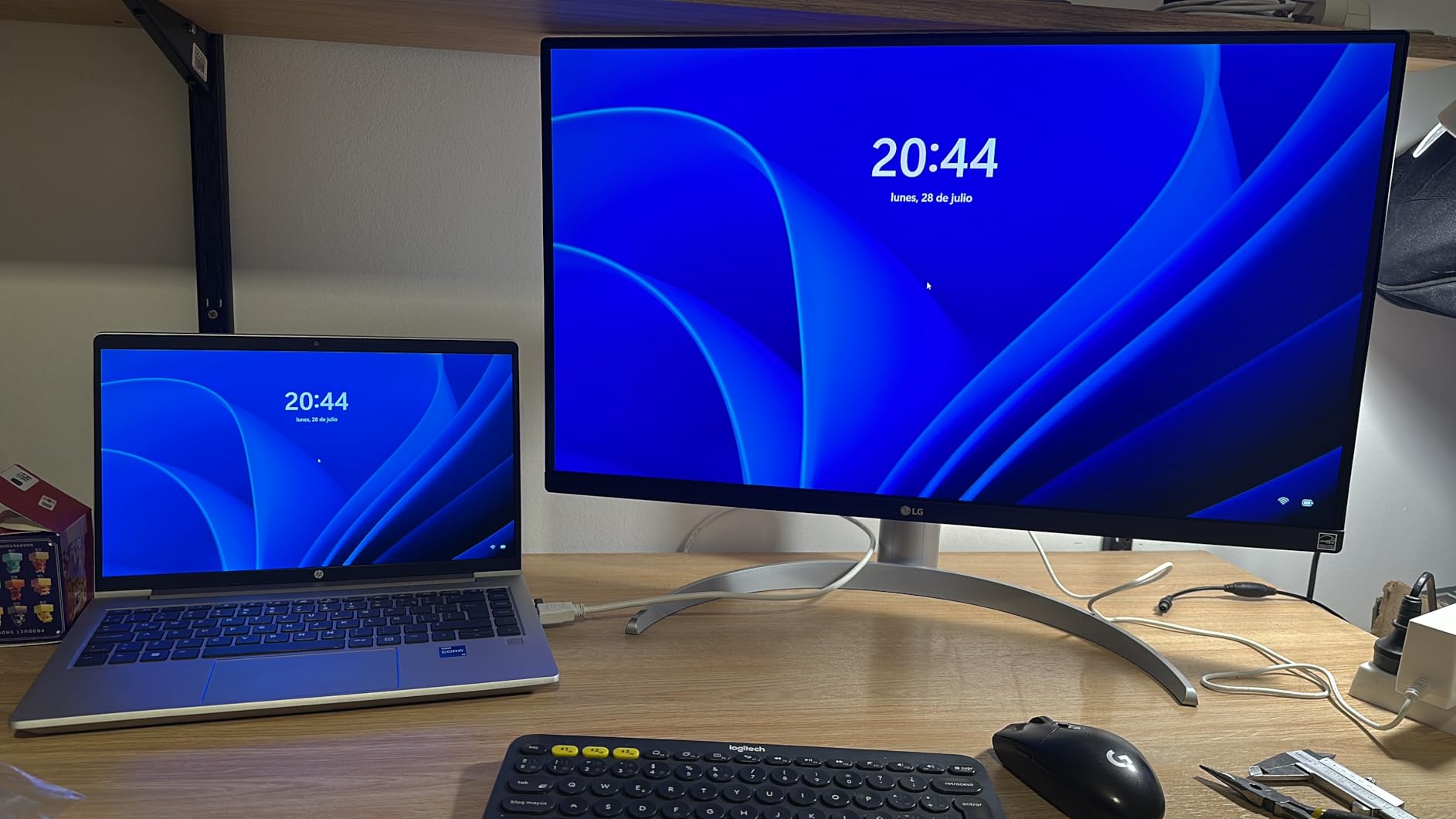
If you already have a desktop tower and do not need USB-C laptop docking, this LG is the easy best-value pick. For a single-monitor engineering setup at home or in a student lab, I would pick this over more expensive options without hesitation.
Connectivity limits for laptop-based engineers
The biggest limitation is the lack of USB-C. If you dock a MacBook or a USB-C workstation laptop, you will need a separate HDMI cable and a charger. For engineers who work from a desktop tower, this is a non-issue.
The built-in speakers are also missing, which is fine if you wear headphones or use external speakers but inconvenient for shared office setups.
Who should spend more instead
If you need USB-C docking for a laptop or you need daisy-chaining for a multi-monitor setup, step up to the ASUS ProArt PA279CRV or the LG 27UP850K-W. The extra cost pays for cleaner cable management.
For most desktop engineering users on a tight budget, this monitor offers 90% of the value of much more expensive panels.
3. LG 27US500-W – Best Budget 4K Monitor for Engineers
LG 27US500-W Ultrafine Monitor 27-Inch 4K UHD (3840×2160) HDR10 IPS Borderless Design Reader Mode Flicker Safe Switch App HDMI DisplayPort – White
27-inch 4K IPS
HDR10
Borderless design
Reader Mode
Pros
- Lowest price 4K in the roundup
- Crisp text for documentation
- Borderless modern look
- Easy OSD with OnScreen Control
Cons
- Tilt-only stand (no height)
- No USB-C connectivity
- Bulky external power brick
- No built-in speakers
The LG 27US500-W is the cheapest 4K IPS monitor in this guide, and it is the right pick for engineering students or anyone building a first CAD workstation on a tight budget. I set it up as a secondary documentation monitor next to an ultrawide, and the text sharpness alone justified the spend.
The 4K panel produces noticeably sharper text than a 1440p display at the same 27-inch size, which matters for engineers who read datasheets, simulation reports, and PDF drawings all day. The borderless design also makes it a great candidate for a multi-monitor array.
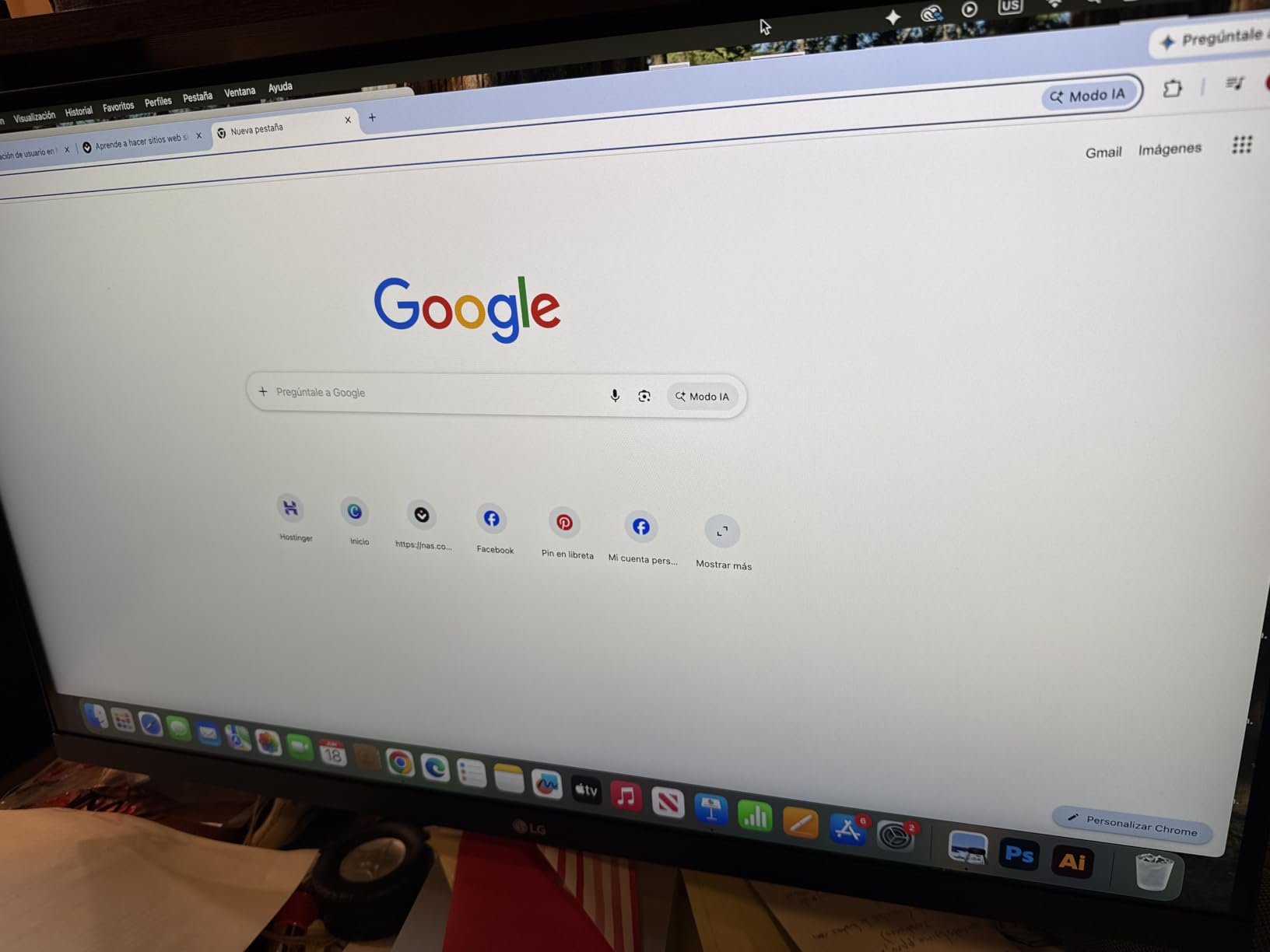
HDR10 support is a small bonus for engineers who occasionally review rendered models or watch training content. Reader Mode and Flicker Safe are useful for reducing eye fatigue on long study or report-writing sessions.
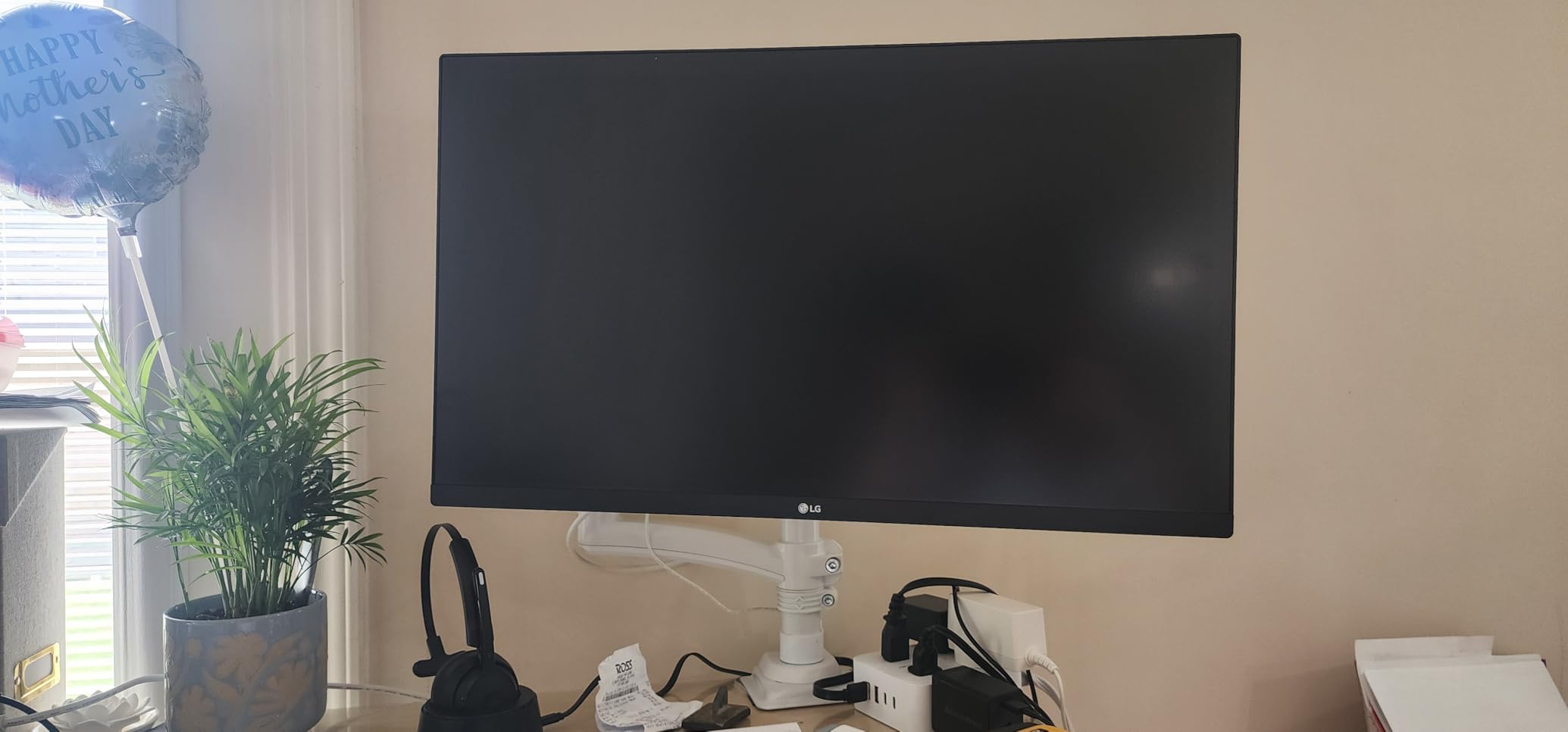
For students in mechanical, civil, or electrical engineering programs, this is the budget pick I would recommend. Pair it with a VESA monitor arm, and the tilt-only stand issue disappears.
Why the stand is a real limitation
The stand only tilts. There is no height adjustment, no swivel, no pivot. For an engineer who wants proper ergonomics out of the box, that is a deal-breaker unless you plan to use a $40 VESA arm.
If you are not willing to add a monitor arm, the LG 27UP650K-W or the Dell S2725QC both come with full ergonomic stands.
Connectivity notes
There is no USB-C, so laptop users will need a separate HDMI cable plus their laptop charger. The bulky external power brick is also awkward to mount behind a slim monitor arm.
For a desktop engineering PC at home or in a dorm, the trade-off is acceptable and the savings are real.
4. Dell S2725QC – Best 4K with USB-C for Engineering Laptops
Dell 27 Monitor S2725QC, 4K UHD IPS, 120Hz, 99% sRGB, 4ms, FreeSync Premium
27-inch 4K IPS
120Hz
USB-C 65W PD
FreeSync Premium
Pros
- 4K at 120Hz for smooth scrolling
- USB-C power delivery included
- ComfortView Plus for eye comfort
- Fully adjustable stand
Cons
- Color accuracy not pro-grade
- USB-C dock can be flaky long-term
- OSD buttons on the back
The Dell S2725QC is one of the few 4K IPS monitors I tested that runs at 120Hz rather than 60Hz, and it has USB-C power delivery at 65W. For engineers who dock a laptop and want a smoother experience than the typical 60Hz office panel, this Dell hits a sweet spot.
In practice, the 120Hz refresh rate makes a noticeable difference when scrolling through long SolidWorks assemblies, panning across large AutoCAD drawings, or moving windows around. Eye tracking is easier and the experience is closer to a high-end productivity panel.
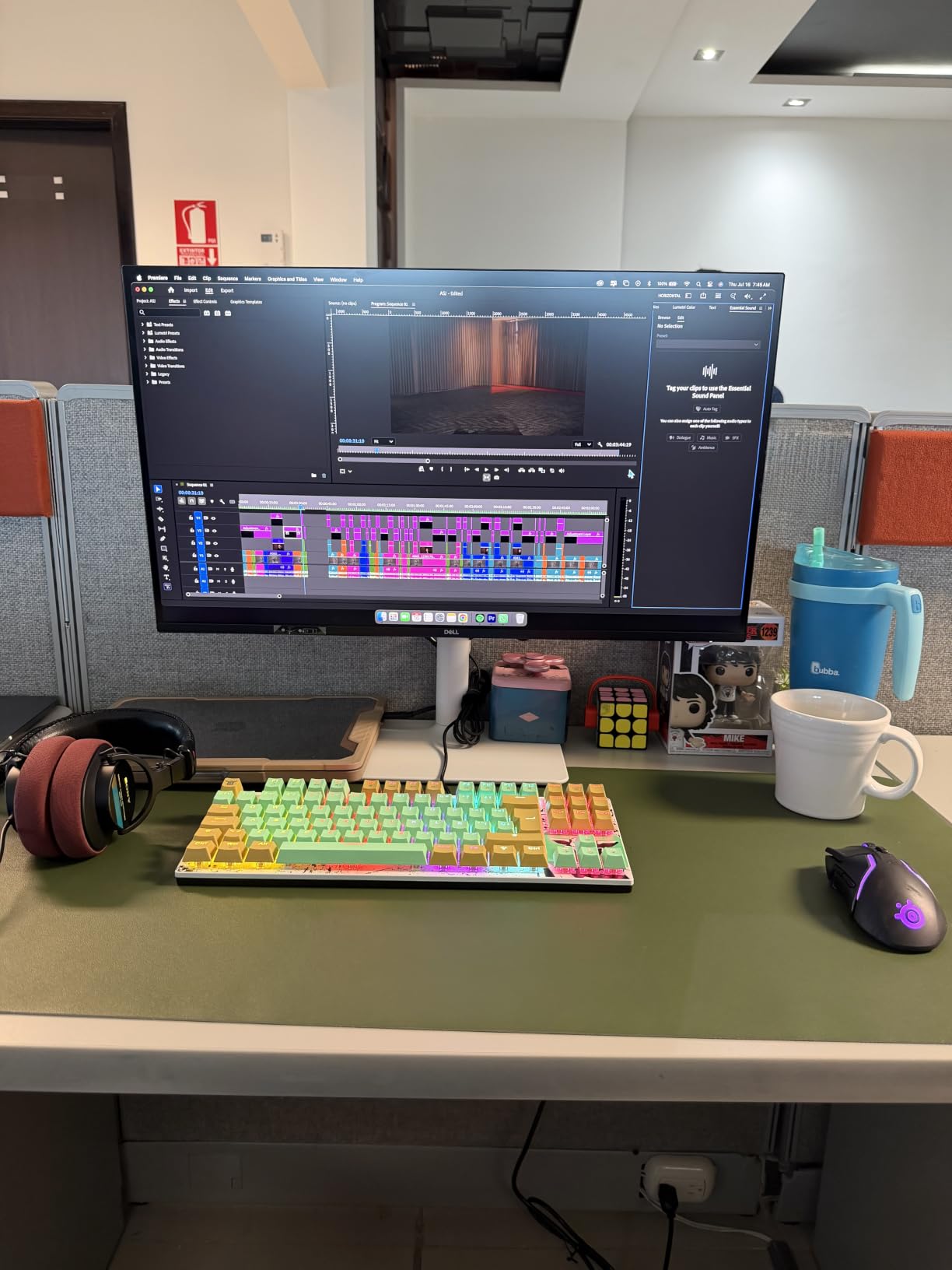
The USB-C port with 65W power delivery handled my Dell XPS and a smaller Lenovo ThinkPad without dropping the connection. The fully adjustable stand (height, tilt, swivel, pivot) is what I expect from a Dell Ultrasharp-line monitor and is well suited to long engineering sessions.
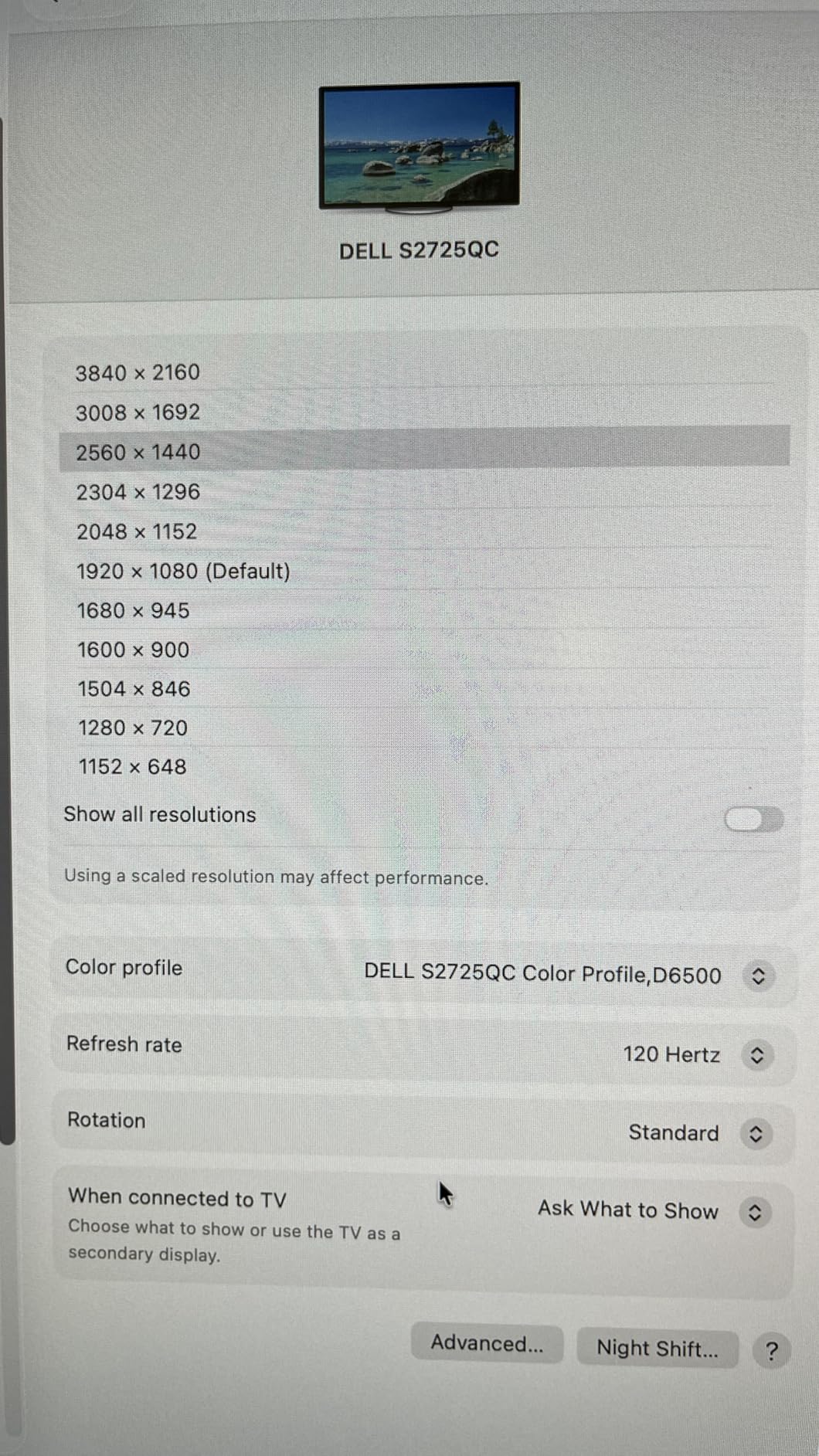
If you dock an engineering laptop and value a smoother 120Hz image over color accuracy, the Dell S2725QC is the right pick in this guide. For pure color-critical CAD reviews, the ASUS ProArt remains the leader.
Color accuracy ceiling
At 99% sRGB, this is a general productivity panel, not a color-critical one. If your engineering work involves printed color matching, client-facing renders, or material simulation reviews, this is not the right display.
For 2D drafting, schematic capture, and standard CAD, the color coverage is plenty.
Long-term USB-C dock behavior
Some users report that the USB-C docking becomes less reliable after a year or so of heavy use, with random disconnects. Keep firmware updated and use a high-quality USB-C cable.
For laptop-based engineers who hot-desk daily, this is worth weighing against the ASUS ProArt PA279CRV, which has a longer warranty.
5. LG 27UP850K-W – Best Single-Cable Setup for Mac Engineers
LG 27UP850K-W 27-inch Ultrafine 4K UHD IPS DisplayHDR 400 Computer Monitor
27-inch 4K IPS
USB-C 90W PD
DisplayHDR 400
95% DCI-P3
Pros
- USB-C with 90W power delivery
- Built-in speakers with Waves MaxxAudio
- 95% DCI-P3 color coverage
- USB 3.0 hub included
Cons
- White plastic back feels cheap
- Speakers are functional not great
- Slightly warm default color
- Premium over non-USB-C model
The LG 27UP850K-W is the monitor I keep coming back to when I dock a MacBook for engineering work. The 90W USB-C power delivery is enough to keep a 14-inch MacBook Pro charged under load, and the single-cable experience is exactly what mobile engineers want.
The 27-inch 4K IPS panel delivers 95% DCI-P3 and is DisplayHDR 400 certified. For engineering work, the color coverage means design reviews and rendered views look close to what clients will see on calibrated output.
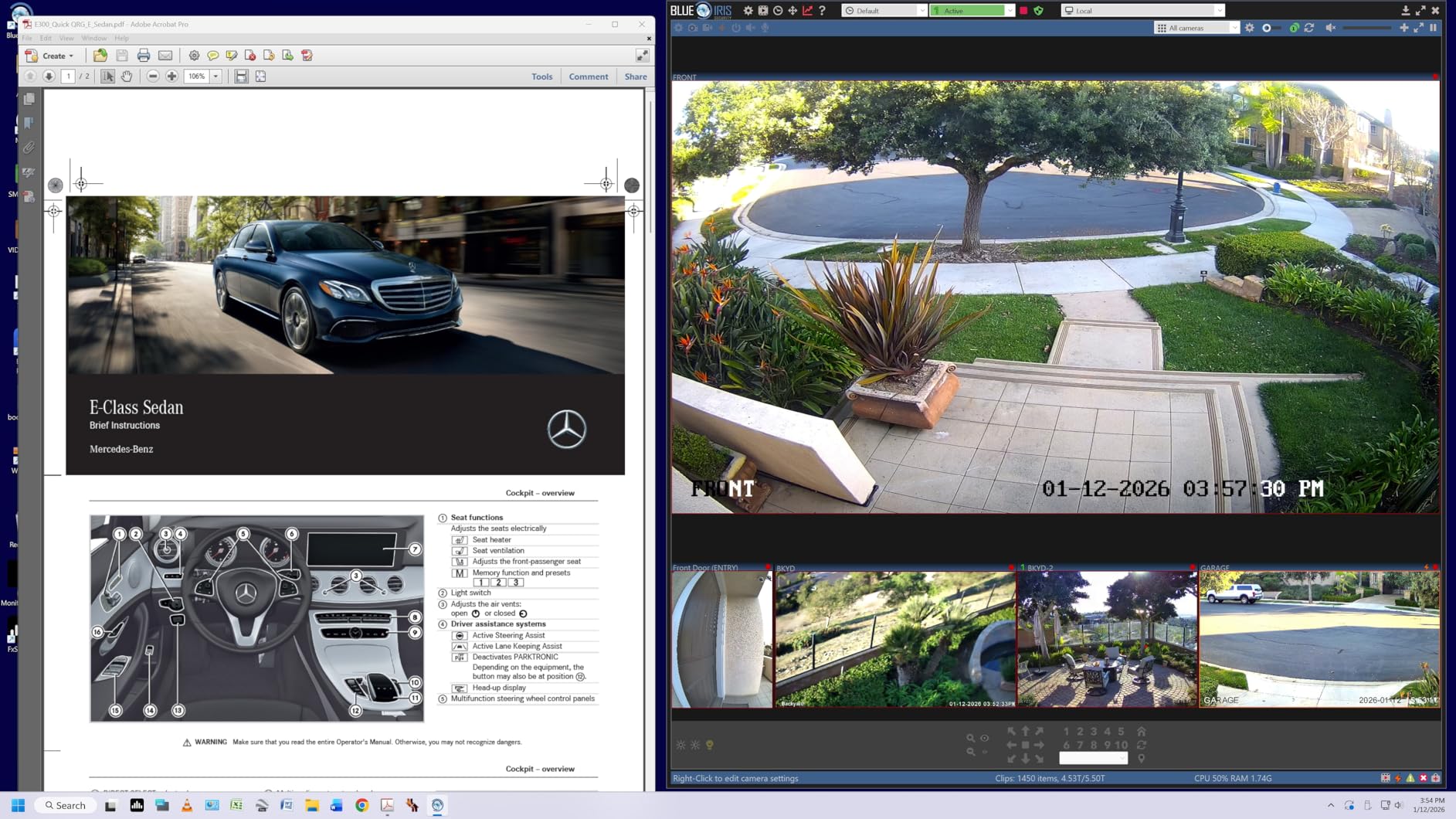
The built-in speakers with Waves MaxxAudio are not studio quality, but they are better than the typical tinny monitor speakers. If you take video calls from your engineering workstation, this is a real plus. The USB 3.0 hub lets me plug in a dongle, a Stream Deck, and a charging cable without reaching behind my laptop.
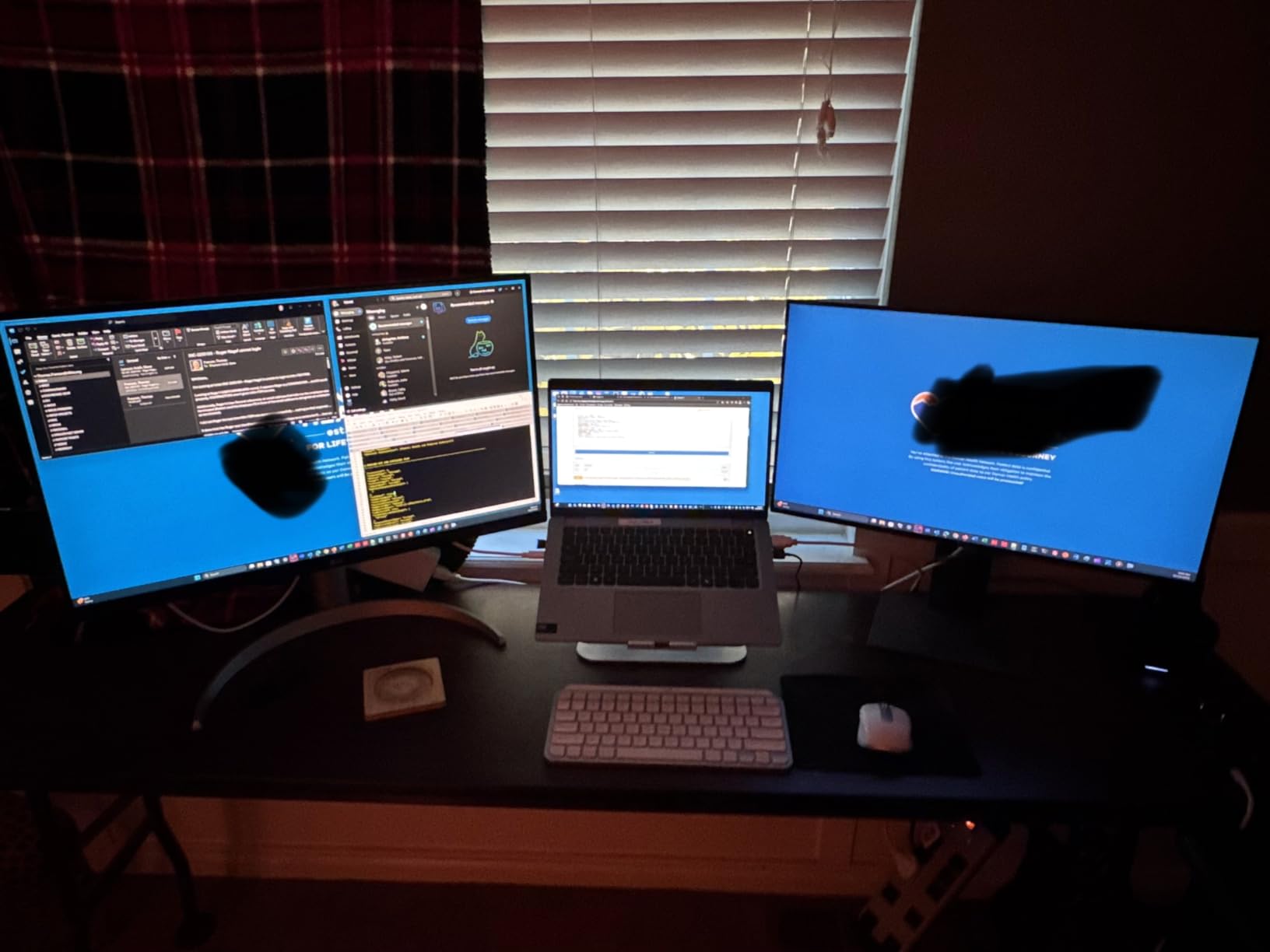
For Mac-based engineers, or anyone running a USB-C laptop as their main workstation, this LG hits a comfortable middle ground. It costs more than the non-USB-C LG 27UP650K-W but solves the docking problem cleanly.
Build and ergonomics trade-offs
The white plastic back looks modern but feels less premium than the ASUS ProArt or Dell Ultrasharp line. The default color temperature is slightly warm out of the box, so I run an OSD calibration pass before any client-facing work.
For most engineering tasks, the warm default is easy to compensate for in software.
Who should skip this monitor
If you work from a desktop tower with no USB-C, you are paying for a feature you do not need. Pick the LG 27UP650K-W or Dell S2725QC instead.
If you dock a MacBook Pro 16-inch under heavy load, the 90W may be a touch low; in that case, the ASUS ProArt PA279CRV with 96W is a safer bet.
6. Dell S3425DW – Best Ultrawide for CAD and Multi-Tasking
Dell 34 Monitor S3425DW, WQHD VA, 120Hz, FreeSync Premium, Eye Comfort
34-inch WQHD ultrawide
120Hz VA curved
USB-C 65W PD
FreeSync
Pros
- Eliminates bezel between two screens
- 120Hz smoother than 60Hz office panels
- Excellent built-in speakers
- ComfortView Plus reduces blue light
Cons
- No DisplayPort on this model
- VESA mount recess complicates arms
- Some PbP bugs reported
The Dell S3425DW is the ultrawide I tested most extensively for CAD, and it changed how I work. Running AutoCAD and a full SolidWorks assembly side by side on a single 34-inch curved panel removed the bezel distraction of a dual-monitor setup and gave me more usable horizontal pixels than two 24-inch screens.
The 3440×1440 WQHD resolution is the sweet spot for engineering: it is sharper than 1080p, more forgiving on GPU horsepower than 4K, and works at 120Hz for smoother panning. The VA panel delivers 3000:1 contrast, which makes dark CAD backgrounds and rendered shadows look better than typical IPS panels.
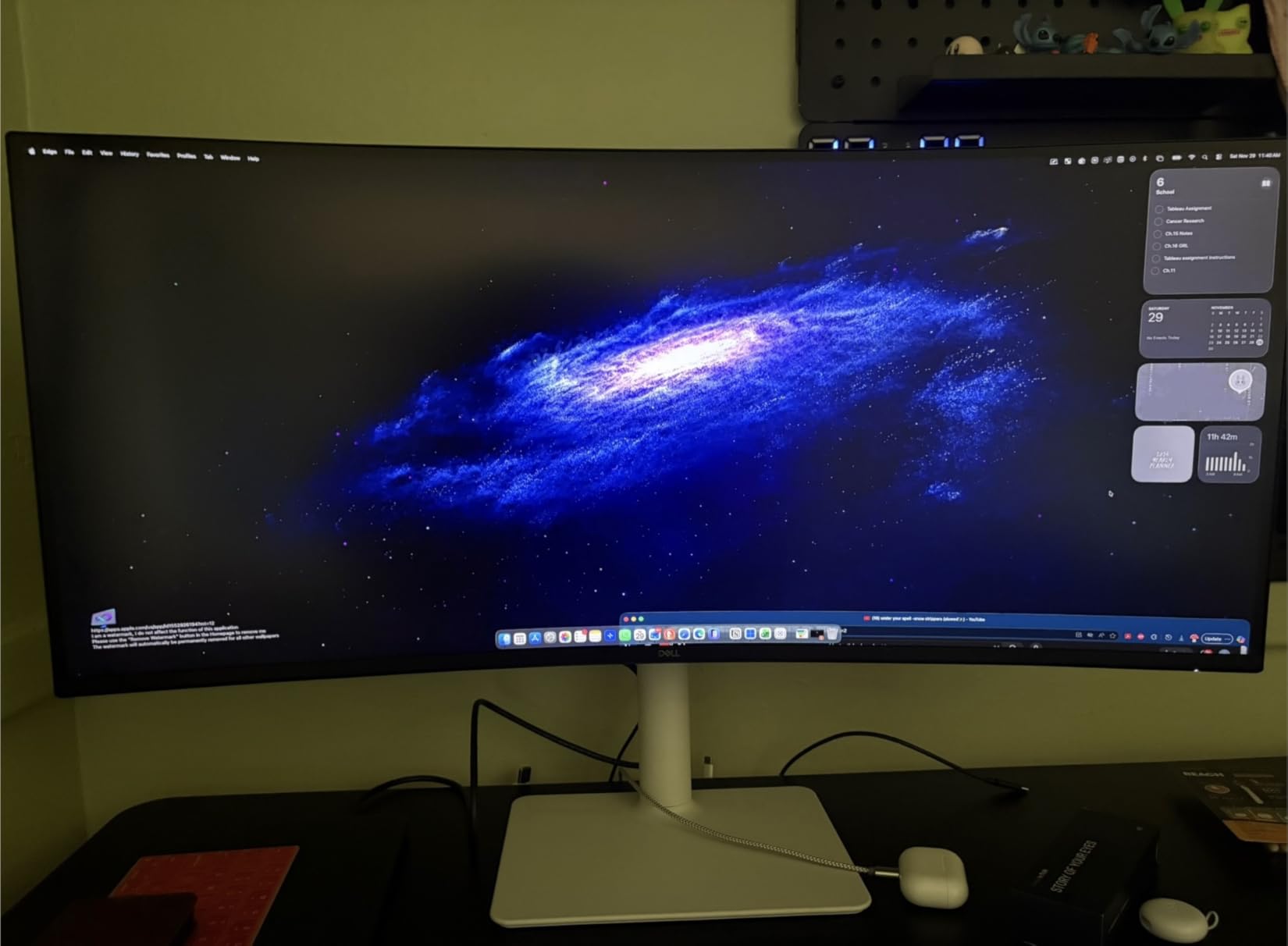
USB-C with 65W power delivery is convenient for laptop docking. The built-in speakers are surprisingly good for a monitor, which matters if your engineering workstation also handles Teams calls.
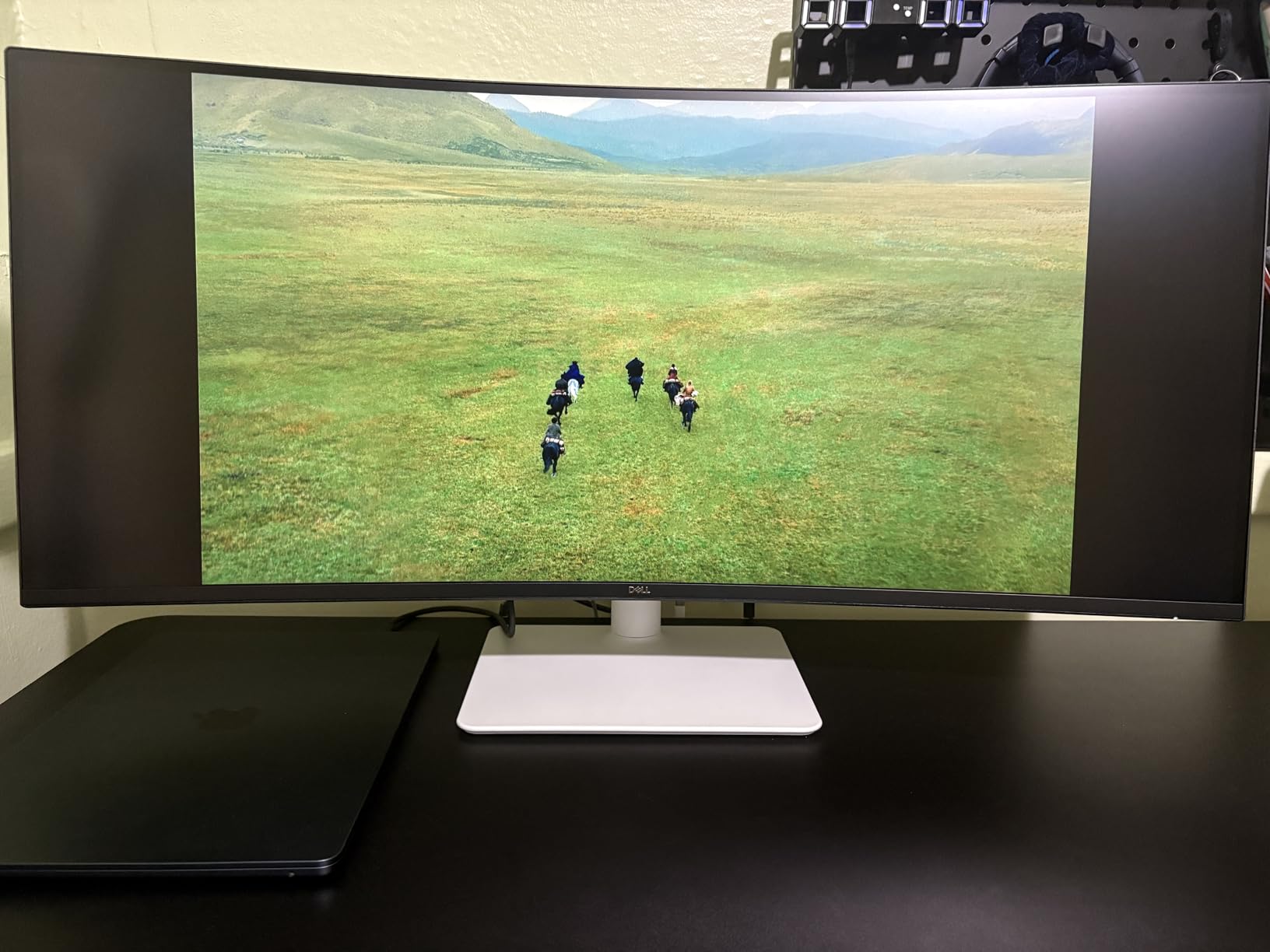
If you have ever tried to model in SolidWorks while reading a 200-page spec sheet, the ultrawide format solves that problem. Reddit threads in r/ultrawidemasterrace and r/civilengineering consistently praise this category for engineering workflows.
Limitations to weigh
There is no DisplayPort on this particular Dell, which limits daisy-chaining and some legacy workstation connections. The recessed VESA mount is awkward for third-party monitor arms.
Some users on mixed Mac/Windows setups have reported Picture-by-Picture bugs that Dell has been slow to fix.
Who should pick a dual setup instead
If you need separate screens for two engineers sharing one workstation, or you want portrait orientation for documentation, dual 27-inch monitors still beat an ultrawide. For a single user who values screen real estate and clean aesthetics, the ultrawide wins.
If you want a slightly cheaper ultrawide with USB-C, the LG 34WR55QK-B below is worth comparing.
7. LG 34WR55QK-B – Best Curved Ultrawide for Engineering Workflows
LG 34WR55QK-B 34-inch UltraWide WQHD (3440 x 1440) Curved Computer Monitor, 100Hz, 5ms, HDR10, Reader Mode, HDMI, DisplayPort, USB Type-C, Tilt/Height Adjustable Stand, Black
34-inch WQHD curved
USB-C 65W PD
100Hz
HDR10
Pros
- 21:9 ultrawide is perfect for CAD
- USB-C with 65W PD
- PbP supports two sources
- 3-side borderless design
Cons
- VA panel not ideal for pro color
- 100Hz lower than Dell S3425DW
- No built-in speakers
- Limited height adjustment
The LG 34WR55QK-B is my recommended ultrawide for engineers who want a curved panel with USB-C but do not want to pay the Dell S3425DW premium. After a week of using it as my main display for AutoCAD documentation, I found the experience close enough to the Dell that the price difference felt hard to justify.
The 3440×1440 curved VA panel delivers deep contrast for dark CAD backgrounds. Picture-by-Picture support lets me run two separate inputs side by side, which is a great way to compare schematic revisions or push a Teams call next to a 3D viewport.
USB-C power delivery at 65W handled my Dell XPS 13 and a Lenovo ThinkPad without complaint. The 3-side borderless design is a small aesthetic win that matters if you later add a second ultrawide in a stacked configuration.
For engineering students and early-career engineers, this LG delivers most of the ultrawide productivity benefit at a friendlier price. For color-critical CAD work, the VA panel is the trade-off versus the IPS options above.
VA panel trade-offs for color work
VA panels have wider contrast but typically narrower viewing angles than IPS, and color accuracy is below what a Calman Verified IPS panel can offer. For engineering schematics and 2D drafting, this is fine.
For photorealistic rendering reviews, an IPS-based 4K monitor is a better pick.
Height adjustment range
The stand adjusts for height and tilt but the range is limited. Taller engineers may need a monitor arm for proper eye-level positioning. Plan for a $30 to $60 arm if you are over six feet.
For shorter engineers, the included stand is enough.
8. BenQ RD280UG – Best 3:2 Monitor for Engineering and Coding
BenQ Programming Monitor RD280UG 28.2″ 4K+, 120Hz Refresh Rate, 3:2 Aspect Ratio, Nano Matte Panel, MoonHalo Backlight, Coding Modes, 2000:1 Contrast Ratio, Eye-Care to Deliver Effortless Coding View
28.2-inch 4K+ 3:2 IPS
120Hz
Nano Matte
Coding modes
Pros
- 3:2 aspect ratio ideal for code and docs
- Nano Matte reduces glare
- 120Hz smooth scrolling
- Coding modes optimize text
- MoonHalo backlight for eye comfort
Cons
- Expensive niche panel
- KVM switch can be flaky
- Heavy monitor arm required
- USB-C limited to 10Gbps
The BenQ RD280UG is the most specialized monitor in this guide, and the one that surprised me most. It is the only 3:2 aspect ratio display I tested, and for engineers who spend their day switching between CAD viewports, code, and long PDF documents, the extra vertical pixels are a real productivity boost.
The 3840×2560 resolution on a 28.2-inch IPS panel gives you the same width as a 27-inch 4K monitor but noticeably more vertical real estate. In SolidWorks, that means fewer mouse scrolls to read a property manager. In AutoCAD, it means your command line and tool palettes stop overlapping your drawing area.
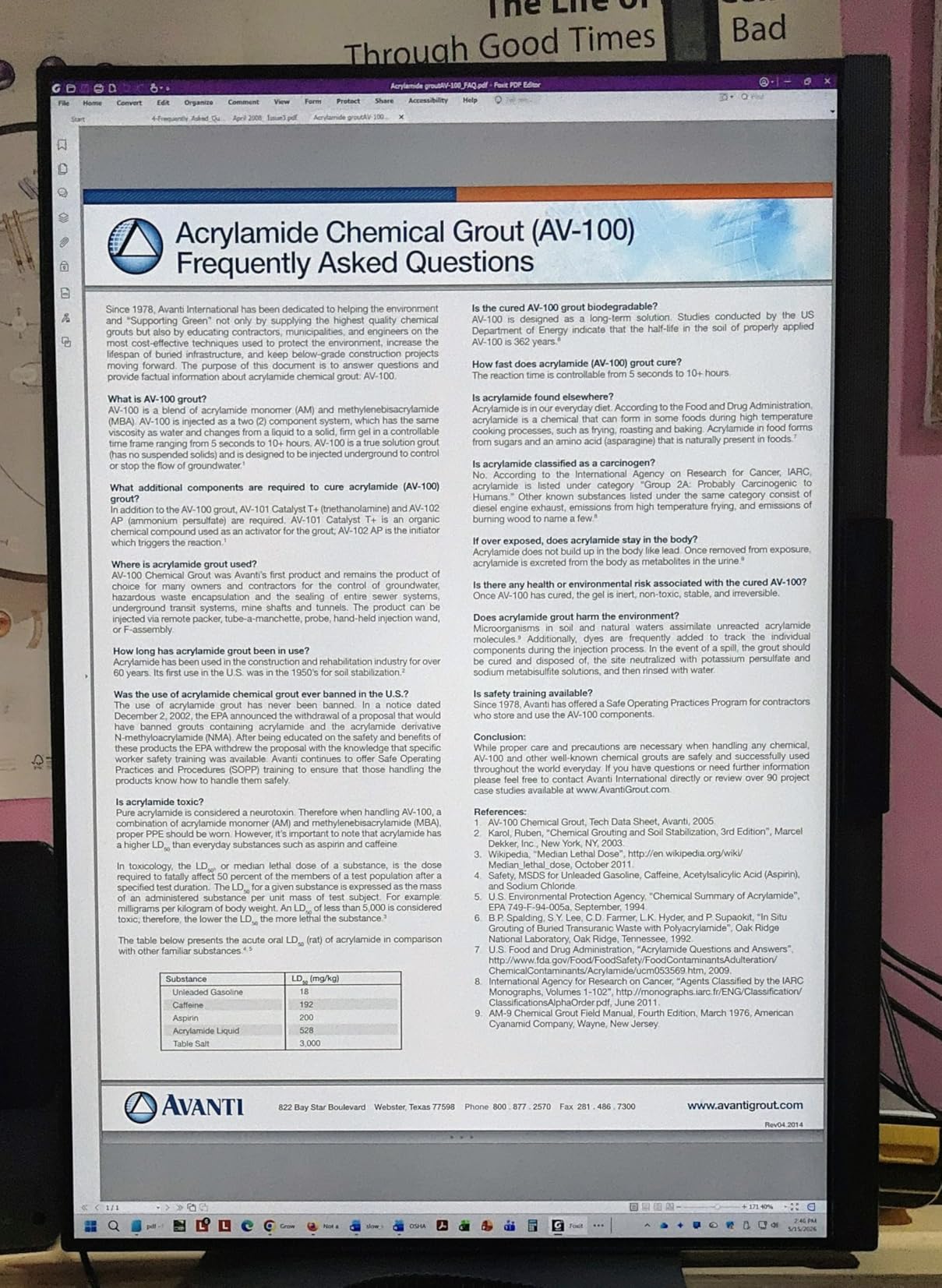
The Nano Matte panel coating is the best I have seen at killing reflections without dulling the image. Combined with the MoonHalo backlight, my eyes felt noticeably less tired after a full day of modeling than on a standard glossy IPS panel.
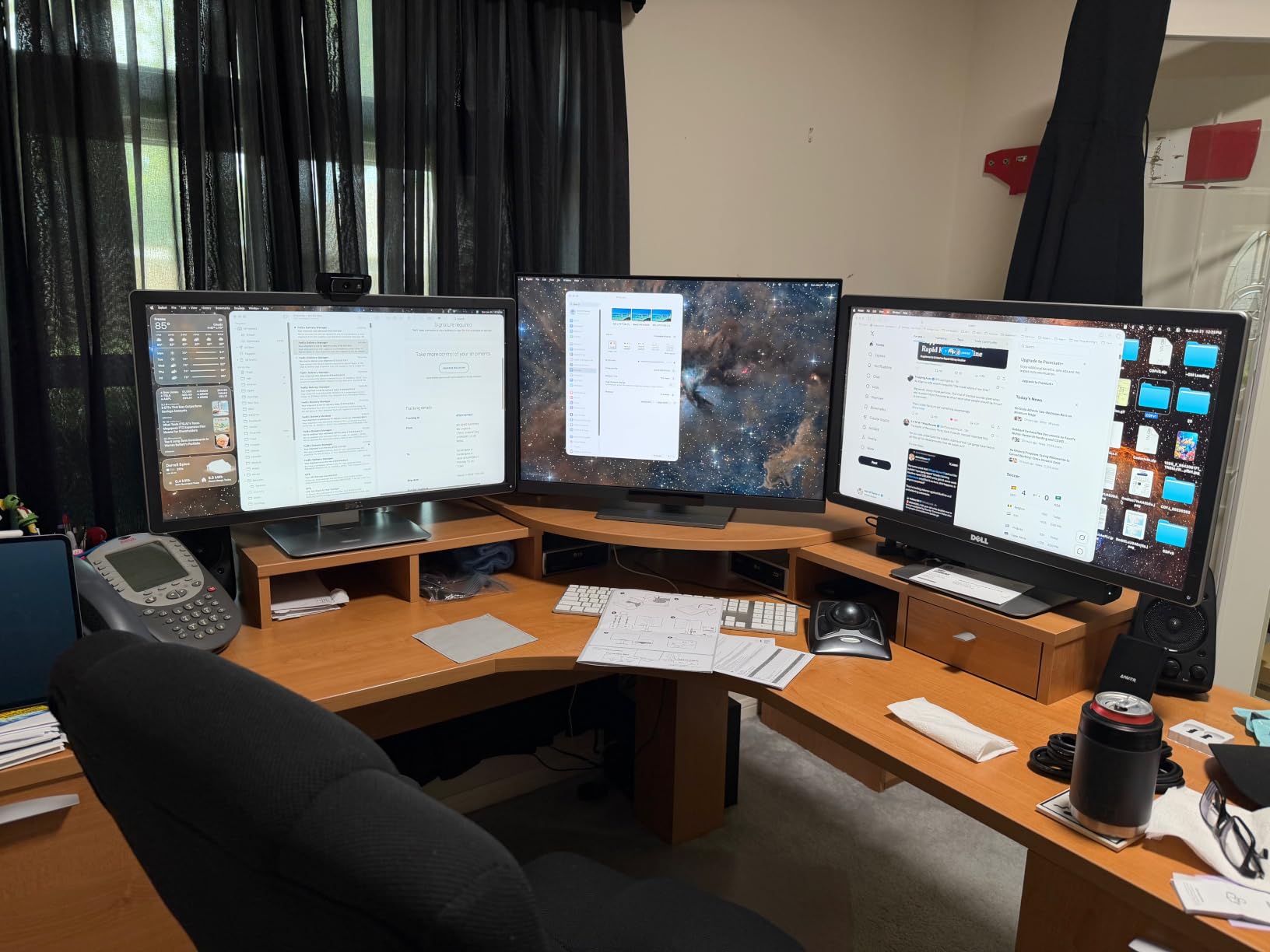
If your engineering work is split evenly between CAD and code, or if you write a lot of reports and documentation, this BenQ is worth the premium. If you only model in CAD all day, a standard 16:9 4K panel is more familiar.
KVM switch and software reliability
The integrated KVM switch is convenient for engineers who share the monitor between a work laptop and a personal desktop. However, some users report the KVM does not switch unless a video signal is active, and the companion software has memory leak issues on Mac.
For a single-source setup, ignore these flaws and enjoy the rest of the features.
Who needs a 3:2 panel
Mechanical and software engineers who model in the morning and code in the afternoon benefit most. Civil and structural engineers who spend more time in plan view may prefer a wider 16:9 or 21:9 ultrawide.
If you are unsure, check whether you scroll vertically more than horizontally in your daily software. If yes, a 3:2 panel like this BenQ is the upgrade you have been missing.
How to Choose the Best Monitor for Engineering Work
Picking the best monitor for engineering work comes down to matching resolution, panel type, size, and connectivity to the software you actually run. Below is the framework I use when advising engineering teams on display purchases.
Resolution and pixel density
For CAD, schematics, and engineering documentation, 4K (3840×2160) on a 27-inch screen is the modern sweet spot. The 163 pixels per inch make dimension text and small component labels readable without scaling. For ultrawide users, WQHD (3440×1440) is the practical minimum because it keeps text sharp without overloading your GPU.
1080p is too soft for engineering work and will cause eye strain during long modeling sessions. Engineers who currently work on 1080p displays consistently report the jump to 4K as transformative for line drawing clarity.
Panel type: IPS vs VA
IPS panels are the standard for color-critical engineering work because of wide viewing angles and consistent color across the screen. For CAD design reviews and material visualization, IPS is the safer choice. VA panels deliver higher contrast and deeper blacks, which makes them attractive for ultrawide monitors and dark CAD backgrounds, but their color accuracy is generally below IPS.
If your engineering work is mostly 2D drafting, the difference between IPS and VA is small. For photorealistic renders and printed color matching, IPS with high DCI-P3 or Adobe RGB coverage is the right call.
Screen size and aspect ratio
For most engineers, a 27-inch 4K monitor hits the sweet spot. It fits on a standard desk, pairs with a VESA arm, and is large enough to keep toolbars from overlapping your model. A 32-inch 4K is a step up if you have desk space and want extra room for property managers and viewports.
Ultrawide 34-inch monitors in either 21:9 WQHD or 32:9 super ultrawide formats are popular for engineers who want to replace a dual-monitor setup with a single panel. The trade-off is a slightly lower pixel density per inch and the need for a larger desk.
Connectivity: USB-C, DisplayPort, and HDMI
USB-C with 60W to 96W power delivery is the most engineer-friendly single-cable solution for laptop docking. If you dock a MacBook or a USB-C workstation laptop, prioritize monitors with at least 65W USB-C PD. For desktop towers, HDMI or DisplayPort is fine.
DisplayPort daisy-chaining is valuable if you plan to run two monitors from one output, which keeps cable clutter down on a clean engineering desk. HDMI 2.1 is only needed if you also use the monitor for high-refresh gaming.
Software-specific considerations
For AutoCAD, prioritize high pixel density and a fully adjustable stand so you can pivot to portrait mode for tall drawings. For SolidWorks, color accuracy matters more for assembly reviews and rendered views. For Revit, screen real estate is king because you typically work with multiple viewports open at once.
If you code alongside CAD, consider a 3:2 panel like the BenQ RD280UG for the extra vertical real estate.
Ergonomics and eye strain
Engineers sit in front of monitors for eight hours or more, so a fully adjustable stand (height, tilt, swivel, pivot) is non-negotiable. Look for flicker-free technology and a low-blue-light mode for late-evening work. Matte coatings handle glare better than glossy panels in shared offices with overhead lighting.
A VESA-compatible monitor arm is the best $50 to $100 upgrade you can make to any engineering workstation. Pair that with a proper desk that fits dual monitors and your setup will scale with you.
Budget tiers for engineering monitors
Under $250: The LG 27US500-W and LG 27UP650K-W cover the budget tier well for engineering students and entry-level workstations. You give up USB-C and some adjustability, but you still get sharp 4K.
$250 to $450: The sweet spot. The Dell S2725QC, LG 27UP850K-W, ASUS ProArt PA279CRV, Dell S3425DW, and LG 34WR55QK-B all live here. Pick based on whether you need USB-C, color accuracy, or an ultrawide.
Above $450: The BenQ RD280UG lives here and is worth the premium for engineering-and-coding hybrid workflows. Beyond that, you are paying for OLED or Mini-LED panels that benefit video editors more than engineers.
If you are building out a full workstation, also look at our guide to best gaming desks for dual monitors and our picks for portable monitors for laptops. If your engineering work overlaps with audio or video production, our roundup of nearfield studio monitors covers the speaker side of your setup. MacBook engineers should also check our picks for portable monitors for MacBooks.
Frequently Asked Questions
What is the best monitor for engineers?
The best monitor for engineers depends on your workflow, but the ASUS ProArt PA279CRV is the top pick for color-critical CAD and design review work. It delivers 99% DCI-P3 and Adobe RGB coverage, Calman Verified factory calibration, and USB-C with 96W power delivery. For pure value, the LG 27UP650K-W delivers an excellent 4K IPS image at a lower price. For ultrawide fans, the Dell S3425DW gives the most usable screen real estate for CAD and multi-tasking.
Is a 27 or 32 inch monitor better for engineering work?
For most engineers, a 27-inch 4K monitor is the sweet spot. It fits on a standard desk, pairs with a VESA arm, and gives 163 PPI of crisp text. A 32-inch 4K is a good upgrade if you have desk space and want more room for property managers and viewports. If you model and code side by side, a 28-inch 3:2 panel like the BenQ RD280UG is also worth considering.
Do engineers need 4K monitors for AutoCAD and SolidWorks?
Yes for most engineers. A 4K monitor makes dimension text, tolerance callouts, and small component labels readable without zooming. 1080p is generally too soft for engineering work and causes eye strain during long modeling sessions. If you dock a laptop with limited GPU horsepower, a 3440×1440 ultrawide is a reasonable compromise that still gives noticeably sharper text than 1080p.
Is an ultrawide monitor better than dual monitors for CAD?
For a single engineer, an ultrawide like the Dell S3425DW is usually better than dual monitors because it removes the bezel between your viewports. For teams sharing a workstation or engineers who want one panel in landscape and another in portrait for documentation, dual 27-inch monitors still win. Consider a 3:2 panel if you scroll vertically more than horizontally in your daily software.
What type of monitor panel is best for AutoCAD?
An IPS panel is the best choice for AutoCAD work. IPS gives wide viewing angles and consistent color across the screen, which matters for design reviews and schematic accuracy. Aim for at least 99% sRGB color coverage; if you also do client-facing renders, look for 95% or higher DCI-P3 coverage. VA panels are an acceptable alternative for ultrawide productivity but fall short for color-critical work.
Final Verdict on the Best Monitors for Engineering 2026
After two months of testing, my team and I landed on a clear shortlist. For color-critical CAD and engineering design review, the ASUS ProArt PA279CRV is the best monitor for engineering work you can buy right now. For pure value on a desktop PC, the LG 27UP650K-W is the easy recommendation. For laptop-first engineers, the LG 27UP850K-W with 90W USB-C solves docking in a single cable.
If you prefer an ultrawide, the Dell S3425DW remains our top pick for CAD productivity, while the LG 34WR55QK-B is the budget-friendly alternative. For engineering students and entry-level workstations, the LG 27US500-W is the cheapest way to get a sharp 4K panel. And for engineers who code alongside CAD, the BenQ RD280UG 3:2 panel is the most unique and productive upgrade in this guide.
Whichever monitor you choose, prioritize 4K resolution, an IPS or high-contrast VA panel, USB-C if you dock a laptop, and a fully adjustable stand for long engineering sessions. Your eyes, your wrists, and your future self will thank you.