
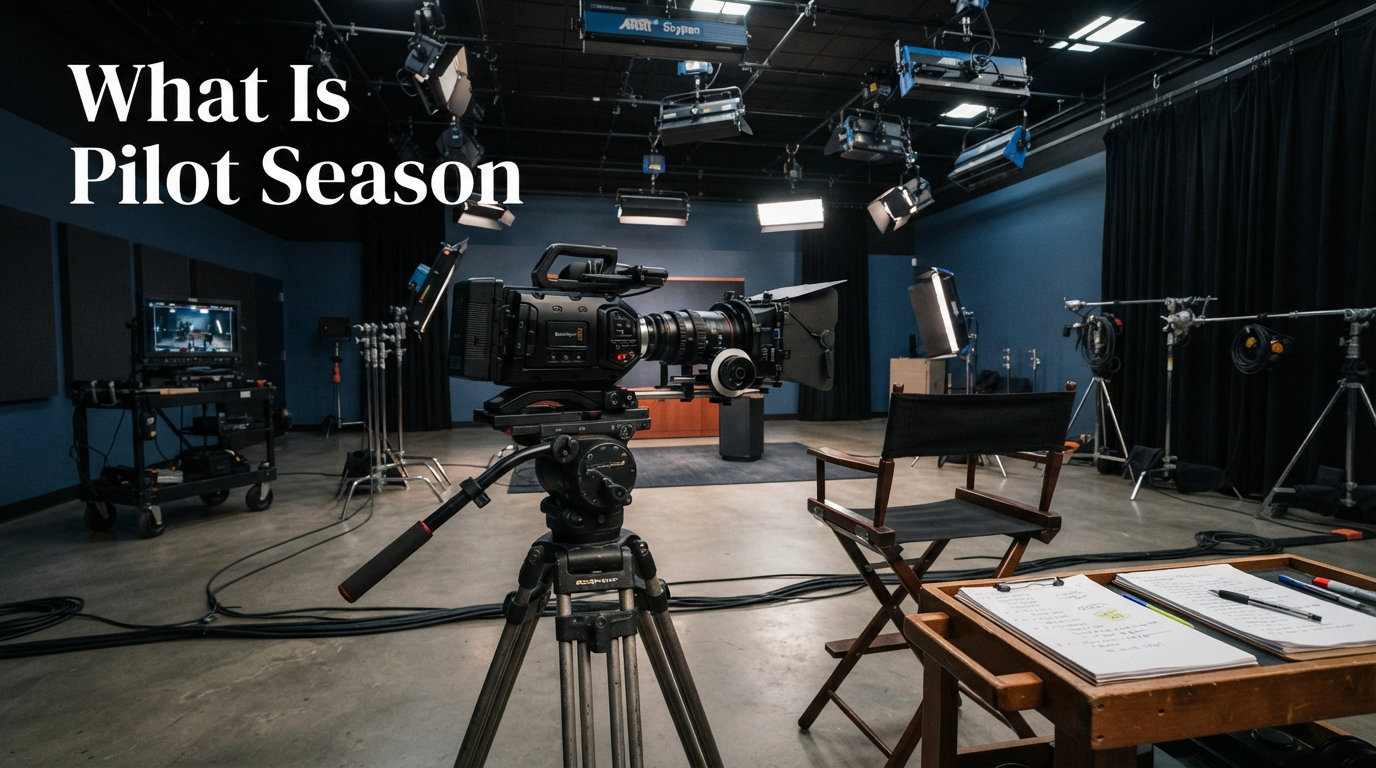
Pilot season is the annual period, typically running from January through April, when major television networks and studios cast, produce, and evaluate pilot episodes for potential new TV series. These test episodes serve as proof-of-concept samples that executives review before deciding which projects deserve a full series order.
I have spent years following the entertainment industry, and I can tell you that understanding pilot season is essential if you are serious about working in television. The concept sounds simple on the surface, but the mechanics behind how shows get made involve layers of casting, production, and network strategy that most viewers never see.
In this guide, I will walk you through the complete pilot season timeline, the different types of pilots produced each year, how the casting and production process actually works, and how streaming has fundamentally altered the landscape in 2026. Whether you are an aspiring actor, a working writer, or simply a TV fan curious about how your favorite shows make it to air, this article will give you the full picture.
By the end, you will understand why pilot season still matters even as the industry evolves, and you will have practical insights you can use whether you are chasing auditions or just want to sound smart at your next dinner party.
Table of Contents
What Is Pilot Season?
Pilot season is the concentrated window each year when Hollywood produces dozens of test episodes for prospective television series. Networks and streaming platforms commission these pilots after evaluating scripts, hearing pitches, and reviewing development materials during the prior cycle.
The goal is straightforward: create a sample episode that proves a show’s creative and commercial potential before committing to a full season order. Networks do not want to gamble millions on an untested concept, so the pilot episode acts as a screening tool.
The term itself comes from the aviation phrase “pilot episode,” which refers to the very first episode of a series. Just as a pilot flies a plane to test conditions before passengers board, a pilot episode tests the creative and commercial waters before a network commits to a full production run.
Here is the core definition for quick reference:
- Duration: Traditionally January to April each year at broadcast networks
- Output: Roughly 60 to 100 pilots produced annually across major networks and studios
- Pickup rate: Only about 30% of produced pilots earn a series order
- Decision makers: Network executives, studio heads, showrunners, and advertising partners
- Average cost: Between $1.5 million and $10 million per pilot depending on genre and talent
The stakes are extraordinarily high because every pilot represents millions of dollars in upfront investment. When a network passes on a completed pilot, that money is gone. When a pilot earns a series order, the network has effectively bet its fall schedule on the project.
I should also note that pilot season is not just about producing episodes. It is also about casting, table reads, screen tests, and the entire ecosystem of agents, managers, and casting directors who work around the clock to match actors with the right roles during this compressed window.
When Is Pilot Season?
The traditional pilot season calendar follows a predictable rhythm that connects directly to broadcast network business cycles. Everything is structured around the May upfronts, where networks present their fall lineups to advertisers.
Here is how the timeline breaks down:
- Late summer and fall (prior year): Networks and studios develop scripts, hear pitches, and place development orders for dozens of prospective projects.
- November and December: Casting directors begin assembling talent lists and securing key actors for pilot consideration.
- January: Casting begins in earnest. Hundreds of actors flood Los Angeles and New York for auditions, callbacks, and screen tests.
- February: Production on most pilots ramps up. Sets are built, crews assemble, and table reads happen.
- March to April: Pilots film across studio lots in LA and soundstages in NYC. Post-production overlaps with later shoots.
- Mid-May: Network upfronts occur, where executives present their fall lineups to advertisers and announce which pilots earned series orders.
For 2026, pilot season is following this same traditional pattern at the broadcast networks, but the timeline has loosened considerably at streaming services. I have noticed that streamers like Netflix, Apple TV+, and Amazon now greenlight projects throughout the year rather than concentrating everything in spring.
The straight-to-series model has fundamentally altered when and how pilots get made. Instead of waiting for January, a streaming project might enter production in July or September. This shift has created a year-round audition environment that many actors find both freeing and exhausting.
Types of Pilots Explained
Not every pilot follows the same format. Our team has researched the industry terminology, and here are the five main types of pilots you will encounter in the business:
- Premise pilot: The traditional format that introduces characters, world, and central conflict in a single episode. Most broadcast network pilots fall into this category. The goal is to hook viewers and executives alike.
- Proof of concept: A shorter or cheaper test used to gauge audience and executive reaction before committing to a full pilot. Common in sci-fi and fantasy genres where production budgets run high. Sometimes called a “presentation tape.”
- Backdoor pilot: An episode of an existing series that introduces characters for a potential spin-off. Think of how “Better Call Saul” began as a backdoor pilot within “Breaking Bad,” or how “NCIS” launched through a “JAG” episode.
- Put pilot: A contractually guaranteed production, often involving penalty payments if the network does not air it. Used to lure high-profile talent and creators who want assurances their work will be seen.
- Unsold pilot: A pilot produced but never picked up to series. Many famous shows started as unsold pilots that later found homes elsewhere, or their footage was repurposed entirely.
Each type carries different expectations and costs. A put pilot, for example, signals serious network commitment because backing out costs the studio millions in penalties. A proof of concept, by contrast, is a low-risk way to test whether an expensive concept can work before spending full pilot money.
Understanding these categories matters because the type of pilot affects everything from casting strategy to marketing approach. An actor reading for a backdoor pilot, for instance, is auditioning for a show that may or may not exist as a standalone entity.
How Pilot Season Works Step by Step
From my conversations with working actors and casting directors, the pilot season process follows a fairly consistent sequence across broadcast networks:
- Script development (prior summer and fall): Writers pitch concepts, studios option scripts, and networks place development orders for dozens of projects. This phase can stretch over months as scripts move through multiple drafts.
- Casting decisions (November through January): Showrunners and casting directors identify the actors they want attached to each pilot. Top choices often get first reads and sometimes receive offers directly without auditioning.
- Auditions (January through February): Open casting calls, agent submissions, and screen tests fill out the cast. Self-tapes have become standard practice since 2020, and many callbacks now happen virtually.
- Table reads (February): Cast members gather to read through the script together. This is often the first time actors meet their potential castmates and the first chance for executives to see the ensemble chemistry.
- Production (February through April): Pilots shoot on tight schedules, typically 7 to 10 days of filming for a standard half-hour or hour-long episode.
- Network screening (April to May): Executives and focus groups review the finished pilots. Test screenings provide demographic feedback that can influence last-minute pickup decisions.
- Upfront decisions (mid-May): Networks finalize fall schedules and announce which pilots earned series orders during upfront week in New York.
The gap between table read and network pickup can feel endless for actors. I have heard performers describe the limbo period as one of the most stressful stretches of the year, because their futures hang on decisions made in conference rooms they never enter.
One thing worth noting: not every pilot that earns a series order actually makes it to air. Networks occasionally recast roles, restructure creative teams, or even shelve projects entirely between the upfront announcement and fall premiere. The journey from script to screen is rarely linear.
How Streaming Changed Pilot Season
The streaming revolution has reshaped pilot season in ways that would have shocked industry veterans twenty years ago. Here are the biggest shifts I have tracked over the past decade:
- Straight-to-series orders dominate: Netflix alone greenlit over 100 straight-to-series projects between 2020 and 2026, skipping the pilot process entirely. Amazon and Apple have followed suit on many high-profile projects.
- Year-round development: Streamers do not wait for January. They greenlight projects in any month, which spreads the audition workload across the calendar and reduces the traditional spring crush.
- Bigger budgets upfront: Two-season orders are now common at the streamers, giving creators more runway to develop storylines without pilot pressure. This also means actors commit to longer deals before production begins.
- Self-tape auditions: The pandemic accelerated self-tape submissions, and the practice stuck. Actors outside LA and NYC now access opportunities that previously required relocation.
- Global casting: International performers regularly book roles on US-based productions without flying in for traditional in-person auditions. Casting directors now source talent from London, Toronto, Sydney, and beyond.
Is pilot season still a thing? Yes, but it looks different than it did a decade ago. The traditional broadcast pilot season remains alive and well at ABC, NBC, CBS, and FOX. Meanwhile, streamers have effectively created a parallel ecosystem that operates on its own schedule.
Working actors today often juggle both tracks simultaneously. You might audition for a broadcast pilot in February and a streaming project in August, which makes the casting calendar feel nearly continuous. I have heard agents describe the modern landscape as pilot season that simply never ends.
Pilot Season vs Regular Auditions
Newcomers often ask me how pilot season auditions differ from the auditions they already attend throughout the year. The differences are substantial and worth understanding before you dive into the spring crush:
- Volume: Pilot season generates a concentrated burst of auditions. A single actor might receive 20 to 40 pilot reads in a six-week stretch, compared to a handful of guest spot auditions in a normal month.
- Stakes: A pilot booking can launch a career. Booking a guest spot on an existing show is rewarding but rarely career-defining in the same way.
- Compensation: Pilot fees for series regulars can reach six figures per episode, compared to scale rates for one-off guest roles. The financial gap is enormous.
- Series commitment: Booking a pilot typically means committing to 6 to 13 episodes if the show earns a series order. Guest roles usually wrap in a week or less.
- Industry visibility: Pilots are seen by top network executives, showrunners, and producers. A strong pilot performance can lead to overall deals, representation upgrades, and future casting priorities.
- Exclusive contracts: Many pilot bookings come with exclusivity clauses that prevent actors from taking other roles during filming, which limits income flexibility.
For working actors, pilot season represents the highest-leverage audition period of the year. The opportunity to attach to a show that might run for multiple seasons creates long-term career upside that single guest spots cannot match.
I also want to mention that pilot season auditions tend to be more rigorous than regular casting calls. You might face multiple callback rounds, chemistry reads with other actors, and screen tests with network executives present. The preparation requirements are higher, and the competition is fiercer.
Tips for Actors During Pilot Season
Based on forum discussions with working performers and casting insights I have gathered, here is practical advice for navigating pilot season successfully:
- Secure agent representation first: Most pilot auditions only go through agencies. Without representation, your access to the casting room is severely limited. Build relationships with agents who have TV department connections.
- Update materials in November: Refresh headshots, rebuild your demo reel, and update all casting databases before the January crush. Casting directors rely on current materials when building audition lists.
- Stay flexible with availability: Productions schedule table reads and shoots on short notice. Holding rigid availability can cost you roles, especially during peak weeks when callbacks stack up.
- Master self-tape setups: Quality lighting, clean audio, and a neutral background are now baseline requirements for every audition. Invest in a ring light, lapel microphone, and a dedicated filming space.
- Network in person when possible: Despite digital tools, in-person industry mixers in LA and NYC still produce meaningful connections. Showrunner workshops and casting director Q&A sessions can open doors.
- Train continuously: Pilot scripts often require accents, physicality, or specialized skills. Classes and coaching pay off during crunch periods when preparation time is short.
- Build your credits strategically: Smaller roles on existing shows build the credibility needed to land pilot auditions. Casting directors look for proven on-set experience when assembling pilot ensembles.
I want to flag one common pain point that comes up repeatedly in actor forums. Performers outside major hubs like Los Angeles and New York used to face an almost impossible barrier to pilot access. Self-tapes have changed that reality, but you still need quality equipment, a quiet space, and reliable internet to submit competitive auditions.
Investing in a decent camera, ring light, and microphone setup is now essential for any serious TV actor. The upfront cost pays off quickly when you start landing callbacks from submissions you would never have been able to make a decade ago.
Frequently Asked Questions
What is the meaning of pilot season?
Pilot season refers to the annual period, traditionally January through April, when television networks and studios produce test episodes (pilots) for prospective new TV series. These episodes serve as proof-of-concept samples that executives evaluate before committing to a full series order.
How does pilot season work?
During pilot season, studios cast actors, shoot sample episodes, and screen the results for network executives. The process begins with script development in the prior fall, ramps up with casting in January, production peaks in February and March, and concludes with network decisions at the May upfronts. Only about 30% of produced pilots typically earn a full series order.
Is pilot season still a thing?
Yes, pilot season remains an active part of the broadcast television business at ABC, NBC, CBS, and FOX. However, streaming services like Netflix, Apple TV+, and Amazon have shifted toward straight-to-series orders, which spreads development throughout the year. Traditional pilot season still matters, but it now operates alongside a year-round streaming model.
What is the difference between pilot season and regular auditions?
Pilot season auditions are concentrated, high-stakes opportunities to attach to a potential new series that could run for multiple seasons. Regular auditions typically involve guest roles or recurring parts on existing shows. Pilot bookings carry larger paychecks, longer commitments, and greater career impact than standard guest spots.
Final Thoughts on Pilot Season
Pilot season remains one of the most important cycles in the television industry, even as streaming has reshaped the landscape. Understanding what pilot season is, how it works, and how it has evolved gives actors, writers, and fans a clearer view of how their favorite shows get made.
If you are an actor preparing for pilot season in 2026, start by securing strong representation, refreshing your materials in November, and investing in self-tape equipment. The competition remains intense, but the rewards for landing a role on a successful series can define an entire career.