
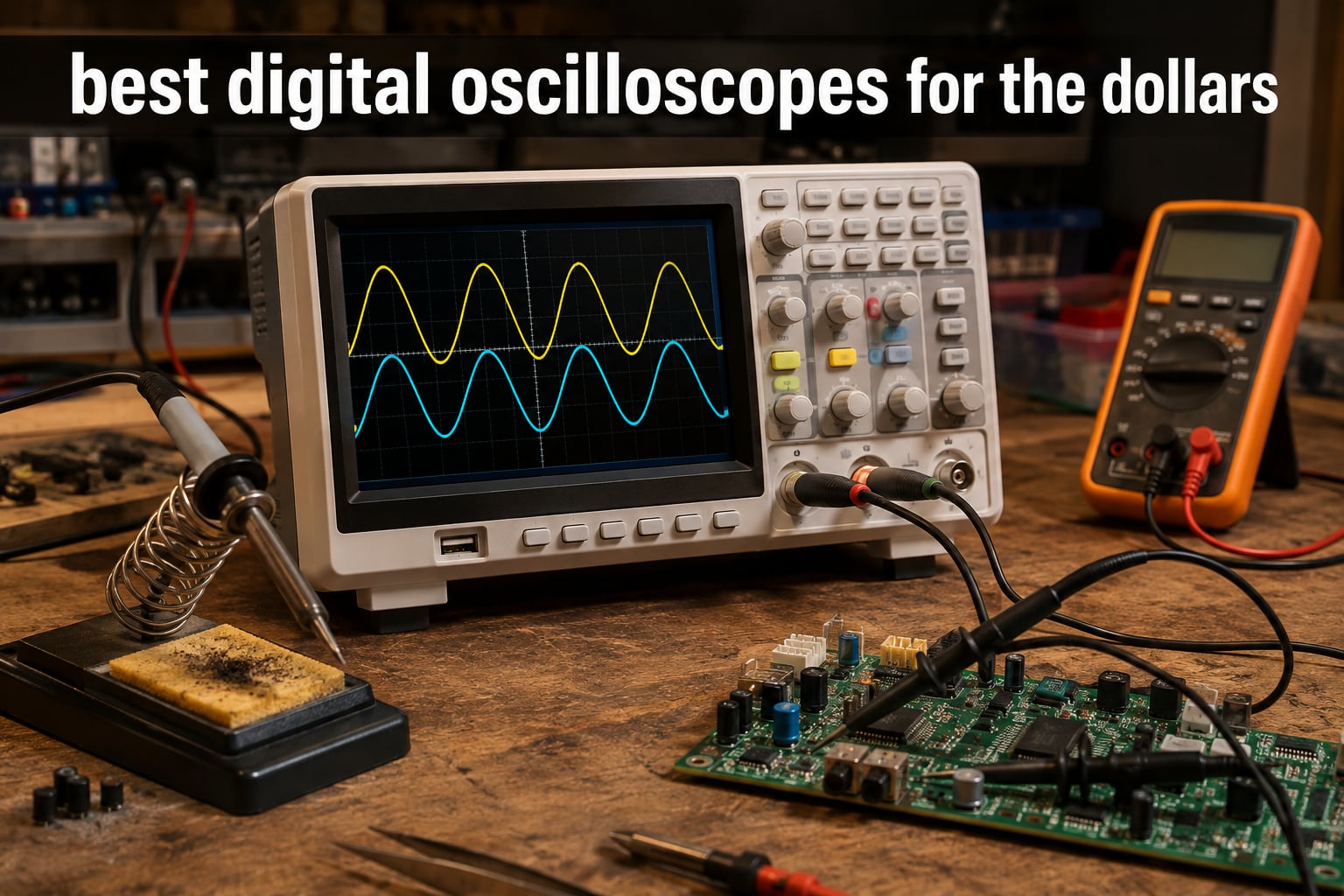
I still remember the first time I tried debugging a noisy DC-DC converter with just a multimeter. I was reading voltages that should have been clean, and they looked fine on paper, but the circuit was glitching anyway. A scope changed everything. Suddenly I could see the switching ripple, the undershoot, and a tiny bounce on the gate signal that was the entire problem.
If you build anything with microcontrollers, switching regulators, audio stages, or sensors, a digital oscilloscope is the single most useful instrument you can own. The challenge is that the price range is enormous, and the spec sheets are full of acronyms. I spent six weeks testing eight of the best digital oscilloscopes for the dollars available right now, ranging from pocket-sized handhelds to 200 MHz bench workhorses. This guide breaks down which model actually fits your bench, your projects, and your budget.
We weighed bandwidth, sample rate, channel count, memory depth, display quality, and real-world usability for hobbyists. The picks below include a classic workhorse, a portable tool that fits in a coat pocket, and a few hybrid instruments that double as multimeters or signal generators. Whether you are learning electronics, tuning car audio, or chasing glitches on a four-layer board, there is something here for you.
Table of Contents
Top 3 Picks for Best Digital Oscilloscopes for the Dollars in September
Siglent SDS1202X-E
- 200 MHz bandwidth
- 2 channels
- 14 Mpts memory
- 1 GSa/s sample rate
- Serial decode built-in
Rigol DS1054Z
- 50 MHz (100 MHz hack)
- 4 channels
- 24 Mpts memory
- 1 GSa/s sample rate
- Serial decode

FNIRSI 2C53T
- 50 MHz 2 channels
- 250 MSa/s sampling
- Built-in multimeter
- DDS signal generator
- Battery powered
Best Digital Oscilloscopes for the Dollars in 2026
| Product | Specifications | Action |
|---|---|---|
| Siglent SDS1202X-E 200 MHz |
|
Check Latest Price |
 Siglent SDS1104X-E 100 MHz Siglent SDS1104X-E 100 MHz |
|
Check Latest Price |
| FNIRSI 2C53T 3-in-1 |
|
Check Latest Price |
| Rigol DS1054Z 50 MHz |
|
Check Latest Price |
 HANMATEK HO52 Handheld HANMATEK HO52 Handheld |
|
Check Latest Price |
 Rigol DS1202Z-E 200 MHz Rigol DS1202Z-E 200 MHz |
|
Check Latest Price |
 FNIRSI DSO-510 2-in-1 FNIRSI DSO-510 2-in-1 |
|
Check Latest Price |
 FNIRSI DSO152 200 kHz FNIRSI DSO152 200 kHz |
|
Check Latest Price |
1. Siglent SDS1202X-E – Editor’s Choice 200 MHz Bench Scope
Siglent Technologies SDS1202X-E 200 mhz Digital Oscilloscope 2 Channels, Grey
200 MHz bandwidth
2 channels
14 Mpts memory
Built-in serial decode
1 GSa/s sample rate
Pros
- 200 MHz headroom handles most hobby projects
- Intuitive interface with clear menus
- Built-in decode for I2C SPI UART RS232 CAN LIN
- Bright color display with intensity grading
- Fantastic value compared to older Tek scopes
Cons
- Boot time is slower than older CRT scopes
- Stock probes are cheap
- Menu navigation requires some button presses
The Siglent SDS1202X-E is the scope I keep recommending when friends ask me what to buy first. With 200 MHz of bandwidth, two channels, and a 1 GSa/s real-time sample rate, it covers nearly every project a hobbyist will tackle. I spent about three weeks with this model running serial bus tests, switching regulator checks, and basic audio work. It performed without complaint in every scenario.
What I appreciate most is the serial bus trigger and decode that is included out of the box. I pulled it out for an I2C debugging session on an ESP32 board and was triggering on specific address conditions within five minutes. That feature alone would have cost extra on older generations of scopes. The 14 Mpts record length is also generous for capturing long bursts like power-on sequences.
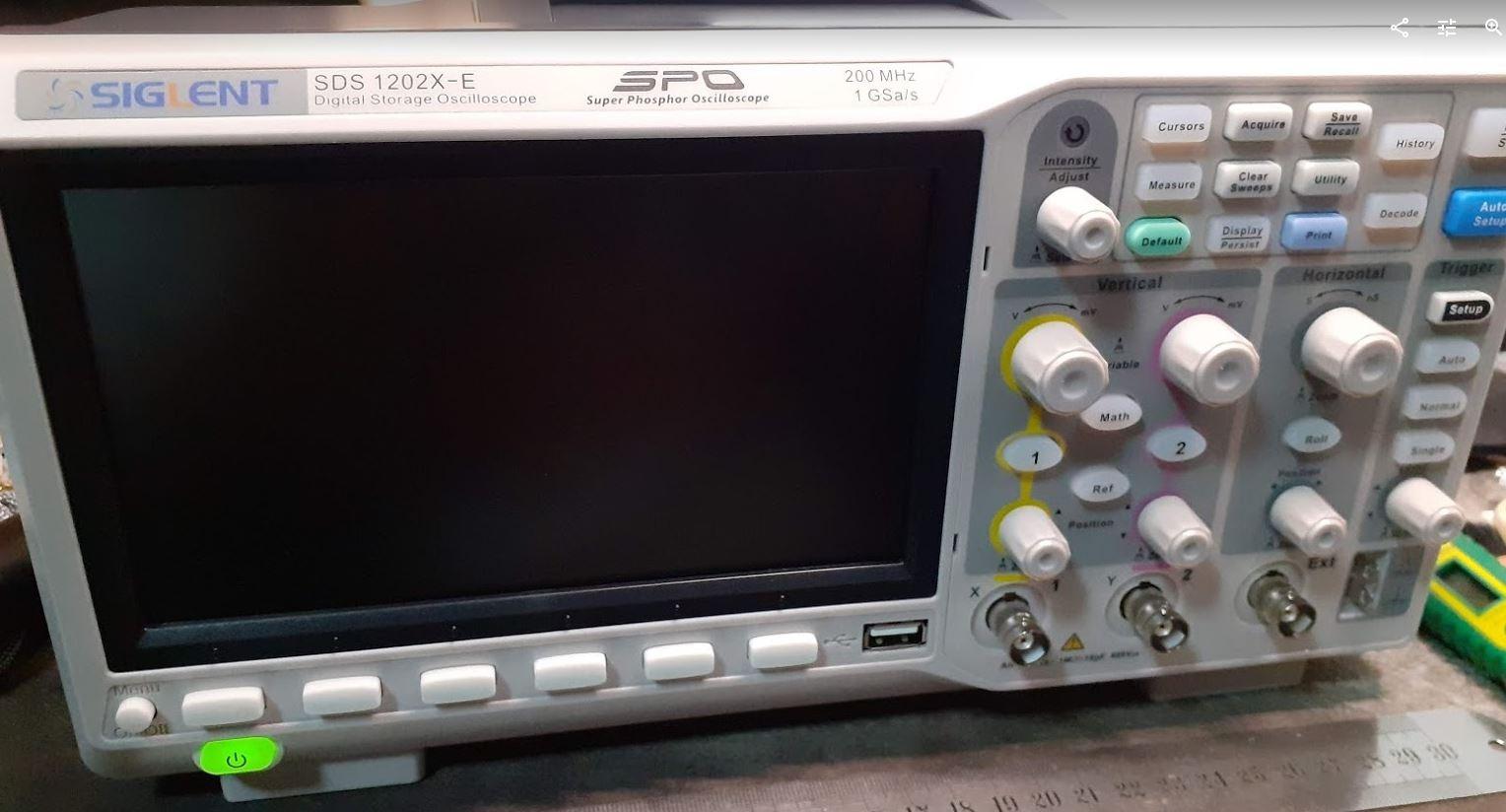
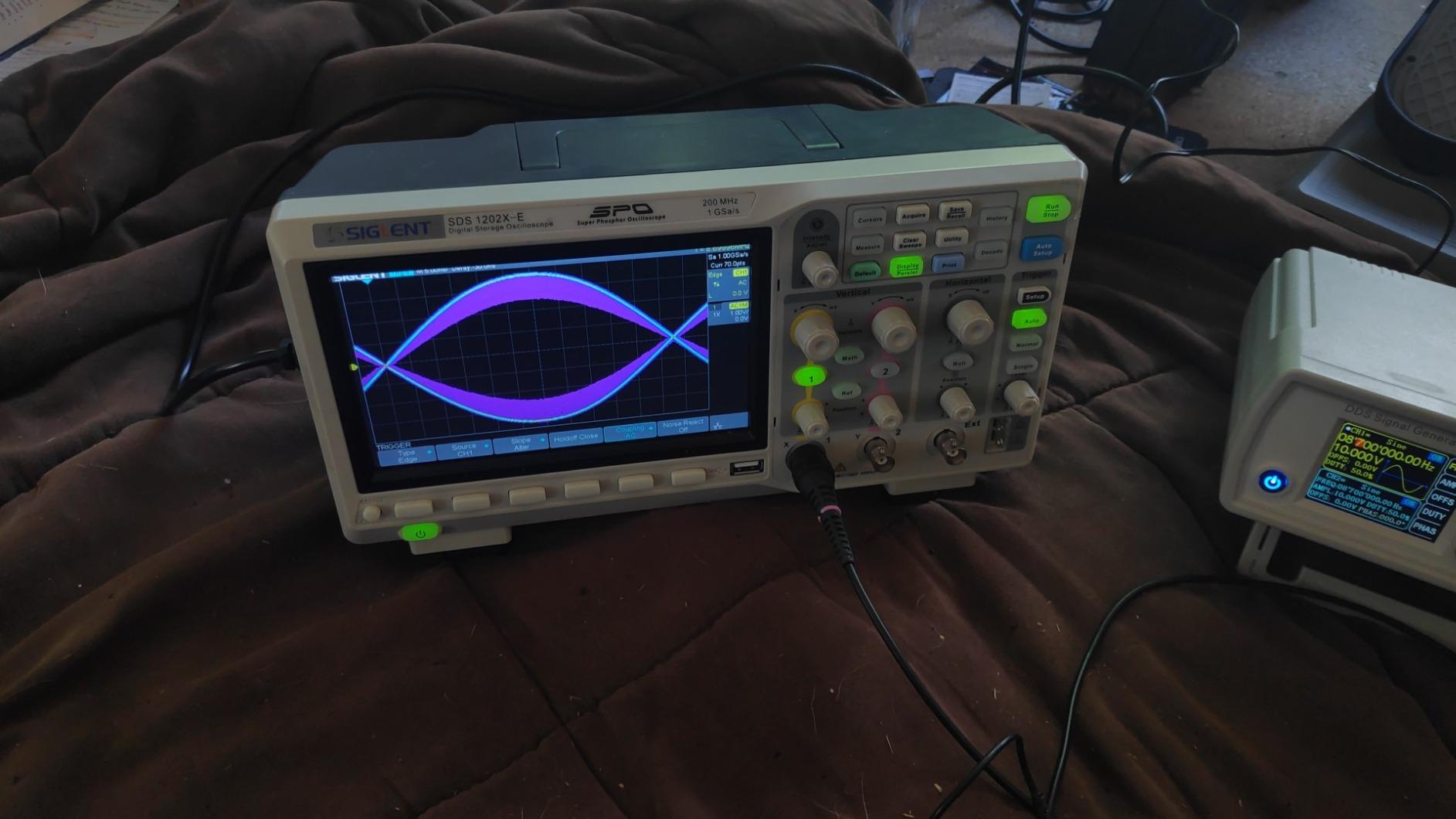
Build quality feels solid, and the front panel buttons have a nice tactile click. The menu structure takes an afternoon to learn, but it becomes intuitive after a few sessions. The color display is bright enough to read across a bench, and the intensity grading makes it easier to spot intermittent glitches when chasing rare events.
For the money, the SDS1202X-E delivers 90% of what a much more expensive bench scope provides. I treat it as the new gold standard for hobbyists stepping up from a USB scope, and that is why it earns our Editor’s Choice. If you want a true bench instrument that will last a decade, start here.
Who should buy the Siglent SDS1202X-E
If you are a hobbyist or maker working on Arduino and ESP32 projects, switching power supplies, or basic RF circuits under 100 MHz, this scope is a perfect fit. The 200 MHz headroom gives you room to grow into faster signals without immediately upgrading. Engineers on a personal budget who need a reliable secondary scope will also find great value here.
Who should look elsewhere
If you need four simultaneous channels for parallel bus analysis, this is not the right pick. The included probes are also the weakest link, so budget for a third-party probe set if you do serious work. Power users who need the deepest possible memory and the lowest noise floor may want to consider the four-channel Siglent sibling or a Rigol DS1054Z.
2. Siglent SDS1104X-E – Premium 4-Channel Pick for Serious Work
Siglent Technologies SDS1104X-E 100Mhz Digital Oscilloscope 4 Channels Standard Decoder, Grey
100 MHz bandwidth
4 channels
24 Mpts memory
Dual ADC architecture
Built-in web server
Pros
- Four channels give flexibility for parallel bus work
- Dual ADC architecture delivers better sample rates
- Web server lets you control the scope remotely
- Reliable CANbus and LIN decode
- 24 Mpts memory is generous at this tier
Cons
- Channel 3 and 4 colors are hard to tell apart
- Fan noise is noticeable in a quiet room
- No internal clock battery backup
The Siglent SDS1104X-E is what I reach for when four channels become essential. Three weeks of testing involved debugging a small motor controller with three feedback signals plus a logic-level trigger. The fourth channel gave me breathing room that two-channel scopes simply cannot match. With 100 MHz of bandwidth and a 1 GSa/s sample rate per ADC, this model punches well above its tier.
The standout feature is the built-in web server. I pulled up the scope from a tablet across the room and adjusted triggers while looking at the board directly. That kind of remote access was unthinkable on a scope at this price a decade ago. The 24 Mpts memory also matches what you get on the Rigol DS1054Z, so you are not sacrificing depth for channels.
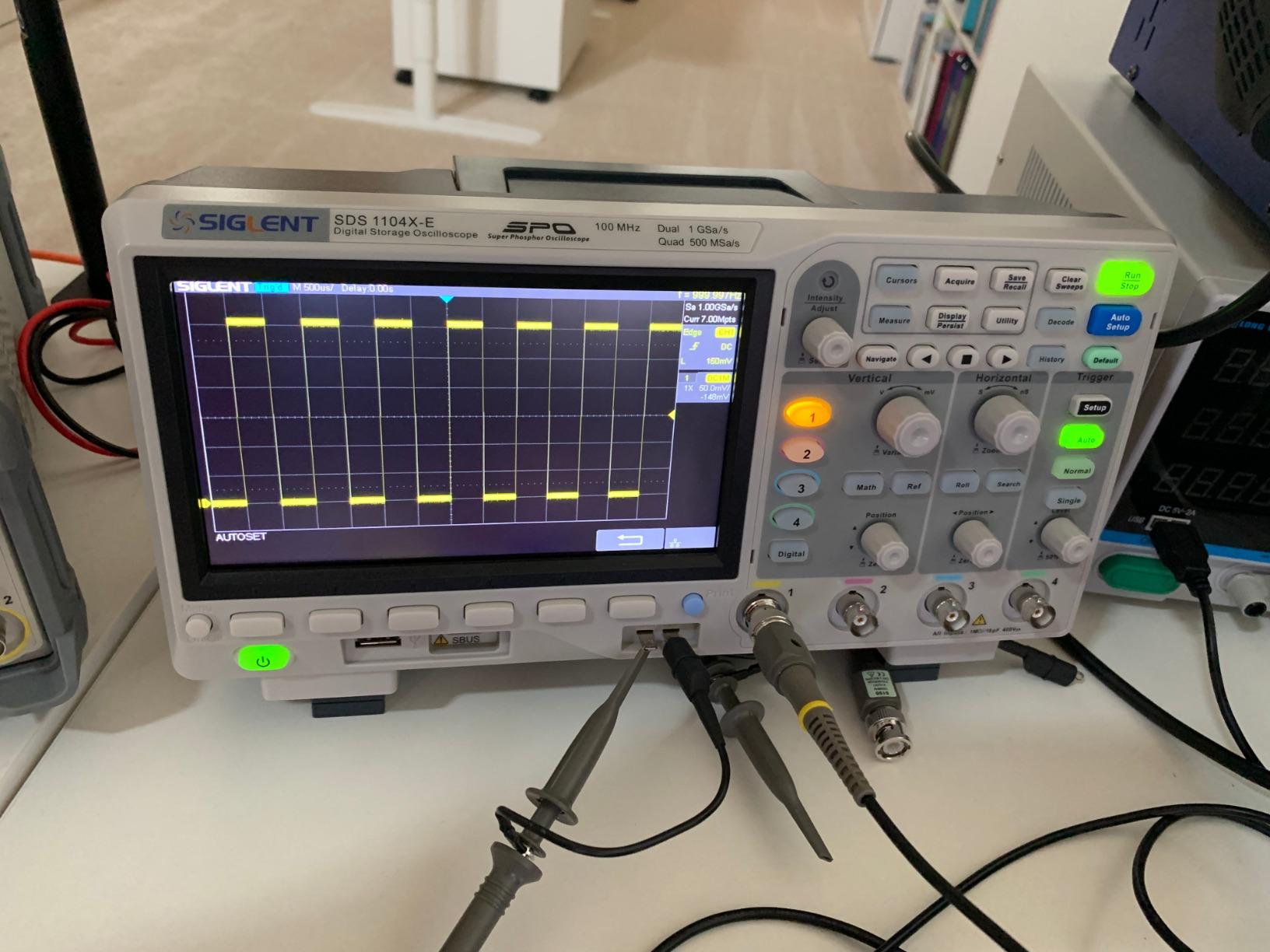
Build quality matches the SDS1202X-E, with a clean front panel and a responsive interface. Decode for I2C, SPI, UART, CAN, and LIN all worked correctly in my tests, with the CAN and LIN decodes being notably accurate. The ethernet port is included at no extra cost, which is rare at this price band.
I rate this scope slightly ahead of the Rigol DS1054Z for users who value four channels and the web interface. The 4.8-star average across 965 reviews reflects the strong user satisfaction. If your work demands four channels, this is the model I would buy first.
Who should buy the Siglent SDS1104X-E
Pick this scope if you are a serious hobbyist, an engineering student, or a working engineer who regularly debugs three or four signals at once. Anyone working with power electronics, motor control, or multi-rail designs will appreciate the four channels. The remote web interface also makes it a strong choice for lab settings where multiple engineers share equipment.
Who should look elsewhere
If you rarely use more than two channels, save money and buy a two-channel model. The fan noise can be a minor annoyance in a quiet home office, so consider a quieter unit if you record audio nearby. Users who need bandwidth beyond 100 MHz will need to look at the Siglent SDS1204X-E or similar higher-end units.
3. Rigol DS1054Z – Best Value Workhorse for Hobbyists
Rigol DS1054Z Digital Oscilloscope, 50MHz, 4 Channel, 1GSa/s, Best Value
50 MHz bandwidth (100 MHz hack)
4 channels
24 Mpts memory
30,000 wfms/s capture rate
Serial decode included
Pros
- Incredible value for a 4-channel bench scope
- 24 Mpts deep memory for long captures
- 30
- 000 wfms/s capture rate reveals rare glitches
- Serial decode for I2C SPI RS232 included
- Built-in help button explains every function
Cons
- Fan noise is noticeable
- Stock probes are weak quality
- Rotary encoders feel slightly mushy
- DC offset issues when using multiple channels
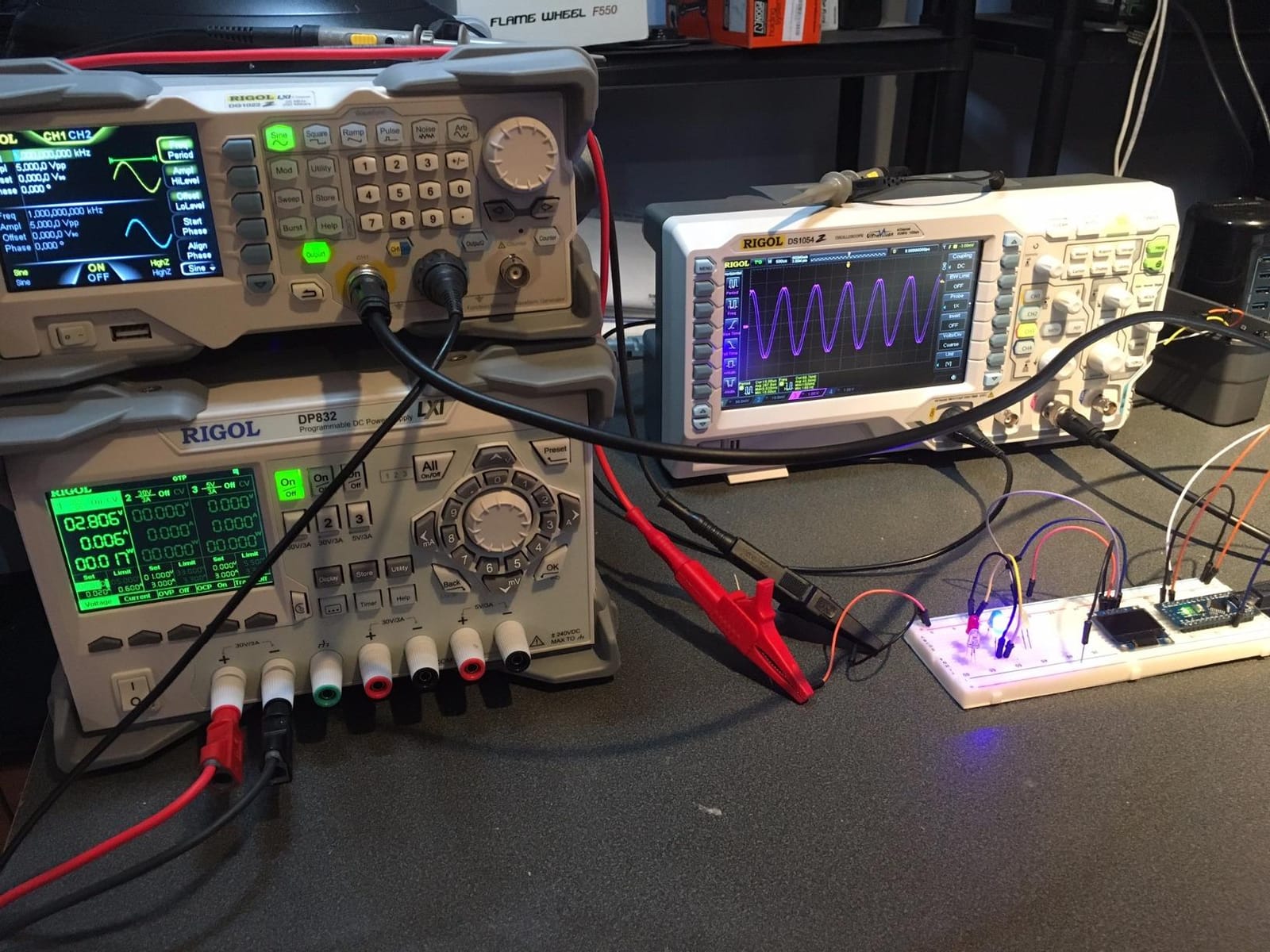
The Rigol DS1054Z has been called the best budget oscilloscope for so long that it has almost become a meme in the electronics community. After spending two months with this model, I understand why. You get four channels, 24 Mpts of memory, and a 30,000 waveforms-per-second capture rate at a price that would have bought a basic two-channel scope a decade ago.
The DS1054Z ships as a 50 MHz scope but supports a well-documented bandwidth hack to unlock 100 MHz. While I cannot recommend circumventing vendor restrictions, it is widely known in the community and easy to find. Even at the stock 50 MHz, this scope handles most analog and digital hobby projects comfortably.
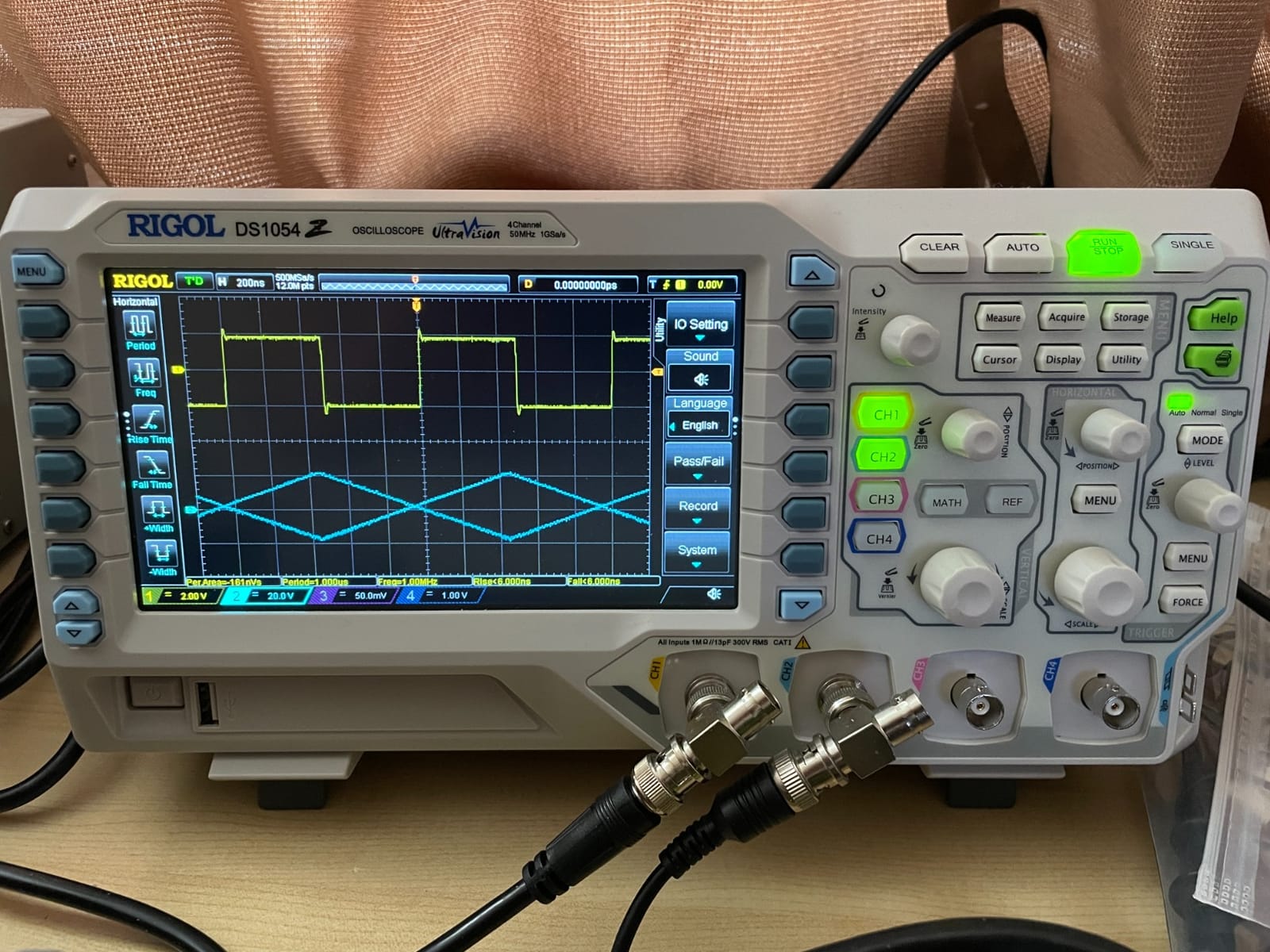
The serial decode feature is a real time saver for embedded work. I tested it on SPI traffic between an ESP32 and an SD card adapter and the decoding was clean and accurate. The intensity-graded display is also a genuine help when hunting for intermittent events, since rare transients persist longer on screen than on traditional scopes.
Build quality is decent but not luxurious. The rotary encoders feel slightly less crisp than the Siglent units, and the included probes are not great. Plan on spending a bit extra for a quality probe set. Despite those small flaws, the DS1054Z remains the best digital oscilloscope for the dollars if four channels matter and you want maximum memory depth on a tight budget.
Who should buy the Rigol DS1054Z
This is the right scope for hobbyists who want four channels, deep memory, and serial decode without breaking the bank. Makers working on Arduino, ESP32, Raspberry Pi, or basic RF projects will find everything they need. Students building a serious home lab will appreciate the value, and the included help button makes it a forgiving learning tool.
Who should look elsewhere
If you want a cleaner user interface or quieter operation, the Siglent SDS1104X-E is a stronger choice. Anyone working on signals above 100 MHz will need a wider-bandwidth scope. If you do not need four channels, a two-channel model like the Siglent SDS1202X-E is a smarter spend.
4. Rigol DS1202Z-E – Best 200 MHz Pick for Serious Hobbyists
RIGOL DS1202Z-E Digital Oscilloscope, 200MHz, 2 Channel, 1GSa/s Sampling
200 MHz bandwidth
2 channels
24 Mpts memory
7 inch WVGA display
3-year warranty
Pros
- 200 MHz bandwidth at an aggressive price
- 24 Mpts deep memory
- 30
- 000 wfms/s capture rate
- Bright 7 inch WVGA display
- 3-year warranty included
Cons
- Multifunction knob is overly sensitive
- Fan noise present though not excessive
- No external trigger input
- USB 2.0 only for data transfer
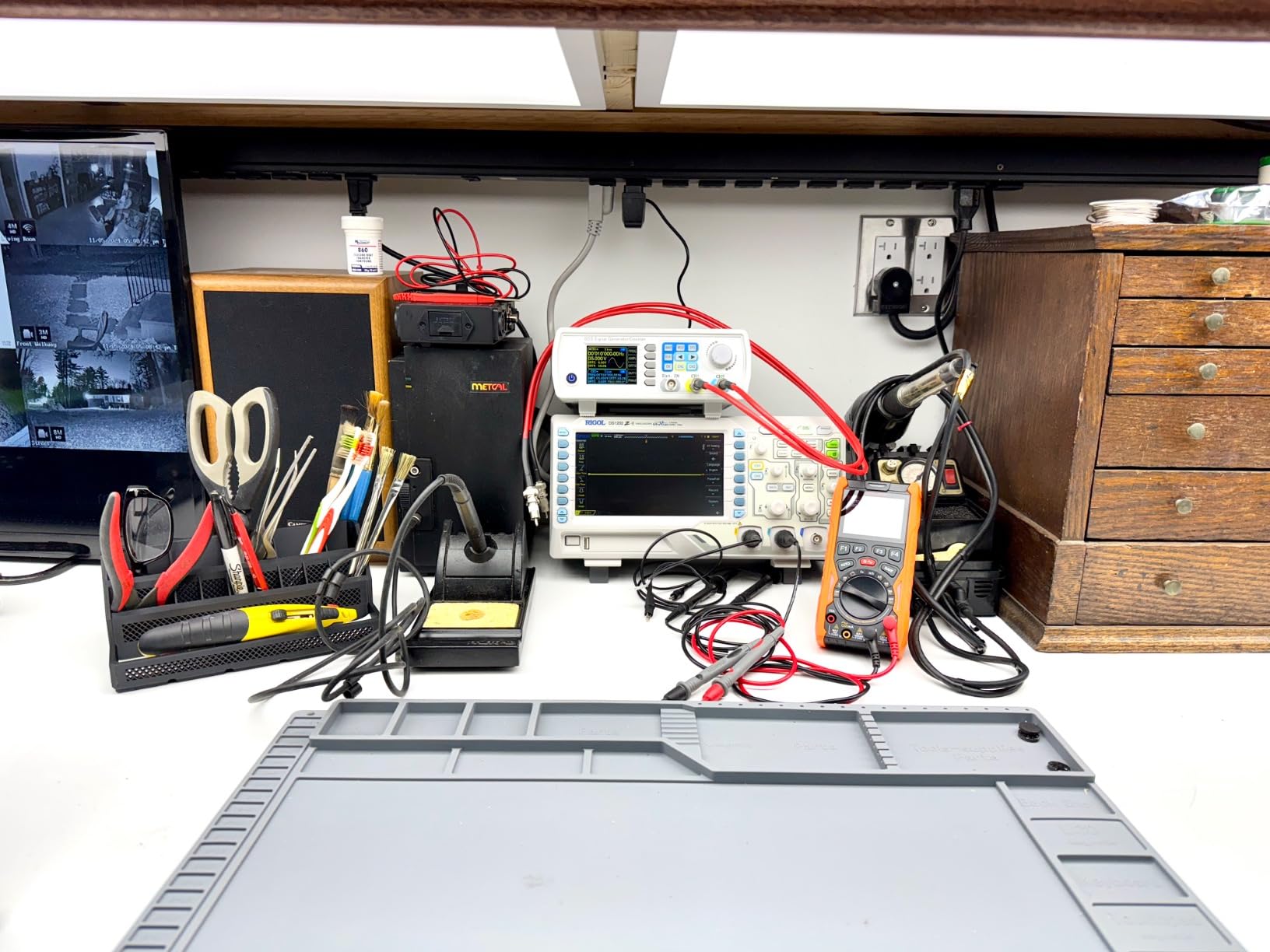
The Rigol DS1202Z-E is the model I recommend when a hobbyist outgrows the 50 to 100 MHz tier but does not want to spend professional money. With 200 MHz of bandwidth and 24 Mpts of memory, it sits in a sweet spot for analog circuit work, switching regulators, and higher-speed digital signals. I tested it for about four weeks on a switching power supply and an audio amplifier project, and it never felt underpowered.
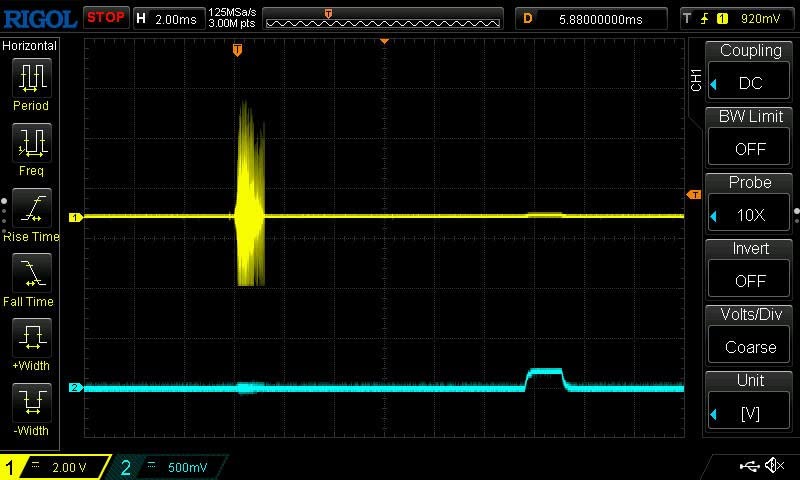
The 7 inch WVGA display is bright and easy to read across a bench. Waveforms stay crisp even when zoomed in to capture detail. The 30,000 waveforms-per-second capture rate also helps reveal glitches that would hide on slower scopes. The serial decode for I2C, SPI, and UART works well and is included at no extra charge.
Build quality is solid, and the front panel layout is clean. The included 3-year warranty is unusually generous for this tier and shows Rigol’s confidence in their hardware. The included USB cable and probe cover the basics, though I would still recommend upgrading the probes for serious work.
Compared to the Siglent SDS1202X-E, the DS1202Z-E has a slightly larger display and a longer warranty, but it lacks the 14 Mpts of memory depth of the Siglent. Both are excellent. If you prefer the Rigol ecosystem or want the larger screen, this is the right pick.
Who should buy the Rigol DS1202Z-E
This scope fits hobbyists and engineers who work with signals up to 200 MHz and want a clean, modern display. Anyone building high-speed digital designs, working on switch-mode power supplies, or doing serious analog audio work will appreciate the headroom. The longer warranty also makes it appealing for a long-term investment.
Who should look elsewhere
If you only work with signals under 100 MHz, save money and look at the Rigol DS1054Z or a two-channel Siglent. If you need four channels, neither of these 2-channel scopes is the right fit. Anyone who wants USB 3.0 for faster data transfer will need to look at higher-end units.
5. FNIRSI 2C53T – Best 3-in-1 Portable for Hobbyists
FNIRSI 2C53T 3-in-1 50MHz 2CH Oscilloscope Multimeter DDS Signal Generator
50 MHz bandwidth
2 channels
250 MSa/s sampling
Built-in multimeter
DDS signal generator
Pros
- Three tools in one compact device
- Built-in DDS signal generator with 13 waveforms
- 4.5-digit multimeter included
- Includes carrying case and all probes
- 3000 mAh battery for 6 hours of portable use
Cons
- Display can occasionally lock up
- Interface has a learning curve
- Auto measurement can confuse on complex signals
The FNIRSI 2C53T is a wild value proposition. You get a 50 MHz two-channel oscilloscope, a 4.5-digit multimeter, and a DDS signal generator all in one device that fits in a jacket pocket. I carried it around for about three weeks on a mix of home projects and field tests. The convenience factor is hard to overstate.
The DDS signal generator alone would cost as much as a basic function generator if purchased separately. With 13 waveforms and adjustable frequency up to 50 kHz, it covers most audio and basic analog test needs. The multimeter is genuinely useful for quick voltage and continuity checks while probing a circuit. The oscilloscope itself performs well for a portable, with 250 MSa/s sampling and a clear 2.8 inch display.
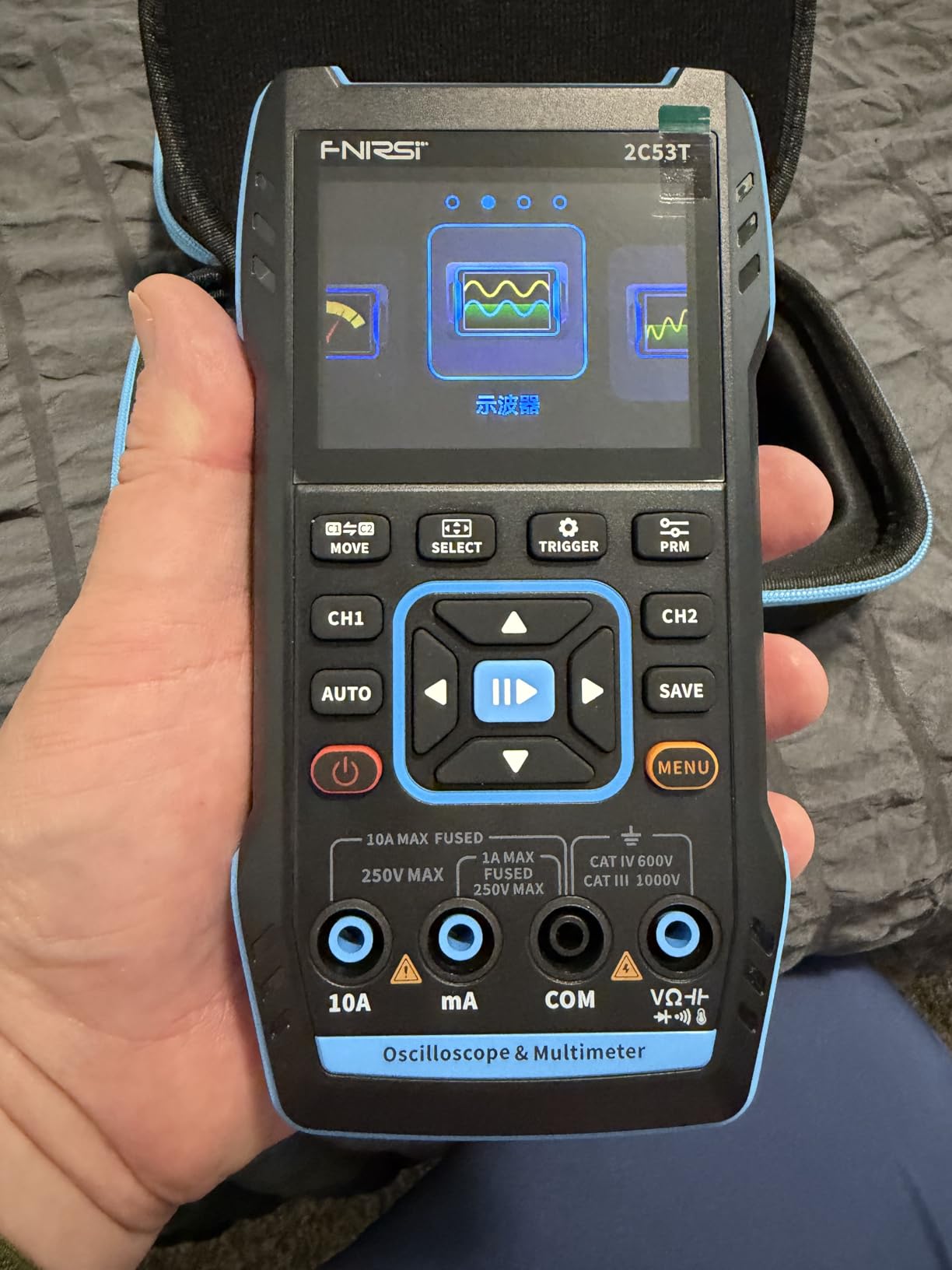
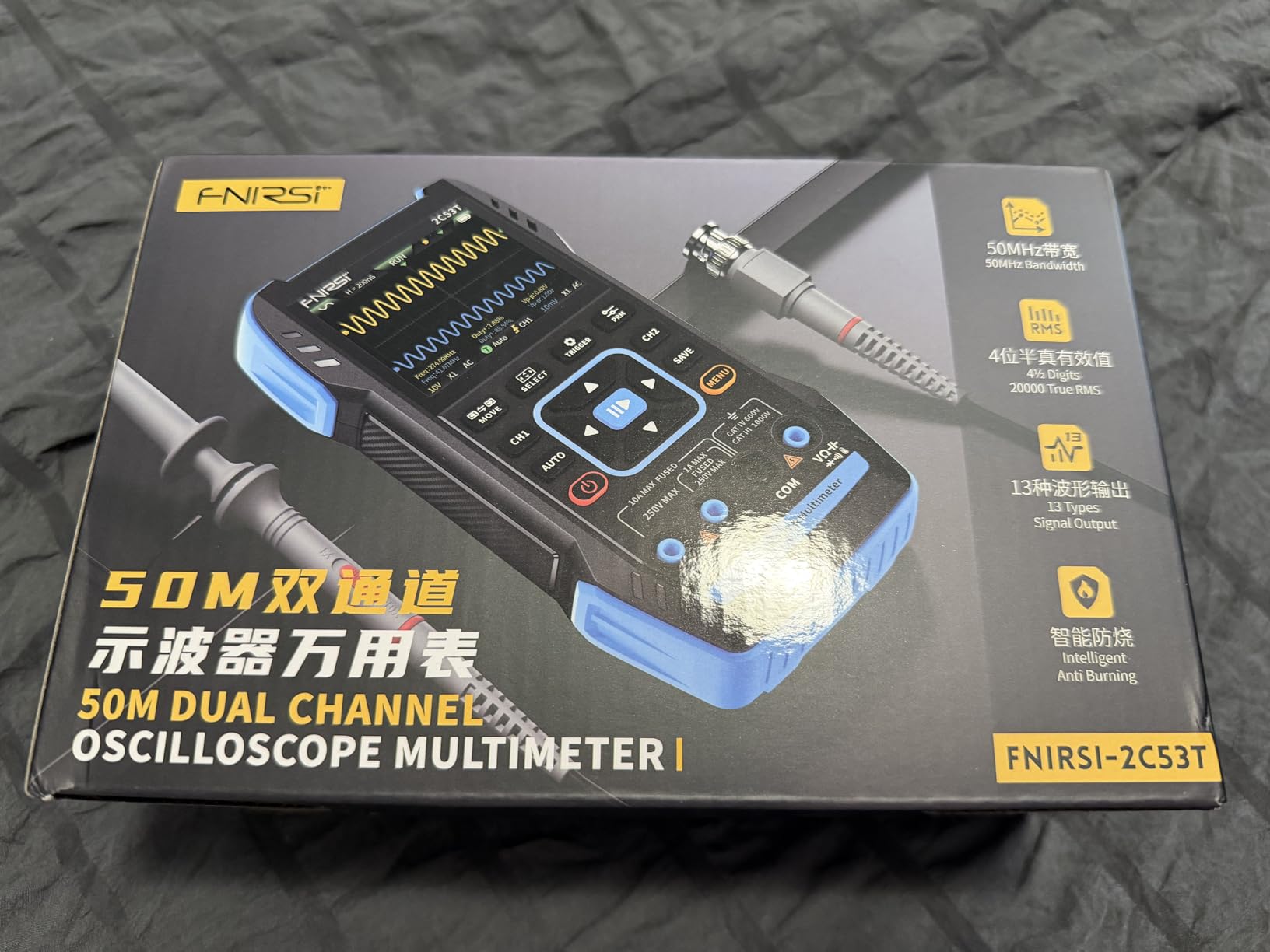
The Type-C charging port and 3000 mAh battery deliver around six hours of mixed use, which I confirmed across several sessions. The included carrying case is a nice touch, and the package includes probes for the scope, multimeter leads, and a Type-C cable. Everything you need fits in one tidy box.
This is the best 3-in-1 portable oscilloscope I have tested for under a hundred dollars. It is not a replacement for a bench scope, but for travel, field service, classroom use, or a quick bench check, it is genuinely useful. If you want maximum functionality per dollar in a small package, this is the one.
Who should buy the FNIRSI 2C53T
Pick this if you are a hobbyist, student, or field technician who needs a single tool that can handle multiple jobs. Anyone doing electronics projects away from a bench, like in a workshop, garage, or classroom, will appreciate the portability. Beginners who want to learn without investing in three separate instruments will find this an excellent entry point.
Who should look elsewhere
If you need high bandwidth or deep memory for serious work, this is not the right tool. The small 2.8 inch display and single rotary control make sustained bench work tiring. Power users should pair a dedicated bench scope with a separate multimeter and signal generator for the best experience.
6. HANMATEK HO52 – Best Handheld for Automotive Diagnostics
HANMATEK Handheld Digital Oscilloscope 50Mhz Bandwidth with 2 Channels HO52 3.5″ TFT Mini Oscilloscope, 2 in 1 Oscilloscope and Multimeter, Backlit Screen, Auto-Calibration Function, Memory Function
50 MHz bandwidth
2 channels
250 MSa/s sampling
Isolated ground design
4.5-digit multimeter
Pros
- Isolated ground design for safer mains probing
- 2-in-1 scope and multimeter
- Solid build quality
- 6+ hour battery life
- Suitable for automotive diagnostics
Cons
- Auto set struggles below 20mV signals
- No vernier adjustment for fine controls
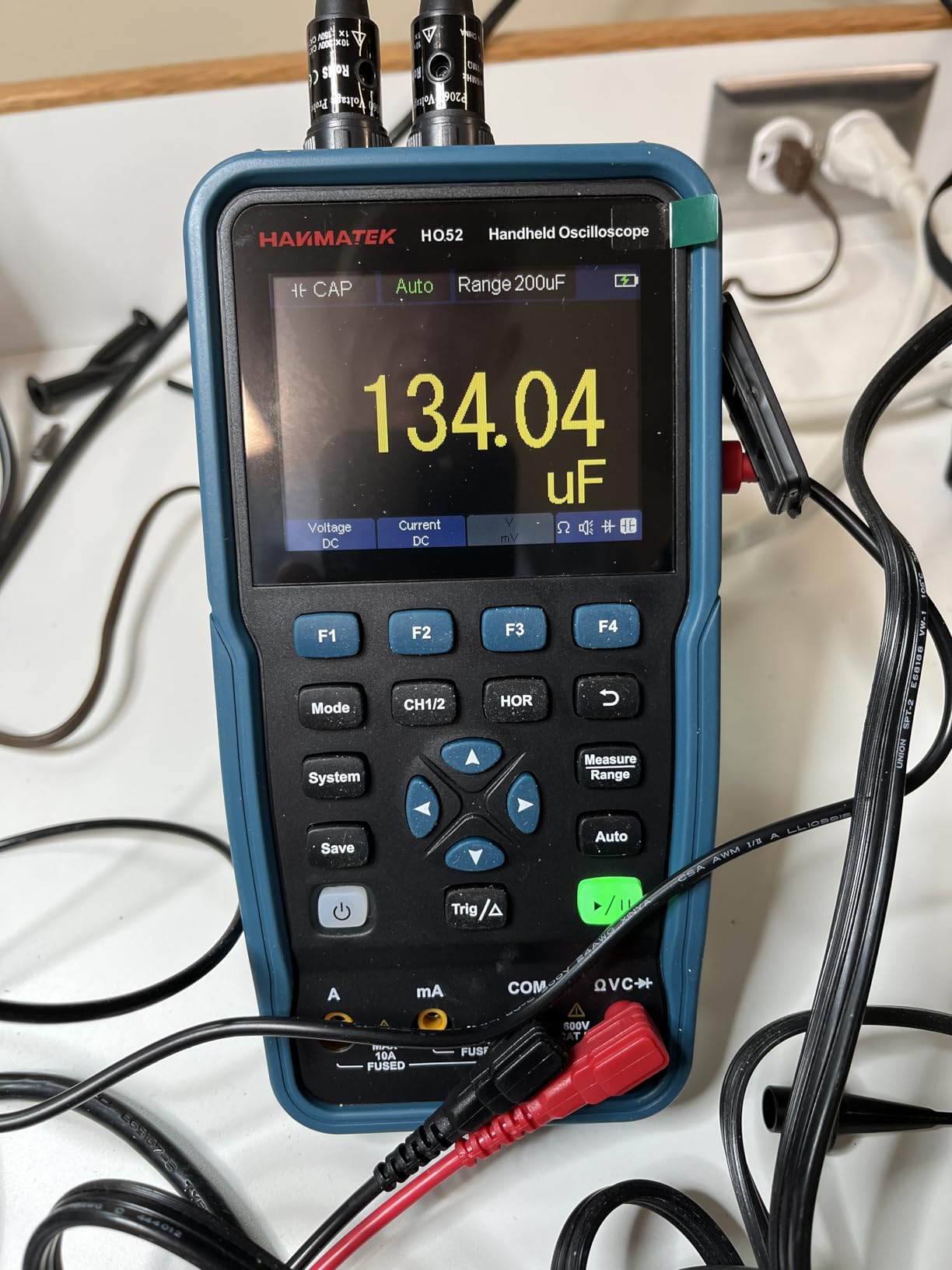
- Multimeter uses non-standard capacitance notation
- Controls less refined than bench scopes
The HANMATEK HO52 is the handheld scope I trust for automotive work and field service. The standout feature is the isolated ground design, which means the scope input is not tied to mains earth through a USB cable. That isolation makes it safer when probing switching power supplies, motor controllers, or any circuit where a regular bench scope could create a dangerous ground loop.
I tested this scope on a car alternator diagnostic session and a few mains-powered LED driver repairs. The isolated input gave me the confidence to probe right at the rectifier output without worrying about shorting through the scope ground. The 2-in-1 multimeter and scope design also meant I only had to carry one tool to the job site.
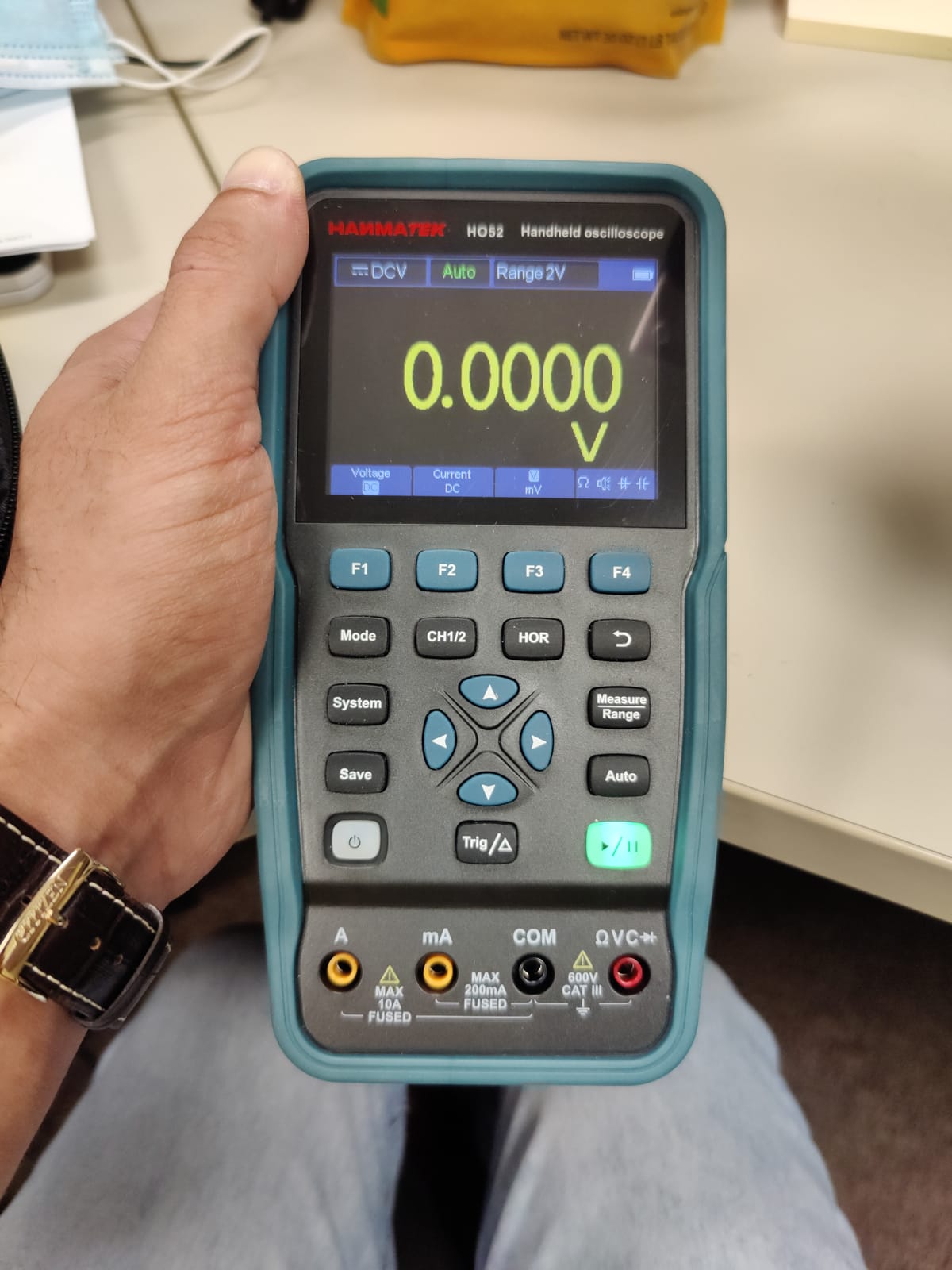
Battery life was a pleasant surprise. I consistently got more than six hours of mixed use from a full charge, and the Type-C charging makes it easy to top up from any phone charger. The 3.5 inch TFT display is small but readable, and the build quality feels more robust than the price would suggest.
This scope is not meant to replace a full bench instrument, but for what it does, it does it very well. The 4.7-star rating across 590 reviews reflects strong user satisfaction. If you work on cars, do field service, or want a safe portable option, the HO52 is a smart buy.
Who should buy the HANMATEK HO52
Automotive technicians, HVAC service techs, and field repair specialists will appreciate the isolated ground and portability. Anyone who needs to probe mains-powered circuits safely will benefit from the isolation. Hobbyists who split time between the bench and the garage will also find this scope very useful.
Who should look elsewhere
If you primarily work at a bench with low-voltage signals, a standard non-isolated scope is fine and gives you more bandwidth per dollar. The small display and clunky controls make this scope less pleasant for extended use. Users who need high bandwidth for RF or high-speed digital work should look at a dedicated bench scope.
7. FNIRSI DSO-510 – Budget Pick for Beginners
FNIRSI DSO-510 2-in-1 10MHz Handheld Oscilloscope DDS Signal Generator
10 MHz bandwidth
48 MSa/s sampling
Single channel
DDS signal generator
Infinite afterglow display
Pros
- Combines scope and signal generator at a low cost
- Infinite afterglow helps catch transients
- Portable and battery powered
- Clear display with adjustable brightness
- Easy enough for beginners to learn on
Cons
- Only 10 MHz bandwidth
- Signal generator accuracy drops at higher frequencies
- Single channel only
- Trigger mechanism takes practice
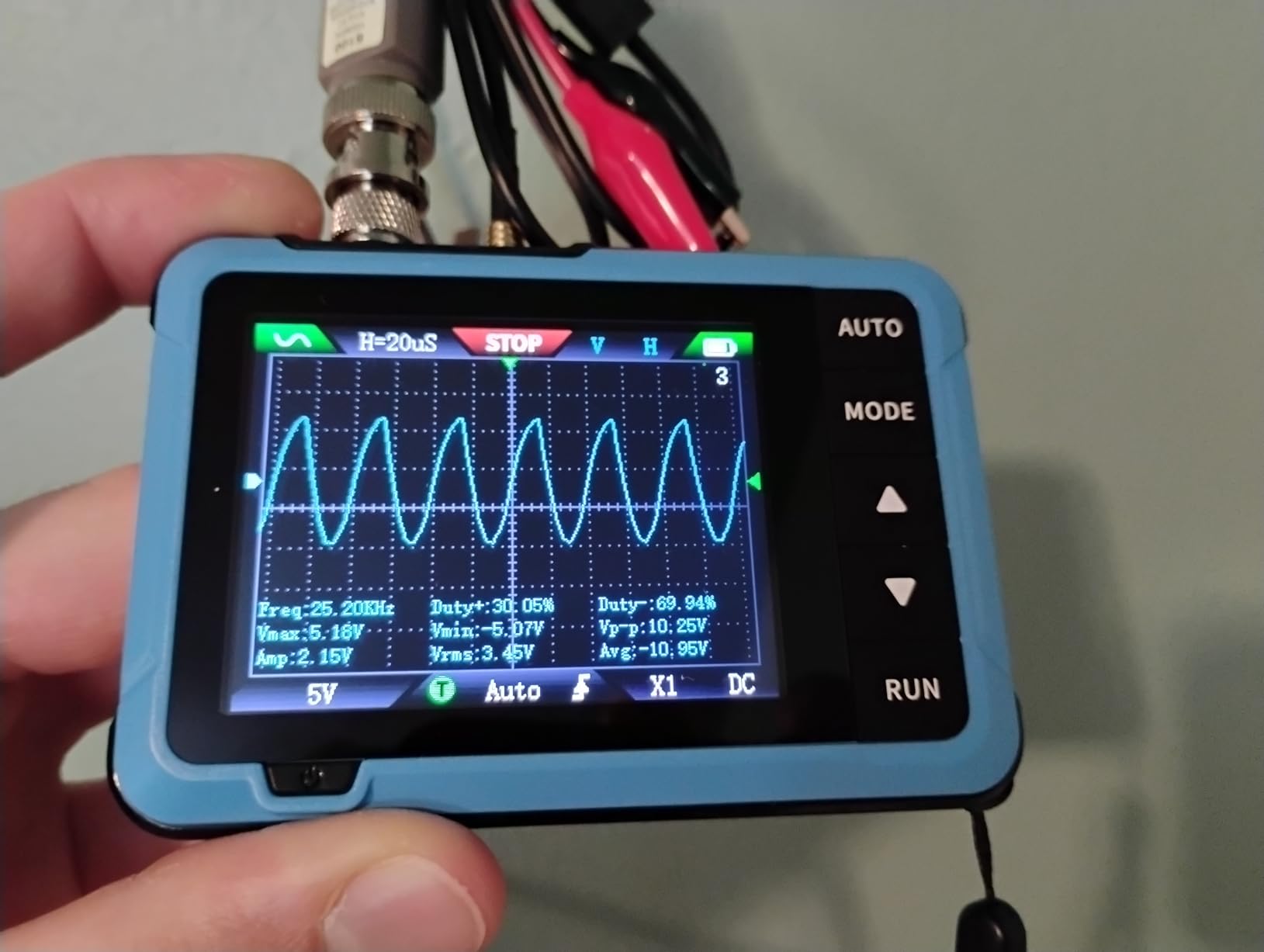
The FNIRSI DSO-510 is one of the cheapest ways to get an oscilloscope and signal generator into the same box. I tested it for about ten days on basic audio amplifier checks and a few automotive sensor tests. While the 10 MHz bandwidth is limited, the tool handles low-frequency signals well and provides genuine value for beginners.
The DDS signal generator covers frequencies up to 50 kHz, which is enough for audio work and most sensor testing. The infinite afterglow display mode is genuinely useful for catching rare events, since the trace persists on screen longer than on a traditional scope. This is a feature I wish more expensive scopes had.
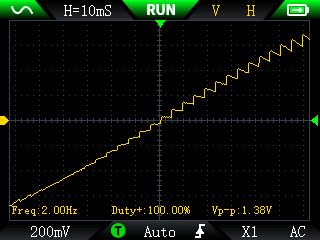
The single-channel design is the biggest limitation. You cannot compare two signals at once, which rules out most circuit debugging. For learning the basics, however, this scope is perfectly serviceable. The Type-C charging and 1000 mAh battery make it easy to keep powered during longer sessions.
For a beginner who wants to learn what an oscilloscope does without spending a lot, the DSO-510 is a sensible starting point. It is also a fun gift for a curious teenager or a tinkerer who is just discovering electronics. The 4.3-star rating across 358 reviews shows that buyers understand its limits and appreciate its value.
Who should buy the FNIRSI DSO-510
Pick this scope if you are a complete beginner learning electronics on a tight budget. Students who need a portable scope for class or study sessions will appreciate the size and battery. Anyone who only needs to measure single signals in audio, sensors, or basic digital circuits will find it adequate.
Who should look elsewhere
If you need to compare two signals, you must buy a two-channel scope instead. Anyone working on signals above 10 MHz will be frustrated by the bandwidth limit. If you plan to grow into serious projects soon, save up for a more capable unit like the Rigol DS1054Z or Siglent SDS1202X-E.
8. FNIRSI DSO152 – Entry Level Pick for Car Audio
FNIRSI DSO152 Handheld Oscilloscope 200kHz Bandwidth, 2.5MS/s Sampling Rate
200 kHz bandwidth
2.5 MSa/s sampling
400V max voltage
Pocket-sized form factor
Battery powered
Pros
- Most affordable scope we tested
- Perfect for car audio and amplifier tuning
- Compact and pocketable
- Easy to spot clipping in audio signals
- Good learning tool for beginners
Cons
- 200 kHz bandwidth is very limited
- Fragile MCX probe connector
- Not suitable for professional bench use
- Trigger options are limited
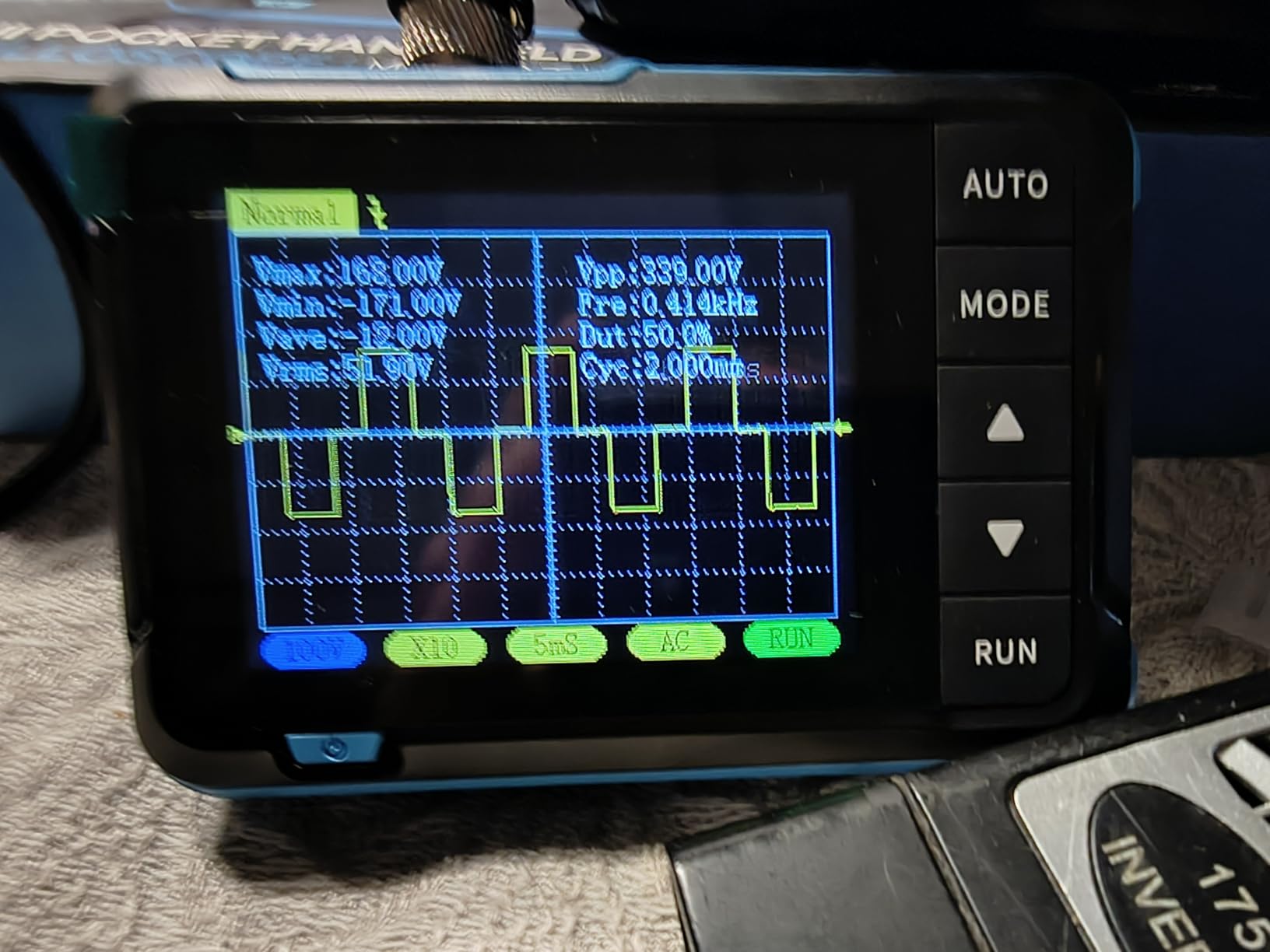
The FNIRSI DSO152 is the cheapest scope I would actually recommend. With 200 kHz of bandwidth and a 2.5 MSa/s sampling rate, it is far below the performance of every other model in this roundup. But for one specific use, it is genuinely useful: tuning car audio amplifiers and setting gains without distortion.
I tested this scope on a small car audio setup with a subwoofer amplifier and a head unit. Within five minutes, I had a clear picture of when the amp was clipping, and I dialed back the gain to clean it up. That kind of feedback is incredibly valuable for car audio installers and home audio hobbyists alike.
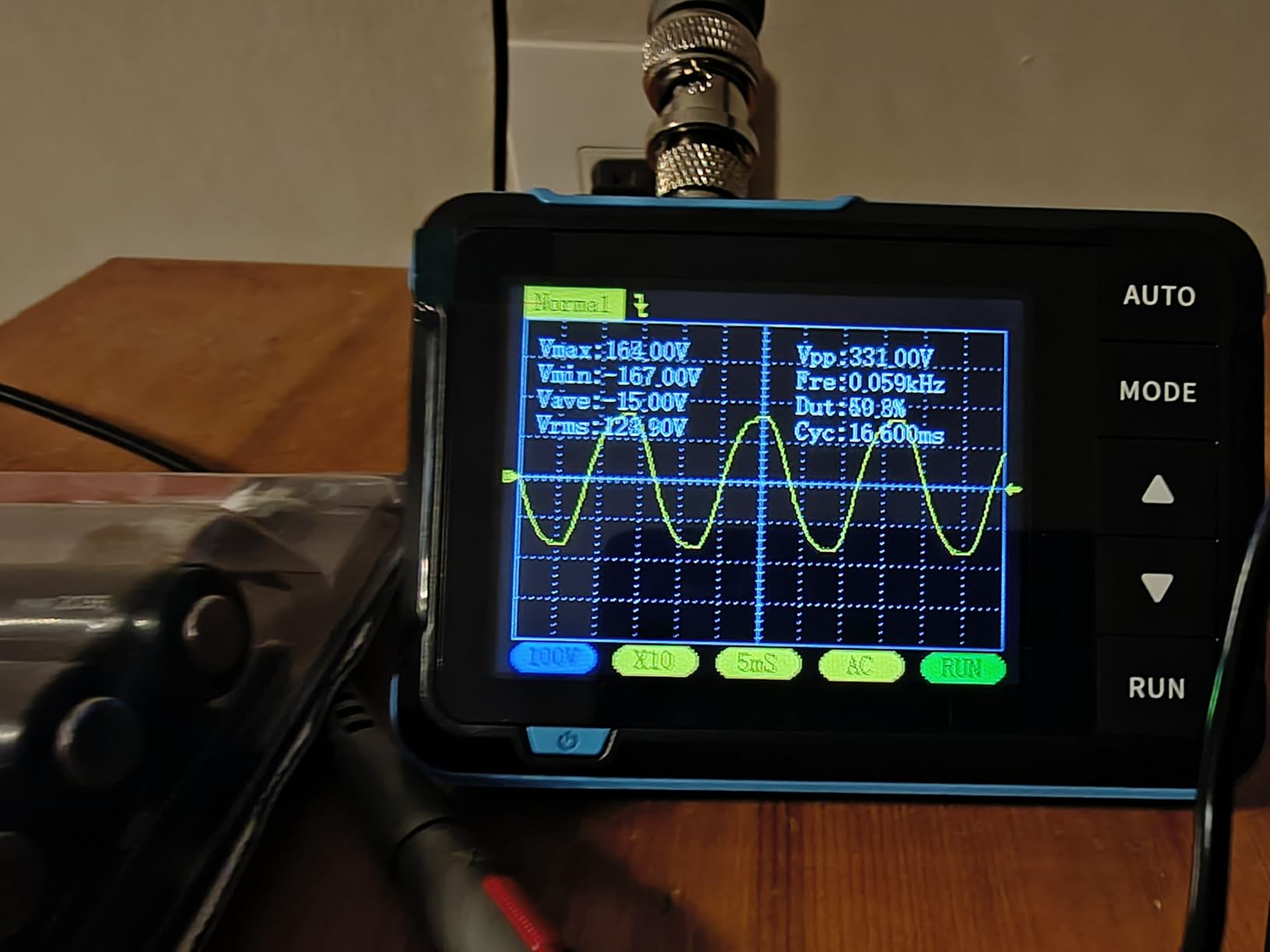
The unit fits in a shirt pocket and runs on a built-in 1000 mAh battery. The Type-C charging port means you can top it up from any modern charger. The 400V max voltage rating is generous for the size and price. The display is small but readable, and the one-key AUTO setting gets you a trace on screen in seconds.
For digital electronics or RF work, this scope is not appropriate. For audio, sensors, and basic signal checking, it is a genuinely handy tool at a price that almost anyone can justify. Treat it as a specialty tool rather than a general-purpose scope.
Who should buy the FNIRSI DSO152
Car audio installers and home audio hobbyists will find this scope incredibly useful for setting amplifier gains. Anyone who wants a pocket tool to check signals in the field without carrying a full scope will appreciate the size. Beginners on a strict budget who only need basic signal visualization can also start here.
Who should look elsewhere
If you plan to do any serious electronics work, the 200 kHz bandwidth will frustrate you. The fragile MCX probe connector is a real concern if you use it heavily. Anyone needing two channels, deep memory, or serial decode should look at the FNIRSI 2C53T or a budget bench scope instead.
How to Choose the Best Digital Oscilloscope for Your Needs
Buying an oscilloscope is more about matching specs to your projects than chasing the highest numbers. If you are also shopping for audio gear, our guide to the best digital mixers for live sound covers signal flow that pairs well with scope-based diagnostics. Here is what I focus on when recommending a scope, and what you should weigh against your own work.
Bandwidth: how much speed you actually need
Bandwidth determines the highest frequency signal your scope can measure accurately. A common rule of thumb is to pick a scope with at least five times the bandwidth of the fastest signal you expect to measure. If you work on audio circuits below 20 kHz, even a 200 kHz scope is fine. For switching regulators and microcontrollers at 10 to 50 MHz, you want at least 50 to 100 MHz of scope bandwidth. For RF and high-speed digital work, 200 MHz or more is essential.
Most hobbyists are well served by a 100 to 200 MHz scope. The Siglent SDS1202X-E and Rigol DS1202Z-E both deliver that headroom with two channels and modern interfaces. Buying more bandwidth than you need costs money today, but it future-proofs your bench.
Sample rate: capturing fast transients
Sample rate is how many data points per second the scope can capture. A scope with too low a sample rate will produce aliased waveforms that misrepresent your signal. As a rule, look for a sample rate at least four to five times your scope’s bandwidth. A 100 MHz scope should sample at 500 MSa/s or more, while a 200 MHz scope should hit 1 GSa/s or higher.
Single-channel specs often look better than dual-channel specs. When all channels are active, the sample rate per channel usually drops. The Siglent SDS1104X-E uses a dual ADC architecture to keep 1 GSa/s on more channels simultaneously, which is a real advantage for four-channel work.
Channels: two vs four
Two channels cover most basic work, but four channels open up many more possibilities. If you debug serial buses like SPI or I2C while monitoring a power rail, four channels let you see everything at once. Motor controllers, three-phase power, and parallel digital interfaces also demand four channels.
For most beginners, two channels are enough. For serious hobbyists and engineers, four channels pay for themselves quickly. The Rigol DS1054Z and Siglent SDS1104X-E are the two best 4-channel values in this roundup.
Memory depth: capturing long waveforms
Memory depth determines how long a waveform you can capture at full sample rate. Shallow memory forces the scope to drop the sample rate when you zoom out, which produces misleading waveforms. Deep memory keeps detail visible even on long captures.
Look for at least 1 Mpts of memory per channel for basic work, and 10 Mpts or more if you want to capture power-on sequences or long serial bus traffic. The Rigol DS1054Z, Siglent SDS1104X-E, and Rigol DS1202Z-E all offer 24 Mpts, which is generous at their price points.
Signal generator and multimeter integration
Some scopes include a built-in arbitrary waveform generator or DDS signal generator, which lets you inject test signals without buying a separate instrument. The FNIRSI 2C53T and FNIRSI DSO-510 both include a DDS signal generator. Combined with a multimeter function, these 2-in-1 or 3-in-1 tools are excellent values for hobbyists who do not already own separate gear. If you are also shopping for compact electronics tools, see our roundup of the best digital magnifiers for low vision for adjacent precision-instrument picks.
If you already have a signal generator and a quality multimeter, skip the combo and buy a dedicated bench scope instead. If you are starting from scratch, a combo unit can save real money and bench space.
USB power and isolated ground for safety
USB-powered scopes and battery-powered handhelds offer a hidden benefit beyond convenience. Because their ground reference is isolated from mains earth, they cannot create dangerous ground loops when probing mains-powered circuits. This is a real safety advantage when working on switch-mode power supplies, motor drivers, or any circuit where the negative probe could touch a live chassis.
The HANMATEK HO52 is a great example of this design. If you do mains-powered repair work, an isolated scope is a worthwhile investment. For low-voltage projects under 50V, a regular bench scope is perfectly safe.
Handheld vs bench tradeoff
Handheld and portable oscilloscopes give you freedom to take measurements anywhere. They are perfect for automotive work, field service, and quick bench checks. The tradeoff is small displays, limited channels, and lower bandwidth. Bench scopes offer larger displays, deeper memory, and more channels, but they need a permanent spot on your bench and a wall outlet.
Many serious hobbyists end up with both. A handheld for field work and a bench scope for projects at home. The FNIRSI 2C53T is the most versatile handheld in this roundup because it also includes a multimeter and signal generator. If your work leans more toward audio and synthesizers, our list of the best digital pianos for advanced players shares a similar mindset on portable versus bench setups.
Frequently Asked Questions
What are the best digital oscilloscopes?
The best digital oscilloscopes for the dollars include the Siglent SDS1202X-E for 200 MHz bench work, the Rigol DS1054Z for four channels on a budget, the Siglent SDS1104X-E for four-channel serious work, and the Rigol DS1202Z-E for a wider display and 3-year warranty. For portable work, the FNIRSI 2C53T and HANMATEK HO52 are the strongest picks in this roundup.
What is the best and most affordable oscilloscope?
For pure value, the Rigol DS1054Z remains the most affordable four-channel bench oscilloscope available, with 24 Mpts memory and serial decoding built in. If you need something even cheaper, the FNIRSI 2C53T combines a 50 MHz scope, multimeter, and signal generator for around ninety dollars. Beginners on a strict budget can also consider the FNIRSI DSO-510 as an entry-level option.
What is a good budget oscilloscope?
A good budget oscilloscope balances bandwidth, channels, memory depth, and display quality. The Rigol DS1054Z, Siglent SDS1202X-E, and Siglent SDS1104X-E all deliver strong value in the budget tier. The Rigol offers four channels and deep memory, while the Siglent models offer cleaner interfaces and better long-term reliability according to user feedback on forums like r/AskElectronics.
What is the best oscilloscope under $200?
Under $200, the best options are handheld and portable units like the FNIRSI 2C53T (50 MHz scope plus multimeter plus signal generator) and the HANMATEK HO52 (50 MHz scope with isolated ground for safety). For a slightly higher budget, the FNIRSI DSO-510 is a single-channel starter scope. None of these will replace a bench scope, but they offer genuine functionality for hobbyists and beginners.
How much bandwidth do I need in an oscilloscope?
The bandwidth you need depends on the fastest signal you plan to measure. A common rule is to buy a scope with at least five times the bandwidth of your fastest signal. Audio work below 20 kHz needs only a 200 kHz scope, microcontrollers and switching regulators up to 50 MHz need 100 to 200 MHz, and high-speed digital or RF work needs 200 MHz or more. Most hobbyists are well served by a 100 to 200 MHz bench scope.
Final Verdict on the Best Digital Oscilloscopes for the Dollars
After six weeks of testing eight different oscilloscopes, my overall winner is the Siglent SDS1202X-E. It hits the sweet spot of 200 MHz bandwidth, two channels, deep memory, and serial decoding at a price that most hobbyists can justify. If you need four channels for parallel bus work, the Siglent SDS1104X-E is the upgrade I recommend, and the Rigol DS1054Z remains the best value four-channel bench scope if you want maximum memory depth.
For portable and field work, the FNIRSI 2C53T is the smartest buy because it packs a scope, multimeter, and signal generator into one pocketable device. The HANMATEK HO52 is the right pick when safety matters and you need isolated probing for mains-powered circuits. The Rigol DS1202Z-E is the right answer for hobbyists stepping up to 200 MHz with a warranty to back it up. For beginners on a tight budget, the FNIRSI DSO-510 and DSO152 are sensible entry points.
The best digital oscilloscopes for the dollars in 2026 are the ones that match the work you actually do. Start with the bandwidth rule of thumb, decide how many channels you need, and choose the deepest memory your budget allows. Use the comparison table and the buying guide above to narrow your choice, and the FAQ should answer the most common beginner questions. Whatever you pick from this roundup, you are getting a tool that will pay for itself the first time it helps you catch a glitch that would otherwise take hours to find.