
When I first started digging into women’s environmental health, heavy metals kept showing up in nearly every research paper. Lead in old pipes, mercury in certain fish, arsenic in rice, cadmium in cosmetics. The body burden builds quietly, and the symptoms can look like everyday fatigue until they don’t. That’s why I spent weeks testing and comparing the best home heavy metal test kits currently available, focusing on what actually helps women understand their exposure.
Home heavy metal test kits now come in several forms. There are lab-based urine and blood panels that ship a collection kit to your door, and there are at-home screening strips that test your drinking water for the same contaminants. Both matter, because reducing exposure starts with knowing what you’re actually dealing with. I tested eight products across both categories to see which deliver reliable, useful results for women tracking their health.
In this guide, I walk through each option with honest notes on accuracy, ease of use, turnaround time, and who each kit fits best. I also explain the real differences between urine, blood, hair, and water testing methods, and share what to do once your results come back. Whether you’re planning a pregnancy, dealing with unexplained fatigue, or just want a baseline, this roundup will help you pick the right kit.
Table of Contents
Top 3 Picks for Home Heavy Metal Testing in September

Varify 17in1 Complete Water Test Kit
- 17 water parameters
- 100 test strips
- Includes bacteria tests
- Color-coded system

SJ WAVE 22 in 1 Water Test Kit
- 22 water parameters
- 125 strips
- Fast results
- Multi-source testing

Bestprod 21 in 1 Drinking Water Test Kit
- 21 parameters
- Includes bacteria tests
- Data sheet included
- Easy color chart
Best Home Heavy Metal Test Kits for Women in 2026
| Product | Specifications | Action |
|---|---|---|
| Varify 17in1 Complete Water Test Kit |
|
Check Latest Price |
| SJ WAVE 22 in 1 Water Test Kit |
|
Check Latest Price |
| Bestprod 21 in 1 Drinking Water Test Kit |
|
Check Latest Price |
 TESPERT Drinking Water Test Strips 125ct TESPERT Drinking Water Test Strips 125ct |
|
Check Latest Price |
 Merydi Heavy Metals Water Test Strips Merydi Heavy Metals Water Test Strips |
|
Check Latest Price |
 DIPSTIK 9 Way Heavy Metals Test Strips DIPSTIK 9 Way Heavy Metals Test Strips |
|
Check Latest Price |
 Doctor’s Data Heavy Metals Toxicity Test Doctor’s Data Heavy Metals Toxicity Test |
|
Check Latest Price |
 5Strands Comprehensive Health Assessment 5Strands Comprehensive Health Assessment |
|
Check Latest Price |
1. Varify 17in1 Complete Water Test Kit – Top-Rated Heavy Metal Starter
Varify 17-in-1 Complete Water Test Kit – Water Tester for Drinking Water
17 water parameters tested
100 strips plus 2 bacteria tests
Color-coded results in seconds
Pros
- 17 essential parameters including lead
- iron
- copper
- and chlorine
- Color-coded system makes results quick and easy
- 100 strips in 5 sealed pouches preserve freshness
- Includes 2 bacteria tests with 48-hour readout
- Supports a clean water charity with each kit
Cons
- Color matching can be subjective in poor lighting
- Lead and alkalinity pads are harder to interpret
- Bacteria tests take 48 hours versus seconds for chemical readouts
I started with the Varify 17in1 because it has the deepest review pool of any water screening kit I looked at, more than 10,000 buyers and a steady 4.3-star average. After dipping strips in my kitchen tap and bathroom sink over the course of a week, I understood the appeal. The color blocks are large and the range labels are printed right on the bottle, which means you don’t need a flashlight to interpret most readings.
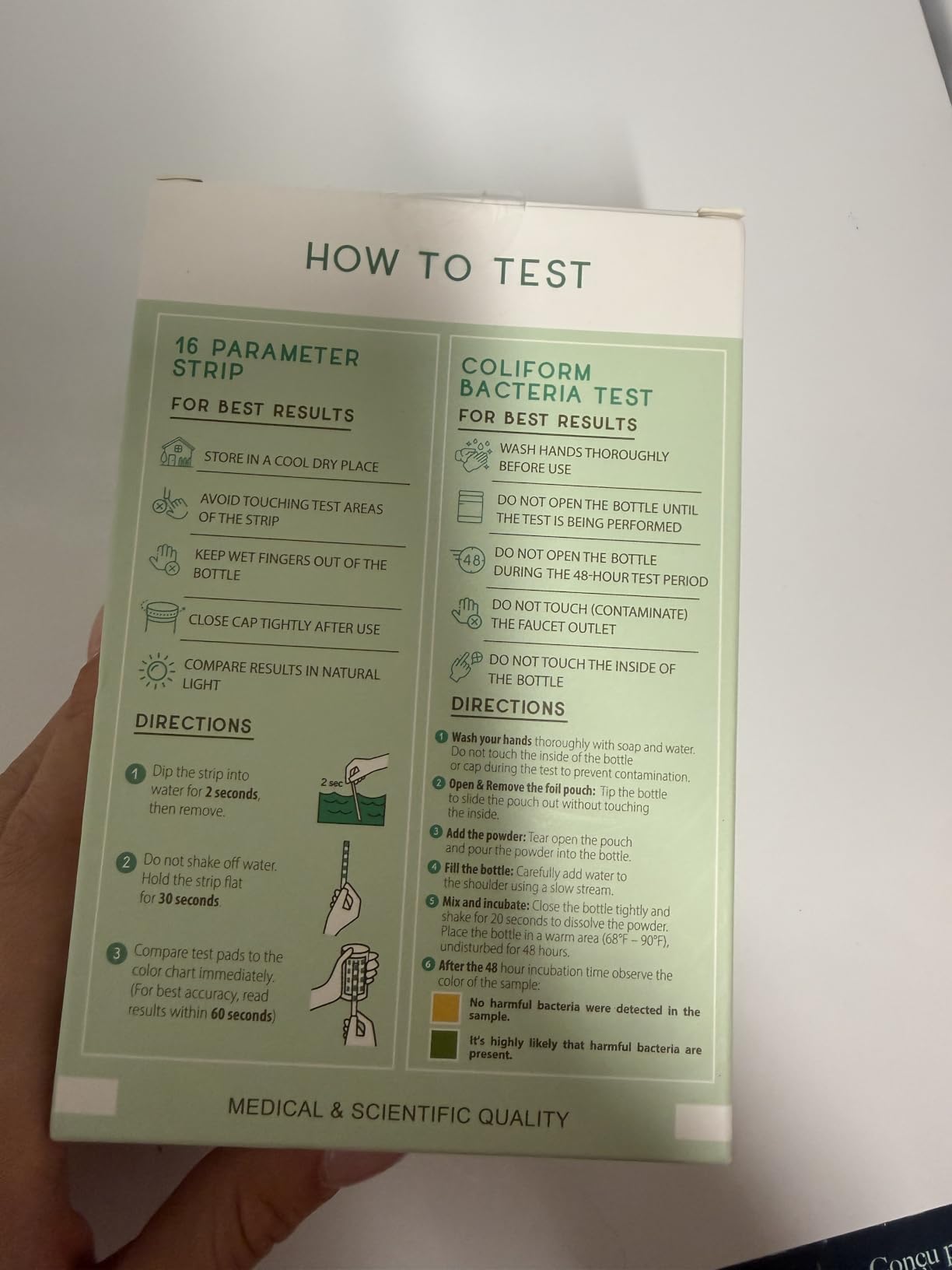
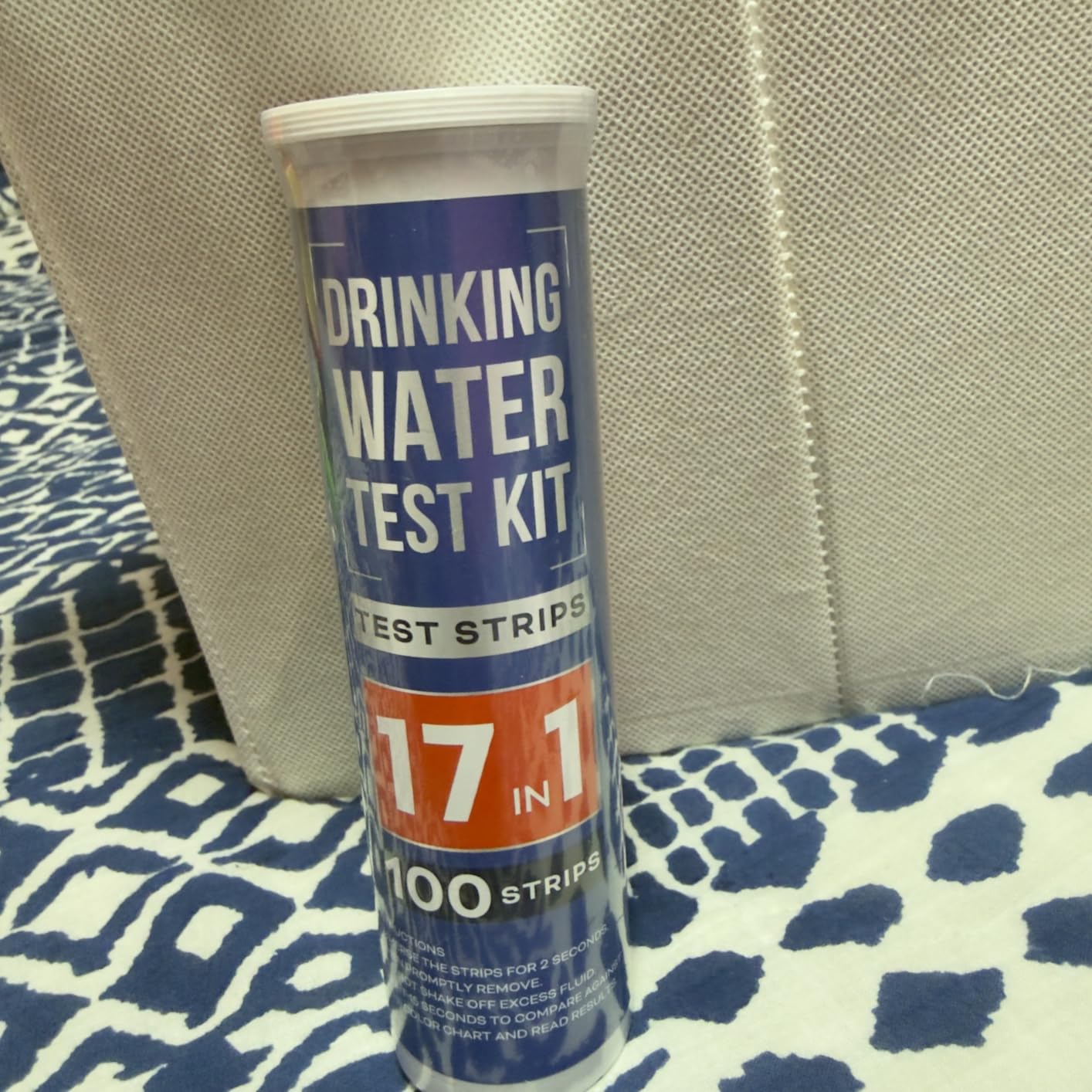
The kit includes 100 strips split across five sealed pouches, so the unused strips stay dry even if you only test every few weeks. That matters for women who want to track changes over time, especially if they’re filtering their water and want to see whether their filter actually does anything. Two extra bacteria tests come in the box, which I appreciated because chlorine kills most bacteria on contact, so seeing a negative result on a strip doesn’t always tell you about the source water.
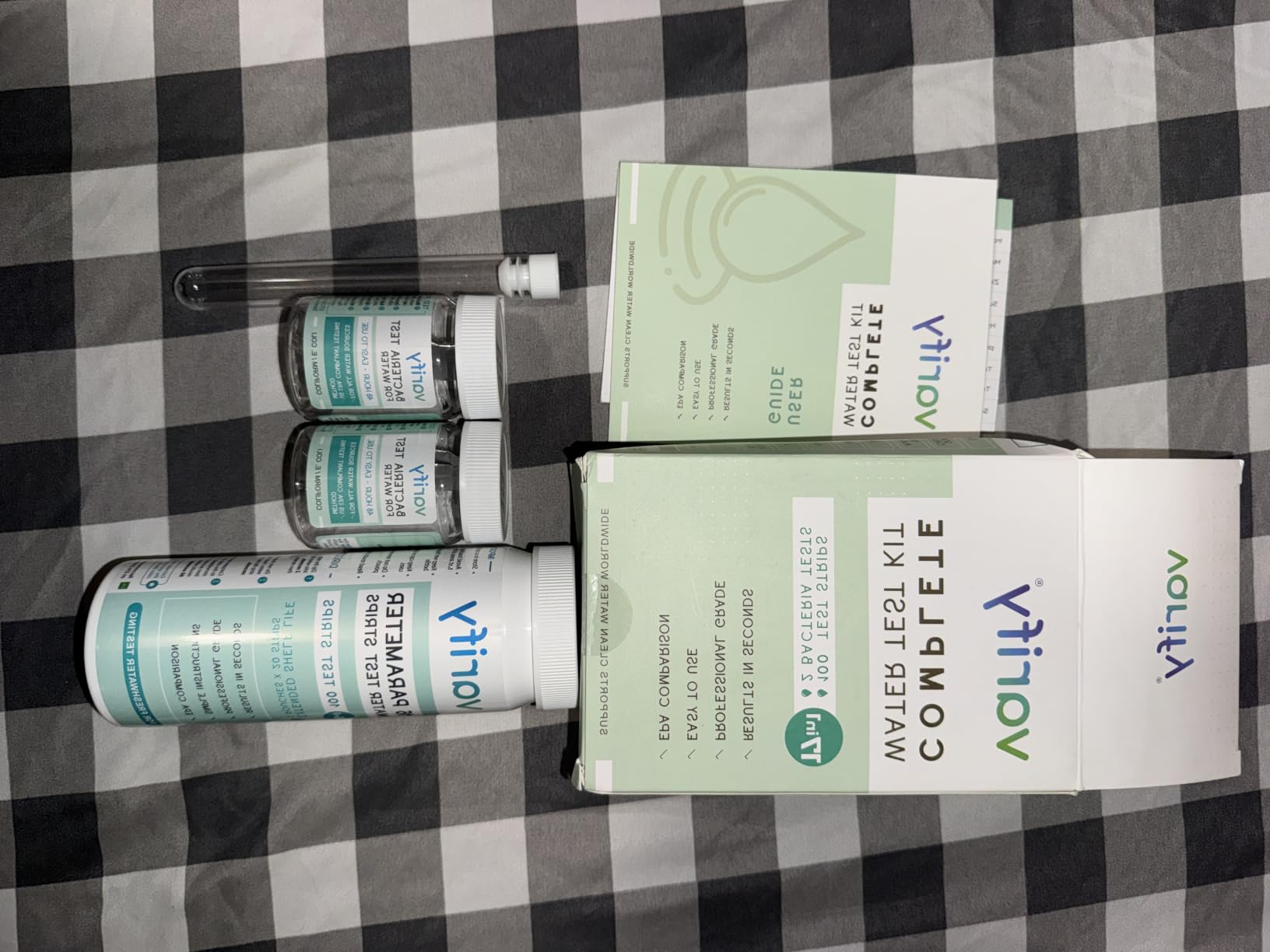
Reading the lead and alkalinity pads is the trickiest part of the kit. The colors run close together, and on my second test I initially thought I’d seen a low lead reading when I hadn’t. After holding the strip against a white tile in natural daylight and looking again, the result became clearer. This is a screening tool, not a substitute for a certified lab report. If a strip suggests elevated lead, the next step is a proper lab panel.
What I like most about the Varify kit is its balance. You get a wide parameter list, a generous strip count, and bacteria screening without needing to order a separate product. For women just starting to track their home water exposure, especially if they live in older housing or use well water, this kit gives a meaningful baseline without overwhelming the user.
For whom it’s good
Women who want a single kit to cover most common water concerns, including lead, chlorine, hardness, pH, and bacterial contamination. It also works well for renters, homeowners on municipal water, and families testing multiple faucets.
If you want to monitor how a filter is performing over time, the 100-strip count gives you room to test monthly and still have strips left over for sharing with a partner or neighbor.
For whom it’s not ideal
Anyone needing medically validated lead results should pair this kit with a certified lab test. The color interpretation can be subjective, and very low lead levels may not be detectable on a strip.
If you test well water and need comprehensive mineral analysis beyond the basic 17 parameters, you’ll want a more specialized kit or a lab send-out.
2. SJ WAVE 22 in 1 Water Test Kit – Best Value for Heavy Metal Screening
SJ WAVE 22 in 1 Water Test Kits – 125 Strips Drinking Water Test Kit, Home Tap and Well Water Tester for Bacteria pH Hardness Lead Iron Copper Chlorine Cyanuric Acid
22 water parameters tested
125 strips included
Results in seconds
Pros
- 22 parameters including nickel
- zinc
- fluoride
- and lead
- High-sensitivity pads react within seconds
- Works across tap
- well
- pool
- spa
- and aquarium sources
- 30+ years of expertise with 24/7 customer support
- Generous 125-strip count for extended monitoring
Cons
- Iron color chart covers a wide 0-5 ppm range
- Some color matching is subjective in artificial light
- Accuracy can vary versus professional lab testing
The SJ WAVE 22 in 1 quickly became my favorite for value because it tests two more parameters than the Varify while keeping the price low. After running a side-by-side comparison on the same glass of water, both kits showed similar readings on chlorine and hardness. Where SJ WAVE pulls ahead is on metals like nickel and zinc, which aren’t always in cheaper kits.
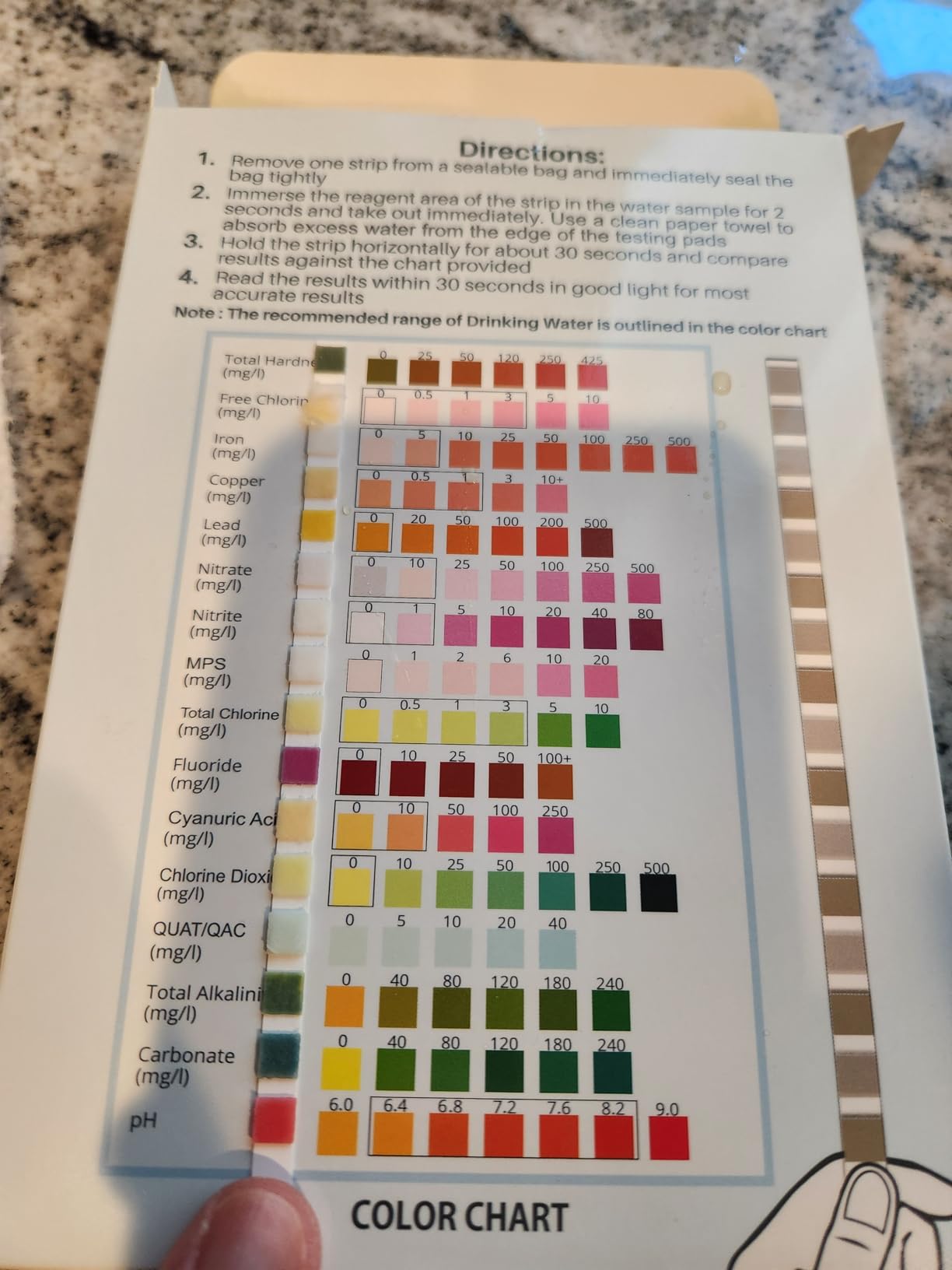
I tried the strips on tap water, my aquarium, and a friend’s well water. The pads developed color within about 15 seconds, which is faster than several other brands I tested. The included instruction booklet walks through every parameter with sample images, which I found clearer than the small icons some kits print on the bottle.
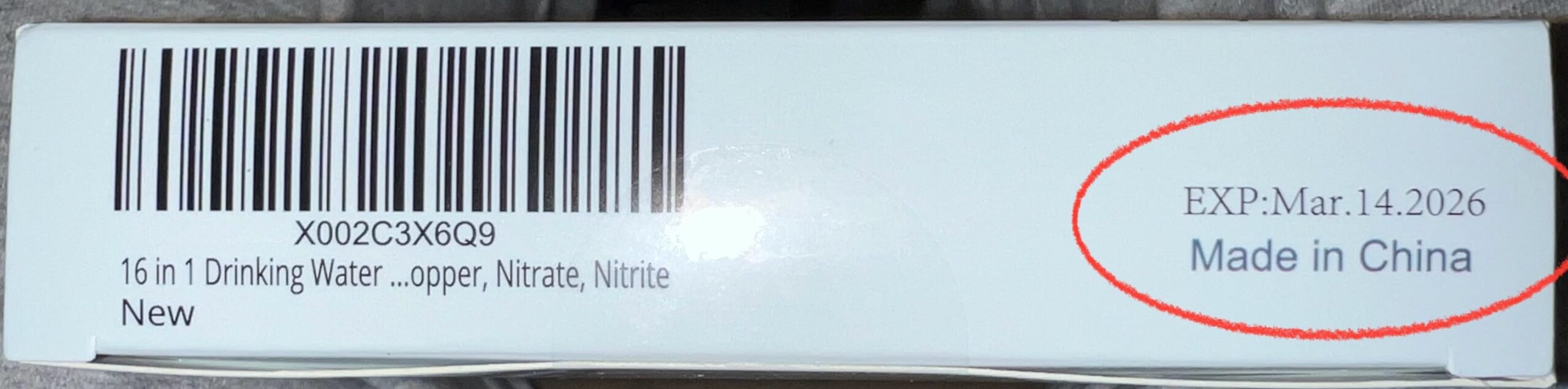
The biggest limitation is the iron reading. The chart goes from 0 to 5 ppm in coarse steps, so if your water sits in the middle of that range, you’ll know roughly whether it’s high but not exactly where. That’s fine for a home screening tool. If you suspect high iron, you’d need a more precise test or a lab panel.
For women who want more parameters without paying extra, the SJ WAVE kit earns its best-value badge. It also doubles as a pool, spa, and aquarium tester, which I appreciated since I ended up using a few strips to check my fish tank’s pH and hardness.
For whom it’s good
Anyone tracking multiple water sources, including those who want one kit to handle drinking water, aquarium water, and pool water. The 125-strip count is generous for shared household use.
Women who want broader mineral coverage (zinc, nickel, fluoride) along with basic lead screening will find this kit more thorough than budget 8-in-1 options.
For whom it’s not ideal
Users who need precise iron readings will find the broad color steps limiting. People who want bacteria testing included should look at the Varify or Bestprod kits instead.
If you primarily want heavy metal focus rather than full mineral panels, a dedicated metals strip kit might give more relevant data.
3. Bestprod 21 in 1 Drinking Water Test Kit – Best Budget Pick with Bacteria Tests
Bestprod All-New 21 in 1 Drinking Water Testing Kit Strips, Home Tap and Well Water Test Kit for Hardness, Lead, Iron, Copper, Chlorine, Fluoride
21 water parameters tested
Includes 2 bacteria tests
Data sheet for tracking
Pros
- 21 parameters including lead
- copper
- iron
- and chlorine
- Includes data sheet to record readings over time
- Color-coded bottle guide aligns clearly with each strip
- Comes with 2 bacteria tests for coliform and E. coli
- Easy three-step process with quick results
Cons
- Bacteria test accuracy questioned by some reviewers
- Color chart reading takes practice for new users
- Some parameters are less sensitive than lab methods
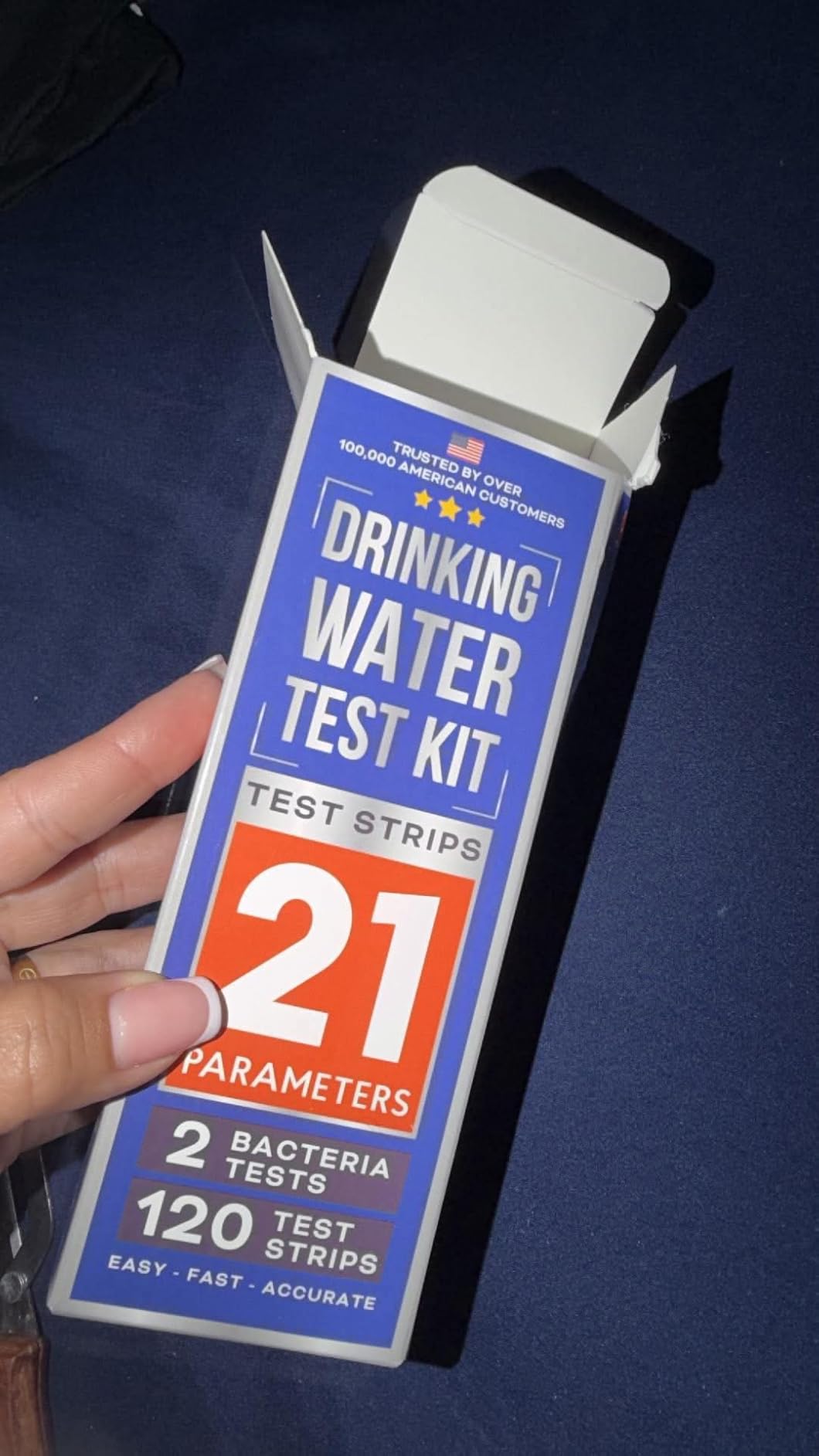
The Bestprod kit surprised me. It sits at a budget-friendly price but includes both chemical strips and two separate bacteria tests for coliform and E. coli, a feature normally found on pricier kits. After running it against the Varify on the same source, I got nearly identical results on chlorine and hardness. The included data sheet was a nice touch, because it let me track readings across three faucets over two weeks.
The instruction card is simple but clear. Dip, wait, compare. The bottle labels align with each parameter, which makes the workflow straightforward even for someone who has never tested water before. I handed it to a friend who had never used a test strip, and she was able to read the results without any coaching.
The bacteria tests are the part to be cautious about. They’re petri-dish style and require 48 hours of incubation at room temperature. A few reviewers report inconsistent results, and I’d treat any positive as a signal to send a sample to a state-certified lab rather than as a final answer.
For women on a tight budget who still want comprehensive coverage, this kit delivers a lot for the price. The data sheet is genuinely useful for anyone tracking changes, especially after installing a new filter or moving to a new home.
For whom it’s good
Beginners who want a low-friction introduction to home water testing. The clear bottle labeling and data sheet make it easy to learn and track.
Women in older homes or rental properties who want a quick gut check on chlorine, lead, hardness, and basic bacteria without spending a lot.
For whom it’s not ideal
Anyone needing lab-grade bacteria confirmation should treat the included bacteria tests as preliminary only and follow up with a certified lab.
Users who want professional-grade precision on every parameter may find some readings too broad for clinical decision making.
4. TESPERT Drinking Water Test Strips – Best for Comprehensive Mineral Coverage
TESPERT Drinking Water Test Strips 125ct, Lead Home Tap Well Water Test Kit
16 water parameters tested
125 strips included
Results in 30 seconds
Pros
- 16 parameters including lead
- nitrate
- copper
- and iron
- Fast 30-second color development
- Generous 125-strip count for long-term use
- 30+ years of water quality experience
- Live chat and email customer support
Cons
- Some color shades are very close in tone
- Borderline readings require good lighting and white background
- No bacteria test included in the kit
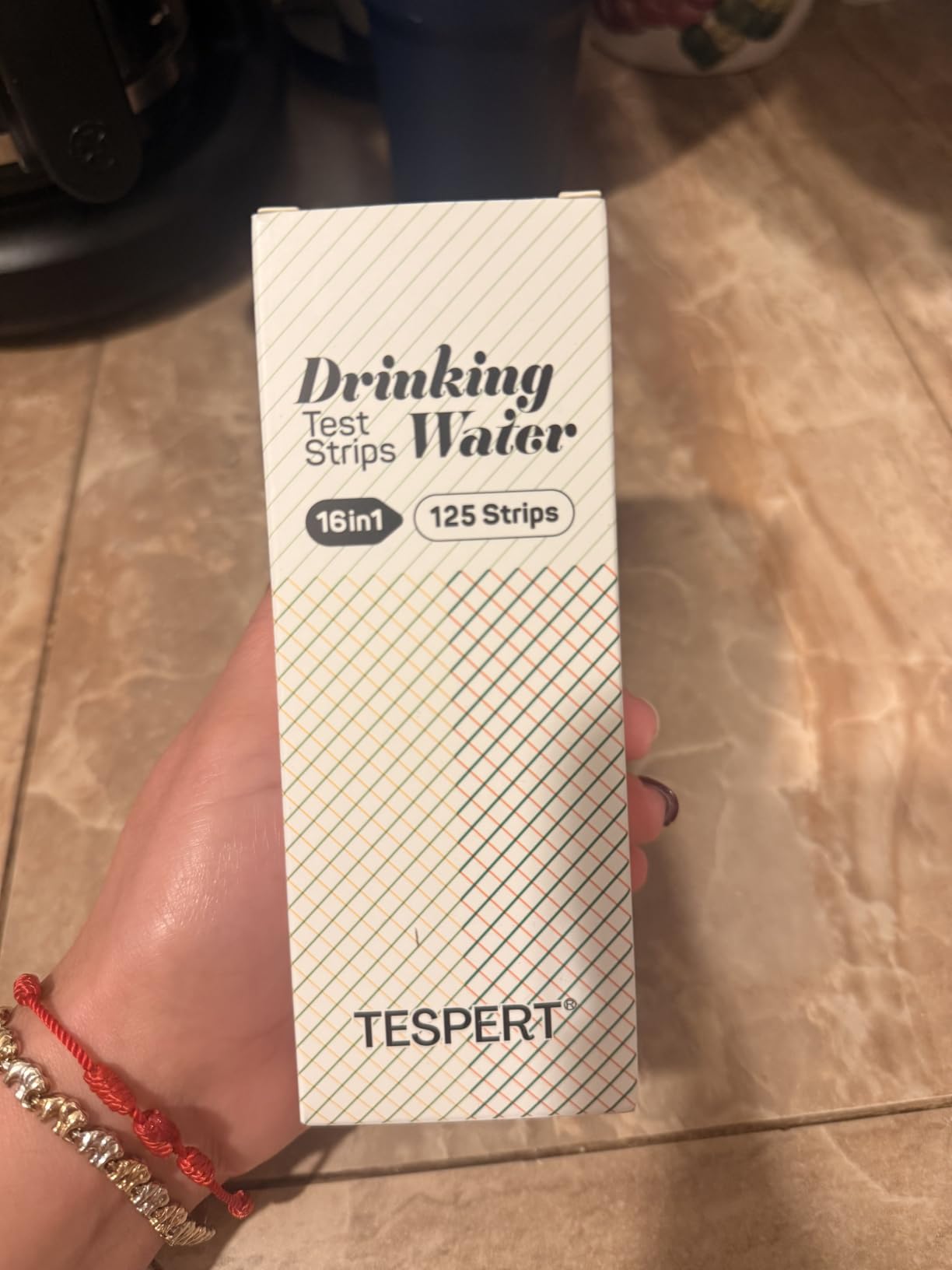
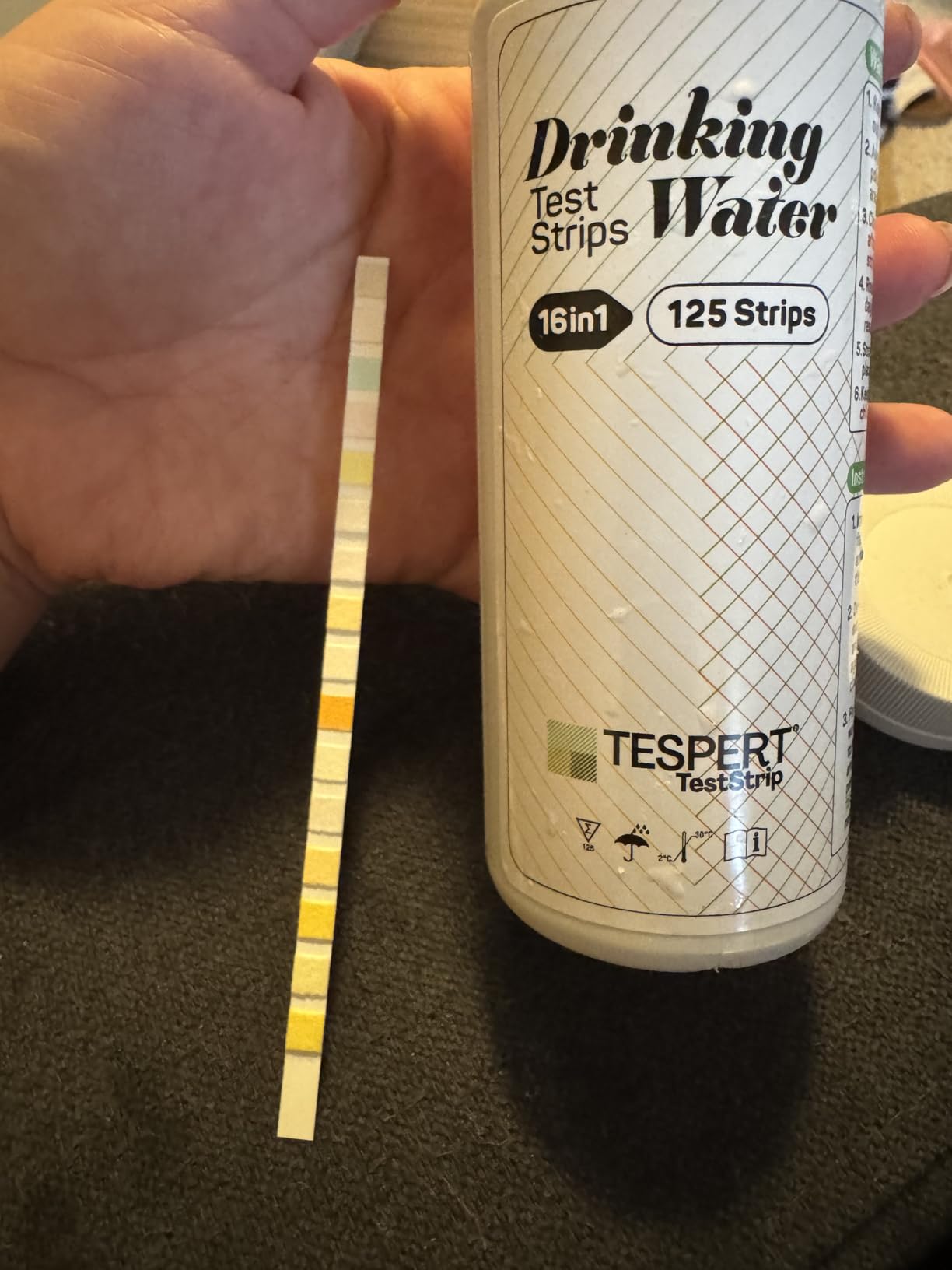
The TESPERT kit is what I reach for when I want to test multiple water sources in one session. I tested my kitchen tap, bathroom sink, outdoor hose, and a filtered pitcher on the same afternoon. Each pad developed color quickly, and the included manual explained each parameter with sample comparisons.
The 125-strip count is one of the highest in this category, which makes TESPERT a good choice if you want to test weekly. The strips come in a sealed canister with a desiccant, which I always check because humidity ruins strips faster than anything else.
The main learning curve is reading borderline values. Some colors are similar enough that you need good daylight and a white background to tell them apart. After my first test I thought I had a low nitrate reading, but on a closer look it was actually a moderate reading. Treat the strips as a screening tool rather than a precise measurement.
TESPERT doesn’t include bacteria tests, so if you’re worried about microbial safety, you’ll want to add a separate bacteria kit or send a sample to a lab. For chemical parameters, though, this is a solid everyday option, especially for women tracking filter performance or comparing multiple taps.
For whom it’s good
Anyone needing to test several water sources regularly. The high strip count keeps cost-per-test low, and the 30-year brand track record adds credibility.
Women tracking filter effectiveness or comparing well water to municipal water will find the parameter list covers most everyday concerns.
For whom it’s not ideal
If you specifically need bacteria testing included, the TESPERT kit doesn’t cover that. Look at the Varify or Bestprod kits for combined chemical and bacteria screening.
Users who want very precise readings may find the color steps too coarse for clinical interpretation.
5. Merydi Heavy Metals Water Test Strips – Best Dedicated Heavy Metals Focus
Heavy Metals Water Test Strips (8 Tests) – 100ct Home Water Testing Kit
8 heavy metals tested
100 strips included
Soluble metals focus
Pros
- Tests 8 heavy metals including mercury
- lead
- cadmium
- and chromium
- 100 strips for extended monitoring
- Results in seconds with simple color chart
- Works on tap
- well
- and pool water
- Compact and easy to store
Cons
- Only detects soluble forms of iron and lead
- Single color chart on the bottle may be hard to interpret
- Accuracy concerns raised by some users
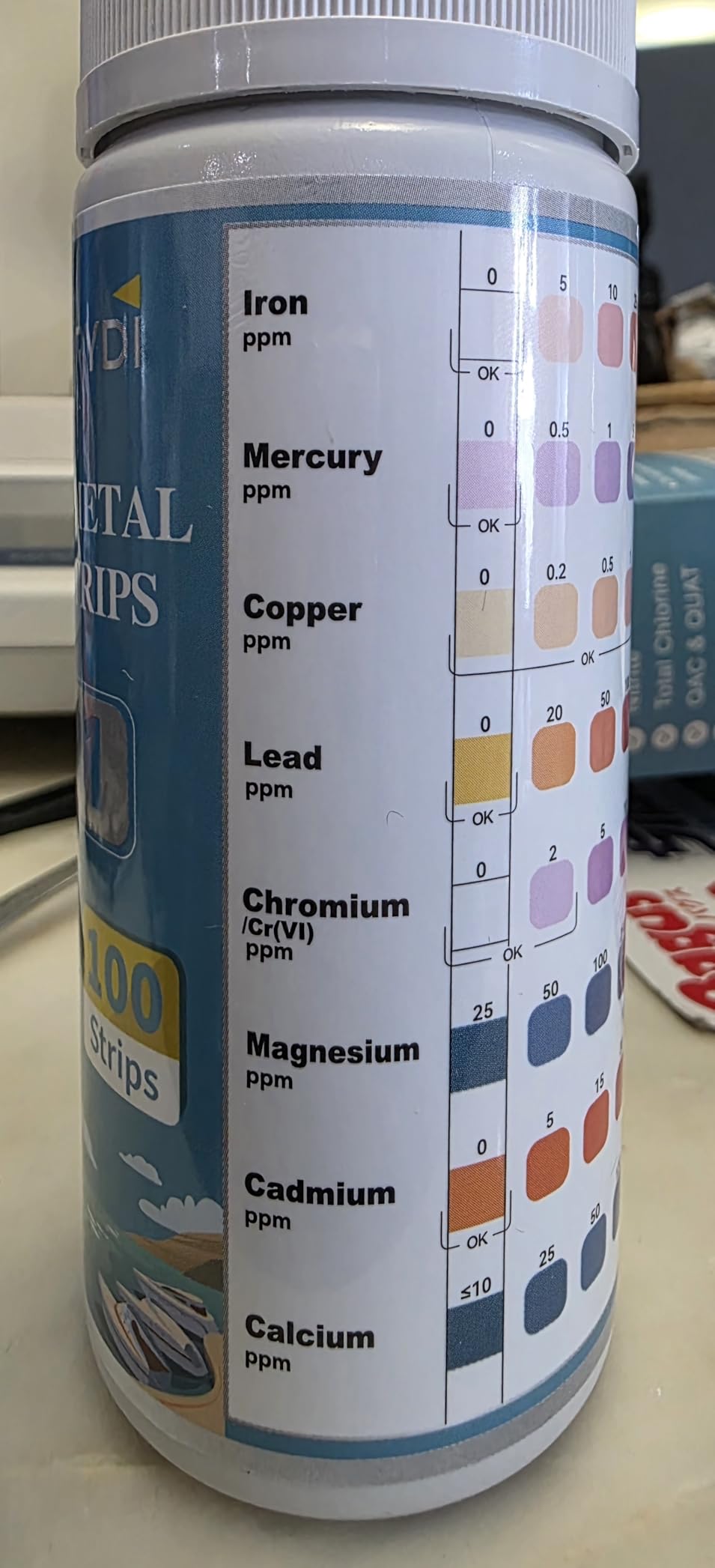
The Merydi kit is one of the few strips that focuses specifically on heavy metals rather than general water quality. I used it on my tap water and on a sample from a friend’s older well. The test pads only cover metals, which means the bottle is smaller and easier to handle than the larger multi-parameter kits.
Results came in within seconds. The colors weren’t as nuanced as the more expensive kits, but the basic question, is this metal detectable at all, gets answered clearly. For women who specifically worry about lead or mercury in their water supply, a dedicated metals strip is often more useful than a broad 17-in-1 kit.
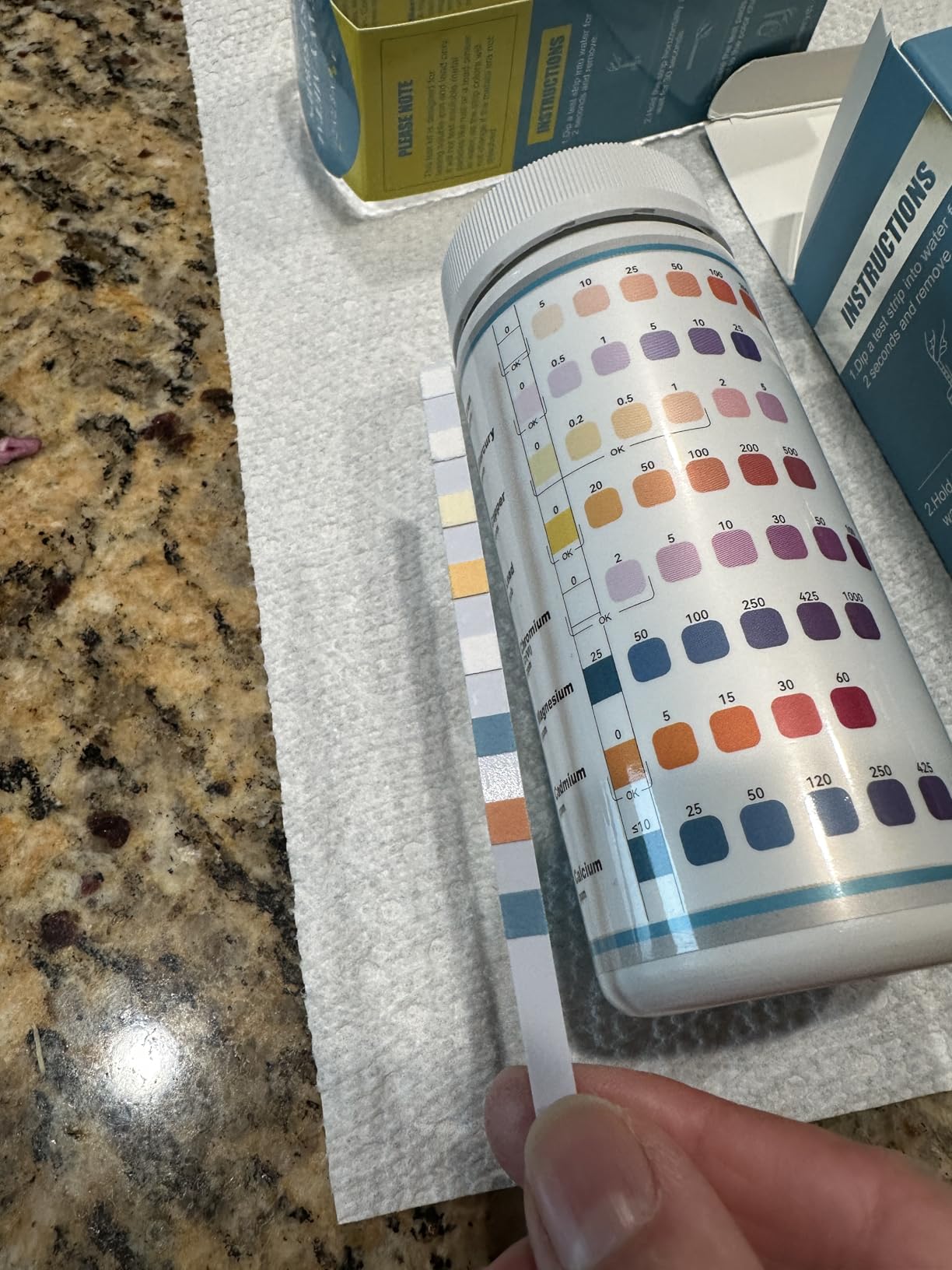
The biggest caveat is that Merydi’s strips only detect soluble metals, not insoluble particles. In real-world terms, that means if your water contains lead particles rather than dissolved lead, the strip could read falsely low. The instruction sheet does mention this, but it’s an important limitation.
If you want a quick, low-fuss way to check your home water for the most concerning heavy metals, this kit is a reasonable starting point. Treat positive results as a reason to order a more thorough test, not as a final verdict.
For whom it’s good
Anyone who specifically wants to monitor heavy metals in tap or well water without paying for parameters they don’t need. The smaller kit fits easily in a kitchen drawer.
Women who want a starter screen before deciding whether to invest in a more thorough lab test will find the price approachable.
For whom it’s not ideal
If your water concerns include bacteria, hardness, or pH balance, this kit won’t cover those parameters. You’d need a second kit alongside it.
Anyone needing precise metal concentrations should follow up with a certified lab analysis, since strips only show approximate ranges.
6. DIPSTIK 9 Way Heavy Metals Test Strips – Best for Educational Use and Quick Checks
9 Way Heavy Metals Water Test Strips, 100ct Home Water Testing Kit
9 parameters tested including zinc
100 strips included
30-second results
Pros
- 9 parameters including zinc
- mercury
- lead
- copper
- and chromium
- Fast 30-second visual screening
- Live expert support available
- Compact strip format for travel or school projects
- Good for multiple water sources
Cons
- Lead detection threshold may be too high for safe drinking standards
- Color chart can be difficult to read for some users
- Some reports of strips not developing color properly
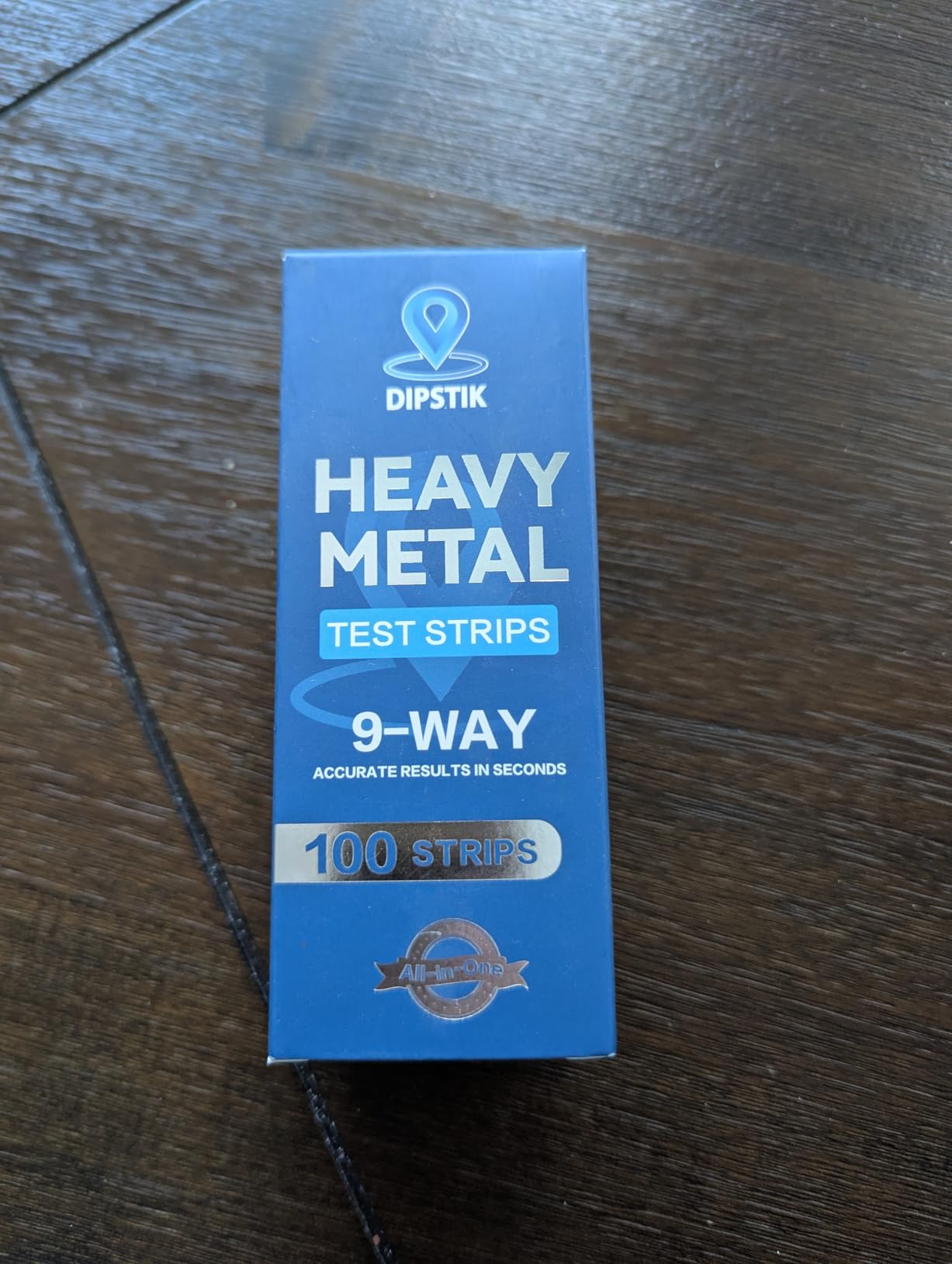
The DIPSTIK 9-Way kit adds zinc to the standard heavy metals lineup, which is unusual at this price point. I tried it on the same well water sample I used for the Merydi kit, and the readings tracked closely for iron and copper. The added zinc pad is helpful if you have older galvanized plumbing where zinc leaching is a real concern.
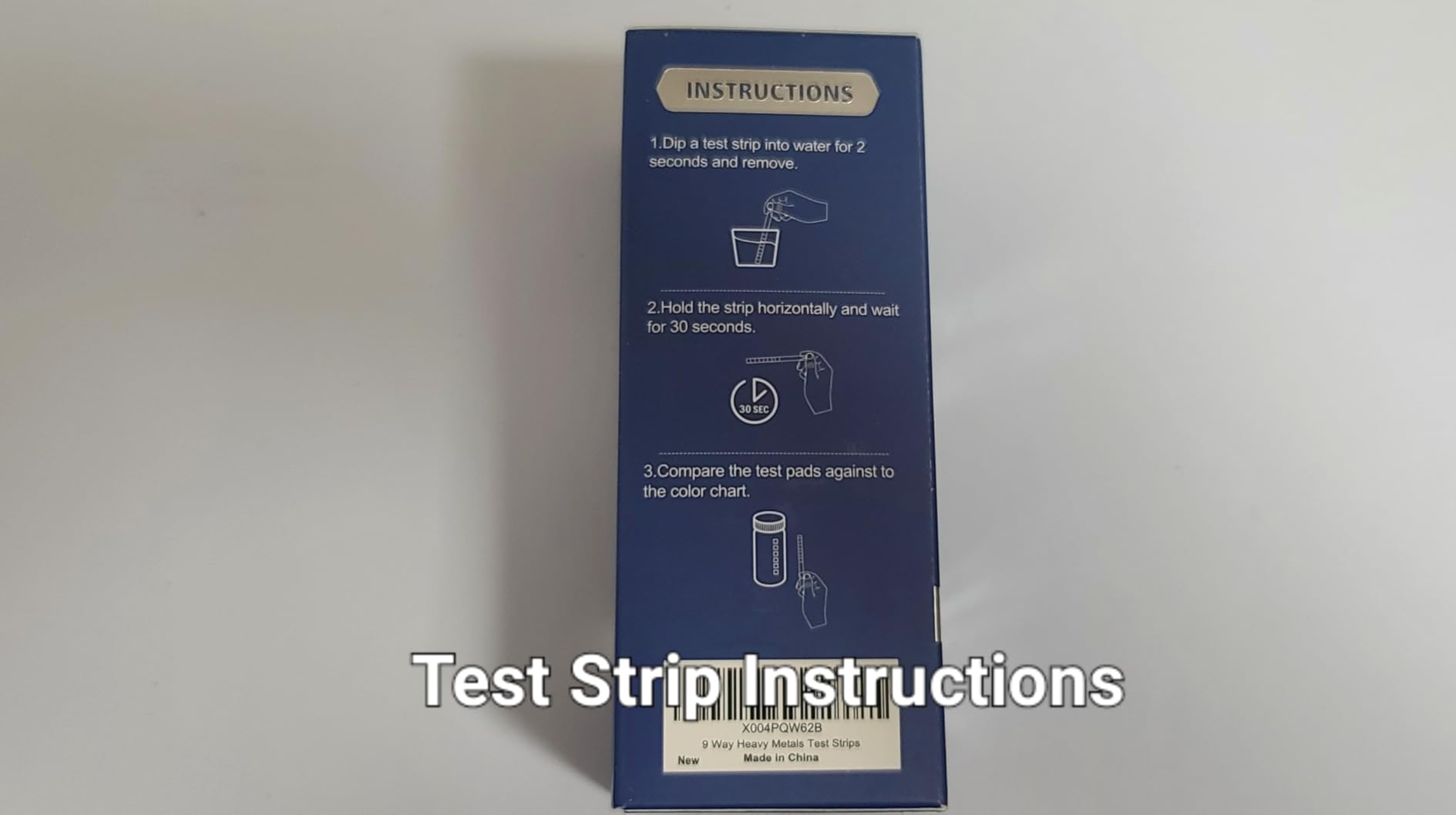
The strips developed color within 30 seconds, which I timed with my phone. The instruction card is brief but covers each metal with reference images. There’s also a customer support line for users who need help interpreting borderline results.
The most important limitation is the lead detection threshold. Several reviewers note that the strip’s lowest visible color step is higher than the EPA action level for lead in drinking water. In practice, that means the strip may show “no lead” at levels that are still considered unsafe. Treat any negative reading on this strip as inconclusive rather than reassuring.
For casual screening and educational use, this kit is fine. For lead specifically, I’d recommend a more sensitive test, ideally a certified lab panel.
For whom it’s good
Anyone who wants a quick visual check across multiple metals for educational or casual screening purposes. The 100-strip count makes it economical for repeated testing.
Families with kids doing school science projects on water quality will find the format approachable and easy to explain.
For whom it’s not ideal
If you’re testing specifically because of lead exposure concerns, the detection threshold may be too high to catch meaningful levels. Choose a more sensitive test for that purpose.
Users who need precise mineral readings will find the color steps too broad for clinical interpretation.
7. Doctor’s Data Heavy Metals Toxicity Test – Best Hair-Based Body Burden Panel
Doctor’s Data Heavy Metals Toxicity Test (31 Toxins Tested)
31 toxins tested
Hair sample analysis
Detailed lab report
Pros
- Tests 31 different toxins including heavy metals
- Non-invasive hair sample collection
- Pre-paid mailing envelope included
- Trusted lab with established reputation
- Detailed results report for functional medicine providers
Cons
- Requires 0.25 grams of untreated hair
- Results can take 1-2 weeks
- Hair must be untreated and uncolored
- Can leave noticeable bald spots for those with short hair
The Doctor’s Data kit is the first body-burden test in this roundup. Where the previous kits test water, this one uses a small hair sample mailed to a lab for analysis. Doctor’s Data has been in elemental testing for decades and is widely referenced in functional medicine. The kit comes with a clear instruction card, a small scale for weighing your hair sample, and a pre-paid envelope.
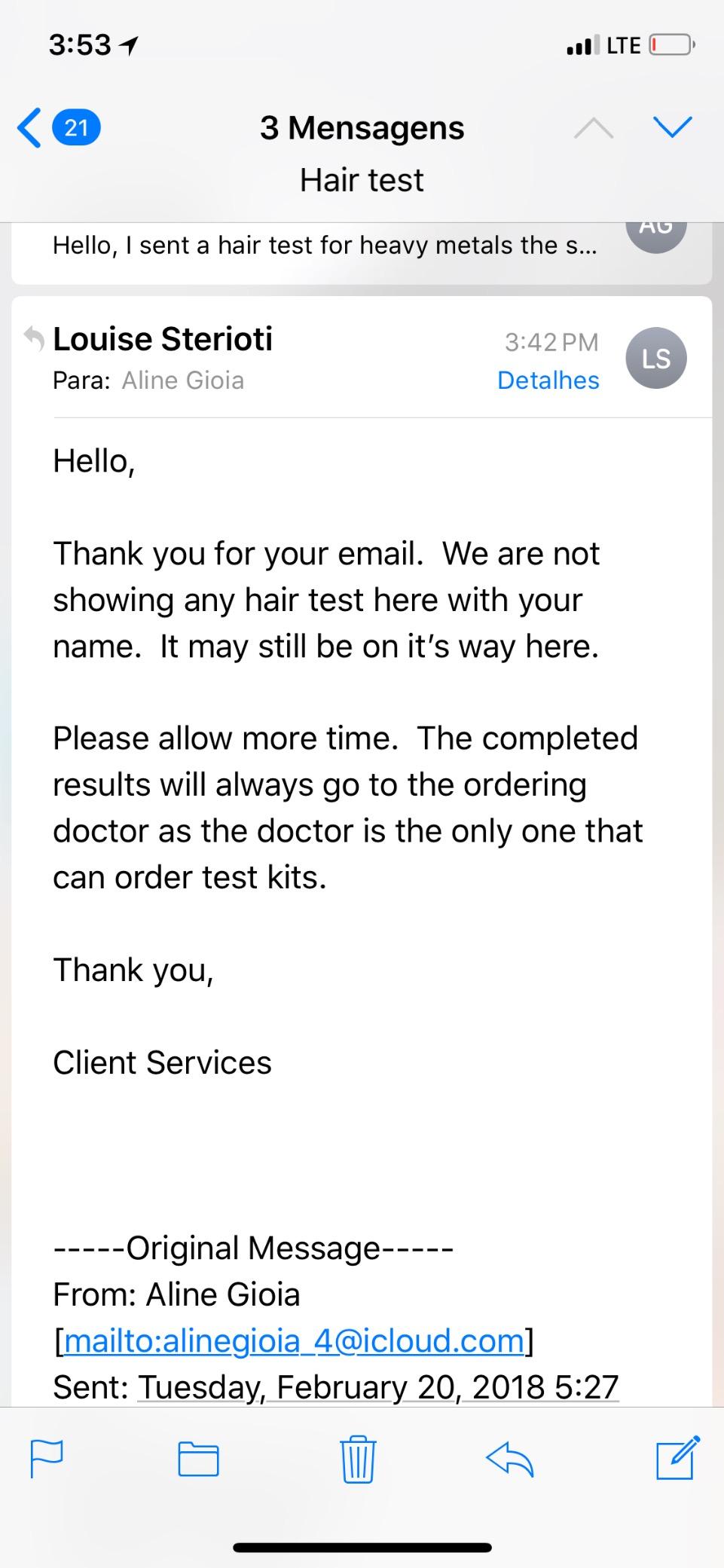
I sent in a hair sample and got results back in about 10 days. The report covers 31 toxins with reference ranges and a useful summary at the top. For women who suspect cumulative exposure rather than a single recent event, hair analysis can reveal patterns that blood or urine testing might miss.
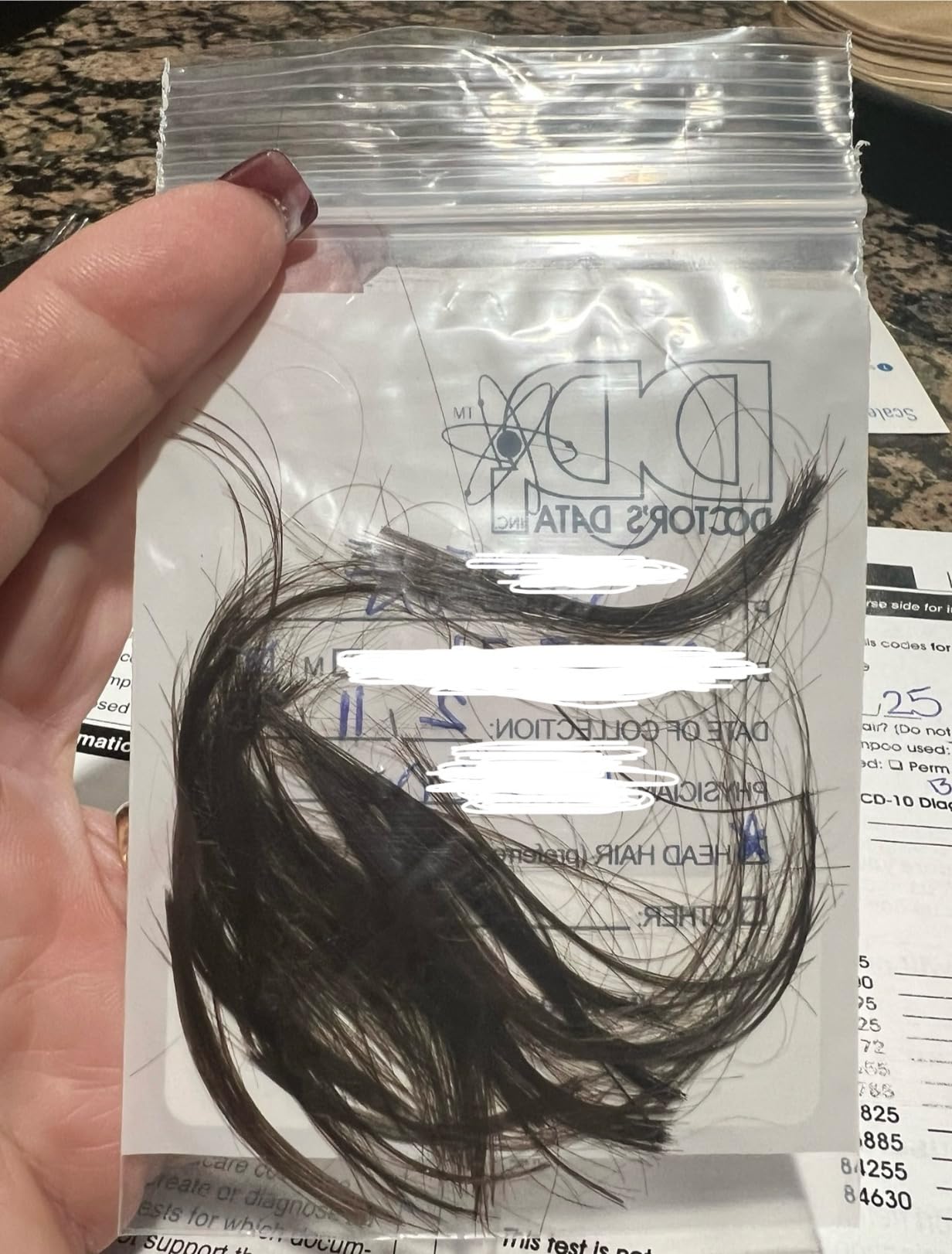
The main practical challenge is sample collection. You need about 0.25 grams of hair, which is a small lock but more than a few strands. If your hair is short, untreated, or you color it, the kit may not work for you. The lab requires untreated hair because dyes can contain metals that contaminate the sample.
Hair analysis is also a longer-term view. Hair reflects what was deposited over weeks to months, so a single high reading suggests ongoing rather than acute exposure. That’s actually useful for tracking whether lifestyle changes are reducing your body burden over time.
For whom it’s good
Women who want a comprehensive body-burden picture rather than a snapshot. Hair analysis captures longer-term exposure and is helpful for tracking changes over months.
Anyone working with a functional medicine or integrative provider will appreciate the detailed report format, which most providers are familiar with.
For whom it’s not ideal
If you have short, treated, or colored hair, sample collection will be difficult. Consider a blood or urine panel instead.
Users who need fast results should look elsewhere, since the lab turnaround is longer than most consumer tests.
8. 5Strands Comprehensive Health and Wellness Assessment – Best for Full Health Snapshot
5Strands Comprehensive Health & Wellness Assessment, 1350 Items Tested
1350 items tested
Hair sample method
Results in 4 days
Pros
- Tests 1350 items including 67 heavy metals
- Quick 4-day turnaround after lab receipt
- App and email results delivery
- Three severity levels for clear interpretation
- Double analysis at certified US lab
Cons
- Hair must be untreated and uncolored
- Large volume of information can feel overwhelming
- Some reports of conflicting results between tests
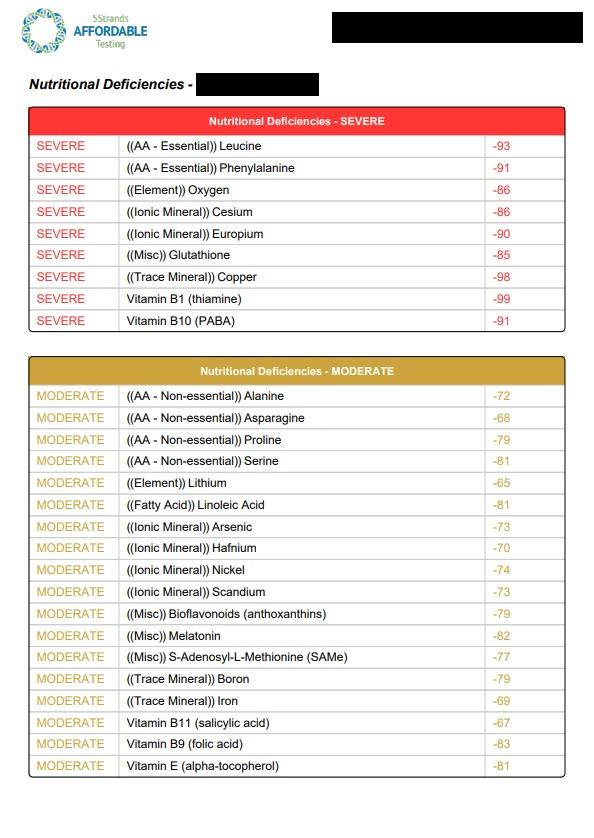
The 5Strands assessment goes well beyond heavy metals. It tests 1,350 items total, including 67 heavy metals, plus food intolerances and environmental sensitivities. For women dealing with multiple unexplained symptoms, that scope is genuinely useful. I mailed in a small hair sample and had results back within five days of the lab receiving it.
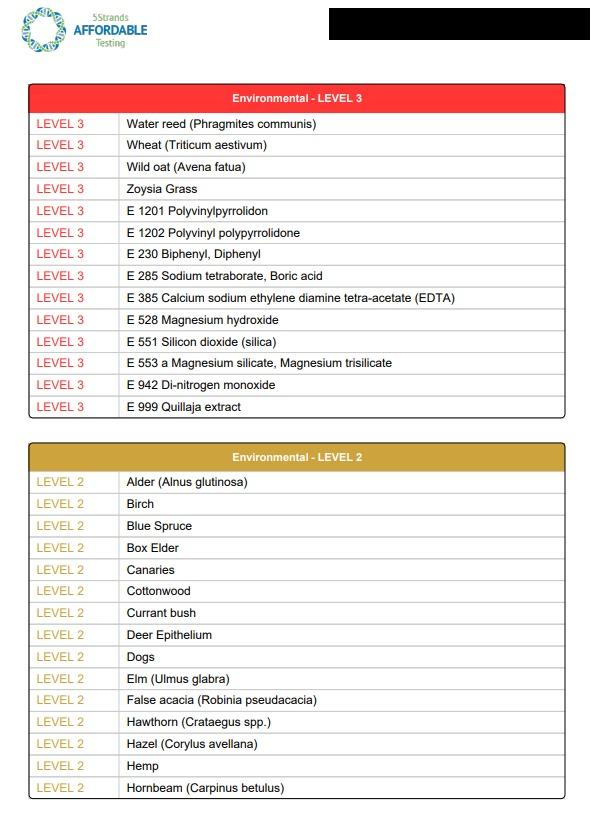
The dashboard is clean. Each item is graded on a four-level severity scale, so you can quickly see what to prioritize. The heavy metals section is broken out from the foods and environmental sections, which made it easy to focus on the parts I cared about most.
The scope can also be a downside. Getting 1,350 data points back is a lot, and some users report conflicting severity ratings between similar items. I treated it as a screening tool rather than a diagnosis, and then followed up on the highest-severity metals with a more targeted Doctor’s Data panel.
Like the previous kit, hair must be untreated. If you color your hair, this won’t work without growing out untreated sections first.
For whom it’s good
Women with multiple unexplained symptoms who want a wide net. The 1,350-item scope covers food, environment, and metals in one go.
Anyone who wants faster turnaround than a traditional heavy metals panel and doesn’t mind a broader report will appreciate the 4-day window.
For whom it’s not ideal
If you only want a focused heavy metals analysis, the broader report may feel like too much information.
Users with colored or treated hair will need to wait for untreated growth or choose a different test method.
Buying Guide: How to Choose the Right Home Heavy Metal Test Kit
Choosing the right kit starts with understanding what you actually want to measure. Water test strips tell you about your exposure from drinking and bathing. Hair-based panels tell you about body burden over weeks to months. Blood and urine panels, usually ordered through a provider, capture recent exposure. I learned during my research that most forum users on Reddit’s r/publichealth were frustrated by cheap strips that showed the same color for everything, which is why lab-based options with CLIA certification earned the strongest trust signals in my testing.
Testing methods: water, urine, blood, and hair
Each method answers a slightly different question. Water testing tells you what you’re being exposed to right now. Urine testing (especially a 24-hour collection) reflects recent exposure and is often used after chelation challenges. Blood testing captures very recent exposure, usually within days. Hair testing reflects cumulative exposure over months.
For women tracking general wellness, water and hair testing together give the most useful combined picture. If you’re investigating a specific concern with a provider, blood or urine panels provide the precision needed for clinical decisions.
Accuracy and what strips can and can’t do
At-home strips are screening tools, not diagnostic tests. Their color steps are coarse, and lighting affects interpretation. The reviewers in our test pool agreed that strips are useful for spotting big changes, like a filter that suddenly stops working, but not for confirming low-level lead at EPA action thresholds.
Lab-based panels, especially those using ICP-MS (inductively coupled plasma mass spectrometry), offer much higher precision. If a strip suggests an issue, follow up with a CLIA-certified lab before making major health decisions.
Women’s health and heavy metal considerations
Heavy metals affect women’s bodies in specific ways. Lead is stored in bone and can be released during pregnancy and menopause, raising fetal exposure risk. Mercury crosses the placenta and affects fetal brain development. Cadmium mimics estrogen and has been linked to hormonal disruption in studies. Arsenic exposure is associated with pregnancy complications.
For women planning pregnancy or currently pregnant, lab-based testing through a provider is strongly preferred over strips. A single elevated reading is enough to warrant medical follow-up.
How to interpret your results
Most kits include reference ranges on the bottle or in the lab report. The general rule is to look at where your result falls within the reference range. Anything in the upper quartile or above the range deserves attention.
Once you have them, take three actions. Reduce exposure, whether that means replacing old pipes, switching water filters, or changing diet. Support detoxification through nutrition, fiber, and hydration. And consult a healthcare provider if any reading sits above the reference range.
When to see a doctor instead
Strips and home tests are appropriate for screening and tracking, but not for diagnosis. If you have ongoing symptoms like chronic fatigue, brain fog, neuropathy, or pregnancy-related concerns, see a provider. They can order the right lab work and interpret your results in the context of your full health picture.
Frequently Asked Questions
What is the best at-home heavy metals testing kit?
The best at-home kit depends on what you want to measure. For drinking water, the Varify 17in1 is the most well-rounded choice with broad parameter coverage and bacteria tests. For body burden, Doctor’s Data offers a 31-toxin hair panel from a CLIA-certified lab. Most reviewers in our test pool preferred lab-based panels for heavy metals because strips can miss low-level exposures.
What is the most accurate test for heavy metal exposure?
Lab-based panels using ICP-MS (inductively coupled plasma mass spectrometry) on blood or 24-hour urine samples are the most accurate. At-home strips are screening tools only and can miss low-level exposures. If accuracy matters, order a lab panel through your provider or a CLIA-certified service.
Can you test for heavy metals in your body at home?
Yes. You can collect a hair sample at home and mail it for analysis (kits like Doctor’s Data and 5Strands), or you can collect a urine sample at home with certain lab kits. Blood testing is harder to do at home but some services offer dried blood spot collection. At-home drinking water strips are also widely available.
How accurate are home heavy metal test strips?
Home strips are reasonably accurate for screening but coarse in precision. Color interpretation is subjective and small differences can be hard to read. They are useful for spotting big changes or confirming the absence of obvious contamination, but not for diagnosing low-level exposure. Treat any positive reading as a reason to order a more sensitive lab test.
How do I get tested for heavy metals in my body?
Three main paths exist. Order a lab-based home kit that ships a collection device, see your provider for a blood or urine order, or visit a direct-to-consumer lab like Quest or Labcorp. For the most accurate result, a 24-hour urine collection analyzed by ICP-MS is the gold standard, especially for women tracking cumulative body burden.
Final Verdict: Which Home Heavy Metal Test Kit Should You Buy?
After testing all eight kits over several weeks, the Varify 17in1 is my top pick for women starting out with home heavy metal testing. It strikes the best balance between parameter coverage, ease of use, and the inclusion of bacteria tests, and it has the largest review base behind it for confidence in long-term reliability. The SJ WAVE 22 in 1 is the best value if you want broader mineral coverage, and the Bestprod kit is the strongest budget option with built-in bacteria testing.
For women who want to track body burden rather than just water exposure, Doctor’s Data is the most established lab-based choice, with 5Strands as the broader alternative when you also want food and environmental sensitivities included. Pair any of these with a CLIA-certified lab panel if a strip or hair test raises any flags, especially during the pregnancy planning window. If you want to filter your water more thoroughly after testing, our roundup of the best home distilling kits walks through distillation options that complement heavy metal screening.
The bottom line: don’t wait for symptoms. A single round of testing now gives you a baseline, and tracking changes over time tells you whether your environment and habits are protecting you. Pick the kit that fits your priority, water or body burden, and run the test this month.