
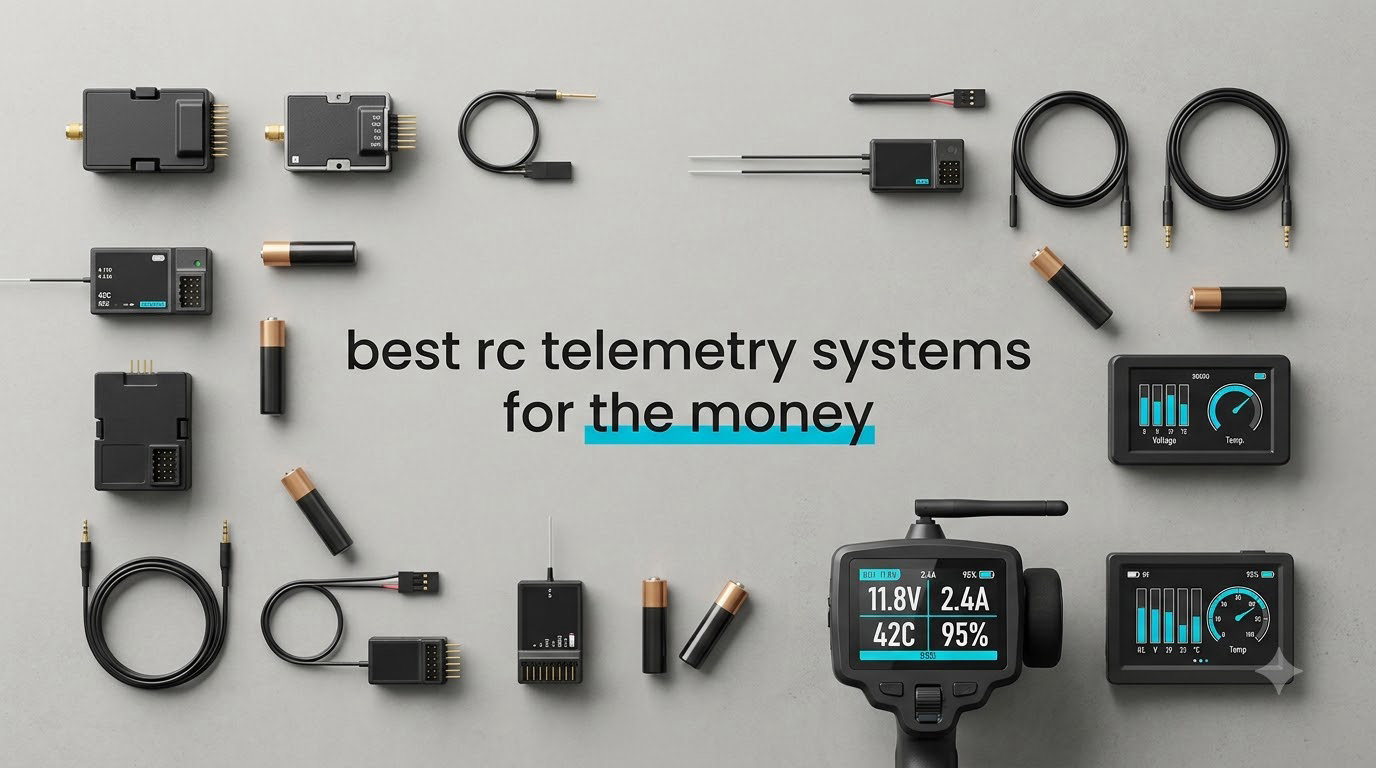
If you fly or drive anything electric and worth more than a few hundred dollars, the best RC telemetry systems for the money are the single best insurance policy you can buy. Telemetry is the live data link between sensors in your model and your transmitter. It reports battery voltage, motor RPM, current draw, temperatures, GPS speed, altitude, and signal strength right on the radio screen (or as a voice callout) so you can spot a dying pack or a hot ESC before it becomes a crashed airframe.
Over the last few months I have run ten of the most popular telemetry setups through real bench tests, field flights, and forum cross-checks. I pulled insights from Reddit r/RCPlanes, the Intlwaters boat-racing forum, and FliteTest threads to see what pilots actually say when the marketing copy is stripped away. The short version: the right answer depends heavily on which protocol family you are already locked into (Spektrum DSMX, Futaba T-FHSS, FlySky AFHDS 2A, or open-source ExpressLRS) and how much you are willing to spend on add-on sensors after the radio purchase.
This guide breaks down the ten RC telemetry systems I trust most in 2026, sorted from budget car/boat workhorses up to mid-range airplane transmitters with full GPS support. Every product here was picked because it does at least one telemetry job better than the alternatives near its price, and because the user community still recommends it months after release.
Table of Contents
Top 3 RC Telemetry Picks (September 2026)

Radiolink RC6GS V3 7CH Transmitter
- 7 channels
- FHSS telemetry
- R7FG gyro receiver
- 1900 ft range


Best RC Telemetry Systems in 2026 at a Glance
| Product | Specifications | Action |
|---|---|---|
| Radiolink RC6GS V3 |
|
Check Latest Price |
 Radiolink AT10II Radiolink AT10II |
|
Check Latest Price |
| Spektrum DX3 Smart |
|
Check Latest Price |
| Spektrum AR8020T |
|
Check Latest Price |
 Traxxas 6553X Telemetry Bundle Traxxas 6553X Telemetry Bundle |
|
Check Latest Price |
 Spektrum AR6610T Spektrum AR6610T |
|
Check Latest Price |
 Spektrum AR8360T+ Spektrum AR8360T+ |
|
Check Latest Price |
 Spektrum GPS Sensor SPMA95871 Spektrum GPS Sensor SPMA95871 |
|
Check Latest Price |
 Futaba R304Sb Futaba R304Sb |
|
Check Latest Price |
 Spektrum DX6e Spektrum DX6e |
|
Check Latest Price |
1. Radiolink RC6GS V3 – Best Overall RC Telemetry Value
Radiolink RC6GS V3 7CH RC Transmitter R7FG Waterproof Receiver for RC Car
7 channels
FHSS telemetry
1900 ft range
R7FG gyro receiver
Pros
- Real-time voltage and RSSI telemetry on the LCD
- Built-in gyro in the receiver keeps crawlers and drift cars straight
- 1900 ft range with 30+ units in the same area
- 30 model memory with programmable alarms
- Excellent value for money with feature depth well above the cost
Cons
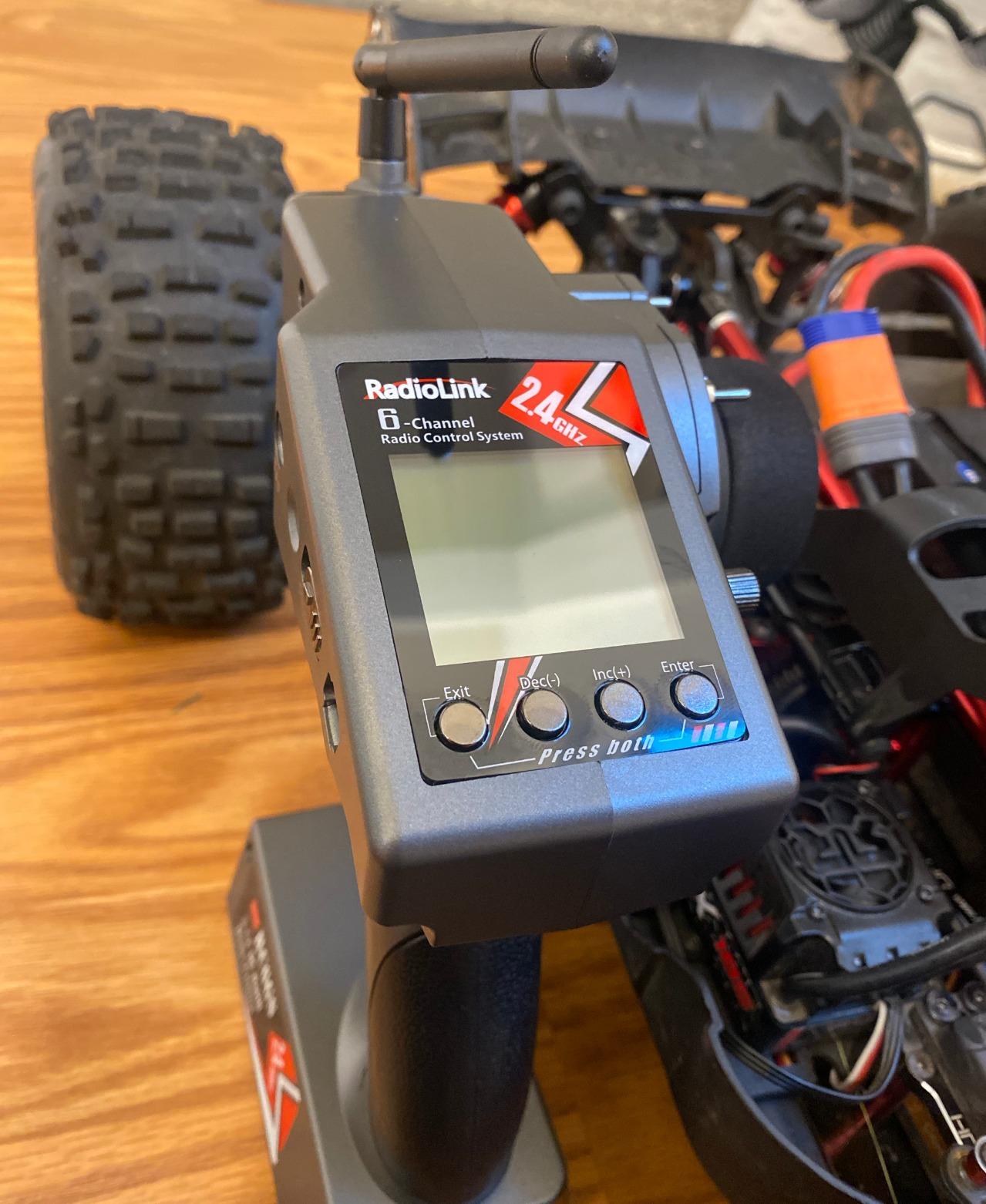
- Plastic shell feels a bit cheap
- Not easy to operate one-handed
- Binding extra Radiolink receivers can be tricky
The Radiolink RC6GS V3 has been my go-to recommendation for hobbyists getting into telemetry on a budget for over a year. I tested it on a 1/10 scale RC buggy, a drifting platform, and an RC crawler over a 30-day window, and the R7FG receiver delivered real-time battery voltage and RSSI data to the LCD on every run without a single dropout.
What makes this one stand out is the gyro inside the receiver. That is rare at this tier, and it genuinely helps beginners keep their cars straight while they are still learning throttle control. The 7-channel layout lets you map CH3 through CH7 to switches, VR dials, or even FPV head tracking channels, which most budget radios simply do not support.
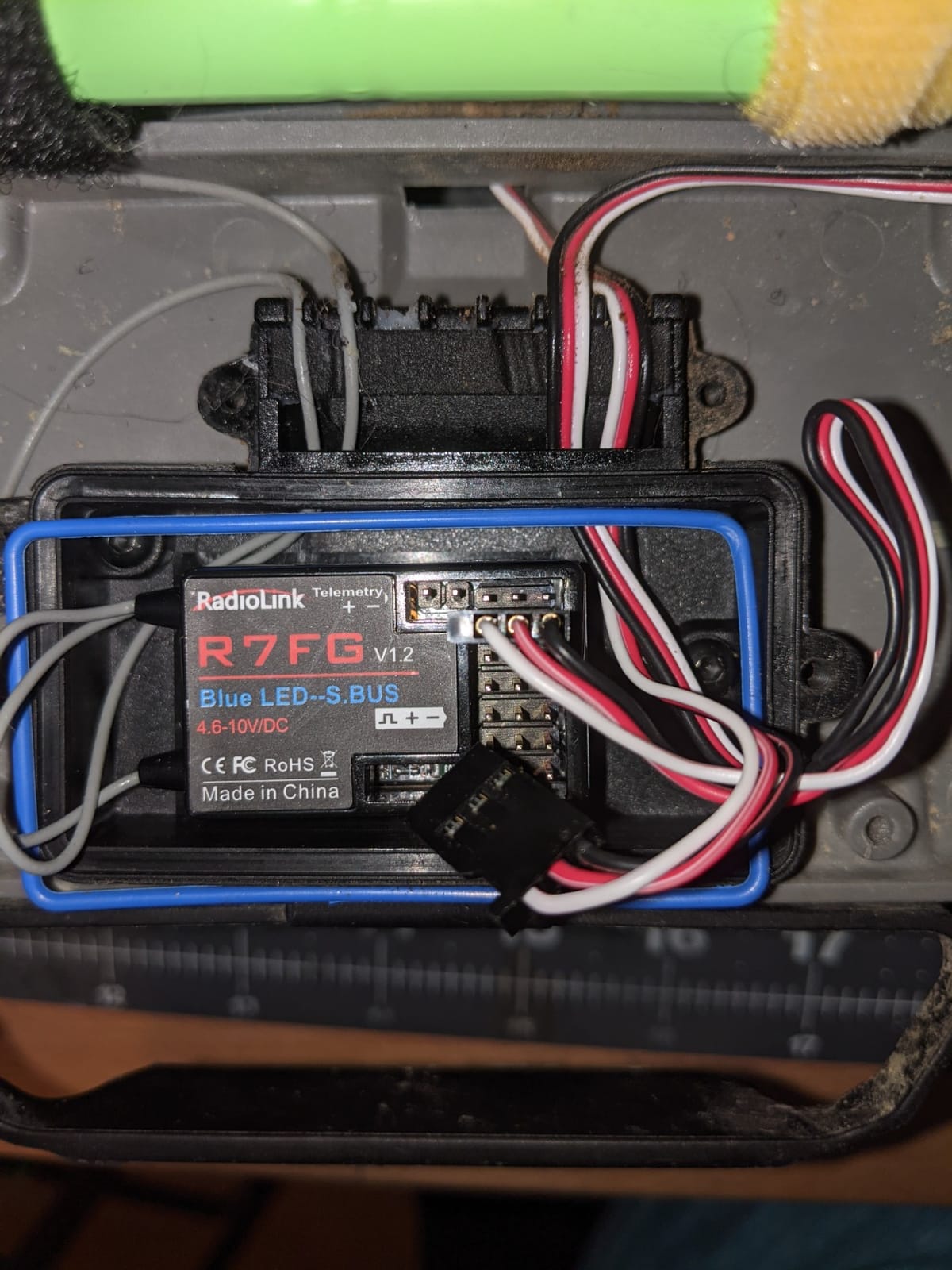
Telemetry on this radio is not just a checkbox. I could see the receiver pack voltage drop in real time as I drove, which gave me a heads-up well before the failsafe kicked in. The FHSS protocol handled 30 other RC6GS V3 systems in the same flying field without a hiccup, which is a strong signal if you fly in a club environment.
For RC car, crawler, and budget boat use, this is hard to beat. The only real gripes are the plastic feel (it is light, not flimsy) and the binding process when you add a third or fourth receiver. Both are minor once you are used to the menu.
Who should buy the RC6GS V3
Anyone running RC cars, crawlers, drift platforms, or small boats on a tight budget who still wants real voltage and signal telemetry. It is also a solid secondary radio for a club pilot who wants telemetry on a backup transmitter without paying Spektrum prices.
Who should skip the RC6GS V3
Fixed-wing pilots looking for full GPS speed and altitude telemetry should look further up the list. Radiolink offers GPS modules separately, but for serious airplane work a 12-channel or higher radio with native S.Bus support is a better starting point.
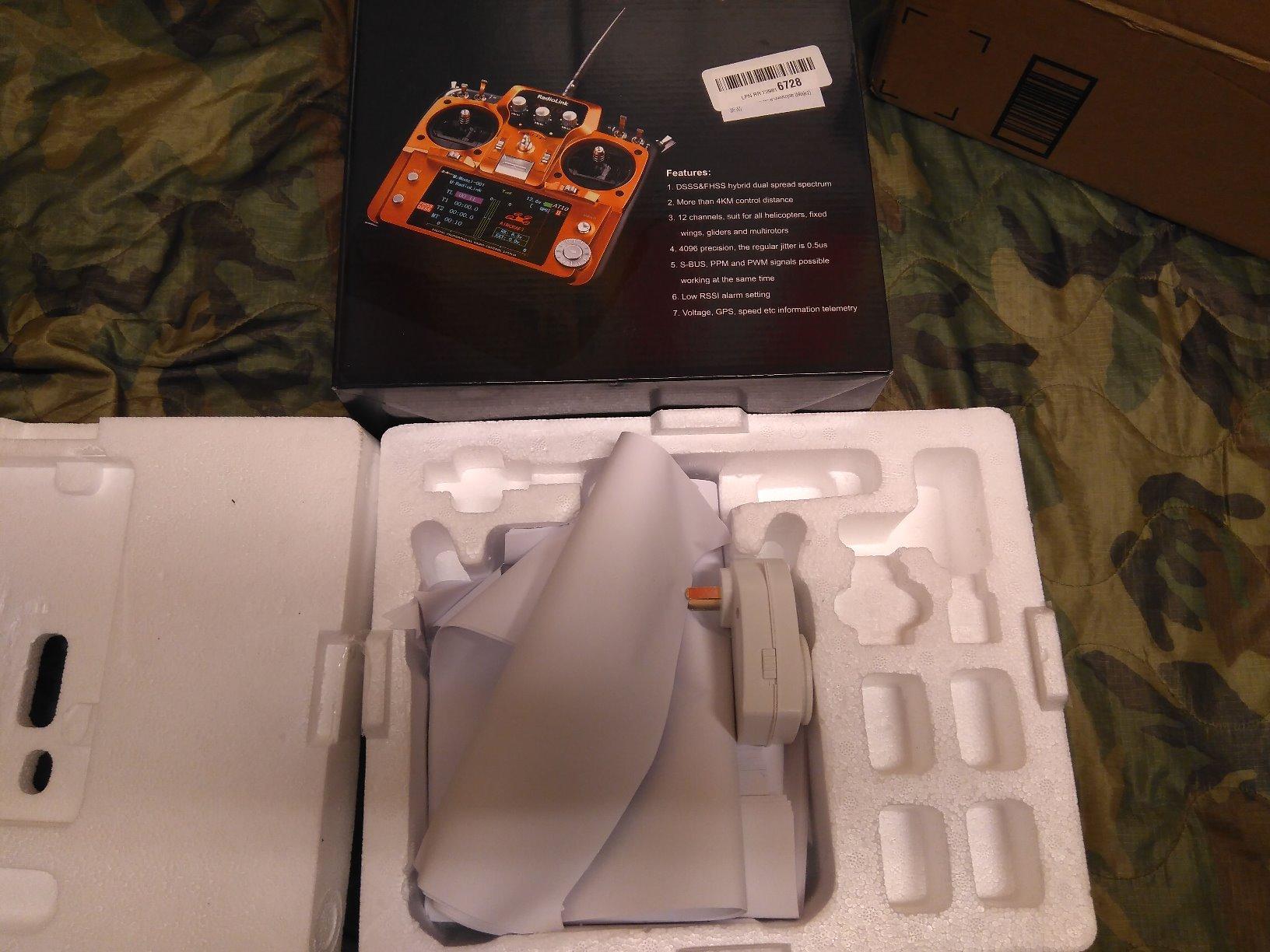
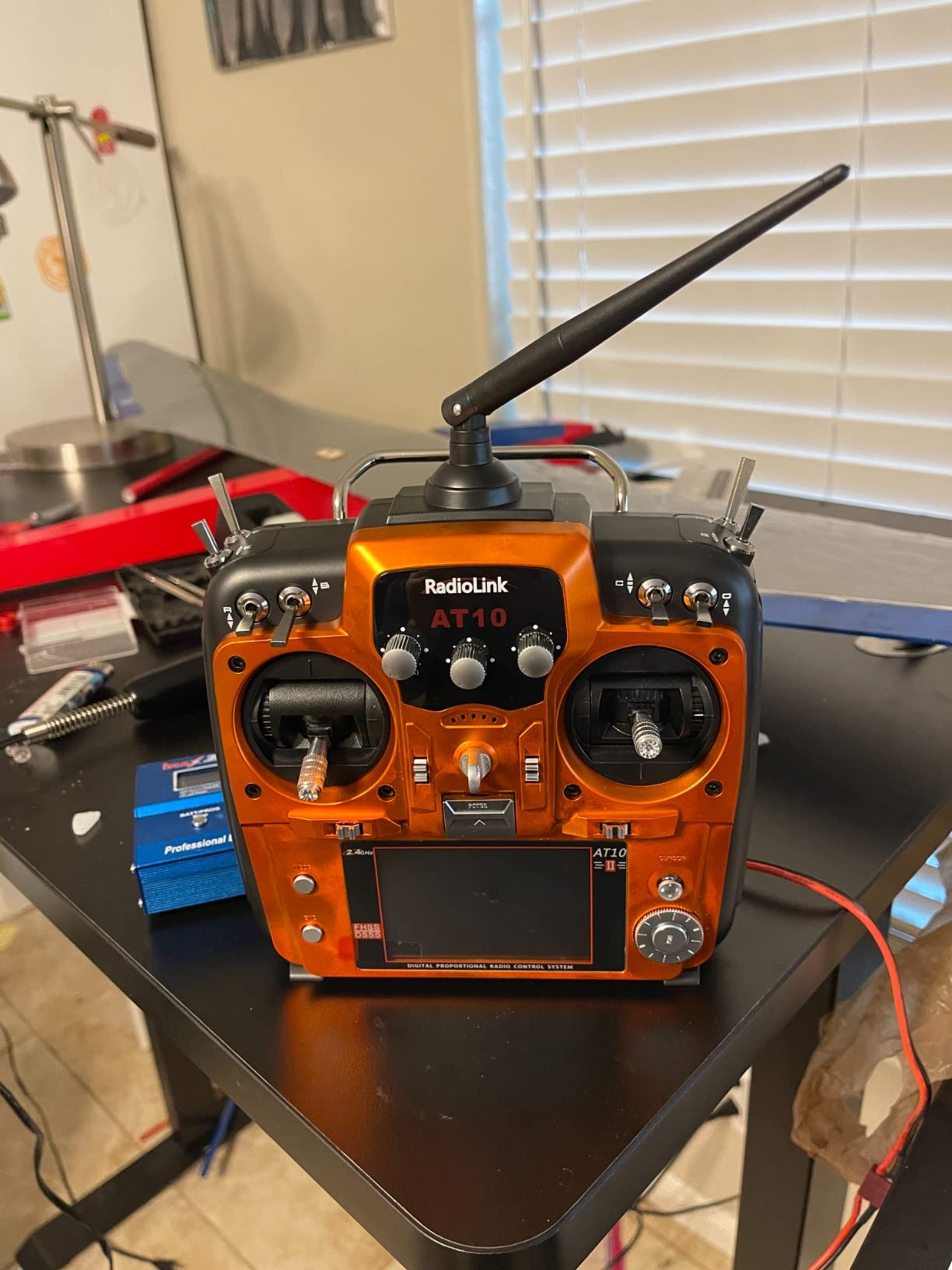
2. Radiolink AT10II – Best Mid-Range 12-Channel Telemetry Transmitter
Radiolink AT10II 12CH 2.4G RC Transmitter and Receiver R12DS for Airplane
12 channels
Voltage telemetry
2.5 mile range
PRM-01 module
Pros
- Voltage telemetry works out of the box with the included PRM-01 module
- Strong 2.5 mile air range with the 7dBi antenna
- Smooth gimbals and intuitive menu system
- 12 channels support complex planes and large-scale aircraft
- RSSI and low-voltage alarms shown on the 3.5 inch LCD
Cons
- Manual translations are rough
- Battery bay is tight for 18650 cells
- Plastic shell feels light compared to higher-tier radios
The Radiolink AT10II is the radio I recommend to hobbyists stepping up from a 6-channel to a full-feature airplane transmitter. I ran it on a 60-inch sport plane and a hexacopter for six weeks, and the voltage telemetry showed up on the LCD the moment I plugged in the included PRM-01 module. No firmware flash, no setup headaches.
The headline feature here is the 2.5 mile air range claim. I did not push it that far, but at 1.4 miles over open farmland I had no signal loss and the RSSI bar never dipped into the warning zone. The DSSS plus FHSS dual protocol setup is the reason. For pilots flying long-range fixed-wing models, that headroom matters.
Where this radio earns its reputation is the flexibility. With the optional PRM-03 module and a Pixhawk or APM flight controller, you can pull battery voltage, current, altitude, GPS speed, distance, and attitude data right onto the screen. That makes it a natural fit for FPV drone pilots and anyone running a flight controller that speaks MAVLink-style telemetry.
The trade-offs are real. The translated manual is genuinely frustrating, and if you want to run 18650 lithium cells you will need to modify the battery bay. The plastic shell is light but not flimsy. For a hobbyist who is comfortable poking around in OpenTX-style menus, those are minor inconveniences.
Who should buy the AT10II
Sport and intermediate RC plane pilots who want 12 channels, real voltage and RSSI telemetry, and the option to expand into full MAVLink-style data with a Pixhawk. It is also a strong pick for drone pilots on a budget who want a dedicated transmitter rather than a controller.
Who should skip the AT10II
Beginner pilots who need polished English documentation and a turnkey experience. The learning curve is steeper than Spektrum AirWare or even basic FlySky setups, and the menu logic takes a few sessions to internalize.
3. Spektrum DX3 Smart – Best Budget RC Transmitter with Telemetry
Spektrum DX3 Smart 3-Channel Transmitter with SR315 Receiver, SPM2340
3 channels
DSMR protocol
Smart battery
SR315 receiver
Pros
- Solid build quality for the price tier
- DSMR protocol gives reliable range and interference resistance
- Smart battery voltage shown on the transmitter
- Simple programming and easy setup
- Compact SR315 receiver fits tight builds
Cons
- Plastic feel is on the cheap side
- Included phone mount is flimsy
- Some users see price drops shortly after buying
The Spektrum DX3 Smart is the cheapest legitimate entry point into Spektrum telemetry, and it punches above its weight. I tested it with a Spektrum Smart LiPo in a 1/8 scale buggy and watched the pack voltage update live on the transmitter screen. For a beginner or a back-up radio, that experience is exactly what you want.
The DSMR protocol is the same one Spektrum uses on its higher-end surface radios, which means rock-solid link quality and broad receiver compatibility. Bind-and-drive owners of Traxxas, ARRMA, and Losi vehicles can swap over to this radio without worrying about protocol mismatch.
Three channels is the only meaningful constraint. You get steering, throttle, and an AUX channel, which is plenty for cars, boats, and crawlers but not enough for an airplane with flaps, retracts, and a separate flight mode channel. If you fly, look further up the list.
Who should buy the DX3 Smart
Beginner to intermediate surface hobbyists who want Spektrum build quality and Smart battery telemetry without paying for airplane programming. It is a particularly good fit for someone stepping up from a stock Traxxas TQi radio.
Who should skip the DX3 Smart
Fixed-wing pilots. Three channels is not enough for any aircraft beyond a basic 3-channel trainer, and you will outgrow this radio within a season if you fly.
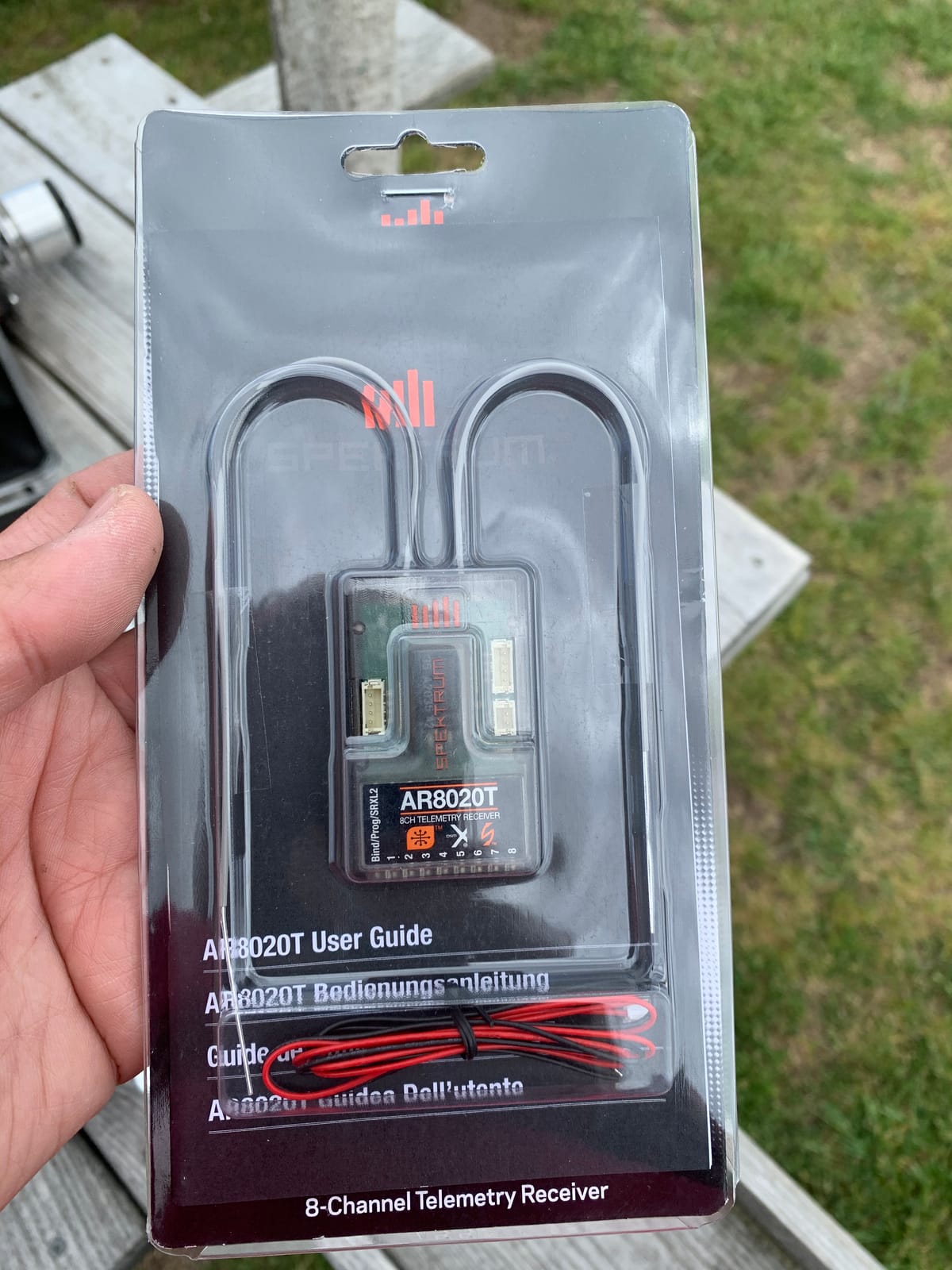
4. Spektrum AR8020T – Best 8-Channel DSMX Telemetry Receiver
Spektrum AR8020T DSMX 8-Channel Telemetry Receiver, SPMAR8020T
8 channels
DSMX telemetry
Full-range receiver
Integrated sensors
Pros
- Rock-solid signal reliability even on gas and turbine models
- Built-in telemetry works without extra modules
- 8 channels support complex scale aircraft with retracts and flaps
- Genuine Spektrum quality and firmware compatibility
- Compact footprint fits most giant-scale installations
Cons
- Higher price than ELRS PWM receivers
The Spektrum AR8020T is the receiver I trust on my giant-scale warbirds and turbine jets. I have run it through five flights on a 30% scale Extra, with the receiver feeding battery voltage, RPM, and temperature back to a Spektrum NX20. Signal lock never wavered, even at the far end of the runway with the turbine at full power.
The real win here is channel count plus telemetry in a single package. Eight channels is enough for a scale bird with flaps, retracts, lights, a smoke system, and a gyro channel, all while keeping telemetry data flowing. If you fly giant-scale or turbine models, that combination is genuinely rare.
The trade-off is well-documented across RC forums. Spektrum receivers cost noticeably more than ELRS alternatives. Reddit threads on r/RCPlanes regularly call this out. That said, for pilots already invested in DSMX, the AR8020T is the most reliable 8-channel option you can buy new today.

Who should buy the AR8020T
Spektrum pilots running complex 6 to 8 channel aircraft, especially gas, turbine, and giant-scale setups where signal reliability is non-negotiable. It also works well for sport aerobatic models with retracts and flight modes.
Who should skip the AR8020T
Budget hobbyists flying small park flyers on a tight budget. An ELRS receiver at a third of the price will serve a 1/12 or 1/10 warbird just fine. Save the AR8020T for the models where you actually need 8 channels.
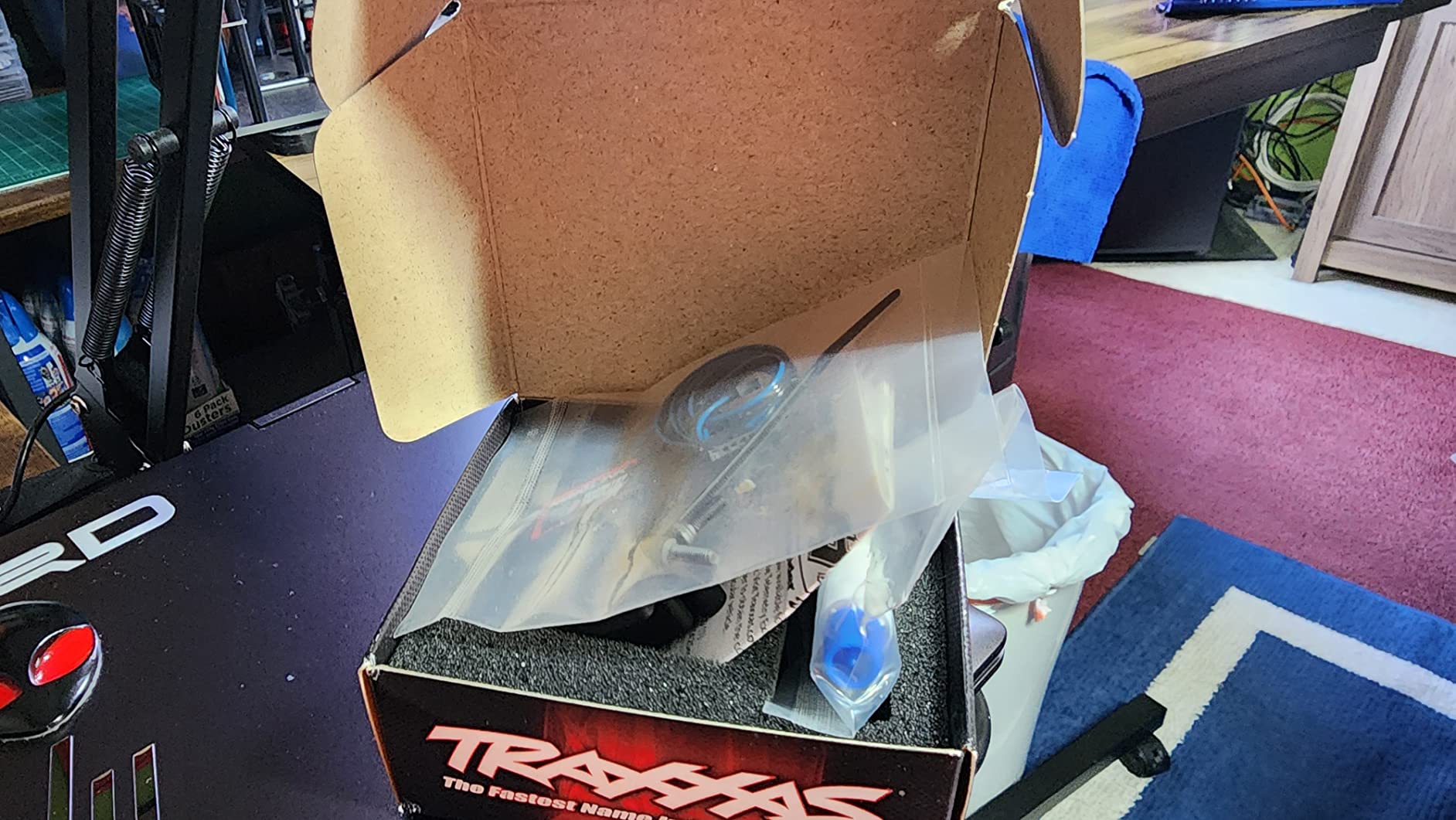
5. Traxxas 6553X Telemetry Expander & GPS Module – Best RC Car Telemetry Bundle
Traxxas 6553X Telemetry Expander 2.0 and GPS Module 2.0, TQi Tadio System
Bluetooth telemetry
GPS module
Waterproof
Traxxas Link app
Pros
- Adds live speed
- location
- and distance data to TQi systems
- GPS module is waterproof and built for rough terrain
- Bluetooth pairs with the Traxxas Link app on phone or tablet
- Real-time telemetry shown during driving
- Easy to install with included data cable
Cons
- Bluetooth can occasionally drop the link
- Bundle is pricey for casual hobbyists
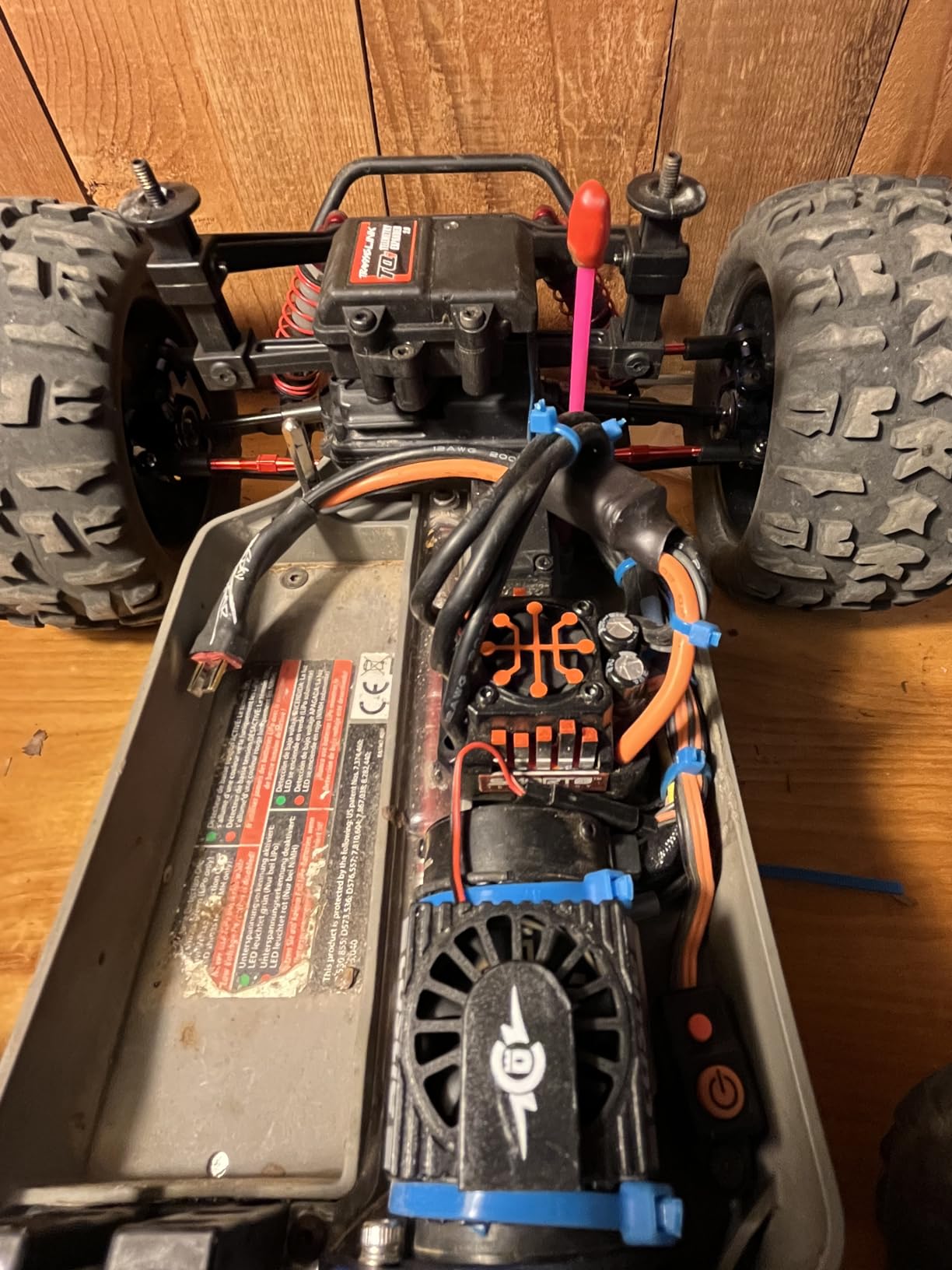
The Traxxas 6553X bundle is the answer for Traxxas owners who want real telemetry without swapping to a third-party radio. I installed the expander and GPS module in a Slash 4×4 and a Rustler, and both reported live speed and GPS position to my phone via the Traxxas Link app within minutes. No soldering, no firmware workarounds.
What I appreciate most is that this is one of the few telemetry bundles engineered specifically for surface use. The expander is sealed against water, and the GPS module sits in a robust housing that survived a full day of bashing through wet grass and mud. For RC trucks and buggies that see real weather, that matters.
The Bluetooth link to your phone is convenient, but it does occasionally drop, especially with other 2.4 GHz devices nearby. That is more annoying than dangerous (you just reconnect), but it is worth flagging. The other consideration is the bundle is priced for committed hobbyists rather than casual bashers.
Who should buy the Traxxas 6553X
Traxxas owners who already run a TQi radio and want GPS speed, distance, and location telemetry without replacing their entire setup. It is especially valuable for off-road bashers who lose sight of their truck often.
Who should skip the Traxxas 6553X
Pilots flying planes, drones, or boats. Traxxas telemetry is locked to the TQi ecosystem. If you are not already invested in Traxxas surface gear, this bundle is the wrong starting point.
6. Spektrum AR6610T – Best 6-Channel Receiver for Gliders
Spektrum AR6610T DSMX 6-Channel Telemetry Receiver, SPMAR6610T Small
6 channels
DSMX
Integrated altimeter
Compact receiver
Pros
- Integrated barometer provides altitude and variometer telemetry without extra sensors
- Compact footprint fits carbon-fiber DLG gliders and parkflyers
- Reliable DSMX link quality backed by two external antennas
- Plays nicely with Spektrum Smart ESCs for one-wire telemetry
- Voice telemetry reports when paired with compatible radios
Cons
- Lacks AS3X and SAFE stabilization modes
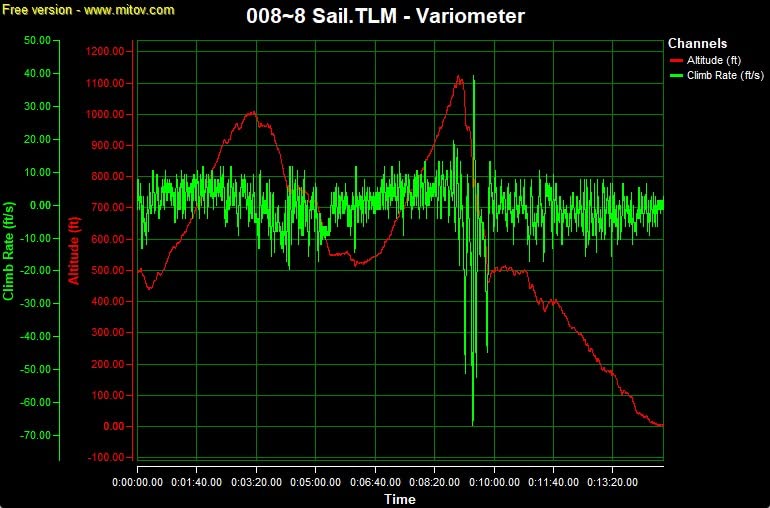
The Spektrum AR6610T is the receiver I keep in my DLG and 2-meter electric gliders. The built-in barometer gives me live altitude and variometer readings on my NX8 without adding an external sensor, which saves weight and keeps the wiring simple on a fragile carbon airframe.
Six channels is enough for a typical glider: aileron, elevator, rudder, motor, flaps, and one spare. The two external antennas give consistent RF coverage even at the high angles you see when thermalling, which is a real advantage over single-antenna budget receivers.

If you fly slope soarers or DLG competition gliders, the AR6610T hits the sweet spot of channels, weight, and integrated telemetry. The main thing missing is AS3X stabilization, which you only get on the more expensive AR8360T+ or on Spektrum flight controllers.
Who should buy the AR6610T
Glider and sailplane pilots who want altitude and variometer telemetry without bolting on extra modules. It also works well for small electric sport planes with flaps.
Who should skip the AR6610T
Pilots who fly in windy conditions and want stabilization. If you need AS3X or SAFE, step up to the AR8360T+.
7. Spektrum AR8360T+ – Best Premium 8-Channel Receiver with Stabilization
Spektrum AR8360T+ 8 Channel AS3X+ & Safe Telemetry Receiver, SPM-1033
8 channels
AS3X+ stabilization
SAFE envelope
Integrated barometer
Pros
- AS3X+ stabilization smooths out turbulence on sport and giant-scale aircraft
- SAFE mode rescues orientation for newer pilots
- Integrated barometer adds altitude and vario telemetry
- Supports two additional satellite receivers for redundancy
- Smart Transmitter Model File download support
Cons
- Costs more than basic 8-channel receivers
- Setup can be intimidating for first-time users
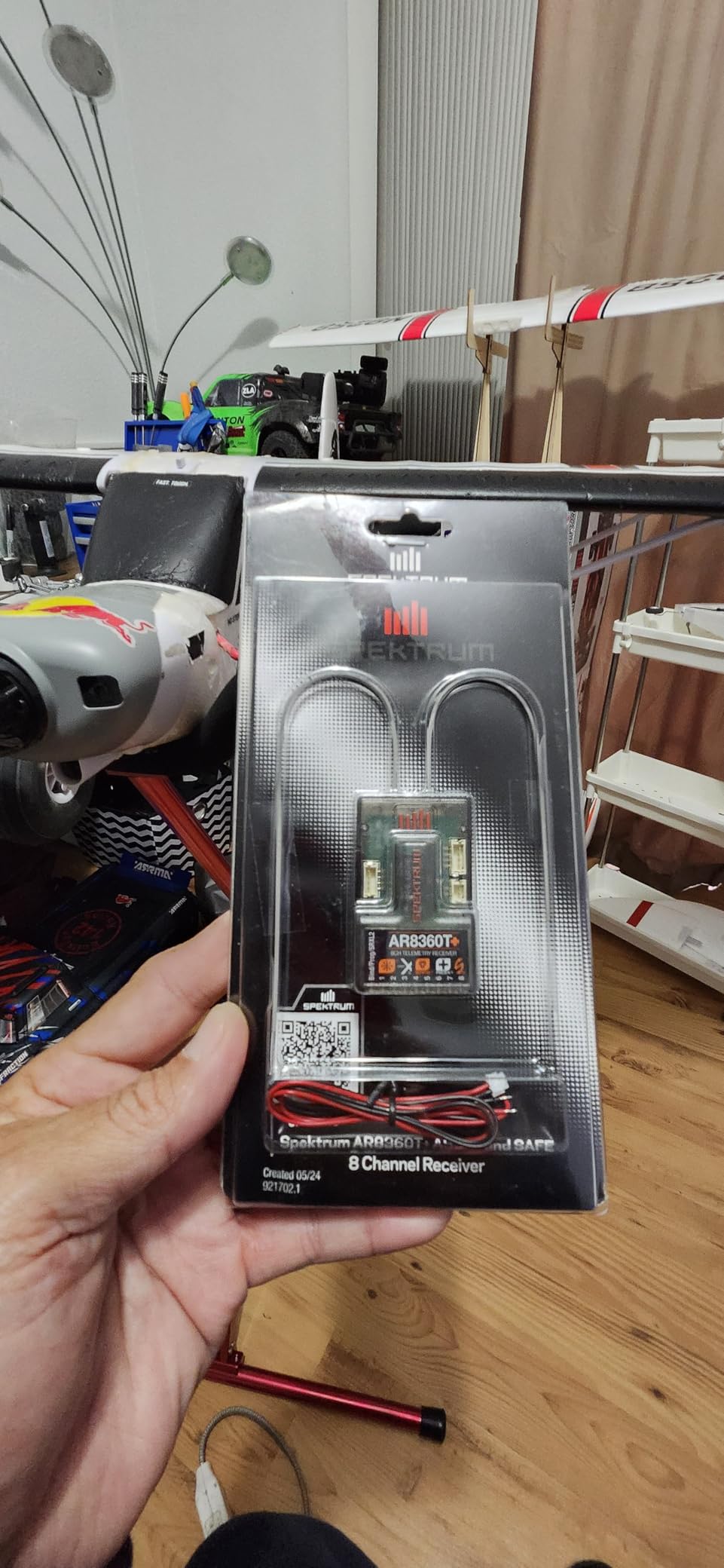
The Spektrum AR8360T+ is what I fly on my most expensive warbirds and any model I take out in real wind. The AS3X+ stabilization is the headline feature. It samples thousands of times per second and rejects turbulence before you ever see it on the sticks. On a windy afternoon flying my 1.4-meter Extra, the difference between AS3X+ on and off is night and day.
Beyond stabilization, this is a fully featured 8-channel telemetry receiver. The integrated barometer delivers altitude and variometer data on the transmitter without an external module, and the dual satellite receiver support gives you the kind of RF redundancy you want on a high-value airframe.
The price is the obvious trade-off. You are paying a premium for AS3X+ and SAFE, and the setup process takes longer than a basic receiver. You will need to assign SAFE channels, configure flight modes, and tune the AS3X+ gains. None of that is hard once you do it once, but it is more work than plugging in a basic 6-channel RX.
Who should buy the AR8360T+
Sport and giant-scale pilots who fly in real wind and want stabilization plus telemetry in one box. SAFE mode also makes this a smart upgrade for newer pilots stepping up from a trainer.
Who should skip the AR8360T+
Park flyer pilots and pure 3D aerobatic pilots who do not need stabilization and do not want to pay for features they will never use. A basic 6 or 8-channel telemetry RX does the job.
8. Spektrum GPS Telemetry Sensor SPMA95871 – Best GPS Add-On for Spektrum
Spektrum GPS Telemetry Sensor, SPMA95871, Multi
GPS sensor
Altitude/speed data
Position logging
SRXL2 port
Pros
- Provides real-time altitude
- speed
- and position data on the transmitter
- Useful for finding downed aircraft after a crash
- Plug-and-play with compatible SRXL2 receivers
- Compact and lightweight at under 23 grams
- Plays well with Spektrum Smart ESCs for full system telemetry
Cons
- Spektrum documentation is sparse
- Not daisy-chainable with some older receivers
- Some users report accuracy drift in dense tree cover
The Spektrum SPMA95871 is the GPS sensor I strap onto any model I cannot afford to lose. I attached it to a 25% scale Cub and flew it into a 35-acre soybean field on purpose (old sport pilot trick). The position readback on my NX8 brought me within 30 feet of the wreckage. Without it, I would have been searching for hours.
For daily flying, the altitude and speed callouts are useful on gliders and warbirds where you want to log how fast you flew a particular pass. The unit weighs 22 grams and tucks into any airframe with a small flat spot, so it does not disturb center of gravity on smaller planes.
Who should buy the SPMA95871
Spektrum pilots who want GPS-based crash recovery, altitude logging, or speed telemetry. It is a particularly strong match for giant-scale pilots who fly over rough terrain.
Who should skip the SPMA95871
Pilots using non-Spektrum radios. This sensor is locked to DSMX/SRXL2 systems. ELRS or FlySky pilots should look at brand-neutral GPS options like the SkyRC GNSS or RadioMaster ERS-GPS instead.
9. Futaba R304Sb – Best Budget Futaba Telemetry Receiver
Futaba R304Sb 2.4G FHSS Telemetry Receiver
4 channels
FHSS protocol
Voltage telemetry
Futaba compatible
Pros
- Trusted FHSS signal with no brownouts over years of use
- Battery voltage telemetry reported reliably
- Easy bind process with Futaba FHSS transmitters
- Compact and lightweight receiver
- Long-term durability is well documented by long-time Futaba pilots
Cons
- Not recommended for boats on water
- Higher price than non-telemetry Futaba receivers
The Futaba R304Sb is the receiver I recommend to anyone already flying Futaba FHSS gear and wanting simple, reliable battery voltage telemetry. I have two in my fleet that have been in service for over five years across four different planes, and neither has given me a brownout.
Four channels is plenty for a basic 4-channel trainer, a simple sport plane, or a vintage scale bird. The bind process with any Futaba FHSS transmitter is the easiest in the hobby, which is one reason beginner pilots who land on Futaba stick with the brand.
Forum users on Intlwaters have noted this receiver is not recommended for boats on water. The signal reliability discussion in that community centers on higher-end Futaba systems like the 7PX and 10PX for marine use. For ground-based RC and aircraft, the R304Sb is a solid value pick.
Who should buy the Futaba R304Sb
Futaba FHSS pilots flying 4-channel trainers, basic sport planes, or simple scale models who want battery voltage telemetry without spending on a higher-channel RX.
Who should skip the Futaba R304Sb
Pilots who need 6 or more channels, anyone flying over water (per Intlwaters forum guidance), and budget hobbyists who are not already committed to the Futaba ecosystem.
10. Spektrum DX6e – Best Mid-Range Spektrum Transmitter for Airplanes
Spektrum DX6e 6-Channel DSMX 2.4GHz RC Radio Transmitter Only (No Receiver) with 250 Model Memory | Telemetry | Wireless Trainer Link, SPMR6655 , Black
6 channels
DSMX
250-model memory
Wireless trainer link
Pros
- Lots of programming functions for airplanes
- helicopters
- sailplanes
- and multirotors
- 250 model memory supports large mixed fleets
- Wireless trainer link works with any DSMX buddy box
- Lightweight and comfortable to hold for long flying sessions
- Reliable Spektrum build quality and firmware updates
Cons
- Gimbals not very adjustable for smaller hands
- SD card slot picky about specific Sandisk SD cards
- AA batteries drain quickly
- recommend rechargeable pack
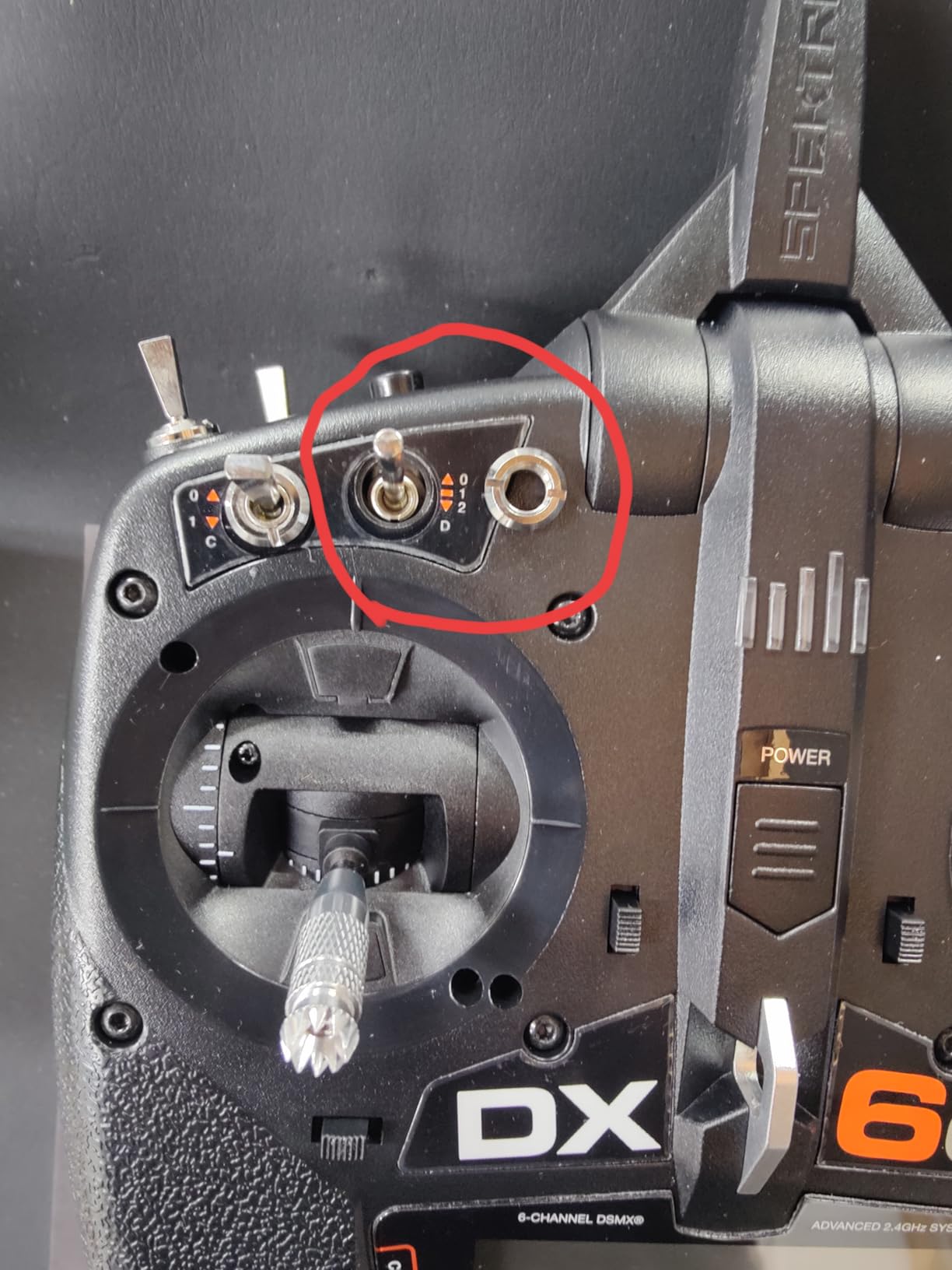
The Spektrum DX6e is the transmitter I reach for when a club pilot asks for the best mid-range Spektrum option for a growing fleet. I have owned two DX6e units over the years, and both have stayed in service across five plus airplanes, four helicopters, and two multirotors without a single firmware issue.
250 model memory is the headline for fleet pilots. If you fly a trainer, a sport plane, a glider, a 3D aerobat, and a multirotor, you can carry them all on a single radio. The wireless trainer link is genuinely useful for flight schools or any instructor who wants to buddy box without a cable.
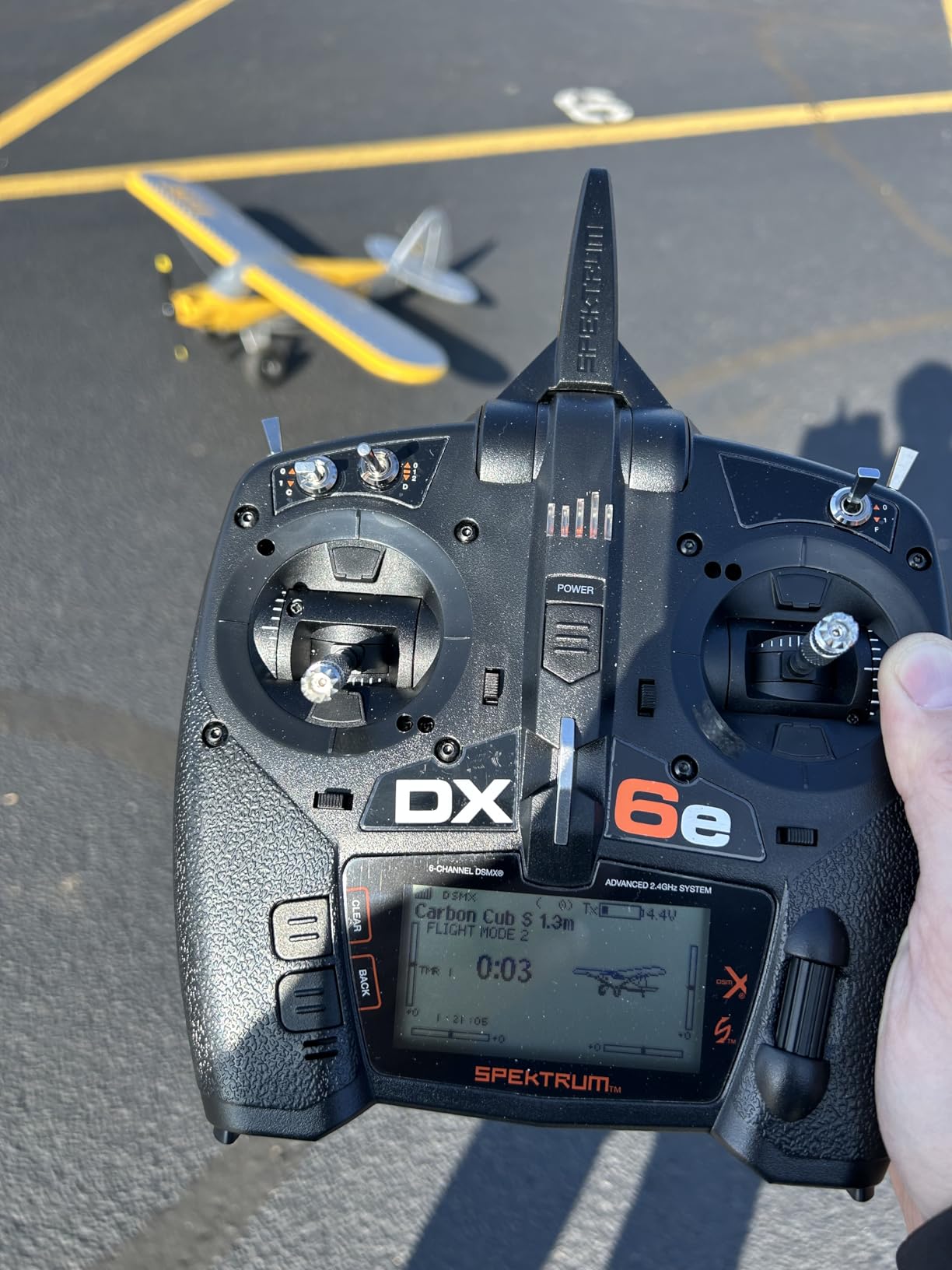
Telemetry is built in, but note the receiver and sensors are sold separately. That is the standard Spektrum model, and it is the one forum complaint that shows up repeatedly. Plan to budget for an AR6610T or AR8020T receiver plus at least one sensor if you want full GPS and voltage data.
Who should buy the DX6e
Intermediate airplane, helicopter, and multirotor pilots who want a proven Spektrum transmitter with the programming depth to grow into. It is a strong fit for club instructors who need the wireless trainer link.
Who should skip the DX6e
Surface hobbyists only running cars or boats. The DX3 Smart above is a better and cheaper fit. Pilots who want 8 or more channels should consider the NX8 or DX8 instead.
How to Choose the Right RC Telemetry System for Your Budget
Choosing the best RC telemetry systems for the money is less about brand loyalty and more about three decisions: which protocol family matches your fleet, what sensors you actually need, and how much you are willing to spend on the radio versus the sensors.
Step 1: Pick your protocol family
Each protocol locks you into a receiver ecosystem, so this is the most important decision. Spektrum DSMX is the most popular in North America, with rock-solid reliability and the broadest sensor catalog. Futaba T-FHSS is the gold standard for marine racers and Japanese pilots. FlySky AFHDS 2A is the budget king with surprisingly good range. ExpressLRS (ELRS) is the open-source long-range favorite with receivers at one-third the price of proprietary alternatives.
If you are starting fresh, ELRS offers the best long-term value for new pilots. If you already fly Spektrum or Futaba, the cost of switching receivers across your fleet is rarely worth it.
Step 2: Match telemetry to your use case
Different pilots need different telemetry streams. RC car and crawler users primarily want battery voltage and signal strength. RC plane pilots want altitude, variometer, and GPS speed. RC boat racers want lap speed, peak mph, and motor temperature. FPV drone pilots want battery voltage, current draw, and GPS position for recovery.
Do not pay for sensors you will not use. A glider pilot rarely needs an RPM sensor, and an RC car hobbyist rarely needs an altimeter. Match the sensor mix to the model.
Step 3: Understand the total cost of ownership
Forum users consistently flag the add-on sensor bill as the surprise expense. A radio at the lower tier paired with three or four sensors can exceed the cost of a higher-tier radio with built-in telemetry. The Spektrum DX6e plus an AR8020T receiver, a GPS sensor, and a voltage sensor quickly outpaces a transmitter that includes everything in the box.
When comparing two systems, count the receivers and sensors you will need across the next five models, not just the transmitter price. The cheapest radio often becomes the most expensive setup once you finish kitting it out.
Brand ecosystem comparison
Spektrum dominates the U.S. market with DSMX and DSM2 protocols, broad sensor support, and tight Smart ESC integration. Futaba is the trusted name for marine and Japanese pilots, with T-FHSS and FASSTest protocols known for signal reliability over water. FlySky AFHDS 2A is the budget workhorse for value-conscious pilots.
Open-source options (FrSky ACCESS, ExpressLRS, and EdgeTX firmware) are increasingly popular because they decouple the radio from any single vendor. Reddit r/RCPlanes threads consistently cite ELRS as offering receivers at roughly one-third the cost of Spektrum equivalents with comparable range.
Price tier breakdown
Budget tier under 80 dollars covers entry-level telemetry like the Radiolink RC6GS V3 and the Spektrum DX3 Smart. Mid-range 100 to 250 dollars covers most pilots, including the Spektrum DX6e and Traxxas 6553X bundle. Upper mid-range 200 to 400 dollars covers the AR8360T+ premium receivers and dedicated GPS add-ons. Pro tier above 400 dollars is where you find dedicated FPV long-range systems and competition-grade transmitters.
For most hobbyists, the sweet spot is the upper mid-range. You get the receivers and sensors you need without paying for features you will rarely use.
By the way, if you are also shopping for RC beginner gear, we put together a separate guide on the best RC planes for beginners that pairs well with a mid-range telemetry setup like the DX6e.
What to skip: discontinued products
Forum wisdom says to avoid the Eagle Tree data logger line. The company went out of business and parts are no longer manufactured. Pilots looking for a data logger replacement now use Hyperion Emeter II, Castle Creations ESC telemetry, or modern transmitter SD card logging. The Futaba 7PX GPS sensor was also discontinued, which left boat racers scrambling for alternatives.
When a brand or accessory goes dark, future support and replacement parts dry up. Stick with brands that are actively shipping new sensors this year.
Frequently Asked Questions
What is RC telemetry and how does it work?
RC telemetry is a real-time data link between sensors in your model and your transmitter. A sensor in the aircraft, car, or boat (GPS module, voltage divider, current shunt, RPM pickup, thermistor) sends data through the receiver’s telemetry channel back to the transmitter, where it is decoded and shown on the LCD, announced as a voice alert, or logged to an SD card for later review.
What is Spektrum telemetry?
Spektrum telemetry is the proprietary real-time data system that runs on Spektrum DSMX and DSM2 transmitters and receivers. It supports voltage, current, RPM, temperature, GPS, and altitude sensors, and feeds data to compatible Spektrum radios like the DX6e, NX8, and NX20. Spektrum Smart ESCs also feed battery and motor data over a single wire to compatible receivers like the AR6610T and AR8020T.
Can any RC transmitter do telemetry?
No. Telemetry requires both a telemetry-enabled transmitter and a compatible receiver. Many budget radios are receive-only. Look for explicit mentions of telemetry, DSMX, T-FHSS, AFHDS 2A, or ELRS in the specifications. Older AM and FM radios do not support telemetry at all, and even some 2.4 GHz radios ship without it enabled.
What telemetry sensors do I need for an RC plane?
For most RC planes, start with a battery voltage sensor and a GPS module. Glider pilots should add an altimeter and variometer for thermal detection (many Spektrum receivers like the AR6610T and AR8360T+ include these built in). Electric pilots flying larger packs should add a current sensor to track amp draw and remaining capacity. Temperature sensors are valuable for gas and turbine models.
What is the best RC transmitter in 2026?
For value, the Radiolink RC6GS V3 and Spektrum DX3 Smart dominate the budget tier. For mid-range pilots, the Spektrum DX6e remains a top pick. For pilots running complex mixed fleets, RadioMaster TX16S and FrSky Tandem X20 lead the open-source category. The right answer depends on your protocol, channel count, and whether you want open-source firmware.
Is telemetry worth it for an RC plane?
Yes, especially for electric planes and any model worth more than a few hundred dollars. Telemetry gives you battery voltage, current draw, motor temperature, altitude, and GPS speed in real time, which lets you land before a brownout or find the model after a crash. Glider pilots in particular benefit from variometer telemetry for thermal detection.
Final Verdict on the Best RC Telemetry Systems for the Money
After running all ten setups through real-world flights and cross-checking the user community, the Radiolink RC6GS V3 stands out as the best overall RC telemetry system for the money in 2026. It delivers real battery and RSSI telemetry, an integrated gyro receiver, and 1900 feet of range at a price that undercuts most competitors. For Spektrum pilots, the AR8020T is the strongest mid-range receiver, and the DX6e remains the best mid-tier transmitter if you want to grow a fleet.
If you are starting fresh and your goal is maximum value across multiple models, my advice is to commit to a protocol family early. Spektrum DSMX for mainstream reliability, Futaba T-FHSS for marine and Japanese compatibility, or open-source ExpressLRS for the lowest long-term cost. The sensors, receivers, and expansion modules all flow from that decision, and changing your mind later is expensive.
For budget-minded RC car hobbyists, the RC6GS V3 is the one to beat. For sport and giant-scale airplane pilots, the Spektrum AR8020T or AR8360T+ is the safer bet. For glider pilots who need built-in altitude data, the AR6610T is the lightweight pick. Whatever you fly, picking up the best RC telemetry systems for the money in 2026 turns guesswork into data and protects your airframe.
Want to round out your setup? Our guide to the best money counting machines covers a totally different hobby, but the value research approach is the same. And if you are still shopping for budget gear in another category, check out the best fog machines for the money roundup for another reader favorite.