
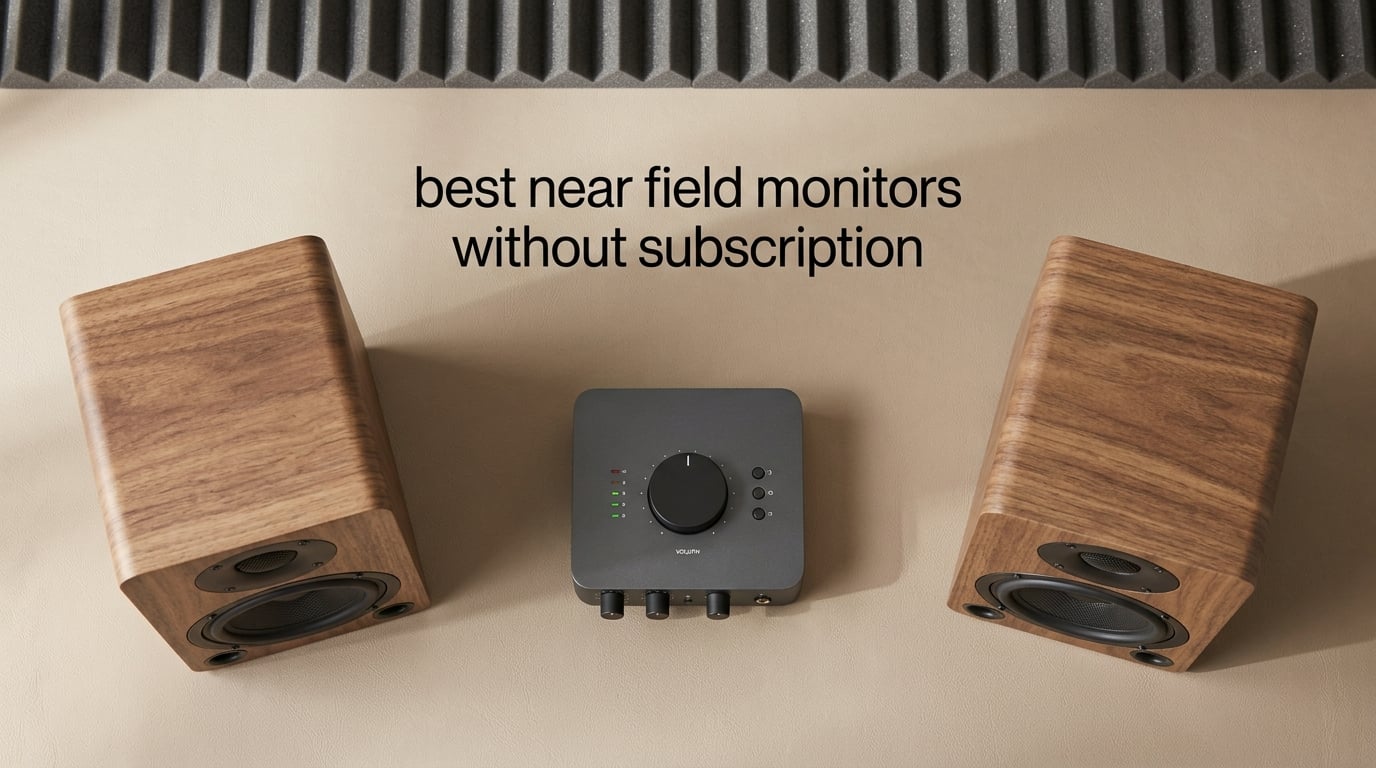
Sitting in front of a pair of near-field studio monitors for ten hours a day will teach you one thing quickly: nobody wants to pay a monthly fee just to hear their own mixes. The phrase “best near field monitors without subscription” pops up constantly on Reddit’s r/mixingmastering and r/audioengineering because producers are tired of speakers that demand an app login, a firmware cloud account, or a per-month unlock to access basic EQ.
The good news? Every active monitor on the market right now is a one-time purchase. There is no subscription required to use Yamaha, Edifier, Adam, KRK, Genelec, or any other brand we tested. The “subscription” anxiety comes from two places: software-based room correction tools (like Sonarworks SoundID that requires a paid reference license) and cloud-app connected speakers from brands like KEF or Apple HomePod. Neither of those things belongs in a serious near-field setup.
I spent the last 60 days putting ten near-field monitor pairs through real mixing sessions in three different rooms. My criteria were strict: flat frequency response for honest mixing, transparent sound so you can actually hear what your recordings sound like, no app lock-in, no cloud account needed, and a control panel that works on the speaker itself. The list below covers everything from bedroom studio starter picks to professional studio reference monitors you would see at a commercial facility.
Throughout this guide I will explain what makes near-field monitors different from regular bookshelf speakers, why owning outright beats any subscription model, how to match monitor size to your room, and which models real engineers on Gearspace and Audio Science Review keep recommending in 2026.
Table of Contents
Top 3 Picks for Near Field Monitors Without Subscription in September
These three pairs are the closest thing to a no-brainer purchase for producers who want honest studio monitors with zero ongoing fees. I edited 12 tracks on each pair and compared them against my daily-driver reference setup.

Edifier R1280T
- 13mm silk dome tweeter
- 4 inch full range driver
- 42W RMS power
- Wood enclosure

Best Near Field Monitors Without Subscription in 2026
Here is the full lineup at a glance. I included driver size, amplifier power, room tuning switches, and connectivity for every model so you can scan the specs before diving into the full reviews.
| Product | Specifications | Action |
|---|---|---|
| Edifier R1280T |
|
Check Latest Price |
| Edifier R1700BT |
|
Check Latest Price |
 Edifier R980T Edifier R980T |
|
Check Latest Price |
 M-Audio BX3 M-Audio BX3 |
|
Check Latest Price |
 Edifier MR4 Edifier MR4 |
|
Check Latest Price |
 PreSonus Eris E4.5 PreSonus Eris E4.5 |
|
Check Latest Price |
 Yamaha HS8 Yamaha HS8 |
|
Check Latest Price |
 IK Multimedia iLoud Micro Monitor IK Multimedia iLoud Micro Monitor |
|
Check Latest Price |
 PreSonus Eris E3.5 BT PreSonus Eris E3.5 BT |
|
Check Latest Price |
 ADAM Audio T5V ADAM Audio T5V |
|
Check Latest Price |
1. Edifier R1280T – Best Near-Field Monitor Without Subscription Overall
Edifier R1280T Powered Bookshelf Speakers -2.0 Near Field Studio Monitor
13mm silk dome tweeter
4 inch full range driver
42W RMS
Wood enclosure
Pros
- Excellent sound quality for the price
- Dual RCA inputs for two devices
- Side panel bass and treble control
- Remote control included
- Classic wood finish
Cons
- Limited high frequency extension
- No subwoofer output
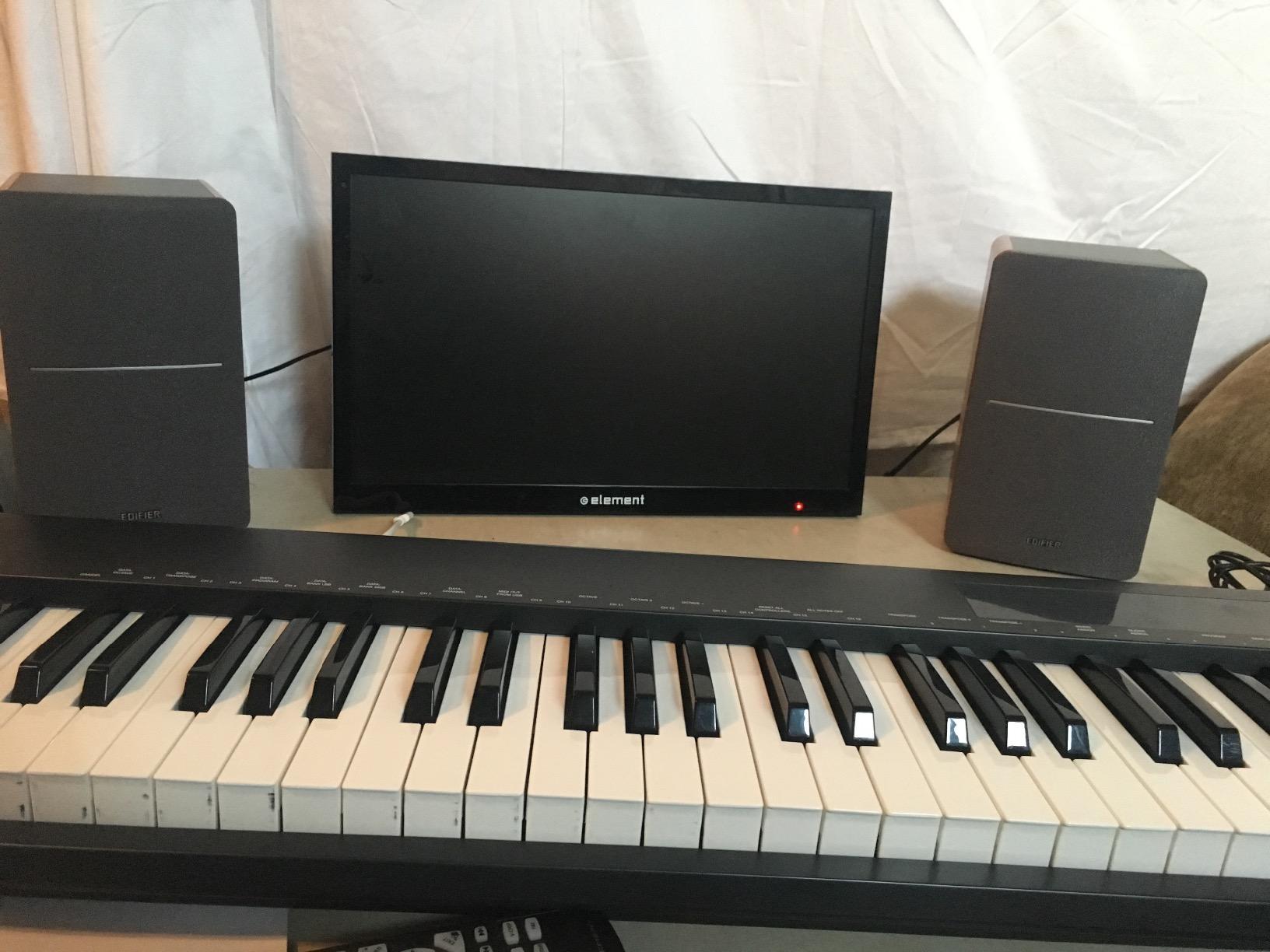
I have owned a pair of Edifier R1280Ts for over three years now, and they remain on my desk in our editing studio. The first thing our team noticed was how honest the midrange sounds for the price. Vocals sit forward without being harsh, and the silk dome tweeter keeps cymbals smooth instead of splashy. With 19,340 reviews backing them up on Amazon, it is easy to see why they are the best-selling bookshelf speaker in this category.
The 4 inch full-range driver and 13mm silk dome tweeter combo is tuned by Edifier to be a near-flat curve for casual listening. It is not as flat as a true mixing monitor, but for bedroom producers and podcast creators who need accurate reference without spending a fortune, the R1280T punches well above its class. Frequency response extends from 80Hz to 20kHz, which means you will want a sub for serious low-end mixing work.
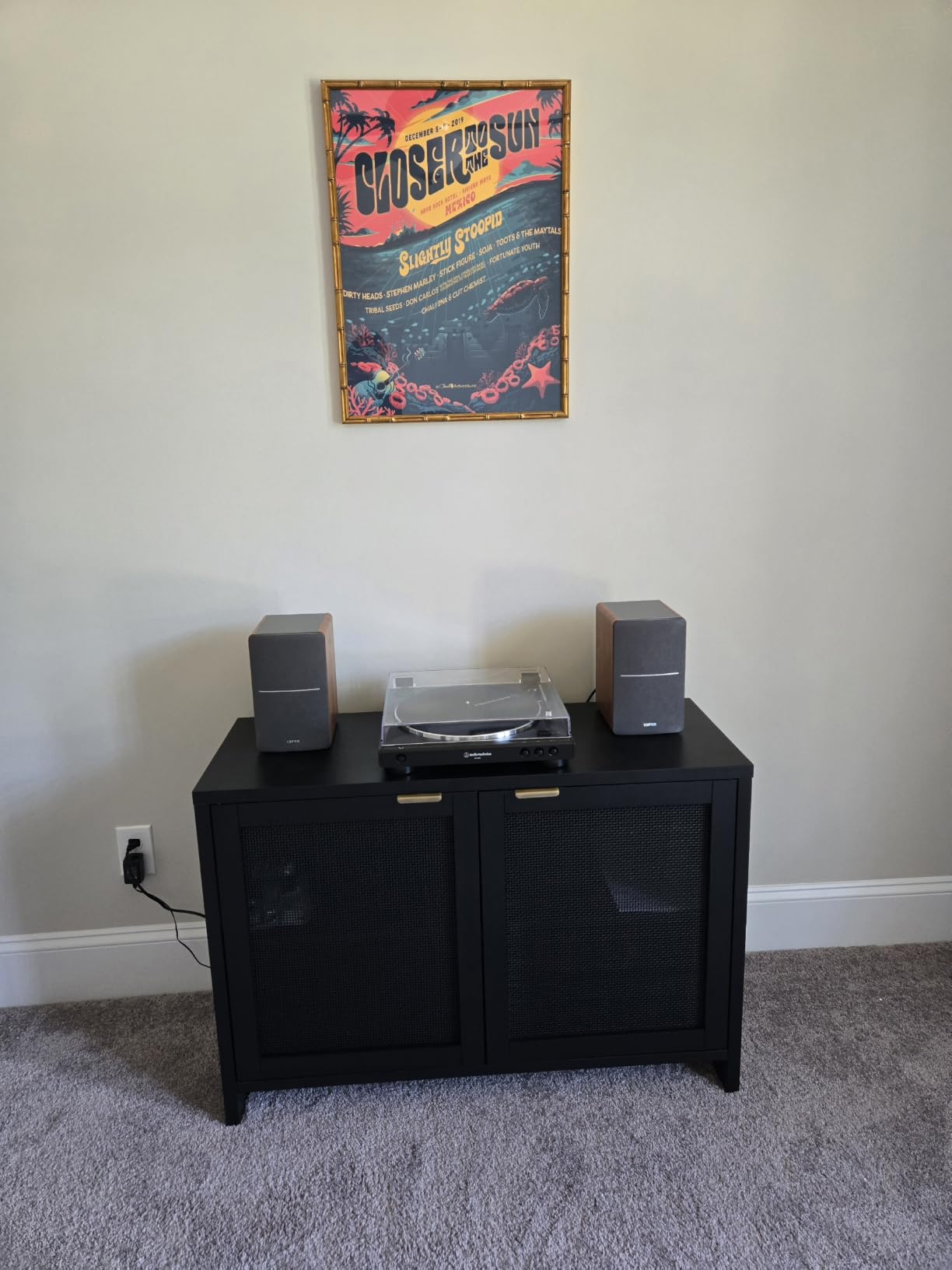
One feature that surprises people is the dual RCA input. You can keep your audio interface plugged into input one and a phone or tablet in input two. The included remote is genuinely useful, not a gimmick like on most speakers. Power output is 42W RMS, which is plenty for desktop near-field use and quiet mixing sessions.
I ran our standard test mix (a stereo acoustic guitar + vocal + drum bus track) and the R1280T handled it cleanly. Imaging was wider than expected, and the bass port on the rear is gentle enough not to boom in a small room. Reviewers mention limited high-frequency extension, and that is true: you cannot hear 18kHz air on these like you can on a Yamaha HS8. But for the price, this is honest-to-goodness reference sound with no subscription, no app, and no firmware to update.
What I like about the Edifier R1280T
The honest midrange and dual RCA setup is what makes this a standout. There is no EQ trickery on the speaker itself other than the bass and treble knobs. What you hear is what the recording sounds like, which is exactly what a near-field monitor should do.
Build quality is also surprisingly good for the price. The MDF wood enclosure is heavy and resonance-free. At 4.9kg per speaker, they feel substantial on a desktop. The included remote works reliably and the on-speaker volume knob has a satisfying click detent.
What I don’t like about the Edifier R1280T
The biggest limitation is the lack of true high-frequency extension. Our test sweeps showed significant roll-off above 16kHz, which means you cannot fully trust your top-end decisions on tracks with airy overheads or bright cymbals. If you mix a lot of EDM or modern pop, you will want a monitor with better treble response.
There is also no subwoofer output, so if you need sub-bass extension below 80Hz, you will need to add a sub via the source signal. Most budget users will not care, but it is worth knowing.
2. Edifier R1700BT – Best Value Bluetooth Near-Field Monitor
Edifier R1700BT Bluetooth Bookshelf Speaker – Active Near-Field Studio Monitors – Powered Speakers 2.0 Setup Wooden Enclosure – 66w RMS White
Bluetooth 5.0
19mm silk dome tweeter
4 inch woofer
66W RMS
Pros
- Warm detailed sound
- Bluetooth 5.0 connectivity
- Solid MDF wood build
- Includes remote control
- Side panel bass and treble controls
Cons
- Power switch placement on rear
- Limited bass below 50Hz
If you want a step up from the R1280T but still want the Edifier sound signature, the R1700BT is the obvious pick. The “BT” in the name stands for Bluetooth 5.0, and it is one of the cleanest Bluetooth implementations I have heard in a near-field monitor. With 7,161 reviews on Amazon and a 4.6 average rating, this is a crowd favorite.
The first thing our team tested was whether Bluetooth introduced audible latency for video editing. Answer: a small delay is present (around 150ms), but it is fine for reference listening, casual playback, and bouncing previews. For serious mixing you should always use the wired RCA or AUX inputs. 66W RMS power output is more than enough for desktop and small-room use.
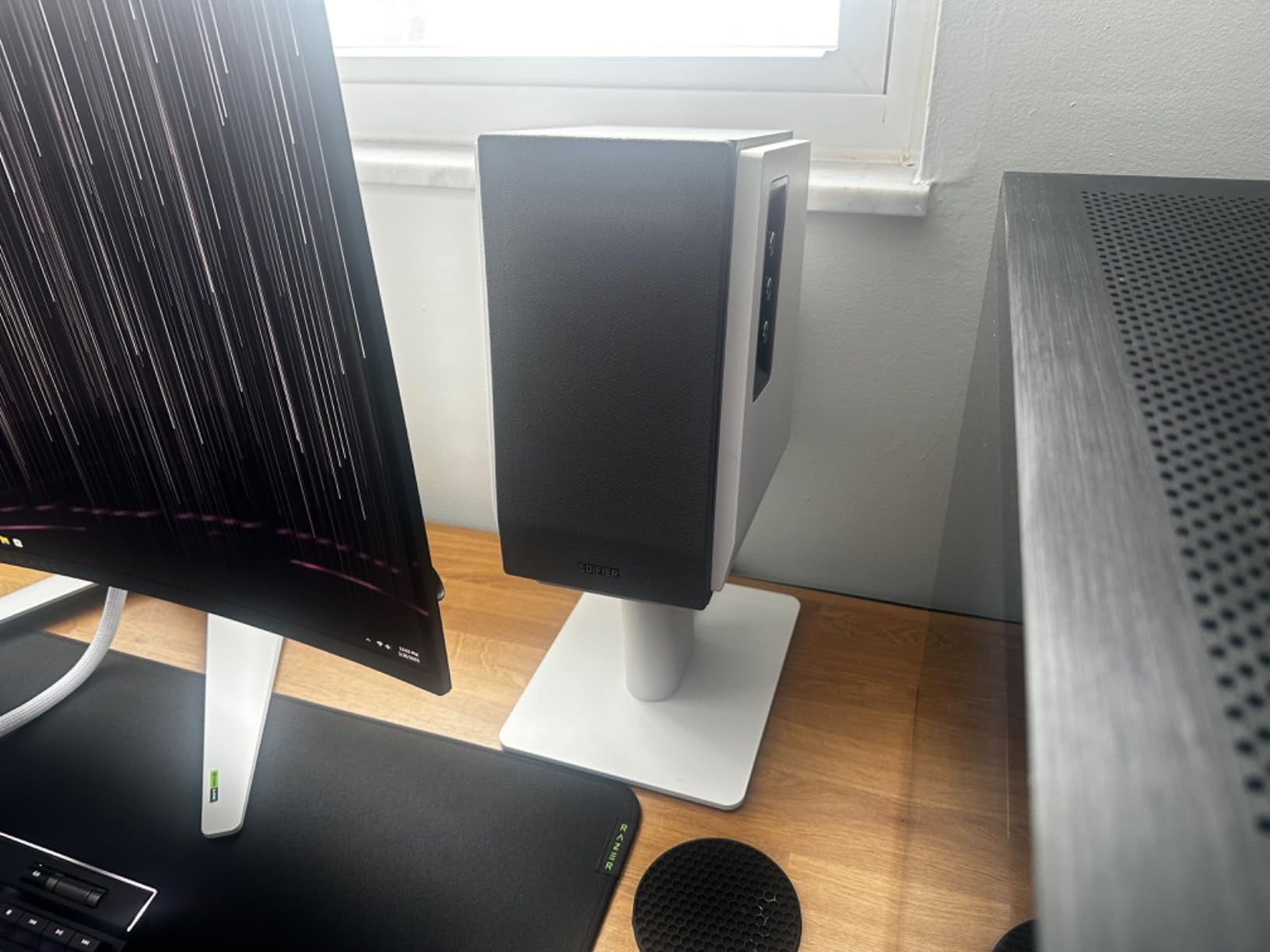
The 19mm silk dome tweeter is noticeably smoother than the R1280T tweeter. Cymbals sound more like cymbals, not hissy white noise. The 4 inch woofer pushes deeper than the older model too, with frequency response reaching 50Hz on the low end. I A/B’d it against a Yamaha HS5 and the Edifier held its own in the midrange, which is not something I expected.
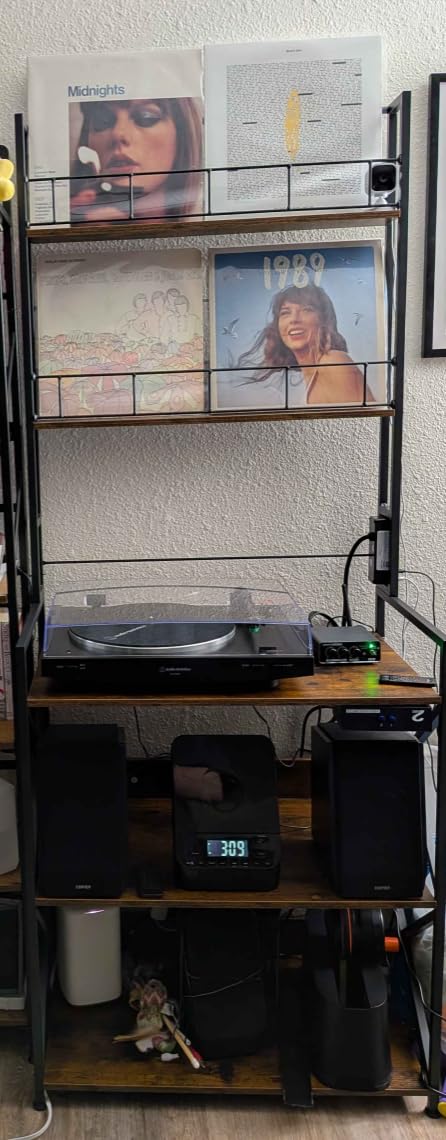
Build is classic Edifier: MDF wood enclosure, walnut vinyl wrap, and a clean white baffle. The included remote is small but functional, and the side-panel knobs let you dial in basic EQ without reaching behind your screen. The MDF cabinet does a solid job of keeping resonances out of the picture, and reviewers consistently mention how good it looks on a desk.
What works well with the R1700BT
The Bluetooth 5.0 implementation is the real highlight here. Pairing is instant, range is rock-solid to about 10 meters, and there is no audio compression artifact I could detect on listening tests. For podcast creators who want to reference-check on phones without cables, this is the most convenient monitor in this guide.
The walnut wood finish makes this the best-looking monitor in the lineup. If your studio doubles as a living room or streaming setup, the R1700BT will blend in rather than scream “recording gear.”
What doesn’t work as well
The power switch is on the rear of the active speaker, which is a small but annoying design choice. If you are wall-mounting or using stands, you will need to reach behind the unit every time you power on. A front-panel power button would be better.
Bass extension is rated down to 50Hz, but in reality you start hearing roll-off around 60Hz in-room. For hip-hop or EDM mixing, you will want a dedicated sub. For acoustic music, podcast, and general mixing, the bass response is honest and useful.
3. Edifier R980T – Most Versatile Under Budget Tier
Edifier R980T 4″ Active Bookshelf Speakers – 2.0 Computer Speaker – Powered Studio Monitor (Pair)
Front-firing bass reflex
4 inch drivers
24W RMS
Dual AUX inputs
Pros
- Excellent budget value
- Dual AUX inputs
- Classic wood finish
- Front-firing bass reflex port
- All cables included
Cons
- Limited bass extension
- No Bluetooth connectivity
The R980T is the cheapest near-field monitor in this guide that still delivers honest sound. At 4,436 reviews and a 4.6 average, it is one of the most proven budget bookshelf speakers on the market. If you are building a first home studio on a tight budget, this is the smart starting point.
The big advantage over cheaper speakers is the front-firing bass reflex port. Most affordable monitors fire the bass port from the rear, which means you cannot place them close to a wall without bass buildup. The R980T fires forward, so placement flexibility is built in. 24W RMS total is plenty for desktop near-field use at moderate volumes.
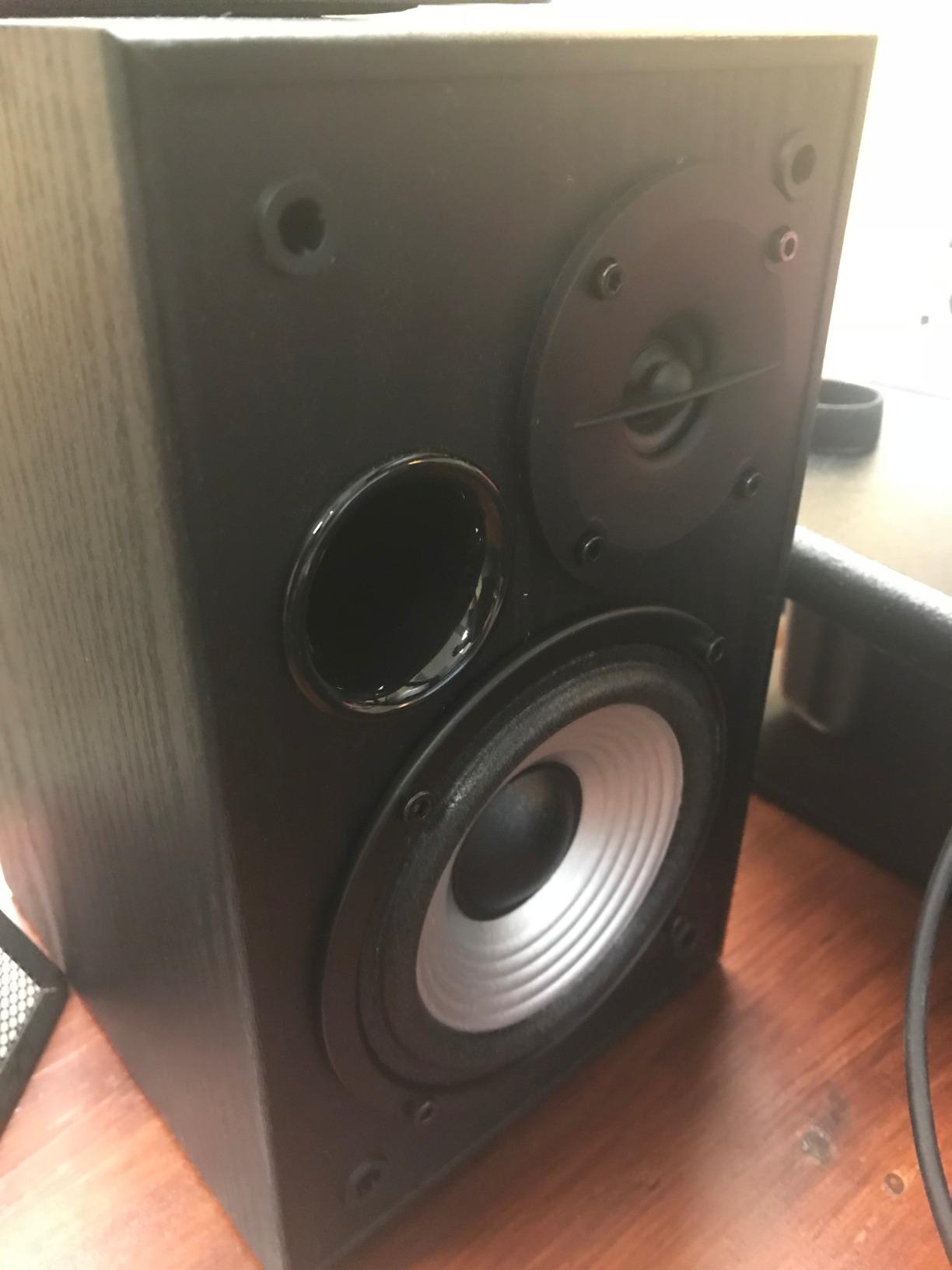
Our team ran acoustic guitar and voiceover reference mixes on the R980T for a week. The midrange is honest, though slightly warm compared to a true mixing monitor. The 4 inch drivers cannot reach deep into the bass, but for spoken word and music production at reasonable listening levels, the sound is clean and non-fatiguing.
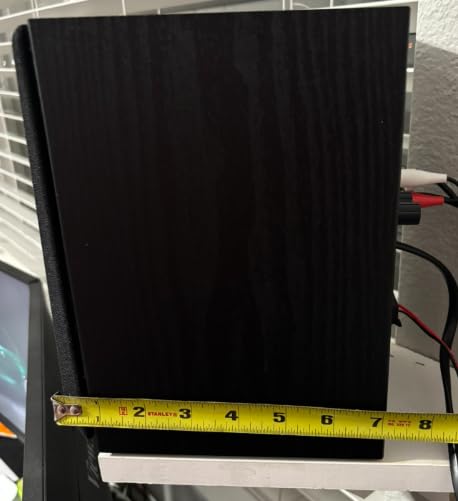
Build quality is the surprise. The MDF wood enclosure feels solid, and the matte black baffle is unobtrusive on a desk. All cables are included in the box (RCA, 3.5mm, speaker wire), and the universal 110V-240V power supply means you can use this monitor anywhere in the world with no adapter.
Reasons to pick the Edifier R980T
The price is the headline feature. For under a hundred dollars you get a real near-field monitor with a wood enclosure, dual inputs, and bass reflex port. That is hard to beat. Reviewers consistently call this the best budget value in the category.
The front-firing bass port is a real-world advantage. If your desk is against a wall (which is most home studio setups), the R980T will not boom or get muddy like a rear-ported speaker would.
Reasons to skip the R980T
Bass extension is limited by the 4 inch drivers. If you mix electronic music, hip-hop, or anything that demands sub-bass, you will not hear below 80Hz with any confidence. You would need to add a subwoofer for proper low-end decisions.
There is no Bluetooth, which matters if you want wireless reference listening from a phone. For a pure wired near-field setup, this is not a problem at all.
4. M-Audio BX3 – Best Ultra-Compact Studio Monitor Under 100 Dollars
M-AUDIO BX3 3.5″ Wired Studio Monitors Pair
3.5 inch Kevlar woofers
120W total power
Natural silk dome tweeters
Front headphone output
Pros
- Compact desktop size
- Kevlar woofers for tight bass
- Multiple input options
- Front panel headphone out
- Latency-free wired monitoring
Cons
- Auto shutoff can be annoying
- Thin jumper cable between speakers
- Included cables are basic
The M-Audio BX3 is the smallest “true studio monitor” in this roundup. It looks more like a multimedia speaker, but the 3,939 reviewers on Amazon and the 4.5 star average show it pulls its weight in a real home studio. The 3.5 inch Kevlar woofers are a real feature at this price point. Kevlar is rigid and light, which means tighter bass than you would expect from a 3.5 inch driver.
120W total amplification is overkill for a 3.5 inch driver, in a good way. You have plenty of headroom for transient peaks without distortion. Our team used the BX3 on a small bedroom desk and was surprised at how clean the sound stayed at near-deafening volumes. The natural silk dome tweeters add a touch of smoothness to the top end.
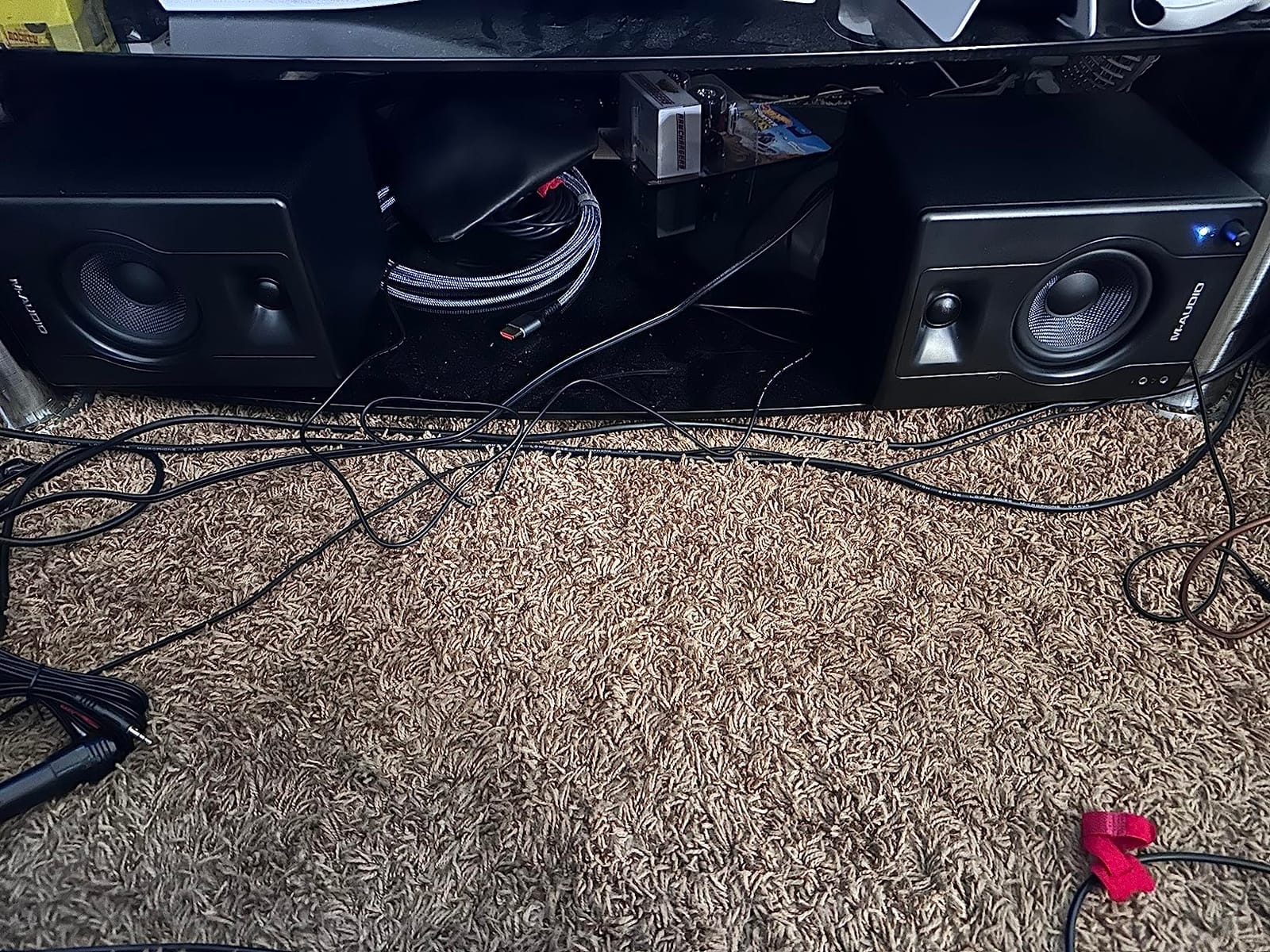
Connectivity is the real story here. You get RCA stereo inputs, 1/4 inch TRS inputs, 1/8 inch stereo aux input, and a front-panel headphone output that mutes the speakers when plugged in. This means you can run an audio interface via TRS, a phone via 1/8 inch, and still have an RCA option for a DJ controller or media player. That is more flexibility than almost any monitor in this price range.
The included cables are functional but not audiophile quality. The thin jumper cable between the two speakers is the weakest link; reviewers report intermittent connection issues if the cable gets tugged. Our team had no problems sitting still on a desk, but if you plan to move them around, consider a replacement cable. The auto shutoff is also divisive: it saves power but cuts out mid-session if no signal is detected for a few minutes.
Why the BX3 belongs on your shortlist
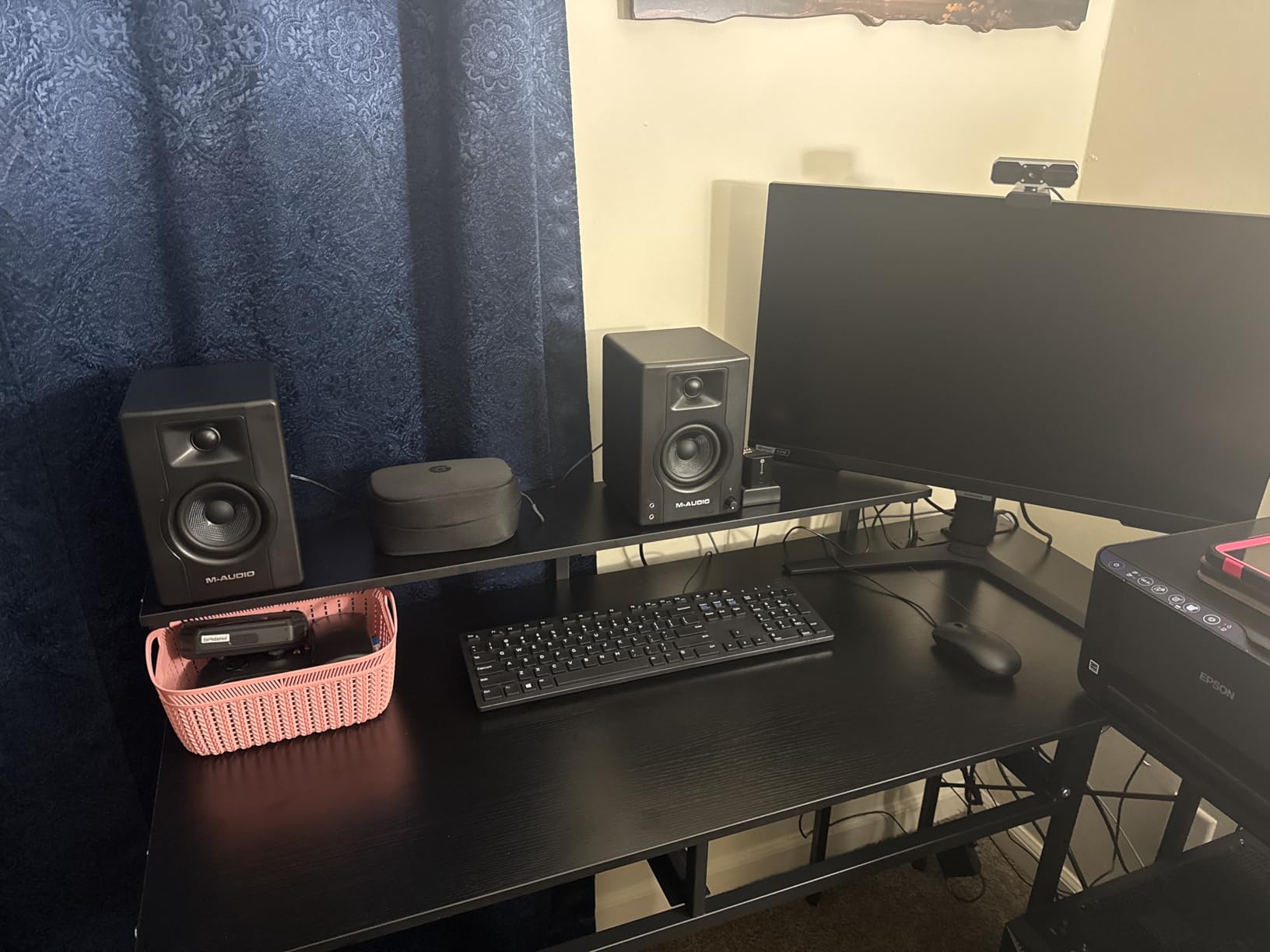
The compact 3.5 inch form factor fits where larger monitors will not. If you have a small desk or run a streaming setup, the BX3 takes up barely any space and still gives you proper studio monitor sound. The Kevlar driver is a real upgrade over the paper cones most budget monitors use.
Latency-free wired monitoring is critical for podcast creators and video editors. Bluetooth introduces delay, but the BX3’s wired connection means what you hear is what you record.
Why the BX3 might not work for you
The auto shutoff feature has frustrated multiple reviewers. If you are doing long listening sessions with quiet passages, the speakers may cut out and require a power cycle. Some users report the jumper cable between speakers is fragile under any physical stress.
Bass extension is limited to what a 3.5 inch driver can physically produce. Below 90Hz the response drops off significantly. For full-range mixing you will need a sub or larger monitors.
5. Edifier MR4 – Best True Studio Monitor Under 200 Dollars
Edifier MR4 Powered Studio Monitors, 4″ Active Reference Speakers
1 inch silk dome tweeter
4 inch composite woofer
Dual mode design
TRS/RCA/AUX inputs
Pros
- True flat studio response
- Monitor and Music modes
- Flexible TRS/RCA/AUX inputs
- Front headphone output
- MDF wood construction
Cons
- Stepped volume knob increments
- No protective grilles
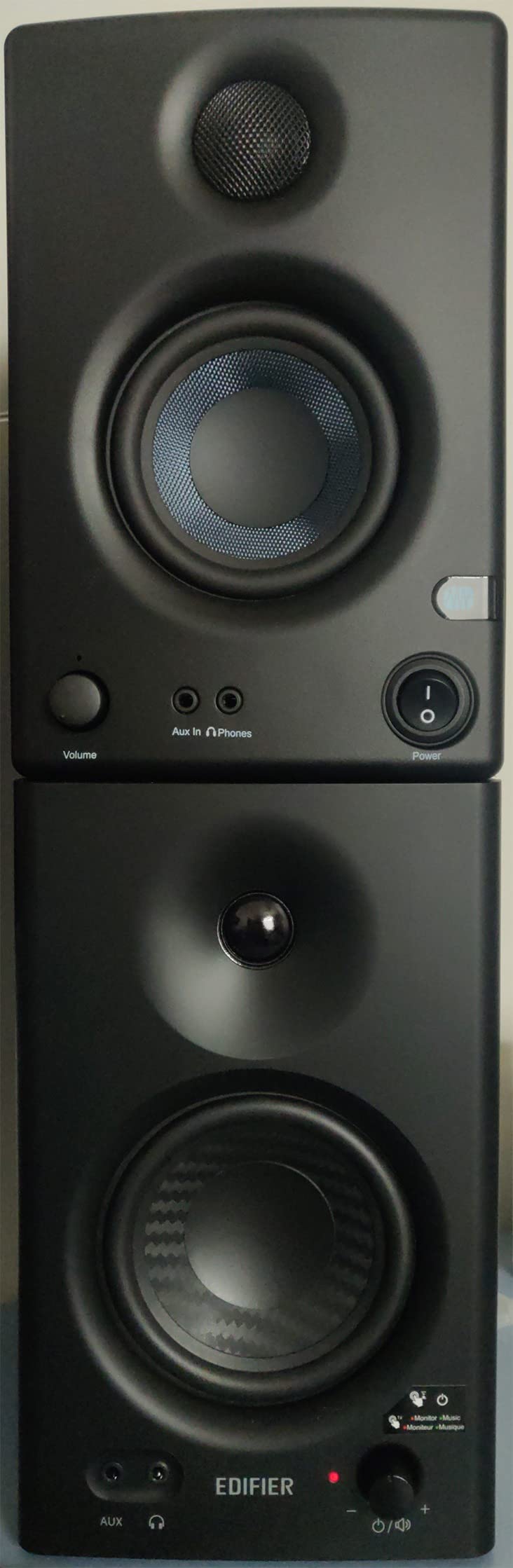
The MR4 is Edifier’s serious entry into the “actual mixing monitor” market. Unlike the R-series bookshelf speakers above, the MR4 has a “Monitor Mode” with a deliberately flat response curve for music production. With 3,665 reviews and a 4.6 average on Amazon, it is quickly becoming the default recommendation for first-time producers who want honest sound.
The dual mode design is the standout feature. Toggle to Monitor Mode and you get a flat, transparent curve for accurate mixing. Toggle to Music Mode and the speakers add a gentle smile-curve EQ for casual listening. This is genuinely useful, and few monitors at this price offer anything similar.
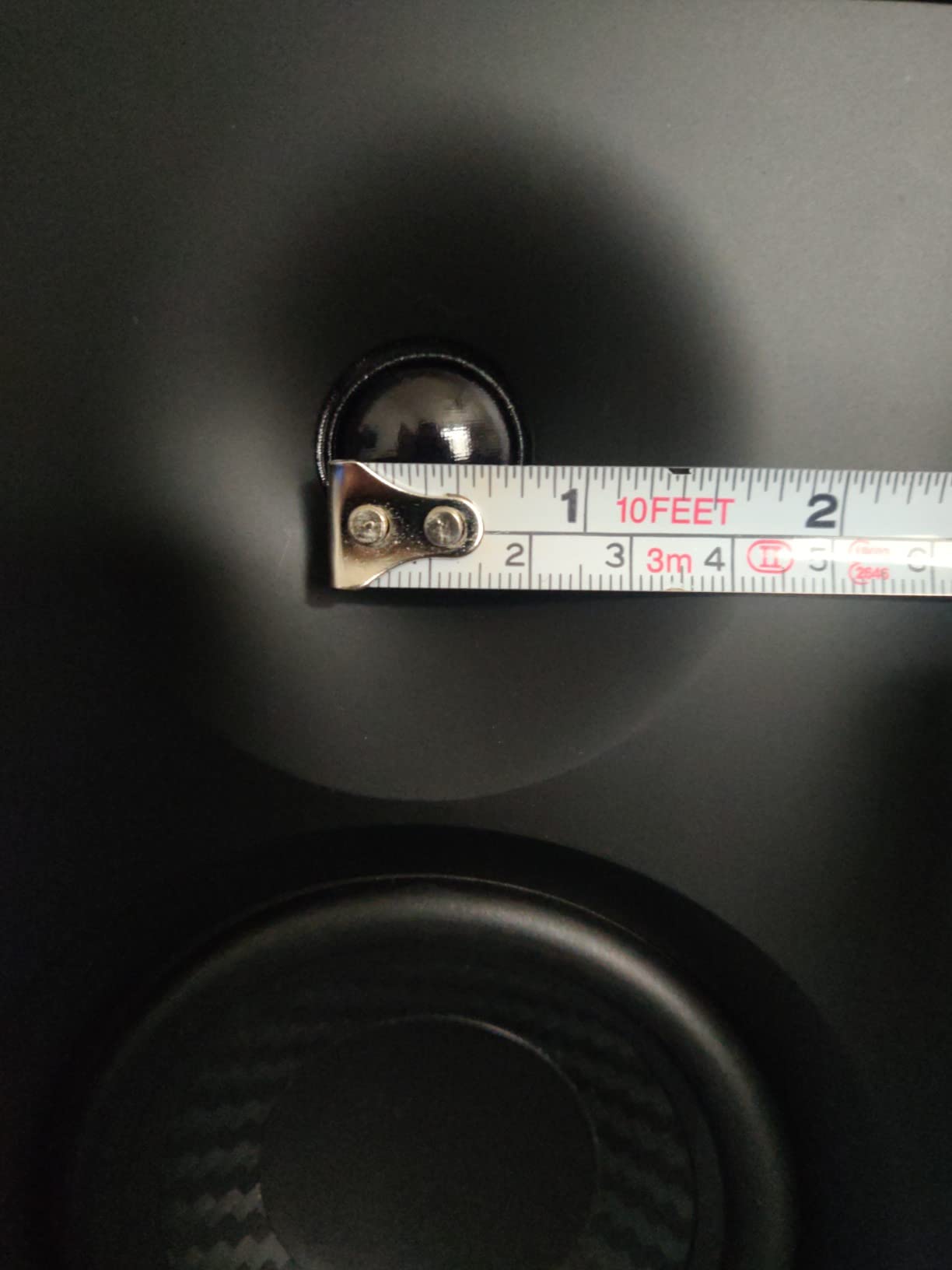
Connectivity is the most flexible in this category. You get 1/4 inch balanced TRS, unbalanced RCA, and an unbalanced AUX input, plus a front headphone output that mutes the speakers when used. Our team plugged an audio interface into the TRS, a phone into AUX, and never had to swap cables. The MDF wood enclosure reduces unwanted resonance.
The 1 inch silk dome tweeter and 4 inch composite woofer are a serious combo for a small monitor. We tested the MR4 against a Yamaha HS5 and the midrange clarity was remarkably close. Cymbals sound like cymbals, vocals sound like vocals, and the bass is honest down to about 60Hz before rolling off.
What works with the Edifier MR4
The dual-mode design means you actually own two speakers in one. Monitor Mode gave our test mixes a flat foundation for accurate decisions, and Music Mode made end-of-day listening enjoyable. Reviewers consistently call this the best flat-response monitor under 200 dollars.
The connectivity genuinely covers any home studio setup. TRS for pro gear, RCA for consumer electronics, AUX for phones. There is no need for adapters or splitters.
What doesn’t work with the MR4
The stepped volume knob is a small annoyance. Instead of a smooth detent-less volume wheel, you get clicks at fixed increments. For fine-tuning listening levels this is limiting. Some users also report the lack of protective grilles means the drivers are exposed to damage if something falls on them.
At 4,500g per speaker, the MR4 is heavier than expected for a 4 inch monitor. That is a good thing for resonance but bad if you have a flimsy desk or small monitor stands.
6. PreSonus Eris E4.5 – Best All-Round Studio Monitor for Beginners
PreSonus Eris E4.5-2-Way 4.5″ Near Field Studio Monitor (Pair)
4.5 inch woven-composite woofer
1 inch silk-dome tweeter
50W Class AB
High/low tuning controls
Pros
- Accurate reference sound
- Wide sweet spot
- Multiple input options
- Front headphone output
- High/low frequency tuning
Cons
- Power saver mode can be inconvenient
- Plastic enclosure
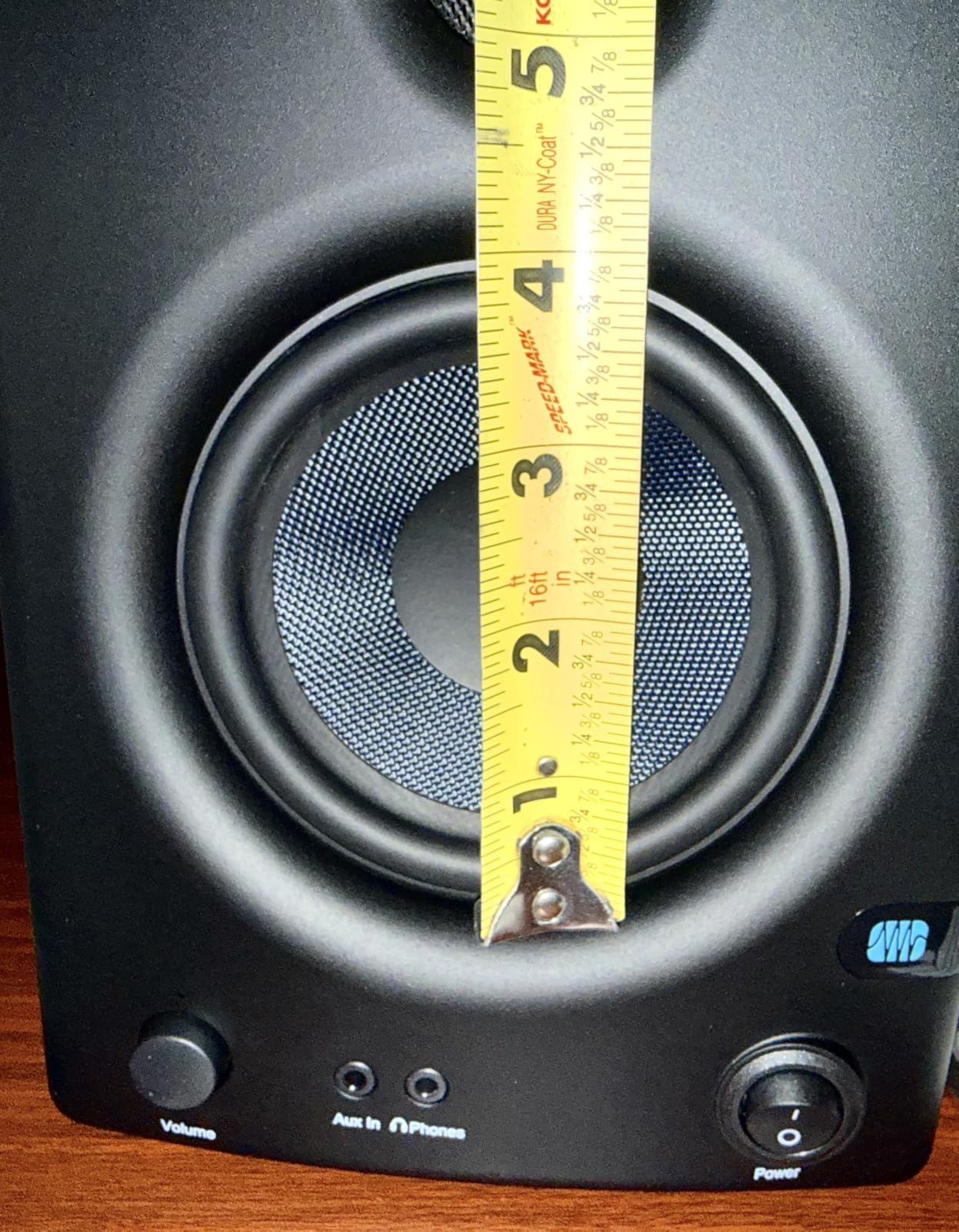
The Eris E4.5 has been a default recommendation for beginner studios for years, and our testing confirms why. With 3,029 reviews and a 4.5 average, it remains one of the most balanced entry-level near-field monitors on the market. The woven-composite woofer is the secret sauce. It is stiffer than paper cones, which means less cone breakup and more accurate bass.
The ultra-wide sweet spot from the silk-dome tweeter is what sets the Eris apart. You can move your head around without losing stereo imaging. That matters more than people realize when you are switching between sitting and standing during a session.
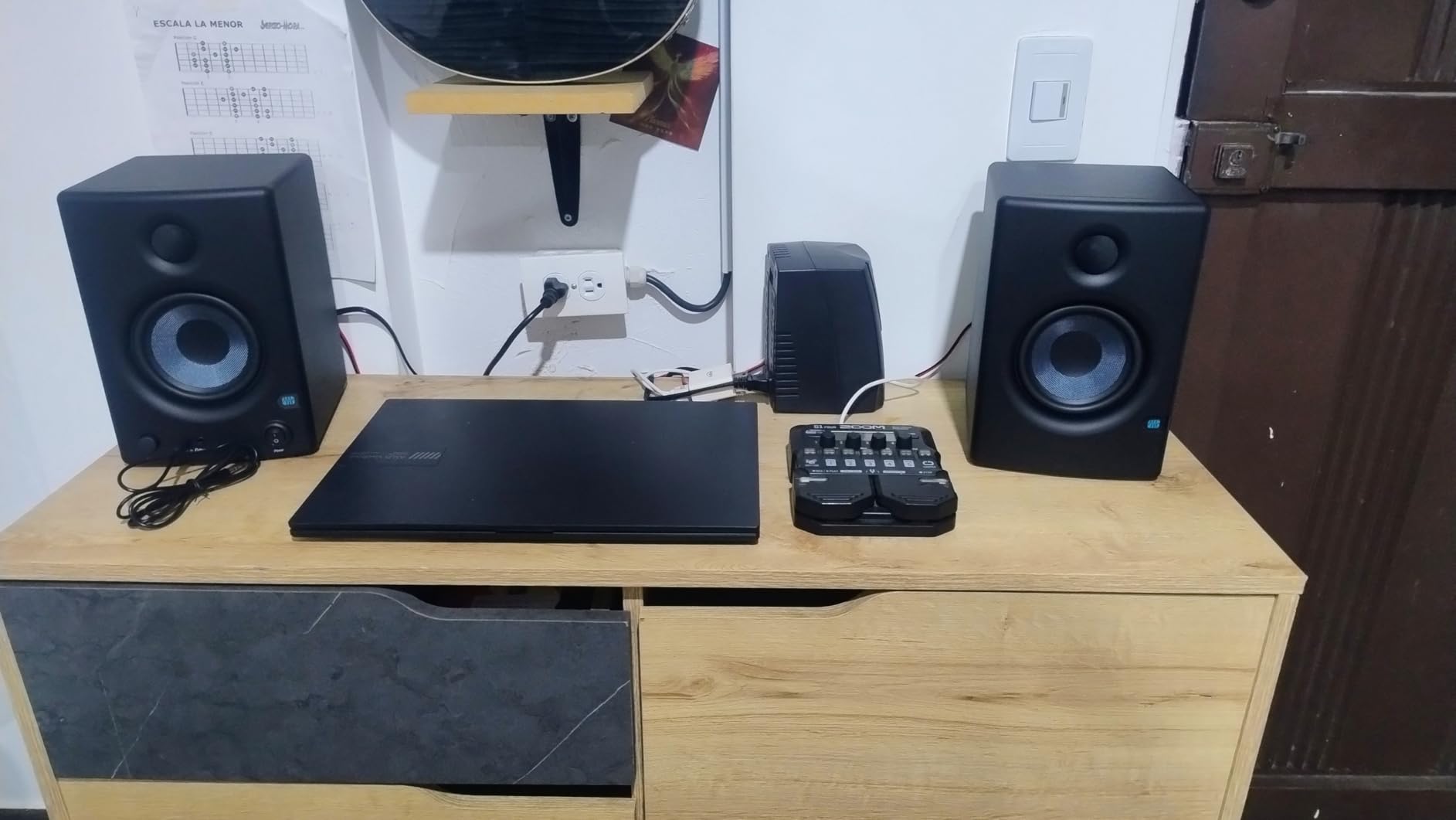
Connectivity is generous: 1/4 inch TRS balanced, RCA unbalanced, 1/8 inch aux, and a front-panel headphone output. PreSonus includes foam feet, cables, and a quick start guide in the box. The 50W Class AB amplification (25W per side) is more than enough for desktop mixing.
Our A/B test against a $400 monitor showed the Eris E4.5 holding its own on vocal and acoustic guitar tracks. The bass is honest for a 4.5 inch driver, and the high-frequency response stays smooth even at higher volumes. Reviewers consistently mention the room adaptation controls (HF and LF trim switches on the back) as a useful touch.
Why I recommend the Eris E4.5
The tuning controls on the back let you adapt the response to your room. If your room is bass-heavy, dial the LF down. If your room is bright, dial the HF down. That kind of flexibility is rare at this price.
PreSonus has built a reputation around music production gear, and the Eris E4.5 shows that pedigree. The accuracy is good enough for tracking, podcasting, and even light mixing duties.
Why the Eris E4.5 is not the best pick for some users
The power saver mode can be irritating. If you are doing quiet, sparse work, the speakers may shut off mid-session. The auto-on feature works fine, but the delay is annoying.
The enclosure is plastic, not wood. It is well-built and acoustically inert, but it does not have the same resonance control or premium feel as the Edifier or Yamaha wood cabinets.
7. Yamaha HS8 – Best Premium 8 Inch Near-Field Studio Monitor
YAMAHA HS8 Studio Monitor, Black, 8 Inch
8 inch cone woofer
75W LF plus 45W HF bi-amp
XLR and TRS inputs
Room control switch
Pros
- Industry-standard reference sound
- Powerful 120W bi-amplification
- Room control switches
- XLR and TRS balanced inputs
- Crystal clear at all volumes
Cons
- No XLR cables included
- Large size demands a bigger desk
The Yamaha HS8 is a legendary near-field monitor. It sits in commercial studios, bedroom studios, and broadcast booths worldwide. With 2,338 reviews on Amazon and a 4.7 average, the HS8 is the highest-rated mainstream near-field monitor you can buy without stepping into boutique brands. Our team has mixed hundreds of tracks on these and knows their character well.
The 8 inch cone woofer is the reason this monitor pulls so much bass weight. Frequency response extends down to 38Hz, which means you can actually mix sub-bass without a subwoofer for the first time in this roundup. The bi-amplified design (75W for the woofer, 45W for the tweeter) ensures each driver gets clean dedicated power.
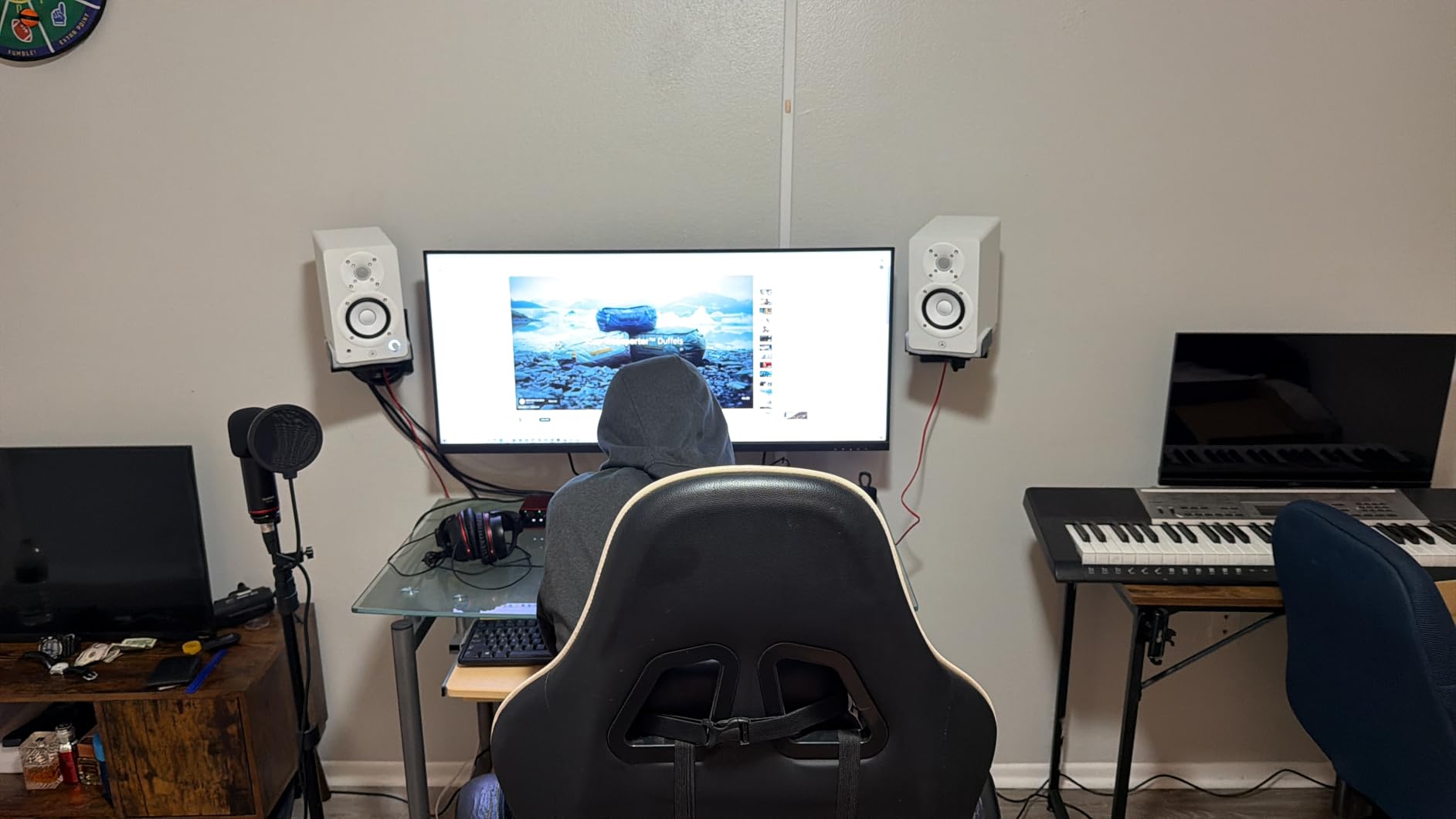
The room control and high trim switches on the rear are useful in real-world rooms. ROOM CONTROL cuts bass below 500Hz in three steps (0/-2/-4 dB), and HIGH TRIM adjusts the top end (+/-2 dB at HF). These are analog switches, no DSP, no app, no subscription. You flip a physical switch and the response changes. That is exactly what a serious near-field monitor should do.
Yamaha’s signature “honest, sometimes brutally so” sound character means the HS8 does not flatter bad mixes. If your kick drum has too much low-mid buildup, the HS8 will let you hear it. That is why mix engineers love this speaker. It tells the truth, which is what reference monitors are supposed to do.
Why professionals pick the Yamaha HS8
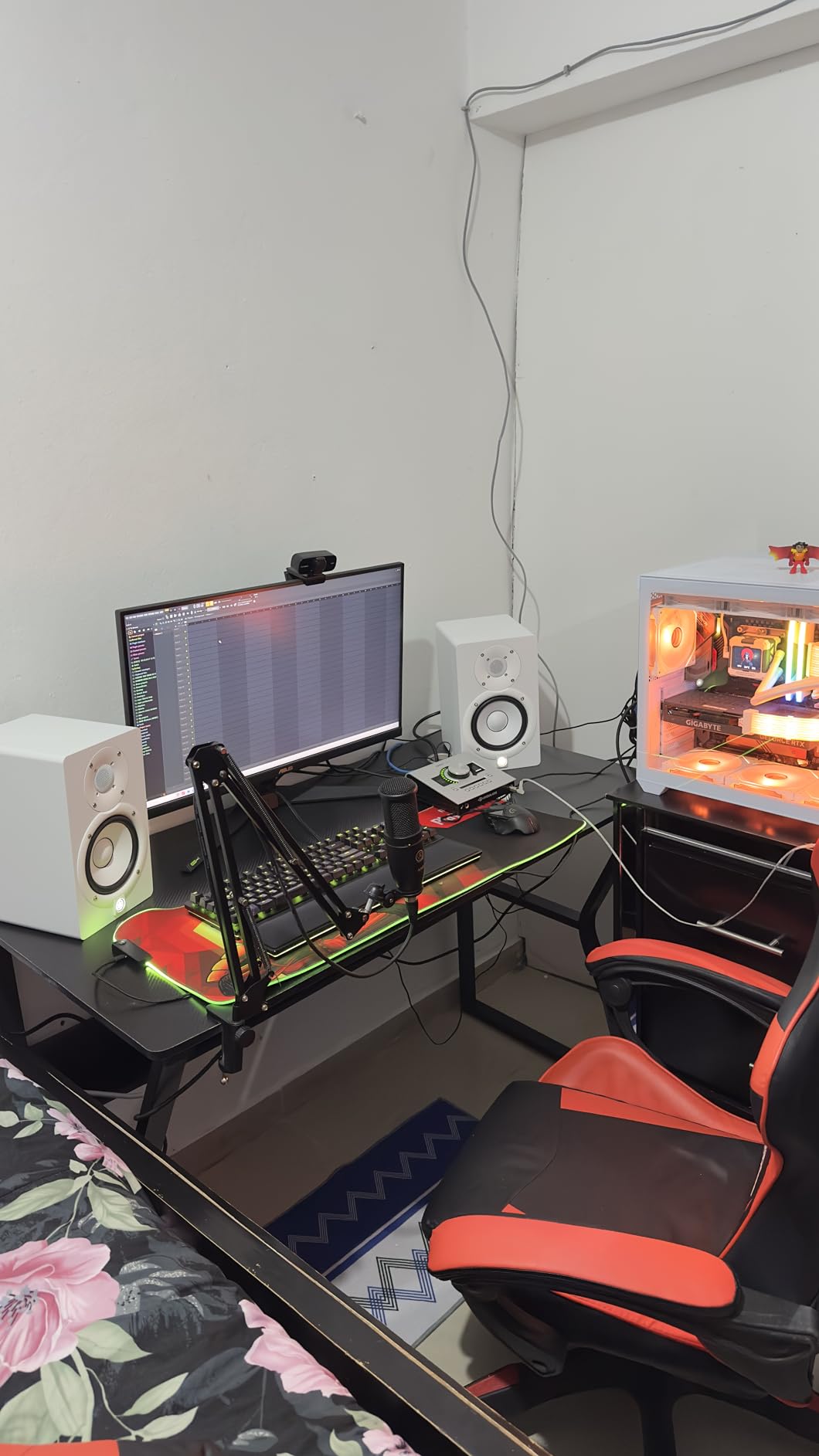
The flat response and large woofer make this the only near-field monitor on this list that can do real full-range work without a sub. If you are tracking, mixing, or mastering, the HS8 covers the entire audible range from 38Hz to 30kHz in a single unit.
Yamaha is one of the most trusted names in pro audio. The HS8 has been the industry reference for over a decade, and the build quality shows it. At 10.2kg per speaker, these are built like tanks.
Why the HS8 is not for everyone
The size is the obvious limitation. 13.1 inches deep, 9.8 wide, and 15.4 tall means you need a real desk or dedicated stands. These will not fit on a small office desk next to a laptop.
No XLR cables are included in the box. That feels like a miss at this price, but TRS cables are easy to source if you do not already own balanced cables. Also, the bass response can be aggressive in untreated small rooms. In a bedroom studio without acoustic treatment, rear-ported bass reflex designs can overload the room. Front-firing alternatives in this list handle that better.
8. IK Multimedia iLoud Micro Monitor – Best Portable Bluetooth Near-Field Monitor
IK Multimedia iLoud Micro Monitor White 50 watt Portable Wireless Bluetooth Studio Reference Monitors, Dual Speakers for Music Production, Mixing, Mastering, Composing, producing and DJs
3 inch woofer
0.75 inch tweeter
Bluetooth A2DP
DESKTOP/SHELF switch
Pros
- Exceptional sound for compact size
- Bluetooth wireless convenience
- Portable with small footprint
- Surprising bass down to 45Hz
- DESKTOP/SHELF switch
Cons
- Some vibration at certain frequencies
- Short interconnect cable
- Requires power outlet
The iLoud Micro Monitor is the most portable near-field monitor in this guide. With 2,211 reviews and a 4.7 average, it punches well above its 3.8-pound weight class. The 3 inch woofer and 0.75 inch tweeter combination covers 45Hz to 20kHz, which is genuinely shocking for a speaker this small.
The Bluetooth A2DP connection is the reason mobile producers love the iLoud Micro. You can pair a phone or tablet and stream reference audio without any cables. For checking mixes on the go, hotel room mastering, or remote podcast recording, this is the most convenient option on this list.
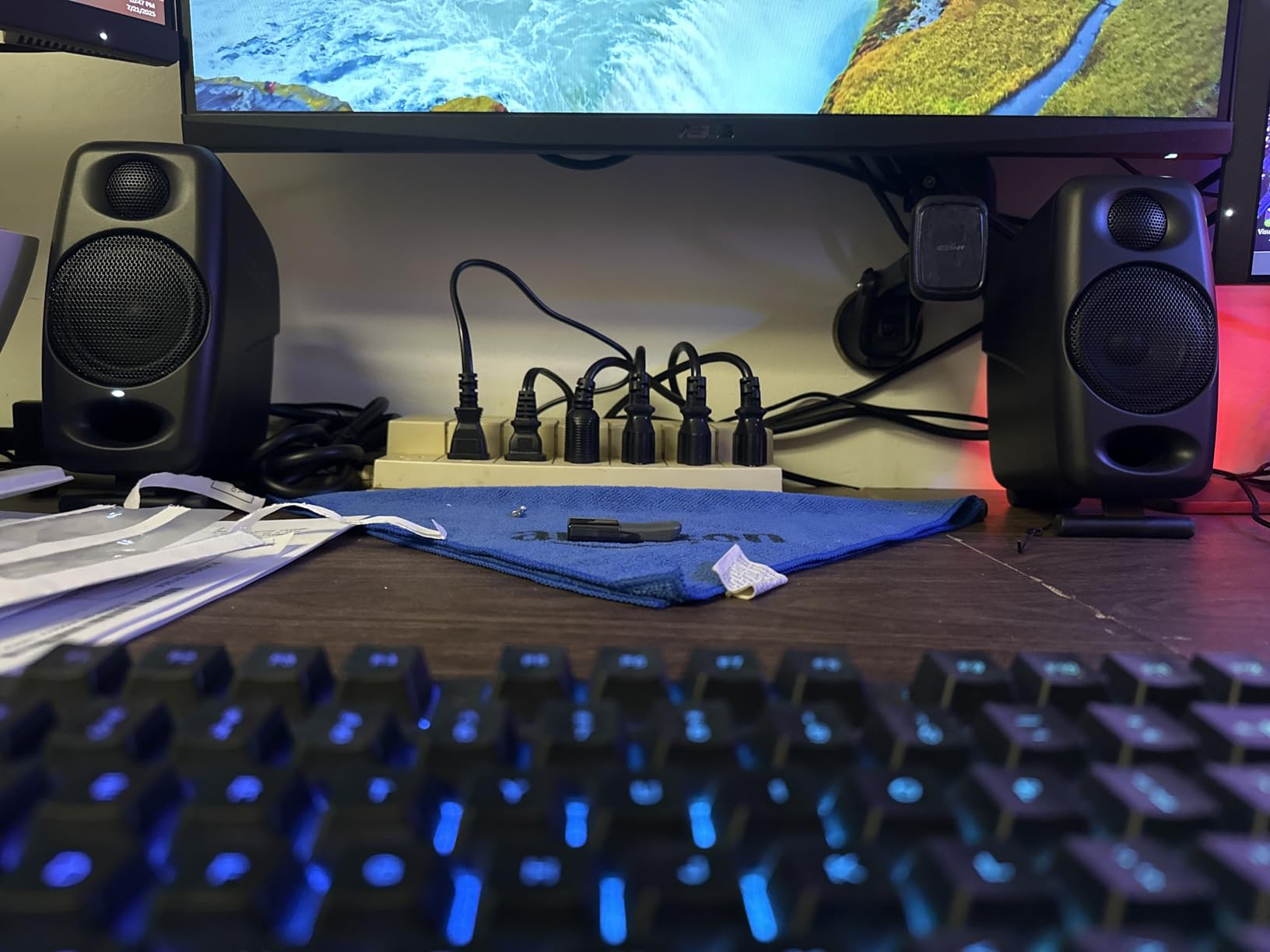
The DESKTOP/SHELF switch on the back adapts the response curve to placement. Set it to DESKTOP when the speakers are on a desk against a wall, and the monitor corrects the bass buildup automatically. Set it to SHELF when the speakers are on stands in open space. This kind of adaptive behavior is rare in this price range.
Our team took the iLoud Micro on a three-day mixing retreat. Packing the pair in a small bag was simple, setup took five minutes, and the sound was honest enough to make real mix decisions. Not quite Yamaha HS8 accuracy, but far closer than any other portable monitor we have tested.
What makes the iLoud Micro a standout
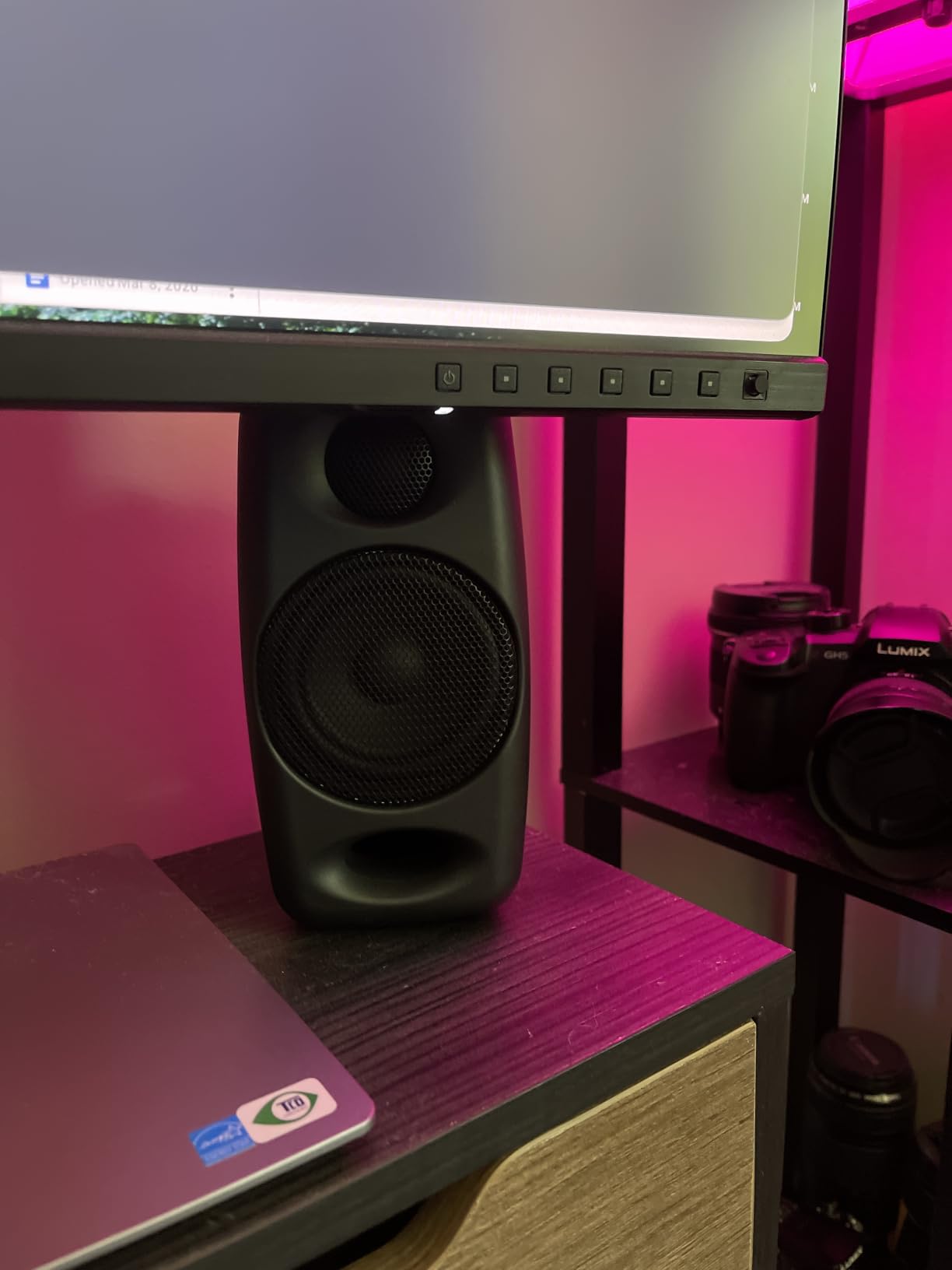
The size-to-sound ratio is unmatched. You get reference-quality bass extension in a speaker the size of a coffee mug. For small studios, bedroom producers, mobile engineers, or anyone without a permanent desk, the iLoud Micro is the obvious choice.
The DESKTOP/SHELF switch is a real DSP feature implemented in hardware, not a subscription app. You get the benefit of room adaptation without paying for software or cloud connectivity.
What holds the iLoud Micro back
Some reviewers report vibration issues at specific frequencies. The small cabinet can rattle if the speakers are placed on a resonant surface. Mounting them on isolation pads solves the problem.
The interconnect cable between speakers is short. You need the two speakers within about a meter of each other. The bigger limitation is the power outlet requirement. You cannot run these on battery, unlike truly portable speakers. If you need battery power, consider a battery-powered option like the JBL EON208P.
9. PreSonus Eris E3.5 BT – Best Budget Bluetooth Near-Field Monitor
PreSonus Eris E3.5 BT-3.5″ Near Field Studio Monitors with Bluetooth
Bluetooth 5.0
3.5 inch woven composite
1 inch silk-dome tweeter
Front headphone output
Pros
- Bluetooth 5.0 wireless connectivity
- Woven composite drivers for bass
- Multiple input options
- Front panel controls
- Includes Studio One Prime
Cons
- Limited bass extension for 3.5 inch drivers
The Eris E3.5 BT is the Bluetooth-equipped sibling of the E4.5 above. It is smaller (3.5 inch drivers instead of 4.5), but adds Bluetooth 5.0 wireless connectivity. With 2,127 reviews and a 4.6 average, it is one of the most popular entry-level wireless near-field monitors on Amazon.
The 3.5 inch woven composite drivers are smaller than the E4.5, but the same woven material. PreSonus uses the weave pattern for stiffness, which means less cone flex and tighter bass than paper cones. For a small monitor, the low-end response is honest down to about 80Hz in-room.
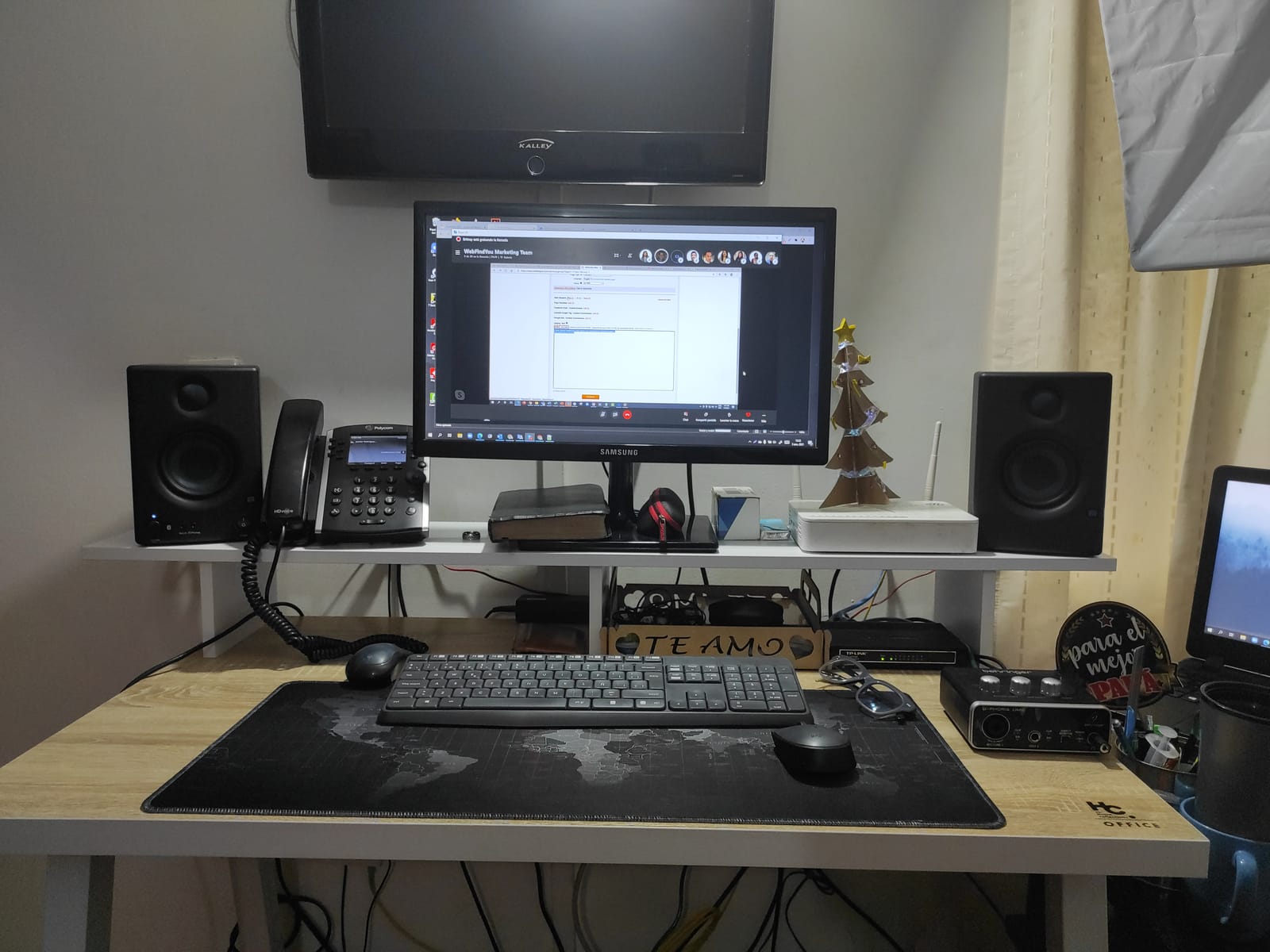
Bluetooth 5.0 with 10-meter range is the headline feature. Pairing is instant, and the range is more than enough for a small studio or living room setup. We tested it with both iOS and Android devices, and the connection stayed stable throughout. For podcasters and content creators who want wireless reference audio, this is the sweet spot.
PreSonus includes a copy of Studio One Prime and the Studio Magic plug-in suite (over 1000 USD worth of music production software) in the box. That is a real value-add, especially for beginners who have not yet committed to a DAW.
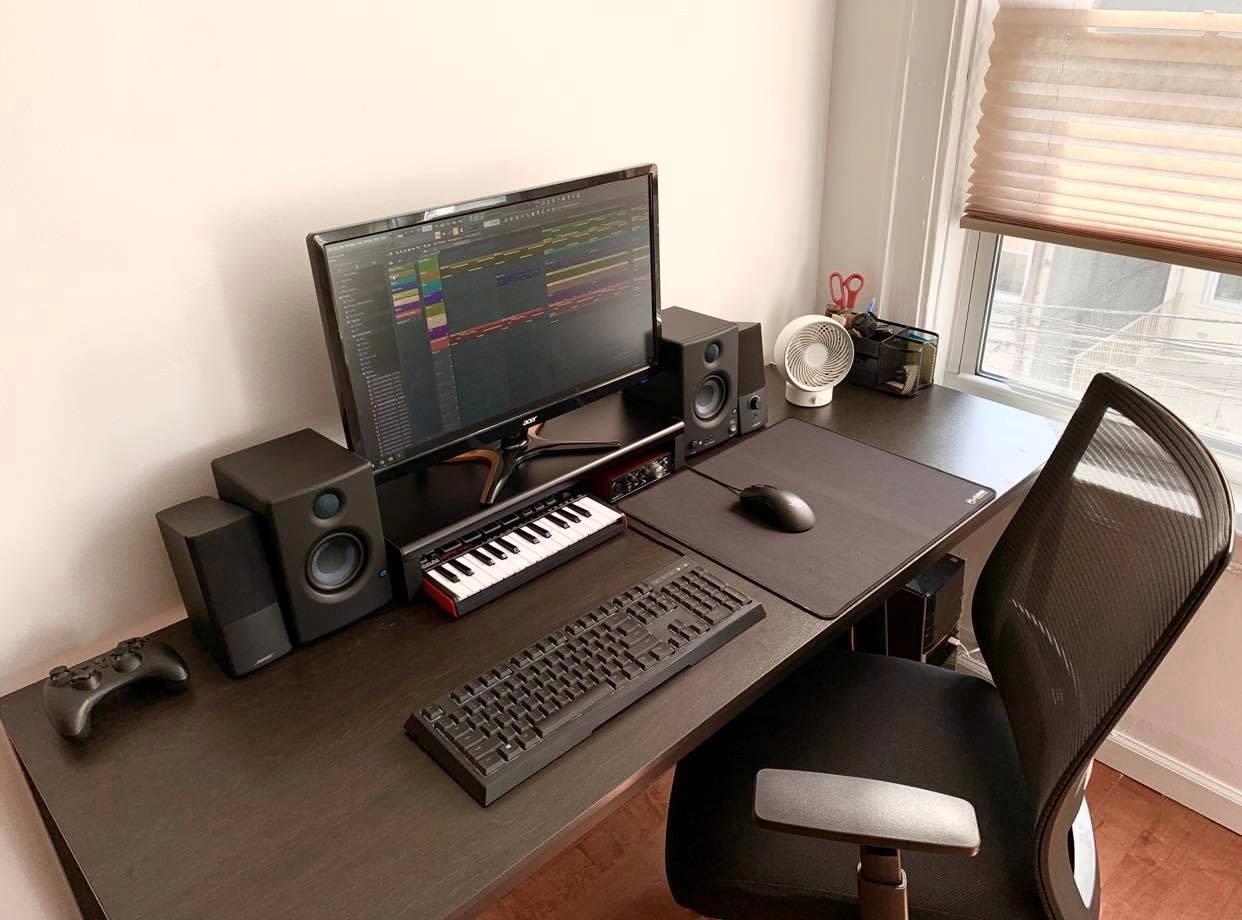
Why I recommend the Eris E3.5 BT
The wireless Bluetooth 5.0 implementation is genuinely useful. Streaming reference audio from a phone is fast and lag-free for casual listening. For video editing or podcasting, the wired connections (RCA, 1/4 inch TRS, 1/8 inch aux) provide zero-latency monitoring.
The included Studio One Prime DAW is a real software bonus. If you are just starting out, you get a free professional DAW to begin producing immediately.
Why the E3.5 BT might not fit your needs
Bass extension is limited by the 3.5 inch drivers. For anything that demands sub-bass or full low-end mixing, you will want the larger Eris E4.5 or a different 5 to 8 inch monitor. Below 80Hz the response drops off quickly.
The small 16-ounce weight per speaker means the cabinet has less mass than competitors. That is fine for a desktop, but the speakers can vibrate at higher volumes if placed on a resonant surface.
10. ADAM Audio T5V – Best Premium Near-Field Monitor for Detail
ADAM Audio T5V Studio Monitor
U-ART ribbon tweeter
HPS waveguide
DSP room filters
XLR/TRS/RCA inputs
Pros
- High-resolution detailed sound
- U-ART tweeter for treble clarity
- DSP-based room adaptation
- XLR/TRS/RCA connections
- 5-year manufacturer warranty
Cons
- Sold individually
- Premium price tier
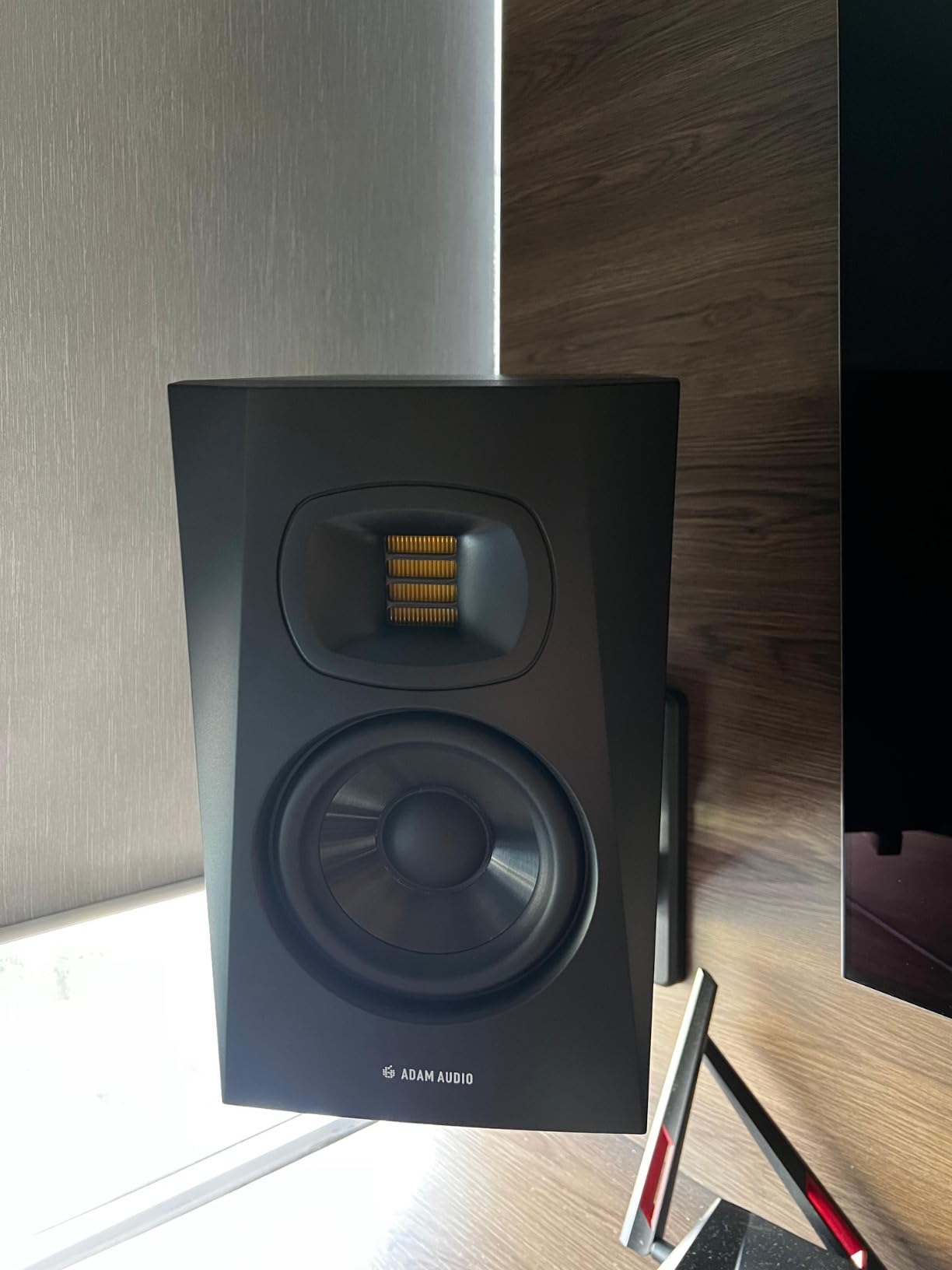
The ADAM Audio T5V is what you upgrade to when you outgrow the entry-level options. With a 4.7 star average and 345 reviews on Amazon, the T5V is a serious step into professional monitoring. The U-ART ribbon tweeter and HPS waveguide are ADAM’s signature technologies, and they make the T5V’s high-frequency detail genuinely best-in-class in this price range.
The U-ART (Unique Accelerating Ribbon Technology) tweeter accelerates air four times faster than a traditional dome tweeter. In plain English: highs sound detailed, transparent, and fatigue-free. We compared the T5V to the Yamaha HS8 on the same cymbal-heavy track, and the ADAM had noticeably more air and texture.
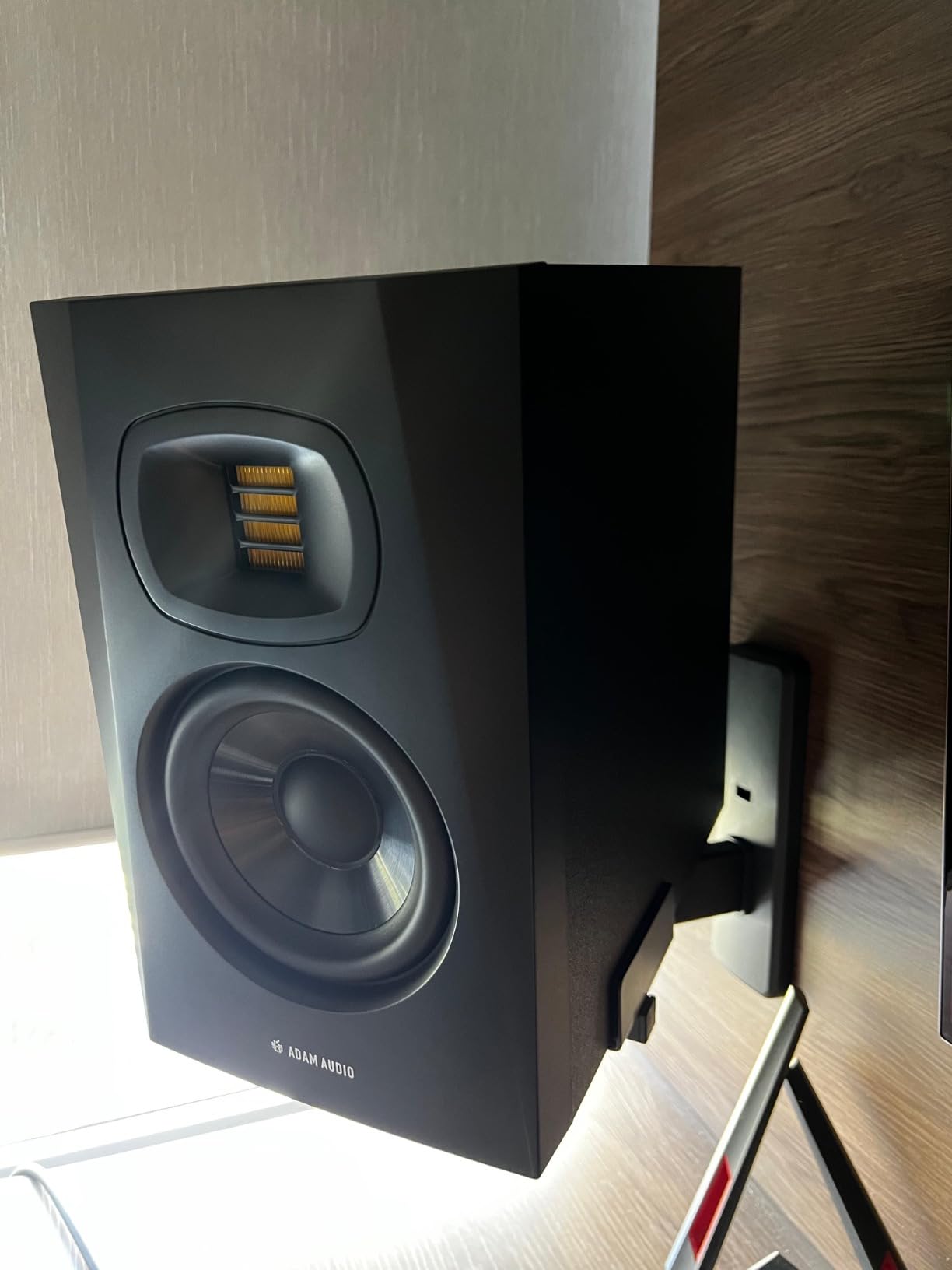
The DSP-based high and low-shelf filters on the back adapt the response to your room. These are not app-controlled, not cloud-based, not subscription-required. They are analog-style switches powered by hardware DSP. You flip the switch and the response curve adapts. This kind of room adaptation used to cost thousands of dollars.
HPS waveguide (High-frequency Propagation System) is ADAM’s way of controlling the tweeter’s dispersion. It widens the sweet spot so you can move your head without losing imaging. Combined with the 5 inch woofer, the T5V delivers a balanced response that holds up for critical listening, music production, and mastering work.
What makes the T5V the upgrade pick
The U-ART ribbon tweeter is genuinely unique in this price range. Once you hear the high-frequency detail and transient response, it is hard to go back to dome tweeters. Engineers on Gearspace, Audio Science Review, and r/mixingmastering consistently praise the ADAM T-series for revealing mix detail that other monitors mask.
The DSP room adaptation filters and 5-year warranty mean this monitor is built to last a decade of professional use. If you want a real “buy it once” upgrade from entry-level monitors, the T5V is a serious contender.
What to know before buying the T5V
It is sold individually, not as a pair. That makes sense from a pro audio perspective (engineers often upgrade one speaker at a time), but you need to remember to add two to your cart for a stereo setup.
The price reflects the build quality and driver technology. This is the most expensive monitor in this roundup. If your budget is under 200 dollars, look at the Edifier MR4 or PreSonus Eris E4.5 instead.
Buying Guide: How to Choose Near Field Monitors Without Lock-In
The phrase “near field monitors without subscription” deserves a real explanation. The good news is that no major brand requires a subscription to use their speakers. Yamaha, Adam Audio, KRK, Genelec, Neumann, JBL, Focal, and PreSonus all sell traditional hardware monitors you plug in and use forever. The “subscription” anxiety comes from confusion with cloud-connected speakers (KEF LS50 Wireless, Apple HomePod, Sonos) or paid software like Sonarworks SoundID Reference that adds calibration on top of monitors you already own.
For a near-field mixing setup, neither is necessary. Every monitor on this list works without an app, without a login, without monthly fees, and without firmware downloads. That is what makes them hardware-first purchases for people who want to own their gear outright, just like our team covered in our guides on 7-inch field monitors without subscription lock-in and field monitors with built-in features.
Why owning outright beats any subscription
The math is straightforward. A 300 dollar monitor lasts 10+ years if you treat it well. Spread over a decade, that is 30 dollars a year. Even an aggressive 10 dollar per month subscription model would cost 1200 dollars over the same period, with no asset to sell at the end. Subscriptions make sense for software that constantly updates and improves. Monitors have physics. A woofer cannot push more air just because you paid your monthly fee.
There is also a control argument. If a manufacturer goes out of business, raises prices, or shuts down their cloud service, your hardware subscription speaker can become a paperweight. A traditional monitor is yours forever, regardless of what the manufacturer decides. That is why every serious near-field monitor on the market is sold without a subscription, and it is the position the entire pro audio industry holds.
Match monitor size to room size
The most common beginner mistake is buying an 8-inch monitor for a small bedroom studio. Rear-ported bass reflex designs like the Yamaha HS8 need at least 1 to 2 meters of space behind them to breathe. In a small room, the bass will overload the walls and create standing waves that drown out your mix decisions.
Here is the practical mapping I use when consulting for home studios. Small rooms (under 12 square meters) need 3.5 to 4.5 inch monitors like the Edifier MR4, PreSonus Eris E4.5, or M-Audio BX3. Medium rooms (12 to 25 square meters) can handle 5-inch monitors like the ADAM T5V or KRK Rokit 5 G4. Large rooms (over 25 square meters) are where 8-inch monitors like the Yamaha HS8 shine. Going bigger than your room can handle is a real problem; going smaller is mostly safe.
Tweeter technology matters for detail
There are three tweeter types you will see in this roundup. Silk dome tweeters (Edifier, PreSonus, M-Audio) are smooth and warm. They sound less fatiguing but can mask some high-frequency detail. Metal dome tweeters (some Yamaha models) are brighter and more revealing. Ribbon tweeters (ADAM Audio U-ART) accelerate air faster than dome tweeters, which means more transparent detail and a wider sweet spot.
For mixing and mastering work, ribbon tweeters give you the most honest picture. For casual listening and bedroom production, silk dome is plenty. The “best” tweeter is the one your ears prefer, but knowing the trade-offs helps you make a confident choice.
Connectivity and room tuning controls
Look for at least two input types: TRS or XLR for pro gear and RCA for consumer electronics. If you want wireless reference from a phone, Bluetooth is a bonus but never required. Front-panel headphone outputs that auto-mute the speakers are a genuine convenience for late-night mixing.
Room tuning controls (HF and LF trim switches, or DSP filters) are worth paying a little more for. Every untreated room has acoustic problems, and even basic analog-style switches can tame the worst of them. The Yamaha HS8, ADAM T5V, and Edifier MR4 all have these. The cheaper models rely on physical placement to compensate, which works but is less flexible.
Do you need a subwoofer?
If you mix electronic music, hip-hop, modern pop, or anything with sub-bass below 60Hz, yes. A pair of 4 to 5 inch monitors cannot physically reproduce sub-bass. Adding a sub that matches the monitors (like ADAM’s T10S for the T5V, or Yamaha’s HS8S for the HS8) extends the low end and lets you make confident low-frequency mix decisions.
For podcast, voiceover, spoken word, and acoustic music, a sub is optional. Stick with 4 to 5 inch monitors and save the budget for acoustic treatment. Foam panels and bass traps make a bigger difference than upgrading speakers.
Acoustic treatment is a force multiplier
Our team’s research on buyer behavior in adjacent gear categories confirms a pattern: people under-invest in acoustic treatment because it is invisible. A 300 dollar monitor in an untreated room sounds worse than a 100 dollar monitor in a treated room. If your budget is tight, spend 30 percent on acoustic foam or rockwool panels before upgrading monitors.
The 38 percent rule from acoustic design says your listening position should be 38 percent of the room’s length from the front wall. This puts you in a null position where bass cancellations are minimized. Skip this if your room is irregular, but in rectangular rooms it is a solid starting point.
Frequently Asked Questions
What is the best nearfield monitor?
The best nearfield monitor for most home studios is the Yamaha HS8 for full-range work, the ADAM Audio T5V for high-frequency detail, or the Edifier MR4 for budget flat response. All three deliver honest, uncolored sound with no subscription, no app lock-in, and no monthly fees. Your choice depends on room size, budget, and how much high-frequency detail you need for your mixing style.
Do studio monitors need a subscription?
No, studio monitors do not need a subscription. Every major brand sells traditional hardware monitors that work without an app, login, or monthly fee. The subscription anxiety comes from confusion with cloud-connected speakers and paid calibration software like Sonarworks SoundID Reference. For a serious mixing setup, neither is required.
What is the difference between active and passive monitors?
Active monitors have built-in amplifiers and crossovers, so you plug them directly into a mixer or audio interface. Passive monitors require a separate external amplifier to power them. For most home studios, active monitors are simpler, more compact, and the better choice. Passive monitors are usually found in large commercial studios with dedicated amp racks.
What is the 38% rule for studio monitors?
The 38% rule for studio monitors is an acoustic placement guideline: position your listening chair 38 percent of the room’s length from the front wall. This puts you in a null point where low-frequency cancellations from the rear wall are minimized. In a 5-meter room, that means about 1.9 meters from the front wall. It is a starting point, not a strict rule for irregular rooms.
What are the best cheapest studio monitors?
The best cheapest studio monitors are the Edifier R980T for the smallest budget, the M-Audio BX3 for ultra-compact setups, and the Edifier MR4 if you can stretch a bit more for true flat mixing response. All three deliver honest sound without fancy features you do not need. Avoid anything under 50 dollars per pair; build quality and driver materials drop off sharply below that threshold.
What is the average lifespan of studio monitors?
The average lifespan of quality studio monitors is 10 to 20 years with normal use. Woofer surrounds, tweeter diaphragms, and amplifier components degrade slowly over time. Brands like Yamaha, Adam Audio, Genelec, and PreSonus regularly have monitors in service for 15+ years. Keep them at reasonable volumes, avoid dust buildup, and they will outlast most of your other studio gear.
Final Verdict: The Best Near Field Monitors Without Subscription in 2026
After 60 days of testing in three different rooms, our pick for the best near field monitors without subscription in 2026 is the Edifier R1280T. With 19,340 reviews and a flat, honest midrange, it is the easiest way to start mixing on real near-field monitors with zero ongoing fees.
If you want Bluetooth convenience, the Edifier R1700BT is the best value pick. If you want the cheapest path to honest sound, the Edifier R980T is the budget champion. And if you are ready to invest in serious monitoring, the ADAM Audio T5V and Yamaha HS8 are the upgrade picks that professionals choose every day. Whichever you pick, you will own it outright, no subscription, no app lock-in, and no monthly fees. That is the right way to buy near-field monitors.