
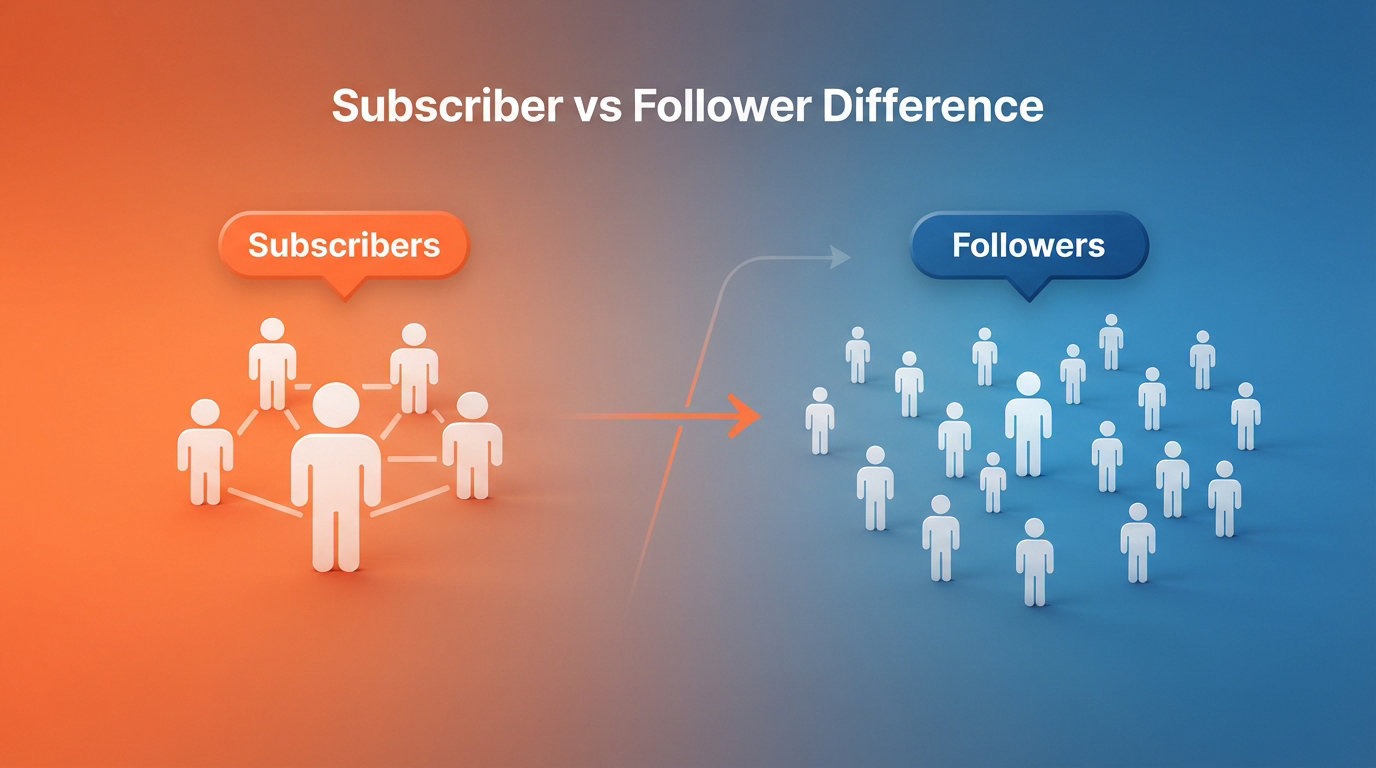
If you have ever stared at your analytics dashboard wondering why your follower count looks nothing like your subscriber count, you are not alone. The subscriber vs follower difference trips up creators on every platform, and it matters far more than most people realize.
One metric measures casual interest. The other measures real commitment. Confusing the two can lead to wasted effort, misaligned goals, and disappointing revenue. I have watched talented writers celebrate a 10,000-follower milestone only to discover they make the same income as someone with 800 subscribers.
This guide breaks down the subscriber vs follower difference in plain language, walks through how each platform handles the two terms, and shows you which one deserves your attention based on what you are actually trying to build. Whether you write on Substack, post on YouTube, or grow an audience on Instagram and TikTok, the distinction below will sharpen your strategy for 2026 and beyond.
Table of Contents
What Is a Follower?
A follower is someone who has chosen to see your content in their feed, in an app, or through in-platform notifications. They have not given you their email address, phone number, or any direct contact method. The relationship lives entirely inside the platform.
Think of a follower as a casual observer who has raised their hand to say, “I would like to see more of your stuff.” On Substack, followers come from Notes and discover you through recommendations. On YouTube and TikTok, a follower (called a subscriber on YouTube, but more on that later) sees your new videos in their home feed. On Instagram, followers see your posts and stories in their feed too.
Following is almost always a one-way relationship. They follow you, you do not need to follow them back, and they can unfollow with a single tap. Followers are easy to earn and just as easy to lose.
The strength of a follower is reach. The weakness of a follower is that the platform controls whether they ever actually see your content. Algorithm changes, ranking shifts, and feed clutter can hide your posts from followers who genuinely want to hear from you.
What Is a Subscriber?
A subscriber has handed over their email address, payment information, or another direct contact method so you can reach them outside the platform’s feed. On Substack, subscribers receive your posts by email and through the app. On a paid newsletter, subscribers are the people who pay you each month.
Subscribers represent real commitment. They trust you with their inbox, which is a far more personal space than a scrolling feed. Email open rates for genuine subscribers routinely hit 30 to 50 percent, while feed-based impressions for followers often land in the low single digits.
The relationship is also more durable. A subscriber stays with you across algorithm updates, platform shutdowns, and feed redesigns because their connection to you does not depend on any single algorithm showing them your work.
This is why the subscriber vs follower difference is not just semantic. It is the gap between renting an audience and owning one.
Subscriber vs Follower Difference: Key Distinctions
The subscriber vs follower difference comes down to four practical things: how content reaches the person, how committed they are, what data you can see about them, and how much you can earn from them.
1. Delivery method. Followers see your posts only when a platform algorithm chooses to surface them. Subscribers receive your content directly, usually by email, with no algorithm standing between you.
2. Contact information. Followers leave no trace beyond a username. Subscribers hand over an email address, which lets you reach them on your terms.
3. Commitment level. Following is a low-friction tap. Subscribing requires entering contact details, confirming via email, and in paid cases, entering payment information. The friction is the signal.
4. Monetization potential. Followers are hard to monetize directly because the platform owns the relationship. Subscribers are the foundation of every paid newsletter, membership, and subscription business because you own that connection.
5. Analytics depth. With followers, you see aggregate counts and basic engagement. With subscribers, you often have names, email addresses, open rates, click data, and the ability to segment your audience.
6. Permanence. Followers vanish when a platform declines. Subscribers move with you, because email is portable and platform-independent.
None of this means followers are worthless. It means the two metrics measure different things, and treating them as interchangeable is the mistake that sinks a lot of creator businesses.
Platform-Specific Breakdown
The subscriber vs follower difference shifts depending on where you create. Here is how the major platforms handle these terms in 2026.
Substack
Substack is where the follower vs subscriber distinction matters most. A subscriber has given you their email address and receives every post in their inbox and the Substack app. A follower discovered you through Notes or recommendations and sees your posts in their Substack feed, but never gets an email.
This is why so many creators post on the r/Substack forum confused about why their follower count is 10 times their subscriber count. Followers are a discovery mechanism. Subscribers are your real audience. You can also subscribe to someone’s public posts without following them back, which is why the two lists do not mirror each other.
YouTube
YouTube uses the word “subscriber” but it functions more like a follower on most other platforms. A YouTube subscriber has clicked the subscribe button, which raises the chance your videos appear in their feed and recommendations. There is no email exchange.
YouTube does offer an email-friendly Bell notification, and channel members pay a monthly fee, which is closer to a true subscription. For practical purposes, YouTube subscribers are high-intent followers who have explicitly asked for more of your content.
Instagram followers see your posts, stories, and reels in their feed. In 2026, Instagram also offers paid subscriptions where followers pay a monthly fee to access exclusive stories, posts, and live sessions. So on Instagram, a follower is the default relationship and a subscriber is a paying follower.
The conversion math here is brutal. Most creators convert only a small fraction of free followers into paid subscribers, which is why the subscriber count is so much smaller and so much more valuable.
TikTok
TikTok followers are people who tapped follow after seeing your video on their For You feed. TikTok Live subscribers pay a monthly fee for perks like exclusive emotes and badges. TikTok’s algorithm is famously feed-driven, so even your followers may not see every video, and a single viral post can hit millions of non-followers.
On TikTok, follower count is a vanity number compared to your Live subscriber base, which represents real ongoing financial commitment from your community.
Which Matters More: Followers or Subscribers?
The honest answer is that it depends on what you are building, but for most creators the subscriber wins. If your goal is brand awareness, sponsorships, or pure reach, followers carry more weight because brands still look at follower counts when signing deals.
If your goal is revenue you control, audience durability, or a real business you can sell, subscribers are the metric that matters. A list of 2,000 engaged email subscribers will out-earn 100,000 passive followers almost every time, because you can email them directly, segment them, and turn them into paying customers without asking a platform’s permission.
The smartest creators treat followers as the top of a funnel and subscribers as the bottom. Followers amplify reach and feed discovery. Subscribers convert that reach into income and ownership. You need both, but if you had to pick one to obsess over, pick subscribers.
How to Convert Followers into Subscribers
Many creators ask how to bridge the gap, and the answer is to make subscribing feel obvious and low-friction. Lead with a specific promise on your profile or pinned post, something a follower cannot get from the feed alone.
Offer a clear reason to subscribe: a free guide, a weekly recap, members-only content, or early access. Use a strong call to action in every pinned post and bio link. Then keep delivering so the subscriber experience lives up to the promise, which is what turns one-time subscribers into long-term fans.
Most importantly, ask. A surprising number of followers would subscribe if someone simply told them how, where, and why.
FAQs
Is a follower the same as a subscriber?
No. A follower sees your content inside a platform feed, while a subscriber has given you their email or contact details so you can reach them directly. Followers represent casual interest; subscribers represent real commitment.
Is it better to have followers or subscribers on Substack?
Subscribers matter more on Substack because they receive your posts by email and represent a direct audience you own. Followers are valuable for discovery through Notes, but only subscribers receive your work in their inbox and can pay you.
What is the difference between subs and followers?
Subs (subscribers) have shared contact details and receive your content directly, usually by email or app notification. Followers simply see your posts in a platform feed when the algorithm chooses to show them.
Can my followers see who I subscribe to?
In most cases no, but it varies by platform. On Substack, your reader-facing profile can show publications you recommend, which is separate from your follower list. On Reddit, follower identities are typically hidden, which is why users sometimes cannot see who is following them.
Are followers and subscribers the same thing on YouTube?
On YouTube, subscribers function like followers on other platforms because the relationship is feed-based and involves no email exchange. True paid subscriptions exist through channel memberships, but a standard YouTube subscriber is closer to a follower than a traditional email subscriber.
Why do I have more followers than subscribers?
Following is a low-friction tap, while subscribing requires giving up contact details and often payment information. Most audiences will follow casually but only a fraction will subscribe, which is why follower counts almost always run higher than subscriber counts.
Conclusion
The subscriber vs follower difference is not a technicality. It is the line between renting attention from a platform and owning a relationship with the people who value your work. Followers expand your reach; subscribers convert that reach into something durable and monetizable.
Across Substack, YouTube, Instagram, and TikTok, the same pattern holds. Followers are easy to earn and easy to lose. Subscribers cost more effort to win and reward you with a direct line of communication, deeper analytics, and real revenue potential.
If you take one thing from this guide, let it be this: build your follower base for discovery, but build your subscriber base for the long game. The creators who thrive in 2026 and beyond are the ones who understand that subscriber vs follower difference and design every post, link, and call to action around closing that gap.