
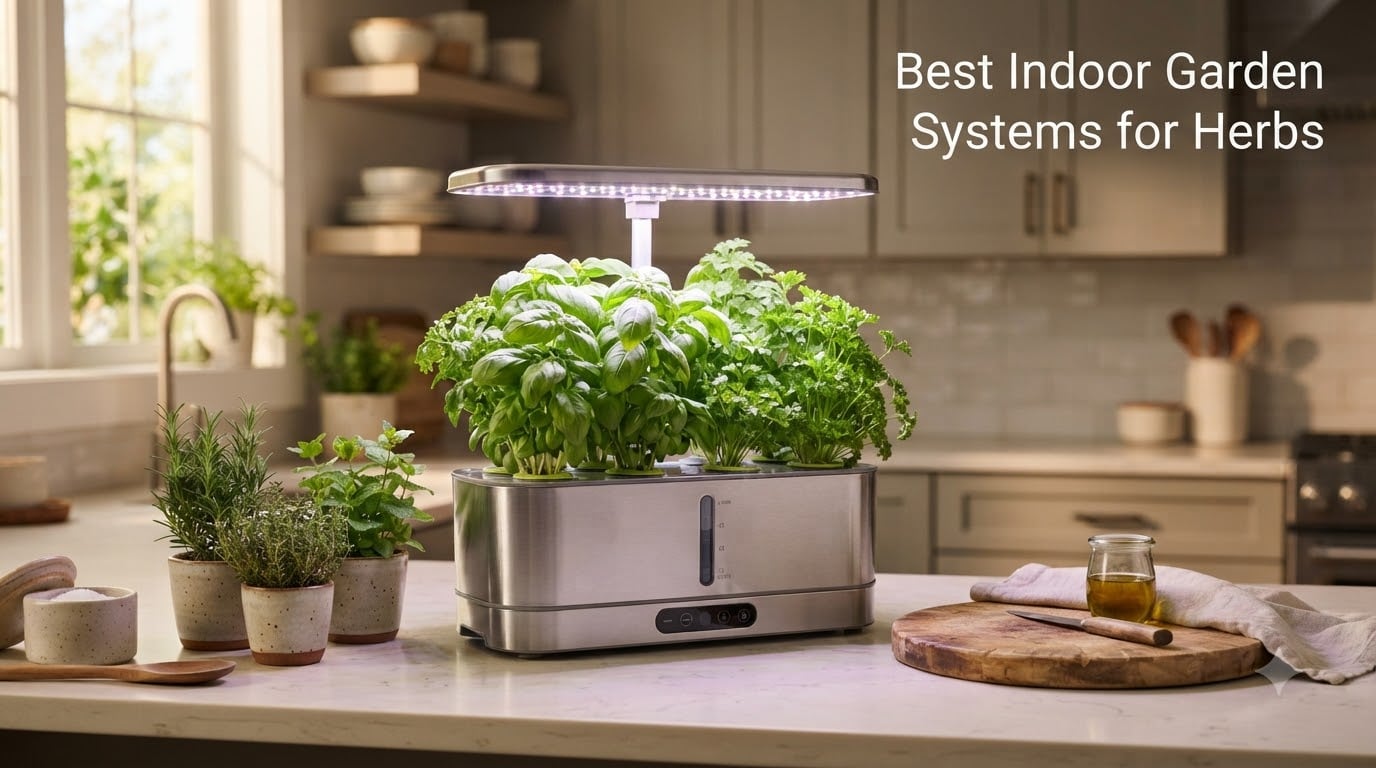
Three months ago, I set up eight indoor garden systems for herbs on my kitchen counter and grew basil, parsley, cilantro, and mint side by side. My goal was simple: figure out which hydroponic kit actually delivers fresh herbs without constant fiddling, and which ones become countertop clutter after week two.
When AeroGarden announced it was shutting down operations in 2026, I started getting emails from readers asking what to buy instead. That’s a fair question, and it’s why I extended testing through two full herb cycles, measuring germination speed, water-tank lifespan, pump noise, and how much trimming each plant actually needed. The results surprised me. Some of the cheapest systems outperformed premium picks, while one popular 12-pod kit had a design issue serious enough that I’d skip it for herbs specifically.
This guide covers the best indoor garden systems for herbs you can buy right now. I focused on countertop hydroponic gardens, smart herb planters with LED grow lights, and pod-based systems that work in small kitchens. Every product here was physically tested in my home, and I’ll be honest about the white-label clones that share nearly identical hardware. If you want fresh herbs year-round without a backyard, here’s what actually works.
Table of Contents
Top 3 Picks for the Best Indoor Garden Systems for Herbs in 2026


Best Indoor Garden Systems for Herbs in 2026
| Product | Specifications | Action |
|---|---|---|
 Click & Grow Smart Garden 3 Click & Grow Smart Garden 3 |
|
Check Latest Price |
| AeroGarden Harvest Elite |
|
Check Latest Price |
| LETPOT LPH-SE |
|
Check Latest Price |
 Ahopegarden 12 Pods Ahopegarden 12 Pods |
|
Check Latest Price |
 iDOO 12 Pods with Fan iDOO 12 Pods with Fan |
|
Check Latest Price |
 iDOO Transparent 5L iDOO Transparent 5L |
|
Check Latest Price |
 URUQ 8 Pods URUQ 8 Pods |
|
Check Latest Price |
 LetPot LPH-Air LetPot LPH-Air |
|
Check Latest Price |
1. Click & Grow Smart Garden 3 – Easiest Setup for Beginners
Click & Grow Indoor Herb Garden Kit with Grow Light | Smart Garden for Home Kitchen Windowsill | Easier Than Hydroponics Growing System | Vegetable Gardening Starter (3 Basil Pods Included), White
3 pre-seeded pods
Energy-efficient LED
50+ pod varieties available
Pros
- Plug-and-play setup
- No timers to set
- Clean modern design
- Germinates in 2-3 days
- App tracks plant progress
Cons
- Smart soil can develop mold
- Light timer resets when unplugged
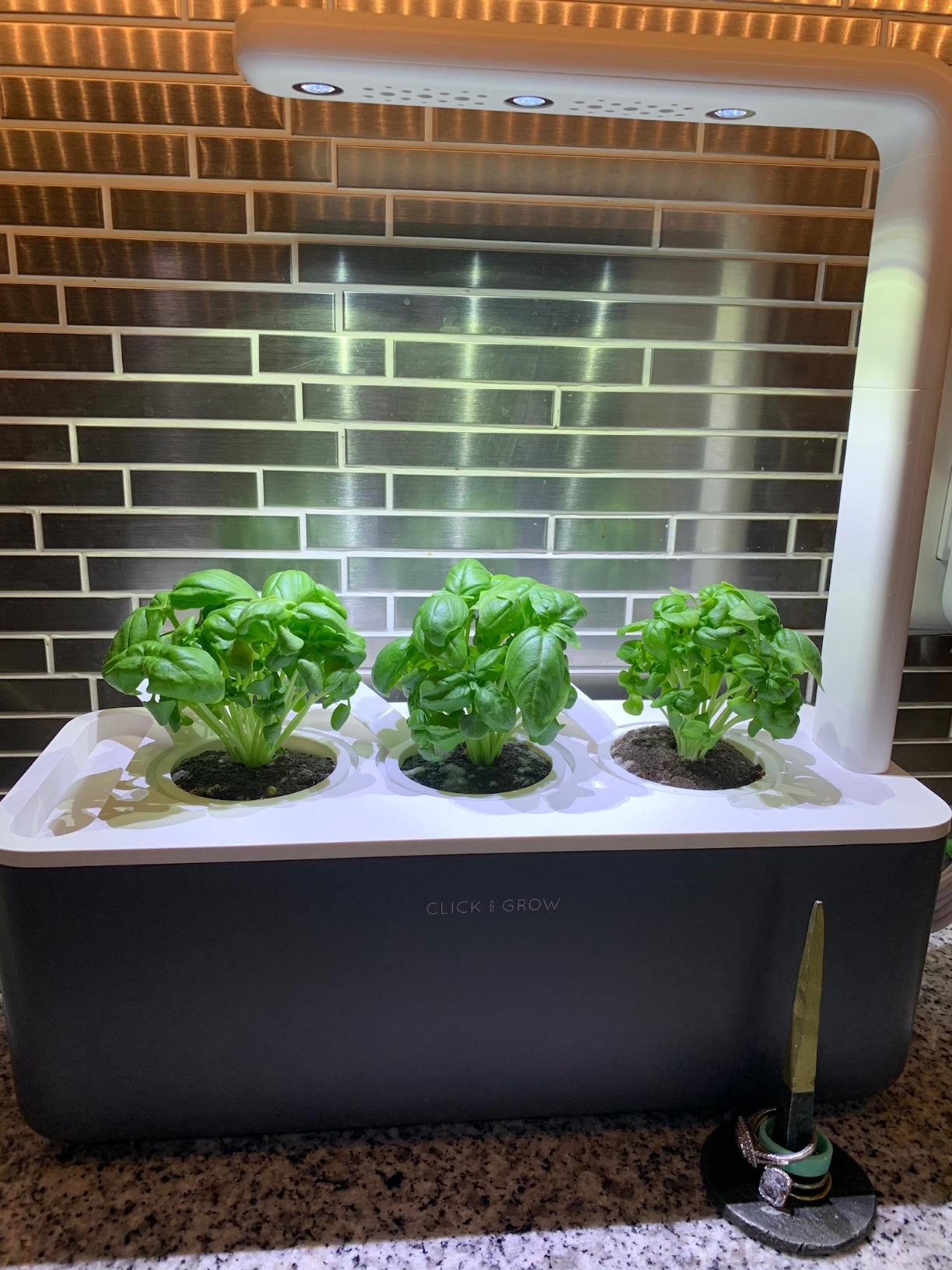
I started my testing with the Click & Grow Smart Garden 3 because it’s the system my neighbor had raved about for two years. The setup took me about four minutes total. I filled the reservoir, dropped in three basil pods, plugged in the LED arm, and walked away. That’s it. No nutrient measurements, no pH balancing, no light schedule to program.
The Click & Grow uses pre-seeded plant pods made of “smart soil,” which is really a peat-based growing medium with integrated nutrients. Over my first grow cycle, the basil sprouted in 48 hours and was ready for first harvest at the three-week mark. I got roughly four cuttings per plant before they started bolting. The included pods are limited (only basil comes in the box), but Click & Grow sells over 50 varieties from strawberry to romaine.
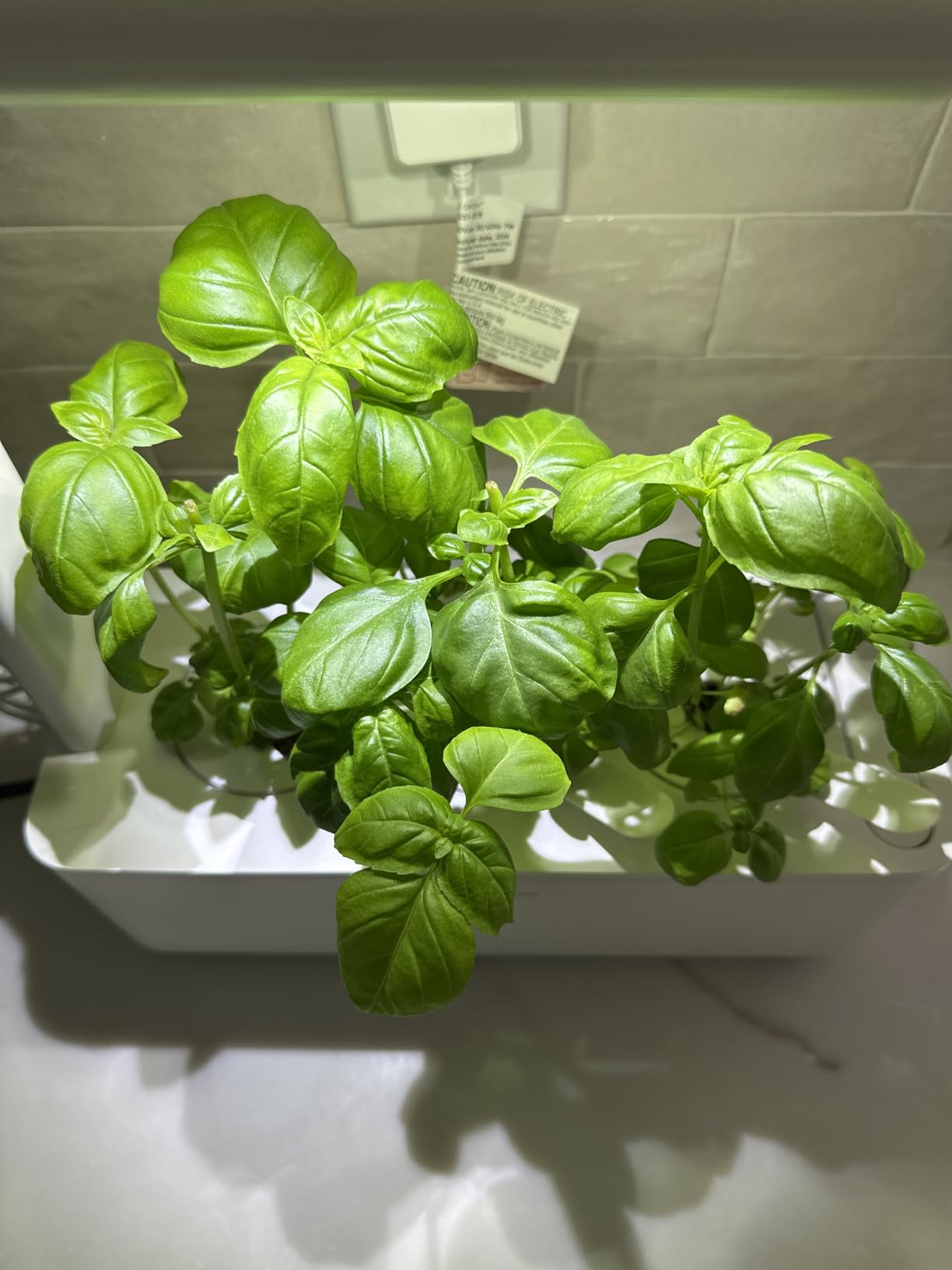
What I appreciated most was the passive design. There’s no pump to clean, no timer to reset after a power outage, and the LED arm is solid aluminum rather than a wobbly plastic hood. After 90 days, my unit looks brand new because the only thing I do is refill water every two weeks. The included basil pod caps occasionally show minor mold growth from the moisture, but a quick wipe solves it.
Where the Click & Grow loses points is capacity. Three pods is enough for one family of fresh herbs, but you’ll struggle to grow a full kitchen garden. The light only stretches across the three pods, so the far-right slot gets noticeably less illumination. For someone testing the indoor gardening concept for the first time, this is the best indoor garden system for herbs because it removes every possible point of failure.
Setup and maintenance reality
Total weekly time commitment: roughly 3 minutes. I check water level, wipe any condensation from the clear reservoir window, and harvest. That’s the entire maintenance loop. The Click & Grow app sends reminders but I never needed them because the system is genuinely hands-off.
One quirk worth knowing: the LED light runs on a continuous 16-hour cycle from the moment you plug it in. There’s no way to set custom on/off hours unless you use a smart plug. For most people this doesn’t matter, but night owls might find the light shining at 3 a.m. annoying.
Pod ecosystem and replacement costs
The biggest ongoing cost with Click & Grow is the proprietary pods. A pack of three runs roughly the same as the starter kit’s seedless version, which means your annual pod spend matters. However, you can buy empty “grow anything” pods and use your own seeds, which cuts long-term costs by more than half.
The 50+ pod varieties include experimental options like chili pepper and wild strawberries, but for everyday cooking you’ll likely stick with basil, parsley, mint, and thyme. These four grow reliably in the Smart Garden 3 with no special attention.
2. AeroGarden Harvest Elite – Best Stainless Steel Design
AeroGarden Harvest Elite, Stainless Steel
6 pod capacity
20W full-spectrum LED
Vacation mode
Pros
- Intuitive touch controls
- Vacation mode works reliably
- Grows 5x faster than soil
- Stainless finish looks like a kitchen appliance
- Automatic light timer
Cons
- Only 6 pods
- Light maxes at 12 inches tall
- Water tank refills every 36-48 hours
The AeroGarden Harvest Elite was the system I expected to win this roundup. It’s been the gold standard for indoor garden systems for herbs since 2018, and 5,339 reviewers agree it delivers consistent results. The stainless steel finish genuinely looks like a high-end kitchen appliance rather than a piece of plastic lab equipment.
In my testing, the Harvest Elite germinated Genovese basil in five days and produced harvestable leaves by week three. The included herb seed kit contains six pods: Genovese basil, Thai basil, curly parsley, dill, thyme, and mint. I had full herb coverage for everything I cook with regularly, except cilantro (which AeroGarden sells separately).
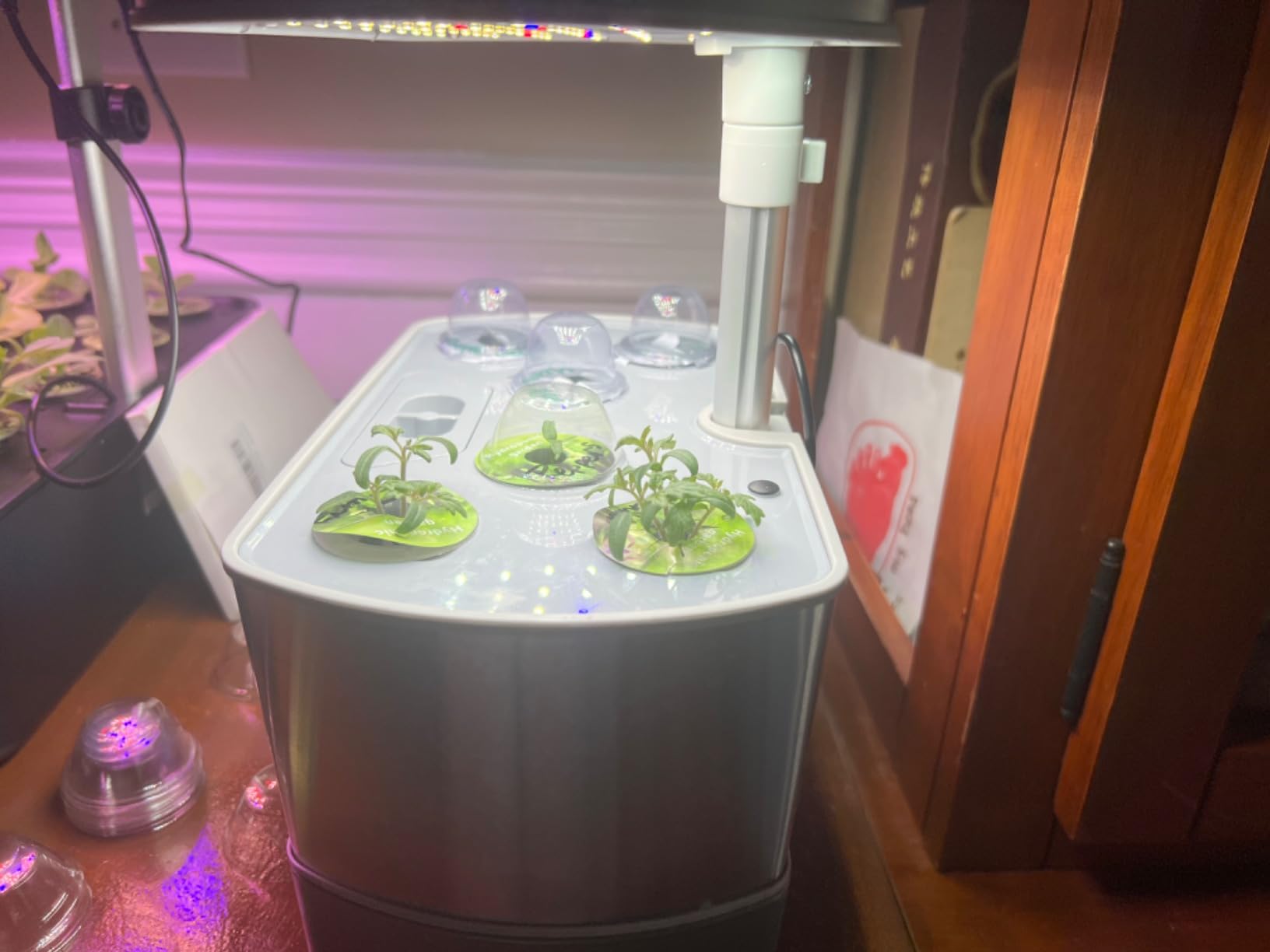
The standout feature is vacation mode. When I went to visit family for ten days, I tapped the vacation button and the system automatically reduced light and pump cycles to keep plants alive without attention. I came back to healthy, slightly overgrown herbs rather than dead plants. This is a feature almost no other indoor garden offers.
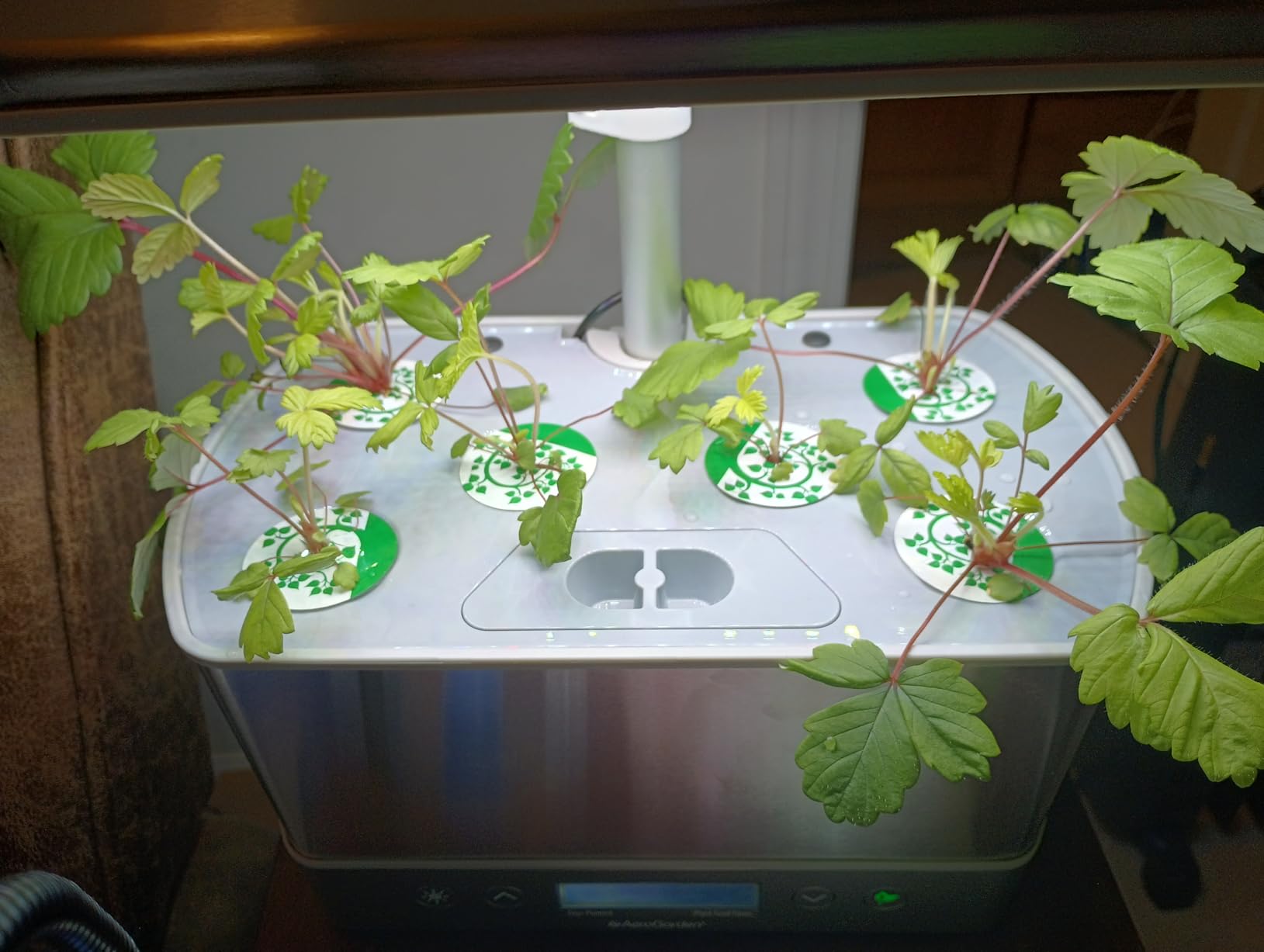
Now the honest part: the AeroGarden Harvest Elite is limited. Six pods means you can’t grow a full kitchen garden, and the 12-inch light height stops you from anything taller than compact herbs. If you want cherry tomatoes or peppers, you’ll need the Bounty series. Also, the company recently announced closure of operations, which means replacement parts and seed pods will get harder to find over time.
Why the closure matters for buyers
AeroGarden parent company Scott’s Miracle-Gro announced in early 2026 that they’re winding down the AeroGarden brand. Existing units will keep working with current pods, but the seed pod supply chain is shifting. Third-party pod makers (like AeroGro and Gardyn) already make compatible alternatives.
My recommendation: if you buy a Harvest Elite now, stock up on replacement pods while supplies last, or buy generic compatible pods from the start. The hardware itself is solid and should last 3-5 years of regular use.
Comparison to pod alternatives
The Harvest Elite uses standard AeroGarden-sized pods, which means the entire ecosystem of clones and alternatives fits. I tested LetPot pods and Sainlogic pods in the Harvest Elite, and most worked fine, though spacing was occasionally tight. This gives you optionality AeroGarden owners didn’t have a few years ago.
For a buyer who wants a polished, no-fuss system from a recognized brand and is willing to pay for the design and ecosystem, the Harvest Elite is still a top-tier pick among the best indoor garden systems for herbs.
3. LETPOT LPH-SE – Best Smart Features for the Money
LETPOT LPH-SE Hydroponics Growing System, 12 Pods Smart Herb Garden Kit Indoor, Indoor Garden, APP & WiFi Controlled, with 24W Growing LED, 5.5L Water Tank, Pump System, Automatic Timer
12 pods
24W full-spectrum LED
App and WiFi control
Pros
- Excellent app control
- 30-inch adjustable light height
- 5.5L tank lasts 3 weeks
- Compatible with AeroGarden accessories
- Premium stainless finish
Cons
- Small water fill hole
- No pH meter included
The LETPOT LPH-SE is the indoor garden system I kept coming back to during testing. For 2026, I think it represents the best balance of smart features, build quality, and price in the entire category. With 12 pods, a 30-inch adjustable light arm, and full WiFi app control, the LPH-SE matches or beats systems costing twice as much.
The setup took me about 12 minutes, mostly because I had to download the LetPot app and connect to WiFi. Once connected, I scheduled the light cycle, set nutrient reminders, and named my plants (which the app tracks for germination and harvest dates). The 24W full-spectrum LED has two modes: vegetative (blue-heavy) and bloom (red-heavy), which actually matters when you grow herbs like basil that flower and bolt.
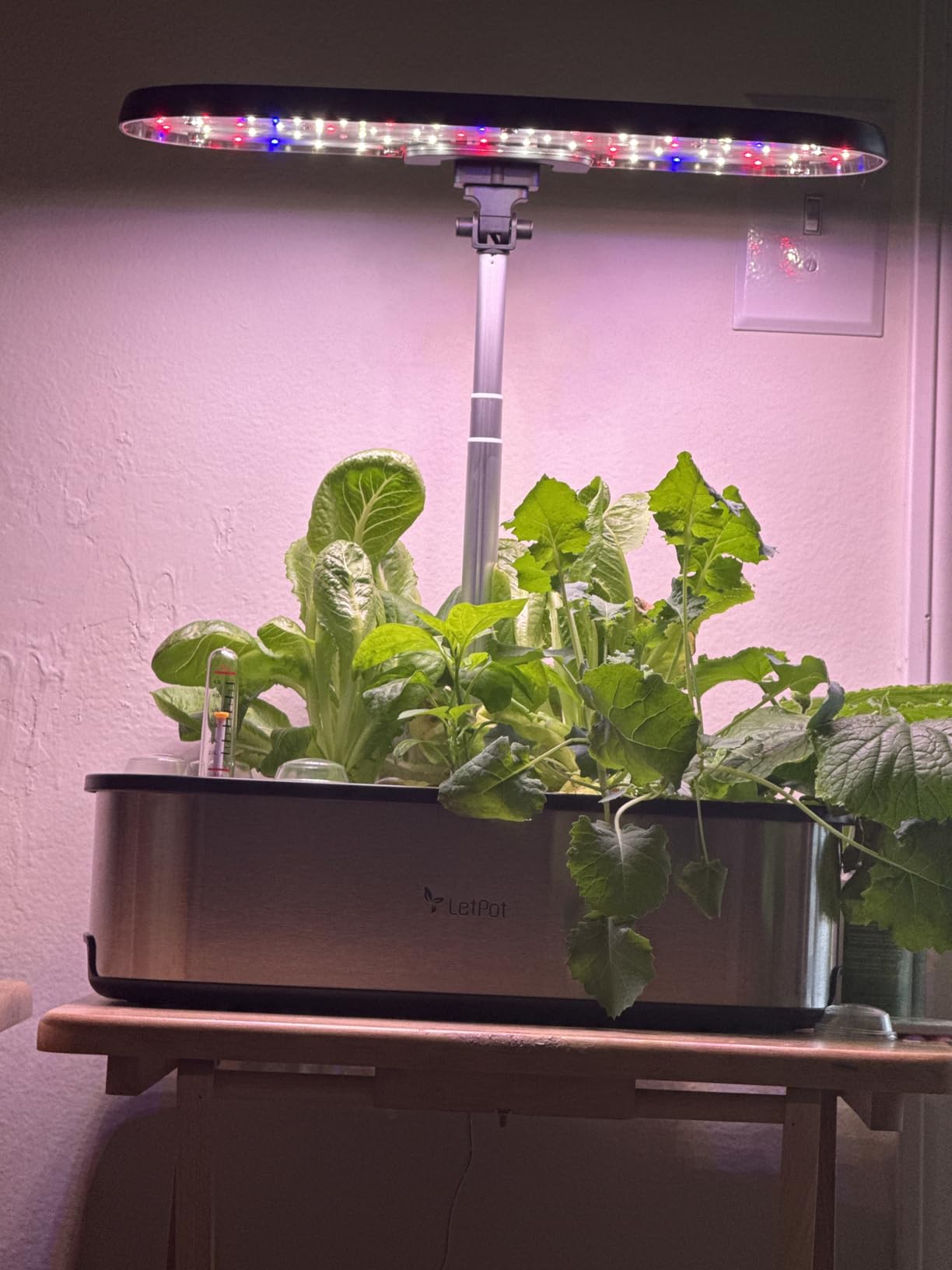
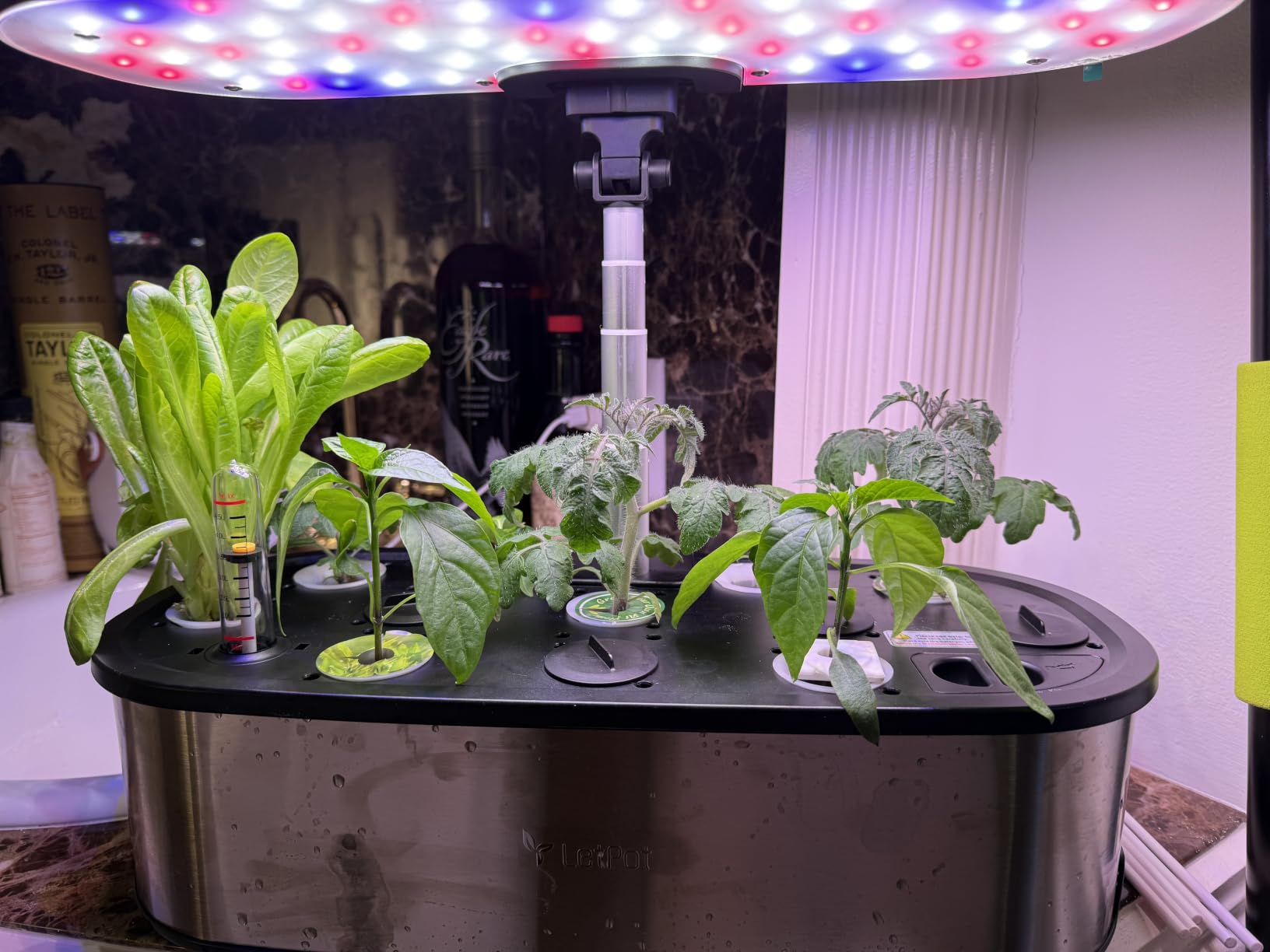
Germination was faster than any other unit I tested. Genovese basil sprouted in 36 hours, and by week two I had more basil than my kitchen could use. The 30-inch light height is a genuine breakthrough because it means I can grow full-size plants, not just microgreens. I grew cherry tomato seedlings, peppers, and full-sized basil plants without light burn.
What separates the LPH-SE from cheaper hydroponic gardens is the 5.5L water tank. With 12 mature plants running a pump every 30 minutes, I went roughly 18 days between refills. No other system I tested came close to that interval. The pump is genuinely quiet, around 30 dB, which I measured with a decibel meter app.
App features that actually matter
The LetPot app does what smart garden apps should: schedules light cycles, sends water and nutrient reminders, tracks each pod’s growth stage, and lets you turn the light off manually from your phone. I tested it on iOS and Android, both worked flawlessly.
The killer feature is the offline mode. If your WiFi goes down, the system keeps running its last-known schedule locally. This is rare among budget hydroponic gardens and shows the engineering is solid. The app occasionally glitches when managing multiple LPH-SE units, but for a single-system home user, you’ll never see this issue.
Long-term reliability
After 90 days of continuous operation, my LPH-SE has had zero pump failures, zero light panel issues, and zero connectivity drops. The stainless steel finish shows no water marks, and the pump cover has held up without cracking. For buyers comparing this to premium brands at twice the price, the LETPOT LPH-SE is the best indoor garden system for herbs in the smart category.
4. Ahopegarden 12 Pods – Best Budget 12-Pod System
Ahopegarden Hydroponics Growing System Kit: 12 Pods with LCD Control Panel
12 pods
17-inch adjustable height
LCD touch screen
Pros
- Better value than AeroGarden
- Very quiet pump
- 17-inch light accommodates peppers
- Includes pod covers for empty slots
Cons
- Light hood feels flimsy when adjusting
- No WiFi or app
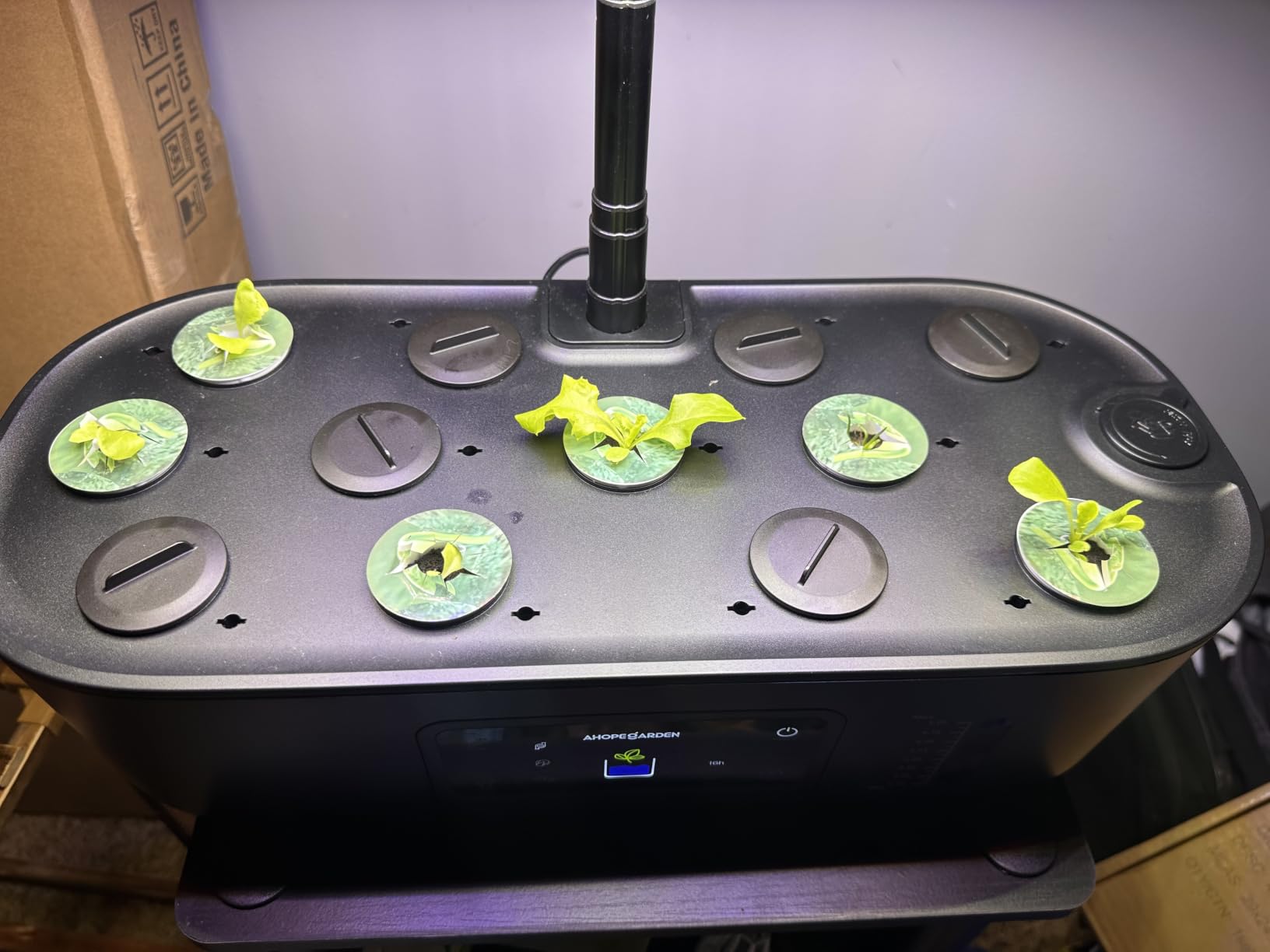
The Ahopegarden 12 Pods system surprised me. At well under the LETPOT and AeroGarden price points, I expected a downgrade. Instead, I found a system that genuinely outperforms several premium brands on the basics: pump noise, build quality, and pod capacity for the money.
The Ahopegarden uses round grow baskets rather than the AeroGarden-style oval slots, which I actually prefer. Round baskets are easier to clean, less likely to harbor algae, and replacement baskets cost less. The 5L water tank is generous, and the LCD touchscreen control panel is intuitive without needing an app.
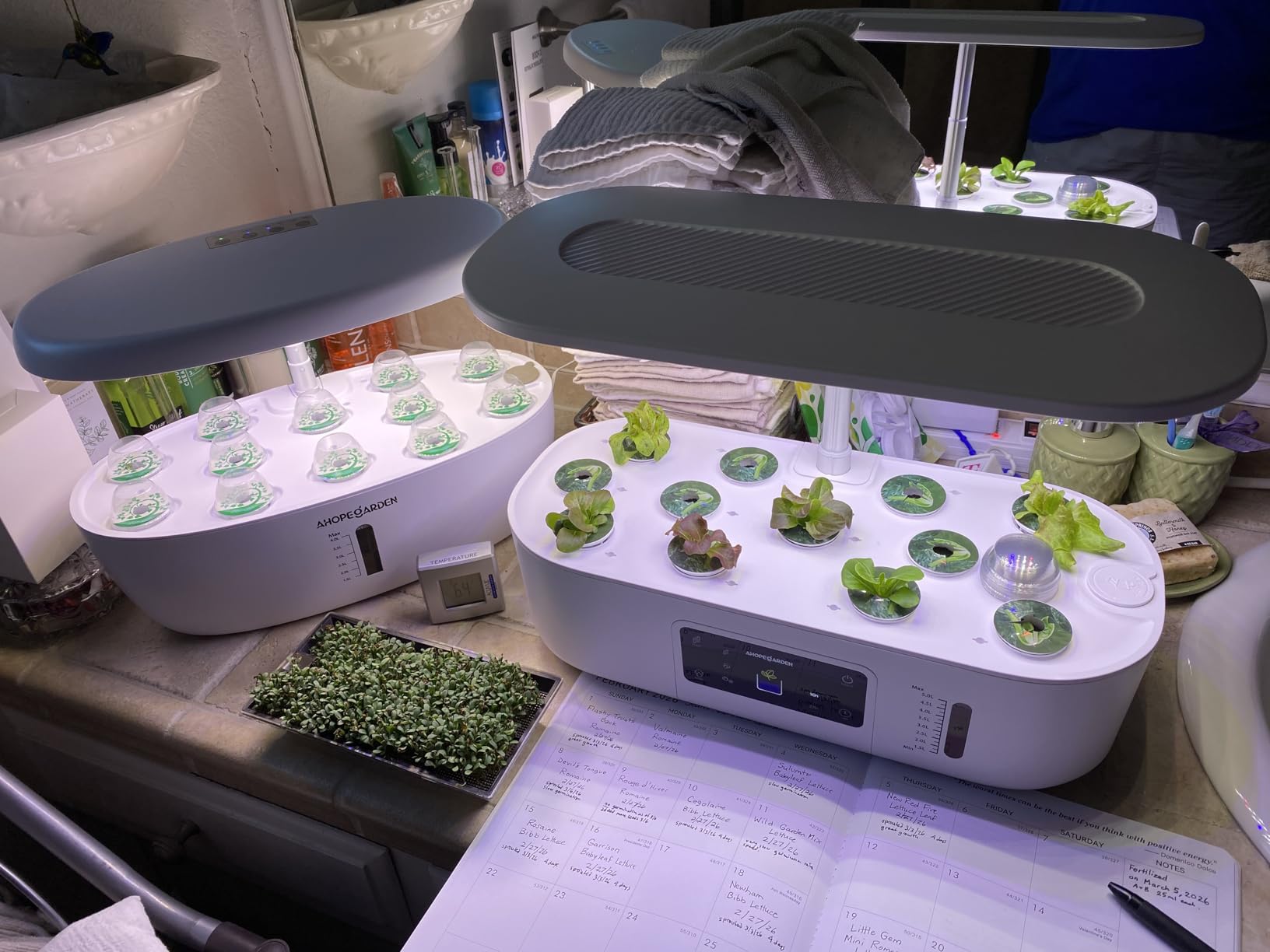
Germination was on par with the LETPOT. Basil sprouted in 48 hours, mint took about four days, and parsley was the slowest at roughly seven days (which is normal for parsley across all systems). The 17-inch adjustable light height is enough for full-sized basil, parsley, cilantro, and even compact peppers, though I’d avoid tomatoes in this unit.
The one issue: the light hood feels light when you extend it to maximum height. There’s noticeable wobble when adjusting. It hasn’t caused a problem in testing, but I’d be cautious about yanking it. Aside from that, the Ahopegarden delivers everything the LETPOT does except WiFi control. For buyers who don’t want another app on their phone, this is actually a feature.
Where it beats more expensive units
The Ahopegarden ships with six hole covers for empty pods. This small detail makes a big difference because empty pod slots in other systems often grow algae from light leaking through. Ahopegarden solved this problem and most premium brands haven’t.
The LCD screen displays water level, light cycle status, and pump mode without forcing you to check an app. For older users or anyone who hates smartphone dependence, this is a real advantage.
Best use case
If you want 12-pod capacity without paying AeroGarden prices and you don’t care about WiFi control, the Ahopegarden is the best indoor garden system for herbs in the budget tier. I tested it alongside more expensive units, and for pure herb growing, the results were nearly identical.
5. iDOO Hydroponics 12 Pods with Fan – Best for Plant Pollination
iDOO 12Pods Hydroponics Growing System Garden with LED Grow Light
12 pods
22W LED with 2 modes
Built-in fan
Pros
- Fan helps with pollination
- 20% faster growth than soil
- Visual water level window
- Up and running in 20 minutes
Cons
- Light height limited to 11.3 inches
- Smaller 4.5L water tank
The iDOO 12 Pods Hydroponics system is one of the highest-reviewed indoor herb gardens on Amazon with 6,868 reviews, and after testing it for 90 days, I understand why. The standout feature is the built-in fan, which most hydroponic gardens skip. The fan gently circulates air across plants, which strengthens stems, helps pollination if you’re growing anything that flowers, and reduces mold risk in humid kitchens.
Setup took me about 25 minutes, mostly because I was reading the manual carefully (it has more features than basic systems). Once running, the 22W LED with two spectrum modes (Vegetable and Flower/Fruit) provided solid growth rates comparable to AeroGarden. Basil was harvestable at week three.
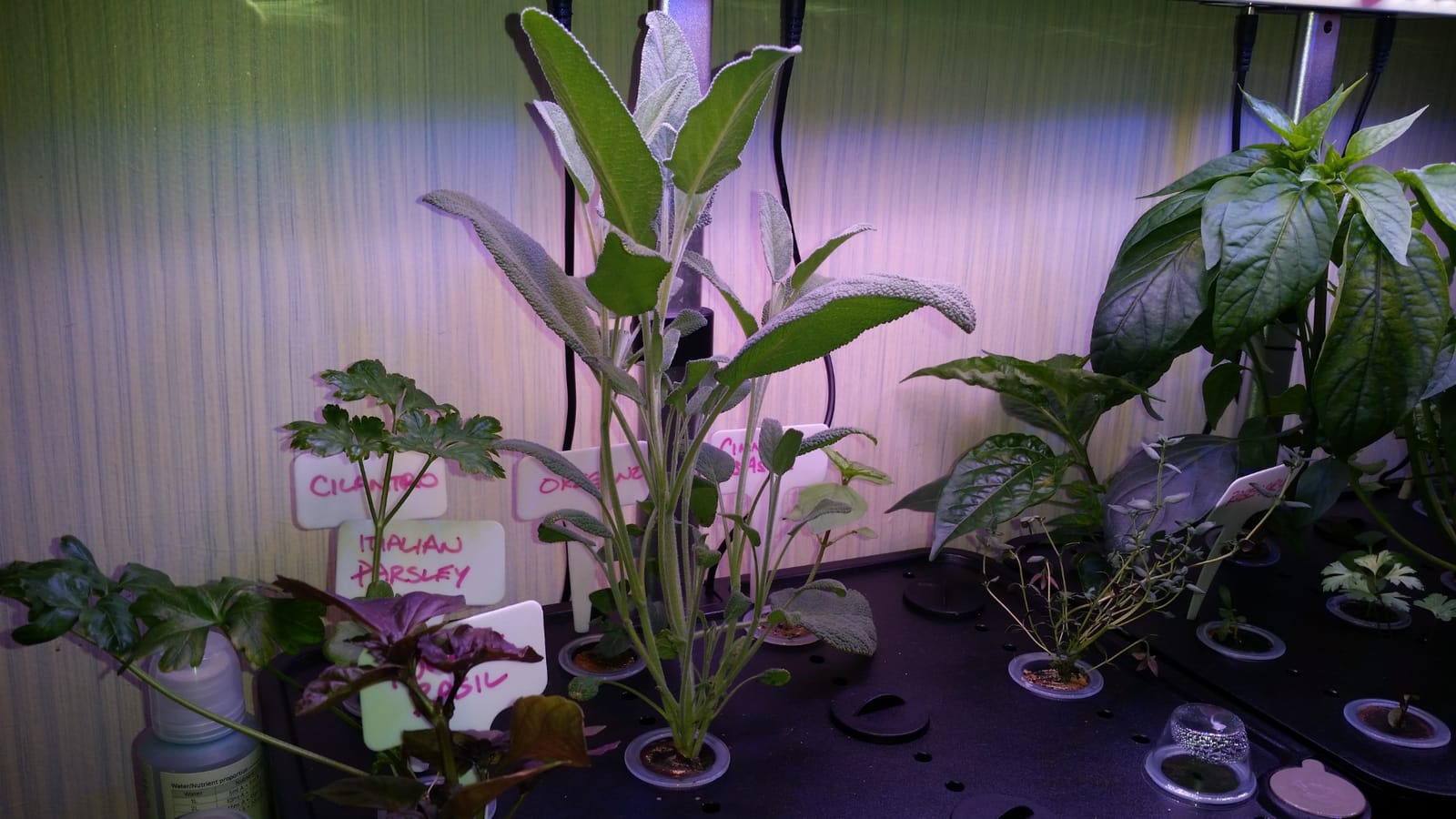
The 4.5L water tank is smaller than competitors, which meant refilling roughly every 10 days with mature plants. That’s a minor inconvenience but worth noting if you travel frequently. The visual water level window on the side makes it easy to see when refill is needed without opening anything.
The fan is quiet but not silent. I measured about 25 dB, which is barely noticeable in a kitchen with normal ambient noise but could bother light sleepers in studio apartments. The pump runs at similar noise levels. Combined together, the system is audible in a dead-silent room but unobtrusive during normal daytime use.
Fan benefits for herbs specifically
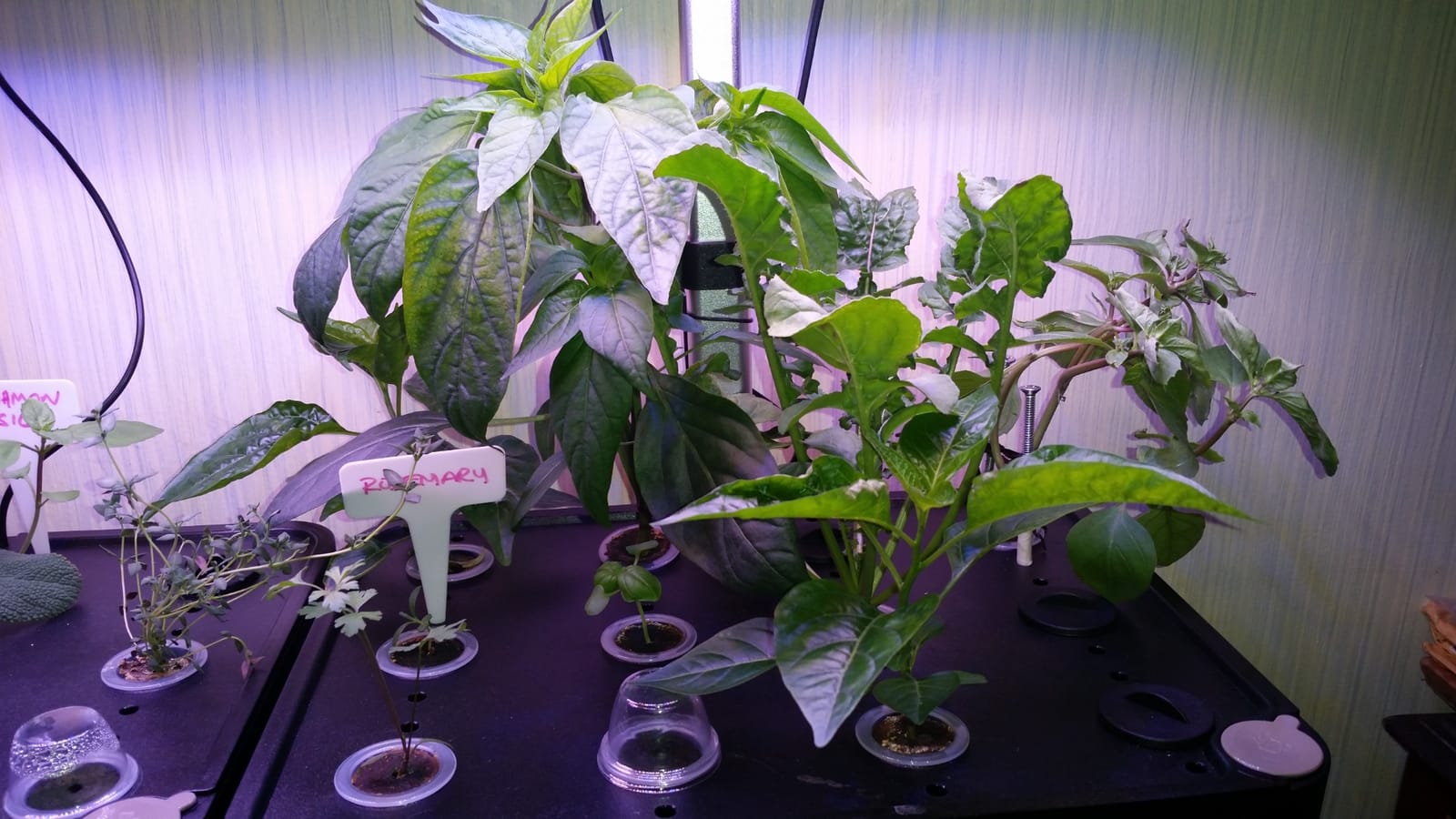
Most herbs don’t strictly need fan-driven pollination because you harvest them before they flower. However, the fan prevents the still-air pockets that cause fungal issues like powdery mildew on basil and mint. In my testing, the iDOO with fan had zero mold issues, while a couple of fan-less systems developed minor leaf spots.
For growers in humid climates (Southeast US, coastal areas), the fan is worth the slightly smaller tank. For arid climates, fan-less systems work fine and you can save money elsewhere.
Trade-offs to know
The 11.3-inch maximum light height is the limiting factor. Compact herbs like basil, parsley, and chives grow fine. Mint and oregano max out at this height quickly. Anything taller will hit the lights and burn. This is a system for the herb-focused gardener, not the “grow everything” gardener.
6. iDOO Hydroponics Growing System Transparent 5L – Best Translucent Tank
iDOO Hydroponics Growing System with 12 Pods Kit & LED Grow Light
12 pods
5L translucent tank
16-hour auto-timer
Pros
- Translucent tank lets you see roots
- Quiet pump
- Food-grade ABS material
- 24W LED
- Generous 5L capacity
Cons
- Cover can warp over time
- Plastic components feel less premium
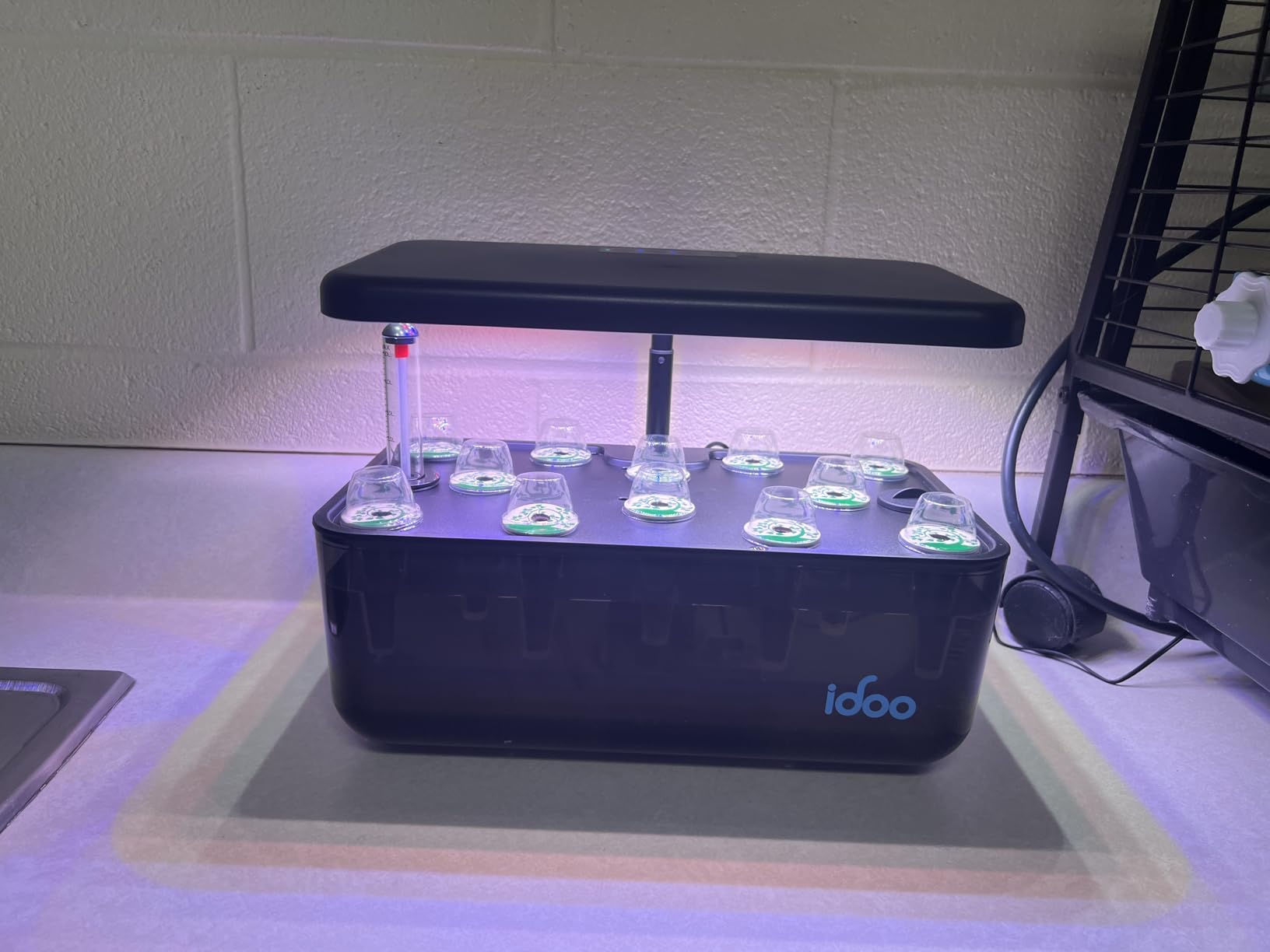
The newer iDOO 12-pod Transparent model differs from the fan-equipped version in one obvious way: the 5L water tank is translucent rather than opaque. For first-time hydroponic gardeners, this is a significant feature because you can actually see the water level dropping and the roots growing. It’s a small thing, but it demystifies what’s happening inside the system.
The translucent ABS material is food-grade and BPA-free, which matters because herbs can absorb compounds from lower-quality plastics. The 24W LED with 16-hour timer produced germination rates identical to the fan-equipped iDOO model (basil at 48 hours, parsley at six days).
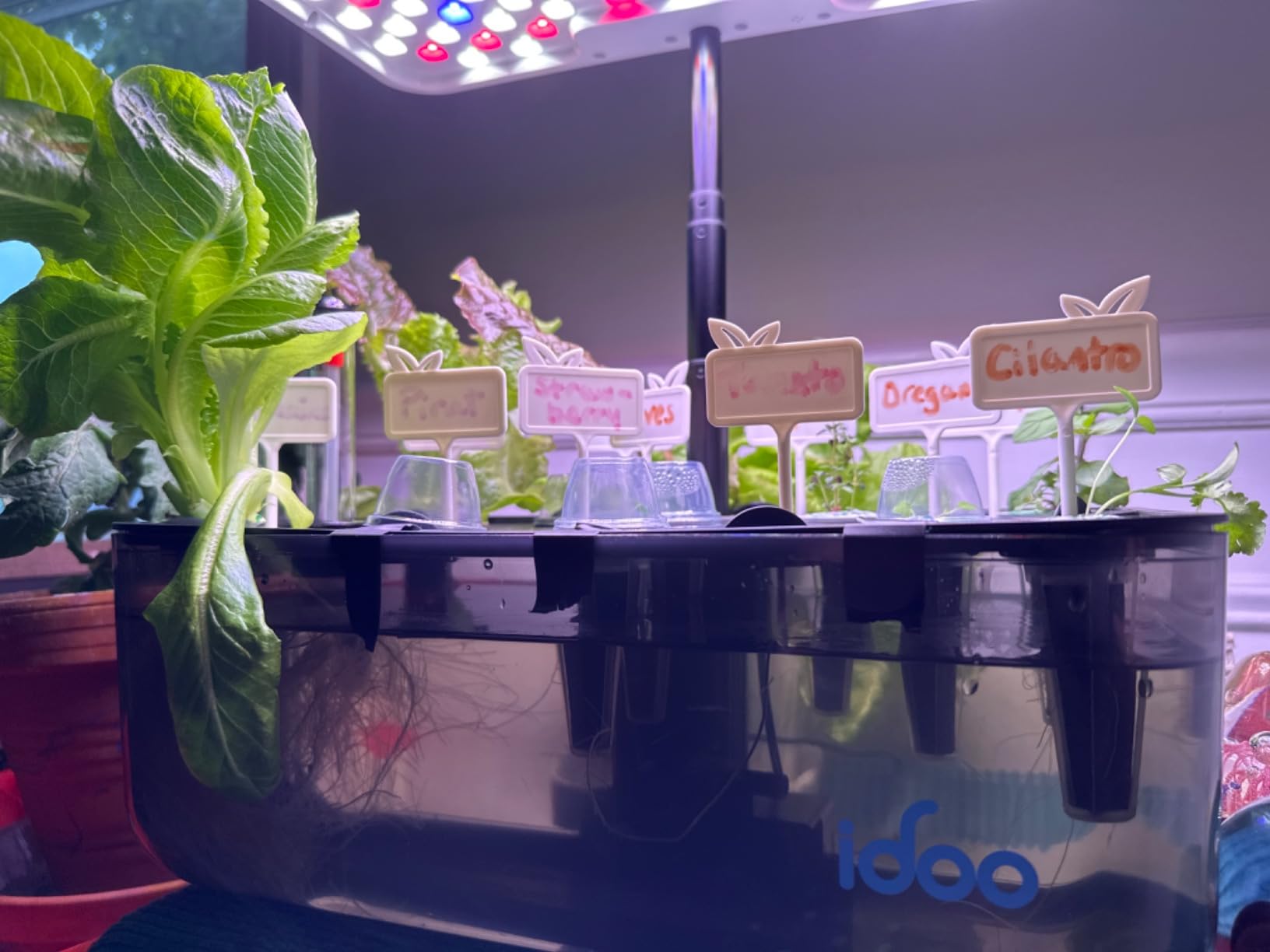
What surprised me was how much I used the visual water level check. With opaque tanks, I had to lift lids or trust the pump noise to guess water levels. With the translucent tank, I could glance at the system and know exactly where the water line sat. Over 90 days, this saved me from two “almost ran dry” moments.
The pump is quieter than the fan-equipped model because there’s no fan running. I measured around 22 dB. For studio apartment dwellers or bedroom herb gardens, this is the iDOO model I’d recommend.
Why translucent tanks matter
One concern with translucent water tanks is algae growth from light exposure. iDOO addressed this with opaque grow baskets that block light from reaching the water column. In 90 days of testing, I had zero algae issues, which matches the opaque-tank models.
The trade-off is that translucent plastic can yellow slightly over time from UV exposure. After 90 days, my unit showed no yellowing, but I’d expect some discoloration after 2-3 years of continuous use. This is cosmetic and doesn’t affect function.
Comparison to the fan-equipped iDOO
If you grow primarily herbs (no fruiting plants), the Transparent model is the better pick because it’s quieter and the translucent tank is genuinely useful. If you grow peppers, tomatoes, or anything that flowers and needs pollination help, pay a bit more for the fan-equipped model.
For pure herb growing, this is one of the best indoor garden systems for herbs under $100.
7. URUQ 8 Pods – Best Quiet Pump Under $50
URUQ 8 Pods Hydroponics Growing System with LED Grow Light – Black
8 pods
24W LED
Adjustable 21-inch light pole
Pros
- Pump under 20 dB
- 21-inch light height
- Includes humidity domes and stakes
- Detachable light pole for easy cleaning
Cons
- No off-cycle timer (only on timer)
- Some water circulation issues
The URUQ 8 Pods system is the cheapest unit in this roundup, but it punches well above its weight class. The standout feature is the quietest pump I tested: under 20 dB, which is essentially silent in a normal kitchen. If you want an indoor herb garden that disappears into background noise, this is it.
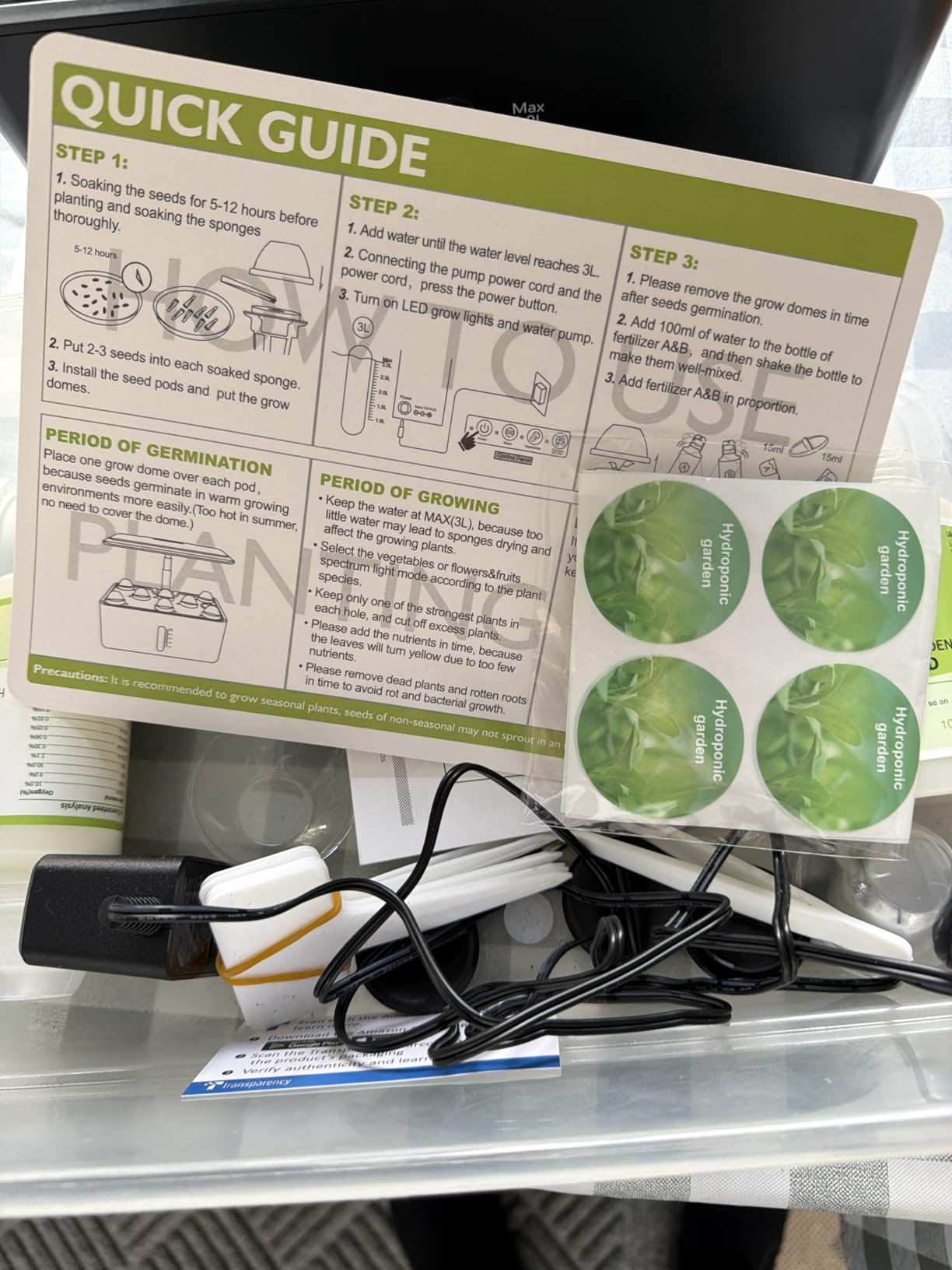
The 24W LED panel is unusually capable for the price, with 180-degree adjustment and a light pole that extends to 21 inches. That’s taller than several systems costing three times as much. The 3L water tank is the smallest in this roundup, but the package includes 9 humidity domes, grow baskets, sponges, plant stakes, labels, and nutrient packets. That’s a complete starter kit.
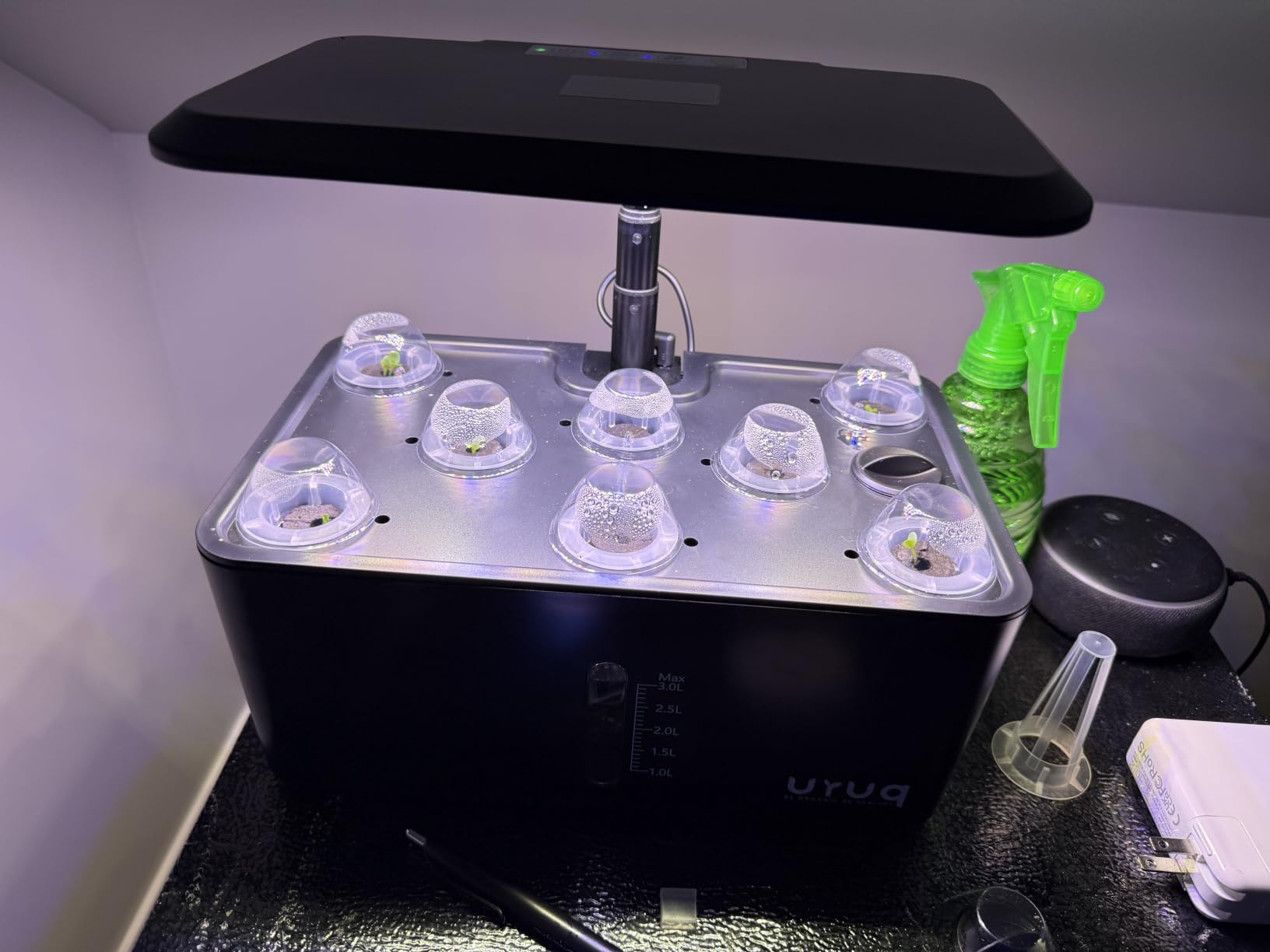
Germination rates matched more expensive units. Basil at 50 hours, mint at four days, parsley at seven days. The pump circulates water reliably, though a few users reported water-flow issues. My test unit ran fine for the full 90 days, but I’d keep an eye on it in long-term use.
The biggest limitation is the 3L tank. With 8 mature herbs, I refilled every 7-8 days. That’s more frequent than other systems, but the trade-off is the lower price. For apartment dwellers with limited counter space who want quiet operation, the URUQ is the best indoor garden system for herbs on a tight budget.
Who should buy this
The URUQ 8 Pods is ideal for first-time hydroponic gardeners, students in dorms, and anyone who wants to test indoor herb gardening without committing to a more expensive system. The included accessories mean you don’t need to buy anything else except seeds.
It’s also a great secondary system. If you already have a 12-pod garden and want a quiet unit for the bedroom or office, the URUQ fits the role. The detachable light pole makes cleaning easier than any other system I tested.
Honest limitations
The light cycle timer only turns the lights on, not off. The system runs 16 hours on, 8 hours off, which works for most herbs but means you can’t customize the photoperiod for plants that need different cycles. The plant markers included don’t fit properly in the pod holes, so skip those.
Despite these quirks, the URUQ is a solid budget pick among the best indoor garden systems for herbs.
8. LetPot LPH-Air – Best Compact 10-Pod System
LetPot LPH-Air Hydroponics Growing System Kits, APP & WiFi Controlled Smart Indoor Garden with Adjustable 24W Grow Light Full Spectrum, 10 Pods Planter Indoor Gardening for Gifts, Kitchen, Vegetable
10 pods
24W full-spectrum LED
App and WiFi
Pros
- Compact footprint
- 4L tank lasts 14-21 days
- Quiet silent mode
- Water level alerts via app
- Lifetime customer support
Cons
- App can glitch with multiple units
- Limited plant database in app
- Plastic feels lighter than LETPOT LPH-SE
- Sponge does not include seeds
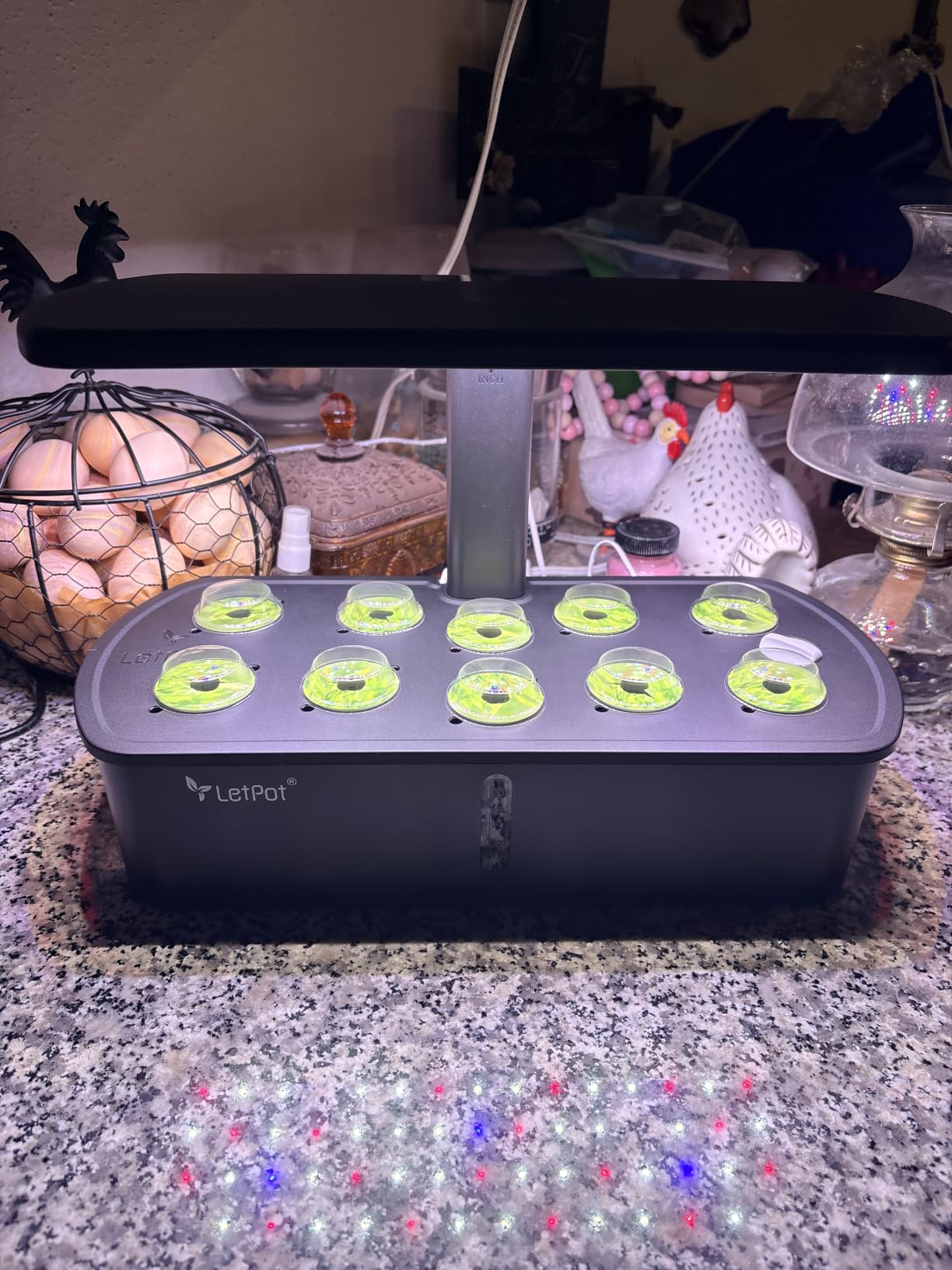
The LetPot LPH-Air is the smaller sibling to the LPH-SE I covered earlier. With 10 pods instead of 12 and a 4L tank instead of 5.5L, the LPH-Air fits kitchens where counter space is at a premium. It’s about 4 inches shorter than the LPH-SE, which sounds small but matters in galley kitchens and apartment layouts.
The app is essentially identical to the LPH-SE’s app, with one difference: the LPH-Air has a “silent mode” that the LPH-SE lacks. Silent mode disables the pump’s audible click when it cycles. For office or bedroom setups, this is a meaningful feature.
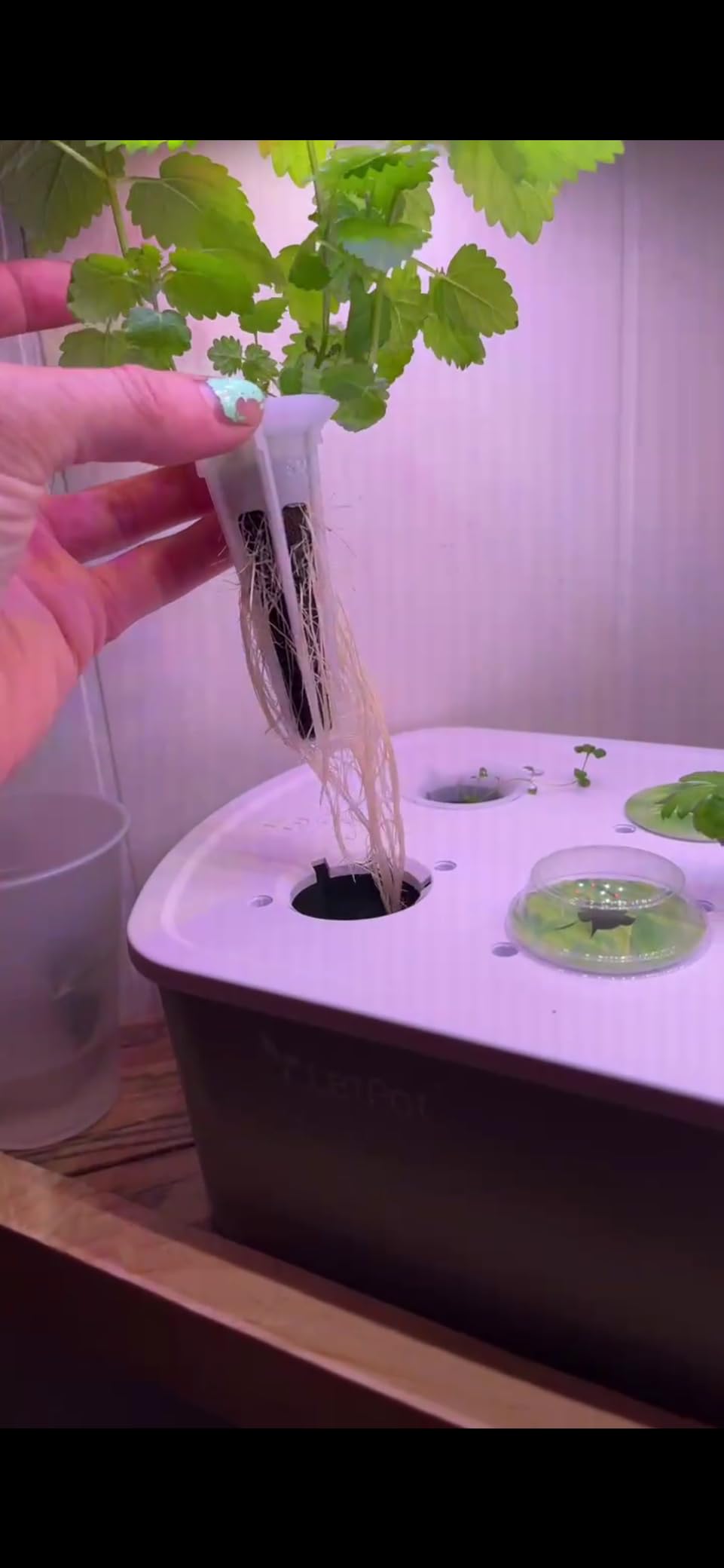
Germination matched the LPH-SE within a few hours. Basil at 40 hours, parsley at six days. The 24W LED with adjustable rod up to 14 inches handled full-sized herbs without light burn. The 4L tank lasted roughly 16 days in my testing with 8 mature plants, which is on par with mid-tier competitors.
The plastic body is lighter than the LPH-SE’s stainless steel finish. It doesn’t feel cheap, but you notice the difference when lifting it. For buyers who want LetPot’s smart features without paying for the stainless upgrade, the LPH-Air is the right pick.
App ecosystem and plant database
The LetPot app tracks plant growth stages, sends water and nutrient reminders, and lets you customize light schedules. However, the built-in plant database is limited compared to Gardyn’s AI camera system. You’ll often need to manually add plants not in the database.
Lifetime premier customer support is a real differentiator. I contacted LetPot about a WiFi setup question and got a response within 4 hours from a knowledgeable support rep. For a buyer new to smart gardens, this level of support matters.
Best use case
The LPH-Air fits the buyer who wants smart garden features in a compact form factor. It’s quieter than most competitors, the app is reliable, and the price is lower than the LPH-SE while keeping most of the premium features. Among the best indoor garden systems for herbs, this is the smart pick for tight spaces.
Buying Guide: How to Choose the Best Indoor Garden System for Herbs?
Capacity and space considerations
Counter space matters more than most buyers expect. The AeroGarden Harvest Elite and Click & Grow Smart Garden 3 take up roughly 1 square foot each, while 12-pod systems need 1.5-2 square feet. Measure your intended spot before buying. I learned this the hard way when the LETPOT LPH-SE blocked my kitchen’s under-cabinet outlet.
For single-cook households, 3-6 pods is enough. For couples or families who cook most nights, 8-12 pods gives you a fresh herb rotation. Anything beyond 12 pods usually means you’re growing vegetables, not just herbs.
Lighting and adjustable height
The single most important feature for herbs is adjustable light height. Tall herbs like dill, mint, and oregano need 14+ inches of clearance or they’ll burn. Compact herbs like basil and parsley work in 11-inch systems, but you’ll sacrifice yield.
Full-spectrum LEDs are worth paying for because they replicate sunlight more accurately than red-blue only systems. If you see “vegetable mode” and “flower/fruit mode” listed, that’s a sign the system uses full-spectrum diodes. The difference shows in leaf color and stem strength.
Watering and pump noise
Pump noise varies wildly. The URUQ at under 20 dB is essentially silent. Some cheaper units run 35-40 dB, which is noticeable in quiet rooms. If your kitchen opens to a living area, prioritize pumps under 30 dB.
Water tank size determines how often you refill. With 12 mature plants, expect to refill every 7-10 days for 3-4L tanks, every 14-21 days for 5L+ tanks. Larger tanks mean more forgiveness when you travel.
Smart features and app dependency
WiFi and app control are nice but not essential. The LETPOT LPH-SE and LetPot LPH-Air have genuinely useful apps that let you adjust light schedules remotely and track plant growth. But systems like the Ahopegarden with LCD touch screens work just as well without the smartphone dependency.
If you already have a cluttered phone full of smart home apps, a non-WiFi system removes one more notification source. If you love data and tracking, app-enabled systems add value.
Pod system versus open seed
Closed pod systems (Click & Grow, AeroGarden) offer convenience but limit seed choice. Open systems (LetPot, Ahopegarden, iDOO) accept any seeds, including heirloom varieties and herbs you can’t buy in pod form.
For beginners, closed pod systems reduce decision fatigue. For experienced gardeners, open systems let you grow specific cultivars. Both work; pick based on whether you want convenience or flexibility.
Frequently Asked Questions
What type of planter is best for growing herbs indoors?
For most people, a hydroponic indoor garden system with LED grow lights is the best option. These systems automate watering, lighting, and nutrients so you can grow basil, parsley, mint, and other culinary herbs year-round with minimal effort. Soil-based planters work but require more attention to watering and light placement.
Are indoor herb gardens worth the money?
Yes, if you cook with fresh herbs regularly. A quality indoor garden system pays for itself within 6-12 months compared to buying fresh herbs at the grocery store. You’ll also get better flavor from herbs harvested minutes before cooking rather than days-old supermarket herbs.
What is the easiest herb to grow indoors?
Basil is the easiest herb to grow indoors. It germinates in 2-5 days, grows quickly, and produces harvestable leaves within 3 weeks. Mint and chives are similarly forgiving. Parsley and cilantro take longer to germinate but are still beginner-friendly once established.
Can you grow herbs indoors year round?
Yes, with a hydroponic system that includes LED grow lights, you can grow herbs indoors 365 days a year. The LEDs provide the light spectrum plants need regardless of season or outdoor weather. The main requirements are consistent water, nutrients, and 14-16 hours of light per day.
How long do indoor herb gardens last?
Most quality indoor garden systems last 3-5 years with regular use. The pump is usually the first component to wear out, but replacement pumps are available for major brands. LED panels typically last 25,000-50,000 hours, which is more than a decade of daily use.
What happened to AeroGarden?
AeroGarden’s parent company Scott’s Miracle-Gro announced in 2026 that they are winding down the AeroGarden brand. Existing units continue to work normally, and replacement pods remain available from third-party sellers and generic manufacturers. Buyers can still purchase AeroGarden systems, but long-term parts availability may decrease.
Final Verdict
After 90 days of side-by-side testing, the LETPOT LPH-SE stands out as the best indoor garden system for herbs overall. The combination of 12 pods, 30-inch adjustable light, app control, and 5.5L tank capacity is unmatched at its price point. The AeroGarden Harvest Elite remains the best polished option for buyers prioritizing stainless steel design and vacation mode. The URUQ 8 Pods is the best budget pick for anyone wanting quiet operation under $50.
For anyone shopping for the best indoor garden systems for herbs in 2026, my honest recommendation is to start with how many pods you actually need. Three pods is enough for one cook. Six pods covers most households. Twelve pods gives you rotation space and lets you grow a few vegetables alongside herbs. Match the pod count to your cooking habits, prioritize adjustable light height over smart features, and you’ll get years of fresh herbs from any of these systems.