
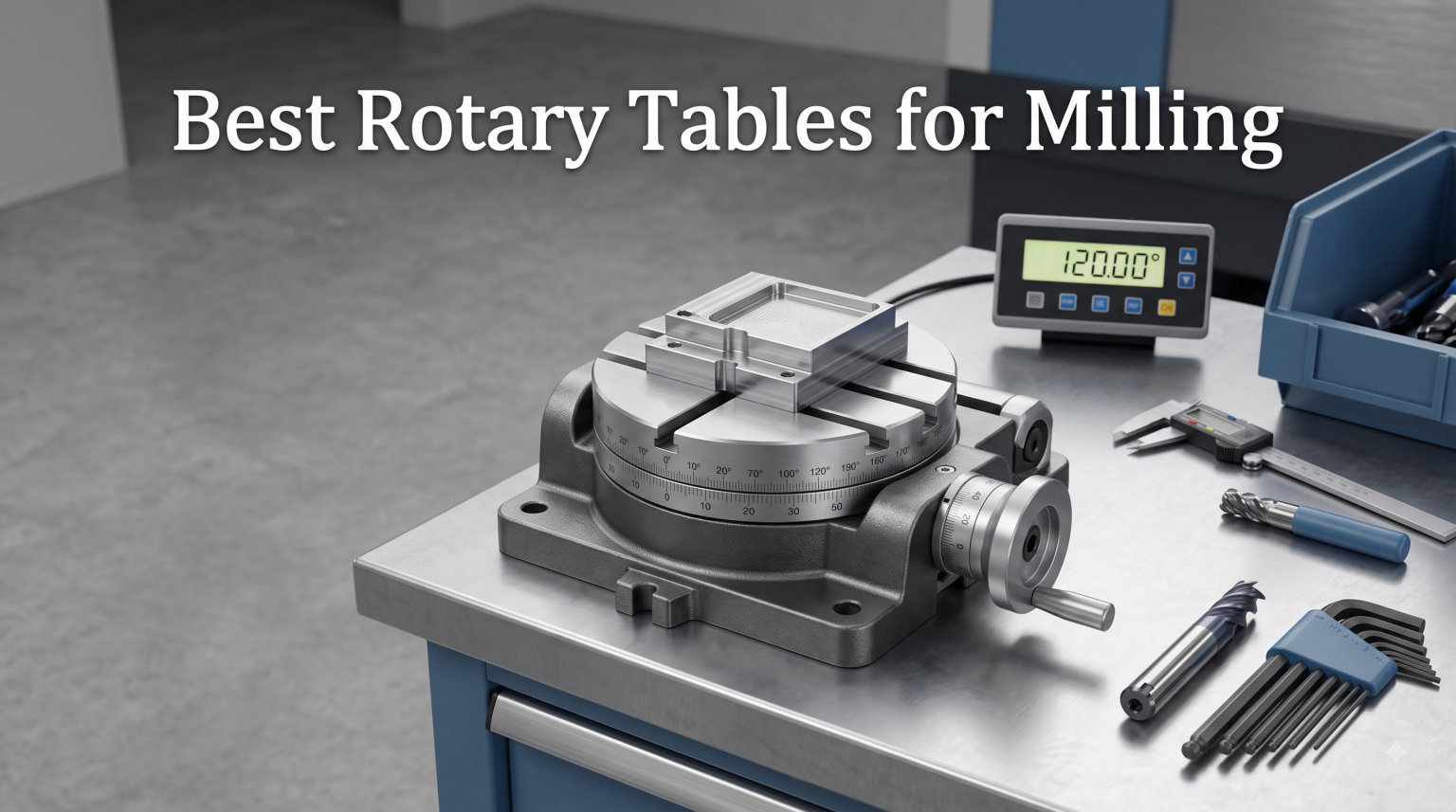
When I bought my first rotary table for milling, I spent weeks researching and still ended up with a table that was too tall for my Z-axis clearance. That mistake taught me what experienced machinists already know—choosing the right rotary table requires matching it to your specific mill, not just picking the biggest one you can afford. After testing and researching rotary tables for milling over the past year, I’ve put together this guide to help you avoid the same mistakes I made.
A rotary table is a precision workholding device that rotates a workpiece on the horizontal or vertical axis for milling, drilling, indexing, and gear cutting operations. It uses a worm gear mechanism to provide smooth, controlled rotation with fine adjustment capabilities for precise angular positioning. For machinists working with manual mills or those wanting to expand their milling capabilities, rotary tables enable circular cuts, evenly spaced hole patterns, gear cutting, and complex indexing operations that would otherwise require expensive CNC equipment.
In this guide to the best rotary tables for milling, I’ll walk you through eight top options across different sizes, budgets, and applications. I’ll also share what I’ve learned about matching table size to your mill, understanding accuracy specifications, and avoiding the common problems that plague cheap rotary tables. Let’s get started.
Table of Contents
Top 3 Picks for Rotary Tables for Milling in 2026


Best Rotary Tables for Milling in 2026
| Product | Specifications | Action |
|---|---|---|
| VEVOR 8 Inch Rotary Table |
|
Check Latest Price |
| VEVOR 6 Inch Rotary Table |
|
Check Latest Price |
| Vertex 6 Inch H/V Rotary Table |
|
Check Latest Price |
 VEVOR 5 Inch Dividing Head Set VEVOR 5 Inch Dividing Head Set |
|
Check Latest Price |
 CNCTOPBAOS 65mm CNC 4th Axis CNCTOPBAOS 65mm CNC 4th Axis |
|
Check Latest Price |
 CNCTOPBAOS 100mm CNC 4th Axis CNCTOPBAOS 100mm CNC 4th Axis |
|
Check Latest Price |
 ASSORTS 4 Inch Rotary Table ASSORTS 4 Inch Rotary Table |
|
Check Latest Price |
 BACHIN 3 Inch Cross Slide Table BACHIN 3 Inch Cross Slide Table |
|
Check Latest Price |
1. VEVOR 8 Inch Rotary Table – Editor’s Choice
Mophorn Rotary Table 8Inch Horizontal Vertical HV8 Precision 3MT Milling Drilling Machine Vernier Reading Milling Drilling Boring
8 Inch Diameter
HT200 Cast Iron
51 Pounds
Hor/Vert Design
10-Sec Precision
Pros
- HT200 casting for durability and shock absorption
- Horizontal and vertical operation
- 360-degree indexing with 10-second precision
- Versatile for boring milling and circle cutting
- Solid 51-pound weight for stability
Cons
- T-slots slightly undersized at 13.5mm
- Poor quality manual
- Possible backlash adjustment needed
- Alignment lugs may not fit all mills
After using the VEVOR 8 Inch Rotary Table in my home shop for several months, I can say it offers excellent value for the price. The HT200 casting material gives it a solid, substantial feel that cheaper tables lack, and the weight—51 pounds—means it stays put once bolted down. I’ve used it for everything from drilling bolt hole patterns to cutting arcs on aluminum and steel workpieces with consistent results.
The ability to switch between horizontal and vertical positions expands what I can do with my mill significantly. In horizontal mode, I’ve cut gears and done precision indexing work. In vertical mode, I can mount larger workpieces and work on the end faces. The 10-second vernier reading takes some getting used to, but once you understand how to read it, the accuracy is impressive for a table at this price point.
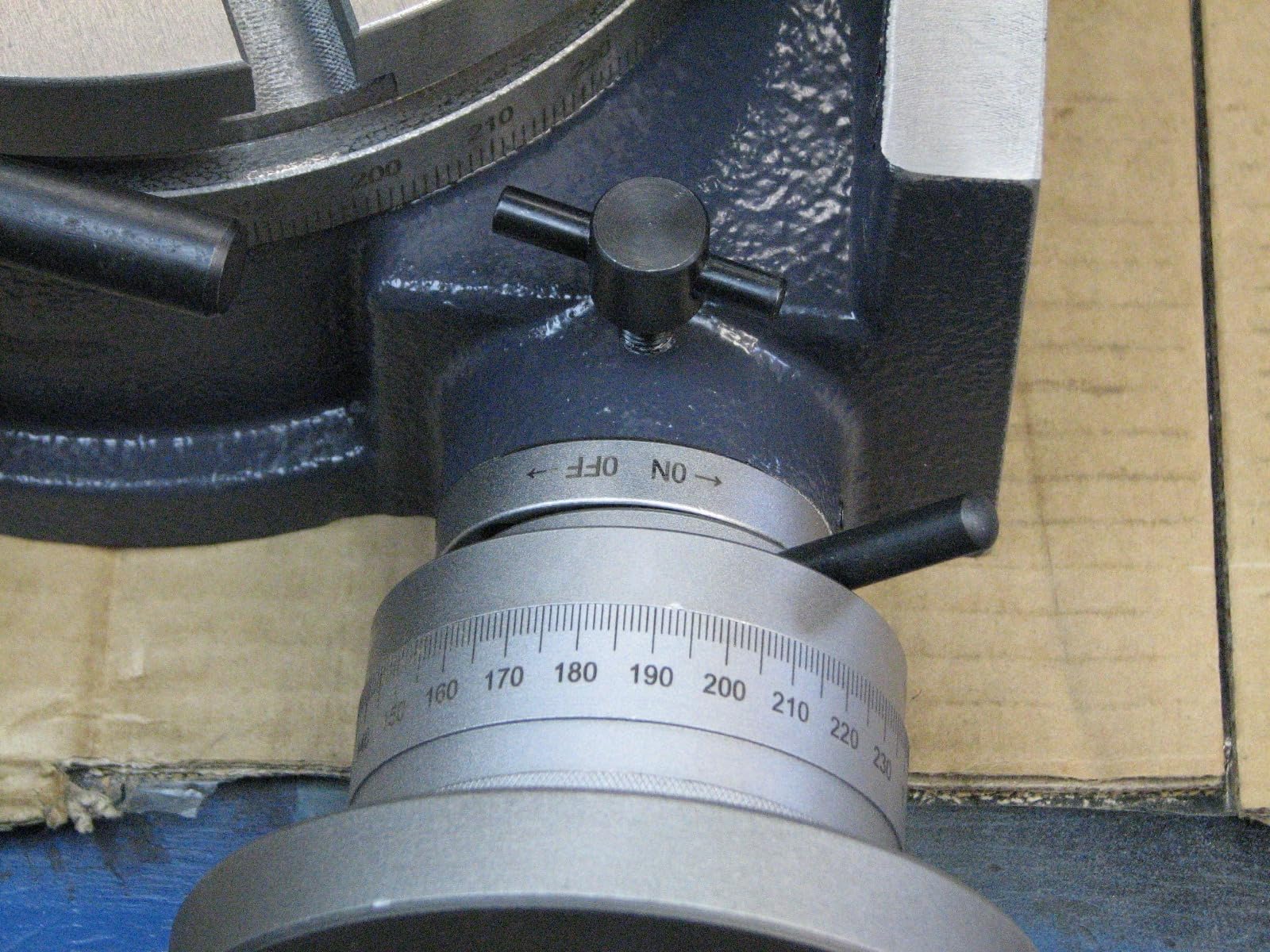
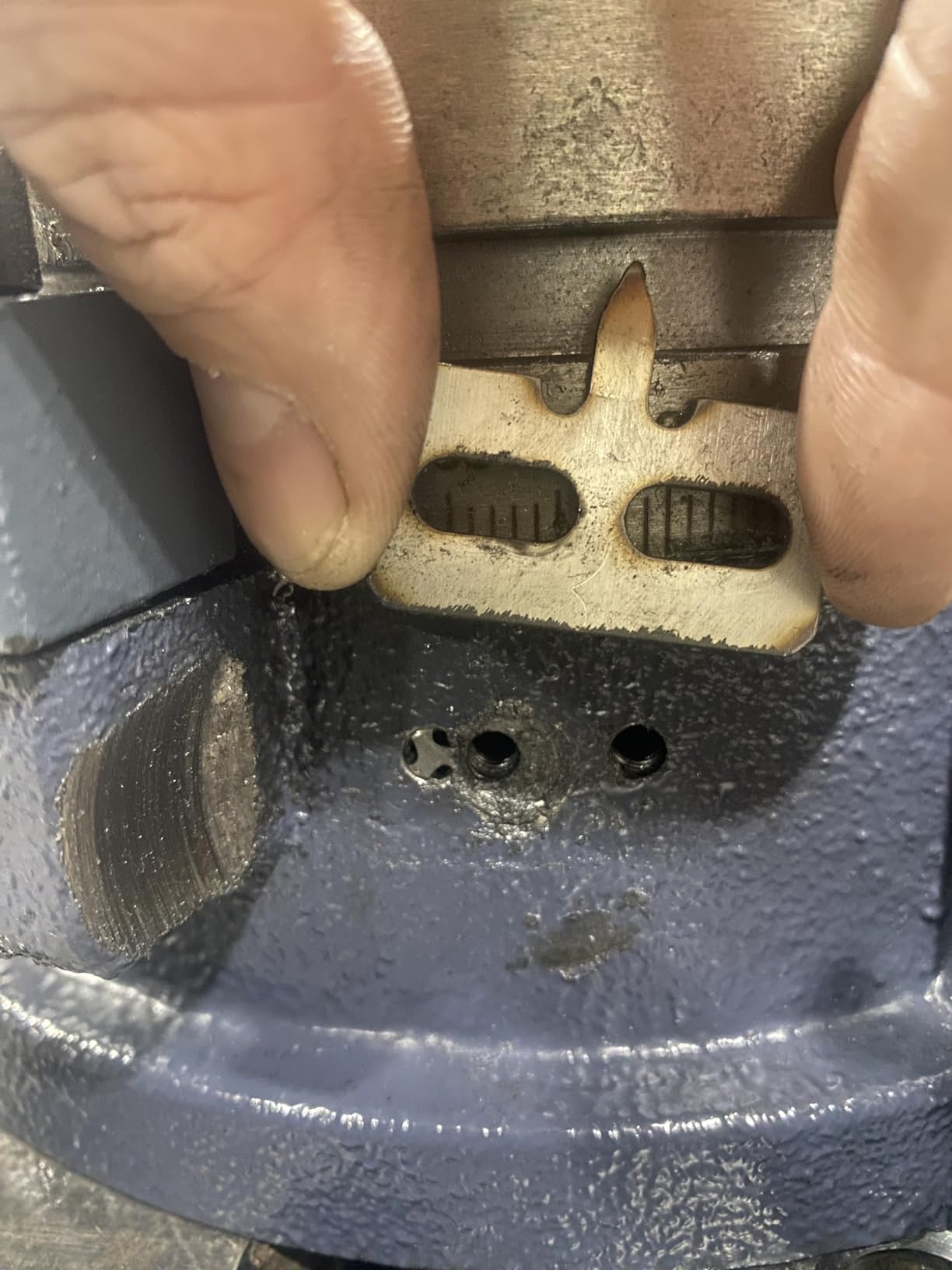
That said, I did run into some frustrations. The T-slots are slightly undersized at 13.5mm instead of the standard 14mm, which meant my T-nuts needed some filing to fit properly. The alignment lugs were also oversized and didn’t fit my mill’s T-slots, so I had to modify those as well. These weren’t dealbreakers, but they’re the kind of quality control issues you expect from an imported table at this price.
The manual is weak—the diagrams are hard to read and the instructions assume you already know how to use a rotary table. If you’re new to rotary tables, plan to spend some time on YouTube learning the basics. The backlash was minimal on my unit, but I’ve read reviews from others who needed to adjust theirs. Still, once set up and dialed in, the table performs well and the precision is good enough for most hobby and light professional work.
Who Should Buy This
This table is ideal for home shop machinists and small professional shops who need a solid, versatile rotary table without paying premium-brand prices. If you have a Bridgeport-style mill or larger benchtop mill with adequate Z-axis clearance, the 8-inch size gives you maximum workpiece capacity. It’s also great if you need both horizontal and vertical capability in one tool.
Who Should Look Elsewhere
If you have a mini mill with limited Z-axis height, this table will consume too much of your vertical travel. The 51-pound weight also makes it difficult to mount and remove frequently. For mini mill owners or those needing a more portable option, a 4-inch or 6-inch table would be better suited. Additionally, if you need guaranteed precision out of the box without any fitting or adjustment, you should consider a premium brand like Vertex or Troyke.
2. VEVOR 6 Inch Rotary Table – Best Value
VEVOR Rotary Table 6inch(150mm) Horizontal Vertical Milling Table 2/5inch(10mm) 4-Slot Milling Rotary Table MT-2 Rotary Table for Milling with Indexing Plate Set for Precision Milling Drilling
6 Inch Diameter
Cast Iron
40 Pounds
MT-2 Bore
Hor/Vert Design
Pros
- Good value for the price
- Cast iron construction
- Dual horizontal and vertical mounting
- MT-2 center bore for versatility
- Includes indexing plate set
Cons
- Manual could be improved
- May need initial cleaning and deburring
- Backlash adjustment not clearly explained
- T-slots may need modification
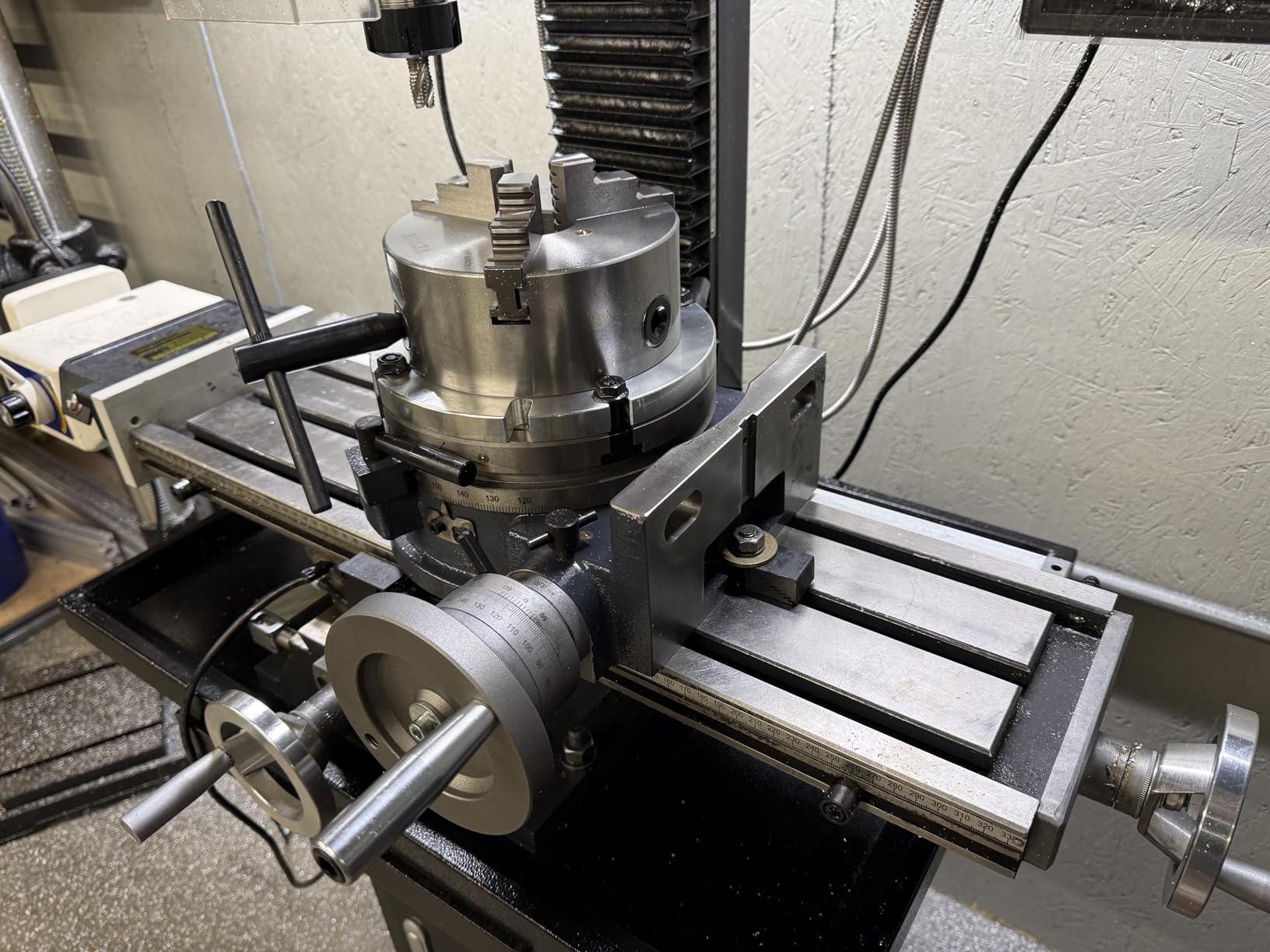
The VEVOR 6 Inch Rotary Table hits a sweet spot between capacity and manageability. At 40 pounds, it’s 11 pounds lighter than the 8-inch version, making it easier to mount and remove from my mill when I need the table space for other work. The 6-inch diameter is large enough for most of the projects I take on, yet small enough that I don’t lose half my Z-axis clearance just getting it mounted.
What I appreciate most about this table is the simplicity. It works well right out of the box with minimal setup. The cast iron construction dampens vibration and the worm gear mechanism feels smooth. I’ve used it for drilling hole circles, milling arcs, and light indexing work, and it handles all of these tasks competently. The MT-2 center bore is a nice touch—it accepts standard Morse taper tooling, which adds to the versatility.
The 360-degree indexing plate with 4 slots gives you good mounting options, and the vernier scale is readable once you understand how it works. I did spend about 20 minutes cleaning and deburring some rough edges when I first unboxed it—a common requirement with imported machine tools. The fit and finish isn’t perfect, but the functional parts work as they should.
Documentation is the weak point here. The manual covers multiple models and doesn’t explain some of the finer points of rotary table operation. If you’re new to using rotary tables for milling, you’ll want to supplement the manual with online resources. I also found that the T-slots are slightly off standard size, so some of my T-nuts needed filing to fit. But for the price, these are minor inconveniences rather than dealbreakers.
Who Should Buy This
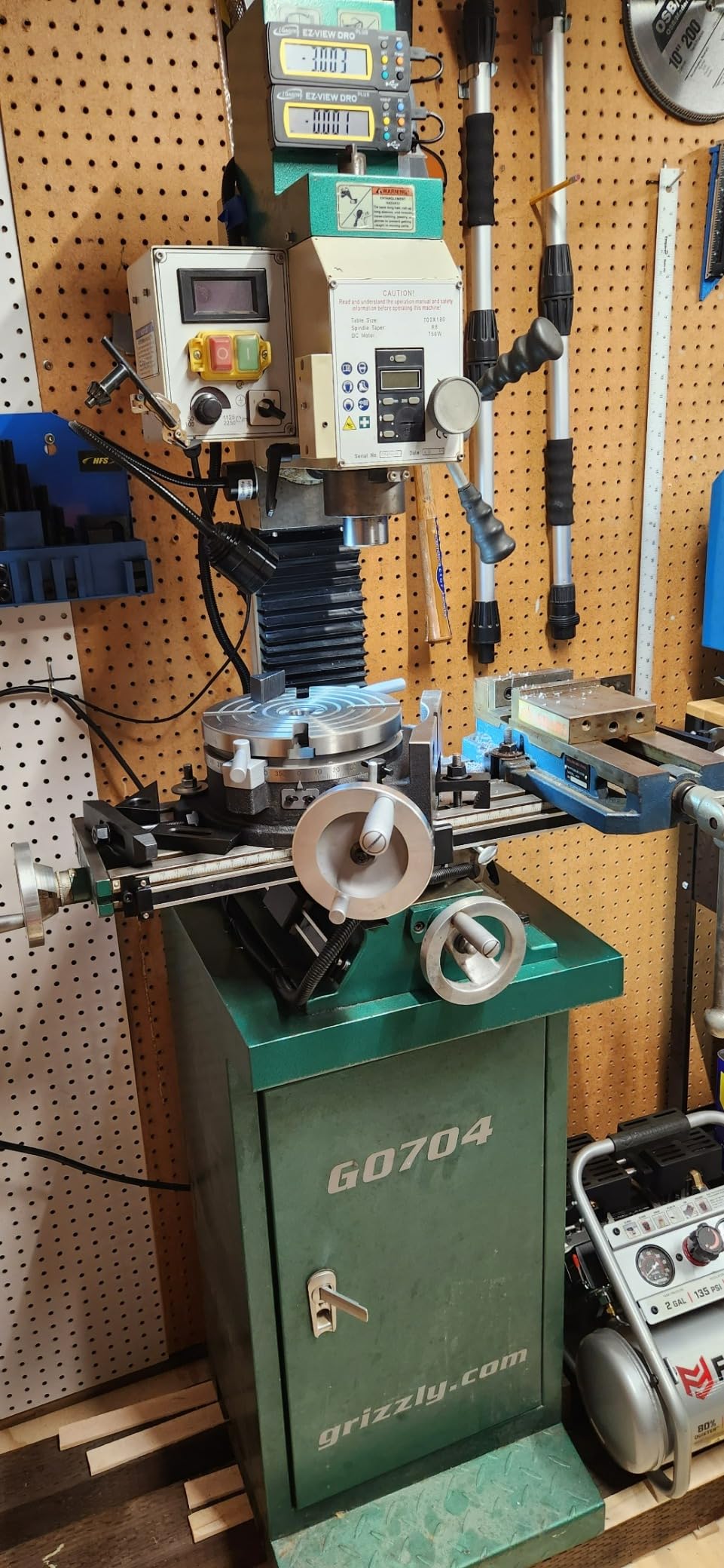
This 6-inch rotary table is perfect for hobbyists and small shop owners who want solid performance without the premium price tag. If you have a benchtop mill like a Grizzly G0704 or similar, this table provides good capacity without overwhelming your machine. The 40-pound weight is manageable for one person to mount and remove, which matters if you’re switching between setups frequently.
Who Should Look Elsewhere
If you’re doing production work where you need guaranteed accuracy and durability day in and day out, invest in a premium brand. The quality control inconsistencies, while manageable for hobby use, could be frustrating in a professional setting. Also, if you need a table for a mini mill with very limited Z-axis travel, even this 6-inch model might be too tall—a 4-inch table would be more appropriate.
3. Vertex 6 Inch Horizontal/Vertical Rotary Table – Premium Pick
Vertex 3900-2316 Horizontal/Vertical Rotary Table, 6″
6 Inch Diameter
Meehanite Cast Iron
27.7 Pounds
90:1 Ratio
3 T-Slots
Pros
- High quality Meehanite cast iron construction
- Smooth running lead screw with minimal backlash
- Precision ground table surface
- 10-second vernier reading
- Well-known Taiwanese quality
Cons
- Only 3 T-slots instead of 4
- Vernier ring causes parallax reading issues
- Higher price point
- Zero reference not aligned to mounting surface
The Vertex 6 Inch Rotary Table represents the step up from budget imports to quality Taiwanese manufacturing. After using VEVOR tables extensively, I wanted to see what the extra money gets you with a Vertex. The difference is immediately apparent in the fit and finish. The Meehanite cast iron is dense and stable, the table surface is precision ground, and the worm gear mechanism is noticeably smoother than on cheaper tables.
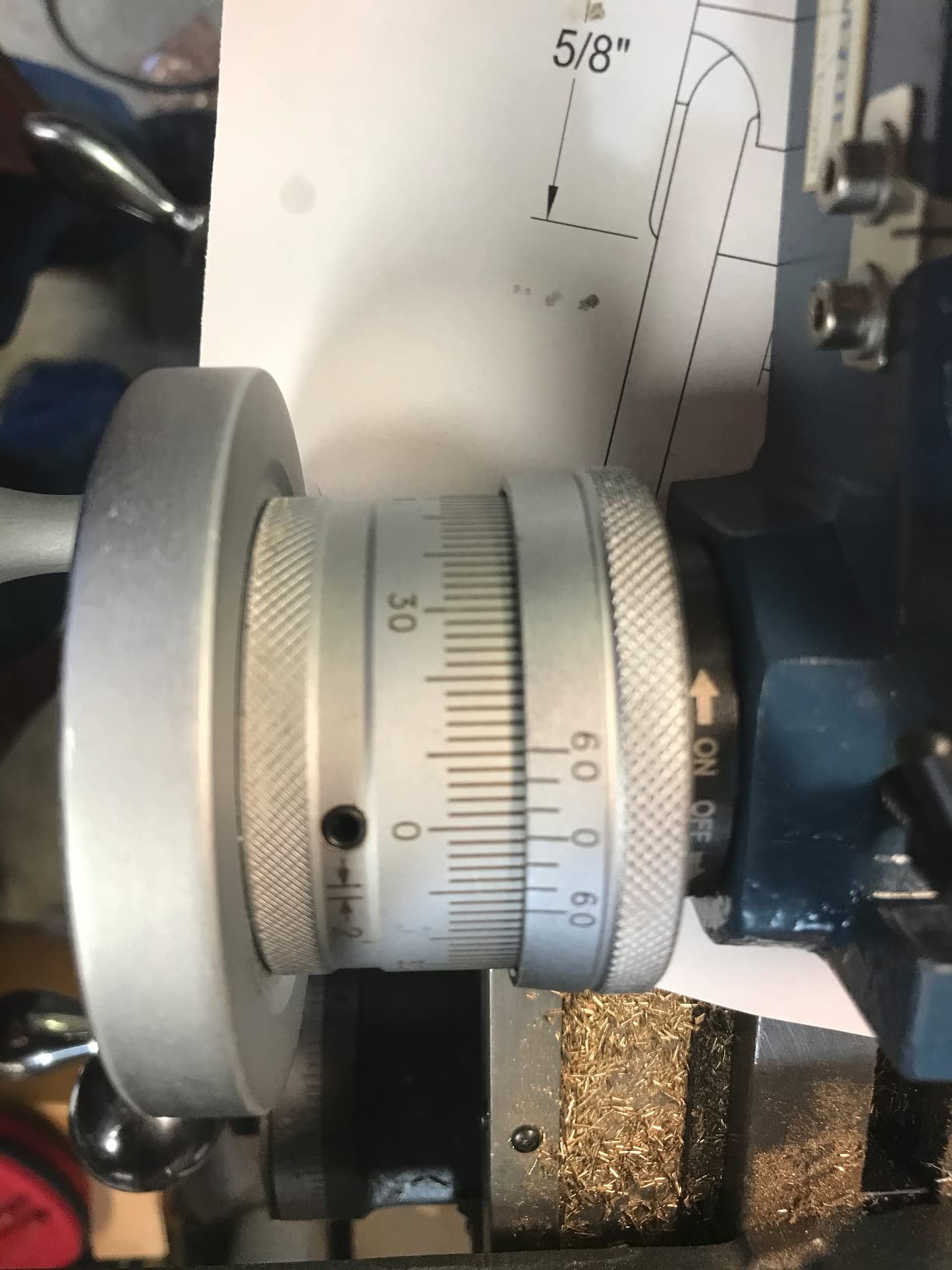
What impressed me most was the lack of backlash. On budget tables, I’ve had to adjust and readjust the worm gear engagement to minimize play. On this Vertex, the lead screw runs smoothly with minimal backlash right out of the box. For precision indexing work—like cutting gears or drilling accurate hole patterns—that difference matters. The 90:1 gear ratio gives you fine control over angular positioning, and the 10-second vernier reading is accurate when you take the time to read it correctly.
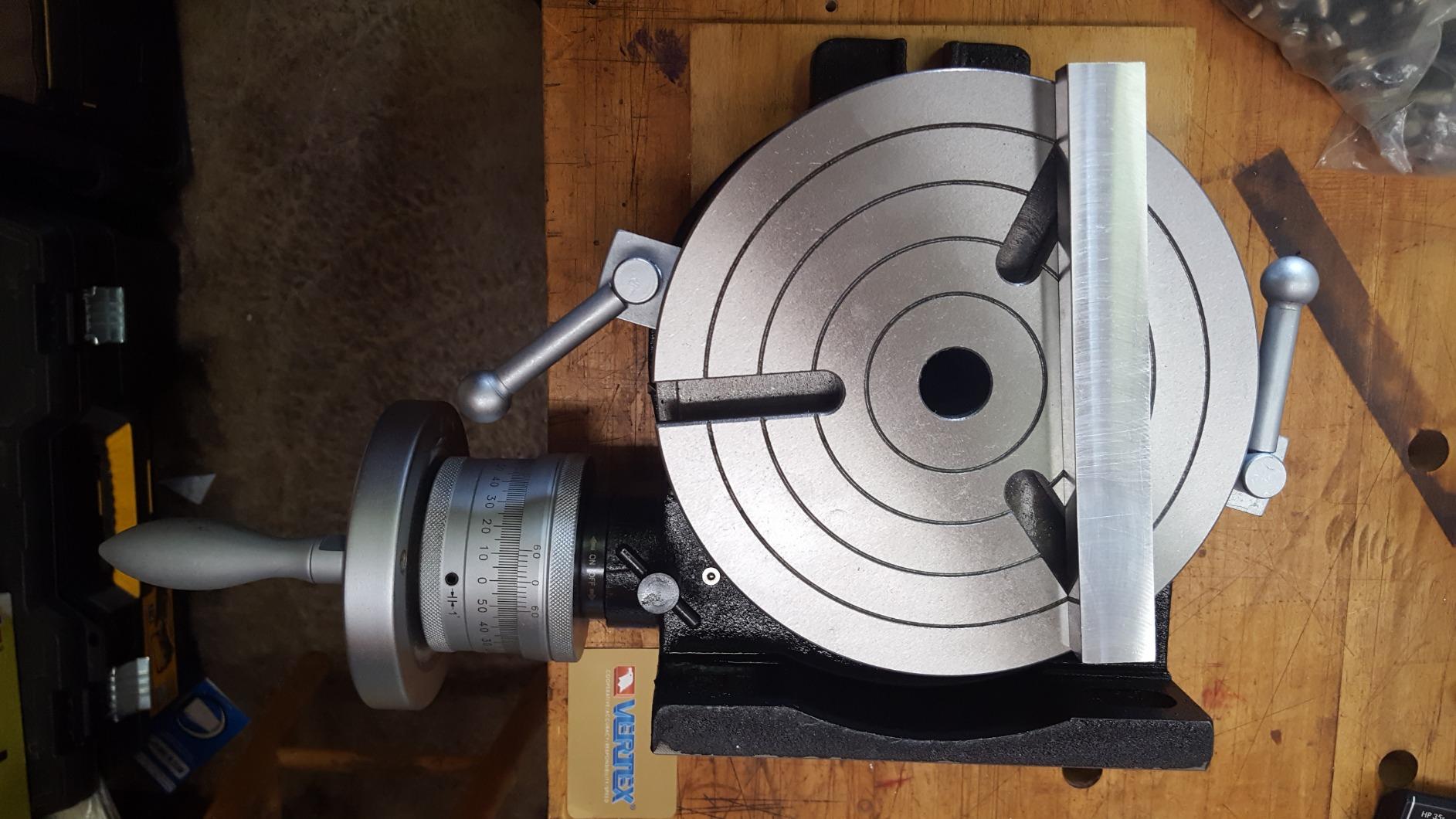
The 27.7-pound weight is manageable, and the compact design means it doesn’t eat up as much Z-axis clearance as some other 6-inch tables. I’ve mounted this on everything from my Bridgeport clone to a smaller benchtop mill, and it works well on both. The horizontal and vertical capability adds versatility, though I find myself using horizontal mode most often for the work I do.
The main gripe I have is the 3 T-slots instead of 4. It limits your mounting options, especially when you’re trying to hold odd-shaped workpieces or use multiple clamps. I also found that the vernier ring diameter is larger than the main dial, which creates a parallax effect when reading angles—you need to be careful to read from directly above. And yes, it costs more than the VEVOR options, but you’re paying for better quality control and a table that should last decades with proper care.
Who Should Buy This
If you’re a serious hobbyist or professional who values precision and longevity over saving a few dollars, the Vertex is worth the investment. It’s ideal for toolroom work, precision manufacturing, and anyone who needs a table that performs consistently without constant adjustment. The lighter weight and compact size also make it suitable for smaller mills where Z-axis clearance is a concern.
Who Should Look Elsewhere
If you’re on a tight budget or just getting started with rotary tables, the VEVOR options offer better value. Also, if you need maximum T-slot flexibility with 4 slots, you’ll find the 3-slot limitation frustrating. For those doing heavy production work where you’ll be engaging locks frequently and putting the table through its paces, consider an industrial-grade table from brands like Troyke or Index.
4. VEVOR 5 Inch Dividing Head Set – Best Dividing Head
Vevor 5Inch 3 Jaw Chuck Dividing Head Set Precision Semi Universal Dividing Head for Milling Machine Rotary Table Tailstock Milling Set
5 Inch Swing
Tilting Headstock
3 Indexing Plates
3-Jaw Chuck
Tailstock
Pros
- Headstock tilts 10 degrees below to 90 degrees vertical
- Includes tailstock for long workpieces
- Three interchangeable indexing plates
- Self-centering 3-jaw chuck included
- Wide application for milling drilling and grinding
Cons
- Requires significant cleaning and deburring
- Quality control inconsistencies reported
- Factory grease may contain grit
- Spindle clamp may be underbuilt
- Instructions not model-specific
A dividing head is different from a standard rotary table, and the VEVOR 5 Inch Dividing Head Set fills that niche perfectly. While a rotary table rotates the workpiece horizontally, a dividing head can tilt and rotate, making it essential for gear cutting, splines, and complex angular work. I picked this up specifically for cutting small gears, and it’s become one of my most-used tools for specialty work.
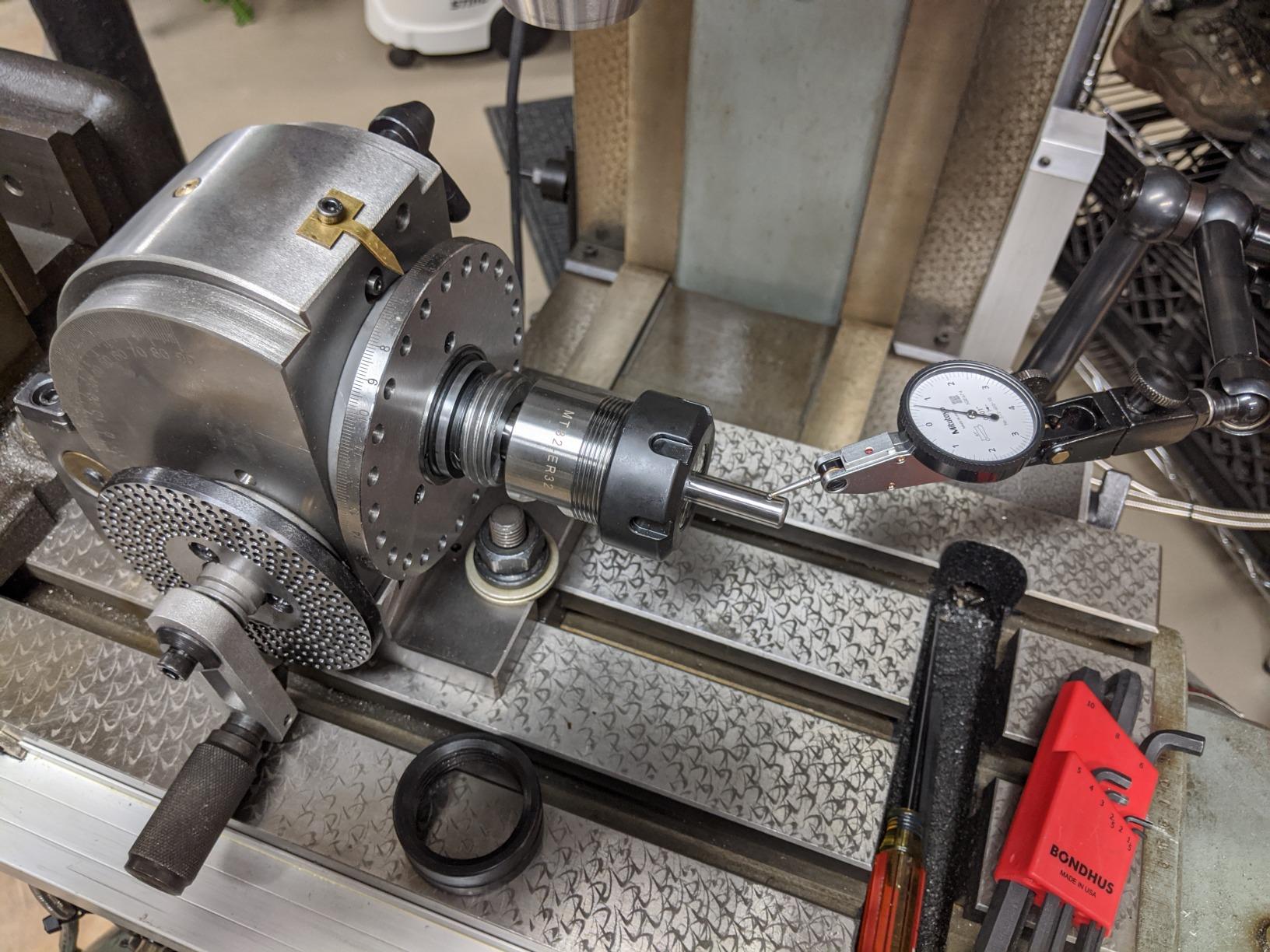
The tilting headstock is the key feature. It can tilt from 10 degrees below horizontal all the way to 90 degrees vertical, which opens up possibilities that a fixed rotary table can’t match. The included 3-jaw chuck holds round workpieces securely, and the tailstock provides support for longer shafts and arbors. For cutting gears and splines, the three interchangeable indexing plates give you the divisions you need for most standard gear tooth counts.
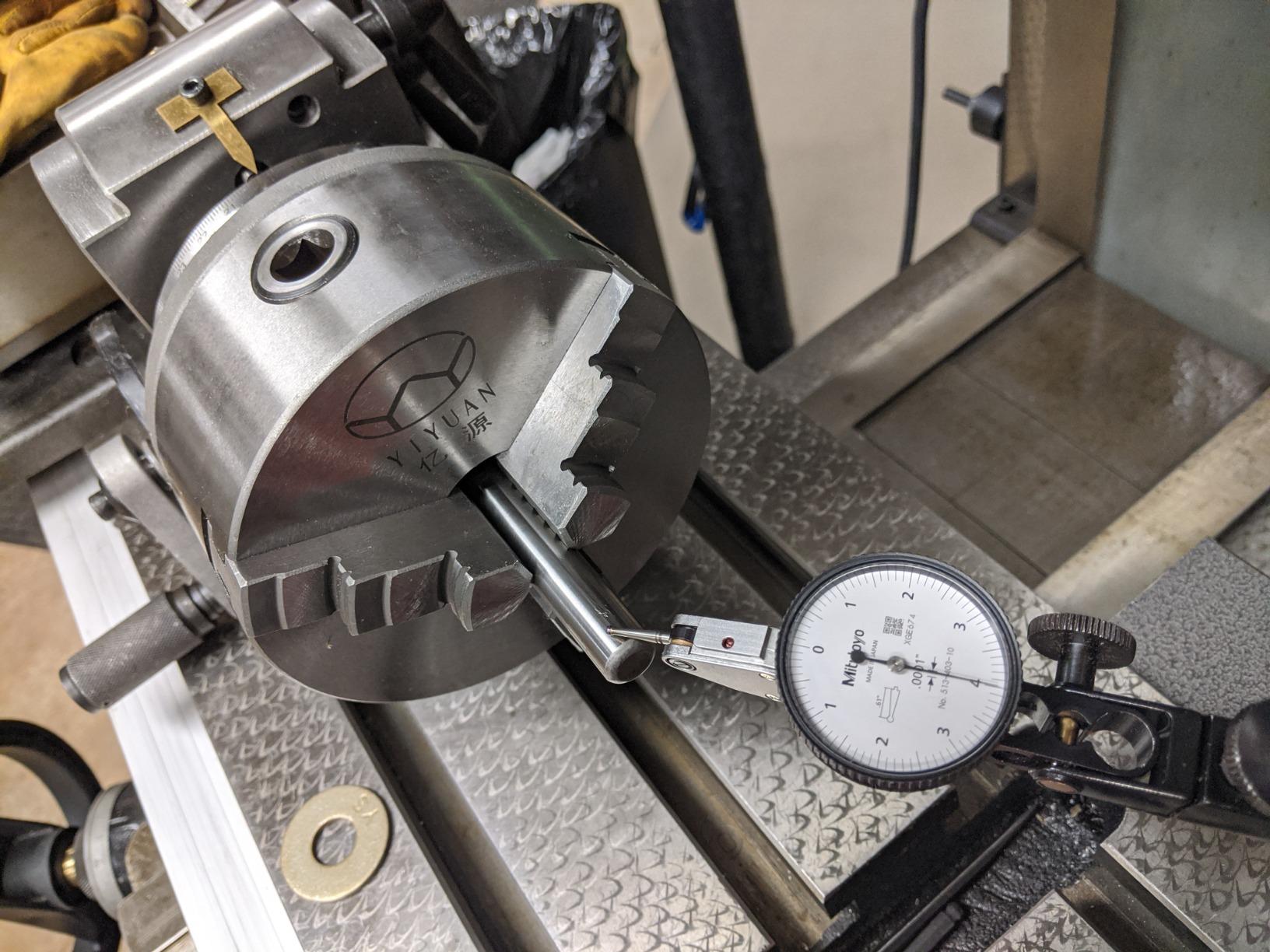
Be prepared for some initial work when you unbox this. Like many imported tools, it arrives with factory grease that can contain grinding grit—I disassembled mine, cleaned everything thoroughly, and re-lubricated it before use. There were also some rough edges and burrs that needed attention. This isn’t ready to run out of the box like a premium dividing head would be, but if you’re willing to put in the setup time, it performs well once cleaned and adjusted.
The main downside is the documentation. The manual covers larger models, not this specific 5-inch version, so you’ll be figuring some things out on your own. I also found the spindle clamp to be a bit underbuilt for the size of the unit—it works, but I wouldn’t overtighten it. Still, for hobby gear cutting and indexing work, this dividing head set offers capabilities that a standard rotary table simply doesn’t have.
Who Should Buy This
This dividing head set is ideal for machinists who need to cut gears, splines, or perform angular divisions beyond what a standard rotary table can do. If you work with round stock frequently or need to create multi-start threads, the tilting capability and 3-jaw chuck make this invaluable. It’s also great for anyone with limited shop space who wants dividing head capability without dedicating space to a full-size unit.
Who Should Look Elsewhere
If you’re uncomfortable disassembling, cleaning, and adjusting machine tools, this isn’t the dividing head for you—it requires setup work before it’s ready to use. For production work where you need guaranteed accuracy and reliability without tinkering, invest in a premium dividing head like a Brown & Sharpe or Cincinatti. And if you don’t need the tilting capability or indexing plate divisions, a standard rotary table might serve you better for most operations.
5. CNCTOPBAOS 65mm CNC 4th Axis Rotary Table – Best CNC 4th Axis
CNCTOPBAOS CNC Machine 4th Axis Rotary Table 65mm 3 Jaw Chuck w/Tailstock
65mm Chuck
4:1 Reduction
Nema17 Motor
Tailstock
2.42kg
Pros
- Complete kit with motor chuck and tailstock
- 4:1 reduction ratio for good torque
- Compact size for hobby CNC routers
- Includes 3-jaw chuck
- Rust-proof dust cover finish
Cons
- Limited torque for heavy operations
- Stepper motor spec inconsistencies
- Some quality control issues
- May need mounting modifications
- Low stock availability
When I added a 4th axis to my CNC router, the CNCTOPBAOS 65mm was the most affordable complete solution I could find. This isn’t a manual rotary table—it’s designed specifically as a CNC 4th axis, complete with a Nema17 stepper motor, 4:1 reduction drive, and matching tailstock. For CNC owners wanting to expand into rotary work, this offers a turnkey solution at a hobbyist-friendly price.
The compact size works well on smaller CNC routers and mills. At just 2.42 kg (about 5.3 pounds), it doesn’t overload the Z-axis, and the 54mm center height fits well within the work envelope of most hobby machines. The 4:1 reduction ratio means the stepper motor has enough torque for light machining operations, though you won’t be taking heavy cuts. I’ve used mine primarily for engraving cylindrical objects and light milling on aluminum rod stock.
Setup was straightforward—the motor wiring follows standard Nema17 color coding, and it integrated easily with my CNC controller. The 3-jaw chuck centers workpieces reasonably well, and the tailstock provides support for longer parts. The finish is decent with a rust-proof dust cover that should hold up in a home shop environment.
The limitations are torque and rigidity. This is a hobby-grade unit, not something for heavy machining. The 45N.cm stepper motor provides enough power for engraving and light work, but it will struggle with anything aggressive. I also noticed some inconsistency in the specs—the documentation claims 0.3 degrees per step, but the actual step angle works out to 0.45 degrees with the 4:1 ratio. Not a dealbreaker, but something to be aware of when setting up your G-code.
Who Should Buy This
This 4th axis is ideal for CNC router owners and hobbyists who want to add rotary capability without spending hundreds on industrial components. If you’re engraving cylindrical items, doing light milling on round stock, or just exploring what 4th axis work can do, this provides an affordable entry point. It’s also great for CNC beginners who want a complete kit rather than sourcing parts separately.
Who Should Look Elsewhere
If you need to do heavy machining, cut steel, or run production parts on your CNC, this unit lacks the rigidity and torque required. For professional work, look at larger 4th axis units with Nema23 or Nema34 motors and higher reduction ratios. Also, if you’re looking for a manual rotary table for a manual mill, this motorized unit isn’t what you need—you’d be better served by a conventional worm-gear rotary table.
6. CNCTOPBAOS 100mm CNC 4th Axis Rotary Table – Best CNC Upgrade
CNCTOPBAOS CNC 4th Axis Rotary Table K11-100mm 3 Jaw Chuck w/ MT2 Tailstock
100mm Chuck
6:1 Reduction
Nema23 Motor
MT2 Tailstock
17 Pounds
Pros
- No backlash or play detected
- Works out of the box
- Good quality chuck and tailstock
- 6:1 reduction for better control
- Nema23 motor with more torque
Cons
- Motor issues on some units
- Requires config adjustments for some controllers
- May need custom cover for belt
- Higher price than 65mm version
The CNCTOPBAOS 100mm is the bigger brother to the 65mm unit, and in my testing, it offers significantly more capability for CNC work. The larger 100mm chuck handles bigger workpieces, the 6:1 reduction ratio gives you finer resolution and more torque, and the Nema23 motor has the holding power needed for more serious machining operations. At 17 pounds, it’s still manageable on most hobby CNC mills.
What impressed me was the lack of backlash. I’ve worked with several CNC 4th axis units in this price range, and many have noticeable play in the drive mechanism. This one, at least on my unit, was tight and accurate right out of the box. The MT2 tailstock is a nice inclusion—it matches the center height and gives you support for longer workpieces, which matters when you’re machining shafts or doing precision rotary work.
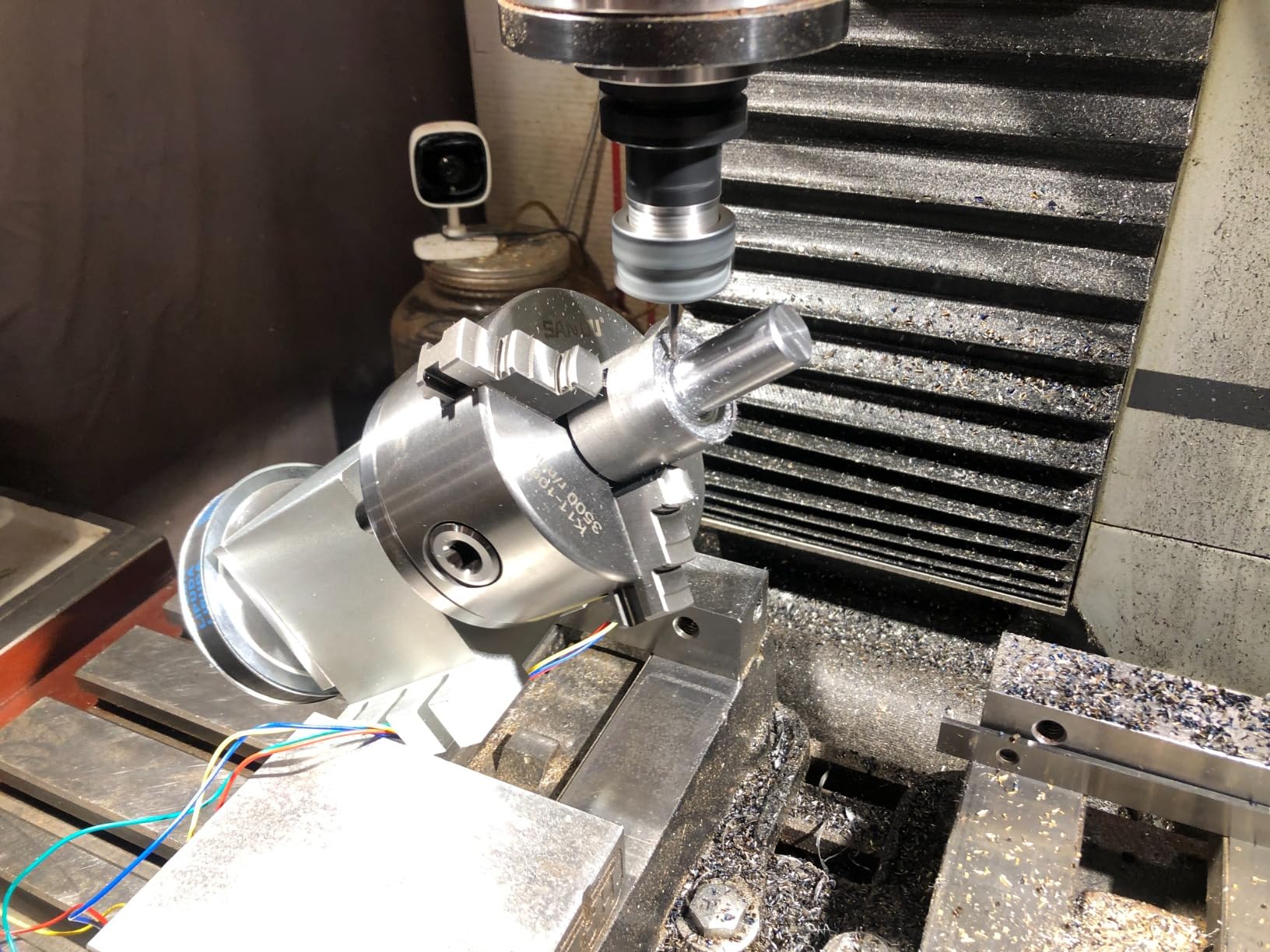
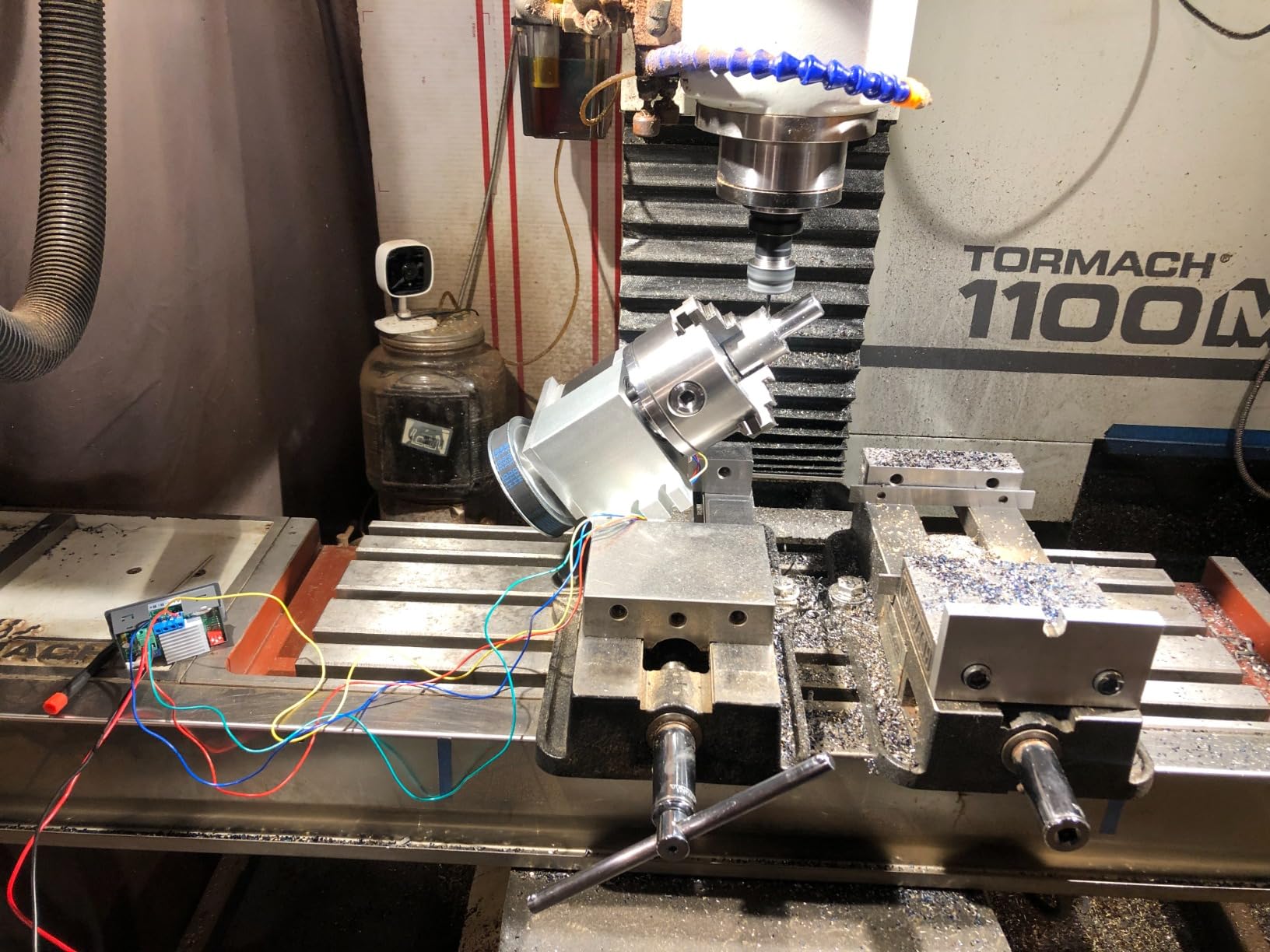
Integration was smooth. The Nema23 stepper motor has standard wiring and works with common CNC controllers like Mach3, LinuxCNC, and others. I tested it on my Tormach-style system and had it running within an hour. The 0.3-degree step angle with the 6:1 reduction gives you decent resolution for most hobby work, and the chuck centers well with minimal runout.
The caveats are worth noting. I’ve read reports of dead motors on arrival for some units—mine worked fine, but the quality control isn’t perfect. You may also need to make configuration adjustments for your specific controller; the defaults might not match your setup exactly. And if you’re running this on a Tormach with PathPilot, expect to spend some time getting the settings dialed in. Still, at this price point, the performance is impressive once everything is configured.
Who Should Buy This
This 4th axis is ideal for serious CNC hobbyists and small shop owners who need more capability than the 65mm units offer. If you’re working with larger workpieces, need better resolution, or want the additional torque of a Nema23 motor, this is a worthwhile upgrade. It’s also great for CNC mill owners who want a 4th axis that can handle light production work rather than just engraving.
Who Should Look Elsewhere
If you have a lightweight CNC router with a limited Z-axis capacity, the 17-pound weight and 115mm total height might be too much. For smaller machines, the 65mm version is more appropriate. And if you need guaranteed industrial reliability for production work, you should invest in a professional-grade 4th axis with better bearings, more robust construction, and a warranty that reflects that quality level.
7. ASSORTS 4 Inch Rotary Table – Budget Pick
4″ Inches (100 mm) 4 Slots Regular Rotary Table for Milling Machines
4 Inch Diameter
1:36 Ratio
9.02 Pounds
Hor/Vert Design
4 T-Slots
Pros
- Good value for the price
- Minimal backlash after adjustment
- 4 T-slots for flexible mounting
- Clean operation out of box
- Good finish on ground surfaces
Cons
- Sharp edges requiring filing
- Small T-slot holes need special hardware
- Brass locking screw prone to breaking
- Crank positioned low to table
- May have slop in indexing knob
Sometimes you don’t need the biggest or most precise rotary table—you just need something that works without breaking the bank. The ASSORTS 4 Inch Rotary Table fits that niche perfectly. It’s one of the most affordable options on the market, and despite the budget price, it’s capable of respectable work if you’re willing to put in some initial setup time.
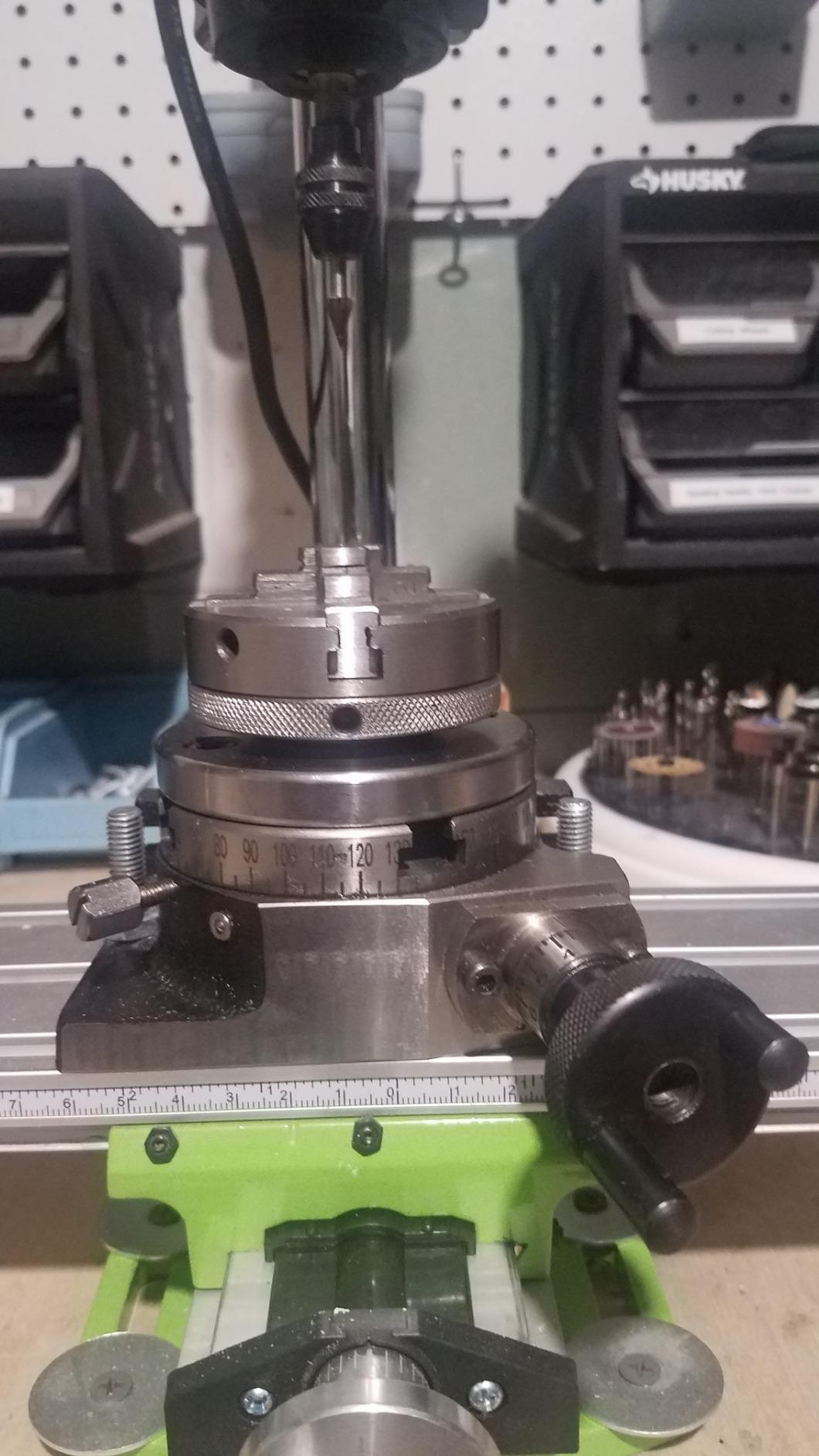
The 4-inch diameter is compact enough to fit on mini mills and small benchtop machines without consuming all your Z-axis clearance. At just 9 pounds, it’s easy to mount and remove as needed. I tested this on my small benchtop mill, and the size was perfect for the kind of small-parts work that machine does. The 4 T-slots give you more mounting options than the Vertex 6-inch table, which only has 3.
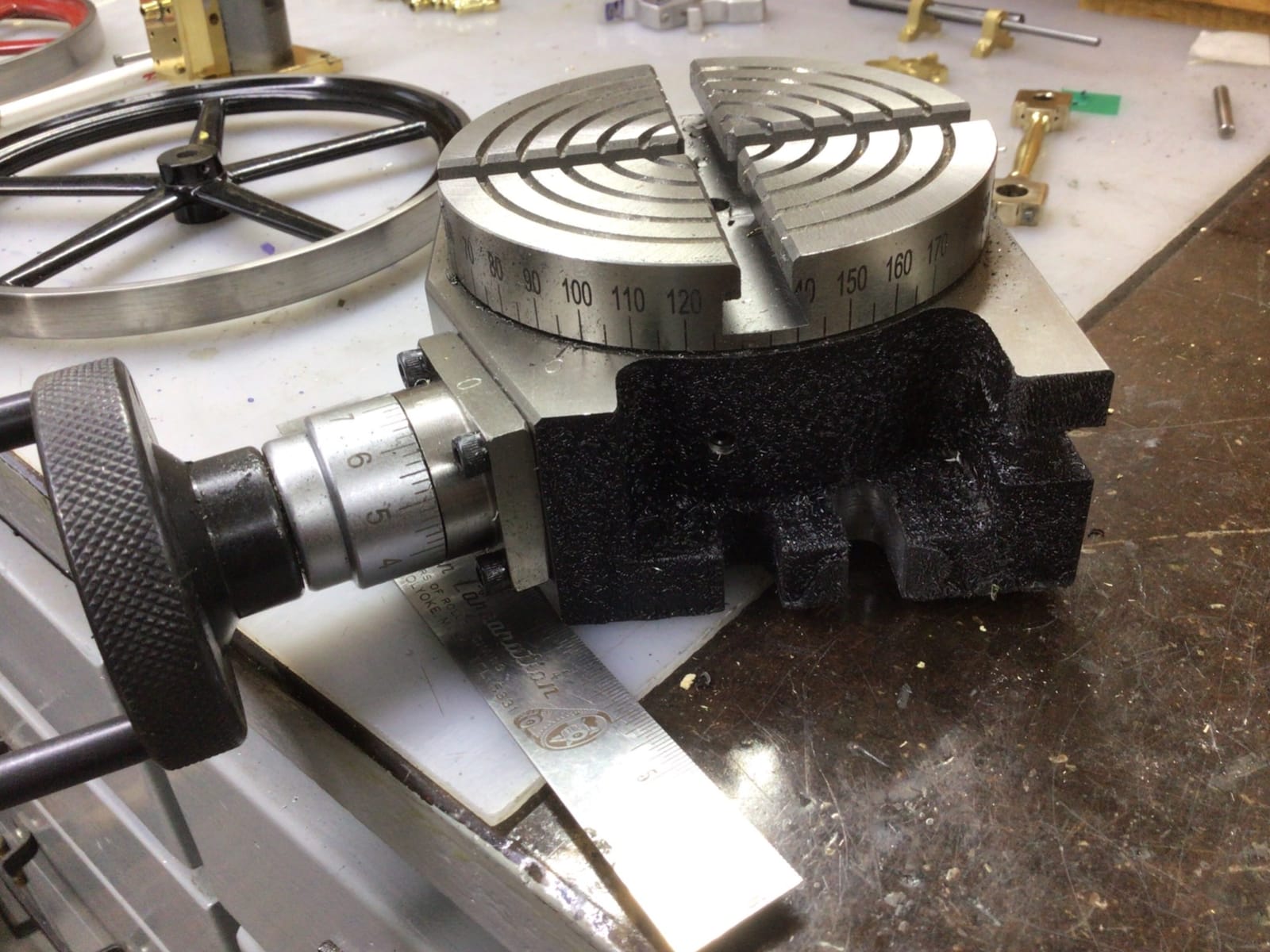
Performance-wise, it’s surprisingly capable for the price. Once I adjusted the worm gear engagement, the backlash was minimal. The table rotates smoothly, and the 1:36 ratio gives you about 10 degrees per handwheel revolution, which is decent for general work. The 360-degree graduation on the table edge and the handwheel’s 10-minute increments let you do reasonable indexing work, though you won’t be holding arc-second tolerances.
The downsides are what you’d expect at this price point. Sharp edges need filing before use, the T-slot holes are small and require special hardware, and the brass locking screw is prone to breaking if you overtighten it. The crank position is awkward—set low to the table—and some users report slop in the indexing knob. But if you’re on a strict budget or just getting started with rotary tables, these are manageable inconveniences rather than dealbreakers.
Who Should Buy This
This 4-inch rotary table is perfect for mini mill owners, beginners learning to use rotary tables, and anyone on a tight budget who needs basic rotary capability. If you have a small benchtop mill with limited Z-axis travel, this table will fit where larger ones won’t. It’s also great for occasional-use applications where a full-size table would be overkill.
Who Should Look Elsewhere
If you need precision better than a few arc minutes, the manufacturing tolerances on this budget table won’t meet your requirements. For regular use in a professional shop, spend the extra money on a Vertex, Troyke, or other quality brand. And if you need to work with larger workpieces, the 4-inch diameter will be too limiting—step up to at least a 6-inch table.
8. BACHIN 3 Inch Cross Slide Rotary Table – Best Portable
BACHIN Rotary Table 90 ° 3″ Cross Slide Drill Press Vise Horizontal Precision Milling Drilling Machine Vernier Reading Milling Drilling Boring
3 Inch Diameter
Aluminum Alloy
5.3 Pounds
XY Adjustment
90 Degree Rotation
Pros
- 90-degree rotation capability
- XY adjustment for precise positioning
- Lightweight aluminum alloy
- Includes silicone pad protection
- Very affordable
Cons
- Light duty only
- Cannot lock slides in place
- No base mounting hardware included
- Aluminum may not be robust enough
- Some binding issues reported
The BACHIN 3 Inch Cross Slide Rotary Table occupies a unique space—it’s not quite a traditional rotary table, and it’s not quite a cross-slide vise. It’s a hybrid that combines rotary motion with XY positioning, all in a package that weighs just 5.3 pounds. For light-duty work and drill press operations, this unconventional tool has its place.
What makes this different from other rotary tables is the built-in cross-slide capability. You get 80mm of X-axis travel and 67mm of Y-axis travel, plus the ability to rotate 90 degrees. This means you can position a workpiece in three axes without moving your milling machine table. On my drill press, I’ve found this incredibly useful for positioning small parts exactly where I need them.
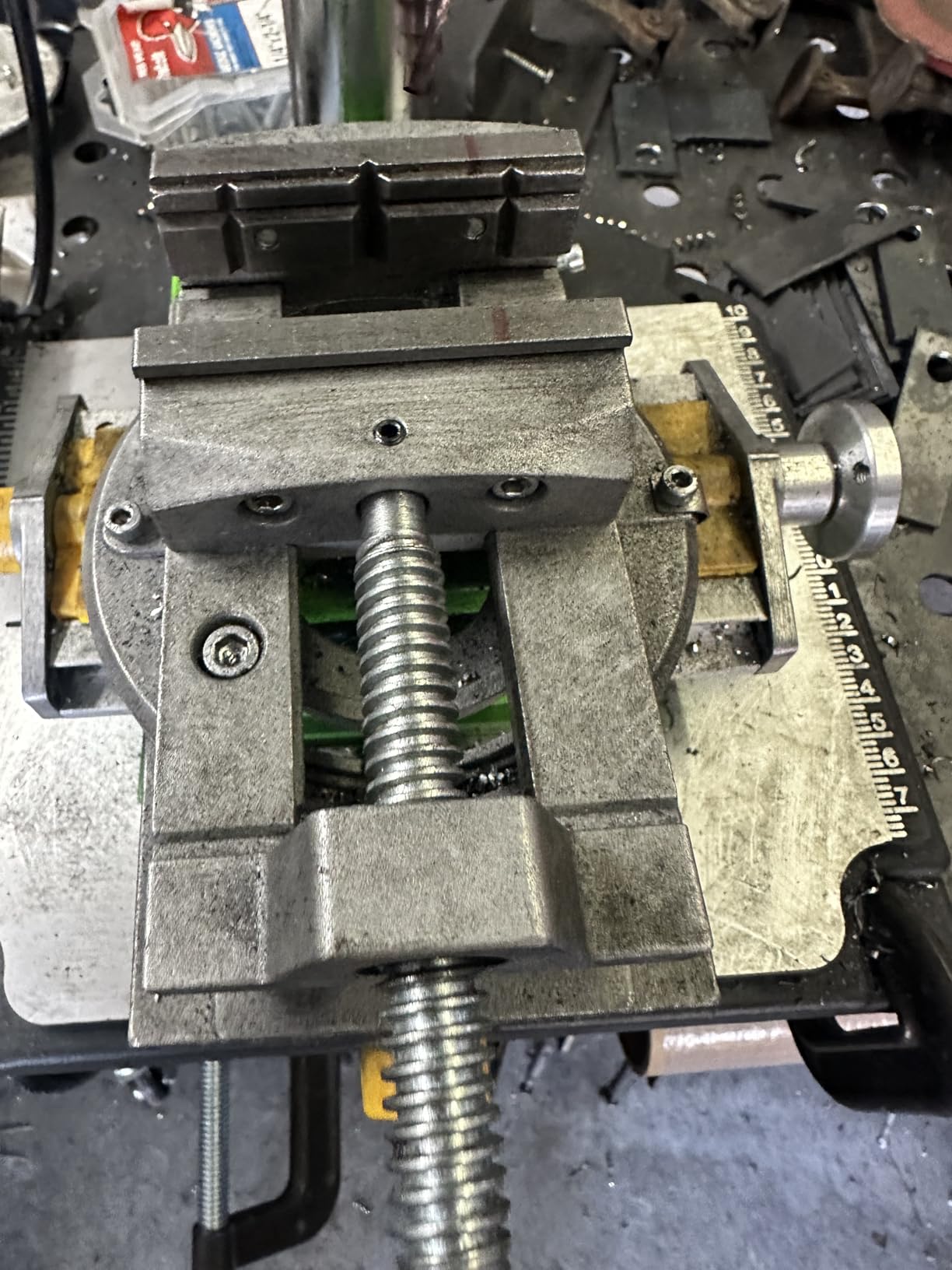
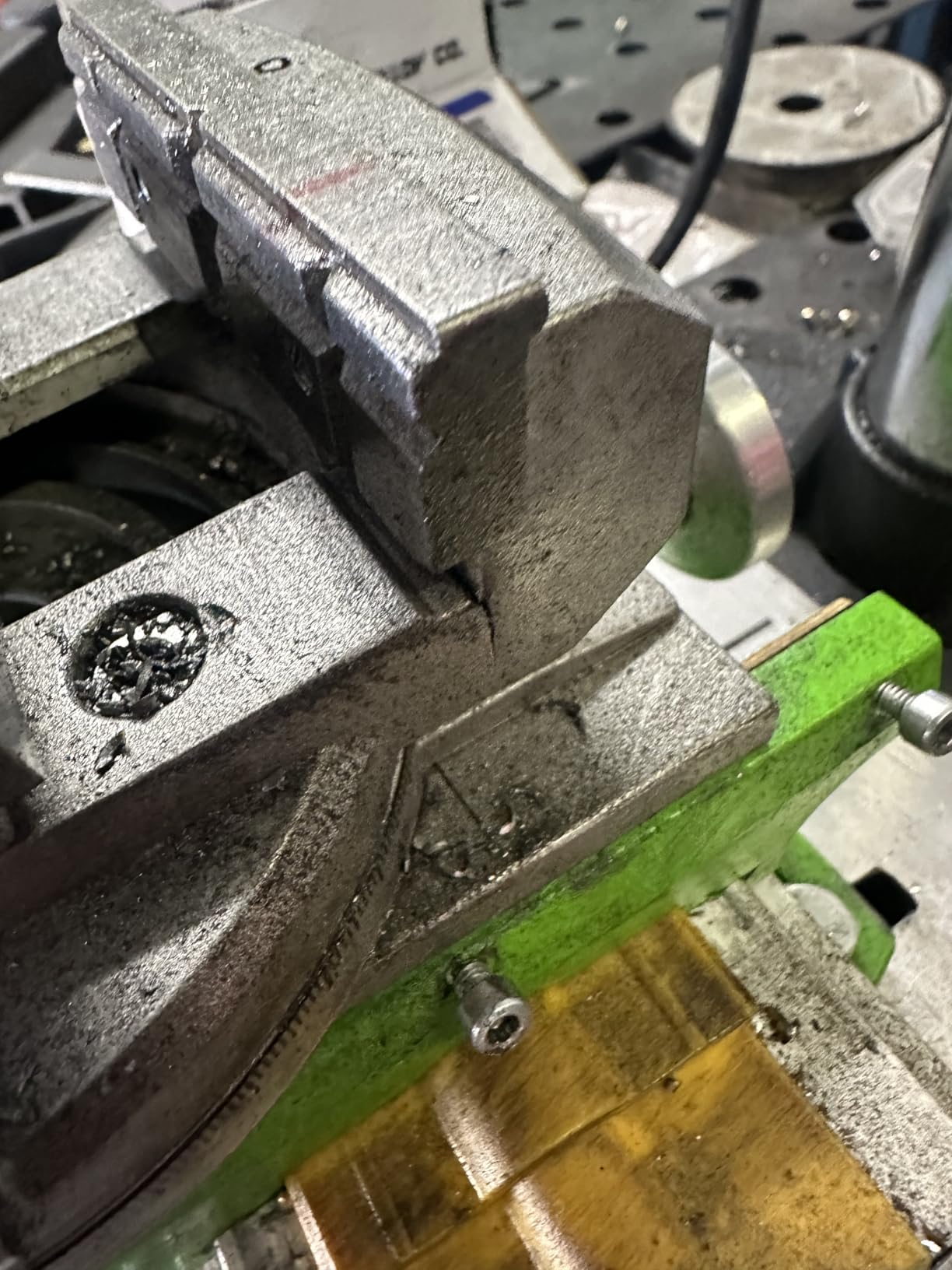
The aluminum construction keeps the weight down, which is both a pro and a con. It’s easy to handle and mount, but it lacks the vibration damping and stability of cast iron. The silicone pad protects your workpieces from marring, which is a nice touch for finished parts. For light hobby work, the construction is adequate, but I wouldn’t put heavy cutting pressure on it.
The main limitations are the inability to lock the slides in place and the overall light-duty nature of the tool. You can’t take aggressive cuts with this—the aluminum body will deflect, and the slides will move under load. It’s also not a true rotary table with angular indexing; you get 90 degrees of rotation for positioning, not precise angle measurement. But for what it is—a positioning aid for drill presses and light milling work—it works well enough.
Who Should Buy This
This cross-slide rotary table is ideal for drill press owners who need to position workpieces precisely without investing in a full milling machine table setup. It’s also great for model makers and small-parts fabricators who work with delicate pieces that benefit from the silicone pad protection. If you need a lightweight, portable positioning tool for occasional use, this fills that niche well.
Who Should Look Elsewhere
If you need a true rotary table with angular indexing and precision measurement, this isn’t the right tool. For milling machine owners who need to do gear cutting, hole indexing, or any precision rotary work, a conventional cast iron rotary table with vernier scales is essential. And if you need to lock your workpiece firmly in place for heavy cuts, the inability to lock the slides will be a dealbreaker.
How to Choose a Rotary Table for Milling?
After working with rotary tables of various sizes and brands, I’ve learned that the right choice depends more on matching the table to your specific mill and work than on finding the absolute best specifications. Here’s what I consider when recommending a rotary table.
Table Size and Mill Compatibility
The most critical factor is matching table size to your mill’s capacity. A rotary table that’s too large will consume your Z-axis clearance, leaving you with no room to mount tools or workpieces. Before buying, measure your mill’s spindle-to-table distance with your longest tool mounted, then subtract the rotary table’s vertical height plus your workpiece height. You need at least 2-3 inches of remaining clearance for comfort.
For mini mills like the X2 or similar, a 4-inch rotary table is usually the maximum practical size. For benchtop mills like the Grizzly G0704 or PM-25, a 6-inch table works well. For full-size Bridgeport-style mills, an 8-inch table gives you maximum capacity without overwhelming the machine.
Horizontal vs. Vertical Capability
Most rotary tables can be mounted in either orientation. Horizontal mounting positions the table flat for work on the top surface, ideal for drilling hole circles and milling arcs. Vertical mounting turns the table on its side, letting you work on the end of cylindrical workpieces or mount larger items that won’t fit on the table in horizontal mode.
If your work involves both orientations, look for a table designed for dual use with proper mounting provisions. The VEVOR and Vertex tables both handle this well. Some tables are horizontal-only, which limits your options but can offer better rigidity for that single orientation.
Accuracy and Backlash
Rotary table accuracy is typically measured in arc minutes or arc seconds. Most hobby-grade tables specify around 10 arc minutes (about 0.17 degrees), which is adequate for general work. Premium tables can achieve 1-2 arc minutes. But specifications only tell part of the story—backlash in the worm gear affects real-world accuracy significantly.
Backlash is the play between the worm gear and the table gear. Budget tables often have adjustable worm engagement to minimize this, but adjustment requires skill and patience. Premium tables like the Vertex come with minimal backlash out of the box. If you’ll be doing precision indexing work, test the backlash before committing to critical operations.
Bearing Type and Build Quality
Forum discussions consistently emphasize the importance of bearing type. Plain bearings, common on budget tables, can wear quickly with frequent use. Ball bearings last longer and maintain accuracy better over time, but they cost more. For occasional hobby use, plain bearings are acceptable. For production work, invest in ball-bearing tables from reputable brands.
Build quality shows in the details: precision-ground table surfaces, smooth worm gear operation, and solid clamping mechanisms. Weight correlates with stability—heavier tables resist deflection under cutting forces. The 51-pound VEVOR 8-inch table is more stable than lighter alternatives, but that weight also makes it harder to mount and remove.
Brand Reputation and Longevity
In forum threads, experienced machinists consistently recommend brands like Moore Special Tools, Troyke, and Index for professional work. These are expensive but hold their value and last for decades. Vertex occupies the mid-range with good Taiwanese quality at reasonable prices. VEVOR and similar import brands offer value for hobbyists, but expect some quality control variability and initial setup work.
If you’re buying used, brand reputation matters even more. A 30-year-old Troyke or Index table often outperforms a new budget import. Check for wear in the worm gear, smooth rotation, and the ability to lock the table firmly without introducing movement.
Z-Axis Clearance and Mini Mill Compatibility
This is the pain point I see most often in forum discussions. Someone buys an 8-inch rotary table for their mini mill, only to discover they’ve lost most of their Z-axis travel. The solution: measure carefully before buying, and consider a smaller table if you’re working with limited vertical space.
For mini mills specifically, a 4-inch table or a compact dividing head often works better than a 6 or 8-inch rotary table. The BACHIN cross-slide table, with its aluminum construction and low profile, is another option for very limited Z-axis situations, though it sacrifices traditional rotary table precision.
Frequently Asked Questions
What is the best table top milling machine?
The best table top milling machine depends on your needs, but popular options include the Grizzly G0704, PM-25MV, and X2-style mini mills. For rotary table use, benchtop mills with adequate Z-axis clearance and a sturdy table are ideal. Match your rotary table size to your mill—a 4-inch table for mini mills, 6-inch for benchtop mills, and 8-inch for Bridgeport-style machines.
What are the common problems with rotary tables?
Common problems with rotary tables include excessive backlash in the worm gear, poor quality control on budget imports (undersized T-slots, misaligned lugs), tables consuming too much Z-axis clearance, plain bearings wearing out prematurely on cheap tables, and inability to hold position when locks are engaged. Most issues can be addressed with proper setup and adjustment, though premium tables avoid many of these problems out of the box.
How accurate are rotary tables?
Rotary tables typically offer accuracy between 1 arc minute (high-end) and 10 arc minutes (standard hobby grade). One arc minute equals 0.017 degrees. Budget tables often claim 10 arc minute accuracy, but real-world performance depends on backlash adjustment and manufacturing quality. Premium tables from Vertex, Troyke, and similar brands consistently achieve their stated accuracy, while import tables may require adjustment to reach specifications.
What is the difference between a rotary indexer and a rotary table?
A rotary table is a manual device operated by a handwheel and worm gear, designed for precise angular positioning on a milling machine. A rotary indexer is often CNC-controlled and designed for automated positioning in production environments. Indexers typically offer faster positioning but may sacrifice the fine manual control of a traditional rotary table. For manual milling operations, a rotary table is the standard choice. For CNC machining, a motorized 4th axis or indexer provides automated rotary positioning.
How do you choose the right rotary table?
To choose the right rotary table, first match the table size to your mill’s Z-axis clearance. Measure your spindle-to-table distance and ensure the table plus workpiece will leave adequate room. Consider whether you need horizontal and vertical capability. Check the accuracy specifications for your precision requirements. Decide between budget imports with some setup required or premium tables that work well out of the box. Finally, consider weight—heavier tables offer more stability but are harder to mount and remove.
Conclusion
Finding the best rotary tables for milling means matching the table to your specific mill, your work, and your budget. After testing and researching these tools, I can confidently recommend the VEVOR 8 Inch Rotary Table as the overall best choice for most benchtop and Bridgeport-style mills, offering solid construction, horizontal and vertical capability, and good value. For smaller mills or tighter budgets, the VEVOR 6 Inch and ASSORTS 4 Inch provide capable alternatives. If you want premium quality without compromise, the Vertex 6 Inch delivers Taiwanese precision that will last for decades.
For CNC owners, the CNCTOPBAOS 4th axis units offer affordable paths into rotary work, with the 100mm version providing the torque and capability for serious projects. And for specialized dividing head work like gear cutting, the VEVOR 5 Inch Dividing Head Set fills that niche at a hobbyist-friendly price.
Before you buy, measure your Z-axis clearance and match the table size to your mill. A smaller table that fits is always better than a larger one that leaves you with no room to work. And remember—even budget rotary tables can perform well with proper setup and adjustment. The key is understanding what you’re getting and being willing to put in the time to dial it in.
Ready to add rotary capability to your milling operations? Check the current prices using the links above, and start expanding what your mill can do.