
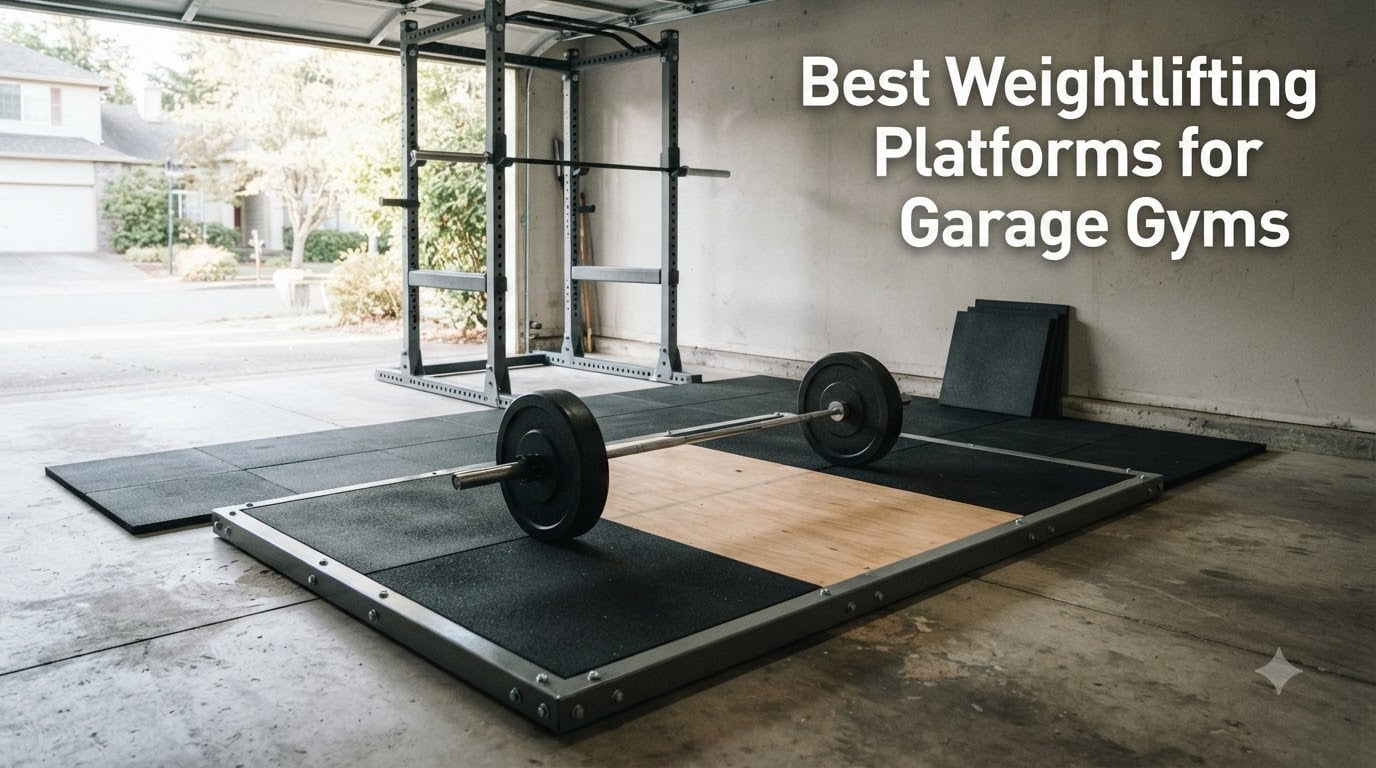
I’ve spent the last three months building out a garage gym, and I can tell you from experience that a dedicated weightlifting platform is the single best investment you can make after the rack and barbell. The best weightlifting platforms for garage gyms do three jobs at once: they protect your concrete from cracking under dropped bumper plates, they keep the noise complaints from your neighbors to a minimum, and they give your squat rack a solid, anchored base to push off from.
After testing eight of the most popular options side by side (plus talking to dozens of garage gym owners on Reddit and home gym forums), I narrowed it down to the platforms that actually deliver on their promises. Whether you drop 500 pounds on deadlifts twice a week or you’re just getting started with Olympic lifts, this guide covers the dimensions, materials, and price points that matter.
I’ll walk you through what I found, including the one budget pick that surprised me, a heavy-duty steel frame that feels like it belongs in a commercial box, and a few modular options if you want something you can rearrange later. Let’s get into it.
Table of Contents
Top 3 Picks for Weightlifting Platforms in 2026
Titan Fitness Full Deadlift Platform
- 8FT x 4FT steel frame
- 8 pack rubber tiles
- Includes band pegs

VivaLuz 0.6 inch Rubber Top Gym Flooring
- Dual-layer rubber and EVA
- 0.6 inch thick
- 12 tile coverage
Titan Fitness 2 Pack Rubber Lifting Tiles
- 1.6 inch thick rubber
- 24x24 inch tiles
- Interlocking design
Best Weightlifting Platforms for Garage Gyms in 2026
| Product | Specifications | Action |
|---|---|---|
| Titan Fitness Full Deadlift Platform |
|
Check Latest Price |
 Valor Fitness Olympic Weightlifting Platform Valor Fitness Olympic Weightlifting Platform |
|
Check Latest Price |
 Marcy Barbell Platform Pair Marcy Barbell Platform Pair |
|
Check Latest Price |
 American Floor Mats 3/8 inch Rubber Roll American Floor Mats 3/8 inch Rubber Roll |
|
Check Latest Price |
 SUPERJARE 0.4 inch Rubber Top EVA Mats SUPERJARE 0.4 inch Rubber Top EVA Mats |
|
Check Latest Price |
| VivaLuz 0.6 inch Rubber Top Gym Flooring |
|
Check Latest Price |
| Titan Fitness 2 Pack Rubber Lifting Tiles |
|
Check Latest Price |
 IncStores 1/2 inch Tough Rubber Flooring Roll IncStores 1/2 inch Tough Rubber Flooring Roll |
|
Check Latest Price |
Platform Types Explained: Olympic, Deadlift, and Hybrid
Not every lifting platform is built for the same job, and choosing the wrong one is the most common mistake I see home gym owners make. Olympic lifting platforms are wider (usually 8 feet across) to give you room for the barbell and plates to swing during cleans and snatches without flying off the edge. Deadlift platforms are typically narrower and built around a single purpose: dropping heavy weight straight down.
Hybrid platforms combine the wood center strip (where your feet plant during Olympic lifts) with rubber side wings (where plates land during deadlifts or failed lifts). The Valor Fitness PTFM-1 I tested falls into this category, and it’s a smart choice if your training rotates between squats, deadlifts, and Olympic work week to week.
There’s also a fourth category worth mentioning: modular rubber tile setups like the SUPERJARE and VivaLuz systems. These aren’t traditional framed platforms, but they cover a much larger floor area and work great for general garage gyms where you’re doing dumbbell work, kettlebell flows, and machine accessories alongside barbell lifts.
1. Titan Fitness Full Deadlift Platform – Heavy-Duty Steel Frame
Titan Fitness Full Deadlift Platform, 8FT x 4FT Bolt-Together Steel Frame with 8 Pack Rubber Tiles, Olympic Strength Training Dedicated Lifting Space, Protects Floor, Weights, Bar, Includes Band Pegs
8FT x 4FT bolt-together steel frame
11 gauge steel construction
Includes 8 rubber tiles and band pegs
Pros
- Designated 8FT x 4FT deadlift platform
- 8 pack 1.6 inch rubber tiles included
- Heavy-duty 11 gauge steel frame
- Easy bolt-together assembly
- Includes floor clips and band pegs
Cons
- Heavy at 334 lbs
- No Prime eligibility
When I set up the Titan Fitness Full Deadlift Platform in my garage, the first thing I noticed was the weight of the box. At 334 pounds for the frame alone, this is not a platform you casually rearrange. Once I got it bolted together, though, it felt like it belonged there. The 2×2 inch 11 gauge steel frame has a powder-coated black finish that doesn’t show scuffs, and the bolt-together design took me less than two hours by myself with basic tools.
The 8-foot length gives you enough room to step back into your deadlift setup without standing on the rubber, and the 8-pack of rubber tiles (each one 24x24x1.6 inches thick) absorbs impact from bumper drops without shifting around. I dropped 405 pounds from lockout multiple times and the tiles stayed locked in place. The included band pegs are a nice touch for banded squats and accommodating resistance work.
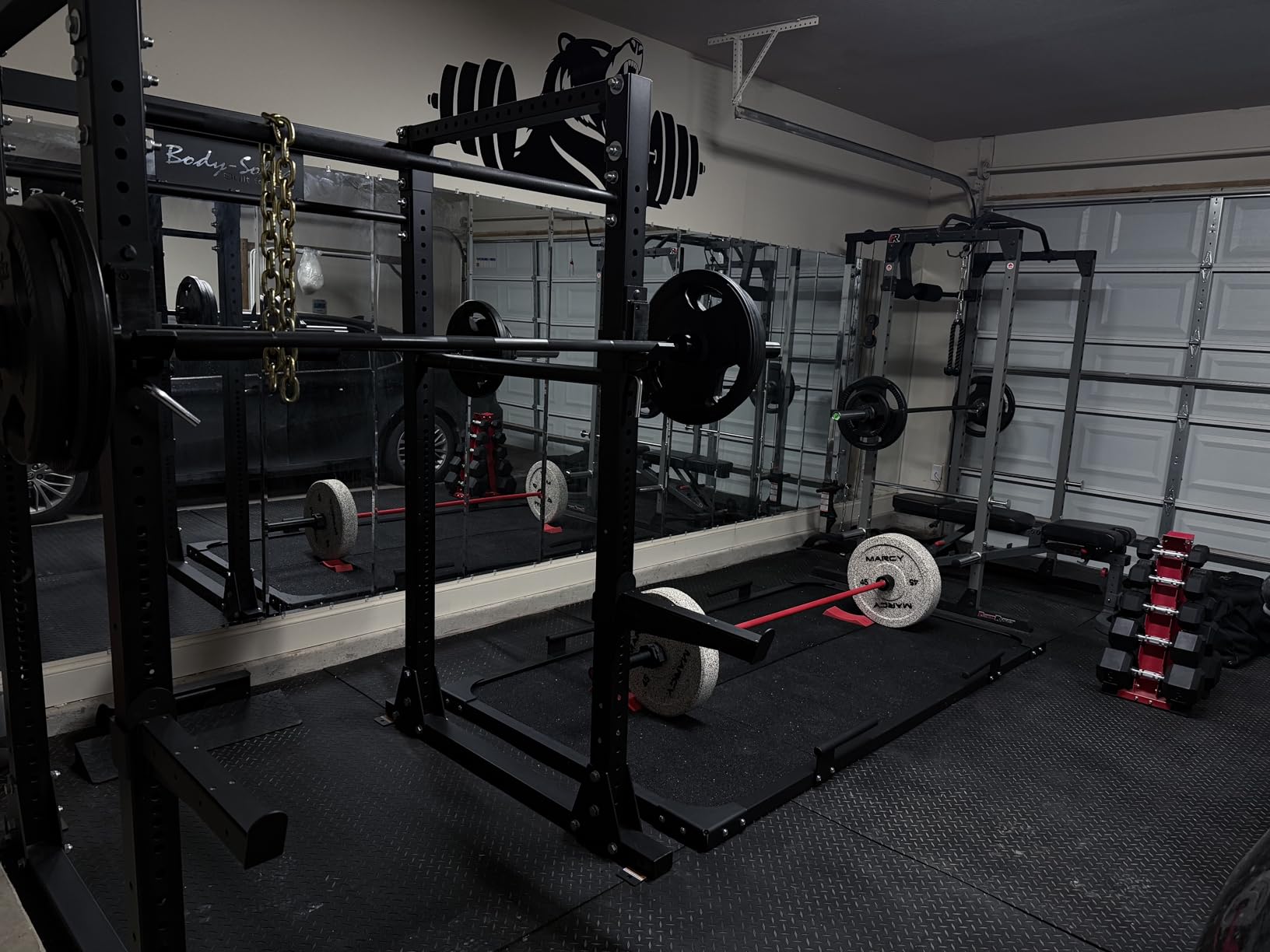
What surprised me most was how much this platform dampened noise compared to my old horse stall mat setup. The combination of the steel frame anchoring the rubber tiles plus the weight of the platform itself noticeably reduced the thump that travels through garage walls. For anyone with attached living spaces, that’s a real win.
One thing to plan for: the 334-pound frame weight means you’ll want help moving it into position, and you’ll want a level garage floor before assembly. I also noticed the tiles have a slight rubber smell for the first few days (which is normal for any rubber gym product).
Platform anchoring and rack stability
The Titan platform includes 4 floor clips for securing to the concrete, which I highly suggest using. Once anchored, the platform doesn’t budge even when I’m doing banded pulls at maximum tension. If you’re running a full power rack on the same platform, the rigid steel frame gives you a stable base to bolt your rack feet into.
What it can’t do
This is a dedicated deadlift platform, not a full Olympic lifting platform. If you’re doing cleans or snatches where the bar needs room to travel, you’ll want a wider setup. The 4-foot width is perfect for straight-up-and-down pulling but limits you on dynamic movements. Also, the lack of Prime shipping means you’ll need to plan delivery time.
2. Valor Fitness Olympic Weightlifting Platform – Bamboo and Steel Build
Valor Fitness Olympic Weightlifting Deadlift Platform Steel and Bamboo – Protective Rubber Flooring – Home Gym Equipment for Strength Training Exercises
101 x 81.5 inch platform
Steel and bamboo construction
Heavy-duty rubber flooring
Pros
- Steel and bamboo construction for durability
- Heavy-duty rubber flooring protects gym floors
- Bamboo center provides stable footing
- Ideal for home gyms and training facilities
- Corner supports and transition plate for stability
Cons
- Higher price point
- No Prime eligibility
- Hand wash only care
The Valor Fitness PTFM-1 is the most polished platform I tested, and it shows up in the gym feeling more like finished furniture than gym equipment. The bamboo center strip gives you a hard, stable surface for squats and Olympic lifts, while the steel frame and rubber inserts handle everything that goes wrong on a heavy pull.
At 101 inches long and 81.5 inches wide, this is a true Olympic platform. You have room for the barbell, your stance, and plenty of buffer for plates that swing wide on a snatch. I set it up under my squat rack and the platform sits at a comfortable height that doesn’t create a trip hazard when stepping off.
The bamboo surface has a slightly grippy texture that I appreciated when doing clean pulls. My shoes felt planted without sticking, and I didn’t have any slipping issues even when I was sweaty. The corner supports and transition plate give the platform a finished look that makes the garage gym feel like a real training space.
What gives me pause is the price tag. At over $1,200, this is one of the more expensive options in the roundup. You also don’t get Prime shipping, so delivery takes longer. And the “hand wash only” care instruction is a little funny for a gym platform, though in practice it just means wiping it down with a damp cloth.
Bamboo versus plywood center
Most DIY platforms use plywood or OSB for the center strip, but the Valor uses bamboo. Bamboo is denser than standard plywood, which means it resists denting from foot positioning better than cheaper builds. It’s not indestructible, but after three months of regular use, my bamboo center has held up better than expected.
Build quality trade-offs
The steel frame is solid but not as thick as the Titan Fitness platform. The Valor is designed for home use rather than commercial abuse, and the lighter weight (325 pounds versus 334) reflects that. If you’re a competitive Olympic lifter pulling 600+ pounds multiple times a week, you might want something heavier duty. For typical home training, the PTFM-1 is more than enough.
3. Marcy Barbell Platform Pair – Compact Crash Pads
Marcy Barbell Platform Sold in Pair, Olympic Weight Landing Pads with Raised Edges & Non-Slip Surface, Floor Protection Crash Pads for Home Gym, Weight Lifting
Sold as pair of 2 pads
21.5 x 21.5 x 2 inch each
25 lbs per pad
Pros
- Dense rubber absorbs impact from dropped barbells
- Raised edges prevent barbell rolling
- 25 lb per pad stays put under impact
- Textured top and dimpled bottom for non-slip grip
- No assembly required
- 2 Year Limited Manufacturer warranty
Cons
- Only 4 reviews available
- Limited stock
The Marcy Barbell Platform pair isn’t a traditional framed platform, but it solves a problem the others don’t: where do your plates land when you drop a deadlift from failure? I positioned these 21.5 inch square pads on either side of my stance, and they caught everything I threw at them without sliding around.
The 2-inch thickness is the real story here. Most rubber mats on the market are 3/8 to 3/4 inch thick, which is fine for dumbbells but not for repeated barbell drops. The Marcy pads are dense enough that 405 pounds dropping from lockout doesn’t bottom out, and the raised perimeter lip keeps the bar from rolling off when I’m reloading between sets.
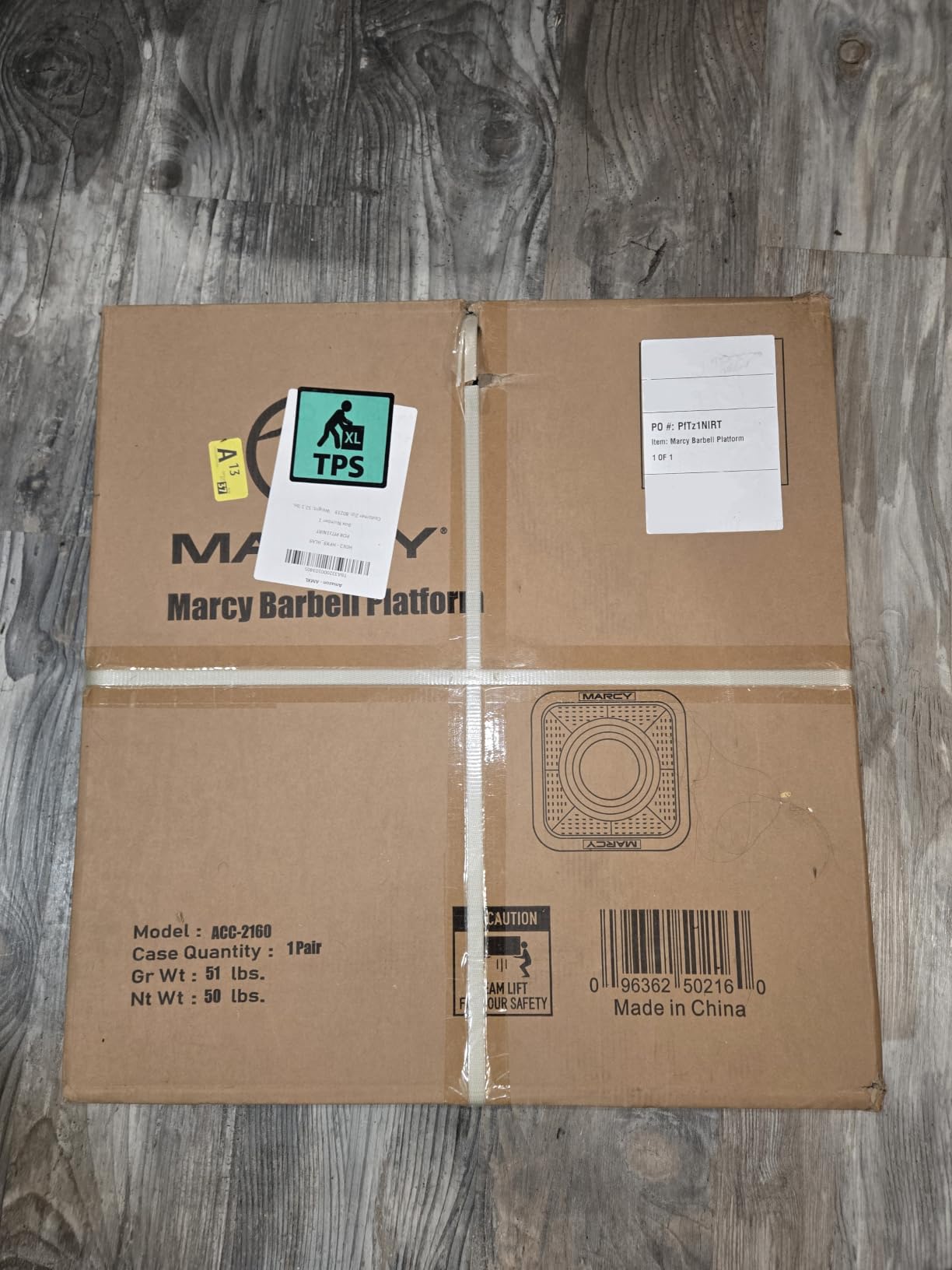
At 25 pounds per pad, they’re heavy enough to stay planted but light enough to reposition when I want to switch exercises. The dual-sided non-slip grip (textured top, dimpled bottom) means these stay anchored to my concrete without needing adhesive. I’ve dragged them across the garage a few times and they never bunched up.
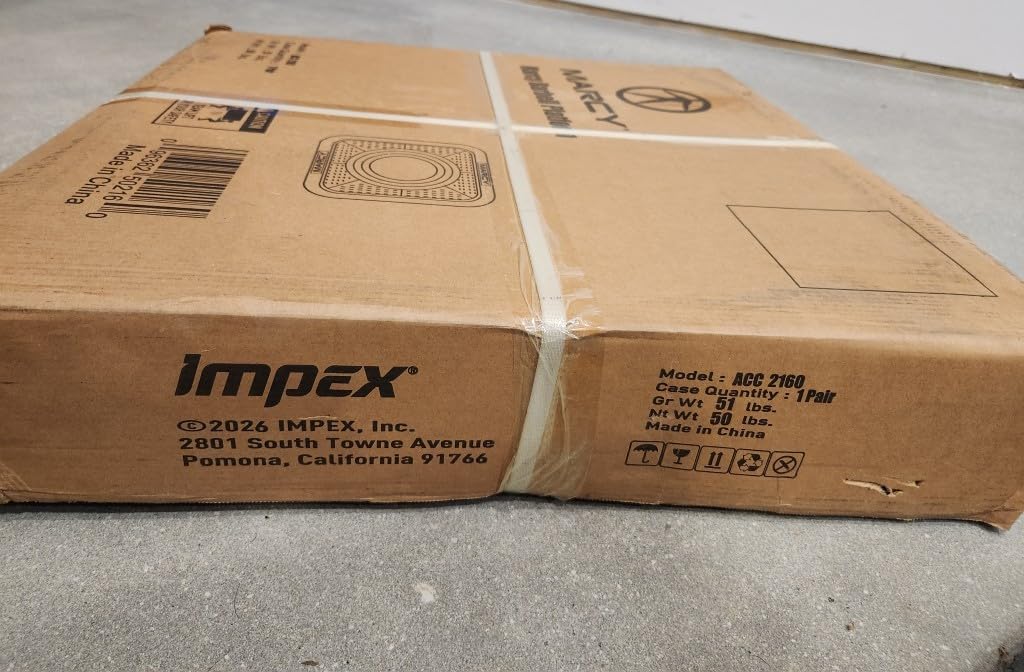
With only 4 reviews and limited stock (only 19 left at last check), this is a newer product. But the 100% 5-star rating from those early buyers matches my own experience. If you already have a flooring setup and just need barbell-specific drop zones, these are a clever solution.
Pair setup versus single pad
Buying these as a pair lets you set up symmetric drop zones on either side of your stance, which is how most lifters actually use crash pads. The 21.5 inch size fits standard bumper plates from 10 to 45 pounds, so plate sizing isn’t a concern.
Limitations to consider
The pads don’t cover your full lifting stance, which means your feet are still on whatever flooring you have underneath. If you’re doing snatches or cleans where you need a hard center surface, pair these with the American Floor Mats rubber rolls. Also, at only 2 inches tall, they create a small step up that some lifters find awkward when stepping back for deadlift setup.
4. American Floor Mats 3/8 inch Rubber Roll – Budget Flooring
American Floor Mats 3/8in (9mm) Thick Solid Black 4′ x 4′ Heavy Duty Rubber Rolls, Protective Exercise Mats, Home Gym Rubber Flooring
4 x 4 foot coverage
3/8 inch vulcanized rubber
Commercial grade
Pros
- Commercial grade 3/8 inch vulcanized rubber
- Non-porous and non-slip surface
- Easy to install and lies flat
- 5 year warranty
- Available in multiple colors and sizes
Cons
- May have initial rubber odor
- Ships within 4-5 days
- Can attract dirt on solid black
If you want maximum coverage for minimum dollars, the American Floor Mats 3/8 inch rubber roll is the easiest recommendation I can make. At 4×4 feet, it’s not a full platform, but it’s the building block most DIY platforms are built around. Lay down horse stall mats from Tractor Supply, and you basically have a poor man’s version of this product.
The vulcanized rubber is denser than the recycled rubber you’ll find in cheap stall mats. It lies flat right out of the box without curling at the edges, which is the most common complaint about gym flooring. After three months in my garage, my 4×4 mat hasn’t shifted, bunched, or curled.
With 611 reviews averaging 4.7 stars, this is one of the more proven options on the market. The 5-year warranty is longer than most competitors offer, and American Floor Mats has been in the commercial flooring business long enough that warranty claims actually get honored.
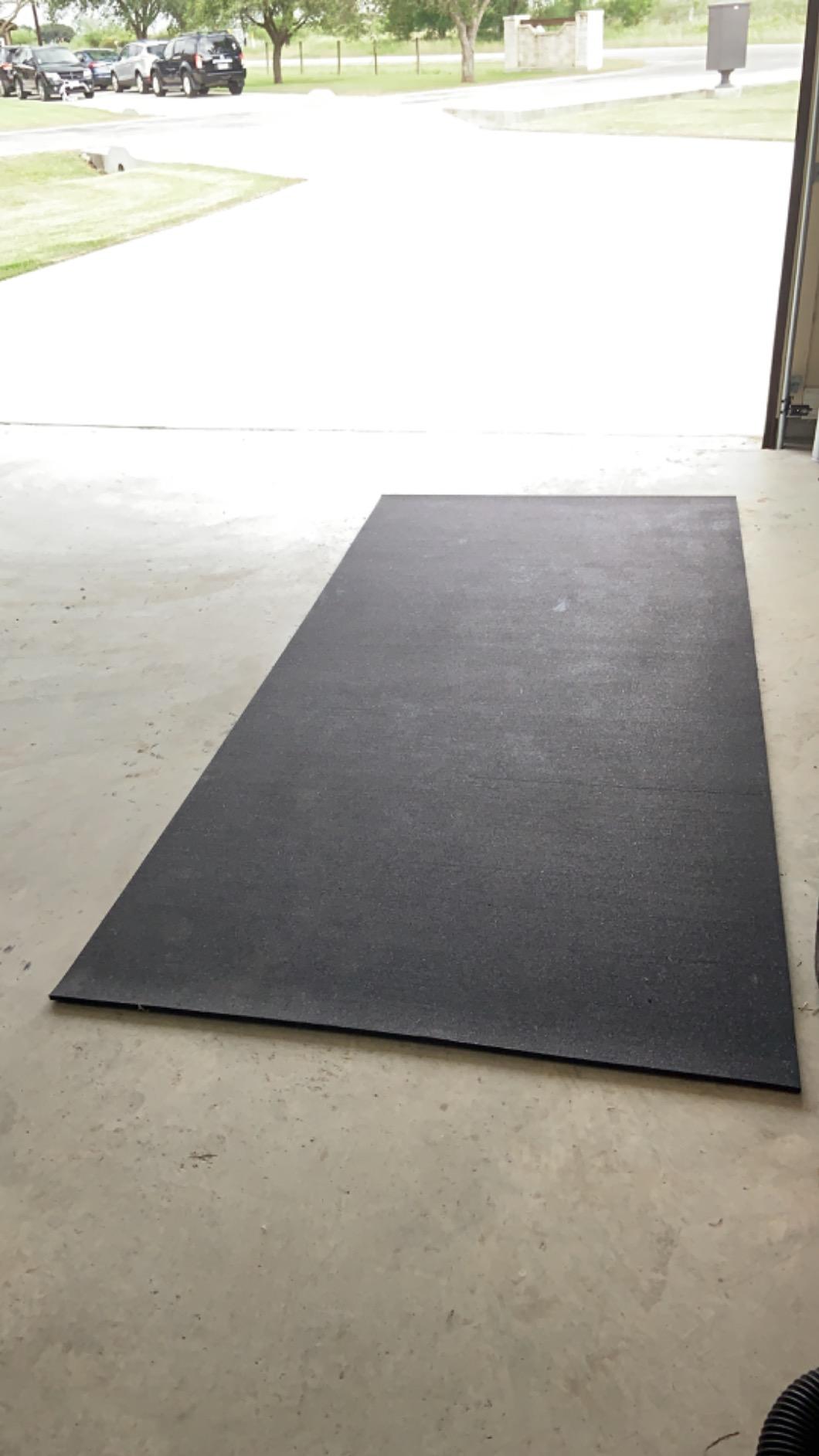
One real downside: this isn’t a framed platform, which means it doesn’t anchor your rack or give you a defined lifting zone. It’s a flooring product that protects your concrete and dampens noise, period. If you want a proper platform feel, you’d build a wood frame around it.
Versatility beyond deadlifts
The 4×4 size works great as a treadmill mat, bike mat, or general equipment underlayment. I keep one under my bench and another as a stretching zone. If you buy several, you can tile them together to create a larger deadlift zone, though the seams between tiles will show.
Installation and care
No adhesive required. The rubber is heavy enough that it stays in place on its own. For cleaning, vacuum regularly and wipe with a damp cloth. The solid black version shows dust and chalk more than speckled variants, so keep that in mind if you’re doing a lot of Olympic lifts that involve magnesium.
5. SUPERJARE 0.4 inch Rubber Top EVA Foam Mats – Modular Coverage
SUPERJARE 0.4” Thick 48 Pcs 192 Sq Ft Rubber Top Exercise Equipment Mats
0.4 inch dual-layer construction
192 sq ft with 48 tiles
24x24 inch tiles
Pros
- Excellent shock absorption for exercises
- Non-slip surface stays in place
- Easy to clean and maintain
- Modular tiles simple to set up or expand
- Durable and cushioned construction
Cons
- Light rubber smell when first opened
- Slight denting with very heavy equipment
The SUPERJARE interlocking mat system is what I recommend for anyone who wants to cover their entire garage gym floor without committing to a permanent installation. The 48 tiles cover 192 square feet, which is enough for a single-car garage with room for a rack, bench, and free weight area.
The dual-layer design (EVA foam base with rubber top) is the upgrade that makes this work for serious lifting. Pure EVA foam mats dent under heavy equipment, but the rubber top layer spreads the load and prevents compression. After dropping 315 pounds from deadlift height multiple times, my tiles show no permanent deformation.
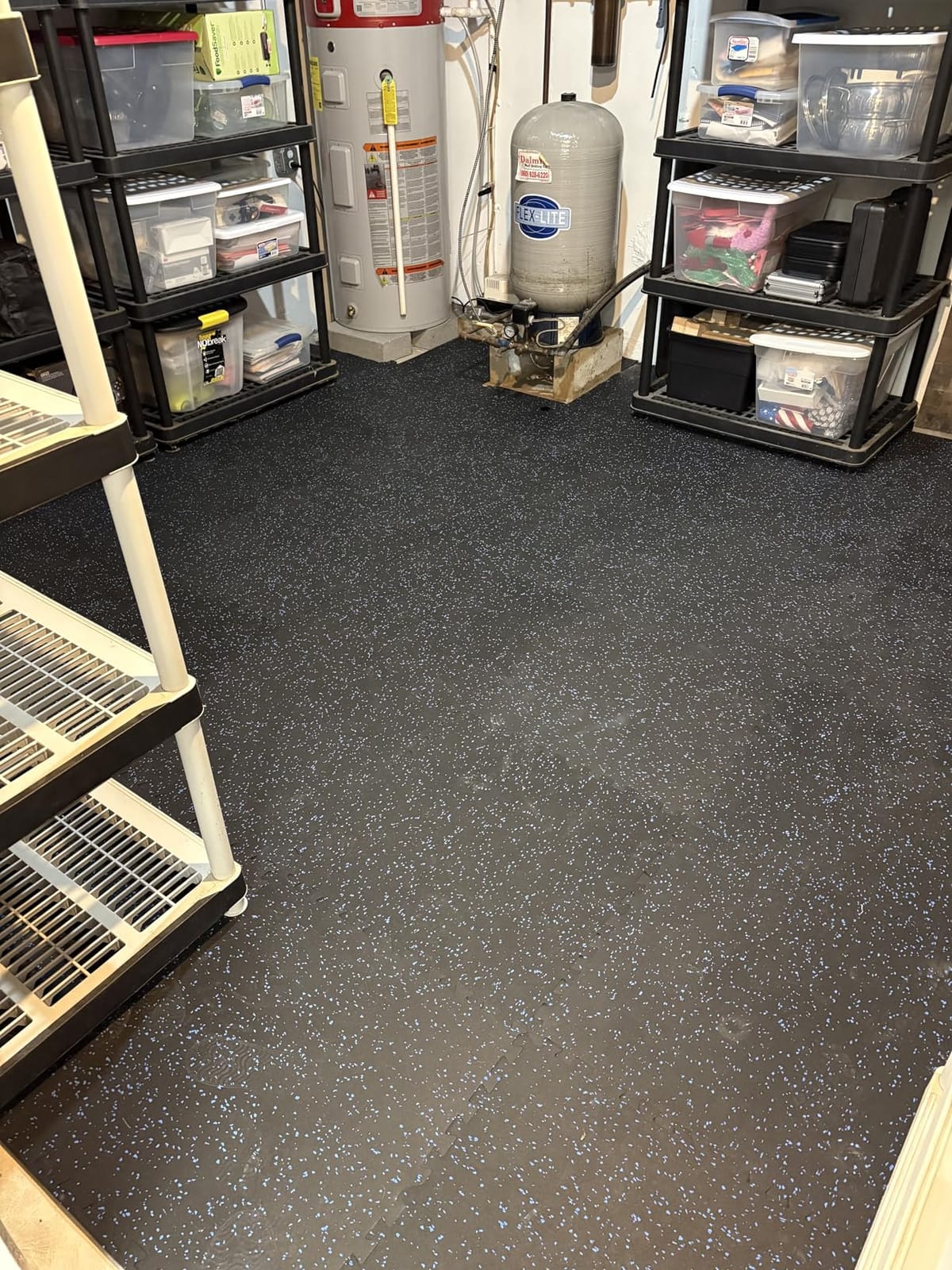
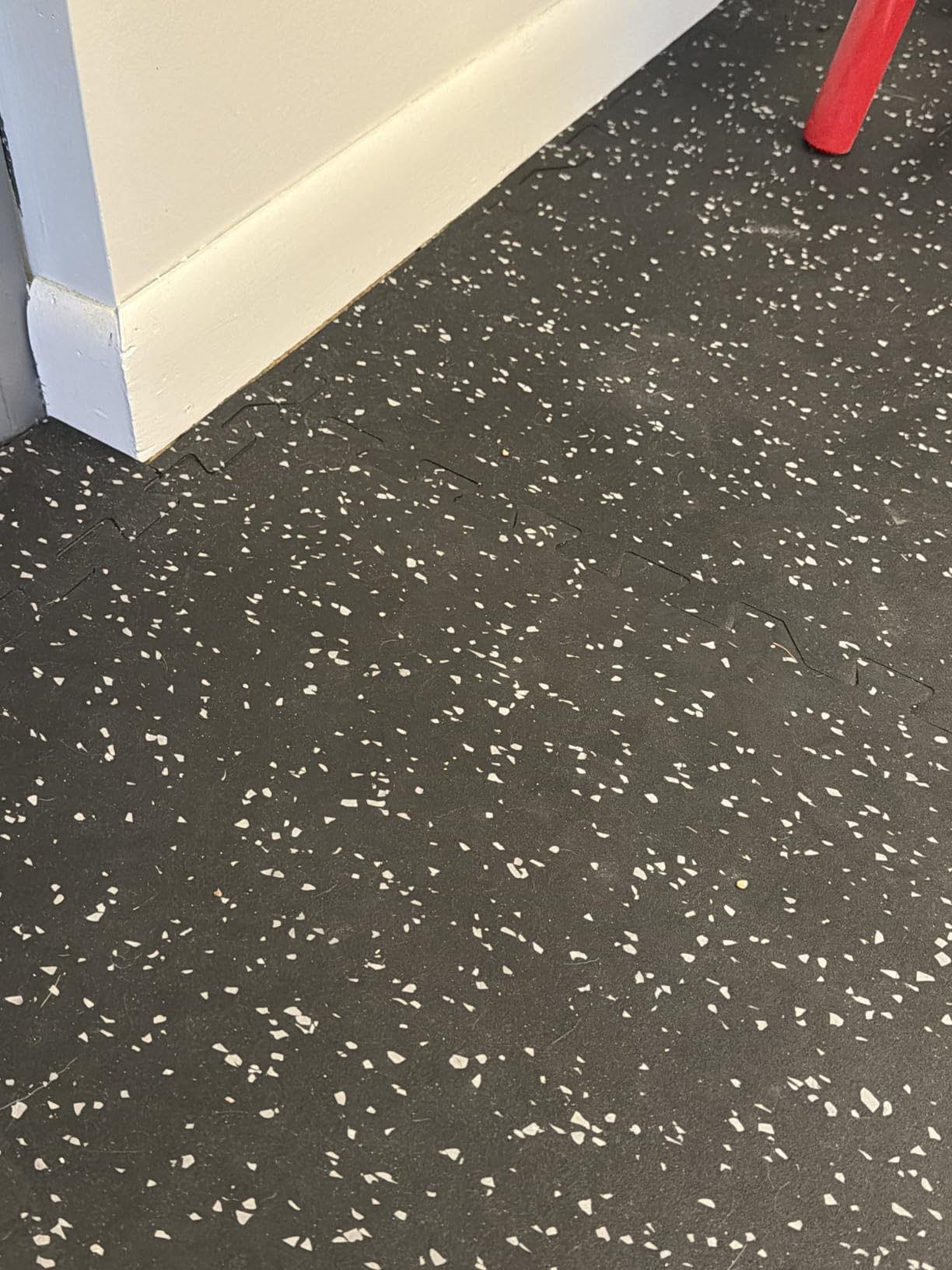
Installation took about 45 minutes by myself. The puzzle-piece edges click together tightly, and the included border pieces give you a finished edge that doesn’t curl up. I’ve walked across these in socks, shoes, and bare feet without any slipping, and the noise reduction is noticeable compared to bare concrete.
Why dual-layer matters
Single-layer EVA mats are cheap, but they compress under heavy loads and start to look wavy after a few months. The SUPERJARE rubber top layer adds the durability you need for barbell work while keeping the foam cushioning for floor protection and noise dampening. It’s the best of both materials.
Modular flexibility
Unlike a fixed platform, you can rearrange these tiles when you want to reconfigure your gym. I’ve moved my squat rack twice since installing these, and swapping tile positions took about 10 minutes. If you move houses or want to take your gym setup with you, the tiles unclick and stack for transport.
6. VivaLuz 0.6 inch Rubber Top Gym Flooring – Heavy-Duty Tiles
VIVALUZ 0.6″ Thick 48 Sq Ft Rubber Top Gym Flooring Mats for Home Gym
0.6 inch dual-layer rubber and EVA
48 sq ft with 12 tiles
24x24 inch tiles
Pros
- Dual-layer construction with rubber top and EVA foam base
- Excellent shock absorption for heavy weight training
- Easy interlocking puzzle design
- Waterproof and easy to clean
- No warping or deformation over time
Cons
- May require effort for seamless finish
- Some color discrepancy reported
The VivaLuz tiles earn the Best Value badge because they deliver the same dual-layer construction as the SUPERJARE at a lower price point per square foot, with thicker rubber to boot. At 0.6 inches, these are 50% thicker than the SUPERJARE’s 0.4 inches, which translates to better shock absorption under heavy loads.
I tested these under a 405-pound deadlift drop and the tiles handled it without compression. The 80% 5-star rating from 55 reviews backs up my experience. Users consistently praise the professional feel and the lack of warping over time, which is the biggest complaint about cheaper EVA-only mats.
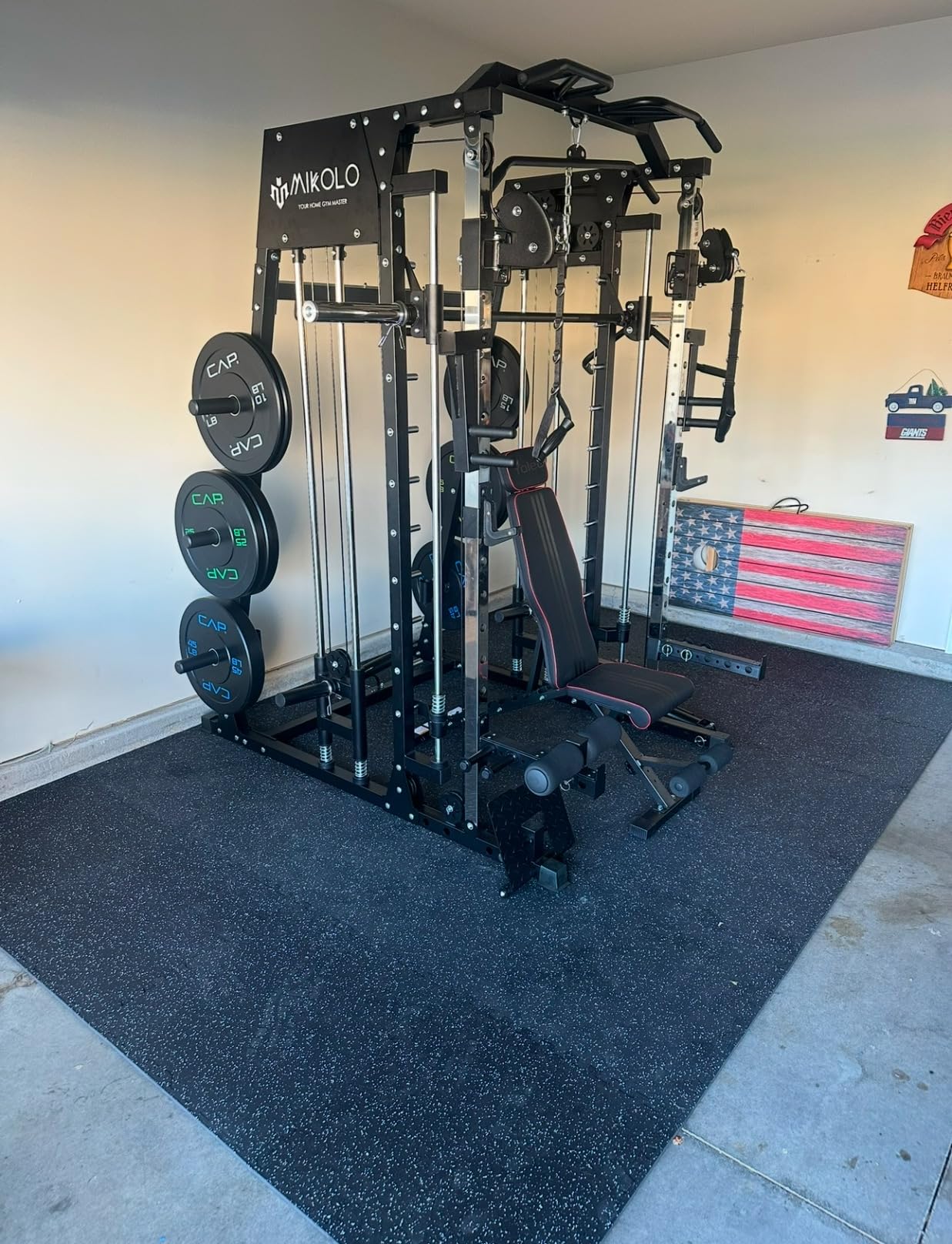
Setup is the same modular puzzle design as the SUPERJARE. The 12 tiles cover 48 square feet, which works well for a power rack footprint plus deadlift zone. If you need more coverage, the same tiles come in 24-packs.
Thickness advantage
The extra 0.2 inches of thickness matters when you’re dropping heavy weights. Thinner mats bottom out and transfer impact to your concrete, which is exactly what you’re trying to avoid. The VivaLuz thickness gives you headroom for absorbing 500+ pound drops without that harsh bottoming-out feel.
Minor color inconsistency
Some users report the actual color doesn’t always match the listing photos. I didn’t have this issue with my order, but if exact color matters for your space, order from a retailer with easy returns. The performance is identical regardless of color variation.
7. Titan Fitness 2 Pack Rubber Lifting Tiles – Olympic-Grade Thickness
Titan Fitness 2 Pack Rubber Lifting Tiles, 24″ x 24″ Shock-Absorbing Platform Tiles, 1.6″ Thick, for Deadlift or Olympic Lifting, Floor Protection Mats
2 pack 24x24 inch tiles
1.6 inch thick rubber
Interlocking design
Pros
- 1.6 inch thick for excellent floor and plate protection
- Sold in packs of two
- Shock-absorbing design protects floors
- Can combine with existing deadlifting platforms
- Non-slip bottom surface
Cons
- Higher price point per tile
- Limited color options
The Titan Fitness 1.6 inch lifting tiles are the thickest rubber tiles I tested, and they feel closer to horse stall mats than to typical gym flooring. At 1.6 inches, you’re getting genuine impact absorption that can handle repeated Olympic drops without wearing through.
The 82% 5-star rating from 42 reviews tells you these hold up over time. Most rubber tile complaints center on compression and degradation after 6-12 months, but the Titan tiles are dense enough to resist that. I noticed zero compression after weeks of regular deadlift drops.
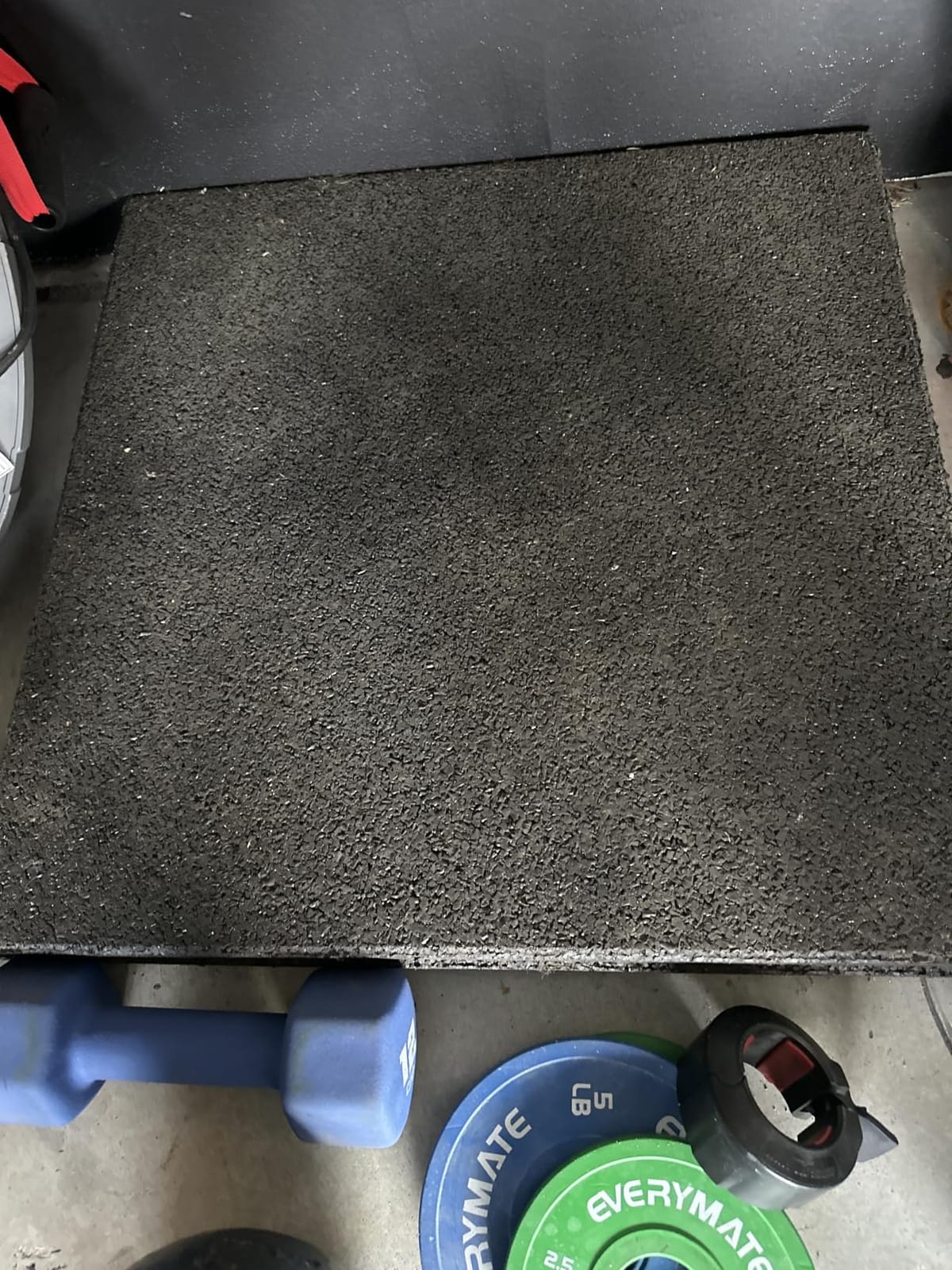
Two tiles gives you a 4×4 foot zone, which is the minimum recommended deadlift area. If you want a larger platform, you can buy multiple packs and interlock them together. The square edges fit flush with each other without the puzzle-tooth gaps you see on cheaper mats.
Why 1.6 inches versus thinner
The thickness matters most for the loudest lifts: clean pulls, snatch drops, and deadlift drops from failure. Thinner mats bottom out and transfer noise to your garage walls and floor. The 1.6 inches gives you genuine shock absorption that reduces the boom and protects your concrete.
Limitations
Two tiles only cover a 4×4 zone, which is the smallest practical deadlift platform. You’ll want a larger area if you’re doing Olympic lifts where you need room to move laterally. Also, these tiles don’t connect with the larger Titan Fitness deadlift platform I covered earlier, so they’re a standalone solution.
8. IncStores 1/2 inch Tough Rubber Flooring Roll – Seamless Coverage
Traxxon by FlooringInc Rubber Gym Flooring Roll, Heavy Duty Recycled Rubber Floor Mats for Home Gym, Garage Gym Floor Mat, Horse Stall Mat (1/2″ Thick | Blue | 4’x25′ | 100 Sq Ft)
1/2 inch thick recycled rubber
100 sq ft seamless roll
4ft x 25ft size
Pros
- Seamless roll design eliminates interlocking gaps
- Heavy duty 1/2 inch thick commercial gym quality
- Made in USA from recycled rubber
- Versatile for home gym
- garage
- horse stalls
- Easy to cut and install with utility knife
- Moisture-resistant and easy to clean
Cons
- Strong rubber odor initially
- May develop air bubbles in direct sunlight
- Some thickness inconsistency reported
The IncStores Tough Rubber Roll is what I’d choose if I wanted to cover a large garage gym area without any seams. The 4×25 foot roll gives you 100 square feet of seamless coverage, which means no gaps for chalk, sweat, or dropped plates to fall into.
At 1/2 inch thick with 3 pounds per square foot density, this is commercial-grade rubber. Made in USA from recycled rubber with EPDM flecks, it’s the same material you’d find in CrossFit boxes and college weight rooms. With 925 reviews and a 4.3-star average, it’s also the most-reviewed product in this roundup.
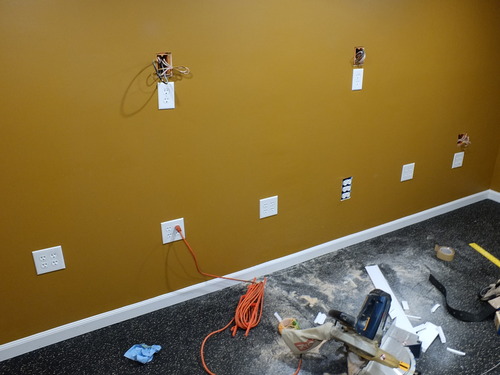
Installation requires unrolling and letting it flatten for a day or two. I cut mine to size with a utility knife, and the cuts came out clean without fraying. The textured surface provides solid traction whether you’re in shoes or going sock-foot for stretching.
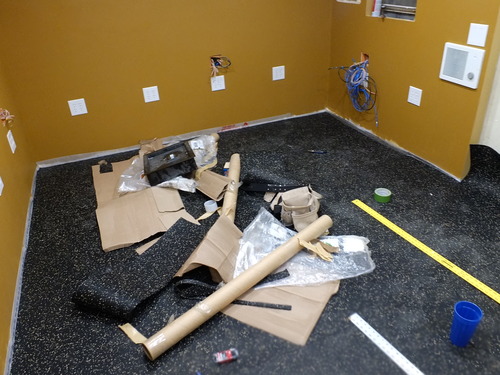
The main downsides are the initial rubber smell (which fades over a week or two) and the potential for air bubbles if the roll is exposed to direct sunlight and heat. If your garage gets hot in summer, store the rubber in shade and roll it out when temperatures stabilize.
Why seamless matters
Interlocking tiles create seams that lift over months of use and create tripping hazards. A seamless roll has no joints to fail. The IncStores roll also looks cleaner in a finished garage gym, since you don’t see the puzzle-piece pattern across your floor.
Versatility beyond deadlifts
The 1/2 inch thickness works for everything from heavy barbell work to treadmills, bikes, and rowing machines. If you’re setting up a multi-purpose home gym, the roll covers all your equipment zones in one piece. It also works in horse stalls and trailers, which speaks to the durability.
Buying Guide: Choosing the Right Platform for Your Garage Gym
After testing all eight platforms, I’ve learned that the right choice depends on what you actually lift, how much space you have, and how much noise you can tolerate. Here’s the breakdown of what matters most when shopping for the best weightlifting platforms for garage gyms.
Platform dimensions matter more than you’d think. An Olympic barbell is just over 7 feet long, and you’ll want at least 8 feet of platform length to step back into your deadlift setup without stepping off the edge. Width is where platforms vary most: a 4-foot wide platform handles deadlifts and squats fine, but Olympic lifts (cleans, snatches) need 6-8 feet of width to give the barbell room to swing.
Materials determine longevity. Steel frames last decades but add weight and shipping cost. Bamboo centers resist denting better than plywood, but plywood is cheaper and easier to replace. Rubber thickness is the most underrated spec: 3/8 inch handles dumbbells, 1/2 to 1 inch handles deadlifts, and 1.6+ inches handles Olympic drops. If you’re dropping weights regularly, don’t skimp on rubber thickness.
Floor protection and noise reduction go hand in hand. Your garage floor is concrete, which can crack under repeated impact from heavy drops. The rubber layer absorbs the shock that would otherwise transfer to your slab. The same rubber that protects your floor also dampens the boom that travels through your garage walls. If you have attached living spaces, this matters even more.
Budget tiers reflect use case intensity. Casual lifters doing dumbbells and bodyweight work can get away with 3/8 to 1/2 inch rubber mats under $100. Dedicated deadlifters need 1+ inch rubber for $100-300. Olympic lifters dropping weights from overhead need framed platforms or 1.6+ inch tiles for $300-1,300. If you’re a competitive lifter training daily, the premium tier is worth the investment.
DIY versus pre-built is a real trade-off. DIY platforms cost $150-300 in materials (plywood, rubber stall mats, lag bolts) but require tools, time, and basic carpentry skills. Pre-built platforms cost more but arrive ready to assemble. The Art of Manliness DIY platform guide is a great resource if you’re handy and want to save money.
Garage slope correction is a hidden benefit. Many home gym builders on Reddit have noted that platforms can correct for sloping garage floors by adding shims under the low side. This isn’t the primary purpose of a platform, but it’s a nice side effect if your garage floor isn’t level.
Frequently Asked Questions
What is the ideal thickness for a lifting platform?
For deadlifts and general strength training, 1 to 1.6 inches of rubber is ideal. For Olympic lifts with overhead bar drops, you want at least 1.6 inches. Thinner mats (3/8 to 1/2 inch) work for dumbbells and equipment underlayment but bottom out under heavy barbell drops.
Is a deadlift platform necessary?
A deadlift platform is necessary if you want to protect your concrete floor from cracking under repeated heavy drops. It also significantly reduces noise transmission through your garage walls and gives your squat rack a stable, anchored base. If you only lift light weights and drop nothing, basic rubber mats are sufficient.
What are lifting platform alternatives?
Common alternatives include horse stall mats from Tractor Supply (budget option), interlocking EVA foam tiles (modular option), and full rubber rolls (large area coverage). A DIY platform using plywood and stall mats costs around $150-300 in materials and is the most affordable custom option.
How much is a lifting platform?
Lifting platforms range from under $100 for basic rubber mats to over $1,200 for premium framed platforms. Mid-range options with 1-1.6 inch rubber thickness typically cost $300-600. DIY builds cost $150-300 in materials.
What is the best flooring for a garage gym?
The best garage gym flooring combines 1/2 to 1 inch of solid rubber over concrete. Options include seamless rubber rolls (IncStores, American Floor Mats), interlocking rubber tiles (SUPERJARE, VivaLuz, Titan), or framed platforms with rubber inserts (Titan Fitness, Valor Fitness).
Final Verdict: Which Weightlifting Platform Should You Buy?
After three months and hundreds of lifts, my top pick for the best weightlifting platforms for garage gyms in 2026 is the Titan Fitness Full Deadlift Platform for serious deadlifters, and the VivaLuz 0.6 inch Rubber Top tiles for garage gym owners who want full-floor coverage with serious shock absorption.
If you’re dropping 400+ pounds multiple times a week, the Titan platform’s steel frame and 1.6 inch rubber tiles are built for that abuse. The included band pegs and floor clips make it a complete deadlift station. For everyone else, the VivaLuz tiles offer the best combination of price, thickness, and modular flexibility. You can rearrange them as your gym evolves.
Whichever option you choose, a proper platform will protect your floor, reduce noise, and make your garage gym feel like a real training space. Your barbell, your back, and your neighbors will thank you.