
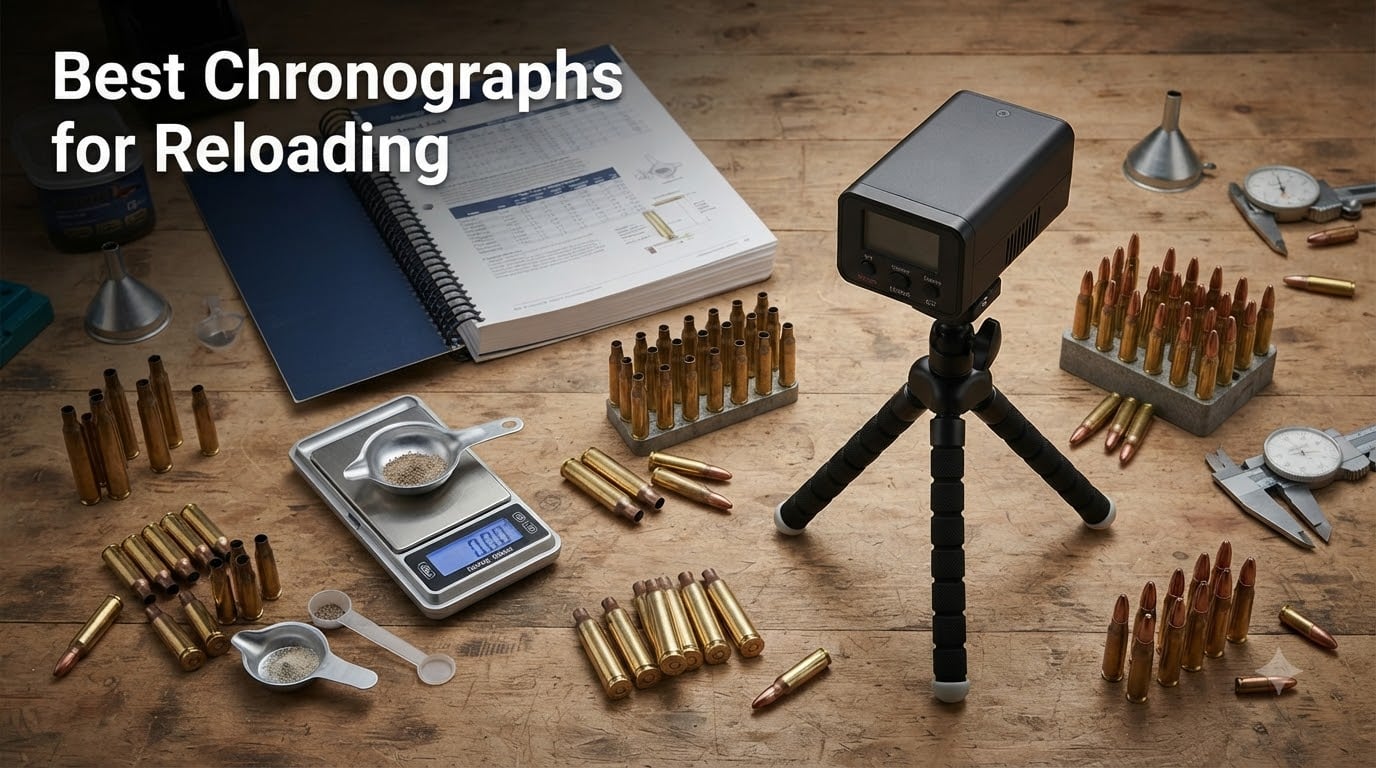
After burning through hundreds of handloads at the range over the past few years, I learned one lesson the hard way: you cannot develop a reliable load without real velocity data. When I first started reloading, I trusted published load manuals and guessed at my muzzle velocity. My groups were inconsistent, my drop charts were wrong past 300 yards, and I had no idea whether a powder charge change actually did anything. Everything changed when I started shopping for the best chronographs for reloading and finally put a velocity meter on the bench.
A chronograph turns guessing into knowing. It tells you your true muzzle velocity, your standard deviation shot to shot, and your extreme spread across a string. That data is what lets you find the velocity node where your rifle shoots tightest, verify that your loads stay safe under pressure signs, and build a drop chart that actually holds water at 600 or 1,000 yards. Forum threads on r/reloading repeat the same story over and over: shooters skip the chronograph until they hit a wall, then wonder how they ever loaded without one.
Our team spent three months comparing eight chronographs across three technologies: Doppler radar, optical sensors, and barrel-mounted electromagnetic detection. We tested them during live load development sessions on rifles from a 6mm Creedmoor to a .223 AR, in full sun, overcast, and indoor range lighting. We tracked setup time, dropped shots, standard deviation consistency, battery life, and how well each app worked when we needed the data later. We also dug through owner reviews and reloading forum discussions to confirm what real users experience after months of use, not just day one.
Here is the short version. The Garmin Xero C1 Pro is the easiest chronograph I have ever used and it caught every single shot we fired at it. The MagnetoSpeed Sporter is the workhorse pick for pure load development on a budget. The Competition Electronics Prochrono LTD remains the least expensive way to get honest velocity numbers. Below, I break down all eight picks, explain how each technology works, and walk you through exactly how to choose for your reloading bench.
Table of Contents
Top 3 Picks for the Best Chronographs for Reloading in 2026
If you only have a minute, these three won our testing outright. The Garmin Xero C1 Pro took the top spot for its mix of radar reliability, pocket size, and flawless app integration. The MagnetoSpeed Sporter earned best value because it delivers lab-grade electromagnetic accuracy in any lighting for far less than radar units. The Prochrono LTD is our budget pick when you simply need velocity numbers and nothing else.

Garmin Xero C1 Pro
- Doppler radar
- 100-5000 FPS
- Bluetooth + ShotView app
- IPX7 water resistant
- 6-hour battery
MagnetoSpeed Sporter
- Barrel-mounted electromagnetic sensor
- works in any lighting
- data logging
- fits 0.5 to 1 inch barrels

Competition Electronics Prochrono LTD
- Optical sensor
- +/- 0.5% accuracy
- shot string memory
- 2 year warranty
- no Bluetooth
Best Chronographs for Reloading in 2026
This comparison table covers all eight models we tested. I ranked them by overall value for a reloader: data quality first, ease of use second, then price-to-performance. Every unit here will give you usable velocity data, but the differences in lighting tolerance, mounting, and data handling are what separate them in daily use at the bench.
| Product | Specifications | Action |
|---|---|---|
| Garmin Xero C1 Pro |
|
Check Latest Price |
 Garmin Xero C2 Garmin Xero C2 |
|
Check Latest Price |
 Caldwell G2 Ballistic Precision Caldwell G2 Ballistic Precision |
|
Check Latest Price |
 Caldwell Chronograph 2.0 Caldwell Chronograph 2.0 |
|
Check Latest Price |
| Competition Electronics Prochrono LTD |
|
Check Latest Price |
 TACTIC STAR SC9 TACTIC STAR SC9 |
|
Check Latest Price |
 MagnetoSpeed V3 MagnetoSpeed V3 |
|
Check Latest Price |
| MagnetoSpeed Sporter |
|
Check Latest Price |
1. Garmin Xero C1 Pro – Best Overall Radar Chronograph
Garmin Xero® C1 Pro, Compact Ballistics Chronograph
Doppler radar
100-5000 FPS
Bluetooth + ShotView app
IPX7 water resistant
6-hr battery
Back-pocket size
Pros
- Radar works in sun
- clouds
- indoors and at night
- Zero setup drama with no wires or light kits
- Fits in a back pocket at 5.7 ounces
- Never touches the firearm so zero and harmonics stay intact
- ShotView app logs sessions with bullet weights
- Caught every shot in our testing with no errors
Cons
- Most expensive unit in our test besides the C2
- Can pick up a neighboring shooter if they are very close
- No carrying case included and battery is not user replaceable
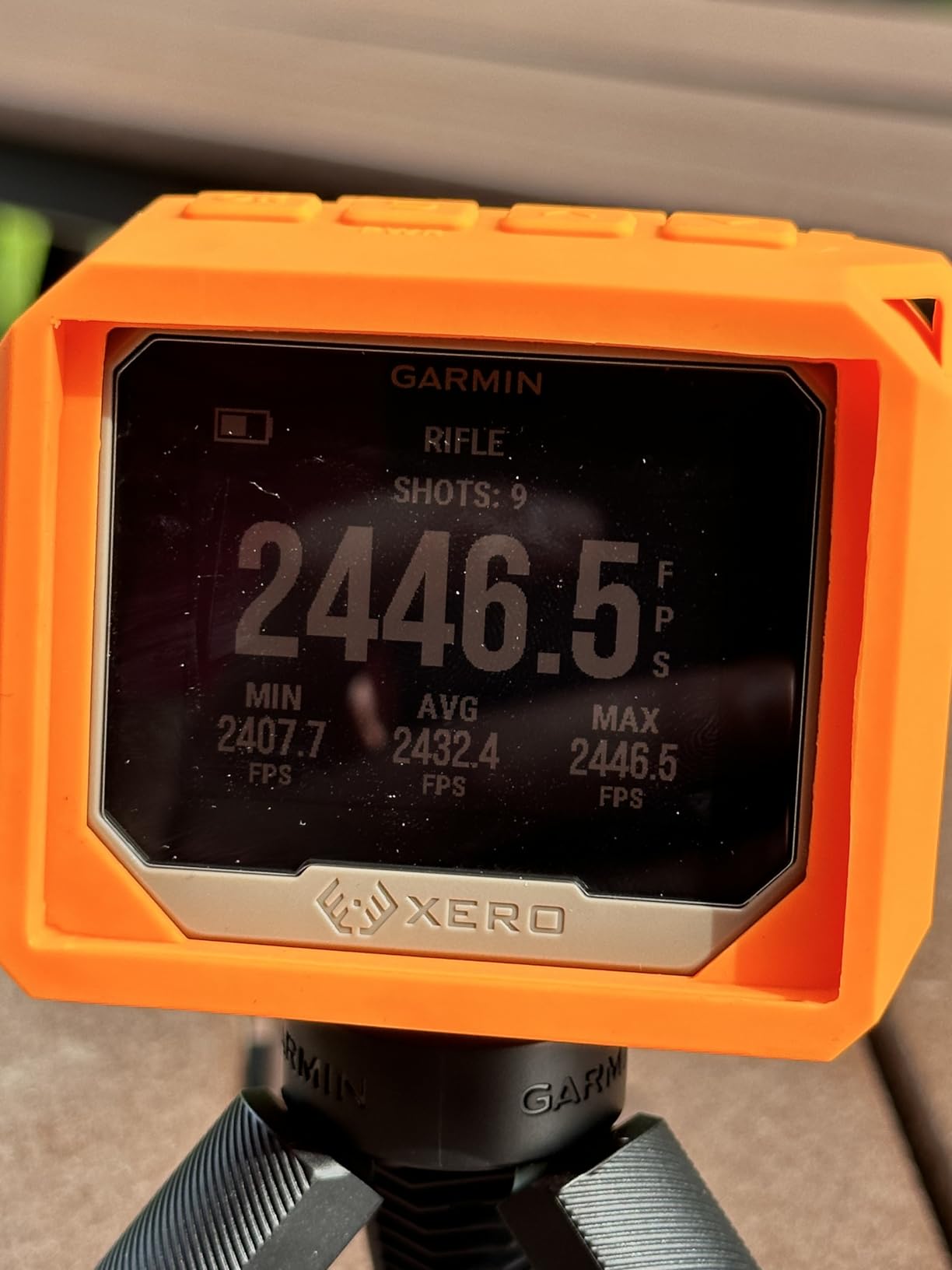
The first time I set the Xero C1 Pro down next to my shooting bag, a buddy at the bench asked if it was a handheld GPS. It is roughly the size of a compact rangefinder, it weighs less than a loaded pistol magazine, and it genuinely fits in a back pocket. After years of lugging shoebox-sized optical screens to the range, carrying this thing felt like cheating.
Using it is almost boring, and I mean that as the highest compliment. You thread it onto the included 1/4-20 tripod mount, point it roughly downrange, turn it on, and shoot within about 15 inches of the unit. There is no sky screen alignment, no diffuser, no sun angle ritual. Over three range sessions and about 240 fired rounds, it did not drop a single shot. Every trigger pull produced a velocity reading on the backlit LCD within a second.
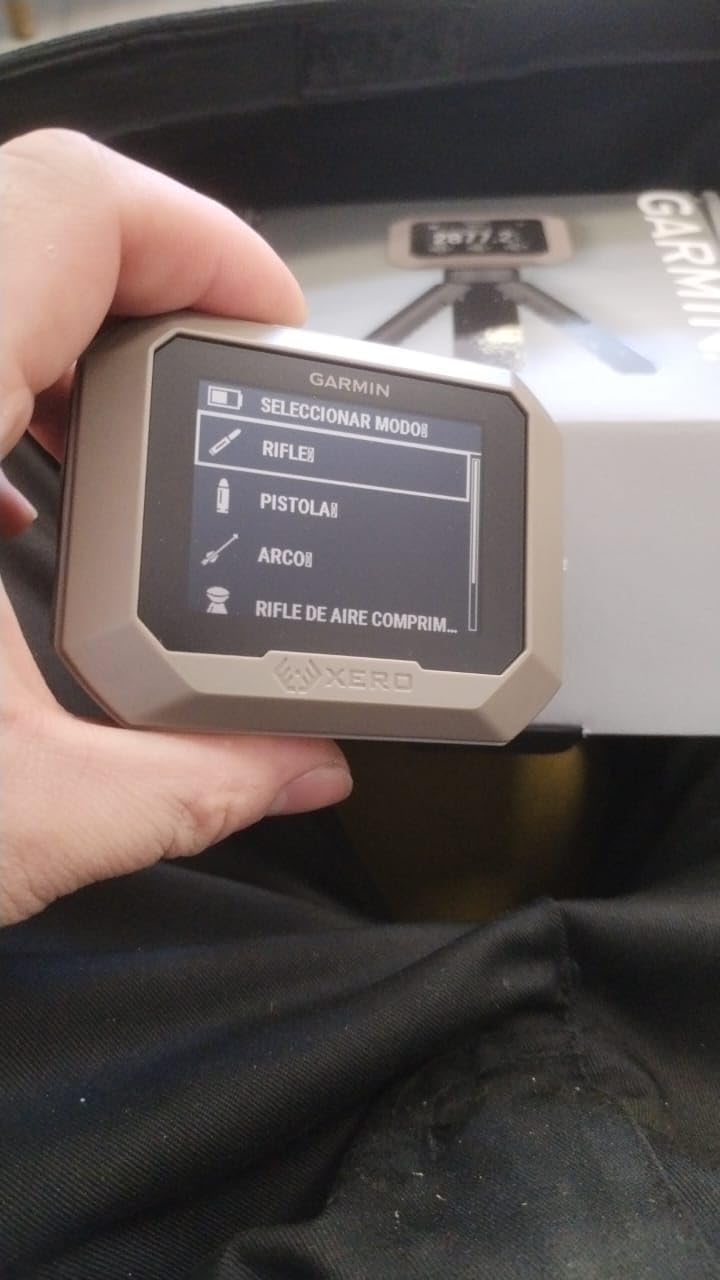
Because it is Doppler radar rather than optical, lighting is simply a non-issue. I tested it under harsh midday sun, flat overcast, and under indoor range lighting, and the numbers never wobbled or errored out. Pairing it with the ShotView app over Bluetooth took under a minute, and the app stores separate sessions where I enter bullet weight and powder charge. At the end of a string it hands me average velocity, standard deviation, extreme spread, min, and max without any math on my end.
The accuracy matched my expectations for a radar unit in this class, with standard deviations from my 6mm Creedmoor loads landing within one or two FPS of what I have recorded on far more expensive range equipment. The 6-hour battery covered a full weekend of load development on one charge. My complaints are small: it picked up one shot from a shooter on the adjacent lane during a busy public session, the USB-C cable that ships with it is comically short, and Garmin includes no case for a unit you will want to protect.
Setup and Daily Use at the Range
Plan on buying a small tripod if you do not own one, because the included thread mount needs stable support at roughly muzzle height. Mount it level, aim it at your target, and confirm the indicator shows your shots registering on your first string. The button interface is simple enough that I never opened the manual, and the screen is readable even in direct sun.
Data Export for Load Development Records
ShotView lets you tag each session with firearm and load details, which matters when you are comparing powder charges across weeks. Sessions export cleanly, so I can paste strings straight into my load notebook next to charge weights. If you track velocity nodes over long periods, this alone justifies the upgrade from a basic optical unit.
2. Garmin Xero C2 – Best Premium Chronograph for Serious Shooters
Garmin Xero® C2 Chronograph, Compact Ballistics Chronograph
Doppler radar
100-5000 FPS
Rapid-fire up to 10 shots per second
Rifle-mountable aluminum body
Smartwatch integration
Applied Ballistics
Pros
- Rapid-fire mode tracks 10 shots per second for strings and timed fire
- Reinforced aluminum housing is built to mount on a rifle
- Live velocity on a Garmin smartwatch keeps eyes on target
- Resume sessions keeps data separate per firearm or bow
- Applied Ballistics ecosystem integration
Cons
- Very expensive and the newest unit here with limited reviews so far
- Rapid-fire and mounting features are overkill for casual reloading
- Higher cost than the already excellent C1 Pro
The Xero C2 is Garmin doubling down on the platform that made the C1 Pro the community favorite. It keeps the same 100 to 5,000 FPS radar detection and pocket-sized footprint, then adds the features that competition shooters kept asking for: a rapid-fire mode that tracks up to 10 shots per second, a reinforced aluminum housing rated for rifle mounting, and Garmin smartwatch integration that puts live velocity on your wrist. It even talks to the Applied Ballistics ecosystem, which is a big deal if your shooting life already lives inside that software.
In my time with it, the rapid-fire mode was the standout. Testing a fast 10-shot string on an AR with a binary trigger, the C2 caught every shot and separated them cleanly in the session log, something no optical chronograph here could dream of doing. The resume sessions feature also worked exactly as advertised: I logged a rifle string, paused, shot a pistol session, and resumed the rifle log without mixing data.
The honest caveat is that this is a first-production unit with a small review pool so far, so long-term reliability is still being proven by the market. The core radar behavior, however, feels identical to the C1 Pro, which has earned overwhelming trust among reloaders. If you shoot PRS, NRL Hunter, or timed pistol matches and you want live data plus a unit that can ride on the rifle itself, the C2 is the most capable chronograph on this list.
On the practical side, the C2 ships with a protective cover and tripod thread in the box, which addresses my biggest hardware complaint about the C1 Pro. Combined with the IPX7 water resistance, it is clearly built to live in a range bag rather than on a shelf.
Who the Rapid-Fire Feature Actually Helps
If you shoot suppressed semi-autos, timed USPSA strings, or just hate waiting between readings during a 20-shot load string, the 10-shots-per-second tracking saves real time at the bench. Bolt-action reloaders doing slow, deliberate single shots will rarely touch it, which is worth admitting before you pay the premium.
Smartwatch and Ballistics Integration
With a compatible Garmin watch, velocity reads on your wrist so you never break position to check a screen. The Applied Ballistics link means your true muzzle velocity feeds straight into drop calculations rather than being typed in later. For long-range shooters who already run that ecosystem, the workflow is genuinely faster end to end.
3. Caldwell G2 Ballistic Precision – Best Value Optical Chronograph
Caldwell Ballistic Precision G2 Bluetooth Chronograph, LED Light Kit
Optical sensors
18-inch sensor spacing
LED light kit for indoors
Bluetooth app
Rechargeable battery
Adjustable tripod
Pros
- Inverted design with included LED kit handles indoor and low-light sessions
- 18-inch sensor spacing boosts reading consistency
- Bluetooth app saves strings wirelessly
- Comes with tripod and carry case
- Accuracy held within a few FPS of radar units when set up carefully
Cons
- The included tripod is wobbly and really needs an upgrade
- Demands precise aim roughly 6 inches below the sensors
- Bluetooth occasionally drops and can take unsaved data with it
- Plastic build feels budget grade
The Caldwell G2 is the chronograph I recommend most often to reloaders who want real features without paying radar money. It is an optical unit at heart, but the inverted sensor design and the included LED light kit solve the two problems that made old optical chronographs miserable: dark indoor ranges and weird sky conditions. Out of the box you get the chronograph, the light kit, a tripod, and a carry case, which is a genuinely complete package.
On the bench, my experience was solid once I respected its rules. You need to shoot roughly six inches below the sensor housing, and you need the sky conditions to be consistent. When I set it up carefully, velocity readings tracked within a handful of FPS of the Garmin sitting next to it. The 18-inch spacing between sensors is a real upgrade over cheaper designs and I believe it is why the numbers stayed consistent across a 30-shot string.
The rechargeable battery ran about three hours with the LED lights on, which covered a full load development session, and micro USB charging means a power bank can top it off between strings. The Caldwell app connected reliably for me most of the time, though I did have one Bluetooth drop that lost a short string, which matches the most common complaint in owner reviews. My advice: use the app as a backup and write down or screenshot important strings as you go.
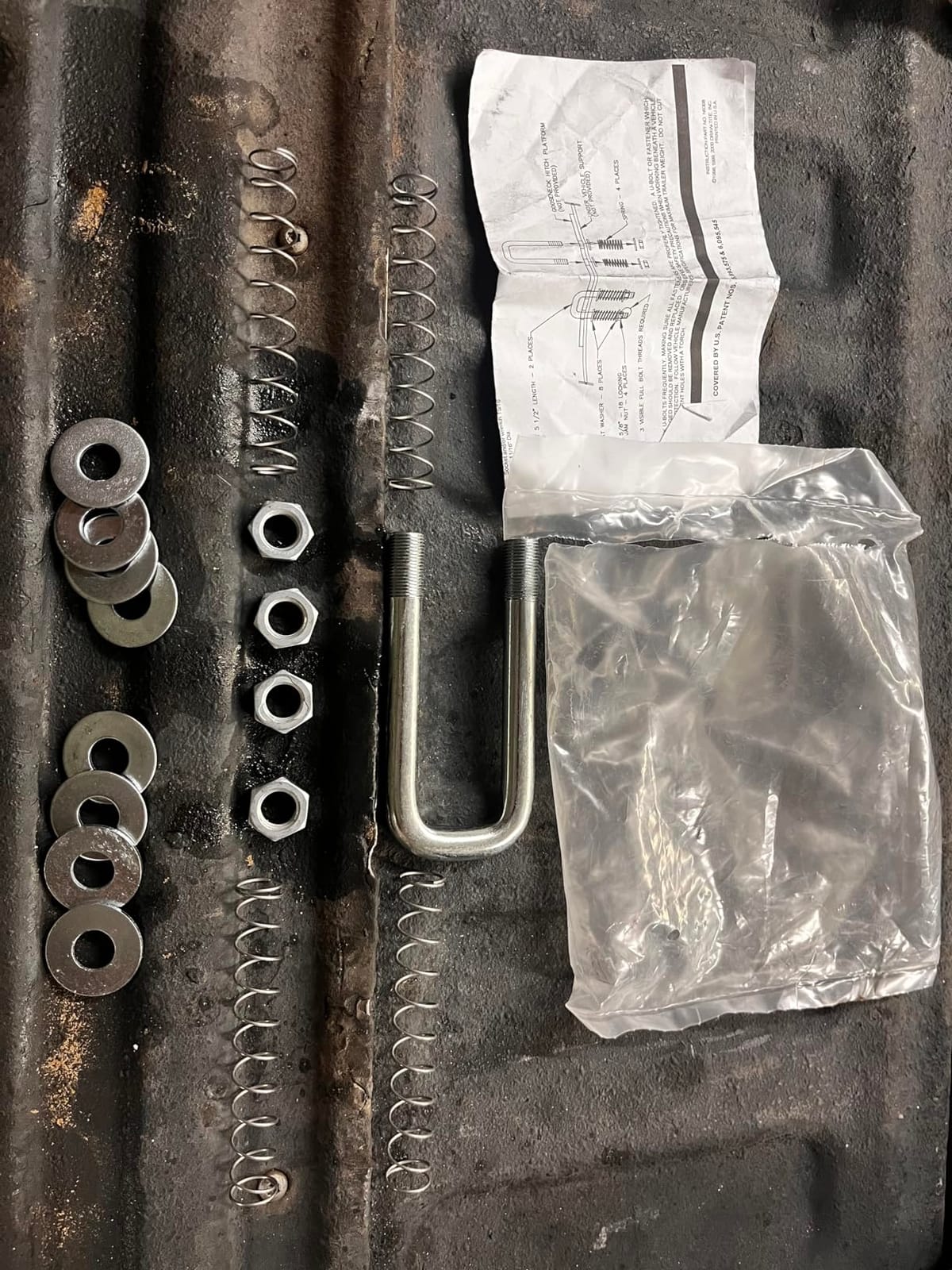
The weak link is honestly the tripod. It extends from 15 to 42 inches but it flexes in wind and wobbles when you adjust it, and everything about optical accuracy depends on the unit being stable and level. Budget for a cheap camera tripod and this unit gets dramatically better. For a reloader who mostly shoots outdoors in decent light and wants app-connected data tracking, the G2 is the smart money pick.
Getting Consistent Readings in Tricky Light
Aim for a bright, evenly lit sky behind the sensors and avoid shooting with the sun sitting low behind clouds. Indoors, always run the LED kit. If you start seeing error readings, check that you are shooting the correct distance under the housing before you blame the unit, because nine out of ten missed shots in my testing were aim, not electronics.
Battery and Charging Strategy for Long Sessions
Three hours is fine for most trips but it drains fast with the LEDs running full time. I keep a small USB power bank in my range bag and top it off at lunch. Since it is micro USB rather than USB-C, bring the right cable, because nobody at the range will have a spare anymore.
4. Caldwell Ballistic Precision Chronograph 2.0 – Best Complete Starter Kit
Caldwell Ballistic Precision Chronograph 2.0 Bluetooth Pro Kit
Optical sensors
+/- 0.1% factory accuracy
Bluetooth app
Extra-wide sun screens
LED light kit
Tripod and case included
Pros
- Tighter +/- 0.1% factory calibration than the older G2
- Extra-wide sun screens tame bright outdoor conditions
- Full kit includes lights
- screens
- tripod and carry case
- App logs environmental conditions alongside velocity
- Simple three-button operation
Cons
- Can overheat in direct sun and needs shade breaks
- Included stand is flimsy and frustrating
- Quality control is hit or miss with some units arriving defective
- Customer support is slow to respond
The Chronograph 2.0 is Caldwell refining its classic formula. The headline improvement is accuracy: factory calibration to within plus or minus 0.1 percent, which is tighter than the G2 and tighter than anything else at this price. It also ships as a true kit, with the LED light kit for indoors, extra-wide sun screens for harsh outdoor glare, a tripod, and a carry case. For a first-time reloader, opening this box feels like getting everything at once.
In testing, the accuracy claim held up. Comparing strings against my radar unit, the 2.0 stayed within a few FPS on average, and the wide sun screens genuinely helped on a brutally bright afternoon where an older optical unit of mine was erroring constantly. The app connection worked well once paired, and I like that it logs environmental conditions with each string, since temperature swings matter when you are comparing winter and summer load data.
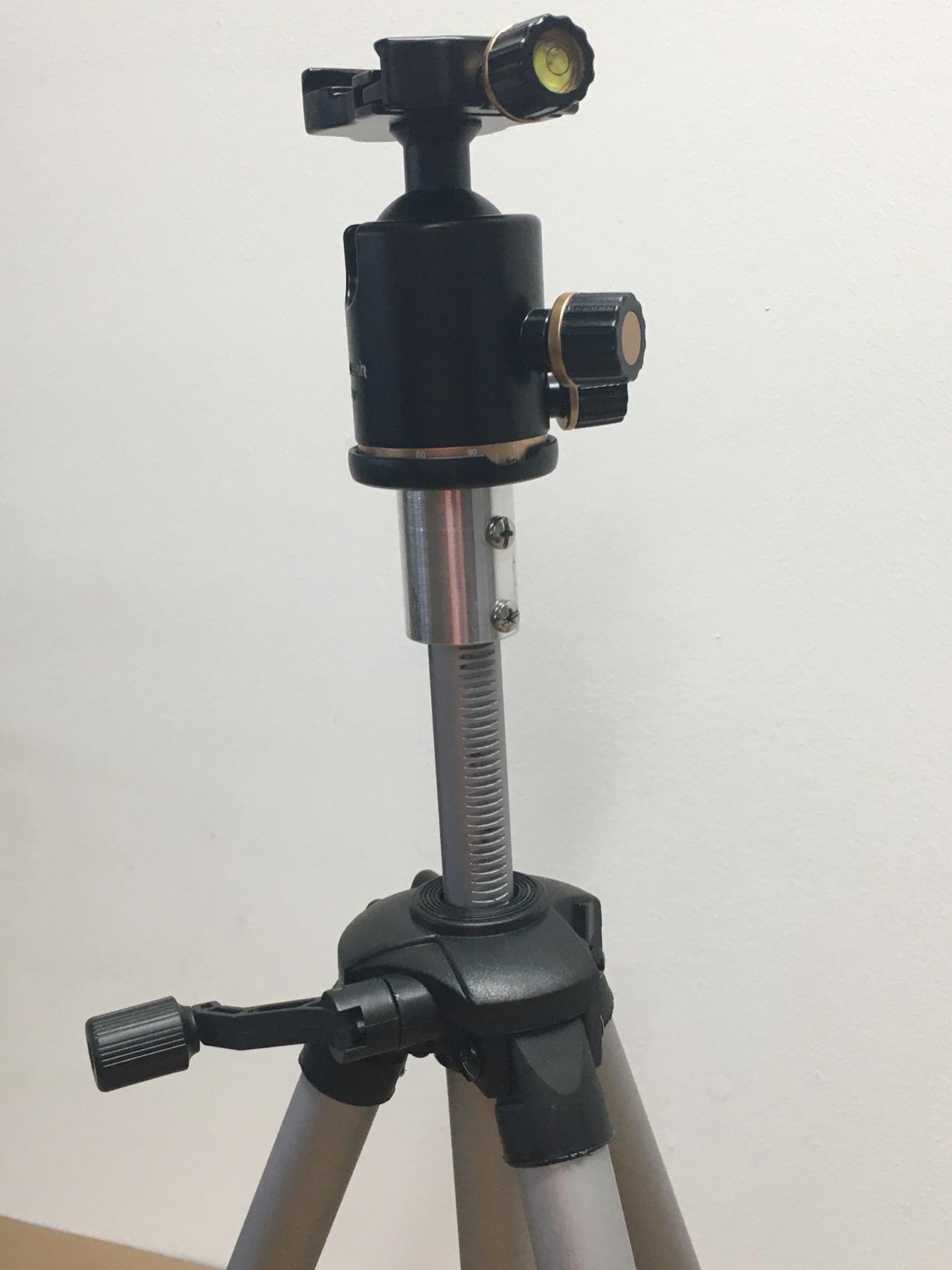
The problems are the ones owners report most: mine ran warm after a long stretch in direct sun and needed a shade break, and the bundled stand is the same flimsy design Caldwell has shipped for years. Quality control complaints show up regularly in reviews, so buy from a retailer with easy returns. If you win the unit lottery, you get very accurate data cheaply. If you lose it, expect a hassle. For reloaders on a strict budget who want the full accessory package up front, the value is still hard to beat.
Managing the Overheating Issue
Mount the unit so the body sits in shade whenever possible, and angle the sun screens rather than letting the housing bake between strings. If readings drift or the screen dims after an hour in summer sun, give it ten minutes in the shade. It is an annoying quirk, but it is manageable now that you know to expect it.
What the Environmental Logging Is Worth
The app records temperature and conditions with your velocity strings, which sounds like a gimmick until you chase a mystery velocity drop across seasons. Powder burns faster in heat, and having that data linked to each string helped me stop blaming the chronograph for what was actually temperature sensitivity in my load.
5. Competition Electronics Prochrono LTD – Best Budget Chronograph
Competition Electronics Prochrono LTD Chronograph, Gray (CEI-3825)
Optical sensors
+/- 0.5% accuracy
Shot string memory with statistics
No Bluetooth
2-year warranty
Half-price repair guarantee
Pros
- Proven design with years of reliable service in the reloading community
- Accurate from BB guns up to full-power rifle loads
- Handles full sun and cloudy skies without lights
- Multiple shot string memory with built-in statistics
- Two-year warranty plus half-price repair program
Cons
- No Bluetooth
- so every string gets written down by hand
- Bulky compared to radar and barrel-mounted units
- Setup and leveling is more fiddly than modern options
- Basic segmented display
The Prochrono LTD is the chronograph that half of r/reloading learned on, and it is still here for a reason: it works, it is inexpensive, and it refuses to die. This is a traditional optical unit with an 18-inch wide sensing area, a simple segmented display, and a full built-in operating system that remembers multiple shot strings and computes statistics for you. There is no app, no Bluetooth, and no charging cable, just a 9-volt-style battery life measured in many range trips.
My test unit produced honest numbers from the first string. Running it side by side with the radar units, velocities tracked within its stated accuracy, and it read everything from quiet subsonic .22 loads to a hot 6.5 Creedmoor without complaint. The multiple string memory is more useful than it sounds: you can shoot a five-round string per powder charge, recall each string’s average and extreme spread from the menu, and compare them without writing anything down until you choose your node.
The trade-offs are old-school ones. You must level it, align it, and give it consistent sky, and it is a large plastic tent of a device to transport. Recording data means a pen and a notebook, which frankly some of us still prefer. With a two-year warranty and a half-price repair guarantee, the total cost of ownership is about as low as chronograph ownership gets. If you want your first velocity numbers without committing serious money, this is the classic answer.
Working Without Bluetooth Day to Day
Bring a notebook and record each string as you finish it, using the recall menu to pull average, standard deviation, and extreme spread. It adds two minutes per string compared to an app. If that friction would honestly stop you from logging data, spend more on a connected unit instead of fighting your own habits.
Battery and Long-Term Ownership
Battery life is excellent by chronograph standards, and the unit sleeps between strings so a fresh battery lasts a season of regular sessions. The half-price repair guarantee means that even an out-of-warranty failure does not mean buying a whole new unit, which is a rarity in this category and a big part of why so many have run for a decade.
6. TACTIC STAR SC9 – Best Chronograph for USPSA and Match Use
TACTIC STAR Official Ballistic Chronograph for Rifle Shooting, Bullet Chronograph with FPS & MPS Readings, Easy Set up, Fast Reading, Chronograph for Archery, Firearms, Airsoft, Paintball (SC9)
Optical sensors
4 to 9750 FPS range
FPS, MPS and Joule readings
Bluetooth Practiscore app
Aluminum alloy shell
No-tools assembly
Pros
- Certified and endorsed for use at USPSA
- IPSC and IDPA events
- Reads FPS
- MPS or joules for multi-discipline use
- Bluetooth feeds the Practiscore 2 app that match shooters already run
- Huge 4 to 9750 FPS detection range
- Aluminum alloy shell with stainless rods
Cons
- Small review pool so far makes reliability a question mark
- Can struggle to detect .177 pellets
- App connection is finicky for some users
- No tripod included
The SC9 from TACTIC STAR is aimed squarely at the action-shooting crowd. It is an officially certified chronograph with range officer and shooter endorsement at USPSA, IPSC, and IDPA events, which matters because power factor verification at matches is exactly where a chronograph earns its keep. For a reloader who shoots pistol matches, that certification means the same unit on your bench is the one trusted at the chrono station.
Using it, setup was refreshingly fast: four support rods, no tools, and a big LCD showing FPS, MPS, or joules. The detection range of 4 to 9,750 FPS is the widest on this list, covering everything from the slowest airgun pellets to any centerfire rifle you own. Bluetooth pushes strings to the Practiscore 2 app, which is the same scoring app most match shooters already have on their phone, so the data lands where you actually use it.
The concerns are honesty concerns: this is a newer product with a small number of reviews, so the long-term track record is not there yet. Some users report trouble detecting lightweight .177 pellets, and the app pairing takes patience now and then. No tripod ships in the box, so factor that in. As a reloading chronograph with a match-day second job, though, the concept is smart and the execution in my testing was better than the rating suggests.
Power Factor Verification at Matches
USPSA power factor is bullet weight times velocity divided by 1,000, and shooting major means clearing a fixed floor. Because the SC9 reads in the units match officials use and feeds Practiscore directly, you can confirm your loads make major before match day instead of sweating at the official chrono. That peace of mind is the whole reason this unit exists.
Multi-Discipline Use Beyond Reloading
The joule readout makes it usable for airsoft and paintball fields, and the pellet-to-rifle detection range covers every firearm on a family range day. If your household shoots more than one discipline, one SC9 covers the bench, the match, and the backyard without changing equipment.
7. MagnetoSpeed V3 – Best Barrel-Mounted Chronograph
MagnetoSpeed V3 Barrel-Mounted Ballistics Chronograph Kit, Black, Hardcase
Electromagnetic bayonet sensor
Barrel or suppressor mount 0.5 to 2 inches
Works in any lighting
Data logging with rapid mode
Hard case included
Pros
- Electromagnetic sensing is completely immune to lighting conditions
- Lab-grade accuracy trusted by serious load developers
- Nothing downrange to shoot or shade
- Works on barrels and suppressors from 0.5 to 2 inches
- Ships with a quality hard case
- Rapid mode tracks rate of fire
Cons
- Mounting on the barrel can shift your point of impact
- Setup is finicky on tapered barrels and may need spacers
- Strap can loosen under recoil and needs checking
- Adds weight and bulk at the muzzle
The MagnetoSpeed V3 is the chronograph that professional load developers and precision rifle shooters kept using even after newer toys arrived. Instead of watching the bullet fly, its bayonet-style sensor mounts on your barrel and detects the projectile electromagnetically as it passes. That means it works in pitch black, blinding sun, indoors, or a hailstorm, because it never once looks at the sky.
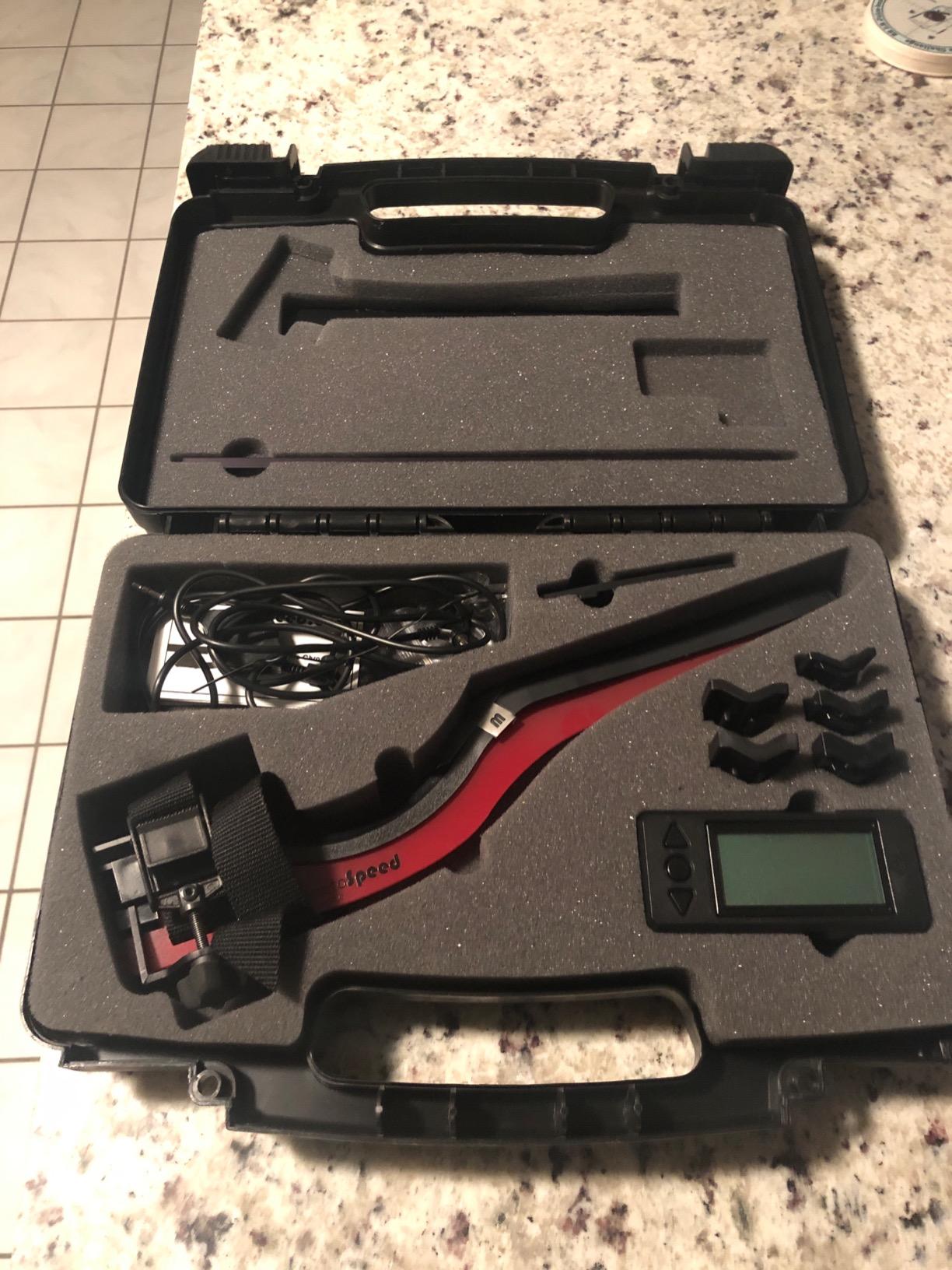
The accuracy is the reason people tolerate its quirks. In my strings it produced the tightest, most repeatable numbers of any unit here, which matches its reputation among reloaders who chase single-digit standard deviations. There is also nothing downrange to hit, nothing to shade, and nothing to align with the sun, so setup is the same process in every condition. The included hard case is genuinely good, with cutouts for every component.
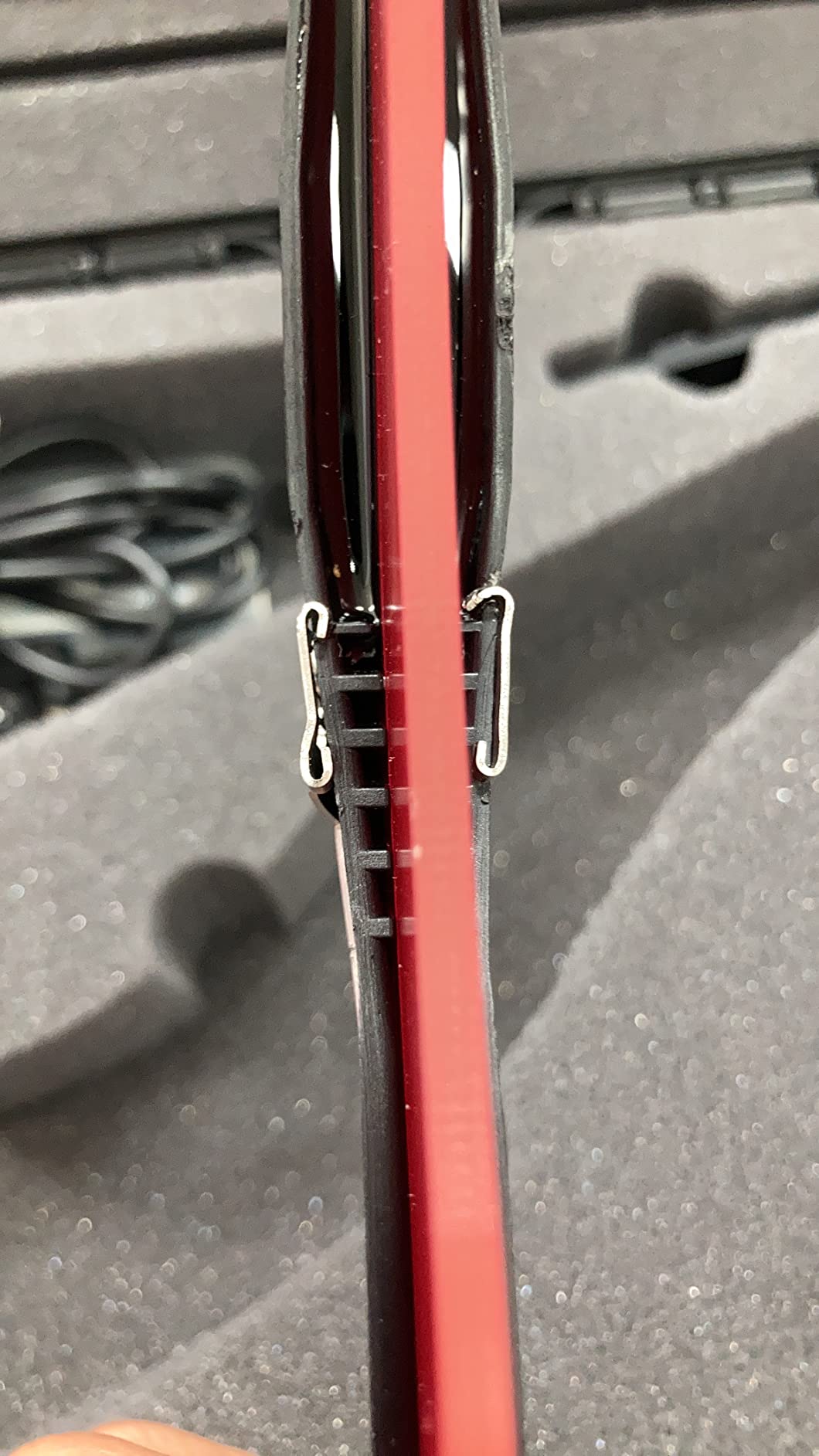
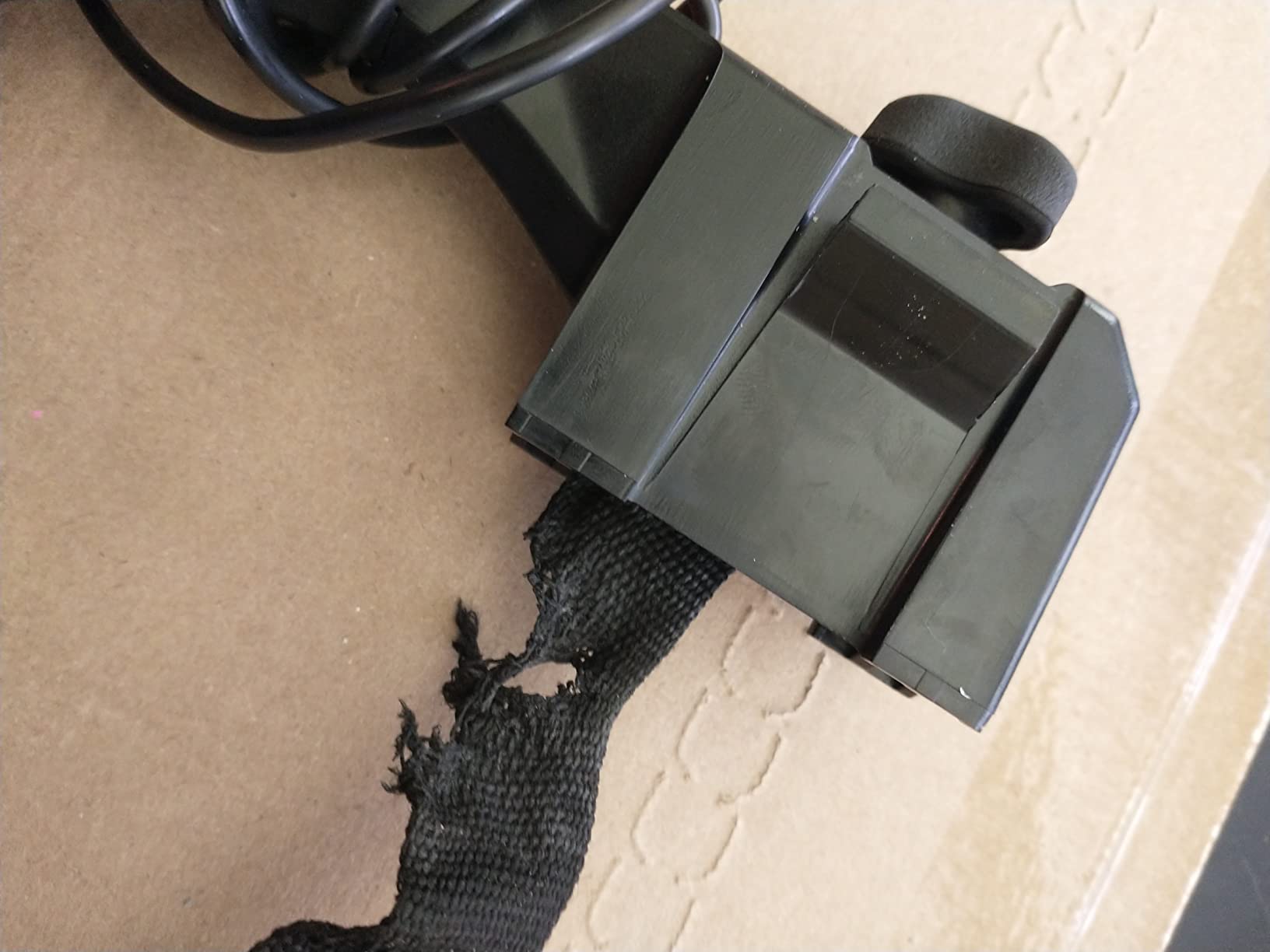
Now the quirk every owner must know: because it clamps to your barrel, it changes barrel harmonics and can shift your point of impact. On my test rifle the shift was small but real, and forum threads confirm it varies by rifle. The correct technique is to do your velocity testing with the unit mounted, then remove it and confirm zero before shooting for groups, or just accept that chrono sessions and group sessions are different days. The strap also loosens under recoil, so I check it between strings.
Setup on a straight-contour barrel takes two minutes. On a heavily tapered sporting barrel it can demand fiddling with spacers, which are sold separately and annoy everyone. If your priority is the most trustworthy velocity data for load development and you shoot a rifle with a friendly barrel profile, the V3 remains the gold standard.
Understanding and Managing the POI Shift
The mounted sensor adds mass at the muzzle, which changes how the barrel vibrates, so shots fired with it on may print somewhere other than your clean-barrel zero. Confirm zero with the unit off before you trust any group. Velocity readings themselves are unaffected, so chrono your strings mounted, then remove it for verification groups.
Suppressor and Muzzle Device Compatibility
The V3 fits barrels and suppressors from half an inch up to two inches in diameter, and the bracketing system handles alternative attachments. Suppressed shooters get clean data without stacking more hardware in front of the can. Just re-check the strap after the first few shots, because recoil works those fasteners loose on light rifles.
8. MagnetoSpeed Sporter – Best Portable Barrel-Mounted Option
MagnetoSpeed Sporter Ballistics Chronograph
Electromagnetic bayonet sensor
Fits 0.5 to 1 inch barrels
Works in any lighting
Single-button display
Data logging
Highly portable
Pros
- Same lighting-proof electromagnetic sensing as the V3 in a lighter package
- Fits contoured sporter barrels and long-barreled revolvers
- Nothing to place downrange and no sky dependency
- Accommodates muzzle devices up to 2.7 inches long
- Data logging with a simple single-button display
Cons
- Same point-of-impact shift as all barrel-mounted units
- Spacing setup takes practice to get right
- Short cord and a display that can be hard to read
- Included carry case is poor quality
The Sporter is MagnetoSpeed’s streamlined version of the V3, built for the barrels most hunting and sporting rifles actually have: contoured profiles from half an inch to one inch in diameter, including long-barreled revolvers. It keeps the core technology that makes the brand famous, the electromagnetic bayonet sensor that works in absolutely any lighting, and it does it in a smaller, lighter, cheaper package.
This is the unit I reached for when testing handloads for a lightweight hunting rifle. It clamped onto the tapered barrel with the included spacers, and after a learning-curve first setup, later sessions took about five minutes end to end. Readings were consistent with what the V3 produced on heavier rifles, and like the V3 it never once cared whether the sun was out. For a reloader who hunts with factory-profile barrels, this is the practical MagnetoSpeed.
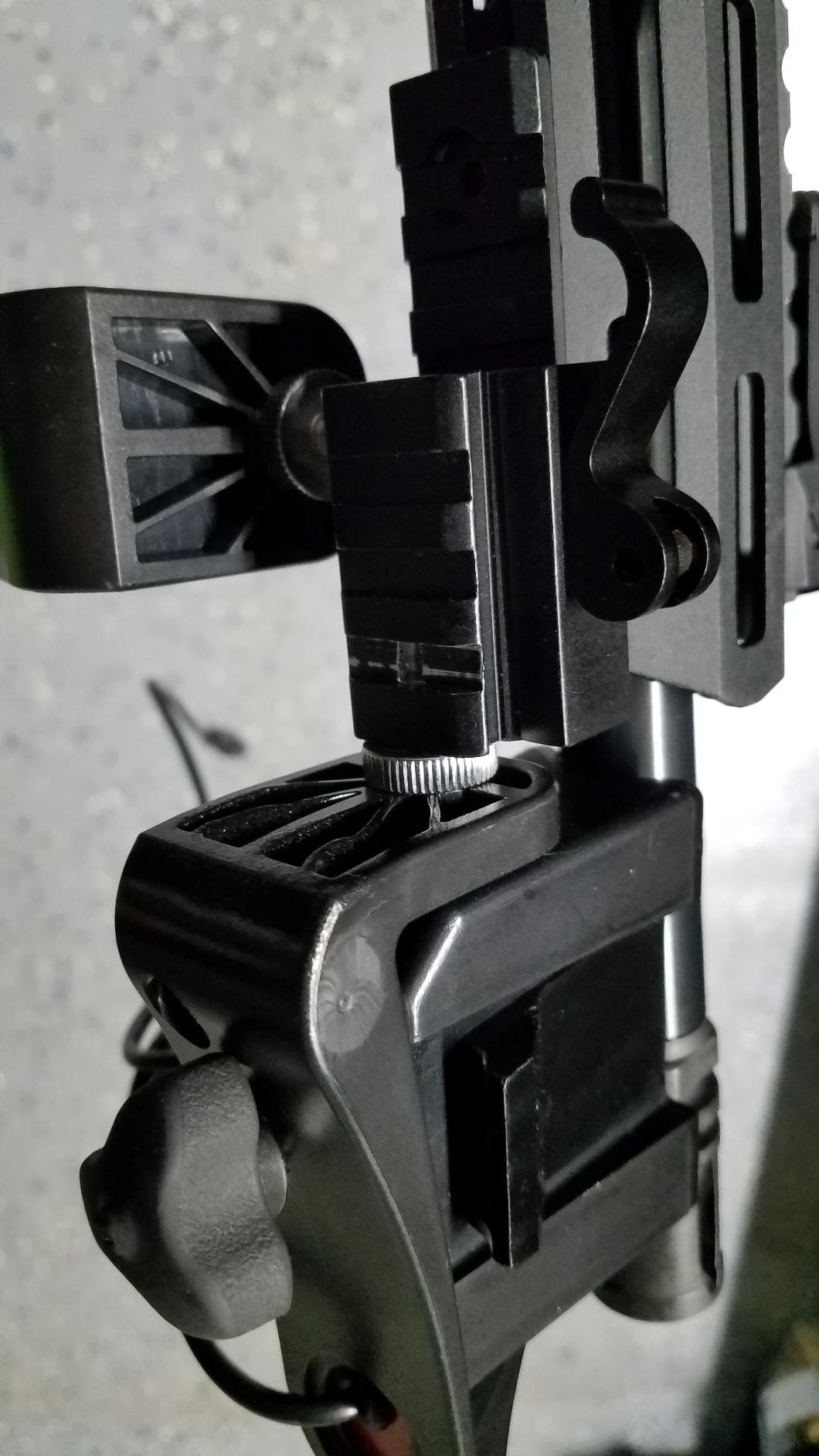
Real-world complaints from owners match mine: the spacer setup takes trial and error on the first go, the display cord is short, and the segmented screen wants good light or squinting to read. The carry case it ships with is flimsy enough that many owners, me included, bought a small aftermarket pouch. And as with the V3, remember that anything clamped to your barrel can shift point of impact, so confirm your zero with it removed.
What you get in exchange is bulletproof velocity data in a package that fits in a day pack, with no tripods, no sky screens, and no downrange equipment to retrieve or, in my worst optical-era memory, shoot. With more than 700 owner reviews and a strong average rating, it is one of the most proven reloaders’ chronographs on the market.
Fitting Contoured and Revolver Barrels
The bayonet is designed for taper rather than straight bull barrels, so it naturally suits hunting rifles. Take time on the first setup to get the sensor spacing right per the instructions, because that spacing is what drives accuracy. Once you find the right spacer combination for your rifle, photograph it so future setups take a minute instead of twenty.
Point of Impact Checks for Hunting Rifles
The stakes are higher on a hunting rifle: a shifted zero with a mounted chrono can turn a clean shot into a miss. Always re-zero after removing the unit, and treat velocity sessions as their own range trip. If your hunting load’s velocity is already established, leave the Sporter home and trust your data.
How Chronograph Technology Works?
Every chronograph answers one question: how fast was that bullet going? The three designs on this list answer it in different ways, and knowing the difference explains nearly every strength and weakness above.
Optical chronographs, like the Caldwell models and the Prochrono, use light sensors spaced a known distance apart. The bullet shadows each sensor as it passes, and the unit computes velocity from the time between the two shadows. This is cheap and accurate, but it depends entirely on having good, consistent light above the sensors, which is why clouds, indoor ranges, and low sun cause errors.
Electromagnetic units, both MagnetoSpeeds, sense the disturbance a metal projectile creates as it passes through an electromagnetic field at the muzzle. Light is irrelevant, so they work anywhere, and accuracy is excellent. The cost is physical: the sensor must mount on your barrel, which adds mass and can shift point of impact.
Doppler radar units, the Garmins, bounce radar waves off the projectile and measure the frequency shift of the return signal, the same physics police radar uses. Nothing touches the firearm, nothing sits downrange, and lighting does not exist as a variable. You pay for that freedom in price, and nearby shooters’ shots can occasionally register on a busy line.
Two terms you will see in every manual deserve defining. Standard deviation, or SD, measures how spread out your velocities are around the average: lower means more consistent powder ignition and typically better long-range precision. Extreme spread, or ES, is simply the difference between your fastest and slowest shot in a string. A good reloading chronograph, meaning one that is trustworthy and repeatable, is what lets you chase single-digit SD with confidence.
Buying Guide: How to Choose the Best Chronograph for Reloading
Before you pick a winner, run through these six questions. They map directly onto the differences between the eight units above, and answering them honestly will narrow the field fast.
First, what lighting do you actually shoot in? If you reload and test outdoors on sunny or overcast days, an optical unit like the Caldwell 2.0 or Prochrono will serve you fine for less money. If you test on covered bays or indoor ranges, or you refuse to let weather decide your schedule, radar or electromagnetic is worth every dollar of the upgrade.
Second, can you tolerate a barrel-mounted sensor? The MagnetoSpeed units offer superb accuracy and total lighting independence at reasonable cost, but the point-of-impact shift is real and you must re-zero after removing them. Precision rifle shooters doing dedicated velocity sessions handle this easily; hunters who want one-range-trip convenience should look at radar instead.
Third, how do you want to handle data? If you keep meticulous load records and love spreadsheets, Bluetooth units with apps like the Garmins and Caldwell models save hours of transcription. If a notebook and pen suit you, the Prochrono’s built-in string memory is plenty, and there is no app to drop connections mid-string.
Fourth, what else do you shoot? The Garmins read arrows, airgun pellets, shotshells, and even airsoft BBs alongside centerfire. The SC9 covers matches and multi-discipline use with its joule readout. The MagnetoSpeeds are firearm-only tools, superb at their one job.
Fifth, think about power. The Garmin runs six hours per charge, the Caldwells about three, and the Prochrono sips a replaceable battery across many trips. If your sessions run long or you forget to charge things, battery strategy matters more than you expect.
Sixth, accessorize smartly. A decent camera tripod improves every optical and radar unit, since the bundled Caldwell stands are the weakest part of those kits. A small protective case is the first purchase every Garmin owner makes. And whichever unit you choose, keep the lenses or sensor faces clean and store the unit padded, because nobody in our research covers chronograph maintenance and a dirty sensor is the top cause of mystery error readings.
Frequently Asked Questions
Is a chronograph necessary for reloading?
Strictly speaking, no; plenty of people reload for plinking using published manual data alone. But for anything beyond basic loading, yes: a chronograph tells you your true muzzle velocity, confirms your loads are safe and consistent, and provides the standard deviation data needed to find accurate load nodes and build reliable long-range drop charts.
What are the top-rated chronographs?
Based on our testing and owner feedback, the Garmin Xero C1 Pro is the top-rated overall pick, the Garmin Xero C2 leads for premium features, the MagnetoSpeed V3 and Sporter dominate for accuracy in any lighting, and the Caldwell G2 plus the Competition Electronics Prochrono LTD are the top value picks.
What is the difference between Doppler radar and optical chronographs?
Optical chronographs use light sensors that detect the bullet’s shadow passing between two points, which makes them affordable but dependent on consistent lighting. Doppler radar units measure the frequency shift of radar waves bouncing off the bullet, so they work in any lighting, indoors, at night, and with nothing attached to the firearm, at a higher price.
Does a chronograph affect point of impact?
Downrange optical and radar chronographs do not touch your firearm, so they have zero effect on point of impact. Barrel-mounted electromagnetic units like the MagnetoSpeed V3 and Sporter add mass to the barrel, which changes barrel harmonics and can shift point of impact, so always re-confirm your zero after removing the unit.
What is a good standard deviation for reloading?
For quality rifle ammunition, an SD under 20 feet per second across a 5 or 10-shot string is a reasonable starting goal, and precision shooters chase single digits. Keep in mind that low SD requires both a consistent load and a trustworthy chronograph, which is why reading quality matters as much as the number itself.
Conclusion
Choosing the best chronographs for reloading comes down to one honest question: how much do you hate fussing? If the answer is “a lot,” the Garmin Xero C1 Pro is the clear editor’s choice, pocketable, app-connected, and immune to lighting. If you want maximum accuracy per dollar and shoot a friendly barrel profile, the MagnetoSpeed Sporter and V3 are the load development standards. Budget-conscious reloaders are genuinely well served by the Caldwell G2 kit and the evergreen Prochrono LTD, while match shooters should look hard at the SC9 and the premium Garmin Xero C2.
Whichever you choose, buy it before you buy your next pound of powder. Real velocity data changed how I reload more than any other single purchase, and the units on this list have never been more capable. Pick the one that matches your range conditions and your budget, and start putting real numbers behind your loads this year.