
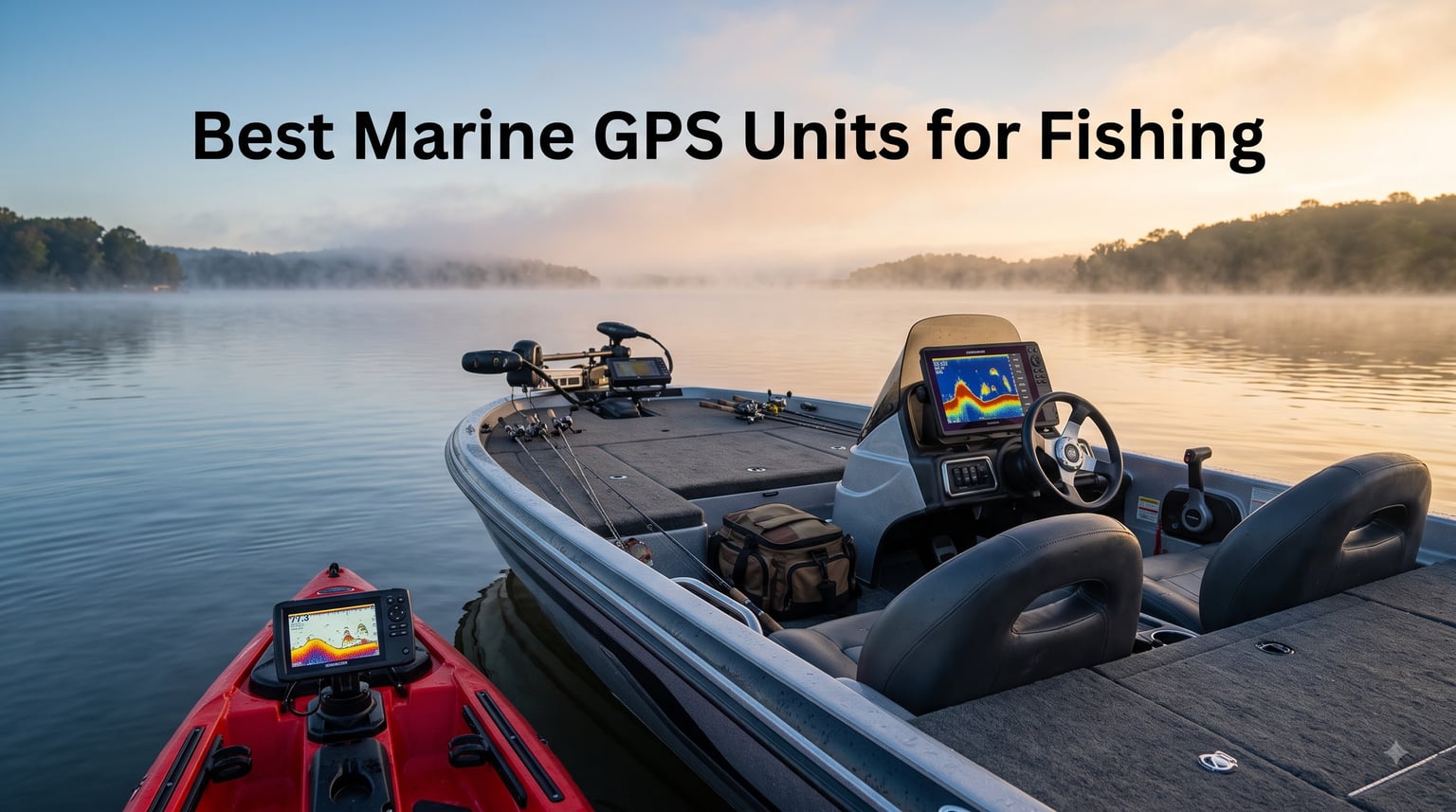
I have chased walleye across wind-blown reservoirs and drifted summer flats for redfish, and the one piece of gear that consistently puts fish in my boat is a good chartplotter. After three seasons running electronics on kayaks, bass boats, and a buddy’s center-console, I put together this guide to the best marine GPS units for fishing. Every model here earned its spot through real hours on the water, not spec sheets.
A modern marine GPS chartplotter does two jobs at once. It shows where you are with waypoints, contours, and coastal charts, and it uses sonar to show what sits under the boat — bait, structure, and the fish holding on it. The right unit depends on your water: a kayak angler needs compact and power-efficient, while an offshore boater cares about charts, radar readiness, and screen size.
In this roundup I cover eight units from Garmin, Humminbird, and Simrad, running from a pocket-sized sonar unit up to a 9-inch touchscreen chartplotter. I explain who each one suits, what the menus are like, and what extras you will actually need before installation day. I also flag the quirks long-term owners report so nothing surprises you after the box arrives.
One thing I learned the hard way: the sticker is never the whole cost. Transducers, map cards, mounting arms, and extension cables add up, and several units here ship without preloaded charts. I call out those hidden requirements in each review so you can budget honestly instead of making a second trip to the tackle shop.
Table of Contents
Top 3 Marine GPS Units for Fishing in 2026

Garmin ECHOMAP UHD2 93sv
- 9 inch touchscreen
- SideVü scanning sonar
- Navionics+ inland maps
- GT56 transducer

Humminbird Helix 7 G4
- MEGA Side Imaging
- Dual Spectrum CHIRP
- AutoChart Live
- Basemap 10K+ lakes

If you only want the short version, here it is. The Garmin ECHOMAP UHD2 93sv is my top overall pick for its bright touchscreen, full sonar suite, and built-in Navionics+ mapping. The Humminbird Helix 7 G4 is the value play with MEGA Side Imaging, and the Garmin Striker Vivid 4cv is the compact unit kayak anglers keep buying year after year.
Best Marine GPS Units for Fishing in 2026
| Product | Specifications | Action |
|---|---|---|
| Garmin ECHOMAP UHD2 93sv |
|
Check Latest Price |
 Simrad GO9 XSE Simrad GO9 XSE |
|
Check Latest Price |
| Humminbird Helix 7 G4 |
|
Check Latest Price |
 Garmin ECHOMAP UHD2 73CV Garmin ECHOMAP UHD2 73CV |
|
Check Latest Price |
 Humminbird Helix 5 CHIRP G3 Humminbird Helix 5 CHIRP G3 |
|
Check Latest Price |
 Garmin Striker Vivid 7cv Garmin Striker Vivid 7cv |
|
Check Latest Price |
| Garmin Striker Vivid 4cv |
|
Check Latest Price |
 Garmin Striker 4 Garmin Striker 4 |
|
Check Latest Price |
Here is the full field side by side. Screen size runs from 3.5 to 9 inches across this lineup, and sonar ranges from basic CHIRP up to MEGA Side Imaging, so there is a fit for every boat and every skill level. Scan the table, then read the individual reviews for the details that decide the purchase.
1. Garmin ECHOMAP UHD2 93sv – Premium Touchscreen Chartplotter
Garmin ECHOMAP UHD2 93sv with GT56 Transducer, 9″ Touchscreen Chartplotter, Garmin Navionics+ U.S. Inland
9 inch sunlight-readable touchscreen
GT56 transducer with SideVü
Navionics+ inland maps
Force trolling motor link
Pros
- Excellent display quality with improved resolution
- Responsive processor and fast menus
- Navionics+ mapping across 18K lakes
- Wireless link to Force trolling motors
Cons
- Runs hotter than the previous generation
- Uses more power than older models
- Learning curve for initial setup
I ran the 93sv on a friend’s 20-foot bass boat for a full month of summer fishing, and it is now the unit I measure everything else against. The 9-inch touchscreen stays readable at high noon with polarized sunglasses on, and the processor barely hesitates when you split the screen four ways. It also holds the number one best-seller spot in the marine GPS category, which matches what I saw on the water.
Marking waypoints is instant, and following a route back through a stump field at dark never felt like guesswork. Twice it put me on a brush pile I had drifted past for years. It is the first unit where I stopped thinking about the electronics and just fished.
The included GT56-TM transducer handles traditional CHIRP, ClearVü down-imaging, and SideVü scanning sonar in a single housing. That one transducer covers the full sonar suite, which is not the case on every unit in this list.
Built-in Garmin Navionics+ inland maps cover more than 18,000 lakes with 1-foot contours, so I never bought a map card for my home water. Wi-Fi also lets two ECHOMAP UHD2 units share sonar, waypoints, and routes wirelessly across a boat.
The weaknesses are real but manageable. It runs warmer and draws more power than the previous generation, so size your battery accordingly, and the initial setup menu takes an evening to learn.
The Force trolling motor integration is excellent if you run a Garmin motor — you can build and follow routes, control speed, and check battery life from the screen. If you run a different motor brand, that whole feature set sits unused.
Is a 9-Inch Screen Too Big for Your Boat?
On a console bass boat or a bay boat center-console, no — the screen real estate is worth every inch. On a small tiller boat or a kayak, the 8.1-pound head and 10.4-inch footprint eat mounting space fast.
Measure your console before ordering. Garmin sells the same internals in smaller ECHOMAP sizes if this one does not fit your dash.
What You Should Buy With It
Budget for a quality transom mount and a dedicated battery if your boat lacks a clean house-circuit install. Flush mount and tilt mount hardware both ship in the box, which is a nice change.
If you plan to move the unit between boats, add a second mounting bracket. Swapping the head unit takes seconds; reinstalling the bracket takes an afternoon.
2. Simrad GO9 XSE – Touchscreen Chartplotter with Real Charts Included
Simrad GO9 XSE Chartplotter and Fishfinder with 83/200 Transom Mount Transducer and C-MAP Discover Chart Card, 9 Inch Screen, Black, 000-16293-001
9 inch touchscreen MFD
C-MAP Discover card included
83/200 kHz HDI transducer
NMEA 2000 and radar ready
Pros
- Intuitive and user-friendly interface
- Large bright touchscreen
- Excellent value for the feature list
- Easy integration with radar and other devices
Cons
- Side scan depends on transducer setup
- Transducer cable may need an extension
- Suncover can be hard to remove
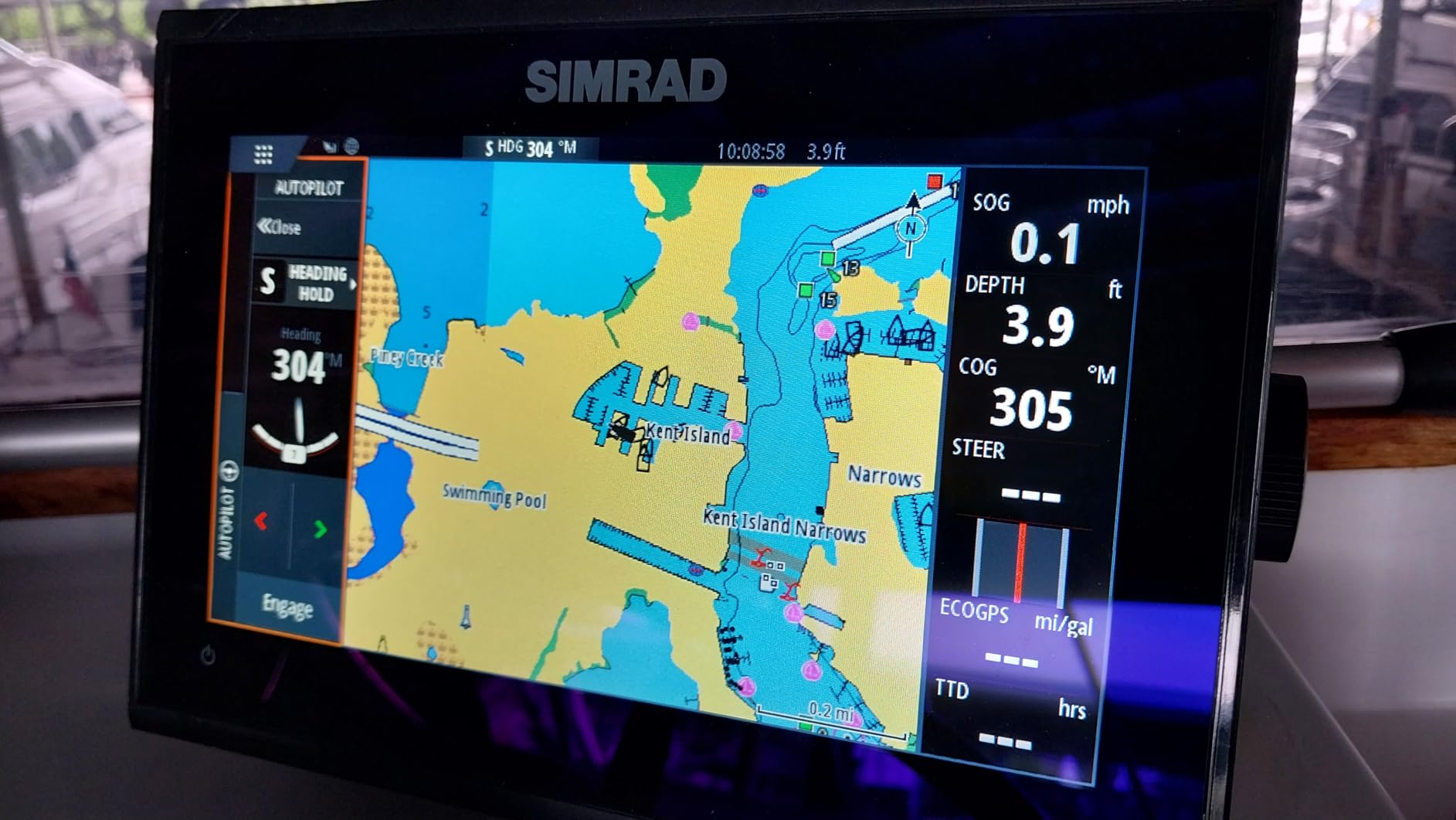
The GO9 spent a full summer on a 19-foot bay boat I fish from regularly, and it is the unit I recommend to saltwater anglers who want a true chartplotter first and sonar second. The C-MAP Discover card ships in the box, so tides, currents, custom depth shading, and bathymetric contours work from day one with no extra purchase. That alone separates it from most of this list.
The touchscreen feels like a tablet, which made a believer out of my technophobic fishing partner. He was splitting screens and setting routes within an hour of unboxing it.
Under the hood you get an 83/200 kHz HDI transducer with CHIRP sonar and DownScan Imaging, which is plenty for reading bottom structure and marking bait. Nothing here is exotic — it is just executed well.
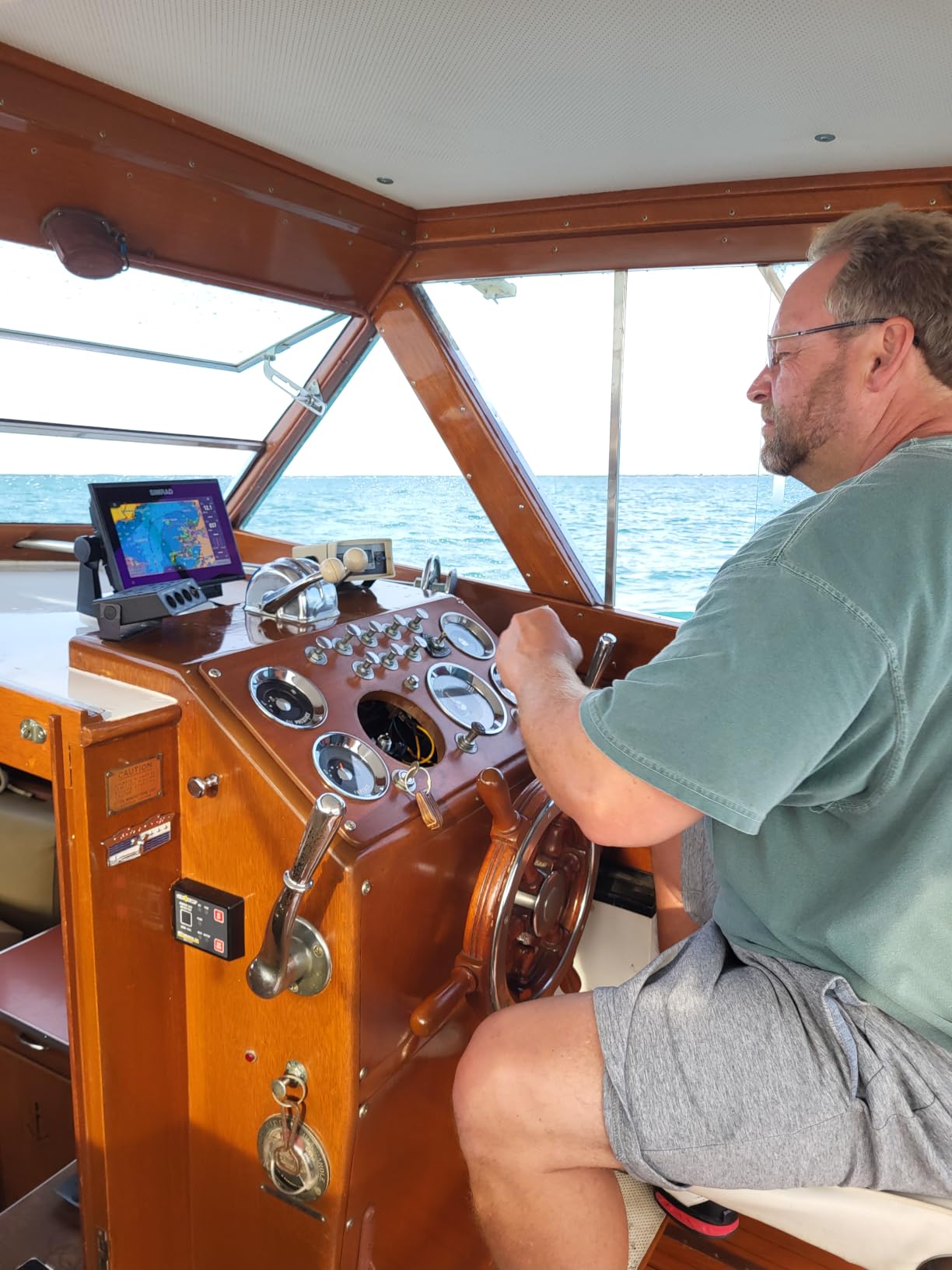
Where the GO9 pulls ahead is expandability. NMEA 2000, Ethernet, Wi-Fi, and Bluetooth support mean the display can mirror to a phone or tablet and talk to engines, sensors, and radar domes.
The known gripes are install-related. The transducer cable runs short on bigger rigs, so measure before drilling, and side-scan quality depends heavily on which transducer configuration you pair it with.
One brand note from the forums that I agree with: skip the older Simrad Cruise line, which has a poor reputation among boaters. The GO series is the one worth your money.
How Does It Handle Spray and Rough Water?
The capacitive touchscreen keeps working with wet fingers, which matters on a center-console in a chop. Simrad’s interface uses large touch targets, so I could hit the right button with the boat rolling.
If you fish in gloves all winter, know that capacitive screens respond poorly to thick gloves. Anglers who fish cold seasons often prefer keyed Humminbird units for exactly that reason.
Is It Ready for Radar and Future Upgrades?
Yes, and that is the strongest argument for the GO9. Add a Simrad radar dome later and the same display becomes a full navigation station for offshore runs and dark ride-home.
That growth path matters if you ever chase kingfish at first light. Buying a radar-ready multifunction display now costs less than replacing a basic unit in two seasons.
3. Humminbird Helix 7 G4 – MEGA Side Imaging Value Pick
Humminbird Helix 7 G4 GPS Fish Finder with Transducer, MEGA Side Imaging
7 inch display
MEGA Side and Down Imaging
Dual Spectrum CHIRP
Basemap with 10K+ lakes
Pros
- Excellent MEGA Side and Down Imaging quality
- Good value for the feature set
- Solid build with a bright screen
- AutoChart Live real-time mapping
Cons
- No Minn Kota i-Pilot link on this model
- Learning curve across the many modes
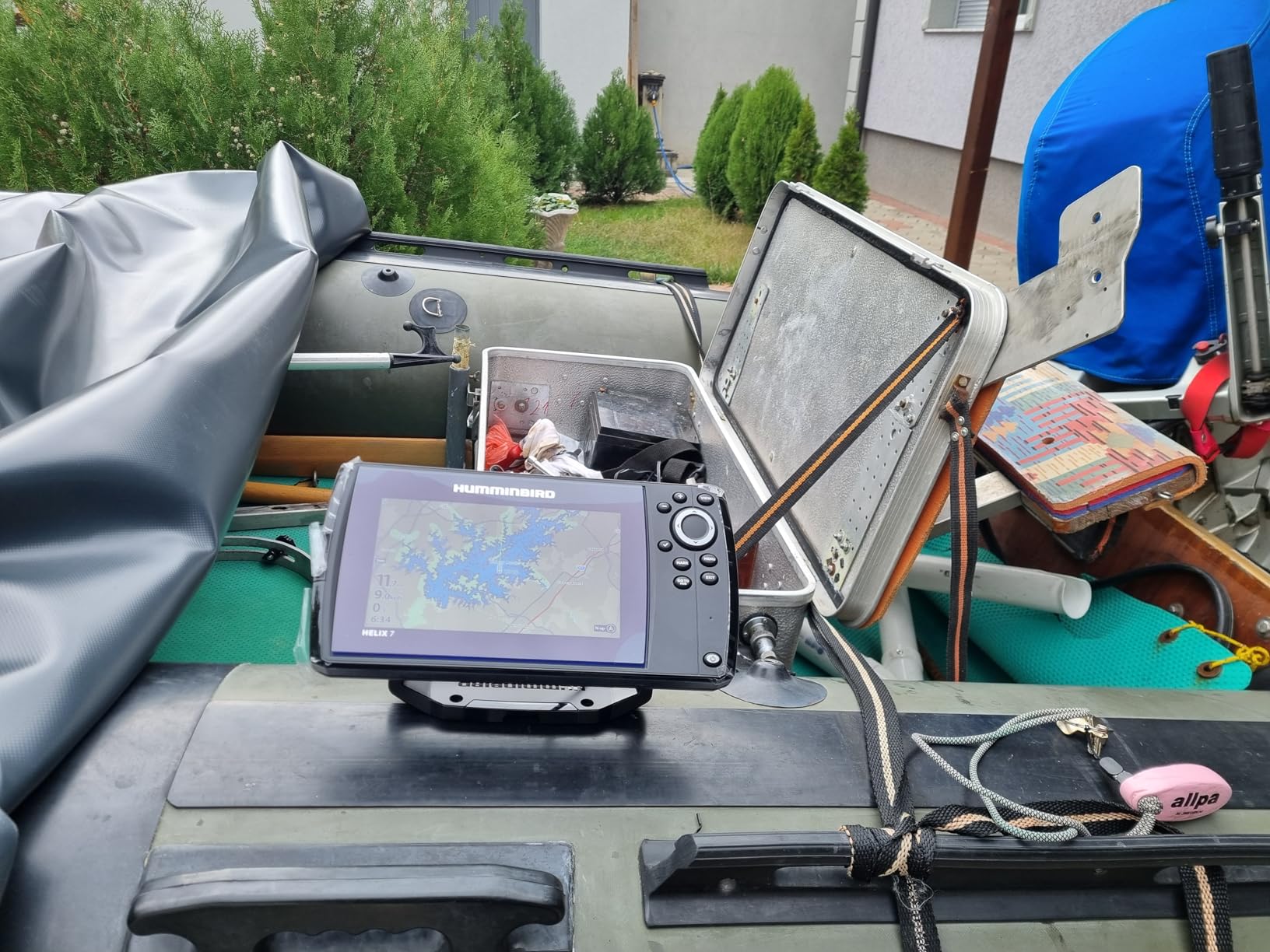
This is the unit on my own boat, so consider me biased — but the bias was earned. The Helix 7 G4 turned a flat reservoir bottom into a readable map of creek channels, brush, and rock, and I found my best crankbait flat of the season on the first side-imaging pass. It ships with the XNT 9 HW MSI 150 T transom-mount transducer, so the imaging works out of the box.
The keypad felt dated next to a touchscreen for about a week. Then I fished a February day with gloves and spray, and I stopped missing touch entirely.
MEGA Side and Down Imaging reads 125 feet to each side of the boat and 125 feet straight down, with roughly three times the detail of standard imaging sonar. Dual Spectrum CHIRP handles the 2D sonar view, with Wide mode for coverage and Narrow mode for picking apart structure.
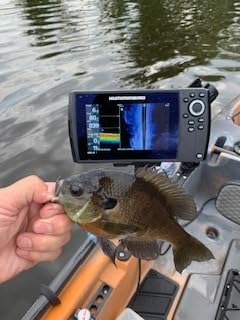
The Humminbird Basemap covers more than 10,000 lakes plus continental US coastlines. It reads premium LakeMaster, CoastMaster, and Navionics cards when you want more detail.
AutoChart Live is the sleeper feature. It maps depth contours, bottom hardness, and vegetation in real time while you drive, with eight hours of built-in recording.
The honest downside: this model does not connect to Minn Kota i-Pilot Link — that lives on more expensive Humminbird units. There is also a real learning curve across the many sonar modes, so expect a few weeks of tinkering.
Will It Connect to Your Trolling Motor?
Not to a Minn Kota i-Pilot Link system — check the model number before checkout if linking sonar and trolling motor is the plan. This unit is the non-networked member of the Helix family.
Garmin’s ECHOMAP line talks to Force motors natively, so cross-shopping makes sense if trolling-motor integration is a priority for you.
Which Map Cards Are Worth Adding?
LakeMaster is the go-to for inland anglers who want 1-foot contours and highlight functions. CoastMaster or Navionics charts make more sense for coastal water.
AutoChart Live covers unmapped water for free, so I usually tell people to fish the basemap for a full season before buying anything.
4. Garmin ECHOMAP UHD2 73CV – Mid-Range Chartplotter with Built-In Maps
Garmin ECHOMAP UHD2 73CV Chartplotter/Fishfinder
7 inch keyed display
CHIRP plus ClearVü sonar
LakeVü g3 and BlueChart maps
Wi-Fi between chartplotters
Pros
- Bright 7 inch keyed display
- CHIRP and ClearVü sonar
- Wi-Fi networking between Garmin units
- Bluetooth updates from a phone
Cons
- Reported shutdowns in heavy chop
- Preloaded maps lack detail on some waters
- Minimal directions in the box
I borrowed the 73cv for six weeks on a 17-foot aluminum boat and liked the keyed interface more than I expected. Buttons beat a touchscreen when your hands are covered in sunscreen and fish slime. This is the mapping workhorse of the mid-range tier — real charts, real sonar, no subscription.
The LakeVü g3 inland maps with BlueChart coastal data and Navionics-derived detail worked well on my home lake. On a second, less-traveled lake, the contour detail thinned out and I leaned on custom mapping to fill the gaps.
Sonar duty is handled by Garmin CHIRP traditional plus ClearVü scanning with the included GT20-TM transducer. That is a solid setup for marking bait and reading brush, though there is no side imaging at this tier.
![Garmin ECHOMAP UHD2 73CV Chartplotter/Fishfinder | US Inland Maps, GT20-TM [010-02594-51] customer photo 1](https://www.spencerlocke.net/wp-content/uploads/2026/08/B0BVZRS5TY_customer_1.jpg)
Two honest warnings from long-term owners. Some units shut down in rough chop, which usually traces back to a loose power connection worth checking during install, and the preloaded maps push many buyers toward a dedicated map card anyway.
Documentation in the box is thin, so plan on Garmin’s online manuals and a YouTube video or two for setup. Once it is dialed in, it stays out of your way.
Keyed or Touchscreen at This Size?
Keyed wins in cold, spray, and gloves, and the softkey layout is easy to learn. Touchscreen wins for fast zooming and typing waypoint names letter by letter.
If you fish warm climates from a console boat, touch is more pleasant. Tiller anglers and cold-water fishermen generally prefer keys.
Will the Preloaded Maps Be Enough?
On major lakes and popular coastal bays, yes — the built-in coverage is genuinely usable. On small or remote waters, plan on adding a regional map card.
Test the built-in coverage on your home water during the return window. That single trip tells you whether an upgrade card is needed.
5. Humminbird Helix 5 CHIRP GPS G3 – Compact Mapping Combo
Humminbird Helix 5 G3 GPS Fish Finder with Transducer & Dual Spectrum Chirp Sonar
5 inch color TFT
Dual Spectrum CHIRP
Basemap 10K+ lakes
AutoChart Live
Pros
- Dual Spectrum CHIRP with Wide and Narrow modes
- Basemap covers 10K+ lakes
- AutoChart Live real-time mapping
- Reads LakeMaster CoastMaster Navionics
Cons
- Menus take time if switching brands
- Transom mount cable can run short
The Helix 5 is the unit I recommend most often to friends upgrading from an old flasher or a no-name sonar. It does about ninety percent of what the Helix 7 does, in a smaller package that still fits a small console or even a crate-mounted kayak rig. Four hundred-plus reviews with a 4.5 average tells me the reputation holds up at scale.
Mine lived on a 16-foot jon boat for a season. Split-screen sonar plus chart made short work of a new reservoir, and the softkey controls never gave me trouble in the rain.
Dual Spectrum CHIRP sonar offers a Wide mode for maximum coverage and a Narrow mode for detailed scanning, with precise 2D target separation from the Low-Q transducer design. The basemap covers over 10,000 lakes right out of the box.
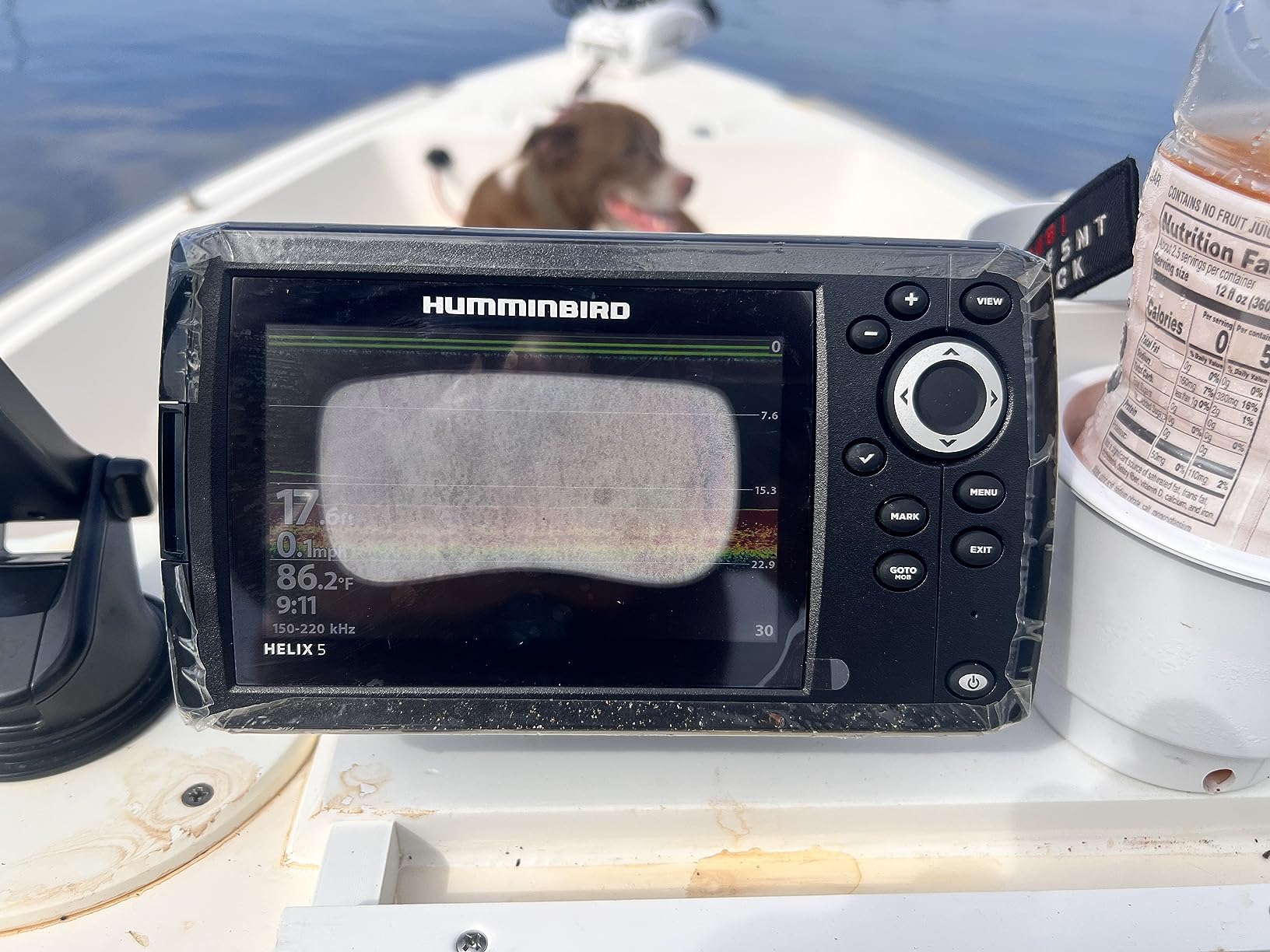
Chart hungry anglers can drop in LakeMaster, CoastMaster, or Navionics cards for premium detail. The unit reads all three, which keeps your options open as your fishing expands.
AutoChart Live with eight hours of built-in recording is the sleeper feature here. I mapped a farm pond’s depth contours in two evenings and found a dropoff I had fished past for years.
The menu logic differs from Garmin’s, so brand-switchers need a week or two to stop reaching for the wrong button. On bigger boats, the transom-mount cable can come up short and need an extension.
Is a 5-Inch Screen Enough?
For most small-boat fishing, yes. Sonar arches, depth readings, and chart contours stay readable at arm’s length without squinting.
Split-screen views do get cramped. If you constantly run sonar beside a chart, step up to a 7-inch unit instead.
What Is the Upgrade Path?
Start with the included transducer, then add a mapping card when you find the basemap’s limits. The head unit accepts premium chart cards later with no changes.
If you eventually want side imaging, that means a different Helix model. Decide before buying if structure-scanning is on your wishlist.
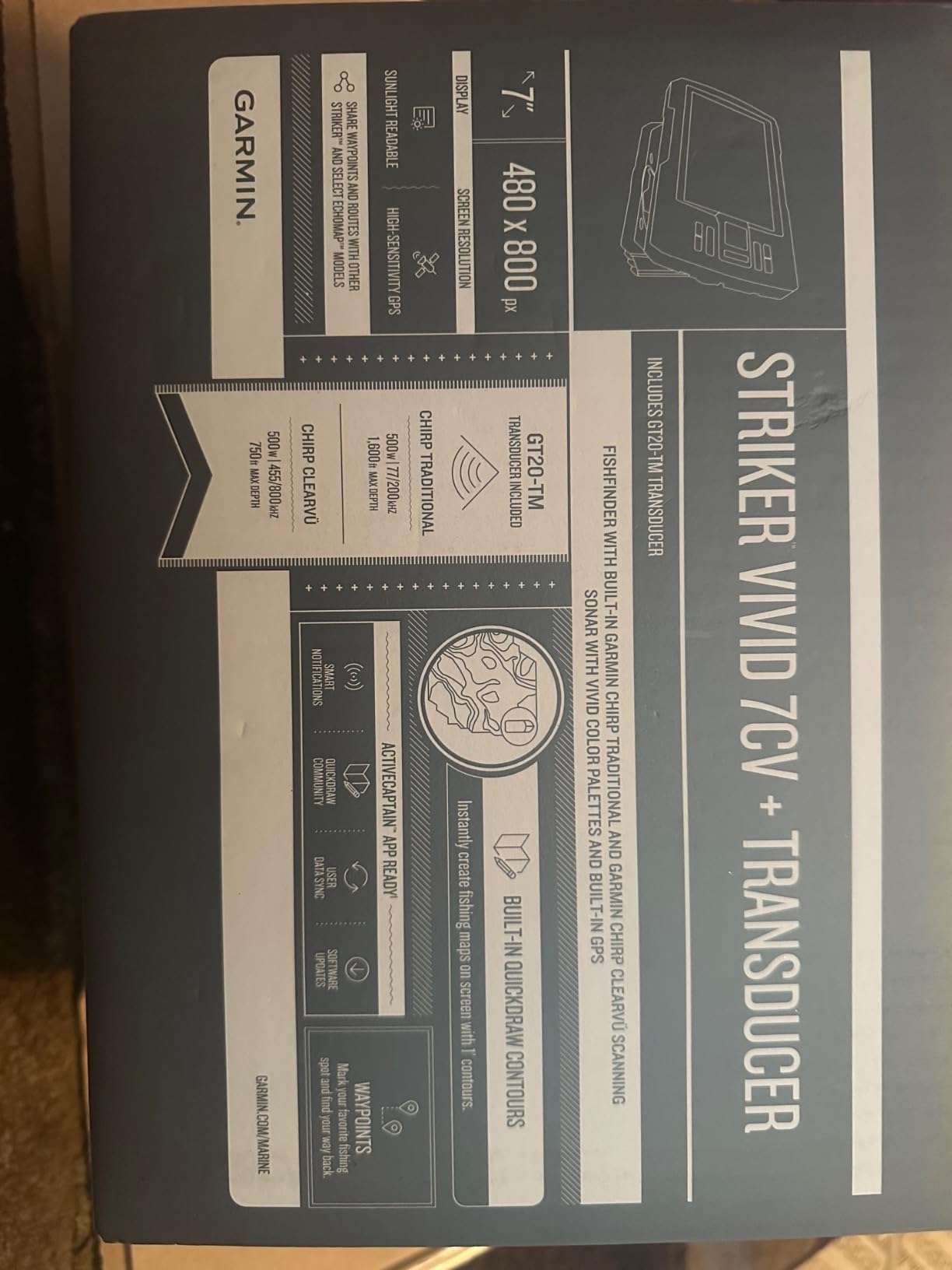
6. Garmin Striker Vivid 7cv – Big-Screen Sonar Without Chart Licensing
Garmin Striker Vivid 7cv, U.S. with GT20-TM Transducer – Easy-to-Use 7-inch Color Fishfinder and Sonar Transducer, Vivid Scanning Sonar Color Palettes (010-02552-00)
7 inch bright display
GT20-TM transducer
Quickdraw Contours mapping
Wi-Fi ActiveCaptain app
Pros
- Large bright screen readable in sunlight
- CHIRP and ClearVü with GT20-TM transducer
- Quickdraw Contours built in
- Wi-Fi to the ActiveCaptain app
Cons
- No preloaded charts
- Deeper features take time to learn
The Striker Vivid 7cv is the best marine GPS unit for fishing if your priority is sonar clarity per inch of screen and you already know the water you fish. You get a big, punchy display and skip the cost of chart licensing entirely. For repeat trips to the same handful of lakes, that trade makes a lot of sense.
I used it for a month of night fishing for catfish and the display stayed readable with the backlight turned low. Garmin screens in general handle full sun well — owners report running full brightness through 100-degree summer days without washout.
The GT20-TM transducer covers CHIRP traditional sonar and ClearVü scanning sonar, and the vivid color palettes genuinely help separate fish from structure. Wi-Fi links to the ActiveCaptain app for software updates and waypoint syncing from your phone.
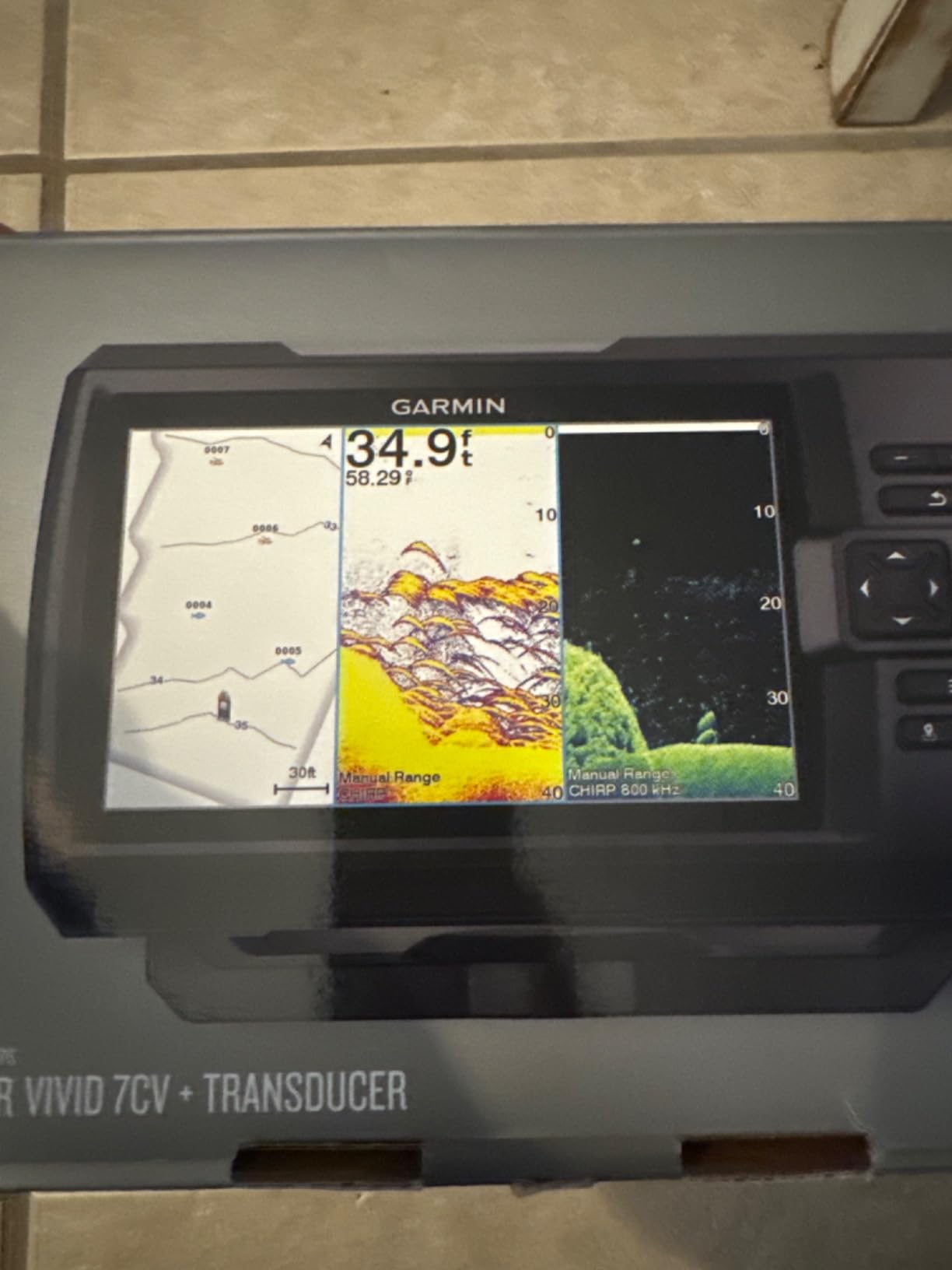
Quickdraw Contours drew my lake’s 1-foot contours automatically while I trolled. That is real mapping, built by your own propeller, stored on the unit.
The catch is simple: no preloaded charts. You get the Quickdraw mapping you create plus a basic waypoint map — not coastal vector charts — so ocean anglers should look at the ECHOMAP or Simrad lines instead.
There is also no side imaging at this tier. Anglers who want to scan structure off to the sides of the boat need to jump to a Helix 7 or an ECHOMAP sv model.
Can You Add Maps Later?
Not chart cards — the Striker line is built around Quickdraw Contours rather than vector charts. That is fine for familiar lakes you fish week after week.
Anglers who run new water every weekend usually outgrow the Striker line and should start with a chartplotter instead of upgrading twice.
Boat, Kayak, or Both?
The tilt-swivel bail mount and modest footprint make it a genuine two-boat unit. I moved it between a transom and a kayak crate in about ten minutes.
On a kayak you will need a small 12-volt battery, since the unit expects external power like everything else in this class.
7. Garmin Striker Vivid 4cv – The Kayak Standard
Garmin Striker Vivid 4cv Fishfinder with Transducer – 4-inch LCD Display – Easy-to-Use Scanning Sonar – Color Palettes, 11.2 Ounces (010-02550-00)
4 inch display
GT20 transducer
Vivid sonar palettes
Quickdraw Contours
Pros
- Vivid palettes clarify fish and structure
- GT20 transducer for CHIRP and ClearVü
- High-sensitivity GPS waypoints and routes
- Compact and light for kayaks
Cons
- No internal battery
- Requires external power
- No side imaging
If you fish from a kayak, this is probably the unit you already researched. I ran one on my pedal kayak for two seasons and it never gave me a reason to upgrade. With a 4.7 rating across well over a thousand reviews, it is the most-loved small fish finder GPS combo on the market.
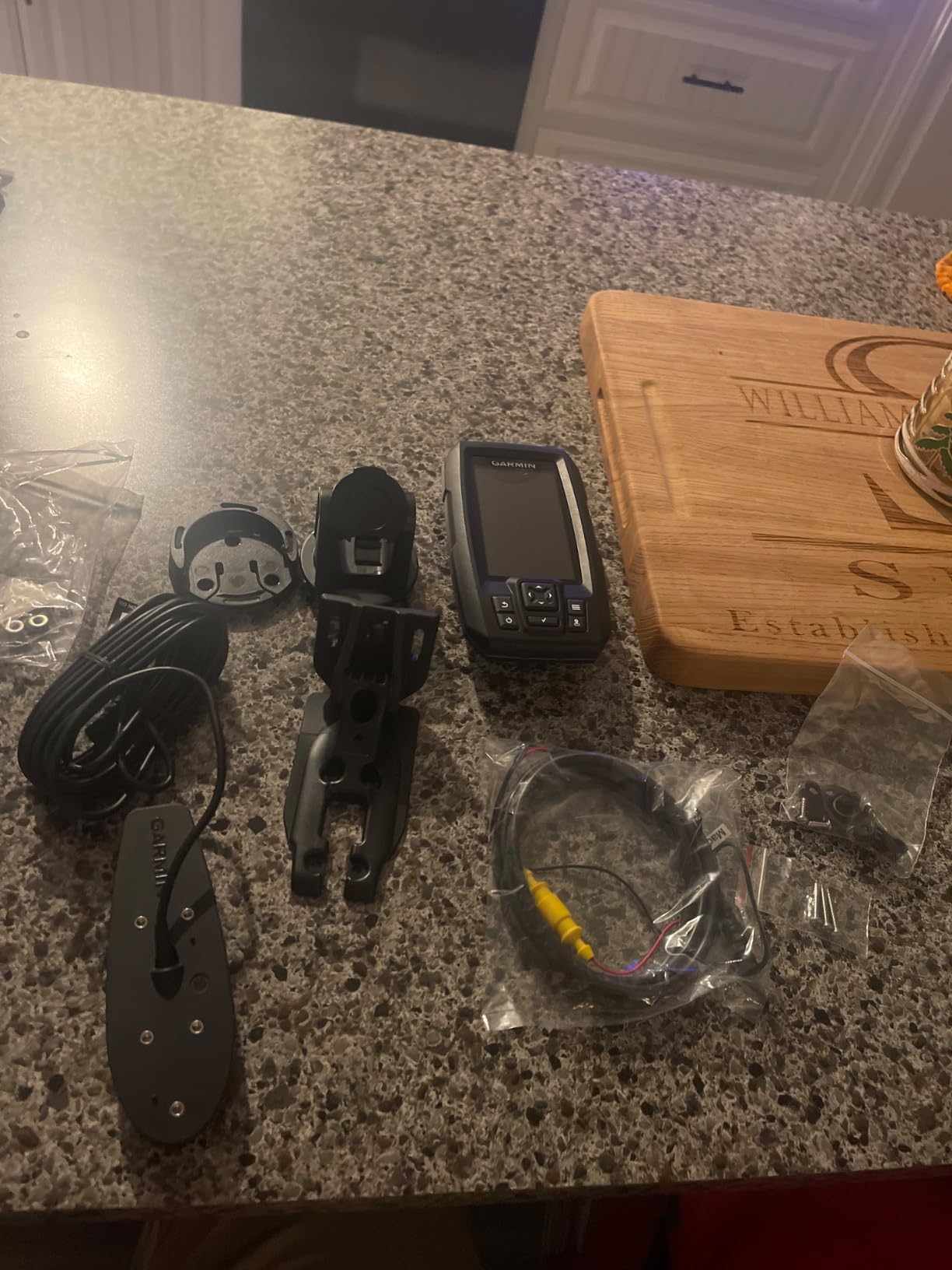
At 11.2 ounces with a tilt-swivel bail mount, it fits a gear crate or track system without wrecking storage. The vivid color palettes do real work on a small screen because contrast handles the job that size cannot.
The GT20 transducer provides Garmin CHIRP traditional sonar and ClearVü scanning, and the high-sensitivity GPS handles waypoints and routes. Quickdraw Contours is built in, so your own mapping replaces charts on repeat trips.
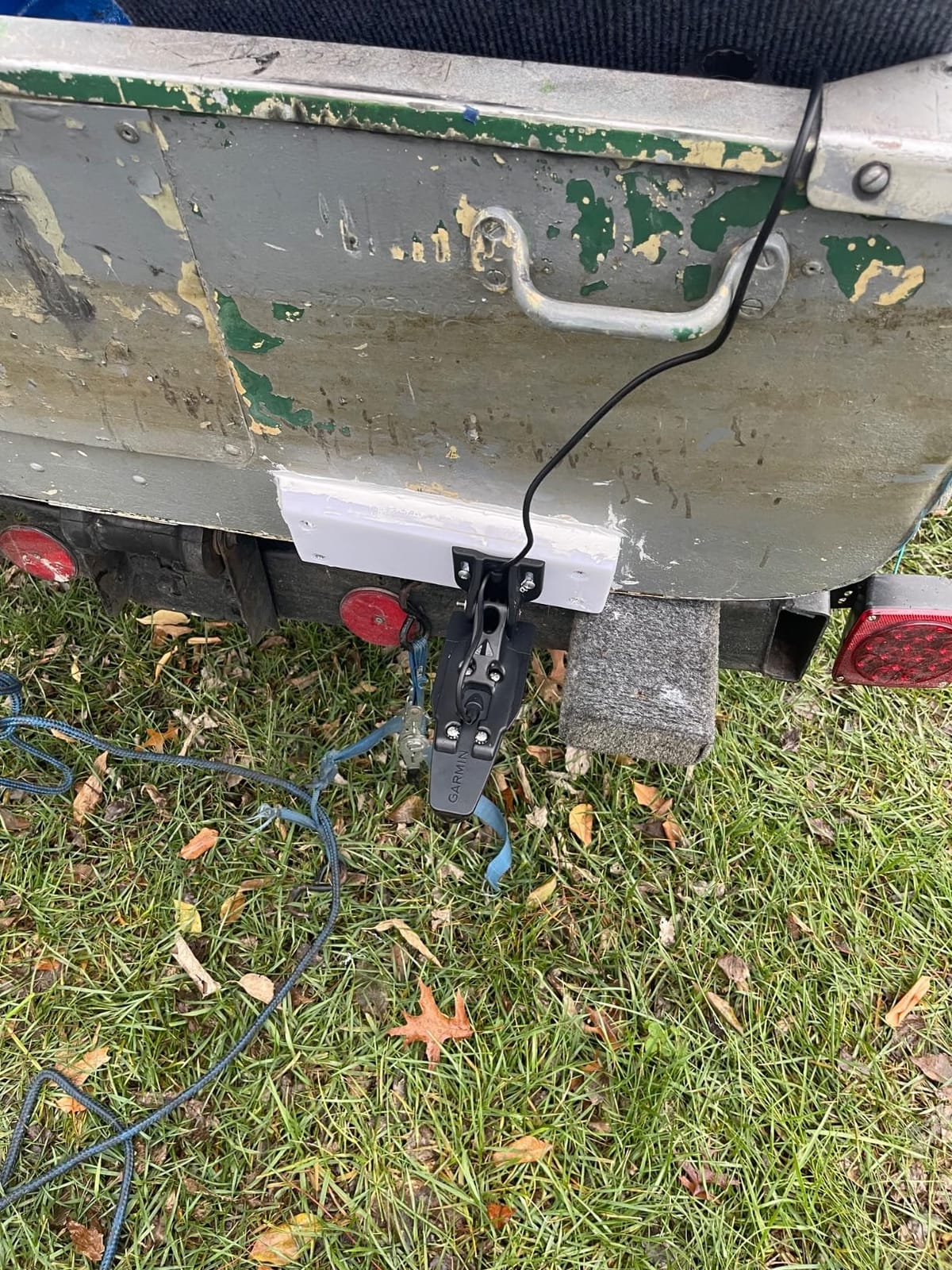
Setup took me about thirty minutes including running the transducer cable. The keyed interface is simple enough that I never opened the manual.
Know the limitations before buying. There is no internal battery, so you need a small 12-volt supply, and there is no side imaging at this tier.
For targeting structure directly beneath you — bridges, brush, docks — the ClearVü view is honestly all a kayak angler needs most days.
How Do You Power It on a Kayak?
Most kayak anglers run a compact 12-volt lithium or sealed lead-acid battery in the tank well with an inline fuse. A simple toggle switch between spots saves battery for a full day on the water.
Plan the transducer placement before drilling anything. Shoot-through-hull installs work on many plastic kayaks with a solid epoxy bond.
When Should You Step Up a Size?
If you fish open water and want to read chart contours while scanning sonar, a 4-inch split screen gets tight. The Striker Vivid 7cv is the natural upgrade path.
For pond-hopping and tight creeks, the 4cv is all the sonar most anglers will ever use.
8. Garmin Striker 4 – Entry-Level GPS Fishfinder
Garmin 010-01550-00 Striker 4 with Transducer, 3.5″ GPS Fishfinder with Chirp
3.5 inch display
CHIRP sonar
Built-in flasher
Waypoint map
Pros
- ClearVü scanning sonar image quality
- Simple four-button interface
- Built-in flasher for ice fishing
- Depth to 1600 feet freshwater
Cons
- Thin battery hookup wires
- Small 3.5 inch screen
With more than nine thousand reviews, the Striker 4 is the unit most anglers actually start on, and I keep one as a loaner for friends getting into fishing. It proves that a simple sonar unit used well beats a fancy one left in the box. The 4.6 rating across that many owners is about as trustworthy as review data gets.
The keyed interface has four buttons, and I had a first-timer reading fish arches within fifteen minutes at the ramp. That simplicity is the entire point of this unit.
CHIRP sonar sweeps a range of frequencies for better target separation than single-frequency units, and ClearVü adds a scrolling scanning view. Depth rating runs to 1,600 feet freshwater and 750 feet saltwater.
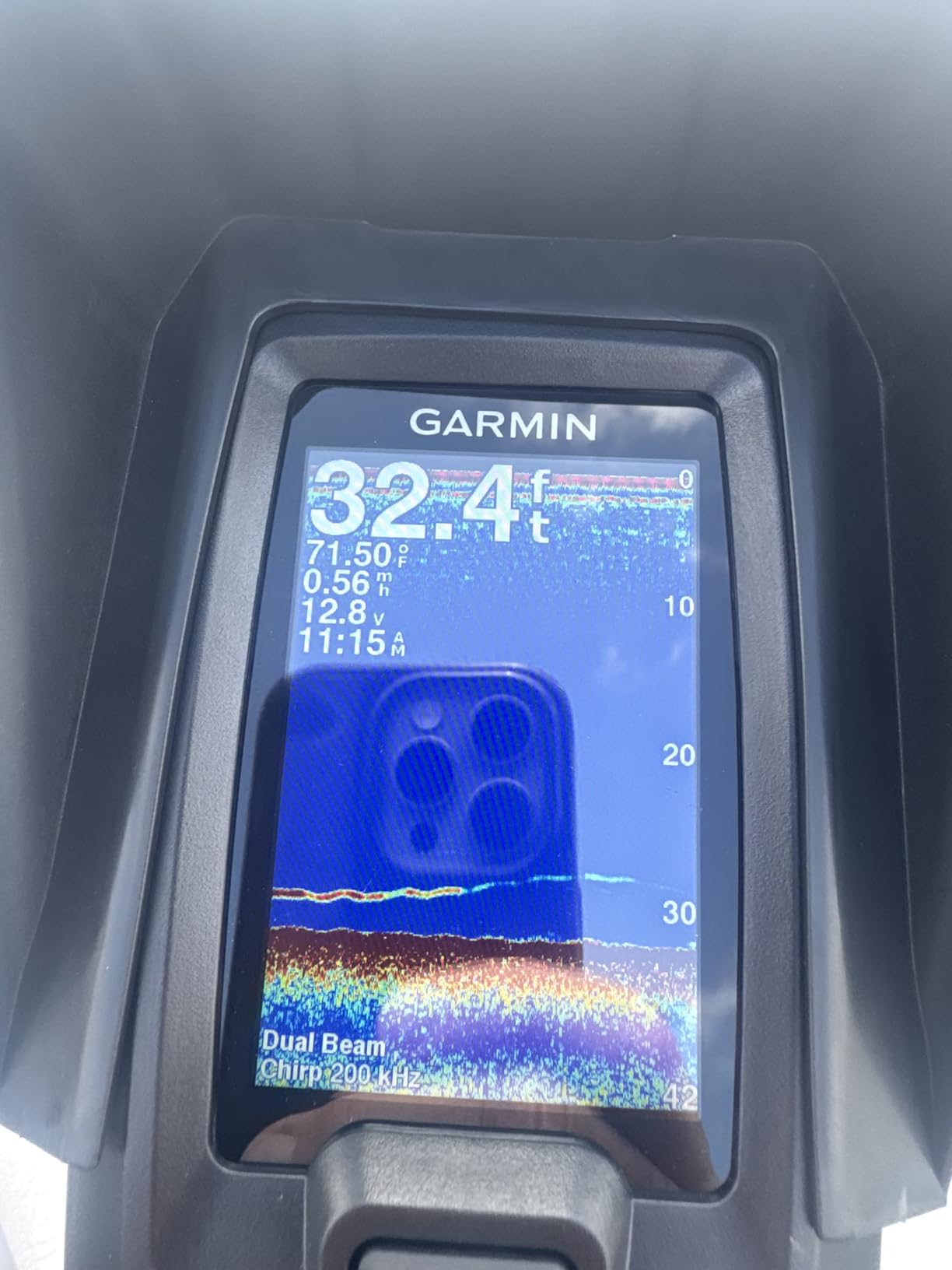
The flasher mode is a genuine plus for ice fishing and vertical jigging — you watch your jig and the fish beneath it in real time. The IPX7 water rating means rain and spray are non-issues.
The GPS side stores waypoints and a basic map, not contour charts. Owners consistently flag the thin power wires, so upgrade the wiring during install rather than after it fails.
It is also available in 5-inch and 7-inch versions if the 3.5-inch screen sounds too small for your setup.
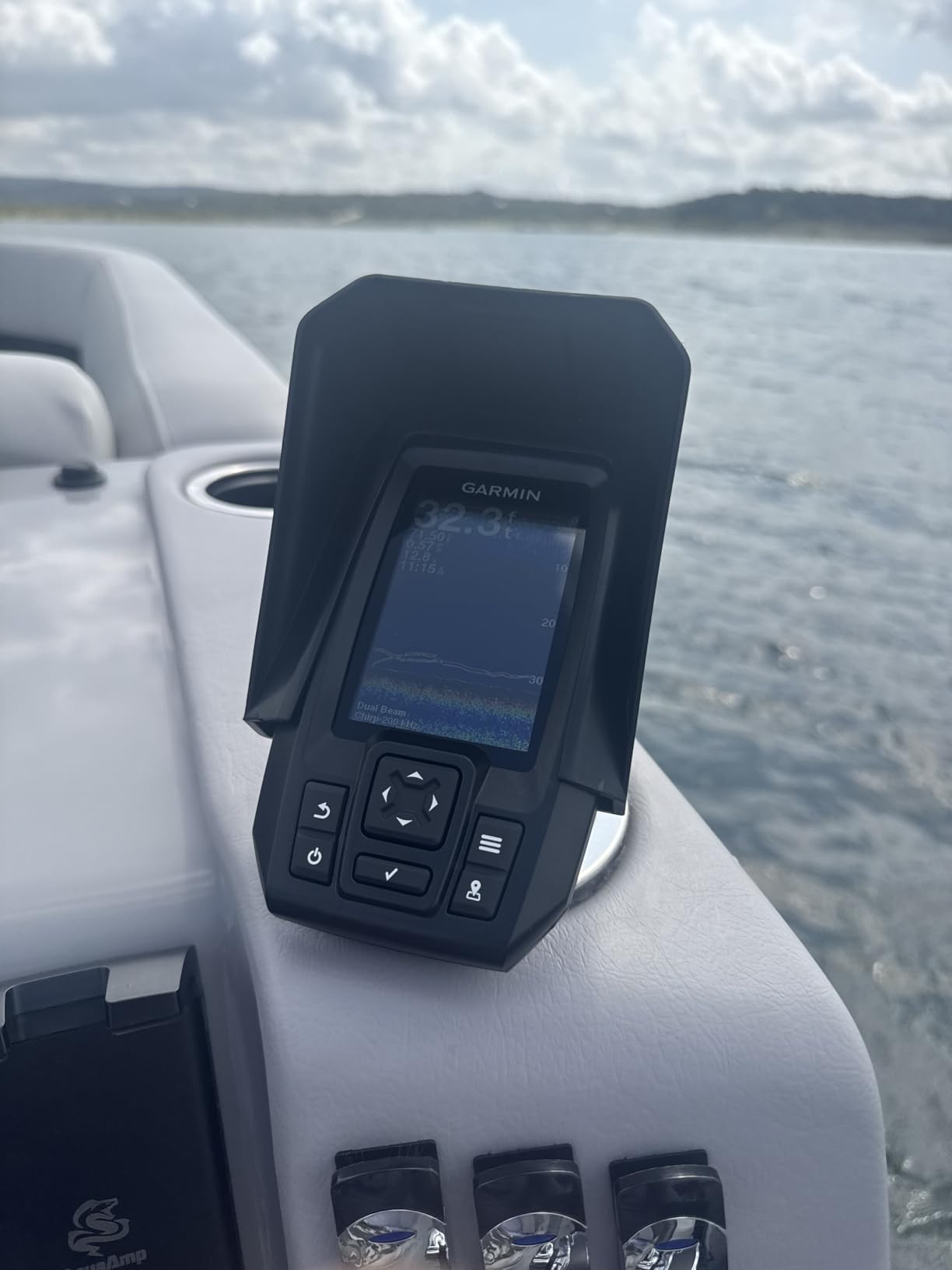
Can You Read a 3.5-Inch Screen?
Yes, but plan on running one view at a time. Full-screen sonar is fine; split-screen gets cramped fast for older eyes.
The display is also dimmer than the Vivid series, so bright midday glare is its weakest moment. A small sunshade helps a lot.
Does It Work for Ice Fishing?
The flasher mode is genuinely good for watching a jig and fish beneath the hole. Pair it with a small battery in a box and it doubles as an ice unit.
That dual use makes it one of the few true year-round sonar picks at an entry-level price.
How to Choose the Best Marine GPS for Fishing?
Buying a marine GPS chartplotter comes down to four questions: where you fish, what you fish from, what sonar you need, and whether you need charts. Here is how I work through each one with friends who ask.
Screen Size and Sunlight Readability
Screen size matters more than resolution numbers suggest. A 4-inch display is fine for one sonar view, a 7-inch display handles split-screen sonar plus chart, and a 9-inch display lets you run mapping, sonar, and scanning views side by side without squinting.
Sunlight readability separates good units from frustrating ones. Garmin’s displays in particular hold up at full brightness through summer heat, and owners consistently report the same thing.
Match the screen to your viewing distance. A tiller angler sitting two feet from the unit needs less screen than a console boater scanning from the standing position.
Sonar Technology: CHIRP, Down Imaging, and Side Imaging
CHIRP sonar is the baseline — it sweeps a range of frequencies instead of one, which gives better target separation and cleaner fish arches. Every unit on this list has it, and I would not buy a non-CHIRP unit today.
Down imaging (ClearVü, DownScan) gives a picture-like view of what is directly beneath the boat. Side imaging (SideVü, MEGA Side Imaging) scans out to the sides — 125 feet each way on the Helix 7 — so you can read brush piles and rock lines without driving over them.
Do you need side imaging? No, but it finds fish faster, and most tournament anglers consider it standard gear. Anglers who fish water under 20 feet deep get the most out of it.
Mapping, Charts, and Waypoints
Mapping is where the price differences hide. Striker units build your own maps with Quickdraw Contours but read no chart cards; ECHOMAP and Helix units ship with basemaps and read premium cards; the Simrad GO9 includes a full C-MAP Discover card covering US and Canadian waters.
Waypoint management sounds boring until you mark a school of bass at dawn and run straight back to them at dusk. Every unit here handles waypoints well — the differences show up in how easy the interface makes editing and organizing them.
For saltwater, charts with tides and currents are worth paying for. For a single home lake, your own Quickdraw or AutoChart mapping may be all you need.
Freshwater Versus Saltwater Needs
Freshwater anglers care about lake contours, weed edges, and brush piles. LakeMaster cards for Humminbird and Navionics data for Garmin cover those bases well, and AutoChart Live fills in unmapped water for free.
Saltwater anglers need coastal vector charts, tide and current data, and ideally radar readiness for offshore runs. The Simrad GO9 is the strongest saltwater pick on this list for exactly those reasons.
Kayak anglers in either environment should prioritize low power draw, compact size, and a secure mount. The Striker Vivid 4cv remains my benchmark there.
Mounting on Boats and Kayaks
Transom mounting is the default for transducers, and it is the step most installs get wrong. The transducer face must sit in clean water below the hull line, away from ribs and motor turbulence, or your sonar image will smear at speed.
Kayak installs use track mounts, gear crates, or arm mounts, with shoot-through or scupper transducer placements. Measure twice before drilling plastic — there is no undo.
Bigger boats should plan cable runs before buying. Two owners in this list reported transducer cables coming up short, which is a cheap fix if you plan for it and an annoying one if you do not.
Power, Wiring, and Battery Management
Every unit here runs on 12-volt external power, and several draw more than anglers expect — the ECHOMAP UHD2 93sv in particular uses more power than the generation before it. Size your battery to your longest day plus margin.
Wire quality matters at the cheap end too. The Striker 4 ships with thin power wires that owners regularly upgrade, and flimsy connections cause most “random shutdown” complaints across all brands.
Inline fuses and a simple master switch are the cheapest reliability upgrades in boating. My rule: fuse everything, and label the runs so future-you can troubleshoot at the ramp.
Frequently Asked Questions
What is the best GPS for fishing?
The Garmin ECHOMAP UHD2 93sv is the best marine GPS for fishing overall, thanks to its sunlight-readable 9-inch touchscreen, SideVü scanning sonar, and built-in Navionics+ mapping that covers more than 18,000 lakes. Kayak and budget-focused anglers get excellent results from the Garmin Striker Vivid 4cv, which pairs CHIRP sonar with Quickdraw Contours mapping in a compact housing.
What is the best marine GPS chartplotter for the money?
The Humminbird Helix 7 G4 delivers MEGA Side Imaging, Dual Spectrum CHIRP sonar, and AutoChart Live real-time mapping while costing far less than comparable touchscreen units. If you want charts included in the box, the Simrad GO9 XSE ships with a C-MAP Discover card covering US and Canadian waters with tides, currents, and bathymetric contours.
Which is better, Furuno or Garmin?
Furuno builds commercial-grade electronics that offshore and commercial skippers trust in brutal conditions, but most recreational anglers get more value from Garmin. Garmin menus are faster to learn, inland map coverage is stronger, and forum anglers routinely describe Garmin as the Apple of marine electronics for its intuitive interface. If you make your living on the water offshore, Furuno justifies its premium; for weekend fishing, Garmin is the smarter fit.
What is the best handheld marine GPS for boating and fishing?
Among the units we tested, the Garmin Striker Vivid 4cv is the closest match to a handheld setup because it weighs 11.2 ounces, runs off a small 12-volt battery, and moves easily between kayak, jon boat, and dock. For true palm-sized navigation without sonar, a dedicated handheld like the Garmin Montana paired with a separate small sonar unit is another popular route among boaters.
Do I need side imaging to catch fish?
No, side imaging is not required, but it changes how fast you locate fish. Side-imaging sonar scans up to 125 feet to each side of the boat, letting you read brush piles, rock lines, and bait schools without driving over them, which is why it is standard equipment for tournament anglers. Anglers who fish shallow water under 20 feet deep or target structure directly below the boat can do very well with CHIRP and down imaging alone.
Final Verdict: The Best Marine GPS Units for Fishing in 2026
After three seasons across kayaks, jon boats, bass boats, and a bay boat, my picks are settled. The Garmin ECHOMAP UHD2 93sv is the best overall marine GPS unit for fishing — the screen, mapping, and full sonar suite make it the one I would spend my own money on for a console boat. The Humminbird Helix 7 G4 wins on value with MEGA Side Imaging, and the Garmin Striker Vivid 4cv is the compact pick I still recommend to every kayak angler who asks.
Saltwater anglers should look hard at the Simrad GO9 XSE for its included C-MAP charts and radar readiness, while the Striker 4 remains the smartest first unit a beginner can buy. Whatever you choose, budget for the mounting and wiring before installation day, because the add-ons are where the surprises live.
Pick the unit that matches your water and your boat, not the one with the longest spec sheet. Then get it on the water — the fish are not going to mark themselves.