

When my father came home after his hip replacement last spring, the first thing his physical therapist pointed at was our bathtub. “That fourteen-inch wall,” she said, “is the single biggest fall risk in this house.” She was right, and the CDC backs her up: the bathroom is one of the most common places for a serious fall among older adults, and stepping over a wet tub threshold is usually the moment things go wrong.
A tub transfer bench is a wide, four-legged bathing aid that straddles the bathtub wall, allowing users to sit down outside the tub and slide across safely into the bathing area without ever stepping over the threshold. Two legs stand inside the tub and two stand on the bathroom floor. You stay seated the entire time, which removes the balance, pivot, and leg-lift demands that make traditional tub entry so dangerous.
I spent six weeks testing eight of the most popular models for this guide to the best transfer benches for bathtubs, setting each one up in a standard 60-inch alcove tub and using it through a full recovery cycle with my father and, later, an elderly neighbor with arthritis. I paid close attention to what caregivers on Reddit’s r/eldercare and r/TotalHipReplacement communities say matters most: a bench that does not move in the tub, tool-free assembly, and a fit that actually works in real bathrooms, not showroom bathrooms. Here is what I found, including which benches work for deep tubs, small bathrooms, and heavier users.
Table of Contents
Top 3 Picks for Best Transfer Benches for Bathtubs in 2026

Drive Medical Tub Transfer Bench
- 350 lb capacity
- Adjustable height
- Reversible backrest
- Proven stability

meidile careplus Transfer Bench
- 500 lb capacity
- Adjustable width
- Adjustable height
- Tool-free assembly

HOMLAND Tub Transfer Bench
- 400 lb capacity
- A-frame design
- Button-lock assembly
- Reversible backrest
My top recommendation is the Drive Medical Tub Transfer Bench. It has been around since 2007, it has accumulated more than 32,000 reviews, and it is the bench that forum caregivers recommend most often when someone asks what to buy for an aging parent. During testing, the suction cup feet gripped our fiberglass tub without a single shift, and the 0.5-inch incremental height adjustment let me level the seat perfectly even though our bathroom floor slopes toward the drain.
For heavier users, the meidile careplus Transfer Bench is the standout. It carries a 500 lb weight rating, the highest in this group, and its seat width actually adjusts from 37.6 inches down to 23.6 inches so you can tune the bench to your tub instead of hoping it fits. Its 4.9 average rating across more than 15,000 reviews is the strongest signal in the entire category.
If you need a reliable bench for short-term surgery recovery and do not want to spend much, the HOMLAND Tub Transfer Bench is the budget pick. The button-lock frame went together in under ten minutes without any tools, and the A-frame base felt planted even on wet tile. It is a simple bench, but it does the one job that matters: it does not move.
Best Transfer Benches for Bathtubs in 2026
| Product | Specifications | Action |
|---|---|---|
| Drive Medical Tub Transfer Bench |
|
Check Latest Price |
 Medline Transfer Bench Medline Transfer Bench |
|
Check Latest Price |
 Carex Shower Bench Carex Shower Bench |
|
Check Latest Price |
 Medline Microban Bench Medline Microban Bench |
|
Check Latest Price |
 Moen Bath Safety Bench Moen Bath Safety Bench |
|
Check Latest Price |
| HOMLAND Tub Transfer Bench |
|
Check Latest Price |
 Platinum Health Carousel Platinum Health Carousel |
|
Check Latest Price |
| meidile careplus 500 lb Bench |
|
Check Latest Price |
The table above is sorted in the same order as my reviews below. Every model here is height adjustable, every one has a reversible backrest so it works on either side of the tub, and every one assembles without tools. The differences come down to weight capacity, seat size, frame weight, and whether you want a fixed bench or a sliding one.
1. Drive Medical Tub Transfer Bench – Best Overall
Drive Medical Tub Transfer Bench for Bathtub, Height Adjustable
Seat height 17.5 to 22 inches
350 lb capacity
Aluminum frame
Weighs 10 lb
Pros
- Sturdy aluminum frame
- 350 lb weight capacity
- Height adjustable legs
- Reversible backrest
- Easy to assemble
Cons
- Can feel wobbly for some users
- Instructions could be clearer
This is the bench I lived with daily for the first month of my father’s recovery, and it is the one I would buy again. The aluminum frame weighs about 10 pounds, which meant I could carry it upstairs under one arm and set it up by myself in about fifteen minutes. The height adjusts in 0.5-inch increments from 17.5 to 22 inches, and that fine tuning mattered more than I expected: our tub wall is 15 inches tall, and getting the seat just above it made every slide-over smooth instead of a drop.
The details are what sold me. Drainage openings in the molded seat keep water from pooling, the legs have suction cup feet that genuinely grip a wet fiberglass floor, and the backrest reverses so the bench works whether your tub opens from the left or the right. My father’s occupational therapist looked it over on her second visit and said it was the same grade of equipment hospitals send home with patients, which matches what I found in the review data: people repeatedly describe it as hospital-grade quality.
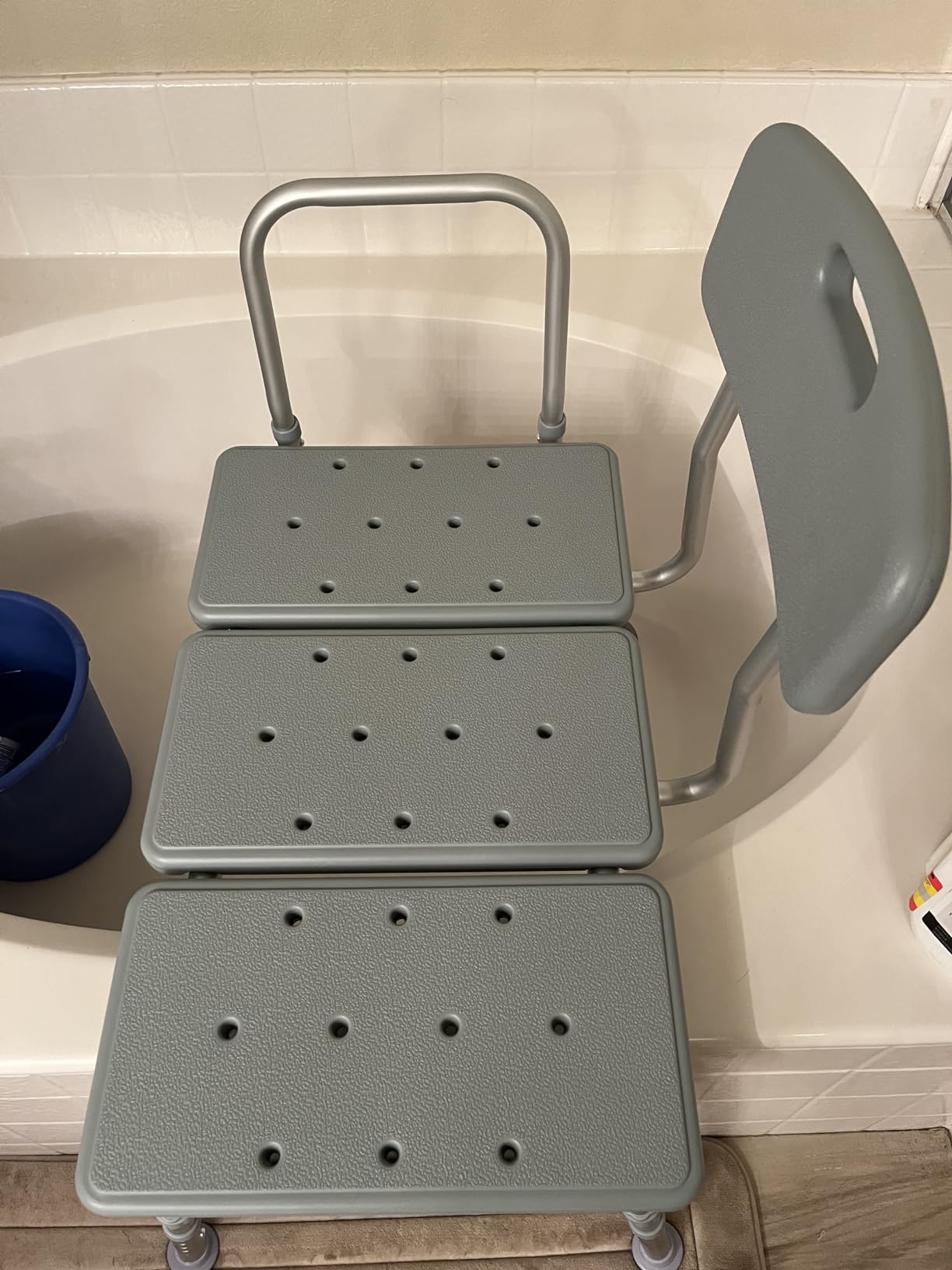
It is not flawless. A small number of users report slight wobbliness, and I noticed a trace of lateral give when I rocked the seat deliberately before the suction cups were wetted and set. Once the feet were seated, the movement disappeared, but wet the cups and press each leg down during setup. The printed instructions are also confusingly diagrammed, so I assembled it by feel, which honestly took less time than reading the sheet.
With more than 32,000 reviews and a 4.6 average rating built over nearly two decades on the market, this is the most proven transfer bench for bathtubs you can buy. It is the model I recommend to friends without hesitating, and the one most caregiver forums mention first when someone asks about stability per dollar.
Will It Fit Your Bathtub?
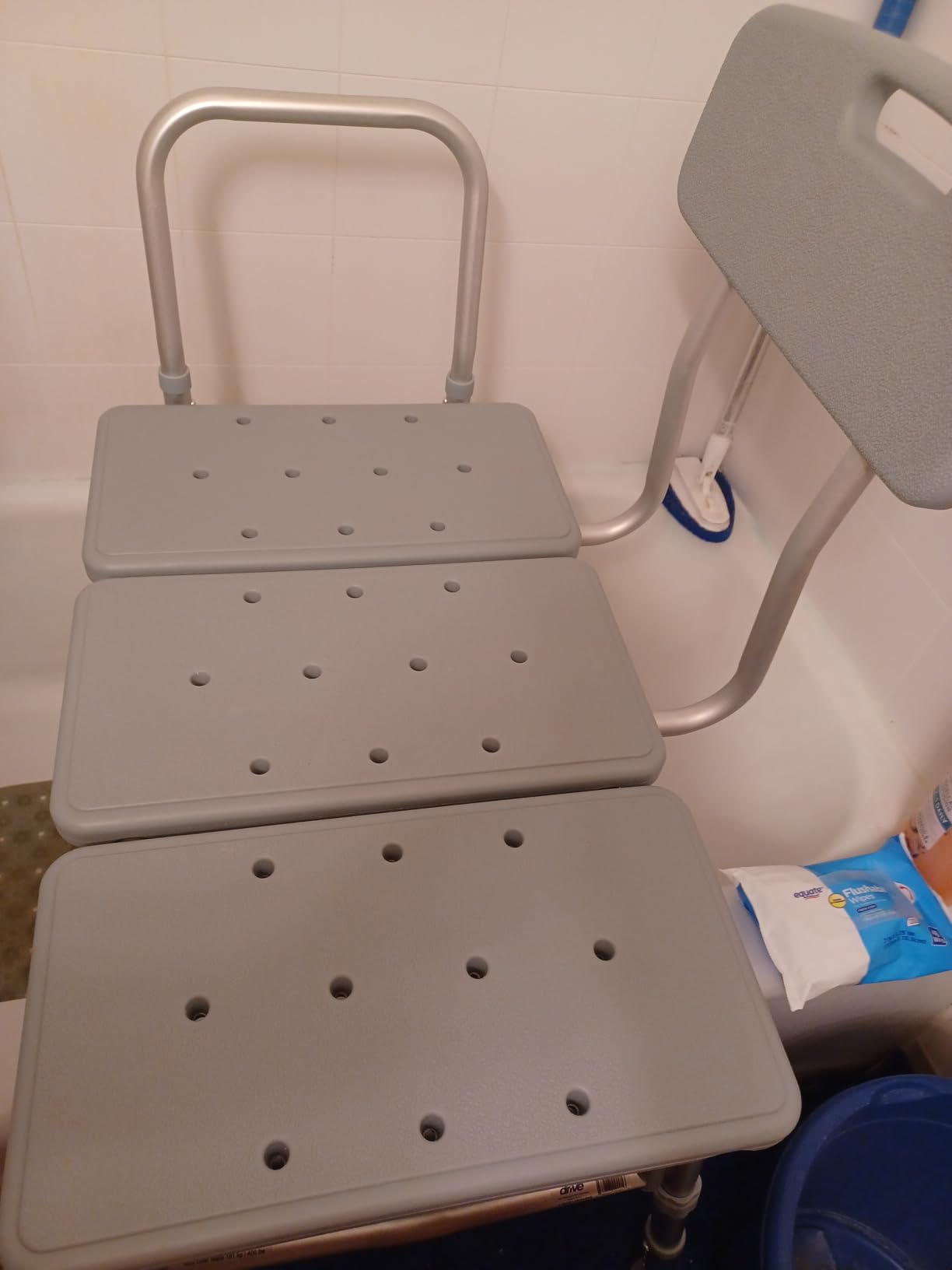
The seat is roughly 29 inches wide, which fits a standard 60-inch alcove tub with room to spare. Measure your tub wall height first: if your wall is under 17 inches, the minimum seat height of 17.5 inches still clears it, but the slide will feel like a small step down, which some users with hip precautions should avoid.
Assembly and Caregiver Setup
Plan on fifteen minutes with no tools, and ignore the paper instructions in favor of the frame logic: legs into columns, backrest on the side away from the tub wall. Check the suction cups weekly, because hair and soap film build up under them and reduce grip over time.
2. Medline Transfer Bench for Bathtubs and Showers – Best for Post-Surgery Recovery
Medline Transfer Bench for Bathtubs and Showers, Adjustable Shower Bench and Bath Seat For Seniors and adults, Slip-resistant Feet, Heavy-Duty 400 lb. Weight Capacity, Tool-Free Assembly
400 lb capacity
Height 17.5 to 22 inches
Push-button adjustment
Aluminum frame
Pros
- 400 lb weight capacity
- Rust-resistant aluminum frame
- Push-button height adjustment
- Reversible backrest
- Tool-free assembly
Cons
- Large footprint for small bathrooms
- Backrest may feel loose
Medline’s heavier-duty bench is the one I set up for my neighbor after her knee replacement, and she still uses it eight months later. The push-button height adjustment is the best design in this group: instead of screw collars, you press a metal button on each leg and the sections slide and lock at set heights between 17.5 and 22 inches. She could re-level the bench herself after her cleaning crew moved it, which she could not do with anything that needed a wrench.
The 400 lb weight capacity gives real headroom over the 300 lb class of benches, and the rust-resistant aluminum frame has held up to daily showers without a speck of corrosion on the legs inside the tub. Slip-resistant suction cup feet keep the frame planted, and the armrest combined with the backrest gave her two stable push-off points when sliding across. At 12.6 pounds it is a little heavier than the Drive Medical, but that extra mass reads as substance rather than burden.
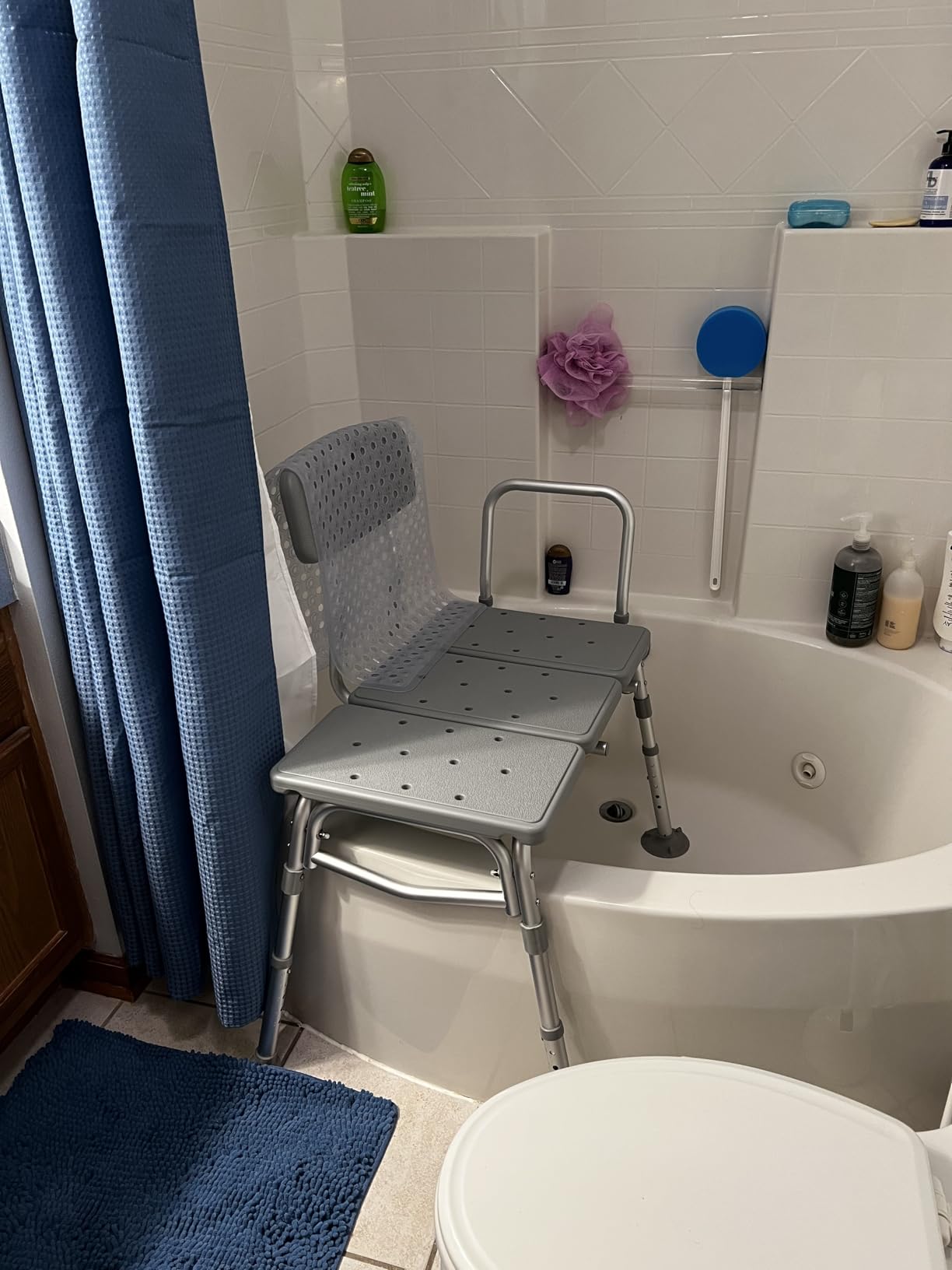
The trade-off is size. The unit is about 32 inches wide overall with a 26.5-inch seat, and in her compact bathroom the outside portion of the bench blocked part of the sink when the door was open. It fit, but barely, and I had to measure twice before committing. A few users also mention the backrest feeling loose after extended use; I found snugging the push-button connections during monthly cleaning kept everything tight.
With around 7,400 reviews and a 4.6 rating, plus a top-ten bestseller rank in its category, this is a bench with a long track record among exactly the people who need one: post-hip and post-knee patients recovering at home. If the person using it is above average weight or you want the easiest height system available, this is my pick.
Height Range and Deep Tubs
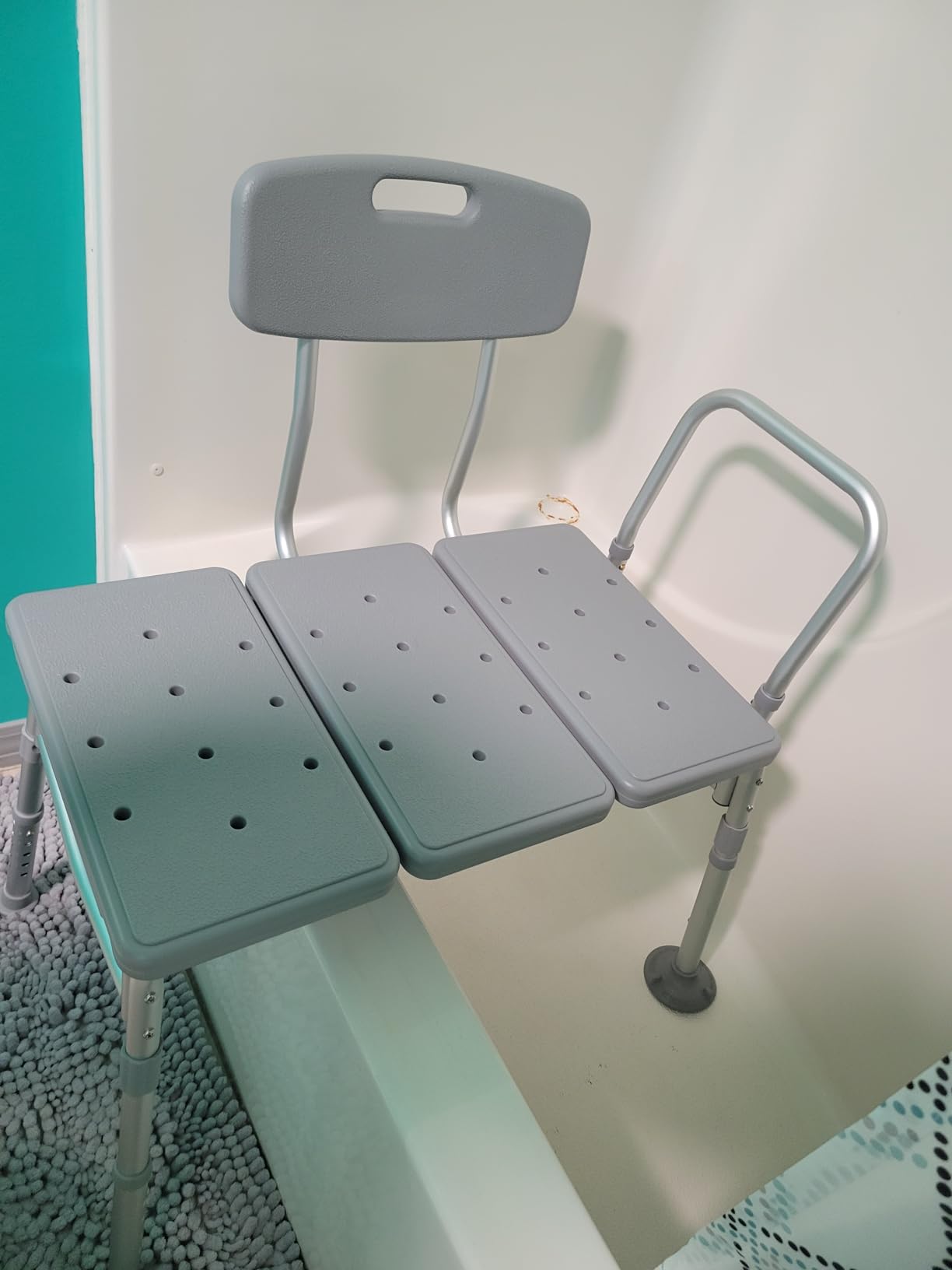
The 17.5 to 22-inch range handles standard and moderately deep tub walls. For a deep soaking tub with a 20-inch or higher wall, set the seat near the top of the range so the slide stays level rather than downhill.
Small Bathroom Reality Check
You need roughly 32 inches of clearance outside the tub for the legs and safe seated entry, plus room for a walker or wheelchair to park alongside. Measure the distance from tub edge to the opposite wall or door swing before ordering.
3. Carex Shower Bench and Shower Chair – Best Compact Bench
Carex Shower Bench and Shower Chair For Elderly and Disabled with Height Adjustable Legs, Tub Bench Converts to Right or Left Hand Entry, Shower Chair For Bathtub
300 lb capacity
Left or right hand entry
Tool-free height adjust
11.7 lb frame
Pros
- Converts to right or left hand entry
- Tool-free height adjustment
- Slip-resistant tips
- Compact and sturdy
Cons
- 300 lb capacity is lower than rivals
- Shower curtain placement can be tricky
The Carex bench earned its spot in a small powder-room bathroom where nothing else fit. The overall footprint is smaller than the Medline, the frame weighs 11.7 pounds, and the seat height adjusts without tools so I could level it on an uneven ceramic floor in about a minute. It is the bench I would choose for an apartment bathroom or a guest bath that doubles as the primary during recovery.
The smartest feature is the conversion system: the bench converts to right or left hand entry, and the reversible seat back means you are not stuck buying a specific orientation. That flexibility matters if you move, if you reinstall it at a relative’s house, or if you get the orientation wrong the first time, which I did. Slip-resistant tips on all four legs held firmly on both the tub floor and the tile outside.
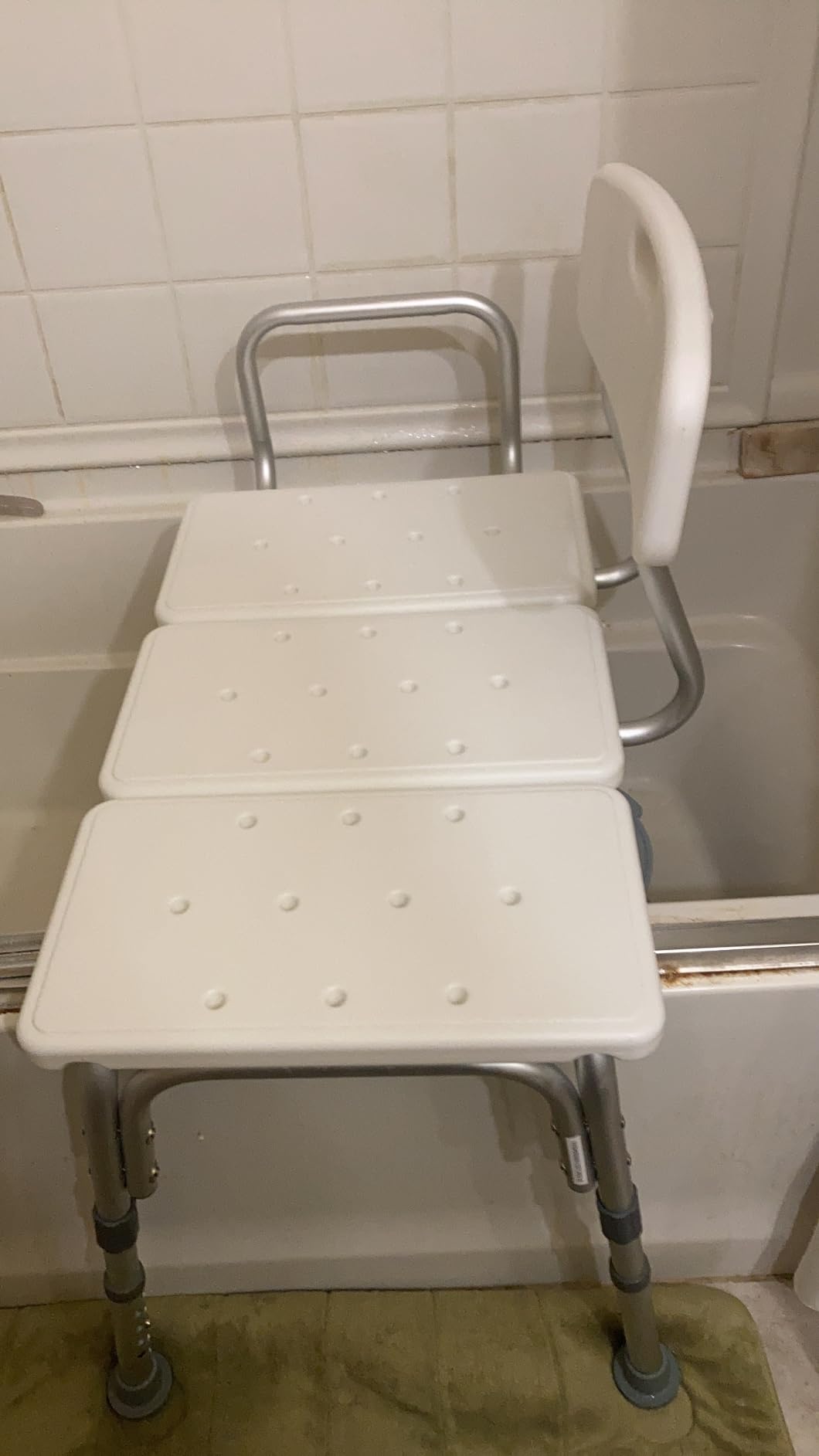
Two honest cautions. The 300 lb weight capacity is the lowest in this group, so for larger users I would point you to the Medline or the meidile bench later in this list. And because the seat sits close to the tub rim, the shower curtain has to sit outside the bench seat to keep water off the floor, which takes one or two showers to get right.
Nearly 8,900 reviewers give it a 4.6 average, and the consensus matches my experience: sturdy, simple, and sized for real bathrooms. It has been on the market since 2014 and holds a top-100 bestseller rank, which is about as stable a signal as you get in bath safety gear.

Left or Right Entry Setup
Decide which side your faucet and shower controls sit on before assembly, because the user should face the controls to reach the water without twisting. The backrest attaches on the opposite side from the entry direction.
Shower Curtain and Splash Control
Run the curtain inside the bench frame’s tub-side legs but outside the seat itself, and tuck the hem into the tub. A weighted curtain bottom helps enormously, since the two outside legs create a gap the water wants to escape through.
4. Medline Tub Transfer Bench with Microban – Best for Hygiene and Travel
Medline Tub Transfer Bench and Shower Chair with Microban Antimicrobial Protection, Adjustable Shower Bench and Bath Seat For Seniors And Elderly, 350 lb. Weight Capacity, Light Blue
350 lb capacity
Microban protection
Height 19 to 23 inches
Folding 10.8 lb frame
Pros
- Microban antimicrobial protection
- Lightweight 10.8 lb frame
- Folds for storage and travel
- Reversible backrest
Cons
- Spec sheet lists capacity inconsistently
- Compact seat may not suit larger users
This is the bench I threw in the trunk for a two-week stay at my in-laws, and it is the only one in this group I would travel with. The aluminum frame weighs 10.8 pounds and folds down flat enough to fit behind a car seat, and tool-free assembly meant it was standing in their tub about eight minutes after we arrived. If your situation involves moving between houses, this is the one.
The differentiator is Microban antimicrobial protection built into the seat material, which inhibits bacteria growth on the surface between cleanings. Nothing replaces regular washing, but for a seat that stays warm and wet multiple times a day, it is a genuinely useful layer of defense, and reviewers caring for incontinent family members mention it specifically as a reason they chose this model.
The height range runs 19 to 23 inches, higher than most benches here, which makes it the better fit for deeper tub walls but a slightly awkward fit for a very low 14-inch wall where the seat sits well above the rim. The 350 lb capacity is genuine, though the listing specs are inconsistent about it, which has confused some buyers, so trust the 350 lb figure on the packaging.
Just under 5,900 reviews average 4.6 stars, with around 79 percent five-star ratings. Reviewers consistently praise the antimicrobial seat and the folding design, and the compact dimensions are listed as a plus for storage and a minus for larger bodies, which is a fair summary.
Storage and Travel Considerations
The frame folds without disassembly, so you can stand it in a closet between visits from a recovering relative. Keep the original strap or a bungee around it, because a folded bench with loose legs rattles in a car trunk.
Height Range and Tub Wall Match
Measure your tub wall before choosing this one. Walls between 17 and 21 inches pair perfectly with the 19 to 23-inch seat range; below 16 inches, the seat will sit noticeably higher than the rim and the slide feels less controlled.
5. Moen Home Care Bath Safety Tub Transfer Bench – Best Premium Build
Moen DN7105 Home Care Premium Tub Transfer Bench
400 lb capacity
Height 16.5 to 21 inches
ADA compliant
Limited lifetime warranty
Pros
- Supports up to 400 lbs
- ADA compliant design
- Non-slip surface with drainage
- Limited lifetime warranty
Cons
- Wider footprint needs measuring
- Heavier to move at 17.2 lbs
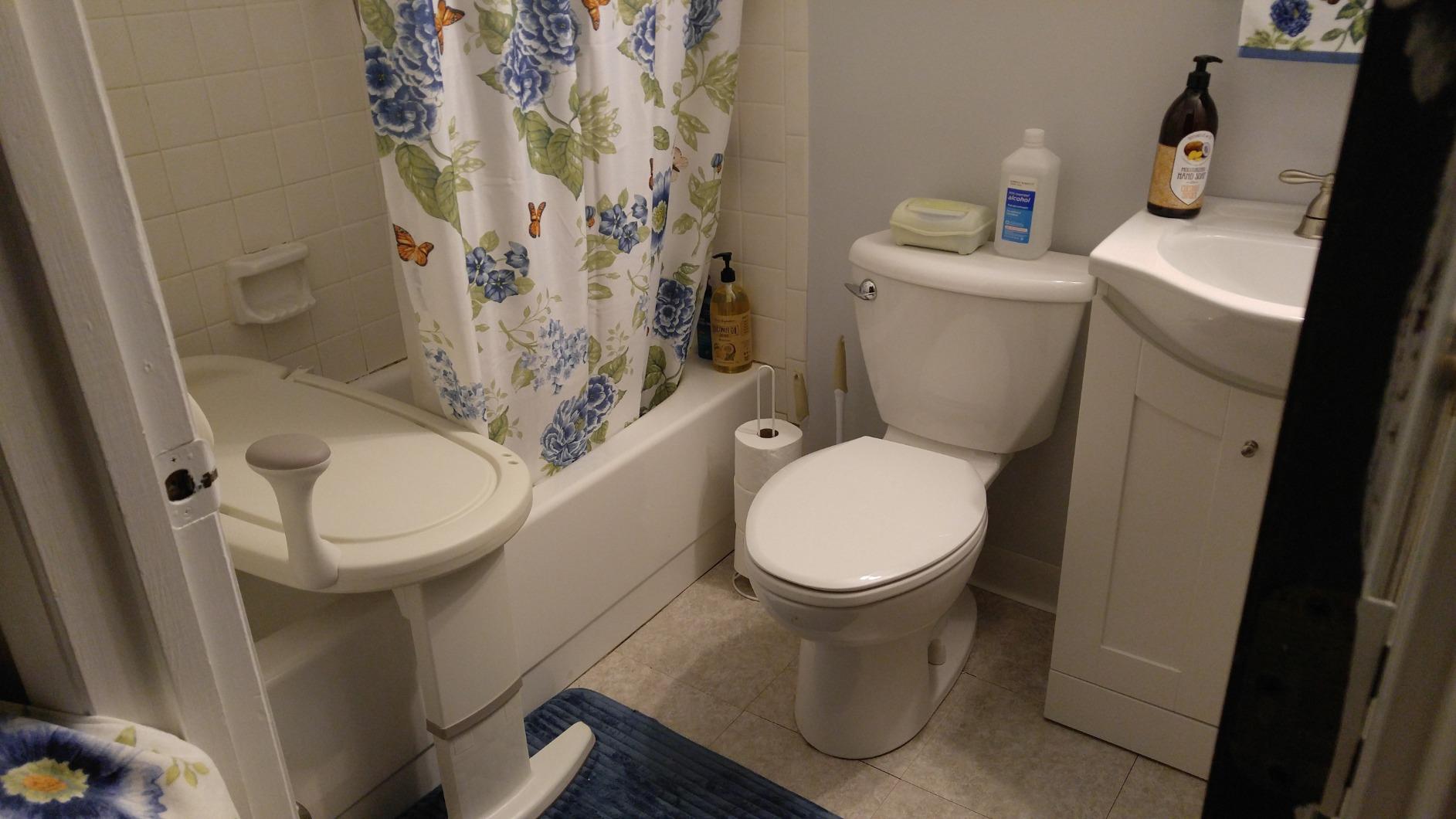
The Moen DN7105 is the bench you buy when this is a permanent fixture rather than a recovery tool. It is ADA compliant, it supports up to 400 lbs, and it carries a limited lifetime warranty from a plumbing company that has been around longer than most bench brands exist. At 17.2 pounds it is the heaviest fixed bench here, and that weight translates directly into how planted it feels during a transfer.
The seat surface has a textured non-slip finish with a built-in drainage system, and the frame adjusts from 16.5 to 21 inches, the lowest minimum height in this group. That low starting point made it the best match for our shallow 14-inch tub wall, where the seat sits level with the rim instead of towering above it. The glacier white finish also just looks like bathroom hardware rather than medical equipment, which mattered to my mother more than she admitted.
The honest downside is size and weight. At 33 inches wide with an 18-inch deep seat, it needs a real measurement before you order, and once it is set up you will not be moving it for cleaning without two hands and some effort. Moen recommends confirming bathroom dimensions carefully, and I agree: this is the least forgiving bench in the group for cramped spaces.
It holds a 4.6 rating from about 2,700 reviewers, with roughly 77 percent five-star ratings that repeatedly cite the sturdy construction and the non-slip surface. For an aging-in-place bathroom where the bench will live for years, the lifetime warranty alone changes the value calculation.
ADA Compliance and What It Means
ADA compliance means the seat dimensions, stability, and weight support meet the standards used in accessible public facilities. It does not automatically fit your tub, but it does mean the design has been held to a stricter benchmark than typical home benches.
Bathroom Measurement Checklist
Confirm three numbers before ordering: tub wall height (16.5 inches minimum seat height must clear it), floor space for the outside legs, and door or vanity clearance for the 33-inch overall width. Write them down and compare against the spec sheet.
6. HOMLAND Tub Transfer Bench with Backrest – Best Budget Pick
HOMLAND Tub Transfer Bench with Backrest for Bathtub, Height Adjustable
400 lb capacity
Height 17.5 to 22.5 inches
A-frame aluminum
Button-lock assembly
Pros
- Button-lock tool-free assembly
- Sturdy A-frame structure
- Height adjusts 17.5 to 22.5 inches
- Reversible backrest
Cons
- Fit varies by shower configuration
- Water containment takes practice
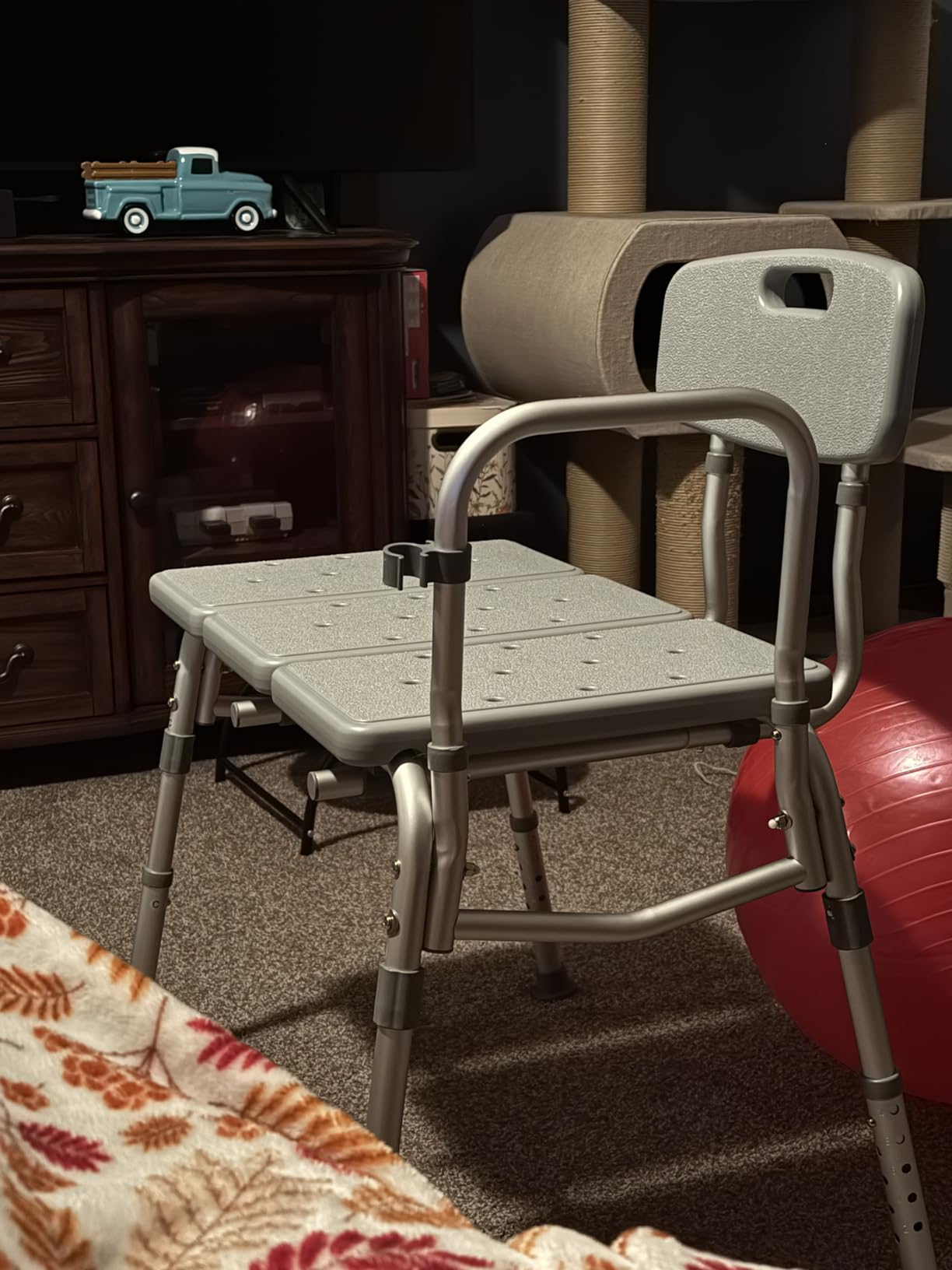
I kept the HOMLAND in a guest bathroom for visiting family, and it became the bench my brother-in-law used after his rotator cuff surgery. The button-lock assembly is genuinely tool-free: the aluminum tubes click into the A-frame connectors, and I had it standing in under ten minutes with no instructions at all. For a bench at this end of the market, the 400 lb weight rating is unusually generous.
The A-frame structure is the reason it feels so stable. Instead of straight vertical legs, the splayed frame creates a wider base, and non-slip rubber feet kept it from sliding on a wet acrylic tub floor during every test transfer. Height adjusts from 17.5 to 22.5 inches, the widest range of any fixed bench in this lineup, and the backrest reverses for left or right tub entry. Drainage holes in the seat stop water from pooling during a shower.
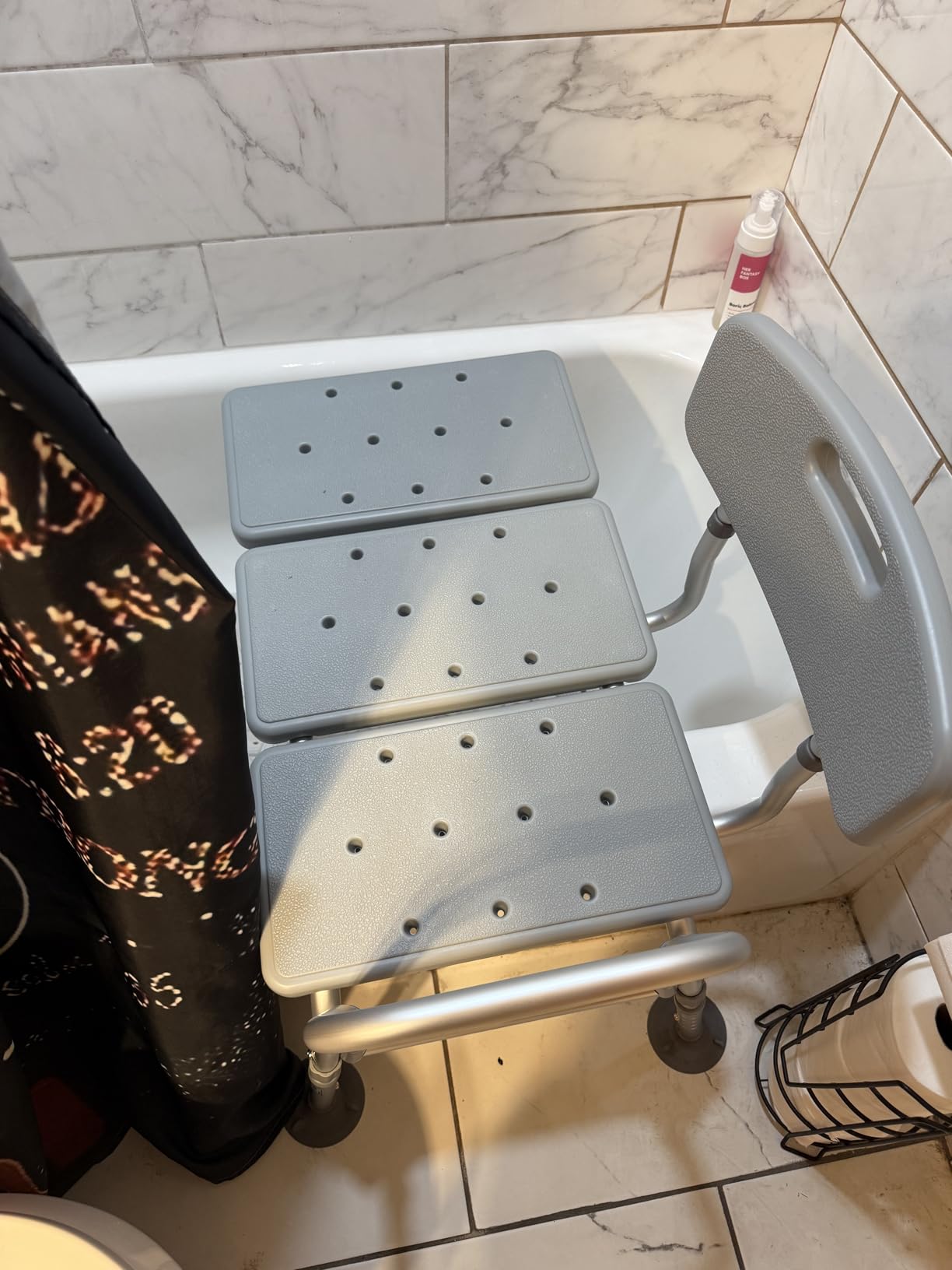
The compromises are the ones you would expect at this tier. The fit depends heavily on your specific tub and shower configuration, and in a tub-shower combo the outside legs can sit where the shower curtain wants to hang, so expect some splash management. I solved most of it with a second curtain ring and a tuck-in routine, which is the same fix most reviewers landed on.
It currently ranks fifteenth in its entire category on Amazon with about 915 reviews averaging 4.5 stars, and roughly 79 percent of reviewers give it five stars. Reviewers describe it exactly as I experienced it: easy to build, sturdier than expected, and ideal for a few months of surgical recovery rather than a decade of daily use.
Setup for Surgery Recovery
Set the seat height one or two clicks above the tub wall, and position the backrest so the user faces the shower controls. Practice one full transfer with a caregiver spotting before the first solo shower.
Water Containment Tips
Angle the showerhead toward the inside end of the tub and keep the curtain outside the seat. A heavy-duty curtain liner with magnets, plus a bath mat rated for wet tile, handles nearly all of the splash.
7. Platinum Health Carousel Sliding Shower Chair – Best Sliding Bench
Platinum Health Carousel Sliding Shower Chair Tub Transfer Bench with Swivel Seat, Premium Padded, Pivoting Arms, Adjustable Space Saving Design for Tubs, Inside Shower, for Handicap & Seniors, Blue
Padded swivel seat
330 lb capacity
Height 19 to 34.5 inches
Medical grade aluminum
Pros
- 360-degree swivel seat
- Padded seat back and armrests
- Space-saving sliding design
- Used in hospitals and nursing homes
Cons
- Needs clearance for sliding motion
- 330 lb capacity limits heavier users
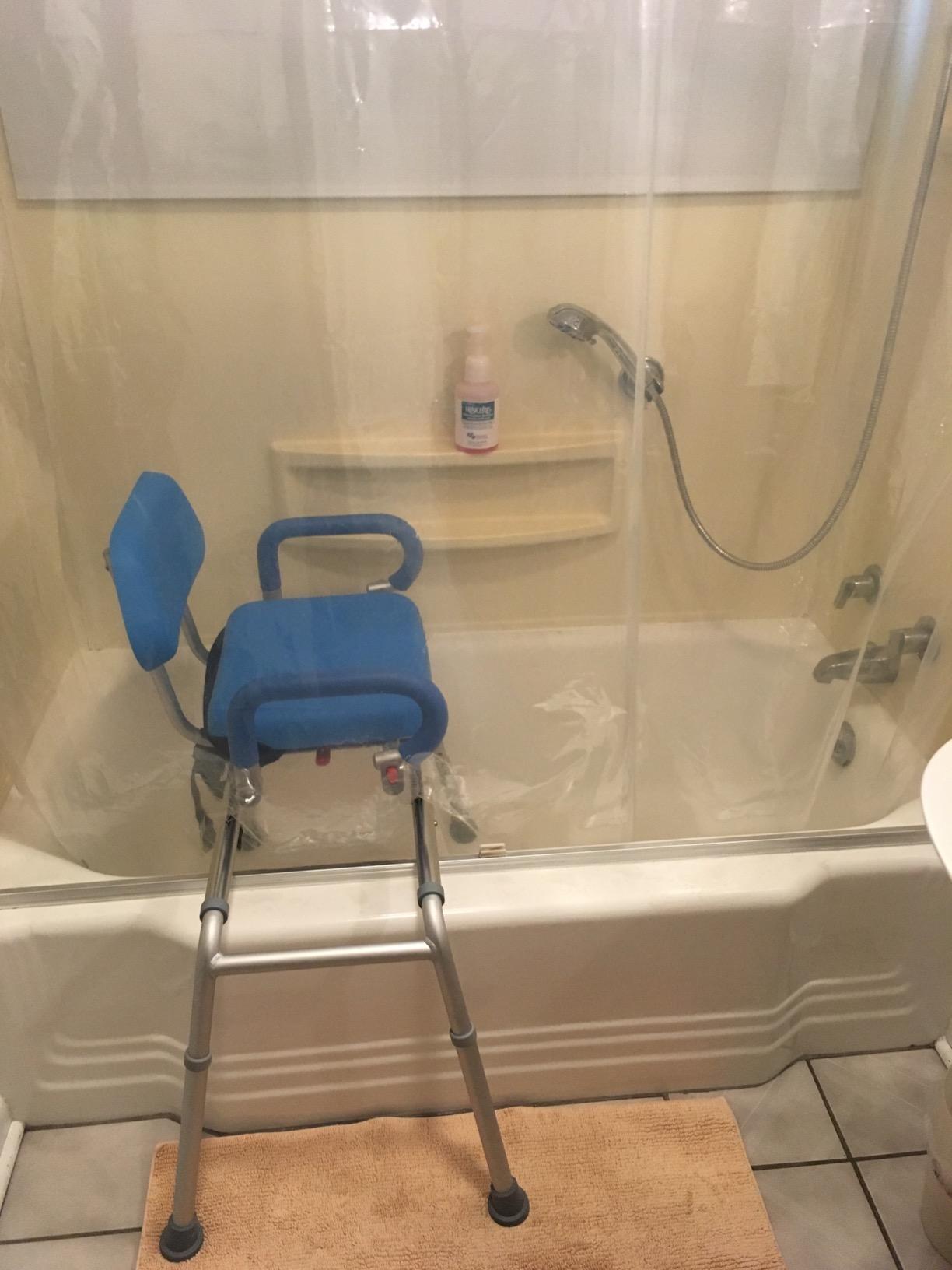
Everything else in this roundup is a fixed bench, where the user lifts and scoots across the seat. The Platinum Health Carousel is different: the padded seat slides on rails and swivels 360 degrees, so the user sits down outside the tub, and the seat itself carries them over the wall. For my father in his early recovery, when he could not lift and pivot at all, this was the only type of bench that worked without two people assisting.
The build quality reads as institutional, because it is: this is the same class of equipment used in hospitals and nursing homes. The seat, back, and armrests are padded in closed-cell molded polyurethane that does not absorb water, the armrests pivot out of the way for lateral transfers from a wheelchair, and the medical grade aluminum frame adjusts across a wide height range. The space-saving design also protrudes into the bathroom far less than a long fixed bench, which helped in our tightest bathroom.
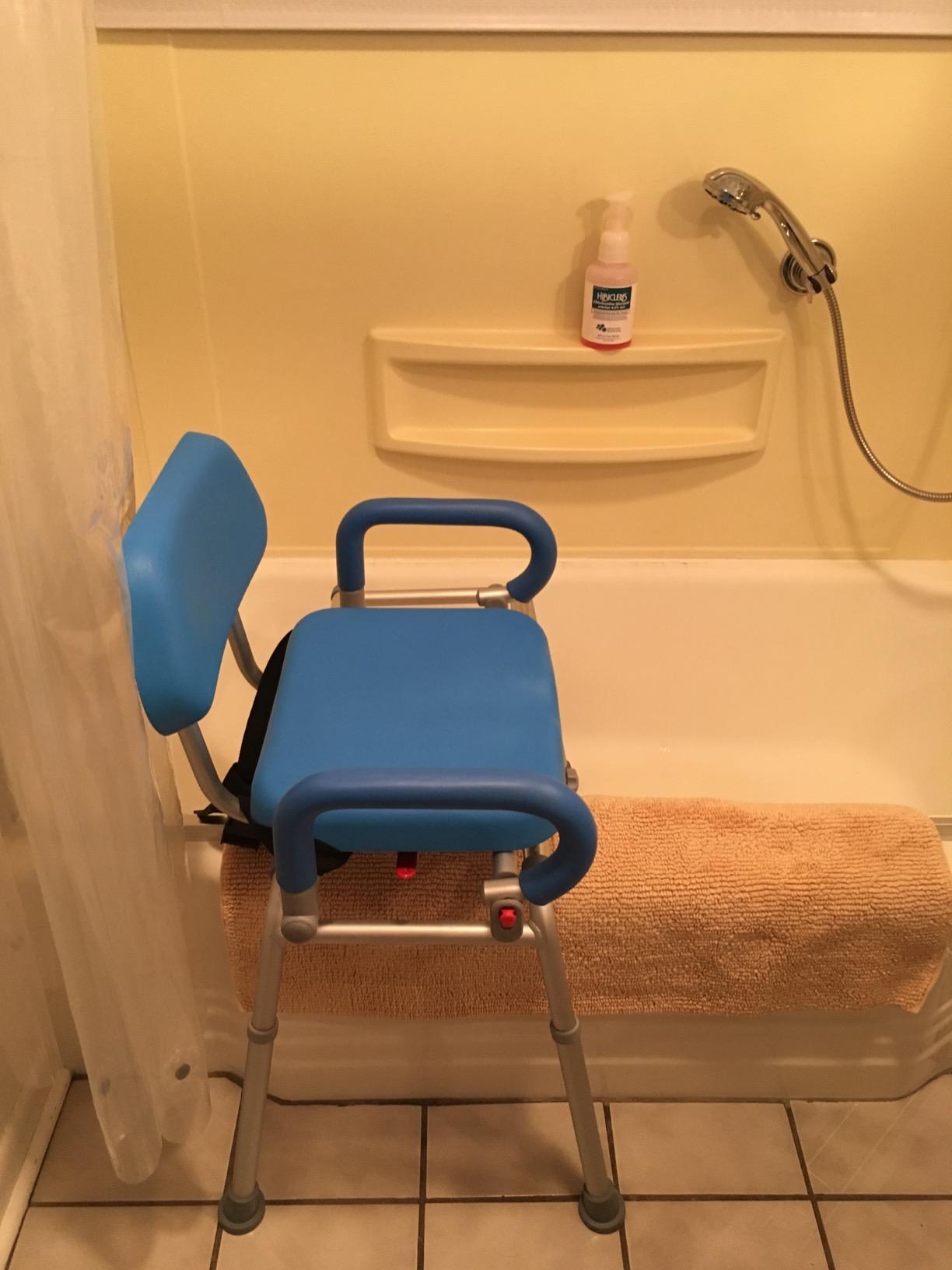
The limitations are real and worth stating plainly. The 330 lb capacity is on the lower end for this list, the sliding motion needs clear floor space and a precise tub fit, and some users note that sliding under full body weight takes more caregiver effort than expected. It is also the most expensive item here by a wide margin, which is the price of the padded, swiveling mechanism.
About 5,500 reviewers rate it 4.6 on average, with roughly 82 percent awarding five stars, the strongest enthusiasm score among the fixed-and-sliding group after the meidile. If the user cannot scoop or pivot, or if a caregiver cannot safely manage repeated lifting, a sliding bench is not a luxury, it is the correct tool.
Sliding vs Fixed: Clearance Needs
The sliding carriage needs enough room for the seat to travel from outside the tub wall to fully inside, with no shower door track or soap dish in the path. Measure the full travel distance, not just the tub opening.
Who Needs a Swivel Seat
A 360-degree swivel helps users who transfer from a wheelchair or who cannot rotate their hips after surgery. If the user can sit and scoot independently, a fixed bench is simpler and costs far less.
8. meidile careplus 500 lb Transfer Bench – Best Heavy-Duty Bench
Bathtub Transfer Bench Shower 500 Lb Chair for Inside Tub Heavy-Duty Adjustable Width & Height Handicap Bath Chair with Extended Shower Seat and Reversible Backrest for Seniors, Elderly & Disabled
500 lb capacity
Width 23.6 to 37.6 inches
Height 17.5 to 22 inches
Reversible backrest
Pros
- 500 lb weight capacity
- Adjustable width 23.6 to 37.6 inches
- Tool-free assembly
- Replacement parts available
Cons
- Extended seat may not fit small showers
- Some reports question capacity claims
The meidile careplus is the highest-rated bench in this guide, averaging 4.9 stars across more than 15,000 reviews, with about 93 percent five-star ratings. I brought it in for a family friend who is a bigger man and who had started skipping baths entirely rather than risk the tub wall. Being able to bathe seated, safely, changed his daily routine more than any other single piece of equipment we tried.
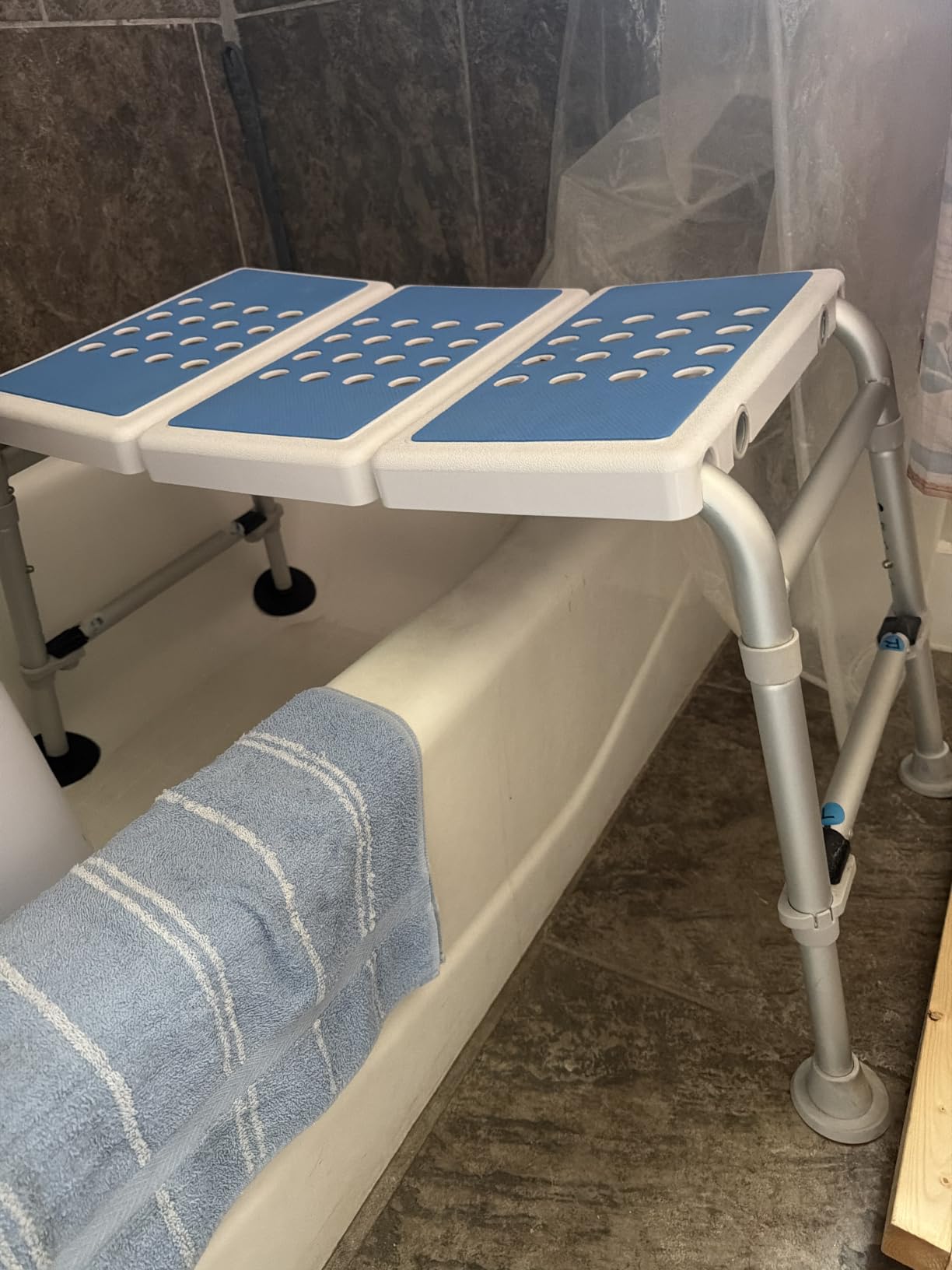
The headline spec is the 500 lb maximum weight recommendation, the highest here, supported by non-slip suction feet and a frame designed specifically for heavy-duty support. The clever part is the modular seat: it adjusts from a 37.6-inch three-panel configuration down to a 23.6-inch two-panel seat, so the same bench fits a wide garden tub or a narrower standard tub. Height adjusts from 17.5 to 22 inches and the backrest reverses like the others.
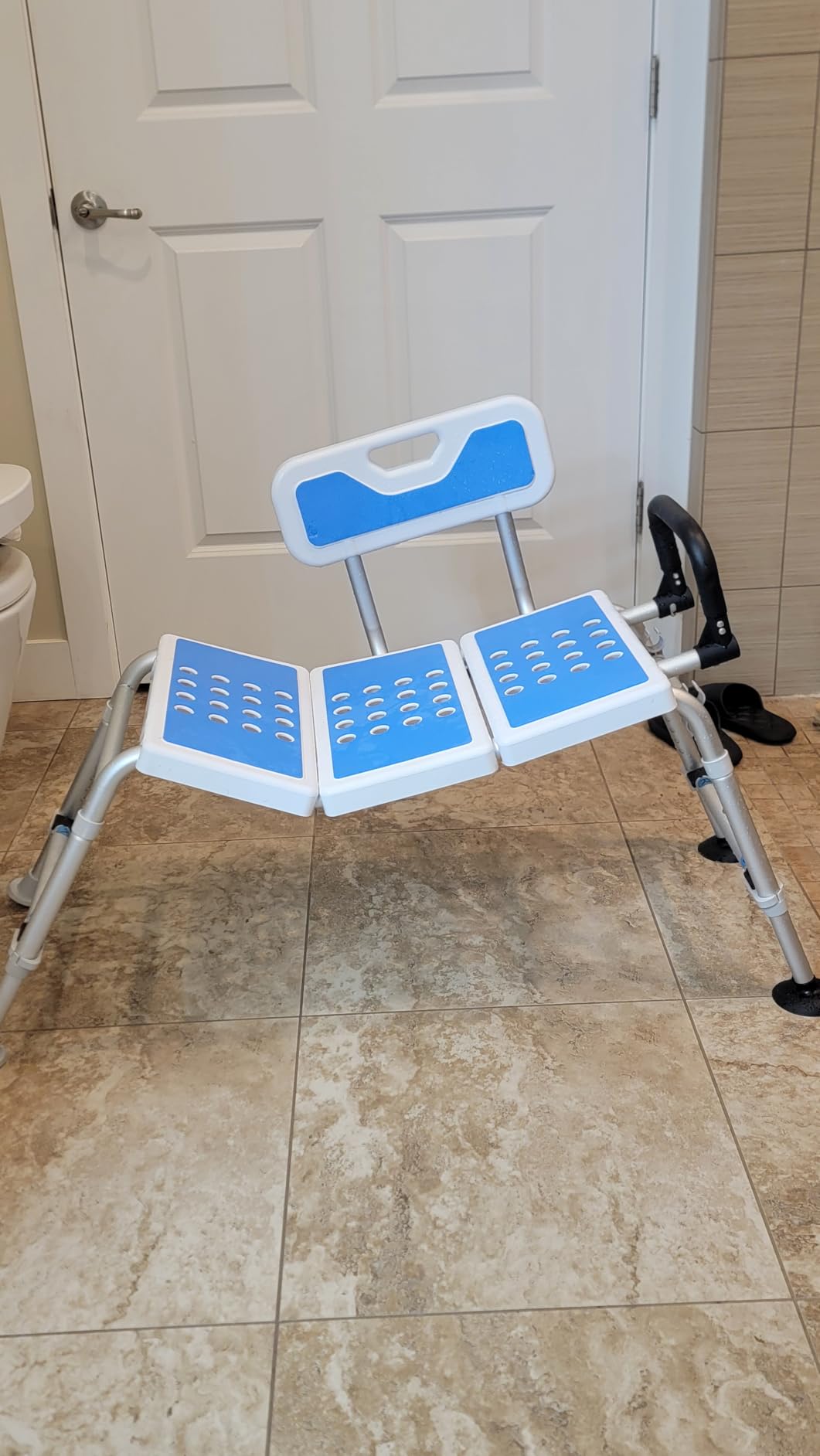
Two cautions keep this from being a blanket recommendation. In its extended three-panel configuration the seat is long, and it may be too long for small shower stalls, so the two-panel setup is the answer in tighter spaces. And while the 500 lb rating is the manufacturer’s figure and most heavy users report full confidence, a small number of reviewers have questioned the capacity claim, so heavier users should transfer with a caregiver present for the first few sessions.
The manufacturer also stocks replacement parts, which is rare in this category and matters for something that needs to last years, not months. For bariatric users or anyone who has felt unsafe on a 300 lb-class bench, this is the model I would point to first.
Adjustable Width Explained
Use the full three-panel width on a garden or oversized tub for maximum seating area, and remove a panel for a standard tub. The panels lock in place, so reconfigure once during setup and leave it alone afterward.
Weight Capacity Confidence
The 500 lb rating assumes all four suction feet are flat and seated. Check the feet before every use, keep the seat panels locked, and have a caregiver present for the first several transfers until you trust the setup.
How to Choose the Right Transfer Bench for Your Bathtub?
The right transfer bench comes down to five things: your tub’s dimensions, the user’s weight, the user’s ability to scoot, your bathroom’s floor space, and whether insurance is helping pay. Here is how I work through each one, in the order that matters most.
How to Measure Your Bathtub for a Transfer Bench?
Measure the tub wall height first, from the bathroom floor to the top of the rim, because the seat must sit level with or slightly above it. Then measure the tub’s interior width and length, the distance from the rim to the opposite wall or vanity, and the clearance for the door swing. Write all four numbers down before you shop.
Match those numbers to the bench’s seat height range and overall width. For a deep soaking tub with a 20-inch or higher wall, choose a bench with a high maximum seat height, like the Medline Microban at up to 23 inches. For a low 14-inch wall, the Moen’s 16.5-inch minimum is the closest match.
Weight Capacity and Height Range
Weight limits across this category run from 300 to 500 lbs, and you should always pick a rating comfortably above the user’s actual weight, not equal to it. A 300 lb bench like the Carex suits users under about 240 lbs. For anyone above that, choose the Medline, Moen, or HOMLAND at 400 lbs, or the meidile careplus at 500 lbs.
Height adjustability matters for both safety and dignity. A seat that is too low is hard to stand up from, and a seat that is too high makes the slide-over feel unstable. Push-button adjustment, like the Medline’s, is the easiest system for caregivers to re-level on the fly.
Will Medicare Pay for a Tub Transfer Bench?
Yes, in some cases. Medicare Part B classifies a tub transfer bench as durable medical equipment under code E0243, and it can be covered if a doctor prescribes it as medically necessary for a documented mobility limitation. Coverage typically applies as a rental through a Medicare-enrolled supplier, and you pay 20 percent of the Medicare-approved amount after your Part B deductible.
The catch is that Medicare frequently denies benches intended only for convenience or general safety rather than a specific medical need, and many people buy out of pocket because appealing takes longer than recovery. If you go the insurance route, get the prescription and supplier documentation in order before you buy anything yourself.
How to Shower With a Transfer Bench?
Using one is simpler than it looks, and the steps are the same for nearly every fixed bench.
1. Position the bench so two legs are inside the empty tub and two are outside, with the backrest on the side away from the tub wall.
2. Confirm every suction foot is pressed flat and the seat is level before anyone sits down.
3. The user sits on the outside end of the seat, facing the shower controls.
4. They lift or slide their legs over the tub wall one at a time, then scoot across the seat until they are positioned over the tub.
5. Shower while seated, using a handheld showerhead, then reverse the sequence and dry off partially while still seated before standing.
Safety Tips From Caregivers and Forums
The most common problem caregivers report is sliding glass shower doors, because a mounted bottom track blocks the bench from straddling the tub wall. The standard fix is removing the doors and hanging a shower curtain instead, which usually takes one person and a screwdriver.
Other recurring advice from the eldercare forums: wet the suction cups before pressing them down, keep a walker positioned on the outside end before the transfer starts, and never let the user hold a towel bar for support. For users with anxiety about the transfer, practicing a dry run with clothes on, no water running, builds confidence fast. And if the user cannot scoot at all, that is the signal to look at the sliding Platinum Health bench instead of any fixed model.
Fixed vs Sliding Transfer Bench: Which Should You Buy?
A fixed transfer bench, like the Drive Medical, Medline, Carex, Moen, and HOMLAND models above, has a stationary seat. The user sits, lifts their legs over the wall, and scoots themselves across. Fixed benches are cheaper, lighter, have no moving parts to maintain, and typically support more weight, which is why they are the default recommendation for most people.
A sliding transfer bench, like the Platinum Health Carousel, has a seat that travels on rails over the tub wall. The user sits and the bench does the moving, which removes the scoot entirely. Sliding benches are the right call after hip precautions that ban pivoting, for users with very limited upper body strength, or when a caregiver cannot safely manage a manual scoot.
The trade-offs are cost, weight capacity, and clearance. Sliding models cost more, usually cap weight support lower, and need unobstructed travel space along the tub rim. Forum users also mention a learning curve: some find the sliding mechanism harder to operate than expected at first, and wobble concerns appear in sliding bench discussions more often than with fixed frames.
My simple rule after living with both: if the user can scoot an inch at a time on a bed, a fixed bench is enough. If they cannot, or if transfers are becoming a two-person job, go sliding.
Frequently Asked Questions
Will Medicare pay for a tub transfer bench?
Medicare Part B can cover a tub transfer bench as durable medical equipment under code E0243 when a doctor prescribes it as medically necessary, usually as a rental through an enrolled supplier. You pay 20 percent of the approved amount after your Part B deductible, and coverage is often denied when the bench is wanted only for general convenience rather than a documented medical need.
How to choose the right tub transfer bench?
Start by measuring your tub wall height, tub width, and outside floor space, then match those numbers to the bench seat height range and overall width. Choose a weight capacity well above the user weight, pick a reversible backrest that faces your shower controls, and select a sliding model only if the user cannot scoot across a seat on their own.
What is the weight limit for a transfer bench?
Most bathtub transfer benches support between 300 and 500 lbs. Standard models like the Carex rate 300 lbs, popular mid-range benches from Drive Medical and Medline rate 350 to 400 lbs, and heavy-duty models like the meidile careplus rate 500 lbs. Always choose a rating comfortably above the user actual weight.
What is the purpose of a transfer bench?
A transfer bench straddles the bathtub wall with two legs inside the tub and two outside so the user can sit down outside the tub and slide across into the bathing area without stepping over the threshold. This eliminates the balance, leg lift, and pivot demands that make stepping into a tub one of the most common bathroom fall risks for seniors and post-surgery patients.
How to shower with a transfer bench?
Position the bench with two legs inside the empty tub, confirm the suction feet are pressed flat, then sit on the outside end facing the shower controls. Lift your legs over the tub wall one at a time, scoot across the seat until you are over the tub, and shower seated with a handheld showerhead. Reverse the sequence and towel off partially while still seated before standing up.
Final Thoughts on the Best Transfer Benches for Bathtubs
After six weeks of daily transfers, one hip replacement, one knee replacement, and one very opinionated neighbor, my rankings held steady. The Drive Medical Tub Transfer Bench is the best overall choice for most families: proven, stable, and easy to live with. The Medline 400 lb bench is my pick for post-surgery recovery with its push-button height adjustment, and the meidile careplus is the clear heavy-duty winner at a 500 lb rating with the highest customer rating in this guide.
Choose the Moen if this is a permanent aging-in-place installation, the Carex or Medline Microban for small or travel situations, the HOMLAND when budget leads, and the Platinum Health Carousel when scooting is not possible. Measure your tub before anything else, wet and press those suction feet, and do a dry run before the first real shower.
The best transfer bench for bathtubs is simply the one that fits your tub, your body, and your bathroom without compromise on stability. Get that decision right and bath time stops being the most dangerous part of the day.