
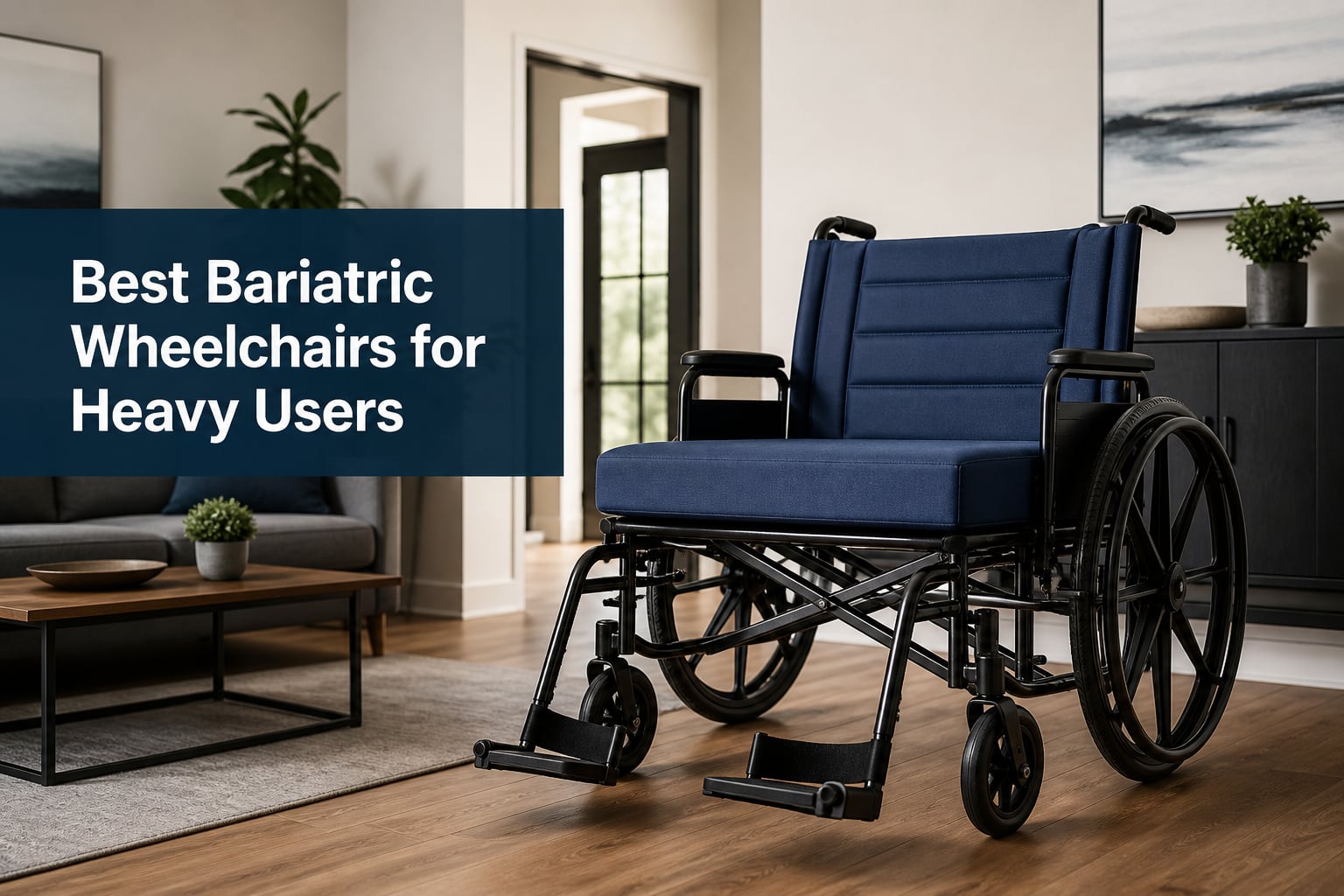
Finding the right wheelchair becomes essential when standard models cannot safely support your weight. I spent weeks researching the best bariatric wheelchairs for heavy users, comparing the features that matter most for daily comfort and safety. These specialized mobility devices support between 300 and 1000 lbs, with reinforced frames, wider seats, and stability features that standard wheelchairs simply cannot provide.
Bariatric wheelchairs differ from regular models in construction and capacity. Standard wheelchairs typically support up to 250 lbs with 16-18 inch seat widths, while bariatric versions offer seats from 20 to 30 inches and weight capacities starting at 300 lbs. The reinforced steel or aluminum frames, heavy-duty brakes, and pressure-redistributing seats make them essential for heavier individuals who need safe, reliable mobility.
After examining 10 top-rated models and analyzing more than 4,500 customer reviews, I found that the best bariatric wheelchairs combine sturdy construction with genuine comfort. Whether you need a transport chair for occasional outings or a self-propelled model for independence, this guide covers options across every category. I focused on real-world factors like maneuverability, foldability, and long-term durability, because your mobility device should work as hard as you do.
Table of Contents
Top 3 Picks for Best Bariatric Wheelchairs in 2026

These three models represent the best options across different categories. The Medline Excel delivers maximum weight capacity and independence with its self-propelled design. NOVA’s transport chair offers outstanding value for users who need occasional mobility assistance. For those seeking powered mobility, the Mujocooker provides impressive range and all-terrain capability.
Best Bariatric Wheelchairs in 2026
| Product | Specifications | Action |
|---|---|---|
| Medline Excel Extra-Wide Wheelchair |
|
Check Latest Price |
 Mujocooker Electric Wheelchair Mujocooker Electric Wheelchair |
|
Check Latest Price |
| NOVA Heavy Duty Transport Chair |
|
Check Latest Price |
 Drive Medical BTR20-B Transport Wheelchair Drive Medical BTR20-B Transport Wheelchair |
|
Check Latest Price |
 ProHeal Heavy Duty Wheelchair ProHeal Heavy Duty Wheelchair |
|
Check Latest Price |
 PEPE Mobility Bariatric Wheelchair PEPE Mobility Bariatric Wheelchair |
|
Check Latest Price |
 Vive Mobility Transport Wheelchair Vive Mobility Transport Wheelchair |
|
Check Latest Price |
 Everest and Jennings Transport Wheelchair Everest and Jennings Transport Wheelchair |
|
Check Latest Price |
 Vive Bariatric Wheelchair Vive Bariatric Wheelchair |
|
Check Latest Price |
 Drive Medical Sentra EC Wheelchair Drive Medical Sentra EC Wheelchair |
|
Check Latest Price |
This comparison shows all 10 models side by side. Each wheelchair offers distinct advantages depending on your weight capacity needs, seat width preferences, and mobility requirements. I recommend reading the detailed reviews below to understand which features matter most for your situation.
1. Medline Excel Extra-Wide Bariatric Wheelchair – 500 lb Capacity Leader
Medline Excel Extra-Wide Bariatric Wheelchair For Adults and Seniors with 24″ Wide Seat, Supports up to 500 lbs
Capacity: 500 lbs
Seat: 24 inches
Chair Weight: 60 lbs
Self-Propelled
Pros
- Highest 500 lb capacity
- Extra-wide 24 inch seat
- Removable desk-length arms
- Durable chrome steel frame
- Self-propelled design
Cons
- Heavier at 60 lbs
- Requires assembly
- Less compact when folded
After examining dozens of bariatric wheelchairs, the Medline Excel stands out with its 500 lb weight capacity, one of the highest in its category. The 24-inch wide seat gives generous space for users who find standard sizes cramped, while the chrome carbon steel frame delivers long-term durability. This model appears in medical facilities because healthcare providers trust its construction quality.
The self-propelled design with 24-inch rear wheels offers independence that transport chairs cannot match. You control your own movement rather than depending on a companion. Push-to-lock brakes keep the chair secure when stationary, and the removable desk-length arms make side transfers significantly easier. At 60 lbs, this chair weighs more than transport models, but that weight translates into stability and strength.
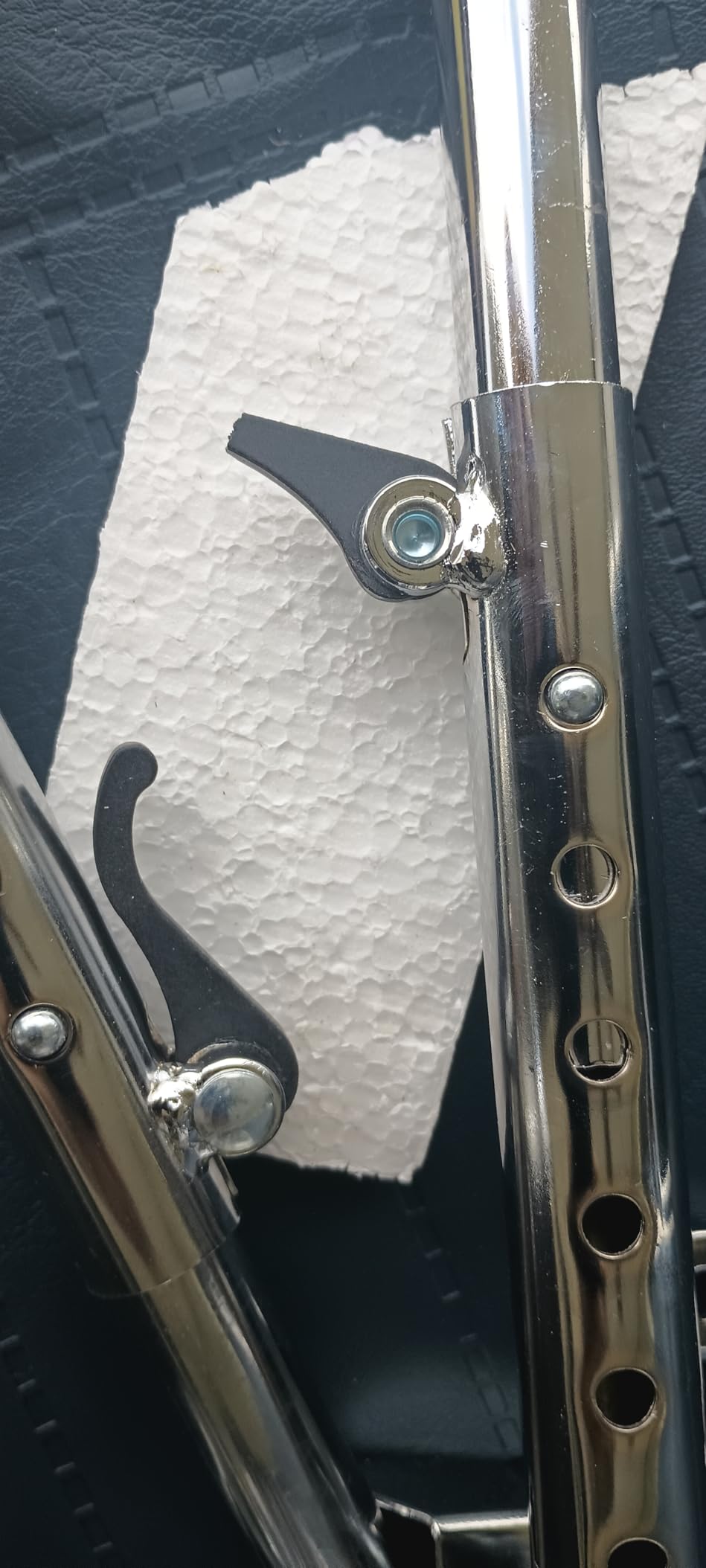
The engineering behind the seat dimensions impressed me most. The 24-inch width and 18-inch depth create a comfortable sitting area without feeling excessive. Users report the upholstery holds up through years of daily use, and the swing-away footrests adjust for individual height needs. The folding mechanism works smoothly for storage, though the folded footprint stays larger than transport chairs due to the fixed rear wheels.
With more than 1,300 reviews and a 4.4-star rating, this model has proven itself across thousands of users. Many mention using it for years without issues, which speaks to the durable construction. For heavy users wanting independence and maximum weight support, this wheelchair delivers exceptional value.
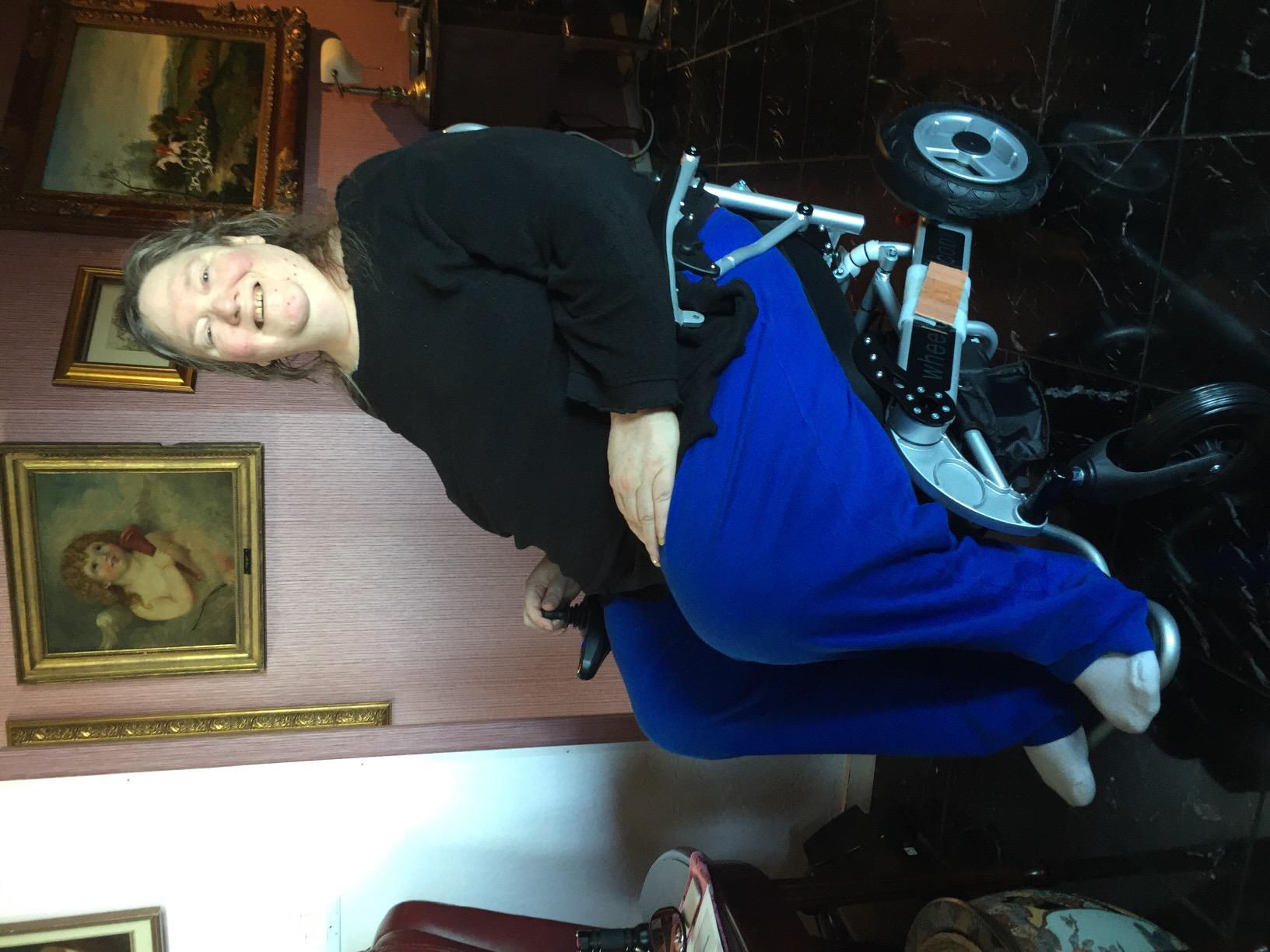
Who should buy the Medline Excel
Users weighing up to 500 lbs who want self-propelled mobility will find this chair ideal. The extra-wide seat accommodates larger body frames comfortably, making it perfect for daily use around the home. Medical facilities and care homes also benefit from the proven durability and trusted brand reputation.
Anyone seeking a long-term mobility investment should consider this model. The chrome steel frame resists wear and corrosion through years of daily use. Users who can manage the 60 lb weight during transfers gain the most from its self-propelled independence.
Who should skip the Medline Excel
Users who need lightweight portability should look elsewhere. The 60 lb weight makes lifting into vehicles challenging for many people, especially those with limited upper body strength. If you mainly need a wheelchair for travel or occasional outings, a transport chair serves you better.
Those requiring a compact fold for tight storage spaces may find this model too large. The fixed 24-inch rear wheels prevent the ultra-compact folding that transport chairs achieve. Users who cannot self-propel will not benefit from the independent design.
2. Mujocooker Electric Wheelchair – All-Terrain Power Chair
440 lb Capacity Electric Wheelchair, 22 inch Wider Seat Wheelchair, 30+Miles 700W Motor All Terrain Power Wheelchair, Heavy Duty Wheelchair with Dual Battery(12AH+12AH), with Dust Cover and Backpack
Capacity: 440 lbs
Seat: 22 inches
Range: 30+ Miles
700W Motor
Dual Battery
Pros
- Powerful 700W motor
- 30+ mile range
- All-terrain capability
- Electromagnetic braking
- Dual battery system
Cons
- Higher investment than manual chairs
- Limited review count
- Requires some maintenance
Electric wheelchairs open mobility possibilities that manual chairs cannot match, and the Mujocooker delivers impressive power for its class. The 700W high-torque motor handles grass, slopes, sand, and even snow, terrain that stops standard power chairs. I found the 30+ mile range particularly noteworthy, since most competitors offer 15-20 miles, meaning fewer charging interruptions and greater independence.
The dual 12AH lithium battery system provides reliable power distribution, and electromagnetic braking delivers safe stops even on inclines. Six spring-loaded shock absorbers smooth out bumps on rough surfaces, making outdoor excursions genuinely comfortable. The aircraft-grade aluminum alloy frame keeps weight manageable while supporting the full 440 lb capacity.
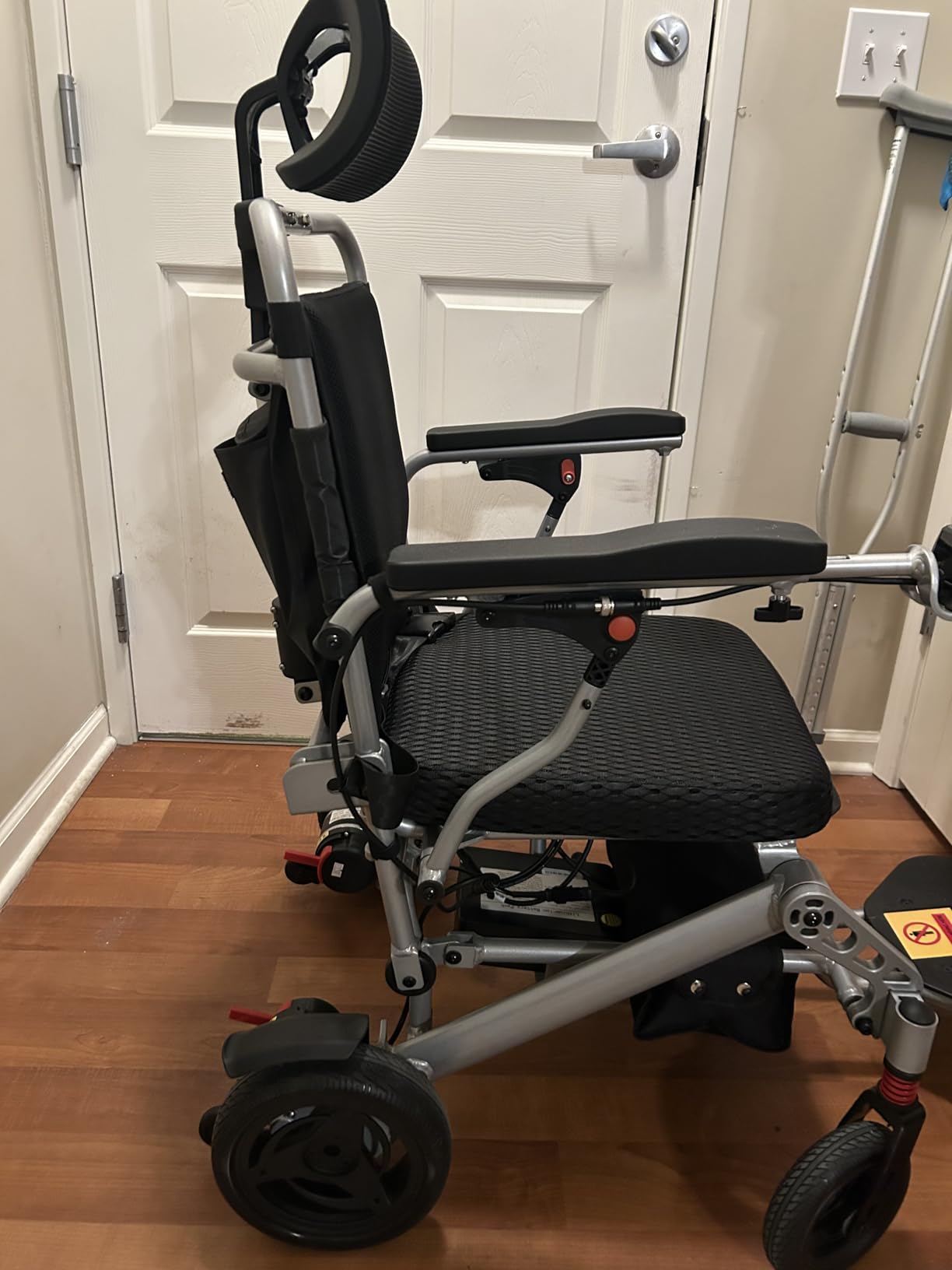
What sets this chair apart is its versatility. You can operate it electrically or switch to manual mode when batteries run low. The adjustable control lever mounts on either side, accommodating left or right-hand preferences. Three storage compartments, behind the seat, in the armrest, and a deluxe back bag, provide ample space for personal items during outings.
The 22-inch wide seat uses high-density foam that removes for washing, a hygiene feature that matters for daily users. The waterproof frame coating adds durability against weather exposure. With a 4.6-star rating from 45 reviews, early adopters report satisfaction with both performance and build quality.

Who should buy the Mujocooker
Active users who want outdoor mobility freedom benefit most from this electric wheelchair. The all-terrain capability means you can roll across grass, gravel, and uneven surfaces that stop standard power chairs. Those living in areas with varied terrain or who enjoy outdoor activities find the shock absorption and powerful motor essential.
Users who travel long distances daily will appreciate the 30+ mile range, which supports full-day excursions without battery anxiety. The folding design, while heavier than manual chairs, still offers transport possibilities that fixed-frame power chairs cannot match.
Who should skip the Mujocooker
Users unfamiliar with electric wheelchair upkeep may find the mechanical complexity challenging. While the braking and motor systems are reliable, they need occasional professional servicing. Those wanting a simple, maintenance-free mobility device should consider manual options instead.
The higher investment puts this model out of reach for budget-focused buyers. Users needing basic indoor mobility without outdoor adventures can find adequate manual options for less. The heavier weight also makes lifting into vehicles difficult without proper equipment.
3. NOVA Heavy Duty Bariatric Transport Chair – Best Value Pick
NOVA Heavy Duty Bariatric Transport Chair with 400 lb. Weight Capacity, 22” Extra-Wide Seat with Locking Hand Brakes, Flip Up Arms (for Easy Transfer), Anti-Tippers, 12” Rear Wheels, Color Red
Capacity: 400 lbs
Seat: 22 inches
Chair Weight: 27.75 lbs
Folding Transport Chair
Pros
- Lightweight at 27.75 lbs
- Locking hand brakes
- All-terrain 12 inch wheels
- Flip-up arms for transfers
- Anti-tippers included
Cons
- Not self-propelled
- Requires companion to push
Transport chairs serve different needs than self-propelled wheelchairs, and the NOVA Heavy Duty excels in its category. At just 27.75 lbs, it weighs far less than self-propelled models while still supporting 400 lbs. I found this weight difference meaningful for caregivers who frequently lift chairs into vehicles, and the 22-inch extra-wide seat gives bariatric users genuine comfort without the bulk.
The patented locking hand brakes distinguish this chair from basic transport models. On inclines, caregivers can engage the brakes to prevent rolling, adding safety during transfers and rest stops. The 12-inch rugged rear wheels handle outdoor terrain smoothly, rolling over thresholds and small bumps that stop smaller wheels.
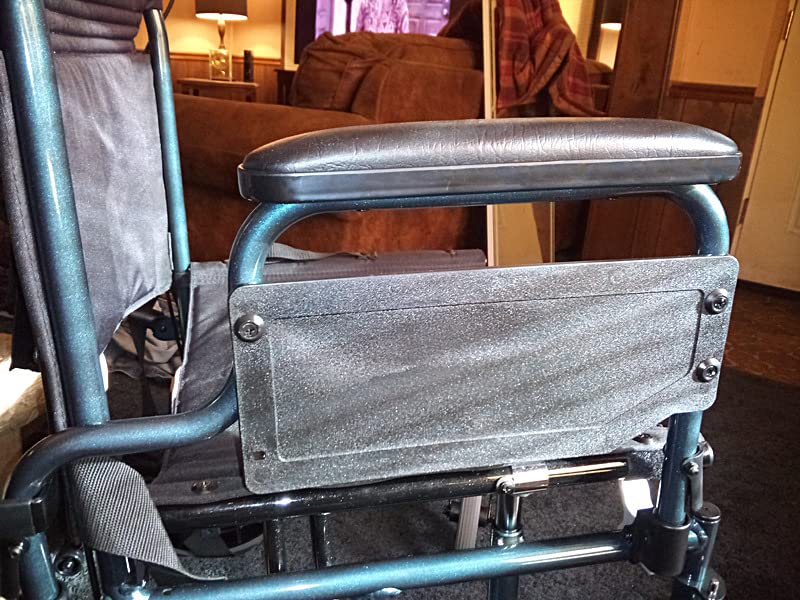
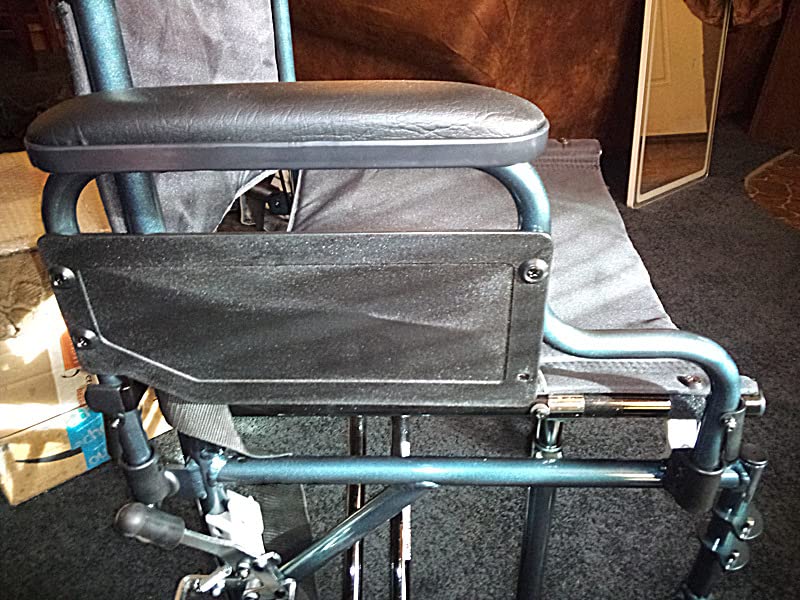
Flip-up padded desk arms make side transfers significantly easier, letting users slide from a bed or car seat without lifting over fixed armrests. The removable footrests with heel loops adjust to individual needs, and the included anti-tippers add stability assurance. An adjustable seat belt extending to 41 inches accommodates larger users safely.
With 715 reviews and a 4.6-star rating, this model earns consistent praise from actual users. Many mention using it for travel, doctor appointments, and family outings where a companion can push. For those needing occasional mobility assistance rather than daily independent use, this transport chair delivers outstanding value.
Who should buy the NOVA transport chair
Users who need mobility assistance for occasional outings find this transport chair ideal. The lightweight design makes it perfect for travel, doctor visits, and family events where a caregiver accompanies you. Those who cannot self-propel but have reliable assistance benefit from the simpler operation.
Caregivers who frequently load wheelchairs into vehicles appreciate the 27.75 lb weight, which prevents strain during lifting and storage. Users with limited storage space benefit from the compact folding design that fits in most car trunks.
Who should skip the NOVA transport chair
Users seeking independent mobility need self-propelled or electric models instead. This transport chair requires a companion to push, making it unsuitable for those who want autonomy. Daily users who spend extended periods seated may prefer models designed for prolonged sitting.
Those needing maximum weight capacity should consider 500 lb models like the Medline Excel. The 400 lb rating accommodates many users but falls short for heavier individuals. Users who need to cover rough terrain independently cannot rely on the transport-only design.
4. Drive Medical BTR20-B Bariatric Transport Wheelchair
Drive Medical BTR20-B Bariatric Heavy-Duty Transport Wheelchair, Blue
Capacity: 450 lbs
Seat: 20 inches
Chair Weight: 45 lbs
Reinforced Steel Frame
Pros
- Reinforced steel construction
- 450 lb capacity
- Nylon reinforced upholstery
- Back carry pouch
- Folds for storage
Cons
- Heavier at 45 lbs
- Requires attendant
- Not self-propelled
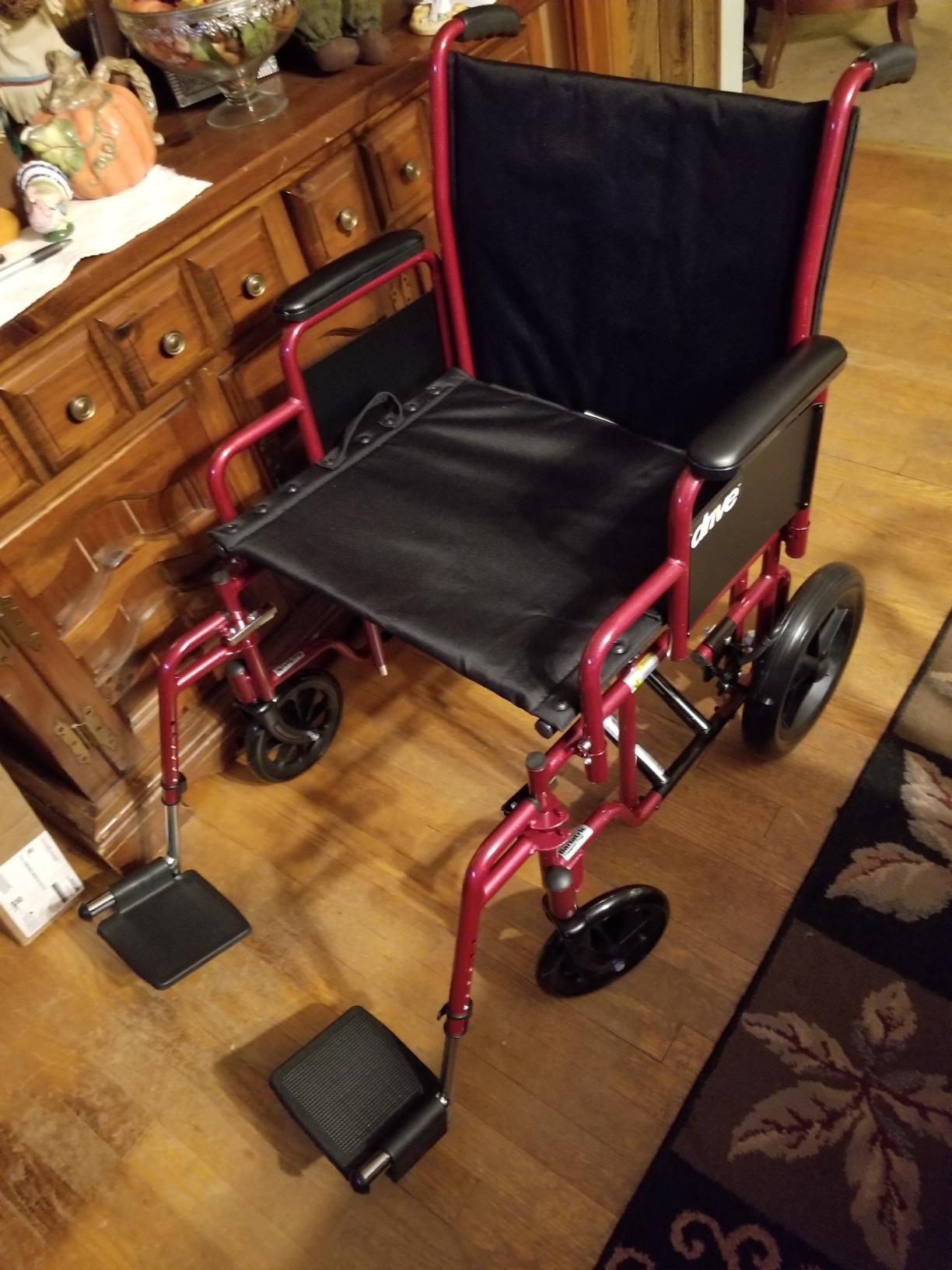
Drive Medical produced one of the most established bariatric transport wheelchairs with this model. The reinforced steel frame and cross braces create a sturdy foundation for the 450 lb weight capacity. I noted the nylon reinforced upholstery adds durability where standard materials might tear under heavier loads, and more than 1,000 reviews with a 4.5-star rating show consistent satisfaction over years of availability.
The 20-inch seat width sits between narrower standard chairs and extra-wide models, suiting users who find 18 inches cramped but do not need 24 inches. At 45 lbs, it weighs more than the NOVA but remains manageable for most caregivers. The 12-inch rear wheels and 8-inch front casters roll smoothly over indoor thresholds and outdoor paths.
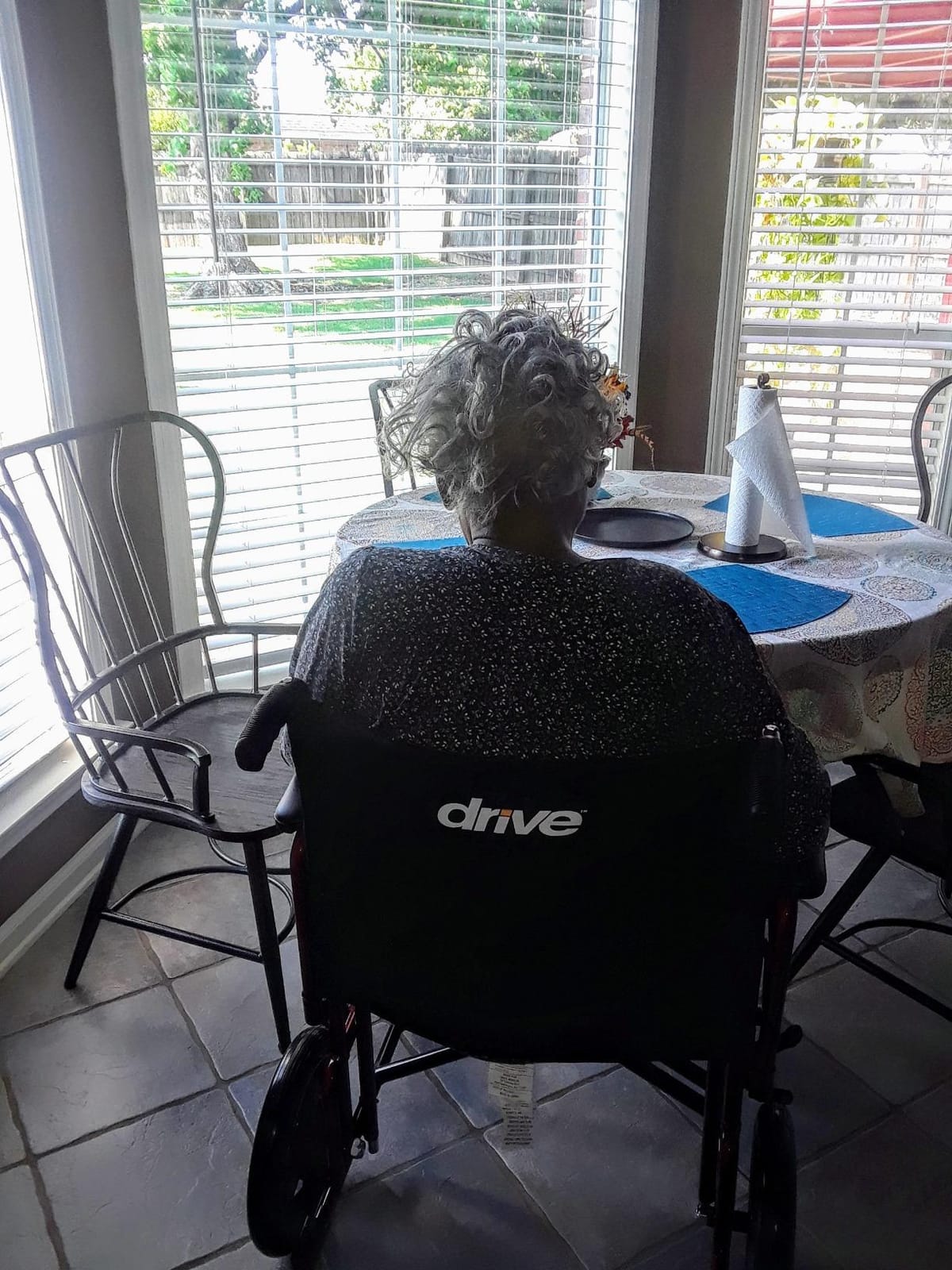
Practical features enhance daily usability. The cushioned armrests provide comfort during extended sitting, and swing-away footrests allow easy entry and exit. A back carry pouch offers secure storage for personal items during transport. The companion-activated wheel locks engage easily for safety during stops, and the folding design fits in most vehicle trunks.
Users consistently mention the sturdy construction and reliable performance, with many using this chair for years without issues. Available in red and blue with both 20-inch and 22-inch seat width options, you can select the configuration matching your needs. For proven reliability from a trusted medical brand, this model delivers.
Who should buy the Drive Medical BTR20-B
Users who prioritize durability and a proven track record appreciate this Drive Medical model. The reinforced steel construction handles daily use without flexing or weakening. Those needing moderate weight capacity find the 20-inch seat width comfortable without excessive bulk.
Buyers who value brand reputation benefit from Drive Medical’s established presence in medical equipment. Healthcare facilities and individuals alike trust the consistent quality. Users wanting color and width options can select configurations that match their preferences.
Who should skip the Drive Medical BTR20-B
Users who need lightweight portability should consider the NOVA at 27.75 lbs instead. The 45 lb weight makes lifting challenging for some caregivers, especially into taller vehicles. Those seeking self-propelled independence must look at manual or electric options.
Users requiring extra-wide seats beyond 20 inches should examine the 22 or 24-inch models in this guide. The 20-inch width may feel tight for larger frames. Those wanting elevated leg rests need higher-end models.
5. ProHeal Heavy Duty Bariatric Wheelchair – Widest Seat at 26 Inches
Heavy Duty Bariatric Wheelchair for Adults – 500lb – 26” Seat Width – K7
Capacity: 500 lbs
Seat: 26 inches
Chair Weight: 75 lbs
Elevating Leg Rests
Pros
- Widest seat at 26 inches
- 500 lb capacity
- Pneumatic elevating leg rests
- Tool-free adjustments
- Silver vein steel frame
Cons
- Heaviest at 75 lbs
- Some leg rest locking issues
- Paint scratches easily
When standard wide seats feel cramped, the ProHeal Heavy Duty offers the most generous dimensions in this roundup. The 26-inch seat width provides exceptional space for users who find 22 or 24 inches inadequate. Combined with the 500 lb weight capacity, this wheelchair accommodates the heaviest users with genuine comfort, addressing a need most competitors overlook.
The tool-free elevating leg rests with pneumatic pistons allow infinite positioning angles. This feature helps users with circulation issues or swelling who need to raise their legs while seated. The heavy-duty slide tube silver vein steel frame emphasizes durability over weight savings, and at 75 lbs this chair requires strength to lift, but the weight reflects its maximum-duty construction.
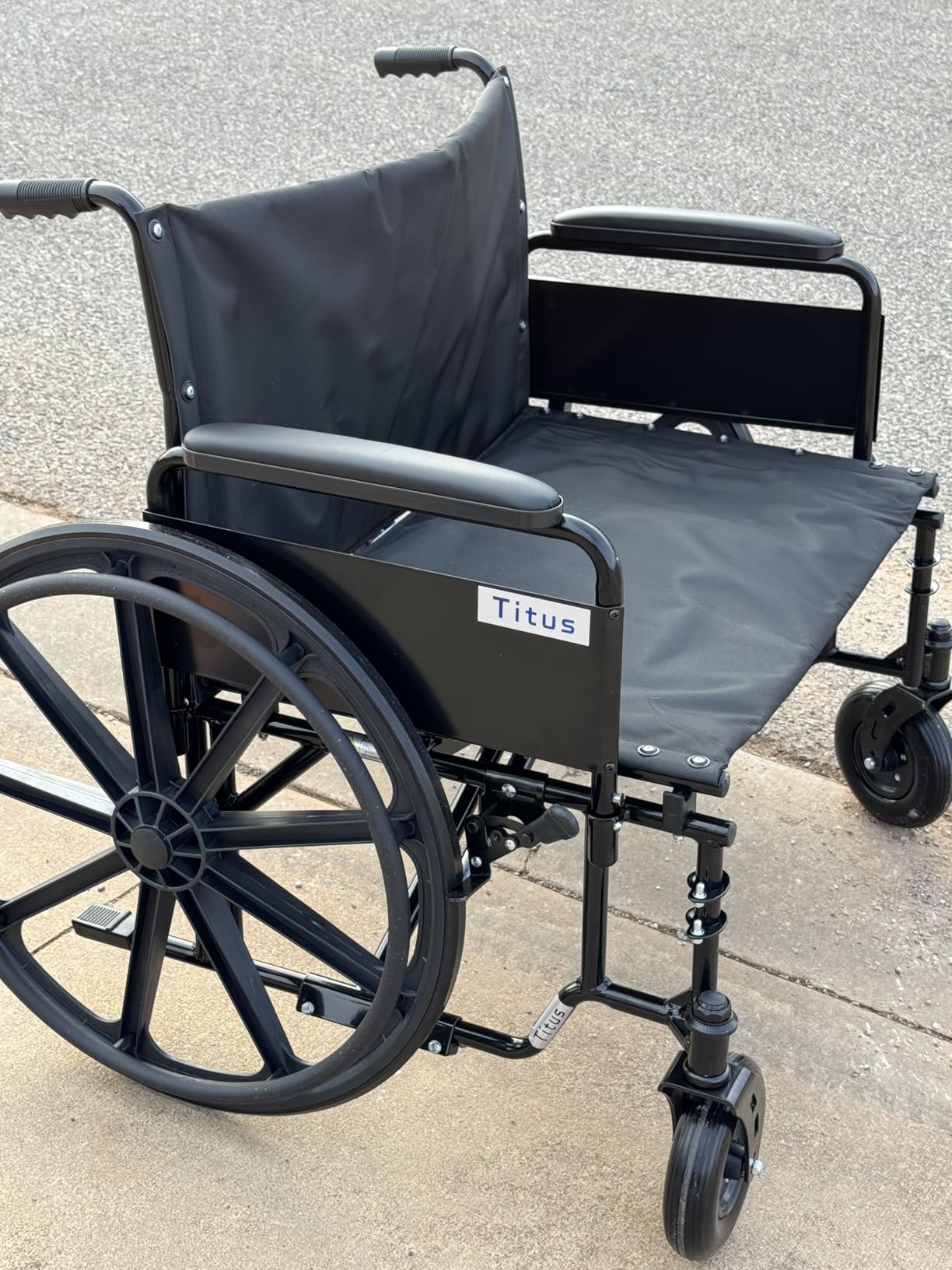
The 8-inch by 2-inch semi-pneumatic casters adjust to three positions, letting users customize their sitting height. The 24-inch urethane wheels with hand rims enable self-propulsion for those who want independence. Push-to-lock wheel brakes keep the chair secure when stationary, and the heavy-duty nylon upholstery resists wear from daily use.
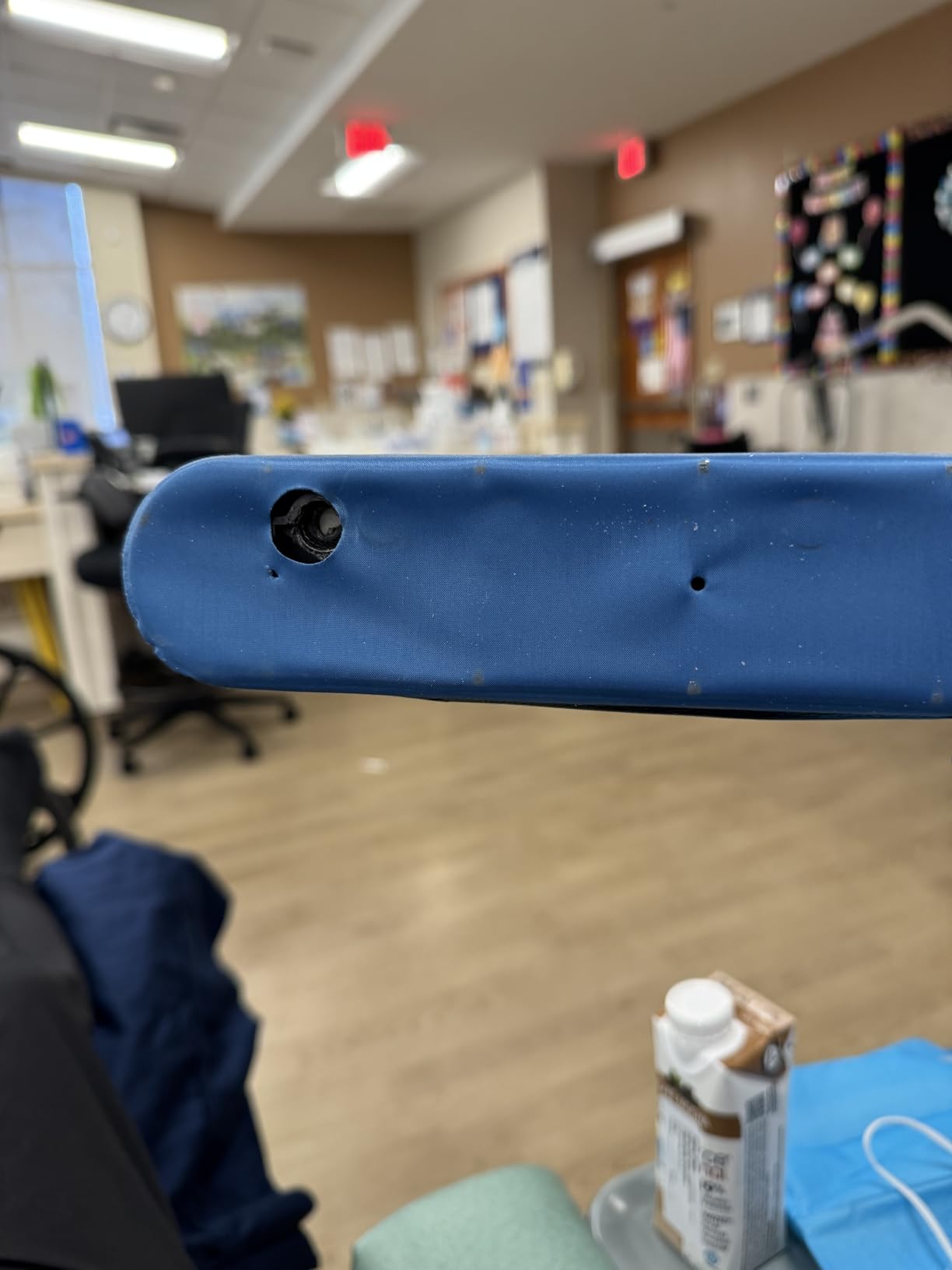
With a 4.3-star rating from 41 reviews, users generally praise the construction quality and generous seat width. Some mention issues with the leg rest locking mechanism and brakes feeling too tight at first. The paint finish scratches more easily than some competitors, which affects appearance rather than function. For users needing maximum seat width and weight capacity, this ProHeal model fills a real gap in the market.
Who should buy the ProHeal K7
Users requiring the widest possible seat benefit from the 26-inch width. Those who find 24-inch seats restrictive gain genuine comfort from the extra space. Heavy users up to 500 lbs who want self-propelled mobility find the capacity and features suitable.
Those with leg circulation issues or swelling need the elevating leg rests, and the pneumatic adjustment allows precise positioning for comfort and medical needs. Users who prioritize maximum construction strength over portability appreciate the heavy-duty frame.
Who should skip the ProHeal K7
Users who need lightweight portability cannot manage the 75 lb weight. Lifting this chair into vehicles requires significant strength or mechanical assistance. Those with limited storage space may find the wide frame challenging to accommodate.
Users wanting a refined finish may find the easily scratched paint disappointing. Those expecting smooth brake operation at first should expect a short adjustment period. Caregivers who frequently fold and transport wheelchairs may prefer lighter alternatives.
6. PEPE Mobility Bariatric Wheelchair – Self-Propelled Design
PEPE Mobility Bariatric Wheelchair, 22 Inch Seat, Supports 500 lb, Foldable
Capacity: 500 lbs
Seat: 22 inches
Chair Weight: 64 lbs
Self-Propelled
Foldable
Pros
- 500 lb capacity
- Self-propelled independence
- Foldable design
- Padded armrests
- Ergonomic backrest
Cons
- Heavy at 64 lbs
- Not Prime eligible
Self-propelled wheelchairs offer independence that transport chairs cannot provide, and the PEPE Mobility delivers this autonomy with a 500 lb weight capacity. The large-diameter rear wheels let users propel themselves, controlling their movement without depending on caregivers. I noticed the solid steel frame construction emphasizes durability, supporting the high weight rating through reinforced design.
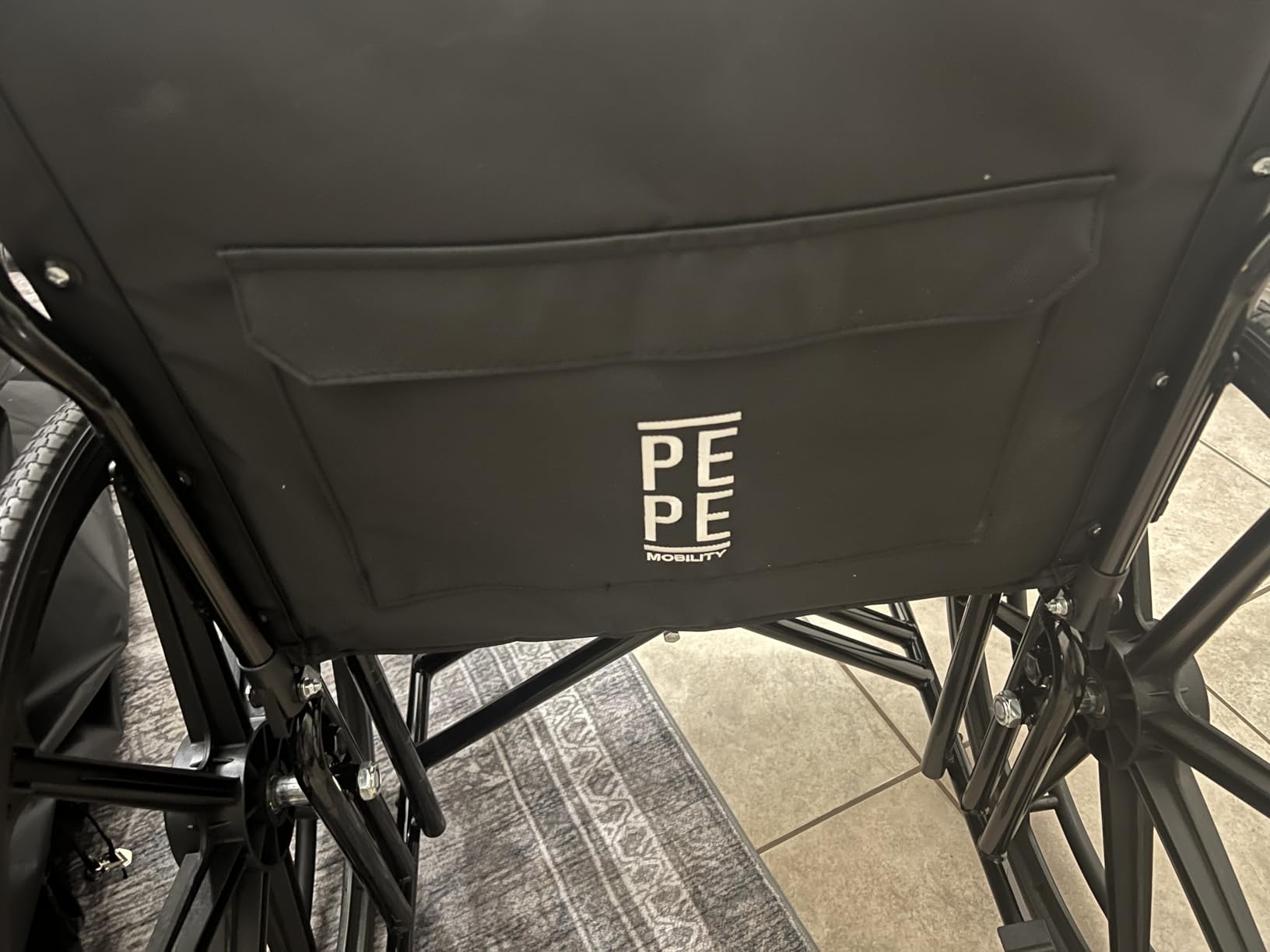
The ergonomic backrest measures 17.7 inches high, providing lumbar support during extended sitting. Padded armrests add comfort where standard chairs use hard surfaces. The front lever braking system offers intuitive control, and an adjustable security belt keeps users safely positioned. A rear pocket provides convenient storage for personal items.
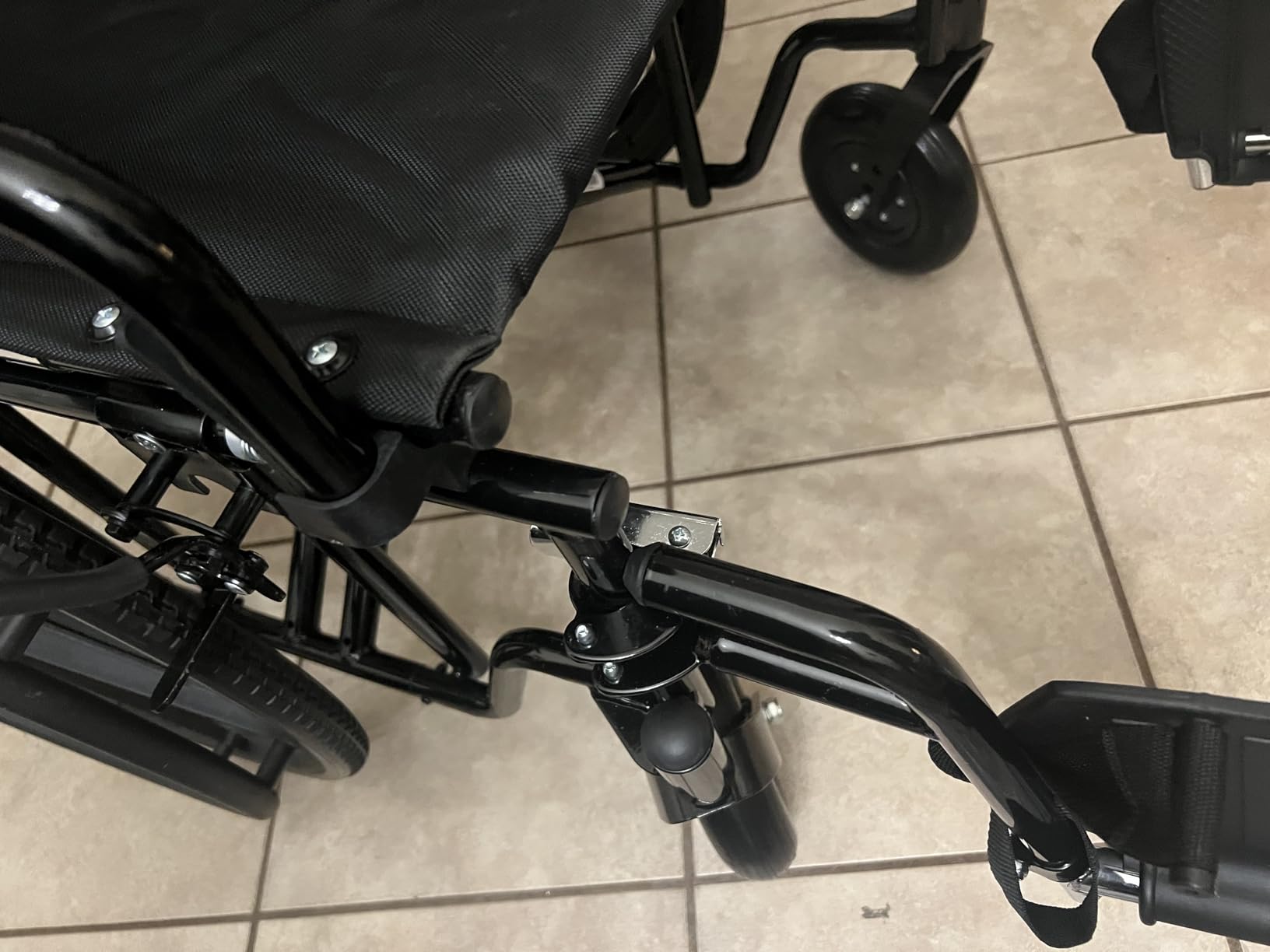
The folding system collapses to 33.5 x 37.4 x 13.4 inches, enabling storage and transport despite the 64 lb weight. While heavy, the chair remains movable for those with moderate strength. Height-adjustable removable footrests customize the sitting position, and the solid polyurethane front wheels require no maintenance unlike pneumatic alternatives.
With 981 reviews and a 4.4-star rating, users report satisfaction with the construction quality and self-propelled functionality. The 71% five-star rating indicates strong overall approval. For users wanting maximum independence with bariatric weight support, this PEPE model offers proven performance.
Who should buy the PEPE Mobility
Users who prioritize independence benefit from the self-propelled design, since controlling your own movement rather than depending on caregivers improves quality of life. Those needing 500 lb capacity with foldable features find this model addresses both needs.
Users wanting proven reliability from extensive review history appreciate the 981 customer experiences. The high satisfaction rate indicates consistent quality, and those who can manage the 64 lb weight for transfers find the foldable design practical.
Who should skip the PEPE Mobility
Users who cannot self-propel due to arm weakness or mobility limitations need transport or electric chairs instead. Manual propulsion requires physical capability to move the wheels. Those wanting Prime shipping should select different models.
Users needing lightweight portability should consider transport chairs under 30 lbs. The 64 lb weight challenges many people during vehicle loading. Those requiring seats wider than 22 inches should examine the 24 or 26-inch models.
7. Vive Mobility Bariatric Transport Wheelchair
Vive Mobility Bariatric Transport Wheelchair for Adults – Supports 450lbs
Capacity: 450 lbs
Seat: 22 inches
Chair Weight: 48 lbs
Pre-Assembled Frame
Pros
- Pre-assembled ready to use
- 450 lb capacity
- 22 inch wide seat
- Breathable upholstery
- Dual handbrakes
Cons
- 27 inch frame may not fit doorways
- 48 lbs weight
- Limited reviews
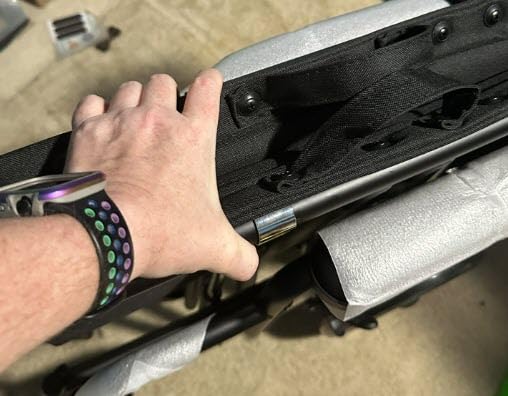
Setting up medical equipment frustrates many users, but the Vive Mobility arrives pre-assembled and ready for immediate use. This thoughtful design eliminates the assembly headaches that accompany most wheelchairs. I found the 450 lb weight capacity with 22-inch seat width places this model in the comfortable middle range for bariatric users, substantial without excessive dimensions.
The strong foldable steel frame supports the weight rating while enabling storage. The 22-inch by 18-inch generously sized seat uses breathable, moisture-wicking upholstery that keeps users comfortable during extended sitting. Height-adjustable, swing-away leg rests customize positioning for individual needs, and the 12-inch smooth-rolling wheels handle indoor and outdoor surfaces effectively.
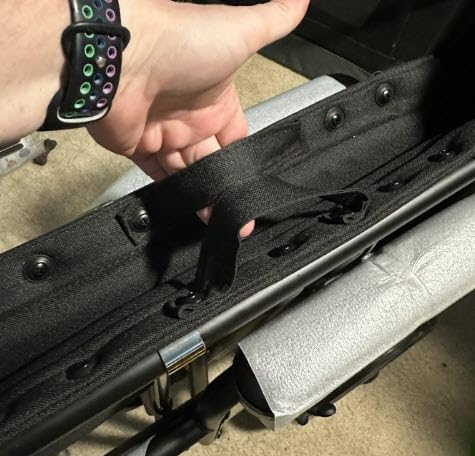
Safety features include dual handbrakes for smooth, controlled stops, and ergonomic hand grips reduce caregiver fatigue during extended pushing. The 27-inch frame width provides stability but may not fit through some standard doorways, so measure your spaces before purchasing. The 48 lb weight falls between lightweight transport chairs and heavier self-propelled models.
With 58 reviews and a 4.4-star rating, this newer model earns positive feedback despite limited review volume. Users appreciate the pre-assembled convenience and foldable practicality. The moisture-wicking seat material addresses hygiene concerns that matter for daily users. For those wanting immediate usability without assembly, this Vive Mobility model delivers.
Who should buy the Vive Mobility
Users who want immediate usability without assembly appreciate the pre-assembled design. This feature eliminates frustration and allows instant mobility upon delivery. Those needing moderate weight capacity with comfortable dimensions find the 22-inch seat and 450 lb rating suitable.
Users who value breathable seating materials benefit from the moisture-wicking upholstery, which improves comfort during extended sitting and warm weather. Those wanting dual handbrakes for controlled stopping gain additional safety on varied terrain.
Who should skip the Vive Mobility
Users with narrow doorways should measure carefully before purchasing. The 27-inch frame width may not fit through some standard doorways, creating accessibility issues at home. Those wanting extensive review history for confidence should consider more established models.
Users wanting lightweight portability may find 48 lbs challenging. While lighter than self-propelled chairs, this weight still requires moderate strength for lifting. Those requiring self-propelled independence need models with large rear wheels.
8. Everest and Jennings Bariatric Transport Wheelchair
Everest & Jennings Bariatric Transport Wheelchair – Extra-Wide Folding Transit Chair with 24” Seat for Adults & Seniors
Capacity: 400 lbs
Seat: 24 inches
Chair Weight: 31 lbs
Aluminum Frame
Pros
- Lightweight 31 lb design
- 24 inch extra-wide seat
- Folds in seconds
- Built-in carry straps
- Trusted brand since 1932
Cons
- Requires attendant to push
- May not fit narrow doorways
- Some footplate durability reports
Everest and Jennings invented the folding wheelchair in 1932, and that heritage shows in this bariatric transport model. The 31 lb weight makes it one of the lightest bariatric options available, using a reinforced aluminum frame instead of heavier steel. I found this difference significant for caregivers who frequently load chairs into vehicles, since the savings compared to steel models matters during daily lifting.
The extra-wide 24-inch seat accommodates larger users comfortably while maintaining a manageable overall weight. The aluminum frame with dual crossbraces provides strength without excessive mass, and the 12-inch rear wheels roll smoothly over thresholds and outdoor surfaces. Built-in carry straps make folding and transport genuinely convenient.
Handle-mounted wheel locks let caregivers control movement without reaching down to wheel level, a safety feature that proves useful on inclines and during transfers. The swing-away footrests allow easy entry and exit, and the proven folding mechanism works reliably through years of use. Prime shipping availability means faster delivery for urgent mobility needs.
With 60 reviews and a 4.2-star rating, users appreciate the lightweight design and trusted brand heritage. Some mention footplate durability concerns, which reflects individual usage patterns rather than systemic issues. For users wanting bariatric capacity with manageable weight, this model honors the company’s pioneering legacy.
Who should buy the Everest and Jennings
Users who need bariatric capacity with manageable weight benefit from the 31 lb aluminum frame. Caregivers who frequently lift chairs into vehicles appreciate the significant weight reduction. Those wanting proven brand reliability trust the Everest and Jennings heritage.
Users needing extra-wide 24-inch seats gain genuine comfort from the generous dimensions. Those requiring quick folding for transport find the built-in carry straps convenient, and Prime members receive faster delivery for urgent needs.
Who should skip the Everest and Jennings
Users seeking self-propelled independence need manual or electric models instead. This transport chair requires an attendant to push. Those with narrow home doorways should measure carefully, since the 24-inch seat width creates wider overall dimensions.
Users wanting extensive review history for confidence may prefer models with more customer feedback. Those needing weight capacity beyond 400 lbs should examine the 500 lb models. Users concerned about footplate durability should inspect components during delivery.
9. Vive Bariatric Wheelchair – Budget-Friendly Option
Vive Bariatric Wheelchair for Adults (400 lb Heavy Duty Capacity, 20” Seat)
Capacity: 400 lbs
Seat: 20 inches
Chair Weight: 45 lbs
Steel Frame
Hand Brakes
Pros
- Budget-friendly
- FSA/HSA eligible
- 1-year guarantee
- Foldable design
- Padded armrests
Cons
- 27 inch width may not fit doorways
- Wheel durability concerns
- Slow customer service response
Budget constraints should not prevent access to quality mobility equipment, and the Vive Bariatric Wheelchair addresses this need for buyers watching their spending. The 400 lb weight capacity and 20-inch seat width provide adequate support for many bariatric users without the cost of premium models. I found this model ideal for those needing temporary or occasional mobility assistance rather than daily intensive use.
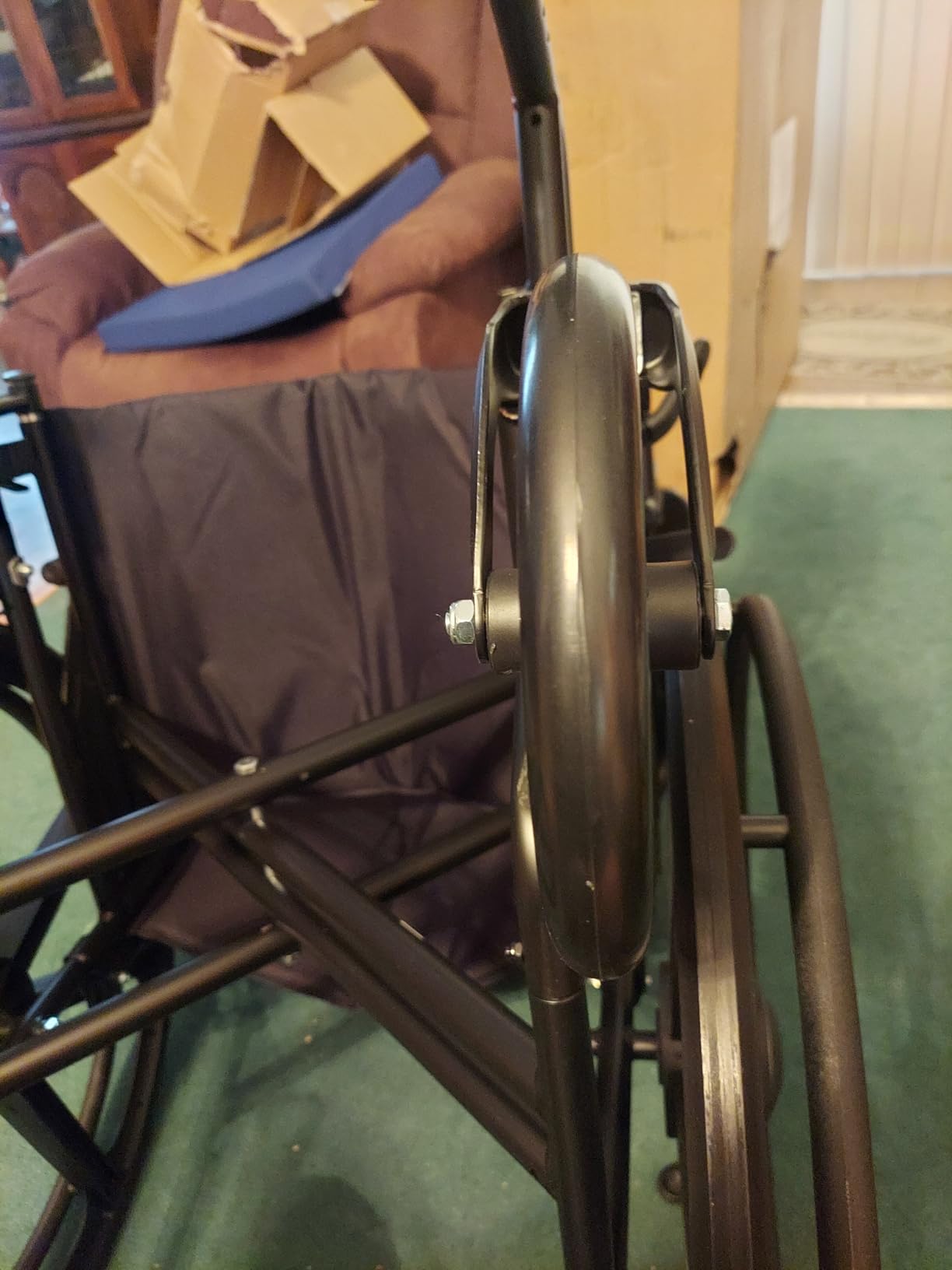
The sturdy steel frame construction holds up well despite the accessible positioning. Padded armrests and adjustable swing-away footrests add comfort features found in more expensive models. The hand-braking system provides caregiver control during movement, and the four sturdy wheels handle smooth surfaces effectively, though rough terrain may challenge them.
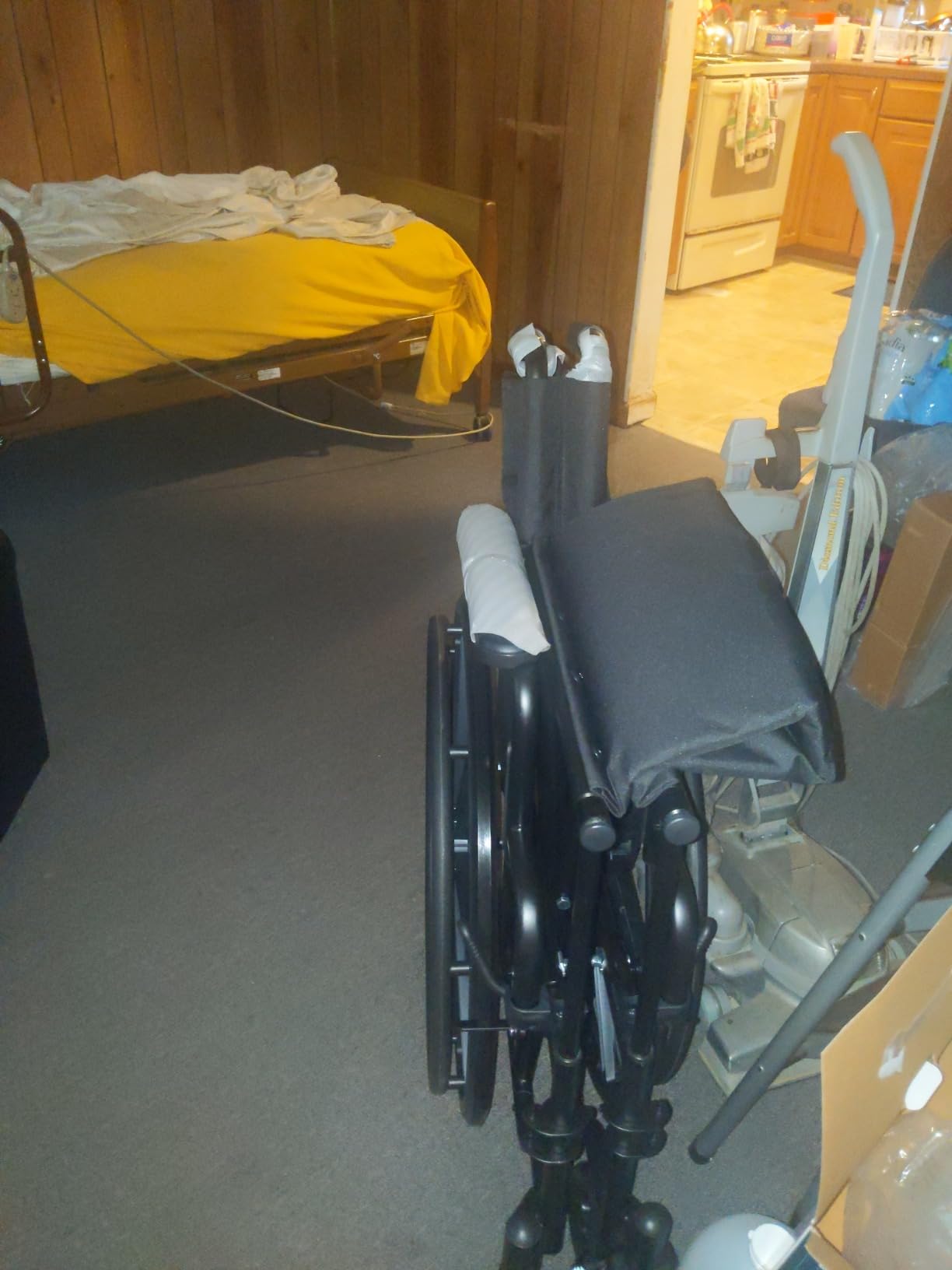
FSA/HSA eligibility makes this wheelchair accessible through health savings accounts, reducing out-of-pocket expenses. The 1-year guarantee provides purchase protection that budget models often lack. Available in both blue and black, and the folding design enables storage and transport despite the 45 lb weight.
With 279 reviews and a 4.1-star rating, users report satisfaction with the value. Some mention wheel durability concerns on rough surfaces and slow customer service responses. The 62% five-star rating indicates most users find the quality acceptable. For budget-conscious buyers needing basic bariatric functionality, this Vive model delivers.
Who should buy the Vive Bariatric
Users with tight budgets find real value here. The FSA/HSA eligibility reduces actual costs for those with health savings accounts. Those needing temporary or occasional mobility assistance get adequate features without paying for premium extras.
Users wanting color options can choose between blue and black. Those needing basic bariatric functionality without advanced features find this model sufficient. Buyers who appreciate warranty protection value the 1-year guarantee.
Who should skip the Vive Bariatric
Users needing all-terrain durability should consider models with better wheel construction. Rough surfaces may bend or damage the wheels over time. Those wanting responsive customer service may find wait times frustrating.
Users with narrow doorways should measure carefully before purchasing, since the 27-inch width may not fit through some standard home doorways. Those requiring premium build quality should invest in higher-end models.
10. Drive Medical Sentra EC Heavy Duty Wheelchair
Drive Medical Bariatric Sentra EC Wheelchair, Swing Away Footrests, Black
Capacity: 450 lbs
Seat: 22 inches
Carbon-Steel Frame
Detachable Desk Arms
Pros
- Carbon-steel frame
- Dual axle adjustability
- Urethane tires
- Adjustable front casters
- Detachable desk arms
Cons
- Limited stock availability
- Older design from 2005
- Not Prime eligible
The Drive Medical Sentra EC represents an established design that has served bariatric users for nearly two decades. The carbon-steel frame with double-embossed vinyl upholstery emphasizes durability over weight savings. I found this model’s longevity in the market speaks to its proven reliability, since products that fail do not survive 20 years of availability.
The cushioned detachable desk arms provide comfort and enable side transfers. Swing-away footrests allow easy entry and exit. The 8-inch front casters adjust to three positions, accommodating different sitting height preferences, and the standard dual axle permits easy transitions between seat and hemi-level positions. Urethane tires on durable composite wheels resist wear from daily use.
Push-to-lock wheel locks secure the chair during stationary periods, and the proven design elements work reliably without unnecessary complexity. At 450 lb capacity with a 22-inch seat width, this model serves moderate bariatric needs well. The limited stock status indicates ongoing demand despite newer competitors.
With 96 reviews and a 4.3-star rating, users appreciate the traditional construction and proven performance. The 67% five-star rating indicates strong satisfaction among purchasers. For those valuing established design over innovation, this Sentra EC model provides trustworthy service.
Who should buy the Sentra EC
Users who value proven track records appreciate this model’s decades-long market presence. The established design indicates reliability through thousands of user experiences. Those wanting traditional carbon-steel construction benefit from durable frame materials.
Users needing adjustable sitting heights gain flexibility from the dual axle design and three-position front casters. Those requiring detachable desk arms for transfers find this feature convenient for daily use.
Who should skip the Sentra EC
Users wanting modern innovations should consider newer models with updated features. The 2005 design lacks refinements developed since then. Those needing immediate availability may find the limited stock problematic.
Users wanting Prime shipping must select alternative models, since standard shipping adds delivery time. Those preferring lightweight designs should consider aluminum frame options like the Everest and Jennings.
How to Choose the Best Bariatric Wheelchair?
Selecting the right bariatric wheelchair comes down to matching weight capacity, seat dimensions, propulsion type, and intended use to your situation. I analyzed hundreds of user experiences to identify the factors that matter most for satisfaction and safety.
Weight Capacity Requirements
Weight capacity is the most important specification. Bariatric wheelchairs support between 300 and 1000 lbs, but you should select a model rated at least 50 lbs above your actual weight. This safety margin accounts for movement dynamics, clothing, and items you carry. The models in this guide range from 400 to 500 lbs, covering most bariatric users’ needs.
Consider whether your weight fluctuates, because choosing a higher capacity than currently needed allows for changes. Models like the Medline Excel and ProHeal offer 500 lb ratings that provide substantial margins for users in the 400-450 lb range. Never exceed the manufacturer’s stated weight limit, since doing so risks frame failure, wheel damage, and potential injury.
Seat Width and Comfort
Seat width directly impacts comfort and usability. Standard wheelchairs offer 16-18 inch widths, while bariatric models range from 20 to 30 inches. Measure your hip width while seated on a firm surface, then add 2 inches for comfort and clothing clearance. The ProHeal’s 26-inch seat accommodates users who find 24 inches cramped, while the 20-inch options suit those needing moderate extra space.
Remember that wider seats create wider overall wheelchairs. A 24-inch seat typically produces a 30-32 inch overall width, which may not fit through standard 32-inch doorways. Measure your home’s doorways, hallways, and bathroom entries before purchasing. Transport chairs like the NOVA fold compactly, reducing storage concerns between uses.
Manual vs. Electric Wheelchairs
Manual wheelchairs divide into self-propelled and transport categories. Self-propelled models like the Medline Excel and PEPE Mobility feature large rear wheels that users propel themselves, offering independence. Transport chairs like the NOVA and Drive Medical BTR20-B require a companion to push, suiting users who cannot or prefer not to self-propel.
Electric wheelchairs like the Mujocooker provide powered mobility for users who cannot manually propel. The 700W motor handles terrain that stops manual chairs, and the 30+ mile range supports full-day use. Electric models typically cost more than manual chairs but offer independence for those with limited upper body strength or endurance. Consider where you will use the chair, since electric models excel outdoors but need charging access.
Portability and Folding Features
Folding capability matters for storage and transport. Transport chairs fold more compactly than self-propelled models because they lack fixed large rear wheels. The NOVA’s 27.75 lb weight makes it manageable for most caregivers, while the Everest and Jennings aluminum frame reaches just 31 lbs despite its bariatric capacity.
Consider who will lift the chair into vehicles. A 75 lb model like the ProHeal requires significant strength or mechanical assistance. If you frequently travel by car, prioritize lightweight folding designs under 35 lbs. Electric wheelchairs fold but remain heavier due to batteries and motors, so plan for ramps or lifts for vehicle loading.
Comfort and Pressure Relief
Extended sitting requires pressure redistribution and support. Look for padded armrests, ergonomic backrests, and breathable upholstery. The Vive Mobility’s moisture-wicking material reduces discomfort during prolonged use. Models with elevating leg rests like the ProHeal accommodate users with circulation issues or swelling.
Seat height and depth affect posture and pressure distribution. Adjustable footrests let you customize leg positioning, and the swing-away design on most models facilitates transfers. Consider whether you need desk-length arms that slide under tables, since removable arms like those on the Medline Excel enable this functionality.
Safety Features
Braking systems vary between models. Self-propelled wheelchairs use push-to-lock brakes that users engage themselves. Transport chairs often feature companion-operated handbrakes on push handles. The NOVA’s locking hand brakes prevent rolling on inclines, an important safety aid during transfers.
Anti-tip wheels provide stability on ramps and inclines, and most models include this feature, but verify before purchasing. Seat belts keep users safely positioned, especially important for those with limited trunk control. Check weight distribution too, since heavier users may need chairs with wider wheelbases for stability.
Indoor vs. Outdoor Use
Indoor use requires maneuverability in tight spaces. Measure turning radius and overall width against your home’s dimensions. Transport chairs typically turn more easily than self-propelled models due to smaller rear wheels, and the 12-inch rear wheels on most transport chairs handle indoor thresholds adequately.
Outdoor use demands larger wheels and stronger construction. The Mujocooker’s all-terrain capability handles grass, gravel, and uneven surfaces that stop standard chairs. For manual chairs, look for 24-inch rear wheels and durable tires. Consider ground clearance if you regularly cross rough surfaces.
Insurance and Medicare Coverage
Many bariatric wheelchairs qualify for coverage through Medicare, Medicaid, or private insurance. Medicare Part B covers durable medical equipment including wheelchairs when medically necessary. You need a doctor’s prescription documenting your need for the specific type of wheelchair, and the process typically requires a face-to-face examination and written order from your physician.
Medicare covers 80% of the approved amount after you meet your Part B deductible, and Medigap or supplemental insurance may cover the remaining 20%. Some models in this guide, like the Vive Bariatric, are FSA/HSA eligible, allowing use of pre-tax health savings. Contact your insurance provider to understand coverage requirements before purchasing.
Frequently Asked Questions
What is the best wheelchair for an overweight person?
The best wheelchair for overweight individuals depends on specific needs. For maximum capacity, the Medline Excel supports 500 lbs with a 24-inch seat. For powered mobility, the Mujocooker Electric Wheelchair offers 440 lb capacity and all-terrain capability. Transport chairs like the NOVA Heavy Duty provide excellent value for occasional use with a 400 lb capacity.
What is the maximum weight capacity of a bariatric wheelchair?
Bariatric wheelchairs typically support between 300 to 1000 lbs. In our review, the highest capacity manual wheelchairs support 500 lbs (Medline Excel and ProHeal models). Electric bariatric wheelchairs can support even higher weights, with some specialized models reaching 700-1000 lbs. Always check manufacturer specifications and choose a chair rated above your actual weight for safety margin.
What is the difference between a regular wheelchair and a bariatric wheelchair?
Regular wheelchairs typically support 250-300 lbs with seat widths of 16-18 inches. Bariatric wheelchairs feature reinforced frames, wider seats (20-30 inches), higher weight capacities (300-1000 lbs), and heavy-duty components. Bariatric models have stronger brakes, larger wheels, and enhanced stability features to safely accommodate heavier users while preventing pressure injuries.
Is there a bariatric wheelchair with a 1000 lb capacity?
Yes, specialized bariatric wheelchairs with 1000 lb capacity exist, though they are typically custom-ordered through medical suppliers rather than available as standard retail products. These ultra-heavy-duty chairs feature extra-wide seats (30+ inches), industrial-grade frames, and specialized components. For most users, the 500 lb capacity models in this guide provide excellent support and are readily available.
Final Thoughts
Finding the best bariatric wheelchairs for heavy users in 2026 comes down to balancing weight capacity, seat comfort, portability, and your budget. After analyzing 10 top models and more than 4,500 reviews, clear recommendations emerge for different needs. The Medline Excel leads for maximum 500 lb capacity and self-propelled independence, NOVA’s transport chair delivers outstanding value at just 27.75 lbs for occasional use, and the Mujocooker electric wheelchair offers all-terrain powered mobility with an impressive 30+ mile range.
Your specific situation determines the right choice. Measure your weight and seat width needs, consider whether you want self-propelled independence or transport assistance, and evaluate where you will use the chair most. Whether you need daily mobility support or occasional transport for appointments, these models represent proven, well-reviewed solutions worth your consideration.