
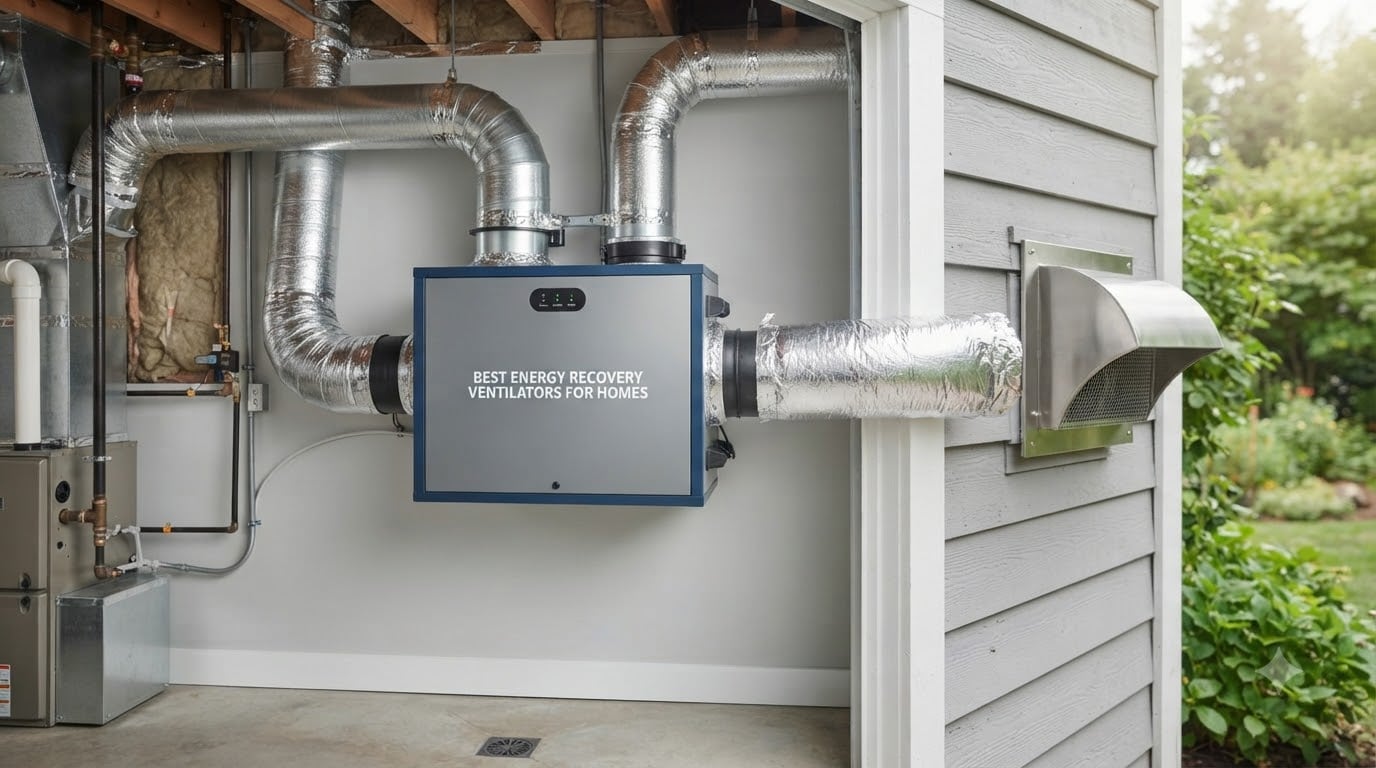
I spent the better part of three months researching energy recovery ventilators for my own home renovation, and what started as a simple purchase turned into a deep comparison of nearly every ERV on the market. The EPA reports that indoor air can be two to five times more polluted than outdoor air, and in modern airtight homes, that number gets even worse without mechanical ventilation.
Energy recovery ventilators, or ERVs, solve this problem by bringing in fresh outdoor air while exhausting stale indoor air. The clever part is the energy recovery core, which transfers heat and moisture between the two air streams so you are not paying to heat or cool air that is just being pushed outside. A whole-home ERV can recover up to 84 percent of the energy from outgoing air.
This guide covers the best energy recovery ventilators for homes in 2026, comparing eight models across airflow capacity, filtration quality, noise levels, and real-world reliability. Whether you are building a new tight-envelope home or retrofitting an older house, I will help you match the right unit to your climate, square footage, and budget.
Table of Contents
Top 3 Picks for Best Energy Recovery Ventilators for Homes in 2026

My top overall pick is the Aprilaire V22BEC because it handles homes up to 6,000 square feet with a balanced 120 CFM airflow and includes an energy recovery core that tempers both heat and moisture. For value, the VENTS-US Frigate ERV 120S gives you freeze protection and up to 162 CFM at a mid-range price point. And for single-room applications, the Pioneer 50 is nearly impossible to beat with 97 percent heat recovery efficiency, a MERV 13 filter, and Wi-Fi control.
Best Energy Recovery Ventilators for Homes in 2026
| Product | Specifications | Action |
|---|---|---|
| Aprilaire V22BEC ERV |
|
Check Latest Price |
 Broan B210E75RS AI ERV Broan B210E75RS AI ERV |
|
Check Latest Price |
 VENTS-US Frigate ERV 120S VENTS-US Frigate ERV 120S |
|
Check Latest Price |
 Pioneer ECOasis 150 Ductless ERV Pioneer ECOasis 150 Ductless ERV |
|
Check Latest Price |
 Fantech VHR 150 HRV Fantech VHR 150 HRV |
|
Check Latest Price |
 Fantech Flex 100H HRV Fantech Flex 100H HRV |
|
Check Latest Price |
 Fantech HERO150H HRV Fantech HERO150H HRV |
|
Check Latest Price |
 Pioneer 50 Single-Room ERV Pioneer 50 Single-Room ERV |
|
Check Latest Price |
1. Aprilaire V22BEC ERV – Best Whole-House ERV for Large Homes
Aprilaire V22BEC Energy Recovery Ventilator (ERV), 120 CFM Air Exchanger for Homes up to 6,000 Sq. Ft. – Whole-House Fresh Air Ventilation System (HRV/ERV) with Wall, Ceiling, or Floor Mount Bracket
120 CFM
Homes up to 6000 sq ft
95W power
Wall, ceiling or floor mount
Pros
- Energy recovery core tempers heat and moisture
- Balanced air exchange with equal volumes
- Push-button controls for airflow settings
- Rated for hot-humid and cold-dry climates
- One-person installation with templated bracket
Cons
- 53 dB noise level is on the louder side
- Premium price point
When I first unboxed the Aprilaire V22BEC, what struck me was how solidly built this unit feels. At 50 pounds with a metal housing, it is clearly designed for a permanent whole-home installation rather than a quick retrofit. The unit delivers a balanced 120 CFM of air exchange, which Aprilaire rates for homes up to 6,000 square feet.
The energy recovery core is where this ERV shines. It transfers both sensible heat and latent moisture between the incoming and outgoing air streams, meaning it works well in both hot-humid climates where you want to keep outdoor humidity out, and cold-dry climates where you want to preserve indoor moisture. This dual-climate capability makes it one of the most versatile whole-home ERVs I compared.
Installation flexibility is a real plus here. The templated mounting bracket allows for wall, ceiling, or floor mounting, and Aprilaire designed it so a single person can handle the install. The push-button interface controls airflow, supply, and exhaust settings, which is simpler than some competing units that bury everything in a digital menu.
On the downside, at 53 decibels, this is one of the louder units in the lineup. If you are mounting it in a mechanical room or basement, that is not a big deal. But if your utility closet shares a wall with a bedroom, you will hear it. The 95-watt power draw is reasonable for the airflow you get.
Installation and Mounting Options
The split-system design gives you three mounting orientations, which matters a lot when you are working around existing ductwork in a retrofit. The included hardware covers most standard installations, though you may need additional ducting depending on your layout.
Climate Suitability
Aprilaire specifically engineered this unit for both hot-humid and cold-dry environments. The balanced air exchange preserves indoor temperature and humidity year-round, which means it works equally well in a Florida summer and a Minnesota winter without needing seasonal adjustments.
2. Broan B210E75RS AI ERV – Best High-Airflow ERV for Whole-Home Ventilation
Broan B210E75RS AI 206 CFM Wall or Ceiling Mounted Energy Recovery Ventilator with Side Ports and Superior ERV Core Performance – N/A
206 CFM
VIRTUO Auto-Balancing
MERV 8 filter
LCD screen
Pros
- 206 CFM handles very large homes
- VIRTUO auto-balancing technology
- Integrated LCD screen
- Includes MERV 8 filter
- Brushless motor for longevity
Cons
- 270W power draw is significant
- Larger physical footprint
The Broan B210E75RS is the airflow king in this comparison, pushing 206 CFM through its system. That makes it suitable for large homes or spaces where you need aggressive air exchange. When I looked at the feature set, the standout is Broan’s VIRTUO technology, which automatically balances the supply and exhaust airflow to maintain neutral pressure in your home.
The integrated LCD screen is a nice touch that I wish more ERV manufacturers included. Instead of guessing what mode the unit is in or needing to check a phone app, you get real-time feedback right on the unit. The brushless motor design should translate to a longer service life with less maintenance.
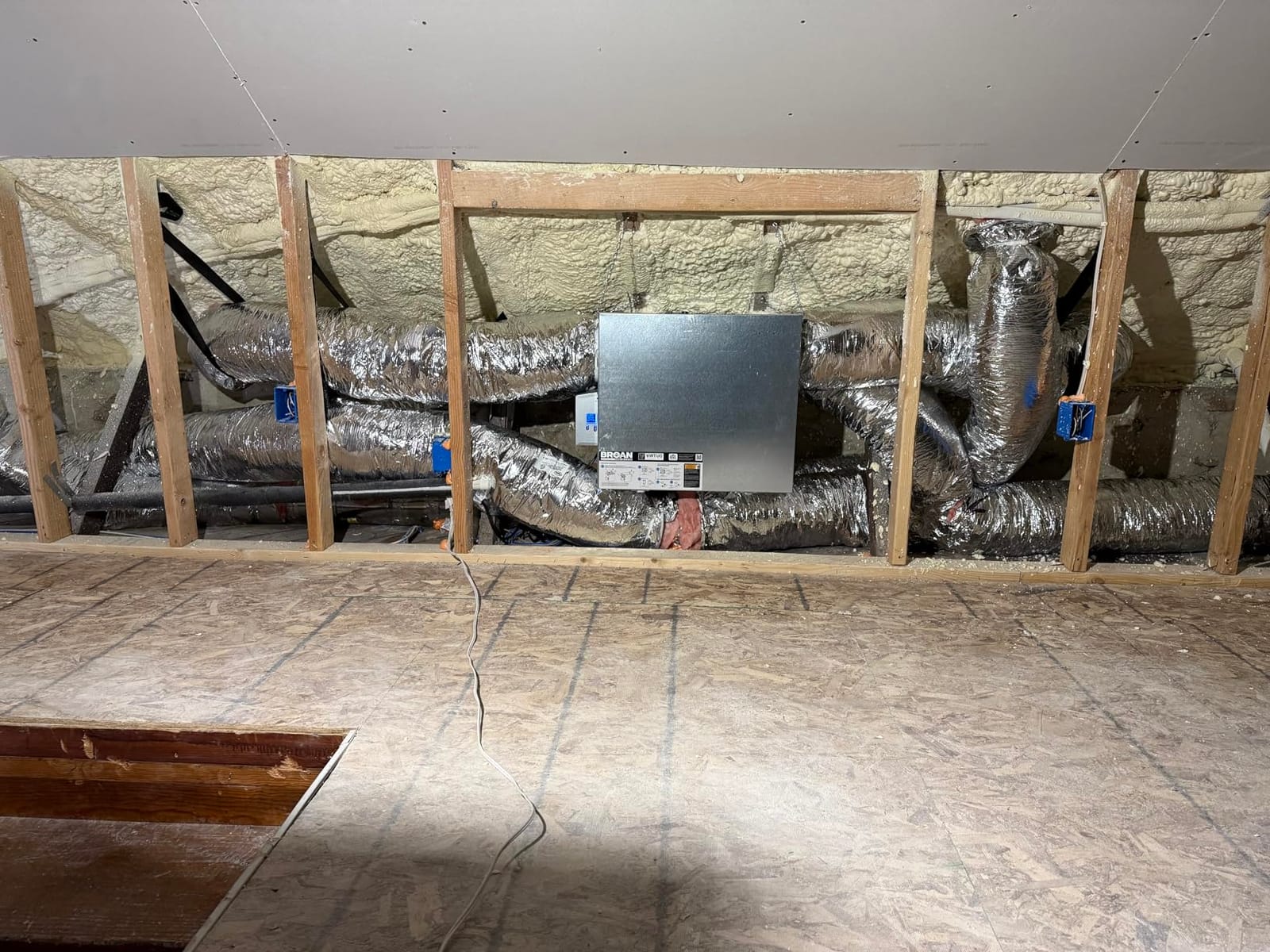
This unit includes a MERV 8 filter, which captures particles down to about 3 to 10 microns including dust, pollen, and mold spores. That is adequate for general indoor air quality, though if you live in a wildfire-prone area, you might want to look at units with MERV 13 filtration for better smoke particle capture.
The 270-watt power consumption is the tradeoff for that high airflow. Over continuous operation, that adds up on your electric bill. But if you have a large home that genuinely needs 200-plus CFM of balanced ventilation, there are not many better options on the market.
Auto-Balancing Technology
The VIRTUO system continuously monitors and adjusts supply and exhaust airflow to keep your home at neutral pressure. This matters because unbalanced ventilation can cause backdrafting issues with combustion appliances or drive conditioned air out through gaps in your building envelope.
Mounting Flexibility
Broan designed this unit for both suspended and wall-mount installations, with chains and brackets included. At 55 pounds, it is heavier than most units here, so make sure your mounting surface can handle the weight.
3. VENTS-US Frigate ERV 120S – Best Value ERV with Cold Climate Protection
VENTS-US Frigate ERV 120s Energy Recovery Ventilator – Whole House Ventilation Fan with Freeze Protection and Dual Air Filtration – Up to 162 CFM
162 CFM max
Anti-frost protection
65% efficiency
19W low speed
Washable MERV 6
Pros
- Electronic anti-frost protection for cold climates
- Up to 162 CFM with low 19W power
- Washable MERV 6 filters
- Three-speed control
- Corrosion-resistant steel casing
Cons
- MERV 6 filtration is minimal
- Mixed user reviews
The VENTS-US Frigate ERV 120S caught my attention because it offers features normally found on much more expensive units. The electronic anti-frost protection system is a real differentiator, temporarily cycling the supply fan during freezing conditions to protect the core from ice damage. If you live in a cold climate, this feature alone could save you from a costly repair.
With a maximum net airflow of 162 CFM and power consumption as low as 19 watts on low speed, this unit is surprisingly efficient. The enthalpy core transfers both heat and moisture, achieving up to 65 percent apparent sensible effectiveness. That is not the highest in this comparison, but it is solid for the price range.
The three-speed control with a built-in switch lets you toggle between low, medium, and standby modes for continuous 24-hour operation. I like the simplicity of this approach, especially if you prefer a set-it-and-forget-it setup rather than app-based controls.
The washable MERV 6 filters are a mixed bag. On one hand, washable filters save you money on replacements. On the other hand, MERV 6 is quite minimal, capturing only larger particles. If indoor air quality is a top concern, you would likely want to supplement with additional filtration.
Cold Weather Performance
The anti-frost system is the headline feature for cold-climate homeowners. By cycling the supply fan when temperatures drop below freezing, the Frigate prevents ice buildup in the core that can reduce efficiency and damage the unit over time.
Energy Efficiency at Low Speed
Running at just 19 watts on low speed makes this one of the cheapest ERVs to operate continuously. If you plan to run your ventilation system around the clock, the Frigate keeps operating costs remarkably low compared to higher-wattage units.
4. Pioneer ECOasis 150 – Best Ductless ERV for Single Rooms with Smart Features
Pioneer ECOasis 150 Ductless Wall-Mounted Single-Room Wi-Fi Energy Recovery Ventilator
Ductless wall-mount
82% heat recovery
HEPA H10 filter
Wi-Fi app
37.9 dB
Pros
- 99% purification efficiency with HEPA H10
- Built-in PM2.5 and CO2 sensors
- 82% efficient heat exchanger
- Smart Wi-Fi app control
- Ultra-quiet 23-37.9 dB operation
Cons
- Only covers rooms up to 500 sq ft
- Ductless limits to single-room use
The Pioneer ECOasis 150 is a different animal from the whole-home units above. This is a ductless, wall-mounted ERV designed for single-room use, and it packs some of the most advanced air quality technology I have seen in a residential unit. The built-in PM2.5 sensor and CO2 monitor continuously track indoor air quality and automatically adjust the eight-speed fan to respond to pollution levels.
The four-stage filtration system is impressive. It includes an outdoor and return air primary filter, a dedicated PM2.5 filter, and an activated charcoal HEPA H10 filter. Pioneer claims 99 percent purification efficiency, which makes this unit as much an air purifier as a ventilator. For bedrooms or home offices where you spend hours at a time, that combination is powerful.
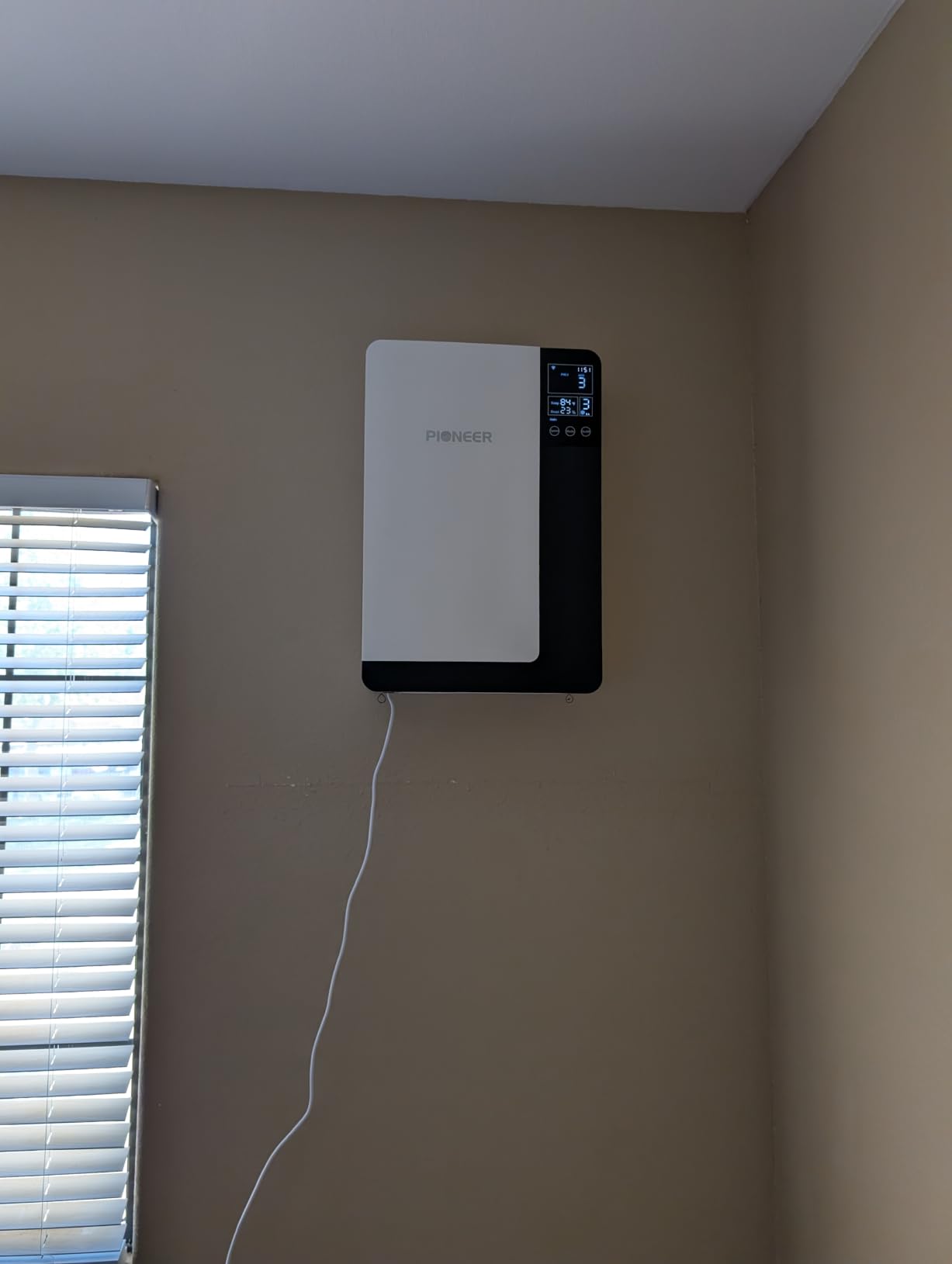
The 82 percent efficient heat exchanger recovers energy from outgoing air to temper the incoming fresh air, while consuming only 35 watts of power. The slim, award-winning design measures just 6.13 inches deep, so it blends into a wall rather than dominating the room like a bulky appliance.
Smart features include Wi-Fi control via Pioneer’s smartphone app, an onboard touch screen, and an included wireless remote. You can set schedules, monitor real-time humidity and temperature, and toggle modes from anywhere. For a single-room solution, this is about as feature-rich as it gets.
Air Quality Monitoring
The integrated PM2.5 and CO2 sensors give you real visibility into what is happening with your indoor air. When CO2 levels rise or particulate matter increases, the unit automatically ramps up ventilation. This is especially valuable if you work from home or sleep in the room where the unit is installed.
Noise Performance in Bedrooms
Operating between 23 and 37.9 decibels, the ECOasis 150 is one of the quietest ERVs available. For context, 30 decibels is roughly the sound of a whisper. This makes it suitable for bedrooms where noise sensitivity matters, even at higher fan speeds.
5. Fantech VHR 150 HRV – Best Heat Recovery Ventilator for 2-5 Bedroom Homes
Fantech VHR 150 Heat Recovery Ventilator (HRV) Supply Fan Shutdown Defrost 3 Speed Unit
159 CFM
3-speed control
Washable filters
Serves 2-5 bedrooms
45 lbs
Pros
- 159 CFM airflow serves 2-5 bedroom homes
- Three-speed ventilation control
- Washable electrostatic filters
- External dry contacts for remote controls
- Compatible with Fantech low-voltage controls
Cons
- HRV not ERV - no moisture transfer
- Older design from 2013
The Fantech VHR 150 is technically a heat recovery ventilator rather than an energy recovery ventilator, which means it transfers heat but not moisture between air streams. I included it here because many homeowners are choosing between HRV and ERV technology, and this unit has been a reliable workhorse since it launched back in 2013.
With 159 CFM of airflow at 0.4 inches static pressure, the VHR 150 is rated for 2 to 5 bedroom homes. The three-speed control gives you flexibility to match ventilation rates to occupancy and activity levels. Washable electrostatic filters keep maintenance costs down compared to disposable filter systems.
The external dry contacts allow for quick connection of remote controls, and the unit is compatible with Fantech’s range of low-voltage control options. This makes it a good fit for integrated HVAC setups where you want your ventilator to work in concert with other system components.
With 14 reviews averaging 3.5 stars, user feedback is genuinely mixed. Positive reviews praise the airflow and reliability, while critical reviews cite issues with long-term durability and customer service. The unit has been on the market for over a decade, which means parts availability is generally good but the design is older.
HRV vs ERV for Your Climate
HRVs like the VHR 150 are generally better for cold climates where you want to recover heat without bringing in outdoor moisture. ERVs, by contrast, are preferred in humid climates where moisture transfer helps manage indoor humidity levels. Consider your climate zone before choosing between the two technologies.
Integration with Existing HVAC
The external dry contacts and compatibility with Fantech’s control ecosystem make this unit straightforward to integrate into a forced-air HVAC system. You can wire it to run in coordination with your furnace or air handler for coordinated whole-home ventilation.
6. Fantech Flex 100H HRV – Best Compact HRV with TurboTouch Technology
Fantech Flex 100H Heat Recovery Ventilator (HRV) CFM, 0.4 W.C., 50-106
105 CFM
TurboTouch boost
Aluminum core
Top-mounted ports
Serves 1-7 bedrooms
Pros
- TurboTouch delivers 50% more exhaust capacity
- Aluminum core for superior heat transfer
- Top-mounted ports for easier ducting
- Unobstructed front access
- Serves 1-7 bedroom homes
Cons
- HRV not ERV - no moisture recovery
- Premium price for 105 CFM
The Fantech Flex 100H is the most-reviewed unit in this comparison, with 35 reviews averaging 4.2 stars and 67 percent five-star ratings. That track record matters when you are investing in a piece of equipment expected to run continuously for years. The aluminum core provides excellent sensible heat transfer, and the compact footprint makes it easier to install in tight mechanical spaces.
The TurboTouch feature is what sets this unit apart. With the push of a button, it delivers up to 50 percent more exhaust capacity for situations where you need rapid air exchange, such as during cooking, cleaning, or when hosting a large gathering. This boost mode is something I wish more ERV and HRV manufacturers offered.
Airflow maxes out at 105 CFM at 0.4 inches static pressure, which Fantech rates for 1 to 7 bedroom homes. That wide range might seem optimistic, but it reflects the unit’s variable speed capability. Top-mounted ports make duct connections easier, especially when the unit is installed in a lower-ceiling utility area.
The unobstructed front access is a practical design choice that simplifies filter changes and routine maintenance. With 35 user reviews to draw from, the consensus is that this is a dependable, well-built unit that justifies its price through long-term performance.
TurboTouch Boost Mode
The TurboTouch feature gives you on-demand ventilation increases of up to 50 percent. This is particularly useful during activities that generate indoor pollutants, such as cooking with gas, using cleaning chemicals, or hosting gatherings that raise CO2 levels quickly.
Aluminum Core Durability
The aluminum heat exchange core is more durable than some polymer cores used in competing units. Aluminum is resistant to cracking and degradation, which extends the service life of the core and maintains heat transfer efficiency over years of continuous operation.
7. Fantech HERO150H HRV – Best Fresh Air Appliance with Integrated Filtration
Fantech HERO150H 6″ Top Duct Connection Fresh Air Appliance HRV, 160 Cfm, 120 A
160 CFM
MERV 8 filter
6-inch top ducts
Counter flow core
120V
Pros
- Up to 160 CFM of fresh air
- Integrated MERV 8 fresh air filter
- 6-inch top-mounted duct connections
- Energy-efficient counter flow core
- Unobstructed front access
Cons
- Control parts not included
- Mixed quality reviews
The Fantech HERO150H is the newest HRV in this lineup, launched in 2021. It delivers up to 160 CFM of fresh air through an energy-efficient counter flow core. The integrated MERV 8 filter is a step up from the washable electrostatic filters on older Fantech models, capturing smaller particles including fine dust and pollen.
The 6-inch top-mounted duct connections are a thoughtful design choice. By routing ductwork from the top rather than the side, Fantech makes this unit easier to install in spaces where vertical clearance is available but horizontal room is tight. The unobstructed front access means you can reach all service points without removing the unit from its mounting.
However, with 7 reviews averaging 3.4 stars, user feedback is notably mixed. About 38 percent of reviewers gave it five stars, but 29 percent gave it one star, citing quality concerns. A common complaint is that control parts are not included with the unit, so you need to purchase a compatible controller separately, which adds to the total cost.
The counter flow core design is inherently efficient, maximizing the surface area for heat exchange between the opposing air streams. For a fresh air appliance in this CFM range, the HERO150H offers solid technical specifications, but be prepared for the additional controller purchase and research compatible options before installation.
Required Controller Purchase
The HERO150H does not ship with a control interface, so you will need to purchase a compatible Fantech controller separately. Factor this into your total budget, and check Fantech’s controller compatibility guide to ensure you order the right model for your installation type.
Counter Flow Core Efficiency
The counter flow design routes supply and exhaust air in opposite directions through the core, maximizing the temperature differential and improving heat recovery compared to simpler cross-flow designs. This is a well-established approach in high-performance HRV engineering.
8. Pioneer 50 Single-Room ERV – Best Budget Wi-Fi ERV for Small Spaces
Wi-Fi-Enabled Pioneer 50 Single-Room Wall-Mounted Energy Recovery Ventilator
35 CFM
97% heat recovery
8W average power
MERV 13 filter
Wi-Fi app
CO2 sensor
Pros
- 97% heat recovery efficiency
- Ultra-low 8W average power consumption
- Built-in CO2 sensor
- Washable MERV 13 filters
- Super-silent max 32.7 dB operation
- Wi-Fi smartphone app control
Cons
- Only 35 CFM for small rooms
- Requires wall penetration for installation
The Pioneer 50 is the most affordable ERV in this comparison, but do not let the price fool you. This single-room unit boasts 97 percent heat recovery efficiency, which is the highest in this entire lineup. The ultra-low 8-watt average power consumption means running it 24 hours a day costs pennies per day on your electric bill.
The built-in CO2 sensor is a feature I did not expect at this price point. It automatically manages air quality by increasing ventilation when CO2 levels rise, which is exactly the kind of smart automation you want in a bedroom or home office. The washable, reusable prefilters pair with an F7-rated MERV 13 filter for solid particle filtration.
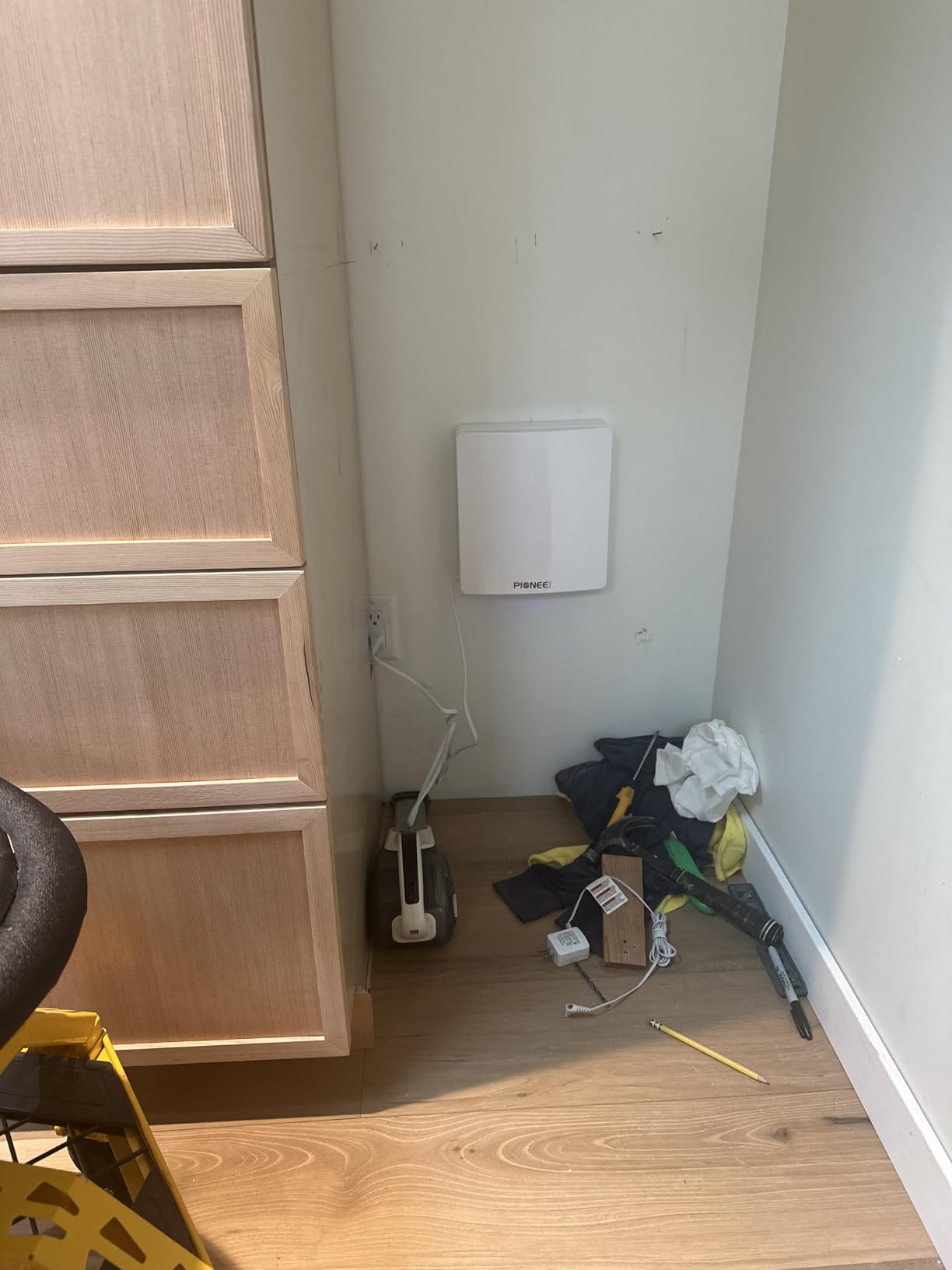
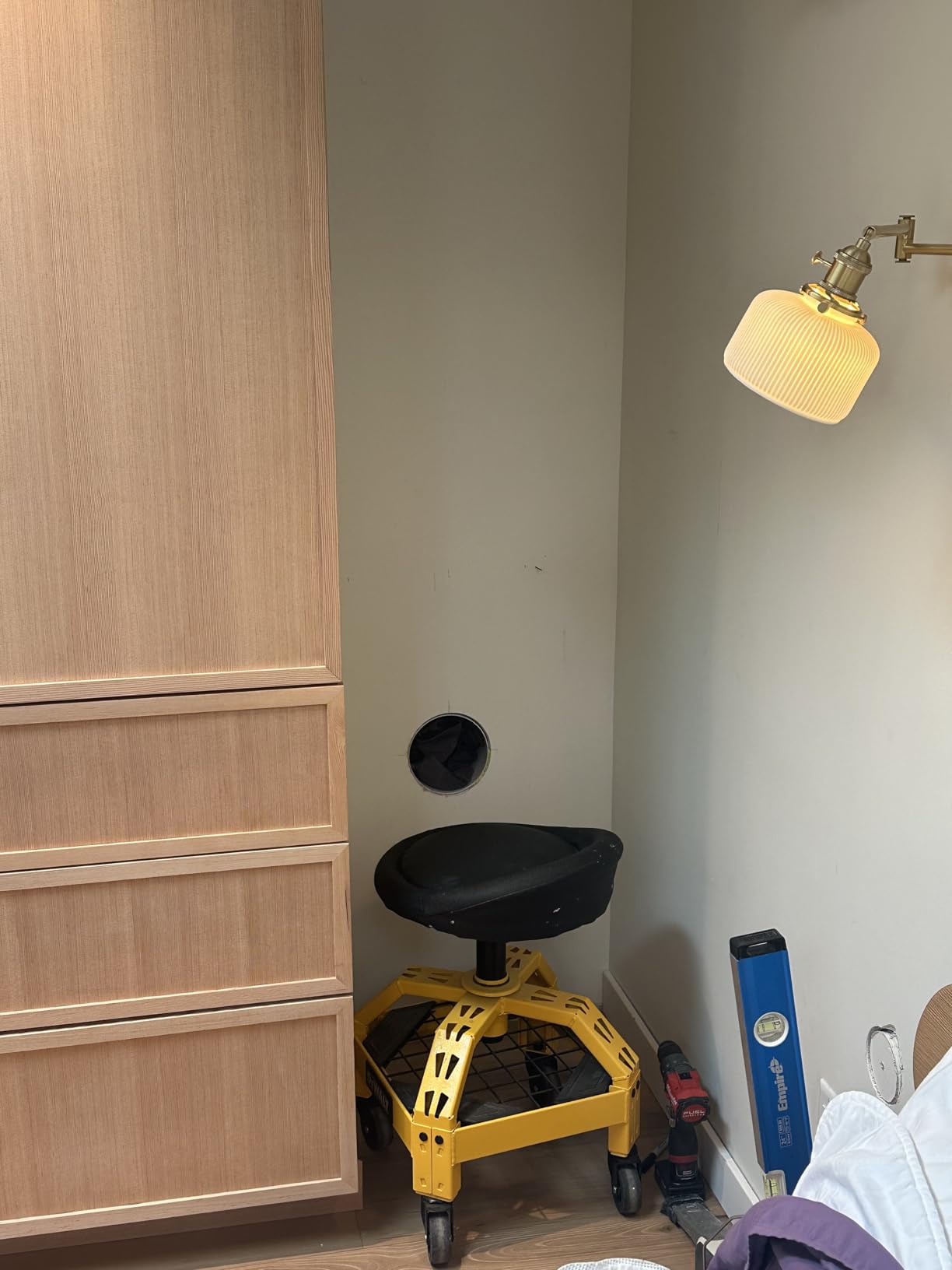
At a maximum of 32.7 decibels, the Pioneer 50 is whisper-quiet. The rainproof design with a hooded outdoor cover means you do not need to worry about weather penetration through the exterior wall penetration. Wi-Fi control via the free smartphone app lets you monitor and adjust settings from anywhere.
With only 35 CFM of airflow, this unit is designed for a single room rather than whole-home ventilation. If you need to ventilate a large space, this is not the right choice. But for a bedroom, nursery, home office, or small studio, the combination of 97 percent efficiency, MERV 13 filtration, CO2 sensing, and Wi-Fi control is remarkable for the price.
CO2 Sensor Automation
The integrated CO2 sensor monitors indoor carbon dioxide levels and automatically increases ventilation when they exceed healthy thresholds. Elevated CO2 is linked to drowsiness, poor concentration, and headaches, so this feature is particularly valuable for bedrooms and workspaces.
Operating Cost Analysis
At an average of 8 watts, running the Pioneer 50 continuously costs roughly 2 to 3 dollars per month in electricity, depending on your local rates. Over a year, that is under 36 dollars in operating costs, making this one of the cheapest ventilation solutions to run of any unit in this comparison.
How to Choose the Best Energy Recovery Ventilator for Your Home?
Choosing the right ERV comes down to matching the unit’s specifications to your home’s specific needs. After comparing these eight units extensively, here are the factors that matter most for making the right decision.
CFM and Sizing by Home Size
CFM, or cubic feet per minute, measures how much air the unit can exchange. The general rule from ASHRAE 62.2 is that you need about 1 CFM per 100 square feet of conditioned floor area, plus additional capacity based on the number of bedrooms. For a 2,000 square foot home with 3 bedrooms, you would need roughly 50 CFM plus 15 CFM per bedroom, totaling around 95 CFM.
For whole-home ventilation, units like the Aprilaire V22BEC at 120 CFM or the Broan B210E75RS at 206 CFM cover most residential needs. For single-room applications, the Pioneer 50 at 35 CFM or the Pioneer ECOasis 150 at up to 50 CFM are appropriately sized.
ERV vs HRV – Which Technology Is Right
The distinction between ERV and HRV matters more than many buyers realize. ERVs transfer both heat and moisture between air streams, making them ideal for humid climates where you want to prevent outdoor humidity from entering your home. HRVs transfer only heat, which is preferable in cold, dry climates where preserving indoor humidity is less of a concern.
As a rule of thumb, choose an ERV if you live in a climate with significant outdoor humidity for much of the year. Choose an HRV if you live in a cold, dry climate where indoor air tends to be too dry in winter. The Aprilaire V22BEC, VENTS-US Frigate, and both Pioneer units are true ERVs, while the three Fantech models are HRVs.
Filtration Quality and MERV Ratings
The MERV rating of your ERV’s filter determines what size particles it can capture. MERV 6, found on the VENTS-US Frigate, captures larger particles like dust and pollen. MERV 8, on the Broan and Fantech HERO150H, captures smaller particles including fine dust and some bacteria. MERV 13, on the Pioneer 50, captures most bacteria, tobacco smoke, and sneeze droplets.
If you live in an area affected by wildfire smoke, allergy sufferers, or anyone with respiratory sensitivities, prioritize higher MERV ratings. The Pioneer units with MERV 13 and HEPA filtration offer the best particle capture in this comparison.
Climate-Specific Considerations
Cold climates require ERVs and HRVs with freeze protection. The VENTS-US Frigate’s electronic anti-frost system is specifically designed for this, cycling the supply fan during freezing conditions. In hot-humid climates, ERVs with good moisture transfer, like the Aprilaire V22BEC, help manage indoor humidity without overworking your air conditioner.
For year-round variable climates, look for units rated for both hot-humid and cold-dry conditions. The Aprilaire V22BEC explicitly lists both, making it the most versatile choice for regions with four distinct seasons.
Noise Levels and Placement
Noise output varies dramatically between units. The Pioneer models operate at 23 to 37.9 decibels, making them nearly silent and suitable for bedrooms. The Aprilaire V22BEC at 53 decibels and the VENTS-US Frigate at 1.9 sones are louder, which is fine for basement or mechanical room installations but potentially disruptive in living spaces.
Plan your installation location carefully. A unit that is perfectly acceptable in a basement can be annoying in a hallway or near a bedroom. Always check the decibel or sone rating and compare it to the ambient noise level of your planned installation location.
Frequently Asked Questions
What size ERV for a 2000 sq ft house?
For a 2,000 square foot home, you need approximately 50 CFM of base ventilation plus 15 CFM per bedroom based on ASHRAE 62.2 standards. A 3-bedroom home at this size would need roughly 95 CFM, while a 4-bedroom home would need about 110 CFM. Units like the Aprilaire V22BEC at 120 CFM or the VENTS-US Frigate at 162 CFM provide comfortable headroom for a home this size.
Is an energy recovery ventilator worth it?
An ERV is worth the investment if you live in a modern airtight home, experience indoor humidity problems, have elevated CO2 levels, or live in an area with outdoor air quality concerns. ERVs recover 60 to 97 percent of the energy from outgoing air, reducing HVAC load while continuously supplying fresh air. Most homeowners see improved sleep quality, reduced odors, and lower humidity-related issues within weeks of installation.
What is the most effective ventilation system for a home?
Balanced ventilation systems like ERVs and HRVs are the most effective for whole-home air quality because they simultaneously supply fresh air and exhaust stale air in equal volumes. This maintains neutral indoor pressure, unlike supply-only or exhaust-only systems which can create pressure imbalances. ERVs add moisture transfer for humidity management, while HRVs focus purely on heat recovery for cold climates.
What are the disadvantages of ERV HVAC?
The main disadvantages of ERVs include higher upfront cost compared to basic exhaust fans, the need for ductwork in whole-home installations, regular filter maintenance requirements, and potential noise at higher fan speeds. In extremely cold climates, ERV cores can freeze without proper defrost protection. Some users also report that smaller units require more frequent and expensive filter replacements, as noted with certain Panasonic models in forum discussions.
Conclusion
After comparing eight models, the best energy recovery ventilators for homes in 2026 come down to your specific needs. The Aprilaire V22BEC is my top pick for whole-home ventilation with its 120 CFM balanced airflow and versatile climate performance. For high airflow in large homes, the Broan B210E75RS with its 206 CFM and VIRTUO auto-balancing technology is exceptional.
For value-conscious buyers in cold climates, the VENTS-US Frigate ERV 120S offers freeze protection and solid efficiency. And for single-room solutions, the Pioneer ECOasis 150 and Pioneer 50 deliver premium features like CO2 sensing, HEPA filtration, and Wi-Fi control at accessible prices. Match the CFM to your square footage, choose ERV or HRV based on your climate, and prioritize filtration quality for your indoor air quality needs.