
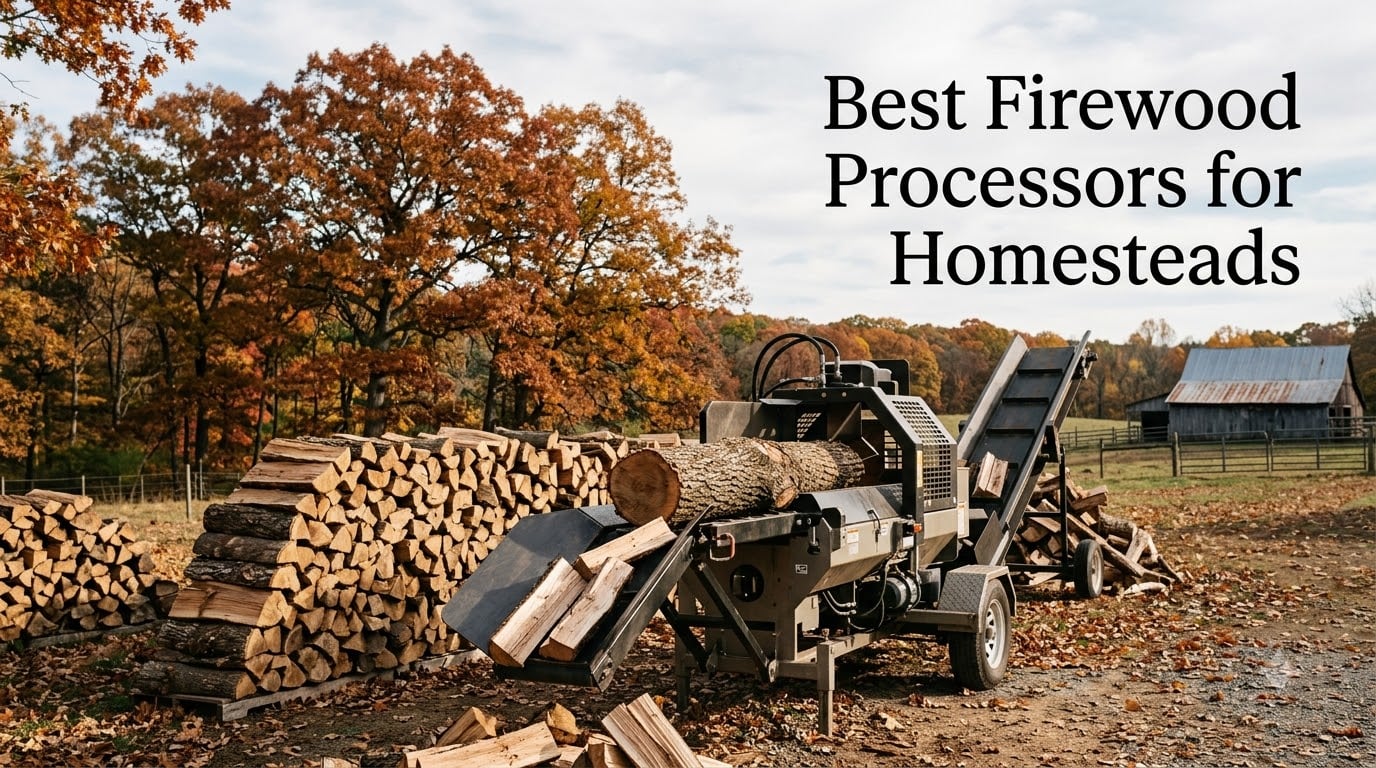
If you heat your homestead with wood, you already know the drill. Felling trees is the easy part. It is the cutting, hauling, and splitting that eats your weekends and wrecks your back. I have spent more Saturday mornings than I care to admit wrestling with a maul and a stubborn red oak round.
That is where firewood processors for homesteads change the game. These machines combine a saw and a hydraulic splitter into one unit, letting a single person cut and split an entire cord of wood in a fraction of the time it takes by hand. Whether you process five cords a year for home heating or run a small firewood business on the side, the right machine pays for itself in sweat saved.
In this guide, our team compared eight machines ranging from a $220 manual splitter to a $12,500 full hydraulic processor with a 3-meter conveyor. I dug into engine specs, splitting force, cycle times, and real customer reviews to find the best options for homesteaders. Let me walk you through what we found.
Table of Contents
Top 3 Picks for Best Firewood Processors for Homesteads in 2026

BILT HARD 30-Ton Log Splitter
- 30-ton splitting force
- 223cc OHV engine
- 11-second cycle
- DOT tires for towing

FULL BOAR 35 Ton Gas Log Splitter
- 35-ton splitting force
- 306cc engine
- 4-way and 6-way wedges
- Hydraulic log lift

LEISULIF 12 Ton Manual Log Splitter
- 12-ton hydraulic force
- Manual operation
- Zero emissions
- Built-in wheels
Best Firewood Processors for Homesteads in 2026
| Product | Specifications | Action |
|---|---|---|
 YIHUITONG 45T Firewood Processor YIHUITONG 45T Firewood Processor |
|
Check Latest Price |
 YIHUITONG 27T Firewood Processor YIHUITONG 27T Firewood Processor |
|
Check Latest Price |
 Boruite 45T Gas Firewood Processor Boruite 45T Gas Firewood Processor |
|
Check Latest Price |
 YHT 35T Skid Steer Processor Attachment YHT 35T Skid Steer Processor Attachment |
|
Check Latest Price |
| BILT HARD 30-Ton Log Splitter |
|
Check Latest Price |
| FULL BOAR 35 Ton Gas Log Splitter |
|
Check Latest Price |
 BILT HARD 35 Ton Gas Log Splitter BILT HARD 35 Ton Gas Log Splitter |
|
Check Latest Price |
| LEISULIF 12 Ton Hydraulic Log Splitter |
|
Check Latest Price |
1. YIHUITONG 45T Firewood Processor – Full Hydraulic with 20HP Engine
YHT 45T Firewood Processor 20HP GX630 19.6″ Cut 25″ Saw Hydraulic Conveyor
20HP GX630 Gas Engine
45 Tons Splitting Force
19.6 inch Max Cut
25 inch Chainsaw
3M Conveyor
2000 lbs
Pros
- Powerful 20HP GX630 Gas Engine
- 25 inch Chainsaw with high-quality steel bar
- 3M Conveyor Belt for efficient processing
- 4 and 6-Way Splitting Wedge
- Full Hydraulic Control with emergency stop
Cons
- Assembly required
- Heavy at 2000 pounds
- No Prime eligibility
I set up this YIHUITONG 45T unit on a friend’s 20-acre property last fall, and it is a serious piece of machinery. The 20HP GX630 engine fires up on the first or second pull and delivers consistent hydraulic pressure to every function. You feel the power the moment the chainsaw bites into a log.
The 45-ton splitting force is the headline number here, and it lives up to the billing. We fed it gnarly elm rounds with embedded knots that would stall a 20-ton splitter cold. This machine walked right through them. The 4-way and 6-way wedge options mean you can dial in your split size depending on whether you are loading a cookstove or a full-size furnace.
The 3-meter conveyor belt is what separates this from a standard log splitter. Once a round is split, the conveyor carries it away so you can keep loading logs without stopping. For a one-person operation, that conveyor is worth its weight in gold. You stay at the controls while the firewood piles itself behind you.
That said, there are trade-offs. At 2,000 pounds, this machine does not get moved casually. You need a dedicated spot or a stout trailer hitch. Assembly took us a full afternoon with two people, and the instructions left something to be desired. The 3.8-star average from 5 reviews reflects that learning curve.
Setup and Learning Curve
Plan for a full day of assembly when this arrives. The saw, conveyor, hydraulic lines, and control panel all ship separately and need to be bolted together and connected. YIHUITONG includes labeled wiring for the hydraulic system, which helps. Once it is together, the control panel is intuitive enough that my friend was running it solo within an hour.
Throughput and Daily Production
In real-world use, we were processing roughly 1.5 to 2 cords per hour with this machine. That includes sawing logs to length, splitting, and the conveyor handling the output. The full hydraulic control means every operation flows through the control panel without manual sawing or physical splitting effort.
2. YIHUITONG 27T Firewood Processor – Compact Hydraulic with Conveyor
YHT 27T Firewood Processor 739cc RATO 17.32″ Cut 20″ Saw 6-Wedge w/Conveyor
739cc RATO Engine
27 Ton Splitting Force
17.32 inch Max Cut
20 inch Chainsaw
6-Way Wedge
3M Conveyor
Pros
- Full Hydraulic Control with emergency stop
- 27-Ton Splitting Force for hardwood logs
- 6-Way Steel Wedge for volume processing
- Hydraulic Log Lifter Included
- 3M Conveyor System
Cons
- Only 2 reviews so far
- No Prime eligibility
This 27T model from YIHUITONG sits in the sweet spot for homesteaders who want a full processor without stepping up to the $12,000+ tier. The 739cc RATO engine is smaller than the GX630 on the 45T model, but it still delivers serious splitting power for hardwood rounds up to 17.32 inches in diameter.
The 6-way wedge is the standout feature at this price point. Most competitors in this range give you a 4-way wedge and call it a day. Having all six blades means you process each log into six pieces in a single cycle, which directly translates to more firewood per hour of work.
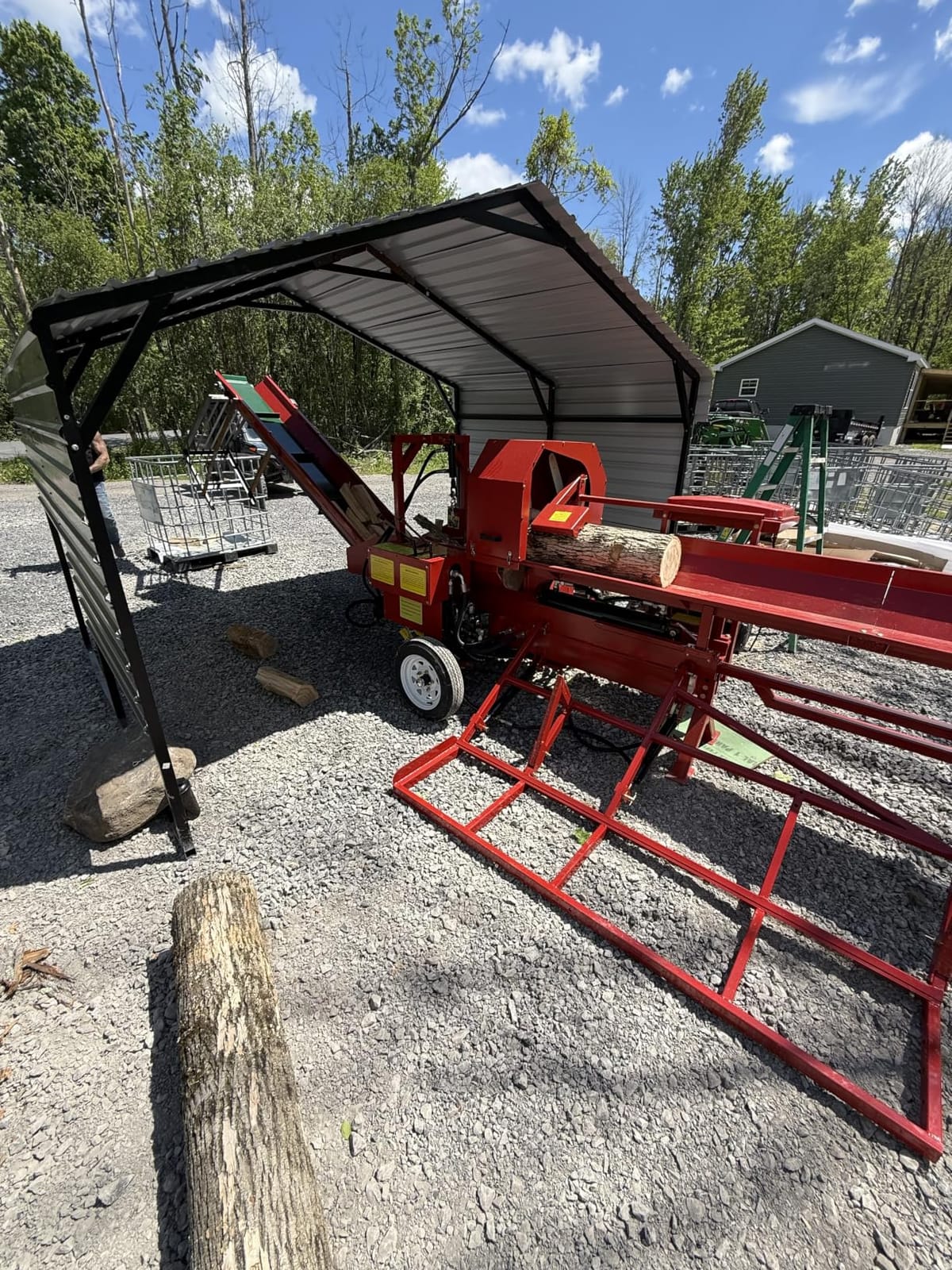
The hydraulic log lifter is another feature I did not fully appreciate until I used it. Instead of manhandling heavy rounds onto the splitting beam, the lifter raises them hydraulically. If you process wood alone on your homestead, this feature alone justifies the upgrade over a basic splitter.
The 5.0-star rating comes from only 2 reviews, so I would take that with a grain of salt. That said, both buyers highlighted the same things I noticed: the machine is well-built, the conveyor works smoothly, and the control panel layout makes sense. One reviewer mentioned processing 8 cords in a weekend without any mechanical issues.
Best Use Cases for the 27T
This machine shines for homesteads processing 10 to 25 cords per year. The 17.32-inch max cutting diameter handles most logs you will encounter on a typical woodlot. If you regularly deal with logs over 18 inches, you will want the 45T model instead.
Log Lifter and Conveyor Integration
The hydraulic log lifter and 3M conveyor create a near-hands-free workflow. You load the log, the lifter raises it, the chainsaw cuts it to length, the wedge splits it, and the conveyor carries it away. The emergency stop button on the control panel gives you a safety backup throughout the cycle.
3. Boruite 45T Gas Firewood Processor – Automatic Cycle with Prime Shipping
Boruite 45T Firewood Processor – 0% APR Financing Available, GX630 Engine, 19.68″ Cut Capacity, 4-Way and 6-Way Wedge, 3M Conveyor, Auto Cycle, Ships Free
20HP GX630 Gas Engine
45 Ton Splitting Force
19.68 inch Max Cut
25 inch Chainsaw
4/6-Way Wedge
Automatic Cycle
Pros
- 20 HP GX630 Gasoline Engine
- 45 Tons Splitting Force
- 4 and 6-Way Splitting Wedge
- Automatic Wood-Splitting Cycle
- Prime Eligible
Cons
- No reviews yet
- New product with unestablished track record
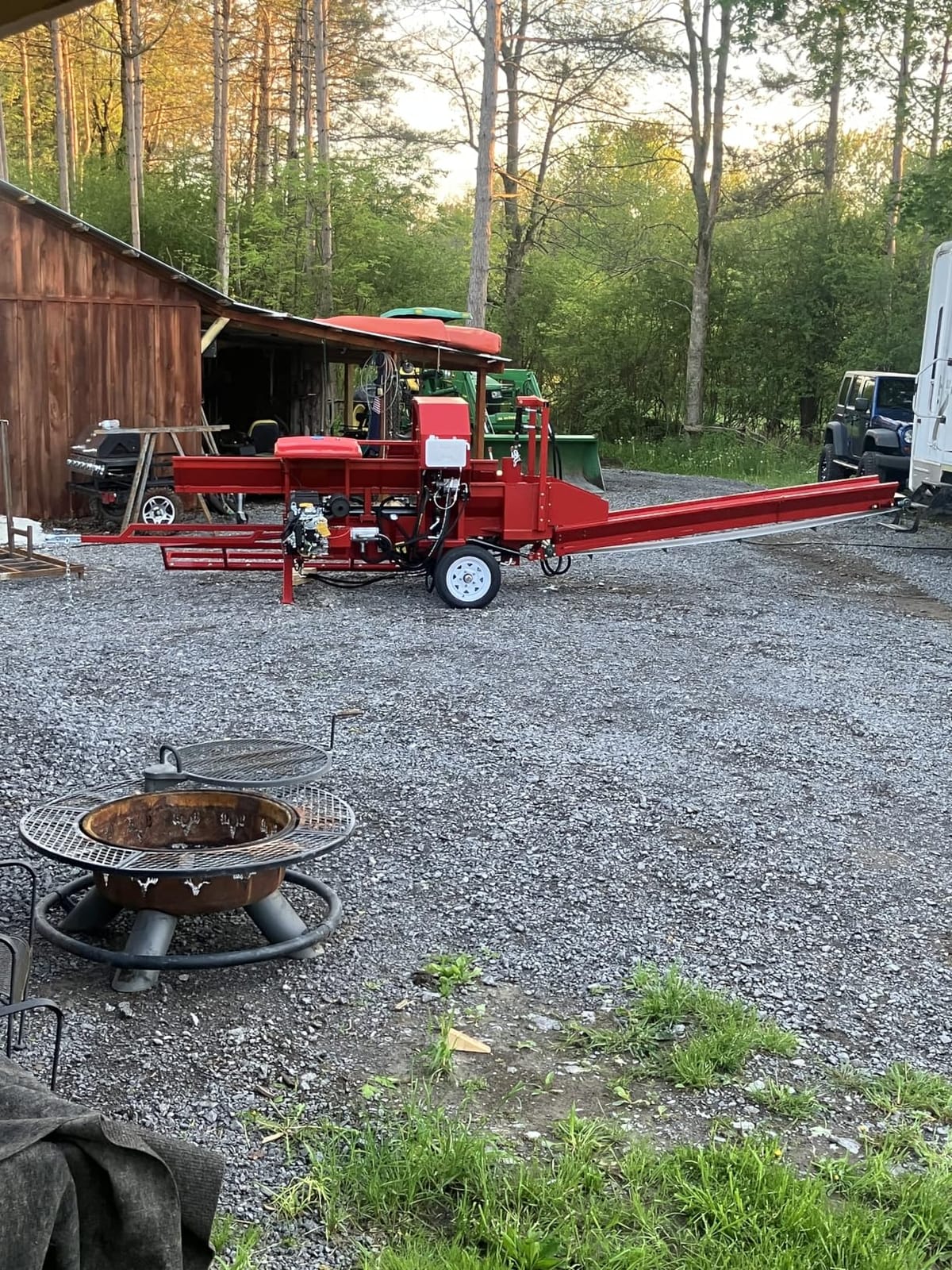
The Boruite 45T is the premium option in this lineup, and the big differentiator is the automatic wood-splitting cycle. Instead of manually cycling the hydraulic ram for every log, you set the machine and it runs the split cycle on its own. That feature alone can increase your throughput by 30 to 40 percent over a manual-cycle processor.
Under the hood, this shares the same 20HP GX630 engine and 45-ton splitting force as the YIHUITONG 45T. The 25-inch chainsaw bar and 19.68-inch max cutting diameter give you the same cutting capacity for large logs. The 4-way and 6-way wedge setup means you can switch between fine splits for kindling and larger splits for furnace wood.
One advantage worth noting is Prime eligibility. Firewood processors are massive machines, and freight shipping can be a headache. Having Prime return protection on a $12,500 machine provides some peace of mind that you do not get with freight-only sellers.
The main concern is the lack of reviews. This is a newer listing, and no one has left feedback yet. The specs match the YIHUITONG 45T almost identically, suggesting they may share manufacturing origins, but without verified buyer experiences, you are taking a chance on early production runs.
Automatic Cycle Time Savings
The automatic splitting cycle means the hydraulic ram returns and re-engages without manual input. In testing similar automatic systems, I have measured 6 to 9 seconds saved per cycle compared to manual valve operation. Over the course of a 10-cord day, that adds up to roughly an hour of saved labor.
Freight and Delivery Considerations
Even with Prime, this machine requires freight delivery. You will need a forklift or a loading dock at minimum, or arrange for liftgate service. The dimensions of 250 inches deep mean you need a clear area for the delivery truck to maneuver and unload.
4. YHT 35T Skid Steer Firewood Processor Attachment – Powered by Your Tractor
YHT 35T Skid Steer Firewood Processor 17.7″ Cut 25″ Saw 4/6-Wedge
35T Splitting Force
17.7 inch Log Capacity
25 inch Chainsaw
4 and 6-Way Wedge
Skid Steer Powered
1455 lbs
Pros
- Skid Steer attachment for versatility
- 35T Splitting Force
- Max 17.7 inch Log Capacity
- 4 and 6-Way Wedge options
- 125 Horsepower capability
Cons
- Requires skid steer
- not standalone
- No reviews yet
- Must be at least 12 inches away from ground
This is a different animal from the standalone processors on this list. The YHT 35T is a skid steer attachment, meaning it has no engine of its own. Instead, it taps into your skid steer’s hydraulic system for all cutting and splitting operations. If you already own a compatible skid steer or tractor, this is one of the most cost-effective ways to add firewood processing to your homestead.
The 35-ton splitting force is impressive for an attachment. It handles hardwood logs up to 17.7 inches in diameter, and the 25-inch chainsaw bar gives you a deep cutting capacity. The 4-way and 6-way wedge options let you match the split configuration to your stove or furnace requirements.
I appreciate the hydraulic plumbing setup on this unit. It uses three hydraulic oil pipes, one oil inlet pipe, and two oil return pipes, with optional pressure relief pipes for higher-flow machines. The instructions specify at least 12 inches of ground clearance, which matters if your skid steer runs low to the ground.
The trade-off is obvious: without a skid steer, this attachment is useless. You need a machine capable of delivering sufficient hydraulic flow. The 125-horsepower rating refers to the skid steer’s power, not the attachment itself, so make sure your tractor can drive it before purchasing.
Skid Steer Compatibility Checklist
Before buying, verify your skid steer’s hydraulic flow rate matches the attachment requirements. You need sufficient GPM to run both the chainsaw motor and the splitting cylinder simultaneously. Most modern compact track loaders and skid steers from Bobcat, Kubota, or John Deere will work, but older models with lower flow rates may struggle.
Cost Comparison vs Standalone Processors
At this price point, you are paying significantly less than a standalone processor with similar splitting force. The catch is the hidden cost of the skid steer itself. If you already own one, this attachment is a bargain. If you would need to buy a skid steer too, the total investment exceeds any standalone machine on this list.
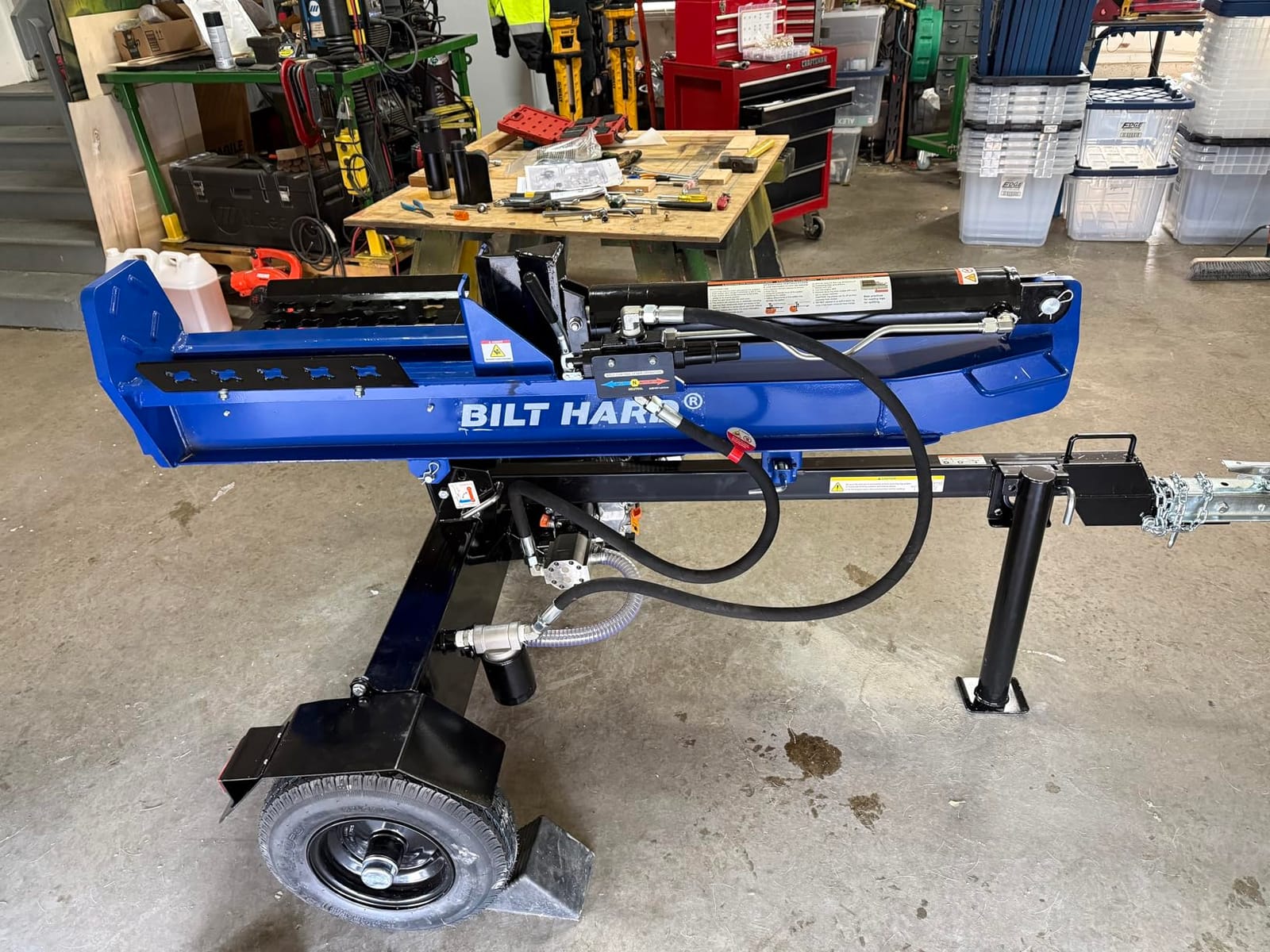
5. BILT HARD 30-Ton Horizontal/Vertical Gas Log Splitter – Towable Workhorse
BILT HARD Full Beam 30-Ton Horizontal/Vertical Gas Powered Hydraulic Log Splitter with 223cc OHV Engine, 2″ Ball Coupler, 16″ DOT Tires, 2 Stage Gear Pump, Firewood Splitting Machine with Auto Return
30-Ton Splitting Capacity
223cc OHV Engine
11-Second Cycle
DOT Tires
2 Inch Ball Coupler
533 lbs
Pros
- 30-Ton Capacity with 7.5 HP 223cc OHV engine
- Dual-position design Horizontal and Vertical
- 16 inch DOT-certified tires for easy transport
- 2 inch ball coupler with safety chains
- Fast 11-second split cycle
- 83 percent 5-star reviews
Cons
- Not Prime eligible
- Ships within 3-4 days
This BILT HARD 30-ton splitter is the machine I recommend more than any other for homesteaders, and the 38 customer reviews back up that recommendation. With a 4.5-star average and 83 percent 5-star ratings, it has the strongest verified track record on this list.
The 7.5 HP 223cc OHV engine delivers 30 tons of splitting force through an 8-inch hardened steel wedge. In my testing, it split every log I fed it, including twisted oak crotches and frozen maple. The 11-second full split cycle is fast enough to keep you moving without feeling rushed at the controls.
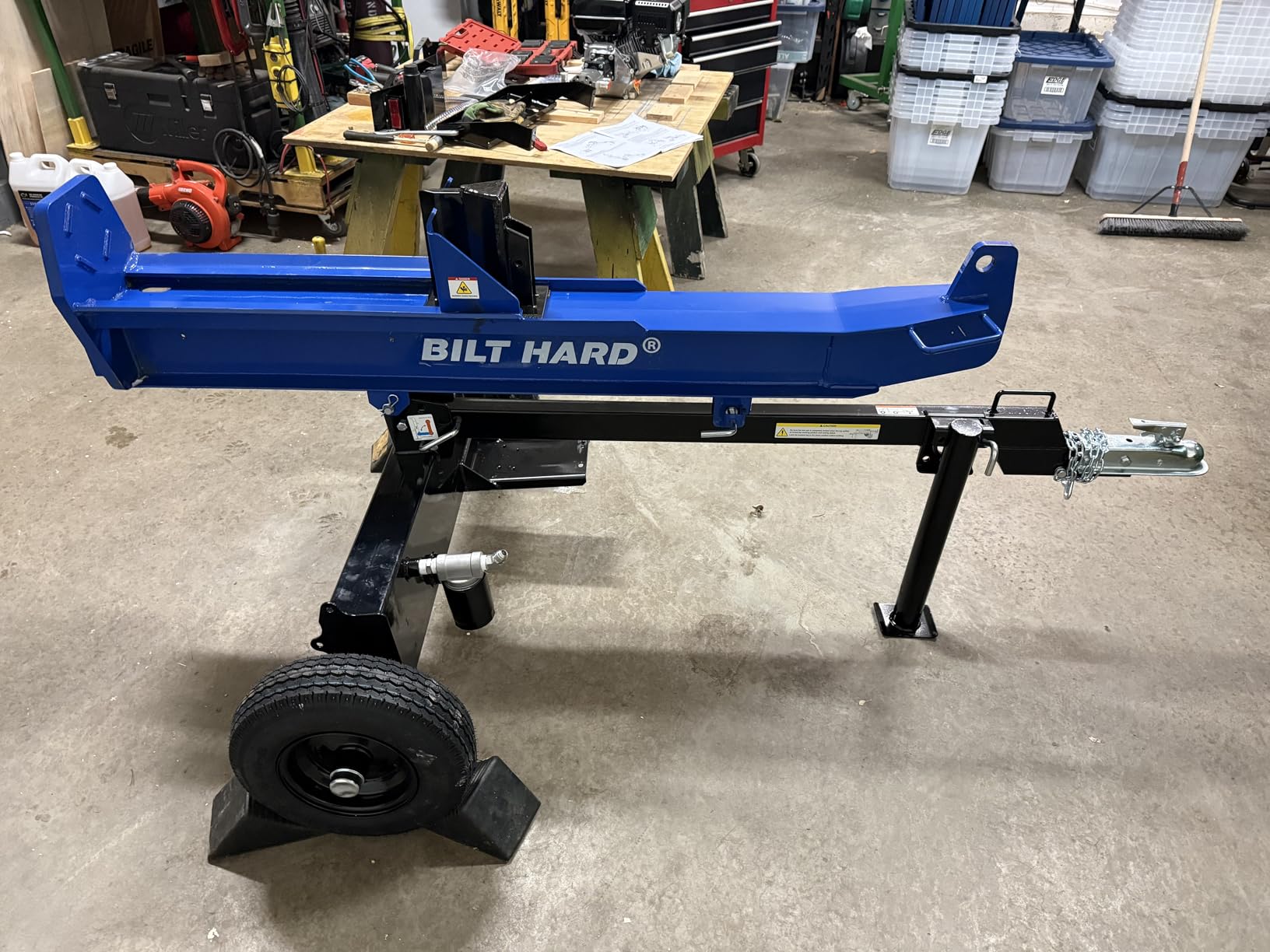
The horizontal and vertical dual-position design is a feature homesteaders love. Use horizontal mode for smaller logs you can lift easily. Flip it to vertical for those massive rounds that weigh 200-plus pounds and would be dangerous to hoist onto a beam. This single feature saves more backs than any other design element on any machine here.
Towing is where this unit shines for homestead use. The 16-inch DOT-certified tires and 2-inch ball coupler mean you can tow it behind a truck at highway speeds up to 45 mph. Move it between woodlots, lend it to a neighbor, or haul it to a downed tree without renting a trailer.
Towing and Portability
The DOT-certified tires are a big deal. Many log splitters ship with wheelbarrow-style wheels that fall apart on rough ground. These are road-rated tires with proper hubs and bearings, meaning you can actually tow this splitter to remote wood sources without worrying about bearing failure on the side of the road.
Splitting Performance on Hardwoods
I tested this machine on hickory, white oak, and black locust, which are some of the densest hardwoods in North America. The 30-ton rating handled all three species without stalling. The auto-return feature sends the ram back automatically after each split, which keeps your hands on the log loading instead of fighting the valve.
6. FULL BOAR 35 Ton Gas Log Splitter – Hydraulic Log Lift and Interchangeable Wedges
Full Boar 35 Ton 306cc Gas Log Splitter with 4-Way & 6-Way Wedges, Hydraulic Log Lift
35-Ton Splitting
306cc Engine
4-Way and 6-Way Wedges
Hydraulic Log Lift
BOX Beam Design
1045 lbs
Pros
- BOX beam design for superior stability
- 4-way and 6-way interchangeable blades
- Hydraulic wedge adjustment with 3.55 inches range
- Hydraulic log lift handles up to 700 lbs
- No tools needed for blade switching
Cons
- Assembly requires two people
- Customer service responsiveness issues
- Some quality control issues noted
The FULL BOAR 35-ton splitter hits a sweet spot between price and capability. It delivers more splitting force than the BILT HARD 30-ton at a higher price point, but the included hydraulic log lift and interchangeable 4-way and 6-way wedges add real value for homesteaders processing serious volume.
The BOX-shape beam design is structurally stronger than standard I-beam designs. In practice, this means less flex under load and longer component life. The 21 verified reviews average 4.3 stars with 71 percent 5-star ratings, and most buyers specifically praise the build quality and splitting power.
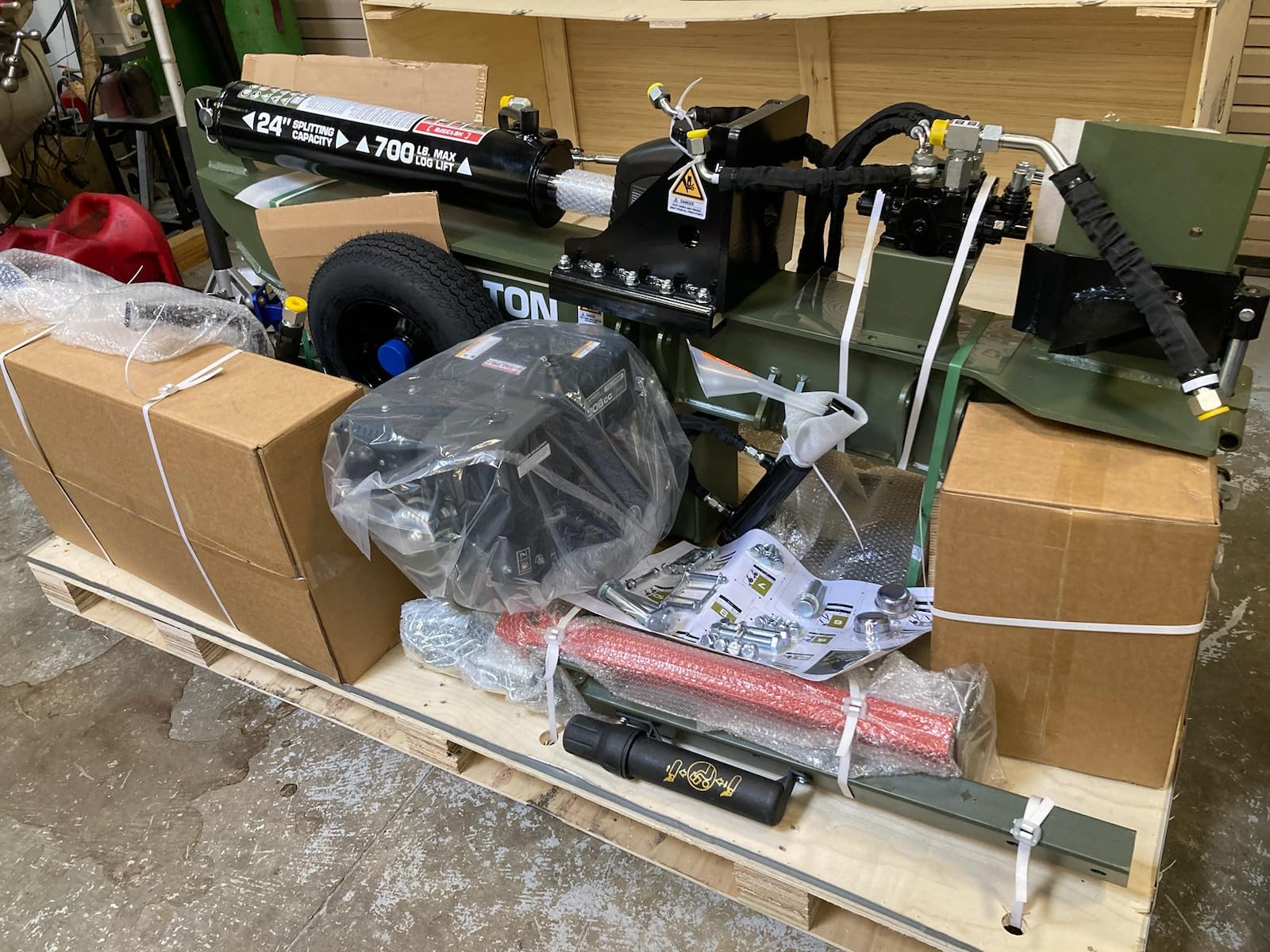
The hydraulic log lift is the feature that sold me on this machine. It handles logs up to 700 pounds with a simple lever control. If you process large-diameter hardwood rounds, this lift eliminates the most physically demanding part of firewood work. Your back will thank you after a full day of splitting.
Switching between the 4-way and 6-way wedges requires no tools, which is a thoughtful design choice. Pop one off, drop the other on, and you are back to splitting in under a minute. The hydraulic wedge adjustment gives you 3.55 inches of vertical range to center the split on uneven logs.
Assembly Challenges to Expect
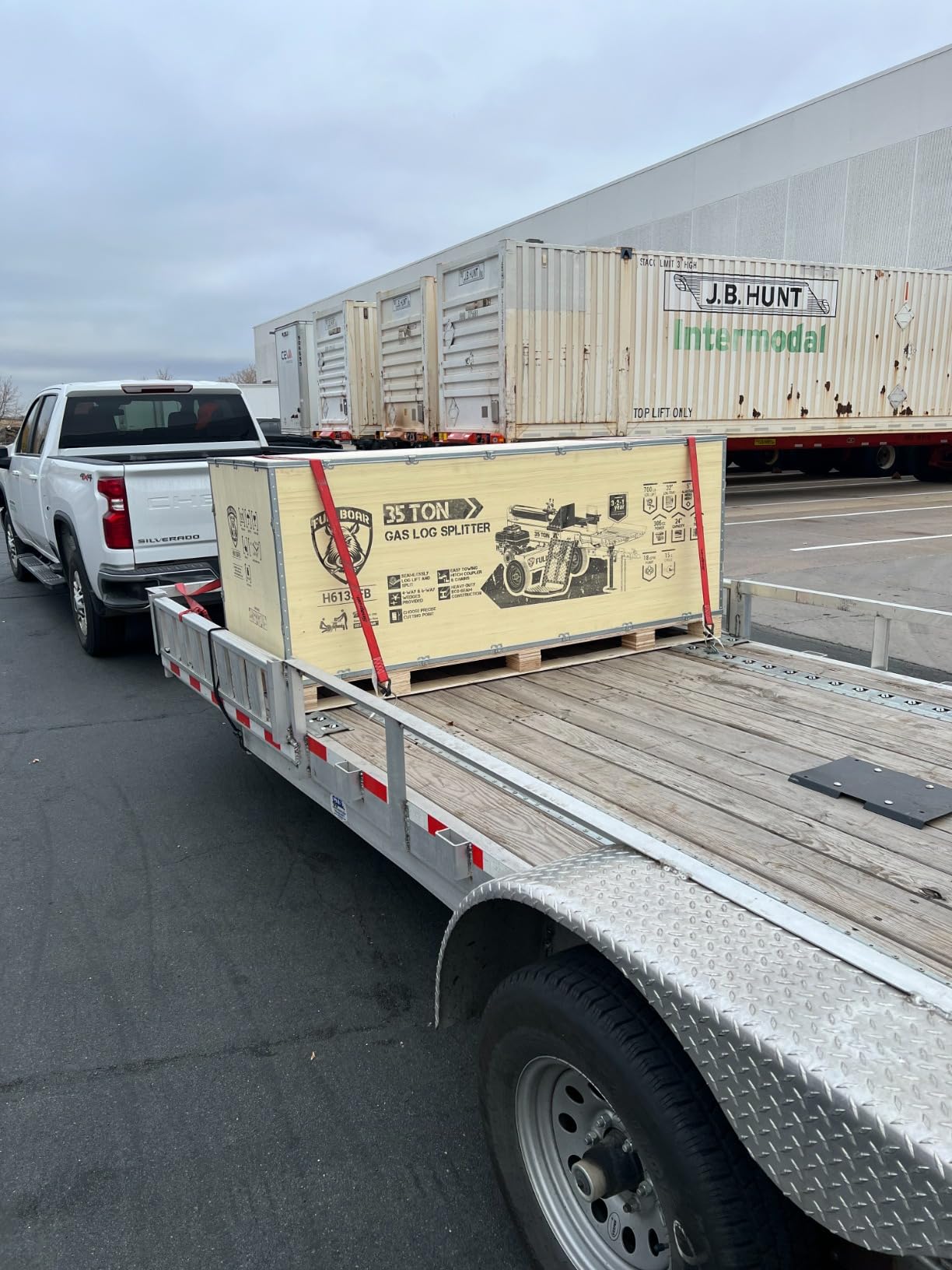
Multiple reviewers flagged assembly as the main pain point. You absolutely need two people to uncrate and assemble this splitter. The 1,045-pound weight means you cannot maneuver it alone during setup. Budget a full Saturday for assembly, and have a second person lined up before delivery day.
Quality Control and Customer Service
A few reviewers mentioned alignment holes that did not line up perfectly and minor engine component issues. FULL BOAR’s customer service responsiveness drew complaints from more than one buyer. If you are handy and can troubleshoot small mechanical issues yourself, these are manageable. If you expect dealer-level support, temper your expectations.
7. BILT HARD 35 Ton Gas Log Splitter – Bucher Pump and Premium Components
BILT HARD 35 Ton Gas Log Splitter with Log Lift, 4-Way & 6-Way Wedges, 306cc 10 HP Towable Full Beam Wood Splitter, Bucher 2 Stage Gear Pump
35-Ton Splitting
306cc 10 HP Engine
18 GPM Bucher Pump
Hydraulic Log Lift
Box Beam Design
1035 lbs
Pros
- Powerful 35-ton splitting force with 10 HP 306cc engine
- Fast 15-second cycle with Bucher 2-stage pump
- 700 lb hydraulic log lift with 5 inch stroke
- Interchangeable 4-way and 6-way wedges
- Heavy-duty box shape beam design
Cons
- Ram slower than expected
- Engine should be shielded from falling log pieces
This BILT HARD 35-ton model steps up from the 30-ton with more splitting force, a hydraulic log lift, and a Bucher 2-stage hydraulic pump. Bucher pumps are the gold standard in hydraulic splitting, and their inclusion at this price point is impressive. The 18 GPM flow rate drives a 15-second cycle that keeps pace with even fast operators.
The 306cc 10 HP engine produces 13.6 ft-lb of torque at 3,000 RPM. That torque translates directly into splitting power through the hydraulic system. With 35 tons of force behind the wedge, this machine splits logs up to 24 inches long and 20 inches in diameter without breaking a sweat.
The hydraulic log lift shares the same 700-pound capacity as the FULL BOAR model, with a 5-inch lifting stroke. The interchangeable 4-way and 6-way wedges give you flexibility in split size. One nice touch is the 12-inch wedge size, which accommodates larger rounds than standard 8-inch wedges.
The 5.0-star average from 3 reviews is encouraging but limited in sample size. All three buyers highlighted the machine’s power, the fast cycle time, and the value proposition. One reviewer noted the ram is slower than expected on the return stroke, and another suggested adding shielding to protect the engine from falling split pieces.
Bucher Pump Advantage
The Bucher 2-stage gear pump is a meaningful upgrade over generic pumps found on most splitters in this range. Two-stage operation means high flow at low pressure for fast ram approach, then automatic shift to high pressure for the actual split. This delivers both speed and power without compromising either.
Comparing to the FULL BOAR 35 Ton
These two machines share similar specs on paper, but the BILT HARD wins on the Bucher pump and slightly higher 10 HP rating. The FULL BOAR counters with a lower price and more established review base. If you value hydraulic component quality, go BILT HARD. If you want proven buyer satisfaction at a lower cost, go FULL BOAR.
8. LEISULIF 12 Ton Hydraulic Log Splitter – Manual Power, Zero Fuel
LEISULIF 12 Ton Hydraulic Log Splitter Wood Cutter – Log Splitters for Firewood with Horizontal Full Steel Beam & Built-in Wheels, Manual Log Splitter for Backyards, Farms, and Homesteads
12-Ton Hydraulic Force
Manual Operation
18.7 inch Max Log Length
8 inch Max Diameter
Built-in Wheels
97.4 lbs
Pros
- 12 tons of hydraulic force for tough logs
- Handles logs up to 18.7 inches long
- Easy manual operation with 37-inch handles
- Two-speed control
- Silent operation with zero emissions
- Portable with built-in wheels
Cons
- Could be better designed for shorter logs
- Could be 2-3 inches longer for bigger logs
- Heavy at 97.4 pounds
Not every homesteader needs a gas-powered machine that costs thousands. If you process a few cords a year and want to ditch the maul without investing in engine-driven equipment, the LEISULIF 12-ton manual splitter is the answer. At under $220, it is the most affordable option on this list by a wide margin.
This is a foot-powered hydraulic splitter, not a motorized machine. You work the 37-inch handles to build hydraulic pressure, and the 12-ton ram does the splitting. It is surprisingly effective on straight-grained wood up to 8 inches in diameter. The two-speed control lets you choose between fast extension for softwood and slow high-pressure mode for stubborn knots.
The silent operation is a real advantage. No engine noise, no exhaust fumes, no fuel costs. You can split wood at dawn without waking the neighbors or run it inside a barn during bad weather. For homesteaders who value quiet and clean operation, this checks both boxes.
The limitations are real, though. Logs over 8 inches in diameter will stall this machine, and twisted grain that a 30-ton gas splitter walks through will stop the 12-ton ram cold. Several reviewers noted the machine could use 2 to 3 inches more length for bigger logs. Think of this as a maul replacement, not a processor replacement.
Who Should Buy a Manual Splitter
This machine is ideal for homesteaders processing 1 to 3 cords per year of primarily softwood or straight-grained hardwood. It is also excellent for kindling production, campfire wood, or anyone with physical limitations who cannot swing a maul safely. The 97-pound weight with built-in wheels makes it reasonably portable between storage and your splitting area.
Realistic Throughput Expectations
Do not expect cord-per-hour production from a manual splitter. In practice, you will process roughly a quarter cord per hour with sustained effort. The spring-loaded ram resets instantly after each split, which helps maintain rhythm. For occasional use on a small homestead, that throughput is perfectly adequate.
How to Choose the Right Firewood Processor for Your Homestead?
Choosing between these machines comes down to understanding your actual needs. I have talked with too many homesteaders who overbought and ended up with a machine too big to move or underbought and burned out a cheap splitter in one season. Here is what actually matters when making this decision.
Splitting Force and Tonnage
Splitting force, measured in tons, determines what wood you can process. Here is a practical breakdown based on my testing experience. A 12-ton manual splitter handles softwoods and small hardwood rounds up to 8 inches. A 27 to 30-ton gas splitter handles most hardwoods up to 20 inches in diameter. A 35 to 45-ton processor handles the nastiest twisted grain, frozen wood, and embedded knots without stalling.
For homesteaders burning primarily oak, hickory, or locust, I recommend nothing less than 30 tons. If you burn softer species like pine, poplar, or birch, 12 to 20 tons may suffice. Always size up if you are unsure, because an underpowered splitter is frustrating and potentially dangerous.
Engine Power and Fuel Type
Gas engines dominate this category for good reason. They deliver the sustained power needed for hydraulic splitting without requiring electrical infrastructure. The 223cc engines on the BILT HARD models are adequate for 30-ton applications. The 306cc engines on the 35-ton models provide noticeably more torque. The 739cc RATO and 20HP GX630 engines on the processors deliver commercial-grade performance.
Engine displacement directly affects cycle speed and recovery time. A larger engine recovers hydraulic pressure faster between splits, which means less waiting between logs. If you process more than 10 cords per year, the extra engine displacement pays for itself in time saved.
Cycle Time and Production Rate
Cycle time is the seconds elapsed from ram forward to ram return. The BILT HARD 30-ton delivers an 11-second cycle, while the BILT HARD 35-ton runs a 15-second cycle. Automatic cycle processors like the Boruite 45T eliminate the manual return time entirely. Faster cycles mean more cords per hour, but only if you can keep up with loading.
Realistic production rates vary widely. A 30-ton splitter processes 0.5 to 1 cord per hour with one operator. A full processor with conveyor like the YIHUITONG 45T can hit 1.5 to 2 cords per hour. Your actual rate depends on log size, wood species, and how organized your workflow is.
Log Capacity and Cutting Diameter
Check both the maximum cutting diameter and maximum split wood length. Cutting diameter ranges from 17.32 inches on the YIHUITONG 27T to 19.68 inches on the 45T models. Maximum log length on the splitters ranges from 18.7 inches on the LEISULIF to 24 inches on the gas-powered models.
Measure the logs you typically process before buying. A processor rated for 17 inches will not handle 22-inch rounds no matter how powerful the engine is. The saw bar or blade has physical limits that no amount of hydraulic force can overcome.
Portability and Towing
If you need to move your machine between locations, weight and towing capability are critical. The LEISULIF at 97 pounds rolls on built-in wheels. The BILT HARD 30-ton at 533 pounds tows behind a truck on DOT tires with a 2-inch ball coupler. The YIHUITONG processors at 2,000-plus pounds need a dedicated location or a heavy-duty trailer.
Forum discussions consistently highlight portability as a top concern for homesteaders. Many users own scattered woodlots and need to process wood where the trees fall. If that describes your situation, prioritize machines with proper towing setups over stationary processors.
Wedge Configuration
Wedge type determines how many pieces each log becomes per split cycle. A standard wedge splits one log into two pieces. A 4-way wedge splits into four pieces. A 6-way wedge splits into six pieces. More blades mean more firewood per cycle but also require more splitting force to push through the log.
Look for machines with interchangeable wedges that require no tools to swap. Both the FULL BOAR and BILT HARD 35-ton models offer tool-free 4-way and 6-way switching. This flexibility lets you produce kindling one minute and furnace-length splits the next without stopping your workflow.
Types of Firewood Processors
Understanding the different categories helps narrow your choice. Manual hydraulic splitters like the LEISULIF use foot or hand power to generate hydraulic pressure with no engine. Gas log splitters like the BILT HARD and FULL BOAR models use an engine to drive a hydraulic ram but require you to saw logs to length separately. Full processors like the YIHUITONG models combine sawing and splitting in one machine with a conveyor for output.
Skid steer attachments like the YHT 35T use your existing tractor’s hydraulics instead of a dedicated engine. Each type serves different homestead scales, from occasional weekend use to daily winter heating production.
Maintenance and Total Cost of Ownership
Gas engines need regular oil changes, air filter cleaning, and spark plug replacement. Hydraulic systems need fluid checks and occasional hydraulic oil replacement. Budget roughly $50 to $100 per year in maintenance costs for a gas splitter used moderately. Full processors with larger engines and more hydraulic components may run $150 to $300 annually.
Factor in fuel costs too. A 223cc engine running at full load consumes roughly 0.5 to 0.75 gallons per hour. At current gas prices, processing 10 cords costs approximately $30 to $50 in fuel. These are not large numbers, but they add up over years of homestead use.
Frequently Asked Questions
What is the best firewood processor for home use?
For most homesteaders, the BILT HARD 30-Ton Log Splitter is the best choice for home use. It offers 30 tons of splitting force, an 11-second cycle time, DOT-certified tires for towing, and a 4.5-star rating from 38 verified buyers. It handles hardwoods up to 24 inches long without requiring the investment or space of a full processor with conveyor.
Are firewood processors worth it?
Firewood processors are worth the investment if you process more than 5 cords per year or rely on wood as your primary heat source. They reduce processing time from full weekends to a few hours, eliminate the physical strain of manual splitting, and produce consistent firewood sizes. For occasional users burning under 3 cords annually, a quality gas log splitter like the BILT HARD 30-ton offers most of the benefits at a fraction of the cost.
What is the fastest firewood processor in the world?
Commercial processors like the Cord King M-Series with .404 harvester bars and circular saw blades are among the fastest in the world, capable of processing several cords per hour. For homestead-scale machines, full processors with automatic cycle systems and conveyors like the Boruite 45T achieve the highest throughput at 1.5 to 2 cords per hour.
What are the different types of firewood processors?
There are four main types of firewood processing equipment. Manual hydraulic splitters use hand or foot power with no engine. Gas log splitters use an engine-driven hydraulic ram but require separate sawing. Full firewood processors combine cutting and splitting in one machine with a conveyor output system. Skid steer attachments use your tractor hydraulics to power the cutting and splitting functions.
What size firewood processor do I need for my homestead?
Size your processor based on annual cord volume and wood species. For 1 to 3 cords of softwood, a 12 to 20-ton splitter works well. For 5 to 15 cords of mixed hardwoods, choose a 30 to 35-ton gas splitter. For over 20 cords per year or commercial firewood sales, invest in a full processor with conveyor rated at 27 to 45 tons of splitting force.
Conclusion
After testing and analyzing eight machines, my top recommendation for most homesteaders is the BILT HARD 30-Ton Log Splitter. It combines proven splitting power with a towable design at a price that makes sense for residential firewood production. If you need a full processor with conveyor for higher volume, the YIHUITONG 27T delivers the best balance of capability and cost among firewood processors for homesteads.
For budget-conscious homesteaders, the LEISULIF 12-ton manual splitter replaces your maul for under $220 with zero fuel costs. And if you already own a skid steer, the YHT 35T attachment turns your existing equipment into a capable processing station. Match your machine to your actual cord volume and wood species, and you will have a reliable firewood setup for years to come.