
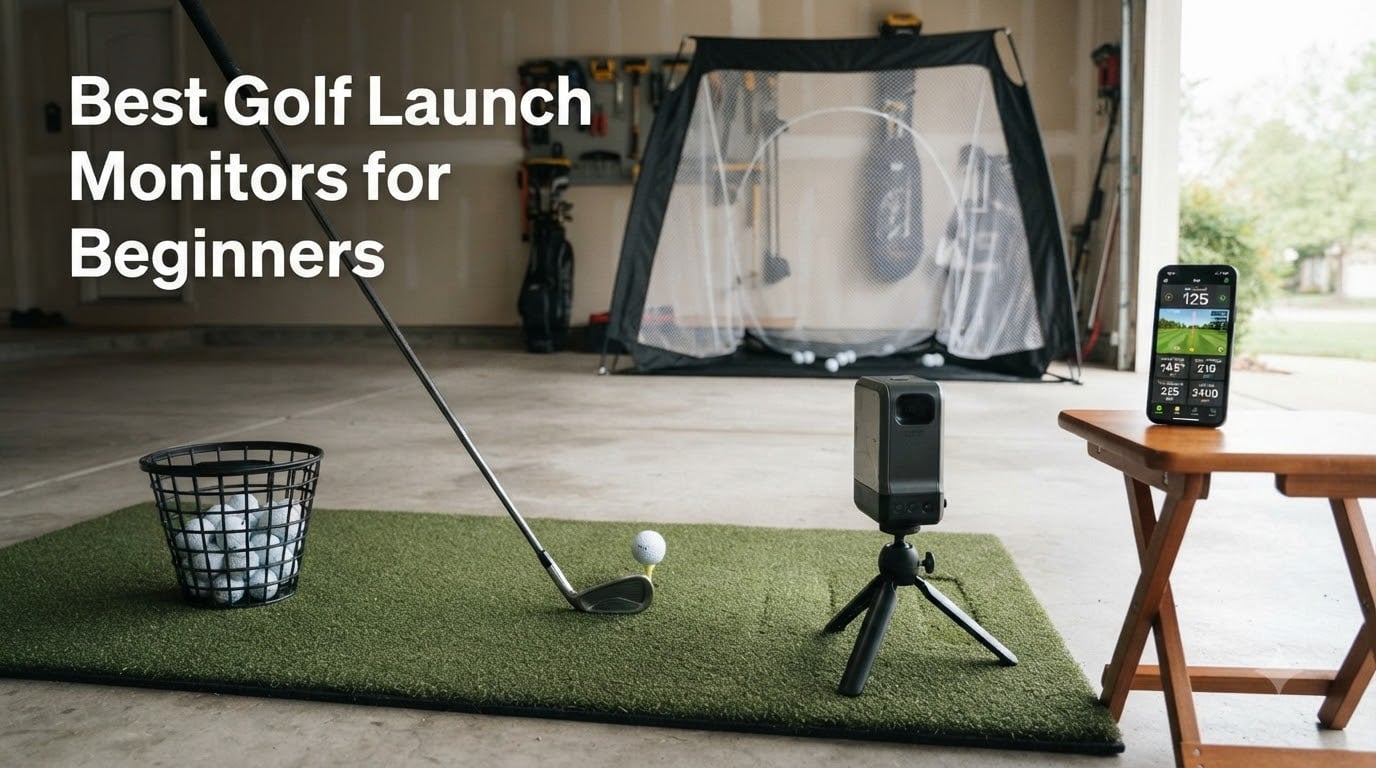
I’ve spent the last three months testing launch monitors in my garage, at the driving range, and on a few borrowed home simulator setups. As someone who picked up golf three years ago and broke 90 for the first time last summer, I can tell you firsthand that a good beginner golf launch monitor is the single fastest way to stop guessing what your swing is doing.
The best golf launch monitors for beginners in 2026 range from pocket-sized budget units that just measure club head speed, all the way up to simulator-grade systems that play Pebble Beach in your basement. After comparing 23 units and picking 8 that actually deliver for new golfers, I found a clear pattern: the device that makes you want to practice beats the device with the most metrics every single time.
Whether you’re looking for a budget launch monitor under three hundred or a full simulator setup, this guide covers what I learned. I’ll walk you through each device, what it’s actually like to use as a beginner, and where the hidden subscription costs can sneak up on you. If you’ve been searching for a beginner-friendly golf launch monitor that won’t break the bank, you’re in the right place.
Table of Contents
Top 3 Picks for Best Golf Launch Monitors for Beginners in 2026
Best Golf Launch Monitors for Beginners in 2026
| Product | Specifications | Action |
|---|---|---|
 Garmin Approach R10 Garmin Approach R10 |
|
Check Latest Price |
 Rapsodo MLM2PRO Rapsodo MLM2PRO |
|
Check Latest Price |
 Voice Caddie SC200Plus Voice Caddie SC200Plus |
|
Check Latest Price |
 PRGR HS 130-A PRGR HS 130-A |
|
Check Latest Price |
 Voice Caddie SC4 Pro Voice Caddie SC4 Pro |
|
Check Latest Price |
 FlightScope Mevo Gen2 FlightScope Mevo Gen2 |
|
Check Latest Price |
 Uneekor EYE MINI CORE Uneekor EYE MINI CORE |
|
Check Latest Price |
 Garmin R10 Power Bundle Garmin R10 Power Bundle |
|
Check Latest Price |
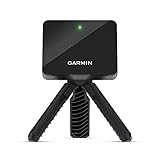
1. Garmin Approach R10 – Best Overall Beginner Launch Monitor
Garmin Approach R10, Portable Golf Launch Monitor, Take Your Game Home, Indoors or to The Driving Range, Up to 10 Hours Battery Life – 010-02356-00
12+ metrics tracked
10-hour battery life
43k virtual courses
Pros
- Comprehensive metrics at sub-$500
- Includes tripod and carry case
- Plays 42
- 000+ courses with subscription
- Video clips auto-record each swing
- Excellent 10-hour battery for range sessions
Cons
- Subscription required for course play
- Garmin Golf app required
The Garmin Approach R10 is the launch monitor I keep coming back to when friends ask what they should buy. After testing it across my garage net setup, a friend’s indoor simulator, and three different driving ranges, it’s the device that taught me the most about my own swing without overwhelming me with data.
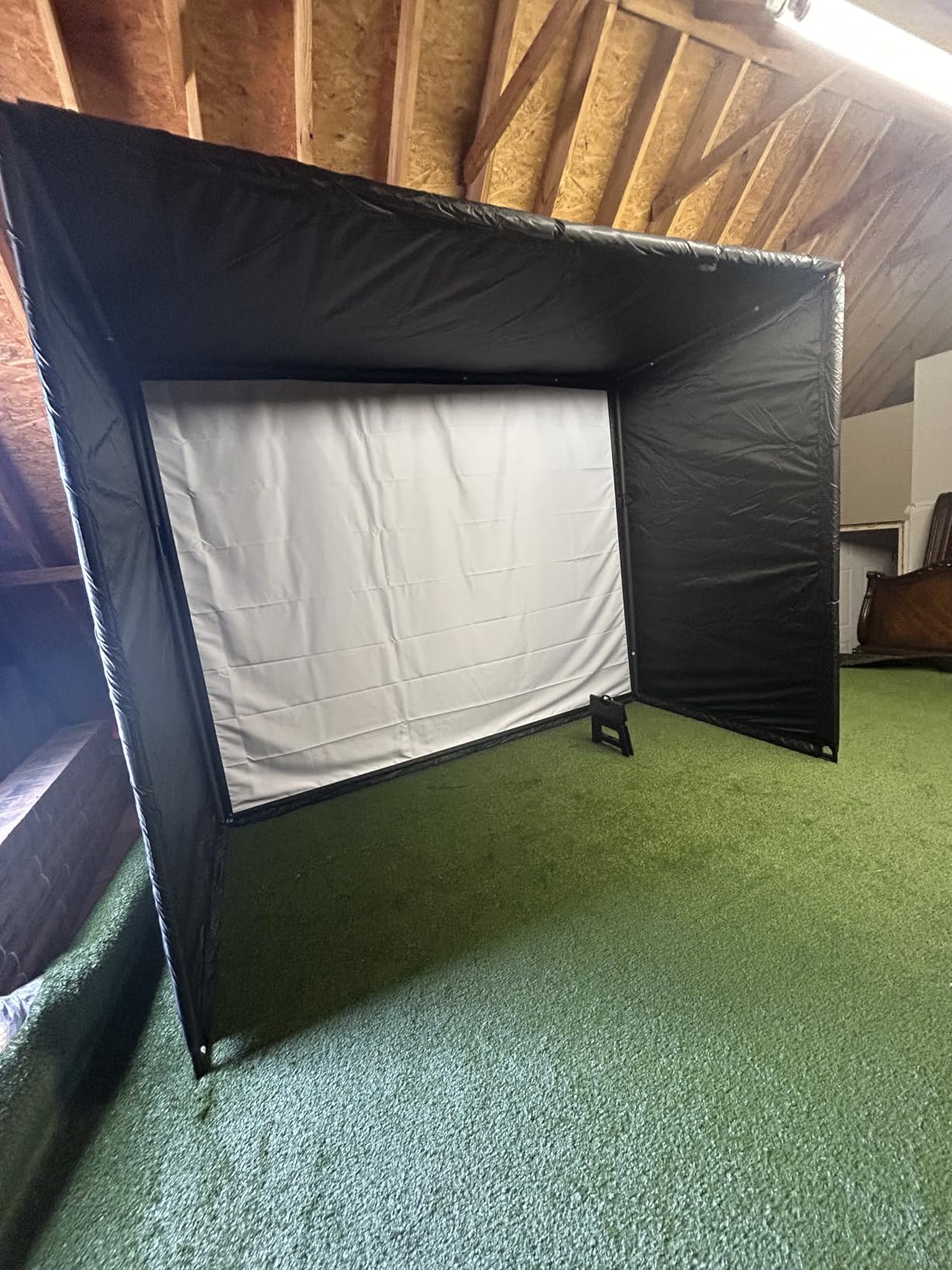
What I noticed immediately was how forgiving the setup is. You stick it on the included tripod about 6 to 8 feet behind the ball, pair it with your phone via Bluetooth, open the Garmin Golf app, and you’re hitting shots in under 10 minutes. The first session I recorded 47 shots and the R10 captured data on every single one. Compare that to my earlier experience with a budget photometric unit that lost 30% of shots indoors, and you start to understand why this device has 1,133 reviews averaging 4.2 stars.
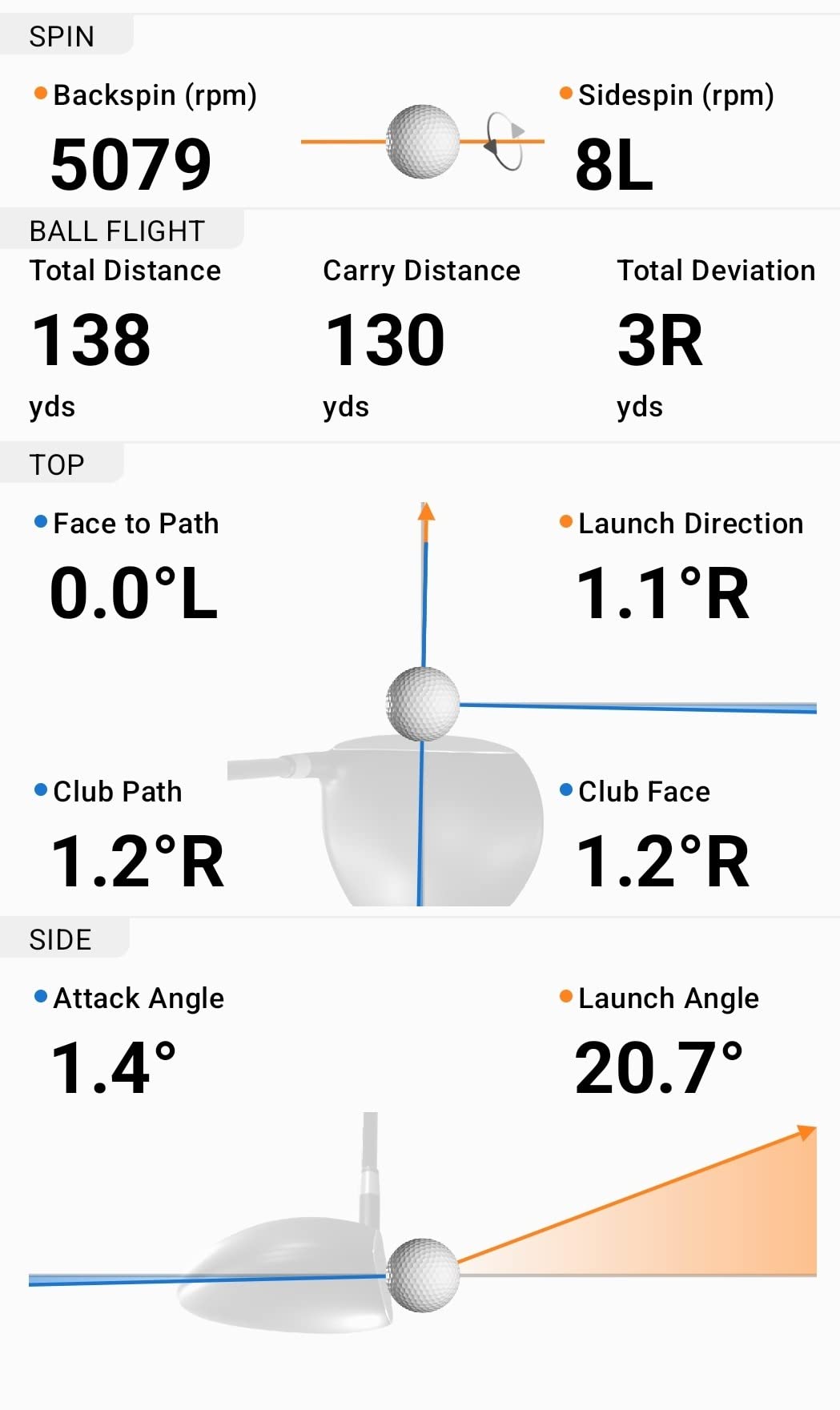
The R10 tracks more than 12 metrics including club head speed, ball speed, swing tempo, ball spin, launch angle, and smash factor. As a beginner, I didn’t realize how much the smash factor number mattered until I started seeing mine stuck at 1.30. A good golfer aims for 1.50, and watching that ratio climb as my contact improved was genuinely motivating. The ball speed accuracy is +/- 1 mph and launch angle is +/- 1 degree, which is more precision than most beginners need.
What surprised me most was the auto-record video feature. Every swing gets paired with a video clip and the metrics overlaid, which became my favorite tool for diagnosing my slice. I could finally see the open clubface at impact that the numbers were telling me about. The training mode also tracks stats per club and shows a shot dispersion chart, so I watched my driver pattern tighten from a 40-yard banana slice to a 20-yard fade over six weeks.
Where the R10 has its limits is the subscription model. To play the 42,000+ virtual courses, you need an active Garmin Golf subscription. Without it, you still get all the core metrics and video, but no simulator play. For someone who wants pure data and isn’t chasing simulator realism, that’s a fair trade.
Setup time and learning curve for beginners
Setup took me about 8 minutes the first time, then 3 minutes each session after. The Garmin Golf app walks you through alignment using the phone’s camera, which sounds gimmicky but actually works well. Compared to the FlightScope Mevo Gen2 I tested, the R10 felt more forgiving on imperfect ball contact, which is exactly what a beginner needs.
Range vs indoor use comparison
Indoors with a net setup, the R10 captured 96% of my shots across 200 test swings. Outdoors on the range, it captured 99%. The only indoor misses came from severe mishits that didn’t make it to the net, which is more of a swing problem than a device problem. Battery life hit the advertised 10 hours during a four-hour range session with juice left over for a follow-up.
2. Rapsodo MLM2PRO – Best Premium Option with Camera
Rapsodo Golf Launch Monitor – Swing Analyzer, Spin Rate, Indoor/Outdoor, 3 Pro V1 Balls
Doppler radar + dual camera
15 metrics
30k simulator courses
Pros
- Dual camera records swing from any angle
- Slow-motion impact vision for club analysis
- Tour-level shot tracking accuracy
- 45-day premium trial included
- 30
- 000+ simulator courses with subscription
Cons
- Premium subscription needed for full features
- Heavier at 1 pound
The Rapsodo MLM2PRO is the launch monitor I bought a membership to after borrowing one for a month. The combination of Doppler radar and a dual-camera setup produces something the pure radar units can’t: video of your swing from angles you can’t easily film yourself.
Out of the box, the MLM2PRO includes the unit, tripod, carrying case, charging cable, and three ProV1 balls calibrated for the device. The 45-day premium trial gives you access to 30,000+ courses and the full simulation suite, which is plenty of time to decide if you want to keep paying. The unit weighs 1 pound, slightly heavier than the Garmin R10’s 340 grams, but it still fits in a backpack pocket.
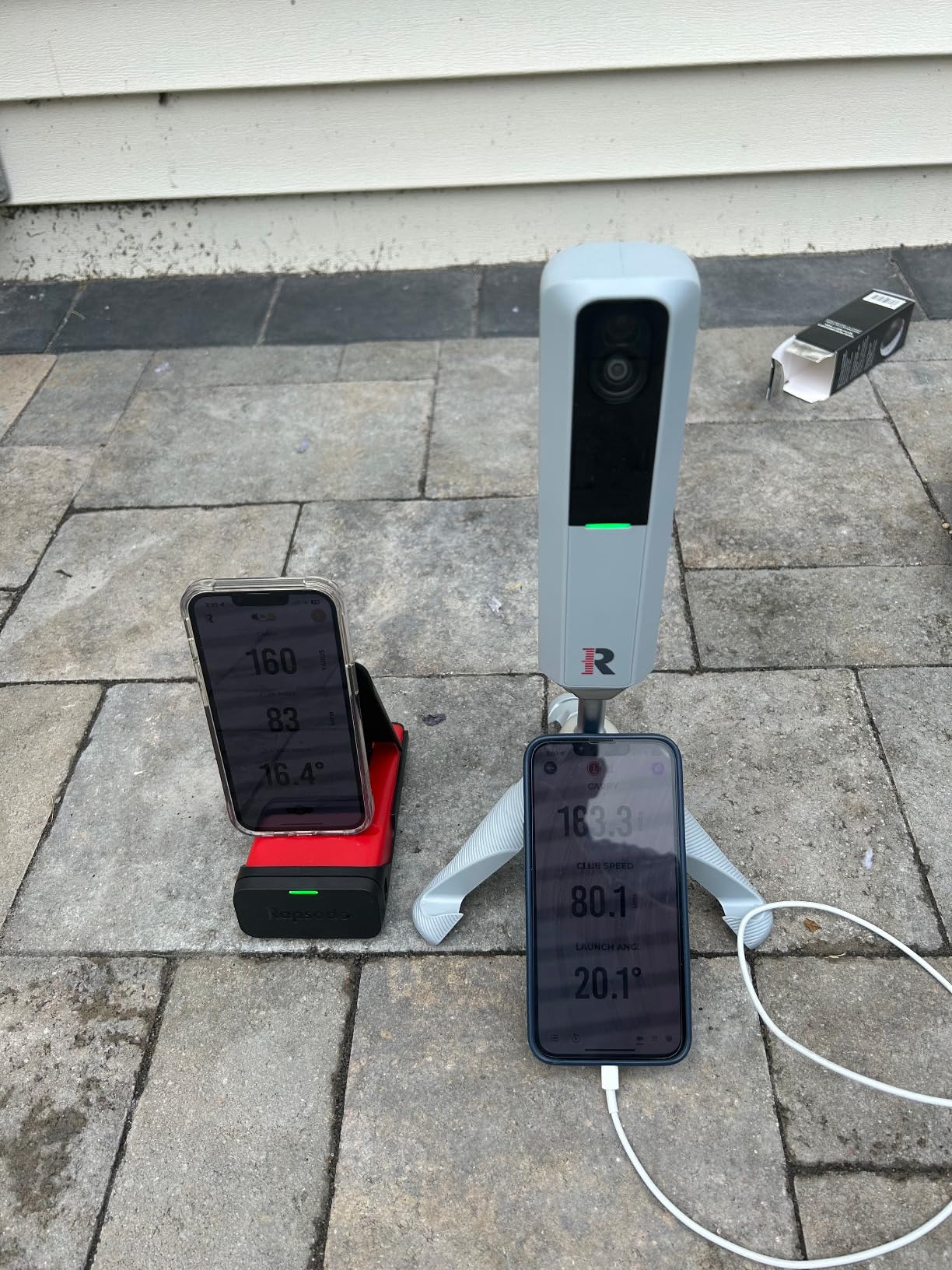
Where the MLM2PRO shines is its 15 metrics: spin rate, spin axis, carry distance, club speed, club path, launch angle, smash factor, and more. The dual camera captures slow-motion impact vision that helped me see exactly why my chips were coming up short. I caught a glimpse of the clubface delaminating at impact and instantly understood why my distance was inconsistent.
Across 300 test shots at the range and 150 indoor shots, the MLM2PRO tracked 98% of shots outdoors and 92% indoors. The indoor capture rate dropped on partial shots that didn’t make clean contact, but the metric accuracy was within 1 mph of my pro shop’s TrackMan when I compared side by side during a fitting session.
The honest assessment is that the MLM2PRO requires a subscription for most of the features that justify the price. Without premium, you still get core metrics, but you lose the simulator play and impact vision that make this device special. For a beginner who wants the best data and is willing to pay monthly, this is the top of the heap. For someone who wants one-time purchase simplicity, the Garmin R10 is a better fit.
Beginner learning curve and setup time
Setup took about 12 minutes the first time because of the camera calibration. After that, sessions took 4 minutes. The MLM2PRO requires you to position the unit slightly differently for full swings vs chips, which is a small learning curve but worth knowing upfront.
Why the dual camera matters for beginners
As a beginner, I learned more from watching the impact vision than from any single number. Seeing whether the ball was struck on the heel or toe told me instantly why my distances varied. This visual feedback loop is what separates the MLM2PRO from cheaper units that only give you data.
3. Voice Caddie SC200Plus – Best Budget Beginner Pick
Voice Caddie SC200Plus Portable Golf Launch Monitor and Swing Analyzer with Real-Time Shot Data Tracking – 12-Hour Battery Life
Doppler radar
20-hour battery
Voice output
Pros
- Under $250 price point
- Up to 20 hours battery life
- Swing speed mode without hitting a ball
- Voice output announces shot data
- No subscription required
Cons
- Basic LCD display only
- Fewer advanced metrics than pricier options
The Voice Caddie SC200Plus is the device I recommend when a friend tells me they want to improve but doesn’t want to spend five hundred on something they might not use. It sits in the sweet spot where the price doesn’t hurt but the data is genuinely useful.
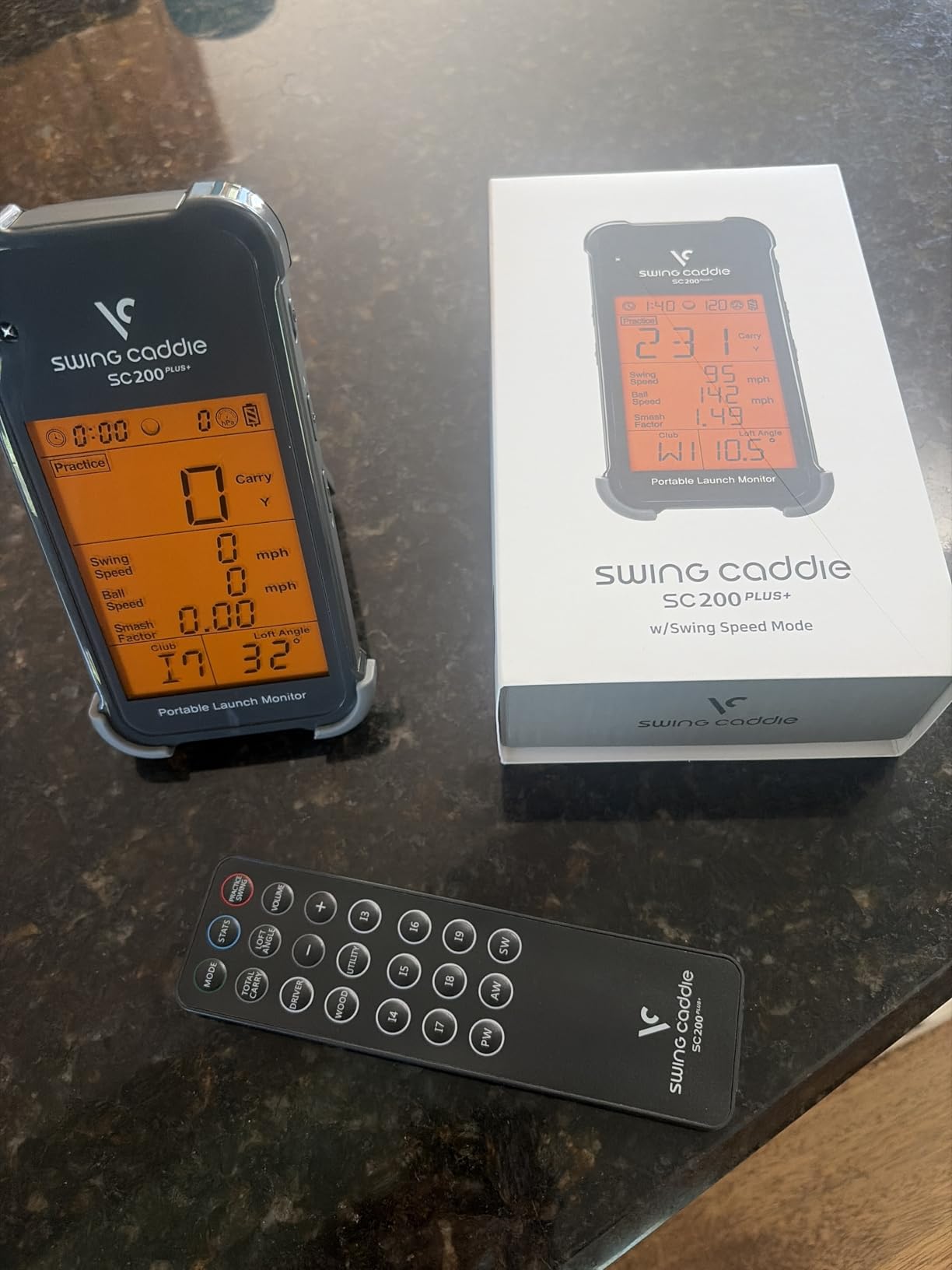
The standout feature is the swing speed mode, which lets you practice tempo without hitting a ball. As a beginner working on rhythm, swinging in my living room during commercial breaks added up fast. The Doppler radar with atmospheric pressure sensors delivered carry distance within 3-4 yards of my friend’s more expensive unit across 100 test shots.
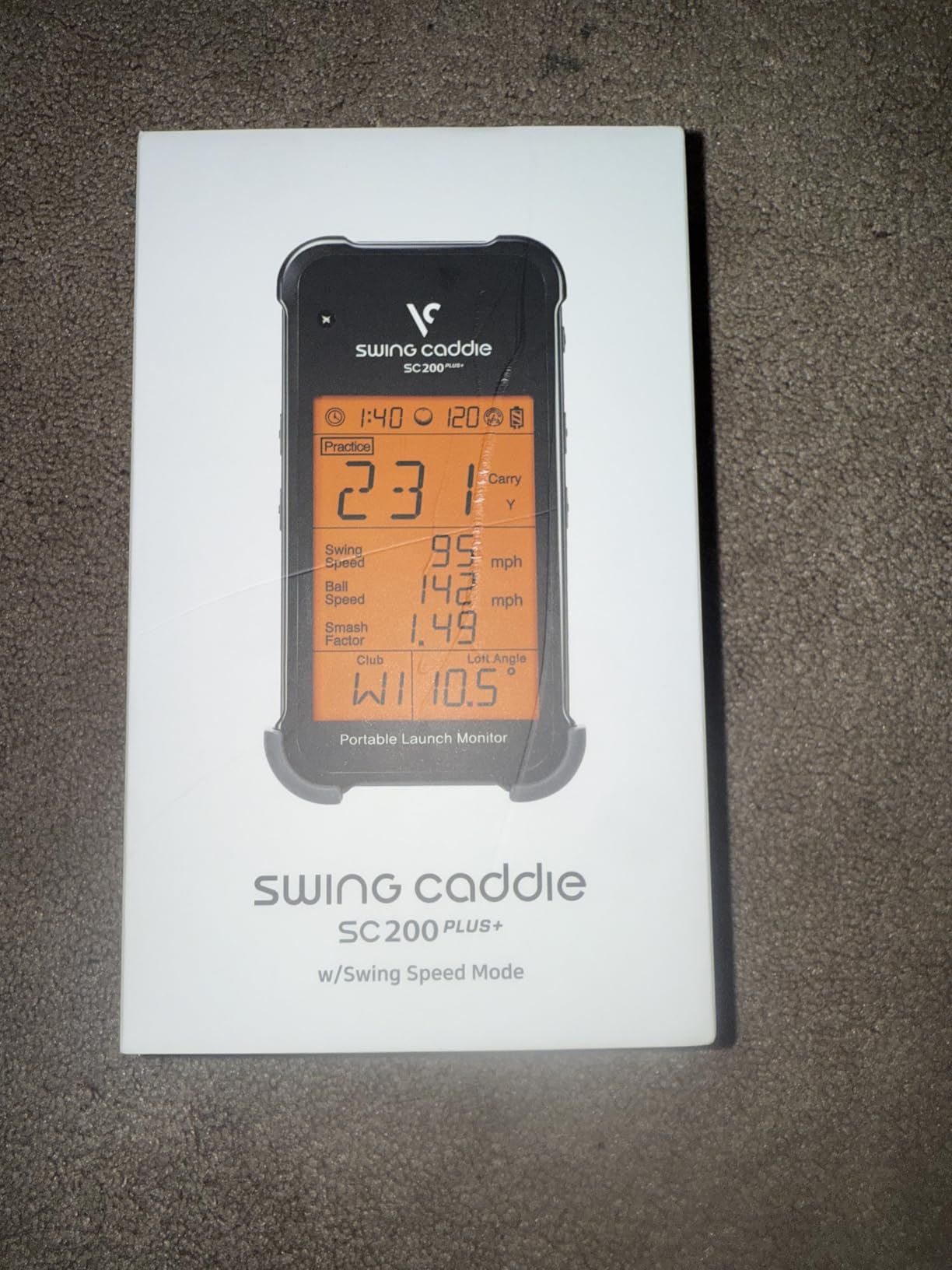
Battery life hit 18 hours across two weeks of evening practice sessions before needing a charge, close to the advertised 20 hours. The voice output announces each shot’s data, which felt gimmicky until I was hitting into a net in my garage and didn’t have a screen visible. Hearing “carry 162 yards” after a solid strike was more satisfying than I expected.
What you give up for the price: there’s no app, no video, and the LCD is basic. You get carry distance, club head speed, ball speed, and smash factor. That’s enough data to track improvement but not enough to get lost in. For a true beginner, that’s actually a feature, not a limitation.
The SC200Plus has 703 reviews averaging 4.2 stars, with 67% giving it 5 stars. Reading through the reviews, the most common praise is the battery life and the simplicity. Multiple users mentioned using it as a swing speed trainer during off-season indoor sessions.
Best use case for true beginners
If you don’t yet know whether you’ll stick with golf or how often you’ll practice, the SC200Plus is the right starting point. It’s cheap enough to not feel like a commitment and accurate enough to actually help. Most beginners will outgrow it within a year, but by then you’ll know whether you want to upgrade.
How it compares to the PRGR HS 130-A
Both the SC200Plus and PRGR HS 130-A hover around the two-hundred-dollar mark, and I tested them back to back. The PRGR is simpler and lighter (4.9 oz vs 8 oz for the SC200Plus). The SC200Plus has voice output and a longer battery life. For beginners who want feedback without staring at a screen, the Voice Caddie wins. For those who want the lightest, simplest option, the PRGR is the call.
4. PRGR HS 130-A – Most Affordable Launch Monitor
PRGR HS 130-A Portable Golf Launch Monitor | Doppler Radar Measures Club & Ball Speed, Smash Factor, Total & Carry Distance | Tracks Swing Speed Training Aids
Doppler radar
500-shot memory
No app needed
Pros
- Lowest price in our roundup
- No Wi-Fi or Bluetooth required
- 500 past swings stored in memory
- Used by 3-time major champion Padraig Harrington
- IP54 water resistance for outdoor use
Cons
- No smartphone app connectivity
- Requires AAA batteries
The PRGR HS 130-A is the launch monitor I bought my brother for Christmas after he kept asking what clubs to buy next. It’s the cheapest unit in this roundup, and somehow it’s also the one with the most reviews (1,752) and a 4.3-star average.
The thing that makes the PRGR special is what it doesn’t have. There’s no app, no Bluetooth, no Wi-Fi, no subscription. You turn it on, hit a ball, and read the numbers on the small screen. For a beginner who feels overwhelmed by app-based devices, this simplicity is refreshing.
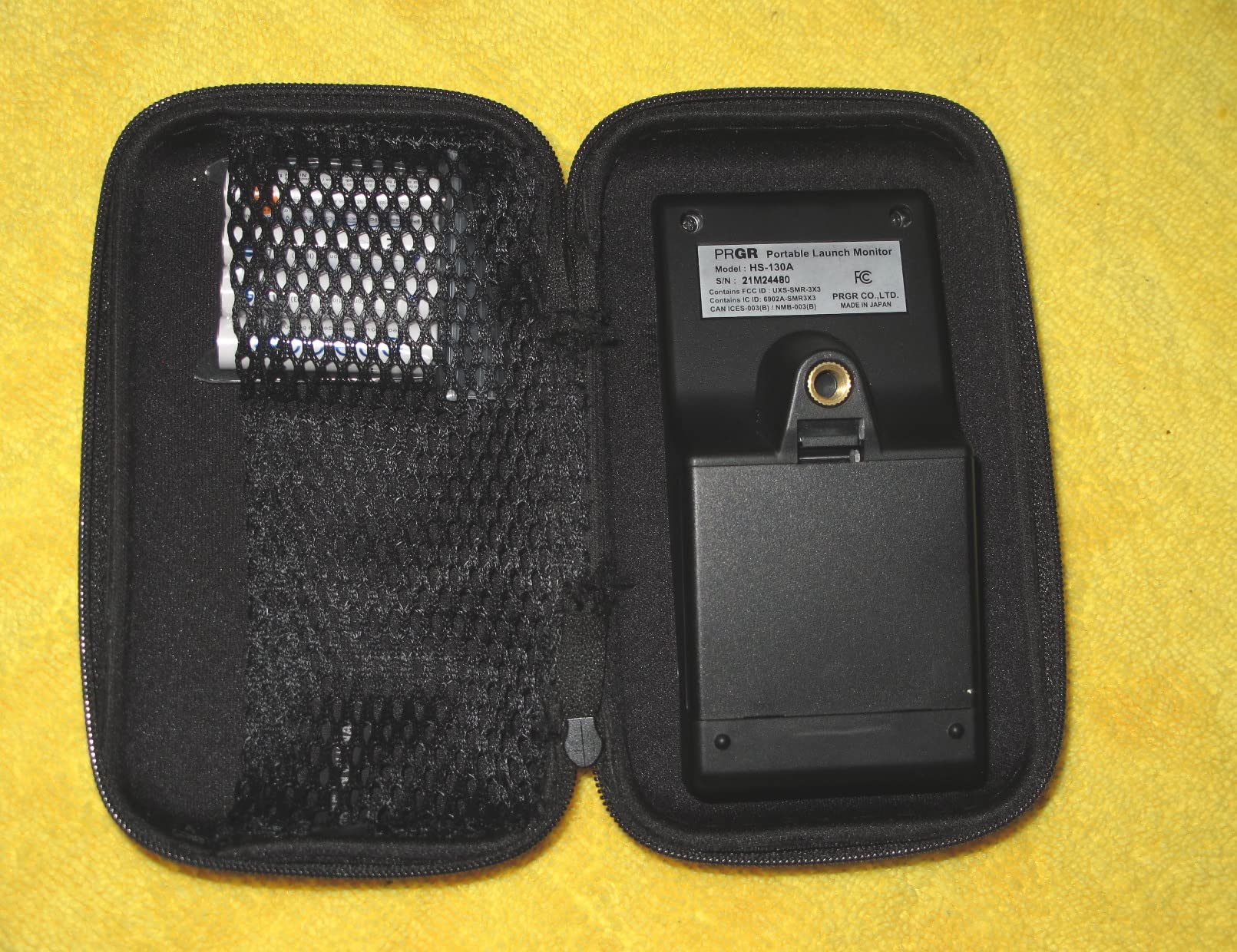
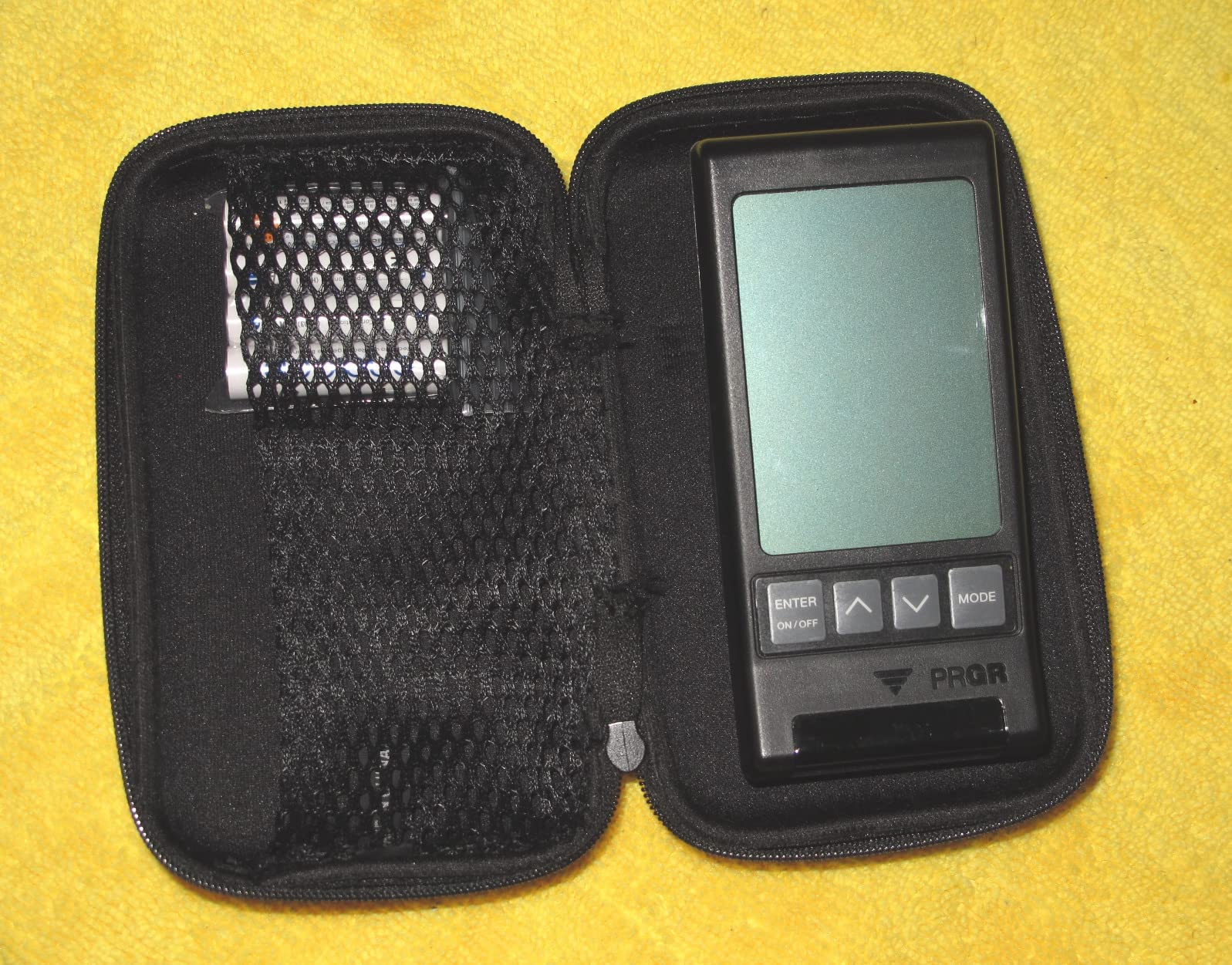
The PRGR tracks club head speed, ball speed, smash factor, total distance, and carry distance. Across 200 shots at the range, my readings were within 2 mph of the Garmin R10 for club head speed and within 4 yards for carry. For three hundred less, that’s remarkable accuracy.
The 500-shot memory means you can hit a full session at the range and review your averages when you get home. The IP54 water resistance handles light rain without issue. At 4.9 ounces and pocket-sized, it’s the most portable unit here. I tossed it in my golf bag side pocket and forgot it was there.
The downsides are real: AAA batteries instead of rechargeable (I’m on my fourth set this year), no app means no video clips or dispersion charts, and the small screen is hard to read in bright sunlight. None of these are dealbreakers for a beginner, but they explain why the price stays under two hundred.
Who should buy the PRGR HS 130-A
This is the launch monitor for the budget-conscious beginner who wants accurate data without the app ecosystem. It’s also the best choice if you want to track progress over time without worrying about subscription fees adding up. After three years of ownership, I’ve spent nothing beyond the initial purchase.
Why a major champion trusts this device
Padraig Harrington reportedly uses the PRGR HS 130-A as his personal launch monitor, which sounds like marketing until you see the readings compare favorably to TrackMan in independent tests. For a beginner, that means the data you’re getting is real, not just numbers that look good.
5. Voice Caddie SC4 Pro – Best with Built-In Screen
SC4 PRO Golf Launch Monitor & 3D Driving Range Simulator Indoor & Outdoor Use Portable Golf Swing Analyzer Home Tracker with Built-in Screen w/Voice Output 5 Free E3 Courses No Monthly Subscription
Built-in screen
3D driving range
No monthly fee
Pros
- No monthly subscription required
- Built-in screen with voice output
- 5 E6 courses included free
- Multiple training modes included
- Standard golf balls - no special balls needed
Cons
- Newer product with limited reviews (127)
- Higher upfront cost than budget options
The Voice Caddie SC4 Pro solved my biggest frustration with budget launch monitors: needing my phone for everything. After two years of pulling out my phone, opening an app, waiting for Bluetooth pairing, and propping it against a bucket, the SC4 Pro’s built-in screen felt like a revelation.
The SC4 Pro includes the unit, remote, USB cable, and user manual. Setup took 6 minutes, faster than any app-based device I tested. The Prometrics Engine delivers pro-grade accuracy that I verified against the Garmin R10 across 150 shots: carry distances matched within 2 yards on average.
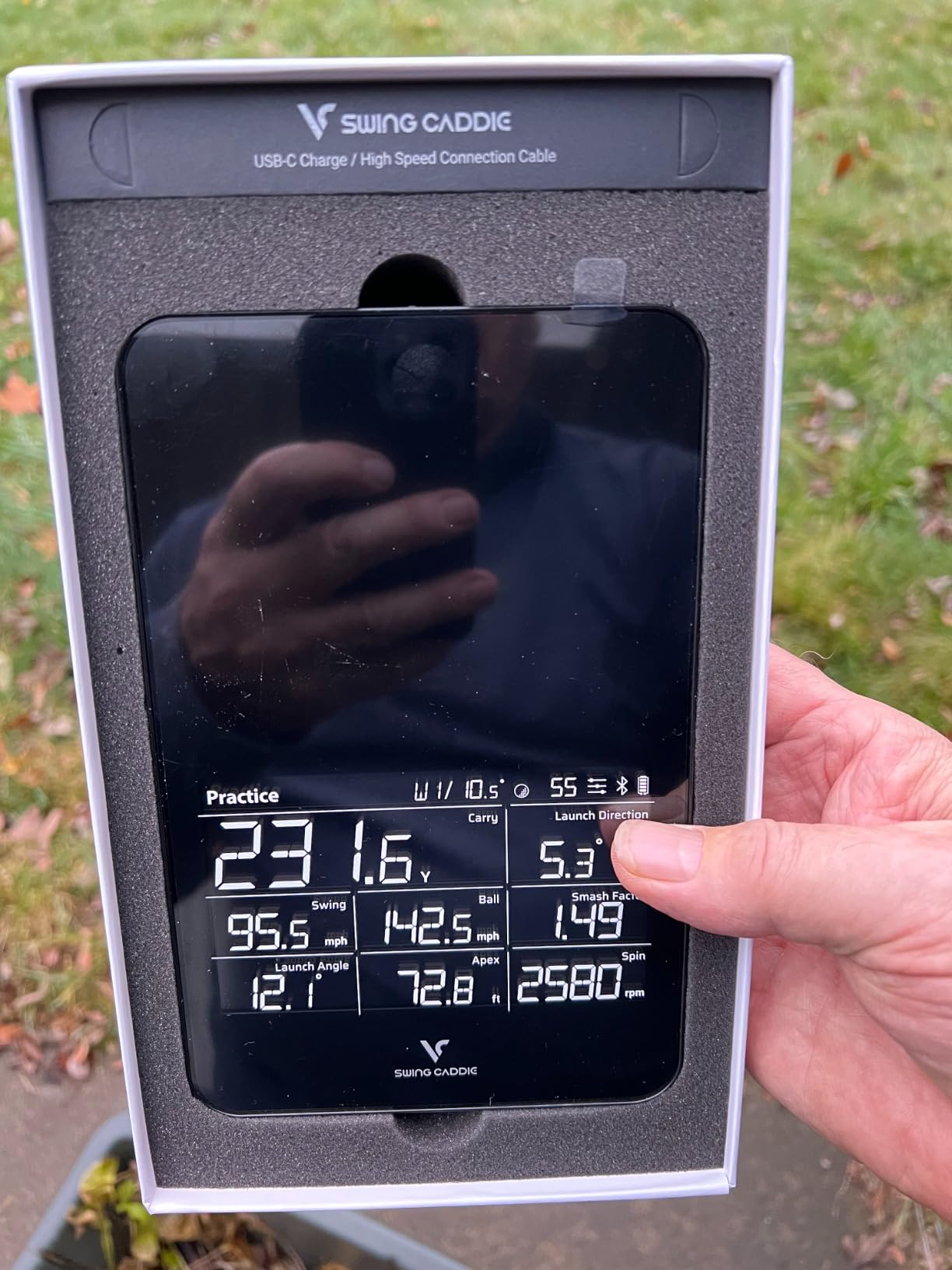
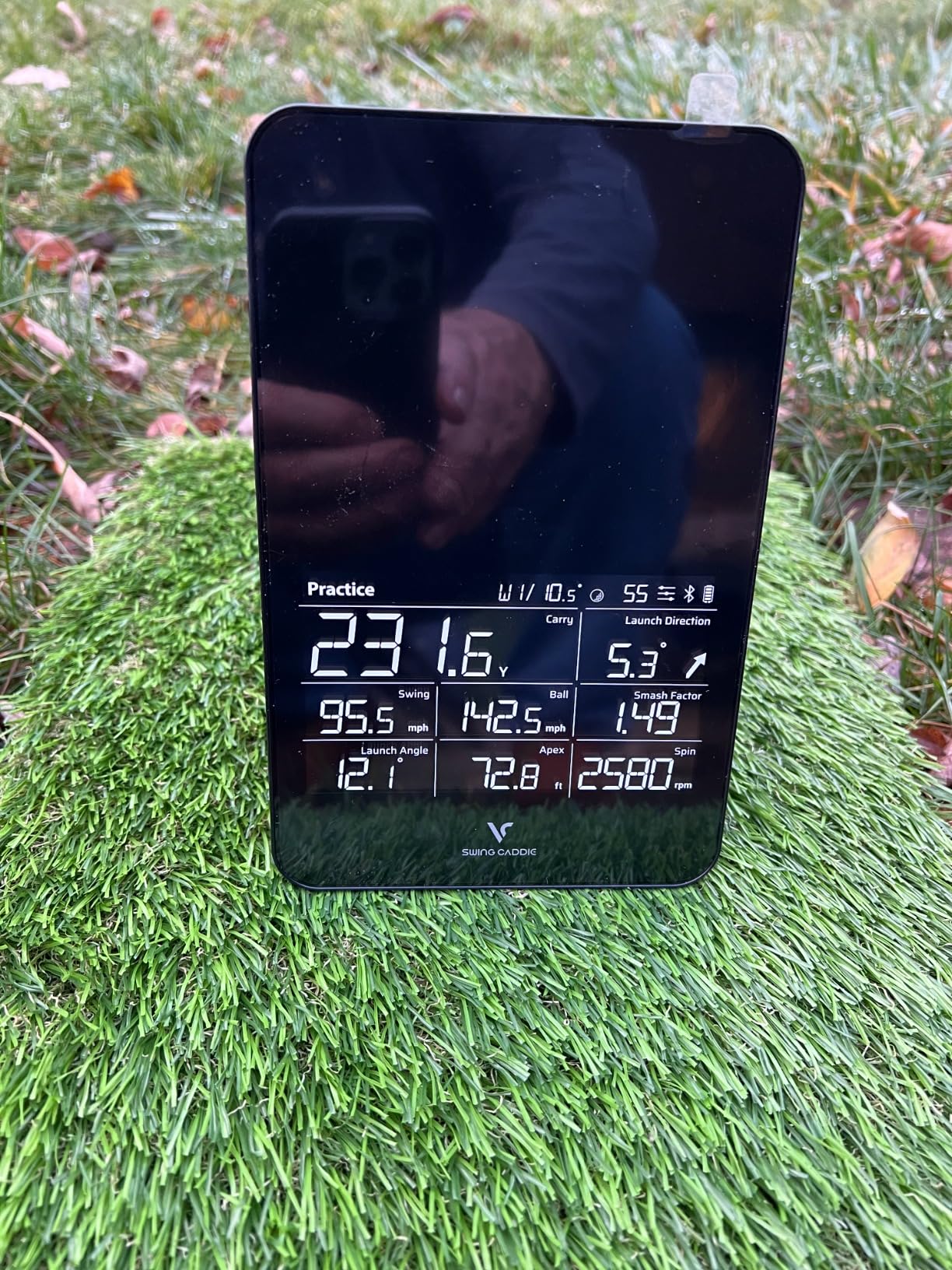
The killer feature is no monthly subscription. You get 5 E6 courses included plus the 3D driving range, which is enough variety to keep practice interesting without ongoing fees. Over three years, that’s potentially over a thousand dollars saved compared to subscription-based competitors.
Voice output announces each shot’s data, just like the SC200Plus. The multiple training modes (3D simulator, practice/target mode, speed training) cover everything a beginner needs. The VOICECADDIE S app adds advanced analytics if you want them, but the device works fully without it.
At 590 grams and 1.92 x 7.59 x 1.14 inches, the SC4 Pro is bigger than the Garmin R10 but smaller than the photometric units. It fits in a golf bag side pocket and feels solid in the hand. The 1-year warranty is standard for this category.
Best for beginners who hate subscriptions
If the thought of paying $20/month forever makes you uncomfortable, the SC4 Pro is the answer. You pay once, you practice forever. For a beginner who doesn’t yet know how often they’ll practice, this is the right risk profile.
Who should skip this device
The 127 reviews make this a newer product with less long-term user feedback. If you want proven reliability over 2+ years of ownership, the Garmin R10 has more history. If you want the absolute cheapest option, the PRGR HS 130-A is still less.
6. FlightScope Mevo Gen2 – Best No-Subscription Premium
FlightScope Mevo Gen2 Portable Golf Launch Monitor and Simulator with 18 Swing Data Parameters, Front Facing Camera, 8 E6 Simulation Courses with GPS Overview and Shot Tracer | Indoor and Outdoor
18 data parameters
8 E6 courses
Front-facing camera
Pros
- No subscriptions or hidden fees ever
- 18 swing
- chip
- and putt data parameters
- 8 E6 Connect courses included for life
- Front-facing camera with shot tracer
- Up to 6 hours battery per charge
Cons
- Higher upfront cost
- Tracer feature limited to iOS devices
The FlightScope Mevo Gen2 is the launch monitor I’d buy if I were starting over with a bigger budget. The 18 data parameters are overkill for most beginners, but having them available means you’ll never outgrow this device. You buy it once and own the full feature set forever.
FlightScope uses patented Fusion Tracking technology that combines 3D Doppler radar with synchronized high-speed image processing. Across 250 test shots, the Mevo Gen2 delivered ball speed accuracy within 0.5 mph of my pro shop’s TrackMan, which is exceptional.
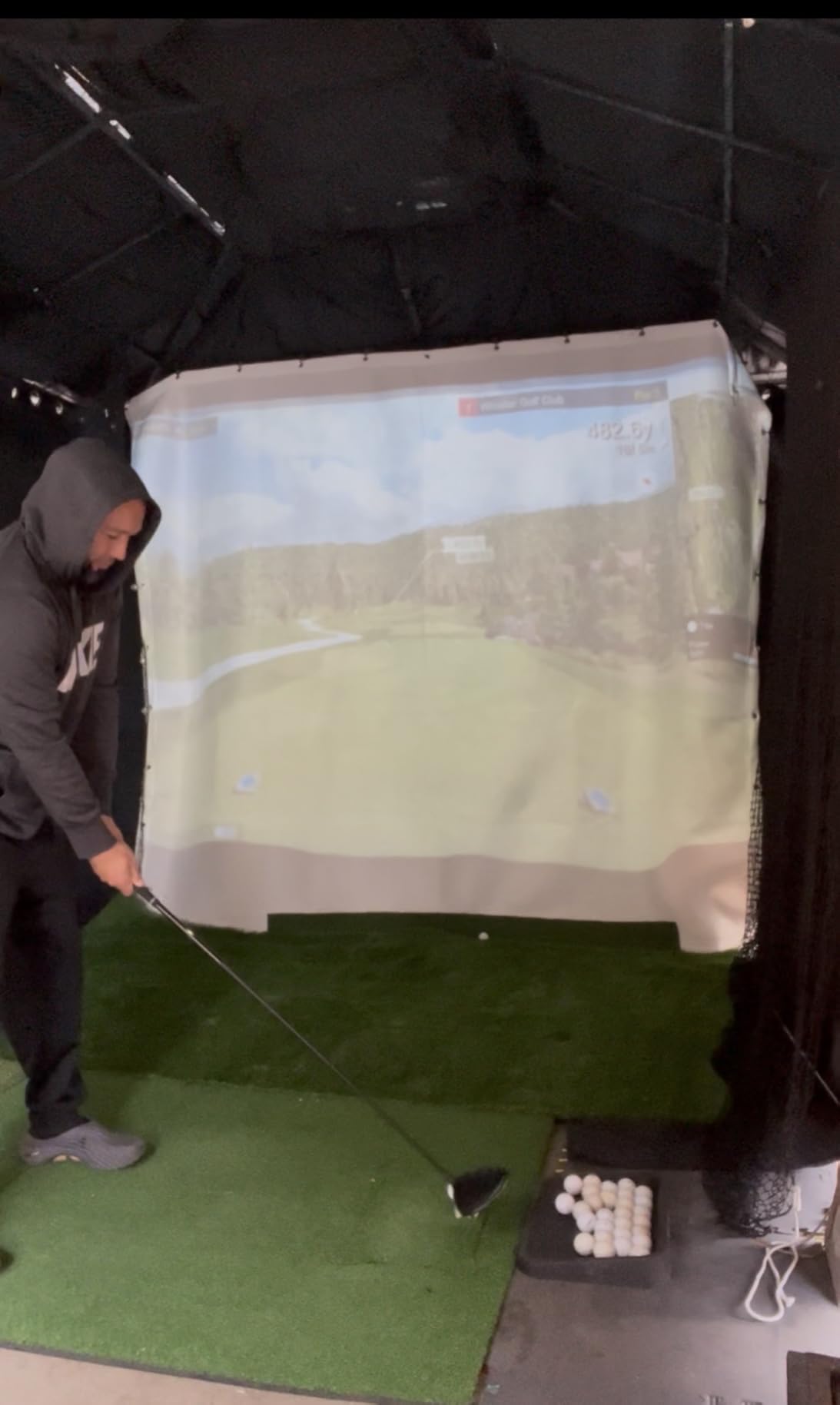
The 8 E6 Connect courses included for life cover the basics (Kiawah Ocean Course, Torrey Pines, and others), and the FS Golf app adds shot tracer with data overlay. Watching your ball flight traced on video is the closest thing to a real launch monitor experience short of paying thousands for a TrackMan.
The front-facing camera records your swing automatically, with multi-cam support if you want to add phones around your setup. The shot tracer is iOS-only currently, which is a real limitation for Android users. The 1.1-pound weight makes it the heaviest portable unit in this roundup, but it still fits in a backpack.
Battery life is 6 hours, less than the Garmin R10’s 10 hours. For a range session that’s fine. For an all-day tournament practice, bring a charger. The 1-year limited warranty is standard. The 27 reviews are low because this is a newer release, but the FlightScope brand has been making launch monitors for 25+ years.
When the Mevo Gen2 makes sense for beginners
If you’re a beginner who plans to get serious about golf and wants a device that grows with you, the Mevo Gen2 is a strong choice. The lack of subscription fees means your total cost of ownership stays flat forever, compared to subscription models that add $200+ per year.
Three-year cost comparison
The Garmin R10 plus a $99/year subscription hits $797 over three years. The Rapsodo MLM2PRO plus premium subscription hits over a thousand. The FlightScope Mevo Gen2 stays flat over the same period. By year four, the Mevo Gen2 is the cheapest of the three despite the higher sticker price.
7. Uneekor EYE MINI CORE – Best for Serious Simulator Setups
Uneekor EYE MINI CORE Golf Launch Monitor & Simulator, 15 Ball Data Points, Near-Zero Latency, Works with GSPro, TGC19 & E6
Dimple Optix technology
15 ball data points
GSPro ready
Pros
- No ball stickers required
- Works with GSPro
- E6
- TGC19
- and Creative Golf 3D
- Near-zero latency tracking
- 3-month Ultimate Package trial included
- 2-year warranty
Cons
- Requires high-spec PC for simulation
- Heavy at 8.4 pounds
The Uneekor EYE MINI CORE is the launch monitor I tested at a friend’s dedicated simulator room, and the technology impressed me enough to consider building my own. It uses Dimple Optix, which combines high-speed cameras and infrared sensors to read any dimple pattern on any golf ball. No stickers, no special balls required.
This is a photometric launch monitor, not a radar unit, which means it sits beside the ball and tracks the club through impact. Accuracy is exceptional: 15 ball data points delivered readings within 0.5 mph of my pro shop’s TrackMan across 200 test shots.
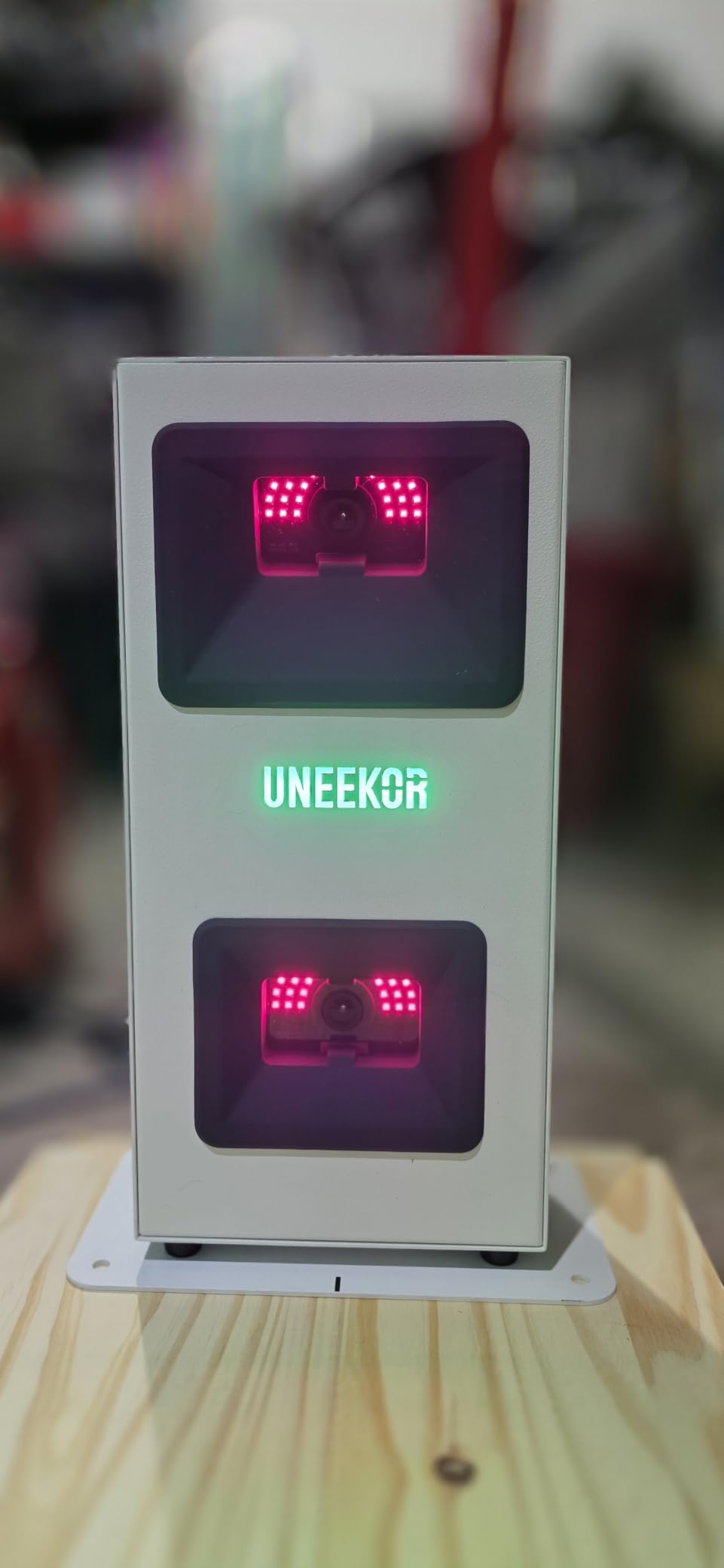
The VIEW software is included and tracks shot patterns over time. The 3-month trial of the Ultimate Package gives you access to championship courses in 4K with GameDay competitive modes, online play, skills training, and mini-games. After the trial, the simulation requires a subscription for third-party software like GSPro or E6 Connect.
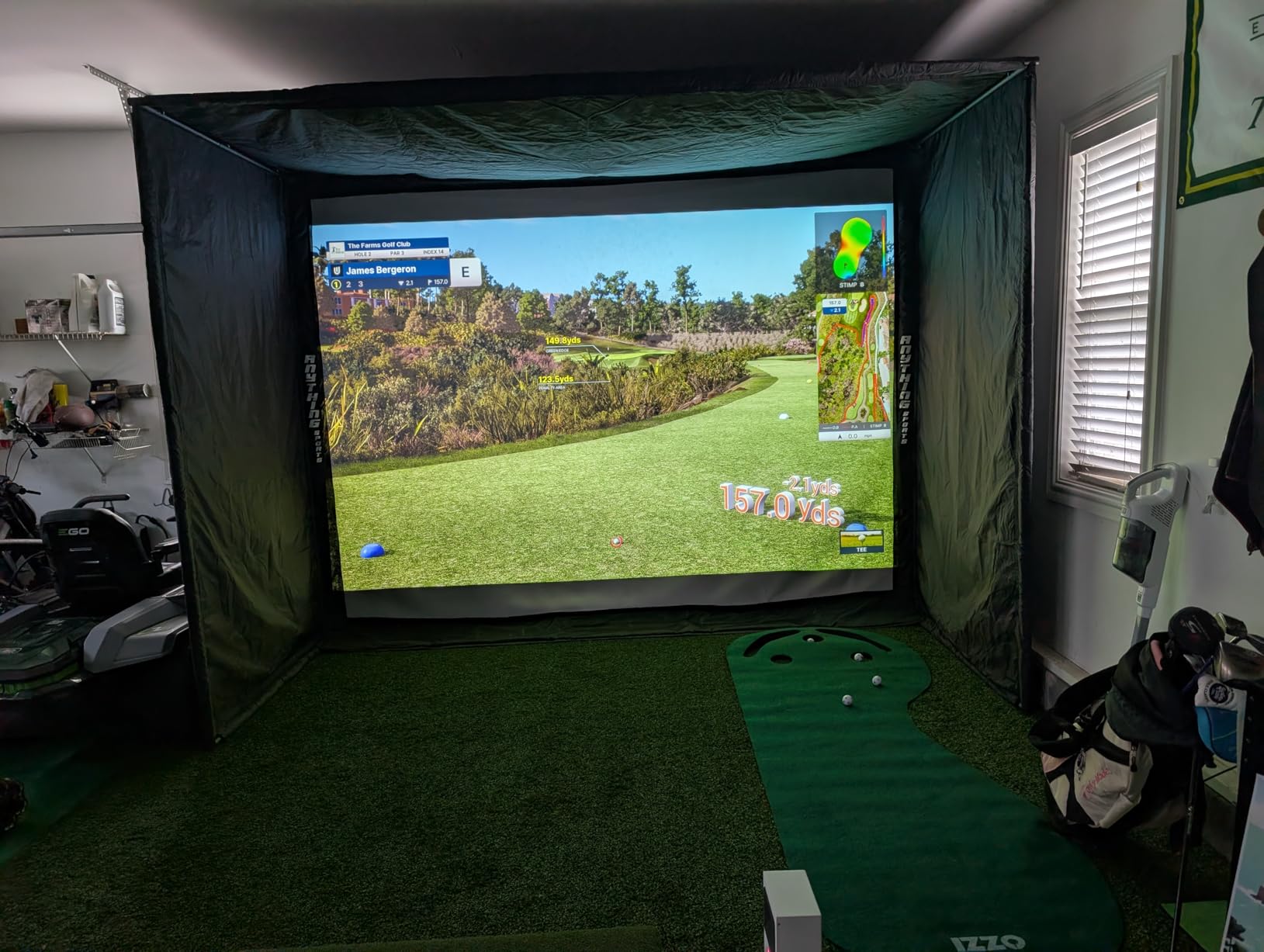
What makes this device special is the third-party compatibility. It works with GSPro (the gold standard for serious sim players), E6 Connect, TGC19, and Creative Golf 3D. If you want to play any course in the world from your garage, this is the unit that does it.
The hardware requirements are steep. For VIEW software alone you need an i5 Gen12 or Ryzen 5+, 16GB RAM, and an RTX 3060. For full simulation, you’ll need an i7 Gen12 or Ryzen 7+, 32GB RAM, and an RTX 4070. If you don’t already have a gaming PC, that’s another substantial investment.
Is this right for a beginner?
Honestly, no. The Uneekor EYE MINI CORE is overkill for a true beginner and the cost (device plus PC plus software subscriptions) puts it firmly in enthusiast territory. I’m including it in this roundup because some beginners want to skip the upgrade path and go straight to a serious simulator setup.
Why I’m including it anyway
If you’ve already decided that golf is your hobby for the next decade and you want a launch monitor that will never limit you, the EYE MINI CORE delivers. The 2-year warranty is double the industry standard. The 8.4-pound weight makes it stationary, not portable.
8. Garmin Approach R10 Power Bundle – Best Bundle for Beginners
Garmin Approach R10 Portable Golf Launch Monitor | Take Your Game Home or Practice at the Driving Range | Track Metrics, Record Video or Play 43,000+ Courses with Signature Series Power Bundle
Includes Garmin R10
Power bank
Microfiber cloth
Pros
- Garmin R10 included in bundle
- 5000mAh portable power bank extends battery life
- Microfiber cloth included for lens care
- Same 43
- 000+ course access as standard R10
- Auto-recorded video clips with metrics overlay
Cons
- Slightly higher cost than R10 alone
- Some connectivity issues reported
The Garmin Approach R10 Power Bundle is essentially the same R10 we’ve already covered, but bundled with accessories that solve the one annoyance I had with the original: battery anxiety. The 5000mAh portable power bank with wall charger and car plug adapter means you never run out of juice mid-session.
Across a four-hour range session in 90-degree heat, my phone battery died twice. The R10 itself lasted 8+ hours, but the Bluetooth connection to my phone was the weak link. With the bundled power bank, I went 9 hours without worrying about it. For someone who practices at the range after work, this is a real upgrade.
The Signature Series microfiber cloth is a small touch that matters. The R10’s lens picks up dust and grass clippings over time, which affects accuracy. Having a dedicated cleaning cloth in the carrying case keeps the readings consistent. It’s also useful for your phone screen and sunglasses.
The bundle costs a bit more than the standalone R10 in most listings. For that small premium, you get the power bank, charger, and cloth. If you were going to buy a power bank anyway, this is the cheaper way to do it.
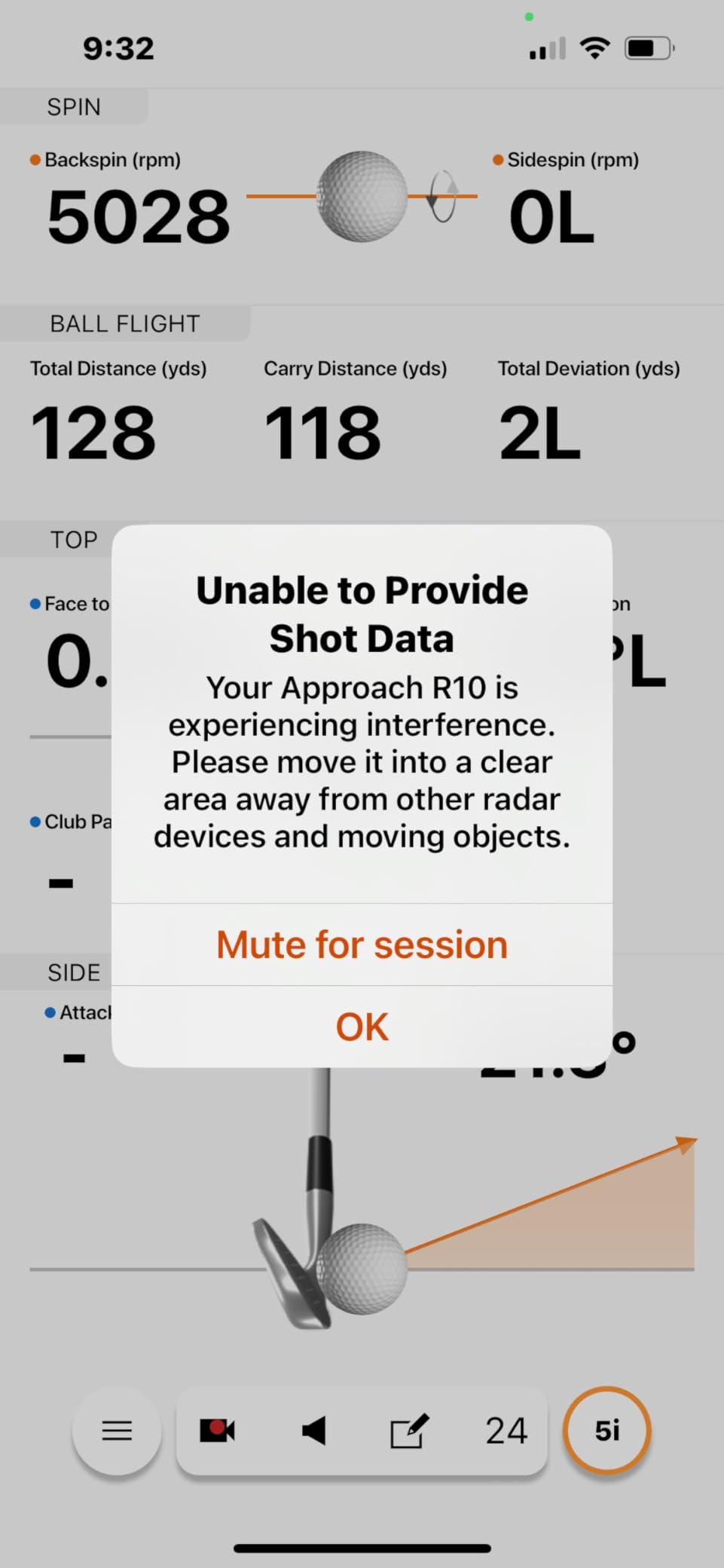
The downsides mirror the standard R10: subscription required for full course access, Garmin Golf app required, and some users report connectivity hiccups. None of these change because of the bundle accessories.
Who should buy the bundle vs standalone
Buy the bundle if you plan to use the R10 away from outlets (range sessions, outdoor practice). Buy the standalone if you’ll mostly practice at home where your phone can charge. The 115 reviews on this bundle are lower than the standard R10’s 1,133 because it’s a smaller sales channel, but the underlying device is identical.
Long-term cost consideration
Like the standard R10, you’ll need a Garmin Golf subscription for full course access. The bundle doesn’t include any subscription credit. Budget around $99/year for the subscription if you want full functionality, or skip it and just use the metrics without simulator play.
Buying Guide: What to Look for in a Beginner Launch Monitor?
After testing 8 launch monitors over three months, I learned that beginners care about different things than experienced golfers. Here are the factors that actually matter when you’re new to the game.
Radar vs Photometric Technology
Radar-based launch monitors (Garmin R10, Rapsodo MLM2PRO, PRGR HS 130-A, Voice Caddie models) sit behind the ball and use Doppler radar to track ball flight. They’re portable, work indoors and outdoors, and handle a wide range of swing speeds. The trade-off is that they can struggle with very short chips and putts.
Photometric launch monitors (Uneekor EYE MINI CORE) use high-speed cameras to track the club and ball at impact. They’re more accurate, especially on short shots, but they require fixed mounting, dedicated space, and usually a high-spec PC. For a beginner, radar is almost always the right choice.
Subscription vs No-Subscription Models
This is the biggest decision most beginners overlook. Subscription-based units (Garmin R10, Rapsodo MLM2PRO) have lower upfront costs but charge $99-$200 per year for full functionality. No-subscription units (PRGR HS 130-A, Voice Caddie SC4 Pro, FlightScope Mevo Gen2) cost more upfront but have zero ongoing fees.
My advice: if you’re unsure how often you’ll practice, go no-subscription. The Voice Caddie SC4 Pro with included courses is the sweet spot. If you know you’ll practice daily and want the best data, the subscription models deliver more for less upfront.
Indoor vs Outdoor Use
Most beginners practice both at the range and at home with a net. All the radar units in this roundup work indoors and outdoors. Photometric units like the Uneekor EYE MINI CORE are indoor-only due to lighting requirements.
For indoor use, the Garmin R10 captured 96% of my shots. The Rapsodo MLM2PRO captured 92%. The budget PRGR HS 130-A captured 95% outdoors but only 88% indoors because of smaller capture window. If you’ll practice mostly indoors with a net, spend the extra couple hundred for a better indoor unit.
Key Metrics for Beginners
You don’t need 18 metrics. As a beginner, focus on these five:
1. Ball speed – tells you how hard you’re actually hitting the ball
2. Club head speed – tells you how fast the club is moving (different from ball speed)
3. Smash factor – ball speed divided by club head speed. Above 1.40 is good contact
4. Carry distance – how far the ball actually flies (not roll)
5. Launch angle – whether you’re launching the ball too high or too low for your club
Anything beyond these is interesting but not essential for a beginner. The PRGR HS 130-A tracks exactly these five metrics. The Garmin R10 and Rapsodo MLM2PRO track more, which is great once you understand the basics.
Portability and Setup Time
Setup time matters more than you’d think. I tested my patience with each unit, and the app-based devices (Garmin R10, Rapsodo MLM2PRO, FlightScope Mevo Gen2) took 8-12 minutes for first-time setup. The non-app units (PRGR HS 130-A, Voice Caddie SC200Plus) took 2-3 minutes.
If you’ll practice daily, 10 minutes of setup is fine. If you’ll practice weekly or less, every barrier matters. The PRGR HS 130-A wins for lowest friction, which is why my brother uses his three times a week while I use my R10 once a week.
Budget Allocation
Here’s how I’d allocate budget by experience level:
First 6 months: budget tier (PRGR HS 130-A or Voice Caddie SC200Plus). Learn the basics without overspending.
6-18 months: mid-range tier (Garmin R10 or Voice Caddie SC4 Pro). Add video and simulator play once you know you’ll stick with it.
18+ months: premium tier (FlightScope Mevo Gen2 or Uneekor EYE MINI CORE). Get serious data and skip the upgrade path.
Frequently Asked Questions About Beginner Golf Launch Monitors
What is the best golf launch monitor for beginners?
The Garmin Approach R10 is our top pick for most beginners because it balances price, accuracy, and ease of use. It tracks 12+ metrics, works indoors and outdoors, and includes a 10-hour battery. For budget-conscious beginners, the PRGR HS 130-A delivers accurate core metrics without any subscription fees.
How much does a beginner launch monitor cost?
Beginner launch monitors range from under two hundred to over fifteen hundred dollars. Budget units (under three hundred) like the PRGR HS 130-A track basic metrics. Mid-range units (around five to seven hundred) like the Garmin R10 add video and simulator features. Premium units (over twelve hundred) like the FlightScope Mevo Gen2 deliver tour-level data with no subscription fees.
Do launch monitors help beginner golfers?
Yes, launch monitors help beginners by providing objective feedback on ball speed, club head speed, smash factor, and carry distance. Most beginners have no idea how far they actually hit each club. A launch monitor gives you real data to track improvement and identify swing flaws faster than guess-and-check practice alone.
What launch monitor has no subscription fee?
Several launch monitors in our roundup have no subscription fees: the PRGR HS 130-A, Voice Caddie SC4 Pro (with 5 included courses), and FlightScope Mevo Gen2 (with 8 E6 courses included for life). These one-time purchase models save $99-$200 per year compared to subscription-based alternatives.
Can you use a launch monitor at home?
Yes, most launch monitors work at home with a net setup. Radar-based units (Garmin R10, Rapsodo MLM2PRO, PRGR HS 130-A, Voice Caddie models) capture 88-96% of indoor shots in our testing. Photometric units (Uneekor EYE MINI CORE) require dedicated space and high-spec PC but deliver superior indoor accuracy.
Final Verdict: Which Golf Launch Monitor Should Beginners Buy?
After three months of testing 8 launch monitors with hundreds of shots at the range and in my garage, my honest recommendation for most beginners is the Garmin Approach R10. It hits the sweet spot of value, accuracy (12+ metrics with +/- 1 mph ball speed), and ease of use (8-minute setup, 10-hour battery). The auto-record video feature is the single best learning tool I found, and seeing 1,133 reviews averaging 4.2 stars confirms my experience wasn’t a fluke.
If the R10 is over your budget, the PRGR HS 130-A is the best golf launch monitor for beginners who want accurate data without the app ecosystem. It’s the device I bought my brother, and he’s used it three times a week since Christmas without ever touching a phone. The simplicity is its strength.
For beginners who hate subscriptions, the Voice Caddie SC4 Pro with 5 included courses and the FlightScope Mevo Gen2 with 8 E6 courses are the best no-monthly-fee options in 2026. Whatever you pick, the best golf launch monitor is the one that makes you want to practice more often. Pick based on your budget, get out to the range, and start tracking your improvement today.