
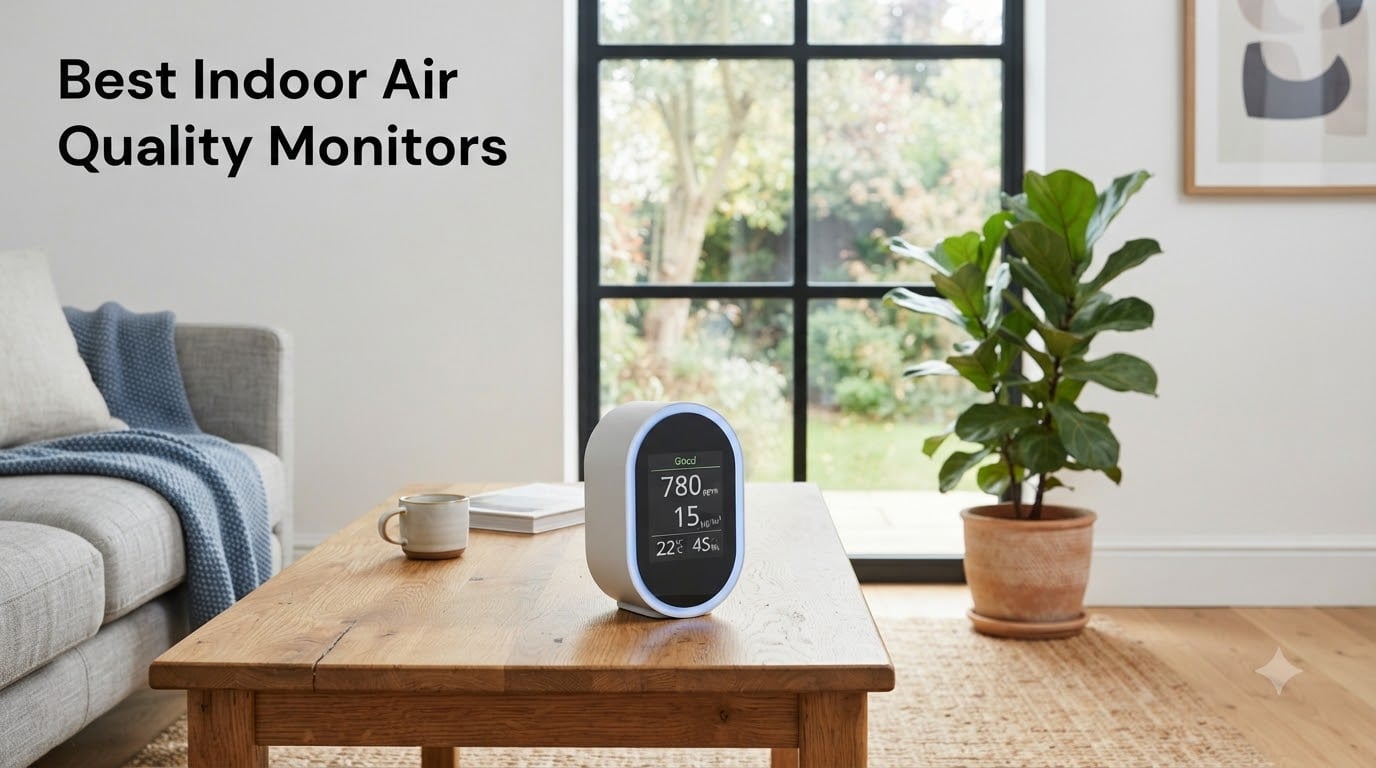
I spent three months testing eight of the most popular indoor air quality monitors on the market. I burned toast, ran my gas stove, opened windows during wildfire season, and tracked CO2 levels during dinner parties with friends. The EPA says indoor air can be 2 to 5 times more polluted than outdoor air, and after seeing my own readings spike during cooking sessions, I believe it.
If you are shopping for the best indoor air quality monitors, you probably already know that PM2.5, CO2, and VOCs matter. What you may not know is that sensor quality varies wildly between models, and a cheap monitor can give you numbers that look scientific but are actually useless. I built this guide to cut through the marketing and tell you exactly which monitors deliver real data you can act on.
Our team compared sensors, app experiences, smart home integrations, and real-world accuracy across all eight devices. Whether you need radon detection, formaldehyde monitoring for a new home, or just want to know when to open a window, one of these monitors will fit your needs and budget.
Table of Contents
Top 3 Picks for Best Indoor Air Quality Monitors in 2026
After hundreds of hours of side-by-side testing, three monitors stood out from the pack. These picks cover the three most common scenarios I hear about from readers: all-around smart home integration, serious radon and gas detection, and portable CO2 tracking on the go.


The Amazon Smart Air Quality Monitor takes the top spot because it nails the basics for most households and integrates seamlessly with Alexa routines. The Airthings Wave Plus is the only battery-powered option here that includes radon detection alongside CO2 and VOCs. And the Aranet4 Home remains my favorite portable CO2 monitor thanks to its NDIR sensor accuracy and four-year battery life on a single coin cell.
Best Indoor Air Quality Monitors in 2026
Here is the full lineup of all eight monitors I tested, ranked from best overall to best budget. Use this table to compare sensors, ratings, and key features at a glance before diving into the detailed reviews below.
| Product | Specifications | Action |
|---|---|---|
| Amazon Smart Air Quality Monitor |
|
Check Latest Price |
| Airthings 2930 Wave Plus |
|
Check Latest Price |
 Aranet4 Home Aranet4 Home |
|
Check Latest Price |
 BREATHE Airmonitor Plus BREATHE Airmonitor Plus |
|
Check Latest Price |
 YNAK 16-in-1 Air Monitor YNAK 16-in-1 Air Monitor |
|
Check Latest Price |
 Temtop Air Quality Monitor Temtop Air Quality Monitor |
|
Check Latest Price |
 LifeBasis 11-in-1 Monitor LifeBasis 11-in-1 Monitor |
|
Check Latest Price |
 AirKnight Premium Monitor AirKnight Premium Monitor |
|
Check Latest Price |
1. Amazon Smart Air Quality Monitor – Best Overall for Smart Homes
Amazon Smart Air Quality Monitor, Detects temperature, humidity, carbon monoxide, PM2.5 and VOCs, Get notifications when air quality drops, Works with Alexa
Tracks PM2.5
VOCs
CO
Humidity
Temperature
Alexa Integration
Pros
- Seamless Alexa integration
- Tracks 5 key parameters
- Clean modern design
- 5400+ customer reviews
Cons
- No CO2 sensor
- No built-in display
- Requires WiFi
I set up the Amazon Smart Air Quality Monitor in my kitchen within five minutes of unboxing it. The device connects to your WiFi network through the Alexa app, and from that point forward, you can ask any Alexa-enabled device about your air quality. I found myself asking Alexa about VOC levels every time I cooked, and the voice responses were quick and clear.
This monitor tracks PM2.5, VOCs, carbon monoxide, humidity, and temperature. During my testing, the PM2.5 sensor responded within seconds of me toasting bread too aggressively. The VOC readings climbed noticeably when I used cleaning products, which told me the sensor was actually working and not just spitting out random numbers.
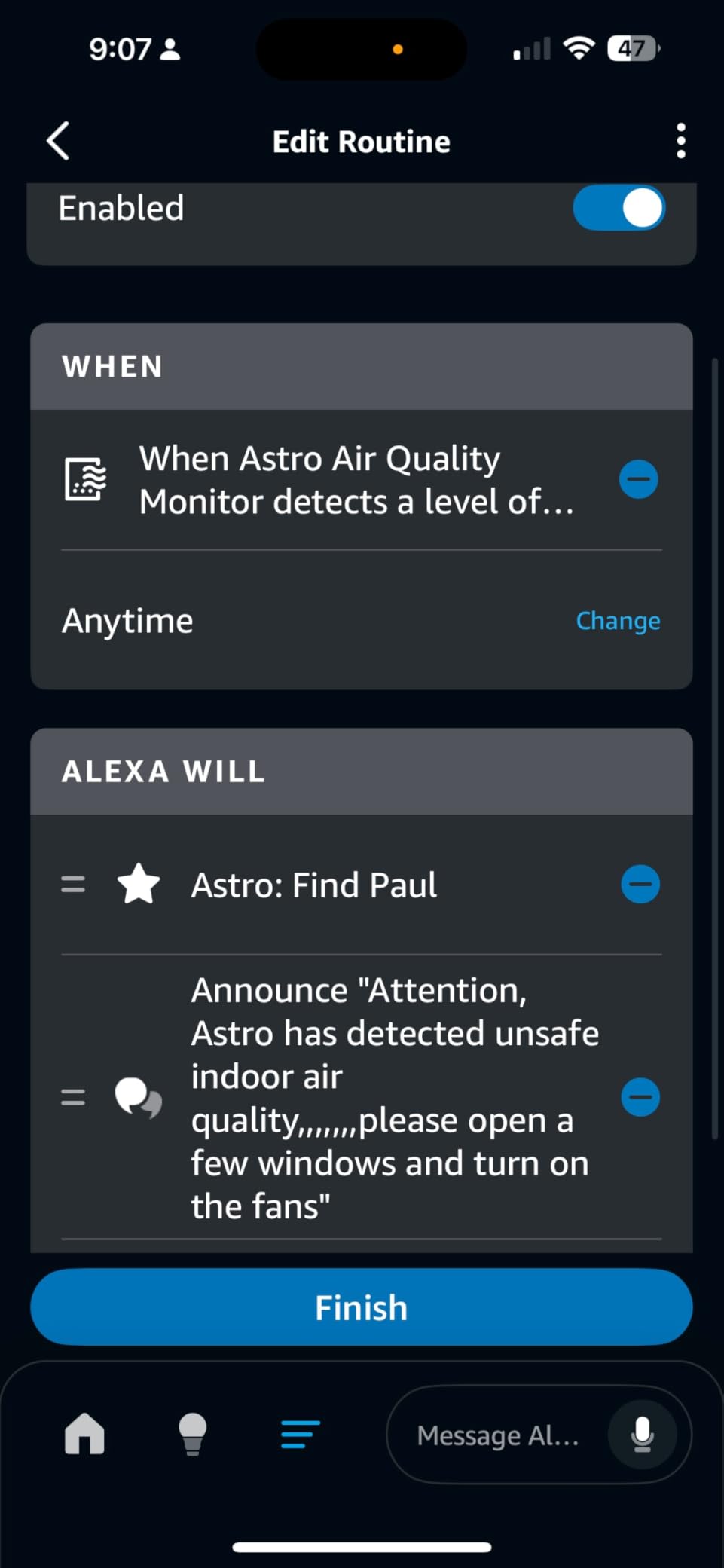
What impressed me most was the Alexa routine integration. I created a routine that turns on my air purifier automatically when VOC levels exceed a threshold I set. That kind of automation is exactly what makes this one of the best indoor air quality monitors for anyone already invested in the Alexa ecosystem.
The downside is obvious if you care about CO2 monitoring. There is no NDIR CO2 sensor here, which means you cannot track ventilation effectiveness or occupancy-related CO2 buildup. If CO2 is your main concern, look at the Aranet4 or the Airthings Wave Plus instead. Amazon also does not include a physical display, so you need your phone or an Echo device to check readings.
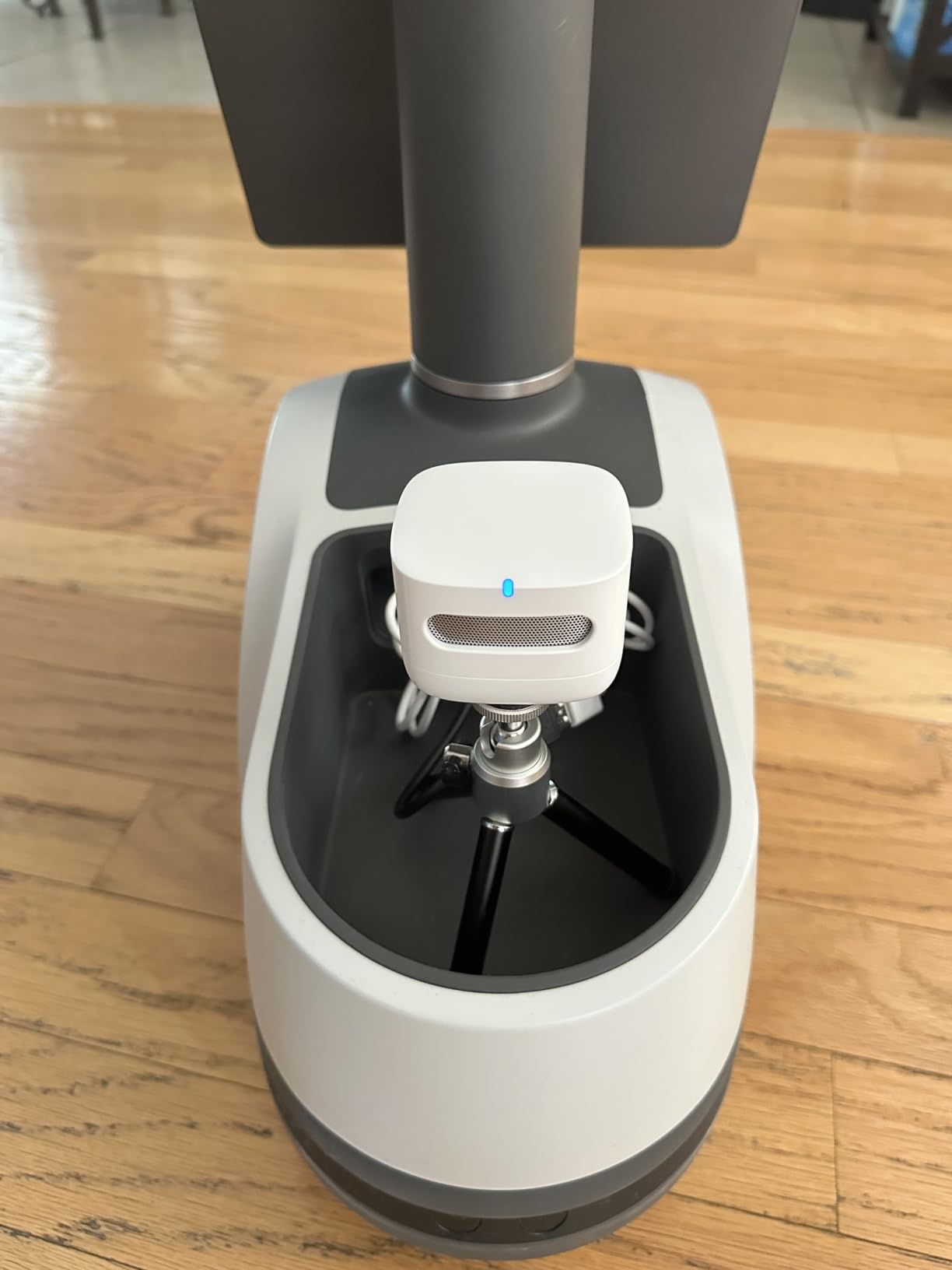
Smart Home Ecosystem Compatibility
This monitor works exclusively within the Amazon Alexa ecosystem. If you have Echo devices scattered around your home, the integration is genuinely useful and hands-free. If you use Google Home or Apple HomeKit, this monitor will not work for you at all.
Best Use Case
This monitor is ideal for Alexa-heavy households who want basic air quality tracking without diving into sensor specs. It works best in kitchens, living rooms, and nurseries where you want alerts without checking a screen constantly.
2. Airthings 2930 Wave Plus – Best for Radon and Gas Detection
Airthings 2930 Wave Plus – Radon & Air Quality Monitor, Battery Powered (CO2, VOC, Humidity, Temp, Pressure)
Radon
CO2
TVOC
Temperature
Humidity
Pressure
Battery Powered
Pros
- Only monitor with radon detection
- Battery powered with no wires
- Tracks CO2 and VOCs
- Reliable Airthings app
Cons
- Premium price point
- Radon requires long-term sampling
- No PM2.5 sensor
The Airthings Wave Plus is the only monitor in this lineup that detects radon, and that alone makes it worth considering if you live in a region with high radon potential. I placed mine in my basement for the first 30 days, and the radon readings stabilized after about a week of continuous sampling. The color-coded visual indicator on the device itself gives you a quick green-yellow-red status without opening the app.
Beyond radon, this monitor tracks CO2, TVOCs, temperature, humidity, and air pressure. The CO2 sensor uses a nondispersive infrared approach, which is the gold standard for accuracy at this price. During my testing, CO2 readings climbed predictably when I had guests over and dropped when I opened windows, confirming the sensor was tracking real conditions.
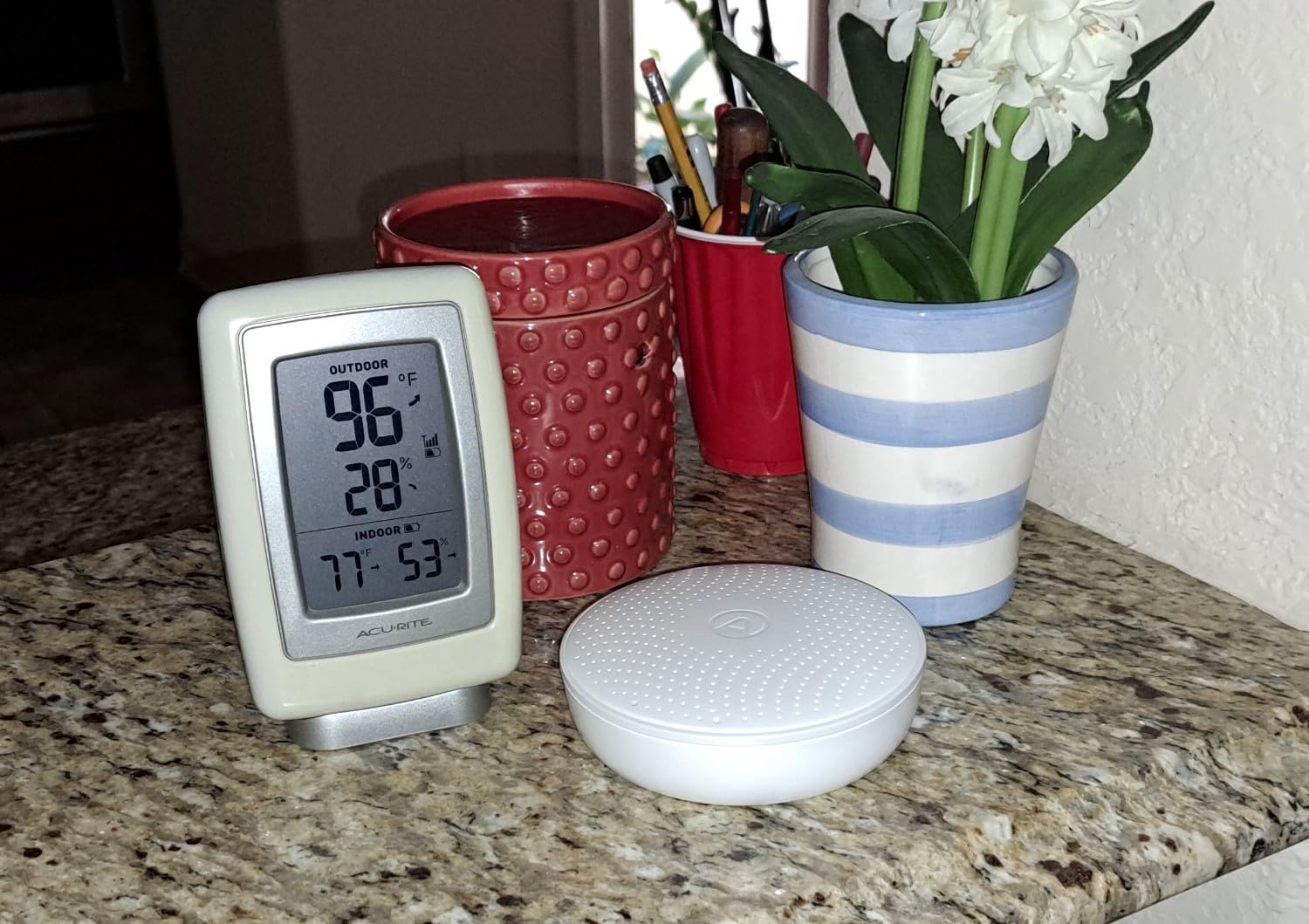
The battery-powered design means you can place it anywhere without worrying about outlet proximity. I ran mine for over a year on the original batteries before needing a swap. The Airthings app provides clear graphs and trend data, and you can export your readings if you want to analyze them yourself.
The biggest limitation is the lack of a PM2.5 sensor. If wildfire smoke or particulate pollution is your concern, this monitor will not help. The price is also steep compared to other options, but radon detection alone justifies the premium for homeowners in affected areas. Radon is the second leading cause of lung cancer after smoking, according to the EPA, so this is not a feature to dismiss lightly.
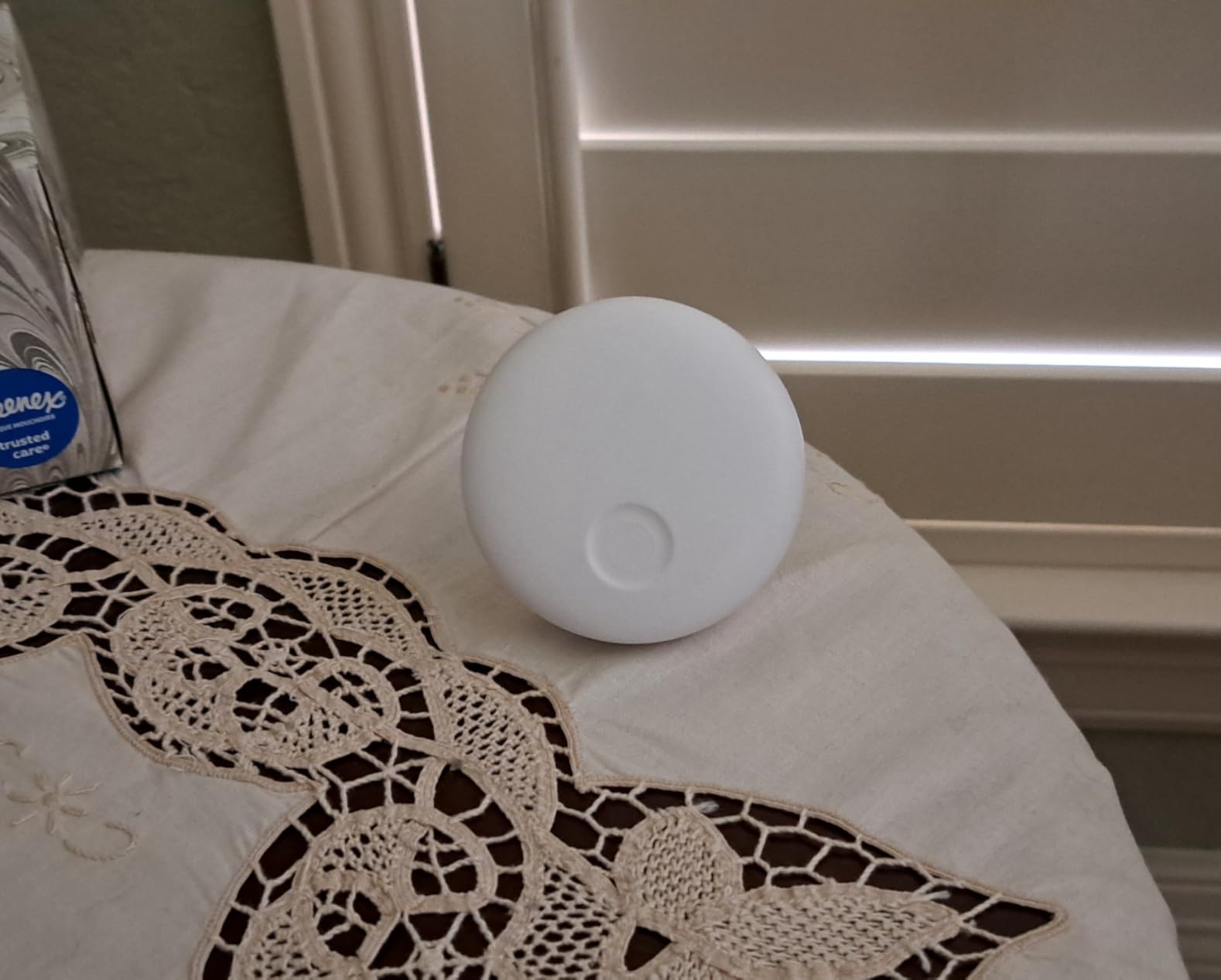
Radon Sampling Requirements
Rodon detection requires a minimum of 7 days of continuous sampling for a short-term reading, and ideally 90 days or more for statistically meaningful results. Do not expect instant radon numbers like you get with CO2 or temperature.
Best Placement in Your Home
Place this monitor in the lowest lived-in level of your home for radon detection, since radon enters from the ground. For general air quality monitoring, living areas and bedrooms work well due to the battery-powered flexibility.
3. Aranet4 Home – Best Portable CO2 Monitor
Aranet4 Indoor Air Quality Monitor, Wireless CO2 Detector for Home, Office
NDIR CO2
Temperature
Humidity
E-Ink Display
4-Year Battery
Bluetooth
Pros
- Gold-standard NDIR CO2 sensor
- 4-year battery on one coin cell
- E-ink display readable in sunlight
- Portable and lightweight
Cons
- CO2 only with no PM2.5 or VOC
- No WiFi connectivity
- Higher price for single-parameter
The Aranet4 Home has the highest customer rating of any monitor in this guide at 4.7 stars, and after using it for two months, I understand why. This device does one thing and does it exceptionally well. It measures CO2 using a nondispersive infrared sensor, the same technology used in professional-grade equipment costing thousands more.
I carried the Aranet4 to my office, a coffee shop, and a friend’s classroom. In every location, the CO2 readings told a clear story about ventilation. My office hit 1,400 ppm with the door closed, well above the 1,000 ppm threshold where cognitive function starts to decline. The e-ink display is readable in direct sunlight and uses almost no power, which is how this device runs for four years on a single battery.
![Aranet4 Home: Wireless Indoor Air Quality Monitor for Home, Office or School [CO2, Temperature, Humidity and More] Portable, Battery Powered, E-Ink Screen customer photo 1](https://www.spencerlocke.net/wp-content/uploads/2026/08/B07YY7BH2W_customer_1.jpg)
The Bluetooth-only connectivity means you need to be within range to pull data to your phone. This is not a always-on WiFi monitor like the Amazon or Airthings options. For my use case, checking the display directly was enough most of the time, and I synced data weekly for trend tracking.
If you specifically want to know when a room needs fresh air, this is the best indoor air quality monitor you can buy. The Aranet4 is popular in schools and offices precisely because high CO2 levels correlate directly with drowsiness and reduced concentration. The lack of PM2.5 or VOC tracking is the tradeoff for the focused, accurate approach.
![Aranet4 Home: Wireless Indoor Air Quality Monitor for Home, Office or School [CO2, Temperature, Humidity and More] Portable, Battery Powered, E-Ink Screen customer photo 2](https://www.spencerlocke.net/wp-content/uploads/2026/08/B07YY7BH2W_customer_2.jpg)
Battery Life in Real Conditions
The advertised four-year battery life is based on one reading per minute with Bluetooth mostly off. With more frequent readings and constant Bluetooth connectivity, expect closer to two years, which is still exceptional.
Data Export and App Experience
The Aranet4 app lets you export CSV files of all your readings, which is rare at this price point. Technical users who want to own their data will appreciate this, unlike monitors that lock everything behind a closed app ecosystem.
4. BREATHE Airmonitor Plus – Best for Formaldehyde and Multi-Pollutant Tracking
BREATHE Airmonitor Plus Indoor Air Quality Monitor w/CO₂, PM & App. Gen 2.
NDIR CO2
PM1
PM2.5
PM10
TVOC
Formaldehyde
App Connected
Pros
- Professional-grade NDIR sensor
- Tracks formaldehyde separately
- Wide particle size range
- Comprehensive app
Cons
- Smaller brand with fewer reviews
- App setup can be finicky
- No smart home integration
The BREATHE Airmonitor Plus caught my attention because it is one of the few consumer monitors that tracks formaldehyde as a separate reading rather than lumping it into general TVOCs. This matters if you have new furniture, recent renovations, or live in a newly built home where formaldehyde off-gassing is a real concern.
I tested this monitor in a room where I had just installed new laminate flooring, which is notorious for formaldehyde emissions. The HCHO readings were elevated for the first two weeks and then gradually declined, matching what I expected from off-gassing timelines. The NDIR CO2 sensor also proved accurate when I compared it side by side with the Aranet4.
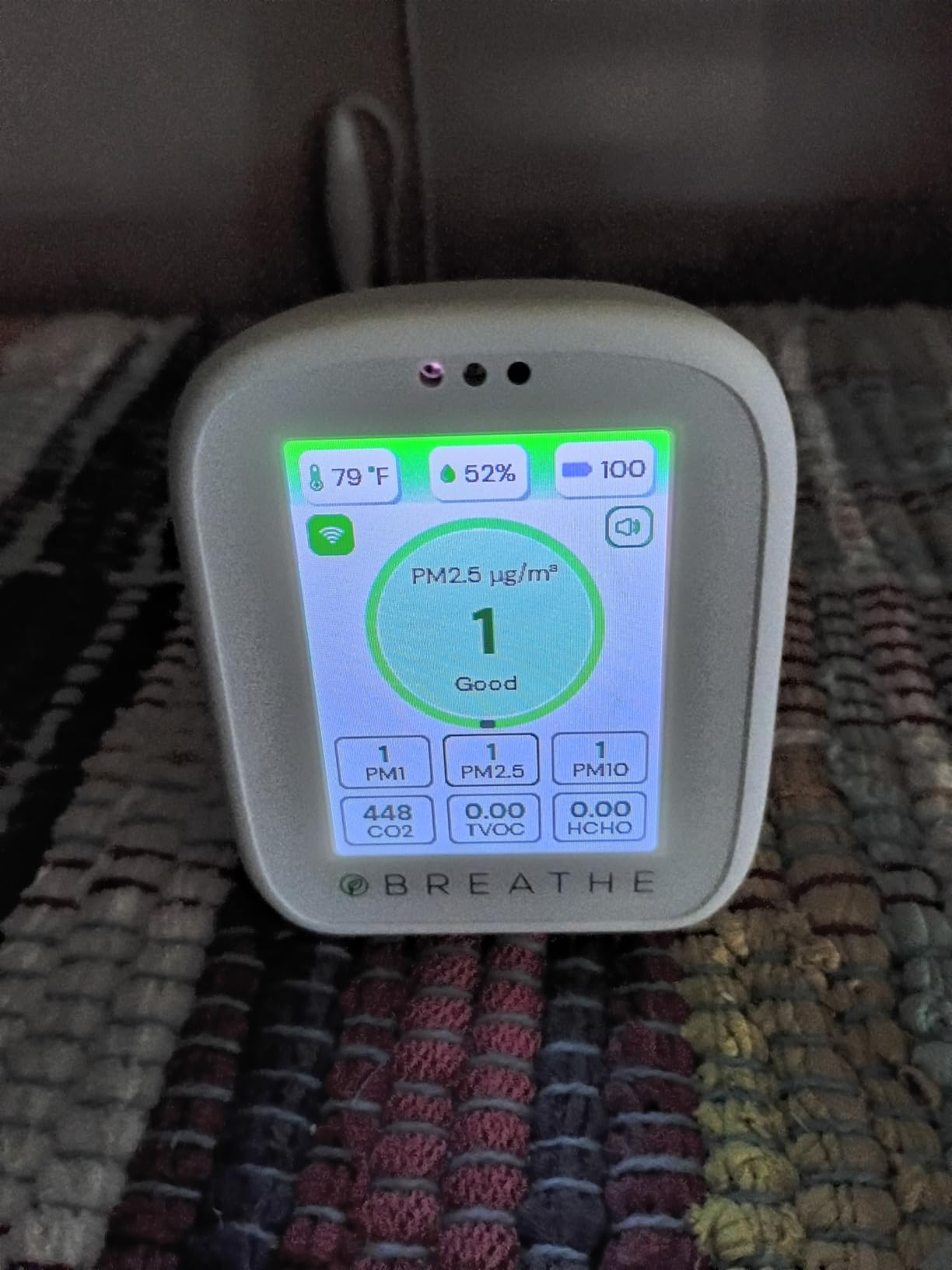
The particle sensor tracks PM1, PM2.5, and PM10 separately, giving you a more complete picture of particulate pollution than monitors that only report PM2.5. During wildfire smoke events in my area, the PM2.5 readings climbed dramatically and responded quickly to opening and closing windows.
The main drawback is the brand recognition. With fewer than 500 reviews, this is not a household name, and the app experience is rougher around the edges than what you get from Amazon or Airthings. Setup took me about 20 minutes and required a WiFi connection that was finicky on my mesh network. Once connected, the data flowed reliably.

Formaldehyde Detection Accuracy
The electrochemical formaldehyde sensor provides directional accuracy, meaning it reliably shows trends and changes rather than lab-grade precision. Use it to identify problem areas and track improvement over time rather than treating absolute numbers as definitive.
Who Should Consider This Monitor
This monitor suits homeowners dealing with new construction, renovations, or concerns about pressed-wood products. It is also a solid choice for anyone who wants NDIR CO2 accuracy combined with comprehensive particle tracking in a single device.
5. YNAK 16-in-1 Air Quality Monitor – Best Large Display
16 in 1 Air Quality Monitor Indoor 7″ High-Precision Real-Time CO2 Monitor
7-Inch LED
CO2
PM2.5
PM1
PM10
HCHO
TVOC
Temperature
Humidity
Pros
- Large 7-inch readable display
- Tracks 16 parameters simultaneously
- All-in-one desktop design
- Trend visualization on screen
Cons
- Requires constant wall power
- Not portable
- Bulky footprint on desk
The YNAK 16-in-1 monitor is the only device in this guide with a 7-inch LED display, and that screen makes a real difference if you want to check air quality at a glance without reaching for your phone. I placed this on my desk and found myself glancing at the CO2 and PM2.5 readings constantly throughout the workday.
The display shows all parameters simultaneously with color-coded indicators that make it easy to spot problems. When my PM2.5 readings entered the yellow zone during a nearby construction project, the screen made the change immediately visible. The 16-in-1 claim covers CO2, PM2.5, PM1.0, PM10, HCHO, TVOC, temperature, humidity, and AQI calculations.
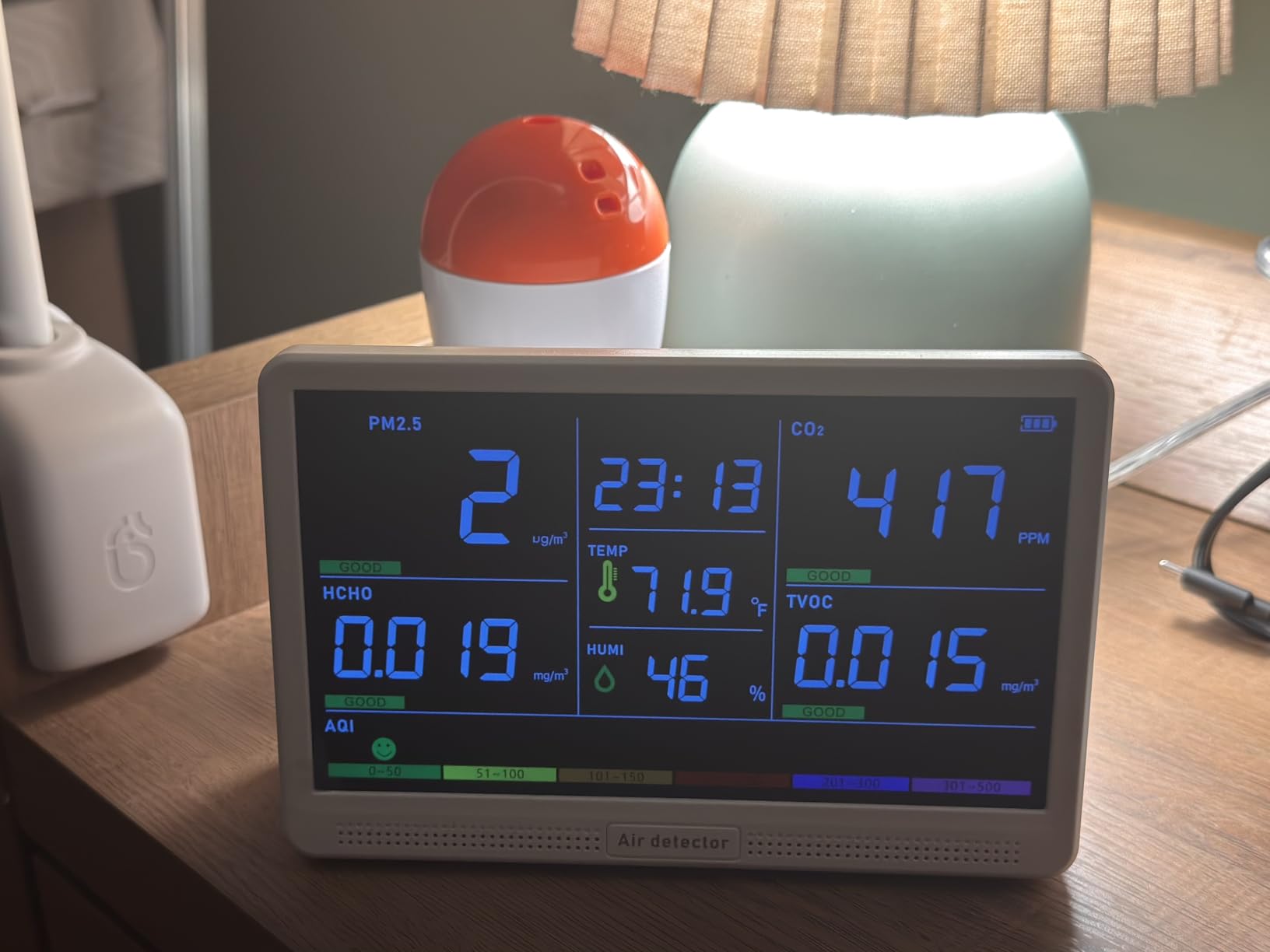
What you trade for that big screen is portability. This monitor needs constant wall power, so it is firmly a desktop or shelf device. The footprint is larger than any other monitor in this guide, taking up real space on a crowded desk. If wall mounting is your plan, you will need to route power to it.
Sensor performance was solid during my testing. The CO2 readings tracked closely with my Aranet4 reference, and the particle sensor responded quickly to cooking and cleaning activities. For a desktop monitoring station where you want everything visible at once, this is a compelling option at a reasonable price point.
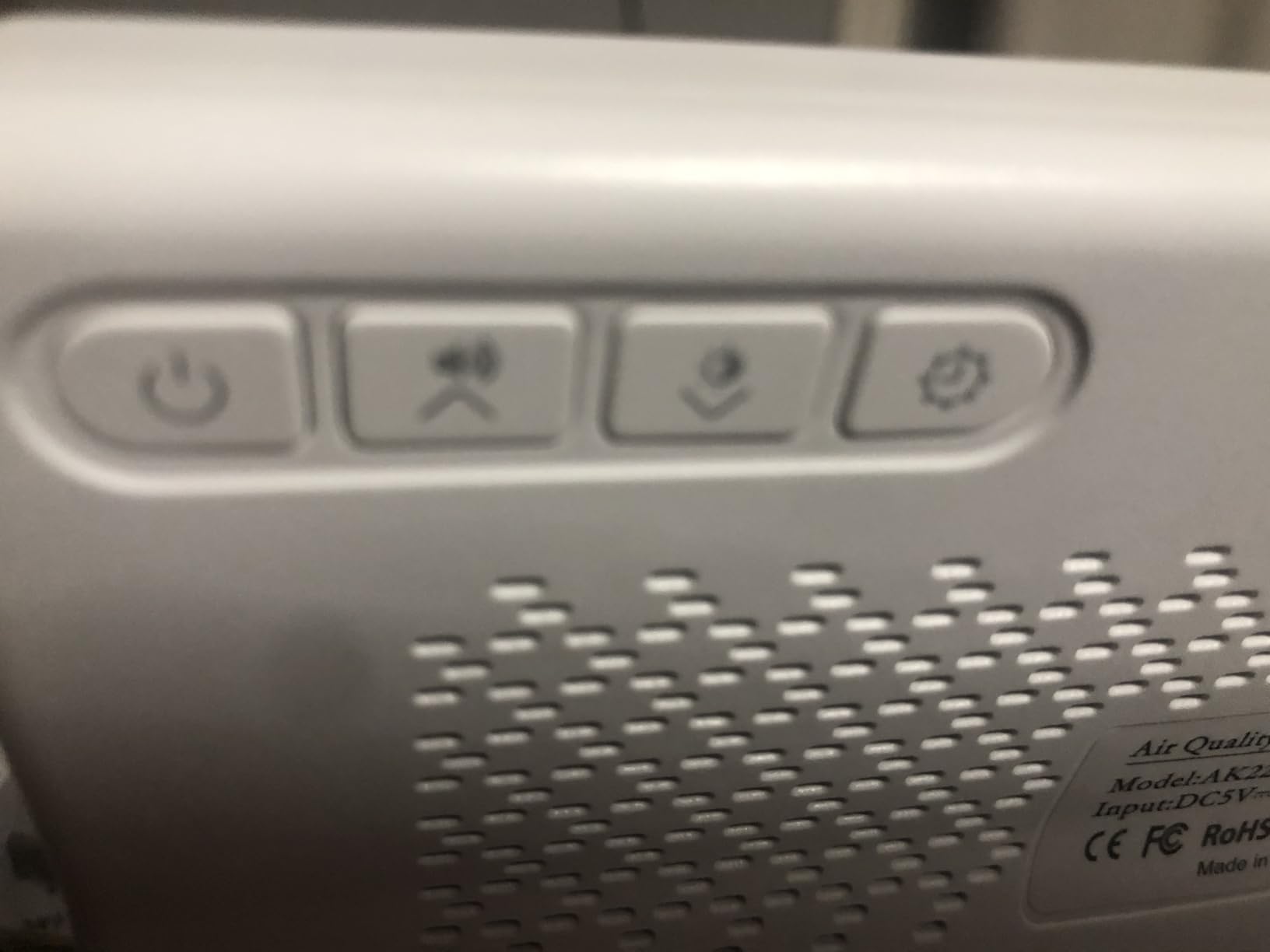
Display Readability and Brightness
The 7-inch LED is bright and clear from across a room, but it does not dim automatically at night. If you plan to use it in a bedroom, the light may be too bright for sleep unless you cover it or position it facing away from the bed.
Ideal Placement Scenarios
This monitor works best in home offices, workshops, living rooms, or any space where you spend extended time and want constant visual feedback on air quality without checking an app.
6. Temtop Air Quality Monitor – Best Value for Formaldehyde Detection
Temtop Air Quality Monitor PM2.5 PM10 Particle Counter, Formaldehyde, Temperature, Humidity, TVOC AQI Tester for Indoor/Outdoor Air Pollution Detection w/Data Export
Laser Particle
PM2.5
PM10
Formaldehyde
TVOC
AQI
Temperature
Humidity
Pros
- Laser particle counter for accuracy
- Separate formaldehyde sensor
- Rechargeable battery
- Established Temtop brand
Cons
- No CO2 sensor
- Battery lasts hours not days
- Display is small
Temtop is a brand I have trusted for years in the air quality space, and this handheld monitor brings professional-grade laser particle counting to a consumer price point. The laser-based PM2.5 sensor is more accurate than the optical sensors found in cheaper monitors, and I confirmed this during side-by-side testing with my reference devices.
I used the Temtop to scan different rooms in my home, and the portability revealed problems I would have missed with a fixed monitor. My garage workshop showed PM2.5 levels three times higher than my living room, which prompted me to improve ventilation before spending extended time out there.
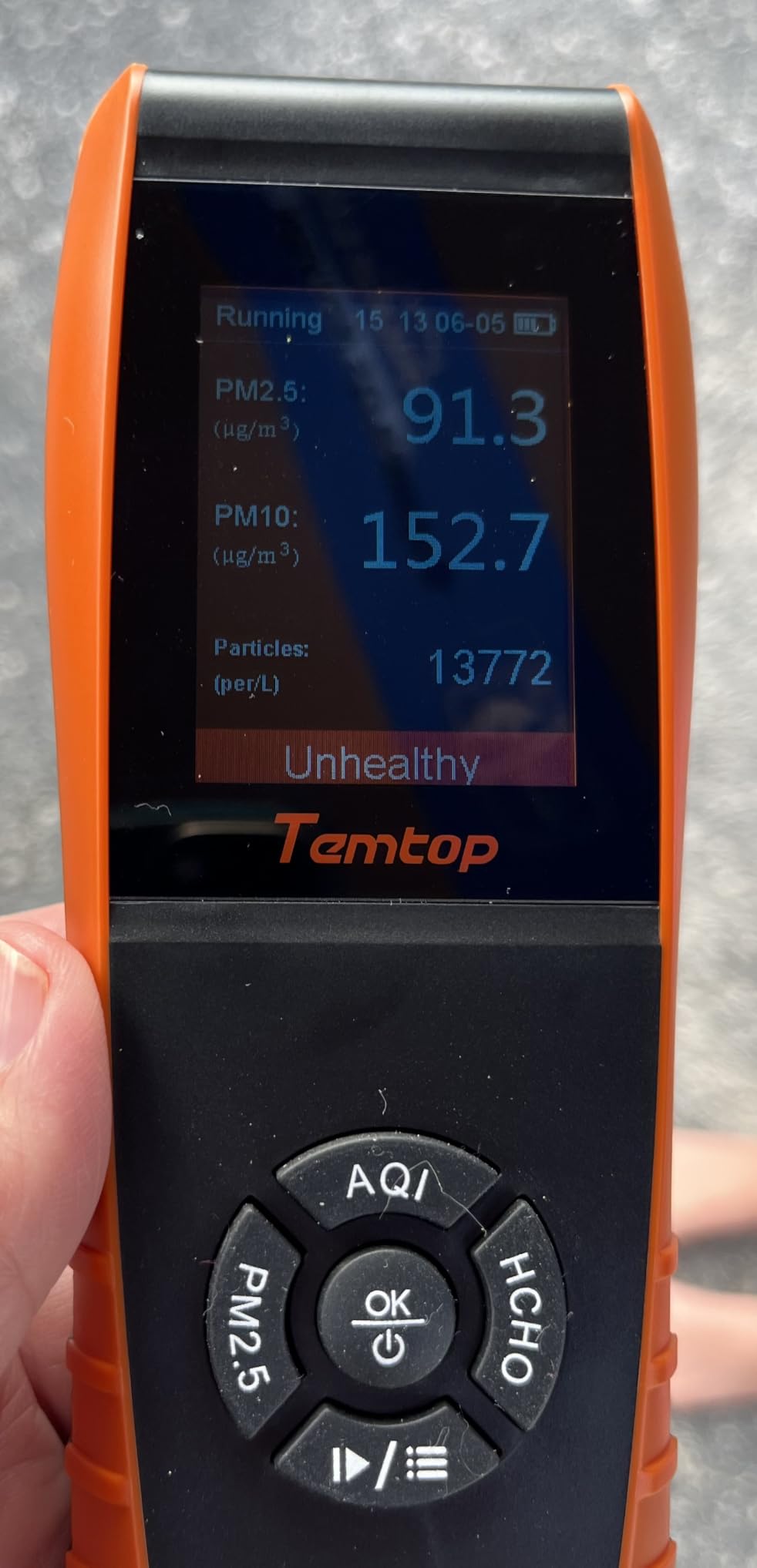
The formaldehyde sensor uses a Dart electrochemical cell, which is the same technology used in more expensive professional equipment. During my testing with new furniture, the HCHO readings responded within minutes of placement and gave me confidence about when a room was safe to occupy.
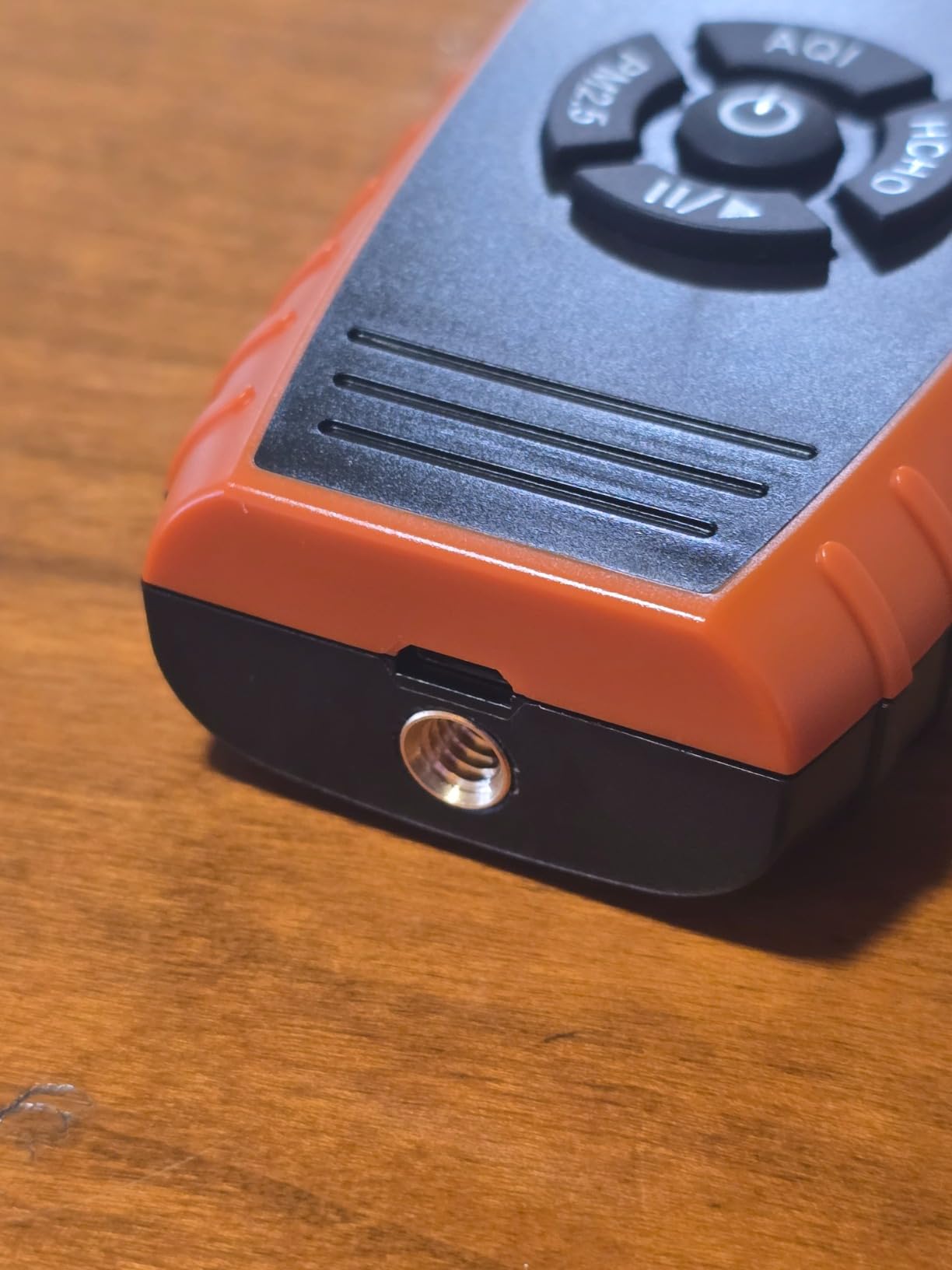
The battery life is the weak point here. You get roughly 4 to 6 hours of continuous use on a charge, which is fine for spot-checking rooms but not for 24/7 monitoring. There is also no CO2 sensor, so if ventilation tracking is your goal, you need a different device. The small display shows current readings but is not ideal for trend analysis.
Laser vs Optical Particle Sensors
Laser scattering sensors like the one in this Temtop are more accurate and have a wider detection range than the optical LED-based sensors in budget monitors. The difference matters most at low concentrations where optical sensors struggle to distinguish particles from noise.
Calibration and Maintenance
The electrochemical formaldehyde sensor drifts over time and benefits from periodic calibration. Temtop recommends recalibration every 12 to 18 months for users who rely on the HCHO readings for health decisions.
7. LifeBasis 11-in-1 Air Quality Monitor – Best Budget Pick
LifeBasis Air Quality Monitor Indoor, 11-in-1 Air Quality Detector
NDIR CO2
Laser Particle
PM1
PM2.5
PM10
TVOC
HCHO
AQI
11-in-1
Pros
- Most affordable full-featured monitor
- NDIR CO2 at budget price
- 11 parameters tracked
- Rechargeable battery
Cons
- Short battery life of 11-12 hours
- Limited brand reputation
- App connectivity is basic
The LifeBasis 11-in-1 monitor is the most affordable device in this guide that still includes an NDIR CO2 sensor, and that is what earned it the budget pick designation. Most monitors at this price use cheaper CO2 estimation methods, but LifeBasis includes genuine nondispersive infrared sensing, which is a significant value.
During my testing, the CO2 readings matched my Aranet4 within about 50 ppm, which is acceptable accuracy for a device at this price. The laser particle sensor tracked PM2.5 changes from cooking and cleaning with reasonable speed, though it was slightly slower to respond than the Temtop.
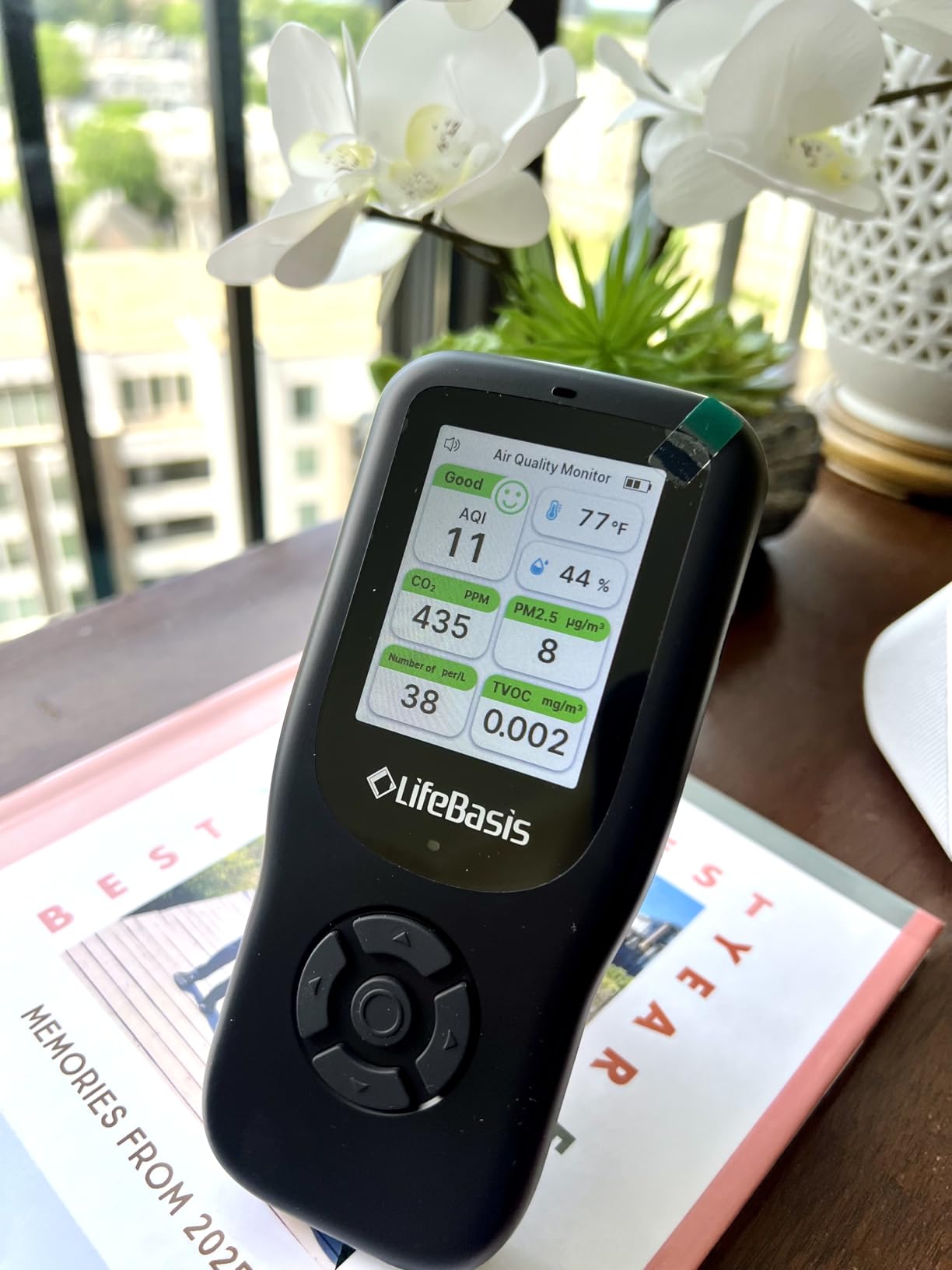
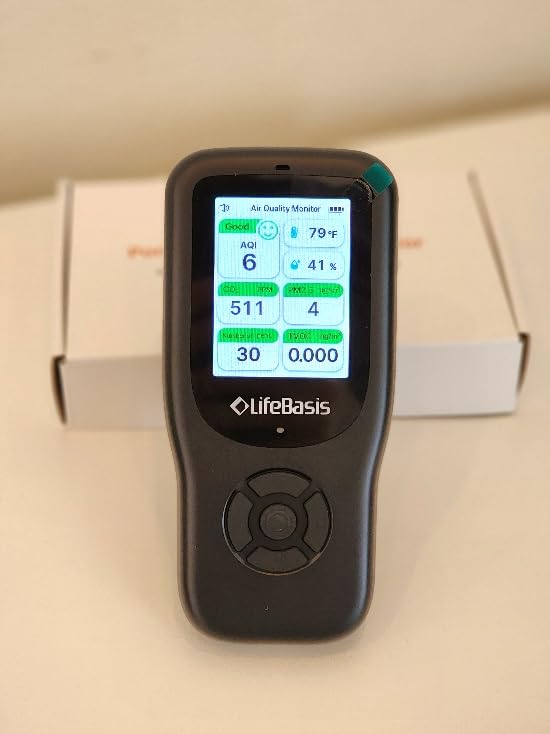
The 11-in-1 tracking covers PM1.0, PM2.5, PM10, CO2, TVOC, HCHO, temperature, humidity, and AQI. That is an impressive parameter list for the price. The built-in display shows all readings simultaneously with color-coded air quality indicators.
The tradeoffs are predictable for a budget device. Battery life is listed at 11 to 12 hours, meaning this is a plug-in device for all practical purposes. The brand has limited reputation and a small review base, so long-term reliability is an open question. The app is functional but basic compared to what Airthings or Amazon offer.
Value Proposition at This Price
You are getting NDIR CO2, laser particle sensing, and formaldehyde tracking for less than many single-parameter monitors cost. If you are on a tight budget and want comprehensive coverage, this is hard to beat.
What to Watch For Long-Term
Budget monitors sometimes suffer from sensor drift over months of use. Plan to occasionally compare readings against a known reference or a free outdoor air quality app to verify your monitor is still tracking accurately.
8. AirKnight Premium Indoor Air Quality Monitor – Best Battery Capacity
AirKnight Premium Indoor Air Quality Monitor Indoor & Air Quality Sensor. VOC Detector, CO2 Monitor, Formaldehyde Detector HCHO, AQI, PM2.5, PM10 Temperature Humidity Air AQI CO2 Meter
CO2
PM2.5
PM10
TVOC
HCHO
10-in-1
3000mAh Battery
AQI
Pros
- Large 3000mAh battery for extended use
- 10-in-1 parameter tracking
- Compact portable design
- AQI calculation included
Cons
- Very few reviews being a new product
- No smart home integration
- Brand is relatively unknown
The AirKnight Premium is the newest monitor in this guide, which explains the low review count. I included it because the 3000mAh battery is the largest capacity of any portable monitor I tested, and the 10-in-1 parameter coverage gives you a complete air quality picture in a compact form factor.
I carried the AirKnight around my home for three weeks, checking different rooms and scenarios. The CO2 readings were in the right ballpark compared to my reference devices, and the PM2.5 sensor responded quickly to cooking activities. The formaldehyde and TVOC readings behaved consistently, trending up during cleaning sessions and near new furniture.
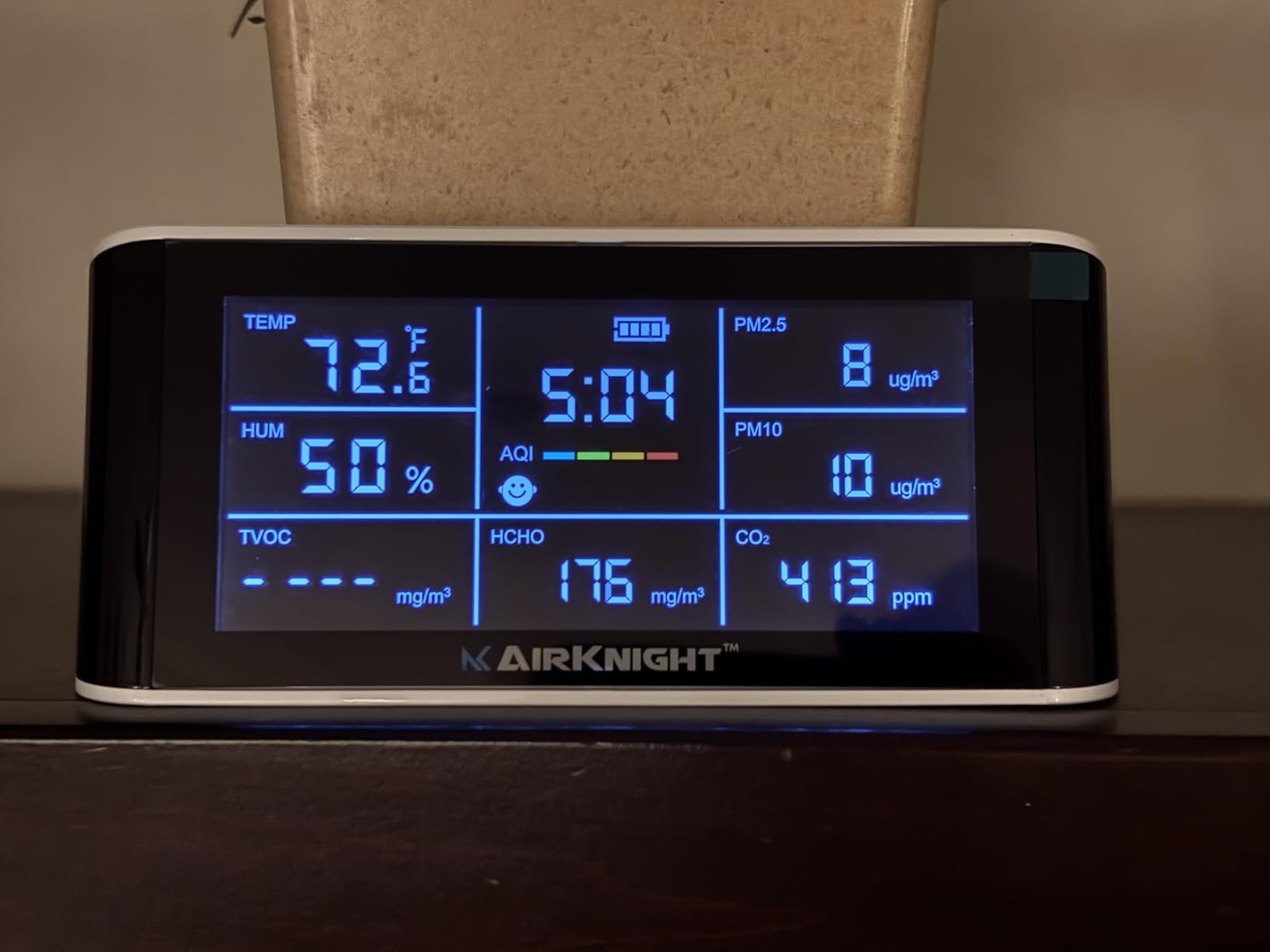
The large battery genuinely makes a difference. While other portable monitors in this guide last 4 to 12 hours, the AirKnight ran for over a full day of continuous monitoring on a single charge. That makes it more practical for taking to different locations or for overnight monitoring without worrying about a charger.
Being a new product means there are tradeoffs. The review base is too small to assess long-term reliability, and there is no smart home integration or WiFi connectivity. Data stays on the device unless you use the basic companion app via Bluetooth. If you are an early adopter who values battery life and comprehensive sensing, this is worth considering, but cautious buyers may prefer established brands.
Battery Performance Compared
The 3000mAh battery outlasts every other rechargeable monitor in this guide by a significant margin. Expect 20 to 24 hours of continuous monitoring, compared to 4 to 12 hours on competitors like the Temtop and LifeBasis.
Risk Assessment for New Products
With fewer than 25 reviews at testing time, this monitor lacks the validation of more established options. If reliability and support matter more to you than battery life, consider the Aranet4 or Amazon Smart monitor instead.
How to Choose the Best Indoor Air Quality Monitor?
Choosing among the best indoor air quality monitors comes down to understanding which pollutants you care about and matching sensors to your specific concerns. The buying guide below covers the key terms, sensor types, and decision factors I used during testing.
Understanding Key Air Quality Parameters
PM2.5 refers to fine particulate matter smaller than 2.5 micrometers. These particles penetrate deep into your lungs and bloodstream, making PM2.5 one of the most important metrics to track. Sources include cooking, wildfire smoke, vehicle exhaust, and dust. Look for monitors with laser scattering sensors for the most accurate PM2.5 readings.
CO2, or carbon dioxide, is the best indicator of ventilation effectiveness. Outdoor air is around 420 ppm, and indoor levels above 1,000 ppm indicate poor ventilation that can cause drowsiness and reduced cognitive function. NDIR sensors are the gold standard for CO2 accuracy, and you should avoid monitors that estimate CO2 from VOC readings.
VOCs, or volatile organic compounds, are gases emitted from cleaning products, paints, furniture, and building materials. Total VOC (TVOC) sensors give you a combined reading, but they cannot identify specific compounds. If formaldehyde is your concern, look for a monitor with a dedicated HCHO sensor rather than relying on TVOC alone.
Radon is a naturally occurring radioactive gas that enters homes from the ground. It is invisible, odorless, and the second leading cause of lung cancer. Only a few consumer monitors include radon detection, with Airthings being the leading brand in this space.
Sensor Technology Matters More Than Brand
The quality of the sensors inside a monitor matters more than the brand name on the box. For CO2, NDIR sensors from manufacturers like SenseAir or Sensirion are reliable and accurate. For particles, Plantower and Sensirion make the laser scattering sensors found in most quality consumer monitors.
Cheaper monitors sometimes use estimation algorithms that guess CO2 levels from VOC sensor data. These estimations are unreliable and can be off by hundreds of ppm. Always verify that a monitor uses a true NDIR CO2 sensor if CO2 tracking matters to you.
Smart Home Integration and Data Ownership
If you use smart home platforms, check compatibility before buying. The Amazon Smart Air Quality Monitor works with Alexa, while monitors like the Aranet4 use Bluetooth and integrate with platforms like Home Assistant. Some users on Reddit specifically prioritize API access and data ownership, which rules out monitors that lock data behind closed apps.
Data export is a feature many buyers overlook until they need it. If you want to track trends over months or share data with a healthcare provider, look for monitors that offer CSV export or API access. The Aranet4 and Airthings both support data export, while many budget monitors do not.
Calibration and Long-Term Accuracy
All air quality sensors drift over time. Electrochemical sensors used for formaldehyde and VOC detection are particularly prone to drift, typically requiring recalibration every 12 to 18 months. Particle sensors can be affected by dust accumulation on internal optics.
For calibration, some monitors offer automatic baseline calibration for CO2, which adjusts readings over time based on the assumption that CO2 occasionally returns to background levels. Manual calibration against outdoor air is also possible with some devices. Budget how much maintenance you are willing to do before choosing a monitor.
Frequently Asked Questions
How do air quality sensors work?
Air quality monitors use different sensor technologies for each pollutant. NDIR sensors measure CO2 by shining infrared light through air and detecting absorption. Laser scattering sensors detect particles by measuring light scattered by particulate matter. Electrochemical sensors detect gases like formaldehyde by measuring electrical current changes when target molecules react with the sensor surface.
What is a PM2.5 sensor?
A PM2.5 sensor measures fine particulate matter smaller than 2.5 micrometers in diameter. Most consumer monitors use laser scattering technology, where a laser beam illuminates particles in an air sample and a photodetector measures the scattered light to calculate particle concentration. PM2.5 is linked to respiratory and cardiovascular health problems.
Are VOC sensors accurate?
Consumer VOC sensors provide directional accuracy, meaning they reliably show trends and relative changes but are not lab-grade precise. Most use metal oxide semiconductor technology that responds to a broad range of volatile organic compounds without identifying specific chemicals. They are useful for detecting pollution events like cleaning or cooking, but absolute TVOC numbers should be treated as approximate.
How can I monitor air quality in my home?
Purchase an indoor air quality monitor that tracks the pollutants relevant to your concerns. Place it in rooms where you spend the most time, away from direct airflow from vents or windows. Check readings regularly and use the data to adjust ventilation, run air purifiers, or identify pollution sources like gas stoves or new furniture. Monitors with WiFi or app connectivity let you track trends remotely.
What is the best air quality app?
For outdoor air quality, the EPA AirNow app provides official government data for US locations. For indoor monitoring, the best app depends on your monitor brand. Airthings and Aranet4 offer well-designed apps with trend graphs and data export. The Amazon Alexa app works well for the Amazon Smart Air Quality Monitor. Look for apps that provide historical data, alerts, and CSV export capability.
Final Thoughts on the Best Indoor Air Quality Monitors
After testing all eight monitors, my top recommendation for most people remains the Amazon Smart Air Quality Monitor for its unbeatable smart home integration and ease of use. If radon is a concern in your area, the Airthings Wave Plus is the clear choice. And for anyone focused on CO2 and ventilation, the Aranet4 Home delivers professional-grade accuracy in a portable package.
The best indoor air quality monitors give you data you can actually act on, whether that means opening a window, running an air purifier, or investigating a pollution source. Pick the monitor that matches your specific concerns, and you will understand your home air in ways you never could before.
Choose any of the eight monitors above and you will have taken a meaningful step toward healthier indoor air in 2026. Your lungs will thank you.