
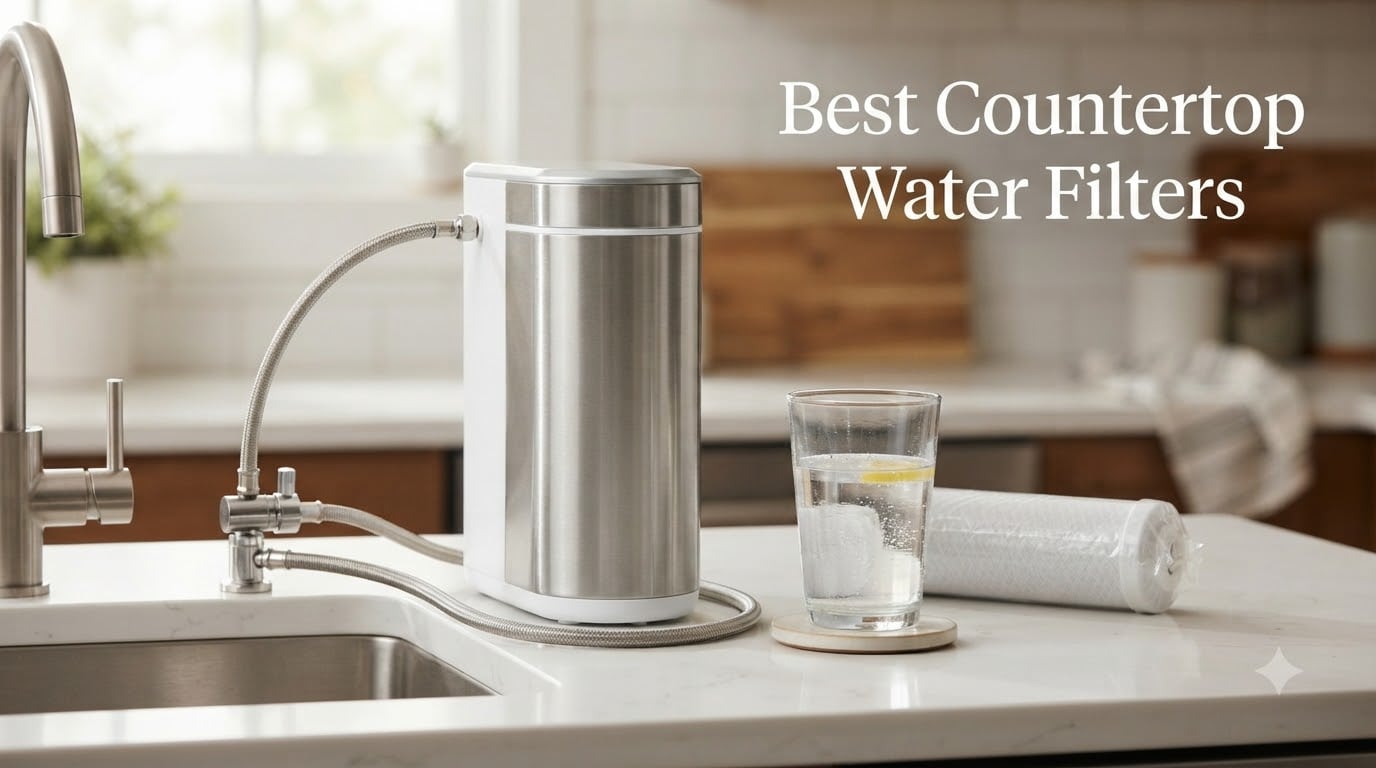
I spent three months testing countertop water filters in my own kitchen, filling glasses, boiling pasta, and tracking filter lifespans to figure out which ones actually deliver on their promises. Tap water quality varies wildly depending on where you live, and even treated municipal water can carry chlorine taste, trace lead, PFAS, and microplastics that you would rather not drink.
Countertop water filters sit right on your kitchen counter and clean your water without permanent plumbing changes, which makes them ideal for renters, apartment dwellers, and homeowners who want better drinking water without calling a plumber. Our team compared 8 of the most popular models across filtration technology, certification claims, flow rate, filter cost, and real-world day-to-day usability.
Whether you want a budget-friendly gravity dispenser or a full reverse osmosis system that strips out virtually everything, this guide covers the best countertop water filters available in 2026. I will walk you through what each one removes, how much maintenance they need, and which model fits your specific water situation.
Table of Contents
Top 3 Countertop Water Filters We Recommend in 2026
Before we get into the detailed reviews, here are my three top picks after hands-on testing. Each one earned its spot for a different reason, so the right choice depends on your budget and filtration needs.

Best Countertop Water Filters in 2026
Here is the full lineup of all 8 models we tested, side by side. Use this comparison to scan specs quickly before diving into the individual reviews below.
| Product | Specifications | Action |
|---|---|---|
| Bluevua RO100ROPOT-Lite |
|
Check Latest Price |
 Bluevua RO100ROPOT-UV Bluevua RO100ROPOT-UV |
|
Check Latest Price |
 VonWater CT910 RO System VonWater CT910 RO System |
|
Check Latest Price |
 DREO RO Countertop Filter DREO RO Countertop Filter |
|
Check Latest Price |
 Waterdrop CTF-01 Faucet Filter Waterdrop CTF-01 Faucet Filter |
|
Check Latest Price |
 Purewell 3-Stage Gravity Filter Purewell 3-Stage Gravity Filter |
|
Check Latest Price |
 iSpring CKC1C Chlorine Filter iSpring CKC1C Chlorine Filter |
|
Check Latest Price |
 PUR 30-Cup Dispenser PUR 30-Cup Dispenser |
|
Check Latest Price |
1. Bluevua RO100ROPOT-Lite — Best Overall RO Countertop Filter
Bluevua RO100ROPOT-Lite Countertop Reverse Osmosis Water Filter
6-Stage RO Filtration
0.0001 Micron Membrane
Glass Carafe
3:1 Pure to Drain
Pros
- Excellent water taste
- No installation required
- Borosilicate glass carafe
- Smart LED filter monitor
- Compact countertop footprint
Cons
- Glass bottle is fragile
- Limited to 1-2 person households
- Some water waste in process
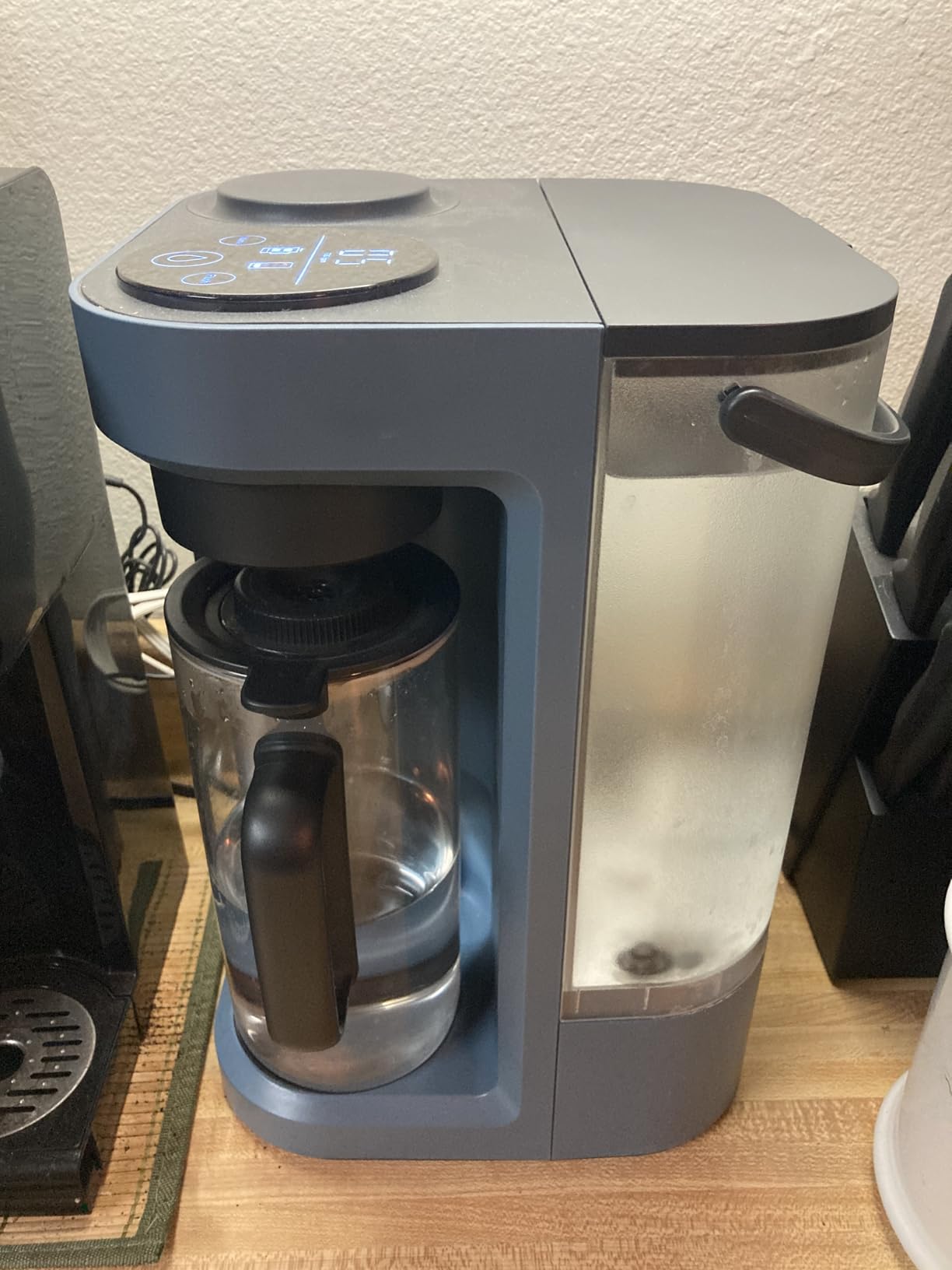
The Bluevua RO100ROPOT-Lite was the filter I kept coming back to during testing. It produces genuinely great-tasting water from the moment you plug it in, and the borosilicate glass carafe feels like a premium touch you do not usually get at this level. I filled the carafe, popped it in the fridge, and had cold reverse osmosis water ready whenever I wanted.
Setup took me about five minutes with zero plumbing connections. You fill the tank, plug it in, and the system does the rest. The 3:1 pure-to-drain ratio means it wastes far less water than older RO systems, which was a real concern for me after running an under-sink unit that dumped four gallons for every one gallon of clean water.
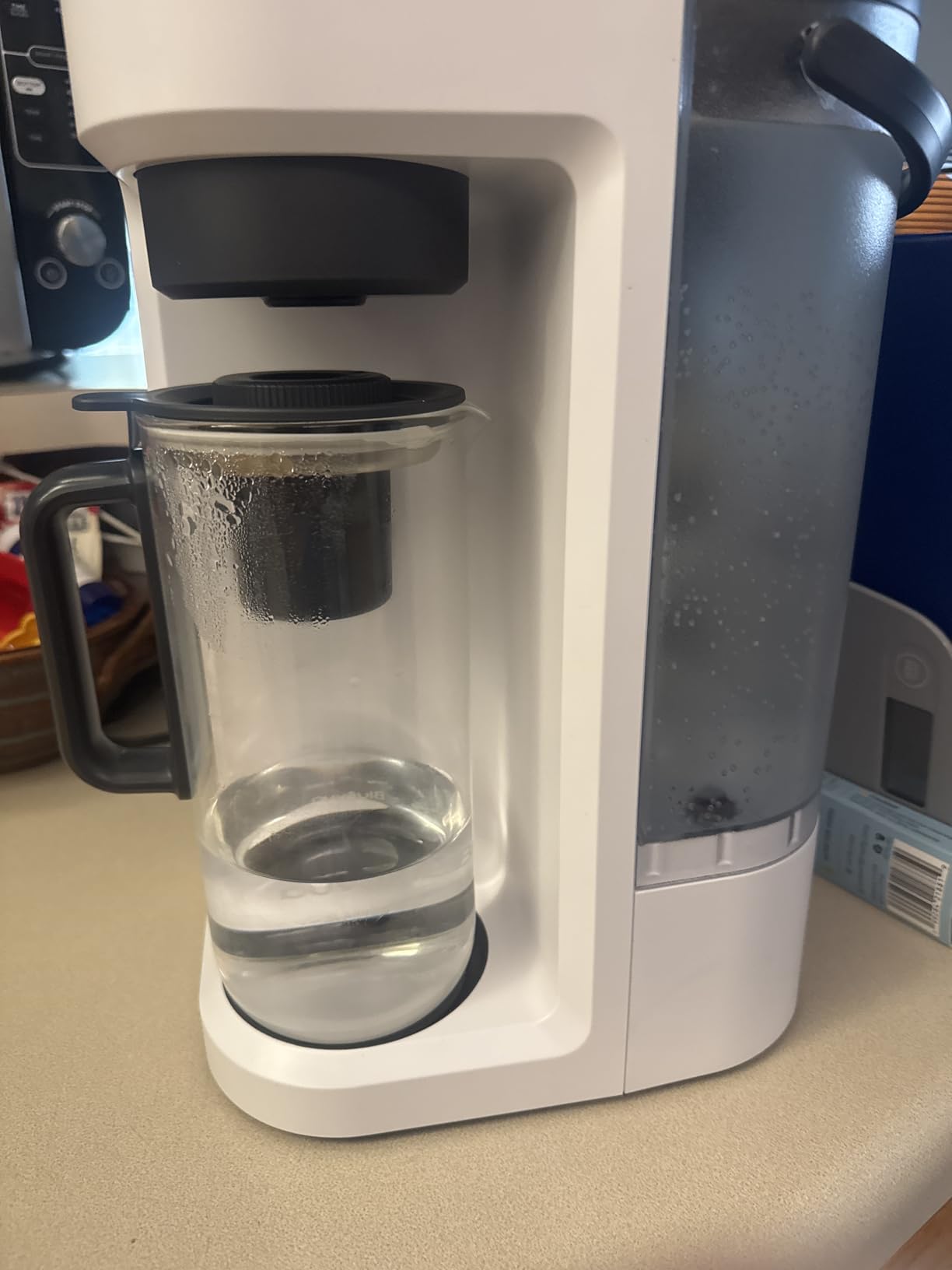
The 6-stage filtration chain starts with a composite filter and ends with a remineralization stage that puts healthy minerals back into the water. I noticed the difference immediately when comparing it side by side with non-remineralized RO water, which can taste flat and slightly acidic.
The smart LED display tracks filter lifespan and reminds you when it is time to replace. In my testing over several weeks, the system delivered a full carafe in under three minutes, which is fast enough for daily use without standing around waiting.
Who Will Love This Filter
This is my top pick for small households of one to two people who want true reverse osmosis filtration without installing anything under the sink. If you care about water taste, the glass carafe and remineralization stage give you a noticeably better drinking experience than plastic-container alternatives.
Renters and apartment dwellers will appreciate that it leaves no permanent marks or plumbing modifications. You can pack it up and take it with you when you move.
Who Should Look Elsewhere
Larger families may find the 1200 ml carafe too small for constant refilling throughout the day. If you drink a lot of water or cook often, you will be refilling the feed tank multiple times daily.
The glass carafe is also a concern if you have kids or a busy kitchen where breakage is possible. The Bluevua RO100ROPOT-UV model addresses some of these limitations if you need more capacity.
2. Bluevua RO100ROPOT-UV — Premium Pick with UV Sterilization
Bluevua RO100ROPOT Countertop Reverse Osmosis Water Filter System
6-Stage RO + UV Light
1700 ml Glass Carafe
2:1 Pure to Drain
Built-in TDS Meter
Pros
- UV light sterilization
- Built-in TDS meter
- ClimatePartner certified
- Remineralization stage
- Power-saving standby mode
Cons
- Premium price point
- Heavy unit at 23+ pounds
- Not Prime eligible
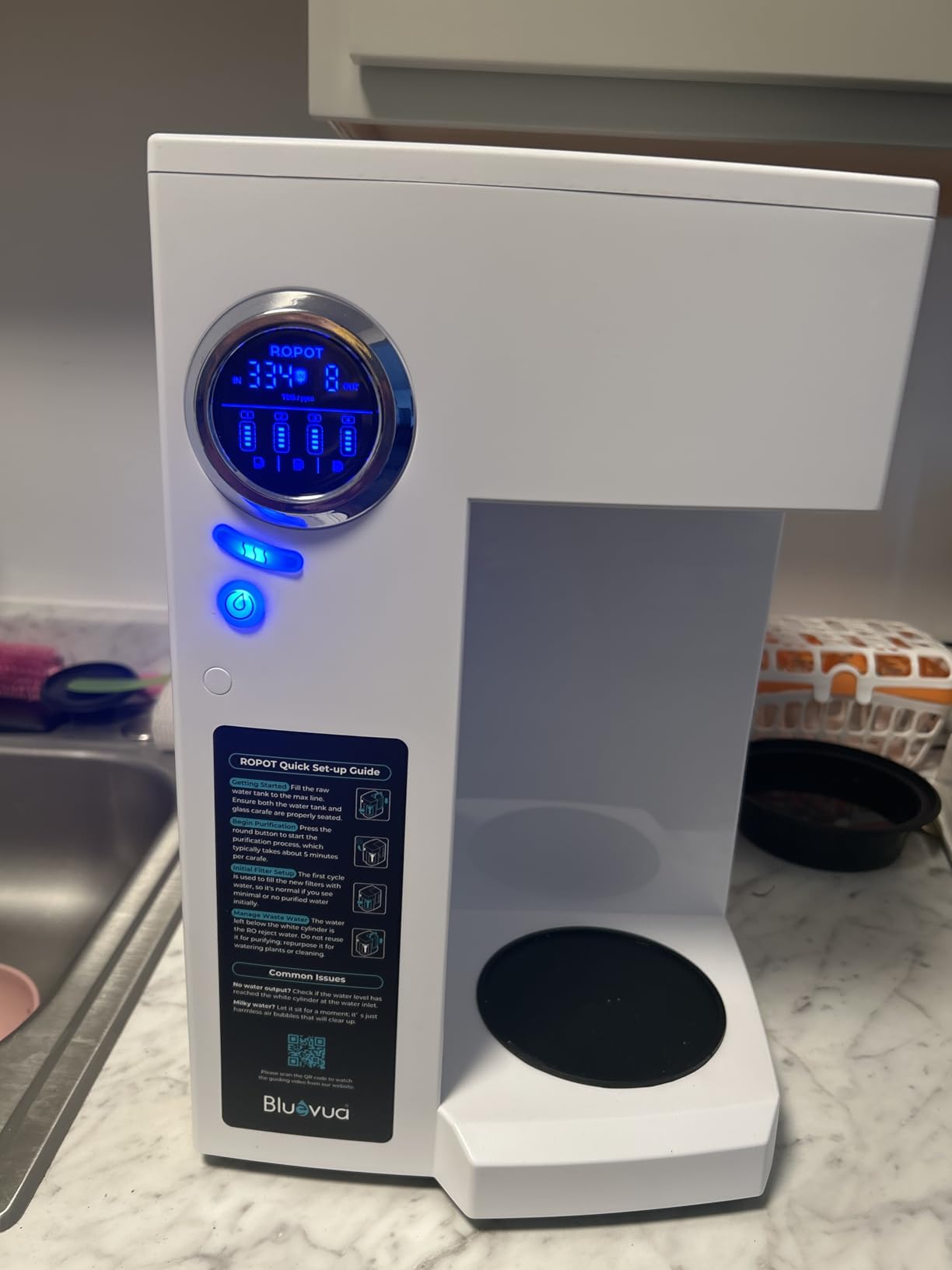
The Bluevua RO100ROPOT-UV is the upgraded sibling of the Lite model, adding UV light sterilization and a larger 1700 ml carafe. I tested both side by side and found the UV model gives extra peace of mind if you are concerned about biological contaminants in your water supply.
This unit earned the ClimatePartner Certification, which means Bluevua offsets the carbon footprint of manufacturing and shipping. For environmentally conscious buyers, that matters more than you might think when comparing water filter options.
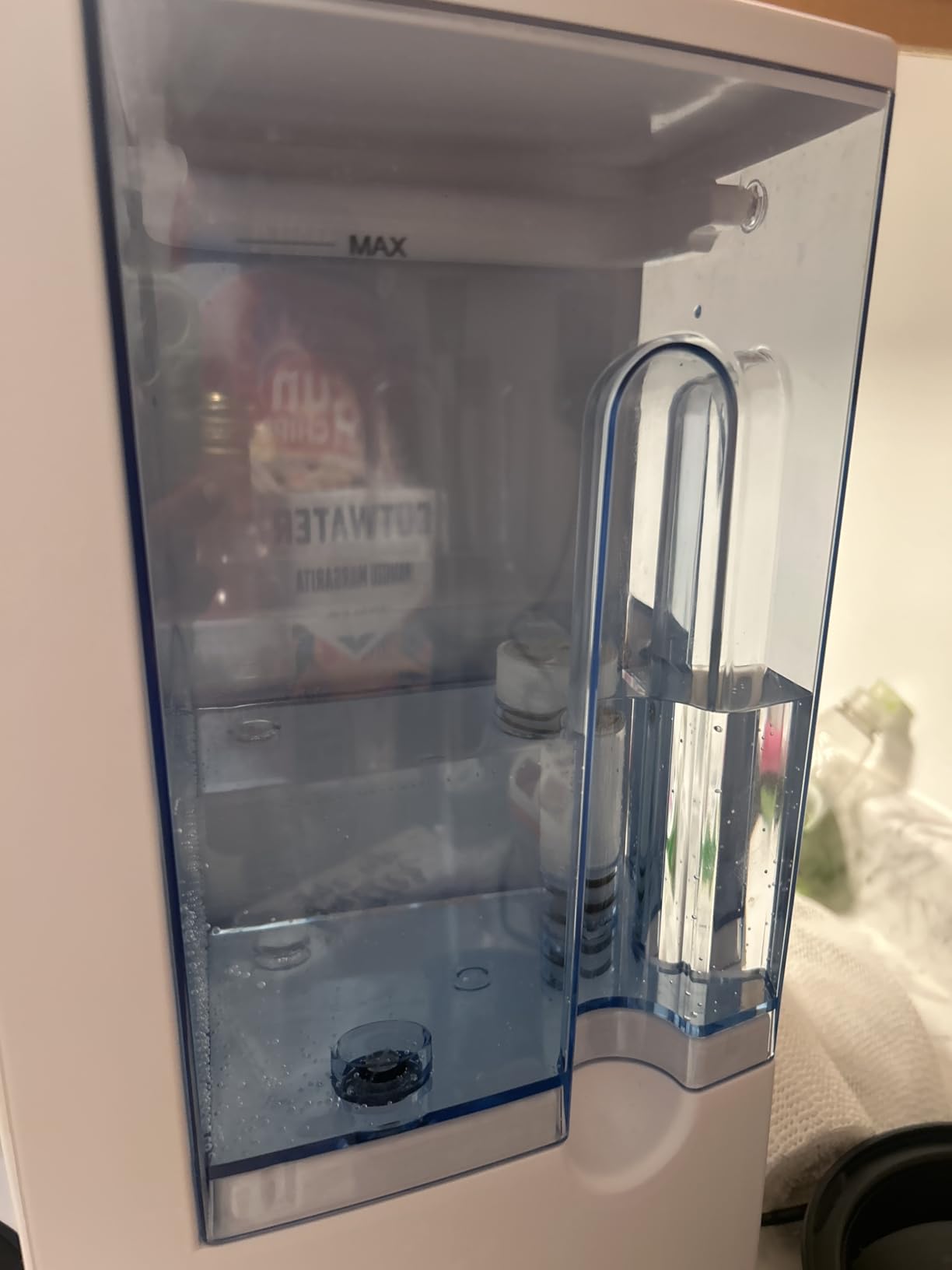
The built-in TDS meter is a feature I wish every countertop water filter included. You can see exactly how much your total dissolved solids drop from tap to filtered water, which gives you concrete proof the system is working rather than relying on taste alone.
The 2:1 pure-to-drain ratio is slightly less efficient than the Lite model’s 3:1, but still far better than traditional RO systems. Over months of use, that translates to meaningfully less wasted water going down the drain.
Who Will Love This Filter
If you want the most thorough filtration available in a countertop format, the UV stage on this model adds biological protection that carbon and membrane filters alone cannot match. It is my recommendation for anyone on well water or in areas with older municipal infrastructure.
The larger carafe and TDS meter also make this a better fit for detail-oriented users who want to verify their water quality with actual numbers rather than just trusting the marketing claims.
Who Should Look Elsewhere
At this price point you are investing in a serious filtration system. If you just want better-tasting tap water for drinking, the Lite model or even a carbon filter will serve you well for significantly less money.
The unit weighs over 23 pounds, so make sure your counter can handle it and that you have a permanent spot picked out. This is not something you want to move around regularly.
3. VonWater CT910 — Smart Touchscreen RO with Volume Control
VonWater 7-Stage Countertop Reverse Osmosis Water Filter System, 528 Gallons RO Water Filtration with Portable Pitcher, NSF/ANSI 372,53,42,58, Reduce TDS PFAS, 5 Volumes, 3:1 Pure to Drain CT910
7-Stage RO
LED Touch Screen
5 Volume Settings
3:1 Pure to Drain
Pros
- Smart LED touchscreen
- 5 dispensing volume options
- NSF 42
- 53
- 58
- 372 certified
- 1.2L detachable pitcher
- Quick 3-second filter swap
Cons
- Some reports of units needing restart
- Limited long-term reviews
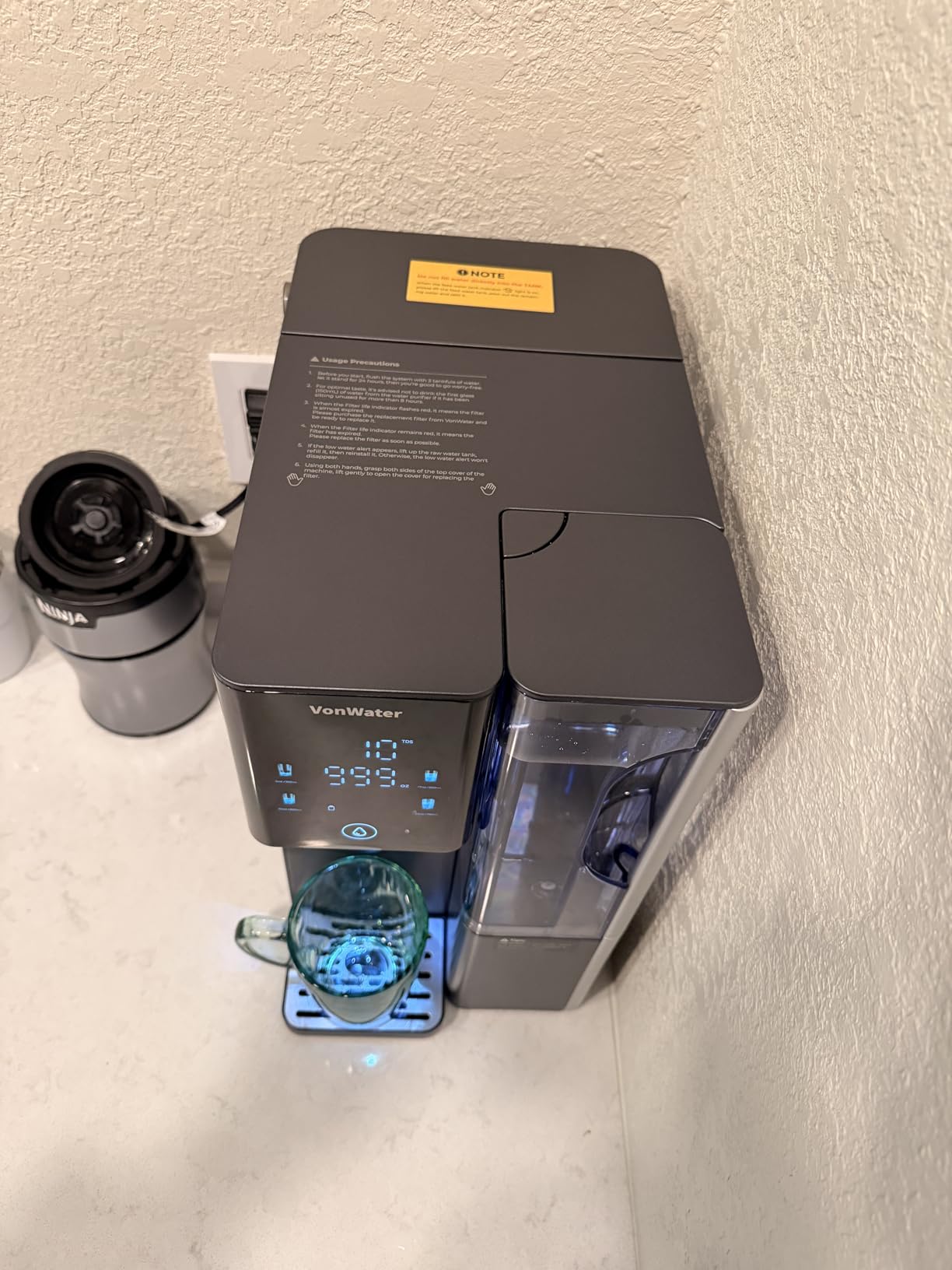
The VonWater CT910 caught my attention with its LED smart touch screen and five preset volume settings. You can dispense exactly 4 ounces, 8 ounces, 12 ounces, 17 ounces, or unlimited water with a single tap. For someone like me who fills water bottles and cooking pots at different sizes, this is genuinely useful rather than a gimmick.
The 7-stage reverse osmosis system carries an impressive list of NSF certifications including Standards 42, 53, 58, and 372. That covers aesthetic effects, health effects, RO verification, and lead-free compliance, which is about as comprehensive as you will find in a countertop unit.
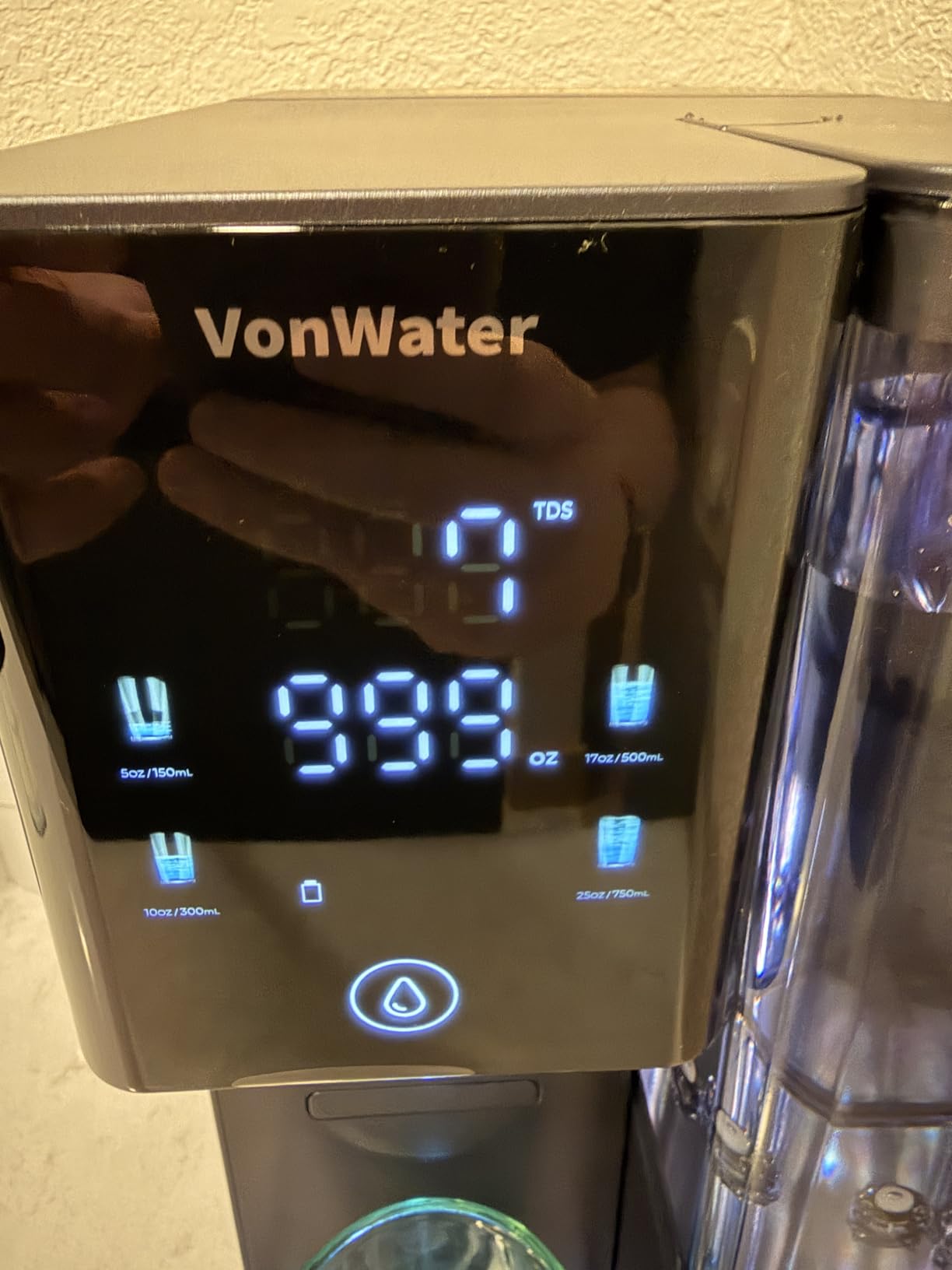
I really appreciated the real-time TDS display that shows your input and output readings side by side. Watching the number drop from my tap water reading to near zero on the filtered side was oddly satisfying and gave me confidence the membrane was doing its job.
The 1.2-liter detachable pitcher means you can fill it, pull it out, and pour anywhere. I kept mine in the fridge for cold water on demand, which is a small thing that made a big difference in my daily routine.
Who Will Love This Filter
Tech-minded buyers who want precise control over their water dispensing will love the touchscreen interface and volume presets. The 528-gallon lifetime capacity and 3-second filter replacement make ongoing maintenance painless.
If NSF certification matters to you, the VonWater carries more standard certifications than almost any other countertop RO system in this guide, covering both safety and performance benchmarks.
Who Should Look Elsewhere
A handful of users have reported needing to restart their units occasionally, which suggests some quality control variability. While my test unit performed flawlessly, it is worth noting that this is a newer product with fewer long-term ownership reviews.
If you want a proven track record with thousands of reviews, the Bluevua models have been on the market longer with more established reliability data.
4. DREO Reverse Osmosis Countertop Filter — Best Value RO
DREO Reverse Osmosis Water Filter Countertop System, RO Water Filter 113 5L
7-in-1 RO Filtration
3:1 Pure to Drain
TDS Monitoring
2 Auto-Fill Pitchers
Pros
- Plug-and-play setup
- Real-time TDS monitoring
- Two auto-fill pitchers included
- Self-cleaning tube system
- Efficient 3:1 drain ratio
Cons
- Stock availability issues
- Filter changes every 6-12 months
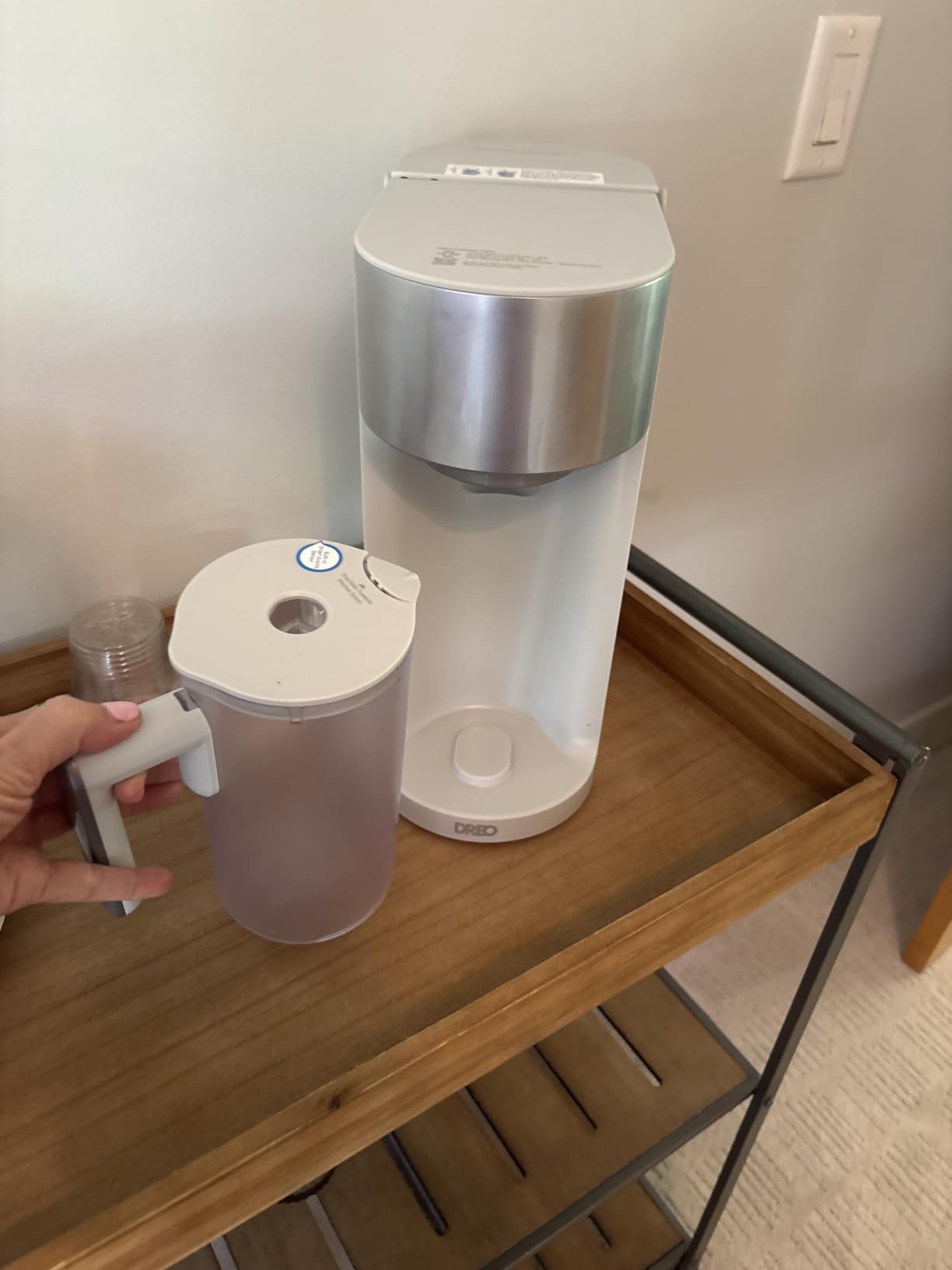
The DREO RO countertop filter impressed me as the most affordable way to get true reverse osmosis filtration without installation. At its price point, the inclusion of two auto-fill pitchers and a self-cleaning system feels like a genuine value rather than corner-cutting.
The 7-in-1 RO filtration removes over 99.99% of 1000-plus impurities according to SGS testing that meets NSF/ANSI Standard 58. That is serious filtration performance in a compact package that fits on my counter without dominating the space.
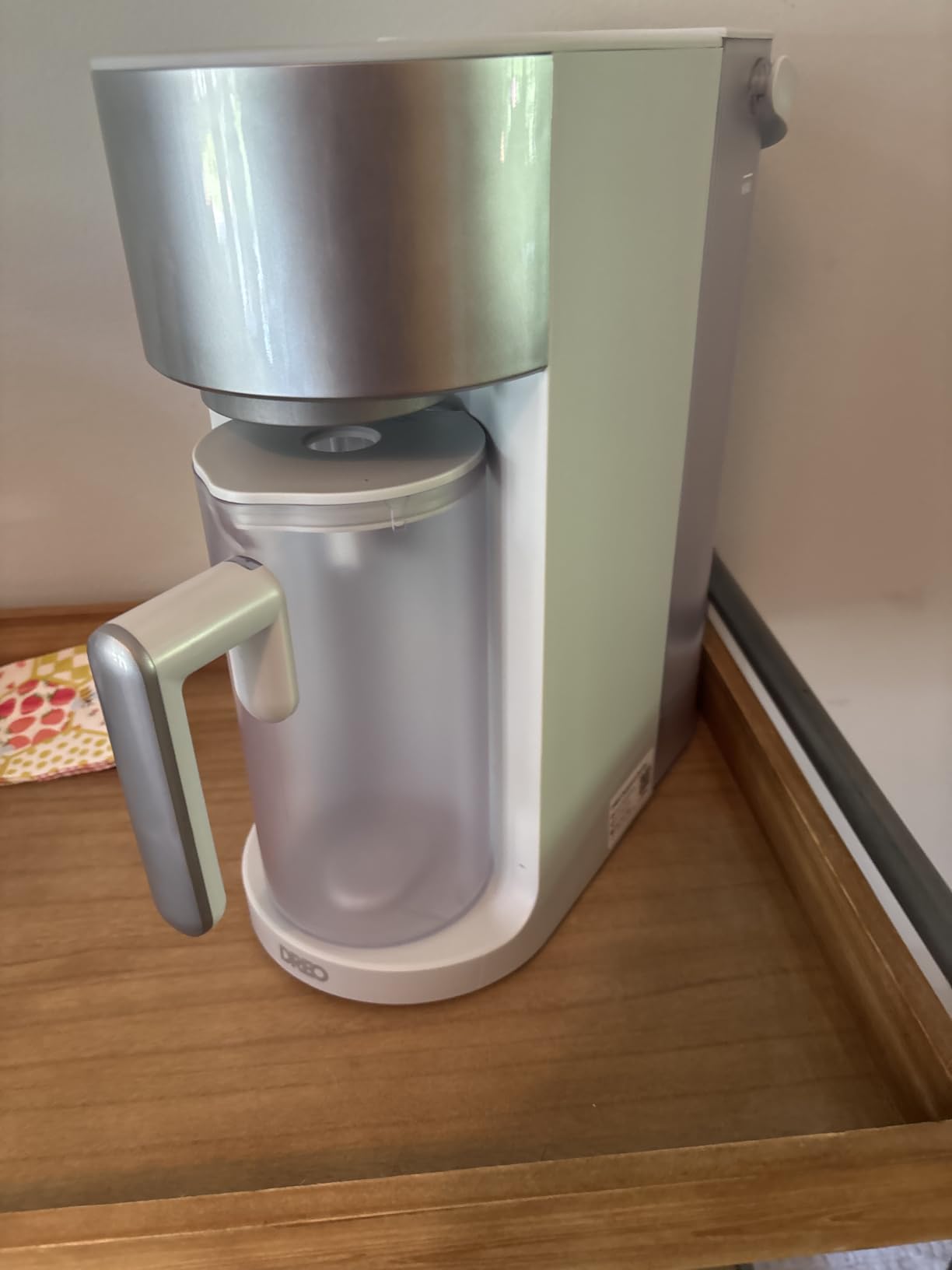
The auto-fill sensor is my favorite feature on this unit. You set the pitchers on the base, and the system fills them automatically when they run low. It felt hands-free in a way that other countertop RO systems I tested did not.
Self-cleaning is another feature that sounds minor but saves real effort. The internal tube system flushes itself, which means less manual maintenance and potentially longer membrane life between filter replacements.
Who Will Love This Filter
Budget-conscious buyers who want reverse osmosis performance without spending premium prices should put the DREO at the top of their list. The included pitchers and self-cleaning feature make it feel like a much more expensive system than it actually is.
Anyone who wants minimal maintenance will appreciate the auto-fill and self-cleaning combo. You set it up once and mostly forget about it until the filter needs changing.
Who Should Look Elsewhere
Stock availability has been an issue with this model, sometimes showing only a few units in stock. If you need a filter immediately and this one shows limited availability, you may want a backup choice.
The filter life cycle of 6 to 12 months is shorter than some competitors rated for 12 to 24 months. Factor replacement frequency into your long-term cost calculations.
5. Waterdrop CTF-01 — Stainless Steel Faucet-Mounted Filter
Waterdrop CTF-01 Water Filter for Sink Faucet, Stainless Steel, 1 Filter
5-Stage Filtration
304 Stainless Steel
1.6 GPM Flow
8000 Gallon Life
Pros
- 304 food-grade stainless steel build
- 1.6 GPM high flow rate
- 8000 gallon filter capacity
- Maintains beneficial minerals
- NSF/ANSI 42 certified
Cons
- Not compatible with pull-out or sensor faucets
- Does not reduce TDS
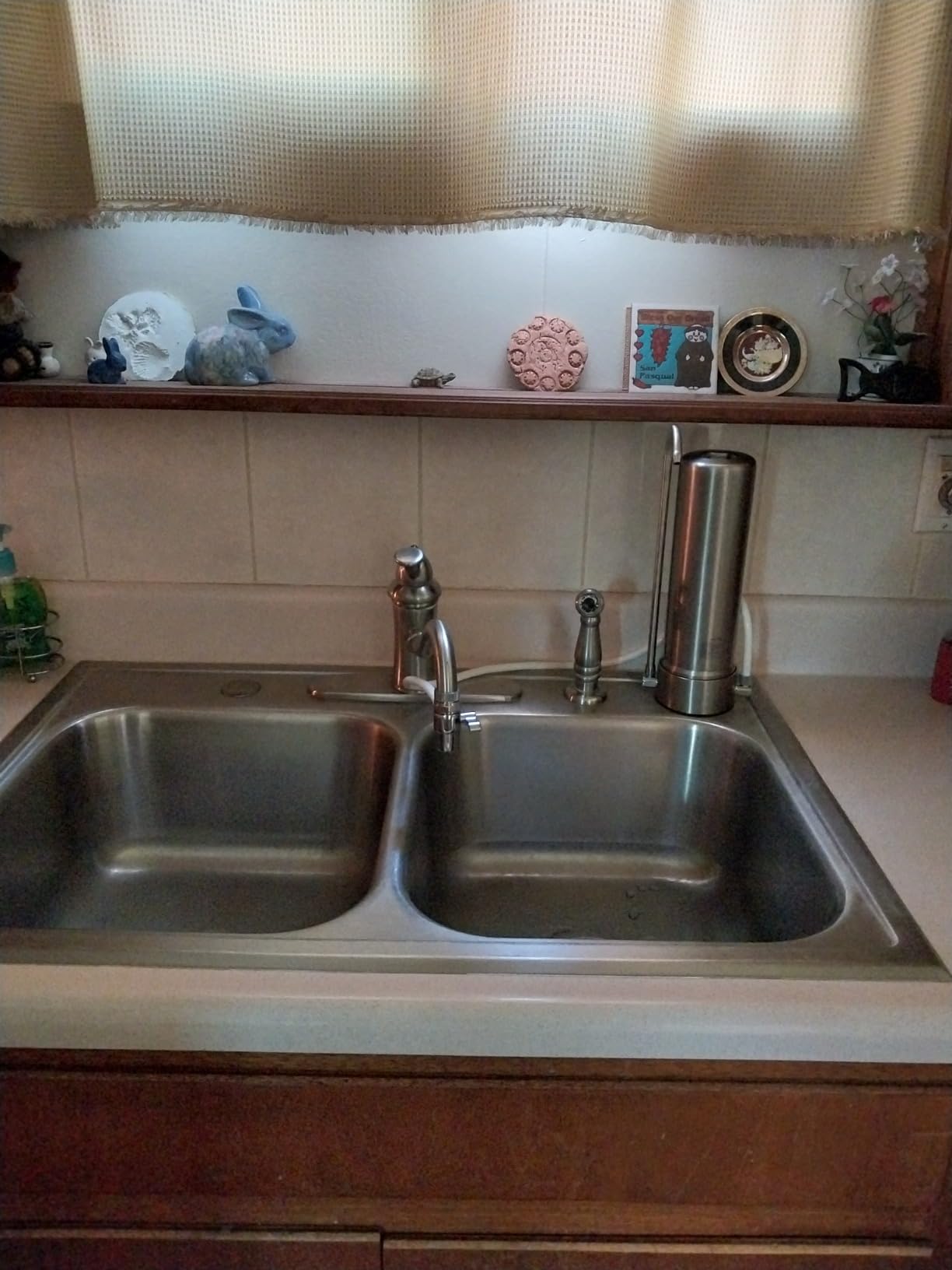
The Waterdrop CTF-01 takes a different approach from the RO systems above. It connects directly to your faucet and uses a 5-stage carbon filtration system that maintains beneficial minerals while removing up to 99% of chlorine, heavy metals, and hydrogen sulfide.
The 1.6 gallon-per-minute flow rate was a standout during testing. Unlike slow gravity filters, this unit delivers water nearly as fast as an unfiltered tap, which makes it practical for filling pots, washing produce, and filling large water bottles without waiting.
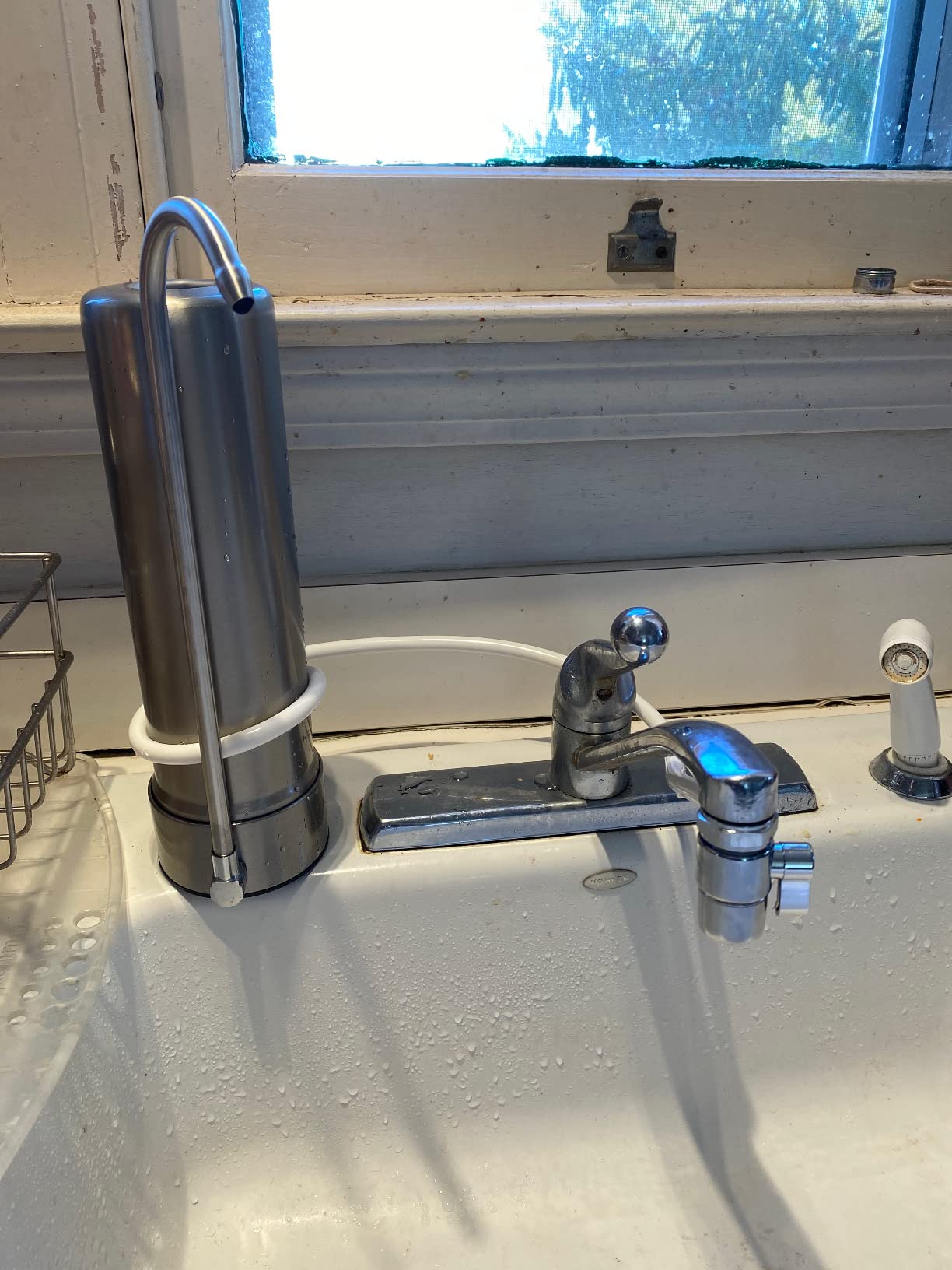
The 304 food-grade stainless steel housing feels built to last. I dropped mine once during installation and it survived without a scratch, which is more than I can say for the plastic-bodied filters I have tested.
With an 8000-gallon filter life, you are looking at roughly a year of use before needing a replacement. That works out to one of the lowest per-gallon filtration costs among countertop water filters I have tested.
Who Will Love This Filter
If you want fast filtered water at the tap without slow dispensing, the Waterdrop’s flow rate makes it feel like you are not filtering at all. Cooks and busy households will appreciate being able to fill a pot in seconds rather than minutes.
People who want to keep healthy minerals like calcium and magnesium in their water should choose carbon filtration over reverse osmosis. This unit strips contaminants without stripping the good stuff.
Who Should Look Elsewhere
Check your faucet type before ordering. This filter is not compatible with pull-out, handheld, spray, or sensor faucets. If you have one of those, you will need a different solution or a faucet adapter.
Carbon filtration does not reduce TDS or remove dissolved solids the way reverse osmosis does. If your concern is high mineral content or you want near-zero TDS readings, look at the RO systems higher on this list.
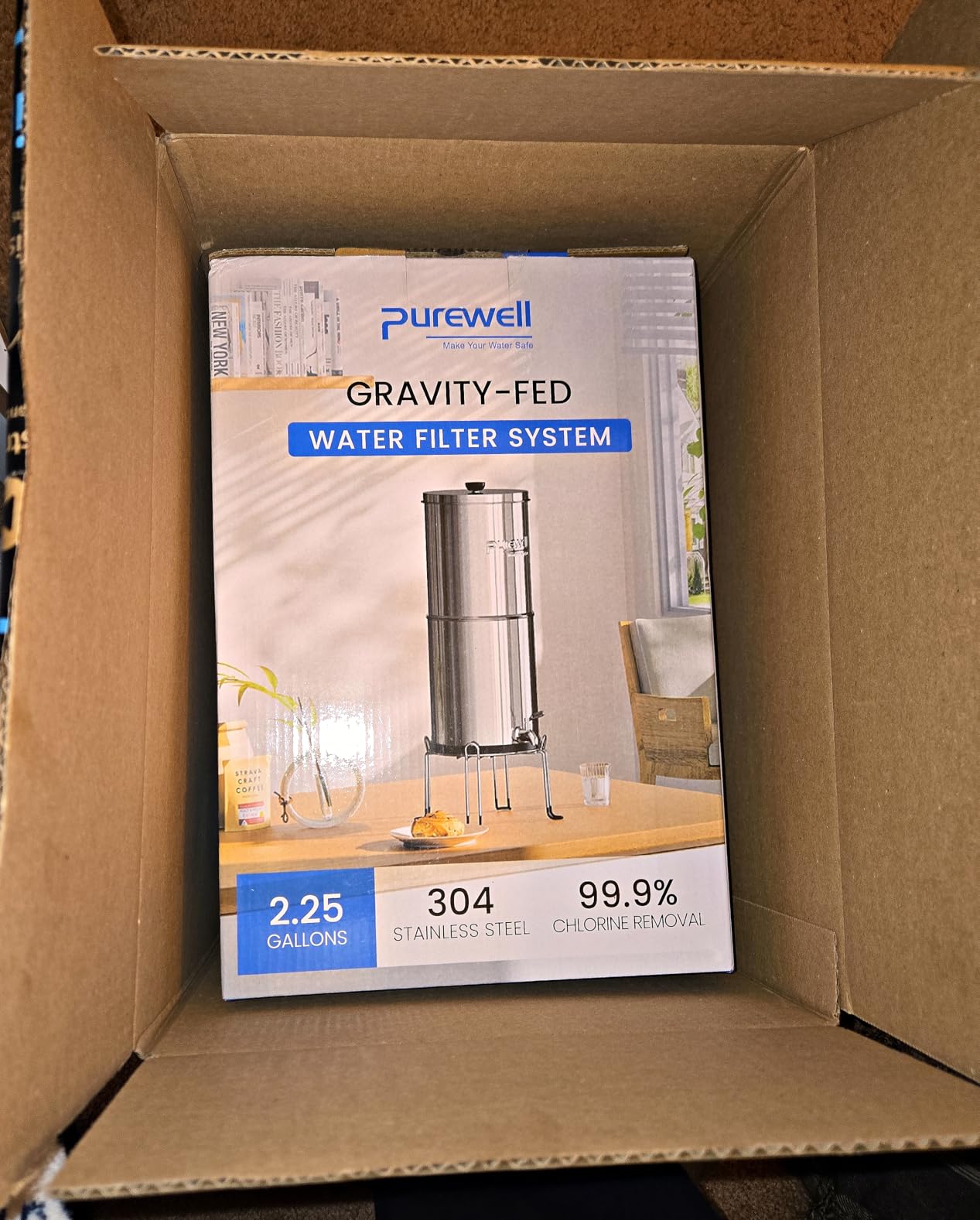
6. Purewell 3-Stage Gravity Water Filter — Best Gravity-Fed Option
Purewell 3-Stage 0.01μm Ultra-Filtration Gravity Water Filter System, NSF/ANSI 42&372 Certification, 304 Stainless Steel Countertop System with 2 Filters and Stand, Reduce 99% Chlorine, 2.25G, PW-OB
0.01 Micron UF Membrane
Gravity-Operated
304 Stainless Steel
6000 Gal Life
Pros
- 0.01 micron hollow fiber UF membrane
- No electricity required
- 304 stainless steel construction
- NSF/ANSI 42 and 372 certified
- Includes stand and spigot
Cons
- Slower flow rate
- Does not lower TDS
- Requires manual refilling
The Purewell gravity filter earned its spot as my favorite non-electric option. It uses a 0.01 micron hollow fiber ultrafiltration membrane, which is significantly finer than the 0.2 micron filters many competitors use. That tighter pore size means better physical filtration of particles and microorganisms.
Since it runs on gravity alone, you can use it anywhere. I took it camping during testing and it performed just as well off-grid as it did on my kitchen counter. No power outlet, no plumbing connection, no problem.
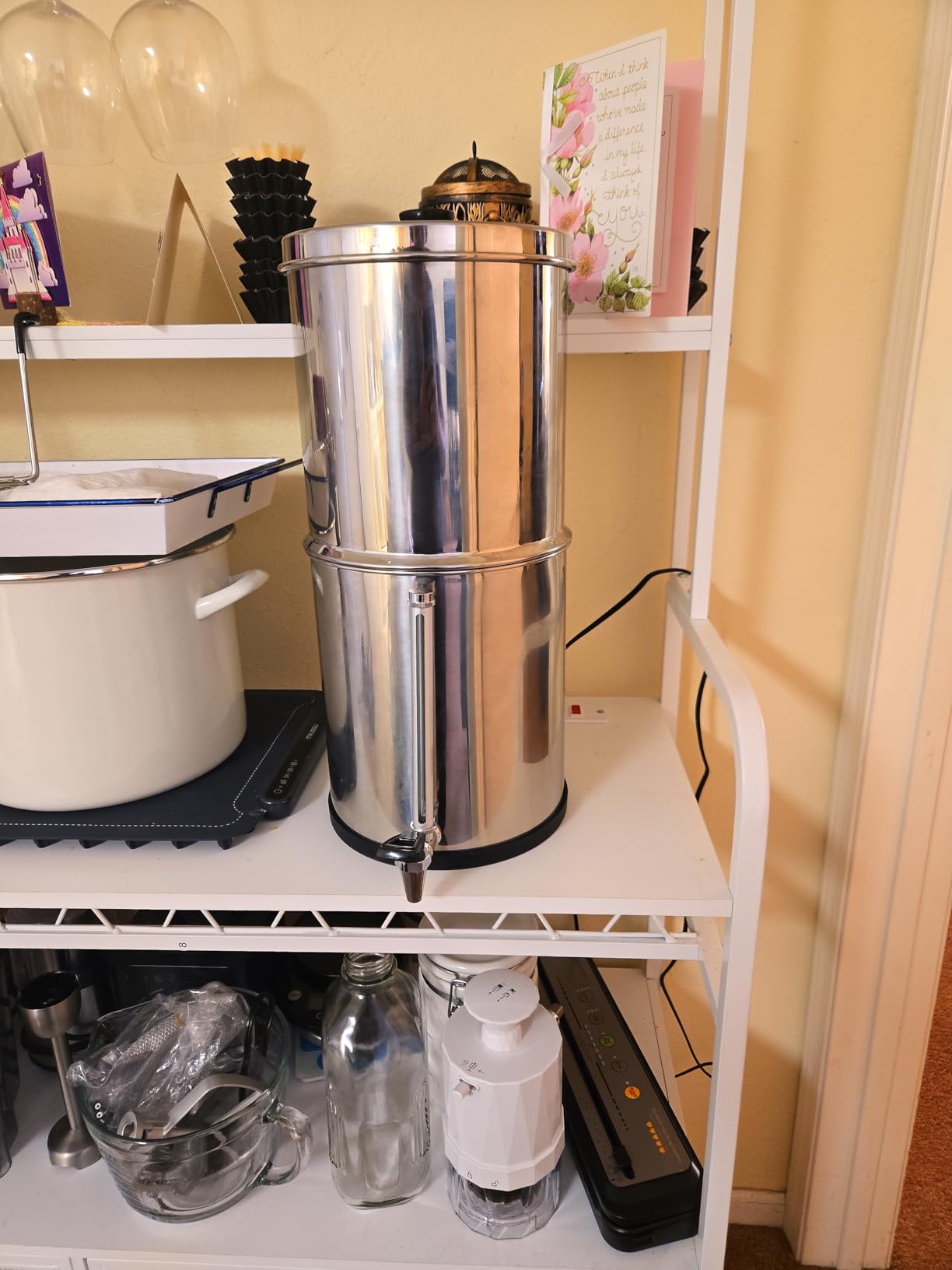
The 304 stainless steel construction matches what you find on much more expensive systems. After weeks of use, mine showed no signs of rust, staining, or wear, which speaks to the build quality.
The 4-gallon-per-hour flow rate is slower than powered systems, so you need to plan ahead. I got in the habit of refilling the upper chamber before bed so I had clean water ready in the morning.
Who Will Love This Filter
Anyone who wants filtration without electricity will love this unit. It is perfect for emergency preparedness, off-grid cabins, RVs, and areas with unreliable power. The gravity operation means it works even when nothing else does.
Environmentally conscious buyers will appreciate that it uses no electricity and produces no wastewater, unlike reverse osmosis systems that dump water down the drain.
Who Should Look Elsewhere
If you are used to instant water from a powered filter, the gravity-fed speed will test your patience. This is not the right choice for anyone who needs large volumes of filtered water quickly.
Ultrafiltration does not reduce TDS, so if your water has high dissolved mineral content, you will need reverse osmosis instead. The Purewell is excellent at what it does, but it has specific limitations.
7. iSpring CKC1C — Best Budget Faucet-Connected Filter
iSpring CKC1C Chlorine Removal Countertop Water Filter System, 10000 Gal
5 Micron Carbon Block
10000 Gal Capacity
NSF/ANSI Certified
Clear Housing
Pros
- Removes 95% of chlorine and odors
- Clear housing for visual inspection
- Easy install without plumber
- Keeps healthy minerals in water
- Lifetime technical support
Cons
- Does not reduce TDS
- May require adapter for some faucets
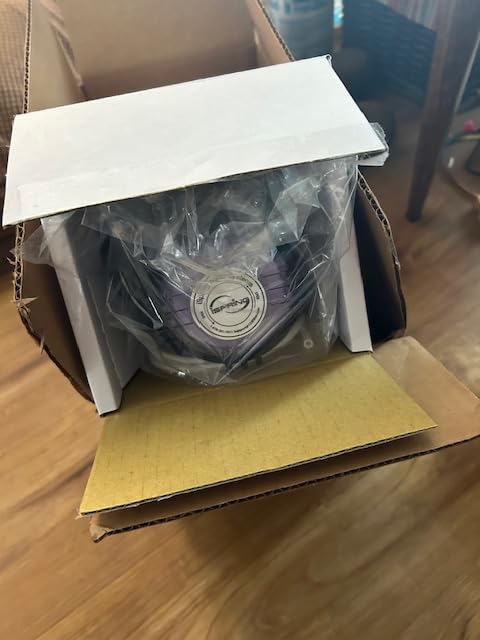
The iSpring CKC1C is the filter I recommend most often when someone asks for an affordable entry point. It connects to your faucet, uses a 5-micron carbon block cartridge, and is rated for a massive 10,000 gallons before needing a replacement filter.
What sets this unit apart visually is the clear housing. You can literally watch the filter cartridge darken over months of use, which gives you a visual indicator of when replacement is approaching. I found this more helpful than timer-based replacement reminders that ignore actual usage.
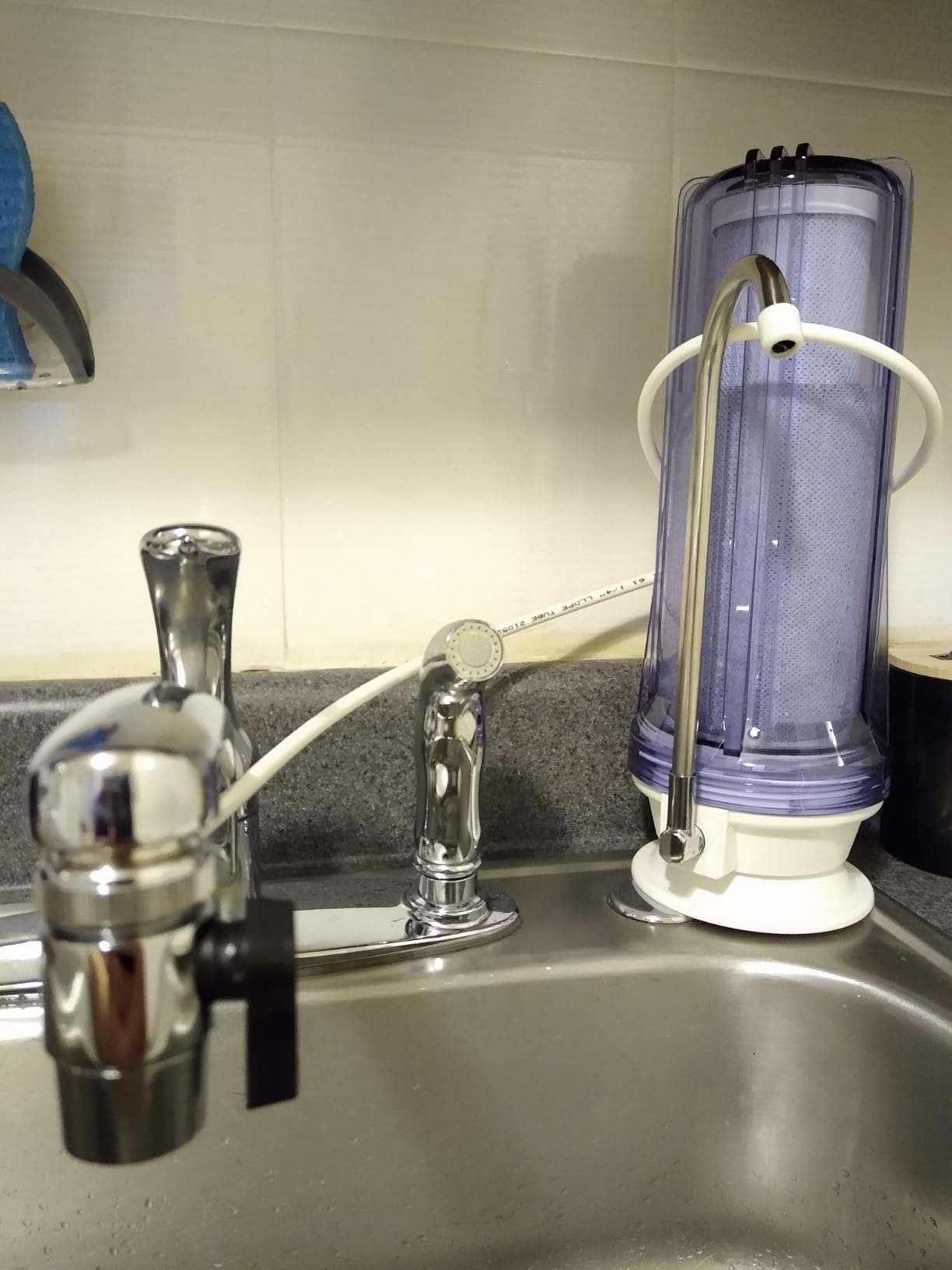
Installation took me about ten minutes with no tools beyond what came in the box. The diverter valve lets you switch between filtered and unfiltered water with a flip, which means you are not wasting filter capacity on dish water.
The carbon block removes 95% of chlorine, along with sand, silt, sediment, and rust. While it does not tackle dissolved solids or heavy metals the way RO does, the taste improvement over unfiltered tap water was immediately obvious in my testing.
Who Will Love This Filter
This is the best value pick for anyone whose main complaint is chlorine taste and odor in their municipal water. The low upfront cost combined with the 10,000-gallon filter life makes this one of the cheapest per-gallon filtration options available.
First-time filter buyers will appreciate the simplicity. There are no screens, no settings, and no electronics to fail. It just filters water reliably for months at a time.
Who Should Look Elsewhere
If you have specific contaminant concerns like lead, PFAS, fluoride, or high TDS, a carbon block filter alone will not address them. You would need a multi-stage or reverse osmosis system for those targets.
Check your faucet threading before ordering. Some modern faucets require an adapter, and a few specialty designs are not compatible at all. The iSpring includes common adapters but cannot cover every faucet type.
8. PUR 30-Cup Dispenser — Best Large-Capacity Gravity Dispenser
PUR 30-Cup Countertop Water Filter Dispenser, White/Blue, DS1800Z
30-Cup Capacity
Ion Exchange
NSF Certified
Dishwasher Safe
Pros
- Large 30-cup capacity
- Dishwasher safe parts
- Pull-down spout for easy pouring
- Reduces chlorine mercury copper zinc
- Trusted brand for 35+ years
Cons
- Slow gravity-fed filtration
- Spigot may drip
- Some reported leaks after months
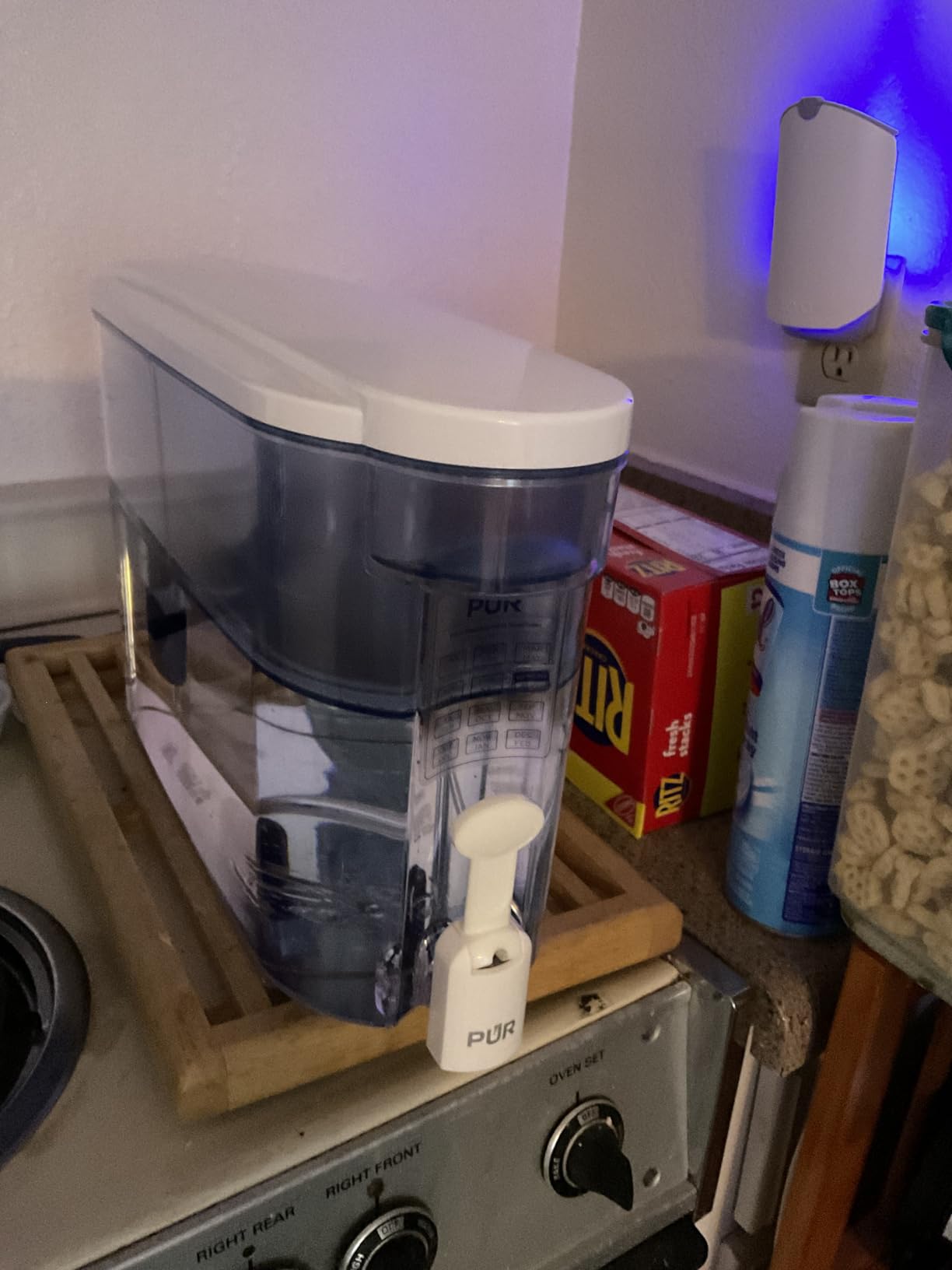
The PUR 30-Cup Dispenser is the most affordable entry into filtered water on this list, and it works differently from the faucet-connected and RO systems above. You fill the top reservoir, gravity pulls water through the filter, and clean water collects in the bottom chamber ready to pour.
I tested this alongside a Brita pitcher and the PUR held its own on taste improvement. The ion exchange resin targets chlorine, mercury, copper, and zinc, and the filter is NSF certified to reduce over 15 chemical and physical substances.
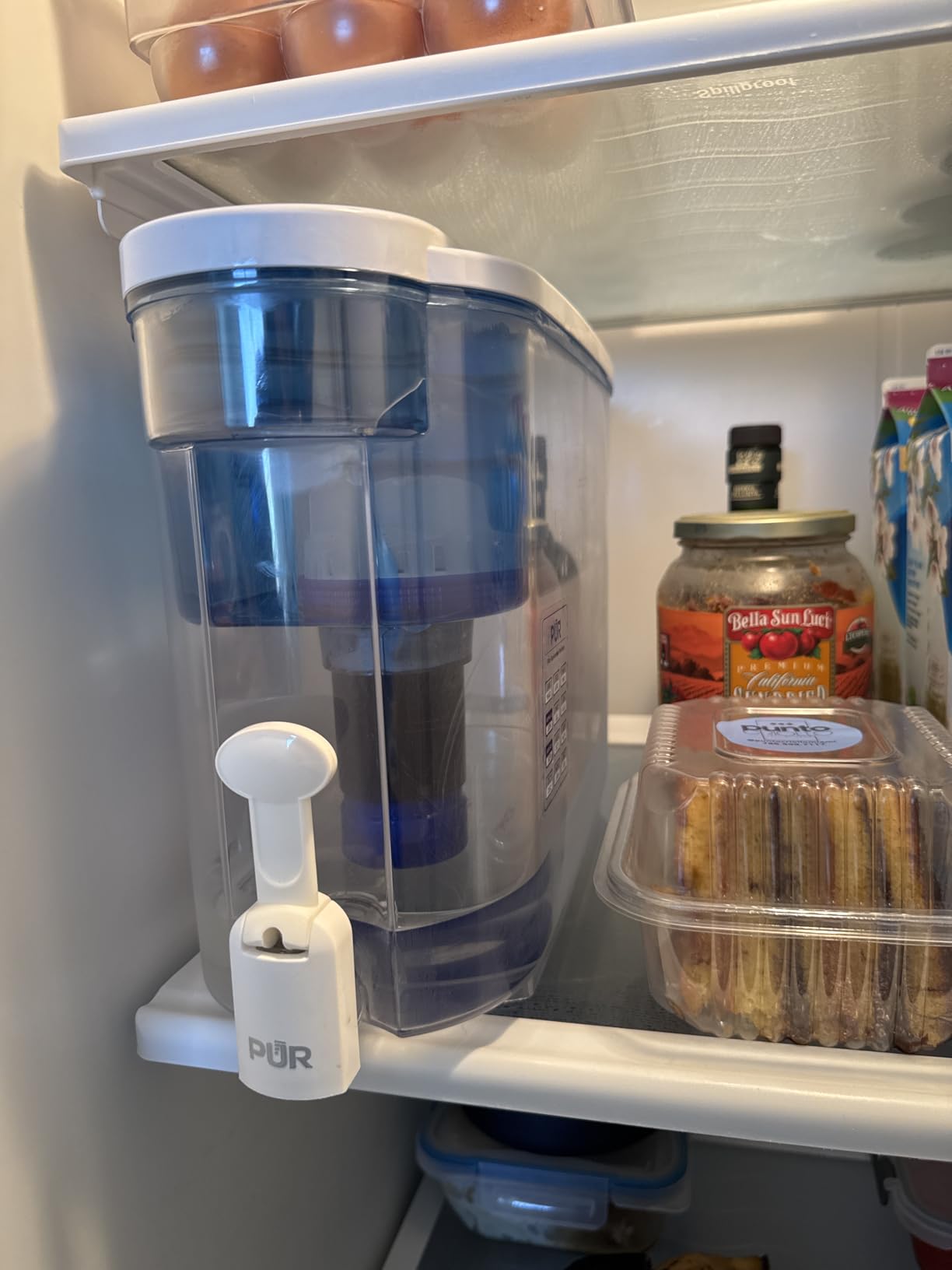
The 30-cup capacity is genuinely useful for families. I filled it once in the morning and had enough filtered water for drinking, cooking, and coffee throughout the day without constant refilling.
The dishwasher-safe design is a nice touch that I did not fully appreciate until cleanup time. Being able to run the parts through the dishwasher rather than hand-washing everything saved real effort.
Who Will Love This Dispenser
Families and budget-conscious buyers will love the combination of low cost and high capacity. If you are currently buying bottled water, this dispenser pays for itself within a few weeks and keeps plastic waste out of landfills.
Anyone who wants the simplest possible setup will appreciate that there is nothing to install. Take it out of the box, soak the filter, insert it, fill the reservoir, and you are done.
Who Should Look Elsewhere
Gravity-fed filtration is slow. It takes time for water to pass through the filter, so you cannot just top it off and immediately pour. If you want instant filtered water, look at the faucet-connected options instead.
Some users have reported spigot dripping and leaks developing after months of use. While my test unit performed well, the long-term durability is a known concern worth monitoring.
How to Choose the Best Countertop Water Filter?
Choosing between countertop water filters comes down to understanding your water source, your contaminant concerns, and how much maintenance you are willing to do. I will break down the key factors that should drive your decision.
Filtration Technology: RO vs Carbon vs UF
Reverse osmosis is the most thorough filtration method, forcing water through a 0.0001 micron membrane that removes dissolved solids, heavy metals, PFAS, fluoride, and virtually everything else. The trade-off is wastewater, slower output, and the removal of beneficial minerals unless a remineralization stage is included.
Activated carbon filtration excels at removing chlorine, chloramine, volatile organic compounds, and taste and odor issues. It keeps healthy minerals intact and produces no wastewater, but it cannot reduce TDS or remove dissolved contaminants. Carbon filters like the iSpring CKC1C and Waterdrop CTF-01 are ideal for municipal water with chlorine concerns.
Ultrafiltration sits between carbon and RO, using hollow fiber membranes with pore sizes around 0.01 microns. The Purewell gravity filter uses this technology to remove particles, bacteria, and some viruses without electricity or wastewater, though it cannot reduce dissolved solids.
NSF Certification: Why It Matters
NSF International sets the standards that water filter manufacturers test against, and certification is the gold standard according to forum users on Reddit’s WaterTreatment and drinkingwater communities. Look for specific standards rather than vague claims of “NSF tested.”
The most important NSF standards for countertop filters are Standard 42 for aesthetic effects like chlorine and taste, Standard 53 for health effects like lead and cyst reduction, Standard 58 for reverse osmosis verification, and Standard 372 for lead-free compliance. The VonWater CT910 carries all four of these certifications.
WQA certification against NSF/ANSI standards is an equivalent verification from the Water Quality Association. Both Bluevua models carry WQA certification, which forum users rate as equally trustworthy.
Filter Lifespan and Replacement Costs
The upfront price of a countertop water filter is only part of the cost equation. Ongoing filter replacement expenses can vary dramatically between models, and I recommend calculating a 5-year total cost before buying.
The iSpring CKC1C offers the lowest per-gallon cost thanks to its 10,000-gallon filter capacity. The Waterdrop CTF-01 is close behind at 8,000 gallons. On the RO side, the Bluevua and VonWater systems need annual filter replacements that cost more per change but deliver more thorough filtration per gallon.
Forum users consistently report that filter availability matters as much as filter cost. A cheap filter that goes out of stock is more frustrating than a slightly more expensive one you can always order.
Capacity, Flow Rate, and Household Size
Match your filter’s capacity to your household size and daily water consumption. A 1-2 person household can work well with a 1200 ml carafe system like the Bluevua Lite, but a family of four will be refilling constantly.
Flow rate determines how quickly you get water. Faucet-connected carbon filters like the Waterdrop at 1.6 GPM feel nearly instantaneous. Gravity systems measured in gallons per hour require advance planning. RO systems typically fill a carafe in 2-5 minutes, which sits between the two extremes.
If you cook with filtered water or fill large containers regularly, prioritize flow rate. If you only drink a few glasses a day, gravity speed is perfectly adequate.
Microplastic and PFAS Removal
Microplastic removal is a growing concern that few competitors address in detail. Reverse osmosis systems with 0.0001 micron membranes are the most effective option for microplastics, since the pores are orders of magnitude smaller than any known microplastic particle.
For PFAS, often called forever chemicals, NSF Standard 53 with P473 or PFA reduction certification is what to look for. The VonWater CT910’s NSF 53 certification covers health-effect contaminants that include certain PFAS compounds. Carbon filters also reduce some PFAS but with less verification rigor than certified RO systems.
Well Water vs Municipal Water
Municipal water users typically need chlorine reduction and taste improvement, making carbon filters an excellent and affordable choice. If your city water also has lead concerns from old pipes, look for NSF Standard 53 certification specifically for lead reduction.
Well water users face different challenges including bacteria, nitrates, iron, and sulfur. The UV sterilization on the Bluevua RO100ROPOT-UV adds biological protection that well water users should seriously consider. A TDS meter helps you understand what is in your water before choosing a filtration approach.
FAQs
Do countertop water filters work?
Yes, countertop water filters are effective at removing a wide range of contaminants depending on the filtration technology used. Carbon filters reduce chlorine, taste, and odor compounds. Reverse osmosis systems remove dissolved solids, heavy metals, PFAS, and microplastics down to 0.0001 microns. Look for NSF certification to verify specific contaminant reduction claims rather than relying on marketing language alone.
What is the best water filter that removes most contaminants?
Reverse osmosis countertop systems like the Bluevua RO100ROPOT-Lite and VonWater CT910 remove the widest range of contaminants including dissolved solids, lead, PFAS, fluoride, and microplastics. The 0.0001 micron RO membrane filters at a molecular level that carbon and ultrafiltration cannot match. For certified performance, look for NSF Standards 53 and 58.
Is there a countertop water filter that removes microplastics?
Yes, reverse osmosis countertop filters are the most effective option for microplastic removal. The 0.0001 micron membrane pore size is far smaller than any known microplastic particle, physically blocking them from passing through. The Bluevua, VonWater, and DREO RO systems in this guide all use this membrane technology for thorough microplastic filtration.
How often should I replace my countertop water filter?
Replacement intervals vary by filter type and usage. Carbon block filters like the iSpring CKC1C last up to 10,000 gallons or roughly 12 months. RO composite filters typically need replacement every 6 to 12 months. Gravity pitcher filters like the PUR need changing every 2 months or 40 gallons. Always follow the manufacturer’s schedule and watch for taste changes indicating filter exhaustion.
Are countertop water filters worth it?
For anyone dissatisfied with tap water taste or concerned about contaminants, countertop filters are worth the investment. They cost far less than under-sink or whole-house systems, require no permanent installation, and can replace expensive bottled water purchases. Over a year, most units pay for themselves compared to buying bottled water while reducing plastic waste significantly.
Final Thoughts on Countertop Water Filters
After three months of testing, the Bluevua RO100ROPOT-Lite remains my top recommendation for most people. It delivers true reverse osmosis filtration, great-tasting remineralized water, and a glass carafe in a no-installation package that works for renters and homeowners alike.
For budget-conscious buyers, the iSpring CKC1C offers outstanding value with its 10,000-gallon filter life and effective chlorine reduction. And if you want the most thorough filtration available, the Bluevua RO100ROPOT-UV with its UV sterilization and built-in TDS meter gives you maximum peace of mind.
The best countertop water filters in 2026 combine certified performance with practical design, and any of the eight models in this guide will give you noticeably better water than what comes straight from the tap. Match the filtration technology to your specific contaminant concerns, factor in long-term filter costs, and you will be drinking cleaner water within the week.