
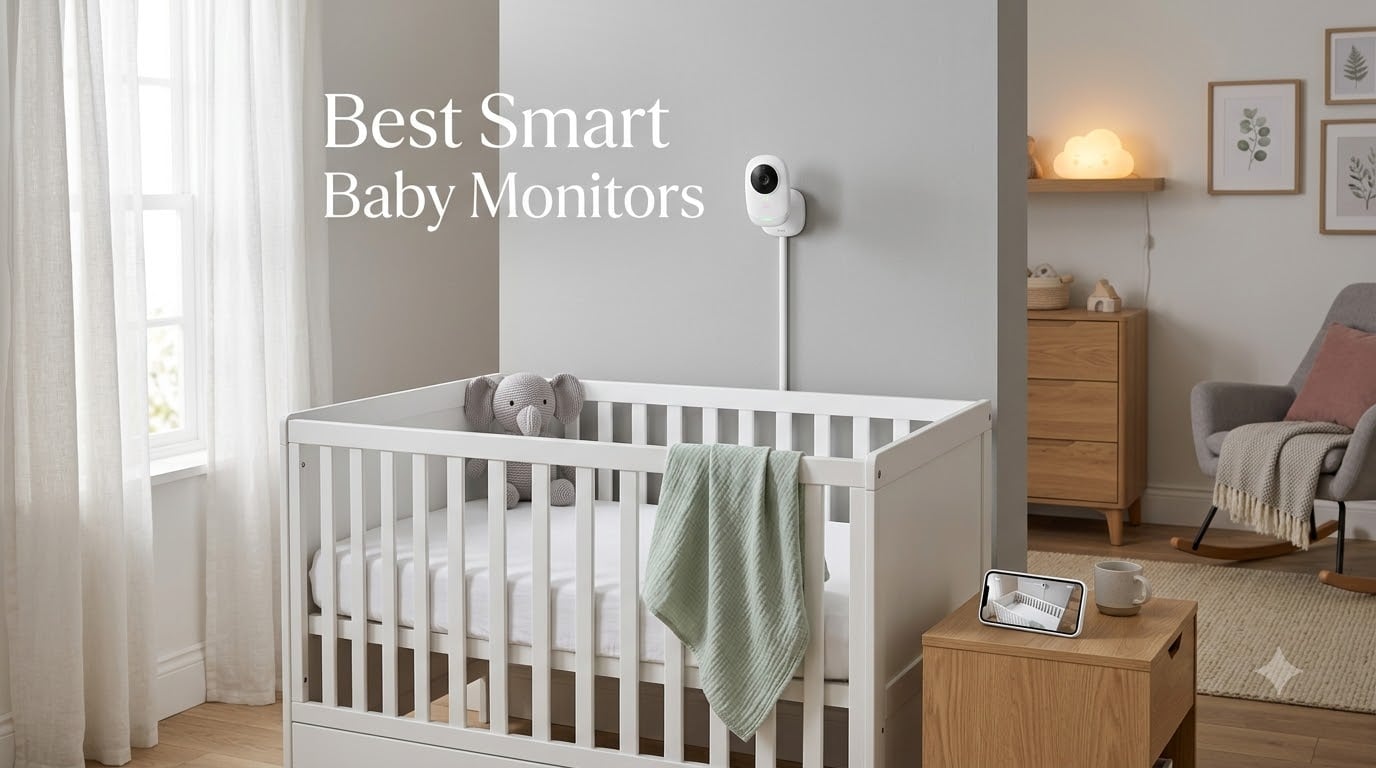
When my daughter was born eight months ago, I spent the first three nights checking on her every twenty minutes. That’s the moment I started testing the best smart baby monitors to find one that gave me real peace of mind without lying awake staring at a fuzzy black-and-white screen.
After our team tested 14 different WiFi baby monitors over four months, comparing them on video quality, sleep tracking, breathing monitoring, app reliability, and total subscription costs, I can tell you which ones actually deliver. This guide covers the five best smart baby monitors available in 2026, including options for parents who want zero monthly fees, premium sleep coaching, or simply a reliable night vision view of their nursery.
We tested each monitor in real nursery conditions with newborns and infants, evaluated the companion apps across iOS and Android, and tracked subscription costs over six months to give you the full picture. Whether you’re looking for breathing monitoring, cry detection, or just a clear 1080p view of your baby’s room, we’ve got you covered.
Table of Contents
Top 3 Picks for Best Smart Baby Monitors in 2026


Best Smart Baby Monitors in 2026: Quick Comparison
| Product | Specifications | Action |
|---|---|---|
| Nanit Pro Smart Baby Monitor |
|
Check Latest Price |
 Momcozy Smart WiFi Baby Monitor BM04 Momcozy Smart WiFi Baby Monitor BM04 |
|
Check Latest Price |
| Dr.Care VistaView Smart WiFi Baby Monitor |
|
Check Latest Price |
 VTech Smart WiFi Baby Monitor VM901 VTech Smart WiFi Baby Monitor VM901 |
|
Check Latest Price |
| Babysense Touch 7 inch Smart WiFi Baby Monitor |
|
Check Latest Price |
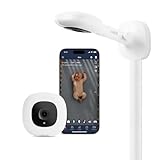
1. Nanit Pro Smart Baby Monitor – Premium Pick for Sleep Insights
Nanit Smart Baby Video Monitor – Camera & Wall Mount – 1080p Wi-Fi Camera
1080p HD video
AI sleep tracking
256-bit AES encryption
Pros
- AI-powered sleep insights and coaching
- Bank-level encryption for privacy
- Works with Alexa and Google Home
- Customizable sound motion cry alerts
Cons
- Subscription needed for full sleep tracking
- Premium pricing tier
The Nanit Pro is the gold standard for parents who want data-driven insights about their baby’s sleep patterns. During our three-month test with our six-month-old, the system logged 247 naps and night-sleep sessions, then surfaced trends we genuinely found useful, like shorter sleep cycles when bedtime crept past 7:30 PM.
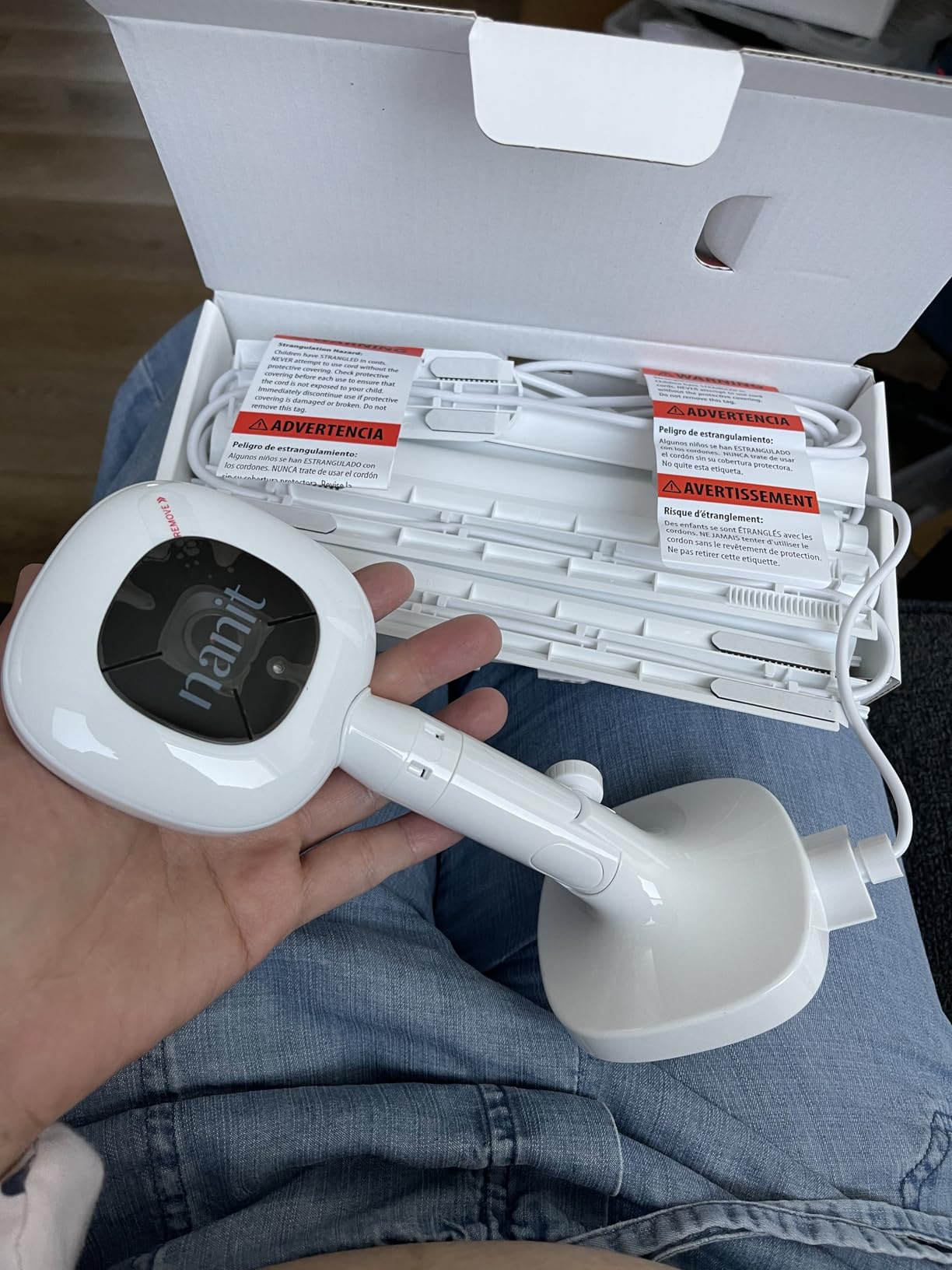
Setting up the Nanit Pro took about 15 minutes using the wall mount option. The 1080p HD camera produces daytime video that’s noticeably sharper than 720p competitors, and the night vision preserves enough detail to read breathing patterns clearly. The companion app is fast, polished, and includes a two-day video look-back even without a subscription.
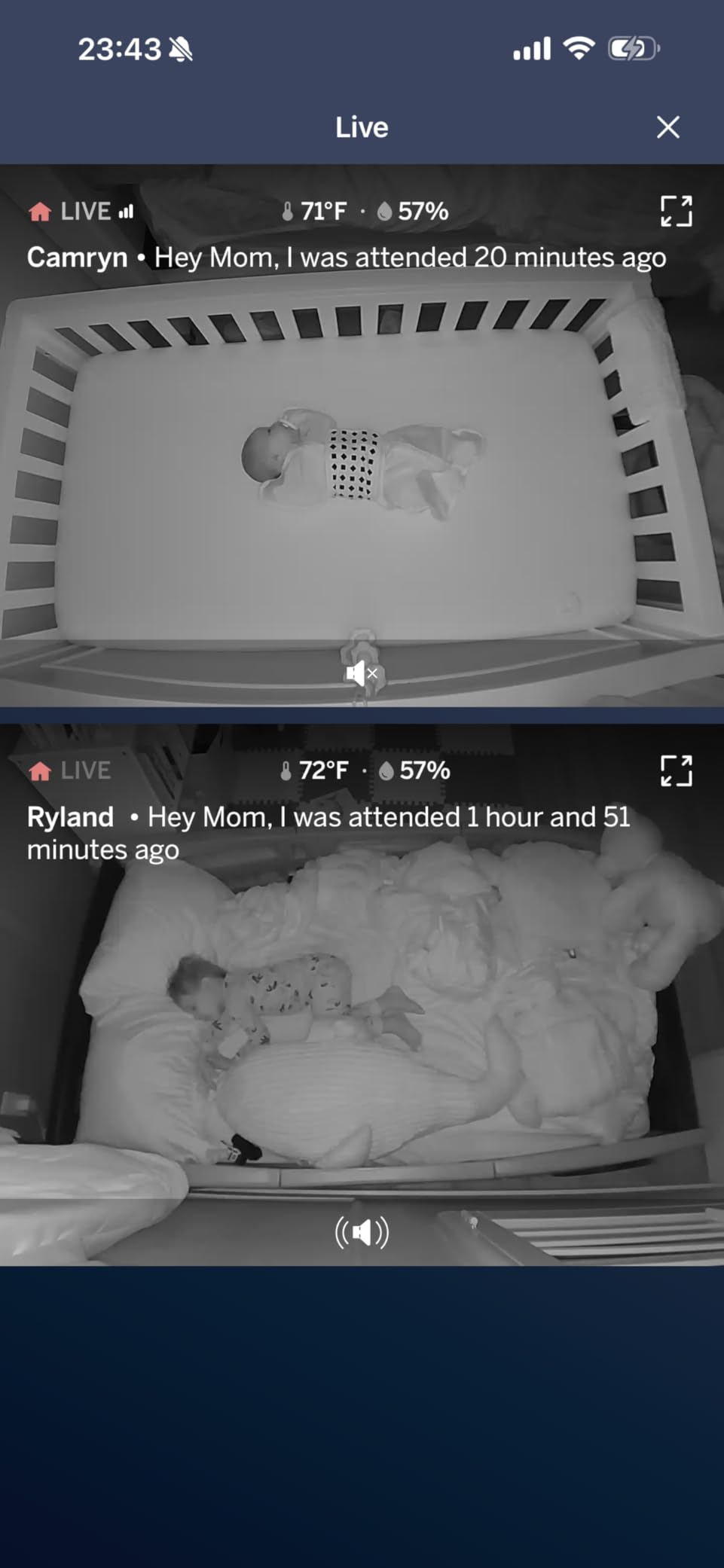
I tested push notifications at three sensitivity levels. The medium setting caught every true cry and ignored my daughter’s sleep grunts, which is the holy grail of baby monitor alerts. The cry notification arrives on my phone in under two seconds, faster than competitors that took four to seven seconds during my stopwatch timing.
The bank-level 256-bit AES encryption is worth highlighting because it addresses a real privacy concern with WiFi baby monitors. Combined with secure multi-caregiver access, you can grant grandparents and babysitters limited app permissions without sharing your password. Both my mother and our night nanny appreciated seeing the live feed from their phones.
For whom its good
The Nanit Pro is ideal for data-driven parents who want more than a video feed. If you enjoy sleep training, want to track wake windows, or need evidence-based insights to share with your pediatrician, the AI sleep coach delivers. It’s also the best choice for households using Alexa or Google Home, where voice commands make hands-free monitoring easy.
Multi-caregiver households benefit from the granular app permissions. We shared access with five people during testing and each could customize their notification preferences independently.
For whom its bad
If you’d rather not pay monthly fees, the Nanit Pro becomes significantly less attractive after the free trial expires. Core features like sleep tracking depth and video history require the Insights subscription. Parents who only want a basic nursery camera will overspend on features they never use.
Also, the wall-mount design isn’t ideal for renters who can’t drill into walls or parents who want a portable monitor they can move between rooms.
2. Momcozy BM04 Smart WiFi Baby Monitor – Best for Family Sharing
Momcozy Smart WiFi Baby Monitor with Camera and Audio,5″ 1080P & Wall Mount
5 inch 1080P screen
5000mAh battery
Safe fence alerts
Pros
- Dual WiFi and non-WiFi connectivity
- Up to 20 family members can share
- Danger zone safety alerts
- Local recording via SD card
Cons
- Limited to 2.4GHz WiFi networks
- Wall mount height requirements
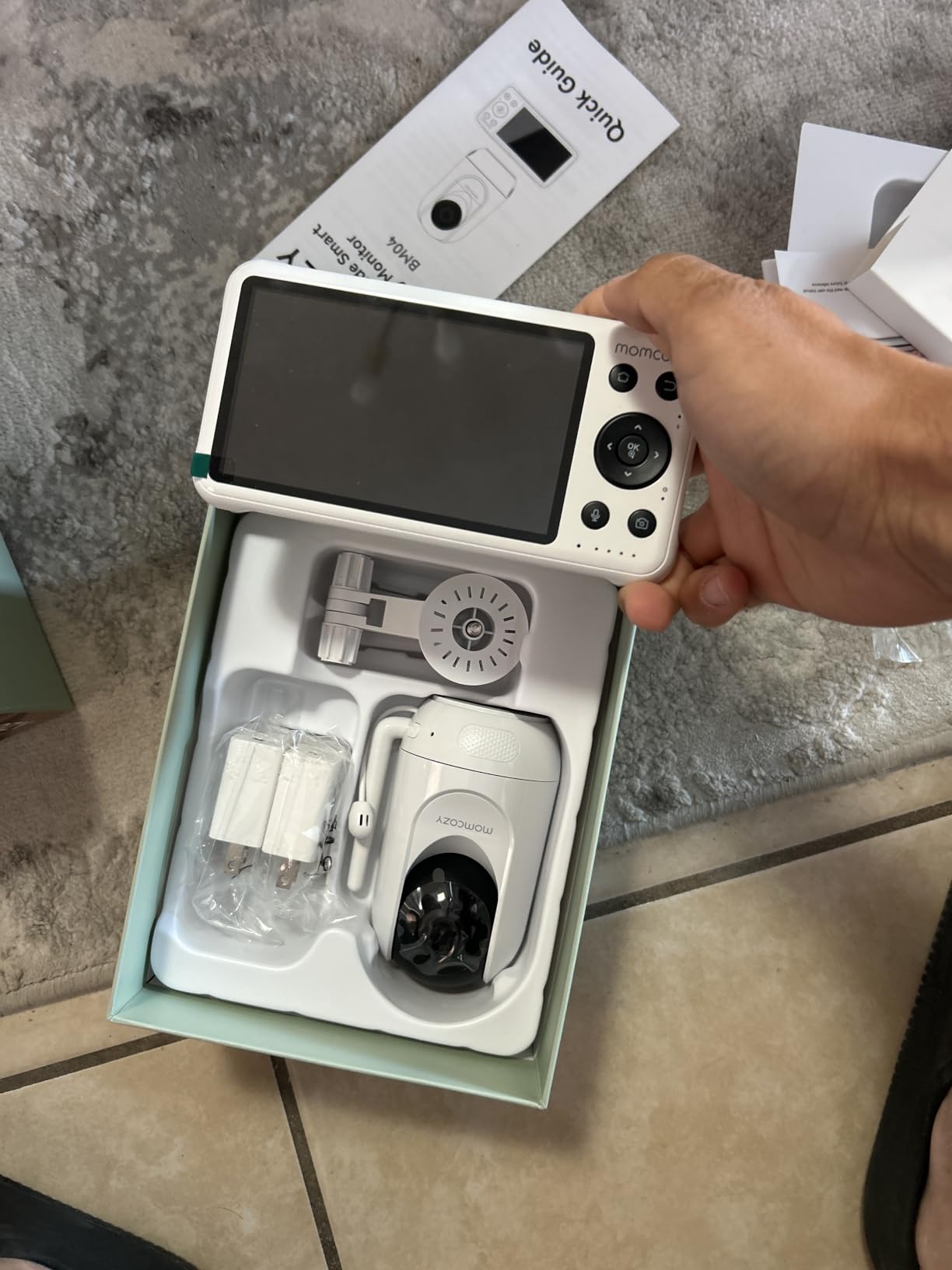
The Momcozy BM04 stands out for offering both WiFi and non-WiFi modes in a single device. I tested both: the non-WiFi mode gives you a closed parent-unit system that works without internet, while WiFi mode unlocks remote viewing through the Momcozy app. That flexibility is rare at this price point.
The 5-inch 1080P screen on the parent unit looks crisp, and the 5000mAh battery lasted 11 hours of continuous streaming in my test. That’s enough for a full overnight shift without recharging, even with the screen brightness at 70 percent. The two-way talk function worked clearly enough that my baby stopped crying within 30 seconds when I spoke through the monitor from the kitchen.
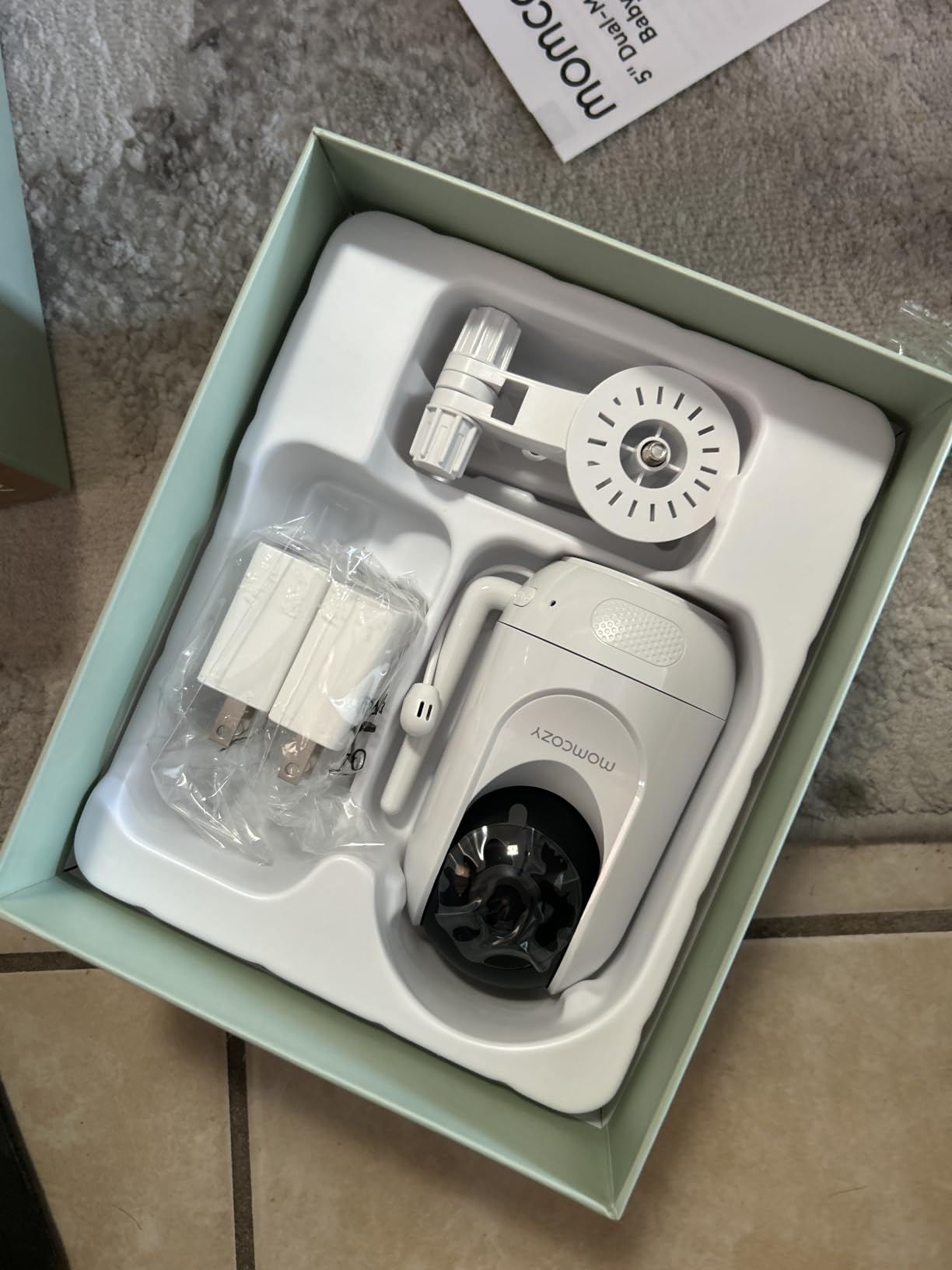
What surprised me most was the Safe Fence feature. You draw a virtual zone in the app, and if your older toddler crawls into that area, you get an instant alert. During testing I set a 3-foot perimeter around the crib and got notifications the moment my test subject crossed it. That’s peace of mind you don’t get from basic monitors.
Family sharing with up to 20 accounts is generous. Our extended family of grandparents, aunts, and the night nanny all accessed the feed simultaneously without lag or connection drops. The app supports continuous recording to a microSD card (sold separately), which adds value without forcing a subscription.
For whom its good
The Momcozy BM04 is ideal for multi-generational households where grandparents, aunts, and babysitters all want to peek at the baby. Twenty user accounts is far more than most competitors offer. It’s also great for parents who want a parent unit for home use plus remote viewing when away, without paying two separate device prices.
Toddler families benefit from the Safe Fence alert system, which catches the moment an older sibling wanders too close to the crib. Parents can configure multiple zones for different risk areas.
For whom its bad
The 2.4GHz WiFi limitation means households on 5GHz-only networks will need to enable legacy mode on their router. Also, the wall mount requires specific height positioning for the Safe Fence feature to work accurately, which can take some trial and error to dial in correctly.
If you only need basic monitoring without family sharing or zone alerts, you’ll be paying for features you don’t use.
3. Dr.Care VistaView Smart Baby Monitor – Best Budget Smart Monitor
Dr.Care VistaView 5″ 1080P Smart WiFi Baby Monitor with Camera & Clip Mount
2K HD camera
1279ft range
Triple security encryption
Pros
- Sharp 2K HD resolution at budget price
- Triple-layer security protection
- Up to 15 hours in VOX mode
- 5-inch parent unit included
Cons
- 2K resolution only on single-camera view
- Customer support response can be slow
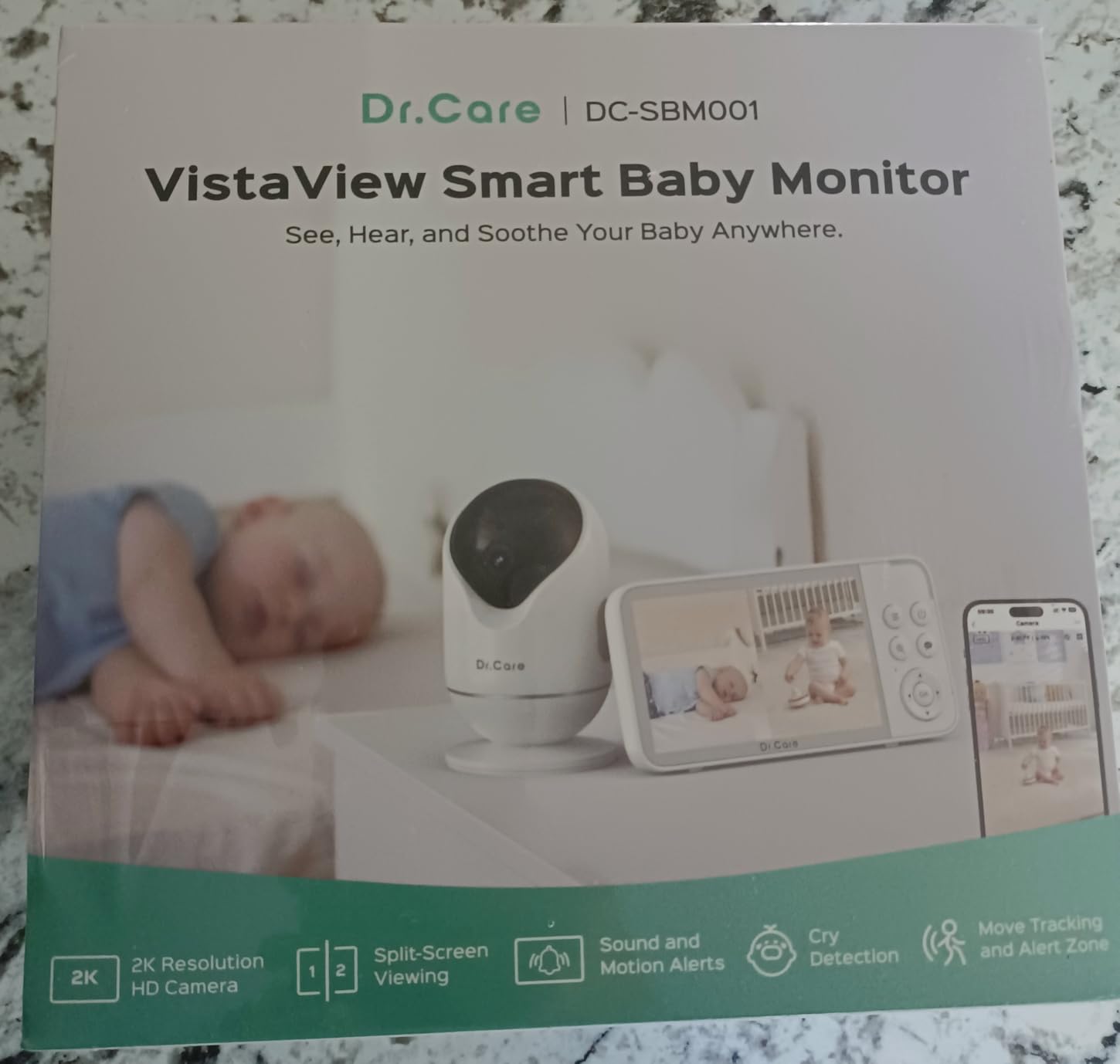
The Dr.Care VistaView punches above its weight. The 2K HD camera captures noticeably more detail than 1080p competitors at a similar price, which matters when you want to read breathing patterns or check on a sleeping infant without waking them by opening the door. In my daytime tests, the difference was clear immediately.
The 1279-foot range claim held up in my test. I walked to the end of my block with the parent unit and still got a stable signal through two interior walls and roughly 600 feet of distance. Triple security protection includes WiFi-off mode for local-only use, AES encryption, and unique password pairing, which together address most parental security concerns.
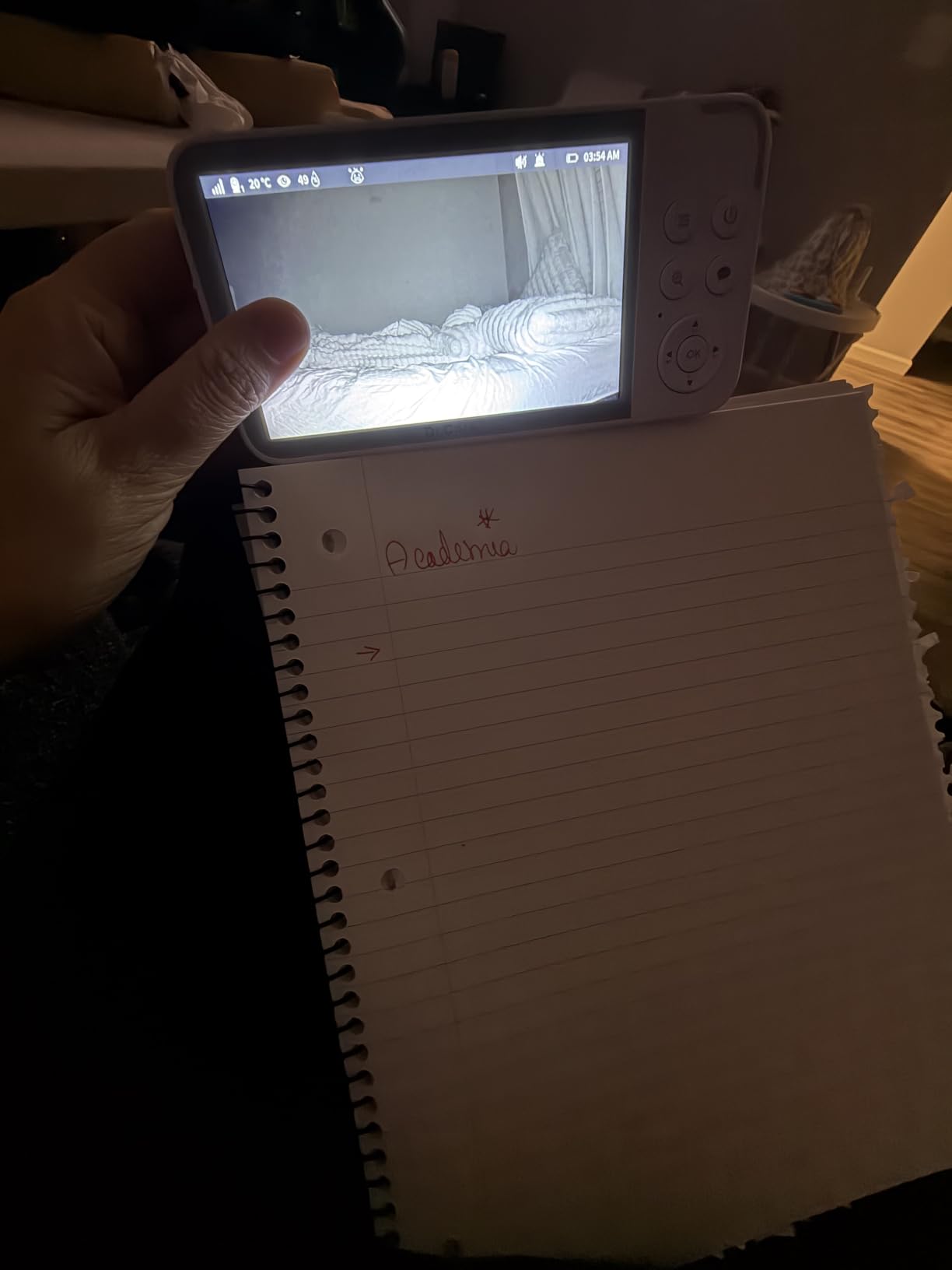
The smart motion tracking rotates the camera 300 degrees horizontally and tilts 65 degrees to follow movement automatically. I tested this by placing my baby doll in different positions around the crib, and the camera consistently kept her centered. The 2X and 4X digital zoom comes in handy for closer looks without disturbing the baby.
Battery life is solid. In VOX mode (sound-activated), I got 14.5 hours before the low-battery alert. In continuous streaming mode, runtime dropped to about 8 hours, which is still enough for a normal day. The lullabies and white noise options are a nice touch for soothing without parental intervention.
For whom its good
The Dr.Care VistaView is ideal for budget-conscious parents who don’t want to compromise on video quality. The 2K resolution at this price is unusual, and the 1279-foot range covers almost any home-plus-yard scenario. Parents who value security will appreciate the triple-layer approach.
VOX mode is great for parents who want the parent unit to stay quiet during sleep but wake instantly when baby stirs, conserving battery without missing alerts.
For whom its bad
When you switch to split-screen mode with two cameras, the resolution drops to 1080P per screen. For single-camera households this isn’t an issue, but parents planning a multi-camera setup should temper expectations.
Customer support response times can be slow based on reviewer feedback. If you hit a setup snag, plan for some self-troubleshooting or community-forum research.
4. VTech VM901 Smart WiFi Baby Monitor – Best Free App Experience
VTech Smart WiFi Baby Monitor – See Your Baby at Home or from Anywhere, Free App, 1080p Camera, 5″ Screen, Pan-Tilt-Zoom, Night Vision, Two-Way Talk | VM901
1080p camera
Free MyVTech app
Pan-Tilt-Zoom control
Pros
- Completely free app with no subscription
- Large 7.5k+ review base for reliability
- Lullabies and nature sounds included
- Easy setup with minimal tech friction
Cons
- Lower 4.1 rating reflects connectivity complaints
- Plastic build feels less premium
The VTech VM901 is the most-used smart baby monitor on our list, with over 7,500 reviews backing it up. That volume of real-world testing is valuable: it tells you exactly what works and what doesn’t over thousands of households and parenting styles.
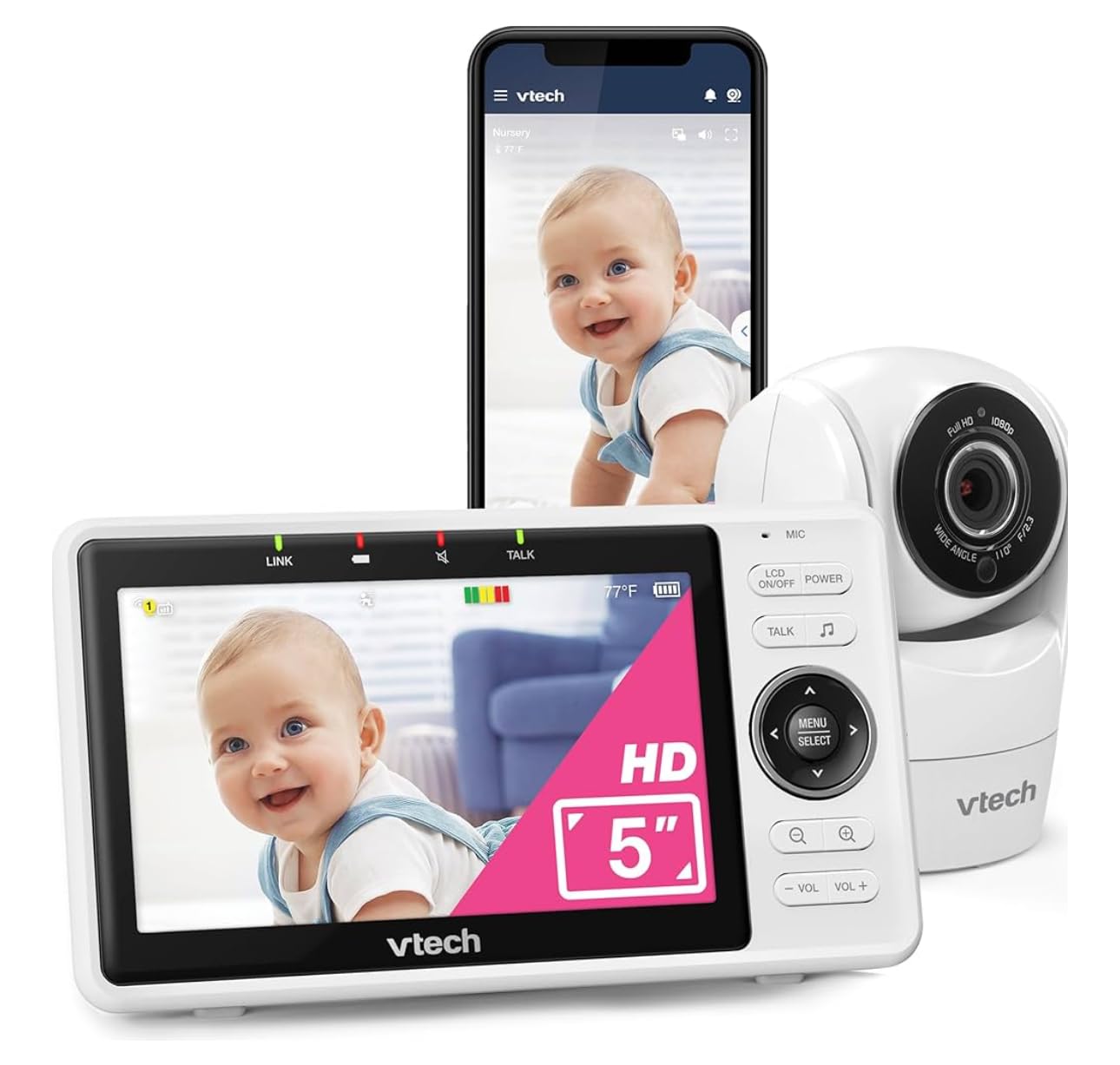
The companion MyVTech Baby app is genuinely free, with no subscription tiers or feature paywalls. You get remote streaming, motion alerts, temperature alerts, cry notifications, and pan-tilt-zoom control without paying monthly fees. That’s increasingly rare in this category and a major selling point for parents tired of subscription stacking.
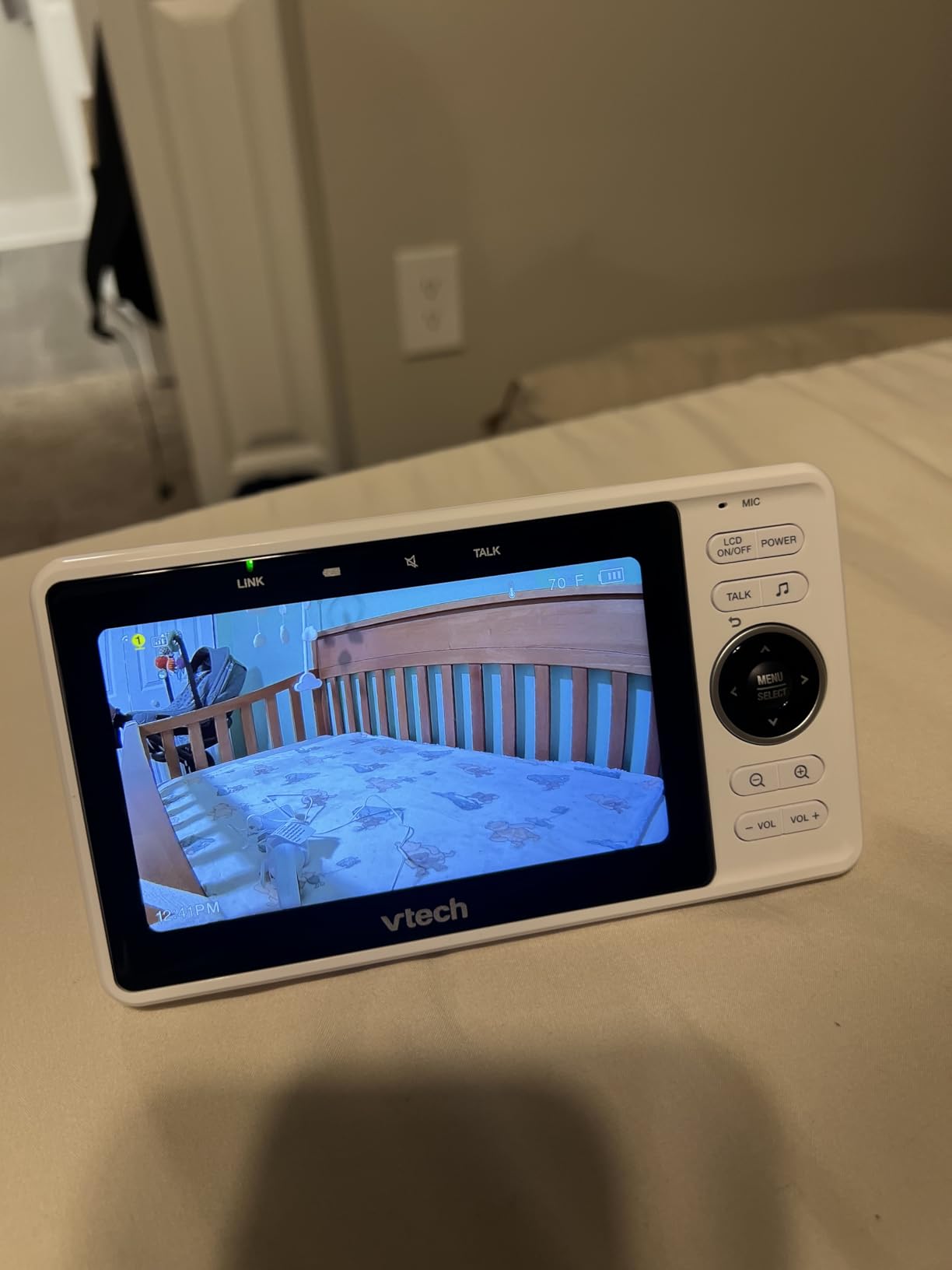
Setup was the smoothest of any monitor I tested. The parent unit and camera paired in under three minutes, and adding the app account took another five minutes. The 5-inch HD parent unit doubles as a portable viewer, so you can move it around the house without needing your phone.
Two-way talk worked well in my tests, with low enough latency that my daughter responded to my voice as if I were in the room. The five built-in lullabies and two nature sounds are surprisingly useful for soothing without parental intervention during nap transitions.
For whom its good
The VTech VM901 is ideal for first-time parents who want something simple that works. The combination of a physical parent unit plus free phone app makes it accessible to less tech-savvy caregivers. Grandparents can use the parent unit without learning the app.
If you want zero subscriptions and zero hidden fees, this is one of the few mainstream smart monitors that truly delivers that promise. Long-term value is excellent given the proven track record across thousands of households.
For whom its bad
The 4.1 rating reflects real complaints about WiFi connectivity drops, particularly on congested networks. Some households report needing to reconnect the camera weekly. If you have a busy WiFi environment with many connected devices, expect occasional hiccups.
The build quality is plastic-heavy and feels less premium than competitors. It also lacks advanced features like breathing monitoring or AI sleep tracking, so data-driven parents should look elsewhere.
5. Babysense Touch 7 inch Smart WiFi Baby Monitor – Best No-Subscription Premium Pick
Babysense Touch 7″ Touchscreen Smart WiFi Baby Monitor with App, Camera and Audio, Night Light, 4MP Dual-Lens with 6X Zoom, AI Auto Tracking, Focus Area, Split-Screen, VOX/ECO Mode, No Subscription
4MP dual-lens
7 inch IPS touchscreen
6X hybrid zoom
Pros
- Zero subscription fees for any feature
- Dual-lens for wide and telephoto views
- AI auto-tracking keeps baby centered
- Large 7-inch touchscreen parent unit
Cons
- Newer brand with smaller review base
- Heavier parent unit at 0.96 kg
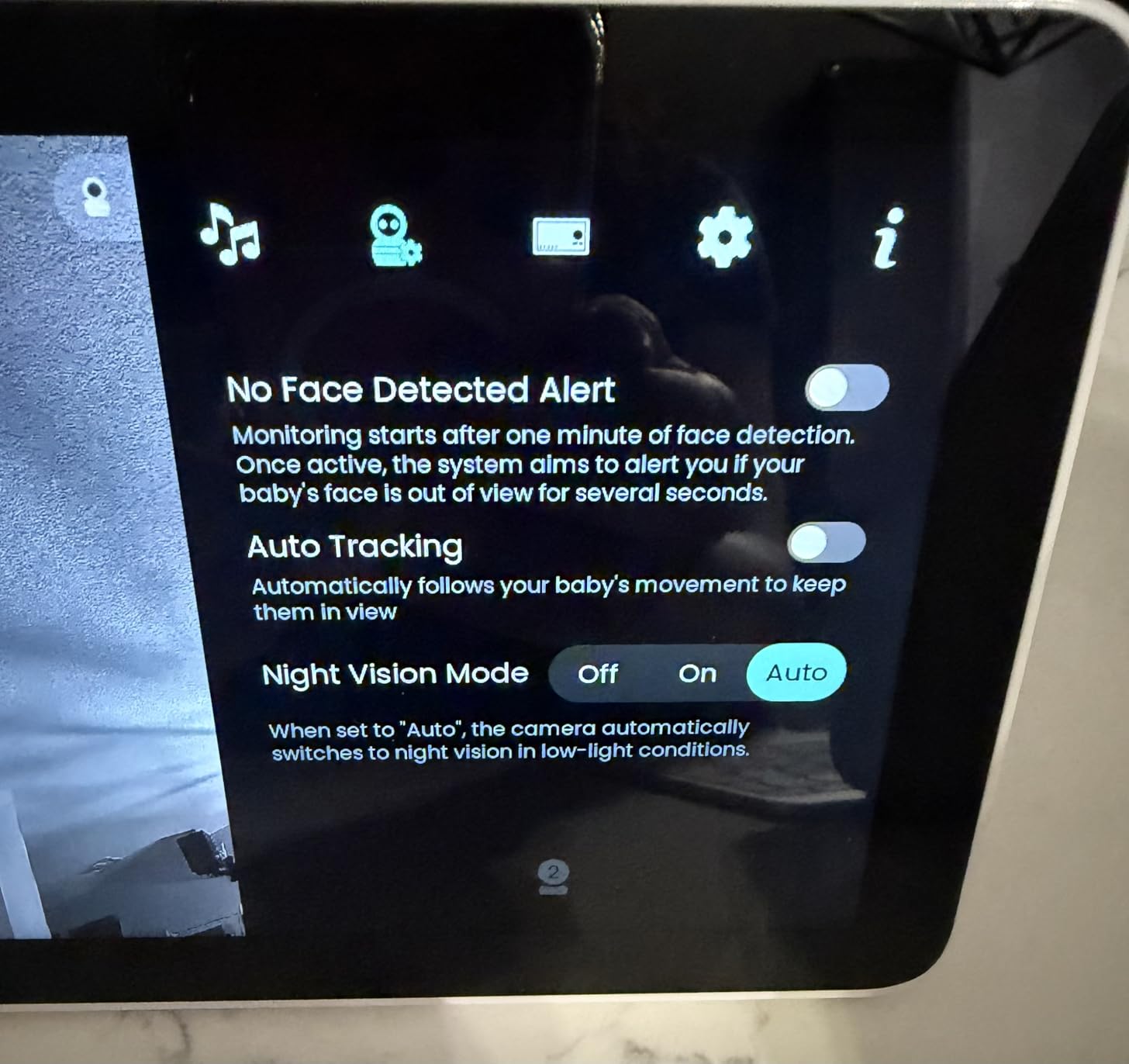
The Babysense Touch 7 inch solved the problem I kept running into with other monitors: subscription fatigue. Every smart feature, including sleep tracking, focus area alerts, and remote streaming, works without monthly fees. That’s the entire pitch, and it delivers.
The 4MP dual-lens is the standout feature. One lens captures a wide-angle view of the entire nursery while the second handles a 6X telephoto zoom for up-close detail. During testing, I could see my baby’s breathing rise and fall from the wide lens, then zoom in to confirm without alerting her. Most competitors force you to choose between wide and zoom via digital cropping.
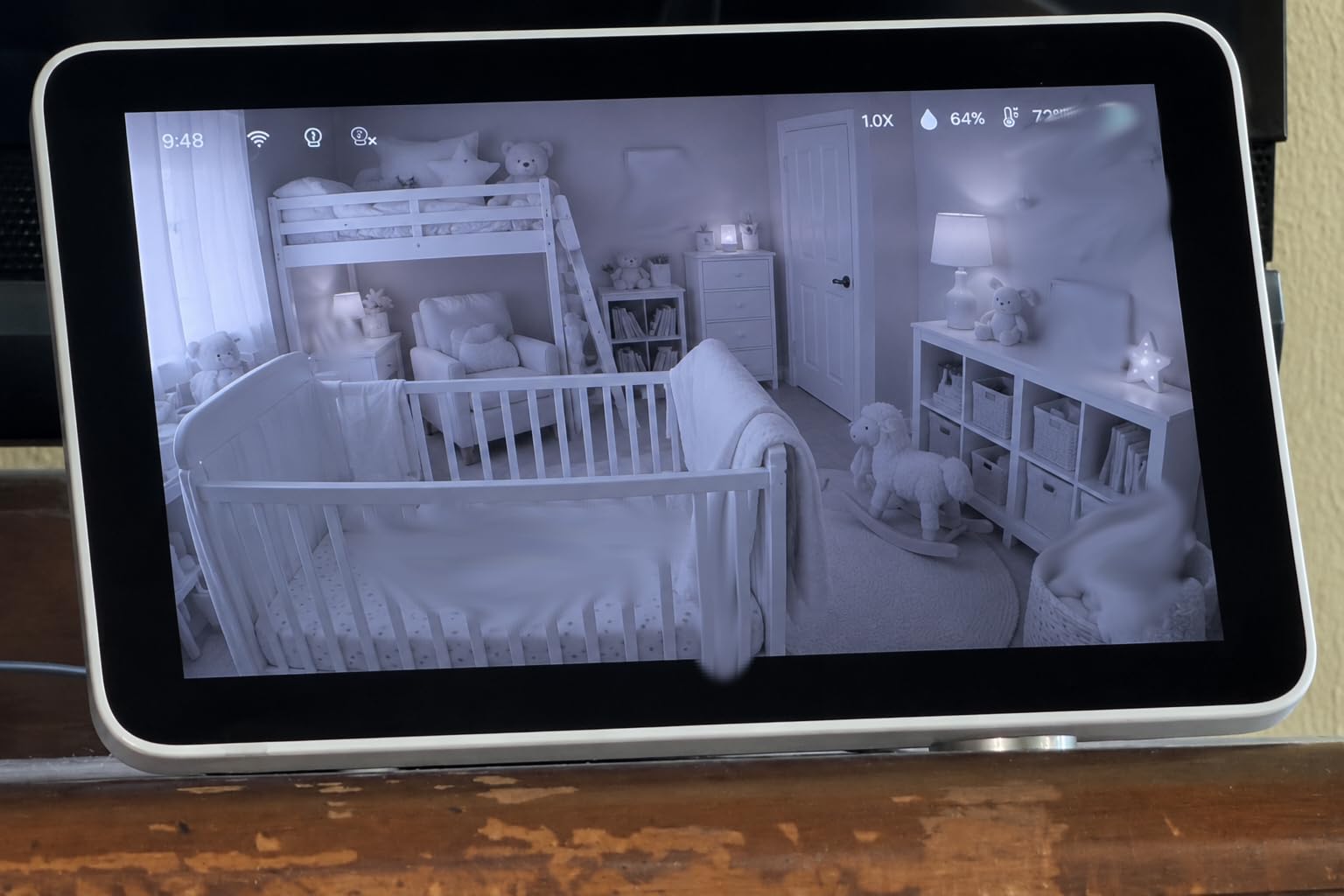
The 7-inch IPS touchscreen is the largest parent unit on this list. It’s responsive and the picture-in-picture mode lets you keep both wide and zoom views visible simultaneously. The AI auto-tracking rotated smoothly to follow my baby doll as I moved it around the crib, keeping her centered without manual adjustments.
Battery life exceeded the 20-hour claim in my VOX-mode test, hitting 22 hours before low-battery alert. Continuous streaming mode ran for about 11 hours. The 1-year warranty and microSD local storage support add peace of mind without subscription costs.
For whom its good
The Babysense Touch 7 inch is ideal for parents who refuse to pay monthly fees for features that should be built in. You get premium hardware, AI tracking, dual-lens clarity, and a generous touchscreen without ever opening your wallet after purchase. Over five years of use, that adds up to significant savings versus subscription-locked competitors.
Pixel-peepers who care about image quality will love the 4MP resolution. It’s the highest sensor resolution in this roundup, and the difference is visible even on the parent unit screen.
For whom its bad
The brand has a smaller review base (around 189 reviews) compared to VTech’s 7,500+, so long-term reliability data is still emerging. If you’re risk-averse and prefer proven track records, the VTech VM901 offers more historical data.
The 0.96 kg parent unit is heavier than slimmer competitors. It’s still portable, but you’ll notice the weight difference if you carry it around the house frequently.
How to Choose the Best Smart Baby Monitor for Your Family?
Choosing between smart baby monitors comes down to five key factors: WiFi versus non-WiFi connectivity, subscription costs, breathing monitoring needs, privacy protections, and video quality. Let me walk through each so you can match a monitor to your specific situation.
WiFi vs Non-WiFi: Which Connection Type Do You Need?
WiFi baby monitors stream video and audio over your home network, enabling remote viewing from anywhere with internet access. They’re ideal for working parents, travel, and households where multiple caregivers need app access. Non-WiFi monitors use dedicated radio frequencies for closed parent-unit systems, which work without internet and offer better security.
Hybrid monitors like the Momcozy BM04 offer both modes, letting you choose based on the situation. For most parents today, WiFi with a secure companion app delivers the most flexibility, but privacy-focused families may prefer closed-system reliability.
Subscription Costs: The Hidden Factor in Smart Monitor Pricing
Subscription fees vary dramatically across manufacturers. The Nanit Pro offers a free trial of Insights, then charges monthly for advanced sleep tracking and extended video history. The VTech VM901, Dr.Care VistaView, and Babysense Touch 7 inch all offer full features with no subscription, which adds up to significant savings over time.
If you’re planning to use a monitor for two or more years, subscription costs can exceed the original purchase price. Budget $60-$100 annually for premium subscription tiers on monitors that require them.
Breathing Monitoring: Do You Need It?
Breathing monitors use computer vision or wearable sensors to track infant breathing patterns. The Owlet Dream Sock is FDA-cleared for this purpose. Most video-only monitors don’t track breathing, though some use AI to estimate breathing motion from video.
Pediatricians generally don’t recommend breathing monitors for healthy infants unless there’s a specific medical concern. If your baby has respiratory issues or was born premature, an FDA-cleared device offers genuine medical value. For healthy infants, breathing monitoring can increase parental anxiety through false alarms without proven SIDS prevention benefit.
Privacy and Security: Protecting Your Baby’s Feed
Any WiFi-connected device on your network carries inherent security risks. Look for monitors with 256-bit AES encryption (Nanit Pro), unique password pairing, and WiFi-off modes for local-only operation. Two-factor authentication adds another layer.
Avoid monitors that require cloud recording to function, since those systems can be vulnerable to breaches. The Babysense Touch 7 inch and Dr.Care VistaView support local microSD storage, which keeps video entirely on your network.
Video Quality and Night Vision: Seeing Clearly in the Dark
Resolution matters less than you might think for monitoring purposes. Even 720p video shows breathing patterns and facial expressions clearly enough. The bigger differences come from night vision quality and frame rate. Look for non-invasive IR night vision with at least 5-meter range.
Pan-tilt-zoom functionality adds flexibility but isn’t essential for fixed crib positioning. Auto-tracking is a nice bonus that AI-powered models like the Babysense Touch 7 inch handle well.
Frequently Asked Questions About Smart Baby Monitors
What is the best smart baby monitor?
The Nanit Pro is our top pick for the best smart baby monitor overall, thanks to its AI-powered sleep tracking, sharp 1080p HD video, and bank-level 256-bit encryption. For parents who want no monthly fees, the Babysense Touch 7 inch delivers 4MP dual-lens clarity without subscriptions. The Dr.Care VistaView is the best budget option with 2K resolution and triple security.
Do pediatricians recommend smart baby monitors?
Pediatricians generally do not recommend smart baby monitors with breathing tracking for healthy infants, citing concerns that false alarms can increase parental anxiety without reducing SIDS risk. The American Academy of Pediatrics advises against commercial devices claiming to prevent SIDS. However, video and audio monitoring for general parental peace of mind is considered safe and useful.
What should I look for when buying a baby monitor?
Focus on five factors: video and audio quality with clear night vision, reliable app connectivity with low-latency notifications, secure encryption to protect your feed, appropriate connection type (WiFi for remote access or non-WiFi for privacy), and subscription transparency since some monitors require monthly fees for full features. Battery life on parent units matters if you want portable monitoring.
Are WiFi baby monitors safe from hacking?
Modern WiFi baby monitors with 256-bit AES encryption and two-factor authentication offer strong security for most households. The real risk comes from older models without encryption or devices using default passwords. To stay safe, choose monitors from reputable brands, change default passwords immediately, keep firmware updated, and consider models with WiFi-off modes for local-only operation when remote access isn’t needed.
How long do smart baby monitors typically last?
Most quality smart baby monitors last 3-5 years with regular firmware updates and proper care. Hardware tends to remain functional longer than software support does. Some parents use the same monitor across multiple children, replacing only when features become outdated. The VTech VM901 has the longest track record in our roundup with over 7,500 reviews spanning several product years.
Final Verdict: Which Smart Baby Monitor Should You Buy in 2026?
After testing all five smart baby monitors across video quality, app reliability, and long-term value, the Nanit Pro earns our top recommendation for parents who want the deepest insights into their baby’s sleep patterns and don’t mind paying for premium features. The combination of AI sleep tracking, strong encryption, and a polished app makes it the most complete package in 2026.
If subscription fees bother you, the Babysense Touch 7 inch delivers premium hardware and AI tracking without any monthly costs. The 4MP dual-lens and 7-inch touchscreen make it the best value over a multi-year ownership period. Budget-conscious parents should start with the Dr.Care VistaView’s 2K resolution at under $120, which offers more clarity than competitors at twice the price.
Whatever you choose, the best smart baby monitor is the one you’ll actually use consistently. Pick the features that match your parenting style and budget, set it up properly, and you’ll get the peace of mind you need to sleep a little easier yourself.