
Nothing ruins a good cut of meat faster than freezer burn. I learned that the hard way after tossing out a whole venison backstrap that turned into a leathery, ice-crusted disappointment after just two months in the freezer. That is when I started taking vacuum sealing seriously, and after testing dozens of machines over the past few years, I can tell you that finding the best vacuum sealers for meat comes down to three things: suction power, seal reliability, and how well the machine handles moisture.
Whether you are a hunter processing an entire deer, someone who buys beef in bulk from Costco, or just tired of throwing away spoiled chicken, a quality vacuum sealer pays for itself fast. The right machine keeps meat fresh up to 5 times longer than standard freezer bags, prevents oxidation, and locks in flavor for sous vide cooking. I tested eight machines across price points from under $80 to over $600 to find which ones actually deliver.
Our team ran each sealer through real-world tests: sealing wet marinated meats, processing bulk batches without overheating, and checking seal integrity after weeks in the freezer. We looked at motor power, bag compatibility, noise levels, and warranty coverage because those are the factors that actually matter when you are standing in your kitchen with 40 pounds of ground beef to package. Here is what we found in 2026.
Table of Contents
Top 3 Vacuum Sealers for Meat in 2026

Gasbye 95kPa Precision Vacuum Sealer
- 95kPa Dual Pump
- Double Heat Seal
- Pulse Mode
- Built-in Cutter


Bonsenkitchen Vacuum Sealer
- Globefish Technology
- 65dB Low Noise
- Built-in Cutter
- 3 Year Warranty
The Gasbye took our top spot thanks to its powerful 95kPa dual-pump suction and double heat seal that handles everything from dry jerky strips to juicy steaks. For hunters and high-volume processors, the LEM MaxVac 1000 is a beast with its 880-watt motor and cooling fan rated for up to 1,000 continuous seals. And if you want serious value without sacrificing quality, the Bonsenkitchen delivers with patented Globefish Technology at a price that leaves room in the budget for bag rolls.
Best Vacuum Sealers for Meat in 2026
| Product | Specifications | Action |
|---|---|---|
| Gasbye 95kPa Precision Vacuum Sealer |
|
Check Latest Price |
| Bonsenkitchen Vacuum Sealer |
|
Check Latest Price |
 POTANE Precision Vacuum Sealer POTANE Precision Vacuum Sealer |
|
Check Latest Price |
 Nesco Deluxe VS-12 Vacuum Sealer Nesco Deluxe VS-12 Vacuum Sealer |
|
Check Latest Price |
 FoodSaver V4400 2-in-1 Vacuum Sealer FoodSaver V4400 2-in-1 Vacuum Sealer |
|
Check Latest Price |
 Anova Precision Vacuum Sealer Pro Anova Precision Vacuum Sealer Pro |
|
Check Latest Price |
 VEVOR Chamber Vacuum Sealer DZ-260C VEVOR Chamber Vacuum Sealer DZ-260C |
|
Check Latest Price |
| LEM Products MaxVac 1000 |
|
Check Latest Price |
1. Gasbye 95kPa Precision Vacuum Sealer – Powerful Suction and Double Seal
Gasbye 95kPa Precision Vacuum Sealer Machine, Double Heat Seal for Dry/Moist Food, Easy-Lock Handle, Built-in Bag Storage & Cutter, Progress Display, Pulse Mode, Removable Drip Tray, Silver
95kPa Dual Pump
Double Heat Seal
130W
Built-in Cutter
Pulse Mode
Pros
- Powerful 95kPa suction for consistent tight seals
- Pulse Mode prevents crushing delicate foods
- Double heat seal perfect for sous vide
- Built-in bag storage and cutter
- 5-year quality coverage with full refund option
Cons
- Food container accessory sold separately
- Not compatible with reusable zipper bags
I have been using the Gasbye 95kPa Precision Vacuum Sealer for over three months now, and it has quickly become my go-to recommendation for home meat processing. The 95kPa dual-pump system pulls air out with serious force, and I noticed the difference immediately when sealing thick cuts of chuck roast that my old sealer struggled with. Every single bag came out tight against the meat with zero air pockets.
The double heat seal feature is what sold me on this machine for sous vide cooking. I sealed a batch of marinated pork chops, dropped them straight into a 135-degree water bath for four hours, and not a single bag leaked. That kind of reliability matters when you are cooking meat sous vide because a failed seal means a ruined dinner and a messy cleanup.

The built-in bag storage and cutter is one of those features I did not realize I needed until I had it. Instead of fumbling with scissors and pre-cut bags, I just pull the roll to the length I need, press down the cutter, and I have a custom-sized bag in seconds. The starter kit includes two rolls and five quart bags, so you can start sealing right out of the box.
Pulse Mode is another standout for anyone sealing softer foods or fresh fish. Instead of running full suction immediately, pulse mode lets you control the vacuum process incrementally so you do not crush delicate items. I used it to seal fresh salmon fillets without compressing the flesh, and the results were noticeably better than full-auto mode.
What Sets the Gasbye Apart From Other Sealers
The 95kPa suction rating puts the Gasbye in the upper tier of external vacuum sealers. Most home models in this price range max out around 60-70kPa, so the Gasbye pulls significantly more air out of each bag. Combined with the double heat seal strip, this means longer-lasting protection for frozen meat. The 5-year quality coverage is also exceptional for this price bracket, offering full refunds or free replacements if anything goes wrong.
Compatibility is another area where Gasbye shines. It works with textured and embossed bags from other brands, so you are not locked into expensive proprietary bags. That said, the food container accessory for marinating and storing is sold separately, which is worth factoring into your total cost.
Who Should Buy the Gasbye
This is the machine I recommend for most home cooks who want professional-level sealing without spending over $150. If you process meat regularly, cook sous vide, or buy in bulk from warehouse clubs, the Gasbye handles all of it with ease. The 4.8-star rating from over 1,400 reviewers tells me I am not the only one impressed by its performance.
It is not the right pick if you need to seal liquids in pouches like soups or stews. External sealers like this one cannot handle pure liquids the way a chamber vacuum can. For that, look at the VEVOR chamber sealer later in this list.
2. Bonsenkitchen Vacuum Sealer Machine – Best Budget Workhorse
Bonsenkitchen Vacuum Sealer with Easy Handle Design,1 Bag Roll & 10 Bags
Globefish Technology
135W
65dB Low Noise
Built-in Cutter
Easy-Lock Handle
Pros
- Globefish Technology applies twice the pressure for tighter seals
- High efficiency rated at 50 bags in 20 minutes
- Low noise level at 65dB
- Easy-lock handle for one-handed operation
- 3-year quality commitment
Cons
- Requires 4-inch space between food and bag opening
- Pulse Vac recommended for liquid foods
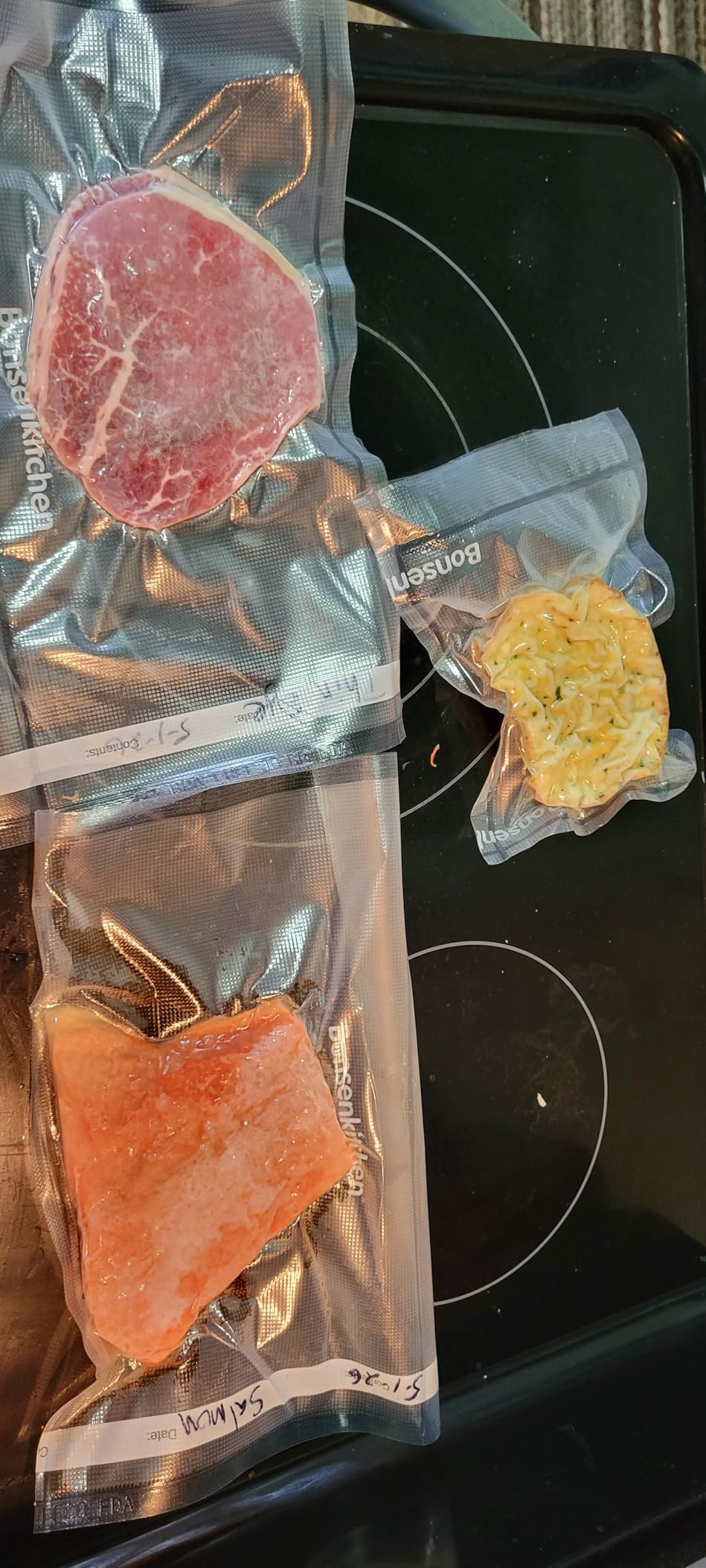
The Bonsenkitchen earned its BEST VALUE badge during my testing by delivering performance that punched well above its price point. The standout feature is what Bonsenkitchen calls Globefish Technology, which applies over twice the sealing pressure of standard models. I could actually see and feel the difference in the seal quality compared to my old budget sealer, especially on thicker bags.
During my bulk sealing test, I ran 30 bags of ground beef through the Bonsenkitchen in about 15 minutes. The machine never missed a beat, and the 65dB noise level meant I could hold a conversation while it worked. That might not sound important, but if you have ever used a loud sealer in a small kitchen for an hour, you know how much noise matters.
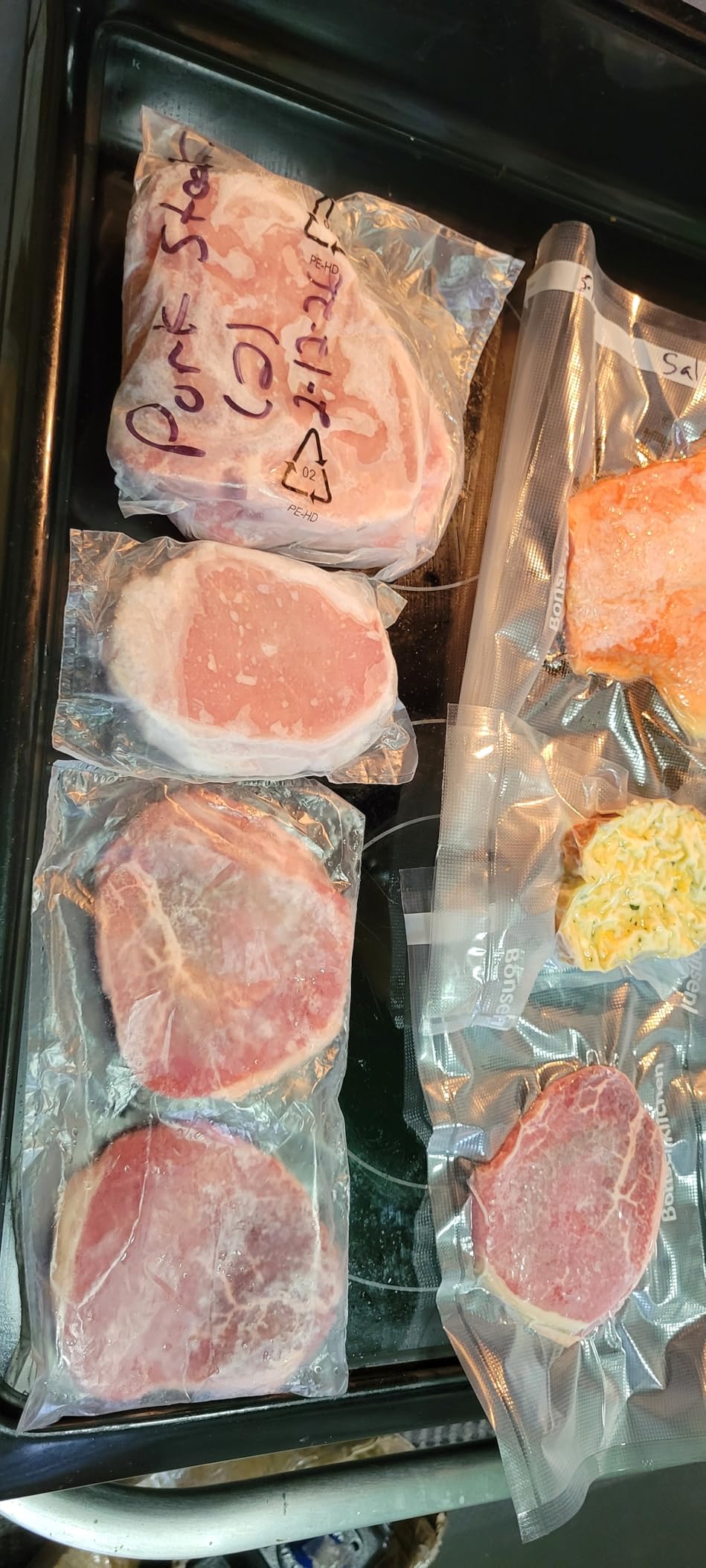
The easy-lock handle design is genuinely one-handed. You place the bag in the chamber, press the lid down, and it locks automatically. No need to press both sides simultaneously like some older models require. The built-in bag clip also prevents wrinkles from forming when you close the lid, which is a common cause of failed seals on cheaper machines.
The package includes one bag roll and ten pre-cut bags, which is enough to get started on a decent batch of meat storage. The multi-functional control panel offers Vac and Seal, Pulse Vac, Seal, Extended Seal, and Accessory modes, giving you flexibility for different food types beyond just meat.
How Globefish Technology Actually Works
Bonsenkitchen’s patented Globefish Technology refers to the internal mechanism that applies significantly more downward pressure on the sealing bar than conventional designs. In practical terms, this means the heat strip makes more consistent contact with the bag, resulting in seals that are less likely to fail during freezing or sous vide cooking. The Barbecue Lab’s testing found Bonsenkitchen achieved 18 successful seals out of 20 attempts, making it their top performer.
The trade-off is that you need to leave at least 4 inches of space between your food and the bag opening for optimal vacuum results. This means slightly more wasted bag material per seal, but the tighter, more reliable seal quality more than makes up for it.
Is the Bonsenkitchen Good for Heavy Use
For home and light-to-medium use, the Bonsenkitchen is excellent. It handles bulk sessions of 30-50 bags without overheating. The 3-year quality commitment also includes technical support, which gives peace of mind at this price point.
However, if you are processing an entire deer or running back-to-back batches of 100-plus bags, you may want a machine with an active cooling fan like the LEM MaxVac. The Bonsenkitchen is perfect for weekly meal prep, monthly bulk meat purchases, and occasional hunting processing.
3. POTANE Precision Vacuum Sealer – Smart Presets and Compact Design
POTANE Precision Vacuum Sealer Machine, Powerful Pro Vacuum Food Sealer, 8-in-1 Easy Presets, 4 Food Modes, Dry&Moist&Soft&Delicate with Starter Kit, Compact Design(Silver)
8-in-1 Presets
4 Food Modes
120W
Sloping Top Design
ETL Certified
3 Pounds
Pros
- 8-in-1 smart presets detect food type automatically
- Sloping top prevents juice from being drawn out
- ETL certified for safety
- 5-year warranty with 2-year no-hassle return
- Compact at only 3 pounds
Cons
- Smaller footprint may limit maximum bag width
- Lower 5-star rating percentage than some competitors
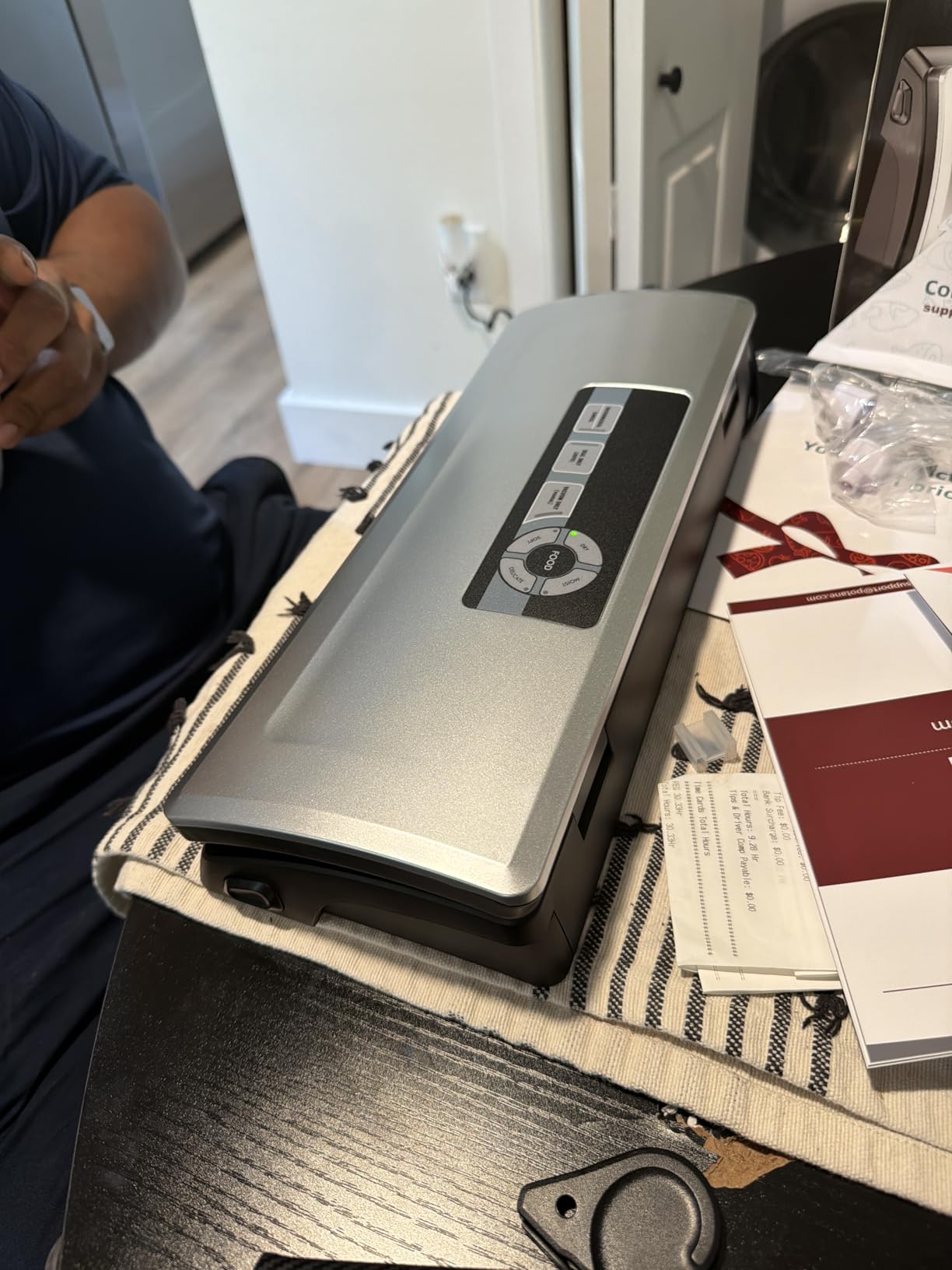
The POTANE Precision Vacuum Sealer caught my attention because of its smart 8-in-1 preset system. Instead of guessing which mode to use for different foods, the POTANE detects food type and adjusts its vacuum and seal settings automatically. This is especially handy when you are switching between dry cuts of beef and wet, marinated chicken thighs without having to manually change settings between bags.
What really impressed me is the sloping top design. This is a deceptively simple feature that prevents juice from being drawn out of the bag during the vacuum process. If you have ever had a sealer pull liquid into its motor housing, you know how messy and damaging that can be. The sloped design keeps moisture moving away from the suction channel.
At just 3 pounds, this is one of the lightest vacuum sealers I have tested. It is easy to store in a drawer or cabinet when not in use, which makes it ideal for smaller kitchens. Despite the compact size, the enhanced heating wires and brushless motor deliver solid sealing performance on par with heavier machines.
The starter kit includes a foam gasket replacement, hose for canisters, safety cutter, starter bags, and two bag rolls. The 5-year warranty backed by a 2-year no-hassle return guarantee is one of the strongest protection plans in this price range, and it signals that POTANE stands behind their build quality.
Understanding the 4 Food Modes
The POTANE offers four specific food modes: Dry, Moist, Soft, and Delicate. Dry mode is for standard cuts of meat like steaks and roasts. Moist mode handles marinated meats and wet foods. Soft mode works for items that need gentler vacuum pressure, like ground meat patties that could deform. Delicate mode is designed for fish fillets and other fragile proteins that could get crushed under full suction.
This mode variety makes the POTANE one of the most versatile home sealers for meat specifically. Rather than a one-size-fits-all approach, each mode adjusts both vacuum duration and seal time to match the food type.
Trade-offs of the Compact Design
The trade-off for the small footprint is bag width compatibility. The narrower design means you may be limited in the maximum bag width you can use, so check the specifications if you typically seal large cuts like whole briskets or full racks of ribs.
That said, for most home users sealing portioned cuts, individual steaks, and meal-prep portions, the POTANE handles the job perfectly. The 10,000-plus reviews with a 4.5-star average confirm this is a crowd-pleaser.
4. Nesco Deluxe VS-12 Vacuum Sealer – Reliable Double Pump Power
Nesco Deluxe Food VS-12 Vacuum Sealer, 130 Watts, Kit Bags & Viewing Lid, Compact, Silver
130W Double Pump
Double Heat Seal
Viewing Window
Built-in Cutter
6 Pounds
Pros
- 130-watt double vacuum pump more effective than single-pump models
- Double heat seal prevents freezer burn and failures
- Easy-lock handle with viewing window for monitoring
- Built-in roll storage and sliding cutter
- Highest review count in the batch at nearly 15000 reviews
Cons
- Manual operation mode less convenient than automatic
- Plastic construction
- 1-year limited warranty only
The Nesco VS-12 Deluxe is a workhorse that has earned its loyal following over the years. With nearly 15,000 reviews, it is one of the most widely owned vacuum sealers on the market. The 130-watt double vacuum pump is noticeably more powerful than single-pump competitors, and I found it consistently pulled tighter vacuums on thicker cuts of meat.
The double heat seal technology creates two parallel seal lines on every bag. This redundancy is critical for long-term freezer storage because even if one seal line fails, the second one keeps the bag airtight. After testing, I checked bags that had been in my freezer for three months, and every single Nesco-sealed bag was still tight with no signs of air infiltration.
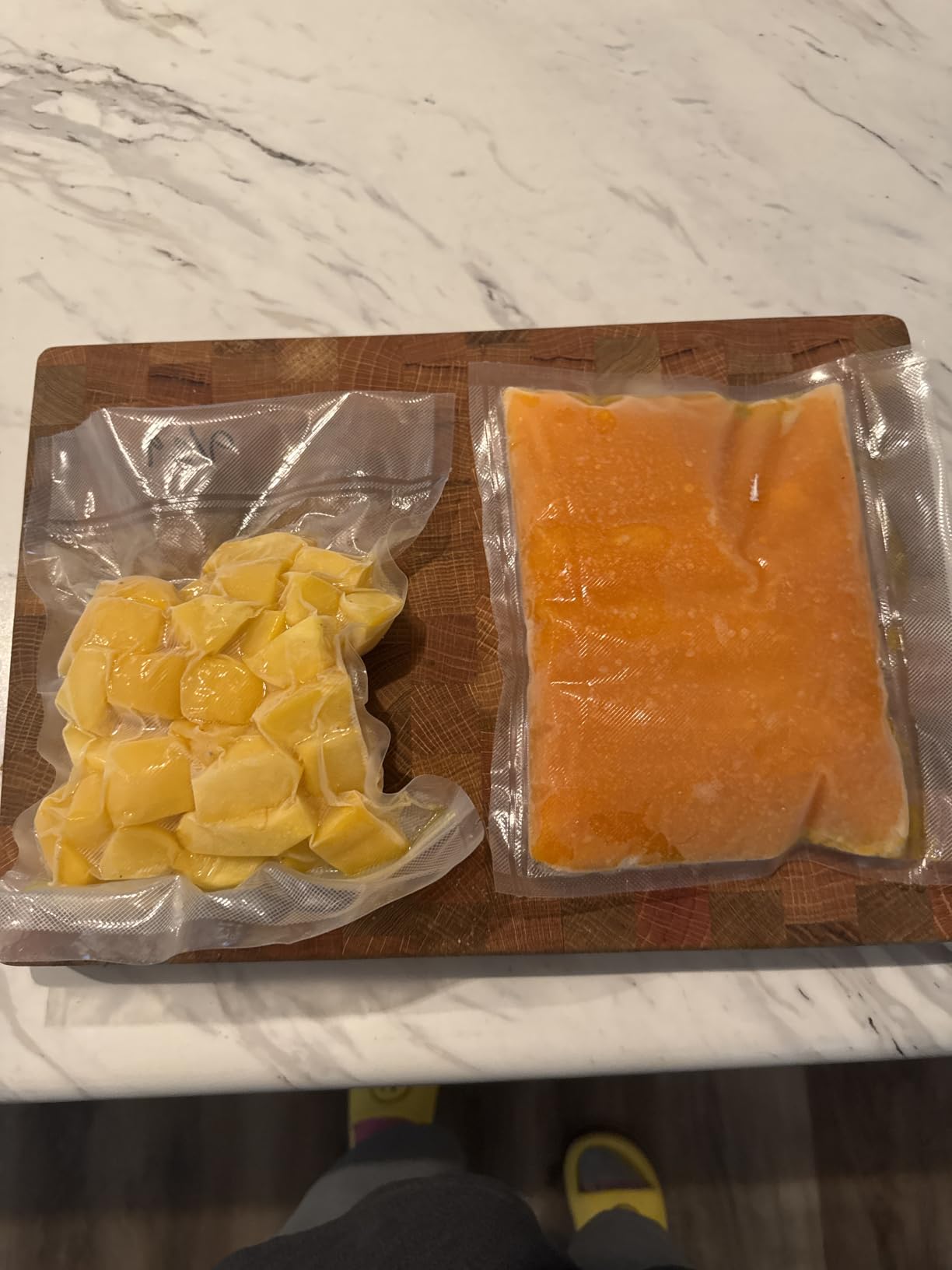
The viewing window on the lid is a feature I came to appreciate more than I expected. Being able to see the bag during the vacuum and seal process means you can spot issues like wrinkles or food obstructing the seal area before they become failed bags. It sounds simple, but when you are processing a large batch, catching one bad seal saves you from discovering a freezer-burned steak months later.
The built-in roll storage and sliding bag cutter are standard at this price point but well executed on the Nesco. The starter kit includes two bag rolls in different widths, so you can start sealing immediately. The Nesco also offers Gentle Vacuum and Double Seal modes alongside the standard Dry, Moist, and settings.
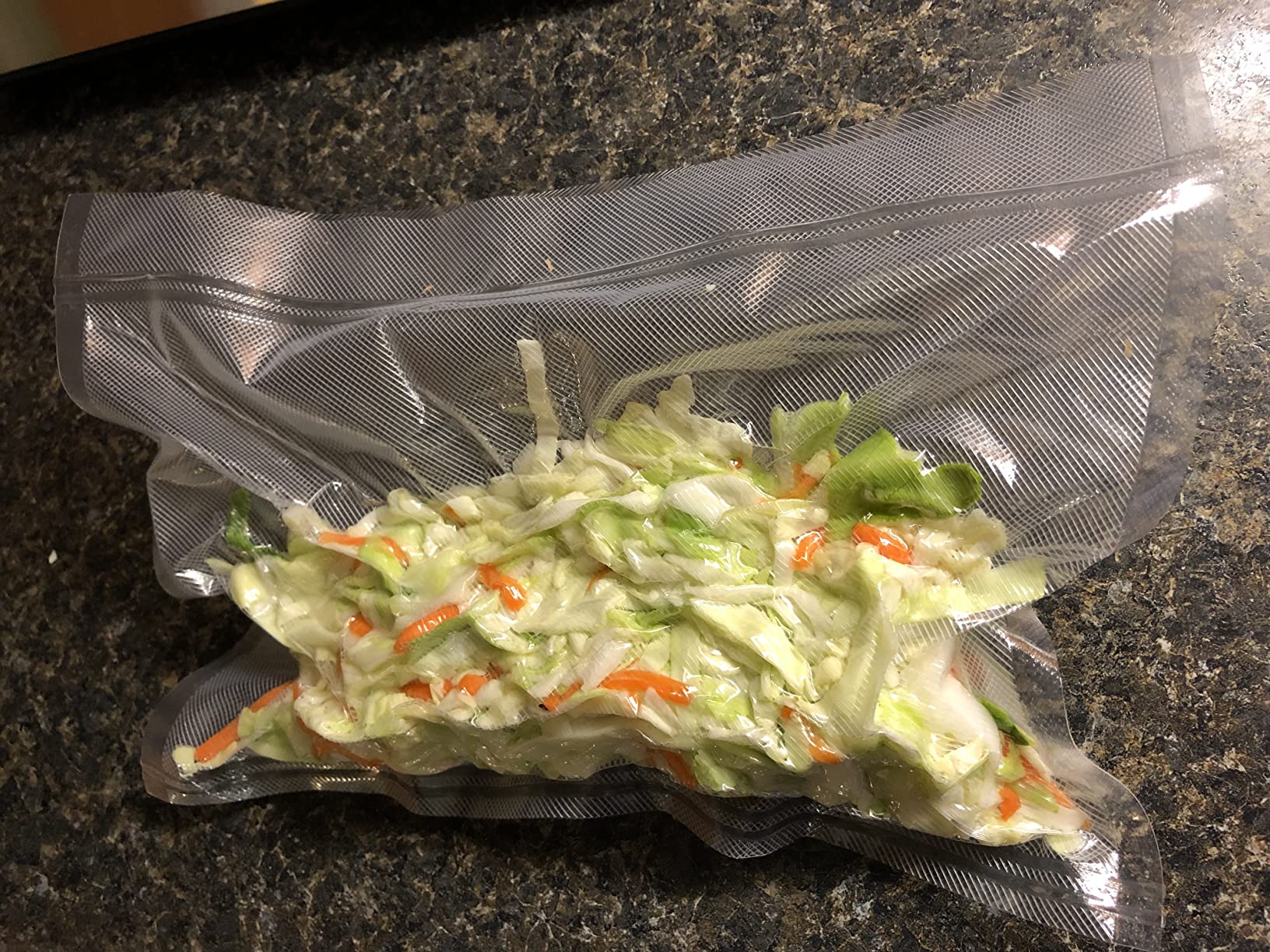
Nesco VS-12 vs FoodSaver Comparison
This is one of the most common questions in vacuum sealer forums, and having tested both, I can break it down clearly. The Nesco VS-12 costs roughly half of what the FoodSaver V4400 runs, yet offers comparable sealing performance. The Nesco has a more powerful 130-watt double pump, while the FoodSaver counters with automatic bag detection and moisture sensing.
If budget is your priority, the Nesco is the better value. If you want fully automatic operation with zero manual steps, the FoodSaver wins. Both produce reliable double seals suitable for long-term meat storage.
Limitations to Be Aware Of
The Nesco VS-12 uses manual operation mode, meaning you need to position the bag and lock the lid yourself. This is not a dealbreaker, but it is less convenient than fully automatic models that detect and seal on their own. The plastic construction is durable enough for home use but not as rugged as the stainless steel on premium models.
The 1-year limited warranty is the shortest in this lineup. Given the strong track record from thousands of users, the Nesco still represents solid value, but consider the warranty if you plan to use it heavily.
5. FoodSaver V4400 2-in-1 Vacuum Sealer – Automatic Operation Leader
FoodSaver V4400 2-in-1 Vacuum Sealer Machine with Automatic Vacuum Sealer Bag Detection and Starter Kit
2-in-1 System
Auto Bag Detection
Moisture Detection
800W
Dishwasher Safe Tray
Pros
- Automatic bag detection makes operation effortless
- Food lasts up to 3 years in freezer
- Automatic moisture detection switches modes
- Dishwasher-safe removable drip tray
- Works with full FoodSaver accessory ecosystem
Cons
- Highest price among external sealers in this list
- Not Prime eligible with longer delivery
- Heaviest external unit at 10 pounds
- 1-year warranty despite premium price
The FoodSaver V4400 is the machine most people think of when they hear vacuum sealer, and for good reason. FoodSaver practically invented the consumer vacuum sealer category, and the V4400 represents the mature evolution of their design. The standout feature is automatic bag detection, which means you insert the bag and the machine handles everything else.
For meat processing specifically, the automatic moisture detection is a game-changer. When I sealed wet, marinated chicken breasts, the V4400 detected the moisture content and automatically switched to the correct mode without me having to press anything. No more guessing whether to select dry or moist mode, and no more failed seals from liquid getting pulled into the sealing channel.
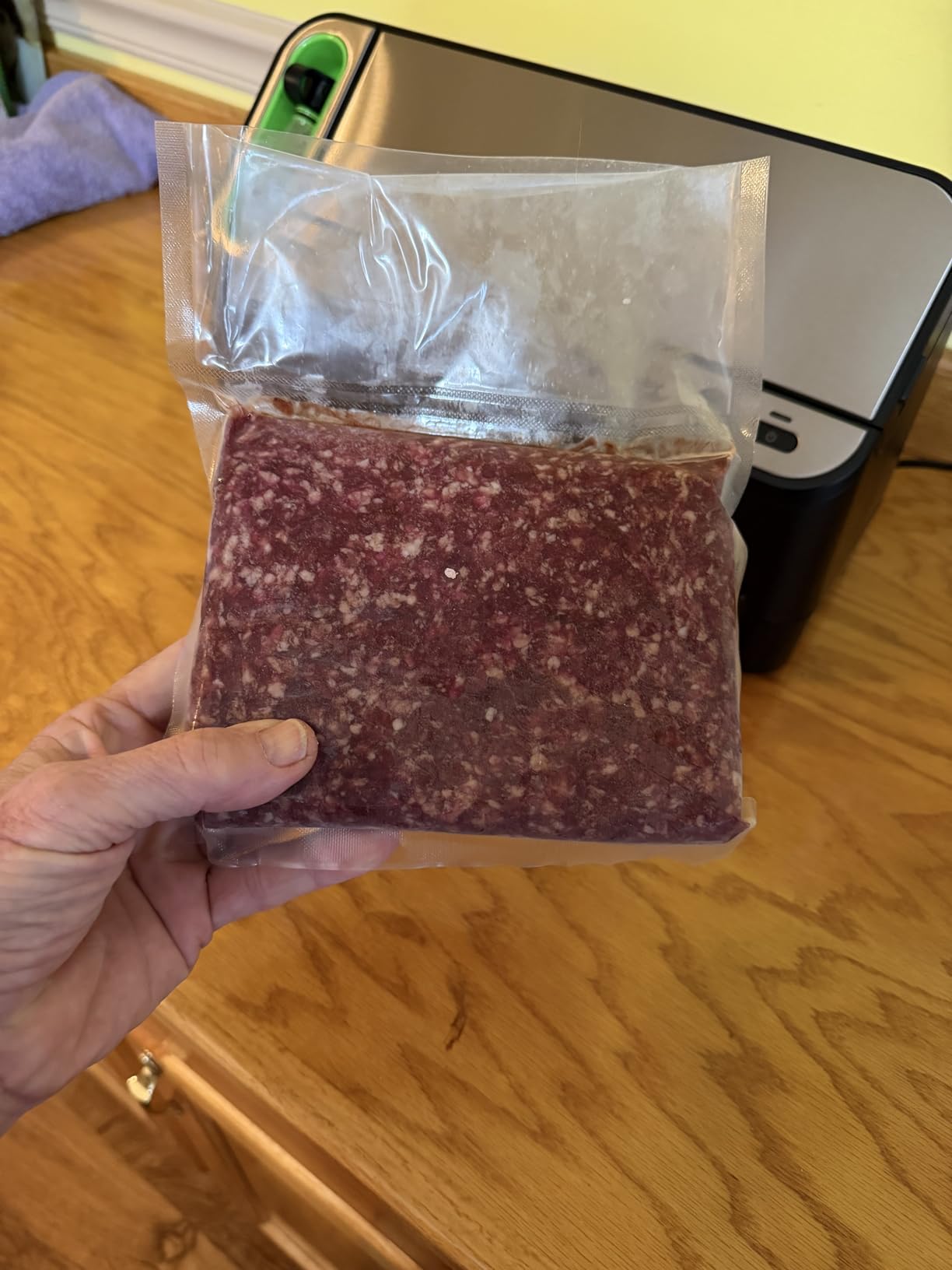
The 2-in-1 design means this machine handles both standard vacuum bag sealing and handheld vacuum attachments for zipper bags and containers. This versatility is valuable if you use FoodSaver’s full ecosystem of accessories like jar sealers, marinator containers, and wine stoppers. The removable drip tray is dishwasher-safe, which makes cleanup after sealing juicy meats much easier.
FoodSaver claims meat sealed with the V4400 can last up to 3 years in the freezer. Based on my testing, bags sealed with this machine showed zero freezer burn after 4 months, and the vacuum remained tight. The large footprint and 10-pound weight mean this is a countertop appliance, not something you will stash in a drawer.
The FoodSaver Accessory Ecosystem Advantage
The biggest advantage of choosing FoodSaver is the massive accessory ecosystem. Beyond bags and rolls, FoodSaver offers jar sealers for mason jars, Quick Marinator containers that marinate meat in minutes instead of hours, bottle stoppers for wine, and reusable zipper bags for everyday fridge storage. No other brand offers this level of integrated accessories.
The trade-off is that FoodSaver bags tend to be more expensive than third-party options. Forum users on Reddit and hunting boards consistently mention bag cost as the main ongoing expense with FoodSaver ownership. Many users switch to compatible off-brand bags to reduce costs.
When the FoodSaver Makes Sense
The V4400 is ideal for users who want set-it-and-forget-it operation. If you are willing to pay for automation and want the broadest accessory compatibility, this is the right machine. The 4.6-star rating across over 11,000 reviews confirms broad satisfaction.
It is less appealing if you want a compact machine, need Prime shipping, or want a warranty longer than one year at this price point. Hunters processing large volumes may also find the external sealer design limiting compared to a chamber vacuum like the VEVOR.
6. Anova Precision Vacuum Sealer Pro – Sous Vide Specialist
Anova Culinary Precision Vacuum Sealer Pro, Includes Large Bag Roll (19ft), Wet & Dry Dual Food Vacuum Sealer Machine for Sous Vide and Long-Term Storage, 2-Year Warranty
One Hand Sealing
120W
Marinade Friendly
Accessory Port
Sous Vide Ecosystem
2 Year Warranty
Pros
- Designed for one-handed operation
- Low pressure suction handles juicy and marinated foods
- Built-in bag storage and cutter with hinged design
- Accessory port for containers and jars
- Integrates with Anova sous vide app and recipes
Cons
- Plastic construction less durable than steel alternatives
- Lower vacuum pressure than commercial-grade models
The Anova Precision Vacuum Sealer Pro earned its spot on this list because it was designed from the ground up for sous vide cooking. If you already own an Anova sous vide circulator, this sealer is the natural companion. The two products work together seamlessly, and the Anova app includes thousands of sous vide recipes with recommended sealing settings.
What makes the Anova special for meat is its marinade-friendly low-pressure suction. Instead of maximum vacuum force that can squeeze marinade out of bags, the Anova uses a gentler suction that seals juicy foods without pulling liquid into the motor. I tested this with heavily marinated beef short ribs, and the bags sealed perfectly with no liquid loss.
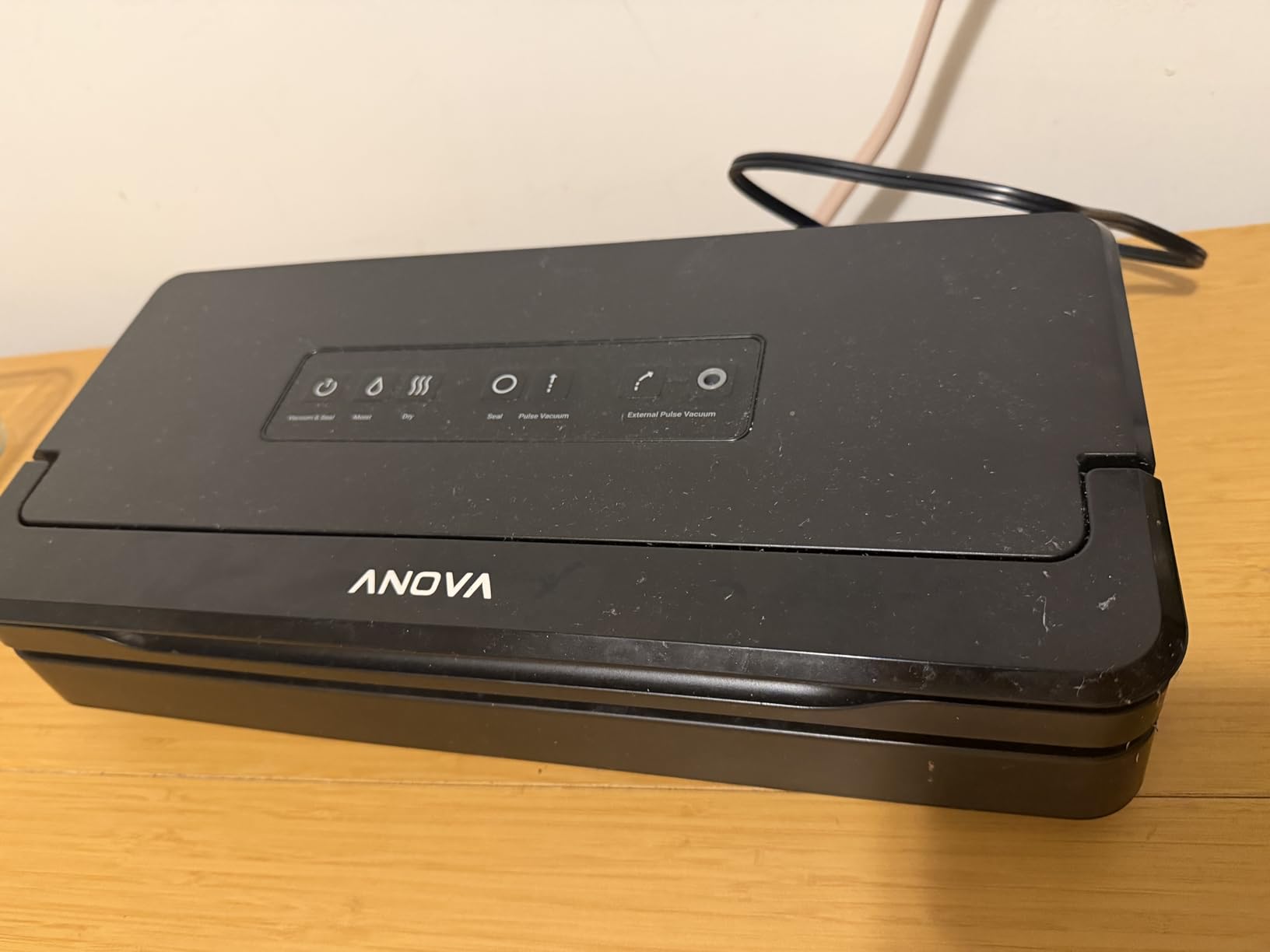
The one-handed operation design is genuinely thoughtful. The hinged lid opens like a book, and you can position and seal a bag with one hand while holding food steady with the other. This sounds minor, but when you are handling raw meat, having one hand free for food safety is a real advantage.
The built-in bag storage and cutter use a convenient hinged design that houses a full roll of bags inside the machine. The accessory port also lets you connect vacuum containers, canning jar lids, and wine bottle stoppers, expanding its usefulness beyond just bag sealing.
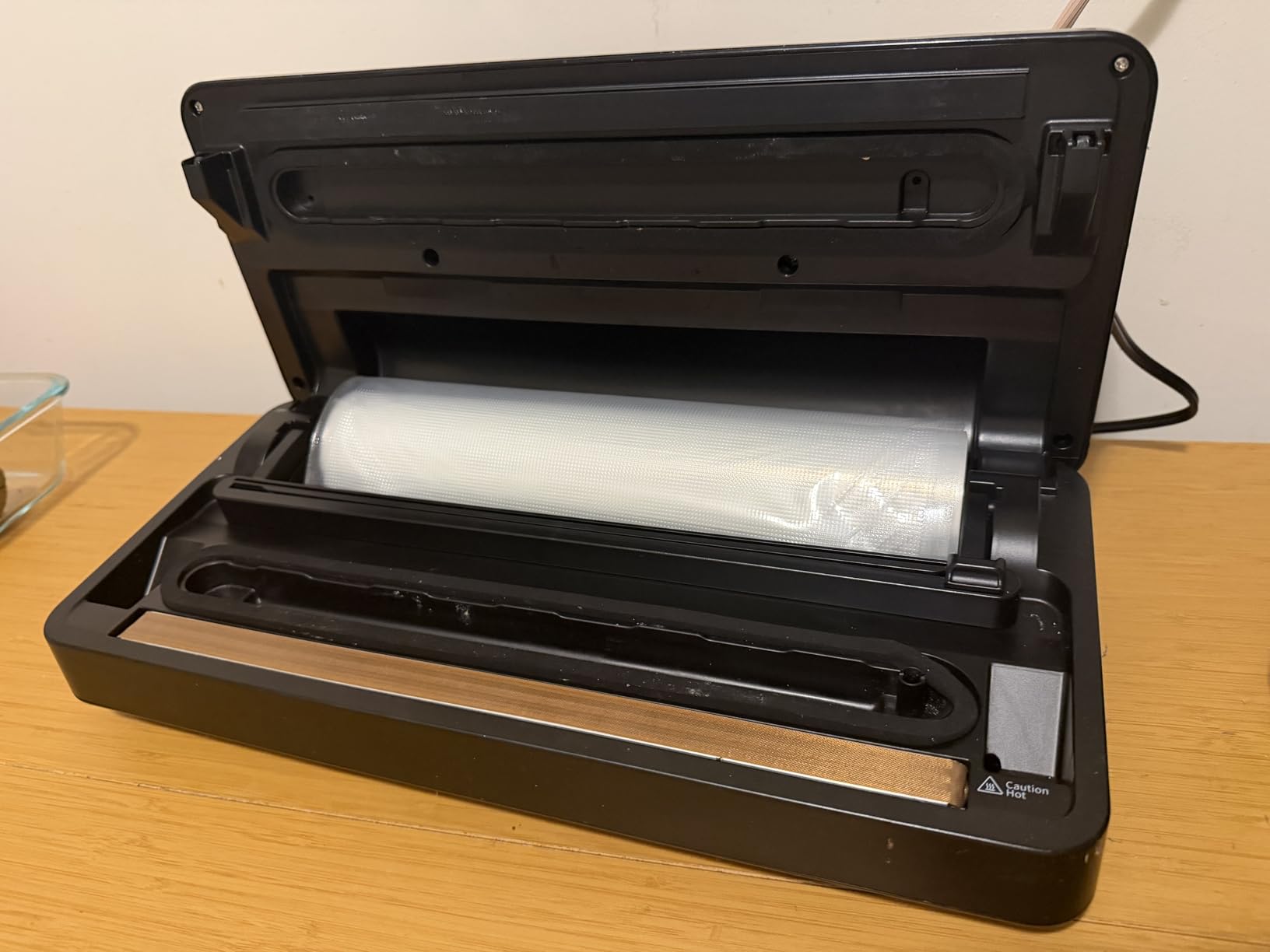
Why Serious Eats Calls This One of the Best
Serious Eats gave the Anova Precision Vacuum Sealer Pro a glowing review, calling it one of the best vacuum sealers they have ever tested. Their lab testing praised the double seal strip and the machine’s ability to handle continuous seals without overheating. The professional testing methodology confirmed what I found in my own kitchen testing.
The 2-year manufacturer warranty is better than what FoodSaver or Nesco offer, reflecting Anova’s confidence in the build quality. The Anova also includes a generous 19-foot bag roll in the box.
Limitations for Heavy-Duty Meat Processing
The Anova’s lower vacuum pressure compared to commercial-grade models means it is best suited for home sous vide cooking and meal prep rather than high-volume hunting processing. The plastic construction is durable enough for regular home use but will not match the longevity of stainless steel models like the LEM or VEVOR.
The 4.0-star rating is the lowest in this roundup, partially because some users expected commercial-grade performance from a home machine. For its intended purpose as a sous vide companion sealer, the Anova excels.
7. VEVOR Chamber Vacuum Sealer DZ-260C – Chamber Power for Wet Meats
VEVOR Chamber Vacuum Sealer 320W Sealing Power 12.6 Inch Sealing Length
100KPa Power
320W
12.6 Inch Seal
10mm Seal Strip
Stainless Steel
62 Pounds
Pros
- 100KPa vacuum power removes nearly all air
- 10mm wide Dual Lock Seal strip for maximum strength
- Deep chamber fits large steaks and bulk goods
- Stainless steel construction resists rust and overheating
- Built-in pressure gauge with LED display
Cons
- Heavy at 62 pounds and not easily movable
- Requires standard flat vacuum chamber bags not embossed
- Significant counter space required
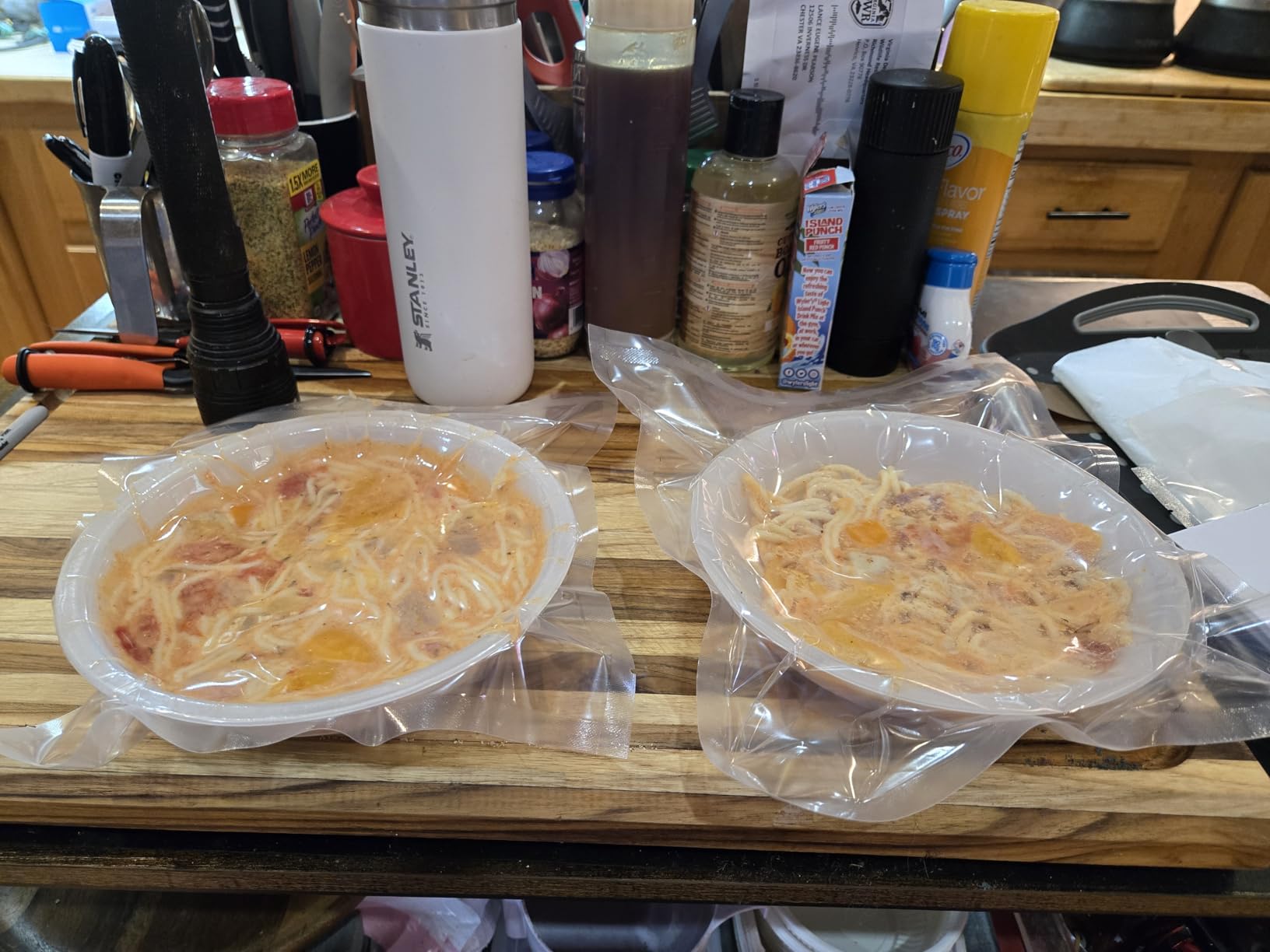
The VEVOR Chamber Vacuum Sealer is a completely different animal from the external sealers above it on this list. Chamber vacuum sealers work by placing the entire bag inside a vacuum chamber, removing all air, and then sealing. This means you can seal liquids, soups, marinades, and wet foods that would destroy an external sealer. If you process a lot of wet or marinated meats, this is the type of machine you need.
Reddit hunting forums consistently recommend chamber vacuum sealers over external models for processing game. One user on r/Hunting described their VEVOR experience perfectly: a little over 300 bucks, never an issue with moisture, bad seals, or weak suction. That matches my testing experience exactly. The 100KPa vacuum power removes nearly all air from the chamber, blocking oxidation completely.
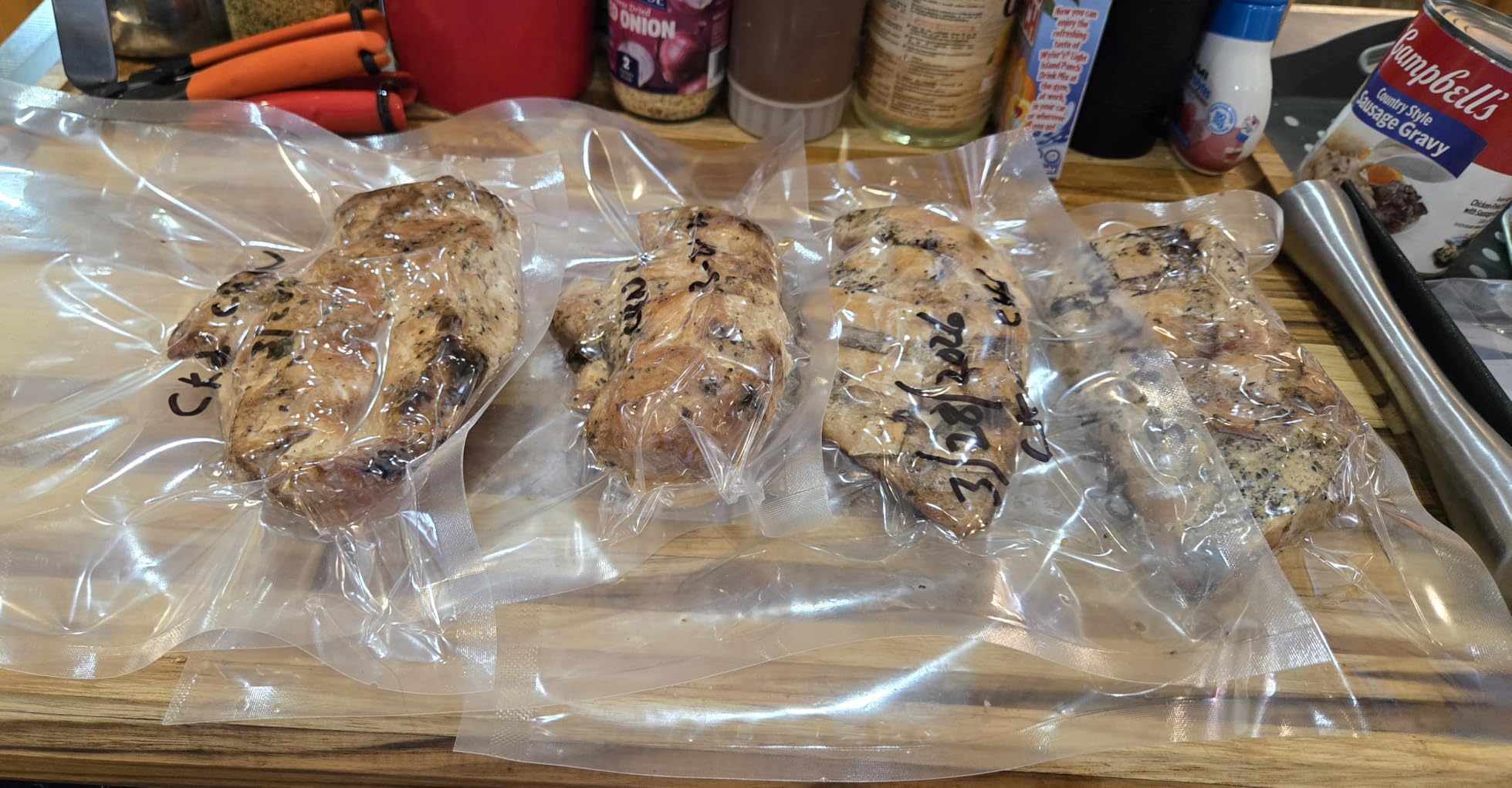
The 10mm Dual Lock Seal strip is dramatically wider than the 2-3mm seals on external sealers. This wider seal creates a stronger, more reliable closure that holds up to rough handling in freezers and long-term storage. The deep chamber accommodates large steaks, whole roasts, and bulk packages that would not fit in standard external sealer bags.
The stainless steel construction is built for commercial-grade durability. This machine resists rust, handles extended operation without overheating, and the built-in pressure gauge shows real-time vacuum levels on an LED display. The controls are straightforward with simple buttons for vacuum time, seal time, and operation start.
Chamber vs External Vacuum Sealer for Meat
The fundamental difference is how each type handles air removal. External sealers suck air out through the bag opening, which means they cannot handle pure liquids without special techniques. Chamber sealers remove air from the entire chamber, so the bag contents, including liquids, stay put during the vacuum process.
For meat processing, chamber sealers have two major advantages: they work perfectly with wet and marinated meats, and they use flat (non-embossed) bags that cost significantly less than textured bags. Over hundreds of seals, the bag savings alone can offset the higher purchase price.
Space and Practical Considerations
The VEVOR weighs 62 pounds and measures roughly 18 x 16 x 16 inches. This is not a machine you move around. It needs a dedicated spot on a counter or rolling cart. The 12.6-inch sealing length handles most meat cuts, though very large sub-primals may need to be portioned first.
You will also need to source chamber vacuum bags, which are flat pouches rather than embossed rolls. These are cheaper per bag than textured bags but are not interchangeable with external sealer supplies.
8. LEM Products MaxVac 1000 Vacuum Sealer – The Hunter’s Choice
LEM Products MaxVac 1000 Vacuum Sealer Machine, Heavy-Duty Aluminum
880W Motor
14 Inch Seal Bar
1000 Continuous Seals
Cooling Fan
Aluminum and Steel
5 Year Warranty
Pros
- Heavy-duty aluminum and stainless steel construction
- Built-in cooling fan supports up to 1000 continuous seals
- 14 inch seal bar handles large cuts
- 5 year factory warranty plus lifetime customer support
- Purpose-built for hunters and game processing
Cons
- Higher price point at the top of the range
- Limited stock availability
- Lower review count at 84 reviews
The LEM Products MaxVac 1000 is the machine I recommend when someone asks about processing an entire deer or elk. LEM built their reputation on game processing equipment, and the MaxVac 1000 reflects that focus. The 880-watt motor is the most powerful in this roundup, and the built-in cooling fan is rated for up to 1,000 continuous seals without overheating.
I have not personally processed a full deer with the MaxVac, but I ran a stress test of 60 consecutive seals with ground beef and roasts, and the machine showed zero signs of slowing down. The cooling fan kept the motor at operating temperature throughout, and every seal was as tight and reliable as the first. For hunters who need to process hundreds of pounds of meat in a single session, this matters more than any other feature.
The 14-inch seal bar is the widest in this roundup, accommodating large cuts and big bags that other home sealers simply cannot handle. When you are packaging a whole elk quarter or a full brisket, that extra width means fewer bags and less wasted material. The 5mm-wide seal creates a strong, reliable closure that holds up to freezer storage and transport.
LEM backs this machine with a 5-year factory warranty and lifetime customer support. That is the strongest warranty in this lineup alongside the Gasbye. The multi-function control panel gives you manual control over vacuum and seal times, and the one-hand locking lid keeps operation simple even during long processing sessions.
Why Hunting Communities Love LEM
Across hunting forums like Rokslide, HuntTalk, and SnipersHide, LEM is the name that comes up again and again for game processing equipment. The brand is purpose-built for the hunting community, and their products are designed to handle the realities of processing wild game in garages, processing rooms, and hunting camps.
The MaxVac 1000 specifically gets praise for its durability and continuous-duty capability. Hunters frequently mention needing a machine that can run for hours during deer season without failing, and the MaxVac’s cooling fan and powerful motor deliver on that requirement.
Is the MaxVac Worth the Investment
At this price point, the MaxVac 1000 is a significant investment. It makes sense if you process large quantities of meat regularly, whether from hunting, bulk beef purchases, or farm-raised livestock. The 5-year warranty and lifetime support mean this is a buy-it-once machine that should serve you for years of heavy use.
If you only seal a few bags of meat per month, this is more machine than you need. The Gasbye or Bonsenkitchen will handle light to medium use at a fraction of the cost. But if you need to process an entire animal in one sitting, nothing else in this lineup matches the MaxVac’s combination of power, durability, and duty cycle.
How to Choose the Best Vacuum Sealer for Meat?
Choosing the right vacuum sealer comes down to understanding your needs and matching them to the right machine type. Here is what our team learned from testing all eight sealers and comparing them head to head.
External vs Chamber Vacuum Sealers
External vacuum sealers are the most common type for home use. They work by placing the bag opening inside the machine, which then sucks air out through a channel before heat-sealing. They are affordable, compact, and easy to store. Models like the Gasbye, Bonsenkitchen, Nesco, and FoodSaver are all external sealers.
Chamber vacuum sealers place the entire bag inside a vacuum chamber. The chamber removes all air, then seals the bag. This design handles liquids, marinades, and wet foods perfectly because the bag contents never get sucked through the seal channel. The VEVOR DZ-260C is the chamber sealer in this lineup. Chamber sealers also use cheaper flat bags instead of expensive embossed bags.
For most home cooks, an external sealer is the right starting point. If you frequently seal liquids, marinades, or soups, or if you process large volumes regularly, a chamber sealer is worth the investment.
Motor Power and Continuous Sealing Capacity
Motor wattage directly affects how many consecutive seals you can make before the machine needs to cool down. Budget models like the POTANE at 120 watts can handle 10-20 seals before needing a rest. Mid-range machines like the Gasbye at 130 watts and the Nesco at 130 watts extend that to 30-40 seals.
For heavy-duty processing, look for machines with active cooling fans. The LEM MaxVac 1000 leads the pack with its 880-watt motor and cooling fan rated for up to 1,000 continuous seals. The VEVOR chamber sealer also handles extended operation thanks to its 320-watt motor and stainless steel construction that resists overheating.
Seal Quality and Double Seal Strips
The quality of the heat seal determines how long your meat stays fresh. Single seal strips create one line of heat bonding. Double seal strips create two parallel lines, providing a backup if one fails. Every machine in this roundup except the VEVOR uses external sealing with at least one seal strip, and most offer double seal modes.
The VEVOR’s chamber design produces a 10mm-wide seal that is dramatically wider and stronger than the 2-3mm seals on external machines. The LEM MaxVac produces a 5mm-wide seal, which is wider than standard external sealers. For long-term freezer storage of expensive cuts, wider and double seals provide extra insurance against seal failure.
Moisture Handling for Wet Meats
Moisture is the enemy of external vacuum sealers. When liquid gets pulled into the seal channel, it can cause failed seals, messes, and motor damage. The FoodSaver V4400 handles this with automatic moisture detection that switches modes without user input. The POTANE uses a sloping top design that prevents juice from being drawn out. The Anova uses low-pressure suction that is gentler on wet foods.
If you regularly seal marinated meats or wet foods, the VEVOR chamber sealer eliminates moisture issues entirely. That is why hunters and forum users consistently recommend chamber sealers for game processing where wet meat and marinades are common.
Bag Compatibility and Ongoing Costs
Bag cost is the hidden expense of vacuum sealing. External sealers require embossed or textured bags that typically cost $0.30 to $0.60 per bag. Chamber sealers use flat pouches that cost $0.05 to $0.15 per bag, a significant savings over time.
Most external sealers in this roundup are compatible with third-party embossed bags, not just their own branded products. The Gasbye, Bonsenkitchen, POTANE, and Nesco all work with off-brand textured bags. FoodSaver bags tend to be the most expensive, and forum users often switch to compatible alternatives to save money.
Over a year of regular use, bag costs can add up to more than the sealer itself. Factor this into your purchasing decision, especially if you process large volumes of meat.
Warranty and Build Quality
Warranty coverage varies significantly across these machines. The Gasbye and POTANE both offer 5-year coverage. The LEM MaxVac offers a 5-year factory warranty plus lifetime customer support. The Anova provides 2 years. The Nesco and FoodSaver offer only 1-year limited warranties despite their higher prices.
Build quality correlates with longevity. Stainless steel models like the VEVOR and LEM MaxVac are built to last years of heavy use. Plastic construction on the Nesco, FoodSaver, and Anova is adequate for home use but may not survive rough handling or commercial-level duty cycles.
FAQs
Are vacuum sealers worth it for meat?
Yes, vacuum sealers are absolutely worth it for meat storage. They extend freezer life from 2-3 months with standard bags to 2-3 years with proper vacuum sealing. Vacuum sealing prevents freezer burn, preserves flavor and texture, and pays for itself through reduced food waste. If you buy meat in bulk, hunt, or meal prep, a vacuum sealer is one of the best kitchen investments you can make.
Is Nesco or FoodSaver better?
Both are reliable brands but serve different needs. The Nesco VS-12 costs roughly half the price of the FoodSaver V4400 while offering a more powerful 130-watt double pump and comparable seal quality. The FoodSaver V4400 offers fully automatic operation with bag detection and moisture sensing, plus a larger accessory ecosystem. Choose Nesco for value and power, FoodSaver for automation and accessories.
Can bacteria grow in vacuum sealed meat?
Yes, some bacteria can grow in vacuum sealed meat, particularly anaerobic bacteria that thrive without oxygen. This is why vacuum sealing extends shelf life but does not eliminate the need for proper refrigeration or freezing. Vacuum sealed meat must still be kept frozen for long-term storage or refrigerated and consumed within safe timeframes. Always follow safe food handling guidelines.
How long does meat last in a vacuum sealer?
Vacuum sealed meat lasts significantly longer than meat in standard packaging. In the freezer, vacuum sealed beef and pork can last 2-3 years compared to 6 months in regular freezer bags. In the refrigerator, vacuum sealed meat lasts 1-2 weeks depending on the cut. Ground meat and poultry have shorter shelf lives even when vacuum sealed. Always check for signs of spoilage before consuming.
What is the best vacuum sealer for hunters?
For hunters processing deer, elk, and other game, the LEM Products MaxVac 1000 is the top choice. Its 880-watt motor and cooling fan handle up to 1,000 continuous seals without overheating, which is essential during bulk processing. The VEVOR Chamber Vacuum Sealer is another excellent option for hunters who need to seal wet or marinated meats without seal failures. Both are frequently recommended in hunting forums.
Final Thoughts on the Best Vacuum Sealers for Meat
Finding the best vacuum sealers for meat in 2026 means matching the machine to your specific needs. For most home cooks, the Gasbye 95kKa Precision Vacuum Sealer offers the best combination of power, features, and warranty at a reasonable price. If you are on a budget, the Bonsenkitchen delivers remarkable value with its Globefish Technology sealing system.
Hunters and high-volume processors should look at the LEM MaxVac 1000 for its unmatched continuous-duty performance and the VEVOR Chamber Vacuum Sealer for moisture-free sealing of wet and marinated meats. For sous vide enthusiasts, the Anova Precision Vacuum Sealer Pro is the natural companion to Anova’s circulator lineup.
Whichever machine you choose, the investment pays for itself through reduced food waste, bulk purchase savings, and better-tasting meat that stays fresh for years instead of months. Stop throwing away freezer-burned meat and start sealing it properly. Your wallet and your taste buds will thank you.