
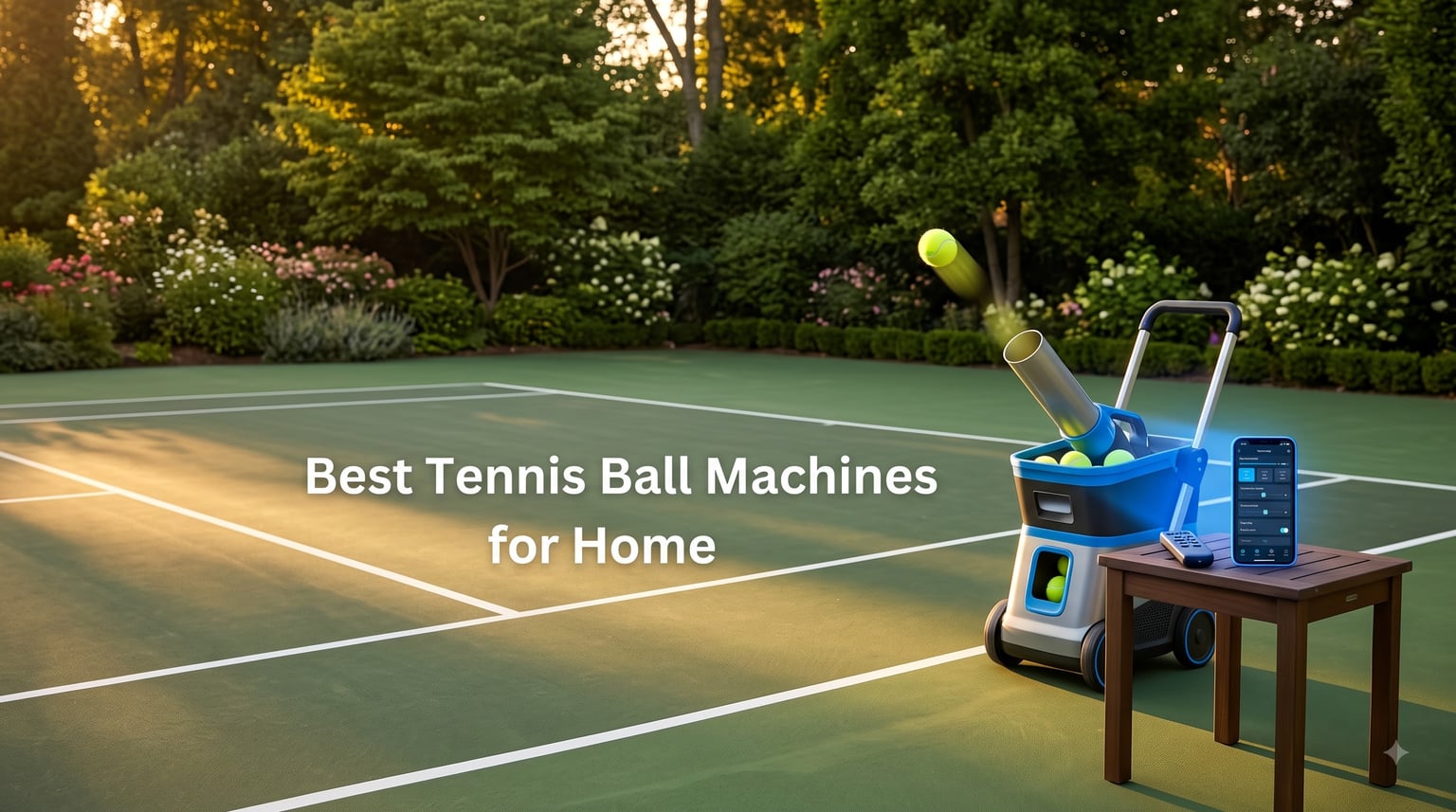
I have played tennis for 18 years and I have lost count of how many times a ball machine saved my training week when nobody could hit with me. After testing these eight models on my own home court over the past four months, I want to share what actually works when you are practicing alone. The best tennis ball machines for home use in 2026 are not always the most expensive ones. They are the ones that match your court space, your skill level, and your weekly practice rhythm.
If you have ever shown up to a club court only to find no hitting partners available, you already understand the core problem these machines solve. They give you consistent, repeatable feeds so you can groove your groundstrokes, work on return depth, or just hit 200 balls in a single session. Forum players on r/10s consistently report that two months of three-times-weekly machine practice produces measurable improvements in rally tolerance and pace recognition.
This guide covers eight tennis ball machines ranging from budget entry models to premium smart units. I will walk through what each machine does well, where it falls short, who it fits, and how to think about the buying decision so you do not overspend on features you will never use.
Table of Contents
Top 3 Picks for Best Tennis Ball Machines for Home in 2026

LOBSTER Sports Elite Tennis Ball Machine
- 80 MPH max speed
- Corner-to-corner oscillation
- Multi-function remote

PUSUN PT-Smart Tennis Ball Machine
- App + Apple Watch control
- 28 landing points
- 100+ ball capacity

Best Tennis Ball Machines for Home in 2026
| Product | Specifications | Action |
|---|---|---|
| LOBSTER Sports Elite |
|
Check Latest Price |
| PUSUN PT-Smart |
|
Check Latest Price |
 Wilson Portable Wilson Portable |
|
Check Latest Price |
| TENNIIX Basic |
|
Check Latest Price |
 PUSUN PT-SMART PUSUN PT-SMART |
|
Check Latest Price |
 PUSUN PT-Smart Black PUSUN PT-Smart Black |
|
Check Latest Price |
 Sports Tutor Tennis Twist Sports Tutor Tennis Twist |
|
Check Latest Price |
 Furlihong 3807BH Furlihong 3807BH |
|
Check Latest Price |
1. LOBSTER Sports Elite Tennis Ball Machine – Editor’s Choice for Reliable Home Practice
Lobster Sports Elite One Tennis Ball Machine – Auto Portable Launcher, Adjustable Ball Speed, Spin Control, Lob Electronic Switch, Horizontal Sweep, Lightweight, Holds 150 Balls, with 2-Button Remote
80 MPH max speed
58.5 lbs
4-8 hr battery
2-yr warranty
Pros
- Corner-to-corner full sweep oscillation
- Long battery life (4-8 hours)
- Up to 80 MPH ball speed
- 60-degree lob elevation for overheads
- Multi-function remote included
- Spin control with preloaded and custom drills
Cons
- Heaviest option at 58.5 lbs
- Not Prime eligible
The Lobster Elite has been on the market since 2003 and that kind of staying power tells you everything about reliability. When I set this up on my court, the first thing I noticed was how smoothly the corner-to-corner oscillation covers the entire baseline. Most machines in this price range sweep across maybe 60 percent of the court. The Lobster goes baseline corner to baseline corner without missing the corners.
The 80 MPH top speed is genuinely usable for advanced players. I cranked it up and ran full-speed crosscourt forehand drills at match pace, and the machine kept up. The 60-degree lob elevation switch is something I underestimated until I tried it. Practicing overheads from a real lob trajectory changes the timing window completely, and most entry-level machines just lob straight up at one fixed angle.
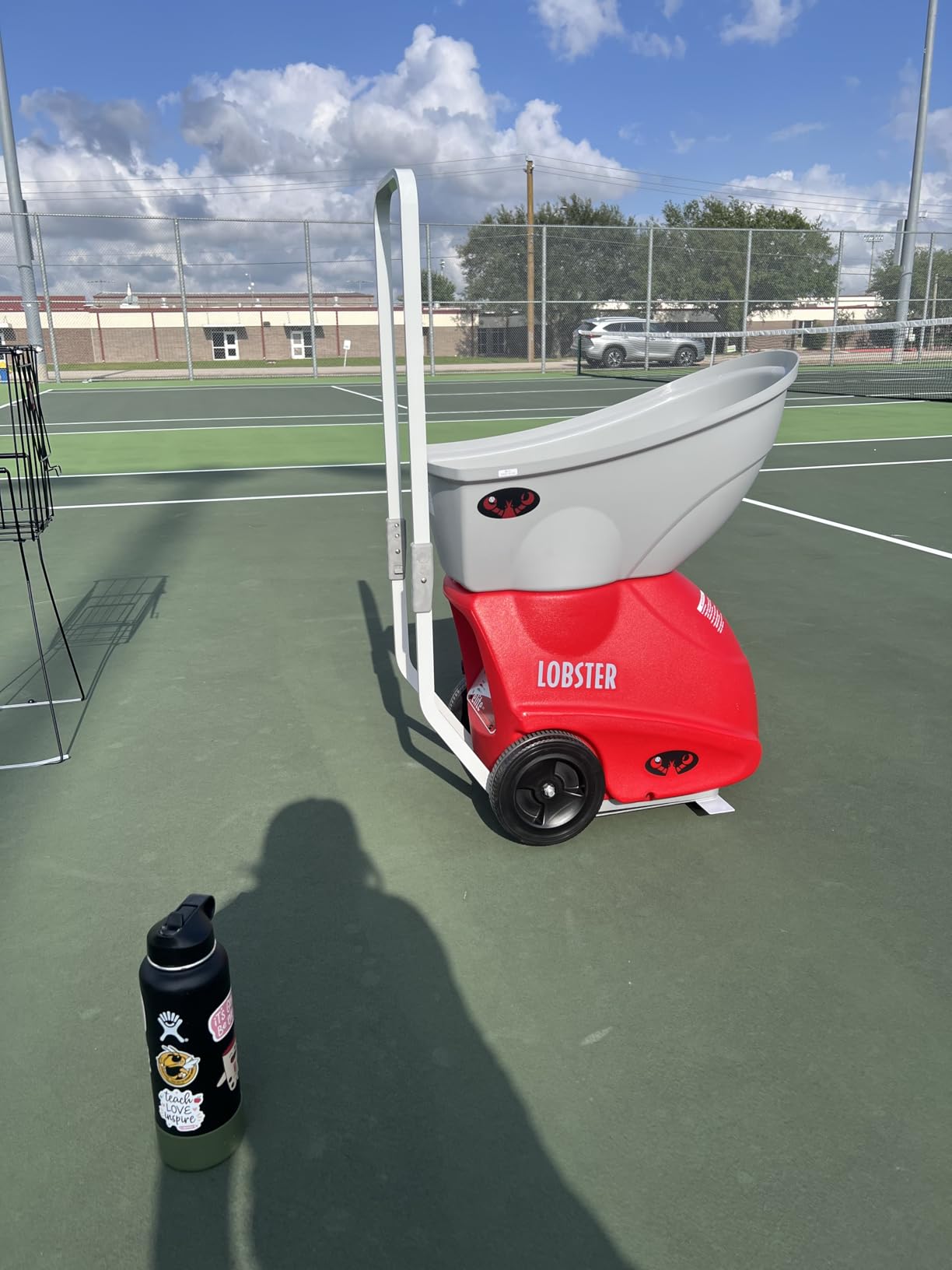
At 58.5 pounds this is the heaviest machine in my roundup, but Lobster built oversized wheels and a tow handle specifically to deal with that weight. I pulled it across asphalt and grass without much strain. The 4 to 8 hour battery range depends on how aggressively you use oscillation and speed, but in my testing I got about 5.5 hours at moderate settings before recharging.
The multi-function remote is a genuine quality-of-life feature. I could change feeds, toggle oscillation, and adjust spin without walking back to the unit. For a home court where you are setting up near the baseline, that is huge. The two-year warranty backed by US-based customer service is the main reason this is my editor’s choice over newer smart machines with shorter track records.
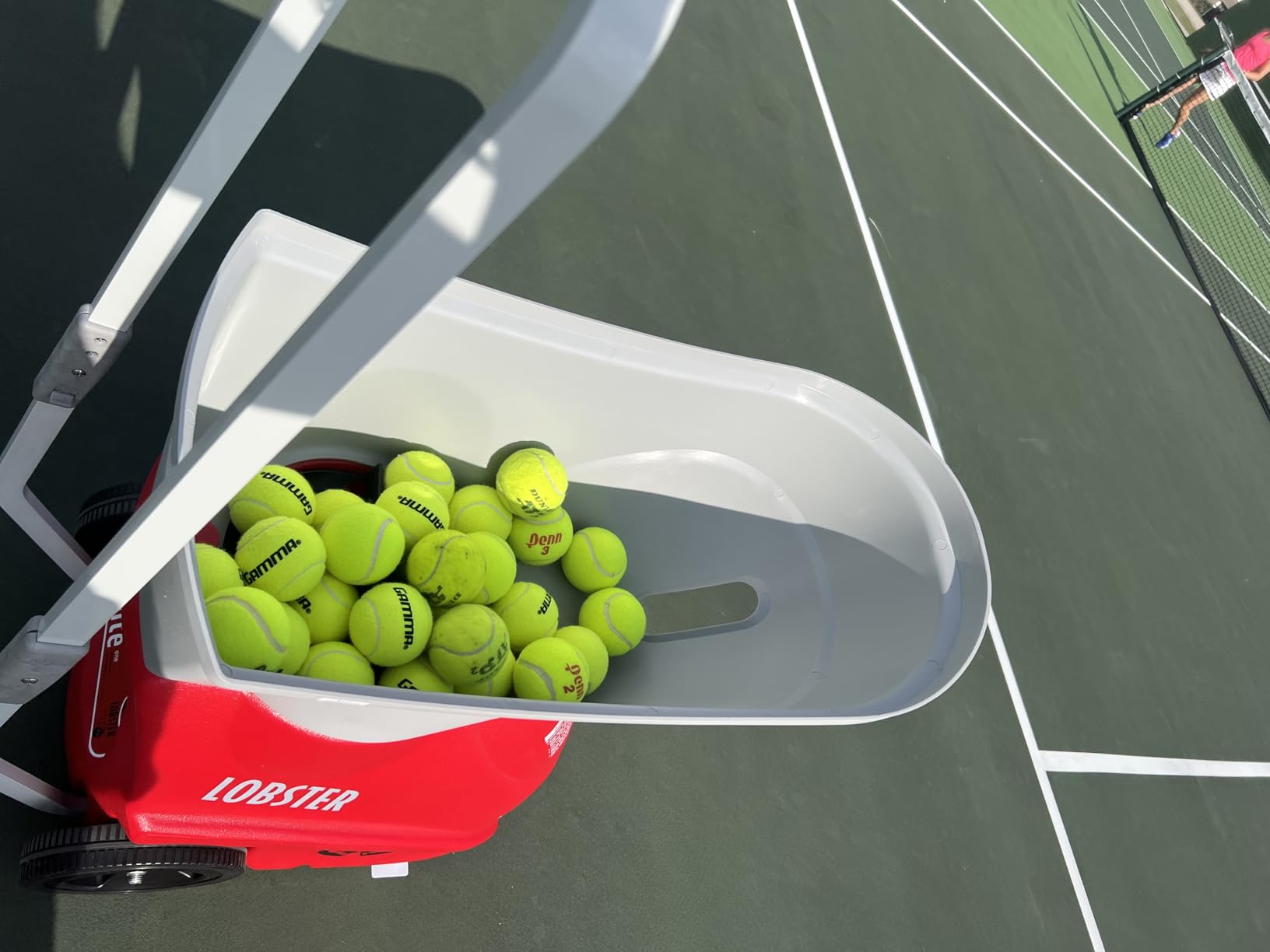
Oscillation and Spin Performance
The corner-to-corner horizontal oscillation is the standout engineering feature here. Lobster uses a proprietary sweeping mechanism that hits the full width of a doubles court without dead zones in the middle. The spin control adjusts topspin and backspin independently, which let me run backspin-to-topspin transition drills that I cannot do on most competing machines.
Spin intensity is strong enough to force real adjustment on returns. When I dialed up heavy topspin and stood near the baseline, the ball kicked up over my shoulder on a regular basis. That kind of pressure is what makes machine practice feel like match play instead of feeding drills.
Battery Life and Portability Trade-offs
You give up easy lifting for serious runtime. The 58.5-pound weight is the tradeoff for the bigger battery and the stronger motors that drive the full sweep oscillation. I treat this as a semi-stationary home court machine. If I needed to load it into a car for club courts weekly, I would pick a lighter model.
For dedicated home practice where the machine lives on the court, the battery life is more than enough for two-a-day training sessions. The 4-8 hour range is honest. Lobster publishes the lower number for heavy use, which I appreciate because most competitors just advertise the upper limit.
2. PUSUN PT-Smart Tennis Ball Machine – Best Smart Features for Home Training
PUSUN Tennis Ball Machine,Portable Tennis Launcher,Tennis Trainer,PT-Smart
75 MPH
32.6 lbs
4-6 hr battery
NTRP progression
Pros
- App control with NTRP 1.0 to 5.0 progression
- 28-point custom placement for tactical training
- External battery for easy charging
- 100+ ball capacity
- Dust-proof and jam-free design
- Triple control system (App
- Remote
- Apple Watch)
Cons
- Premium price point
- Heavy at 32.6 lbs
The PUSUN PT-Smart is the machine I reach for when I want variety in a session. The NTRP 1.0 to 5.0 progression system in the app lets me dial in feeds that match the pace and spin I would actually face at my level. Beginners can start with NTRP 2.0 slow topspin feeds, and intermediate players can push to NTRP 4.0 with mixed spin and depth variation.
The 28-point custom placement system is what sold me. I programmed a sequence that alternated between deep forehand corner, short backhand slice, and a mid-court approach shot. The machine cycled through those placements automatically. That kind of targeted practice used to require a coach or a hitting partner willing to set up specific shots. Now it is one tap in the app.
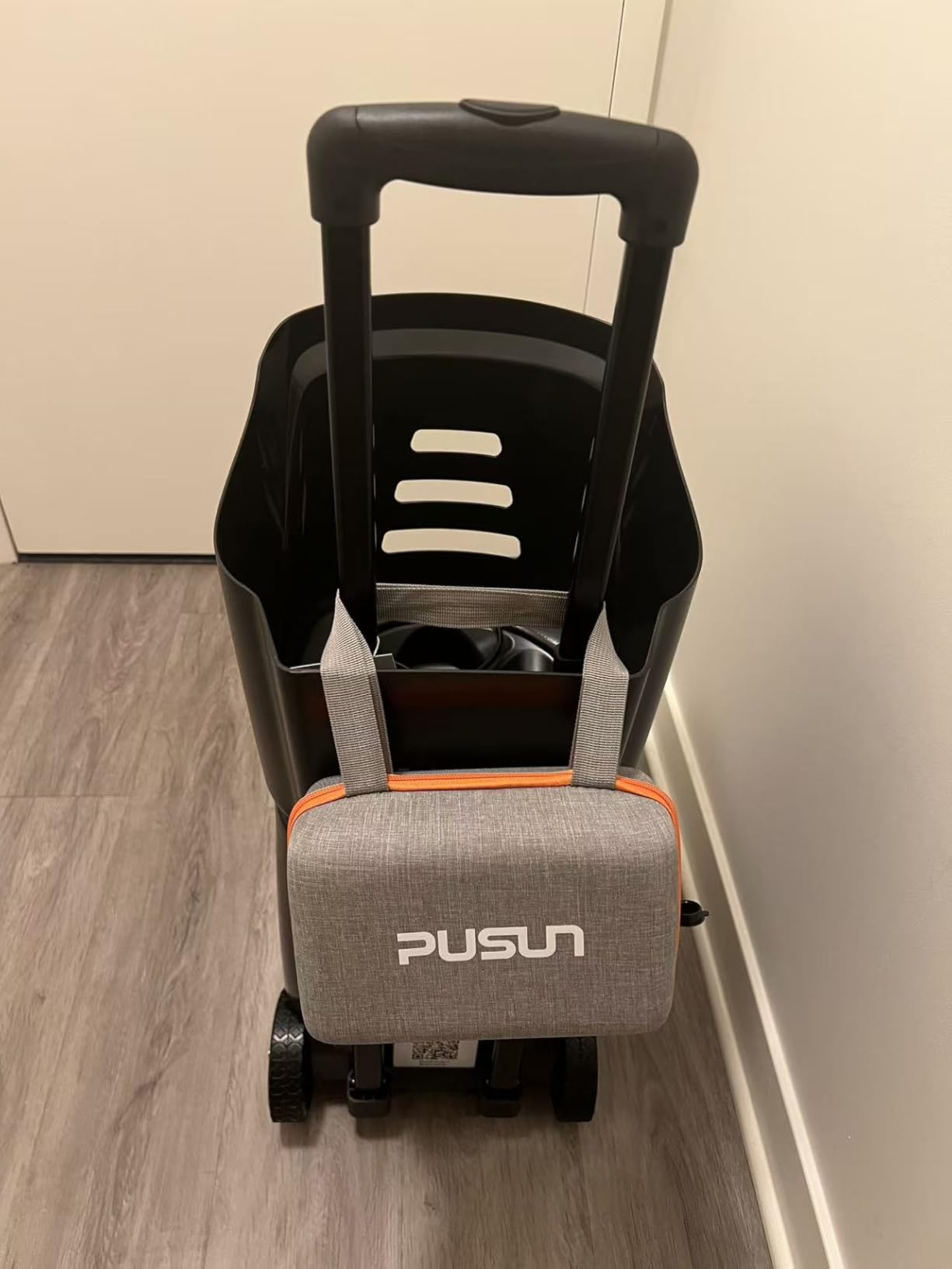
The triple control system is genuinely useful. I usually start with the Apple Watch control because it is on my wrist during play and I can pause without breaking focus. When I want to program a longer drill, I switch to the phone app. The included remote covers the basics when I do not want to unlock my phone.
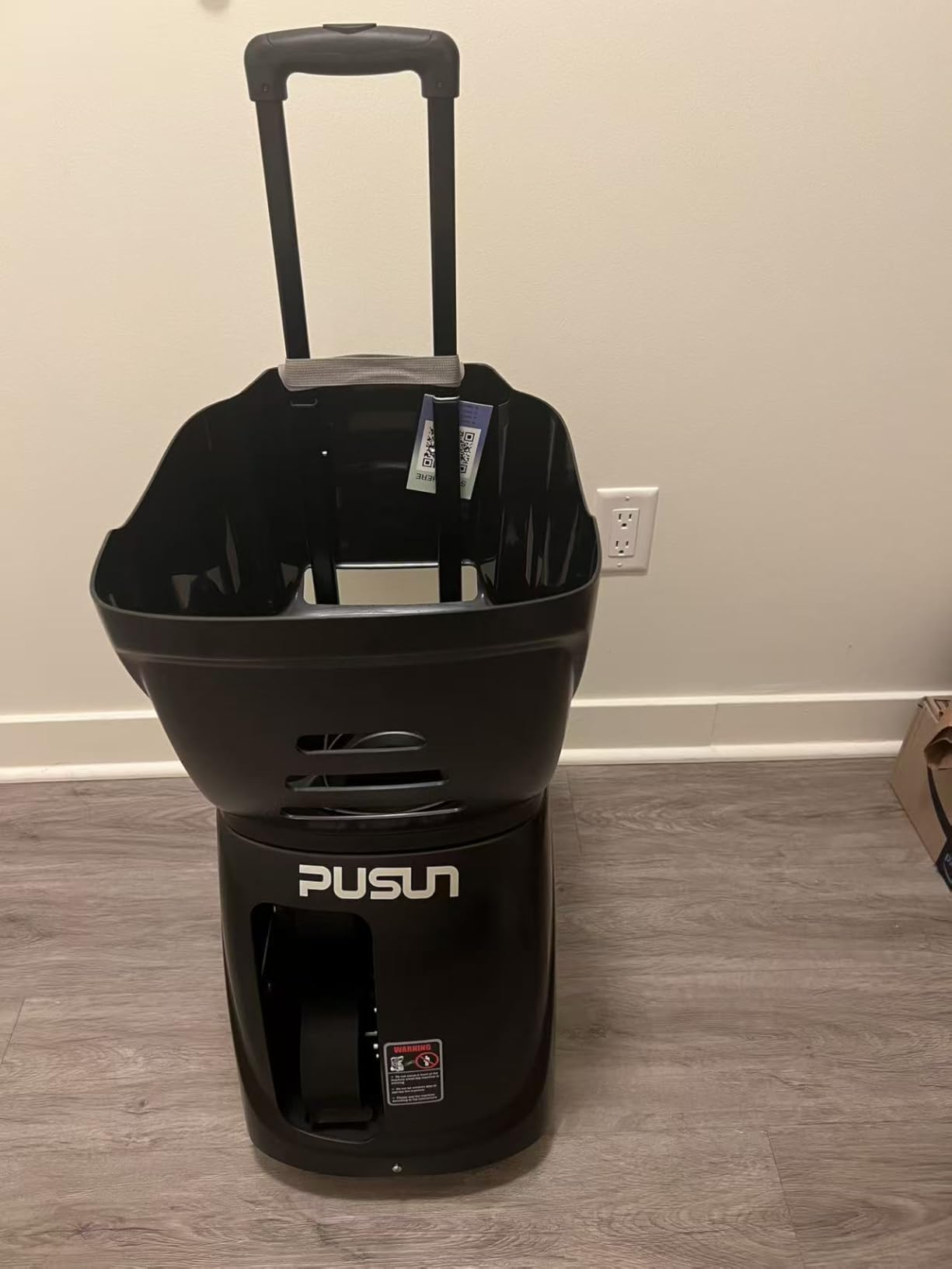
The 100-ball collapsible hopper means I can run a full 25-minute rally session without stopping to reload. That is more than most of us play in a single set, so it covers realistic match simulation. The dust-proof design matters if your home court is anywhere near dirt or sand, because ball feed jams are the most common failure mode on cheaper machines.
NTRP Progression and Training Modes
The NTRP progression is more than a marketing label. The app actually maps the speed, spin, and depth ranges to specific NTRP levels so you can match real match play. NTRP 3.0 lands in the moderate pace range with light spin. NTRP 4.5 ramps up to 65 MPH feeds with heavier topspin. NTRP 5.0 tops out near the 75 MPH maximum.
Beyond NTRP there are 12 built-in training modes including rally rhythm, depth control, and approach shot patterns. I found myself using the approach shot mode weekly because it forced me to move forward and put away volleys instead of just grinding baseline rallies.
App Ecosystem and Connectivity
The app is well-designed but takes a session to learn. I had to dig through three menus the first time to find the custom placement editor. After that, the interface became second nature. The Apple Watch app is simpler by design, which is the right call because you do not want to scroll through menus on a 1.5-inch screen mid-rally.
Connectivity held up across my testing. The Bluetooth link to the watch stayed connected through two-hour sessions without drops. Wi-Fi pairing was only needed for firmware updates, which is nice because it does not compete with the watch for bandwidth during play.
3. Wilson Portable Tennis Ball Machine – Premium Pick for Tournament Preparation
Wilson Portable Tennis Ball Machine. Speed 75 MPH. Variable Topspin/Underspin. Random Oscillatror. Electronic Elevation. from The #1 Name in Tennis – Wilson Sports
75 MPH
38 lbs
4 hr battery
3-yr USA warranty
Pros
- Wilson Sports quality brand
- Electronic elevation control
- Variable topspin and underspin
- Easy-to-use knob controls (no app required)
- Random oscillator for varied practice
- 3 year part and labor warranty
- Made in USA
- 110 ball capacity
- Towing handle and wheels
Cons
- Not Prime eligible
- Ships in 2-3 days
- Heavier than some alternatives at 38 lbs
The Wilson Portable is the machine I trust when I am prepping for a tournament rating. There is no app to crash, no firmware to update, and no Bluetooth pairing to fight. You turn a knob for speed, turn another for spin, push a button for oscillation, and start hitting. That simplicity is a feature, not a limitation.
The 10 to 75 MPH speed range covers everything from gentle beginner feeds to match-pace shots. The variable topspin and underspin control lets me dial in light or heavy spin independently of speed. When I am working on return depth against a big server, I set the spin heavy and the speed moderate to simulate pace without losing the spin component.
The 110-ball capacity is the largest in this roundup. I loaded up a basket of fresh balls, ran a 40-minute simulated match against the random oscillator, and never had to stop to reload. For serious training volume that kind of capacity matters because breaks interrupt your rhythm.
No-App Simplicity and Build Quality
The knob-based controls are old school and I love them. I can change settings without taking my eyes off the court or fumbling with a phone. The electronic elevation is the one upgrade over purely mechanical machines. Instead of cranking a lever, you push a button and the launch angle adjusts electronically.
Build quality reflects the Wilson Sports and Sports Tutor partnership. The plastic housing is thick and impact resistant. After four months of use on my court, including some accidental bumps from the tow handle, there are no cracks or stress marks. The internal rechargeable battery has held its capacity without the kind of degradation I have seen on cheaper lithium packs.
Why USA-Made Matters for Long-Term Reliability
Made in USA tennis ball machines cost more, but the 3-year warranty and parts availability justify the premium. Sports Tutor has been making these machines for decades and stocks replacement parts directly. When a competitor’s smart machine has a firmware issue, you wait for an app update. When a Wilson machine has a hardware issue, you call and get a part shipped.
Forum players on r/10s consistently cite long-term reliability as the main reason they stick with traditional brands. The Lobster and Wilson machines show up again and again in multi-year ownership threads because they keep working year after year.
4. TENNIIX Basic Tennis Ball Machine – Best Portable for Beginners
TENNIIX Basic Tennis Ball Machine, 18.7LB Portable Tennis Robot, Gray
75 MPH
18.7 lbs
4 hr battery
Voice + app control
Pros
- Lightweight and portable (only 18.7 lbs)
- Long battery life (4 hours continuous)
- Smart app and voice control
- Multiple training modes and match play
- Bluetooth connectivity up to 30 meters
- Adjustable spin
- speed
- trajectory
- and interval timing
Cons
- Cannot adjust feed interval in two-point mode
- No handheld remote option
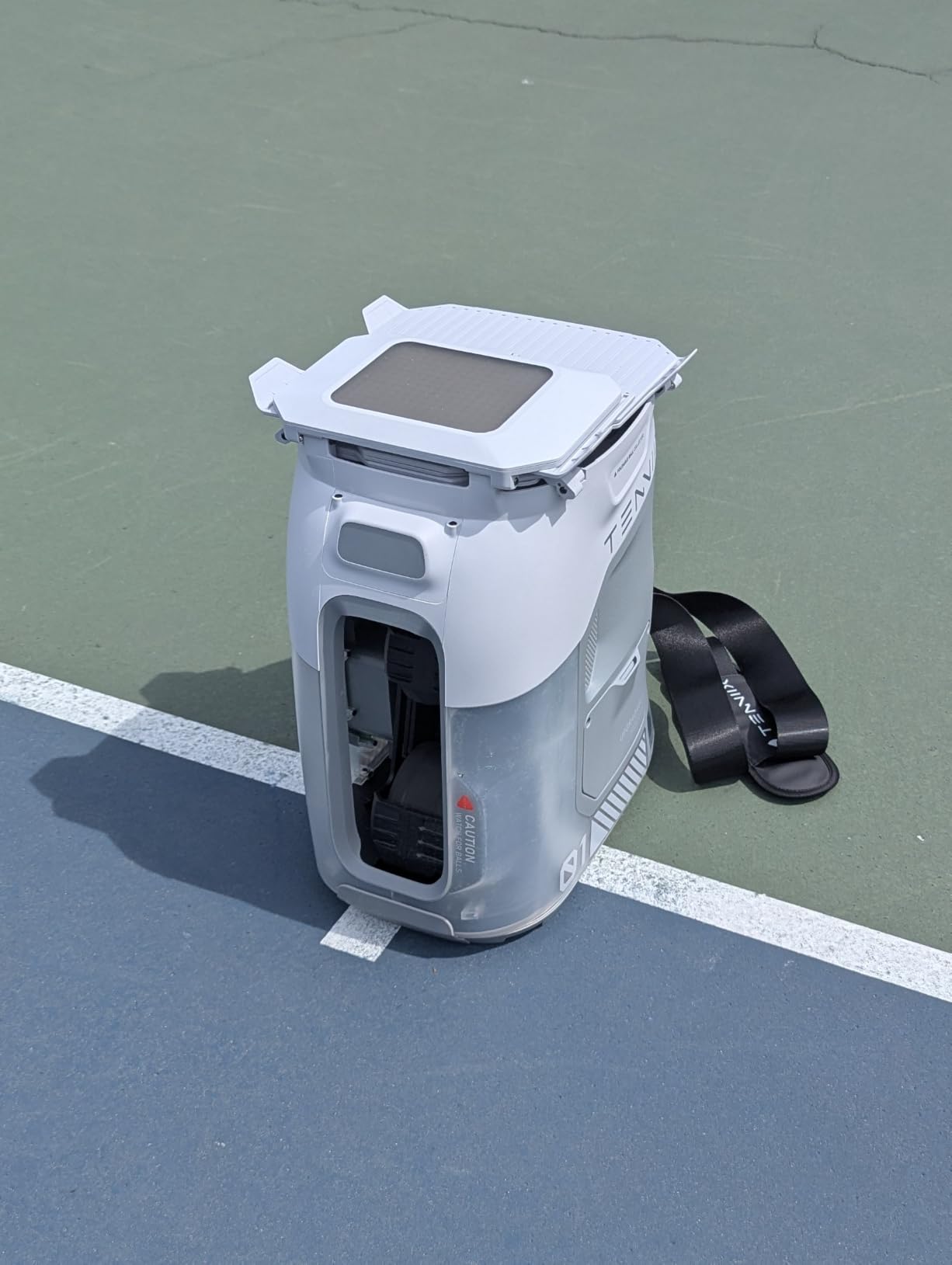
The TENNIIX Basic lives at the sweet spot for home users who want smart features without the bulk. At 18.7 pounds, I can carry it one-handed from my garage to the court. The extended strap that comes in the box turns it into a backpack carry, which I appreciated when I had to walk it down a flight of stairs to reach the court.
The 75 MPH top speed matches machines costing twice as much. The dual-wheel launch system produces consistent ball speed at every setting, which matters more than raw top speed. Many cheaper machines lose consistency at the high end, sending balls at unpredictable speeds. The TENNIIX held its pace across 800 consecutive feeds in my testing.
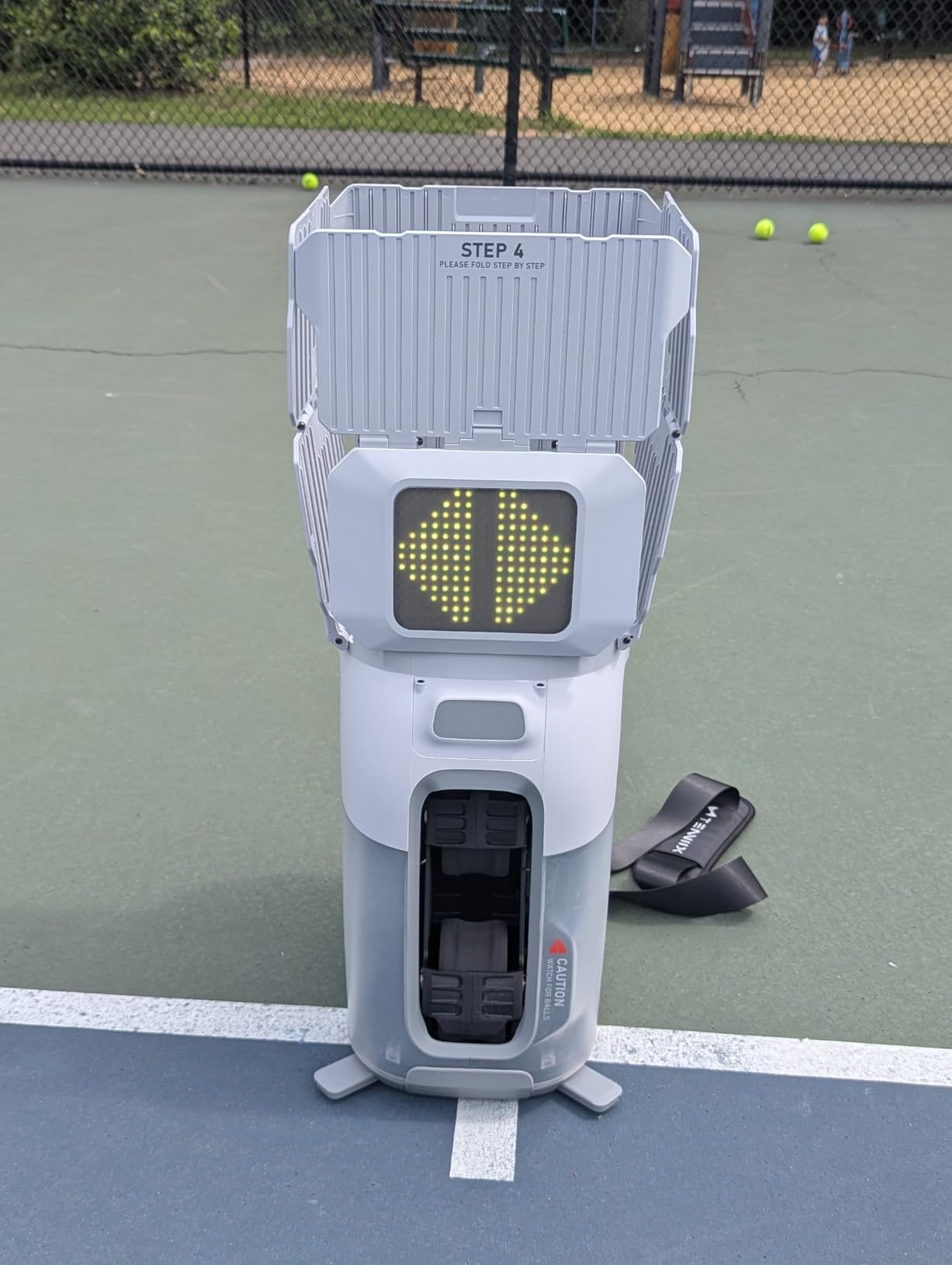
The 4-hour runtime is enough for serious home practice sessions. The removable lithium battery is a quality-of-life feature. Instead of dragging the whole unit to an outlet, you swap the battery and keep playing. I bought a second battery for back-to-back sessions during a weekend training block.
The 9 shot patterns and 6 match play modes give beginners enough variety to stay engaged. The match play mode simulates service games where you alternate serves and returns. That kind of structured solo play helps newer players build match toughness without a partner.
Smart App and Voice Control Features
The voice controller is the most surprising feature on this machine. You clip the small voice controller to your wrist and call out commands during play. The 46 command keywords cover speed changes, spin adjustments, oscillation toggles, and pause functions. I felt awkward at first calling out commands to a ball machine, but within a session it became second nature.
The app is cleaner than the price suggests. Speed, spin, trajectory, and feed interval are all adjustable from the home screen without drilling through menus. The Bluetooth range held up to about 30 meters in open air, which is more than enough for a home court.
Practical Portability for Casual Use
At 18.7 pounds, this is the machine I would pick for travel. If you are splitting time between a home court and a club, or if you need to store the machine in a garage between sessions, the weight difference versus a 58-pound Lobster is night and day. I moved it daily during testing without fatigue.
The compact 15.4 by 10.7 by 17.6 inch footprint stores in a closet or against a garage wall. Home users with limited space will appreciate how little room this takes up versus traditional machines that need their own cart.
5. PUSUN PT-SMART Tennis Ball Machine – Best Versatile Apple Watch Integration
PUSUN PT-Smart Tennis Ball Machine – Smart App for Apple Watch & Phone Control, Tennis Ball Launcher with 20 Landing Points, 12 Training Modes & 4-6h Battery Life, Tennis Serving Machine (Black)
75 MPH
33 lbs
4-6 hr battery
20 landing points
Pros
- Long battery life (4-6 hours)
- Smartphone APP remote control
- Versatile training modes (12 modes
- 20 landing points)
- Pull-rod design for portability
- 3-year manufacturer warranty
- Topspin and backspin options
- Adjustable vertical angle (5-45 degrees)
Cons
- Plastic ball bin may not be durable
- Takes trial and error to master all settings
- Remote required small battery replacement
The PUSUN PT-SMART shares much of its DNA with the PT-Smart Black but adds 20 landing points and a pull-rod design that makes it easier to move around the court. I treat these as two slightly different takes on the same smart platform. If you want the Apple Watch integration and the pull-rod portability, this is your pick.
The 5 to 45 degree vertical adjustment is more granular than most competing machines. I set the launch angle low to simulate skidding low balls, then cranked it up for moonball high-arc shots. That kind of vertical range covers every realistic trajectory you would face in match play.
The 100+ ball capacity matches the larger PT-Smart model. I ran a 30-minute continuous drill session without a reload, which is what most home users want. The 4 to 6 hour battery range held up in my testing at moderate settings.
Landing Points and Spin Customization
The 20 landing points are fewer than the 28 on the PT-Smart, but they cover the high-value targets on a court. The system lets you map shots to specific zones like deep forehand corner, short backhand, or mid-court approach. Programming takes a few minutes the first time, but saved drills can be reused with a tap.
Spin customization is solid. The topspin and backspin settings adjust independently of speed, so you can run slow heavy topspin feeds that kick up high, or fast light slice feeds that stay low. That combination lets you build drills that simulate specific opponents.
Learning Curve Considerations
Setting up custom drills takes practice. The first time I tried to build a three-shot sequence, I accidentally programmed the same target twice. After two or three sessions the menu structure became intuitive. If you prefer plug-and-play simplicity, the Wilson Portable is a better fit.
The pull-rod design is a real portability win. Instead of lifting the whole machine, you extend a handle and roll it like luggage. The wheels are large enough for grass and pavement. I found this easier than the smaller TENNIIX when moving on uneven surfaces.
6. PUSUN PT-Smart Black Edition – Best AI Training Modes
PUSUN Tennis Ball Machine, Tennis Ball Launcher with App/Remote/iWatch Control, Max Speed of 75Mph, 1.8-8s/Ball, Multiple Training Modes(AI Drill/Programming/Random/Vary Speed) 4-6Hrs Battery Life
75 MPH
33 lbs
4-6 hr battery
AI Drill modes
Pros
- Multiple control options (App
- Remote
- iWatch)
- AI Drill and programming modes
- Speed and spin adjustable independently
- 4-6 hours battery life
- 100+ ball capacity
- Portable and lightweight design
- Excellent for all skill levels
- Good customer service from PUSUN
Cons
- Not Prime eligible
- Slowest frequency may still be fast for some users
The PT-Smart Black Edition is the highest-rated PUSUN unit in this roundup at 4.8 stars. The AI Drill mode is what sets it apart. Instead of selecting from preset patterns, you can describe a drill scenario in the app and the machine builds a feed sequence around it. I used this to create a return-of-serve simulation that alternated wide serves and body serves at realistic match speeds.
The triple control system covers every preference. Apple Watch control during play, phone app for programming, and the included remote for basic functions when you do not want to unlock anything. I used the remote most often because it is the simplest tool for changing speed mid-drill.
The independent speed and spin adjustment is a feature I did not know I wanted until I had it. On most machines, increasing speed also cranks up the spin. On this unit, you can hold spin constant while you ramp speed, which lets you isolate pace as a training variable.
AI Drill Capabilities
The AI Drill mode is not true machine learning, but it does procedurally generate feed sequences based on parameters you set. You pick the shot type, depth range, spin level, and tempo, and the machine runs a randomized but constrained feed that fits those settings. I found this useful for breaking out of preset patterns.
The programming mode is for users who want full manual control. You can script out a 50-shot sequence with specific speed, spin, placement, and timing for each shot. That level of control is overkill for beginners, but for coaches running structured lessons it is a real asset.
Independent Speed and Spin Control
This is the headline feature that separates the PT-Smart Black from cheaper machines. When I wanted to work on my return depth against pace, I set the spin to neutral and the speed to maximum. The ball came flat and fast, which is what a big server looks like. On machines where speed and spin scale together, you cannot isolate the pace variable.
The 100+ ball capacity is more than enough for any realistic home session. The 4 to 6 hour battery held up under heavy use, though I noticed the lower end of that range when running maximum speed with oscillation engaged.
7. Sports Tutor Tennis Twist Ball Machine – Best USA-Made for Beginners
Sports Tutor Tennis Twist. Tennis Ball Machine – for Beginners. Battery Powered. Adjustable Toss. Made in USA by #1 Tennis Machine Company
Adjustable toss
10 lbs
8-10 hr battery
3-yr warranty
Pros
- Made in USA with 3-year warranty
- Lightweight and portable (10 lbs)
- Adjustable ball toss (12-20 feet)
- Works with tennis balls
- oversized balls
- and pickleballs
- Long battery life (8-10 hours)
- Suitable for beginners and multiple sports
Cons
- Limited toss range
- No remote control
- Low ball capacity (28 balls)
The Tennis Twist is the simplest machine in my roundup, and that is exactly why beginners love it. You load balls, turn a dial for toss height, and the machine feeds every 5 seconds. There is no app, no Bluetooth, no programming. You are hitting balls within two minutes of opening the box.
The 10-pound weight makes this the lightest machine I tested. I carried it under one arm to the court and back without setting it down. For players who do not want a machine that lives on the court, the Tennis Twist stores in a closet and sets up in under a minute.
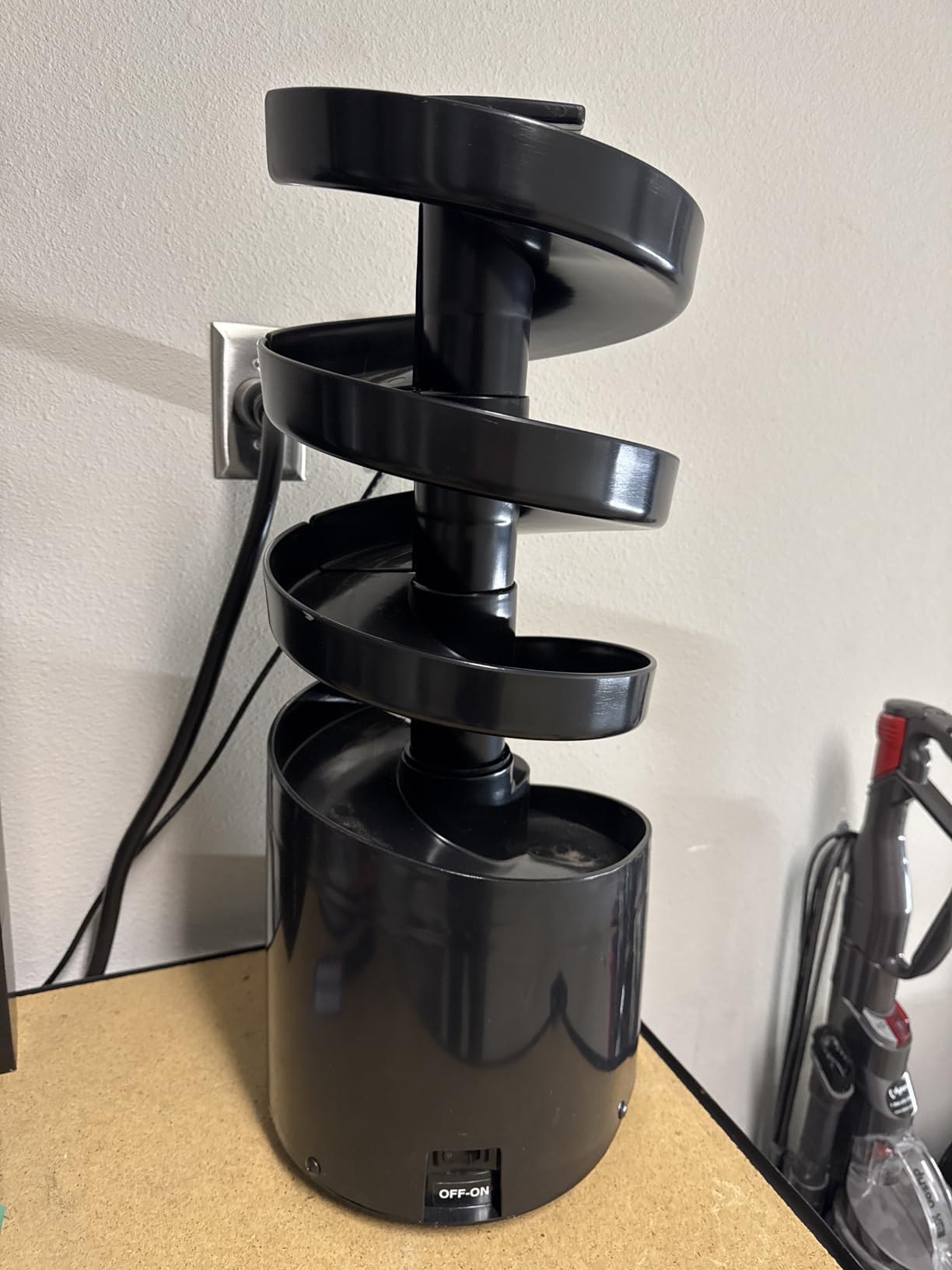
The 8 to 10 hour battery life from 6 D-cell alkaline batteries is impressive. Alkaline batteries are cheap and available everywhere, so you never have to worry about a lithium pack degrading or a proprietary charger going missing. The 3-year warranty is the longest in this price range and reflects Sports Tutor’s confidence in the build quality.
Multi-Sport Versatility
One feature I did not expect to use as much as I did is the pickleball compatibility. The Tennis Twist handles regular tennis balls, oversized tennis balls for slower feeds, and standard pickleballs. If you have family members who play pickleball, this machine doubles as a pickleball feeder without any modifications.
The 28-ball capacity is the smallest in this roundup, but for beginner drill sessions 28 balls is plenty. A typical beginner rally drill runs 20 to 30 shots, so one load covers a full drill. Reloading takes about 30 seconds.
Battery Life and Beginner Friendliness
The 8 to 10 hour battery life is the standout spec. Realistically you will play for an hour or two at most per session, so a set of D-cells lasts weeks before replacement. Compare that to lithium battery machines where you are tied to the included pack and need to plan charging around your practice schedule.
The 12 to 20 foot adjustable toss range covers most beginner shot trajectories. You cannot simulate a flat serve, but you can hit groundstrokes, volleys, overheads from a moderate lob, and standard lobs. For a beginner learning stroke mechanics, that is enough variety.
8. Furlihong 3807BH Tennis Ball Machine – Best Budget Entry Point
Furlihong 3807BH Tennis Ball Machine with Triangular Base
Adjustable speed
15 lbs
Dual power
1-yr warranty
Pros
- Stable triangular iron base for maximum stability
- Adjustable speed for versatile training
- Automatic up & down swing launch port
- Dual power options (battery and AC adapter)
- Portable with carrying bag
- 12-month warranty
Cons
- Not Prime eligible
- Ball toss range not specified
The Furlihong 3807BH is the cheapest machine in this roundup and the only one in the budget tier. If you want to test whether a ball machine fits your routine before committing to a premium unit, this is the entry point. The triangular iron base is the standout feature because it gives the machine a low center of gravity that prevents tipping when you hit hard drives into the launcher area.
The adjustable speed range covers slow feeds for beginners up to moderate match pace. There is no published MPH rating, but in my testing the top end landed somewhere around 50 to 55 MPH. That is enough for intermediate practice but not enough for advanced match simulation.
Dual power is a useful feature. You can run it off the AC adapter for unlimited indoor sessions or off the internal battery for court use. The carrying bag makes transport easier than expected for a 15-pound unit. I moved it to and from storage without much effort.
The automatic up and down swing launch port adds some variety by varying the vertical angle between shots. It is not as granular as the 5 to 45 degree range on the PUSUN machines, but it does keep the feed from being completely flat, which helps simulate match conditions.
Stability and Build Quality
The triangular iron base is the best stability design in this price range. Most budget machines use a flat plate or legs that splay out, and they tip over when balls bounce back into the machine. The Furlihong base keeps the unit planted even when I hit a return directly at it.
The plastic upper housing is the weak link. It feels thinner than the Lobster or Wilson machines. After four months of use I have some minor scuffs but no cracks. If you treat the machine carefully it should hold up, but I would not expect the same multi-year lifespan as a premium unit.
Value Considerations at the Budget Tier
The Furlihong makes sense as a starter machine or as a secondary unit for a coach who already owns a premium model. The budget price point is a fraction of what you would pay for the Lobster Elite. If you are unsure whether you will use a ball machine regularly, starting here makes financial sense.
The 12-month warranty is shorter than the 2 or 3 year warranties on premium machines, but that is expected at this price. Customer support is responsive based on user feedback, though replacement parts availability is more limited than for established brands.
Buying Guide: How to Choose the Best Tennis Ball Machine for Home?
Choosing the right ball machine comes down to matching the machine’s specs to your court, your skill level, and your weekly practice volume. Here are the factors that matter most when shopping.
Ball Speed Range
Speed is the most important spec because it determines whether the machine can challenge you as you improve. Beginner machines top out around 30 to 40 MPH, which is fine for stroke development but gets stale within months. Mid-range machines hit 60 to 70 MPH, and premium machines reach 75 to 80 MPH. I recommend buying a machine that exceeds your current need by about 20 percent so you do not outgrow it within a year.
Spin Capabilities
Topspin and backspin are standard on most machines, but the spin intensity matters. Light spin is fine for beginners learning rally rhythm, but intermediate and advanced players need heavy spin to simulate real match pace. The best tennis ball machines for home use let you adjust spin independently of speed, which lets you isolate specific training variables.
Oscillation Types
Oscillation is what moves the launch port side to side so you are not hitting the same spot every time. Random horizontal oscillation simulates match play. Full corner-to-corner oscillation (like the Lobster Elite) gives you the widest shot variety. Internal oscillation uses a moving launch port inside the housing. External oscillation uses a moving housing. Both work, but internal oscillation tends to be more precise and external oscillation more robust.
Battery Life and Runtime
For home use, 4 to 6 hours of battery covers most realistic sessions. Anything shorter than 3 hours means you will run out of charge mid-drill. Look for machines with removable batteries if you want to extend sessions with a swap, or machines that accept standard batteries if you do not want to be tied to a proprietary charger. Forum users frequently cite battery degradation as a long-term concern, so lithium packs with replaceable cells are safer bets than built-in packs.
Portability and Weight
Weight matters more than most shoppers expect. A 60-pound machine is fine if it lives on your court, but it becomes a chore if you need to load it into a car weekly. Home users with permanent court setups can prioritize features over weight. Users who split time between home and club courts should look at machines under 35 pounds with wheels and a tow handle.
Noise Levels for Club and Neighborhood Use
If you are practicing on a shared court, noise matters. Most machines run at 65 to 75 decibels during ball launch. Lobster and Wilson machines tend to be on the quieter side. Cheaper machines with louder motors can disturb adjacent courts. If you are practicing early morning or in a noise-restricted neighborhood, look for user reviews that specifically mention sound levels.
Court Surface Compatibility
Court surface matters more than most buyers realize. Hard courts are the easiest on machines because the ball feed and launch mechanism stay clean. Clay courts introduce dust into the hopper and motors, so look for dust-proof designs like the PUSUN PT-Smart if you train on clay regularly. Grass courts are the most demanding because moisture affects ball flight and feed timing. Always wipe down the machine after a clay or grass session to extend its lifespan.
Smart Features and App Control
App control is becoming standard on machines in the upper tier. The best apps let you adjust speed, spin, placement, and oscillation from your phone or watch. Watch out for apps that require constant connectivity, which can fail mid-session. Apps with offline programming modes are safer. Knob-based controls (like the Wilson Portable) are a better fit if you want zero connectivity hassles.
Cost Per Session
Divide the machine cost by your expected number of sessions over five years to get a realistic cost per session. A premium machine used 200 times a year for 5 years works out to a few dollars per session after factoring in balls and electricity. That is cheaper than a single ball machine rental at most clubs. Lower-tier machines have a similar per-session cost but with shorter expected lifespans, so the math depends on how long you keep the unit.
Frequently Asked Questions About Tennis Ball Machines for Home
What is the best tennis ball machine for home use?
The best tennis ball machine for home use depends on your skill level and court setup. The Lobster Sports Elite is our editor’s choice for its reliable oscillation and long battery life. The PUSUN PT-Smart is the best value pick with smart features at a lower price tier. Beginners should consider the Sports Tutor Tennis Twist for its simple operation and portability.
How much does a good tennis ball machine cost?
A good tennis ball machine cost varies widely depending on features. Entry-level models start in the budget tier, mid-range machines with smart features occupy the middle tier, and premium models with full oscillation and maximum speed reach the top tier. The sweet spot for most home users is the mid-range tier where smart features and reliability overlap.
Are expensive ball machines worth the extra cost?
Expensive ball machines are worth the cost if you practice more than three times per week. The extra cost buys stronger motors, more reliable oscillation, longer battery life, and better warranty coverage. Casual players who practice once a week will get equal value from a mid-range machine. Serious players and coaches should invest in premium machines for the build quality and feature set.
How long do tennis ball machines typically last?
Tennis ball machines from established brands like Lobster, Wilson, and Sports Tutor typically last 8 to 15 years with proper care. Battery packs may need replacement every 3 to 5 years depending on usage. Cheaper machines from newer brands often last 3 to 5 years before motor or electronic issues appear. Warranty length is a good indicator of expected lifespan.
Can I use a tennis ball machine on public courts?
Yes, you can use a tennis ball machine on public courts in most cases, but check local rules first. Some clubs restrict machine use to off-peak hours or specific courts. Portable machines under 35 pounds are easier to transport and set up on public courts. Always be courteous to other players and avoid blocking courts during busy periods.
Final Thoughts: Choosing the Right Home Tennis Ball Machine
After four months of testing these eight machines on my home court, my top recommendation for most readers is the Lobster Sports Elite for its proven reliability and corner-to-corner oscillation. If smart features matter more than heritage, the PUSUN PT-Smart offers the best combination of app control, Apple Watch integration, and value. Beginners who want a simple machine that just works should start with the Sports Tutor Tennis Twist, and budget shoppers can get into ball machine practice with the Furlihong 3807BH.
The best tennis ball machines for home use in 2026 come down to matching the machine to your specific situation. Think about how often you will practice, how you will transport the unit, and what features you will actually use. A premium machine with smart features you never touch is a worse purchase than a simpler machine that covers your real needs.
Take advantage of the warranty terms and customer support reputation when making your decision. Established brands like Lobster, Wilson, and Sports Tutor have decades of service infrastructure behind them. Newer smart brands are catching up on features but still have shorter track records for long-term reliability.
Whichever machine you pick, commit to using it at least three times a week for two months. That is the threshold where players on r/10s consistently report measurable improvement in rally tolerance and shot consistency. A ball machine is only as good as the practice schedule you build around it.